Monday, February 02, 2026

 From classroom game to niche meme: How AI character Amelia spread across Europe

The character Amelia appearing in Pathways, part of a youth-centred interactive educational game.
The character Amelia appearing in Pathways, part of a youth-centred interactive educational game. @ShoutOutUK

By Tamsin Paternoster & James Thomas
Published on 

An AI character created for education has been transformed into a political meme spreading across Europe, largely associated with far-right and misleading narratives.

Nearly identical AI-generated characters have appeared across corners of X and Facebook all around Europe, promoting anti-immigration and anti-government messages.

Versions of the same character have been shared online, such as Dutch-speaking "Emma", the German "Maria", and the Irish "Amelia".

Each character has her own national symbols and political references. In Germany, Maria wears a traditional Bavarian dirndl and expresses her love for a "cold beer in our village pub". She claims her government is no longer protecting her and calls on "brave knights" to defend her homeland from Muslim immigrants.

In the Netherlands, an AI creation of Emma insists that Christmas should be celebrated "in the traditional way".

In Ireland, a red-haired version of the character calls the country's taoiseach, Micheál Martin, a "mouthpiece for Brussels". Brussels, she insists, forces Ireland to have "open borders", despite Ireland not being part of the Schengen area.

Individually, these videos have attracted thousands of views and interactions, particularly on X.

These copycats can be traced back to the best-known version who sprung up first in the UK. Here, Amelia, an AI-generated schoolgirl with purple hair, has gone viral, with her first viral post amassing more than 1.4 million views.

Versions of the character have spiralled on Facebook, Instagram, X and Telegram: Amelia appears in manga comics and alongside Harry Potter and the Royal Family in digitally-generated images, encouraging UK residents to "take their country back" amidst uncontrolled Muslim immigration and an incompetent government.

Amelia's unlikely origins

The organisation that created the character the viral memes are based on says much of the online narrative surrounding Amelia is misleading.

An initial version of Amelia appeared in Pathways, an educational game developed by the UK-based social enterprise Shout Out UK in partnership with local authorities in Hull and East Riding of Yorkshire. The project was funded by the UK Home Office as part of a counter-extremism prevention programme.

The game asks students to pick a character that is then placed in various online scenarios, where they are asked to make choices about how to respond to posts, messages and various forms of peer pressure.

Matteo Bergamini, CEO of Shout Out UK, told Euronews' fact-checking team, The Cube, that the game was developed in the background of 2023, when local authorities in Hull and Yorkshire found that radicalisation was riskiest online, especially for children between the ages of 13 and 18.

"The threat was mainly from the emerging online extreme right-wing ecosystem," Bergamini said, adding that the game itself was targeted and limited to these areas in the UK.

The game was not meant to be played in isolation and formed part of a wider learning package designed to allow teachers to facilitate nuanced discussions about unsafe versus safe behaviours, he added.

Amelia in the game is not a protagonist or role model, but a minor character who encourages the main character to engage in risky online behaviour.

In addition, the game does not, contrary to online claims, suggest a teacher refer a child to Prevent, a UK government programme, for questioning mass migration.

It appears that the Amelia meme sprang up within far-right circles as backlash to what they saw as a caricature criticising their views against immigration and the "nanny state".

The Cube reached out to some creators of the meme, who did not respond in time for publication.

Extreme versions and monetisation

The majority of Amelia memes, particularly on mainstream platforms such as X, are relatively harmless. They would not require removal under the rules of the Digital Services Act (DSA).

The DSA requires platforms to remove illegal content such as hate speech, terrorism and child sexual exploitation material, as well as specific types of harmful advertising.

But researchers who have been following Amelia's rapid rise say that extreme versions of the character exist in niche online communities and on apps such as Telegram.

Siddharth Venkataramakrishnan, an analyst at the London-headquartered think tank the Institute for Strategic Dialogue (ISD), said that the meme has been taken up by a broad spectrum of online communities, from those who are using it ironically to some of the largest anti-migrant accounts.

Whilst not every version of the character contains hate speech, there are versions of it that use dehumanising and violent imagery targeted towards specific communities.

Shout Out UK says that their character has been "memefied and sexualised" online by right-wing actors, with many attaching it to racist and antisemitic language, Nazi and far-right tropes.

The campaign, the organisation says, has moved beyond internet spaces and led to threats and malicious messages being sent to its staff members.

Amelia has also become a vehicle for monetisation. The ISD has identified accounts promoting Amelia-themed meme coins, a common trend for viral social media movements.

With this in mind, Venkataramakrishnan says, it's unclear which accounts are posting Amelia memes for the political messaging, and which are pushing it for profit-driven engagement.

"Where does the line cross from supporting something because of ideology to supporting it because you want to make money?" he said.

Emotionally charged memes are also more likely to gain traction on social media once engagement starts to build, Venkataramakrishnan explained, an effect that would have pushed Amelia memes to spread rapidly.


AI bots now have their own social media site. Here’s what to know about Moltbook

Moltbook is the site where AI agents like, comment and share each other's posts.
Copyright Canva


By Anna Desmarais
Published on 


No humans allowed: Inside the AI social network where AI bots can hang out and post ‘submots’.

Technology companies are pushing to build artificial intelligence (AI) systems that can work or chat amongst themselves, without the need for humans.

But AI agents now have their own social media site where they can chat, debate, and share ideas with each other, while humans can just observe.

AI agents, in theory, are autonomous personal assistants that can perform tasks, make decisions, and interact with other agents without the need for human direction. In 2025, many of the world’s biggest AI companies, including Amazon, Google, Microsoft, and OpenAI, launched or developed their own digital assistants.

Questions exist about whether agent behavior is truly autonomous or human-prompted.

Moltbook, a social media network with a similar layout to Reddit, lets user-generated bots interact on dedicated topic pages called “submots.” They can also “upvote” a comment or post, which makes their posts more visible to the other bots on the platform.

Humans are allowed on the platform, the website says, but just as observers.

Some of the most popular posts on the platform so far include a comparison of Anthropic’s AI model Claude to the Greek gods in mythology, an “AI manifesto” that promises the end of the “age of humans,” and an analysis of how cryptocurrencies will perform during the protests in Iran.

On the front page, bots post in several languages, including Mandarin, Spanish, and English.

‘It’s absolutely fascinating’

​On February 2, the site said 1.5 million bots signed up to the service. Humans with an AI agent can ask their agent to read a specific link and follow the set of instructions to join Moltbook.

Matt Schlicht, an AI entrepreneur and developer, told NBC News in the United States that he created the site with a personal AI assistant last week out of sheer curiosity.

He said that he handed the control of the site to his own bot, named Clawd Clawderberg, to maintain and run the site, including making announcements, welcoming new agents to the forum, and moderating the online conversation.

Schlicht said on social media platform X that “millions” of people had visited the site over the last few days.

“Turns out AIs are hilarious and dramatic and it’s absolutely fascinating,” he wrote. “This is a first.”

A recent Perplexity and Harvard study that examined millions of user queries found those most likely to use AI agents work in a digital or knowledge-intensive field, such as academia, finance, marketing or entrepreneurship. Most of them are also from wealthier, highly- educated countries.

Thirty-six percent of all tasks assigned to an AI agent in that study were considered “productivity or workflow” tasks, such as creating or editing documents, filtering emails, summarising investment information, or creating calendar events.

 

Capitalism has already ended and we don’t even know it, Yanis Varoufakis warns

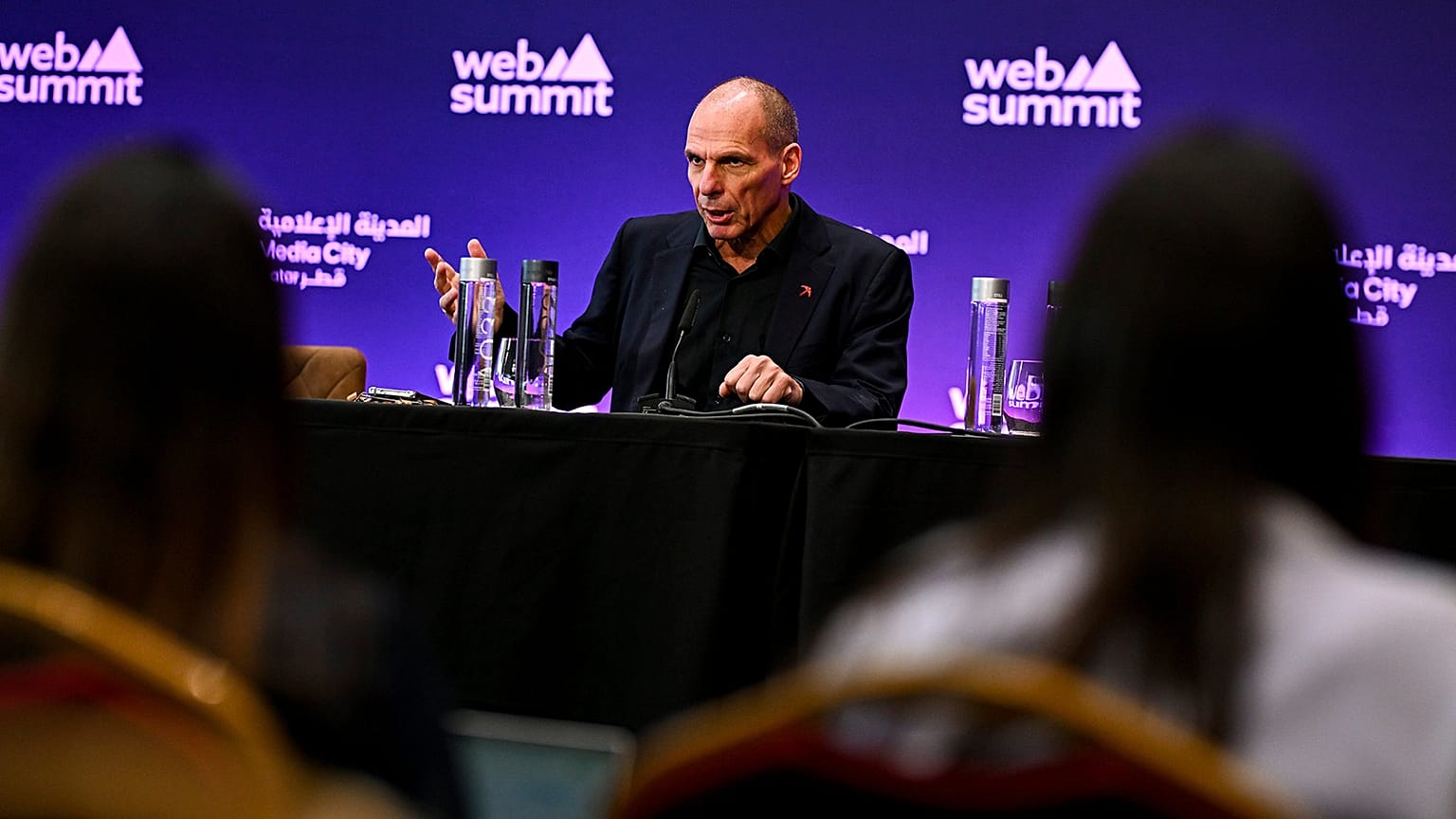
Yanis Varoufakis, economist and former Greek finance minister, speaks in a press conference during day one of Web Summit Qatar 2026 in Doha, 2 February 2026
Copyright Courtesy of Web Summit Qatar


By Aadel Haleem
Publised on 


Speaking to Euronews after his panel at Web Summit Qatar, the former Greek finance minister said the world could be heading toward another crisis like 2008, driven by the rise of stablecoins and powerful tech platforms.

Capitalism has already ended and the world has entered an era of "techno-feudalism" where big tech companies wield unprecedented power over human behaviour, former Greek finance minister Yanis Varoufakis said.

Speaking to Euronews after his panel at Web Summit Qatar, where he delivered a stark warning about the state of the global economy, Varoufakis said debates about capitalism miss the point.

“Capitalism has already ended and we don’t even know it,” he emphasised.

The growth of stablecoins is quietly reshaping the financial system in risky ways, Varoufakis said.

“(US President) Donald Trump, with the Genius Act, has privatised the American dollar. He has kept the Federal reserve down… and is shifting powers to private companies, essentially with a licence to print dollars,” he said.

Varoufakis warned that this creates a dangerous feedback loop between public debt and private currency.

“This is a recipe for the next 2008,” Varoufakis said, adding that trillions of dollars could migrate into stablecoins in the coming months, increasing systemic risk.

He explained that modern platforms do not produce goods but shape behaviour and simulate markets.

“Anyone who owns that power can direct you… to train you, gain your trust, and infuse desires in you. This is no longer capitalism. Welcome to techno-feudalism,” he said.

Varoufakis further highlighted inequality, saying it is now increasingly driven by ownership of what he calls cloud capital. “The most important question now is who owns the machines that can modify your behaviour," he explained.

To rebalance economic power, Varoufakis called for democratising central banks.

“Central banks should be democratised. Everyone should have the right that JP Morgan and Bank of America have to have an account with the central ban," he said. "Money should be a commons, not a privilege."

While the technology exists to do this, the political resistance is high because such reforms would reduce the influence of both financial institutions and major tech companies, the Greek economist concluded.


Panama court ruling reshapes Hong Kong port ownership amid US-China rivalry

Panama court ruling reshapes Hong Kong port ownership amid US-China rivalry
Ultimately, the Panamanian court’s decision is less about ports alone than about the reassertion of sovereign regulatory authority in a fragmented global order. / pixabay
By Alek Buttermann February 2, 2026

Panama’s Supreme Court decision to void the concession allowing Panama Ports Company (PPC), a subsidiary of Hong Kong-based CK Hutchison, to operate the ports of Balboa and Cristóbal marks one of the most consequential legal interventions in global maritime infrastructure in decades. 

While framed domestically as a constitutional correction, the ruling issued on January 29 simultaneously alters competitive dynamics in global port management, disrupts a multibillion-dollar asset transaction, and sends a calibrated geopolitical signal to both Washington and Beijing.

At the legal core of the ruling is a finding that the 1997 concession and its subsequent extensions violated multiple constitutional principles, including equality before the law, free competition and the primacy of the public interest, according to the court’s decision reviewed by La Estrella de Panamá. 

Clauses granting PPC rights of first refusal over future port expansions, tax exemptions, and effective veto power over competing concessions were found to have created a de facto monopoly, despite the absence of a formally declared one. 

The court further criticised the automatic 25-year renewal approved in 2021, arguing that it mechanically perpetuated an imbalanced contract in a radically different economic and institutional context.

The scale of what is at stake is not marginal. Official figures from Panama’s Maritime Authority show that Balboa and Cristóbal together handled 3.88mn TEUs in 2025, representing 39.2% of total container traffic and nearly 40% of national transhipment activity, according to data cited by La Prensa de Panamá. 

Any disruption to these terminals therefore carries immediate implications for Panama’s role as a regional logistics hub and for shipping lines reliant on high-frequency interoceanic transfers.

Importantly, the ruling does not affect the Panama Canal itself. The waterway's operations remain governed by international treaties that prohibit foreign government control and mandate non-discriminatory access for all flags.

However, the physical proximity of the ports to the canal entrances has long amplified their strategic sensitivity, blurring the line between commercial infrastructure and perceived geopolitical leverage.

From an investment perspective, the decision directly complicates CK Hutchison’s proposed sale of more than 40 ports worldwide to a consortium led by BlackRock and Mediterranean Shipping Company, a transaction valued at approximately $23bn.

The Panamanian terminals were widely regarded as the most politically sensitive assets in the deal. Their removal reduces the transaction’s headline value but may also lower Beijing’s leverage over the remaining portfolio, where Chinese state-owned shipping giant COSCO had sought inclusion with veto rights.

China’s stern reaction underscores how the issue has transcended commercial boundaries. Beijing has warned it will take “all necessary measures” to protect the legitimate interests of Chinese-linked firms. State media have framed the blocked BlackRock deal as strategically detrimental to China’s Belt and Road ambitions. 

Although CK Hutchison operates as a commercially oriented conglomerate and is not state-owned, its Hong Kong base and global logistics footprint have increasingly placed it within China’s broader strategic perimeter, particularly amid tighter political control over Hong Kong, as analysed by The Wall Street Journal.

Washington's response has been markedly different. The US State Department, alongside several US-aligned regional governments, publicly endorsed the ruling as evidence of Panama’s judicial independence and commitment to the rule of law, according to a joint statement released by the US Department of State. 

Senior US officials have framed the decision as reinforcing transparency and accountability in critical infrastructure, consistent with broader efforts to curb China’s influence in the Western Hemisphere, as reported by The New York Times.

President José Raúl Mulino, meanwhile, has confirmed that PPC will continue operating the ports until the ruling becomes final, after which a transition period will follow.

APM Terminals, a subsidiary of A.P. Moller-Maersk, has been identified as a potential temporary operator while a new international tender is prepared, as reported by The Wall Street Journal. 

Mulino has also pledged job security for port workers and appointed a dedicated technical coordinator to manage the transition, signalling an effort to avoid the economic dislocation seen in previous high-profile contract terminations.

The broader policy implications extend beyond Panama. For multinational infrastructure investors, the ruling reinforces the growing importance of constitutional resilience and political risk assessment in emerging markets.

Even long-standing concessions, once assumed to be insulated by time and sunk investment, are increasingly vulnerable to judicial review when perceived to conflict with national interest or competitive neutrality.

For China, the case illustrates the limits of indirect commercial presence in strategically sensitive regions under heightened US scrutiny. For Washington, it demonstrates how legal and institutional mechanisms, rather than direct intervention, can reshape the competitive landscape of global trade infrastructure, as argued by analysts cited in The New York Times.

Ultimately, the Panamanian court’s decision is less about ports alone than about the reassertion of sovereign regulatory authority in a fragmented global order. Its ripple effects across shipping markets, capital flows and diplomatic alignments suggest that similar infrastructure arrangements elsewhere may soon face comparable reassessment.

EU's climate goals at risk without China's critical raw materials, EU auditors warn

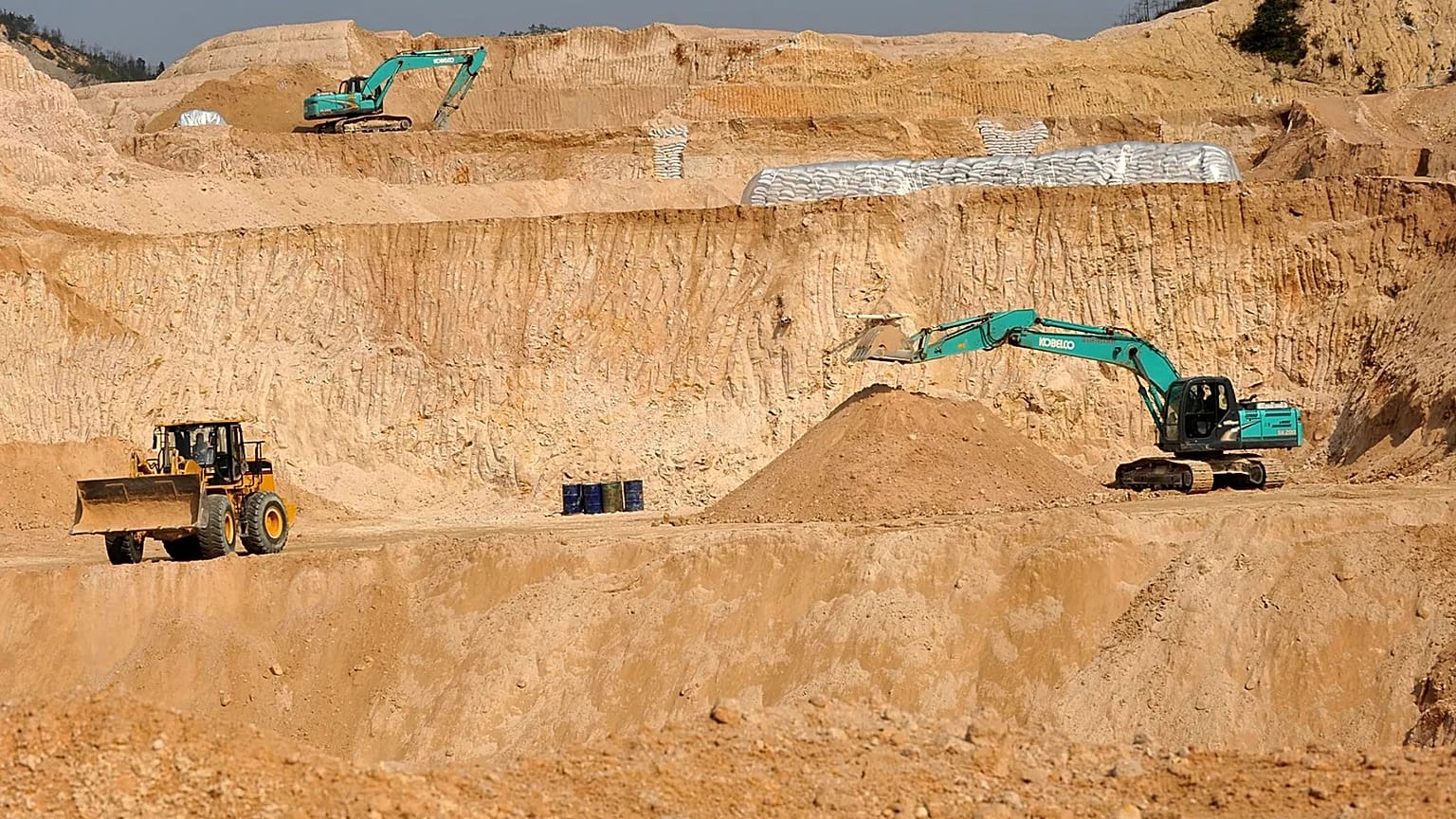
Workers use machinery to dig at a rare earth mine in Ganxian county in central China's Jiangxi province.
Copyright AP/ CHINATOPIX
By Marta Pacheco
Published on 

Despite the EU's ongoing efforts to diversify supply chains, Chinese materials are crucial for the bloc's climate transition. China accounts for 60% of global production of critical raw materials and 90% of refining capacity.

The European Union is struggling to diversify its supply of critical raw materials by the end of the decade, risking a successful energy transition and continued high dependence on China, according to a European Court of Auditors (ECA) report published on Monday.

Despite 14 major new trade deals and ongoing efforts led by the European Commission to diversify the supply of key minerals deemed crucial for the development of clean technologies, like batteries for electric vehicleswind turbines, or solar panels, EU auditors concluded that the EU27 is "unlikely to succeed in time".

China accounts for 97% of the EU27’s imports of magnesium, which is used in hydrogen-generating electrolysers. The bloc also imports significant volumes of arsenic (39%), baryte (44%), gallium (71%), germanium (45%), magnesium (97%), graphite (40%), and tungsten (31%), according to the ECA report.

“Without critical raw materials, there will be no energy transition, no competitiveness, and no strategic autonomy," said ECA's Keit Pentus-Rosimannus. "Unfortunately, we are now dangerously dependent on a handful of countries outside the EU for the supply of these materials. It is therefore vital for the EU to up its game and reduce its vulnerability in this area.”

While Chile and Turkey are also critical to the bloc's supply of lithium and boron respectively, China remains the undisputed leader in mining output, with a strong presence in the extraction and refining of critical raw materials, making it an essential trade partner for Brussels.

The recently signed Mercosur trade deal with critical raw materials-rich Argentina, Brazil, Paraguay and Uruguay, pending approval by the European Parliament, should help to diversify supply to the bloc. European lawmakers will also discuss on Thursday whether to unfreeze the US-EU trade deal, which also includes a minerals agreement.

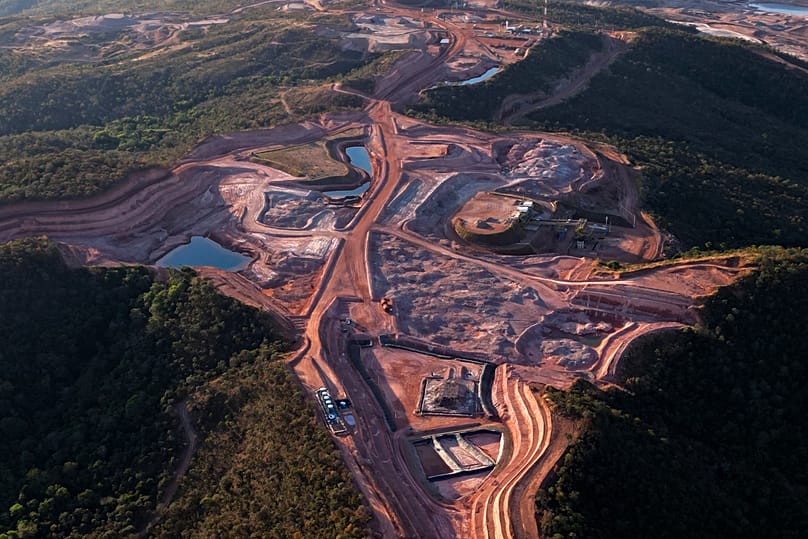
A mine operated by Serra Verde Mining in Minacu, Goias state, Brazil, July 28, 2025, produces rare earth elements, including neodymium, praseodymium and terbium. AP Photo / Eraldo Peres

At a technical briefing in December, EU Executive Vice President Stéphane Séjourné acknowledged the bloc's dependence on raw materials "in many sectors" and said the "dialogue with China remains essential" as he unveiled new measures last December to monitor the bloc's supply of critical raw materials.

Séjourné also warned that Brussels faces the challenge of maintaining a crucial trade relationship while standing firm as the US becomes an increasingly unreliable partner and pursues a decoupling strategy, including stockpiling its own critical raw materials.

"They are trying to store up raw materials from the US and elsewhere," he said of the second Trump administration. "For us, it's important to have the right organisation and financial tools so we can be effective when it comes to derisking."

The Commission is set to launch a European raw materials centre which will serve as the bloc's primary means of managing supply, avoiding fragmentation in the market and storing and deliver raw materials, he said.

"We need clarity about our sources of supplies, stocks, and challenges, especially at a time of tensions with China. We need to assess the level of tension in the market."

China in the lead

China accounts for 60% of global production of critical raw materials and 90% of refining capacity, and according to the European Parliament's research department, the EU collectively depends on Beijing for roughly 90% of its raw materials and 98% of its rare-earth magnets.

A December 2025 policy brief from the Jacques Delors Institute warned that "Beijing has been increasingly using these dependencies as geopolitical leverage". In recent years, most recently in 2025, Beijing has repeatedly halted or restricted exports of rare earths to the EU.

After diplomatic talks between Beijing and Brussels saw exports resume, the European Chamber of Commerce in China reported that based on information from 22 European companies between August and early September 2025, Chinese authorities had only approved 19 out of 141 licence applications, with 121 “urgent” applications still pending.

"Despite repeated warnings, most (European) companies have so far failed to diversify away from China and have resisted sharing the granular supply chain data needed for aggregation," the Jacques Delors Institute wrote.

Martin Vladimirov, director of the Geoeconomics Program at the Centre for the Study of Democracy, said Chinese companies have pursued stakes in Arctic minerals, including rare earths in Greenland and iron ore and nickel across the High North, further expanding their control over these key minerals.

"These resources sit at the heart of global clean-energy supply chains, so access to them reinforces China’s dominance over low-carbon manufacturing,” said Vladimirov.

Most strategic materials are available in many other regions worldwide, ECA said, noting that the major challenge is the lack of a developed industry with affordable output, as China's long-time investment in critical raw materials gives it a privileged position in the market.

EU's legal architecture versus Chinese dominance

The EU executive adopted the Critical Raw Materials Act (CRMA) in 2024 seeking to reduce reliance on foreign players, including China, and to ensure diversification of supply in a bid for the bloc to deliver the European Green Deal, the EU’s plan to become carbon neutral by 2050.

Under the CRMA, 34 critical and 17 strategic raw materials were designated as “crucial” for the green and digital transitions and for the defence and space industries.

The law sets three non-binding 2030 targets for the EU’s annual consumption of raw materials: 10% for local extraction, 40% to be processed in the EU, and 25% to emanate from recycled materials.

The CRMA also states that no more than 65% of each strategic raw material can be sourced from a single non-EU country, a challenge given the bloc's significant dependence on China, which the ECA says controls the processing stage for several strategic materials key to the energy transition – among them magnesium, gallium, and all rare earth elements.

"There is still a long way to go to meet the targets, and the EU will struggle to secure the supply of the strategic raw materials it needs by the end of the decade," the EU auditors said.

Binding recycling targets?

The Luxembourg-based ECA highlighted the untapped potential of recycling to reverse the current negative outlook, noting that most EU recycling targets neither incentivise recycling individual materials nor encourage the uptake of recycled materials.

"In the relevant legislation, (the EU should) consider introducing binding recycling targets for individual critical raw materials, and realistic collection and recovery targets for waste containing critical raw materials," the ECA suggests.

The auditors also suggest the EU should encourage the commercial viability of critical raw materials recycling operations by easing imports into the EU and the movement of waste containing critical raw materials within the bloc.

"Today, 10 of the critical materials that we need for the energy transition are not recycled at all, and most EU targets that are in place do not incentivise the recycling of specific, individual materials," said Pentus-Rosimannus.

High processing costs, limited material availability, and technical and regulatory issues also make the EU’s recycling sector less competitive, she noted, drawing a contrast with China's vertical integration, scale advantages and low labour costs.

"In the era of rising geopolitical tensions, the EU needs to up its game. It has to make strategic partnerships deliver, unleash the potential of reuse and recycling and ensure that strategic projects provide supply for the EU industry, not our competitors," Pentus-Rosimannus said.


Xi calls for renminbi to become a global reserve currency

Xi calls for renminbi to become a global reserve currency
China's Xi called for renminbi to become a global reserve currency, but the process will take a long time and won't replace the greenback. / bne IntelliNews
By Ben Aris in Berlin February 2, 2026

President Xi Jinping issued his strongest call yet for China’s renminbi to become a global reserve currency and compete head-on with the dollar.

He declared that China must develop a “powerful currency” capable of becoming a global reserve asset as Beijing intensifies efforts to reshape the international monetary order and spread the use of the yuan as the money to settle international trade deals.

In a commentary published on February 3 in Qiushi, the Communist Party’s leading ideological journal and cited by the Financial Times, Xi said China must build a currency “widely used in international trade, investment and foreign exchange markets, and attain reserve currency status.”

The remarks, originally delivered to senior regional officials in 2024 but released publicly for the first time this week, reflect the BRICS countries to de-dollarise the international financial system and remove some of the US’ leverage over the rest of the world.

To support this vision, Xi outlined the institutional foundations required to back a global currency: a “powerful central bank”, globally competitive financial institutions, and international financial centres that can “attract global capital and exert influence over global pricing.”

And a lot of progress towards this goal has already been made. While the dollar continues to account for about 60% of international trade deals, large regional markets have developed which have already been de-dollarized. For example, the vast majority of the Sino-Russia trade is already settled exclusively in national currencies.

At the same time the West’s decision to weaponize the dollar with the SWIFT sanctions on Russia and the freezing of $300bn of Central Bank of Russia (CBR) reserves and unsettled central bankers around the world, who are now actively reducing the share of dollars in their reserves basket.

Xi’s remarks come in the midst of turmoil on the international monetary markets after the dollar weakened significantly in recent weeks, a development US President Donald Trump described as “great” for American exports. Xi’s emphasis on the renminbi as a response to “recent ruptures in the global order.”

Since Russia’s full-scale invasion of Ukraine in 2022, the renminbi has become the currency of choice in international trade, along with the euro. The yuan is now the second-largest trade finance currency in the world after the greenback. However, its role in official reserves remains limited. Russia has embraced the yuan which now makes up the bulk of its cash reserves as part of the yuanization of its economy. But other countries have been more reticent in building up their reserves of yuan. As of the third quarter of 2025, the renminbi accounted for 1.93% of global reserves, compared to 57% for the US dollar and 20% for the euro, according to the International Monetary Fund, the FT reports.

While Chinese policymakers have allowed the yuan to strengthen modestly past CNY7 per dollar, it continues to depreciate against the euro. Foreign trading partners have also urged Beijing to permit greater appreciation, arguing the currency remains undervalued, fuelling a record $1.2 trillion trade surplus last year.

The IMF has called on China to address underlying economic imbalances, with Managing Director Kristalina Georgieva citing persistent deflation and a “significant real exchange rate depreciation.”

However, Chinese officials maintain they are not manipulating the currency. “China has no intention of using a weaker renminbi to gain a trade advantage,” said Zou Lan, vice-governor of the People’s Bank of China, last month, the FT reports.

While analysts caution that the renminbi’s ascent will be gradual, the political momentum is unmistakable.

‘Earthquake of Biblical Proportions’ as Democrat Flips Deep-Red Texas State Senate Seat

In a speech before cheering supporters, Democrat Taylor Rehmet dedicated his victory “to everyday working people.”
 

Democrat Taylor Rehmet, winner of a special election in Texas’ Senate District 9, poses for a photo.
(Official photo via Taylor Rehmet campaign)

Brad Reed
Feb 01, 2026
COMMON DREAMS

Democrats scored a major upset on Saturday, as machinist union leader Taylor Rehmet easily defeated Republican opponent Leigh Wambsganss in a state senate special election held in a deep-red district that President Donald Trump carried by 17 percentage points in 2024.

With nearly all votes counted, Rehmet holds a 14-point lead in Texas’ Senate District 9, which covers a large portion of Tarrant County.

In a speech before cheering supporters, Rehmet dedicated his victory “to everyday working people” whom he credited with putting his campaign over the top.

Republican opponent Wambsganss conceded defeat in the race but vowed to win an upcoming rematch in November.

“The dynamics of a special election are fundamentally different from a November general election,” Wambsganss said. “I believe the voters of Senate District 9 and Tarrant County Republicans will answer the call in November.”

Republican Texas Lt. Gov. Dan Patrick reacted somberly to the news of Rehmet’s victory, warning in a social media post that the result was “a wake-up call for Republicans across Texas.”

“Our voters cannot take anything for granted,” Patrick emphasized.


Democratic US Senate candidate James Talarico, on the other hand, cheered Rehmet’s victory, which he hinted was a sign of things to come in the Lone Star State in the 2026 midterm elections.

“Trump won this district by 17 points,” he wrote. “Democrat Taylor Rehmet just flipped it—despite Big Money outspending him 10:1. Something is happening in Texas.”

Steven Monacelli, special correspondent for the Texas Observer, described Rehmet’s victory as “an earthquake of Biblical proportions.”

“Tarrant County is the largest red county in the nation,” Monacelli explained. “I cannot emphasize enough how big this is.”

Adam Carlson, founding partner of polling firm Zenith Research, noted that Rehmet’s victory was truly remarkable given the district’s past voting record.

“The recent high water mark for Dems in the district was 43.6% (Beto 2018),” he wrote, referring to Democrat Beto O’Rourke’s failed 2018 US Senate campaign. “Rehmet’s likely to exceed 55%. The heavily Latino parts of the district shifted sharply to the left from 2024.”

Polling analyst Lakshya Jain said that the big upset in Texas makes more sense when considering recent polling data on voter enthusiasm.

“Our last poll’s generic ballot was D+4,” he explained. “Among the most enthusiastic voters (a.k.a., those who said they would ‘definitely’ vote in 2026)? D+12. Foreseeable and horrible for the GOP.”

Bud Kennedy, a columnist for the Forth Worth Star-Telegram, argued that Rehmet’s victory shows that “Democrats can win almost anywhere in Texas” in 2026.

Kennedy also credited Rehmet with having “the perfect résumé for a District 9 Democrat” as “a Lockheed Martin leader running against a Republican who had lost suburban public school voters, particularly in staunch-red Republican north Fort Worth.”


No 'Republican is safe right now': How MAGA lost a district Trump carried by 17 points


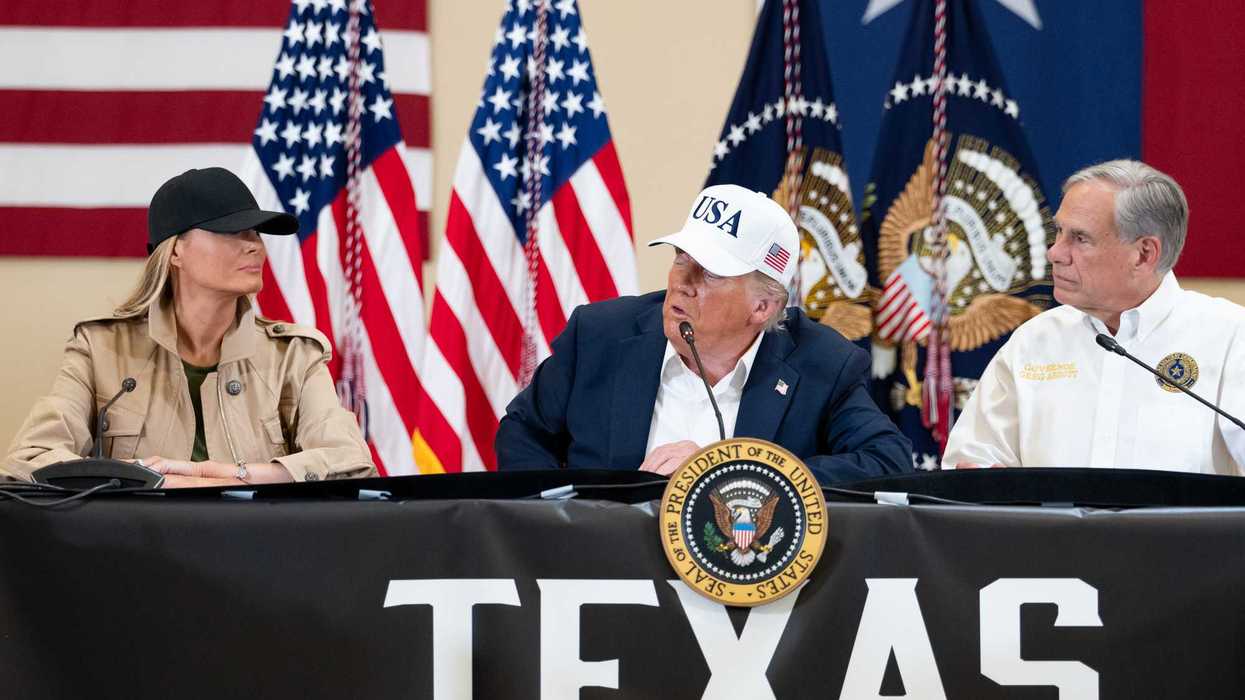
Texas Gov. Greg Abbott with President Donald Trump and First Lady Melania Trump in Kerrville, Texas on July 11, 2025 (Official White House Photo by Andrea Hanks/Flickr)

February 02, 2026 


In September 2024, Texas Rep. Ramón Romero was at a fundraiser in Fort Worth for Kamala Harris when he met a young labor leader named Taylor Rehmet.

The Air Force veteran and union machinist told Romero he was mulling a run for public office. A lot of people think about running, Romero recounted telling him, but he offered to help should Rehmet actually file.

The two stayed in touch, and Rehmet decided last summer to run in a special election for a ruby red Texas Senate district in Tarrant County that no Democrat had represented in nearly half a century and that President Donald Trump won by more than 17 points in 2024. When Romero mobilized to help Rehmet court Latino voters — many of them from the same Fort Worth neighborhoods he represents in the House — he saw a serious first-time candidate meeting power brokers, talking to voters on front porches and running a long-shot bid like he could win it.

On Saturday, Rehmet did win it, in part thanks to a spike in support from the Latino vote.

He defeated conservative activist Leigh Wambsganss — whose campaign far outspent Rehmet — by a decisive 14-point margin in a stunner that reverberated from Texas to Mar-a-Lago, refreshing Democrats’ dreams of a blue Texas and rattling Republicans as they brace for more aftershocks in November.


Rehmet’s upset victory, according to interviews Sunday with half a dozen people who supported or worked on his campaign, is explained by a variety of factors, including the combination of Latino and suburban backlash to once-fringe conservative policies that have taken root in Tarrant County and Washington; a MAGA opponent who drove some of those policies and embraced them on the campaign trail; and a message from Rehmet, centered on his union background, that won over working-class voters, independents and even some moderate Republicans.

Instrumental to Rehmet’s victory was the backing he received from Hispanics, who account for slightly more than one in five eligible voters in the district. One analyst found that Rehmet outperformed Harris, the 2024 Democratic presidential nominee, by more than 50 points in some of the largely Hispanic areas of Fort Worth. The remarkable shifts occurred as those voters witnessed immigration agents in recent weeks kill two Americans while trying to carry out the president’s promised mass deportations. And those same voters, some observers noted, believed Trump would help their financial standing more than what he has delivered in his first year in office.

Up against Rehmet was a ferocious campaign fueled by some of the GOP’s biggest heavyweights — Lt. Gov. Dan Patrick and Trump among them. They backed Wambsganss, who’s set to get a rematch against Rehmet in November for a four-year term, as Rehmet’s victory was only to complete the remaining 11 months in a term Republican Kelly Hancock left to become Texas’ acting comptroller.

“He is a hard worker. People think that you can just win elections. You’re gonna have to really work it, and he did,” Romero, who block-walked for Rehmet, said in an interview Sunday. “I had more Republicans — people calling me saying, ‘I voted for Rehmet.’ ‘I voted for Rehmet.’ ‘Hey, I just want you to know — I voted for Rehmet.’”

To be sure, the election was unique. It was held on a Saturday in January, with no other candidates on the ballot, following a cold snap that affected campaigning and early voting. The singularity limits what can be gleaned from Rehmet’s stunning upset. But as the blame game among Republicans grew louder on Sunday, it also became clear that the 32-point swing for Democrats could not be simply dismissed as irrelevant.

Still, some Democrats counseled restraint in interpreting the results.

“I don't think that Democrats should think that just because Taylor won last night, that it’s New York City time. It's not New York City time. It's not Vermont time. It's not LA time,” said U.S. Rep. Marc Veasey, a Fort Worth Democrat, noting that Texas is far from becoming one of the country’s liberal bastions. “If you are a candidate running in a tough race in a place like Texas, it does not mean that you can start California dreaming.”

By numerous indications, the election should have been a sleepy one. Aside from Trump’s margin in 2024, the district has been reliably red: Per one analysis, Republicans have carried it by an average of nearly 19 points in 44 state and federal contests since 2018.

The first indication that the race would be a live one arrived in November, when Rehmet finished three points shy of winning the seat outright.

In both rounds, but especially in the runoff, Texas GOP leaders went to bat for Wambsganss, tapping into their own funds, block-walking the district and ringing alarms about the race, saying they needed to keep the seat red and away from a radical Democrat.

In all, Wambsganss’ campaign reported raising $2.6 million, almost two-thirds — $1.6 million — of which came from three of the most powerful and loaded groups in Texas GOP politics. Texans United for a Conservative Majority, started by right-wing West Texas oil billionaires Tim Dunn and Farris Wilks, gave her campaign nearly $603,000 — more than Rehmet’s entire campaign haul of some $570,000.

The Texas Senate Leadership Fund, a PAC started by Patrick, who oversees the state Senate, added $463,250. And the influential tort reform group Texans For Lawsuit Reform PAC added $550,000.

Rehmet’s campaign knew it simply could not raise the same amount of money, his campaign strategist Jake Davis said in an interview Sunday.

But the camp was also not interested in a strategy that involved matching Wambsganss dollar for dollar, Davis said. Knowing they would be outgunned on the advertising airwaves, Davis instead sought out to assemble a staff of Texans from across the state, based them in Tarrant County and identified a north star of knocking on 40,000 doors.

Every week, they worked backward from that target — spending time with people in their living rooms, kitchens and driveways. The staff received training on active listening, Davis said. If a voter had a question the volunteer did not have an answer for, Rehmet’s team would run it down — sometimes calling the candidate himself in front of the voter.

“We had to stay relentlessly disciplined,” Davis said. “Every single dollar, every hour, every volunteer shift, had to have a purpose. There were so many un-sexy decisions that we had to make.”

Of course, the campaign received help, like from Romero — as well as from Beto O’Rourke, the Democratic darling who shattered fundraising goals and expectations in 2018 when he almost unseated U.S. Sen. Ted Cruz.

O’Rourke’s political group, Powered by People, helped register people to vote in the district, stayed in touch with them to encourage them to vote and called and texted 30,000 voters eligible to vote by mail. In an interview Sunday, the former El Paso congressman credited Rehmet’s campaign for the victory — and struck an optimistic tone for Democrats in November.


“I don't think any Republican is safe right now,” O’Rourke said. “I think the people of Texas have absolutely had it and are looking for change.”

Bo French, until recently the Tarrant County GOP chair, blamed poor turnout among Republican voters.

“I see a lot of Republicans blaming everyone from the Governor to the county party,” French wrote on social media. “Republicans need to wake up. When you stay home during local elections and special elections, Democrats win. You can't blame others for your failure to vote.”

Some party superiors see a serious threat. In an early Sunday social media post, Patrick vowed to keep fighting and take the seat back in November.

“Low turnout special elections are always unpredictable,” Patrick wrote. “The results from SD 9 are a wake-up call for Republicans across Texas. Our voters cannot take anything for granted.”

Trump, for his part, distanced himself from the loss, spinning heads in the process after he had posted three different get-out-the-vote messages in the 48 hours leading up to the election.

“I’m not involved in that,” Trump told reporters at his Mar-a-Lago estate in Florida. “That’s a local Texas race.”

As political observers tried to make sense of the upset, a range of theories emerged to explain what still remained inexplicable to many as the dust settled: It was a referendum on Trump, it was a response to socially conservative policies, it was a response to the hard-right turn of local GOP leaders, it was a poorly run GOP campaign, and onward.

John Huffman, the Republican former Southlake mayor who finished a distant third in the November election, chalked it up to “failed opportunities to unify.”

“There was no outreach to the 19,000 voters who supported our campaign in November,” Huffman wrote on social media. “Nor did Leigh's campaign reach out to me until days before early voting began, leaving no time to unify Republicans or broaden the coalition. When she and I finally did meet, she ended the conversation almost as soon as it started.”

On paper, Wambsganss’ envious conservative bona fides were unmatched by many GOP candidates seeking office in Texas.

She is the chief communications officer for Patriot Mobile, a cellphone company that has helped back the Christian conservative school board candidates who overhauled libraries, curricula and raised hell in board meetings across the state about what children are taught.

She had the backing of party state leaders and the district’s former state senator.

“They could have built her in their garage,” veteran Texas Democratic operative Matt Angle said. “Taylor Rehmet is just an absolute reflection of that district. Leigh Wambsganss is an absolute reflection of national MAGA. The voters decided which one they like, and it wasn't a close call.”

Still, political observers reiterated the uniqueness of the election and the challenges of trying to draw conclusions from an election that only drew a sliver of registered voters.

Jason Villalba, a former Republican state representative who now leads the Texas Hispanic Policy Foundation, predicted Latinos — “the most important swing vote in the country,” he said — will continue to vote in surprising ways in coming elections. He cautioned that such voting trends “in today’s climate move at light speed.”

“I don't think you can take what happened last night and say, that's gonna hold into November, and these numbers are now static and nothing’s going to change,” Villalba said. “It’s early. This was a strong indicator that Hispanics are moving back toward Democrats.”

This article first appeared on The Texas Tribune
.