Tuesday, February 03, 2026


Using generative AI to help scientists synthesize complex materials


MIT researchers’ new model offers recipes for synthesizing new materials, enabling faster experimentation and a shorter journey from theory to use.


Massachusetts Institute of Technology


Generative AI models have been used to create enormous libraries of theoretical materials that could help solve all kinds of problems. Now, scientists just have to figure out how to make them.

In many cases, materials synthes is not as simple as following a recipe in the kitchen. Factors like the temperature and length of processing can yield huge changes in a material’s properties that make or break its performance. That has limited researchers’ ability to test millions of promising model-generated materials.

Now, MIT researchers have created an AI model that guides scientists through the process of making materials by suggesting promising synthesis routes. In a new paper, they showed the model delivers state-of-the-art accuracy in predicting effective synthesis pathways for a class of materials called zeolites, which could be used to improve catalysis, absorption, and ion exchange processes. Following its suggestions, the team synthesized a new zeolite material that showed improved thermal stability. 

The researchers believe their new model could break the biggest bottleneck in the materials discovery process.

“To use an analogy, we know what kind of cake we want to make, but right now we don’t know how to bake the cake,” says lead author Elton Pan, a PhD candidate in MIT’s Department of Materials Science and Engineering (DMSE). “Materials synthesis is currently done through domain expertise and trial and error.”

The paper describing the work will appear in Nature Computational Science. Joining Pan on the paper are Soonhyoung Kwon ’20, PhD ’24; DMSE postdoc Sulin Liu; chemical engineering PhD student Mingrou Xie; DMSE postdoc Alexander J. Hoffman; research assistant Yifei Duan SM ’25; DMSE visiting student Thorben Prein; DMSE PhD candidate Killian Sheriff; MIT Robert T. Haslam Professor in Chemical Engineering Yuriy Roman-Leshkov; Valencia Polytechnic University Professor Manuel Moliner; MIT Paul M. Cook Career Development Professor Rafael Gómez-Bombarelli; and MIT Jerry McAfee Professor in Engineering Elsa Olivetti.

Learning to bake

Massive investments in generative AI have led companies like Google and Meta to create huge databases filled with material recipes that, at least theoretically, have properties like high thermal stability and selective absorption of gases. But making those materials can require weeks or months of careful experiments that test specific reaction temperatures, times, precursor ratios, and other factors.

“People rely on their chemical intuition to guide the process,” Pan says. “Humans are linear. If there are five parameters, we might keep four of them constant and vary one of them linearly. But machines are much better at reasoning in a high-dimensional space.”

The synthesis process of materials discovery now often takes the most time in a material’s journey from theory to use.

To help scientists navigate that process, the MIT researchers trained a generative AI model on over 23,000 material synthesis recipes described over 50 years of scientific papers. The researchers iteratively added random “noise” to the recipes during training, and the model learned to de-noise and sample from the random noise to find promising synthesis routes.

The result is DiffSyn, which uses an approach in AI known as diffusion.

“Diffusion models are basically a generative AI model like ChatGPT, but more like the DALL-E image generation model,” Pan says. “During inference, it converts noise into meaningful structure by subtracting a little bit of noise at each step. In this case, the ‘structure’ is the synthesis route for a desired material.”

When a scientist using DiffSyn enters a desired material structure, the model offers some promising combinations of reaction temperatures, reaction times, precursor ratios, and more.

“It basically tells you howto bake your cake,” Pan says. “You have a cake in mind, you feed it into the model, the model spits out the synthesis recipes. The scientist can pick whichever synthesis path they want, and there are simple ways to quantify the most promising synthesis path from what we provide, which we show in our paper.”

To test their system, the researchers used DiffSyn to suggest novel synthesis paths for a zeolite, a material class that is complex and takes time to form into a testable material.

“Zeolites have a very high-dimensional synthesis space,” Pan says. “Zeolites also tend to take days or weeks to crystallize, so the impact [of finding the best synthesis pathway faster] is much higher than other materials that crystallize in hours.”

The researchers were able to make the new zeolite material using synthesis pathways suggested by DiffSyn. Subsequent testing revealed the material had a promising morphology for catalytic applications. 

“Scientists have been trying out different synthesis recipes one by one,” Pan says. “That makes them very time-consuming. This model can sample 1,000 of them in under a minute. It gives you a very good initial guess on synthesis recipes for completely new materials.”

Accounting for complexity

Previously, researchers have built machine-learning models that mapped a material to a single recipe. Those approaches do not take into account that there are different ways to make the same material.

DiffSyn is trained to map material structures to many different possible synthesis paths. Pan says that is better aligned with experimental reality.

“This is a paradigm shift away from one-to-one mapping between structure and synthesis to one-to-many mapping,” Pan says. “That’s a big reason why we achieved strong gains on the benchmarks.”

Moving forward, the researchers believe the approach should work to train other models that guide the synthesis of materials outside of zeolites, including metal-organic frameworks, inorganic solids, and other materials that have more than one possible synthesis pathway.

“This approach could be extended to other materials,” Pan says. “Now, the bottleneck is finding high-quality data for different material classes. But zeolites are complicated, so I can imagine they are close to the upper-bound of difficulty. Eventually, the goal would be interfacing these intelligent systems with autonomous real-world experiments, and agentic reasoning on experimental feedback to dramatically accelerate the process of materials design.”

The work was supported by MIT International Science and Technology Initiatives (MISTI), the National Science Foundation, Generalitat Vaslenciana, the Office of Naval Research, ExxonMobil, and the Agency for Science, Technology and Research in Singapore.

###

Written by Zach Winn, MIT News

Could dietary change support adolescent mental health? New review highlights evidence gaps and future research priorities


Swansea University


A study led by researchers at Swansea University suggests that dietary patterns may play a role in adolescent mental health and sets out a detailed research roadmap to better understand this relationship.

The review, published in the journal Nutrients, examined evidence from 19 studies exploring links between diet and mental health outcomes in adolescents. Across the studies, healthier overall dietary patterns were often associated with fewer depressive symptoms, while poorer diet quality was linked to greater psychological distress.

The researchers analysed six randomised controlled trials and 13 prospective cohort studies. They found that evidence supporting individual nutrient supplementation was mixed, with emerging but inconsistent findings that vitamin D supplementation may reduce depressive symptoms in adolescents. In contrast, whole-diet patterns and diet quality indices showed more consistent associations with favourable mental health outcomes.

The authors note that adolescence represents a critical period for brain development and mental health, offering opportunities for prevention and early intervention. Diet, they highlight, is a modifiable and scalable factor embedded in daily life. However, they caution that the current evidence base remains inconsistent and is influenced by demographic factors such as socioeconomic status and sex.

The review aimed to strengthen the real-world relevance of existing research by focusing beyond clinic-defined groups, with the goal of informing both clinical practice and public health policy.

The study also identifies significant gaps in the current literature. Most research to date has focused on depression, leaving outcomes such as anxiety, stress, externalising behaviours, self-esteem and aggression comparatively underexplored.

To address these gaps, the authors present a detailed roadmap for future research, outlining recommended study designs, priority topics and methodological approaches. These include greater use of exposure-based studies, incorporation of biological markers, improved standardisation, open science practices, and broader mental health outcome measures.

The research was supported by the Cognitive Health Committee of the Institute for the Advancement of Food & Nutrition Sciences (IAFNS).

Corresponding author Professor Hayley Young of Swansea University’s School of Psychology, said: “Overall, our findings suggest that public health and clinical strategies should prioritise whole-diet approaches over isolated supplementation when considering adolescent mental health. However, further high-quality research is needed to determine which dietary patterns are most effective and for whom.”

Read the paper A Recipe for Resilience: A Systematic Review of Diet and Adolescent Mental Health.

One-third of young people are violent toward their parents


University of Zurich


Physical aggression by young people toward their parents occurs quite frequently – yet the subject remains taboo. Victims often struggle with shame and avoid seeking help, hoping to shield their children from repercussions. Now, in a first-of-its-kind longitudinal study, researchers at the University of Zurich (UZH) have tracked the development of this behavior from early adolescence to young adulthood, identifying which factors increase or reduce the risk.


The research draws on the Zurich Project on Social Development from Childhood to Adulthood (z-proso), directed by Manuel Eisner, Denis Ribeaud and Lilly Shanahan at UZH’s Jacobs Center for Productive Youth Development. The study tracked more than 1,500 participants from early adolescence into young adulthood.


32.5% have at least one episode of physical aggression

Nearly one-third of participants (32.5 percent) acknowledge at least one episode of physical aggression toward their parents between the ages of 11 and 24, for instance involving hitting, kicking or throwing objects. This behavior peaks at age 13, when roughly 15% of respondents reported aggressive incidents. From there, the frequency of these episodes declined and plateaued at around 5% by early adulthood.


“At first glance, it may seem surprising that one-third of adolescents become physically aggressive toward their parents at some point,” says Lilly Shanahan. “But these are mostly isolated incidents, likely in the midst of heated parent-child conflicts that occur during puberty.  We’re not talking about systematic violence here, and it’s also not about individual failure.” Even so, Shanahan finds it troubling that two of the five in this subset acknowledged having these episodes on multiple occasions.


Parental conflict and ADD among risk factors

What drives young people to lash out at their parents? Educational attainment and socioeconomic status appear not to play a significant role. “This problem spans all social classes,” says lead author and postdoctoral researcher Laura Bechtiger. “It’s not limited to any particular social background or gender."


That said, researchers did identify multiple risk factors unrelated to whether the child generally has aggressive tendencies. Physical punishment and verbal aggression by parents increase the likelihood of creating a familial cycle of violence in which aggressive behavioral patterns are modeled to their children. Additionally, when parents frequently clash with one another, their children adopt similar patterns of conflict. Young people with attention-deficit and hyperactivity symptoms are also at greater risk, both because they often struggle with impulse control and may provoke impatience from their parents.


Conflict resolution and positive environments are protective factors

Fortunately, the research also offers hope: Certain factors can dramatically lower the risk of child-on-parent aggression. Children who have learned how to constructively deal with negative emotions and conflicts are far less prone to physical aggression. A supportive upbringing, where parents are actively involved in their children’s lives, show interest and offer emotional support, also reduces the risk considerably. Furthermore, the researchers believe that early prevention measures can lower the likelihood of aggression later on.


“Conflicts between parents and adolescents are normal and even important for development,” explains Denis Ribeaud, co-director of z-proso. “Isolated outbursts during puberty should trigger reflection but are not necessarily cause for alarm. If a pattern emerges, however, this is a red flag. Repeated physical aggression with increasing intensity is a warning sign, as are a lack of remorse and aggressive behavior extending outside of the family.”


Early prevention is key

At five percent, the share of 24-year-olds displaying physical aggression is comparatively small, but nonetheless significant. If physical attacks are still being carried out in early adulthood, there is an increased risk of this becoming a lasting pattern, with the attendant psychosocial consequences.


Sociologist Manuel Eisner emphasizes the importance of early intervention: “Prevention needs to be aimed at both parents and children. Parents should learn to rely less on corporal punishment and to create a supportive, constructive environment within the family. Children should also receive help to learn emotional regulation and constructive conflict resolution, even before they start school.”

Box
Methodology

The z-proso longitudinal study in Zurich has tracked the social development of children and young people since 2005. Researchers gathered information on physical aggression against parents from 1,522 participants at six intervals: ages 11, 13, 15, 17, 20 and 24. Risk factors and protective factors were recorded from ages 7 to 11. The data was analyzed using logistic regression.


World Nuclear News


Darlington refurb completed ahead of schedule, under budget


The refurbishment of the fourth and final Candu reactor at the Darlington nuclear power plant in Ontario has been completed and the unit is expected to be restarted later this month, four months ahead of schedule. 
 
Minister Stephen Lecce (Image: Screengrab from Government of Ontario/Youtube)

Candu units are pressurised heavy water reactors designed to operate for 30 years before refurbishment. Refurbishment is a major undertaking: it includes the replacement of key reactor components such as steam generators, pressure tubes, calandria tubes and feeder tubes, and involves removing all the reactor's fuel and heavy water and isolating it from the rest of the power station before it is dismantled. Thousands of components are inspected before the plant is rebuilt and is ready for another 30 years of operation.

Ontario Power Generation's (OPG's) Darlington units were refurbished in a ten-year, CAD12.8 billion (USD9.4 billion) project that will extend the plant's operating life to at least 2055. Unit 2 was the first to be refurbished and returned to service in June 2020; unit 3 returned to service in July 2023; and unit 1 returned to service in November 2024. 

Stephen Lecce, Ontario Minister of Energy and Mines, on Monday announced the completion of construction on the refurbishment of the Darlington unit 4 nuclear reactor. Originally expected to return to power in August this year, the unit has now received approval from the Canadian Nuclear Safety Commission (CNSC) to enter the initial power testing, which is expected to begin on 12 February, and will be at full power shortly after. In September last year, the CNSC announced it was authorising the Darlington plant to continue operating for a further 20 years, until November 2045.

"With all four units refurbished and ready to be brought back online, this marks the completion of the world’s largest refurbishment project to date, with the Darlington Nuclear Generating Station ready to deliver more than 3,500 MW of clean, reliable, emission-free electricity - enough to power 3.5 million homes - for at least 30 more years," the Ministry of Energy and Mines said. It noted that the Darlington refurbishment project - carried out by more than 6,000 Ontario workers - was completed CAD150 million under budget. During the construction phase, the project contributed an estimated CAD14.9 billion to Ontario's GDP, with 96% of project spending retained in the province.

"Ontario is proving to the world that we can deliver major nuclear energy projects on-time and on-budget," Lecce said. "Last year we returned another refurbished unit at Darlington four months ahead of schedule, and today we've done it again. Completing the full Darlington refurbishment on-time and under-budget is a made-in-Canada win for our economy, generating CAD90 billion in economic benefits and supporting 14,200 good-paying jobs. In a world of uncertainty, our government is doubling down on Canadian nuclear technology and workers, with 94% of investment benefiting Ontario's supply chain. It is a tremendous industrial advantage that Canada is among only six nations that own civilian nuclear technology."

"Bringing the Darlington refurbishment in ahead of schedule and under budget will clearly demonstrate our team's ability to deliver large and complex nuclear projects," said OPG President and CEO Nicolle Butcher. "The skills we developed and lessons we learned during this project are invaluable as we proceed with refurbishing Pickering Nuclear Generating Station, continue construction on the G7's first small modular reactor at the Darlington New Nuclear Project, and study the potential for up to 10,000 MW of new nuclear at Wesleyville."

According to a report by the Conference Board of Canada, the Darlington refurbishment project and the subsequent 30 years of station operation are expected to generate a total of CAD90 billion in economic benefits for Ontario.

In November 2025, the Ontario government approved OPG's plan to refurbish four Candu nuclear reactors at its Pickering plant, clearing the way for a start to the execution phase of the project, subject to final regulatory approvals.

George Christidis, president and CEO of the Canadian Nuclear Association, added: "This milestone is the result of years of project management excellence and sustained collaboration across Ontario's nuclear sector. Completing the Darlington refurbishment ahead of schedule and under budget demonstrates the strength of Canada's nuclear industry, while helping position Canada as a global leader in nuclear refurbishment and life-extension projects. It also underscores the industry's ability to deliver clean, reliable power that supports long-term economic growth."

"Darlington's ahead of schedule and under budget refurbishment stands as a remarkable achievement for Ontario and a powerful demonstration of what Canada's nuclear sector can achieve," said World Nuclear Association Director General Sama Bilbao y León. "This accomplishment is a testament to the excellence of the entire team, including Ontario Power Generation, Atkins Réalis, the Canadian Nuclear Safety Commission, and the many suppliers and technical partners from throughout the nuclear value chain, as well as to the support and the visionary leadership of the government of Ontario. This success is more than a milestone; it is a foundation. The industrial capabilities, the supply chain strength, and the project discipline proven at Darlington will be essential as Canada and Ontario move forward with new nuclear deployment, from next generation SMRs to large scale reactors. The world is watching, and Darlington shows that Canada is ready to lead the next era of clean energy with nuclear as its anchor."

Serbia discusses new nuclear with French development agency


Serbia's Minister of Mining and Energy Dubravka Đedović Handanovic has held talks with the Agence Française de Développement about cooperation related to the energy transition "especially in the development of nuclear energy applications in Serbia".
 
(Image: Serbian Mining and Energy Department)

Đedović Handanovic, pictured above, noted the existing cooperation agreement in the field of nuclear energy between the Serbian Government and France's state-owned energy giant EDF, which included a preliminary technical study on the peaceful use of nuclear energy in Serbia.

"Given that Serbia needs new sources of base energy, due to the growth of electricity consumption and the need for decarbonisation, we have sent a request to AFD (Agence Française de Développement) for support in the first phase of the nuclear programme ... which includes support in the development of professional staff and assessment of the impact of nuclear power plants on the transmission network," she said.

"Given that France is recognised as a country that has extensive experience in nuclear energy, Serbia finds their experience very useful. We are discussing the continuation of cooperation with EDF in the implementation of the first phase of the development of the nuclear programme, which includes the training of personnel and informing the general public about the potential application of nuclear energy in Serbia."

The energy ministry said that the next steps agreed were on the development of a special study of the French agency's support in the development of nuclear energy in Serbia, as well as cooperation in the field of energy efficiency. "With the technical support of the AFD, we will also work on long-term planning of the energy transition, in line with the goals we have set for 2050," the minister added.

Serbia had a longstanding law banning the construction of nuclear power plants, but in December 2024 the National Assembly voted through amendments to the energy law ending that 35-year prohibition.

In October 2024 EDF and French engineering consultancy Egis were awarded a contract by Serbia's Ministry of Mining & Energy to conduct a preliminary technical study on the potential use of nuclear power in the country, and the country has also held talks with Russia's Rosatom about non-energy applications of nuclear technologies. President Aleksandar Vučić has also discussed the option of Serbia acquiring 5 to 10% of Hungary's Paks nuclear power plant.

Vučić said at 2024's multinational Nuclear Energy Summit in Brussels, that the country was seeking support from other countries in terms of know-how and financing to achieve its aim of getting 1200 MW of capacity from small modular reactors.

The French development agency says it finances and support projects aiming to build "a fairer, more inclusive, and sustainable future. In a world facing climate challenges, growing inequalities, and geopolitical tensions, we invest to develop concrete, humane, and responsible solutions".

Kursk II's first unit reaches 40% capacity


Pilot operation of the first unit of Russia's Kursk II nuclear power plant has begun, with the unit set to increase its output in stages over the coming months.
 
(Image: Rosatom)

By 13:00 local time on 30 January the unit was operating at a load of 408 MW, which is about 40% capacity for the VVER-TOI reactor. Pilot operation began the previous day, for the unit which was connected to the grid on 31 December.

Prior to the start of pilot operation a series of tests were carried out before Russia's nuclear regulator Rostekhnadzor gave approval for the go-ahead.

At each stage of the commissioning process, as the power is gradually increased, tests and checks take place before moving on to the next level, with the regulator overseeing all stages to confirm it complies with all safety standards.

Alexey Likhachev, Rosatom Director General, said: "Pilot operation is a crucial stage, confirming the design conformity of the power unit's systems and equipment under various operating conditions. This is a significant achievement for the entire Kursk NPP-2 team and Rosenergoatom, whose daily efforts are bringing the power unit closer to commercial operation."

The plan is for the power unit to enter commercial operation during 2026.

Background

Kursk II is a new nuclear power plant in western Russia, about 60 kilometres (37.5 miles) from the Ukraine border, that will feature four VVER-TOI reactors, the latest version of Russia's large light-water designs. They have upgraded pressure vessels and a power rating of 1,250 MW. Construction of the first unit began in 2018, its polar crane was installed in October 2021 and the reactor vessel was put in place in June 2022. Concreting of the outer dome of the first unit was completed in August 2023. The second unit is also under construction and the target is for all four units to be in operation by 2034.

Rosatom says the service life of the main equipment has doubled, and that the VVER-TOI units feature a mix of passive and active safety systems and include a core meltdown localiser. The new units at Kursk II will replace the four units at the existing, nearby Kursk nuclear power plant, which are scheduled to shut by 2031. The first unit was shut down after 45 years of operation in December 2021 and the second unit followed in January 2024. The original design life for the four RBMK-1000 reactors at the plant was for 30 years but had been extended by 15 years following life extension programmes.

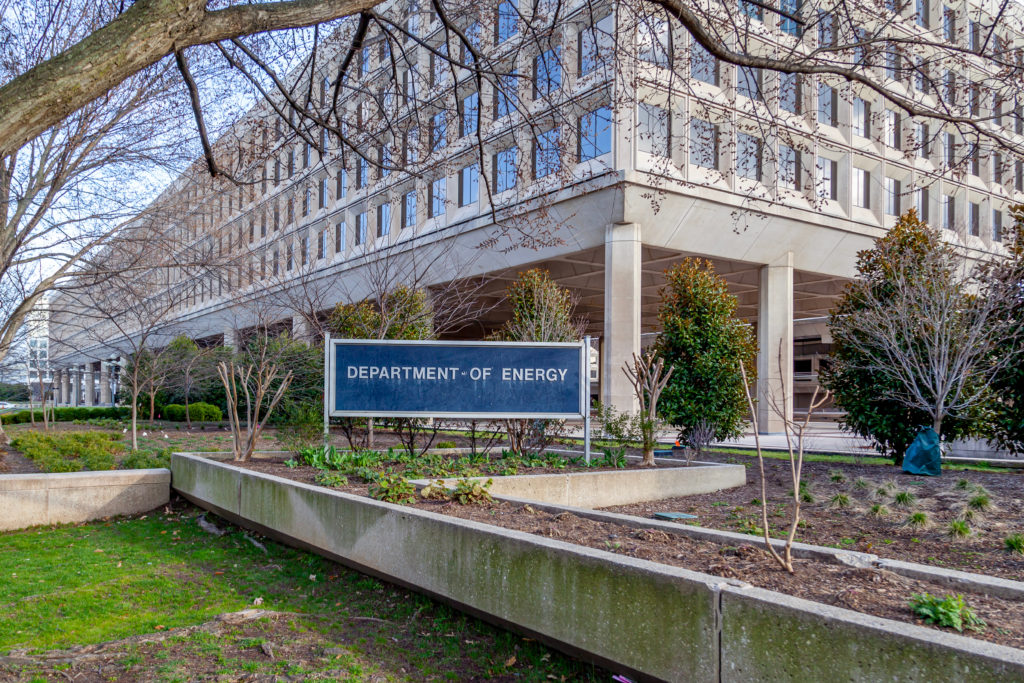
US Department of Energy opens search for Nuclear Innovation Campus hosts 

Stock image.

The US Department of Energy (DOE) has issued a Request for Information (RFI) inviting states to express interest in hosting Nuclear Lifecycle Innovation Campuses, to modernize the nation’s full nuclear fuel cycle and strengthen America’s leadership in advanced nuclear energy. 

This action marks the first step towards potentially establishing voluntary Federal-State partnerships designed to advance regional economic growth, enhance national energy security, and build a coherent, end-to-end nuclear energy strategy for the country. 

“Unleashing the next American nuclear renaissance will drive innovation, fuel economic growth, and create good-paying American jobs while delivering the affordable, reliable and secure energy America needs to power its future,” US Energy Secretary Chris Wright said in a news release. 

“Nuclear Lifecycle Innovation Campuses give us the opportunity to work directly with states on regional priorities that support President Trump’s vision to revitalize America’s nuclear base,” Wright said.  

The proposed campuses could support activities across the full nuclear fuel lifecycle, including fuel fabrication, enrichment, reprocessing used nuclear fuel, and disposition of waste.  

Depending on state priorities and regional capabilities, the sites could also host advanced reactor deployment, power generation, advanced manufacturing, and co-located data centers. 

The DOE is inviting states to provide clear statements of interest and constructive feedback on the structure of the Innovation Campuses.  

Submissions should outline state priorities—such as workforce development, infrastructure investment, economic diversification, or technology leadership— and describe the scope of activities the state envisions hosting.  

States are also encouraged to identify the funding structures, risk sharing approaches, incentives and federal partnerships required to successfully establish and sustain a full-cycle Innovation Campus.  

Responses to the RFI are requested by April 1, 2026. More information is here.