8 February, 2026
The author argues the FT has shifted from a “candid elite forum” and the “best of the British free-thinking tradition,” to a “timid, risk-averse rag."
(NOT THAT WOKE! ED LUCE; FT EDITOR USA, IS A REGULAR ON MSNOW MORNING JOE)
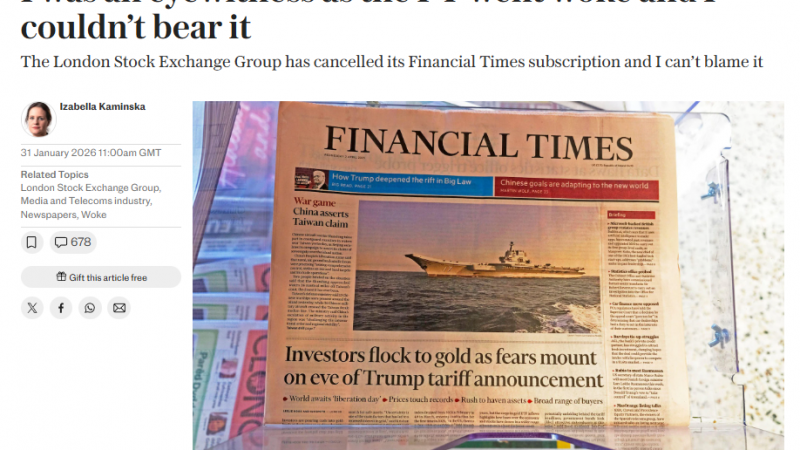
If there’s one newspaper you’d think would be immune to accusations of being “woke,” it’s surely the Financial Times.
Yet according to an opinion piece in the Telegraph, the 138-year-old FT, whose pink pages are as much a symbol of the City as bowler hats and pinstripe suits, has succumbed to the clutches of the woke brigade.
In a lengthy polemic, Isabella Kaminska, former editor of the FT’s markets and finance blog Alphaville, casts herself as an “eyewitness” to the paper’s alleged ideological capture, a transformation she says she “couldn’t bear.”
Her central evidence is the London Stock Exchange Group’s (LSEG) decision to cancel hundreds of corporate subscriptions to the FT, ending a relationship that stretches back to the creation of the FTSE 100 itself. Kaminska argues that the move reflects the LSEF’s dissatisfaction with the FT’s “shifting editorial priorities.”
As a former FT journalist who resigned over what she calls “institutional politicisation,” she claims she can “understand where the LSEG is coming from.”
The charge of “wokeness” soon unravels. Kaminska argues the FT has shifted from a “candid elite forum” and the “best of the British free-thinking tradition,” to a “timid, risk-averse rag,” supposedly unwilling to publish ideas that sit outside the “prevailing party line.”
Yet she never convincingly defines what that party line is, beyond a vague sense that it is more socially liberal, more global in outlook, and less indulgent of contrarian positions that once circulated comfortably within City circles.
She attributes this shift to a changing business model. Where the FT once served a narrow, UK-centred financial readership, it now seeks a global and demographically diverse subscriber base. According to Kaminska, this required “diplomacy, not candour” in editorial lines.
Fair enough, after all, like most newspapers, the FT has seen a long-term declines in print circulation, down roughly 34 percent over the past decade. But while its print has declined, digital subscription has increased. In 2025, the FT reported the highest digital circulation year on year in 2025, up 66.9 percent to 43,043 copies.
So, it seems, whatever the FT’s business model is, it’s working. But then, you’d surely expect nothing less from one of the world’s leading business news organisations, recognised internationally for its authority, integrity and accuracy, an editorial approach that saw it win three headline awards at the 2023 Newspaper Awards.
But perhaps the most notable section of Kaminska’s column concerns Covid. The author argues that the FT’s “worst mistake” was failing to mount a sustained economic counterargument to lockdowns, instead aligning with the official consensus. The fact that most mainstream economists, governments, and institutions supported lockdowns at the time is seen not as important context, but as proof of conformity, and bad conformity.
Kaminska then turns to internal culture, citing memos encouraging “inclusive language”, pronoun use in sign-offs, and efforts to attract women readers. These are presented as smoking guns. Yet the leap from workplace inclusion to editorial “wokeness” is never really explained.
The FT has not “gone woke”. It has simply stopped pretending that the interests and worldviews of a narrow City audience are synonymous with objectivity.
The column didn’t slip past readers. As one posted on X:
“Hahahahahah I’m sorry Kaminska is the most ridiculous mediocrity around. The biggest delusion being the notion that she was pushed out because of her (ridiculous) views on the covid lockdown (which the UK barely did which makes it even funnier).”
Right-Wing Media Watch:
Freedom to what, exactly?
The Daily Express and the Brexit fantasy
“WHAT FREEDOM? IT GAVE US NOTHING GAHHHHHHHH."
8 February, 2026
\
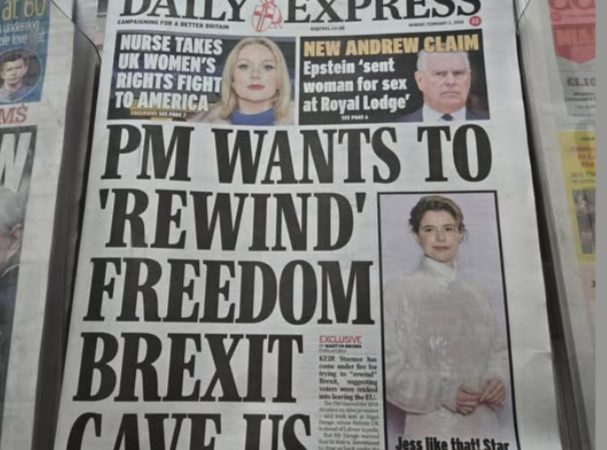
The Daily Express didn’t earn the nickname ‘the Brexpress’ for no reason. But if any reminder were needed as to why, its front page on February 2 provided it in abundance, and promptly became an object of ridicule.
“PM wants to ‘rewind’ freedom Brexit gave us,” the front page screamed, implying Brexit delivered concrete freedoms, and Keir Starmer is now plotting to snatch them away.
The problem, of course, is that the Express never quite explains what those freedoms actually are.
The article claims Starmer was “slammed for trying to ‘rewind’ Brexit,” after suggesting the public had been misled in 2016 by a series of promises that never materialised. This is an uncontroversial observation supported by years of post-Brexit reality, yet the Express frames it as an assault on democracy itself.
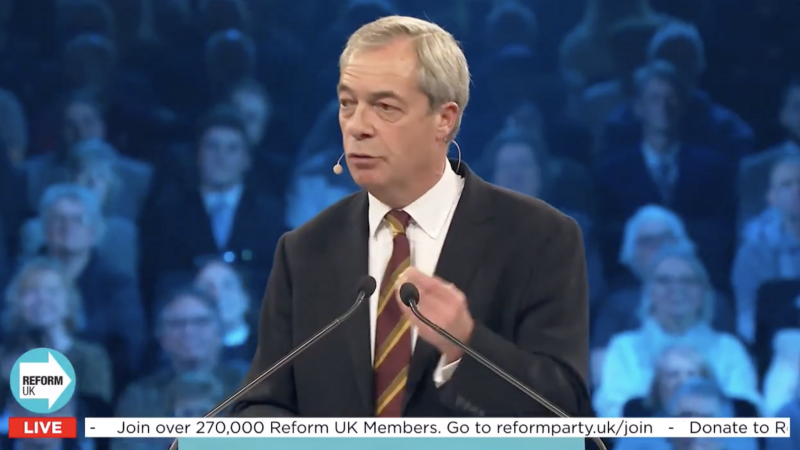
And the person doing the slamming? Nigel Farage, no less, who hit back, warning: “For some reason Sir Keir Starmer remains determined to drag us back under the heels of Brussels.”
The paper also called in shadow foreign secretary Priti Patel, who accused Starmer of “ten years after the referendum… still arguing with the British people rather than accepting their decision.”
That argument neatly sidesteps a basic democratic principle, that voters are allowed to reassess political decisions when the promised outcomes fail to appear.
Outside the Express bubble, the reaction was less obliging. Social media users responded with a simple question the paper declined to answer:
“WHAT FREEDOM? IT GAVE US NOTHING GAHHHHHHHH,” as one reader wrote.
The ridiculed front page followed a piece headlined: “Our greatest Crusade: How the Daily Express fought for YOUR Brexit.”
In it, the paper proudly retells its long campaign against European integration.
Readers are reminded that the Express opposed joining the European Economic Community in 1973, declared EU membership “a mistake,” and in 2010 became the first national newspaper to demand withdrawal. Former editor Peter Hill is praised for recognising readers’ supposed distrust of a “Brussels elite.” The paper boasts of petitions, front-page campaigns, and its refusal to be “cowed” by the political establishment, while relentlessly pushing stories about “uncontrolled immigration,” “ludicrous EU waste,” and Brussels diktats.
Having spent decades promising liberation, prosperity, and restored sovereignty, the Express now falls back on vague invocations of “freedom.” While the freedoms Brexit actually removed – freedom of movement, ease of trade, the right to live and work across Europe, for starters – are conveniently ignored.
The Daily Express didn’t earn the nickname ‘the Brexpress’ for no reason. But if any reminder were needed as to why, its front page on February 2 provided it in abundance, and promptly became an object of ridicule.
“PM wants to ‘rewind’ freedom Brexit gave us,” the front page screamed, implying Brexit delivered concrete freedoms, and Keir Starmer is now plotting to snatch them away.
The problem, of course, is that the Express never quite explains what those freedoms actually are.
The article claims Starmer was “slammed for trying to ‘rewind’ Brexit,” after suggesting the public had been misled in 2016 by a series of promises that never materialised. This is an uncontroversial observation supported by years of post-Brexit reality, yet the Express frames it as an assault on democracy itself.
And the person doing the slamming? Nigel Farage, no less, who hit back, warning: “For some reason Sir Keir Starmer remains determined to drag us back under the heels of Brussels.”
The paper also called in shadow foreign secretary Priti Patel, who accused Starmer of “ten years after the referendum… still arguing with the British people rather than accepting their decision.”
That argument neatly sidesteps a basic democratic principle, that voters are allowed to reassess political decisions when the promised outcomes fail to appear.
Outside the Express bubble, the reaction was less obliging. Social media users responded with a simple question the paper declined to answer:
“WHAT FREEDOM? IT GAVE US NOTHING GAHHHHHHHH,” as one reader wrote.
The ridiculed front page followed a piece headlined: “Our greatest Crusade: How the Daily Express fought for YOUR Brexit.”
In it, the paper proudly retells its long campaign against European integration.
Readers are reminded that the Express opposed joining the European Economic Community in 1973, declared EU membership “a mistake,” and in 2010 became the first national newspaper to demand withdrawal. Former editor Peter Hill is praised for recognising readers’ supposed distrust of a “Brussels elite.” The paper boasts of petitions, front-page campaigns, and its refusal to be “cowed” by the political establishment, while relentlessly pushing stories about “uncontrolled immigration,” “ludicrous EU waste,” and Brussels diktats.
Having spent decades promising liberation, prosperity, and restored sovereignty, the Express now falls back on vague invocations of “freedom.” While the freedoms Brexit actually removed – freedom of movement, ease of trade, the right to live and work across Europe, for starters – are conveniently ignored.