Tuesday, February 17, 2026


’Ready to govern’ Hungary: Former ally Magyar challenges Orban with Europe gun

EXPLAINER

“We’re standing on the threshold of victory,” Peter Magyar confidently declared to thousands of cheering supporters in Budapest this weekend, kicking off the centre-right Tisza party's campaign for Hungary’s April 12 parliamentary elections. The former far-right Fidesz party insider turned defector is now Prime Minister Viktor Orban’s biggest threat after 16 years in power. FRANCE 24 lists the key stakes in what is expected to become one of Europe’s most closely watched election races this year.


Issued on: 16/02/2026 
FRANCE24
By: Louise NORDSTROM


Peter Magyar, leader of the Hungarian opposition Tisza party, launches his election campaign in Budapest, Hungary, on February 15, 2026. © Denes Erdos, AP


Who is Peter Magyar?

Forty-four-year-old Peter Magyar burst onto Hungary’s political scene in February, 2024, after having broken ranks with Orban’s Fidesz party over a child sex abuse pardon scandal that led to the resignation of his ex-wife, then justice minister Judit Varga, and then president Katalin Novak.

Magyar, who up until then had been part of Orban’s inner circle, accused the government of walking free from responsibility after letting Varga and Novak take the blame. “I don’t want to be part of a system where the real culprits hide behind women’s skirts,” he said. Shortly afterward he launched his own centre-right party, Tisza (Respect and Freedom), and vowed to crack down on corruption and bring Hungary closer to Europe.

READ MOREHungary's Peter Magyar, Orban disciple turned fierce rival

“Step by step, brick by brick, we are taking back our homeland and building a new country, a sovereign, modern, European Hungary,” Magyar said shortly after founding his party.

Just a few months later, Tisza stunned Hungary’s political establishment by securing almost 30 percent of the votes in the European parliamentary elections – cementing Magyar’s role as Orban’s most serious challenger yet.

As both contenders launched their campaigns over the weekend, Magyar’s Tisza already held a comfortable 10-point lead over Orban’s Fidesz – and has done so over the past year, according to a combined poll by Politico.

“Tisza stands ready to govern,” Magyar said at his launch event.


Why is Orban’s rule in danger?

Aside from the Fidesz “family values” brand taking a serious hit with the 2024 pardon scandal – prompting some of the party’s conservative members to defect to Tisza – Orban has been unable to to get Hungary’s bleeding economy back on track. In 2023, a presidential pardon had been secretly granted to the deputy director of a children’s home convicted of covering up a case of child sex abuse.

In the wake of Russia’s 2022 invasion of Ukraine – which pushed the country’s energy prices to the skies – Orban also introduced new income rebates, which in 2023 resulted in the worst inflationary surge in Europe, at a staggering 25 percent.

Although the worst of the financial crisis has since subsided, a Eurobarometer survey cited by Reuters last autumn showed that rising prices, inflation and cost of living still top Hungarians’ main concerns.

The state of the country’s economy has also been weighed down by the fact that the European Union has blocked some €20 billion in funds over corruption and the rule of law concerns.

The economy is in other words a sore point for Orban, and Magyar has taken every opoortunity to point that out.


Europe in focus

The real battleground in the April ballot will be the two candidates' opposing views on the EU.

While Orban last week declared that the real danger to Hungary is the EU, Magyar has gone the other way: “Hungary will once again be a full-fledged member of the European Union,” he told a Budapest rally last year, touting the EU as the answer to Hungary’s prayers, especially if it releases the withheld EU funds.

On Saturday, Orban told supporters that “Brussels … [is] a source of imminent danger”, adding that the April ballot is therefore a choice between “war and peace”, and that Fidesz, with its anti-EU stance, therefore is the only “safe choice”.

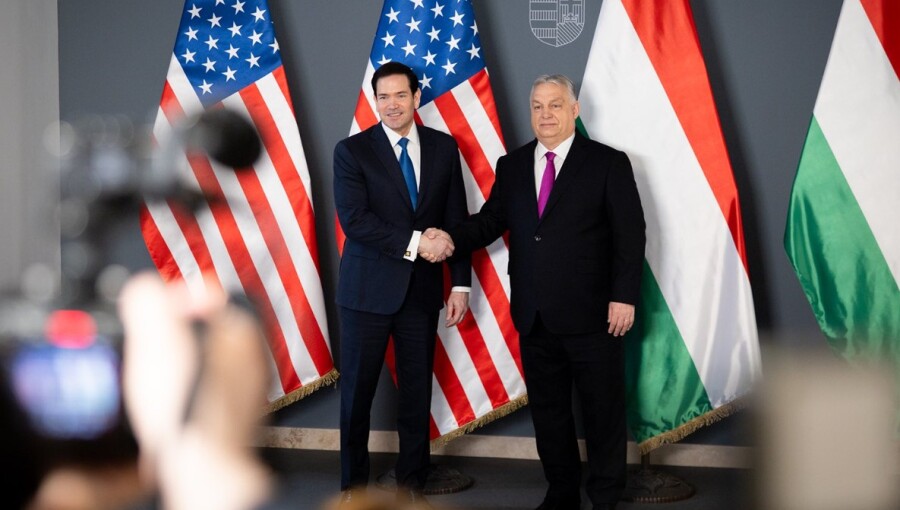
Orban's anti-establishment and nationalist views has won him support from US President Donald Trump, and on Monday US Secretary of State Marco Rubio paid him a symbolic visit, telling him "your success is our success".

READ MORERubio tells Orban ‘your success is our success’ during Hungary visit ahead of elections

Orban hopes his ties with Trump wil help him collect the votes needed to prolong his reign.

If he wins the elections, he has promised to "clear away" the "oppressive machinery of Brussels" in his country.


Views on Russia and Ukraine

Under Orban, Hungary has remained Russia’s closest EU ally throughout the war, routinely blocking any European sanction packages against what has remained – despite pleas from Europe – its main gas supplier.

He has equally tried to stonewall any military or financial aid to Ukraine. And at the end of last year, he even went as far as to say it was “unclear who attacked whom”.

Although Magyar has described Moscow as “the aggressor” in the conflict, and last year told the Financial Times he would push for an immediate ceasefire along with Hungary’s EU allies if he comes to power, he has also said he would not reverse Hungary’s current policy of non-support for Kyiv nor totally sever Budapest’s ties with Russia. He staunchly opposes fast-track EU accession for Ukraine.

"On Ukraine, Tisza’s manifesto is notably thin," an analyst note from the Brussels-based think-tank European Policy Center warned, adding that "EU leaders should not assume that a Magyar government would mark a clean break with Orban-era policies."


Rubio conveys Trump’s full support for Hungary's Orban, says bilateral ties are entering "golden age"
Rubio conveys Trump’s full support for Hungary's Orban, says bilateral ties are entering
Marco Rubio before a joint press conference with his host Viktor Orban in Budapest on February 16. / Facebook - Viktor Orban
By bne IntelliNews February 17, 2026
Greece experts to examine Nazi atrocity photos find

Athens (AFP) – Greece's culture ministry said Monday that a trove of photographs that appear to capture one of Nazi Germany's worst atrocities in the country appear to be authentic.


Issued on: 17/02/2026 - RFI

Skulls of victims of 1944 Distomo massacre, one of the most notorious carried out by the Nazis in Greece 
© ARIS MESSINIS / AFP

The ministry said it was sending experts to Ghent, Belgium to examine the photos and to talk to a collector of Third Reich memorabilia who had put them on sale on Ebay on Saturday.

"It is highly likely that these are authentic photographs," the ministry said.

It said the 12 photographs appear to show "the last moments" of 200 Greek Communists who were executed on May 1, 1944 in retaliation for the killing of a German general and his staff by Communist guerrillas a few days earlier.

The Communist-led Greek People's Liberation Army (ELAS) was among the most active resistance organisations in occupied Europe.

The execution of the 200 men at the Kaisariani shooting range in Athens is a seminal event of the 1941-1944 Nazi occupation of Greece, which was marked by several atrocities, mostly against Greek villagers.

Greece's Jewish community was also decimated during this period.

Some of the pictures show groups of the men marching through a field, and standing against a wall at the shooting range.

One photo appears to show the men being marched into the shooting range, after discarding their overcoats outside.

"This is the first time we have an image from inside the shooting range at the moment of the execution...a major moment of the Greek resistance movement," historian Menelaos Haralambidis told state TV ERT.

"And it confirms the testimony we have, that these men headed (to their deaths) with their heads held high, they had incredible courage," Haralambidis said.
'My death should not sadden you'


The photographer who took the pictures was working for Nazi propaganda chief Joseph Goebbels (centre)
 © - / THE NATIONAL ARCHIVES/AFP

Until now, the only testimony of the 200 victims' final moments were from handwritten notes they had thrown out of the trucks taking them to execution.

"My death should not sadden you but steel you even more for the struggle you are waging," one of the men, lawyer Mitsos Remboutsikas, had written to his family.

Another man wrote a message behind the picture of his young daughter, requesting that she become a teacher.

Most of the men had been arrested years earlier during anti-Communist raids by the police of Greek dictator Ioannis Metaxas.

The Greek Communist KKE party, which called the trove "priceless" on Monday said it had tentatively identified at least two of the men in the photographs.

"These documents belong to the Greek people," the party said.

"I feel grateful that we were given the opportunity for my grandfather’s story to become known to everyone, a man who remained faithful to his beliefs until the very end," Thrasyvoulos Marakis, the grandson of one of the men identified in the photographs, said in a letter to the 902.gr website Tuesday.

The Greek culture ministry said it was "highly likely" that the photographs were taken by Guenther Heysing, a journalist attached to Nazi propaganda minister Joseph Goebbels's unit.

"If the authenticity and lawful provenance of the collection are documented, the Ministry of Culture will immediately finalise measures for its acquisition," it said.

© 2026 AFP


BLACK HISTORY 
US civil rights leader Jesse Jackson dies at 84: family
REST IN POWER

Washington (United States) (AFP) – Veteran US civil rights activist Reverend Jesse Jackson, one of the nation's most influential Black voices, died peacefully Tuesday morning, his family said in a statement. He was 84.


Issued on: 17/02/2026 - RFI

Civil rights leader Rev. Jesse Jackson addresses the "Fairness in Democracy" rally, 06 December 2000, at the State Capitol in Tallahassee, Florida. © Tim SLOAN / AFP/File

Jackson, a Baptist minister, had been a civil rights leader since the 1960s, when he marched with Martin Luther King Jr. and helped fundraise for the cause.

"Our father was a servant leader -- not only to our family, but to the oppressed, the voiceless, and the overlooked around the world," Jackson's family said.

"His unwavering belief in justice, equality, and love uplifted millions, and we ask you to honor his memory by continuing the fight for the values he lived by."

The family did not release a cause of death, but Jackson revealed in 2017 that he had the degenerative neurological disease Parkinson's.

He was hospitalized for observation in November in connection to another neurodegenerative condition, according to media reports.

A dynamic orator and a successful mediator in international disputes, the long-time Baptist minister expanded the space for African Americans on the national stage for more than six decades.

He was the most prominent Black person to run for the US presidency -- with two unsuccessful attempts to capture the Democratic Party nomination in the 1980s -- until Barack Obama took the office in 2009.
Long Battle

He was present for many consequential moments in the long battle for racial justice in the United States, including with King in Memphis in 1968 when the civil rights leader was slain.

He openly wept in the crowd as Obama celebrated his 2008 presidential election, and he stood with George Floyd's family in 2021 after a court convicted an ex-police officer of the unarmed Black man's murder.

Jackson was born Jesse Louis Burns on October 8, 1941, in Greenville, South Carolina, to an unwed teen mother and a former professional boxer.

He later adopted the last name of his stepfather, Charles Jackson.

"I was not born with a silver spoon in my mouth. I had a shovel programmed for my hands," he once said.

He excelled in his segregated high school and earned a football scholarship to the University of Illinois, but later transferred to the predominantly Black Agricultural and Technical College of North Carolina, where he received a degree in sociology.

In 1960, he participated in his first sit-in, in Greenville, and then joined the Selma-to-Montgomery civil rights marches in 1965, where he caught King's attention.

Jackson later emerged as a mediator and envoy on several notable international fronts.

He became a prominent advocate for ending apartheid in South Africa, and in the 1990s served as presidential special envoy for Africa for Bill Clinton.

Missions to free US prisoners took him to Syria, Iraq and Serbia.

He founded the Rainbow PUSH Coalition, a Chicago-based nonprofit organization focused on social justice and political activisim, in 1996

He is survived by his wife and six children.

© 2026 AFP
Madagascar’s ‘people of the forest’ confront life beyond the woods

The Zafimaniry people of Madagascar are confronting a difficult choice about their future as deforestation and globalisation reshape their way of life. Fewer than 15,000 members of this forest-based community live in the “land of mist” on the southern edge of the country’s central highlands, where decades of heavy deforestation have left many hills bare.


Issued on: 15/02/2026 - RFI

The Zafimaniry village of Ifasina in Fianarantsoa province, Madagascar, where woodcraft traditions remain central to community life. 
© Wikimedi Commons / Bernard Gagnon

Known for carved wooden homes and woodcraft recognised by Unesco as intangible cultural heritage in 2008, the Zafimaniry are being forced to adapt to survive.

For generations, forests shaped Zafimaniry homes, beliefs and daily life. Much of that environment has now disappeared, changing how communities live and work.

These questions were at the centre of a public debate organised in Antananarivo last month by the French Institute of Madagascar – a cultural organisation that promotes debate and the arts – on Zafimaniry identity in the face of globalisation.

Johnny Andriamahefarivo, the only magistrate from the Zafimaniry community and a former justice minister, remembers growing up surrounded by carved wood in his village.

“We are a people of the forest. We live from the forest, so you see wooden buildings everywhere,” he told RFI. “The door, the shutters, the windows, the chairs – everything is carved, and every carving has a particular meaning.”

These carvings express spiritual beliefs as well as knowledge and faith within the community, he explained.

Forest under pressure

Deforestation is forcing the community to rethink ways of living that once depended entirely on nearby woodland.

“Even though we stayed deep in the bush, today that bush has been cleared by deforestation,” Andriamahefarivo said. “We have to leave and try other ways of making a living.”

For this minority community living in relative isolation on the island, adaptation has become essential. Forest engineer and photographer TangalaMamy has worked alongside the Zafimaniry for more than 10 years, documenting their culture through photography.

“Thirteen years ago, there was no mobile network – you had to climb a mountain to get a signal,” he said. “Now everyone has a smartphone, everyone has a satellite dish. It’s a normal transformation. The world is changing and they are adapting.”

Practical realities are also changing housing. “They are not going to live permanently in wooden huts when wood now requires travelling kilometres to find,” TangalaMamy added.

Traditions endure

Despite these changes, TangalaMamy said many customs continue.

“Even in brick houses today, the ancestors’ corner is still there,” he said. “Offerings are made there. When a child is born, the name is only given after the umbilical cord falls off.”

The Zafimaniry are also known for distinctive cultural practices such as hair braiding, a silent form of communication. Seventeen types of braids have been identified, each carrying a meaning understood by the entire village.

The question now is how much of this heritage can survive as lifestyles evolve.

Some traditions are already disappearing, raising concerns about how to pass them on to future generations.

“We must safeguard part of this identity that is disappearing without us being able to pass its memory on to our children,” said Malagasy writer and newspaper columnist Vanf – calling on Madagascar’s culture ministry to support preservation efforts.

“We should create a visible space – even a ‘marketing’ space, and it’s not a problem to use that word – where one or more traditional houses can be restored and set apart,” he added.

“That way both Malagasy people and foreigners can help pass on this memory culture.”

This story was adapted from the original version in French by Sarah Tétaud.
France grants asylum to anti-Kremlin couple detained in US immigration crackdown

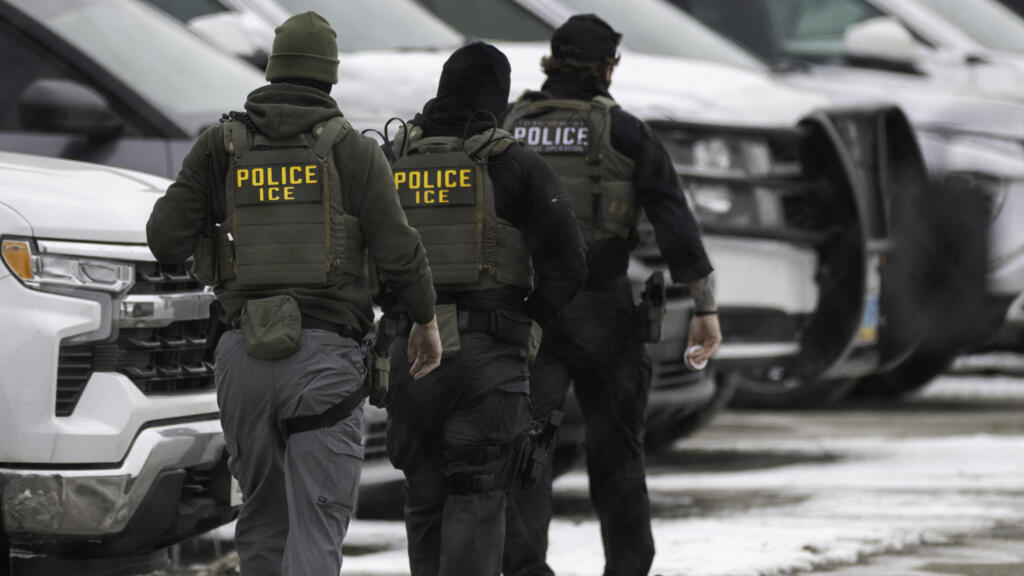
France has granted safe haven to an anti-Kremlin Russian activist couple, who had been held by the country's ICE agency that is leading US President Donald Trump's crackdown on immigration.


Issued on: 17/02/2026 
RFI

ICE agents in Minneapolis, Minnesota, United States, on 4 February, 2026. 
© Getty Images via AFP/John Moore

France issued humanitarian visas to Alexei Ishimov, 31, and his 29-year-old wife Nadezhda to avoid them being deported to Russia from the United States.

Alexei Ishimov arrived in Paris from Seattle on Monday morning, correspondents from the French agency AFP said.

Nadezhda, a former volunteer for the late opposition leader Alexei Navalny, was expected to arrive on a separate flight from Miami, also on Monday morning.

But she did not show up at the Paris Charles de Gaulle Airport as planned.

"I am in shock," a visibly distressed Alexei, who had not seen his wife for more than 20 months, told AFP at the airport.

Olga Prokopieva, head of the Paris-based association Russie-Libertés, which has been assisting the young couple, said Nadezhda was not allowed on the flight because she had a temporary travel document called a laissez-passer instead of a passport.

Russie-Libertes and the Russian Antiwar Committee hope that Nadezhda will be allowed to travel to France soon.

The couple left Russia in 2022 as the Kremlin ramped up a crackdown on opponents following the invasion of Ukraine.

The couple eventually flew to Mexico and entered the United States in 2024. They were detained by US Immigration and Customs Enforcement (ICE) and sent to different detention centres as part of Trump's immigration crackdown.

Alexei had spent nine months in detention in California and later in the state of Washington. In January 2025, he was released with an ankle bracelet.

Nadezhda has been kept at the South Louisiana ICE Processing Center for around 21 months.

To avoid deportation to Russia, Alexei had contacted numerous countries.

"Starting from May 2025, I wrote letters to more than a hundred countries asking for help, and essentially no one responded except France," he said.
Gratitude to France

He said that French diplomats were "constantly in touch."

They "worked very closely with ICE representatives, contacted me regularly, and did everything possible to help us obtain a lawful path to safety and reunification," he said.

"It is hard for me to find the words to express the gratitude we feel," he added.

Tens of thousands of Russians have applied for political asylum in the United States since Russia's invasion of Ukraine in 2022. Many detainees have been subjected to arbitrary detention and not given a fair chance to defend themselves in court.

About 1,000 Russians, many of them asylum seekers, have been deported back to Russia from the United States since 2022. Some deportees were arrested on arrival.

Dmitry Valuev, head of the Russian America for Democracy in Russia (RADR) group which has followed the couple's case, said that a US judge had ordered that Nadezhda be deported to Russia. But activists hope she'll be allowed to fly to France.

Alexei said he would feel at ease only when he sees his wife.

"We are very tired: it has been almost two years of constant stress and pain, and separation is especially hard when you have no idea when it will end."

(with AFP)
EU investigates Shein over sale of childlike sex dolls

Brussels (Belgium) (AFP) – The EU on Tuesday opened an investigation into the online retail giant Shein over the sale of childlike sex dolls and what it called the platform's "addictive design".

Issued on: 17/02/2026 - RFI

Shein came under greater scrutiny in November after French authorities condemned the giant for featuring sex dolls resembling children.

The probe is the European Commission's first into Shein under the Digital Services Act (DSA), the EU's mammoth law that aims to counter the spread of illegal content and goods online.

The European Commission said it was investigating the sale of illegal products "including child sexual abuse material" and would look at the "lack of transparency" of Shein's recommender systems.

Shein, founded in China in 2012 but now based in Singapore, said it would continue to cooperate with the commission.

"We share the commission's objective of ensuring a safe and trusted online environment and will continue to engage constructively on this procedure," Shein said in a statement.

Following the uproar in France, Shein said it immediately removed the products and banned sex dolls from its site globally regardless of appearance.

Shein is among more than 20 "very large" online platforms that must comply with the DSA or risk fines that could reach as high as six percent of their global turnover, or even a ban for serious and repeated violations.

'Addictive features'

The EU said its investigation would focus on the systems Shein has in place to prevent the sale of illegal products in the 27-country bloc.

The products also include weapons as well as toys, clothing, cosmetics and electronics that are unsafe or not compliant with EU rules.

Regulators said they were also looking into the risks linked to the platform's "addictive design", such as giving consumers points or rewards for engagement.

"Addictive features could have a negative impact on users' wellbeing and consumer protection online," the commission said.

"We have a suspicion Shein underestimated (this) in the risk assessment and also didn't put proportionate measures in place to tackle this particular risk," an EU official said.

Brussels also wants to know details about the algorithms used by platforms to feed users more personalised content.

But the commission said the "opening of formal proceedings does not prejudge its outcome" and there is no deadline for the probe's completion.

Shein can now offer commitments to try to satisfy the EU's concerns.

The company said it had already invested significantly in measures to adhere to the DSA.

There are currently other DSA probes into the Chinese online retailer AliExpress and the social media platforms Facebook, Instagram, X and TikTok.

The EU this month told TikTok it needed to change its "addictive" design.

The EU has faced criticism for the DSA investigations into US tech giants from President Donald Trump's administration, which says it is a tool of "censorship".

© 2026 AFP


Bangladesh's new PM, political heir Tarique Rahman

Dhaka (AFP) – Long overshadowed by his parents and heir to one of Bangladesh's most powerful political dynasties, the country's new Prime Minister Tarique Rahman has finally stepped into the spotlight.


Issued on: 17/02/2026 - RFI

Tarique Rahman's rise marks a remarkable turnaround for a man who only returned home in December after 17 years in exile in Britain 
© MUNIR UZ ZAMAN / AFP

At 60, the leader of the Bangladesh Nationalist Party (BNP) takes charge of the South Asian nation of 170 million, driven by what he calls an ambition to "do better".

A year and a half after the deadly uprising that toppled previous prime minister Sheikh Hasina's iron-fisted rule, the BNP won a "sweeping victory" in parliamentary elections on February 12.

He was sworn in on Tuesday, leading a more than two-thirds majority in parliament.

"This victory belongs to people who aspire to and have sacrificed for democracy," he said in a speech.

His rise marks a remarkable turnaround for a man who only returned to Bangladesh in December after 17 years in exile in Britain, far from Dhaka's political storms.

Widely known as Tarique Zia, he carries a political name that has shaped every stage of his life.

He was 15 when his father, president Ziaur Rahman, was assassinated in 1981.

Tarique's mother, Khaleda Zia -- a three-time prime minister and a towering figure in Bangladeshi politics for decades -- died aged 80 in December, just days after his return home.

'My country'


Rahman, speaking to AFP just before the vote, vowed to build on their legacy.

"They are them, I am me," he said from his office, beneath gold-framed portraits of his late parents. "I will try to do better than them."

Tarique Rahman, widely known in Bangladesh as Tarique Zia, carries a political name that has shaped every stage of his life 
© Sajjad HUSSAIN / AFP


He described the "mixed feelings" that overwhelmed him when he arrived home in December -- the joy of returning, swiftly eclipsed by grief at his mother's death.

Instead of celebrating, however, he had to bid farewell to his ailing mother, who had long been in intensive care.

"When you come home after so long, any son wants to hug his mother," he said. "I didn't have that chance."

Within days of landing in Dhaka, the still grieving heir assumed leadership of the BNP.
'Unnerves many'

Born when the country was still East Pakistan, he was briefly detained as a child during the 1971 independence war.

His party hails him as "one of the youngest prisoners of war".


Tarique Rahman grew up in his mother's political orbit as she went on to become the country’s first female prime minister
 © Munir UZ ZAMAN / AFP

His father, Ziaur Rahman, an army commander, gained influence months after a 1975 coup when founding leader Sheikh Mujibur Rahman -- Sheikh Hasina's father -- was murdered.

It entrenched a rivalry between the two families that would define the country's politics for decades. Ziaur Rahman himself was killed in 1981.

Rahman grew up in his mother's political orbit as she went on to become the country's first female prime minister, alternating power with Hasina in a long and bitter duel.

"In her seats, I used to go and I used to campaign," Rahman said. "So this is how slowly and gradually I started getting involved in the politics."

But his career has also been shadowed by allegations of corruption and abuse of power.

A 2006 US embassy cable said he "inspires few but unnerves many".

Other cables labelled him a "symbol of kleptocratic government and violent politics" and accused him of being "phenomenally corrupt".

Arrested on corruption charges in 2007, Rahman says he was tortured in custody.

He fled to London the following year, where he faced multiple cases in absentia. He denied all charges and dismissed them as politically motivated.

But he also told AFP he offered an apology.

"If there are any mistakes which were unwanted, we are sorry for that," he told AFP.

After Hasina's fall, Rahman was acquitted of the most serious charge against him -- a life sentence handed down in absentia for a 2004 grenade attack on a Hasina rally -- which he had always denied.

Married to a cardiologist and father to a daughter, a lawyer, he led a quiet life in Britain.

That changed with his dramatic return in December, accompanied by his fluffy ginger cat, Zebu, images of which went viral on Bangladeshi social media.

He admits the task ahead is now "immense", rebuilding a country he says was "destroyed" by the former government.

© 2026 AFP


Bangladesh's interim leader Yunus resigns, handing power to elected government


Bangladesh's interim leader Muhammad Yunus stepped down on Monday before handing over to an elected government led by the Bangladesh Nationalist Party and its leader Tarique Rahman. Bangladeshi voters held national elections and endorsed sweeping democratic reforms via referendum in February following the overthrow of Sheikh Hasina and her iron-fisted government.


Issued on: 16/02/2026 
By:  FRANCE 24


Bangladesh's interim leader Muhammad Yunus waves after casting his vote as he comes out of a polling center in Dhaka, on February 12, 2026. © Mahmud Hossain Opu, AP


Bangladesh's interim leader Muhammad Yunus stepped down on Monday in a farewell broadcast to the nation before handing over to an elected government.

"Today, the interim government is stepping down," the 85-year-old Nobel Peace Prize winner said.

"But let the practice of democracy, freedom of speech, and fundamental rights that has begun not be halted."

Yunus returned from self-imposed exile in August 2024, days after the iron-fisted government of Sheikh Hasina was overthrown by a student-led uprising and she fled by helicopter to India.


"That was the day of great liberation," he said. "What a day of joy it was! Bangladeshis across the world shed tears of happiness. The youth of our country freed it from the grip of a demon."

He has led Bangladesh as its "chief adviser" since, and now hands over power after congratulating the Bangladesh Nationalist Party (BNP) and its leader Tarique Rahman on a "landslide victory" in elections last week.

"The people, voters, political parties, and stakeholder institutions linked to the election have set a commendable example," Yunus said.

"This election has set a benchmark for future elections."

Rahman, 60, chief of the BNP and scion of one of the country's most powerful political dynasties, will lead the South Asian nation of 170 million.


'Rebuilt institutions'

Bangladeshi voters endorsed sweeping democratic reforms in a national referendum, a key pillar of Yunus's post-uprising transition agenda, on the same day as the elections.

The lengthy document, known as the "July Charter" after the month when the uprising that toppled Hasina began, proposes term limits for prime ministers, the creation of an upper house of parliament, stronger presidential powers and greater judicial independence.

"We did not start from zero – we started from a deficit," he said.

"Sweeping away the ruins, we rebuilt institutions and set the course for reforms."

The referendum noted that approval would make the charter "binding on the parties that win" the election, obliging them to endorse it.

However, several parties raised questions before the vote, and the reforms will still require ratification by the new parliament.

The BNP alliance won 212 seats, compared with 77 for the Jamaat-e-Islami-led alliance, according to the Election Commission.

Jamaat chief Shafiqur Rahman conceded on Saturday, saying his Islamist party would "serve as a vigilant, principled, and peaceful opposition".

Newly elected lawmakers are expected to be sworn in on Tuesday, after which Tarique Rahman is set to become Bangladesh's next prime minister.

Police records show that political clashes during the campaign period killed five people and injured more than 600.

However, despite weeks of turbulence ahead of the polls, voting day passed without major unrest and the country has responded to the results with relative calm.

(FRANCE 24 with AFP)
Ghana seeks formal UN acknowledgement of African slave trade injustice

Ghana will submit a resolution to the United Nations General Assembly in March to designate the African slave trade as "the most serious crime against humanity," Ghanaian President John Dramani Mahama announced on Sunday during the African Union Summit in Ethiopia.


Issued on: 16/02/2026 - RFI

John Dramani Mahama, President of the Republic of Ghana, addresses a press conference on the theme 'Ancestral Debt, Modern Justice: Africa's Unified Case for Reparations' during the 39th Ordinary Session of the Assembly of the African Union at the AU Headquarters in Addis Ababa, on 15 February, 2026. AFP - MARCO SIMONCELLI

The resolution is to be submitted to the United Nations member states in March, as a "declaration on the trafficking of enslaved Africans and the racialised enslavement of Africans, described as the most serious crime against humanity," said the Ghanaian head of state, whose country was the first on the continent to gain independence in 1957.

"This UN resolution is just the first step," Mahama said at the close of the AU's annual summit in Addis Ababa, the Ethiopian capital.

"We believe that with the consultations we have conducted and the support of the African Union (AU), the truth will finally be recognised: the transatlantic slave trade was the greatest injustice and the greatest crime against humanity."


'Restoring historical truth'

Adopting this resolution is not about erasing history, Mahama insisted but about acknowledging it.

"The trade of enslaved Africans and racialised forms of slavery are foundational crimes that shaped the modern world," he said.

"Their consequences continue to manifest themselves in structural inequalities, racial discrimination, and economic disparities," he continued. "Recognising these injustices is not synonymous with division, but with moral courage. This initiative offers us a historic opportunity. An opportunity to affirm the truth of our history."

He defended his proposal as "an opportunity to acknowledge the greatest injustice in the history of humankind".

"An opportunity to lay the foundations for genuine reconciliation and real equality. While the past cannot be changed, it can be acknowledged. And acknowledgment is the first step toward justice."


Slow process

John Mahama’s predecessor as President of Ghana, Nana Akufo-Addo, called in November 2023 for a united front to obtain reparations for the transatlantic slave trade and the damage caused during the colonial era.

The transatlantic slave trade organised the trafficking of millions of people from West and Central Africa.

For the Ghanaian head of state, who stated that he was speaking in concert with the countries of CARICOM (Caribbean Community), it is “not just about financial compensation, it is about restoring historical truth.”

“But, for now, our goal is to submit the resolution to the [UN] General Assembly, to allow the world to recognise that this happened and that there has been no greater injustice against humanity in recent history or in world history than the slave trade,” the Ghanaian president emphasised.

Cape Coast Fort in Ghana, a former colonial trading post involved in the slave trade, has been a UNESCO World Heritage Site since 1979.


Cameroon’s Shrinking Forests


February 17, 2026 
By Africa Defense Forum


Forests cover nearly half of Cameroon, but they are being rapidly degraded by illegal logging operations that feed China’s appetite for tropical lumber.

Cameroon has granted companies from around the world nearly 100 timber concessions to cut and ship logs legally. However, international observers say that many more logging operations occur unofficially, resulting in a loss of millions of dollars in resources and revenue each year.

Cameroonian legislation adopted in 1994 regulates logging through quotas and requires companies to reforest logged areas. Illegal logging is undercutting all of that, according to analysts.

“While observers focus their attention on legal logging, which is the real driving force behind the forestry industry, illegal logging, which is often better organized, undermines national efforts,” researchers Jean Sovon and Vivian Wu recently wrote for Global Voices

Corruption fuels the harvest and export of illegal logs, known locally as warap. In many cases, the illegal exports are made up of logs cut indiscriminately without concern for their age, size or species. The logs are then shipped to markets in China and Vietnam, which receive 70% of Cameroon’s timber exports, according to the government’s Forest Revenue Securing Program.


“Despite numerous efforts by national authorities to control the flow of timber, strong demand from Asian countries, led by China, has opened the door to unorthodox practices,” Sovon and Wu wrote.

Research by Global Forest Watch shows that deforestation in Cameroon rose sharply between 2013 and 2014 and has remained high ever since, averaging about 171,000 hectares a year compared to an average of 41,000 a year the decade before.

A 2023 investigation by Le Monde newspaper and InfoCongo revealed that illegal logging in Cameroon is accelerating. Officials records from each end of the Cameroon-to-China pipeline tell the story.

According to the United Nations Comtrade database, between 2011 and 2014 Cameroon and China consistently reported about a $100 million difference between the value of wood products exported from Cameroon and imported by China. The gap represents the value of smuggled logs.

That gap grew by 50% in 2015, even as Cameroon’s side of the equation remained fairly steady at about $150 million in exports. By 2018, the most recent year for which data is available, the gap had widened by nearly 75%.

In total, the gap between exports and imports represented nearly $900 million in smuggled timber between Cameroon and China.

Le Monde and InfoCongo interviewed a logging truck driver identified as Derek who has been carrying illegal timber from forests to ports for years. Despite the lack of proper markings, the logs pass easily through government checkpoints, Derek told the researchers.

“Every inspector knows you’re coming,” he said.

In 2022, Cameroon launched the second generation of the Forest Information Management System (SIGIF2) designed to block illegal logging and exports. So far, however, the system has lacked the support from other governments to make it effective.

Further complicating matters, porous borders make it difficult for Cameroon to prevent illegal logging and trafficking by groups outside the country.

Cameroon increased its export tax on logs in recent years in hopes of processing logs into lumber and other items for export. Along with its neighbors in the Economic and Monetary Community of Central Africa (CEMAC), Cameroon plans to suspend overseas timber exports starting in 2028.

Loopholes in the planned ban still could allow logging companies to export by modifying their logs slightly — shaving them from round into square profiles, for example, according to the Center for Action for Development (CAD). Others could get special permits to export, undermining the ban.

In the meantime, logging trucks continue to carry Cameroon’s forests piece by piece to the coast for export to China.

“Logging is like drugs,” Guillaume, a long-time illegal logger, told Le Monde and InfoCongo. “At all times you want to keep consuming.”


Never Forget Bush’s Bait-And-Switch Iraq War – OpEd


A few presidencies ago, Washington politicians used boundless political and intellectual chicanery to drag America into a ruinous war. Thousands of Americans died and scores of thousands of Iraqis perished due to the official myth of Saddam Hussein as the Twentieth Hijacker.

Last November, Axios published new damning information on the role of Saudi government officials in bankrolling the 9/11 attacks on New York City and the Pentagon. Private lawsuits against the Saudi regime “unearthed evidence showing one Saudi official — who acknowledges aiding two men who became hijackers — made a drawing of a plane and a mathematical formula that allegedly could have been used to fly into the World Trade Center.”

That was only the latest stunning revelation in a coverup that will celebrate its 25th birthday this year.

In 2002 and early 2003, the Bush administration rushed to exploit 9/11 to justify invading Iraq. But there was a problem with that con job. A 2002 FBI memo stated that there was “incontrovertible evidence that there is support for these [9/11 hijacker] terrorists within the Saudi Government.” A joint House-Senate congressional investigation found extensive evidence that the Saudi government, not Saddam Hussein, propelled the hijackers. The Bush administration succeeded in suppressing the key 28 pages of that congressional report on the Saudi role on 9/11. Rep. Walter Jones (R-NC) became a leading proponent of declassifying those 28 pages, declaring in 2013: “If the 9/11 hijackers had outside help — particularly from one or more foreign governments — the press and the public have a right to know what our government has or has not done to bring justice to all of the perpetrators.”

Those 28 page were finally released (mostly) in 2016, revealing how Saudi government officials directly financed and provided diplomatic cover for several of the hijackers in the U.S. shortly before they unleashed havoc.

Truth delayed is truth defused. Blocking the evidence of the Saudi bankrolling of 9/11 enabled the Bush administration to kill tens of thousands of Iraqis.

The Bush administration sold the Iraq war as payback for 9/11. While false claims by President George W. Bush and Vice President Dick Cheney on Iraqi Weapons of Mass Destruction (WMDs) have received ample coverage, the Bush Saudi-Iraqi Bait-and-Switch has faded into memory.

In a memo Bush sent on March 18, 2003, notifying Congress that he was launching a war against Iraq, Bush declared that he was acting “to take the necessary actions against international terrorists and terrorist organizations, including those nations, organizations, or persons who planned, authorized, committed, or aided the terrorist attacks that occurred on September 11, 2001.”

Bush invoked this justification even though his administration had never offered a shred of evidence tying Saddam to 9/11. Bush and team continually threw out new accusations and then backed off, knowing that few people were paying close enough attention to recognize that previous charges had collapsed like a houses of cards.

In the first months after 9/11, there was little mention of Iraq in the public pronouncements by Bush and his top officials. But in his State of the Union address on January 29, 2002, Bush stunned many people by announcing that Iraq, along with Iran and North Korea, were part of an “axis of evil.” Since the war on terrorism had stratospheric support levels in the polls from the American people, the best way to sanctify a war against Iraq was to redefine it as part of the war on terrorism. Bush declared on September 25, 2002: “Al Qaeda hides, Saddam doesn’t, but the danger is, is that they work in concert. The danger is that al Qaeda becomes an extension of Saddam’s madness and his hatred and his capacity to extend weapons of mass destruction around the world. . . . You can’t distinguish between al Qaeda and Saddam when you talk about the war on terror. They’re both equally as bad, and equally as evil, and equally as destructive.”

The next day, Defense Secretary Donald Rumsfeld announced that the U.S. possessed “bulletproof ” evidence linking Saddam and Al Qaeda. But it was a bullet that could never be exposed to sunlight. An earlier alleged link between Iraqi agents and hijacker Mohamed Atta meeting in Prague had collapsed, with the story disavowed by both the CIA and the Czech government.

On October 7, 2002, Bush, speaking to a selective audience of Republican donors in Cincinnati, laid out his logic: “We know that Iraq and the Al Qaida terrorist network share a common enemy—the United States of America. We know that Iraq and Al Qaida have had high-level contacts that go back a decade… And we know that after September the 11th, Saddam Hussein’s regime gleefully celebrated the terrorist attacks on America.” The fact that some Iraqis cheered the carnage on September 11 proved Saddam could team up with Al Qaeda for a second 9/11.

The link between Saddam and Al Qaeda then took a three-month recess, returning in the 2003 State of the Union address, when Bush declared that “Saddam Hussein aids and protects terrorists, including members of Al Qaeda.” Bush reached for the ultimate hot button: “Imagine those 19 hijackers with other weapons and other plans, this time armed by Saddam Hussein. It would take one vial, one canister, one crate slipped into this country to bring a day of horror like none we have ever known.”

Three days later, when Bush was directly asked by a journalist at a White House press conference, “Do you believe that there is a link between Saddam Hussein, a direct link, and the men who attacked on September the 11th?” Bush replied: “I can’t make that claim.” Yet, that did not stop him from endlessly making the inference.

But the Bush administration’s new “evidence” failed the laugh test. The Los Angeles Times revealed: “The Bush administration’s renewed assertions of links between Iraq and Al Qaeda are based largely on the murky case of a one-legged Al Qaeda suspect who was treated in Baghdad after being wounded in the war in Afghanistan.” Time noted of Bush’s message on Saddam and Al Qaeda: “If there was no visible evidence to link the two, he just used that fact to argue his point: the danger is everywhere, even if we can’t see it; the threat is growing, even if we can’t prove it. The Administration’s argument for war is based not on the strength of America’s Intelligence but on its weakness.”

In the days after 9/11, when pollsters asked Americans who they thought had carried out the 9/11 attacks, only 3 percent of respondents suggested Iraq or Saddam Hussein as culprits. But by February 2003, 72 percent of Americans believed that Hussein was “personally involved in the September 11 attacks.” Shortly before the March 2003 invasion, almost half of all Americans believed that “most” or “some” of the 9/11 hijackers were Iraqi citizens. Only 17 percent of respondents knew that none of the hijackers were Iraqis. Seventy-three percent believed that Saddam “is currently helping al-Qaeda.”

American soldiers were hit with more concentrated doses of propaganda than private citizens. A 2006 poll of American troops revealed that 85% believed the U.S. mission sought “to retaliate for Saddam’s role in the 9/11 attacks.” That belief likely helped spur some of atrocities against Iraqi civilians by U.S. troops.

U.S. intelligence agencies always knew that the Saddam-9/11 link was a political concoction by pro-war politicians. In July 2004, the Senate Intelligence Committee issued a 511-page report that recognized that the CIA accurately concluded that “to date there was no evidence proving Iraqi complicity or assistance” in the 9/11 attacks. The report noted that the CIA’s accurate judgments on Saddam, Al Qaeda, and the non-link to 9/11 “were widely disseminated [prior to the U.S. invasion of Iraq], though an early version of a key CIA assessment was disseminated only to a limited list of Cabinet members and some sub-Cabinet officials in the administration.”

Neither George Bush nor Dick Cheney were ever held liable for their lies that led to carnage in Iraq. Perhaps that is the biggest lesson that Washington policymakers take from the Iraq War.

On the campaign trail in 2015 and 2016, Donald Trump sounded as if he recognized the vast folly of invading Iraq to topple Saddam. But Trump’s promise to “end the endless wars” seems like a hundred years ago. An Associated Press poll last month found that 56% of Americans believed that Trump had already “gone too far” with his military interventions abroad. But will pro-war politicians and political appointees fabricate new pretexts to attack Iran or elsewhere?


An earlier version of this piece was published by the Libertarian Institute.


James Bovard

James Bovard, 2023 Brownstone Fellow, is author and lecturer whose commentary targets examples of waste, failures, corruption, cronyism and abuses of power in government. He is a USA Today columnist and is a frequent contributor to The Hill. He is the author of ten books, including Last Rights: The Death of American Liberty.