Tuesday, February 17, 2026

Arrests in French far-right activist murder case follow misinformation about suspects’ identities
FILE - Police vans carrying soccer fans arrive at a police station in Marseille, France, 14 June 2016.
Copyright AP Photo


By Estelle Nilsson-Julien & Noa Schumann
Published on 

A flood of conflicting narratives and misinformation about alleged suspects tied to the killing of 23-year-old Quentin Deranque in Lyon has spread online, preceding a series of arrests made on Tuesday evening.

Across social media, far-right activists and politicians have spread the names of multiple individuals they claim were involved in the killing of Quentin Deranque, a 23-year-old far-right activist who was fatally beaten by a group of youths in the city of Lyon on 12 February and died two days later.

According to French prosecutors cited by French media, four men in their twenties were detained on Tuesday evening. Among them is Jacques-Élie Favrot, the parliamentary assistant to far-left France Unbowed MP Raphaël Arnault.

Arnault is also the co-founder of the Jeune Garde, an anti-fascist organisation dissolved by the government in June 2025.

The news follows a flood of conflicting narratives and misinformation about the suspects' identities, which came before the arrests, accompanied by a stream of false images of Deranque.

What led to Deranque's death?

The events leading to his death occurred on the sidelines of a conference held by far-left MEP Rima Hassan held at the Institute of Political Studies (more commonly known as Sciences Po).

According to a testimony from the far-right feminist collective Némésis, Deranque and "around 15 other men" were present to offer them security assistance for a protest they staged outside the conference.

In their statement, Némésis stated that these men were unable to carry out their security duties because they were being chased by a mob of "anti-fascist activists".

According to the Lyon Public Prosecutor's Office, later that evening, Deranque and two other individuals "were thrown to the ground and beaten repeatedly by at least six individuals".

"Two managed to escape, while Quentin Deranque remained on the ground," the prosecutor's office said.

Even though Némésis claims that Deranque was aiding their security, his family lawyer said on 13 February that he was "neither a security guard nor a member of any stewarding or security service" and that he had "no criminal record".
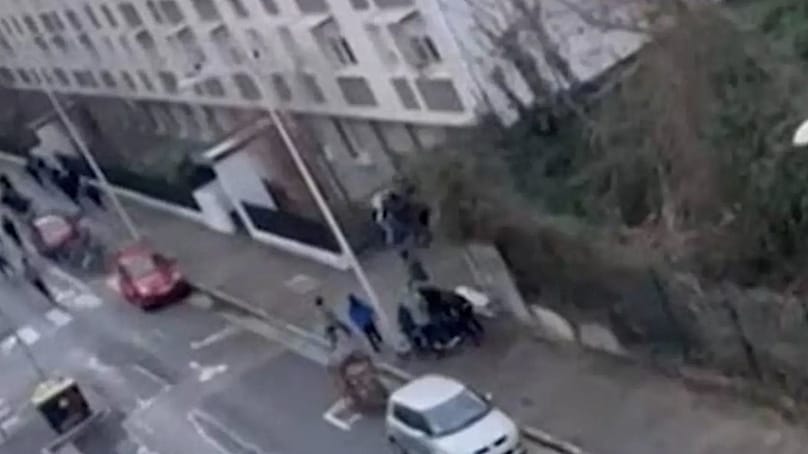
Screenshot of video footage which appears to show the fight which Quentin Deranque was involved in TF1

Left-wing activists targeted despite lack of evidence

The names, addresses and photographs of a number of alleged suspects have been shared online — even though their names are not among those suspects officially announced to the public — in turn exposing them and their families to online harassment.

In a series of social media posts, Blandine Bardinet was identified as one of the alleged suspects, namely by far-right activists, such as Damien Rieu in a now-deleted X post.

Rieu shared multiple, unrelated images of the young woman alongside video footage of the killing of Deranque, in an apparent bid to highlight the fact that she was wearing the same coat as one of the young man's attackers.
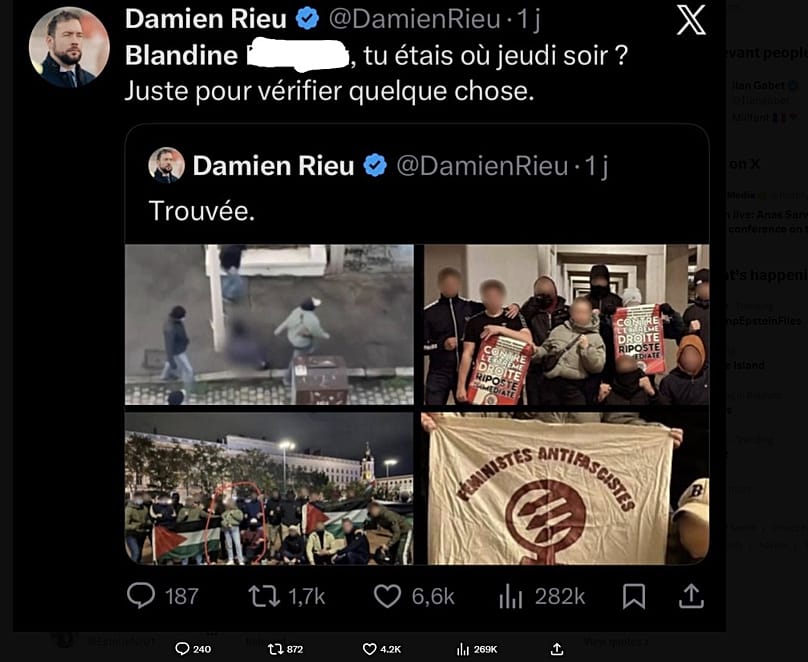
Damien Rieu, far-right activist's now deleted X post X

Ndong Eurydice, a local politician for the far-right Reconquête political party, also spread Bardinet's name and surname, alleging she had been "formally identified", even though this is not the case as of the time of writing.

Bardinet's lawyer, Raphaël Kempf, told Euronews's fact-checking team, The Cube, that they would take legal action against the individuals who spread false claims about Bardinet.

"Complaints will be filed against individuals who continue to relay these lies, and they will have to explain themselves in court," he said in an emailed statement. "For several days now, various far-right influencers have been acting like police investigators and prosecutors, treating their followers like a jury and naming names, inciting waves of hatred and threats."

"In their quest for revenge, they wrongly identified Blandine Bardinet as having been present in Lyon on the evening of Thursday, February 12, at the scene of Quentin D.'s death," he said. "They did not hesitate to embellish their theory with a false analysis of a screenshot."

Kempf shut down allegations that his client could have participated in the killing of Deranque, asserting that she had "left France to travel abroad the day before, Wednesday, February 11, for a planned stay of several months."

"It is therefore clear that she does not appear in the photo and that she was wrongly identified by Damien Rieu, Mila Orriols, Jean-Eudes Gannat, Eurydice Ndong, and the UNI, among others," he added.

According to social media posts, Bardinet has been involved in the anti-fascist Jeune Garde movement.

"Blandine Bardinet was an activist with the Jeune Garde, driven by her anti-fascist convictions and the need to fight against the far right and the spread of its ideas and practices," Kempf said. "Since June 12, 2025, she has complied with the decree dissolving the Jeune Garde."

In a press statement released on Sunday, the Jeune Garde denied its responsibility for what it described as "tragic events" which took place in Lyon, stating that it had "suspended all its activities" following the dissolution.

In an interview with French public broadcaster France 2 the same day, France's Interior Minister Laurent Nuñez pointed to the possible responsibility of the Jeune Garde in Deranque's killing.

"The investigation will confirm whether or not they were Jeune Garde activists," he said. "But the evidence clearly points in that direction."

The Lyon Public Prosecutor's office did not respond to our questions regarding the formal identification of the suspects, following separate reports from French media who, citing police sources, stated that investigators had "formally" identified five suspects, amplifying speculation surrounding the names shared online before Tuesday's arrests.

During a press conference held on Monday, the prosecutor's office confirmed that Deranque had been attacked "by at least six individuals."

Fake photos of Quentin Deranque spread online

Elsewhere on social media, several photos claiming to show Deranque have been circulating on social media since the incident.

In reality, the only authentic photo of him was released by his family was published in the French newspaper Le Figaro.

One image, which has been widely shared and supposedly shows Deranque, actually depicts Dylan Guichaoua, a local representative for the youth branch of the far-right National Rally party in the Pyrénées-Atlantiques department of France.

Guiachaou's image also appeared on French flags displayed at a tribute rally held in Paris on Sunday.
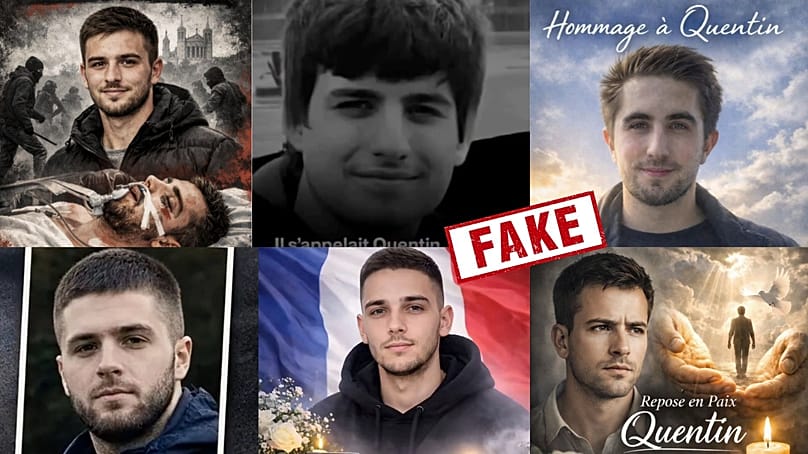
Compilation of misleading social media posts related to Quentin Deranque Euronews

Responding to the viral posts, Guichaoua published a statement on Facebook, denouncing the misuse of his identity, stating he had "no connection to the events mentioned, and even less to the attack and the death of Quentin".

Other alleged images of Deranque bearing the caption "his name was Quentin" actually use the photograph of Quentin Piron, a 23-year-old Belgian who died in a road accident in 2024.

Artificial intelligence has also been used to generate images of Deranque, which have in turn been picked up by far-right accounts, with captions such as, "The far left kills. Support for Quentin".

In total, The Cube identified at least six false images of Quentin circulating online.


Four suspects arrested in killing of French far-right activist in Lyon
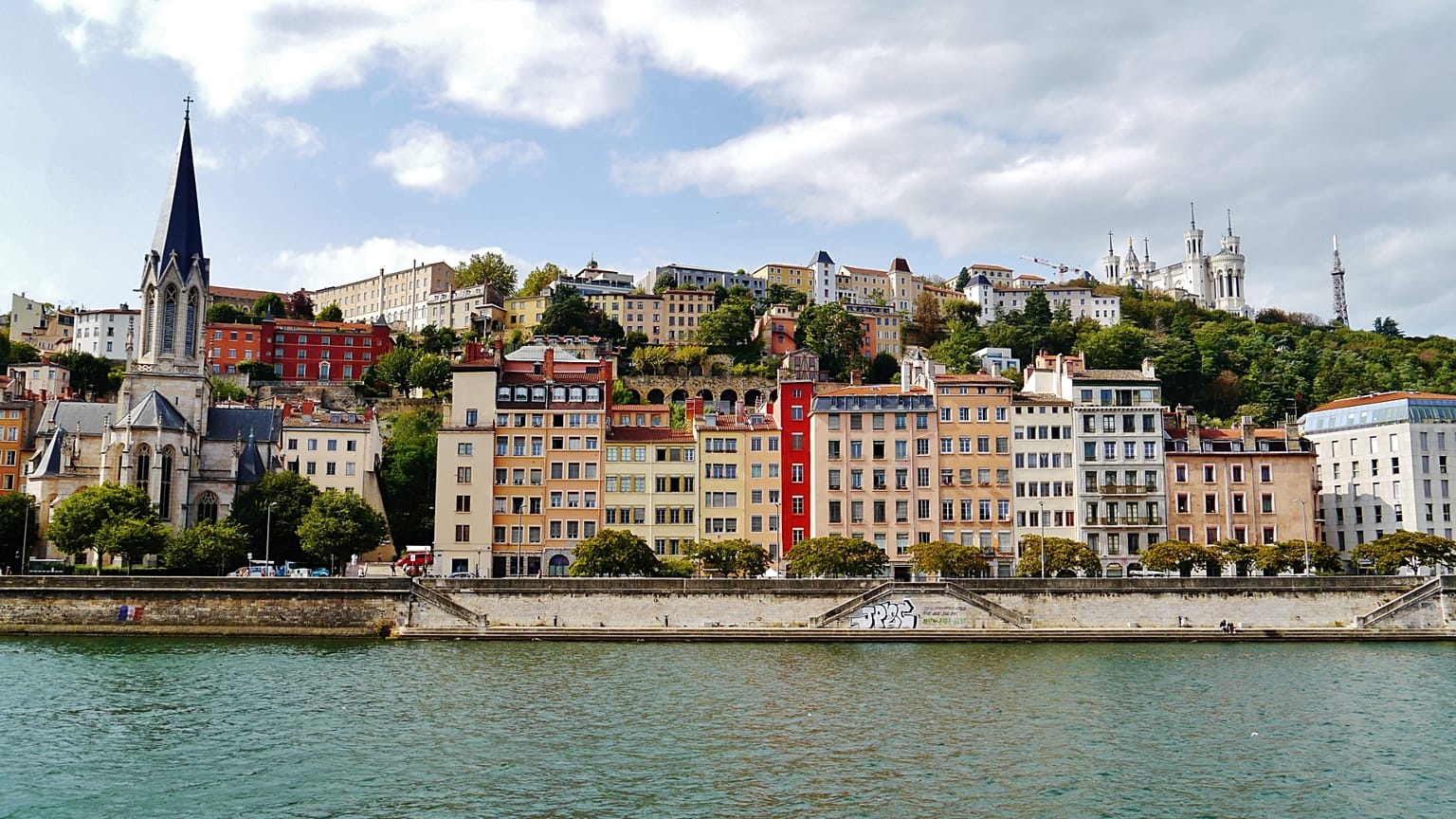
View of the Quai Fulchiron in Lyon where Quentin D. was taken in by the emergency services
Copyright Zaibur / Wikimedia Commons


By Euronews with AFP
Published on 

The incident has fuelled tensions between the far right and hard left ahead of municipal elections in March and the presidential election next year.

Investigators have arrested four suspects over the death of a French far-right activist in Lyon, the southeastern city's public prosecutor has said.

23-year-old Quentin Deranque died from a severe brain injury after being attacked by at least six people last week on the sidelines of a far-right protest against MEP Rima Hassan, who was speaking at an event at Sciences Po Lyon university.

A source following the case told news agency AFP that one of those detained is an assistant of a member of parliament from the hard-left France Unbowed (LFI) party.

The incident has intensified tension between France's far right and hard left as they prepare for municipal elections in March.

Nemesis, an anti-immigration group that describes itself as a protector of western women against violence, stated that Deranque was at the demonstration acting as security for its members.

Nemesis has blamed La Jeune Garde (The Young Guard) for the killing, an anti-fascist youth group co-founded in 2018 in Lyon by hard-left activist Raphaël Arnault before he was elected to parliament.

On its part, the government has blamed LFI for fuelling the violence that led to Deranque's death.

"It is manifestly the ultra-left who killed him," French justice minister Gérald Darmanin said.

A video, purportedly of the attack, shows a dozen people hitting three others lying on the ground, two of whom manage to escape.

On Tuesday afternoon, the French National Assembly observed a minute of silence for Quentin Deranque, with a commemorative march scheduled next Saturday in Lyon.

Political blame game continues

While government officials have blamed LFI and La Jeune Garde, the Lyon prosecutor declined to address those claims on Monday, confirming only that the case is being handled as voluntary homicide and aggravated assault.

La Jeune Garde, which was dissolved in June, denied any links to the "tragic events".

Three-time presidential candidate and likely 2027 contender, Jean-Luc Mélenchon, dismissed claims that his party, the LFI, was at fault.

LFI lawmaker and La Jeune Garde co-founder, Raphaël Arnault, has said he was horrified by the killing.

Meanwhile, three-time presidential candidate with the far-right National Rally Marine Le Pen condemned the "barbarians responsible for this lynching".

With President Emmanuel Macron constitutionally barred from seeking a third term in 2027, the far-right National Rally currently leads the race to succeed him, according to recent opinion polls.


French government blames hard left for 'climate of violence' after killing of far-right activist

France's government on Monday said politicians on the hard left had "encouraged a climate of violence" that made them partially responsible for the death of 23-year-old Quentin Deranque, a far-right activist who was attacked on the sidelines of a protest in Lyon last week.


Issued on: 16/02/2026 -

By: FRANCE 24
Video by: FRANCE 24


France's government accused the hard left Monday of being partly responsible for the killing of a far-right activist last week.

Quentin Deranque, 23, died of his wounds after being attacked Thursday on the sidelines of a far-right protest against a left-wing politician speaking at a university in the city of Lyon.

The Lyon prosecutor on Monday said the authorities have opened a murder investigation Deranque's death after he was attacked by "at least six" people on the sidelines of a protest.

Prosecutor Thierry Dran said the incident is being investigated as an "intentional homicide" and "aggravated assault". No arrests have been made so far, he added.


The incident has fuelled tension between France's far right and hard left ahead of municipal elections in March and the 2027 presidential race.

The government blamed rhetoric from the hard-left France Unbowed (LFI) party for fuelling the violence that led to his death.

The far right blamed the killing on la Jeune Garde (Young Guard), an anti-fascist youth group co-founded by an LFI lawmaker before he was elected to parliament.

The group – which was dissolved in June – denied any links to the "tragic events".

READ MOREFrance's Macron urges restraint after right-wing youth fatally beaten

Government spokeswoman Maud Bregeon accused the LFI Monday of having "encouraged a climate of violence for years".

"There is therefore – in light of the political climate and the climate of violence – a moral responsibility on the part of LFI" for the attack on Thursday, she told television broadcaster BFMTV.

Raphael Glucksmann, a centre left member of European parliament, also lambasted the hard left party.

"It's unthinkable that, on the left, we would continue to harbour the slightest doubt about a possible electoral alliance with LFI," he told the RTL broadcaster.

The left, including LFI, allied against the far right after President Emmanuel Macron took a gamble by calling for snap parliamentary elections in 2024.

But Macron lost even more of his majority, and the anti-immigration National Rally (RN) became the biggest party in the lower house.
'Pitched battle'

According to a source close to the probe into the Lyon killing, there was "a pitched battle between members of the far left and the far right".

A video broadcast by TF1 television of the alleged attack shows a dozen people hitting three others lying on the ground, two of whom manage to escape.

A witness said "people were hitting each other with iron bars".

LFI's veteran leader Jean-Luc Melenchon, a three-time presidential candidate widely expected to run again next year, has denied his party were to blame.

On the far right, Marine Le Pen, who is still hoping to stand in 2027 despite a graft conviction, condemned the "barbarians responsible for this lynching".

READ MOREParis appeals court sets verdict in far-right leader Le Pen’s graft case for July 7

Opinion polls put the far right in the lead for the presidency in 2027, when Macron will have to step down after the maximum two consecutive terms in office.

Le Pen has said she will decide whether to run after an appeal court ruling in July, when she could hand over to her lieutenant Jordan Bardella.

A poll of 1,000 people published on Sunday placed Bardella as the preferred candidate in the 2027 vote, ahead of Le Pen in second place.

Centrist ex-prime minister Edouard Philippe, a candidate, and Justice Minister Gerald Darmanin were in joint third place.

(FRANCE 24 with AFP)

Killing of far-right activist triggers turmoil across French political spectrum

The fatal beating of a 23-year-old far-right sympathiser in Lyon has sparked a blame game between France's left and right political circles, while an investigation is underway to uncover the sequence of events leading up to the young man's death.


Issued on: 16/02/2026 - RFI

The killing of 23-year-old far-right sympathiser Quentin Deranque has become a political lightning rod in France © Sylvain THOMAS / AFP

Alara Koknar


Quentin, a 23-year-old mathematics student linked to the far-right collective Némésis, died after being severely beaten during clashes in the city of Lyon on Thursday evening.

Némésis is known for high-profile actions opposing immigration and feminism, and for staging protests targeting left-wing political figures.

According to the group, Quentin had been "helping provide security" for its members as they demonstrated near the university Sciences Po Lyon, where Rima Hassan, a Member of the European Parliament from the hard-left party France Unbowed, was holding a conference.

Clashes between rival political groups

Police sources say an initial confrontation between far-right and far-left supporters escalated into a violent clash roughly 500 metres from the university. Both groups consisted of about twenty individuals. A video acquired by French television channel TF1 shows several individuals beating a man on the ground.

On social media, Némésis has refered to the incident as a “lynching” of its activists, but prosecutors say they are still working to determine the precise sequence of events.

Quentin was later treated by firefighters for a serious head injury. He was hospitalised in critical condition and later declared brain dead on Friday before passing away on Saturday.

Lyon prosecutor Thierry Dran told reporters at a press conference on Monday afternoon that a criminal investigation into voluntary homicide is being conducted by the Lyon police department.

Quentin’s family lawyer has described the attack as a “premeditated ambush”, a claim not yet substantiated by investigators.


'Pray for Quentin': the killing of a 23-year-old far-right sympathiser in the French city of Lyon has triggered protests © ALAIN JOCARD / AFP

Ministers and party leaders trade accusations

Justice Minister Gérald Darmanin said Sunday that “the far-left had clearly killed” the student.

Interior Minister Laurent Nuñez also suggested that early evidence pointed to involvement of "far-left activists", mentioning possible links to the Jeune Garde, an anti-fascist group dissolved for its violence in 2025. His claim has yet to be confirmed.

On the right, Marion Maréchal, a far-right member of the European Parliament and niece of Marine Le Pen, accused France Unbowed's of responsibility.

Former interior minister Bruno Retailleau echoed similar claims, expressing that “it is not the police who kill in France, but the far-left”.

French prosecutors stick to demand for five-year ban for Le Pen

Meanwhile, France Unbowed leader Jean-Luc Mélenchon expressed “shock, empathy and compassion” for the family at a rally in Montpellier, while rejecting what he considered “slander”.

“We have nothing to do with this story,” he said, insisting his movement opposes political violence.


THE GLOBAL EPSTEIN CLASS


‘Get the files out’: Hillary Clinton slams Trump's Epstein cover-up

Former US secretary of state Hillary Clinton accused President Donald Trump of staging a "cover-up" over files related to sex offender Jeffrey Epstein. Days before her scheduled deposition before a Congressional committee, Clinton said the Republicans probing her are trying to deflect attention away from President Donald Trump, whose name is also mentioned in the files.


Issued on: 17/02/2026
By: FRANCE 24

Former US secretary of state Hillary Clinton speaks at "The World Forum 2026" in Berlin on February 16, 2026. © Carsten Koall, AP

Former US secretary of state Hillary Clinton has accused President Donald Trump of orchestrating a "cover-up" over files related to sex offender Jeffrey Epstein, according to an interview with the BBC published Monday.

"Get the files out. They are slow-walking it," Clinton, who is due to testify before a Congressional committee on the issue, told the British broadcaster in an interview in Berlin.

The Justice Department last month released the latest cache of so-called Epstein files – more than three million documents, photos and videos related to its investigation into sex criminal Epstein, who died from what was determined to be suicide while in custody in 2019.

Clinton's husband, former president Bill Clinton, features regularly in the files, but no evidence has come to light implicating either Clinton in criminal activity.

The couple has been ordered to give closed-door depositions before the House Oversight Committee, which is probing the deceased financier's connections to powerful figures and how information about his crimes was handled.

"We will show up but we think it would be better to have it in public," Hillary Clinton told the BBC.

"I just want it to be fair," she said. "I want everybody treated the same way."

The former secretary of state said she and her husband "have nothing to hide. We have called for the full release of these files repeatedly."

The Department of Justice has said it has no more files to release, though lawmakers have criticised it for not publishing internal government memos, notes and emails on Epstein.

Clinton said the Republicans probing her are trying to deflect attention away from Trump, whose name is also mentioned in the files many times.

"Look at this shiny object. We're going to have the Clintons, even Hillary Clinton, who never met the guy," she said.

Trump denies any wrongdoing. Mere mention in the files is not proof of having committed a crime.

Former president Clinton has acknowledged flying on Epstein's plane in the early 2000s for Clinton Foundation-related humanitarian work, but said he never visited Epstein's private island.

Hillary Clinton, who ran against Trump for president in 2016, has said she had no meaningful interactions with Epstein, never flew on his plane and never visited his island.

In the interview with the BBC, she said she had met Ghislaine Maxwell, an Epstein associate who was convicted of conspiring with him to sexually abuse minors, "on a few occasions".

Responding to Clinton's comment that the congressional testimony was a bid to create a distraction, Trump denied it, telling reporters Monday evening he had been "totally exonerated".

Hillary Clinton will appear for her deposition on February 26, while Bill Clinton will appear on February 27.

(FRANCE 24 with AFP)


INTERVIEW

Epstein files: ‘Releasing documents in their raw state can be counterproductive’


The release by the US administration of more than 3 million documents linked to convicted sex offender Jeffrey Epstein has put dozens of high-profile figures under scrutiny over their correspondence with him. RFI spoke to Frédérique Sandretto, a professor of American civilisation at Sciences Po university, who says while this move was meant to dispel doubts, it has instead enabled conspiracy theorists.


Issued on: 14/02/2026 

A press conference to discuss the Epstein Files Transparency bill on Capitol Hill, Washington DC, 3 September, 2025. 
REUTERS - Jonathan Ernst

The United States Justice Department on 30 January published nearly 3 million government documents related to Epstein, who was convicted in 2008 for soliciting a minor and died by suicide in custody in 2019 while awaiting trial for sex trafficking.

The mention of a name in the files does not, in itself, imply wrongdoing by that individual. However, the material has shown how Epstein embedded himself in elite international circles – through introductions, group emails and investment activity.

While some of the public figures named have stepped down from their positions, others have downplayed or denied ties to Epstein.

For Frédérique Sandretto, a professor of American civilisation at Sciences Po university in Paris, the release of such a large number of documents could do more harm than good without proper analysis.

RFI: How has the publication of these documents by the US administration been received by the public?

Frédérique Sandretto: It was eagerly awaited. It was something [US President Donald] Trump had announced, but he had always backed down, fuelling conspiracy theories that there was something to hide. Finally, the Transparency Act was passed in 2025, with unprecedented consensus between Republicans and Democrats. When you see the documents, there are more than 3 million of them. And you don't know where to start. You feel like you have access to declassified data, which is true. So the gesture is good, but the question is: what do we do with this material?

RFI: How has their publication reignited conspiracy theories surrounding the Epstein case?

FS: It's very visible on social media. We are seeing a resurgence of old conspiracy theories, such as "Pizzagate", which claimed that the campaign manager of presidential candidate Hillary Clinton had organised child sex trafficking in a pizzeria.

On platforms such as Reddit, if you type in the word "pizza" you'll see all sorts of conspiracy theories pop up based on the idea of a network of elites working together against the people and a paedophile ring.

Why? Because in the files leaked in recent days, the word "pizza" appears 911 times. It is indeed strange. Some see it as a code word. And that's enough to revive “pizzagate”, a conspiracy theory that emerged nearly 10 years ago, leading some to say, ‘we told you so, that's what it was'.

RFI: What are the particulars of the Epstein case that fuel such conspiracy theories?

FS: Conspiracy theories surrounding Epstein really began after his death. Many people said to themselves: this man knew too much, he could have blown up the planet, he couldn't have committed suicide, it must have been a disguised suicide...

Added to this are his connections with powerful figures in Silicon Valley, Bill Gates, [the former] Prince Andrew and politicians in Europe. This fuels the idea of a transnational conspiracy, led by powerful elites against the people – especially since the victims were often young girls from disadvantaged backgrounds.

Here we see classic conspiracy theory patterns: the idea of a deep state, a radical opposition between elites and the people, and an anti-Semitic narrative superimposed on top of it all. This has led to theories claiming that Epstein was a Mossad agent.

Finally, the mass declassification of documents gives the impression of a vast web of connections, with new names emerging every day, further fuelling the conspiracy sphere.

RFI: Has the release of the documents, without full context, fuelled conspiracy theories, even if it was intended as a move towards transparency?

FS: There is a very strong desire for transparency, with the declassification of 3 million documents, which is a first in the United States. But what we are seeing is that releasing documents like this, in their raw state, can be counterproductive. It has also reignited all the conspiracy theories.

At the same time, everyone wanted these files and it is very good that the US Department of Justice has published them. They should have been sorted through. Now, anyone can log on and do a search. There are photos that may be shocking, and people whose names are mentioned who are not necessarily connected to Epstein. This can create an association between the name referenced and Epstein. And that can quickly turn into a witch hunt.

The fact that certain passages have been redacted also fuels the conspiracy theory: we are being given information, but not all of it. So we are really on the borderline between the US Congress's desire for transparency and the conspiracy theorists who say, ‘see, these documents prove we were right'. It's all very well to have a right to information, but we also have a right to be cautious. The question remains: what do we do with all this?

RFI: Is it still possible to dispel the climate of suspicion surrounding the Epstein case?

FS: Trump said that now that he has given everything he had, he hoped we could turn the page. I don't think that's the case.

On the contrary, I think this is the beginning of something much bigger. Everyone wants to find out, to tell themselves that it's not possible that all this has been published without there being something to discover.

I just think that what we're seeing is the tip of the iceberg, and that there will be many more names that will be [thrown about], much more evidence that will come out. It's just a matter of time. All these documents need to be analysed.

This article was adapted from the original version in French by Aurore Lartigue.


Former French culture minister's offices raided in Epstein files fallout

French investigators raided the offices of former Culture Minister Jack Lang, 86, on Monday, as prosecutors step up efforts to examine potential links between French nationals and the crimes of US financier and convicted sex offender Jeffrey Epstein.


Issued on: 16/02/2026 - RFI

Former French Culture minister Jack Lang in Paris on 26 March, 2024
. AFP - STEPHANE DE SAKUTIN

The national financial prosecutor’s office said it had opened a preliminary investigation into alleged aggravated tax fraud and money laundering involving Jack Lang and his daughter Caroline Lang.

Lang resigned earlier this month as president of the Arab World Institute, a position he had held for over a decade, after it was revealed that he had corresponded numerous times with the sexual predator.

Lang had previously requested favours from Jeffrey Epstein, including use of the financier’s car or private plane for himself or family members.The former minister's name also appeared in the statutes of an offshore company founded by Epstein in 2016.

Lang has denied any wrongdoing, saying he was “shocked” to learn of the news. The former minister has insisted that he had known nothing of Epstein’s 2008 conviction of "procuring a girl below the age of 18 for prostitution".

In a recent interview with a French newspaper, he described himself as “white as snow” and denounced what he called a “tsunami of lies.”

Journalists work in front of the Arab World Institute (Institut du Monde Arabe - IMA) as a search is being carried out by French police in connection with an investigation into its former head, ex French Culture Minister Jack Lang, and his ties with the late financier Jeffery Epstein, in Paris, France, 16 February, 2026. © Stephane Mahe / Reuters

Special team of judges


Monday's office raid comes as Paris prosecutors confirmed over the weekend that they are establishing a special team of judges to study material released by US authorities concerning Jeffrey Epstein’s network.

The Paris prosecutor’s office said the new team will work closely with the police and with prosecutors from the national financial crimes unit to determine whether any French citizens had committed crimes.

The aim, according to prosecutors, is to extract any piece of evidence from the Epstein files that could be reused in new investigations.

Members of France's political and cultural elite named in Epstein files

French prosecutors have also announced that they will revisit the case of Jean-Luc Brunel, a former modelling agency executive and close Epstein associate who died in custody in Paris in 2022 after being charged with raping minors. The case against him was dropped in 2023 in the wake of his death.

Prosecutors said Brunel had offered modelling jobs to young girls from disadvantaged backgrounds and had engaged in sexual acts with underage girls in multiple locations including the United States, the US Virgin Islands and France.

Ten women have brought accusations against him, including being subjected to forced sexual penetration.

Jeffrey Epstein died in a US prison in 2019 while awaiting trial on sex-trafficking charges. US authorities ruled his death a suicide.

(with newswires)


DP World Changes Leadership Responding to Pressure Over Epstein Scandal

DP World
DP World replaced its Chairman and CEO as news of the ties to Jeffrey Esptein grew (DP World)

Published Feb 13, 2026 12:01 PM by The Maritime Executive


Port and logistics powerhouse DP World reported on Friday, February 13, that it is changing its management leadership as pressure grew from the investment community over its long-time chairman and CEO’s ties to convicted sex offender Jeffrey Epstein. The company named one of the leaders of the Dubai financial community as its new chairman while elevating its Group Deputy CEO and Chief Financial Officer to the role of CEO.

The company simply stated that the long-time head of the company, Sultan Ahmed bin Sulayem, had “resigned from the company, effective immediately.” He had been in the leadership role first as Chairman since 2007 and Chairman and CEO since 2016.

He is one of the most prominent executives and political leaders to lose his position as the ties to Jeffrey Epstein emerged in the released documents from the U.S. Department of Justice. CNN reports bin Sulayem’s name appeared “thousands of times” in the most recent batch of documents, and he was referred to as a “best and trusted friend.” There were business discussions between him and Epstein, but much of it appears to be sexually explicit material. 

As more documents became public, it was revealed that the relationship between the two men had lasted well over a decade. Further, bin Sulayem continued the contact after Epstein’s 2009 conviction and until shortly before his death while in jail in New York.

Investors had increased pressure on the company to address “the situation and take the necessary actions.” The UK’s British International Investment said earlier this week that it was suspending its investment activity with DP World. Long-time partner and investor Canada’s La Caisse, operators of Quebec’s pension and the largest pension fund in Canada, also said it would pause additional capital deployment until the company responded.

Both investors reportedly told Reuters today that they welcomed the company’s actions. BII said it looked forward to continuing its partnership, and Caisse said it would work with the new leadership of the company.

One of the prominent leaders of the Dubai financial community, Essa Kazim, was named Chairman of DP World. Since 2014, he has served as Governor of the Dubai International Finance Center, which oversees the country’s business environment and closely interacts with all the companies in the emirate. He also serves as Deputy Chairman of the Supreme Legislation Committee in Dubai.

Long-time executive Yuvraj Narayan was elevated to the role of CEO. He has been with the company since 2004 and has been in the role of Group CFO since 2005. As such, he was working closely with bin Sulayem as DP World grew rapidly from the operator of the Jebel Ali port to one of the leaders in the industry.

DP World rose in prominence in 2006 when it acquired the venerable British shipping company P&O for $6.8 billion. The company also made investments, including Imperial Logistics and Syncreon, and recently announced it would be unifying its operations under the DP World brand.

The company’s profile says that it contributes more than 36 percent to the GDP of Dubai and about 12 percent to the GDP of the UAE. It operates in more than 80 countries. Last year, it reported nearly $20 billion in revenues.


French prosecutors announce special team to analyse Epstein files

The Paris prosecutor's office on Saturday announced it was setting up a special team to analyse files relating to convicted sex offender Jeffrey Epstein and investigate suspected crimes involving French nationals. As part of that initiative, they will be reopening their files on the late Jean-Luc Brunel, a former French modelling agency executive.


15/02/2026 
By: FRANCE 24

A photo of Epstein on a inmate report that was included in the US Department of Justice release of the Jeffrey Epstein files, photographed Tuesday, February 10, 2026. © Jon Elswick, AP

The Paris prosecutor's office on Saturday announced it was setting up a special team of magistrates to analyse evidence that could implicate French nationals in the crimes of the convicted US sex offender Jeffrey Epstein.

With Epstein's known circle now extending to prominent French figures after the release of documents by the US authorities, the prosecutor's office said it would also thoroughly re-examine the case of a former French modelling agency executive Jean-Luc Brunel, a close associate of the American financier, who died in custody in 2022.

The new team will work closely with prosecutors from the national financial crimes unit and police with a view to opening investigations into any suspected crimes involving French nationals, the Paris prosecutor's office told AFP.

The aim is "to be able to extract any piece that could be usefully reused in a new investigative framework", it said.

Brunel was found dead in his cell in a Paris prison in 2022 after having been charged with raping minors. The case against him was dropped in 2023 in the wake of his death, with no other person charged.

Prosecutors said an investigation had showed Brunel was "a close friend of Jeffrey Epstein" who had offered modelling jobs to young girls from poor backgrounds.

He had engaged in sexual acts with underage girls in the United States, the US Virgin Islands, Paris and the south of France, they said.

Ten women had made accusations against Brunel, several describing how they had been led to drink alcohol and had been subjected to forced sexual penetration, according to the prosecutor's office.

New cases

Several French public figures feature in the latest US Department of Justice release of material from the Epstein files, though being mentioned there does not in itself mean any offence has been committed.

The prosecutor's office said it had been asked to look into three new specific cases involving a French diplomat, a modelling agent and a musician.

At the request of the French foreign ministry it was looking into the reported appearance of senior diplomat Fabrice Aidan in the cache of Epstein-related documents published by the US authorities.

"An investigation is underway to gather various pieces of evidence that could substantiate this report," the prosecutor's office stated.

© France 24
01:25


The prosecutor's office has also received a complaint filed by a Swedish woman against Daniel Siad, a model recruiter with close ties to Epstein. She accused him of "sexual acts that she describes as rape and that may have been committed in France in 1990".

The office has also received a complaint filed against French conductor Frédéric Chaslin alleging acts of sexual harassment allegedly committed in 2016, it said.

The latest release of Epstein files has led to French former minister Jack Lang resigning from his position as the head of a top cultural body, the Arab World Institute.

Lang has however denied any wrongdoing, saying he was "shocked" that his name appeared in the statutes of an offshore company Epstein founded in 2016.

The office of the national financial prosecutor said it had opened a preliminary investigation for "aggravated tax fraud and money laundering" against Lang and his daughter Caroline Lang.

Following this announcement, Lang resigned from the presidency of the Arab World Institute.

Epstein died in prison in 2019 while awaiting trial for trafficking children, in what the US authorities ruled was a suicide.

(FRANCE 24 with AFP)


French police raid Paris's Arab World Institute in Epstein-linked probe into Jack Lang


⁠French police ​on Monday searched ​the Arab World Institute in Paris ​in ‌connection ⁠with an investigation into ‌its former head, France's ex-culture minister Jack Lang, and his alleged ​ties with the ‌late financier and convicted sex offender Jeffrey Epstein.


Issued on: 16/02/2026
By: FRANCE 24
Video by:James ANDRE/


File photo of France's former culture minister Jack Lang taken outside the Arab World Institute in Paris on January 28, 2013. © Martin Bureau, AFP
02:47


French police conducted raids at various locations, including the Arab World Institute (IMA) in Paris, on Monday as part of the investigation into the institution's former head Jack Lang for his alleged financial ties to Jeffrey Epstein, Pascal Prache, head of the national financial prosecutor's office, said in a statement.

Lang, a former French culture minister under ​socialist president François Mitterrand, resigned earlier this month from ​the organisation which he ​had led since 2013.


The Arab World Institute is a ​Paris-based cultural and research institution under the supervision of France's foreign ministry that promotes understanding of the Arab world.

Lang, who corresponded ⁠with Epstein from 2012 and 2019, has denied any wrongdoing, saying he was "shocked" that his name appeared in the statutes of an offshore company Epstein founded in 2016.

Lang's daughter Caroline, who allegedly owned half the shares in the company, has resigned from two positions.

The raid, announced by the national financial prosecutor's office, occurred as he said goodbye to former colleagues in a ceremony at the institute after more than a decade as its president.

"I'm pleased to see the financial judiciary is at work," he said during his speech.

"I'm delighted because I have nothing to hide."
French prosecutors announce special team for Epstein files

The raids came after French prosecutors opened ‌a preliminary investigation ​into alleged tax fraud against Lang and his ​daughter following the ​release of documents ​by the US ​Department of Justice.

The Paris prosecutor's office on Saturday announced that it was setting up a special team of magistrates to analyse evidence that could implicate French nationals in the crimes of the convicted sex offender Epstein.

With Epstein's known circle now extending to prominent French figures after the release of documents by the US authorities, the prosecutor's office said it would also thoroughly re-examine the case of a former French modelling agency executive, Jean-Luc Brunel, a close associate of the American financier who died in custody in 2022.

The new team will work closely with prosecutors from the national financial crimes unit and police with a view to opening investigations into any suspected crimes involving French nationals, the Paris prosecutor's office told AFP.

The aim is "to be able to extract any piece that could be usefully reused in a new investigative framework", it said.

Brunel was found dead in his cell in a Paris prison in 2022 after having been charged with raping minors. The case against him was dropped in 2023 in the wake of his death, with no other person charged.

Prosecutors said an investigation had shown Brunel was "a close friend of Jeffrey Epstein" who had offered modelling jobs to young girls from poor backgrounds.

Brunel had engaged in sexual acts with underage girls in the United States, the US Virgin Islands, Paris and the south of France, they said.

Ten women had made accusations against Brunel, several describing how they had been led to drink alcohol and had been subjected to forced sexual penetration, according to the prosecutor's office.
Senior diplomat under scrutiny

Several French public figures feature in the latest US Department of Justice release of material from the Epstein files, though being mentioned there does not in itself mean any offence has been committed.

The prosecutor's office said it had been asked to look into three new specific cases involving a French diplomat, a modelling agent and a musician.

At the request of the French foreign ministry it was looking into the reported appearance of senior diplomat Fabrice Aidan in the cache of Epstein-related documents published by the US authorities.

READ MOREFrance demands investigation into diplomat cited in Epstein files

"An investigation is underway to gather various pieces of evidence that could substantiate this report," the prosecutor's office stated.

(FRANCE 24 with AFP and Reuters)


France names first woman to lead Institute du Monde Arabe after Lang exit

France has appointed a new leader for one of its most visible cultural bridges with the Arab world, the Institut du Monde Arabe (IMA) in Paris, 
following the resignation of its long-time president Jack Lang in connection with the Epstein affair.

 The move comes as the institute faces financial challenges and debate over its future role.


Issued on: 17/02/2026 - RFI

Anne-Claire Legendre is set to become the first woman to lead the Institut du monde arabe, a Paris-based cultural institution founded in 1980 to strengthen ties between France and the Arab world. 
AFP - GEOFFROY VAN DER HASSELT

Anne-Claire Legendre, a 46-year-old diplomat who advises President Emmanuel Macron on North Africa and the Middle East, was put forward on Tuesday by Foreign Minister Jean-Noël Barrot to become the first woman to head the institute. She would replace Lang, 86, a former culture minister who had led the organisation for 13 years.

The institute's board of directors – made up equally of Arab ambassadors and figures chosen by the French foreign ministry – was expected to confirm the appointment.

Founded in 1980 through an agreement between France and the 22 member states of the Arab League, the IMA serves as both a museum and a cultural centre dedicated to Arab history, art and language.

"The aim was to present the Arab world to a French public that did not know it well enough," Gilles Gauthier, a former French ambassador and adviser to Lang, told RFI, adding that the IMA reflects France's long-standing cultural and diplomatic ties with the region.

"France exists in the Middle East through its culture, through its language, and so that was the basis for a policy on the Arab world."

The institute stands on the banks of the Seine in central Paris, near Notre-Dame cathedral. Its modern façade of glass and metal is covered with geometric moucharabieh patterns – delicate designs inspired by traditional Arab screens used to filter sunlight.

A front-line diplomat

Legendre has worked in the diplomatic unit of the Élysée Palace as an adviser to Macron since 2023. She previously served as France’s ambassador to Kuwait and as spokesperson for the foreign ministry.

In 2016 Legendre became the first woman to serve as France’s consul in New York, a post she held for four years. Fluent in Arabic, she studied the language at Inalco, the National Institute of Oriental Languages and Civilisations, and holds degrees from Sciences Po and the Sorbonne.

An ambassador who sits on the IMA's board of directors told the French news agency AFP that Legendre was “competent, substantial and committed, with a sharp knowledge of every country in the Arab world, whether in the Maghreb or the Middle East”.

Her diplomatic work has included responding to Russian disinformation campaigns while serving as foreign ministry spokesperson. She also travelled to Algiers in March 2025 to meet Algerian President Abdelmadjid Tebboune in an attempt to ease tensions between France and Algeria.


Founded in 1980 through an agreement between France and the 22 member states of the Arab League, the Institut du monde arabe was created to strengthen cultural ties between France and the Arab world. 
AFP - DIMITAR DILKOFF

More than a museum

For the French state, the IMA occupies a special place among cultural institutions because its funding comes from the foreign ministry rather than the culture ministry. It hosts exhibitions, concerts, debates and educational programmes focused on the Arab world.

“It is becoming a centre for reflection, creation and intellectual relations between the Arab world and France, and even beyond, Europe,” Gauthier explained. “It is the only institution of this kind in Europe.”

The institute, he added, plays a role in long-term cultural diplomacy rather than day-to-day foreign policy. “It is not about resolving crises or daily diplomatic action. It is about participating in this strong cultural and human relationship. It is a tool for dialogue.”

Despite its ambitions, the institute faces financial challenges.

A 2024 report by the Court of Auditors, France’s public spending watchdog, found that Arab countries expected to contribute 40 percent of the operating budget had stopped paying – leaving the French state subsidy as the main source of funding.

“There was a misunderstanding at the start,” Gauthier told RFI, explaining that some Gulf countries were more familiar with a model where a single large contribution is invested and generates annual income. “But it did not work that way.”

However Arab countries still support the institute through specific projects and exhibitions. Saudi Arabia helped finance an exhibition on Al-Ula, while Kuwait funded the renovation of the institute’s library.

Under Lang, the number of exhibitions “increased considerably”, Gauthier said, adding that the institute expanded work on Arabic language learning and organised more conferences requiring simultaneous translation.


'Identity of millions'


Hakim El Karoui, founder of the Action Committee for the Mediterranean think tank, wrote in a column published in the daily Le Monde that the institute should become “not just an outward-facing showcase, but the beating heart of Franco-Arab culture in France”.

The issue, he said, was no longer only France’s view of the Arab world but also the identity of millions of French people whose history and culture are linked to it.

Gauthier agreed the IMA should also engage with France’s communities with roots in the Arab world, while maintaining its original mission.

“We must make the most of the existence of these significant minorities from the Arab world in our dialogue with the Arab world,” he said, warning against shifting the focus too far inward.

“The Institut du Monde Arabe must not focus mainly on France. That is not the objective”.

Article was written using quotes from this story in French by Guilhem Delteil