Sunday, February 22, 2026

MISOGYNIST AMERIKA
Probe of Fetus at South Carolina Water Plant Highlights Criminalization of Pregnancy Loss

“No one should have to live with the fear that their miscarriage or stillbirth could result in cops showing up at their door,” said one researcher.
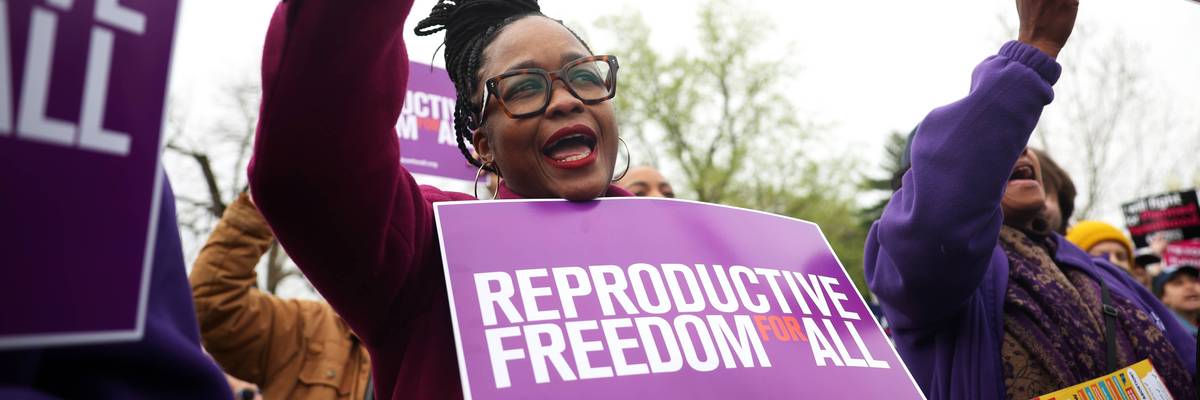

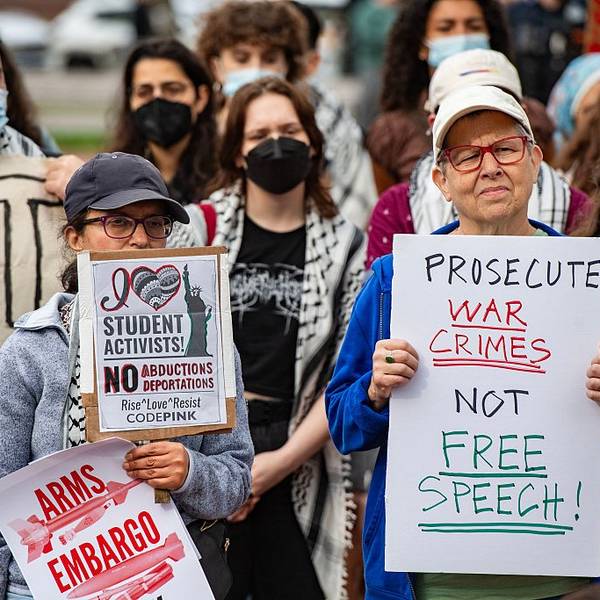
Abortion rights protestor Kori Ricketts demonstrates outside the US Supreme Court in Washington, DC on April 2, 2025, during oral arguments for a case stemming from South Carolina trying to exclude Planned Parenthood from its Medicaid program.
(Photo by Kayla Bartkowski/Getty Images)


Jessica Corbett
Feb 17, 2026
COMMON DREAMS


The number of people who have faced criminal charges related to their pregnancies has soared since the US Supreme Court overturned Roe v. Wade, and now, a sheriff’s office in South Carolina is investigating a fetus found at a water treatment plant.

The Sumter County Sheriff’s Office announced Friday that deputies were called to the plant on Edgehill Road after workers found the fetus, which was sent to the Medical University of South Carolina, according to The State. County Coroner Robbie Baker said that “it was a small fetus. Probably not more than 6 inches long. It was somewhat developed.”

Baker shared the findings from the autopsy on Monday: The fetus was just 13-15 weeks, male, and showed no signs of trauma. ABC News 4 reported that he also said this was being ruled a stillborn death—even though a stillbirth is generally defined as a pregnancy loss after 20 weeks, and a loss before that is a miscarriage.

The South Carolina Law Enforcement Division is “testing tissue samples to determine the race and locate the mother,” according to WIS News 10. “The coroner said the race could not be immediately determined due to how long the fetus had been sitting in sewer chemicals.”

As Kylie Cheung wrote Monday at Jessica Valenti’s newsletter Abortion, Every Day: “Our immediate questions: Why are pregnancy remains being investigated by law enforcement at all? How can 14-week fetal remains be ruled a ‘stillborn death’? And why are state authorities trying to determine the race of these pregnancy remains? This is particularly concerning given that women of color are overrepresented among criminal cases involving pregnancy.”

Such probes have become “all too routine,” Laura Huss, a senior researcher at If/When/How, told Cheung. “Pregnancy losses aren’t crimes... No one should have to live with the fear that their miscarriage or stillbirth could result in cops showing up at their door, which is what investigations and media stories like this create.”

The advocacy group Pregnancy Justice said last year that “from June 2022 to June 2024—the first two years after the Supreme Court’s decision in Dobbs v. Jackson Women’s Health Organization, which overturned Roe v. Wade—prosecutors initiated at least 412 cases across the country charging individuals with crimes related to their pregnancy, pregnancy loss, or birth.”

“So what is the point of this investigation, beyond terrorizing women through control and surveillance of their bodies?”

Since Roe‘s reversal, far-right politicians and anti-choice organizations have ramped up their push for more state and federal restrictions on reproductive freedom. South Carolina groups that fight for such policies—from abortion bans based on gestational age to fetal personhood legislation—are now using the fetus found there to advocate for new state laws.

One proposal would “require the Department of Environmental Services to conduct testing for urinary metabolites in certain wastewater treatment facilities,” Fox Carolina reported. Another would prohibit the “mailing, shipping, or prescribing of abortifacients, including from out-of-state sources,” as well as “classify committing or attempting to commit an abortion using an abortifacient on a mother as a felony punishable by up to 10 years imprisonment or a fine of up to $100k.”


Last month, Pregnancy Justice released a report that “maps the matrix of laws and policies that can be used to criminalize postpartum people for how they respond to their own pregnancy loss in every state.” Its section on South Carolina says:
Although South Carolina does not have a broad prenatal personhood law, criminal or otherwise, its state Supreme Court establishes broad criminal prenatal personhood with the harmful proposition that criminal statutes apply to “viable fetuses” unless the Legislature expressly says otherwise. A former attorney general also noted his position that prenatal personhood applies broadly to South Carolina’s laws. By extension, an attempt to criminalize the “destruction or desecration” or transportation without a permit of viable fetal remains could be made.

Separately, people are also required to report “stillbirth[s] when unattended by a physician.”

Pregnancy Justice legal director Karen Thompson told Cheung that criminal charges shouldn’t be applicable in the case of the fetus found in South Carolina, whether it was a miscarriage or an abortion, because of the “viability” requirement in state law. She added, “So what is the point of this investigation, beyond terrorizing women through control and surveillance of their bodies?”

The South Carolina investigation follows last week’s arrest of a Kentucky couple, Deann and Charles Bennett, after she was taken to a hospital following a reported miscarriage in November 2024. According to the Lexington Herald-Leader, they were each charged with reckless homicide, and she also faces charges of abuse of a corpse, concealing the birth of an infant, and tampering with physical evidence.

Reporting on that case last week, Valenti and Cheung pointed out that “right now, all of the available information is coming from cops and law enforcement—so take it all with a grain of salt. Again and again, Abortion, Every Day has found police lying about these arrests, or misrepresenting what really happened. Too often, local media will parrot those facts’ uncritically and destroy people’s lives in the process.”

“Already, Deann and Charles’ mugshots have been splashed across Kentucky crime pages,” the pair added. “Deann is seen sobbing in hers.”

According to Pregnancy Justice’s January report: “Although Kentucky’s broad prenatal personhood law is enjoined, the state Supreme Court provides that a viable fetus is a human being within the meaning of the penal code. By extension, an attempt to criminalize the nonreporting and disposal of viable fetal remains could be made. Separately, Kentucky has a statute that prohibits ‘concealing [a] birth’ to ‘prevent a determination of whether it was born dead or alive.’”



Marco Rubio’s Imperialist Munich Speech Seen as ‘Cause for Worry, Not Applause’

One analyst called the US secretary of state’s address “one of the most revisionist and imperialist speeches I’ve ever seen a senior American official make, and that’s saying something.”


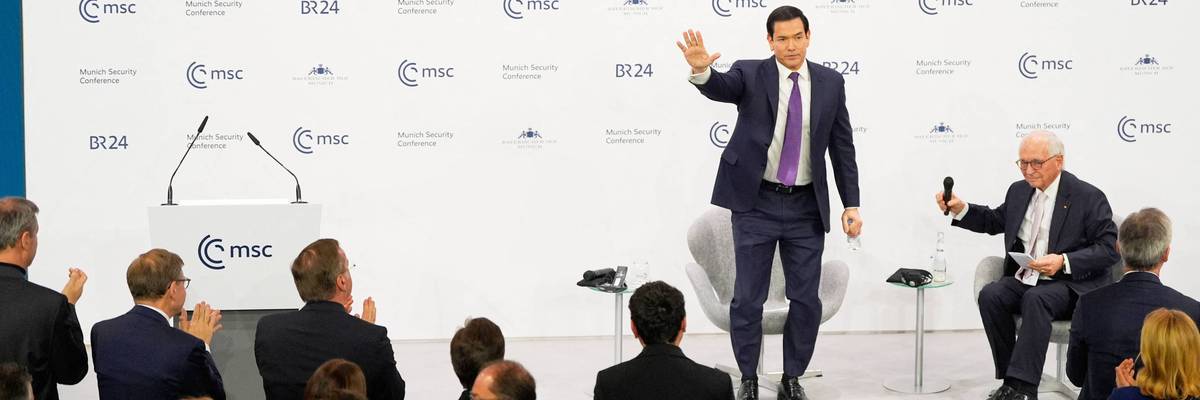
US Secretary of State Marco Rubio receives a standing ovation after his speech during the 62nd Munich Security Conference on February 14, 2026 in Munich, Germany.
(Photo by Alex Brandon/Pool/AFP via Getty Images)

Jake Johnson
Feb 16, 2026
COMMON DREAMS

US Secretary of State Marco Rubio’s defense of Western colonialism and imperial power at the Munich Security Conference and the applause his remarks received from attendees were seen as deeply unsettling in the context of the Trump administration’s brazen trampling of international law, including the recent kidnapping of the president of a sovereign nation.

While Rubio gave lip service in his remarks to multilateral cooperation with Europe in what he called the global “task of renewal and restoration,” he made clear the US would carry out its agenda alone if needed and accused European allies of succumbing to a “climate cult,” embracing “free and unfettered trade,” and opening their doors to “unprecedented wave of mass migration that threatens the cohesion of our societies,” echoing the rhetoric of his boss, US President Donald Trump.

Rubio lamented the decline of the “great Western empires” in the face of “godless communist revolutions and by anti-colonial uprisings that would transform the world and drape the red hammer and sickle across vast swaths of the map in the years to come”—and made clear that the Trump administration envisions a return to “the West’s age of dominance.”

“We in America have no interest in being polite and orderly caretakers of the West’s managed decline,” said Rubio. “We do not seek to separate, but to revitalize an old friendship and renew the greatest civilization in human history.”

Attendees at the Munich conference—which notably did not include representatives of Latin America at a time when the Trump administration is embracing and expanding the Monroe Doctrine—gave Rubio a standing ovation:


“Standing ovation for Rubio in Munich. Standing ovation for Netanyahu in Washington,” wrote Progressive International co-general coordinator David Adler, referring to the Israeli prime minister’s visit to the US capital last week. “We are ruled by a transatlantic clique of criminals and midwit minions who clap like seals when their white supremacy is laundered by the language of ‘Western values.’ Sick stuff.”

Critics viewed the US secretary of state’s speech—both the explicit words and its undertones—as a self-serving interpretation of the past and a dangerous vision of the future, and expressed alarm at the celebratory response from the Munich crowd.

Geopolitical analyst Arnaud Bertrand called Rubio’s address “one of the most revisionist and imperialist speeches I’ve ever seen a senior American official make, and that’s saying something.”

“Basically the man is openly saying that the whole post-colonial order was a mistake and he’s calling on Europe to share the spoils of building a new one,” Bertrand wrote on social media. “When an imperial power is speaking to you of sentiments, of how much they like you and how they want to partner with you—the much weaker party—that’s cause for worry, not applause.”

Nathalie Tocci, a professor at the Johns Hopkins School of Advanced International Studies in Europe, compared Rubio’s address to US Vice President JD Vance’s openly hostile attack on European nations during his Munich speech last year.

“Rubio’s message was more sophisticated and strategic than Vance’s. But it was just as dangerous, if not more so, precisely because it lowered the transatlantic temperature and may have lulled Europe into a false sense of calm,” Tocci wrote in a Guardian op-ed on Monday. “As Benjamin Haddad, France’s Europe minister, said in Munich, the European temptation may be to press the snooze button once again.”

“If Europeans were comforted by a false sense of reassurance as they walked away from the packed Bayerischer Hof hotel in Munich,” Tocci added, “they risk walking straight into the trap that MAGA America has laid for them.”


‘Wake Up Before It’s Too Late,’ Says AOC as Rubio Embraces Autocrat Orbán

“It’s time to take the gloves off and fight for our future,” the democratic socialist congresswoman asserted.


Hungarian Prime Minister Viktor Orbán and US Secretary of State Marco Rubio leave the podium after a joint press conference in Budapest, Hungary on February 16, 2026.
(Photo by Alex Brandon/Pool AP/AFP via Getty Images)

Brett Wilkins
Feb 17, 2026
COMMON DREAMS

As US Secretary of State Marco Rubio heaped praise upon Viktor Orbán as he seeks a sixth term as Hungary’s increasingly autocratic prime minister, progressive Congresswoman Alexandria Ocasio-Cortez on Monday implored democracy defenders to “take the gloves off and fight for our future.”

Visiting Budapest, the Hungarian capital, on the last leg of a three-country tour of Europe, Rubio pressed the Trump administration’s thumb on the proverbial scale of Hungary’s April election with a ringing endorsement of Orbán, telling him that President Donald Trump “is deeply committed to your success.”

That’s a glaring departure from a 2019 warning from lawmakers including then-Sen. Rubio (R-Fla.) to Trump that democracy had “significantly eroded” in Hungary as Orbán consolidated control over the electoral process, judiciary, and press. Now, Rubio says Orbán’s success is “essential and vital” to US national interests.

“From Orbán to Trump, the rise of far-right movements is tightly coordinated and transcends borders,” Ocasio-Cortez said on Facebook in response to Rubio’s visit. “So too should be our international defense of democracy and the fight for working people. From policy to tactics, it’s time to take the gloves off and fight for our future.”


Although Hungary openly flouted a US ban on importing oil, natural gas, or coal from Russia amid President Vladimir Putin’s ongoing invasion and occupation of Ukraine, Trump recently granted Budapest a one-year exemption from sanctions.

And while Venezuelan President Nicolás Maduro’s pursuit of an independent foreign policy—which included close relations with Russia and China—was cited as a reason for the US invasion of Venezuela and abduction of Maduro, Rubio said that Orbán’s increasingly close ties with Moscow and Beijing are a matter of Hungarian sovereignty.

“We’re not asking any country in the world to isolate themselves from anybody,” Rubio said, although that’s exactly what the Trump administration reportedly ordered Venezuela’s interim government to do to China, Russia, Iran, and Cuba.

“There’s no reason to sugarcoat it. I’m going to be very blunt with you,” Rubio told reporters Monday, adding that Trump and Orbán “have a very, very close personal relationship and working relationship, and I think it has been incredibly beneficial to the relationship between our two countries.”

Speaking Friday at the Munich Security Conference in Germany, Ocasio-Cortez accused Trump of trying to usher in an “age of authoritarianism.”

“We have to have a working-class-centered politics if we are going to succeed,” she said, “and also if we are going to stave off the scourges of authoritarianism, which provides political siren calls to allure people into finding scapegoats to blame for rising economic inequality, both domestically and globally.”

Ocasio-Cortez—whose increasingly high profile has sparked speculation of a possible run for higher office—also slammed the “hypocrisies” of US foreign policy, “whether it is kidnapping a foreign head of state, whether it is threatening our allies to colonize Greenland, whether it is looking the other way in a genocide, hypocrisies are vulnerabilities, and they threaten democracies globally.”

“This is a moment where we are seeing our presidential administration tear apart the transatlantic partnership,” she added. “What is happening is indeed very grave, and we are in a new era, domestically and globally.”
Senate Dems Push Trump DOJ to Reveal All Talks With Lobbyists About Ouster of Antitrust Chief

The removal of Gail Slater “raises significant concerns about this administration’s commitment to enforcing the antitrust laws for the betterment of consumers and small businesses,” the lawmakers warned.


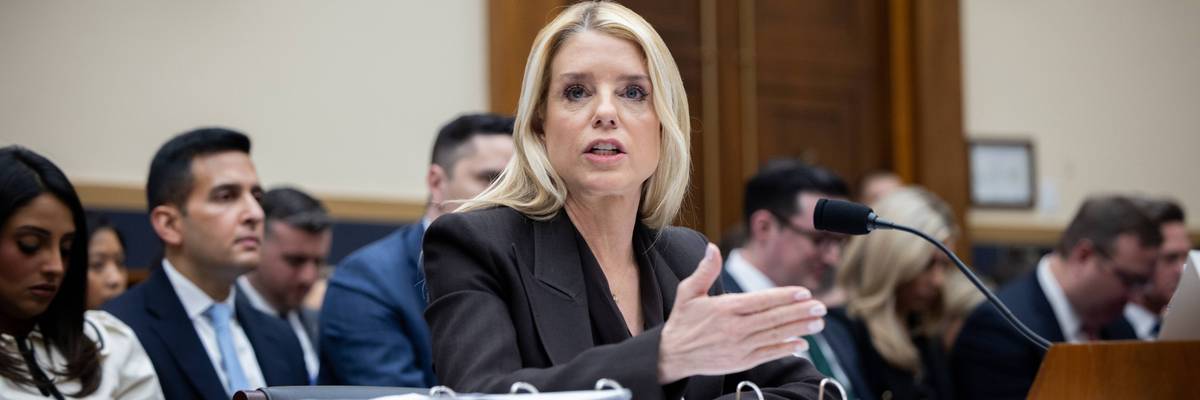
Attorney General Pam Bondi testifies before the House Judiciary Committee on February 11, 2026.
(Photo by Nathan Posner/Anadolu via Getty Images)


Jake Johnson
Feb 16, 2026
COMMON DREAMS


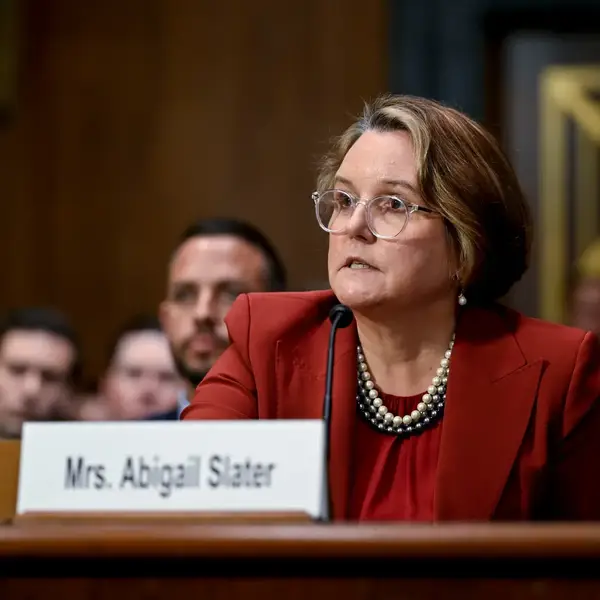
A group of Democrats in the US Senate is pressuring President Donald Trump’s Justice Department to hand over any and all communications between the agency and corporate lobbyists related to last week’s ouster of antitrust chief Gail Slater, which came weeks before the scheduled start of the closely watched Live Nation-Ticketmaster trial.

In a Saturday letter to Attorney General Pam Bondi—herself a former corporate lobbyist—the Democratic lawmakers raised concerns about the timing of Slater’s departure, pointing to Live Nation-Ticketmaster’s ongoing “attempts to evade responsibility by convincing Justice Department leadership to settle the case on terms favorable to the company, rather than fans, artists, and independent venues.”


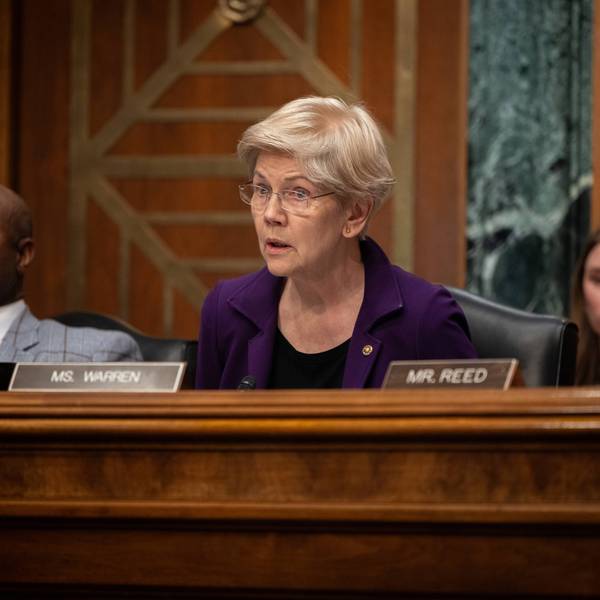
Warren Says Trump DOJ Ouster of Antitrust Chief ‘Looks Like Corruption’ as Lobbyists, Wall St Rejoice


‘Pure Corruption Reigns’ at Trump DOJ as Top Antitrust Official Gail Slater Ousted

Slater’s ouster as head of the Justice Department’s Antitrust Division less than a year after she was confirmed in a bipartisan vote, wrote Sen. Amy Klobuchar (D-Minn.) and six other Democratic lawmakers, “raises significant concerns about this administration’s commitment to enforcing the antitrust laws for the betterment of consumers and small businesses, including seeing through its cases against monopolies.”

The antitrust suit against Live Nation, Ticketmaster’s parent company, was launched in 2024 by the Biden administration and a coalition of state attorneys general. Their complaint accuses Live Nation of unlawful anticompetitive conduct that “allows them to exploit their conflicts of interest—as a promoter, ticketer, venue owner, and artist manager—across the live music industry and further entrench their dominant positions.”

Semafor reported earlier this month that Live Nation executives and lobbyists “have been negotiating with senior DOJ officials” in an effort to “avert a trial over whether the company is operating an illegal monopoly.” Those negotiations are reportedly being held outside of the antitrust division previously headed by Slater, who was ousted days after Semafor published its story.

The American Prospect reported that Kellyanne Conway and “MAGA influencer” Mike Davis are among those lobbying the Justice Department on behalf of Live Nation.

In their Saturday letter, the Senate Democrats called on the Justice Department to provide “the dates of each meeting with any representatives of Live Nation-Ticketmaster and the individuals present from the Justice Department, White House, or Live Nation-Ticketmaster for each meeting” and “all communications” between the DOJ and Live Nation-Ticketmaster regarding the dismissal of Slater or her deputies.

One of those deputies, Roger Alford, unloaded on the Bondi-led Justice Department weeks after his firing last summer for “insubordination.” According to Alford, the DOJ is “now overwhelmed with lobbyists with little antitrust expertise going above the antitrust division leadership seeking special favors with warm hugs.”

Alford pointed specifically to the merger settlement deal that the Justice Department cut with Hewlett Packard Enterprise and Juniper Networks last year. Bondi’s chief of staff reportedly overruled Slater’s team to push through the settlement.

The Live Nation-Ticketmaster antitrust challenge could be “the next casualty” of the lobbyist-infiltrated DOJ, Alford warned.


Francesca Albanese Defenders Decry Bid to Remove UN Expert Over Misrepresented Israel Remarks

The head of Amnesty International slammed the “reprehensible” attacks on Albanese “based on a deliberately truncated video.”


United Nations Special Rapporteur on the Occupied Palestinian Territories Francesca Albanese speaks during a press conference in Dublin, Ireland on March 20, 2025.
(Photo by Brian Lawless/PA Images via Getty Images)

Brett Wilkins
Feb 16, 2026

Human rights advocates, United Nations officials, and prominent international artists are among those defending UN independent Palestine expert Francesca Albanese in recent days amid a smear campaign by several European foreign ministers and pro-Israel groups, who are demanding her firing over alleged antisemitic remarks she never made.

The foreign ministers of Austria, the Czech Republic, France, and Germany have publicly called for Albanese’s resignation or termination after the pro-Israel group UN Watch—which is unaffiliated with the world body—circulated an edited video of the 48-year-old Italian jurist purportedly calling Israel “the common enemy of humanity” during a February 7 speech at a forum in Doha, Qatar organized by Al Jazeera.


French Foreign Minister Jean-Noël Barrot said last week that he will demand Albanese’s resignation or removal during the upcoming UN Human Rights Council meeting, calling her alleged remarks “outrageous and reprehensible.”

Other European officials piled on, with German Foreign Minister Johann Wadephul calling her continued service as a UN expert “untenable.”

However, what’s “reprehensible,” Amnesty International secretary general Agnès Callamard argued Saturday, is that the foreign ministers attacked Albanese “based on a deliberately truncated video to misrepresent and gravely misconstrue her messages.”

This is what Albanese actually said in Doha:
The fact that instead of stopping Israel, most of the world has armed, given Israel political excuses, political sheltering, economic and financial support. This is a challenge. The fact that most of the media in the Western world has been amplifying the pro-apartheid genocidal narrative is a challenge. At the same time, here also lays the opportunity. Because if international law has been stabbed in the heart, it’s also true that never before the global community has seen the challenges that we all face. We who do not control large amounts of financial capitals, algorithms, and weapons, we now see that we as a humanity have a common enemy, and freedoms, the respect of fundamental freedoms is the last peaceful avenue, the last peaceful toolbox that we have to regain our freedom.

“The ministers that have spread disinformation must act beyond merely deleting their comments on social media—as some have done,” Callamard said. “They must publicly apologize and retract any calls for Francesca Albanese’s resignation. Their governments must also investigate how this disinformation happened with a view to preventing such situations.”

“If only these ministers had been as loud and forceful in confronting a state committing genocide, unlawful occupation, and apartheid as they have in attacking a UN expert,” she added. “Their cowardice and refusal to hold Israel accountable stand in stark contrast to the special rapporteur’s unwavering commitment to speaking truth to power.”

On Monday, Philippe Lazzarini, who heads the UN Relief and Works Agency for Palestine Refugees in the Near East (UNRWA), said in a statement that “how we act in the face of fake news and vicious disinformation campaigns is a sign of our moral compass.”

“Over and over during the war in Gaza, we have seen how coordinated campaigns seek to discredit and silence those who speak out about human rights impacts and violations of international humanitarian law,” Lazzarini added. “The latest attacks on Francesca Albanese—an independent expert mandated... to monitor the situation in the occupied Palestinian territory—aim at silencing her voice and undermining the few remaining independent human rights reporting mechanisms.”

Israeli forces have killed more than 370 UNRWA staff members since October 2023. Lazzarini and others have also accused Israeli forces of torturing UNRWA staffers in a bid to force false confessions corroborating their dubious allegations that members of the humanitarian agency are Hamas fighters. The International Court of Justice (ICJ)—which is weighing a genocide case against Israel filed by South Africa—found last year that UNRWA has not been infiltrated by Hamas, as claimed by Israeli leaders.

More than 100 prominent international actors, musicians, writers, and other creatives with Artists for Palestine have also signed an open letter supporting Albanese.


According to the Israeli army itself, at least 83% of those murdered are civilians,” the letter states. “What has the French state done about this for over two years? It has not imposed sanctions against a state that is openly—and even proudly—flouting international law.”

“Worse yet, through political, diplomatic, moral, and material support, the French state, like many of its European counterparts, allowed this senseless massacre to continue, thereby violating all its legal obligations,” the letter continues. “On July 29, 2025, a complaint against [French President] Emmanuel Macron, Jean-Noël Barrot, and other members of the French executive was filed by 114 lawyers before the [International Criminal Court], for ‘complicity in genocide in Gaza.’”

The letter’s signers including actors Javier Bardem, Mark Ruffalo, and Susan Sarandon; musicians Brian Eno, Peter Gabriel, and Annie Lennox; and authors Annie Ernaux and Alice Walker.

Albanese has long been targeted for her vocal opposition to what she and a UN expert panel on which she did not serve call Israel’s genocide in Gaza. The administration of President Donald Trump has imposed sanctions on her after she highlighted US companies’ complicity in the Gaza slaughter. US officials have also attempted to discredit her work and called for her removal.


Albanese responded to the attacks by highlighting the number of Palestinian children killed by Israeli forces in Gaza, saying on X Friday that “three European governments accuse me—based on statements I never made—with a virulence and conviction that they have NEVER used against those who have slaughtered 20,000+ children in 858 days.”

Albanese underscored that her Doha remarks clearly meant that “the common enemy of humanity is THE SYSTEM that has enabled the genocide in Palestine, including the financial capital that funds it, the algorithms that obscure it, and the weapons that enable it.”


How self-drilling “e-seeds” dropped by drones can mitigate Aral Sea disaster

How self-drilling “e-seeds” dropped by drones can mitigate Aral Sea disaster
The innovative approach uses E-Seeds developed at the University of California, Berkeley. Seeds are packaged in biodegradable capsules containing a moisture-retaining gel and wooden spirals that enable them to drill into the soil naturally. / Bulat Utemuratov Foundation
By Ainur Karbozova February 19, 2026

Climate change is largely driven by human activity – industrial emissions and the overuse of natural resources. Those who study the field know that one of the most striking examples of environmental mismanagement is the drying of the Aral Sea.

The Aral Sea was once the fourth-largest lake on Earth and a natural regulator of Central Asia’s climate. Over the course of 50 years, however, it has lost around 90% of its surface area. That has left behind a desert whose salt and dust are carried for hundreds of kilometres, causing disease and soil degradation.

The tragedy of the Aral Sea was caused by excessive water diversion for cotton irrigation during Soviet times. Combined with extreme heat – summer temperatures often exceed 40°C – this led to rapid evaporation and an ecological disaster. The hulks of rusting ships that are stranded on the former seabed have become an enduring symbol of this disaster. Fishing collapsed, populations migrated and the once-rich biodiversity of the region continues to decline.

Today, sandstorms carrying toxic dust and salt remain the most serious challenge. Traces of this dust have been found as far away as Europe, the Himalayas and the Arctic, showing that the Aral Sea crisis is not only a local problem, but a global environmental issue too.

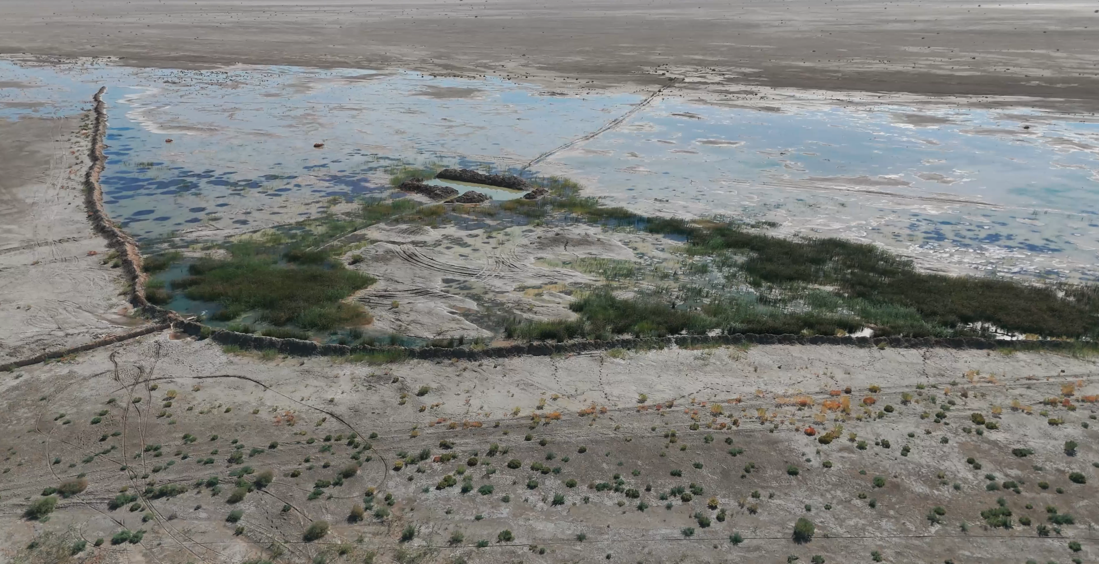
By seeding salt-tolerant vegetation, the soil can be stabilised. The difficulty is that the area in question is the size of Ireland (Credit: Bulat Utemuratov Foundation).

Kazakhstan and Uzbekistan, supported by international organisations, have long worked to restore the Aral Sea ecosystem. Their efforts focus on preserving remaining water bodies and planting salt-tolerant vegetation to stabilise the soil.

Uzbekistan has restored over two million hectares, while Kazakhstan has committed to restoring 1.1mn hectares, half of which has already been planted. Yet restoring vegetation over an area the size of Ireland remains difficult and costly, with low survival rates and limited monitoring capacity.

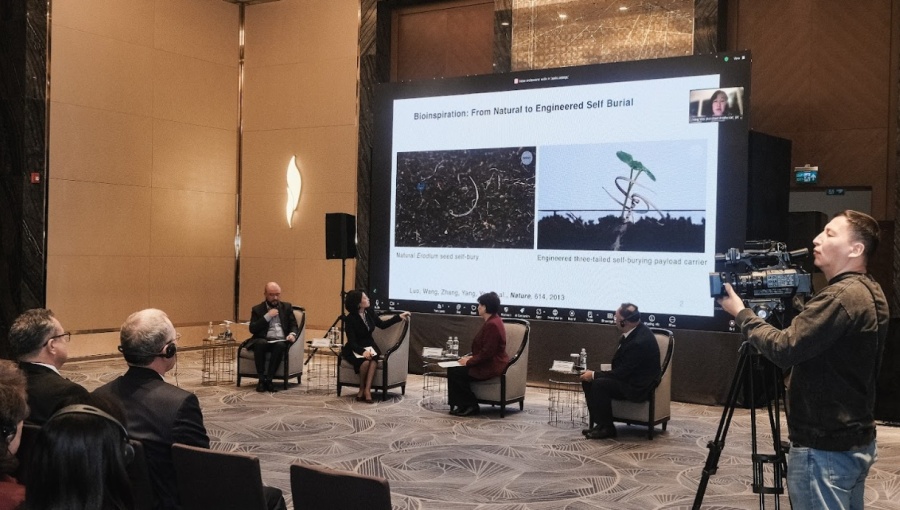
The Bulat Utemuratov Foundation is responding to this challenge with an innovative approach. The foundation is introducing E-Seed technology, developed at the University of California, Berkeley, which packages seeds in biodegradable capsules containing a moisture-retaining gel and wooden spirals inspired by the Erodium plant. That enables them to drill into the soil naturally. Drones distribute and monitor the capsules, making the process efficient and scalable. The project is being implemented in partnership with the executive directorate of the International Fund for Saving the Aral Sea in Kazakhstan and Korkyt Ata Kyzylorda University.

The devastation is enormous, but the foundation believes its project holds great promise (Credit: Bulat Utemuratov Foundation).

Pilot plantings will begin in spring 2026 on a one-hectare site, with plans to expand to 50 hectares in 2027 and further expansion in subsequent years. The cost of the pilot project is estimated at $600,000.

While climate stability is a public good, the role of private capital and philanthropy in ecosystem restoration is growing. The Land Degradation Neutrality Fund, managed by France’s Mirova, and support for the Great Salt Lake project from US businessman Josh Romney are good examples of this emerging cooperation.

The Bulat Utemuratov Foundation has previously supported major environmental and recovery efforts – from funding post-flood reconstruction in western Kazakhstan (2025) to restoring the Almaty Botanical Garden (2020). The Sustainable Kazakhstan Research Institute, supported by the Foundation’s benefactor, has developed a technology for creating vegetative barriers that capture harmful airborne particles (phytocapture) near mining facilities. It uses big data to identify the most suitable trees and shrubs for each site and to optimise planting distances.

The Foundation’s project to restore the Aral Sea ecosystem remains modest, but it holds great promise. The experience of the Aral Sea shows that the solutions to climate challenges require cooperation – between countries and between governments and private philanthropy – and the application of innovative technologies.

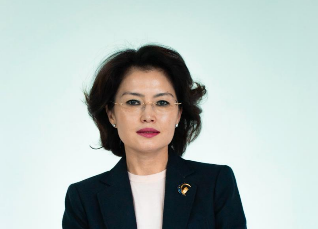
The author of this article is Ainur Karbozova, CEO of the Bulat Utemuratov Foundation.


Adani Power Limited enters nuclear segment as India opens sector

Adani Power Limited enters nuclear segment as India opens sector
/ Mick Truyts - Unsplash
By bno - Mumbai bureau February 20, 2026

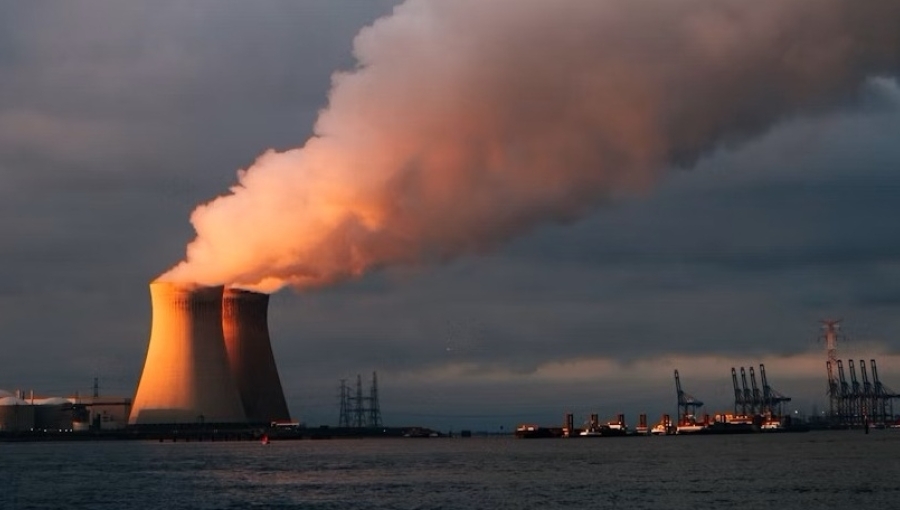
India’s leading power company, Adani Power Limited (NSE: ADANIPOWER), has incorporated a wholly owned subsidiary, Adani Atomic Energy Limited, marking its formal entry into the country’s nuclear power generation industry at a time when New Delhi has tweaked its nuclear energy policy framework to open the sector to the private sector.

According to a stock exchange filing by Mumbai-listed Adani Power, the new subsidiary was incorporated in India on February 11, 2026, after securing the certificate of incorporation from the Registrar of Companies. The new company will generate, transmit and distribute nuclear-based power. The move also indicates Adani Power’s desire to diversify beyond thermal and renewable assets.

Adani Atomic Energy Limited has been set up with authorised capital of INR0.5mn divided into 50,000 equity shares of INR10 each, fully subscribed in cash by the parent company, which retains 100% ownership.

Adani's decision aligns well with a broader transformation in the country’s nuclear policy landscape. The Government of India late last year introduced the Sustainable Harnessing and Advancement of Nuclear Energy for Transforming India (SHANTI) Bill, 2025, aimed at modernising and consolidating the nation’s nuclear legal architecture while preparing the sector for large-scale expansion.

For decades, India’s nuclear energy sector operated under the framework dating back to the early years of the country’s atomic programme, with operations mainly in the hands of state-owned companies and under a highly controlled environment. While this ensured strategic oversight and safety, the framework hindered the speed at which nuclear capacity could grow to meet increasing energy demand and decarbonisation goals.

The SHANTI framework looks to address these constraints by creating a unified legislative structure that eases licensing, strengthens safety oversight and introduces clearer regulatory and liability mechanisms. A main feature of the new framework is the statutory recognition of the Atomic Energy Regulatory Board, strengthening its authority and institutional independence as nuclear capacity expands.

The most striking feature of the framework from the point of view of industry players is that the legislation allows controlled private participation in nuclear power generation and selected supply-chain activities. These include plant operations, component manufacturing and certain stages of nuclear fuel processing under strict regulatory supervision. However, strategically sensitive areas, such as enrichment, reprocessing, management of spent fuel and high-level waste, remain in the domain of the central government and its institutions.

The new law also introduces graded liability structures instead of a single liability cap, allowing liability limits to vary depending on the type and characteristics of nuclear installations. This endeavour is to balance investor confidence with public safety safeguards while making financing of nuclear projects much smoother, which invariably require long investment horizons and large capital deployment.

The Indian government sees nuclear power as highly strategic for India’s energy transition, especially as renewable energy sources such as solar and wind grow rapidly but need reliable round-the-clock backup generation. Nuclear power offers stable, low-carbon baseload electricity without the intermittency challenges associated with renewable sources, making it attractive for supporting energy-intensive sectors such as manufacturing, data centres and urban infrastructure.

Nuclear power at present contributes only a small fraction of overall electricity generation, though capacity enhancement plans are ambitious. Indigenous reactor programmes and international technology partnerships are likely to increase installed nuclear capacity over the next few years, while the government has also announced a long-term mission to increase nuclear energy capacity significantly by 2047 as part of the country’s clean energy strategy.

Within this evolving policy framework, Adani Power’s move signals growing private-sector interest in positioning for participation in future nuclear projects. The Adani Group has already become as one of India’s biggest privately-owned power generators across thermal and renewable energy. Its entry into the nuclear power space could provide long-term portfolio diversification while supporting national clean energy goals.

The incorporation of a dedicated nuclear subsidiary suggests that private energy companies are beginning to prepare for the next phase of India’s power sector evolution. As policy reforms under the SHANTI framework move forward and operational guidelines emerge, participation by large infrastructure players could accelerate development of domestic supply chains, advanced reactor technologies and long-term clean energy capacity.

India’s nuclear energy mission

According to data from the Department of Atomic Energy, India currently has 24 nuclear reactors across seven locations, with a combined installed capacity of 8.78 GW.

These plants are located in the western, northern and southern parts of the country. Most of the reactors are indigenous Pressurised Heavy Water Reactors (PHWRs), supplemented by Boiling Water Reactors (BWRs) and Russian-designed VVER reactors.

The Indian government in the Union Budget 2025-26 announced allocation of INR200bn to drive design, development and deployment of Small Modular Reactors (SMRs). The target is to have at least five indigenously designed SMRs to be operational by 2033, strengthening India’s clean energy roadmap.

Some of the initiatives of Bhabha Atomic Research Centre (BARC) include 200 MWe Bharat Small Modular Reactor (BSMR‑200), 55 Mwe (Megawatt electrical) SMR‑55, up to 5 MWth (Megawatt thermal) High‑temperature gas‑cooled reactor for hydrogen generation.

When it comes to strategic aim, the government wants to position India as a leader in advanced nuclear technologies while ensuring sustainable energy security with long term goals to achieve 100 GW by 2047. 


Malaysia moves to expand legal protection for nine marine mammal species

Malaysia moves to expand legal protection for nine marine mammal species
/ Ray Aucott - Unsplash
By bno - Surabaya Office February 20, 2026

The Department of Fisheries Malaysia (DOF) is revising regulations under Section 27 of the Fisheries Act 1985 to broaden protection for marine wildlife, by adding nine marine mammal species to the existing list under the Fisheries (Control of Endangered Species of Fish) Regulations 1999, The Edge Malaysia reports.

In a statement issued on February 19, DOF director-general Adnan Hussain said the amendment is intended to strengthen regulatory oversight, conservation safeguards and enforcement measures against threats such as bycatch and habitat disruption.

The nine species proposed for inclusion are Balaenoptera omurai, Peponocephala electra, Feresa attenuata, Tursiops aduncus, Stenella coeruleoalba, Stenella attenuata, Ziphius cavirostris, Steno bredanensis and Kogia sima. These whales and dolphins have all been recorded in Malaysian waters and require enhanced monitoring to reduce the risk of population decline, he said.

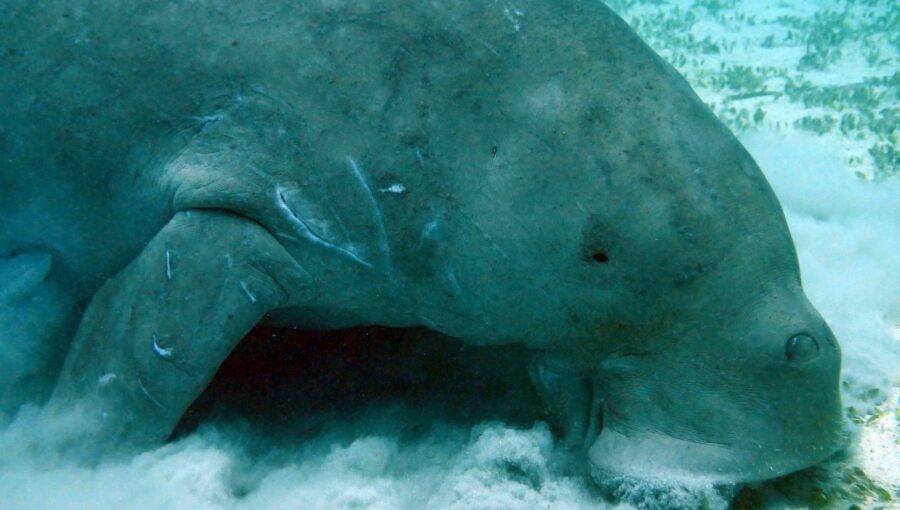
Marking International Marine Mammal Protection Day, Adnan added that the department continues to reinforce its conservation efforts through the development of the National Plan of Action (NPOA) for Dugong. The plan is grounded in the latest scientific research and accompanied by comprehensive updates to the legal framework.

He noted that the dugong (Dugong dugon) serves as an indicator species for the health of coastal marine ecosystems and is closely associated with the sustainability of seagrass meadows, which underpin fisheries productivity, coastal protection and blue carbon storage.

The International Union for Conservation of Nature (IUCN) Red List underscores the need for sustained, integrated conservation strategies at the national level, he said.

According to Adnan, the regulatory revision forms part of a broader strategy to ensure coordinated protection of dugongs and other marine mammals, aligned with Malaysia’s biodiversity agenda and its target to expand marine protected areas by 2030.

“The DOF remains committed to strengthening marine resource governance through science-based management, field monitoring, research and strategic partnerships with relevant stakeholders,” he said.

Beyond reinforcing domestic safeguards, the initiative is also designed to support compliance with international trade requirements, including the United States’ Marine Mammal Protection Act (MMPA).

Although Malaysia is not directly bound by the legislation, Adnan explained that countries exporting fisheries products to the US must demonstrate that their fisheries management systems and bycatch mitigation measures are comparable to standards enforced by the National Oceanic and Atmospheric Administration (NOAA).

He added that the ecosystem-based framework outlined in the NPOA for Dugong will prioritise marine spatial planning, community engagement in coastal areas, mitigation of bycatch risks and the protection of critical habitats, including seagrass beds recognised as part of Malaysia’s blue carbon assets.