Friday, March 27, 2026


Activists Hound MSC Ships Accused of Transporting Raw Material for Israel Military
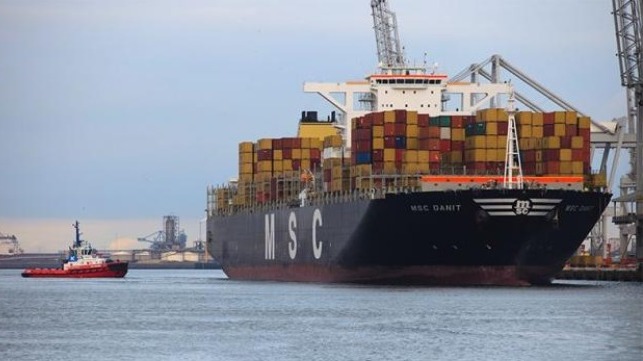
MSC containership in port
Activists are pursuing MSC containerships with allegations that they are transport raw materials for the Israeli military

Published Mar 25, 2026 5:05 PM by The Maritime Executive


A group of protestors aligned with the BDS movement (boycott, divestment, and sanctions) launched a new effort this week, hounding MSC Mediterranean Shipping containerships, which they allege are transporting raw materials for the Israeli military. They were calling on trade unions, civil society, and political parties to join an effort to pressure the governments and authorities from Italy to Greece to Spain to respond to the alleged shipments.

The group was targeting two of the company’s vessels operating in the Mediterranean. The MSC Vega was traveling to Greece, Turkey, Italy, and Spain. The MSC Danit was arriving in the Mediterranean from India and making calls in Portugal and Egypt. 

The allegations were that the MSC Danit had about eight containers, which they claimed were carrying Indian steel bound for armament manufacturers in Israel. They also asserted that a previous shipment had consisted of 23 containers carrying 600 tons of military steel. 

The activists claimed that they were successful in prompting a cargo inspection in Italy. They also said the Greek dockworkers had said they would not handle any containers with military cargo bound for Israel. The MSC Danit arrived in Israel on March 23, but the local authorities declined to comment on any action that might be taken.

The same issue has hounded the shipping companies in recent years, including after Israel started its attacks in Gaza. Activists targeted a series of ships that they also said were carrying explosives or other military-related cargo. Several Maersk Line Ltd. ships, which operate with U.S. government contracts to move cargo, had diverted from planned calls in Spain when activists claimed they were carrying military equipment to Israel. The U.S. Federal Maritime Commission reported it was investigating the instances and could penalize Spain.

Shareholders of AP Moller Maersk were also confronted with the issue as activist shareholders placed issues on the company’s shareholder ballot. Shareholder activist group Kritiske Aktionærer filed a proposal in 2025 to stop Maersk from shipping military cargoes to Israel. It was voted down by the shareholders. 

The group filed a new proposal in 2026 saying that the company must stop all shipments of military equipment, including parts for F-35 fighter jets, to Israel. Maersk responded that it transports military equipment, including for NATO countries, in compliance with regulations, international standards, and commitments, with increased levels of due diligence in conflict-affected areas. The board did not support the proposal, and the results of today’s shareholder meeting confirmed that the resolution was again voted down by the shareholders.

 

UK Completes Legal Review to Allow Dark Fleet Seizures

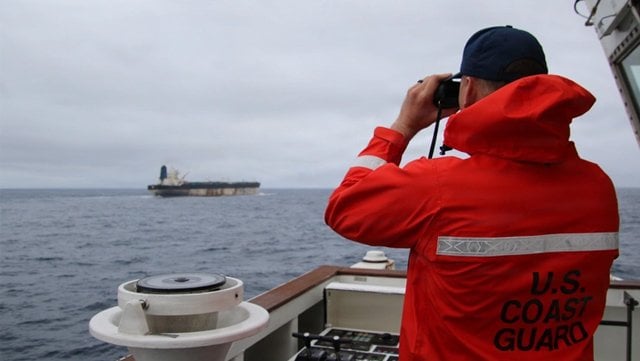
US tracking shadow fleet tanker
UK until now has only tracked tankers and aided the U.S. and French in their seizures (USCG)

Published Mar 26, 2026 11:30 AM by The Maritime Executive


A mystery has been solved this week, explaining why the United Kingdom has been forward-leaning in providing support both to the United States and to France in their interceptions of dark fleet tankers - without participating in these seizures themselves.  

The UK aided both the U.S. chase of the Russian-flagged Marinera (IMO 9230880) and the French seizures of the Comoros-flagged Grinch (IMO 9288851) in January and the Mozambique?flagged Deyna (IMO 9299903) last week. Similarly, while Finland, Sweden, and Estonia are actively seizing suspect ships in the Baltic, Russian dark fleet tankers have continued to sail unmolested through the heavily used English Channel, where tracking the movements of tankers is relatively easy. In January alone, Lloyd's List tracked 23 dark fleet tanker transits through the English Channel. Moreover, while the United Kingdom is not seizing dark fleet tankers, it is morally not possible to call upon others to do so, particularly those countries in whose waters the dark fleet anchors up and concentrates.

According to a report in the Daily Telegraph, the Royal Navy is about to commence the seizure of dark fleet tankers, now that a legal review has taken place and a legal framework has been put in place. The legal framework has not needed new legislation to supplant laws already in place since 2018, so it is not clear why this has not been done beforehand. But the framework now sets out the legal justification and the necessary procedures for seizures in a variety of circumstances, depending on the particulars of each vessel encountered. The scheme appears to cater for the legal processes both to seize cargoes for resale, and to prosecute masters and crews for health, safety, manning, and registration breaches.

The UK could certainly improve the effectiveness of its anti-sanctions activity. Although making much of the large numbers of ships and entities cited, connected with both Iran and Russia, since the present government came to power in July 2024, the UK Treasury's Office for Financial Sanctions Implementation (OFSI) has levied fines totaling only £1,410,500 ($1.88 million). These six meager penalties were all associated with breaches of Russian sanctions, and none penalized those breaching Iranian-linked sanctions. In comparison, the U.S. Treasury's OFAC levied fines totaling $262.64 million in 2025 alone. Heavy reliance on “voluntary” compliance means that the UK is neither bearing down on state-sponsored sanctions-evasion networks nor on those unscrupulous entrepreneurs who deliberately set out to evade sanctions as a route to bumper profits.

This procedural approach to dark fleet seizures is characteristic of many strands of policy driven by the current UK government, which is led by a lawyer whose closest political ally is his long-standing friend, the Attorney General Richard Hermer, a strong advocate for international law. This legalistic approach to government is reflected in a number of maritime-flavored areas, for example, the drive to surrender the British Indian Ocean Territory to Mauritius, methodologies for stopping cross-Channel small boat crossings, and limiting direct involvement in the current war with Iran.

Nonetheless, a legalistic approach to dark fleet tankers may have some merit if it overcomes some of the obstacles that the more active nations have already encountered in their own courts when implementing seizure policies. Moreover, finding an additional and alternative source of finance for Ukraine would help circumvent obstacles put up to government aid packages by Russian sympathizers in both Europe and North America. But the UK faces another particular problem in implementing a tougher policy: will there be any Royal Navy ships or crews available to carry out the seizures at sea? Perhaps some of the prize money raised by selling off impounded cargoes ought to be used instead to buy a few more ships for the Royal Navy.


FMC is “Closely Monitoring” China’s Detention of Panama-Flagged Vessels

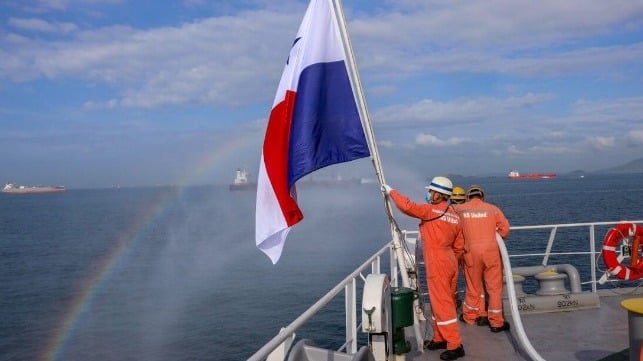
Panama flag on a ship
Data indicates a surge in detentions for Panama-flagged ships in China (AMP)

Published Mar 26, 2026 7:38 PM by The Maritime Executive


The recently designated Chairman and a Commissioner of the Federal Maritime Commission, Laura DiBella, issued a statement regarding China’s current retaliation policies against Panama after the cancellation of CK Hutchison’s concession to operate the port terminals at the Panama Canal. Chairman DiBella, in a statement expressing her personal views, said the FMC is “closely monitoring” the recent developments, offering the first indirect response from the Trump administration to the escalating dispute.

Donald Trump had called for Panama to take action to reduce China’s influence at the Panama Canal after repeatedly saying, “China runs the Panama Canal.” The administration was known to be supportive of BlackRock’s deal to acquire the Panama Ports Company from CK Hutchison. After Panama’s Supreme Court ruled the enabling legislation for the port terminal concession unconstitutional, U.S. Ambassador to Panama Kevin Marino Cabrera issued a statement saying it strengthened Panama’s national security and “makes possible a review of port governance, as well as transparent and competitive processes.”

DiBella, in her statement, says the FMC is empowered to investigate if a foreign government is implementing practices that result in conditions unfavorable to shipping in the foreign trade of the United States. The statement notes that Panama-flagged ships “carry a meaningful share of U.S. containerized trade.”

The statement highlights that China has imposed a surge in detentions of Panama-flagged vessels in Chinese ports under “the guise of port state control, far exceeding historical norms.” The South China Post earlier this month cited “a source from the shipping industry” saying China’s government had quietly told officials to intensify inspections on Panama-flagged ships to increase the pressure on Panama.

By number of ships, Panama has the largest flag registry and plays a critical part in commercial shipping. Lloyd’s Intelligence reviewed Tokyo MOU data on port state control actions, reporting that more than three-quarters of the detentions since early March involved Panama-flagged ships in Chinese ports. It is an unheard-of surge in the number of detentions.

Unconfirmed reports said the Chinese government told other companies not to do business in Panama, while public statements have questioned Panama as an investment destination. China and the company have both accused Panama of not respecting contracts and the law and said the country was running a campaign against the company due to geopolitical pressure. State-owned COSCO Shipping also announced in March that it was suspending service to Balboa.

This comes as the Panama Ports Company reported it had escalated its arbitration claims against Panama to over $2 billion. CK Hutchison has vowed to use all the legal avenues against Panama, seeking penalties for the loss of its business.


Video: German Authorities Respond to Inland Vessel Wedged Under a Bridge

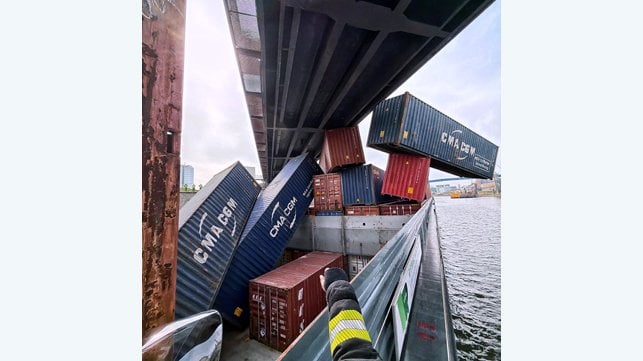
containers dangling from cargo ship stuck under railway bridge
Containers were dangling and the ship was stuck under the railway bridge (Neuss Fire Department)

Published Mar 25, 2026 3:39 PM by The Maritime Executive


The fire department in the western city of Neuss, Germany, near Düsseldorf, responded to a callout on Tuesday morning, March 24, that said an inland cargo ship had become wedged under one of the city’s bridges. Arriving at the scene, the first responders confirmed the report, finding the vessel stuck after several containers had gone overboard and others were teetering.

The unidentified vessel was sailing on the Rhine River transporting containers and had several cars aboard. It struck one of the railway bridges crossing the river and became wedged under the span.

The Neuss Fire Department reports it found two containers in the river and several more while still aboard the vessel that had been displaced. There were no injuries, but both the river and bridge were closed during the rescue operation. 

A crane boat was brought in from Düsseldorf, and the fire department reports it was determined that the best way to address the situation was to raise the lift portion of the bridge. However, as the lift mechanism was activated and the roadbed began to rise, two additional containers fell into the river. The fire department called it a controlled event. The crane boat was used to recover the containers from the river, and the vessel was repositioned. The containers were empties.


The salvage operation took about six hours to complete. 

It was not the first time the fire department had to manage a vessel – bridge allision. In September 2024, a 110-meter (361-foot) inland containership hit a bridge on the Rhine River. It said that due to the impact, the vessel had begun taking on water after several welds in the double hull ruptured. The fire department had to shovel some of the rubble cargo to reach the leaks so that they could be plugged. The vessel had to be towed away.


Two Bulkers Collide on Mississippi Near New Orleans

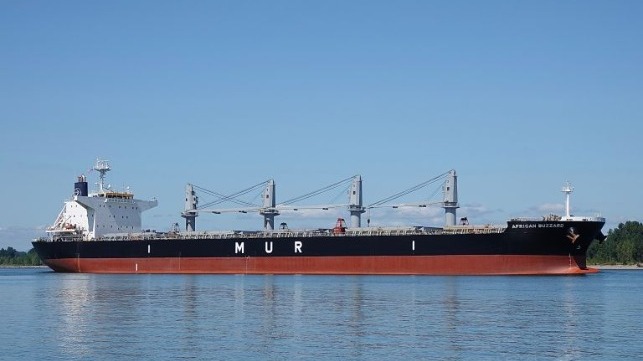
VesselFinder / Tony Roberts

Published Mar 25, 2026 11:19 PM by The Maritime Executive


Two vessels have collided and remain stuck together just up the Mississippi River from New Orleans, according to the U.S. Coast Guard.

On the afternoon of March 23, the freighter Pac Dubhe was downbound on the Mississippi, headed for Panama. The geared bulker African Buzzard was headed upriver. At about 1550 hours local time, as they passed the town of Hahnville, Louisiana, the two vessels collided. African Buzzard's anchor embedded in the bow of the Pac Dubhe, the Coast Guard said, leaving the two vessels entangled. The African Buzzard then drifted out of the channel and went aground. 

No injuries or pollution were reported, and a speed restriction is in place for the area of the collision at mile marker 124. AIS data shows multiple tugs located in the vicinity of the casualty. 

The NTSB and the Coast Guard have launched a joint investigation into the cause of the casualty. 


River Cruise Ship Hits Amsterdam Bridge After Failing to Lower Wheelhouse

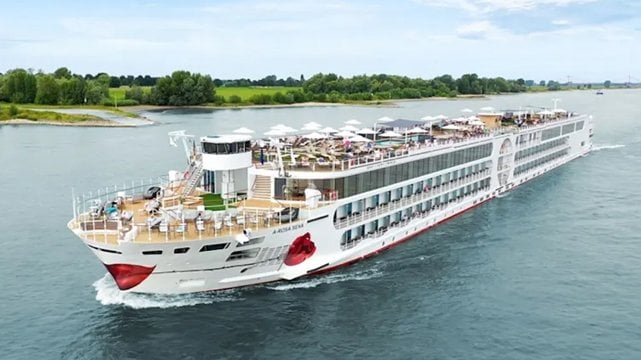
river cruise ship
A-Rosa Sena seen with the bridge in the raised position (A-Rosa)

Published Mar 26, 2026 1:53 PM by The Maritime Executive


The officer piloting a large river cruise ship from Amsterdam and into the Rhine River canal sustained minor injuries as the vessel struck a well-known road bridge spanning the canal. The Dutch authorities were reporting that the ship sustained significant damage and would be unable to continue to sail.

Built in 2022, the river cruise ship A-Rosa Sena is registered in Switzerland and operated by a German tour company. The ship, which is 135 meters (443 feet) in length, offers luxury river cruises for up to 280 passengers. It has five decks, and at the front of deck 5 is a hydraulically retractable, glass-enclosed wheelhouse. It is a typical feature on European river cruise ships to deal with low clearances.

The ship had departed Amsterdam on March 25 and, at approximately 9:30 p.m. local time, was approaching the Amsterdamsebrug bridge, a well-known structure that has been in operation since 1957. Media reports are that the bridge has a clearance of at least 9.5 meters (31 feet).

It is unclear exactly what happened, but the wheelhouse was still in the raised position, and it struck the underside of the span of the bridge and was crushed. One passenger told the Dutch media the helmsman “wasn’t paying attention.”

The cruise ship continued forward, bending over a radar mast at the stern before it hit the side wall of the canal. Passengers reported feeling a “thump” as the vessel came to a stop.


The local police and an ambulance responded. The helmsman was being treated by the ambulance for minor injuries. None of the passengers were injured. Rescue workers said their task was slowed because many passengers had already gone to sleep.

Passengers were awakened and told to pack their belongings. By 8:00 a.m., media reported the last of the passengers had been disembarked and they were being bused to Cologne, Germany.

The cruise ship had been scheduled to proceed to Utrecht. It was due to reach Cologne on Sunday, where the passengers would be disembarking before a new cruise to Hamburg. 

Police temporarily closed the bridge after reports that a piece of steel had fallen during the allision with the cruise ship. The bridge was inspected and reopened to traffic around 3:00 a.m., but as of Thursday morning, the canal remained partially closed. The reports were that the cruise ship was going to be towed back into Amsterdam.


Ecuador Coordinates with USCG for Crackdown on Drug Smuggling

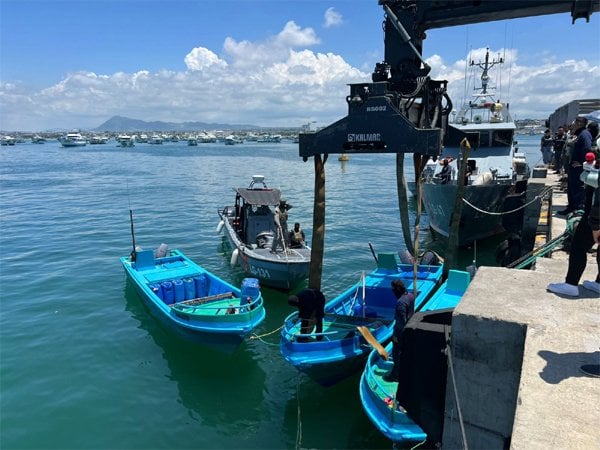
USCG Ecuadorian Navy
US Southern Command highlights efforts with partners including Ecuador (Ecuadorian Navy)

Published Mar 26, 2026 4:49 PM by The Maritime Executive


The Ecuadorian Navy is highlighting a series of interceptions of drug smugglers while working in coordination with the U.S. Coast Guard. They are reporting it is part of the ”Total Offensive” phase of the operation, but it came as the U.S. also reported striking yet another small boat suspected of smuggling drugs.

The first reported interdiction of the operation was on March 21, when the Ecuadorian Navy, working with the police, executed a high-seas operation. They stopped three small boats approximately 180 nautical miles west of Manta. They reported the operation was undertaken with naval intelligence and the assistance of the National Unit for the Fight Against Organized Crime.

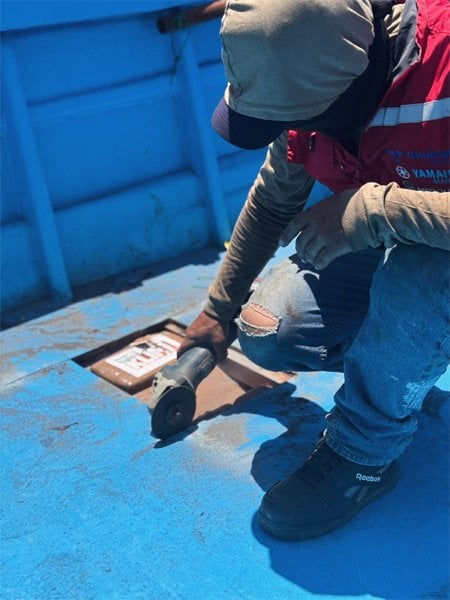
Searching the boats, they reported uncovering hidden compartments creating a double bottom hidden with a false floor. The police broke into the compartments, finding 1800 parcels of cocaine hidden aboard two of the boats. According to the reports, there were 1.7 tons of suspected cocaine, which the police said was valued at $63 million. They arrested six Ecuadorian citizens.

Days later, they reported a second operation undertaken on March 24 by the U.S. Coast Guard. The U.S. detected a suspicious group of fishing boats, pursued, boarded them, searched the vessels, and completed the seizure. They handed over the seizure, including 10 individuals (six were Ecuadorian), to the Ecuadorian authorities.


According to the report, a larger mothership posing as a fishing boat accompanied by three fiberglass speedboats had sailed under the guise of being a commercial fishing operation. The boats were detected 300 nautical miles from Manta. The initial reports said there were 592 kilograms of cocaine hidden on the fishing boats, but by the time they reached Manta on March 26, the report increased to 760 kilograms.

In total, the report said there had been four interdictions in recent days, seizing five tons of narcotics. A total of six boats were stopped that were operating under the guise of fishing. This was in addition to 12 people who had been apprehended a few days earlier, according to the media reports.


U.S. Southern Command relayed the statements from the Ecuadorian Navy hailing the multinational efforts underway across the region. In addition, it reported working with Jamaica; they had stopped 2.5 tons of cocaine, while reporting that Chile had stopped a massive shipment totaling 68.7 tons of cocaine and ketamine from reaching Europe and North America.

The U.S. forces, however, also reported on March 25 conducting a strike on another boat in the Caribbean. It said that four males were killed during this latest action.

EU votes in favor of migrant 'return hubs'

DW with AFP, dpa
March 25, 2026


Human rights groups have warned of asylum seekers disappearing into "legal black holes" beyond EU borders, while concerns have also been raised over the influence of the far right over the legislation.


Denmark, Austria, Greece, Germany and the Netherlands are backing the proposals, but France and Spain have questioned their effectiveness

European lawmakers on Thursday gave the green light to controversial proposals to deport rejected asylum seekers to so-called "return hubs" outside the European Union, as pressure grows to tighten up immigration rules.

Parliamentarians in Brussels voted 389 to 206 in favor of the reforms which pave the way for the establishment of migrant centers beyond the bloc's borders to house migrants whose asylum applications are rejected.

Those who refuse to be relocated to the return hubs would face harsh penalties including detention and entry bans, according to the proposals.
What's the outlook for the EU's 'return hubs' proposal?

According to the AFP news agency, the proposals are being led by a small group of EU countries including Denmark, Austria, Greece, Germany and the Netherlands.

However, other states such as France and Spain have questioned the strategy's effectiveness while human rights groups have warned of asylum seekers disappearing into "legal black holes."

"They will be located outside of EU territory, where policymakers cannot guarantee that people's rights will be upheld," said International Rescue Committee's Marta Welander.

Similar schemes have already faced legal problems. The UK's plan to deport undocumented migrants to Rwanda was eventually scrapped after numerous hurdles in the courts. Italy's plan to process migrants in Albania has failed to take-off amid its own legal challenges.

Far-right influence on EU deportation proposals

The controversy surrounding the proposed legislation isn't just limited to its content, but also to the political negotiations which have made it possible.

According to media reports, the wording of the draft law was agreed following WhatsApp and in-person negotiations between parties from the center-right European People's Party Group (EPP), including German conservatives from Chancellor Friedrich Merz's Christian Democrats (CDU) and the Bavarian CSU, and far-right parties from the Europe of Sovereign Nations (ESN) grouping such as the Alternative for Germany (AfD).

According to lawmaker Erik Marquardt, who sits in the European Parliament for Germany's Green Party, the draft features 38 formulations which were proposed by the ESN group.

Marquardt warned against "making EU deportation policies dependent on a party [the AfD] which had been categorized by many as extreme-right due to its remigration fantasies."
EU migrant 'return hubs': what next?

Thursday's vote in the European Parliament moved the proposal a step closer to approval.

The next step will be negotiations between lawmakers and member states on a final legislative text.

Edited by: Alex Berry

Matt Ford Reporter for DW News and Fact Check


Page 1. MULTITUDE. WAR AND DEMOCRACY. IN THE AGE OF EMPIRE. MICHAEL HARDT. ANTONIO NEGRI ... pdf. 33. Richard Haass, for example, the U.S. State Department ...

Empire / Michael Hardt and Antonio Negri. p. cm. Includes ... missions of Empire will be constituent assemblies of the multitude, social ...


Humans and dogs — scientists find new proof of ancient bond

DW with AP, AFP, Reuters
March 25, 2026

Dogs were our friends and guardians thousands of years before the end of the last ice age, with new studies identifying a puppy that lived 15,800 years ago.


Companionship may have been one of dogs' primary roles even in ancient times, researchers found
Image: Darrin Zammit Lupi/REUTERS

A female puppy that lived some 15,800 years ago in present-day Turkey has been labeled as the earliest-known dog by scientists in papers published on Wednesday.

The remains are nearly 5,000 years older than the previously known oldest dog.

Researchers found a piece of the dog's skull in Pinarbasi, a rock shelter site used by ancient hunter-gatherers. By examining it and analyzing its DNA, the scientists concluded the pup was "a few months old" and probably looked like a small wolf, according to Laurent Frantz of the Ludwig Maximilian University in Munich.

Frantz is a co-author of a study looking at distribution of dogs across Europe and Asia during the Paleolithic period, which was published in the prestigious Nature magazine on Wednesday.

The researcher said it was not fully clear what role dogs played among humans at that time. However, while the relationship between ancient humans and their dogs may not have been the same as in modern times, "kids will still have played with puppies," he added.

Humans and dogs buried together


Geneticist Anders Bergström of the University of East Anglia in the UK, co-author of the same study and the lead author of another study focusing on genomic history of dogs in Europe, also published on Wednesday, agreed that "dogs do not always have very clearly defined roles or purposes for humans."

"Perhaps their primary role is often just to provide companionship," Bergström said.

Early dogs were genetically similar to gray wolves, making precise dating difficult
Image: Ercin Erturk/Anadolu/picture alliance

Artifacts of the human community at Pinarbasi give insight into human history during the last ice age, which ended some 10,000 years ago.

William Marsh, a postdoctoral researcher in the Ancient Genomics Laboratory at the Francis Crick Institute in ​London, said there was evidence of a bond between the two species at the Turkish site.

"At Pinarbasi, we have both human and dog burials, with dogs buried alongside humans," Marsh said.

There was also evidence that hunter-gatherers at Pinarbasi fed fish to their dogs.

Missing link between dogs and wolves

Dogs are believed to have been domesticated by humans earlier than any other animal. They are descended from gray wolves, but similarities between the two species make it tricky for scientists to distinguish their remains.

Even with this uncertainty, the researchers believe that dog and wolf populations diverged at least 24,000 years ago, said William Marsh.

Bergström and his colleagues also identified the oldest dog in Europe by examining remains from 14,200 years ago from Switzerland's Kesslerloch. Also, the ancient European dogs seem to have shared ancestors with dogs in Asia, hinting at a single domestication event.

But Bergström warned that the question of "when, where and why people domesticated dogs still remain largely unanswered."

Another researcher, Swedish geneticist Pontus Skoglund, said there was still a "genetic abyss between dogs and wolves."

"The search for the missing link continues," he said.

Edited by: Sean Sinico
Darko Janjevic Multimedia editor and reporter focusing on Eastern Europe


'Looksmaxxing' — the manosphere beauty cult

DW
26.03.2026


The online trend with roots in misogyny encourages socially isolated young men to undertake painful practices to gain beauty and status — and its language is reaching the White House.

'Looksmaxxing' promises isolated men a higher social and sexual status if they submit to painful and questionable practices

Looksmaxxing content on social media promotes questionable and painful procedures promising male beautification. When used improperly, hydrogen peroxide for example (seen in the background) can damage your teeth and gums
Image: Chris Delmas/AFP

Young men who identify with the "manosphere" — an online movement promoting toxic masculinity and misogyny — are being promised a better life and a higher "sexual market value" by becoming more attractive through "looksmaxxing."

The online trend comes with its own lingo, significant costs — and a good dose of pain. Looksmaxxing influencers are promising isolated young incels, or involuntary celibates, that they can get better jobs and attract more sexual partners though a rigorous diet ("starvemaxxing"), plenty of steroids and weights, plastic surgery and a jawline made more angular with a hammer to the face ("bonesmashing").

Looksmaxxing is about ascending to the rank of a "chad," or alpha male, by changing one's attractiveness or deceiving others about it ("chadfishing"), or engaging in "mogging," looking down on inferior men.

The current superstar of the looksmaxx universe is Clavicular (real name Braden Peters), a 20-year-old US influencer who TikToks and streams about his alpha male "ascension." He routinely takes high doses of amphetamines and testosterone — which he says have likely made him sterile — and smashes his cheekbones to supposedly give them height. He is said to make $100,000 (€86,800) a month from his live streams on the Kick platform.

"When you are not attractive, your life is hell, I've experienced it," Cavicular said in a TikTok post. "Then when you start to get a little bit of good looks, everything changes."


Racism and misogyny underpin looksmaxxing

Spawned from the misogynistic, MAGA-aligned manosphere, looksmaxxers are often racist, hence "whitemaxxing" to change your skin color.

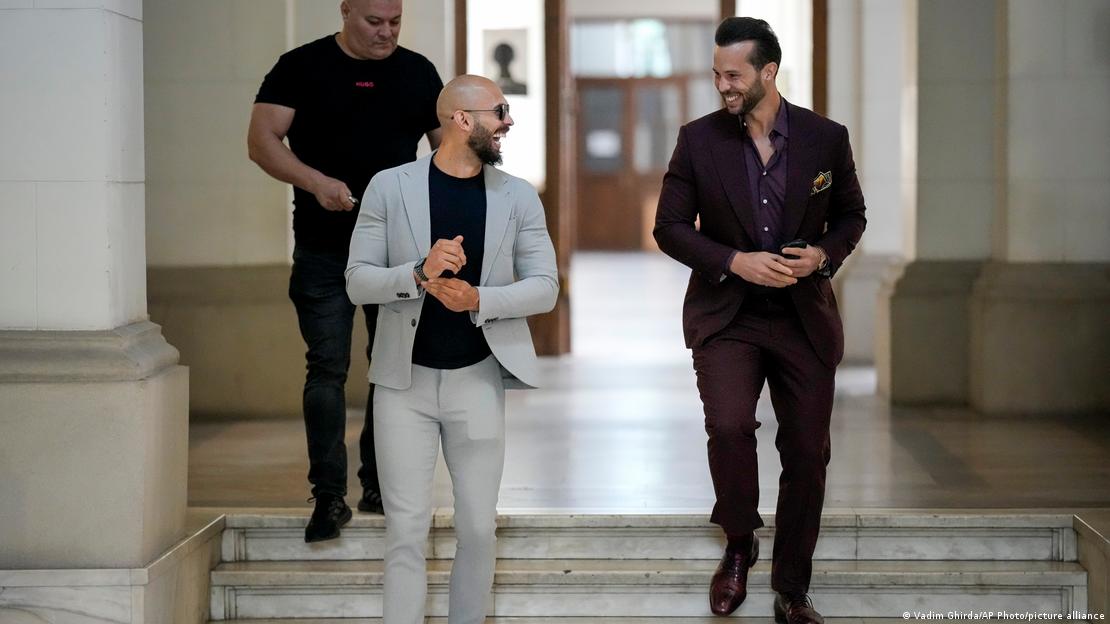
Clavicular was seen with Holocaust denier and white supremacist Nick Fuentes and manosphere influencer Andrew Tate, who has been charged with sexual crimes, among other things, at a Miami nightclub singing along to the Ye (formerly Kanye West) song "Heil Hitler."

The extremist scene is documented by journalist Louis Theroux in his new Netflix documentary, "Inside the Manosphere," which dives into the world of toxic "ultra-masculine" influencers.
Journalist Louis Theroux has been wrestling with manosphere influencers in his latest documentary
Image: Netflix/ZUMA/IMAGO

Donald Trump has long been courting influencers likes Fuentes, whom he infamously dined with at Mar-a-Lago, to strengthen support among a base of young men who routinely express resentment about feminism, immigration, queer culture and even democracy.

That's according to Ozan Felix Sousbois, an associate researcher in sociology at the University of Stavanger who has written widely on incel culture. He told DW that looksmaxxing comes out of an era of "hyper-masculinity" and "male anger" that sees "governments, the manosphere, incels, and more traditional forms of men's rights movements converge."

Jordan Foster, an assistant professor in sociology at MacEwan University in Edmonton, Canada, recently co-authored an article on looksmaxxing and modern masculinity. In an interview with DW, he described looksmaxxing as "a potent form of bait for men and especially vulnerable young men, who may already hold certain anxieties or frustrations about their future and the state of affairs in the nation."

Manosphere influencer Andrew Tate (in grey suit) has had sexual assault charges filed against him in Romania (above) and the UK
Image: Vadim Ghirda/AP Photo/picture alliance


'Lethalitymaxxing' —the manosphere goes to war

Looksmaxxing speak has also begun to appear in US government communications.

A Department of Defense (which saw its name changed to Department of War under Trump) post on the platform X in February read, "Low cortisol. Locked in. Lethalitymaxxing," backgrounded by the facial profile of a square-jawed marine. "Low cortisol" refers to the practice of avoiding the high adrenaline that leads to a puffed-up, as opposed to chiseled, face.

The post appropriated insider manosphere jargon to communicate military strength — and it did so a couple of weeks before the US and Israel attacked Iran.

"The administration has deployed a unique vocabulary to connect with corners of the internet previously untapped by mainstream politicians," Foster said of the post.

He added that the administration has sought to draw a "sharp distinction between idealized, 'manly' men and others who fall short" as part of "broader efforts to mobilize the military, frame conflict and buttress agencies like ICE."

Sousbois also said that an incel subculture "centered on control, hardness and readiness for conflict and violence" has made a timely entrance into the mainstream.

But as this language is normalized among its young target audience, looksmaxxing's dark side could become more apparent.

Sousbois warns that the movement could produce "visible harm for women, gender- and sexual minorities," in addition to "ethnic and religious minorities."

Edited by: Cristina Burack


Lufthansa and the role of big business in the Holocaust

DW
26.03.2026

German airline Lufthansa is one of many big-name brands that collaborated with the Nazis during the Holocaust. As the airline celebrates its 100th anniversary, why does its Nazi past continue to fly under the radar?


Founded in 1926, Deutsche Luft Hansa became a front for German rearmament under the Nazis
Image: A. Schulze/United Archives/IMAGO

Lufthansa Airlines, the flag carrier of Germany, takes great pride in its aviation heritage spanning almost a century. Images from the 1920s and 1930s — including Junkers Ju 52 aircraft used by the Luftwaffe — feature prominently in Lufthansa's marketing, alluding to the "pioneering spirit" of the brand and its place in aviation history.

But the story of Lufthansa's role in the Third Reich war machine, one that includes the large-scale use of forced labor, remains largely under the radar. In fact, Lufthansa is just one of many companies that collaborated with the Nazi regime, big-name brands and business dynasties that continue to "hide in plain sight," according to journalist David de Jong.

He is the author of the 2022 book, "Nazi Billionaires: The Dark History of Germany's Wealthiest Dynasties." It charts how, unlike the high-ranking Nazi politicians and military leaders tried at Nuremberg, the majority of business leaders who cooperated with Adolf Hitler's regime were never really held accountable.

The book includes Günther Quandt and his son Herbert, patriarchs of the dynasty that today controls BMW, and the industrialist Friedrich Flick, who was convicted of using forced and slave labor at Nuremberg. After his early release from prison in 1950, Flick became the largest shareholder in Daimler-Benz.


"There was no incentive on the side of the West German authorities to judge their fellow compatriots on crimes that they had committed themselves or bore responsibility for, or sympathies that they had held, or still held themselves," de Jong told DW. "Denazification is a myth on every level of German society."

After Germany's defeat, the focus quickly turned to the nascent Cold War, to combating communism and Soviet Russia. West Germany was seen as capitalist bulwark and German businessmen were allowed to keep their assets, whether they were legitimately theirs or whether they had been seized from Jewish businesses.

This was not confined to German industry, said historian Peter Hayes, who points to how West Germany's first postwar chancellor, Konrad Adenauer, demanded an end to denazification proceedings. The country needed experienced civil servants and professionals, Adenauer argued. His government enacted amnesty laws in the early 1950s, reintegrating hundreds of thousands of former Nazis into German society, including the civil service and the judiciary.

"They get off lightly because it was useful to the Allies and it was useful to the Germans themselves," Hayes told DW. "There was a willful amnesia that West Germans found convenient. It fit in with a way of compartmentalizing Nazism, which is to say all the bad things were done by this minority of fanatics, the rest of us were just taken in, we were lied to, and the real criminals were the people in the SS and the party leadership."


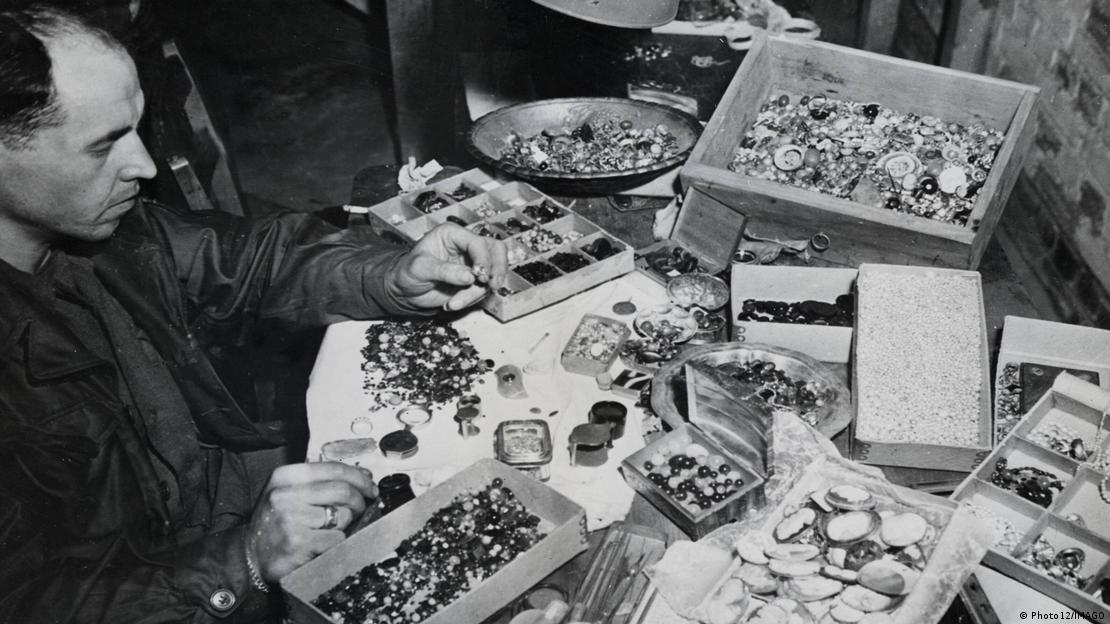
Gold and silver stolen from Holocaust victims, like these wedding rings and gold dental fillings found in Buchenwald concentration camp in 1945, were processed by Degussa (today Evonik)I
mage: Photo12/IMAGO

In his 2025 book, "Profits and Persecution: German Big Business in the Nazi Economy and the Holocaust," Hayes examines how big-name companies were complicit in some of the worst atrocities of the period, from the supply of Zyklon B gas (used to kill in gas chambers) by IG Farben, whose successor companies today include BASF and Bayer, to the processing of gold dental fillings wrenched from the victims' mouths in Nazi concentration camps.

"They not only knew what they were taking part in, they were trying to make money off of it," he said.


How Lufthansa became a front for Nazi rearmament

Deutsche Luft Hansa — from 1933 styled as Lufthansa — was founded in 1926 when only a small elite could afford to fly. By the early 1930s, it was struggling to survive. The Nazis "saved Lufthansa," according to German historian Lutz Budrass, an expert in German aviation history. In 1933, Hermann Goering appointed Lufthansa director Erhard Milch to state secretary of what would become the Reich Aviation Ministry.

Under the Treaty of Versailles, which ended World War I, it was forbidden for Germany to have an air force. But with only minor restrictions on civil aviation, Budrass said that Lufthansa became a front for National Socialist rearmament. After 1941, Lufthansa had a prominent role in aircraft repair workshops behind the front lines and, unlike other companies, was able to directly procure forced laborers, including many children who were kidnapped from Nazi occupied territories across Europe.

In 1932, Deutsche Luft Hansa provided Adolf Hitler with a chartered plane to travel around Germany on his election campaign tour
Image: Gemini/IMAGO

When World War II ended, the Allies declared the airline part of the German air force and liquidated the company in 1951. Deutsche Lufthansa, today the world's fourth largest airline by revenue, was founded as the Aktiengesellschaft für Luftverkehrsbedarf (shortened to Luftag) in 1953, acquiring the rights to the Lufthansa name and the famous crane logo in 1954.

But it wasn't just the same name and logo: Many of the same men returned to its management board, including Kurt Weigelt, who led the economic department of the NSDAP Office of Colonial Policy. After the war, he was placed on a list of wanted war criminals and was eventually sentenced to two years in prison and a fine. But by 1953, he was the chairman of Lufthansa's supervisory board and in retirement, became its only ever honorary board member.

At the end of the 1990s, Lufthansa hired Budrass to research its use of forced labor during the Nazi period. The study was completed in 2001 but Lufthansa did not publish it until 2016, and then only as a supplement at the back of a glossy illustrated history of the company. In response, Budrass published his own 700-page book — against Lufthansa's wishes: 2016's "The Eagle and the Crane: The History of Lufthansa 1926-1955" ("Adler und Kranich: Die Lufthansa und ihre Geschichte 1926-1955").

In a statement to DW, Lufthansa asserted that it is not the legal successor of the company founded in 1926, writing that "the legal foundation of today's Lufthansa was laid in 1953."

Lufthansa acknowledged that the National Socialist era is part of its history and said it would be "using its 100th anniversary as an opportunity to critically reexamine its responsibility during the Nazi era and to further investigate it based on historical research."

"Lufthansa have always tried to profit off of their long history, but when they are confronted with the fact that National Socialism is a part of that history, then they always say, 'No, that has nothing to do with us,'" Budrass told DW. "That for me has always been the problem with Lufthansa."

Just a few weeks ahead of the 100th anniversary of the first Luft Hansa flight on April 6th, the Lufthansa Group published an article titled "The first Lufthansa during the Nazi era" and made Lutz Budrass' study available for download.

Justice delayed, denied for victims of forced labor

The issue of Lufthansa's Third Reich operations resurfaced in the 1990s when a cascade of class action lawsuits in the US brought by former forced laborers against German companies brought the issue to wider public attention.

The German government and industry heavyweights — including Lufthansa, Kühne + Nagel and Volkswagen — eventually bowed to international pressure and established the Foundation for Remembrance, Responsibility and Future (Stiftung EVZ) to provide compensation in 2000.

But since most of the over 20 million former forced laborers in the German Reich and the territories it occupied had already died by then, only 1.7 million received financial support from the EVZ.


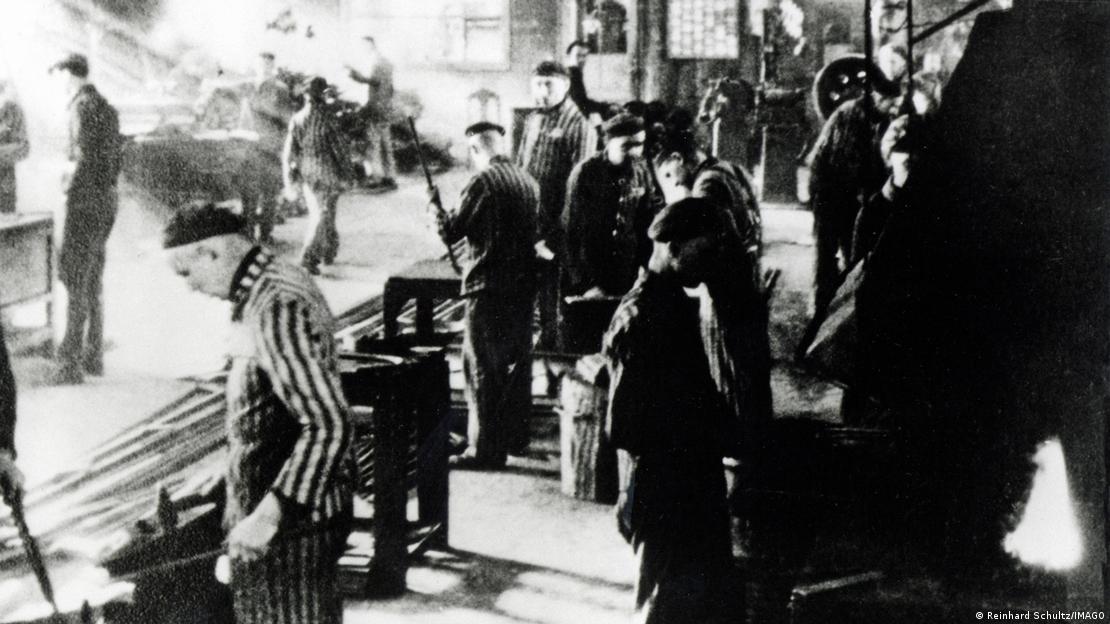
Forced laborers, pictured here in a metalworking workshop at Auschwitz c. 1942-43, were used by companies including Volkswagen, Deutsche Luft Hansa and Hugo Boss
Image: Reinhard Schultz/IMAGO

It has now become almost standard practice for major German companies to hire historians to research their dealings during the Third Reich: Allianz, BMW, Dr. Oetker, Deutsche Bank and Volkswagen have all done so.

However, de Jong said those studies are usually destined to sit gathering dust in company archives, and in some cases are never made public at all. "On a consumer level you can say we had it all figured out, it's here on the bookshelf. But the details are never really shown to the public," he said.

Germany's richest man, Klaus-Michael Kühne, is the "main example of the refusal to reckon" with this dark history, according to de Jong. Worth an estimated €38.7 billion ($44 billion), Kühne is heir to the global transport and logistics empire Kühne + Nagel. He also happens to be the largest single shareholder in Lufthansa.

Kühne + Nagel was co-founded by his grandfather August Kühne in 1890 and was run by the family and a Jewish partner Adolf Maass until 1933. That is when August's sons, both Nazi party members, took control. Holocaust researchers point out that Kühne + Nagel had a virtual monopoly on the transportation of looted Jewish property, primarily furniture and artworks, from which it profited significantly during the Holocaust. Maass was murdered at Auschwitz in 1944.

Klaus-Michael Kühne does not like to discuss these matters. "For me, that chapter is closed, and I'm not going to reopen it," he told Der Spiegel magazine in March 2025. The controversy had reignited after it was revealed that Kühne was the funder of a new opera house in Hamburg, leading to accusations of "whitewashing" the company's dark past.

"The businessmen who I wrote about, they fought tooth and nail to keep the assets and the companies that they had robbed, and often were victorious," said de Jong. "I think the bare minimum that one can ask for, it's not monetary restitution at this point, but it is just taking moral responsibility for history."

This article has been updated on 26.03.2026

Edited by: Sarah Hofmann
Helen Whittle British journalist in Berlin