It’s possible that I shall make an ass of myself. But in that case one can always get out of it with a little dialectic. I have, of course, so worded my proposition as to be right either way (K.Marx, Letter to F.Engels on the Indian Mutiny)
Monday, March 30, 2026
Israel's national budget passes, triggering protests as finance ministry leader resigns
"Change Direction" protestors outside the entrance to the Israeli parliament in Jerusalem. / bne IntelliNews
By bnm Tel Aviv bureauMarch 30, 2026
Israeli Finance Ministry Director General Ilan Rom announced his resignation on March 30, hours after Israel's Knesset approved the 2025-2026 state budget following an overnight session.
The ILS 850bn ($275bn) budget passed by 62 votes to 55, marking the conclusion of weeks of political friction within Prime Minister Benjamin Netanyahu's coalition.
The budget includes a record ILS 142bn ($45bn) defence allocation, reflecting an addition of over ILS 30bn ($9.53bn) due to the ongoing war. Central to securing passage was the implementation of a controversial conscription exemption law for ultra-Orthodox citizens, alongside ILS 5.5bn ($1.78bn) in coalition funds approved through budget amendments, a move criticised by the Bank of Israel.
Rom's departure removes a key figure in Israel's wartime economic management at a critical juncture. A former senior Mossad official, Rom led complex negotiations with the defence establishment, spearheaded anti-black money operations with the Tax Authority, and advanced a "geo-economic" vision including infrastructure for potential "Abraham 2.0" agreements.
His resignation suggests growing tensions between professional economic management and political imperatives, particularly as coalition fund allocations strain fiscal discipline during wartime.
"I was privileged to contribute to the country during this challenging period and to be a partner in the tremendous economic work," Rom stated in remarks published by Kan News. "I thank Minister Smotrich for his trust and the ministry's employees for their professionalism and extraordinary dedication to the country's prosperity."
Finance Minister Bezalel Smotrich acknowledged Rom's contribution, making the following announcement: "The Ministry of Finance has been blessed with a top-notch professional manager. During this complex period, you have contributed greatly to our ability to manage changing processes."
The budget's approval triggered immediate protests outside the Knesset, with protestors from the "Changing Direction" "While the Israeli public is sitting in shelters, the government of massacre approves a pig-sized budget," protesters from the "Changing Direction" group stated, according to The Jerusalem Post. "Instead of taking care of protecting the north, compensating businesses, workers, and residents of the country that are being bombed, they are pouring billions into draft evaders and settlements."
Israeli police arrested five protesters for violating public order and not obeying police instructions, subsequently dispersing the remaining demonstrators.
Israel now occupies more of Lebanon than Russia does of Ukraine
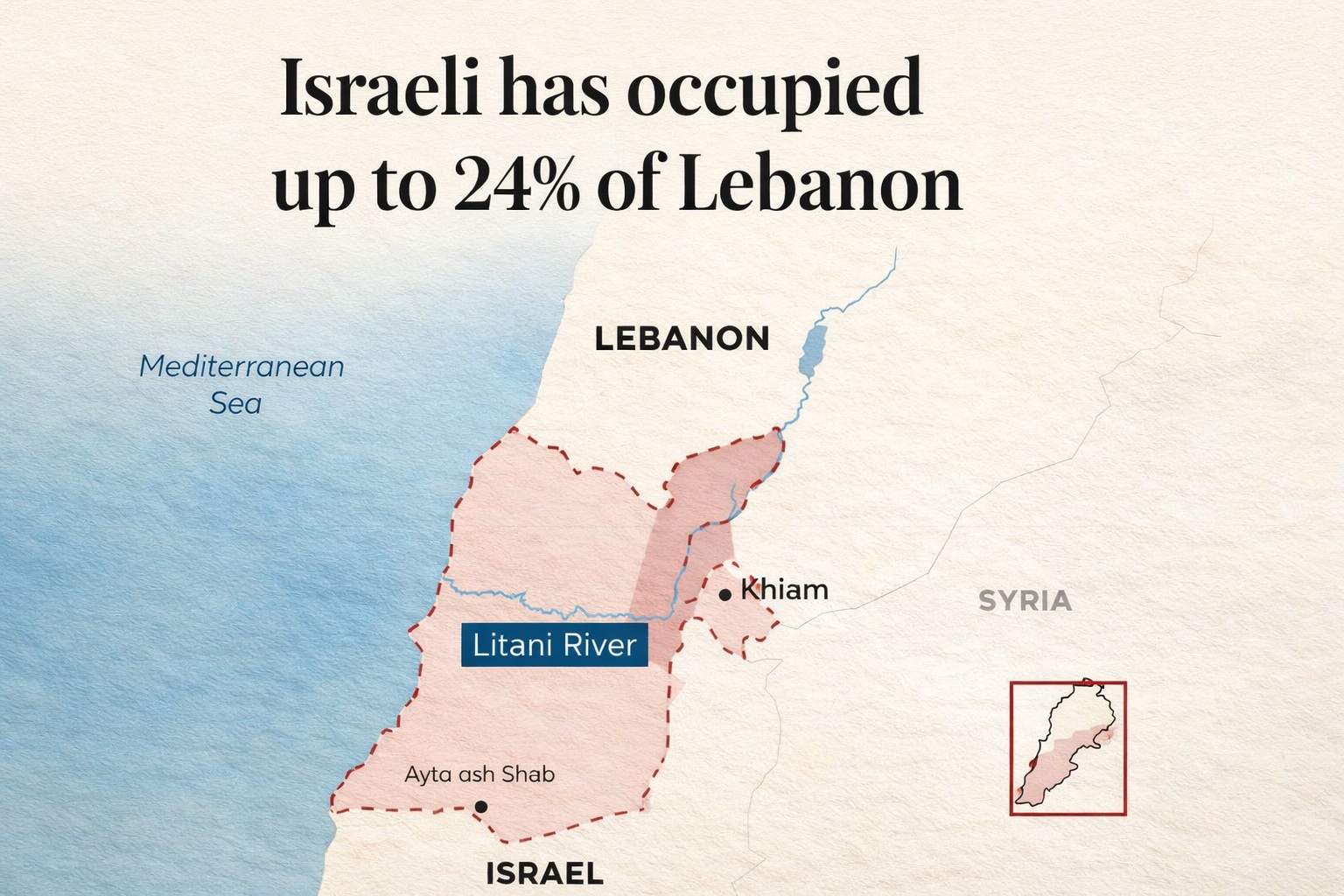
After only four weeks of fighting, Isreal occupies more of Lebanon than Russia controls of Ukraine after four years of fighting. / bne IntelliNews
By Ben Aris in BerlinMarch 30, 2026
Israel has occupied more of Lebanon’s territory after three weeks of fighting than Russia controls of Ukraine after four years of war.
In the initial attack, Israeli forces quickly occupied the strip of land in southern Lebanon between the Israeli border and the Litani River –
about 14% of Lebanon’s territory and slightly less than the area of eastern Ukraine currently occupied by Russia, or 19.4%, according to the latest estimate from the Institute for the Study of War (ISW).
However, according to confirmed reports, the IDF has moved across the river and is pushing further north, although it remains unclear if Israel controls this land, or merely occupies it.
There are confirmed reports that the IDF controls a salient round Khiam in the east and has active forces in a belt running from Marjayoun in the west of the country to Khaim in the east, with Qlayaa and Hasbaya just beyond, marking how far north the extension appears to reach. Fighting is confirmed in the Marjayoun district and Nabatieh and surrounding villages just north of the Litani River, the main administrative and commercial centre for the region.
Five bridges, "used by Hezbollah for the passage of terrorists and weapons" were destroyed last week, Israeli Defence Minister Israel Katz said on March 26, adding that Israeli troops will “control a large swathe of southern Lebanon” as part of their campaign against Hezbollah.
If the line between Marjayoun, Nabatieh and Khiam is assumed as the northern border of the occupation, then the IDF now controls between 20% and 24% of the country, more land than Russia occupies in Ukraine.
The difference between the two conflicts is that Russian and Ukrainian forces are now dug into their positions having built extensive defences, however, the fighting in Lebanon remains at an early stage and is still very fluid.
In the first round of fierce fighting, Israel has been attempting to push the population out of the southern part of the country and has largely consolidated its control of the land up to the Litani River. The IDF has reportedly been attacking civilian areas and using illegal ordinances like white phosphorus to push residents out of the region. The stated aim of Tel Aviv is to depopulate the southern region up to the Litani River and create a “buffer zone.”
One in five Lebanese, more than a million people, have already been displaced, threatening to create a humanitarian crisis. Israel has already adopted the same tactics that it used in Gaza and has begun to bulldoze residential buildings and key local infrastructure to ensure refugees cannot return to their homes. Confirmed video released by the IDF shows the destruction of residential buildings in regional towns in built up areas using missile attacks.
An IDF video showed a building collapse in the southern Lebanese town of Yohmo on March 23.
Russia has pursued similar tactics in Ukraine but after four years of fighting has only managed to occupy a fifth of the country. However those areas it does control are being rapidly reconstructed, with new roads and buildings to house Russians who are being imported into the area, now known as Novorossiysk, according to a recent investigation by Reuters.
Russia's invasion and destruction of cities in the east of Ukraine caused international outrage in 2022, bringing down an extreme sanctions’ regime on the Kremlin. However, a similar invasion and the same tactics of destroying towns and villages by Israel has caused little comment.
Past Israeli invasions of Lebanon have been more limited in geographic scope, including its occupation of a “security zone” in southern Lebanon between 1985 and 2000.
The Litani River plays a key role in conflicts between Lebanon and Israel. Under UN Security Council Resolution 1701, which ended the 2006 war between Israel and Hezbollah, armed groups are barred from operating south of the river. Israel says Hezbollah maintains a significant presence there.
Iran has told intermediaries in the last week that Lebanon must be included in any ceasefire agreement with the US and Israel, six regional sources familiar with Iran's position said, Reuters reported on March 25. Iran's Press TV cited an Iranian official last week saying Tehran wanted any deal with the US to secure an end to the war both on Iran and other "resistance groups" in the region.
The conflict between Israel and Lebanon has been running for decades.
In 1978, Israel invaded south Lebanon and set up a narrow occupation zone in an operation against Palestinian guerrillas after a militant attack near Tel Aviv. Israel backed a local Christian militia called the South Lebanon Army (SLA).
Four years later, Israel invaded Lebanon all the way to Beirut in an offensive that followed tit-for-tat cross-border fire. It pulled back from central Lebanon in 1983 but retained forces in the south.
In 1985, Israel established a wider occupation zone in southern Lebanon, about 15 km deep, controlling the area with the SLA.
Israel withdrew from southern Lebanon in 2000, after continued attacks on Israeli military positions in occupied Lebanese territory by Hezbollah, ending 22 years of occupation.
In 2006, Hezbollah crossed the border into Israel, kidnapping two Israeli soldiers and killing others, leading to a five-week war involving heavy Israeli strikes on both Hezbollah strongholds and national infrastructure.
On October 8, 2023, Hezbollah opened fire at Israel, one day after the Hamas-led attacks on southern Israel that killed 1,200 people in Israel and led to war in Gaza, pitting Israeli forces against the Palestinian militant group. Israel responded to Hezbollah with a bombing campaign and eventually sent its ground troops into southern Lebanon again. After a 2024 ceasefire, Israel kept troops on five hilltops in southern Lebanon.
Reportedly a total of 1,072 civilians have been killed in Lebanon so far, according to the Lebanese health ministry, including at least 121 children and 42 health workers.
Surge in West Texas Oil Theft Raises National Security Alarms
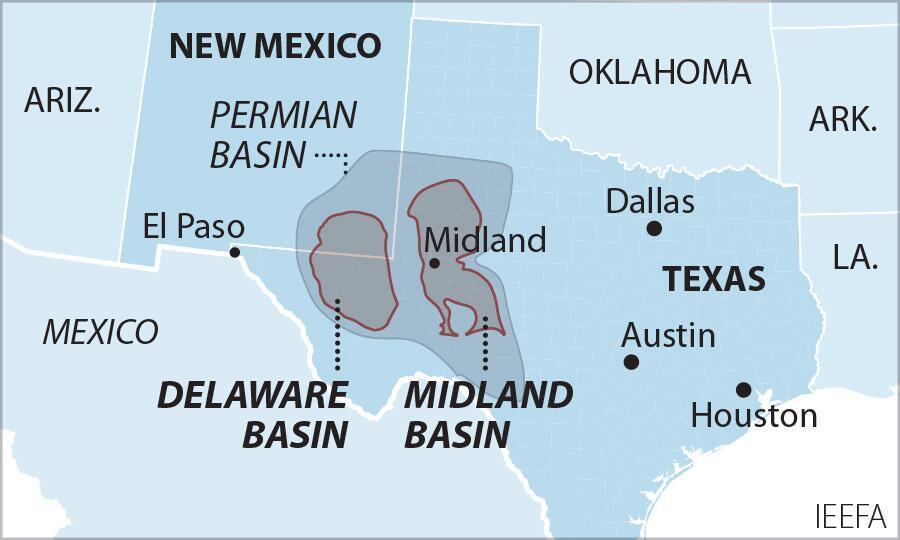
Criminals are exploiting weak points across the West Texas oil production region, which accounts for 15% of the world's energy resources. This emerging wave of oil theft is burning a multi-billion-dollar hole in the budgets of oil and gas operators across the Permian Basin and is becoming a national security threat.
The outlet spoke with Sheriff Randy Cozart, who estimates that about 500 barrels of crude are stolen each week. Industry groups say statewide losses are accumulating and range from $1 billion to $2 billion annually.
"Where there's money, there's crime," Cozart explained. "And there's lots of money in oil right now," he said, especially with WTI prices near triple-digit territory due in part to the energy shock in the Middle East.
One of the major problems in the Permian Basin is the recent increase in criminal activity, which some say is due to the Biden-Harris administration's nation-killing open-border policies.
Ed Longanecker, president of the Texas Independent Producers and Royalty Owners Association, told the outlet that oil companies in the region could incur losses of up to $2 billion. He said that figure does not cover thefts across the New Mexico portion of the Permian.
"The old joke in the oil field used to be that if it wasn't bolted down, it would get stolen," Michael Lozano, who runs government affairs and communications for the Permian Basin Petroleum Association, said, adding, "Now they're unscrewing the bolts, and they're stealing those too."
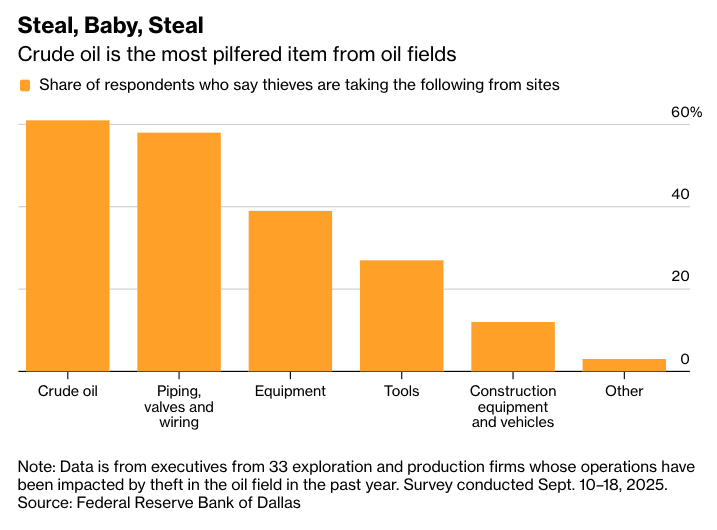
A recent Federal Reserve Bank of Dallas survey of oil executives showed that at least 60% said their operations were affected by oil thefts.
Bloomberg described one method thieves use to steal oil:
Today's Permian Basin thieves might instead connect vacuum trucks to storage tanks in broad daylight and siphon it out, sometimes covering their license plates or swapping vehicles to evade law enforcement, authorities say.
Now, regulators and the FBI have taken notice because these oil thefts are becoming a growing economic security and critical infrastructure threat.
Local officials in Texas and New Mexico are closely watching the oil theft crisis. Texas has responded by creating a task force under the Railroad Commission, lawmakers are studying total economic losses, and the FBI has become more involved.
The question now is whether the energy shock emerging from the Middle East and the resulting national security threats will pressure states and the federal government to fortify critical energy infrastructure from the Gulf of America to the Permian Basin and elsewhere, as the risk of drone threats and sabotage continues to rise.
By Zerohedge.com
GM-backed EnergyX to launch Texas lithium facility
EnergyX, a startup backed by General Motors, said on Thursday it has commissioned a lithium production facility at its project Lonestar, located in the Smackover formation in Texas.
Lithium demand has been surging globally, driven by the role of lithium-ion batteries in electric vehicles, portable electronics and increased adoption of renewable energy storage solutions.
The Lonestar demonstration plant is operational and will produce roughly 250 metric tons per year of battery-grade lithium carbonate equivalent, the company said.
EnergyX expects production to scale to more than 100,000 metric tons per year.
Lithium refining remains a bottleneck in the US, with China controlling about 70%-75% of global lithium chemical conversion capacity.
The reliance on China for battery-grade lithium chemicals has kept margins low for domestic producers, undermining the economics of most non-Chinese projects, EnergyX said.
The company said the facility enables it to further optimize system design, validate process economics, and provide 5-25 ton samples of battery grade lithium to customers for qualification.
The Smackover formation is an underground geological formation stretching from Florida to Texas and could contain more than 4 million metric tons of lithium.
Companies aiming to extract lithium from the Smackover will need to use direct lithium extraction, a process that has yet to be widely proven at a commercial scale, with most projects still in pilot or early deployment.
(By Dharna Bafna)
Site visit: EnergyX launches first US direct lithium extraction plant in Texas
Left: Kellee Kahlil, director of marketing, center: Teague Egan, CEO, EnergyX cutting the ribbon at the project Lonestar launch in Texas Mar.26. Supplied image.
At a packed event in Hooks, Texas, EnergyX this week unveiled a first-of-its-kind lithium production facility — project Lonestar — marking a significant step toward establishing a scalable domestic supply of battery-grade lithium in the United States.
The company’s now operational demonstration plant is capable of producing approximately 250 metric tons per year of lithium carbonate equivalent (LCE).
While modest in output on a global scale, the facility represents a critical validation of EnergyX’s proprietary direct lithium extraction (DLE) technology and refining technologies under real-world, industrial conditions.
EnergyX can now internally produce a core component of its ‘GET-Lit’ lithium separation technology portfolio at an industrial scale.
“Bringing the biggest integrated DLE lithium demonstration plant online in the United States is a foundational milestone for EnergyX and for US domestic lithium production,” EnergyX CEO Teague Egan said.
“This facility not only validates the performance of our technology on an industrial scale under real-world conditions but also establishes EnergyX as the lowest cost producer in the US.”
EnergyX CEO Teague Egan speaking at the project Lonestar launch event Mar. 26. Image: Amanda Stutt
The project arrives amid rapidly accelerating global demand for lithium, driven by the growth of electric vehicles, grid-scale energy storage and emerging technologies. EV adoption alone has surged from roughly 85,000 vehicles in 2010 to around 20 million in 2025, with demand set to keep increasing. At the same time, energy storage systems are expanding at an estimated 50% year-over-year pace.
Industry observers view the demonstration facility as a crucial intermediary step between pilot-scale testing and full commercial deployment. By validating process economics and system design, EnergyX is positioning itself to expand across its broader US lithium footprint.
Located in the Smackover formation — a lithium-rich brine resource that stretches from Florida to Texas— the plant is the first DLE facility in the state to process locally sourced brine.
EnergyX has amassed a substantial position in the region, controlling 47,500 acres. Project Lonestar Lithium enables EnergyX to further optimize system design, validate process economics, and provide 5-25 ton samples of battery grade lithium to customers for qualification. The facility is the last step before commercial expansion across the company’s growing US lithium footprint.
EnergyX invested $30 million into the demonstration plant, and plans next to build the commercial plant, which will be over a $1 billion investment, Egan told MINING.COM, adding that the company has secured offtakes, but they are not public yet.
Egan maintains the company’s cost profile is the most competitive in the industry. See graph:
Source: EnergyX
Texas senator speaks
US policymakers have increasingly emphasized the importance of securing domestic supply chains for critical minerals. Senator Ted Cruz highlighted the project’s potential role in supporting energy security and defense readiness by supplying materials essential for advanced battery technologies.
Cruz spoke virtually to the company at the event, which was attended by 200 and live streamed to thousands.
Senator Ted Cruz speaking virtually at the project Lonestar launch in Texas Mar 26. Image: Amanda Stutt
“Congratulations to EnergyX and its CEO Teague Egan on opening the first-of-its-kind lithium processing facility right here in Texas,” Cruz said.
“The lithium produced at Project Lonestar will help bolster US energy security and defense readiness by supplying the critical materials needed for batteries used in critical military technology.”
Reducing US reliance on China
The facility is designed to demonstrate improvements in extraction efficiency, recovery rates and cost competitiveness — key factors that have historically limited the viability of lithium refining outside China.
Currently, China dominates an estimated 70–75% of global lithium chemical conversion capacity, creating a major bottleneck in the global battery supply chain. This concentration has left the US reliant on foreign processing, even when domestic lithium resources are available.
Project Lonestar aims to address that imbalance by providing a scalable, cost-effective pathway for domestic refining. The plant will also produce sample quantities of battery-grade lithium — ranging from 5 to 25 tons — for qualification by downstream customers, including battery and cathode manufacturers.
Additional demand is emerging from sectors such as defense technology and robotics, reinforcing projections that lithium requirements will rise dramatically over the next several decades.
For EnergyX, the Lonestar plant represents more than a technical milestone. It is a strategic attempt to reshape the economics of lithium refining in the United States — unlocking stranded resources, reducing reliance on foreign processing and laying the groundwork for a more resilient domestic battery materials ecosystem.
If successful at scale, the approach could help rebalance the global lithium supply chain at a time when demand is poised to outstrip historical norms.
Houthis Attack on Israel Threatens Red Sea Ceasefire
Houthis launched their first missile and drone attacks toward Israel since the start of hostilities with Iran
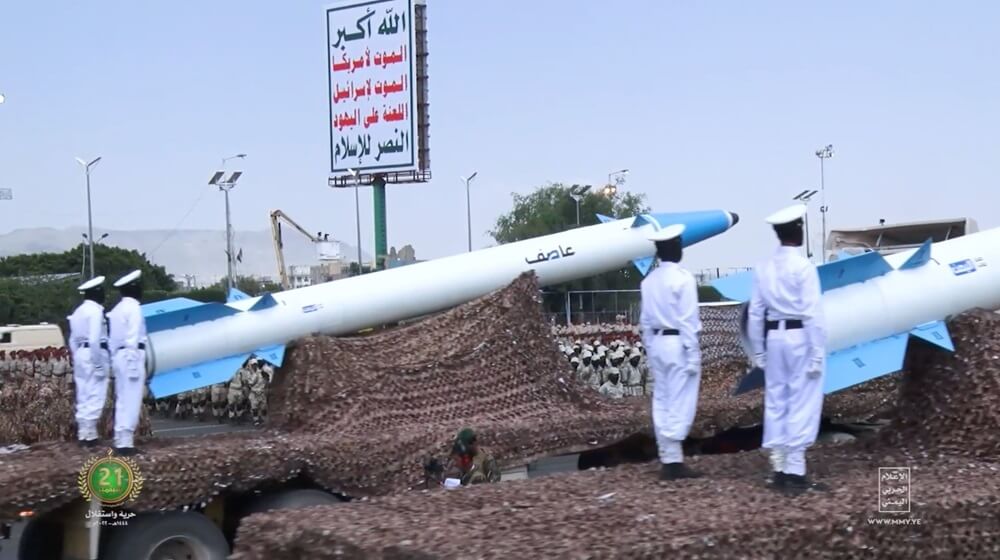
The Houthi leader Abdul-Malik Al Houthi spoke on television at the commemoration this week of the anniversary of the start of the 2015 Saudi-led military campaign against the Houthis in Yemen. During the speech, Abdul-Malik Al Houthi emphasized that his movement was on the side of Iran and the Palestinians, but that he was reserving the right to intervene.
The reservation did not last long. On Saturday, March 28, the Houthis launched a ballistic missile towards southern Israel. Later the same morning, a Houthi drone was intercepted over the Red Sea, possibly by a Barak-8 surface-to-air missile fired from an Israeli Navy Sa'ar Class corvette, before it got anywhere close to Israel. But later a second drone made it as far as Eilat before being intercepted by the Israeli Iron Dome system.
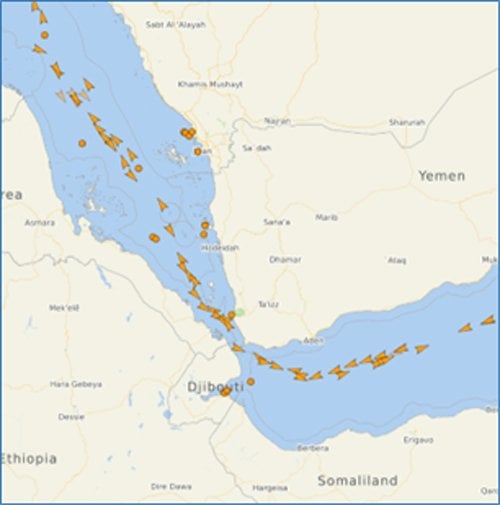
Tanker traffic in the southern Red Sea and Gulf of Aden, March 29 (VesselFinder)
So far, a lack of any incidents reported by the UKMTO in the southern Red Sea and Gulf of Aden tends to confirm that the Houthis have not yet changed their posture regarding the transit of commercial shipping. Tanker traffic through the Bab el Mandeb looks healthy. The Houthi military spokesman, Brigadier Yahya Saree, followed up the incidents by focusing on his movement's support for Hezbollah, the Palestinians, and Iran, without mentioning either Saudi Arabia or interdiction of shipping. But the Houthis have a paused but long-standing declared hostility to “Israeli-connected” shipping transiting the Bab el Mandeb, and have indicated that they will escalate their actions if the anti-Iranian coalition is broadened or expands the scope of its operations, and if operations against Iran are launched from the Red Sea.
The Houthis may be calculating that a limited strike on Israel will serve as a signal of its solidarity with the Resistance of Axis, without affecting what appears to be their principal objective at the moment - which is to draw in Saudi Arabia to negotiations to bring about a final agreement to end the war, following the largely successful ceasefire the two sides agreed upon in March 2022. Abdul-Malik Al Houthi's speech last week, in which he suggested he was going to resist pressure to resume attacks in the Red Sea, also set out the financial quantum of what he hoped he might extract from the Saudis during such negotiations.
Israel, however, is not likely to rest content with Abdul-Malik Al Houthi sending signals by launching drones and missiles at Israel. Israel will almost certainly retaliate, probably by once again targeting senior Houthi political leaders, but will do so in its own time.
In the meantime, tankers loading at Yanbu are successfully sailing south to Asia through the southern Red Sea without issues, thereby enabling Saudi Arabia to maintain exports at about 50 percent of the volumes that it would otherwise be shipping through the Strait of Hormuz. This residual balance of exports is critical both for Saudi Arabia's domestic fiscal needs - the Kingdom relies on current revenues to finance its in-year expenditure - but also to supply Asian consumers, principally in Japan and Korea, with at least a basic minimum of supply.
Based on the Houthi declared intent, a resumption of attacks on shipping in the Red Sea and Gulf of Aden now looks more probable than merely possible. But when this will occur is uncertain. Two triggers could be the movement of the USS Gerald R. Ford carrier strike group back into the Red Sea after its port visit to Split in Croatia, and particularly so if the Ford then moves into the Arabian Sea. Or if Saudi Arabia moves from its current defensive posture to take a more active role in Alliance offensive operations.
When the Houthis do resume their attacks on shipping, however, the impact on critical global supply chains will make the disruption caused by the current closure of the Strait of Hormuz far worse.
Oman Suspends Operations at Key Arabian Sea Port After Drone Strike
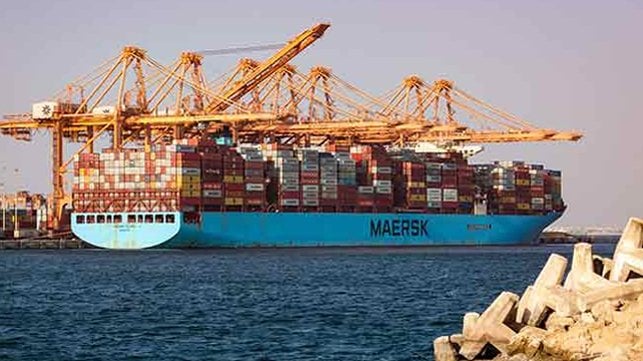
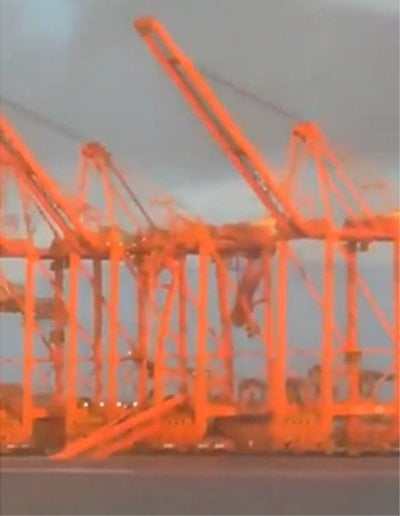
Berth was empty in Salalah when the drone struck the crane and Maersk confirmed its crew was safe and no ships or cargo affected (Port of Salalah file photo)
The Omani Port of Salalah, located on the Arabian Sea, came under attack on Saturday morning, March 29. The government’s official news agency condemned an Iranian attack, saying it was impinging on its sovereignty while noting that the port was providing a vital lifeline to the region.
Two Iranian drones targeted the port, with videos showing one drone striking and damaging one of the large container cranes. There were no vessels at the berth, but the image shows the arms of the crane broken and hanging down, with a section apparently in the water after the attack.
The official statement said that one foreign expatriate worker had suffered moderate injuries. It confirmed the damage to one crane and said operations at the port were suspended while a damage assessment was underway.
Maersk issued a statement reporting that none of its vessels or cargo had been affected. It said Maersk crews are safe. Its current estimate is that port operations will be on hold for approximately 48 hours.
The Armed Forces of Iran claimed responsibility for the attack while asserting they were attacking a U.S. support ship. They highlighted that the attack had taken place at a distance of more than a thousand kilometers (more than 620 miles) from the Iranian coast.
Salalah, because of its location outside the Persian Gulf and away from the Strait of Hormuz, has emerged as a key regional port. In 2024, it handled over 3.3 million TEU as well as large volumes of dry bulk. In the first nine months of 2025, volumes had almost equaled all the prior year's volume, and since the outbreak of hostilities, it has provided a vital overland link to the Persian Gulf states. Salalah had been targeted by the Iranians on March 3 and also briefly stopped operations but resumed the following day.
The strikes on Oman appeared to be part of the larger, ongoing campaign against the Arab neighbors of Iran, which it asserts are aiding the United States. The UAE Ministry of Defense reported it intercepted on Saturday 20 ballistic missiles and 37 drones, while saying the total has risen to 398 ballistic missiles, 15 cruise missiles, and 1,872 drones launched by the Iranians toward the UAE since the start of the conflict. It said two members of the military, one civilian contractor for the military, and eight civilians have been killed, while 178 people were injured. Among the drone attacks were strikes at the Kuwait International Airport, with unconfirmed reports of new fire.
Saudi Arabia was also targeted, including possibly the most serious attack of the war against a U.S. base. The media is widely reporting that a dozen American servicemen were injured and that one or more refueling planes were damaged. U.S. Central Command has not commented on the attack, but did issue a statement denying Iranian claims that they had also caused mass casualties in a strike in Dubai.
UK and France Forming Multinational Effort for Strait of Hormuz
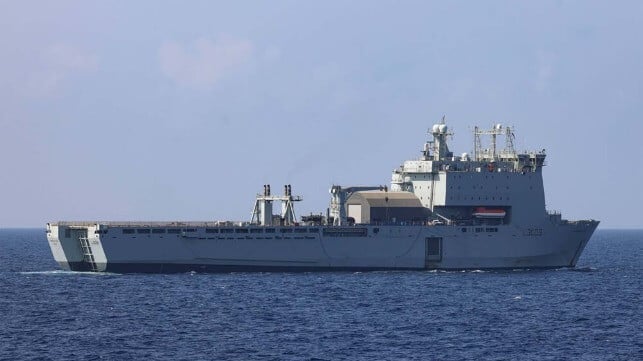
UK is reported considering deploying RFA Cardigan Bay as the mothership for mine clearance in the Strait of Hormuz (Royal Navy)
Additional details are coming out on the reported plan being led by the UK’s Royal Navy and France to develop a multinational effort to provide stability and reassurance to shipping in the Strait of Hormuz. The UK’s plan is, according to a report in The Times (London), well developed and has been shared with the Americans, while Reuters reports France will be conducting a multinational video conference this week with a broad group of 30 allies.
The efforts are proceeding despite the public criticisms of Donald Trump, who last week called the allies “cowards” and said NATO was a “paper tiger.” The Times (London) reports the UK’s chief of the defense staff, Air Chief Marshal Sir Richard Knighton, briefed France, Germany, Italy, the Netherlands, Japan, and Canada on Sunday, while the UK also sent a team of military planners to meet with U.S. Central Command in Florida.
The countries have repeatedly said they would not be involved in combat operations and, according to The Times, would only launch their effort once the hostilities subside. However, with Donald Trump asserting that talks are underway with Iran, the Europeans are reported to be moving forward with their plan.
The Iranians on Wednesday informed the UN Security Council that the Strait of Hormuz is open for “non-hostile vessels,” asserting that nations other than the U.S., Israel, and their allies are free to send their ships through the Strait. However, they must consult the Iranians and receive permission. Yesterday, reports said a UAE-managed container feeder ship was denied clearance and turned around. A Chinese-owned containership reportedly paid a large fee for safe passage.
The trickle of ships continues through the Strait. Thai officials confirmed that one of their tankers made the passage and assert they did not pay a fee. The Bangkok Post is quoting sources at the Ministry of Foreign Affairs who said the embassy in Muscat worked through the Omanis and that they expect a second vessel to also be granted safe passage. India also reported it was able to arrange safe passage for several of its tankers and gas carriers.
AI maritime intelligence firm Windward, however, reports just four vessels went through the Strait on Tuesday with their AIS signal on, one outbound and three inbound. They were using the channel near Iran, while it says two bulkers also made the transit hugging the Omani coast without broadcasting an AIS signal. Windward reports that AIS-transmitting foreign vessel activity in the Arabian Gulf totaled 592 vessels, including 325 cargo vessels and 267 tankers.
The UK effort would initially focus on clearing mines from the Strait. While analysts have questioned whether the Strait is mined, British intelligence, The Times writes, believes Iran mined portions of the Strait. It says the UK has “world-leading capabilities” to deal with the mines and is considering adapting RFA Cardigan Bay or another ship of the class as a mothership to host the mine clearance operations. It points out that the UK already has Remus reconnaissance drones in the region, as well as other deployable autonomous minehunting systems.
It says the Royal Navy has not ruled out deploying its Type 45 destroyer to the Strait. They speculate it would be joined by French frigates and U.S. Arleigh Burke guided-missile destroyers.
The British believe some form of physical presence will be required to rebuild confidence for global shipping. Trump, in his social media posting, had said it would be a “simple military maneuver” to reopen the Strait with “very little danger.” British officials, according to The Times, however, pointed out that they shot down 14 attack drones on Monday night in Iraq, the highest total in a single night. They said that since the conclusion of the Eid holiday, the pace of attacks had resumed
Indian Navy is Quietly Guiding the Country’s Ships Through Strait of Hormuz
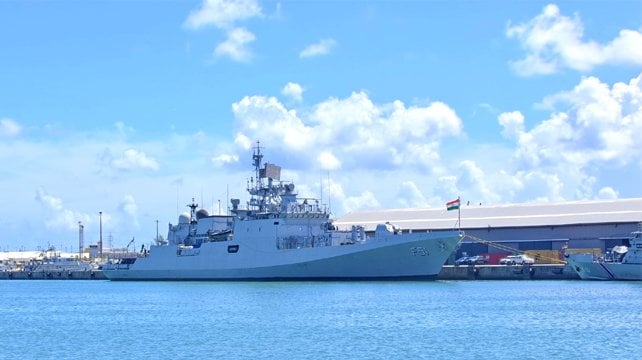
Indian has sent destroyers and frigate to instruction ships through the Strait of Hormuz and to provide protection (Indian Navy file photo)
Indian government officials confirmed in media reports that the country continues to quietly guide its ships out of the Persian Gulf. The reports indicate that after contact with the Iranians to ensure safe passage, the government launched “Operation Urja Suraksha” to guide and protect critical shipping out of the region.
The IANS News Service detailed the operation with confidential information from government sources. According to the report, the operation is underway with the “highest degree of caution and minimal publicity” to ensure the safe evacuation of the Indian-flagged ships.
India’s Shipping Ministry had said there were 22 Indian-flagged vessels with over 600 seafarers in the western Persian Gulf. There were also three ships with an additional 76 Indian seafarers east of the Strait of Hormuz. According to the latest report, India identified 20 of the vessels as high-priority as they were carrying LNG, LPG, and crude oil.
More than five Indian warships have been dispatched, and they are leading the first element of the support operation. While none of the warships have entered the Strait of Hormuz, they remain above the Gulf of Oman near the terminus and are in constant communication with the merchant ships.
After securing permission from Iran for the ships to transit the Strait, the warships are providing guidance on the route. They are reported to be providing instruction as well as the procedures the ships should follow. This is considered to be critical as Iran is forcing the ships to take a different route from the Traffic Separation Scheme and closer to its coastline. Ships are being individually guided with precise instructions.
Once a ship clears the Strait of Hormuz, it is met by a series of destroyers and frigates. The support extends through the Gulf of Oman with additional warships and logistics in place.
IANS reported that two additional vessels loaded with approximately 92,000 tons of LPG were due to reach Indian ports on March 25 and 26. This comes about 10 days after the first vessels, LPG carriers Shivalik and Nanda Devi, as well as crude oil tanker Jag Laadki, cleared the Gulf and reached Indian ports with badly needed cargoes.
The Ministry of Ports, Shipping and Waterways, along with the Directorate of Naval Operations, are reported to be closely coordinating in the effort.
Bahrain Imposes Maritime Curfew in Response to Iranian Attacks
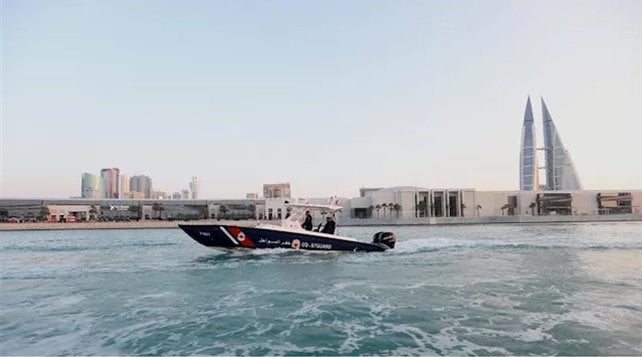
Bahrain will enforce a nightly maritime curfew (Bahrain Coast Guard)
The Kingdom of Bahrain announced on Sunday, March 29, that it is imposing a nightly curfew on all maritime activities. The Ministry of the Interior said it was in the interest of seafarers amid the blatant Iranian aggression.
An island nation in the western Persian Gulf, Bahrain is strategically located between Qatar and Saudi Arabia. Before the start of hostilities, the U.S. maintained a naval base in the Kingdom, including the homeport for the U.S. Coast Guard vessels assigned to the region. It is also home to the command for the joint military forces in the region.
The Ministry said the ban was starting immediately and would run until further notice. It is nightly from 1800 to 0400 and includes all vessels. They said it extends to the maritime movement of seafarers using fishing and leisure vessels. It is an extension of the previous rules regulating maritime movement.
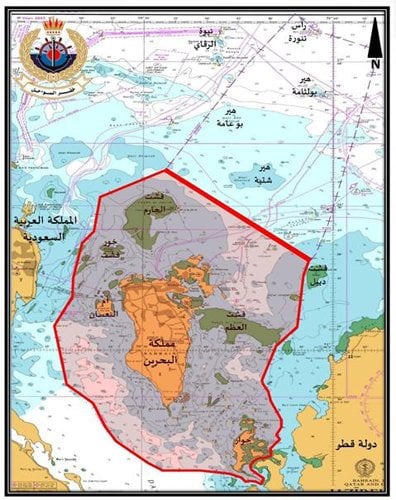
Bahrain's exclusion zone for the nightly curfew (Ministry of the Interior)
It is urging all seafarers to comply with the maritime ban. They are being instructed to avoid approaching the coast of Bahrain. It said the measure was to ensure the safety of seafarers and avoid legal liability. It said it would enhance maritime safety and raise preparedness.
Iran has reportedly increased its attacks against neighboring countries that it says support the United States and Israel. The Bahrain Defence Force updated statistics on March 29, reporting that air defenses have intercepted and destroyed 175 ballistic missiles and 391 drones targeting their country. This is up from a report of 124 missiles and 203 drones on March 15 and a report of 153 missiles and 301 drones on March 24.
On Sunday, Iran’s attacks included the operations of Aluminium Bahrain and Emirates Global Aluminium. According to Al Jazeera, Aluminium Bahrain reported that two employees were injured in the attack on its facility, while the UAE’s Emirates Global Aluminium said one of its sites in Abu Dhabi suffered significant damage, and six people were injured.
Elsewhere, Saudi Arabia’s Ministry of Defense said on Sunday morning that it had intercepted 10 drones. The Kuwaiti National Guard said it shot down four additional drones. This comes after Oman and Saturday reported that one of the large cranes used to service containerships at the Port of Salalah had been damaged. Operations at the port were suspended while damage assessments were underway.
Mideast aluminum makers suffer damage from Iranian attacks
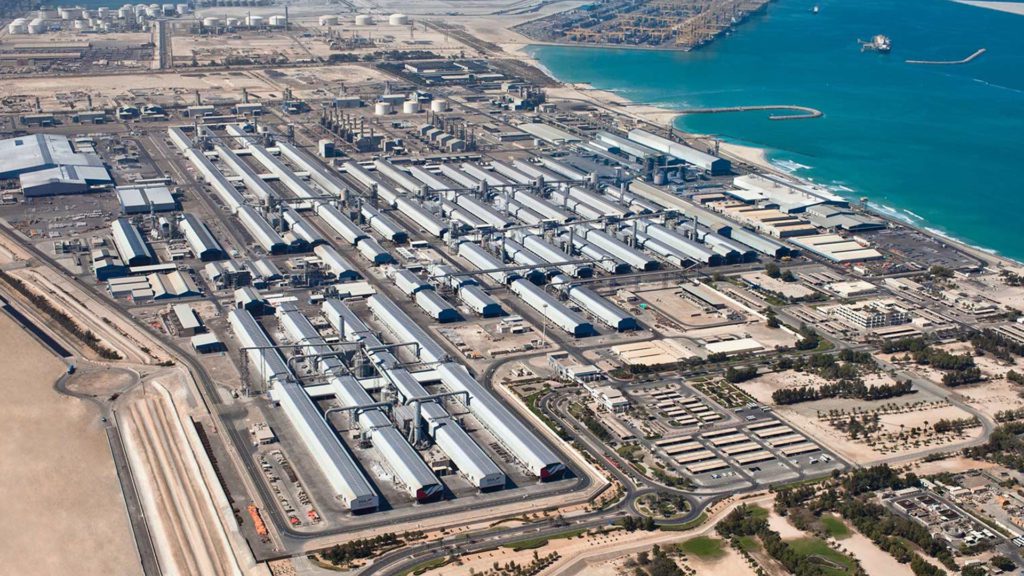
EGA’s Jebel Ali smelter. Credit: Emirates Global Aluminium
Two Middle Eastern aluminum producers were hit by Iranian attacks on Saturday, highlighting the challenge to the global economy as the war disrupts vital industries.
The region’s top producer, Emirates Global Aluminium, said it sustained “significant damage” at its site in Abu Dhabi, while Aluminium Bahrain said it was assessing the extent of damage to its facility.
The attacks are another blow to the region’s commodity industry, with producers mostly prevented from exporting by the effective closure of the Strait of Hormuz. In addition to the disruption to shipping, Iranian attacks have damaged key facilities, likely extending the time it will take for operations to return to normal when the war is over.
Aluminum prices, already rising before the conflict, have gained further as traders and buyers focus on the potential for tighter markets and shrinking global inventories. The Middle East accounts for around 9% of global supply and much of that is now blocked inside Hormuz. Higher commodity prices will weigh on global economies, according to Goldman Sachs Group.
EGA is still assessing damage from the attack on its Al Taweelah site located at the Khalifa Port industrial zone in the emirate of Abu Dhabi, the company said in a statement. It confirmed that several employees were injured, but declined to say whether operations at the facility had been suspended.
The Abu Dhabi media office earlier on Saturday said six people were injured in three fires caused by ballistic missile interception debris in the vicinity of the Kezad industrial zone. The strikes were part of a series of attacks by Iran on Gulf countries, even as the Trump administration pursued discussions around a potential ceasefire.
As the biggest non-energy industrial company in the UAE, EGA operates two smelters, one each in the emirates of Dubai and Abu Dhabi. The Al Taweelah site is halfway between the cities of Dubai and Abu Dhabi in the Khalifa Economic Zone along the Persian Gulf. The Dubai plant is in the Jebel Ali port and freezone area.
The Al Taweelah smelter produced 1.6 million tonnes of cast metal in 2025. The company had substantial metal stock offshore when Israel and the US began their war on Iran last month as well as in some overseas locations, according to the statement. It’s used that external product to help meet customer demand.
EGA has been a major international investor and is part of the UAE’s pledge to spend $1.4 trillion in the US over the next decade. The UAE has been the second-largest aluminum supplier to the US, well behind Canada, and is building the first new American smelter in decades in Oklahoma.
In the US, EGA also owns a recycling plant in Minnesota that’s allowed it to benefit from domestically produced metals selling at higher prices due to President Donald Trump’s tariffs.