Oman Suspends Operations at Key Arabian Sea Port After Drone Strike
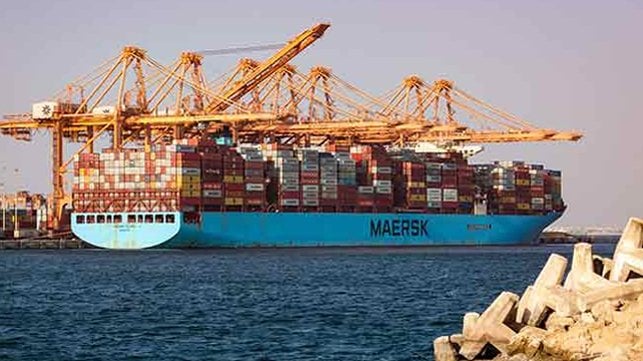
The Omani Port of Salalah, located on the Arabian Sea, came under attack on Saturday morning, March 29. The government’s official news agency condemned an Iranian attack, saying it was impinging on its sovereignty while noting that the port was providing a vital lifeline to the region.
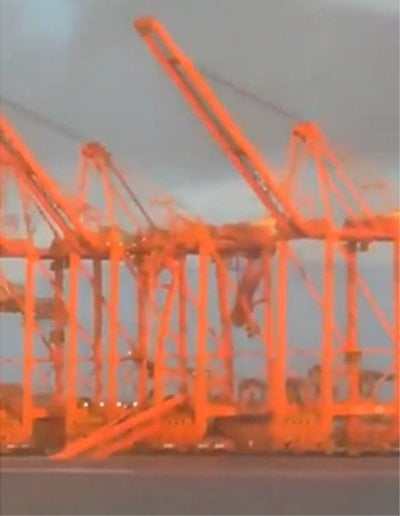
Two Iranian drones targeted the port, with videos showing one drone striking and damaging one of the large container cranes. There were no vessels at the berth, but the image shows the arms of the crane broken and hanging down, with a section apparently in the water after the attack.
The official statement said that one foreign expatriate worker had suffered moderate injuries. It confirmed the damage to one crane and said operations at the port were suspended while a damage assessment was underway.
Maersk issued a statement reporting that none of its vessels or cargo had been affected. It said Maersk crews are safe. Its current estimate is that port operations will be on hold for approximately 48 hours.
The Armed Forces of Iran claimed responsibility for the attack while asserting they were attacking a U.S. support ship. They highlighted that the attack had taken place at a distance of more than a thousand kilometers (more than 620 miles) from the Iranian coast.
Salalah, because of its location outside the Persian Gulf and away from the Strait of Hormuz, has emerged as a key regional port. In 2024, it handled over 3.3 million TEU as well as large volumes of dry bulk. In the first nine months of 2025, volumes had almost equaled all the prior year's volume, and since the outbreak of hostilities, it has provided a vital overland link to the Persian Gulf states. Salalah had been targeted by the Iranians on March 3 and also briefly stopped operations but resumed the following day.
The strikes on Oman appeared to be part of the larger, ongoing campaign against the Arab neighbors of Iran, which it asserts are aiding the United States. The UAE Ministry of Defense reported it intercepted on Saturday 20 ballistic missiles and 37 drones, while saying the total has risen to 398 ballistic missiles, 15 cruise missiles, and 1,872 drones launched by the Iranians toward the UAE since the start of the conflict. It said two members of the military, one civilian contractor for the military, and eight civilians have been killed, while 178 people were injured. Among the drone attacks were strikes at the Kuwait International Airport, with unconfirmed reports of new fire.
Saudi Arabia was also targeted, including possibly the most serious attack of the war against a U.S. base. The media is widely reporting that a dozen American servicemen were injured and that one or more refueling planes were damaged. U.S. Central Command has not commented on the attack, but did issue a statement denying Iranian claims that they had also caused mass casualties in a strike in Dubai.
UK and France Forming Multinational Effort for Strait of Hormuz
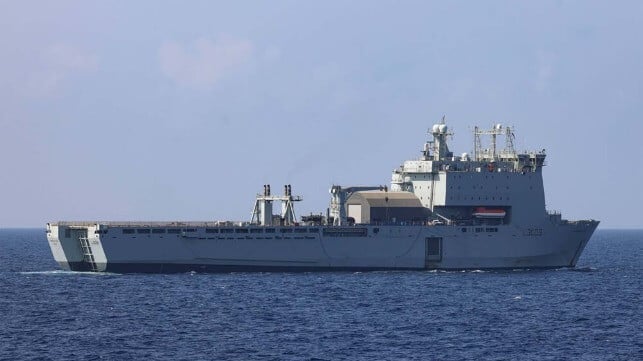
Additional details are coming out on the reported plan being led by the UK’s Royal Navy and France to develop a multinational effort to provide stability and reassurance to shipping in the Strait of Hormuz. The UK’s plan is, according to a report in The Times (London), well developed and has been shared with the Americans, while Reuters reports France will be conducting a multinational video conference this week with a broad group of 30 allies.
The efforts are proceeding despite the public criticisms of Donald Trump, who last week called the allies “cowards” and said NATO was a “paper tiger.” The Times (London) reports the UK’s chief of the defense staff, Air Chief Marshal Sir Richard Knighton, briefed France, Germany, Italy, the Netherlands, Japan, and Canada on Sunday, while the UK also sent a team of military planners to meet with U.S. Central Command in Florida.
The countries have repeatedly said they would not be involved in combat operations and, according to The Times, would only launch their effort once the hostilities subside. However, with Donald Trump asserting that talks are underway with Iran, the Europeans are reported to be moving forward with their plan.
The Iranians on Wednesday informed the UN Security Council that the Strait of Hormuz is open for “non-hostile vessels,” asserting that nations other than the U.S., Israel, and their allies are free to send their ships through the Strait. However, they must consult the Iranians and receive permission. Yesterday, reports said a UAE-managed container feeder ship was denied clearance and turned around. A Chinese-owned containership reportedly paid a large fee for safe passage.
The trickle of ships continues through the Strait. Thai officials confirmed that one of their tankers made the passage and assert they did not pay a fee. The Bangkok Post is quoting sources at the Ministry of Foreign Affairs who said the embassy in Muscat worked through the Omanis and that they expect a second vessel to also be granted safe passage. India also reported it was able to arrange safe passage for several of its tankers and gas carriers.
AI maritime intelligence firm Windward, however, reports just four vessels went through the Strait on Tuesday with their AIS signal on, one outbound and three inbound. They were using the channel near Iran, while it says two bulkers also made the transit hugging the Omani coast without broadcasting an AIS signal. Windward reports that AIS-transmitting foreign vessel activity in the Arabian Gulf totaled 592 vessels, including 325 cargo vessels and 267 tankers.
The UK effort would initially focus on clearing mines from the Strait. While analysts have questioned whether the Strait is mined, British intelligence, The Times writes, believes Iran mined portions of the Strait. It says the UK has “world-leading capabilities” to deal with the mines and is considering adapting RFA Cardigan Bay or another ship of the class as a mothership to host the mine clearance operations. It points out that the UK already has Remus reconnaissance drones in the region, as well as other deployable autonomous minehunting systems.
It says the Royal Navy has not ruled out deploying its Type 45 destroyer to the Strait. They speculate it would be joined by French frigates and U.S. Arleigh Burke guided-missile destroyers.
The British believe some form of physical presence will be required to rebuild confidence for global shipping. Trump, in his social media posting, had said it would be a “simple military maneuver” to reopen the Strait with “very little danger.” British officials, according to The Times, however, pointed out that they shot down 14 attack drones on Monday night in Iraq, the highest total in a single night. They said that since the conclusion of the Eid holiday, the pace of attacks had resumed
Indian Navy is Quietly Guiding the Country’s Ships Through Strait of Hormuz
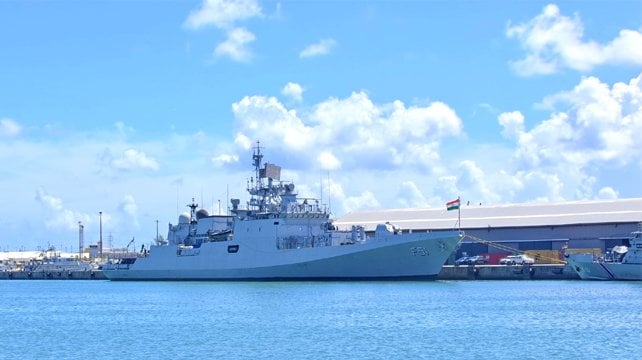
Indian government officials confirmed in media reports that the country continues to quietly guide its ships out of the Persian Gulf. The reports indicate that after contact with the Iranians to ensure safe passage, the government launched “Operation Urja Suraksha” to guide and protect critical shipping out of the region.
The IANS News Service detailed the operation with confidential information from government sources. According to the report, the operation is underway with the “highest degree of caution and minimal publicity” to ensure the safe evacuation of the Indian-flagged ships.
India’s Shipping Ministry had said there were 22 Indian-flagged vessels with over 600 seafarers in the western Persian Gulf. There were also three ships with an additional 76 Indian seafarers east of the Strait of Hormuz. According to the latest report, India identified 20 of the vessels as high-priority as they were carrying LNG, LPG, and crude oil.
More than five Indian warships have been dispatched, and they are leading the first element of the support operation. While none of the warships have entered the Strait of Hormuz, they remain above the Gulf of Oman near the terminus and are in constant communication with the merchant ships.
After securing permission from Iran for the ships to transit the Strait, the warships are providing guidance on the route. They are reported to be providing instruction as well as the procedures the ships should follow. This is considered to be critical as Iran is forcing the ships to take a different route from the Traffic Separation Scheme and closer to its coastline. Ships are being individually guided with precise instructions.
Once a ship clears the Strait of Hormuz, it is met by a series of destroyers and frigates. The support extends through the Gulf of Oman with additional warships and logistics in place.
IANS reported that two additional vessels loaded with approximately 92,000 tons of LPG were due to reach Indian ports on March 25 and 26. This comes about 10 days after the first vessels, LPG carriers Shivalik and Nanda Devi, as well as crude oil tanker Jag Laadki, cleared the Gulf and reached Indian ports with badly needed cargoes.
The Ministry of Ports, Shipping and Waterways, along with the Directorate of Naval Operations, are reported to be closely coordinating in the effort.
Bahrain Imposes Maritime Curfew in Response to Iranian Attacks
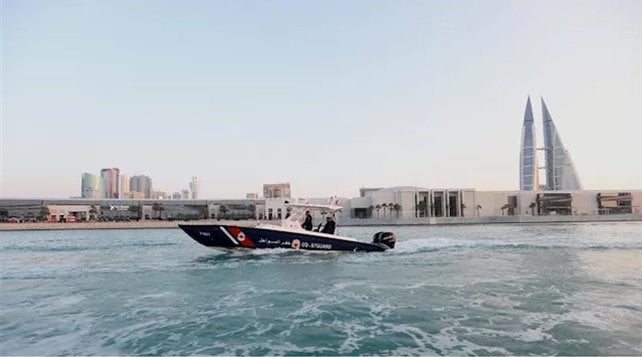
The Kingdom of Bahrain announced on Sunday, March 29, that it is imposing a nightly curfew on all maritime activities. The Ministry of the Interior said it was in the interest of seafarers amid the blatant Iranian aggression.
An island nation in the western Persian Gulf, Bahrain is strategically located between Qatar and Saudi Arabia. Before the start of hostilities, the U.S. maintained a naval base in the Kingdom, including the homeport for the U.S. Coast Guard vessels assigned to the region. It is also home to the command for the joint military forces in the region.
The Ministry said the ban was starting immediately and would run until further notice. It is nightly from 1800 to 0400 and includes all vessels. They said it extends to the maritime movement of seafarers using fishing and leisure vessels. It is an extension of the previous rules regulating maritime movement.
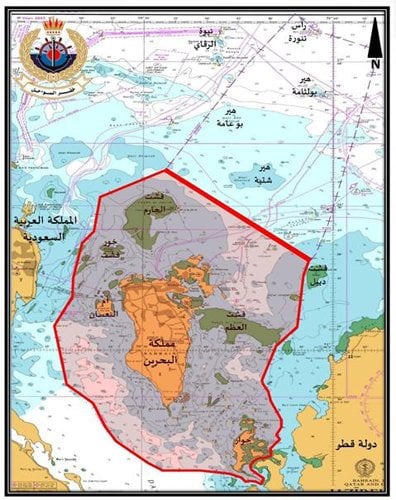
Bahrain's exclusion zone for the nightly curfew (Ministry of the Interior)
It is urging all seafarers to comply with the maritime ban. They are being instructed to avoid approaching the coast of Bahrain. It said the measure was to ensure the safety of seafarers and avoid legal liability. It said it would enhance maritime safety and raise preparedness.
Iran has reportedly increased its attacks against neighboring countries that it says support the United States and Israel. The Bahrain Defence Force updated statistics on March 29, reporting that air defenses have intercepted and destroyed 175 ballistic missiles and 391 drones targeting their country. This is up from a report of 124 missiles and 203 drones on March 15 and a report of 153 missiles and 301 drones on March 24.
On Sunday, Iran’s attacks included the operations of Aluminium Bahrain and Emirates Global Aluminium. According to Al Jazeera, Aluminium Bahrain reported that two employees were injured in the attack on its facility, while the UAE’s Emirates Global Aluminium said one of its sites in Abu Dhabi suffered significant damage, and six people were injured.
Elsewhere, Saudi Arabia’s Ministry of Defense said on Sunday morning that it had intercepted 10 drones. The Kuwaiti National Guard said it shot down four additional drones. This comes after Oman and Saturday reported that one of the large cranes used to service containerships at the Port of Salalah had been damaged. Operations at the port were suspended while damage assessments were underway.
Mideast aluminum makers suffer damage from Iranian attacks
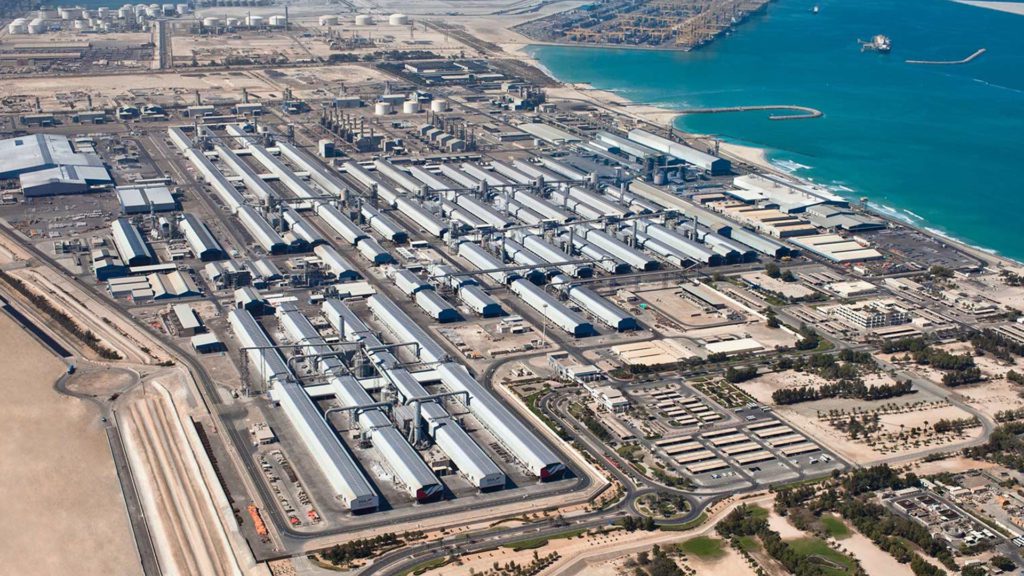
Two Middle Eastern aluminum producers were hit by Iranian attacks on Saturday, highlighting the challenge to the global economy as the war disrupts vital industries.

The region’s top producer, Emirates Global Aluminium, said it sustained “significant damage” at its site in Abu Dhabi, while Aluminium Bahrain said it was assessing the extent of damage to its facility.
The attacks are another blow to the region’s commodity industry, with producers mostly prevented from exporting by the effective closure of the Strait of Hormuz. In addition to the disruption to shipping, Iranian attacks have damaged key facilities, likely extending the time it will take for operations to return to normal when the war is over.
Aluminum prices, already rising before the conflict, have gained further as traders and buyers focus on the potential for tighter markets and shrinking global inventories. The Middle East accounts for around 9% of global supply and much of that is now blocked inside Hormuz. Higher commodity prices will weigh on global economies, according to Goldman Sachs Group.
EGA is still assessing damage from the attack on its Al Taweelah site located at the Khalifa Port industrial zone in the emirate of Abu Dhabi, the company said in a statement. It confirmed that several employees were injured, but declined to say whether operations at the facility had been suspended.
The Abu Dhabi media office earlier on Saturday said six people were injured in three fires caused by ballistic missile interception debris in the vicinity of the Kezad industrial zone. The strikes were part of a series of attacks by Iran on Gulf countries, even as the Trump administration pursued discussions around a potential ceasefire.
As the biggest non-energy industrial company in the UAE, EGA operates two smelters, one each in the emirates of Dubai and Abu Dhabi. The Al Taweelah site is halfway between the cities of Dubai and Abu Dhabi in the Khalifa Economic Zone along the Persian Gulf. The Dubai plant is in the Jebel Ali port and freezone area.
The Al Taweelah smelter produced 1.6 million tonnes of cast metal in 2025. The company had substantial metal stock offshore when Israel and the US began their war on Iran last month as well as in some overseas locations, according to the statement. It’s used that external product to help meet customer demand.
EGA has been a major international investor and is part of the UAE’s pledge to spend $1.4 trillion in the US over the next decade. The UAE has been the second-largest aluminum supplier to the US, well behind Canada, and is building the first new American smelter in decades in Oklahoma.
In the US, EGA also owns a recycling plant in Minnesota that’s allowed it to benefit from domestically produced metals selling at higher prices due to President Donald Trump’s tariffs.
(By Anthony Di Paola and Sara Gharaibeh)

No comments:
Post a Comment