Tuesday, March 31, 2026

Trump throws Truth Social tantrum as White House ballroom makeover forced to stop

David Edwards
March 31, 2026 
RAW STORY


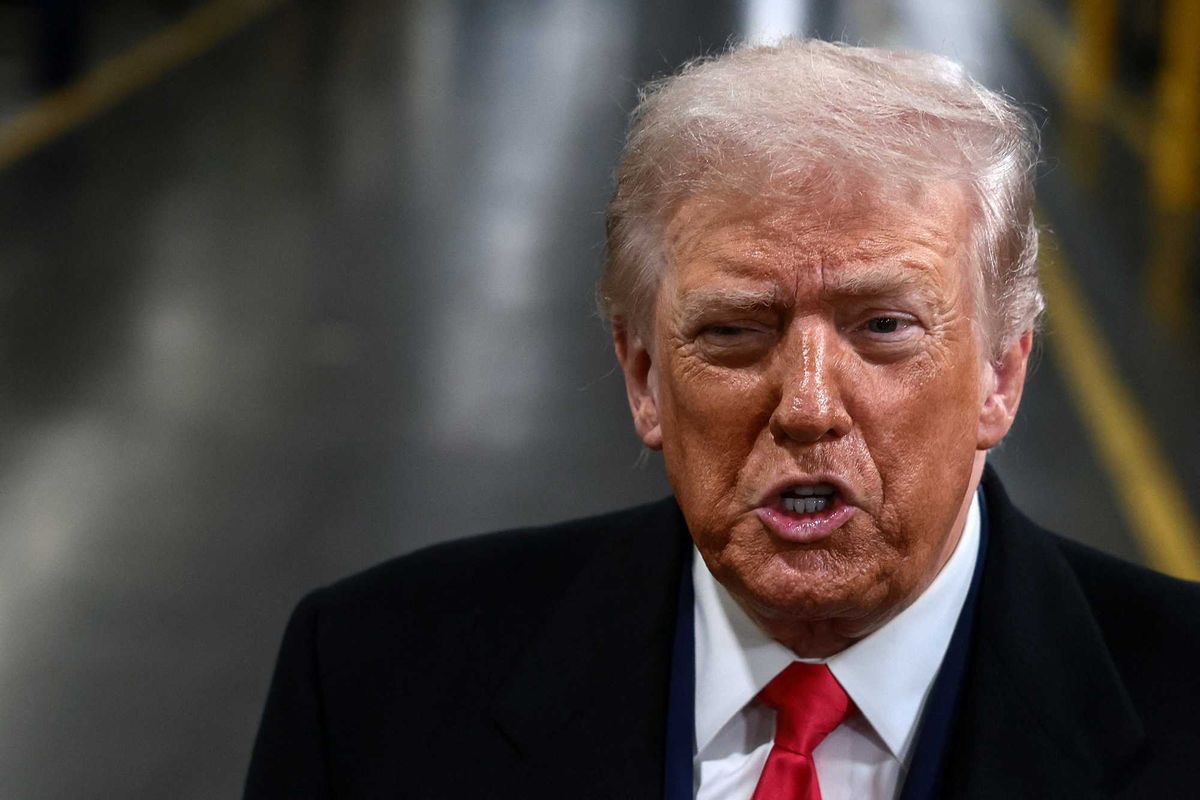
President Donald Trump visits a Ford production center in Dearborn, Michigan on Jan. 13, 2026. REUTERS/Evelyn Hockstein

President Donald Trump lashed out at the National Trust after it successfully sued for a preliminary injunction that halted construction of his $400 million White House ballroom.

"The National Trust for Historic Preservation sues me for a Ballroom that is under budget, ahead of schedule, being built at no cost to the Taxpayer, and will be the finest Building of its kind anywhere in the World," the president complained in a Truth Social post on Tuesday. "I then get sued by them over the renovation of the dilapidated and structurally unsound former Kennedy Center, now, The Trump Kennedy Center... where all I am doing is fixing, cleaning, running, and 'sprucing up' a terribly maintained, for many years, Building, but a Building of potentially great importance."

Trump went on to complain that the "Radical Left Group of Lunatics" was not suing Fed Chairman Jerome Powell for restoring the Federal Reserve.

"Or, have they sued on Governor Gavin Newscum's 'RAILROAD TO NOWHERE' in California that is BILLIONS over Budget and, probably, will never open or be used," he ranted. "So, the White House Ballroom, and The Trump Kennedy Center, which are under budget, ahead of schedule, and will be among the most magnificent Buildings of their kind anywhere in the World, gets sued by a group that was cut off by Government years ago, but all of the many DISASTERS in our Country are left alone to die. Doesn't make much sense, does it?"


'He deserves to pay a price': NYT editors appalled as Trump pardon spree unleashes mayhem

Nicole Charky-Chami
March 31, 2026 
RAW STORY


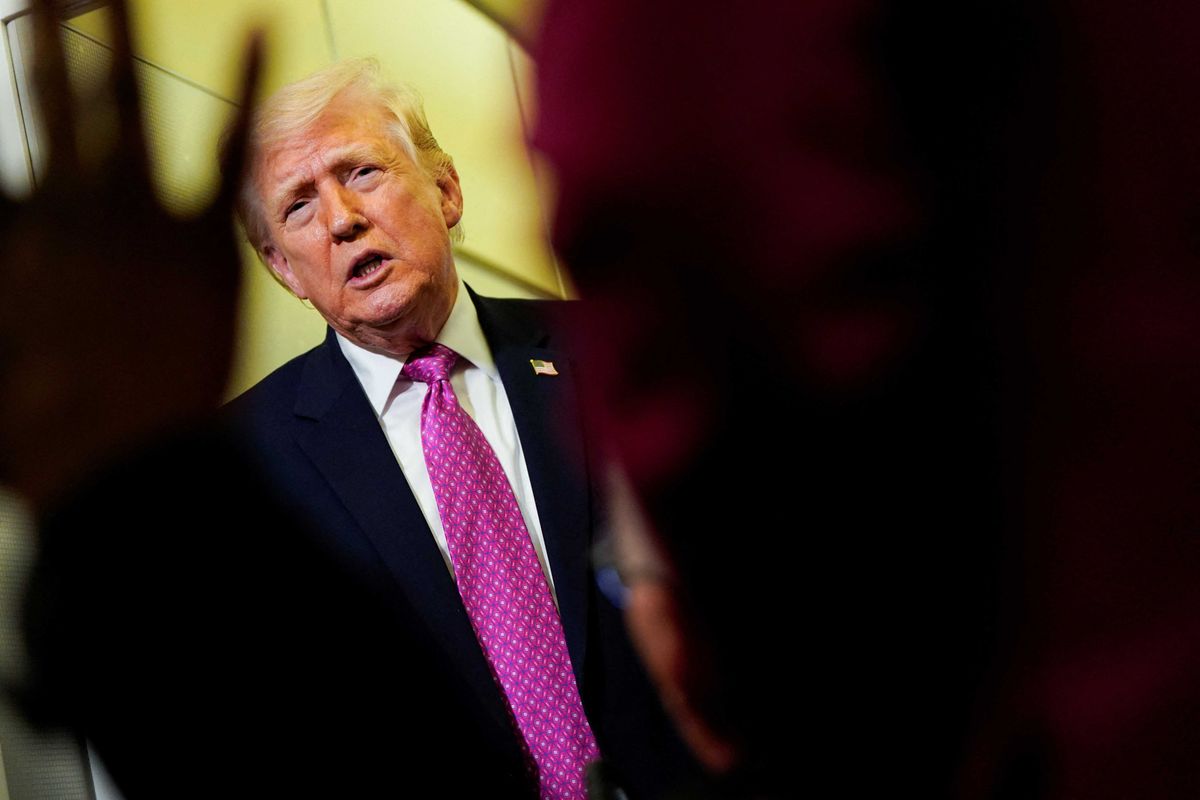
President Donald Trump talks to members of the media aboard Air Force One en route to Joint Base Andrews, Maryland, on March 29, 2026. REUTERS/Elizabeth Frantz


The New York Times editorial board had a damning message on Tuesday for President Donald Trump and his decision to pardon about 1,500 Jan. 6 rioters who have since committed other crimes.

Unlike past presidents who have waited until their final days in office to issue potentially controversial pardons, Trump has done the opposite. And in doing so, he has created a major problem, the Times editorial board argued.

"President Trump has abandoned this approach. His self-serving pardons are so numerous that public attention cannot keep up with them. It is a version of the strategy that his former adviser Steve Bannon has described as 'flood the zone': Do so much so fast that people cannot follow the consequences," The Times editorial board explained.

Those repercussions have wreaked havoc on communities.

"The American public deserves to understand the mayhem that the Jan. 6 pardons have unleashed," The Times editorial board wrote. "Among the 12 serious recidivists whom we are aware of, four were in jail or prison at the time of the pardon, and they quickly went on to commit more crimes."

The group named and described multiple people associated with the riots at the nation's Capitol, detailing the crimes they committed both after their pardons and prior to them.

It warned Trump and Republicans to stay ready for midterms, when Americans will ultimately have the final response.

"How can the nation hold Mr. Trump accountable for the lawlessness that he has made possible? The only answer is public opinion and its most tangible manifestation: election results," The Times editorial board wrote.

"In this year’s midterms, he and the Republican Party he leads deserve to pay a political price for the pardons. Mr. Trump continues to lionize a violent attack on Congress carried out in his name — an attack that included threats to kill the vice president of the United States and physical assaults against police officers guarding the Capitol. In the aftermath of the attacks, one officer suffered a series of strokes and died, and four other officers died by suicide."
Trump's latest rant spells 'beginning of the end of the US': conservative commentator

Alexander Willis
March 31, 2026 
RAW STORY


Protesters kick a ball covered with a mask representing U.S. President Donald Trump while playing soccer matches on a major urban highway to protest against the reopening of Azteca Stadium, officially renamed Banorte Stadium, on the day of a friendly match between the national teams of Mexico and Portugal held to mark the stadium’s inauguration, as Mexico prepares for the 2026 FIFA World Cup co-hosted by the United States, Canada and Mexico, in Mexico City, Mexico, March 28, 2026.
REUTERS/Luis Cortes


A prominent conservative journalist and commentator was taken aback by President Donald Trump’s latest rant Tuesday morning, going as far as to say that the president’s remarks marked “the beginning of the end of the U.S. empire.”

Earlier on Tuesday, Trump erupted at the United Kingdom over its refusal to join the United States in its war against Iran. Writing on social media, Trump told the United Kingdom to “build up some delayed courage” and “take” control of the Strait of Hormuz, a critical shipping route where Iran has restricted access to U.S.-aligned vessels, and that the United States has been unable to re-open by itself.

Saagar Enjeti, a conservative journalist, commentator and podcast host, said Trump’s rant marked a major turning point for the United States.

“This unironically then is the beginning of the end of the US empire,” Saagar wrote Tuesday in a social media post on X to their more than 514,000 followers. “Militarily unable to collapse the Iranian regime from the air, sparking a global energy crisis for critical US allies and then telling them to go and fix the crisis we created.”

The U.S. war against Iran has reportedly sparked panic within the Trump administration as oil prices continue to surge and the administration’s war objectives appear increasingly out of reach.

While the Trump administration had initially sought to topple the Iranian government and prevent Iran from ever acquiring a nuclear weapon, achieving such goals has gone on to become “unlikely,” according to U.S. and Israeli officials who spoke with The Washington Post, with re-opening the Strait of Hormuz – which was open to U.S.-aligned vessels prior to the war – emerging as the war’s new “paramount objective.”
Trump has reportedly moved to consider ending the war without re-opening the Strait of Hormuz, administration officials revealed, speaking on the condition of anonymity.


Trump admin has crossed the 'tipping point' where regimes often fail: expert

Robert Davis
March 30, 2026
RAW STORY


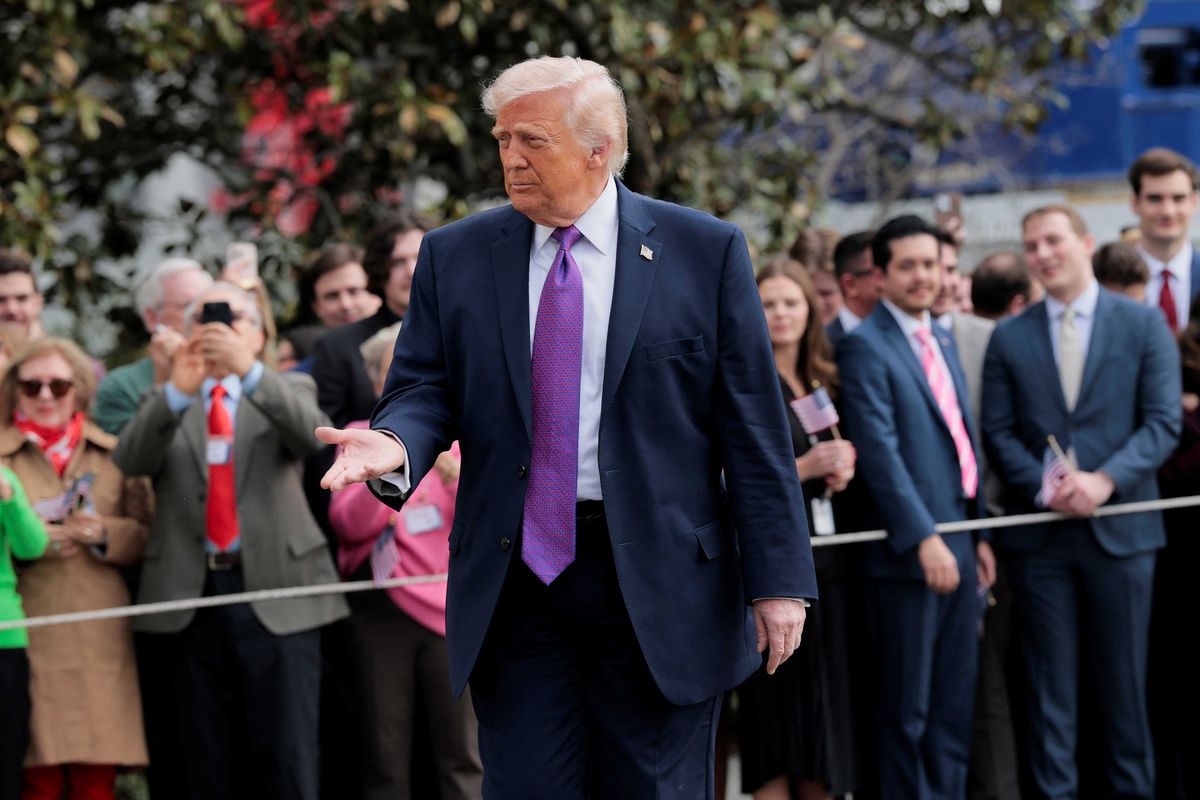
U.S. President Donald Trump walks as he heads to Marine One to travel to Ohio and Kentucky, from the White House in Washington, D.C., U.S., March 11, 2026. REUTERS/Brian Snyder

President Donald Trump's administration just crossed a "tipping point" where other authoritarian regimes have failed, according to one expert.

Over the weekend, more than eight million people participated in the nationwide "No Kings" protest, one of the largest public demonstrations in U.S. history. The total number of demonstrators who attended the protests represents about 2.5% of the nation's population, which signaled to David Rothkopf, the former editor of Foreign Policy Magazine, that the Trump administration has reached the point of no return.

Rothkopf discussed the impact of the "No Kings" protest on a new episode of "The Daily Beast Podcast" with host Joanna Coles.

"Political scientists say once you get about 2.5% of the population out into the streets, that's a tipping point," Rothkopf said. "That's a sign that regimes like authoritarian regimes can start to fail. That's where we are. There were 3000 demonstrations, demonstrations on every continent."

Trump has faced significant criticism during his second term. Key scandals include allegations of insider trading involving Defense Secretary Pete Hegseth related to investments in defense contractors, questions about the Department of Justice's mishandling of the Jeffrey Epstein files, and accusations that the FBI, under Director Kash Patel, is purchasing Americans' location data without proper oversight.

Additionally, the administration has faced criticism over its coordination of military strikes against Iran, alleged corruption involving federal contractors, selective enforcement of immigration laws, and concerns about conflicts of interest among appointed officials regarding federal contracts and policy decisions.


'Blindsided' Kristi Noem asks for 'prayers' after husband's cross-dressing scandal

David Edwards
March 31, 2026 
RAW STORY


Kristi Noem speaks during a roundtable on antifa at the White House. REUTERS/Evelyn Hockstein


Former Homeland Security Secretary Kristi Noem was reportedly "devastated" to learn that her husband, Bryon Noem, had an alleged fetish for cross-dressing.

A spokesperson responded to the New York Post after the Daily Mail reported that the former Trump official's husband was obsessed with a "bimbofication" fetish scene.

"Ms. Noem is devastated. The family was blindsided by this, and they ask for privacy and prayers at the time," her representative told the Post.

The Daily Mail's investigation uncovered "hundreds" of messages between Byron Noem and three women in the fetish scene. Photos obtained by the Mail showed him dressed as a woman with fake breasts.


Byron Noem did not deny the allegations of cross-dressing or sharing explicit messages in a conversation with the Mail. But he did deny sharing "indiscreet comments about his wife" that could have endangered national security by exposing her to blackmail threats.

"I deny the second part of that," he said.

Kristi Noem has allegedly had a years-long affair with her adviser, Corey Lewandowski, while married.


WAIT, WHAT?!

Justice Kagan 'signaled' to other states how to get around 8-1 ruling on anti-gay therapy

SCOTUS SUPPORTS CONVERSION THERAPY

Tom Boggioni
March 31, 2026 
RAW ST0RY


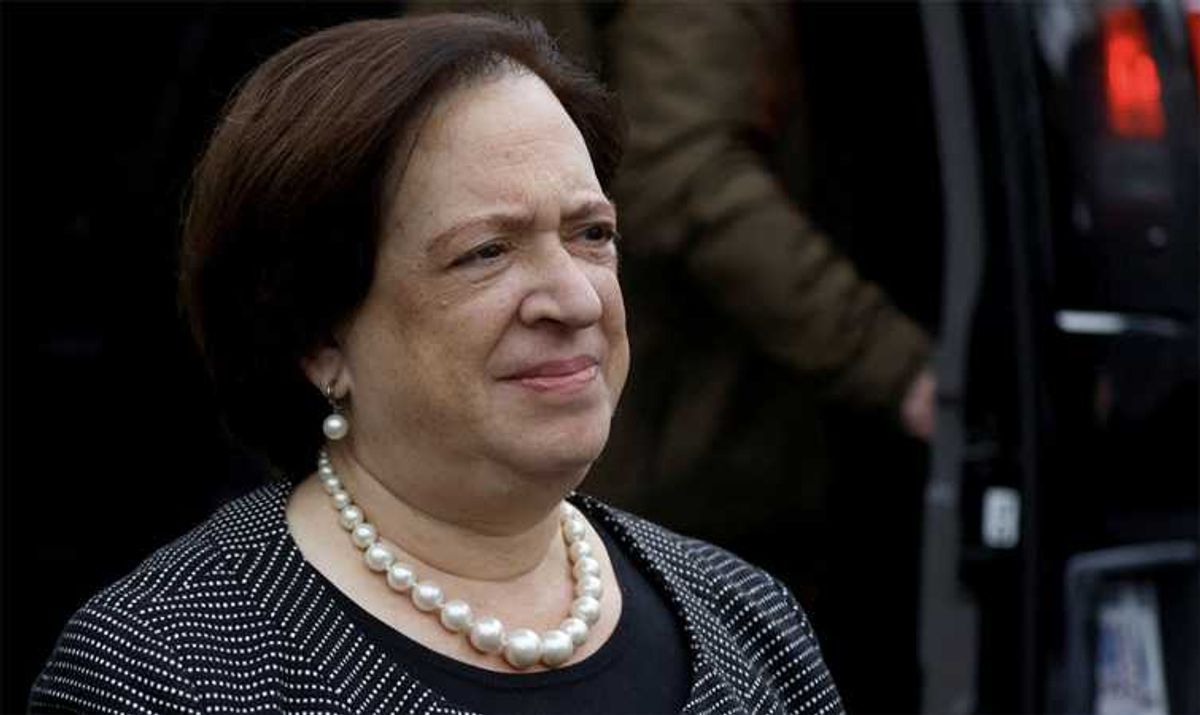
Supreme Court Justice Elena Kagan (Photo by Evelyn Hockstein for Reuters)

Moments after the Supreme Court sided with a Christian counselor on Tuesday in her challenge to a Colorado law banning attempts to change a minor’s sexual orientation or gender identity, MS NOW’s Lisa Rubin claimed Associate Justice Elena Kagan provided a road map for other states to avoid a similar fate.

In an 8-1 decision, with Justice Ketanji Brown Jackson providing the only dissent, the court ruled sided with Kaley Chiles and agreed Colorado’s law regulated speech, which led two of the liberal justices to concur.

However, as Rubin pointed out, Justice Kagan in her concurrence, provided guidance on how to write or rewrite similar laws that have a better chance of surviving a challenge.

“For anyone who is shocked at their 8-1 ruling, I suggest they take a look at Justice Kagan’s concurrence that I just had an opportunity to read,” Rubin told host Anna Cabrera.

"Justice Kagan says, if this were viewpoint neutral and instead just regulated a subject matter of speech that is forbidden, for example, in doctor's offices, that would be a much tougher call,” Rubin explained. "Justice Kagan may be signaling to other states that have a concern about things like conversion therapy.”

“There is a way potentially to do this that wouldn't trigger this 8-1 divide that you see among this court with offense here is that you are telling people of one viewpoint that they can't express it while expressly endorsing the other viewpoint as permissible within the space of talk therapy,” she elaborated. “For example, the state had argued that this form of therapy, conversion therapy, was conduct. It was a form of treatment versus being about free speech. Clearly, the court didn't buy that argument.”


Spain condemns Israeli death penalty law as discriminatory against Palestinians

Spain condemns Israeli death penalty law as discriminatory against Palestinians
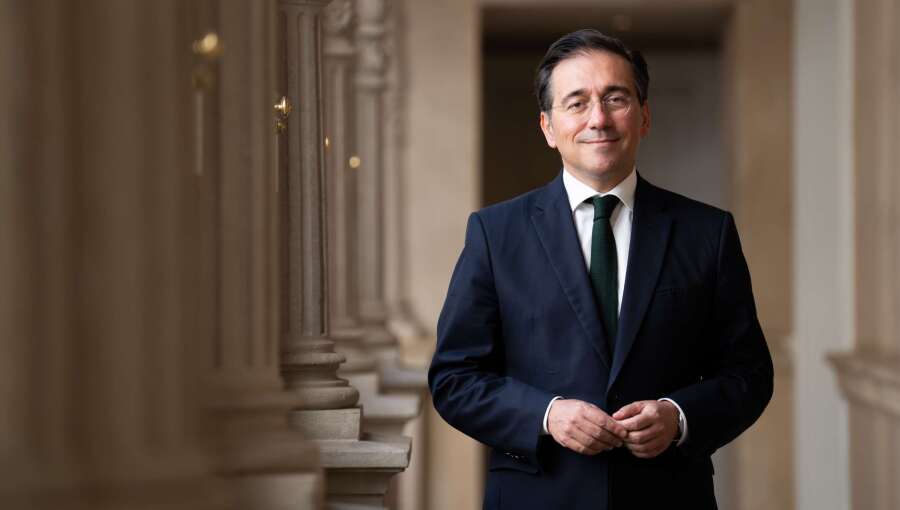
José Manuel Albares Bueno. / CC: MAUC (Saioa Hermosa Aguirre​)​​Facebook
By bnm Gulf bureau March 31, 2026

Spain has condemned a law passed by the Israeli parliament that introduces the death penalty in Israel and the occupied Palestinian territories, calling it "draconian" and discriminatory, the Spanish foreign ministry said in a statement on March 31.

Madrid said the law "enshrines legal inequality between people on an issue that directly affects the fundamental right to life" and described the discrimination against the Palestinian population as being "of the utmost gravity."

The Spanish government said the legislation expands the number of offences punishable by death and removes basic guarantees of due process.

Spain also objected to what it called the "illegal exercise of Israeli jurisdiction" in occupied Palestinian territory, describing the application of capital punishment there as "particularly serious."

"Spain reiterates its firm rejection of the death penalty in all cases and circumstances, considering it a cruel, inhuman and degrading punishment that has no proven deterrent effect and causes irreparable harm in the event of a miscarriage of justice," the statement said.

The condemnation adds to growing friction between Madrid and the Israeli government. Spain's Prime Minister Pedro Sanchez has emerged as one of Europe's most vocal critics of Israeli military operations, having publicly refused US access to two Spanish military bases for strikes on Iran and describing the war as illegal.

US Secretary of State Marco Rubio expressed frustration at that decision, with some in Washington calling for sanctions against Spain.

Spain recognised the State of Palestine in May 2024 alongside Ireland and Norway, a move that drew sharp criticism from Israel at the time.


Italy secretly blocked US from using Sicily base for Iran strikes

Italy secretly blocked US from using Sicily base for Iran strikes
Giorgia Meloni 2023 / Italian government.Facebook


By bnm Gulf bureau March 31, 2026

Italy refused to allow the United States to use the Sigonella air base in Sicily for strikes on Iran, but attempted to keep the decision secret to avoid a diplomatic rift with Washington, Corriere della Sera reported on March 31.

The Italian defence minister denied the request after Rome learned that two US F-15 fighter jets planned to use the base while already airborne on a combat mission against Iran, La Sicilia reported.

Washington had not sought prior permission or consulted Italian military leadership, instead informing Rome only after the aircraft were in flight.

"No one requested authorisation or consulted with Italian military leadership. The plan was communicated to Rome when the aircraft were already in flight," Corriere della Sera reported, noting that the US had intended to use the base on a notification-only basis.

The use of Italian military bases for attacks on other countries contravenes bilateral agreements between Rome and Washington, the newspaper said. Sigonella currently hosts US P-8A Poseidon patrol aircraft, MQ-4C Triton and RQ-4D Phoenix drones operating under NATO tasks.

Italian Prime Minister Giorgia Meloni reportedly sought to keep the refusal quiet to avoid damaging her relationship with the Trump administration. The issue was politically sensitive: almost 25,000 people marched in Rome under the "No Kings" banner two days earlier in protests against the war in Iran, with similar rallies held in London, Paris and Madrid.

Italy is the second European NATO ally to deny the US use of its bases for the Iran war. Spain's Prime Minister Pedro Sanchez publicly refused access to two Spanish bases, saying his country would not participate in what he called an illegal war.

US Secretary of State Marco Rubio expressed frustration at Madrid's decision, with some in Washington calling for sanctions against Spain.

The growing European resistance to the war highlights the diplomatic strain the conflict is placing on the transatlantic alliance, with virtually all major US allies in Europe declining to provide direct military support for operations against Iran.

THE GRIFT

US Polar LNG eyes equipment of sanctioned Russian Arctic LNG 2 project

US Polar LNG eyes equipment of sanctioned Russian Arctic LNG 2 project
/ NovatekFacebook
By bne IntelliNews March 31, 2026

US-based Polar LNG is seeking approval to purchase discounted equipment from sanctioned Russia’s Arctic LNG 2 project, owned by gas major Novatek (NVTK), to support an LNG plant in Alaska, according to Reuters citing company CEO Joel Riddle.

As followed by bne IntelliNews, Russia remained the fourth-largest supplier of natural gas to the EU in 2025, exporting nearly 38bn cubic metres despite ongoing efforts by the bloc to reduce energy reliance on Moscow following its full-scale invasion of Ukraine. 

For LNG in particular, the EU remained the top buyer of Russian Arctic LNG operated by Novatek despite the 2027 phase-out pledge.

Reuters now reports that Polar LNG aims to acquire equipment, including a partially completed liquefaction train from Arctic LNG 2, a project under US sanctions imposed by both the Joe Biden and the Donald Trump administrations. 

The company is reportedly seeking approval from the Office of Foreign Assets Control (OFAC), while the US Treasury declined to comment, and Novatek did not respond to requests.

Riddle said the company plans to make a final investment decision by mid-2027 and begin production in 2029 or 2030. He noted that the project will target exports to Japan, South Korea and other markets, and that the equipment is “Arctic tested”, making it suitable for Alaska’s North Slope conditions.

The project’s first phase is expected to require $8bn-9bn in investment, with potential expansion through additional phases of similar scale. Polar LNG intends to finance more than half of the project with US capital, while remaining open to investment from international partners.

Reuters also reiterated previous reports that investor Gentry Beach, with ties to Trump, is involved in the project. The company reportedly also plans to acquire six icebreakers and coordinate with the broader Alaska LNG initiative supported by the US administration.

IN COMPETITION WITH CANADAS WEST COAST LNG TERMINALS

Massive anti-Trump protests mark third 'No Kings' day across US

Huge crowds protested Saturday against US President Donald Trump's actions and the war in Iran in "No Kings" rallies across the US and in Europe. Minnesota took centre stage, with thousands of people standing shoulder-to-shoulder to celebrate resistance to Trump's aggressive immigration enforcement.


29/03/2026 - 
By: FRANCE 24
Video by: Wassim CORNET

A "No Kings" march in Los Angeles, California, on March 28, 2026. 
© Ringo Chiu, Reuters
01:46


Huge crowds of protesters rallied across the United States on Saturday against President Donald Trump, venting their fury over what they see as his authoritarian style of governing, his hardline immigration policies and the war with Iran.

Organizers said "at least 8 million people gathered today at more than 3,300 events across all 50 states", from big cities and small towns. US authorities provided no national crowd estimate.

It was the third time in less than a year that Americans have taken to the streets as part of a grassroots movement called "No Kings," the most vocal and visual conduit for opposition to Trump since he began his second term in January 2025.

In New York, America's most populous city, tens of thousands of demonstrators rallied, including Oscar-winning actor Robert De Niro, a frequent Trump critic, who called the president "an existential threat to our freedoms and security".


© France 24
14:01


Protests unfolded from Atlanta to San Diego, with Alaskans joining the mix later in the day.

"No country can govern without the consent of the people," 36-year-old military veteran Marc McCaughey told AFP in Atlanta, where thousands turned out.

"We're out here because we feel that the Constitution is under threat in a multitude of different ways. Things aren't normal. They aren't okay."

In the Michigan town of West Bloomfield, near Detroit, people braved below-freezing temperatures to protest.

And in the US capital Washington, thousands of marchers – some carrying banners that blared "Trump Must Go Now!" and "Fight Fascism" – flocked to the National Mall.

The “No Kings” protest in Los Angeles on October 18, 2025. 
© Frederic J. Brown, AFP
03:34


"He keeps lying and lying and lying and lying, and no one says anything. So it's a terrible situation we're in," 67-year-old retiree Robert Pavosevich told AFP.

Trump himself was in Florida for the weekend.

The anti-Trump mood has spilled beyond US borders, with rallies Saturday in European cities including Paris, Amsterdam, Madrid and Rome, where 20,000 people marched under a heavy police presence.

A woman dressed as the Statue of Liberty takes part in a "No Kings" protest against US President Donald Trump in Paris on March 28, 2026. © Aurelien Morissard, AP

'Dragged us deeper into war'

The first "No Kings" nationwide protest day came last June on Trump's 79th birthday and coincided with a military parade he organized in Washington. Several million people turned out, from New York to San Francisco.

The second such protest, in October, drew an estimated seven million protesters, according to organizers, who said Saturday's events saw one million more participants and 600 additional demonstrations.

Just as Trump is worshipped by many in his "Make America Great Again" movement, he is disliked with equal passion on the other side of America's wide political chasm.

Trump's approval rating has sunk below 40 percent and midterm elections loom in November, with his Republican Party at risk of losing control of both chambers of Congress.

Foes bemoan his penchant for ruling by executive decree, his use of the Justice Department to prosecute opponents, his apparent obsession with fossil fuels and climate change denial – and his taste for flexing US military power after campaigning as a man of peace.

"Since the last time we marched, this administration has dragged us deeper into war," said Naveed Shah of Common Defense, a veterans' association connected to the "No Kings" movement.

"At home, we've watched citizens killed in the streets by militarised forces. We've seen families torn apart and immigrant communities targeted. All of it done in the name of one man trying to rule like a king."

Springsteen in Minnesota


While organizers said rallies were staged across the country, from major cities to suburbs and rural areas – and even in the Alaskan town of Kotzebue, above the Arctic circle – a key focus point was the northern state of Minnesota.

This winter, the twin cities of Minneapolis and St. Paul became ground zero for the national debate over Trump's violent immigration crackdown.

Leftist US politician Bernie Sanders addressed the Minnesota rally, telling the crowd: "We will never accept a president who is a pathological liar, a kleptocrat and a narcissist who is undermining the Constitution of the United States and the rule of law every day."

Legendary rocker Bruce Springsteen, a fierce critic of the president, performed his song "Streets of Minneapolis" in St. Paul, the capital of the state, where tens of thousands gathered.

Springsteen wrote and recorded the protest ballad in just 24 hours in memory of Renee Good and Alex Pretti, two US citizens shot dead by federal agents during January protests against Trump's immigration crackdown.

"Their bravery, their sacrifice and their names will not be forgotten," Springsteen said before breaking into song.

(FRANCE 24 with AFP)
How Myanmar Can Be Liberated From Poverty And Persecution: Back To The Future, Moving Onward Through Unity (Part IV) – OpEd

March 31, 2026 
By Nicholas Kong


March 30, 2026, may prove to be a defining moment in Myanmar’s modern history.

On that day, coup leader Min Aung Hlaing formally relinquished his position as Commander-in-Chief while assuming the vice presidency—an outcome not of reform, but of design. It was the final step in a long-calculated transition: repackaging himself from general to president, fulfilling the very ambition that precipitated the 2021 coup.1

Yet, paradoxically, the same day marked the emergence of something far more consequential—the consolidation of resistance forces into a unified political and strategic alliance: the Steering Council for the Emergence of a Federal Democratic Union (SCEF).2

If the junta’s move represents continuity of authoritarianism under a civilian mask, SCEF represents the long-awaited antidote: unity.

A Cycle Engineered, Not Accidental


Myanmar’s condition is not a historical accident. Since the 1962 coup, the country has been trapped in a self-reinforcing cycle of military domination, civil conflict, economic mismanagement, and repression.

From General Ne Win’s “Burmese Way to Socialism,” through successive military juntas, to the façade of quasi-civilian rule after 2010, each phase preserved the same core reality: the armed forces remained the ultimate arbiter of power.

The 2021 coup was not an anomaly—it was a system defending itself.

Even after suffering major battlefield losses since 2023—losing control of large portions of the country—the military adapted. Backed by external support, particularly from China, it escalated airstrikes against civilians while pursuing a parallel strategy: manufacturing legitimacy through sham elections.

The Illusion of Transition

The so-called election was never about democracy. It was neither free nor fair. It was a carefully engineered “selection”—a mechanism to institutionalize military rule under civilian cover.

Opposition parties were dissolved. Leaders imprisoned. Millions of voters disenfranchised. Even the military’s own proxy structures were reshaped to consolidate loyalty around Min Aung Hlaing.3

By installing a rubber-stamp parliament and maintaining control through loyal commanders and manipulating institutional mechanisms such as the National Defense and Security Council, the junta created a system where power is concentrated not merely in the military—but in one individual, supreme leader President Min Aung Hlaing.

This is not a transition. It is the old roadmap of military authoritarians and recycling of dictatorship.

Cracks Beneath the Surface


Yet authoritarian systems carry within them the seeds of instability.

Internal fractures are emerging:Discontent among sidelined elites within the military-backed party,
Promotions driven by loyalty rather than merit,
Rivalries between factions linked to previous regimes,
Institutional tension between different military training cohorts.4

These fault lines—political, generational, and institutional—reveal a regime under strain.

The junta’s centralized structure, while appearing strong, is inherently brittle.
The Turning Point: Unity Through SCEF

Against this backdrop, the formation of SCEF marks a historic breakthrough.

For the first time, major resistance actors—including ethnic revolutionary organizations, democratic forces, and political representatives—have converged under a unified framework.

SCEF is built on three foundational pillars:2
States, Federal Units, Ethnic Revolutionary Organizations
The people
Women

Its mission is clear:Dismantle military dictatorship,
Establish full civilian control over armed forces,
Abolish the 2008 Constitution,
Build a federal democratic union grounded in equality and self-determination,
Implement transitional justice.

This is not merely coordination—it is the architecture of a future state.
From Resistance to Governance

The significance of SCEF lies not only in unity, but in transformation.

For five years, the resistance proved that the military could be challenged. The next phase requires proving that a new Myanmar can be governed.

SCEF provides that pathway:Politically, it creates a single voice, addressing international concerns about fragmentation.
Militarily, it enables coordinated command structures and strategic coherence.
Economically, it allows resource-sharing, unified financial systems, and institutional planning.
Administratively, it lays the foundation for public services—law enforcement, healthcare, education—in liberated areas.

In essence, it shifts the struggle from rebellion to state-building based on the principle of shared sovereignty between the union and the States/ Federal Units.


The Challenges Ahead


Unity declared is not unity achieved.

SCEF and the broader resistance must confront immediate challenges:Credibility: Promises must be translated into visible governance.
Transparency: Public trust depends on accountability and communication.
Information warfare: The junta’s propaganda machine remains powerful and well-funded.
Internal discipline: Fragmentation must not re-emerge under pressure.
Public engagement: The revolution must remain owned by the people—not just led by established political elites.

The greatest danger is not defeat—it is delay.

Procrastination, dogmatism, and internal division would allow the military to regroup and reassert control.

Back to the Future: A Strategic Path Forward


Myanmar’s future will not be built on ideology alone. It requires pragmatic synthesis:Something old: lessons from past failures,
Something new: innovative governance and economic models,
Something borrowed: best practices from other democratic transitions,
Something blue: resilience through adversity.

This is not poetic—it is strategic necessity.
Conclusion: The Moment of Decision


Myanmar stands at a crossroads.

On one side is a military regime repackaging itself to survive—relying on coercion, manipulation, and external backing.

On the other is a unified resistance with potential—perhaps for the first time in modern history—to overcome the country’s greatest weakness: disunity.

The question is no longer whether the military can rule. It has already failed.

The question is whether unity can succeed where division has always failed.

The emergence of SCEF suggests that, finally, Myanmar may be ready—not just to resist its past—but to outgrow it.

References:
https://www.nytimes.com/2026/03/30/world/asia/myanmar-min-aung-hlaing-president.html
https://www.chinlandguardian.com/18999/
https://apnews.com/article/myanmar-election-military-party
https://www.wikiwand.com/en/Officers_Training_School,_Bahtoo

Nicholas Kong

Nicholas Kong is a Myanmar democracy activist.