Tuesday, April 07, 2026

The Iran War Has Finally Exposed Japan’s Achilles Heel

  • Energy crises expose structural vulnerabilities: like Germany’s past reliance on Russian gas, Japan is now highly exposed due to heavy dependence on Middle Eastern oil via the Strait of Hormuz.

  • The disruption has hit Japan hard, triggering market declines, slower economic growth, rising energy costs, and forcing emergency measures like reserve releases and increased coal use.

  • Japan is scrambling to adapt by diversifying oil imports, investing in U.S./Alaskan supply, and accelerating renewables and nuclear power to reduce long-term dependence.

Global energy crises often act as severe stress tests that expose deep, structural fragilities in global supply chains that are erstwhile ignored. Such crises reveal weaknesses that extend far beyond fuel availability, causing systemic disruptions to industrial manufacturing, trade routes and food security. A good case in point is Germany, which effectively boxed itself into a corner with its decades-long energy policies. 

Before the 2022 Russian invasion of Ukraine, successive German governments pursued an energy policy that significantly increased the country's dependence on Russian oil and gas, primarily driven by economic considerations, cheap energy needs, and the belief in driving political change through economic cooperation. Germany’s Energiewende focused on a dual phase-out of nuclear and coal while rapidly expanding renewables. By 2021, Germany imported 55% of its natural gas from Russia, making it highly vulnerable to energy supply shocks.

And now Japan is facing a similar fate. For decades, the country’s strategy of deeply embedding itself in the Gulf's energy system in a bid to secure ample domestic supplies for the resource-poor nation worked like a charm, thanks to the region’s abundant and cheap fossil fuel resources. Prior to the conflict, Japan imported over 90% of its crude oil and about 11% of its LNG from the Middle East, with Saudi Arabia and UAE its top suppliers. Unfortunately, this meant that the vast majority of Japan’s crude supply imports passed through the Middle East. In fact, Japan was even more reliant on Middle Eastern energy commodities than Germany and Europe were on Russian gas before the war. The de facto closure of the Strait of Hormuz by Iran and its allies has effectively blocked the route for ~95% of Japan’s Middle Eastern oil, a five-alarm fire that has thrown its economy and financial markets into a tailspin. 

The Nikkei 225 has borne the brunt of the war, tumbling in double digits within the first few weeks of the conflict while business confidence in Japan's services sector has sunk to its lowest level since the pandemic. The IMF has projected that Japan’s economy will only expand by 0.8% in 2026, with a potential 3% contraction if the fuel crisis persists. Meanwhile, household electricity bills are projected to increase by ¥15,000 (USD $95) from April 2026 due to higher LNG import costs.

On the energy front, Japan has adopted several measures to cope with the ongoing crisis. The government began releasing oil from its national and private reserves on March 16, with plans to release up to 90 million barrels, or enough for roughly 45-50 days of domestic supply. That marks the largest release from the country’s strategic reserves. The government has also resumed state subsidies to stabilize gasoline prices and cap gasoline prices at ¥170 per litre after prices surged to a record-high of more than ¥190 per liter in mid-March. Further, Japan is reducing its immediate reliance on oil-fired power generation. The country has increased the utilization rate of coal-fired thermal power plants, securing coal supplies from Australia and Indonesia. The government has even given the greenlight for older, less efficient coal-fired equipment to operate for one year starting in April 2026.

Meanwhile, the Japanese government and private oil companies are frantically trying to secure alternative sources, including oil from outside the Middle East to bypass the Strait of Hormuz. Japan is reaching out to suppliers in Central Asia, South America and Canada while negotiations with Venezuela, a former supplier, are currently underway. Following high-level discussions with the U.S., Japan is exploring a joint effort to boost Alaskan oil production. Japan plans to invest in Alaskan oil infrastructure, including investing in loading facilities to facilitate the transport of Alaskan crude, as part of a broader $550 billion bilateral investment program between the two countries. Oil from Alaska takes about 12 days to reach Japan, compared to over 20 days from the Middle East.

Over the long-term, Tokyo is adopting several measures to lower dependence on the Middle East. First off, there is renewed pressure to accelerate the transition to renewable energy sources, including offshore wind and solar, in a bid to boost energy self-sufficiency. Last year, the government set an ambitious goal for renewable energy to reach up to 50% of the electricity mix by 2040. A major policy shift now allows for offshore wind development in Exclusive Economic Zones (EEZs), aiming to boost wind's share of electricity from 1% to 8% by 2040. At the same time, subsidies for large-scale, ground-mounted solar power are scheduled to be phased out from fiscal 2027 to encourage rooftop solar and address land-use concerns.

Finally, Tokyo is also focusing on boosting nuclear energy use, a complete 180 from its previous stance. Under the new 7th Strategic Energy Plan, Japan is shifting from reducing nuclear dependency to maximizing its use, including extending reactor lifespans beyond 40 years and developing next-generation reactors. In January, Tokyo Electric Power Company (TEPCO) restarted Unit 6 of the Kashiwazaki-Kariwa Nuclear Power Station, the world's largest nuclear plant, following a 15-year shutdown triggered by the 2011 Fukushima disaster. The restart of this single unit is expected to boost electricity supply to the Tokyo area by roughly 2% and displace significant liquefied natural gas (LNG) imports. Japan has now successfully restarted about half of its 33 operable reactors, with the government introducing new funding schemes to speed up the process.

By Alex Kimani for Oilprice.com

Southeast Asia’s energy squeeze

Southeast Asia’s energy squeeze
/ Chris LeBoutillier - UnsplashFacebook
By bno - Taipei Office April 7, 2026

The war in Iran has delivered a systemic shock to global energy markets, but few regions have felt the strain as acutely, or quite as quickly, as Southeast Asia. With the region being highly exposed to Middle Eastern supply routes and structurally dependent on imported hydrocarbons to supply power and fuel cars and trucks, Southeast Asia now finds itself grappling with a volatile mix of LNG shortages, oil supply disruptions and subsequent rising fuel prices. The result is a policy scramble across regional capitals that blends short-term crisis management with longer-term efforts at recalibration of energy policy.

At the heart of the disruption lies the effective closure of the Strait of Hormuz, through which roughly 20% of global oil and a significant share of the planet’s LNG flows – notwithstanding recent deals by a number of regional governments with the Iranian regime to permit limited numbers of vessels through the Strait.

For Asia, the dependency on the Strait is so pronounced that a full 84% of crude oil and 83% of LNG transiting the Strait in 2024 was bound for the region. The consequences of this chokepoint disruption have been immediate – and far reaching. Brent crude has surged to around $110 per barrel at times, well above the $70–85 range that prevailed through much of the past two years, and should Tehran refuse to abide by the conditions laid down in a Trump White House effort at peace talks by 8pm EDT on March 7, the $110 number could be left behind as prices rise again.

For Southeast Asia, thousands of miles east of the Strait, the shock is amplified by structural vulnerability. While countries such as Malaysia and Indonesia are themselves producers of LNG at least, and a limited amount of oil, the region as a whole has become increasingly import-dependent as domestic reserves decline and demand rises. This imbalance has translated into acute exposure to both price volatility and physical shortages.

Nowhere is this more evident than in the region’s LNG markets – just at a time Asia was moving closer to the once-widespread belief that LNG is the ideal transitional fuel as the world moves to a future goal of all-out renewables use.

Asian LNG prices have surged by around 85% since the onset of the conflict, at one stage exceeding even the peaks seen during the 2022 global energy crisis. In some cases, the increase has been even more dramatic with broader estimates suggesting that spot LNG prices in Asia have risen by more than 140% in places following disruptions to Qatari supply.

The knock-on effects are being felt across Southeast Asian economies. Governments from Thailand to the Philippines have introduced wide ranging conservation measures such as remote work policies, reduced operating hours and in some cases, fuel rationing. In the Philippines, oil reserves have fallen to roughly 45 days of supply according to local reports, while hundreds of petrol stations have shut amid tightening availability. Airlines across Asia have cut routes, and industrial users are curbing output as rising diesel and jet fuel costs cut into profits.

The surge in global oil benchmarks has already filtered into domestic fuel markets, pushing up the cost of gasoline and diesel in most countries across the region. In import-dependent economies, this has then translated into broader inflationary pressures, particularly in the transportation and food sectors with fertiliser costs which are linked to both natural gas and oil, also increasing. This in turn is threatening agricultural output in high population countries such as Vietnam and Indonesia.

Faced with these pressures, most Southeast Asian governments have adopted a three-pronged response of diversification coupled to substitution and intervention.

Diversification has been the most immediate lever, with Middle Eastern supplies constrained as Southeast Asian countries have en-masse turned to alternative sources, notably the Atlantic Basin. Imports of Brazilian fuel oil more than doubled to over 1mn tonnes in March which is helping to ease some shortages in trading and bunkering hubs such as Singapore and Malaysia. Indonesia too has sought to diversify crude imports, reaching out to Africa and the US.

Substitution, however, has been more controversial. In looking for readily available power sources as the warmer summer months approach, a number of Asian economies, including several in Southeast Asia, as well as those in Northeast and South Asia, have switched back to coal-fired generation to help offset LNG shortages. While effective in the short term, this shift risks undermining long-standing climate commitments. Crucially, it also reflects the limited flexibility of energy systems that have for so long been working to go green but still remain heavily dependent on imported fuels.

Intervention meanwhile, has taken the form of subsidies and price caps, with governments attempting to shield consumers from the full impact of rising gasoline and diesel prices. In some countries though, fiscal constraints are already seen as limiting the sustainability of such measures.

The scale of the disruption on global power supply, described by the International Energy Agency in recent days as the most severe energy problem in history, means that even aggressive policy responses can only partially offset the shock, however. As a result, industrial activity in the region and elsewhere around the world is already being curtailed. Financial markets have reacted sharply, with regional equities shedding billions in value and yo-yoing each time Donald Trump makes a speech or looks to be approaching a deal under which the fighting will cease and the Strait will reopen.

To this end, the broader economic implications are significant. Analysts have already estimated that the energy shock could shave up to 1.3% off growth in developing Asia.

Yet the crisis may also prove catalytic as the disruption has exposed the risks of over-reliance on a single geographic supply corridor and is likely to accelerate efforts to diversify energy sources regardless of when the war ends.

Investment in renewables will rise as regional power grids and domestic energy infrastructure investment gains momentum. But this all takes time.

For now, Southeast Asia remains in reactive mode. The combination of LNG and oil shortages coupled to rising gasoline and diesel prices is testing both economic resilience and policy flexibility everywhere. If and when Southeast Asia emerges more secure power-wise depends on how quickly it can shift the current power crisis into adaptation then longer-lasting change.


 

Sudan gold exports to UAE slump after diplomatic ties severed

Sudan. (Reference image by Retlaw Snellac Photography, Flickr).

Sudanese gold exports to the United Arab Emirates plunged last year, after the military-backed government ended relations with the Gulf state.

The North African nation sent about 8.2 metric tons of gold to the UAE in 2025, down from 22.2 tons the year before, according to data shared with Bloomberg by the Sudanese central bank. As a result, the proportion of Sudan’s total gold shipments that went to the UAE fell to 56% from 99% over the same period.

The bullion was exported elsewhere, including to Egypt, which received 4.9 tons worth $517 million in 2025 — a roughly 20-fold increase from the year before. Shipments to Oman doubled to 0.7 tons, valued at $77 million.

The figures show the frayed relations between Sudan’s army and the UAE, which was Sudan’s biggest trading partner when civil war erupted there in April 2023.

Sudanese authorities formally cut ties with the UAE last May, and have repeatedly accused Abu Dhabi of backing the Rapid Support Forces, the paramilitary group that’s battling the army for control of the country.

The UAE has consistently denied the allegations, saying it supports neither side. The Gulf state last month repeated its call for an immediate ceasefire and a political transition.

From August, there were indications some ships carrying Sudanese cargoes were having trouble entering the UAE – a development that affected some fuel cargoes from Sudan’s Red Sea ports.

System shock

Although some gold continued to flow to the UAE, events “sent shocks through the system in Sudan,” said Suliman Baldo, executive director of the Sudan Transparency and Policy Tracker, a Sudanese-run think tank that monitors economic developments. “That is the moment officials in Port Sudan began exploring alternative markets.”

Qatar also received more than twice as much Sudanese gold in 2025, amounting to 382 kilograms worth $41 million. Ethiopia — which previously imported none — got 294 kilograms worth $31 million, the data show.

Sudan officially shipped 14.7 tons last year, compared with 22.9 tons in 2024, although higher prices meant the total export incomes for the two years were similar.

The shipments to the UAE last year were worth $865 million, down from $1.5 billion in 2024.

Sudan’s state gold producer has said the official figures don’t account for massive illicit and unrecorded trade of gold, including by small-scale miners.

The RSF has also been accused by United Nations experts of using informal gold sales to fund its campaign — allegations it denies. The conflict in Sudan has claimed tens of thousands of lives and caused the world’s biggest humanitarian crisis.

(By Simon Marks and Mohammed Alamin)


‘Phytocapture’ from Kazakhstan Research Institute helps trap airborne dust near gold mine


Stock image by Serghei V.

China’s Zijin Mining, one of the world’s largest gold producers, plans to begin construction of a $500 million processing plant in Kazakhstan this year, following its 2025 acquisition of RG Gold, a Kazakh gold mining company, for $1.2 billion.

As part of its production expansion, RG Gold is implementing a comprehensive environmental protection program. As of November 2025, the company planted more than 100,000 Scots pine trees near its Raygorodok deposit in Kazakhstan to capture dust particles generated by open-pit mining operations.

The Sustainable Kazakhstan Research Institute (SKRI), an environmental think tank at Narxoz University in Almaty, has partnered with RG Gold to help deploy this innovative ‘phytocapture’ technology.

The initiative is based on a method of capturing fine airborne dust particles through vegetation. Developed by SKRI, the technology identifies the most suitable tree species and determines optimal planting distances to maximize dust-capture efficiency through advanced supercomputer modelling based on big data, including regional wind-rose patterns.

Narxoz University, backed by the Kazakh businessman and philanthropist Bulat Utemuratov through his investment group Verny Capital, has emerged as a regional leader in sustainability research, ranking as Kazakhstan’s top private university in the Times Higher Education Impact Rankings in 2022. Its research arm, the Sustainable Kazakhstan Research Institute (SKRI), has developed phytocapture technologies. Vegetative barriers using this technology have been planted at several gold mining operations in the country, including at RG Gold in 2024. After joining the Zijin Mining Group, the company continued this practice as part of its environmental initiatives.

For the current phase, Scots pine seedlings were selected to establish a vegetative barrier across more than 20 hectares, complemented by continuous grass cover to stabilize the soil and enhance the retention of airborne dust particles. The phytocapture approach developed by SKRI was recognized as a best practice under the UNECE Convention on the Transboundary Effects of Industrial Accidents.

Scientific precision and computer modelling have enabled the creation of a multilayered barrier system – not simply landscaping – using native plant species that reduces particulate-matter concentrations by more than 40%, according to Arman Markashov, general counsel of RG Gold. Together, RG Gold and SKRI have been implementing a carefully engineered environmental project aligned with ESG standards and sustainable development goals.

In line with the mine’s expansion plans, a protective forest belt has been established approximately 1.7 kilometres downwind of current operations.

“Once pollution sources move closer to the forest boundary, this plantation will be capable of capturing roughly one-third of dust emissions, transforming long-term land-restoration efforts into a powerful frontline environmental protection system for nearby communities,” said Brendan Duprey, director of SKRI.


Greenland to block ETM Kvanefjeld rare earth project


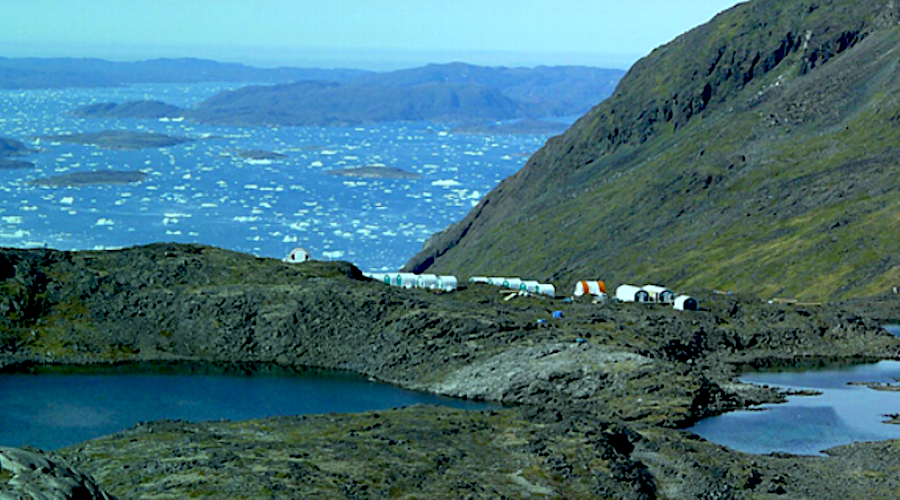
The Kvanefjeld rare earth project. (Image courtesy of Energy Transition Minerals.)

Energy Transition Minerals (ASX: ETM) said Tuesday that Greenland intends not to renew the exploration licence for its Kvanefjeld rare earths project.

The draft decision deals a fresh blow to one of the largest undeveloped critical minerals assets, which will consist of a mine, a concentrator and refinery.

It stems from the country’s 2021 Uranium Act, which effectively bans uranium prospecting, exploration and exploitation, and is the subject of ongoing legal proceedings challenging its application to Kvanefjeld.

ETM said similar licences have been renewed since the Act’s introduction, raising questions about regulatory consistency.

“This draft position appears inconsistent with the historical treatment of the project,” the company said in an emailed statement, noting Greenland had previously extended the licence even after the uranium legislation came into force and during active legal disputes.

ETM said the move risks sending a broader signal to investors at a sensitive time for Greenland, which sits at the centre of intensifying geopolitical competition over critical minerals supply. Western governments, including the US and Europe, are seeking to reduce reliance on China.

Mining is widely viewed as a pathway for Greenland to diversify its economy, so policy shifts that appear to change the rules may heighten concerns about regulatory stability and long-term commitment to the sector, ETM said.

The draft outcome also follows Greenland’s outreach to industry at January’s PDAC convention in Canada earlier this year, adding to questions about policy direction.

Shares of ETM fell 7.4% to A$0.050 in Sydney in the first session after a trading halt last week, giving the company a market value of about A$118.7 million. The broader S&P/ASX 200 rose 1.5%. Year-to-date, the stock has halved its value.

Spain support

The share price drop came despite ETM also securing foreign direct investment approval from the Spanish government for its proposed acquisition of the Penouta tin-tantalum mine.

The approval clears a key regulatory hurdle, confirms the investment meets national security requirements and endorses the company’s financial capacity and suitability to operate strategic assets in Spain, marking progress toward closing the deal.


Energy Transition Minerals faces likely licence renewal rejection for Greenland project


Greenland has informed Energy Transition Minerals of a potential rejection of its exploration licence renewal application for the Kvanefjeld rare earths project, the Australian miner said on Tuesday.

Shares of Energy Transition Minerals fell 5.6% to A$0.051 by 01:52 GMT as trading resumed after a halt on Thursday. The broader S&P/ASX 200 benchmark index was up 1.5%.

Kvanefjeld is a large-scale rare earths project with the potential to become a significant western world producer of critical minerals used in manufacture of consumer electronics.

Energy Transition Minerals said it had received a draft decision from the Greenland government indicating that the mineral resources ministry intended to recommend that the application be declined.

Greenland stated that the company’s exploration activities were “no longer considered to serve a purpose” and that a licence could not be granted under the current legislative framework, the company said in a statement.

The company noted the decision stemmed from a December 2021 law – the 2021 Uranium Act – that would effectively ban uranium prospecting, exploration and exploitation.

In 2023, Energy Transition Minerals filed a statement of claims with an arbitration tribunal in Copenhagen to decide on unit Greenland Minerals A/S’ legal right to be granted an exploitation licence for the project in relation to this law.

Greenland had previously granted licence renewals for the project, including during the course of active legal dispute and after the introduction of the 2021 Uranium Act, the company said, calling the draft position “inconsistent” with the historical treatment of the project.

(By Sherin Sunny; Editing by Sumana Nandy and Subhranshu Sahu)


Energy Transition Minerals Confronts Greenland Licence Rejection Risk


Energy Transition Minerals Ltd is facing a major regulatory setback after Greenland’s government signaled it intends to reject the renewal of the company’s exploration licence for the Kvanefjeld rare earth project, a move that could further complicate development of a strategically significant deposit.

The draft decision, issued by Greenland’s Ministry of Business, Mineral Resources, Energy, Justice and Gender Equality, argues that continued exploration no longer serves a purpose because an exploitation licence cannot be granted under the current legal framework. At the core of that framework is Greenland’s 2021 Uranium Act, which effectively prohibits uranium mining - a critical issue for Kvanefjeld, where uranium is present alongside rare earth elements.

ETM has pushed back strongly, emphasizing that the applicability of the Uranium Act remains under active legal challenge. The company argues that the government’s position represents a fundamental shift in regulatory treatment, particularly given that Kvanefjeld has previously received multiple licence renewals, including after the uranium legislation came into force.

The Greenlandic government has issued a draft recommendation to deny renewal of ETM’s Kvanefjeld exploration licence, citing the inability to secure a future mining permit under existing uranium-related legislation.

The company framed the draft decision as policy-driven rather than legally grounded, noting inconsistencies with past government actions. Notably, ETM pointed out that authorities had previously denied its request to suspend exploration expenditure obligations during ongoing legal proceedings - effectively requiring continued activity while now arguing that such exploration lacks purpose.

The dispute reflects broader tensions in Greenland over resource development, environmental concerns, and political sovereignty. The 2021 Uranium Act was introduced following elections that brought anti-uranium mining sentiment to the forefront, effectively halting progress on projects like Kvanefjeld despite their importance in global rare earth supply chains.

Kvanefjeld is widely regarded as one of the largest undeveloped rare earth deposits globally, with potential implications for supply diversification away from China. However, its association with uranium has made it politically contentious, placing it at the center of Greenland’s evolving mining policy.

ETM maintains that its rights as a long-standing licence holder are being undermined and has initiated legal proceedings to challenge the regulatory changes. Those proceedings remain unresolved and are likely to be pivotal in determining the project’s future.

The draft decision underscores rising geopolitical and regulatory risks in the critical minerals sector, particularly in jurisdictions balancing environmental, political, and economic priorities. For investors, the case highlights the vulnerability of long-cycle mining projects to policy shifts - even after years of exploration and capital investment.

ETM said it will formally respond to the draft decision and continue pursuing all legal avenues, signaling that the dispute is far from resolved.

By Charles Kennedy for Oilprice.com


 Pentagon-Linked REalloys Secures U.S. Rare Earth Supply Ahead of China Ban


REalloys (NASDAQ: ALOY) has signed an agreement to secure supply from one of the highest-grade rare earth deposits in the United States, with just nine months remaining before U.S. defense rules force the removal of Chinese material from the supply chain.

The memorandum of understanding with U.S. Critical Materials Corp. gives REalloys access to up to 10% of production from the Sheep Creek project in Montana, with confirmed dysprosium, terbium, yttrium, and NdPr, the rare earth elements used in high-performance magnets for fighter aircraft, missile guidance systems, radar platforms, and other advanced defense hardware.

REalloys will convert rare earth oxides into metals and magnet-grade alloys, and is building one of the only integrated manufacturing platform in North America capable of producing heavy rare earth metals at an industrial scale.

The Sheep Creek agreement adds a domestic source of dysprosium and terbium into that system, reducing reliance on foreign feedstock and tightening control over a supply chain that does not yet exist at scale inside the United States. 

The timeline is tight. As of January 2027, rare earth materials of Chinese origin will be banned from use in American military defense systems. That deadline looms large; not only because of a raging conflict in the Middle East that is consuming multitudes of weapons that depend on rare earth metals, but because these magnet-grade alloys are where the U.S. supply chain completely breaks down. 

“Metallization is one of the least developed parts of the value chain outside China,” REalloys co-founder Tim Johnston said previously. “Even with strong execution and capital, you are looking at a multi-year timeline to build that capability.”

THE LOOMING GAP IN AMERICAN DEFENSE

While rare earth elements themselves aren’t actually that rare, with deposits across North America, Europe, and Australia, downstream is a more serious bottleneck. 

“Rare earth elements are relatively widespread geologically; what is scarce is the industrial capability to economically separate them into high-purity oxides and then convert them into metals and alloys at scale,” REAlloys co-founder Tim Johnston explained in an interview with Oilprice.

China controls the vast majority of global rare earth processing and metallization capacity. While mining operations exist around the world, the conversion of those materials into finished metals and magnets has remained heavily concentrated within China’s industrial ecosystem.

That’s where we hit the critical chokepoint.

“If China said we’re not going to give you rare earths,” said Saskatchewan Research Council CEO Mike Crabtree in a separate interview, “that means no F-35s, no missiles.”

Washington is moving fast, now, to secure this supply chain for American defense. 

The Defense Logistics Agency recently awarded a contract to Terves LLC, whose technology is now part of the REAlloys platform, to advance metallothermal production of samarium and gadolinium metals. The project includes engineering design work for a modular facility capable of producing roughly 300 tons per year, a structure intended to be replicated as demand expands.

Federal financing channels are opening at the same time. The Export-Import Bank of the United States has issued a letter of interest for up to $200 million tied to rare earth processing expansion connected to the REAlloys platform, signaling potential large-scale backing for domestic midstream and metallization capacity.

Now, REalloys is moving ahead with its commercial-scale heavy rare earth metallization facility for a fully allied, zero-China supply chain for defense-critical materials, and in 2027. 

The Big Defense Names Behind It All

Earlier this week, REalloys brought in Joe Kasper, former Chief of Staff to the U.S. Secretary of Defense, adding a senior Pentagon supply chain official to its advisory board.

He joins General Jack Keane, former Vice Chief of Staff of the U.S. Army, and Stephen duMont, president of GM Defense.

This is not a typical advisory group. These are people who know defense procurement really well, and have led the programs that decide who gets qualified, who gets funded, and who actually supplies material into weapons systems.

Behind that layer is an operating platform already producing material.

REalloys will run metallization out of Euclid, Ohio, converting rare earth oxides into finished metals and magnet-grade alloys, the form required by defense contractors. That step remains limited in the United States.

The rest of the system is already connected. The Saskatchewan Research Council will produce separated oxides in Canada (first commercial production expected by the end 2026/ early 2027). Those materials move to Ohio, where they are converted into metals and alloys, creating a mine-to-metal chain aligned with U.S. procurement requirements.

REalloys (NASDAQ: ALOY) has secured most of that flow. The company holds offtake on roughly 80% of SRC’s output, giving it control over one of the few non-Chinese streams of heavy rare earth supply.

Phase 1 targets roughly 525 tonnes per year of NdPr metal, with dysprosium and terbium feeding through the same system. Phase 2 expands that to about 3,000 tonnes of NdPr metal, 200 tonnes of dysprosium metal, 45 tonnes of terbium metal, and roughly 20,000 tonnes of finished magnets.

WAR IS MOVING FASTER THAN THE SUPPLY CHAIN

The cost of the Iran conflict reached $11.3 billion by day six and $16.5 billion by day 12, with a large share tied to precision-guided munitions. They’re blowing through weapons systems run on rare earth metals. And at the same time, pressure is building on the supply side.

That burn rate runs straight through contractors like Raytheon (NYSE: RTX), where missile systems such as Patriot and AMRAAM rely on rare earth-dependent guidance and control systems. These aren’t stockpiled inputs you can easily replenish. Once inventories tighten, production lines begin to feel it almost immediately.

And at the same time, pressure is building on the supply side.

Recent reporting from Reuters and coverage in Asian media point to tightening availability of key rare earth materials, with some defense-linked inventories potentially measured in months if disruptions deepen. These materials sit inside missile guidance systems, drones, radar, and fighter aircraft electronics.

“You can’t fight a 21st-century war with twentieth-century supply chains,” said Lipi Sternheim, CEO of REalloys. “Modern weapons rely on materials that are difficult to source, difficult to process, and difficult to replace once inventories begin to tighten.”

And the West is already paying a premium, with European buyers already paying 2-3X more for usable material than the prices quoted inside China. Supply is limited, buyers step in only when they have no choice, and transactions are clearing at elevated levels, while China’s domestic market remains controlled.

And it doesn’t stop at missiles and fighter jets.

Across the broader industrial base, companies like General Electric (NYSE: GE), through its aerospace division, are scaling production of jet engines and avionics systems that rely on the same class of rare earth materials for high-performance components. The overlap between commercial aviation recovery and defense demand is tightening the same supply pool from multiple directions.

That convergence matters. It means rare earth constraints are not just isolated to defense procurement - they are a shared bottleneck across critical manufacturing systems.

REalloys is stepping into this critical setup with a fully funded commercial buildout of the most challenging part of America’s rare earths metals supply chain, and it’s got the Who’s Who of defense behind it, along with Pentagon contracts and a looming deadline that gives defense contractors no choice but to buy American.

By. Charles Kennedy


White House taps Highland Copper in local supply push


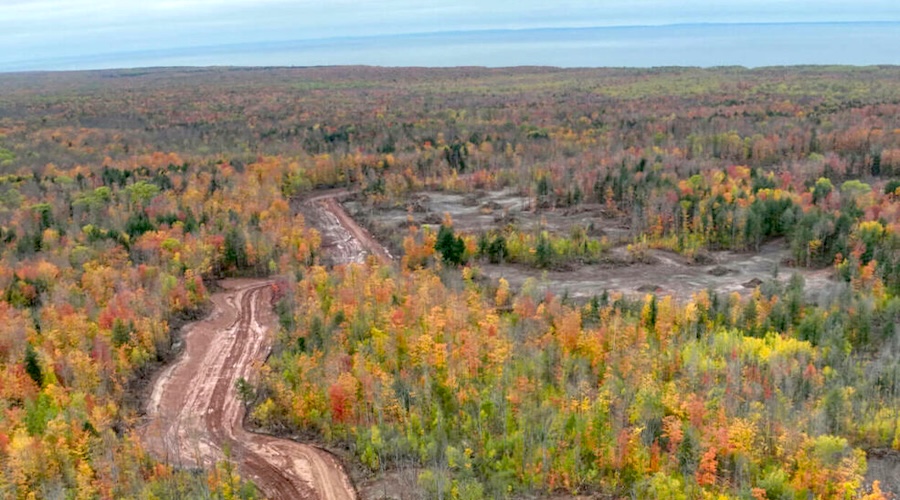
Road construction at the Copperwood project. (Image courtesy of Highland Copper.)

The US administration has named Highland Copper (TSX-V: HI) as a contributor to expanding domestic copper supply, highlighting the Canadian miner’s growing strategic relevance.

The recognition follows President Donald Trump’s move last week to adjust national security tariffs on steel, aluminum and copper imports, lowering duties on derivative products, simplifying compliance and addressing under-reporting of import values. 

The White House document highlights Highland alongside Ivanhoe Electric (TSX,NYSEAMERICAN: IE) Rio Tinto (ASX, LON, NYSE: RIO) and Wieland as part of a broader effort to expand US mining, smelting and fabrication capacity.

“I am grateful that the White House recognized Highland Copper as important to the expansion of US domestic copper mining,” Congressman Jack Bergman said in a statement. “Highland’s Copperwood project aims to responsibly produce copper in Michigan to help support the American economy and national defence.”

The acknowledgement places Highland’s Copperwood project at the centre of a wider policy shift to secure domestic supplies of critical minerals, as Washington leans on tariffs and financing tools to reduce reliance on imports and strengthen industrial resilience.

Highland is advancing Copperwood toward a construction decision, supported by a 2023 feasibility study outlining an approximately 11-year mine life with annual production of about 64.6 million pounds of copper and 107,000 ounces of silver. The fully permitted project is designed as an underground room-and-pillar operation processing roughly 6,800 tonnes per day. 

The US Export-Import Bank has already signalled support with a $250 million letter of interest, covering a significant portion of the project’s estimated $391 million initial capital cost.

Shares in Highland Copper gained 7.4% by mid-Monday in Toronto to 14¢ apiece, valuing the company at C$103 million ($74 million). 

Chile lithium dispute tied to Cold War-era nukes 


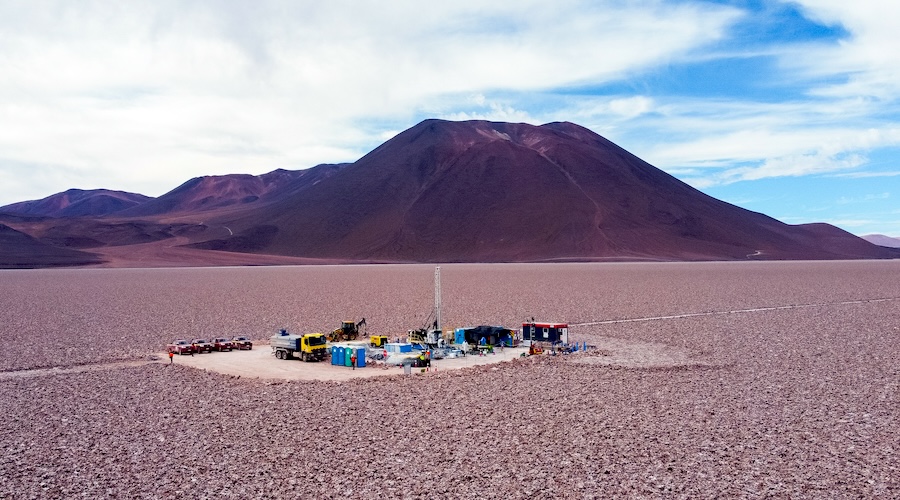
Altosandinos project in Chile. (Image courtesy of Enami.)

France’s Eramet (Euronext: ERA) and Chile’s state mining company Empresa Nacional de Minería (ENAMI) are headed to court in a dispute that could delay development of one of the world’s largest lithium deposits.

ENAMI plans to invest more than $3 billion with mining giant Rio Tinto (LSE, NYSE, ASX: RIO) to develop the Salares Altoandinos project. It is estimated to host about a quarter of Chile’s lithium resource, could produce enough of the battery metal for about 1.5 million electric vehicles a year, and is expected to become a cornerstone of new President Jose Antonio Kast’s development agenda.

Complicating matters, Eramet acquired all the area’s mining rights in 2023 in a bid to secure the special licence required to produce lithium under Chile’s Cold War-era legislation, drafted when the metal was considered vital for nuclear arms. The French company doesn’t hold the licence but is seeking to leverage its land position for a stake in the development.

“Eramet has begun a series of abusive administrative and court actions,” ENAMI’s lawyers wrote in a pretrial document that became public in March. “[They] seek to hinder or block the development causing compensable damages to our clients.”

Filed appeals

The French company filed appeals against Chile’s selection of Rio Tinto’s $415 million bid in last year’s competitive process. Eramet has publicly called on ENAMI to open negotiations on the award, due to close this year, while filing multiple applications for easements and water extraction sites at the site.

“As the holder of mining concessions, we remain open to constructive solutions that allow Altoandinos to move forward on a solid footing,” Eramet Chile chairman Hubert Porte said in a March 16 column in the Santiago-based Diario Financiero newspaper. “But we continue to defend our rights as a mining concessionaire.”

If neither side is willing to cede, the dispute could take at least two years to work through the courts and potentially proceed to international arbitration. Some mining lawyers in Chile are concerned that ENAMI’s respect for mining claims borders on expropriation.

“ENAMI has taken somewhat of a risk by not requiring that its strategic partner holds mining claims over the area,” Ignacio Errazquin of Santiago law firm CMS Carey & Allende told MINING.COM‘s sister publication, The Northern Miner.

Atacama region

Eramet holds 1,200 sq. km of claims covering 99% of the La Isla and Aguilar salt flats in northern Chile’s Atacama region as part of a long-planned shift towards energy metals. It wants to capture synergies with its $900 million Centenario facility across the Andes in northwest Argentina, which entered production in late 2024.

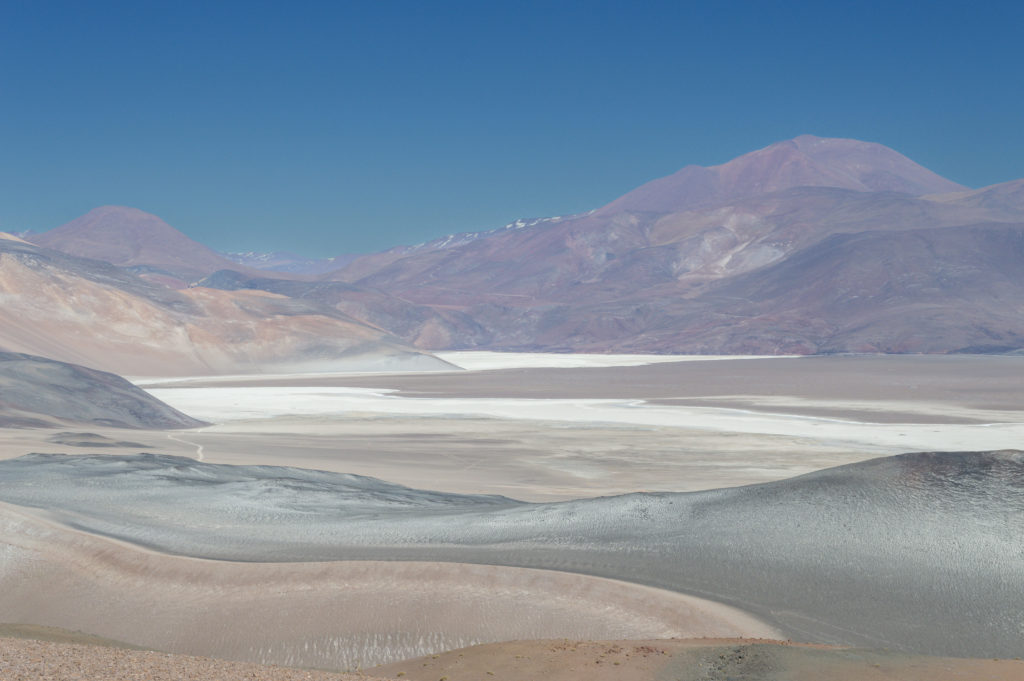
The Salar Aguilar, part of Enami’s Altosandinos project in Chile. (Credit: Enami)

Chile has estimated Salares Altoandinos to host about 4.5 million tonnes of lithium following 2025 exploration, though no formal resource statement has been released.

“Today we can say with certainty that this is a world-class project,” ENAMI CEO Ivan Mlynarz said in March following the latest exploration results.

The project is the latest tie-up between the Chilean state and private investors as the country seeks to double lithium output to about 500,000 tonnes annually by 2035.

“After an exhaustive analysis, we concluded that Rio Tinto’s was the proposal that provided most value to ENAMI,” Mlynarz said at the time.

Rio Tinto’s offer includes cash as well as its direct lithium extraction process and access to the pilot plant at its Rincon operation in Argentina. It was Rio Tinto’s second win in less than two months after signing a similar deal with state copper giant Codelco for Maricunga.

Court wrangling

The risk now is that the legal dispute with Eramet could tie up the Altoandinos project in years of court wrangling.

“Having participated in a process where it was not selected, Eramet is now questioning its whole basis,” ENAMI said in the court filing. “The mining properties which it thought to use as an advantage to be selected, it now plans to use to obstruct the project.”

And having focused solely on lithium, Eramet has now raised the possibility of extracting other elements present in the brines such as boron, iodine and potassium.

ENAMI has called on judges to force Eramet to hand over internal emails and other documents that would show when management shifted its focus to non-metallic minerals, among other issues.

CEOLs

Regardless of the intentions when claims were staked or acquired, they give the holder the right to exploit any minerals in the ground, except lithium, which needs that special permit, known as a CEOL from its initials in Spanish. In 2023, holding mining claims over the production area became a requirement.

This month, the Chilean government granted the first CEOL to a private company — CleanTech Lithium (LSE-A: CLT) – largely on the strength of its extensive holdings at its Laguna Verde project.

“We own almost 100% of the claims . . . which was a requirement under this process,” CleanTech CEO Ignacio Mehech told MINING.COM‘s sister publication, The Northern Miner.

A prolonged dispute over Altoandinos would represent a major setback for President Kast who took office March 11. He’s looking to the mining industry to attract foreign investment and support the economy.

“We want companies to have the certainty to carry out their investments and reach production in the short term,” Economy and Mining Minister Daniel Mas told journalists March 13. “So we will see how to make this strategy coincide with our aims.”