It’s possible that I shall make an ass of myself. But in that case one can always get out of it with a little dialectic. I have, of course, so worded my proposition as to be right either way (K.Marx, Letter to F.Engels on the Indian Mutiny)
Monday, April 13, 2026
WHITE SUPREMACY
Hegseth’s removal of top Army chaplain raises ‘troubling questions’ from Black denomination
(RNS) — ‘Our nation must be careful not to allow partisan agendas to undermine institutions built on merit, sacrifice, and service,’ said the president of the historically Black National Baptist Convention U.S.A. Inc.
U.S. Army Chief of Chaplains Maj. Gen. William Green Jr. gives remarks during a memorial service at Arlington National Cemetery, Arlington, Va., Sept. 4, 2024. (U.S. Army photo by Elizabeth Fraser/Arlington National Cemetery/Public Domain)
(RNS) — The historically Black denomination that endorsed U.S. Army Maj. Gen. William Green Jr., who until last week served as the Army’s chief of chaplains, said it had “deep disappointment and serious concern” about his removal by Defense Secretary Pete Hegseth.
Green, who had served in the top military chaplaincy role since 2023, was the third Black Army chief of chaplains. He was dismissed on April 2, during the Christian observance of Holy Week between Palm Sunday and Easter and amid the U.S.-Israeli war with Iran.
“The removal of Major General William Green Jr. raises serious and troubling questions that deserve transparency and accountability,” said the Rev. Boise Kimber, president of the National Baptist Convention U.S.A. Inc., in a Wednesday (April 8) statement. “His decades of faithful service, moral leadership, and historic representation within the Army Chaplain Corps should not be overshadowed by actions that create the appearance of bias, ideological targeting, or radical political interference. Our nation must be careful not to allow partisan agendas to undermine institutions built on merit, sacrifice, and service.”
Green’s dismissal occurred at the same time that Hegseth asked Gen. Randy George, the Army’s chief of staff, to resign and removed Gen. David Hodne, the leader of the service’s Transformation and Training Command, The Washington Post first reported.
Kimber joined others in calling for President Donald Trump and Hegseth to explain the reasons behind Green’s dismissal.
“When leaders of this caliber are removed without public clarity, it creates concern not only about the individual decision, but about the larger climate of interference affecting trusted national institutions,” Kimber stated. “We must remain vigilant against bias and any radical disruption that threatens fairness, integrity, and the progress we have fought to achieve.”
Maj. Gen. William “Bill” Green Jr., chief of chaplains of the United States Army, gives the benediction at the conclusion of a Medal of Honor ceremony, March 2, 2026, at the White House in Washington. (U.S. Army photo by Christopher Kaufmann/DVIDS/Public Domain)
In December 2025, Hegseth announced that he was eliminating the Army spiritual fitness guide that he said “alienates our war fighters of faith by pushing secular humanism.” In his video announcement on the social media platform X, Hegseth said: “In well over 100 pages, it mentions God one time. That’s it. It mentions feelings 11 times.”
Green was a leader in the Army’s efforts to promote and foster resiliency and connection to support soldiers and their families.
“A resilient soldier isn’t just physically fit,” Green said at a conference on “Holistic Health and the Resilient Soldier” in March 2025, which he noted was the 250th year of the U.S. military chaplaincy. “A resilient soldier is strong in body, mind and spirit.”
Religion News Service’s request asking the Army and its chaplaincy officials about Green’s departure and whether it was related to the spiritual fitness guide did not receive an immediate response.
Chaplain (Maj. Gen.) William Green Jr. (Photo by Stephanie Backus/US Army/Creative Commons)
Green, a native of Savannah, Georgia, first joined the Army as a high school graduate and returned to the service after pursuing ordained ministry. Endorsed by the NBCUSA in 1994, he later supported Operation Iraqi Freedom, was a branch chief at the U.S. Army Chaplain Center and School in Fort Jackson, South Carolina, and was deputy chief of chaplains at the Pentagon before being appointed as the Army’s chief of chaplains.
Leaders in religious, military and political circles were among those questioning and reacting to Green’s dismissal.
“This administration has made clear it views chaplains as instruments to further its ideology,” said Rep. Rosa DeLauro, D-Connecticut, in a Tuesday statement. “They want loyalists. Look no further than Secretary Hegseth’s personal minister, Douglas Wilson, who wants to create a theocratic society that strips women of rights and ends religious freedom.’’
Sen. Chris Coons, D-Delaware, said earlier on X: “During Holy Week, and for the first time in our nation’s history, Secretary Hegseth fired the head of the Army Chaplain Corps, Major General William Green, without explanation. General Green is a decorated leader who tended to our military’s spiritual health with honor and distinction.”
Hemant Mehta, an atheist blogger and activist who had questioned the spiritual fitness guide, commented on X: “Wild that Hegseth has basically implied the Army Chief of Chaplains is too woke for caring about things like ‘spiritual strength.’”
Defense Secretary Pete Hegseth speaks to members of the media at the Pentagon in Washington on March 31, 2026. (AP Photo/Manuel Balce Ceneta)
In a commentary in The Bulwark, retired Lt. Gen. Mark Hertling, who worked with Green in Germany and Fort Lewis in Washington state, wrote of what he called Green’s “troubling” departure.
“He didn’t ask soldiers what they believed before he cared for them,” Hertling wrote. “He understood his role was not to define their faith, but to support their humanity. Because that is what a chaplain is supposed to do.”
Opinion
Blocked access to Christian holy site is a symptom of a larger problem
(RNS) — Anti-Christian attacks in the Holy Land have spiked in recent years.
People stand in the Church of the Holy Sepulchre as they attend a Washing of the Feet ceremony in Jerusalem's Old City, Thursday, April 9, 2026, after restrictions were lifted following a ceasefire reached between Iran, Israel and the United States.
(RNS) — On Palm Sunday last month, Israel blocked the Latin Patriarch of Jerusalem, along with the official guardian of the church and two priests, from entering Jerusalem’s Church of the Holy Sepulchre, one of the holiest sites for Christianity.
The incident, which drew international condemnation, marked the first time in centuries that officials from the Roman Catholic Church were prevented from celebrating Palm Sunday Mass at the church, which holds the tomb where Christians believe Jesus rose on Easter.
Israel said it blocked their entrance for security reasons due to the Iran war and later apologized. But the incident, described as a “grave precedent,” is not novel in a city that has witnessed a spike in anti-Christian attacks in recent years.
The following day, (March 30), the Jerusalem-based Rossing Center for Education and Dialogue released its 2025 annual report on attacks against Christians in East Jerusalem and Israel. The report highlights a 40% spike in documented cases of attacks on Christians in 2025, compared to 2024.
The report from the inter-religious Rossing organization documents 155 incidents against Christians in 2025. Physical assaults — such as spitting, hitting and pepper spraying — were the most prevalent, accounting for 39% of the recorded incidents. In all, there were 52 attacks on church properties (including spitting on churches, graffiti, trespassing, damaging statues, arson and stone and garbage throwing), 28 incidents of verbal harassment and 14 instances of defacing public signs containing Christian content.
Christian holidays, especially around the time of Easter, have become sources of tension. Due to concerns of overcrowding, police have tightened their security during events such as the Holy Fire ceremony, held on the Saturday before Orthodox Easter, the holiest day of the year in the Orthodox Church. In recent years, police have erected several checkpoints at gates throughout the Christian Quarter. Worshippers report difficulties reaching their ceremonies or being outright denied access to these places — infringing on their freedom of movement, religion and right to worship.
A locked door and empty stairs leading to the Church of the Holy Sepulchre in Jerusalem’s Old City, closed to visitors amid heightened security during the war with Iran, Friday, March 27, 2026. (AP Photo/Mahmoud Illean)
Bishop Atallah Hanna, a prominent Jerusalem-based Christian Orthodox priest, says that these attacks and racist provocations are neither new nor unusual: “For years we as priests and fellow nuns have been targets of these assaults, which have included being on the receiving end of spitting, cursing, and other forms of insults.”
Hanna noted that Christian sites and symbols, like the cross, the holy symbol for Christians, are also targets of attacks. “The attacks come from radical racists who don’t have any respect or understanding of interfaith relations and only show racism and hatred toward our Palestinian people, whether Muslims or Christians.”
The Rossing Center identifies the spitting perpetrators as Orthodox Jews, religious Zionists and students at prominent Jewish seminaries in Jerusalem.
In addition to the Rossing Center’s report, the Religious Freedom Data Center, a hotline tracking attacks against Christians in Israel and East Jerusalem, released its 2025 report summarizing the anti-Christian incidents. The RFDC recorded 181 incidents of harassment in 2025, including spitting, verbal abuse, vandalism and physical violence.
More than 80% of the reported incidents occurred in Jerusalem, with 150 in Jerusalem’s holy city. The Armenian Quarter bore the brunt of the attacks — 43 incidents of harassment were reported there in 2025.
A 2025 Rossing report of Jewish attitudes toward Christians found that 3.7% of Jews in Israel express support for those who spit at Christians, with 2.5% admitting they would do this. Support for spitting increased to 19 percent among Orthodox Jews, with 12% saying that they would spit. For Jewish Israelis ages 18 to 24, 12% said they support spitting and would spit themselves.
“According to the testimonies we collected during our conversations, priests and nuns living in certain areas of Jerusalem, such as the Armenian Quarter and Mount Zion in the Old City, now face an almost certain risk of harassment each time they step outside,” the report states. “This raises serious concerns about the safety of religious figures and their ability to perform their duties without fear of intimidation or harm.”
This trajectory of documented attacks points to an alarming increase in harassment against Christians, underscoring the urgent work needed to safeguard religious freedom, protect vulnerable religious communities and promote constructive interfaith engagement. World leaders around the world need to strongly urge Israeli officials to take this issue seriously, hold perpetrators accountable and end their policies of turning a blind eye to the rising attacks against Christians. (Daoud Kuttab is the senior communications officer of the World Evangelical Alliance. The views expressed in this commentary do not necessarily reflect those of Religion News Service.)
Opinion
As we remember the Holocaust, it's time to confront America's long history of antisemitism
(RNS) — At sundown April 13, Jews will mark Yom Hashoah, the day they have chosen to commemorate the catastrophe of the Holocaust. With rising antisemitism in the US, it's time to reckon with America's own history.
FILE - People attend the "NO FEAR: Rally in Solidarity with the Jewish People" event in Washington, Sunday, July 11, 2021, co-sponsored by the Alliance for Israel, Anti-Defamation League, American Jewish Committee, B'nai B'rith International and other organizations. (AP Photo/Susan Walsh, File)
(RNS) — Barbara Steinmetz, an 88-year-old Holocaust survivor, was participating in a Boulder, Colorado, rally calling for the release of the Israeli hostages on June 1, 2025, when a man shouting “Free Palestine” hurled Molotov cocktails at the demonstrators. At least a dozen protesters were burned, Steinmetz among them, and another died of her injuries.
Steinmetz had escaped the Holocaust. Her burns proved that she had not escaped antisemitism.
In fact, while much has been written about the surge in antisemitic incidents in the United States following the Oct. 7, 2023, attacks, the fact is, antisemitism is a long and too often forgotten part of American history.
The USC Shoah Foundation, which is dedicated to collecting eyewitness accounts to the Holocaust and other genocides, has documented Americans’ experiences with antisemitism along the way.
Not long after World War II, Holocaust survivor Alice Silban tried to rent an apartment in Germantown, a Philadelphia neighborhood. When the rental agent learned that she was Jewish, he said: “We don’t rent to Jews.” She cried out: “Oh mein Gott, I knew somebody else who didn’t like Jews, and you know what (was) left from them: Ashes.” The agent grabbed her by the collar and marched her out to the street and threw her into the gutter, she said.
In the mid-1990s, Holocaust survivor Marion Adler was an insurance agent. When she went to meet a prospective client in Somerdale, New Jersey, he asked about her accent and religion. Hearing that she was a Jew, he tore up his application and shouted: “Hitler should have killed you and all the Jews.” He then called her manager at New York Life Insurance Company to ask how dare they hire Jews.
When Erin Schrode was just 25 and running for Congress in California’s second district in 2016, her Judaism also made her a target. She recalls one email, showing her face next to a yellow star, imprinted “Jude,” with the words: “Get out of my country, kike. Get back to Israel where you belong. That or the ovens, take your pick.”
Antisemitism in America is not novel and dates all the way back to 1654, when 23 Jews arrived in New Amsterdam, and the governor, Peter Stuyvesant, tried to throw them out. Calling Jews “hateful enemies and blasphemers of the name of Christ,” he appealed to the colony’s owner, Amsterdam’s Dutch West India Company, to banish them. Surely, their enmity and “deceitful trading with Christians” merited expulsion. But even as his wish was not granted, Stuyvesant’s hostility foreshadowed the antisemitism Jews would bump into, from time to time, in America.
America’s Jewish community remained small until, starting in the 1880s, poverty and pogroms drove more than 2 million Jews out of Russia and Poland. They came expecting better lives in this golden land, and many found them.
Nevertheless, by the 1920s, their children and grandchildren learned that college and university quotas limited their educations, corporations and businesses boldly advertised that they hired only Christians, and housing ads announced, as those Holocaust survivors would later discover, no Jews allowed. Only after World War II would legislation, capped by the 1964 Civil Rights Act, make such educational, employment and housing discriminations illegal.
Americans mostly ignore this history of our nation’s antisemitism. Instead, the Holocaust has become the framework for understanding the hatred of Jews and where it could lead. A seemingly never-ending stream of cultural productions — films, plays, books, museums, memorials and testimonies — have been produced. At least half the nation’s states mandate Holocaust education, although most teachers spend no more than two hours a year teaching it.
From sundown April 13 through sundown April 14, Jews around the world will mark Yom Hashoah, the day the Jewish people have chosen to commemorate the catastrophe of the Holocaust. In their homes, Jews will light memorial candles in memory of the 6 million murdered. In their synagogues, they will gather for special services. In many places, like on my own university campus, students and faculty, no matter their faiths, will take turns reading out the names of the murdered and the places where they were killed.
In today’s fraught moment, we can only hope these memorials remain peaceful and that they remind us of something we have been too slow to reckon with: the Holocaust did not happen here, but antisemitism did, and does.
(Pamela S. Nadell is the author of “Antisemitism, an American Tradition.” She is the director of the Jewish studies program at American University in Washington, D.C. The views expressed in this commentary do not necessarily reflect those of Religion News Service.)
In ‘Jesus Was a Migrant,’ Jemar Tisby makes a Christian case for humanizing immigrants
(RNS) — ‘If Jesus was at the border, would Christians let him in?’ Tisby asks in his new documentary. ‘All too often, it seems as if, not only would they not let him in, they would celebrate blocking him out.’
(RNS) — When President Donald Trump returned to office in January 2025, one of his first actions was to abruptly block migrants from seeking asylum in the United States through the southern border. Immediately, hundreds of thousands of people seeking refuge lost a legal pathway forward.
But as despair flooded through the border city of Juarez, Mexico, where previously scheduled asylum appointments were canceled, some Christians cheered.
“We wanted to explore that tension,” historian and author Jemar Tisby told RNS on Wednesday (April 8). “How can people who claim to follow a migrant, Jesus, also celebrate when migrants are shut out from seeking safety?”
Tisby is something of an expert on contradictions within Christianity. Once an evangelical insider, he became a controversial figure among conservative evangelicals after the 2019 publication of his bestselling book “The Color of Compromise,” which examined U.S. Christians’ historical complicity with racism. Since then, he’s authored two other books about faith and resisting racism. And now, he’s taking his assessment of white Christian nationalism a step further through film.
“Jesus Was a Migrant,” which premiered in Los Angeles on Thursday, is the first official production of Tisby Studios, the filmmaking division of Tisby Media. It follows Tisby to the U.S.-Mexico border, where, in partnership with the Christian nonprofit FaithWorks, he encounters families finding hope through faith despite the hardships they’ve endured. From there, the documentary explores the relationship between Christian theology and U.S. immigration policy.
Others can sign up to host a screening of the film on its website. RNS spoke with Tisby, executive producer of the documentary, about the film and its hoped-for impact. The interview has been edited for length and clarity.
What were some of your biggest takeaways during your pilgrimage to the border with FaithWorks?
Jemar Tisby. (Courtesy photo)
When we went to the first migrant shelter and we heard from two of the families, their absolutely gut-wrenching stories, I knew instantly that this was going to be more than a two- or three-minute recap video. I said, this needs a more robust treatment, because we need to honor their stories, and we were very careful about centering the migrants on the trip. We asked them, as Americans, as Christians, what can we do to help? And they said, tell our stories. And I could think of no more powerful way to do that than through a documentary film.
How does this look at immigration connect with your work about Christian complicity in racism?
I often think of Martin Luther King Jr.’s quote that we are caught in an inescapable network of mutuality. There was, to me, a very disappointing narrative among some Black people that said, this isn’t our fight. And the reality is, a lot of these tactics have been used on Black people in the United States before, and they will be used again. Even more broadly, we as people of faith and as neighbors should stand in solidarity with anyone who is marginalized or oppressed because of injustice. And so it dovetails with all of my work, even though it is U.S.-centric and tends to focus on Black and white race relations. The documentary highlights evangelicals’ legacy of being pro-immigrant, pro-refugee.
When did that begin to shift in a significant way?
You’re absolutely right, there is a long legacy of evangelicals being champions of immigration, and particularly refugees and asylum-seekers. I think that the poison pill was always embedded within white evangelicalism, and it showed up in pro-America language, particularly during the height of the Cold War, when the United States was set up as not only democratic as opposed to communist, but also Christian as opposed to atheist. You start to get these ideas of nationalism and America’s superiority, which is always going to then have the effect, even if unintended, of looking down on people from other nations.
Then, in the 21st century, it really picks up with the current president’s rhetoric about immigrants. He came to the fore politically questioning Obama’s birth and whether he was truly American. We also remember his infamous statements about Haiti and other countries being ‘s—hole countries.’ That only continued as the fringe far right became more mainstream, and they started talking about things like the great replacement theory and saying, white people in the United States, their bloodlines are being diluted. That historically has always led to xenophobia and much harsher immigration policies. These days, I’m hearing some conservative Christians talk about assimilation. They argue that the Bible teaches to welcome immigrants only on the condition that they assimilate to Western, Christian culture. What are your thoughts on this perspective?
It’s a faulty theology and a bad hermeneutic. You are importing Old Testament ideas onto modern-day geopolitics, for one, and secondly, you’re importing ideas from or laws that apply during the Old Covenant, before Jesus, to the New Covenant. After Jesus and under the New Covenant, we see that you have unity without uniformity. You have diversity within the body of Christ, one body, many parts, there is no longer slave or free, Jew or Greek, male or female. All are one. But that doesn’t erase differences. What unites us is stronger than what is different about us. We can retain those differences, and that’s part of the beauty of the family of God. We don’t all have to be alike, and there’s a place for everyone with their cultures as well.
The title of this film is “Jesus Was a Migrant.” How should that premise, that Jesus was a migrant and a brown, Middle Eastern man, shape how Christians view immigration policy?
It begs the question, if Jesus was at the border, would Christians let him in? All too often, it seems as if, not only would they not let him in, they would celebrate blocking him out. Leviticus says that you should treat the foreigner among you as your native-born. So this is more than a movie. This is a statement. This is not a film that is trying to persuade the white Christian nationalists, adherents or sympathizers. This is a film for a coalition of the willing, the people who are already empathetic, but they need, they want to take action. It questions systems and laws and policies and says what needs to change in order to bring about the kingdom of God. That’s where we hope people will land and ultimately use what they’ve learned from the film and apply it in their own context and toward the crisis of immigration policy.
No. 1, asking that question, what should we do? Because that’s the beginning of action. No. 2, we have designed the distribution model to foster and facilitate dialogue and collaboration. So we’re not just slapping the film up on YouTube or Vimeo and hoping people watch. We are encouraging people to host a screening and gather a group of people. There’s a free downloadable discussion guide to lead the conversation. And there’s also a resource page that has more organizations and action steps. FaithWorks is encouraging people to go on a border pilgrimage themselves, if they’re able. So the reality is, even though the borders are in particular geographic areas, the kinds of actions we can take are almost limitless once we ask the question and begin collaborating with others.
Can you talk about the timing of this film release?
We’ve been working on this film for half a year, and throughout the making of the film, immigration has been at the forefront of the tension, both politically and religiously. So people are seeing videos of ICE agents brutalizing people, whether they’re U.S. citizens or undocumented, and we’re appalled, and we’re saying, “What can we do?” We wanted this film out as soon as we could do it in a way that honored the stories of the migrants because it is an urgent issue right now, and for so much of the second term of this administration, it has been the policy that has garnered the most attention and the most division among people in the nation and in the church.
Opinion
‘Fairness for all’ includes due process for immigrants
(RNS) — The labels we choose inwardly in our hearts ultimately determine how we treat one another outwardly.
Migrants pick up their belongings before they are escorted by U.S. Immigration and Customs Enforcement agents across the McAllen–Hidalgo–Reynosa International Bridge in McAllen, Texas, March 13, 2026. Dozens of migrants from countries including Cuba, Venezuela, Haiti, China, Guatemala and El Salvador were handed over to Mexican authorities. (AP Photo/Felix Marquez)
(RNS) — During the inspiring General Conference this past weekend, Dallin H. Oaks, the president of The Church of Jesus Christ of Latter-day Saints, reminded us to be peacemakers.
“As followers of Christ, we should seek to live peaceably and lovingly with other children of God who do not share our values and do not have the covenant obligations we have assumed,” Oaks said. “In a democratic government we should seek ‘fairness for all.’”
“Fairness for all.” This is what, as an advocate for immigrant rights, I have been fighting for during the 2026 Maryland legislative session in supporting the Community Trust Act. This piece of legislation would limit state and local law enforcement in assisting federal immigration authorities and is a No. 1 priority for immigrant families. It would enshrine into Maryland law what the U.S. Constitution makes clear: Due process is a right granted to every individual on our soil, including immigrants and those behind bars.
According to the 2024 Cooperative Election Study, an estimated 15% of LDS members are either immigrants or first-generation Americans. The Latter-day Saint immigrant community is ever increasing in number, including members with immigration statuses that run the full spectrum — from fully undocumented to naturalized citizens.
I see this diversity within my church because I am part of that 15%. As a formerly undocumented member of The Church of Jesus Christ of Latter-day Saints, I wonder what would be my fate if I were undocumented now, during these heightened and eerily troubling times for undocumented people.
I came to the United States at age 5 and have lived here from kindergarten to graduating with a bachelor’s degree and now continuing with a career in public policy. This is the life that my single mother envisioned for me when she made the brave decision to leave behind a broken home and ultimately all her family in Honduras to give me a better, brighter future. Almost a decade after migrating to the U.S., it was through my mother’s guidance that I was introduced to and met with missionaries of the LDS church. I have a deep love for family, and I found belonging in the church’s teaching of eternal families and its focus on Jesus’ and God’s love being everlasting.
As we continue to see how fear reaches the streets and homes of many LDS members and our neighbors across the country — people living with the constant worry of encounters with immigration enforcement, regardless of their criminal history — we are faced with an important question: When we see immigrants, do we instinctively see a problem to solve, or a child of God?
As a daughter whose family has been separated by erroneous and unconstitutional government actions, I wholeheartedly know that on this past and every Resurrection Sunday, Jesus rose for everyone, regardless of their labels and regardless of the labels placed on them by others. Jesus the Redeemer saw everyone the same and extended His hand with love.
As we continue to contemplate the message of the Resurrection, of Easter, of our newly upheld LDS prophet and of our church leaders, I have been thinking a lot about peacemakers and labels. For those outside the LDS faith, “peacemakers” and “labels” can mean many different things, but for many Latter-day Saints, the terms might bring to mind our beloved prophet Russell M. Nelson, who died last year.
As father, husband, doctor and, at the time, president of The Church of Jesus Christ of Latter-Day Saints, Nelson said of such labels: “First, I am a child of God — a son of God — then a son of the covenant, then a disciple of Jesus Christ and a devoted member of His restored Church.”
If we truly believe we are children of God, that identity must shape how we see others. It is easy to say the words; it is harder to live them when we encounter someone who speaks differently, looks different or whose life circumstances are unfamiliar to us. To describe them, do we lead with the label “child of God,” or do we quietly replace it with something else: “outsider,” “stranger” or, even worse, “illegal?” The labels we choose inwardly in our hearts ultimately determine how we treat one another outwardly.
In a secular political world that has described non-U.S.-born citizens as closer to criminals than children of God, we must reconcile fact against feelings and dissect where those feelings come from. Firstly, simply being without legal immigration status in the U.S. is not in itself a crime. And when we conflate it with someone’s integrity, we are using labels that result in spiritual suffocation for both for the sender and receiver.
Secondly, it is true that scapegoating ethnic and religious minorities is well-tread historical ground in the U.S., and immigrants have always made for an easy target. Chinese, Irish, Italians, Muslims, Mexican, all these people and more have been falsely accused of bringing crime into the country, particularly during times of economic or political unease.” Latter-day Saint pioneers, their descendants and even converts to the faith should know this very intimately. Was it not persecution that kept the Saints moving westward in the 1800s? Was it not anti-Mormon violence, sanctioned by state decree, that exacerbated violence against the Saints?
Today, some Americans continue to peddle the same, tired myth about minorities, creating insecurity and hurting community safety for some. Yet, when it comes to immigrants, the facts are that welcoming immigrants into American communities not only does not increase crime, but can actually strengthen public safety. Immigrants — including undocumented immigrants — are less likely to commit crimes than U.S.-born citizens. This is true at the national, state, county and neighborhood levels, and for both violent and nonviolent crime.
As Latter-day Saints, if we are to claim to love our God and our neighbor, I urge us to start by acknowledging that the Constitution, its principles and protections also extend to immigrants like me. Our Christlike love should not stop at the chapel’s door. And I ask you to join me in calling on your Maryland state senator to prioritize and pass the Community Trust Act. (Ninfa Amador-Hernandez is a convert to The Church of Jesus Christ of Latter-day Saints, an immigrant from Honduras, formerly undocumented and an immigrant justice advocate. The views expressed in this commentary do not necessarily reflect those of Religion News Service.)
Italy suspends defence pact with Israel as Meloni rebukes Trump over pope remarks
"In light of the current situation, the government has decided to suspend the automatic renewal of the defense agreement with Israel,” Meloni said during a visit at a wine fair in Verona. / bne IntelliNewsFacebook
Italy has suspended the automatic renewal of its defence co-operation agreement with Israel, Prime Minister Giorgia Meloni announced on April 14, in Rome's sharpest signal yet of disapproval over Israeli military operations, while separately rebuking US President Donald Trump for his attacks on Pope Leo XIV.
Meloni made the announcement at the Vinitaly wine fair in Verona, telling reporters that "in light of the current situation, the government has decided to suspend the automatic renewal of the defence agreement with Israel." Defence Minister Guido Crosetto had formally communicated the decision to his Israeli counterpart, Israel Katz, by letter.
The memorandum, originally signed under former prime minister Silvio Berlusconi in 2003 and ratified in 2005, provides a framework for bilateral co-operation on defence matters including military equipment exchanges, joint exercises, and research and development in the defence sector. It had been renewed automatically every five years, most recently entering into force on April 13.
Israel's foreign ministry played down the significance of the move. A spokesman said the two countries did not have a security agreement as such, describing the memorandum as one that had "never had any concrete content."
Deputy Prime Minister Matteo Salvini, also present at Vinitaly, said he agreed with the suspension but told reporters he did not know the reasons behind it.
The decision marks a significant hardening of Italy's stance. Until now Meloni's government had limited itself to condemning specific Israeli actions, including strikes on churches and attacks on Italian soldiers serving in the UN peacekeeping mission in Lebanon, while defending the memorandum itself against repeated opposition calls for its suspension. The diplomatic temperature had risen further in recent days after Italy's ambassador to Tel Aviv was summoned by the Israeli foreign ministry in protest at remarks by Deputy Prime Minister Antonio Tajani, who had condemned Israeli raids that have caused thousands of casualties in Lebanon since early March.
Italy's growing discomfort with Israeli military operations has been building for months. In September, Meloni told the United Nations that Israeli actions had crossed a line, "violating humanitarian norms, causing a slaughter of civilians," and signalled Rome's support for some European Union sanctions against Israel. During the US-Israeli campaign against Iran, Italy refused to allow American combat aircraft to use its Sigonella base in Sicily for missions to the Middle East.
Meloni used the Verona platform to address several other live political controversies. On Trump's social media broadside against Pope Leo XIV — in which the US president called the pontiff "WEAK on Crime, and terrible for Foreign Policy," suggested he had been elected only because he was American, and told him to "get his act together" and "stop catering to the Radical Left" — Meloni, long regarded as a darling of the US leader, was unequivocal. "What I said is what I think: the statements about the pontiff were unacceptable. I express my solidarity with Pope Leo," she said.
Meloni also urged caution over recent calls by Eni chief executive Claudio Descalzi to resume purchasing Russian gas, acknowledging his commercial logic but arguing that economic pressure on the Kremlin remained "the most effective weapon we have for building peace." She expressed hope that the question would be moot by January 2027, when existing energy contracts expire, if progress had been made towards ending the war in Ukraine.
She also called for continued international efforts to advance peace negotiations to stabilise the situation in Iran and reopen the Strait of Hormuz.
'Unusual' Pentagon-Vatican meeting sparks intrigue, denials and whispers of a diplomatic clash
(RNS) — Within hours, a news report sparked statements from US and Vatican officials. Varying accounts of the meeting emerged over the next day as a wave of discourse erupted among Vatican-watchers.
Under Secretary of War for Policy Elbridge Colby, left, meets with Cardinal Christophe Pierre, right, the outgoing apostolic nuncio, and their teams on Jan. 22, 2026, at the Pentagon. (Department of Defense photo/X)
(RNS) — A peculiar meeting at the Pentagon between apostolic nuncio Cardinal Christophe Pierre, who serves as Pope Leo XIV’s U.S. representative, and a senior Department of Defense official has led to a flurry of speculation and concern about the relationship between the Pentagon and the Vatican.
The January meeting was first reported by The Free Press earlier this week, which claimed Pentagon officials warned the Vatican “the United States has the military power to do whatever it wants” and the Catholic Church should take its side. Within hours, the report sparked statements from U.S. and Vatican officials, with varying accounts and interpretations of the meeting emerging over the next day as a wave of discourse erupted among Vatican-watchers and other Catholics.
“It was like inviting a vegetarian to a barbecue,” papal biographer Massimo Faggioli, a professor of ecclesiology at Trinity College Dublin, told RNS on Thursday (April 9). “That is the building where the orders to wage war come from, and that is by itself not a natural place to have a meeting with a representative of a global organization like the Catholic Church, which is known for efforts to stop wars.”
In a statement sent to RNS on Wednesday, the Department of Defense confirmed the meeting occurred but disputed the Free Press’ assessment of what transpired, calling the story highly “exaggerated and distorted.” The Defense Department also wrote on X that Elbridge Colby, under secretary of war for policy, who reports to Secretary Pete Hegseth’s deputy, “had a substantive, respectful, and professional meeting,” with Pierre, where they discussed “issues of morality in foreign policy, the logic of the U.S. National Security Strategy, Europe, Africa, Latin America, and other topics.”
In a separate statement to RNS, the nunciature did not dispute The Free Press’ reporting, but wrote that “meetings with government officials are a standard practice for the Nuncio,” adding that “the Apostolic Nunciature is grateful for the opportunities to meet and dialogue with government officials and others in Washington to discuss areas of mutual concern.”
Late Thursday, the U.S. Embassy to the Holy See published a thread on X saying Pierre had spoken to Brian Burch, the U.S. ambassador to the Holy See, after the Free Press report was published. According to the thread, Pierre allegedly told Burch the media’s portrayal of the meeting “does not reflect what happened” and was “just invented to make a story.” The embassy said Pierre described the meeting as “frank, but very cordial.”
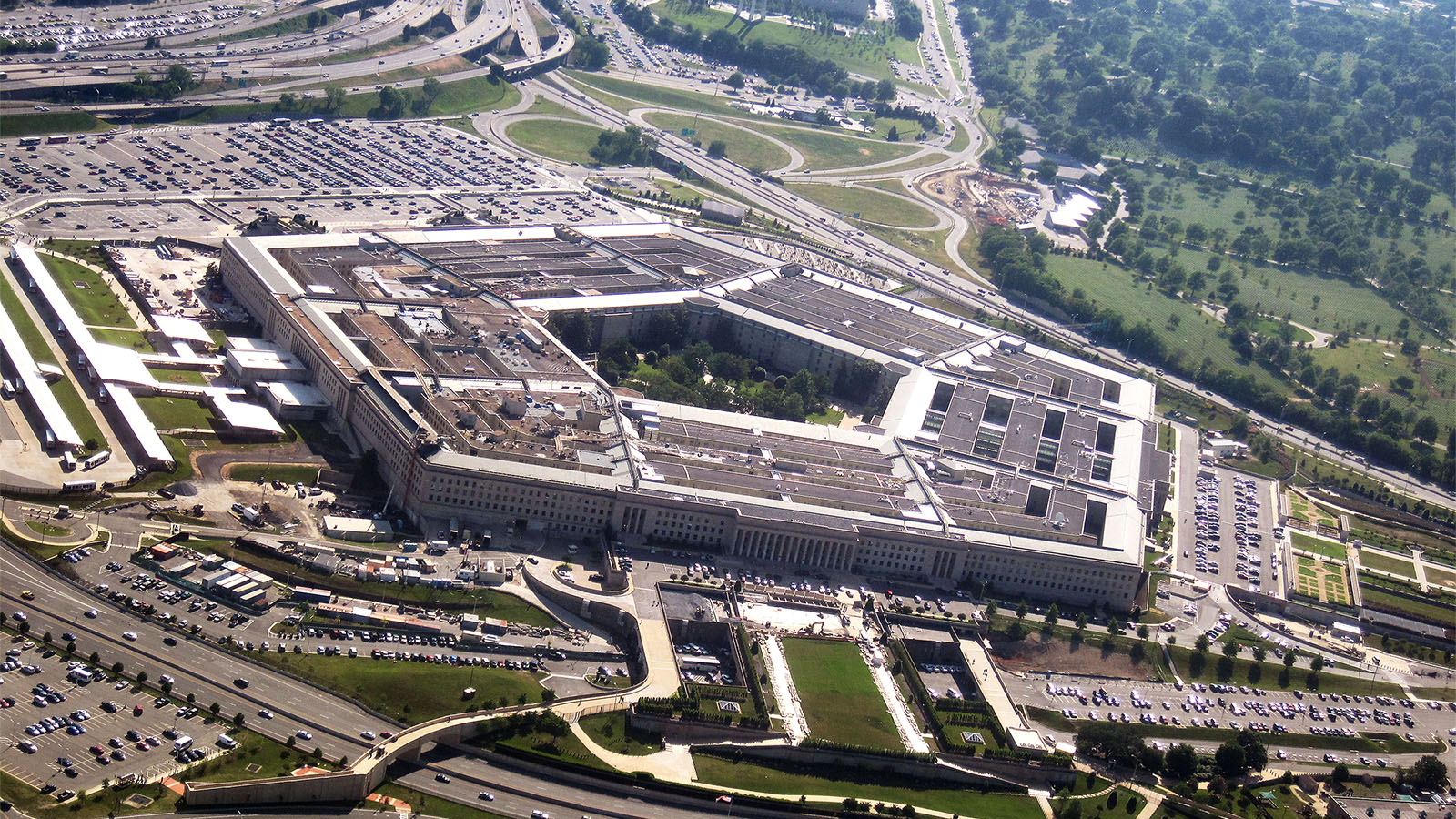
The Pentagon, the headquarters of the US Department of Defense, in Washington. (Photo courtesy of Wikipedia/Creative Commons)
The nuncio’s office did not respond to multiple requests to confirm the account forwarded by Burch and the embassy regarding the alleged conversation with Pierre. However, on Friday, the Vatican press office issued a statement saying the Pentagon meeting occurred “within the regular mission of the Pontifical Representative and provided an opportunity for an exchange of views regarding matters of mutual interest.” The statement also said the “narrative offered by some media outlets regarding this meeting is completely untrue.”
Meanwhile, an X message by a Vatican official, the Rev. Antonio Spadaro, undersecretary for the Dicastery for Culture and Education, may indicate how the Vatican is positioning itself as a bridge-builder, despite increasingly strident anti-war rhetoric from Leo. Spadaro, who acknowledged the meeting was “unusual,” wrote that as “international language is increasingly dominated by the logic of force, deterrence, and security,” Vatican diplomacy aims to present an alternate approach of “listening, dialogue, persistence.”
The Free Press report inspired widespread concern on social media, including from Rep. Ted Lieu, D-California, a Catholic, who wrote on X about concerns the U.S. military would try to attack the Vatican, though most other observers did not seem to expect military action against the Vatican.
Though the Free Press is not known for reporting on the Catholic Church, the reporter behind the story, Mattia Ferraresi, who typically writes for Italian newspaper Domani, is well-regarded by some Vatican experts.
“He has been for many years the New York correspondent of an important Italian newspaper who is very cautious and attentive to American issues,” Faggioli said. “This journalist has important contacts in the United States.”
Faggioli, the author of several books about Pope Francis, Catholicism in U.S. politics, and church history, said that holding such a meeting at the Pentagon was an inappropriate diplomatic gesture, adding to a growing sense among church leaders that the U.S. administration is “destructive.” Though, he said, “This is not the first time that the Trump administration makes gestures that violate certain basic rules of relations with the Vatican.”
Pope Leo XIV holds his weekly general audience in the Paul VI Hall at the Vatican, Wednesday, Jan. 7, 2026. (AP Photo/Alessandra Tarantino)
However, Faggioli said the impacts of Trump administration policies on immigrant Catholics in the U.S. amid the mass deportation efforts, and Catholics in the Middle East during the Iran war, in addition to impacts on non-Catholics, have moved the church to a new stance. “In some sense, this is the second beginning of Pope Leo’s pontificate,” Faggioli said. “Pope Leo has been more cautious and more disciplined, but he has been pushed out of that caution because the situation has escalated.”
The Free Press reported that DoD officials objected to what they viewed as implied Vatican criticism of the Trump administration’s foreign policy in a January speech to diplomats, when Leo said, “A diplomacy that promotes dialogue and seeks consensus among all parties is being replaced by a diplomacy based on force.”
Much of the debate surrounding the meeting has centered on the allegation in the Free Press reporting that a Pentagon official referenced the Avignon Papacy during the meeting. RNS asked officials at both DoD and the nuncio’s office about the allegation. Officials at the nuncio’s office did not directly respond to the question, and a DoD spokesperson declined to comment. In an X post, Burch claimed that Pierre denied mention of the Avignon Papacy.
Matthew Gabriele, a professor of medieval studies at Virginia Tech, said discussion of the Avignon Papacy unsettles many Catholics because it recalls a particularly bleak period in church history beginning in the 14th century.
“The French king at the time, Philip IV — also known as Philip the Fair because he had fair skin, not because he was particularly nice — exerted pressure on the papacy and basically kidnapped the pope and installed him at Avignon,” said Gabriele, who also runs the “American Medieval” podcast. “Avignon was very convenient for the French king because it was technically still in the lands of the Holy Roman Empire, but very close to the French border. So the French king could exert control over the papacy.”
Gabriele explained that in addition to influencing the pontiff on day-to-day matters, the French king also likely had an impact on the selection of new popes. Unlike modern conclaves, when cardinals eligible to elect a pope are secluded from the outside world, prelates who selected pontiffs at the time were potentially subject to intimidation, including military threats.
“If you had a whole bunch of soldiers in the room — French royal soldiers, for example — you could really decide who becomes the next pope,” Gabriele said. “That’s effectively what happened throughout much of the Avignon Papacy.”
In confirming the meeting, both the U.S. nunciature and the Pentagon specified that the meeting took place on Jan. 22, four days after Timothy Broglio, archbishop of the Military Services, USA, told the BBC it “would be morally acceptable” for troops to disobey an immoral order. Their confirmations contradict the timing the Free Press reported, which portrays Broglio’s comments as occurring after the meeting and part of building tension that ensued afterward.
Archbishop Timothy Broglio in April 2025. (Video screen grab)
“I think we need to understand this meeting in the context of the whole illegal orders controversy,” said Peter Campbell, an associate professor of political science at Baylor University in Texas, who studies the military.
Prior to the meeting, the Trump administration had sought a grand jury indictment against six Democratic lawmakers, who appeared in a November video urging U.S. military members to refuse illegal orders, which President Donald Trump suggested in a social media post was an offense “punishable by death.” Michigan Sen. Elissa Slotkin told The New York Times she had organized the video after she had heard concerns from troops about the legality of attacks on alleged drug traffickers.
Campbell said the Pentagon’s messaging about those kinds of comments stem from concerns that the chain of command is being undermined.
Though Broglio did not publicly criticize the Trump administration’s military decisions as president of the U.S. Conference of Catholic Bishops — a post he held until last November — as those legality questions were raised in December, Broglio called the “intentional killing of noncombatants” illegal and immoral.
Broglio’s office did not respond to a request for comment on the January Pentagon meeting.
Campbell speculated that, given the timing of the meeting, “It’s probably just that the Trump administration was trying to let the Vatican know in no uncertain terms that they don’t appreciate what they see as attacks on the policy of the United States when it comes to immigration and when it comes to their war on drugs.”
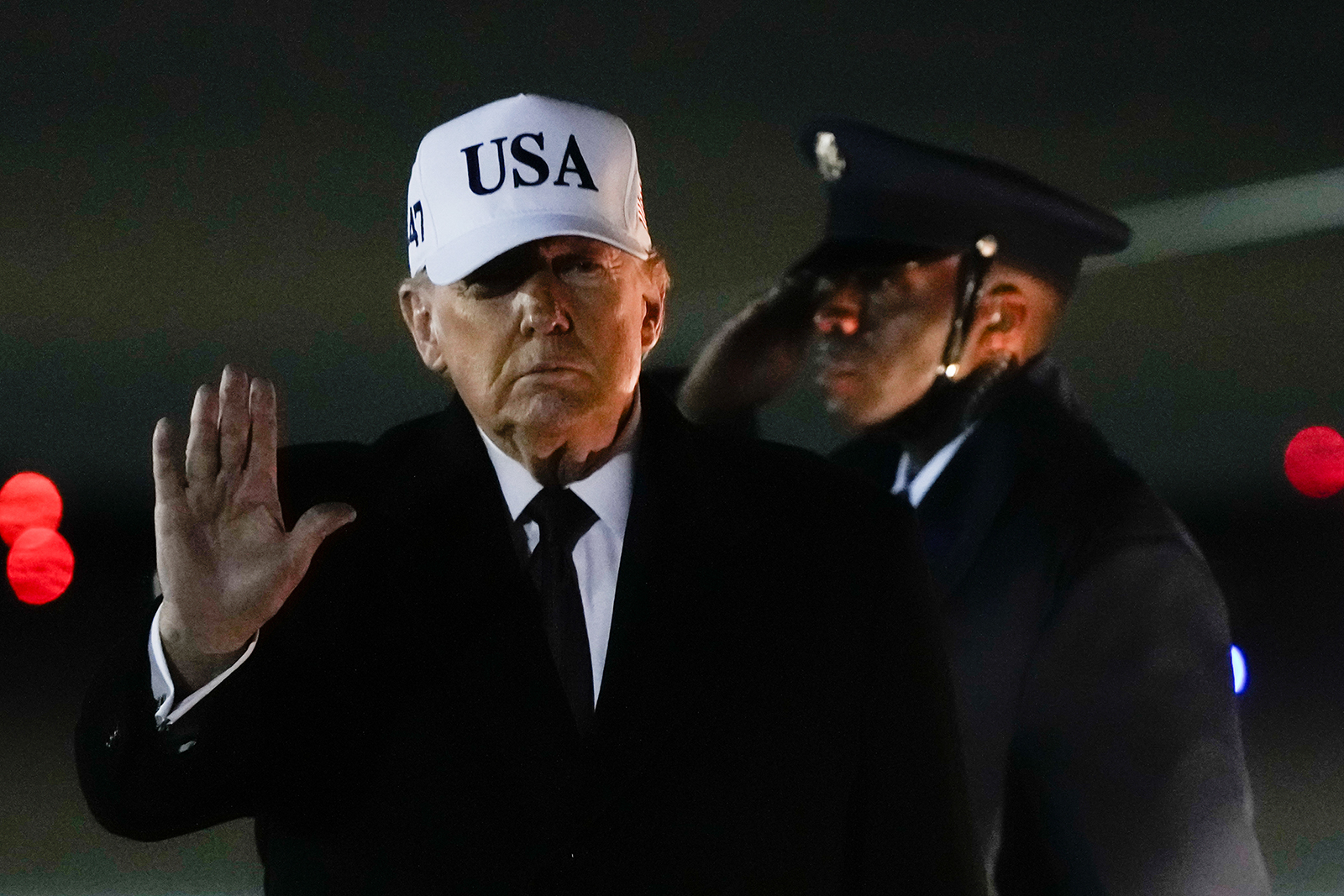
President Donald Trump waves after arriving on Air Force One from Florida, Sunday, Jan. 11, 2026, at Joint Base Andrews, Md. (AP Photo/Julia Demaree Nikhinson)
Some Catholic insiders suspect the precise contents of the meeting will remain a mystery. In a post on X, author and commentator the Rev. James Martin, who also serves as a consultor to the Vatican’s communications department, said he had “no doubt” that government officials “could have spoken bluntly, even rudely, to Cardinal Christophe Pierre.” Even so, he suggested a diplomat at the famously reticent Vatican is unlikely to offer details to the press.
“I highly doubt that Cardinal Pierre, a smart man, a kind priest, and, above all, a consummate diplomat, will ever say anything about what was said on the record,” Martin wrote. “Nor will the Holy See or the current nuncio.”
Pope Leo says he does not fear Trump, citing Gospel as he pushes back in feud over Iran war
WASHINGTON (AP) — While it’s not unusual for popes and presidents to be at cross purposes, it’s exceedingly rare for the pope to directly criticize a U.S. leader — and Trump’s stinging response is equally uncommon, if not more so.
Pope Leo XIV speaks to journalists aboard his flight bound for Algiers’ Houari Boumédiène International Airport on Monday, April 13, 2026, at the start of an 11-day apostolic journey to Africa. (Alberto Pizzoli/Pool Photo via AP)
WASHINGTON (AP) — U.S.-born Pope Leo XIV pushed back Monday on President Donald Trump’s broadside against him over the U.S.-Israel war in Iran, telling reporters that the Vatican’s appeals for peace and reconciliation are rooted in the Gospel, and that he doesn’t fear the Trump administration.
“To put my message on the same plane as what the president has attempted to do here, I think is not understanding what the message of the Gospel is,” Leo told The Associated Press aboard the papal plane en route to Algeria. “And I’m sorry to hear that but I will continue on what I believe is the mission of the church in the world today.”
History’s first U.S.-born pope stressed that he was not making a direct attack against Trump or anyone else with his general appeal for peace and criticisms of the “delusion of omnipotence” that is fueling the Iran wars and other conflicts around the world.
“I will not enter into debate. The things that I say are certainly not meant as attacks on anyone. The message of the Gospel is very clear: ‘Blessed are the peacemakers,’” Leo said.
“I will not shy away from announcing the message of the Gospel and inviting all people to look for ways of building bridges of peace and reconciliation, and looking for ways to avoid war any time that’s possible”
Speaking to other reporters, he added: “I’m not afraid of the Trump administration or of speaking out loudly about the message of the Gospel, which is what the Church works for.”
“We are not politicans. We do not look at foreign policy from the same perspective that he may have,” the pope said, adding, ”I will continue to speak out strongly against war, seeking to promote peace, promoting dialogue and multilateralism among states to find solutions to problems.
“Too many people are suffering today, too many innocent people have been killed, and I believe someone must stand up and say that there is a better way,” he said. Trump says Leo is not ‘doing a very good job’
Trump delivered an extraordinary broadside against Leo on Sunday night, saying he didn’t think the U.S.-born global leader of the Catholic Church is “doing a very good job” and that “he’s a very liberal person,” while also suggesting the pontiff should “stop catering to the Radical Left.”
Flying back to Washington from Florida, Trump used a lengthy social media post to sharply criticize Leo, then kept it up after deplaning, in comments on the tarmac to reporters.
“I’m not a fan of Pope Leo,” he said.
Trump’s comments came after Leo suggested over the weekend that a “delusion of omnipotence” is fueling the U.S.-Israel war in Iran. While it’s not unusual for popes and presidents to be at cross purposes, it’s exceedingly rare for the pope to directly criticize a U.S. leader — and Trump’s stinging response is equally uncommon, if not more so.
“Pope Leo is WEAK on Crime, and terrible for Foreign Policy,” the president wrote in his post, adding, “I don’t want a Pope who thinks it’s OK for Iran to have a Nuclear Weapon.”
Italian politicians across the spectrum showed their solidarity with Leo. Premier Giorgia Meloni sent a message of support for his peace mission while the leader of the main opposition party, Elly Schlein, was more direct, calling Trump’s attacks “extremely serious.”
Trump repeated that sentiment in comments to reporters, saying, “We don’t like a pope who says it’s OK to have a nuclear weapon.”
Later, Trump posted a picture suggesting he had saint-like powers akin to those of Jesus Christ. Wearing a biblical-style robe, Trump is seen laying hands on a bedridden man as light emanates from his fingers, while a soldier, a nurse, a praying woman and a bearded man in a baseball cap all look on admiringly. The sky above is filled with eagles, an American flag and vaporous images.
Leo’s opposition to war irked Trump
All of that came after Leo presided over an evening prayer service in St. Peter’s Basilica on Saturday, the same day the United States and Iran began face-to-face negotiations in Pakistan during a fragile ceasefire. The pope didn’t mention the United States or Trump by name, but his tone and message appeared directed at Trump and U.S. officials, who have boasted of U.S. military superiority and justified the war in religious terms.
Leo, who is on an 11-day trip to Africa starting Monday — has previously said that God “does not listen to the prayers of those who wage war, but rejects them.” He’s also referenced an Old Testament passage from Isaiah, saying that “even though you make many prayers, I will not listen — your hands are full of blood.”
In his social media post on Sunday night, however, Trump went far beyond the war in Iran in criticizing Leo.
The president wrote, “I don’t want a Pope who thinks it’s terrible that America attacked Venezuela, a Country that was sending massive amounts of Drugs into the United States.” That was a reference to the Trump administration having ousted Venezuelan President Nicolás Maduro in January.
“I don’t want a Pope who criticizes the President of the United States because I’m doing exactly what I was elected, IN A LANDSLIDE, to do,” Trump added, referencing his 2024 election victory.
He also suggested in the post that Leo only got his position “because he was an American, and they thought that would be the best way to deal with President Donald J. Trump.”
“If I wasn’t in the White House, Leo wouldn’t be in the Vatican,” Trump wrote, adding, “Leo should get his act together as Pope, use Common Sense, stop catering to the Radical Left, and focus on being a Great Pope, not a Politician. It’s hurting him very badly and, more importantly, it’s hurting the Catholic Church!”
In his subsequent comments to reporters, Trump remained highly critical, saying of Leo, “I don’t think he’s doing a very good job. He likes crime I guess” and adding, “He’s a very liberal person.”
Bishops say the pope is not a politician
Archbishop Paul S. Coakley, president of the U.S. Conference of Catholic Bishops, issued a statement saying he was “disheartened” by Trump’s comments.
“Pope Leo is not his rival; nor is the Pope a politician. He is the Vicar of Christ who speaks from the truth of the Gospel and for the care of souls,” Coakley said.
The Italian Bishops’ Conference expressed regret over Trump’s words, and underlined that the pope “is not a political counterpart, but the successor of Peter, called to serve the Gospel, truth and peace.”
In the 2024 election, Trump won 55% of Catholic voters, according to AP VoteCast, an extensive survey of the electorate. But Trump’s administration also has close ties to conservative evangelical Protestant leaders and has claimed heavenly endorsement for the war on Iran.
Defense Secretary Pete Hegseth urged Americans to pray for victory “in the name of Jesus Christ.” And, when Trump was asked whether he thought God approved of the war, he said, “I do, because God is good — because God is good and God wants to see people taken care of.”
Winfield reported from aboard the papal plane.
Trump says ‘not a big fan’ of Pope Leo after his anti-war message
US President Donald Trump slammed the Pope's anti-war message as he returned to the White House after a weekend of golf and UFC fighting - Copyright AFP ATTA KENARE
US President Donald Trump told reporters Sunday that he is “not a big fan” of Pope Leo XIV, after the global leader of Catholics made a plea for peace amid the war in the Middle East.
The 70-year-old American pope publicly implored leaders on Saturday to end the violence, telling worshippers at St Peter’s Basilica: “Enough of the idolatry of self and money! Enough of the display of power! Enough of war!”
“I’m not a big fan of Pope Leo. He’s a very liberal person, and he’s a man that doesn’t believe in stopping crime,” Trump told reporters at Joint Base Andrews in Maryland.
He accused the pontiff of “toying with a country that wants a nuclear weapon.”
Trump later doubled down on his comments to reporters with a post on Truth Social, saying: “I don’t want a Pope who thinks it’s OK for Iran to have a Nuclear Weapon.”
“Pope Leo is WEAK on Crime, and terrible for Foreign Policy,” he said.
The president added that Leo had only been elected “because he was an American, and they thought that would be the best way to deal with President Donald J. Trump.”
“If I wasn’t in the White House, Leo wouldn’t be in the Vatican.”
Trump later posted an AI-generated image seemingly depicting himself as Jesus Christ.
In the image, the president appears dressed in red and white robes as he cures a man with his healing hand. The American flag is shown over his shoulder.
Trump and the White House have previously shared AI-generated images, including one that showed the president dressed as the pope.
– Rejecting a rift –
Washington and the Vatican have rejected reports of a rift.
On Friday, a Vatican official denied reports that a top Pentagon official gave the church’s envoy to the United States a “bitter lecture” over Pope Leo’s criticisms of the Trump administration.
The story in the Free Press — which the Pentagon had already dismissed as “distorted” — reported that Cardinal Christophe Pierre was summoned in January to the Pentagon, where he was given a dressing-down by US Under Secretary of Defense for Policy Elbridge Colby.
The military official reportedly told the cardinal that the United States “has the military power to do whatever it wants — and that the Church had better take its side.”
Vatican spokesman Matteo Bruni said in a statement “the account presented by certain media outlets regarding this meeting does not correspond to the truth in any way.”
While both parties insist the meeting was cordial, the Holy See and the White House have openly been at odds over the Trump administration’s hardline mass deportation campaign — which the pope called “inhuman” — and the use of military force in the Middle East and Venezuela.
When Trump made genocidal threats against Iran Tuesday — saying “A whole civilization will die tonight, never to be brought back again” — the pontiff slammed the “truly unacceptable” statement and urged parties to “come back to the table” for negotiations.
Earlier this month, Pope Leo hailed the news of a ceasefire between the United States and Iran as a “sign of real hope.”
But peace talks between the United States and Iran, held in the Pakistani capital Islamabad, ended abruptly and without a resolution on Saturday, with US Vice President JD Vance telling reporters after a marathon-session of talks that Washington has delivered its “final and best offer.”
Trump rages at 'weak' Pope Leo XIV over criticisms: 'Leo should get his act together!'
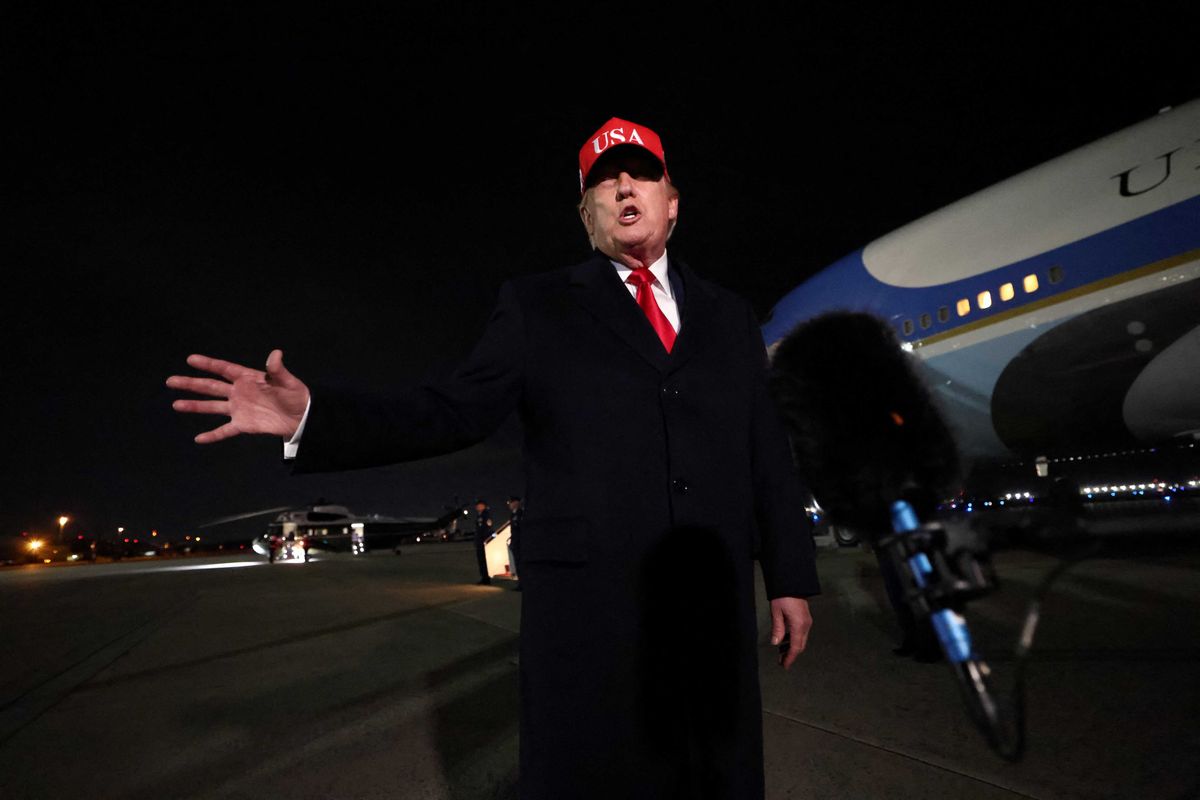
U.S. President Donald Trump speaks after disembarking Air Force One as he arrives at Joint Base Andrews in Maryland, U.S., April 12, 2026. REUTERS/Kevin Lamarque
President Donald Trump raged at Pope Leo XIV in a Truth Social post on Sunday night after the Pope criticized the president.
Pope Leo has been an outspoken critic of Trump's war with Iran, and called the president's threat to destroy the Iranian civilization "truly unacceptable." The Pope has also rebuked the president's immigration policies.
"Enough of the idolatry of self and money!” Leo said on Saturday, according to the Associated Press. “Enough of the display of power! Enough of war!”
Trump responded to Pope Leo's criticisms on Sunday on Truth Social.
"Pope Leo is WEAK on Crime, and terrible for Foreign Policy. He talks about 'fear' of the Trump Administration, but doesn’t mention the FEAR that the Catholic Church, and all other Christian Organizations, had during COVID when they were arresting priests, ministers, and everybody else, for holding Church Services, even when going outside, and being ten and even twenty feet apart," Trump wrote. "I like his brother Louis much better than I like him, because Louis is all MAGA. He gets it, and Leo doesn’t!"
"I don’t want a Pope who thinks it’s terrible that America attacked Venezuela, a Country that was sending massive amounts of Drugs into the United States and, even worse, emptying their prisons, including murderers, drug dealers, and killers, into our Country," Trump added. "And I don’t want a Pope who criticizes the President of the United States because I’m doing exactly what I was elected, IN A LANDSLIDE, to do, setting Record Low Numbers in Crime, and creating the Greatest Stock Market in History."
"Leo should get his act together as Pope, use Common Sense, stop catering to the Radical Left, and focus on being a Great Pope, not a Politician. It’s hurting him very badly and, more importantly, it’s hurting the Catholic Church!" Trump continued.
Observers mock 'lunatic' Trump's late-night diatribe about Pope Leo XIV: 'Bro, go to bed'
Political analysts and observers mocked President Donald Trump on Sunday night after he issued a lengthy diatribe against Pope Leo XIV.
Pope Leo has sharply criticized the Trump administration's immigration policies and its war with Iran. Those criticisms seem to have gotten under Trump's skin, as he raged at the "weak" Pope for his handling of "crime" and "foreign policy" in a new post on Truth Social.
"I don’t want a Pope who thinks it’s OK for Iran to have a Nuclear Weapon," Trump wrote. "I don’t want a Pope who thinks it’s terrible that America attacked Venezuela, a Country that was sending massive amounts of Drugs into the United States and, even worse, emptying their prisons, including murderers, drug dealers, and killers, into our Country."
"And I don’t want a Pope who criticizes the President of the United States because I’m doing exactly what I was elected, IN A LANDSLIDE, to do, setting Record Low Numbers in Crime, and creating the Greatest Stock Market in History," he added. "Leo should be thankful because, as everyone knows, he was a shocking surprise. He wasn’t on any list to be Pope, and was only put there by the Church because he was an American, and they thought that would be the best way to deal with President Donald J. Trump. If I wasn't (sic) in the White House, Leo wouldn’t be in the Vatican."
Political analysts and observers reacted on social media.
"Bro, go to bed," Rep. Malcom Kenyatta, a Democrat in Pennsylvania, posted on X.
"I've never been closer to converting to Catholicism than this moment," physician Eric Strong posted on Bluesky. "I have absolutely no intention of ever doing so - but this is still the closest I've been."
"Trump is a f------ lunatic," writer Polly Sigh posted on X.
"Way to build coalitions. Attack the Pope!" writer Wajahat Ali posted on X.
Op-Ed: Trump vs Pope is not a fight Trump can win.
Pope Leo painted a grim picture of the current state of the world during a prayer vigil for peace at St Peter's Basilica - Copyright AFP Filippo MONTEFORTE
Americans seem to think that the rest of the world is some sort of sideshow. 8 billion people think otherwise.
Let’s leave out the fully justified sarcasm. The Pope doesn’t have the Epstein files on his To Do list, nor a plague of lawsuits dating back years. The Pope isn’t presiding over the biggest, dirtiest, most crime-ridden money laundry on Earth in conjunction with global organized crime that makes trillions a year. Trump has never even mentioned organized crime in either term.
The Pope isn’t even threatening to destroy civilizations. The guy should obviously get out more and mix with the real conservative geniuses who selflessly destroy their own countries with or without wars.
The Pope is also accused of catering to the Radical Left, that omnipresent, vicious global threat that never seems to do anything at all. The same Radical Left we’ve been calling “leftovers” for decades now, based on their equally dated rhetoric. Catering may even go so far as a feeble smile and an overpriced avocado sandwich.
Trump also posted a truly nauseating picture of himself as a saviour-like figure healing the sick by laying on of AI-generated glowing hands. Some might call it heresy. Others might call it bad taste in a country maimed by medical costs.
The world’s 1.4 billion Catholics may not be impressed by all this.
Neither is anyone else.
Even Murdoch’s News Group is calling it “weird”. According to the quote in that link, the Pope “likes crime’. That News article is interesting because it uses the same misplaced capitalizations that Trump includes in every statement. It may well be verbatim to some extent.
Trump was elected to be President of the United States.