Wednesday, April 15, 2026

THE EPSTEIN CLASS


Unearthed FBI doc undercuts White House denial about Epstein's connection to Melania Trump


Alexander Willis
April 14, 2026 
RAW STORY
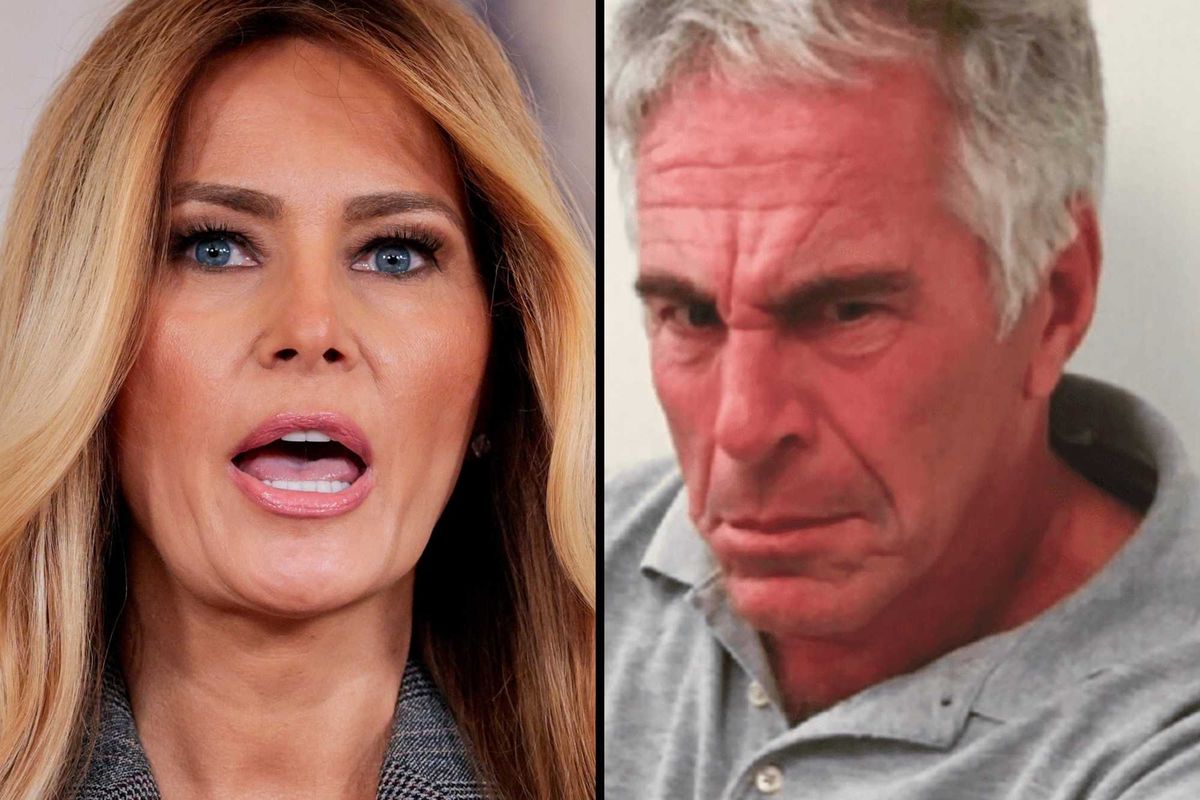

Left: U.S. first lady Melania Trump delivers remarks regarding the late financier and convicted child abuser Jeffrey Epstein from the Grand Foyer of the White House in Washington, D.C., U.S., April 9, 2026. 
Right: An undated photo of Jeffrey Epstein released by the Department of Justice. (DOJ)
REUTERS/Evan Vucci


A newly unearthed FBI document appears to directly contradict First Lady Melania Trump’s surprise statement last week regarding how she met her husband, President Donald Trump, and whether Jeffrey Epstein had played a role.

Last week, Mrs. Trump stunned onlookers by issuing a statement – seemingly unprompted – denying having had a relationship with Epstein, and denying allegations that the disgraced financier had been the one to introduce her to Trump. Paolo Zampolli, a former modeling agent who now serves as Trump’s special envoy, later claimed that he was the one to introduce Mrs. Trump to her future husband.

But according to a 2019 FBI interview summary report, one witness – a female from Poland who claimed to have worked for Epstein in the mid-2000s – it was not Zampolli who introduced Mrs. Trump to the future president, but rather, Epstein himself.

“EPSTEIN introduced MELANIA TRUMP to DONALD TRUMP,” the FBI summary document reads, written by an FBI special agent whose name was redacted in the document.

In her statement last week, Mrs. Trump explicitly denied that she had been introduced to her future husband by Epstein, saying that she instead met Mr. Trump “by chance, at a New York City party in 1998,” noting that further details of the encounter were “documented in detail in my book, MELANIA.” Zampolli, long a close friend to Mr. Trump, backed up Mrs. Trump’s claim that same week by calling the allegation that Epstein introduced the two “nonsense.”

According to the witness interview by the FBI in 2019, however, not only did Epstein introduce Mrs. Trump to Mr. Trump, but "the agent" – presumably Zompolli, based on context – had an “affair” with the witness, and had also attempted to purchase Elite Model Management – a French modeling agency that represented Trump’s daughter, Ivanka, when she was 15 years old – with Epstein.

“[Redacted] had an affair with the agent. ZEMPOLI was trying to buy Elite Models with EPSTEIN,” the report reads. “EPSTEIN was visiting ZEMPOLI at the agency when there were casting auditions for models. EPSTEIN was looking through portfolios and saw [Redacted’s] photograph of her wearing only swim bottoms.”

During her statement last week, Mrs. Trump also appeared to acknowledge sending a 2002 email to Epstein accomplice Ghislaine Maxwell, who’s currently serving a 20-year sentence for child abuse. In the email, a sender named “Melania” complimented who is believed to be Maxwell on her appearance in a New York Magazine article, and exchanged pleasantries. Mrs. Trump dismissed the email as nothing more than “casual correspondence.”

Trump, Mrs. Trump and Zampolli are not facing any criminal charges or accusations of wrongdoing. The claims of the witness whose interview was summarized by the FBI have not been verified by the agency.


Latest in the Epstein scandal makes Melania's tedious documentary worth watching

(REUTERS)

April 13, 2026
ALTERNET

Smack dab in the Rust Belt city of Allentown, Pennsylvania, the Movie Tavern Trexlertown is a welcome hybrid of multiplex and gastropub. Yet even though I was there to join a large audience to experience a sci-fi masterpiece called “Project Hail Mary,” I allowed my curiosity to briefly lead me on a tangent about a film with a drastically — um — different quality.

“Was there anything like these crowds for ‘Melania’?” I asked the employee who sold me my ticket. They bristled at the title; I clarified that I was a film critic seeking demographic information and not a supporter of President Donald Trump. They relaxed, then answered: “Not a lot of people saw that, but a few did.” “Melania” viewers tended to be groups of senior citizens turning out to support Trump.

I cannot imagine any form of political self-expression more masochistic than watching “Melania.” The literally plotless documentary about the 20 days before Trump’s second inauguration is, on its face, stupefyingly dull — a hagiographic non-portrait of a non-entity of a First Lady — and I cannot recommend it either as a genuinely good film or even as an ironically entertaining one. One scene cracks that facade, her attendance at President Jimmy Carter's memorial, and it exposes how narcissism-fueled deflection collapses when incompetently executed.

To understand that fascinating moment, which puts the “scene” in “obscene,” one must juxtapose it with Melania Trump’s recent speech about her husband's and her own controversial ties to the late Jeffrey Epstein, the infamous convicted child sex trafficker to the rich and powerful.

In terms of their legacies, Carter was as far removed from Epstein as two human beings can be from one another. He served a single distinguished presidential term from 1977 to 1981 and is best remembered for achieving a lasting peace between Israel and Egypt, returning the Panama Canal to Panama, supporting liberal social legislation (such as on women’s rights and disability rights), struggling with inflation and a hostage crisis with Iran.

You learn exactly none of this in “Melania.” In fact, from this movie, you know nothing about Carter’s life or achievements other than the fact that he once was a president and now he is dead. Instead all we hear about is Melania use the historic, solemn ceremony held in the January after his Dec. 29, 2024 passing as an opportunity to talk about her deceased mother. Given that the late Amalija Knavs did indeed pass away one year earlier, this is forgivable up to a point; it is understandable to mention her mother, but not to focus entirely on her — or, to be more precise, Melania’s performance of a grief response, which receives far more attention than any details about Kvans herself.

The problem, from a dramatic standpoint, is that Melania’s act is so hollow it becomes its own kind of confession. She talks about her mother in platitudes delivered with so little conviction, such a lack of emotion, that the matriarchal shift feels less like a sincere tribute than a roundabout opportunity to make Carter’s story about herself. One who watches “Melania” for the Carter scene will learn absolutely nothing about Carter, true, but they will also learn only slightly more about Amalija Knavs.

The scene is the thesis — a woman surrounded by weight and gravity, contributing nothing.

I’d like to contribute something from my own interaction with Carter, in the summer of 2018 for a Salon Magazine interview about the anniversary of his 1979 speech on America’s existential “crisis of confidence.” We spoke briefly twice, with his bristly demeanor on both occasions being not dissimilar to that of the aforementioned movie theater cashier. I don’t know why Carter felt this way, but I do know his ornery attitude fueled this observation about Trump’s presidency.

“I think that under Trump the government is worse than it has been before,” Carter explained by email. “This is the first time I remember when the truth is ignored, allies are deliberately aggravated, China, Europe, Mexico and Canada are hurt economically and have to hurt us in response, Americans see the future worse than the present, and immigrants are treated cruelly.”

When asked if America still has a “crisis of confidence,” he said that “we still have the same crises of that time.


He then added “plus a serious loss of faith in democracy, the truth, treating all people as equals, each generation believing life would be better, America has a good system of justice, etc.” When I pointed out that in 1979 he observed “what you see too often in Washington and elsewhere around the country is a system of government that seems incapable of action. You see a Congress twisted and pulled in every direction by hundreds of well-financed and powerful special interests,” he concluded “this is much worse than when I gave the speech.”

I could not help but think of these “hundreds of well-financed and powerful special interests” in both the White House and Congress when it comes to the Epstein scandal. Combined with my ongoing anger at Trump for refusing to keep the flag lowered after Carter’s death during his inaugural ceremonies, I felt indignant at the Trumps’ ostentatious neutrality toward Carter’s life and legacy. If nothing else, Trump could learn from Carter’s longevity; the health-conscious Baptist was the only president to make it to 100, which looks increasingly unlikely for Trump given his penchant for Franken-burgers and angry outbursts about things he can’t control.

This brings us back to Melania Trump’s White House speech, which in its angry defensiveness betrayed more authentic emotion in less than 10 minutes than “Melania” the film did in more than 100. The first lady’s speech was seemingly prompted by various impending salacious reports about the relationship between the future president and first lady and the notorious pedophile (including that the Trumps first slept together on an Epstein plane named after “Lolita,” a book about a fictional pedophile which inspired a classic 1962 black comedy film with the same title... which is also far better than “Melania,” directed by Epstein associate Brett Ratner).

Yet despite finally bringing some emotional realness to her public presence, Melania could not do the same with factual realness. For instance, despite saying she only interacted with Epstein’s close aide Ghislaine Maxwell casually, in 2002 Melania sent an email to Maxwell saying “HI!”, describing Maxwell’s travel plans and signing it “Love, Melania.” Maxwell meanwhile referred to then-Melania Knauss as “sweet pea.” Perhaps more damningly, a 2016 email to Epstein from a redacted sender alleged Melania actually met Donald through Epstein.


“I remember flying back with Donald on his plane the first weekend I went to visit you in Florida was the weekend he met Melania and he kept on coming out of the bedroom saying’ wow what a hot piece of a--,’” the unknown sender wrote in the email.

"These images and stories are completely false,” Melania Trump said in her speech. “I am not a witness or a named witness in connection with any of Epstein's crimes."

When I juxtapose the emptiness of these two moments — Melania’s reaction to Carter’s memorial service and her reaction to being confronted over her ties to Epstein — the bottomless abyss reflects the absolute self-involvement that permeates every level of both Trumps’ entire being.

When they talk constantly about themselves, and make every story one in which they are the central characters, we inevitably go along with them simply because they possess so much power that they can compel conversations in that direction through sheer brute force. In the process, we start viewing the tragedies of others — a former president who died, countless children who were exploited — not in terms of the actual suffering, but the narcissistic self-interest of those who wish to ignore them either out of indifference or something more sinister. Even worse, we do not learn lessons that they have to teach us about the injustices that those in power perpetrate.
Mockery as Pete Buttigieg fact-checks MAGA host into a live TV meltdown: 'Dogwalked!''

JOE KERNAN IS AN IDIOT

#BUTTIGIERPOTUS2028


Robert Davis
April 13, 2026
RAW STORY


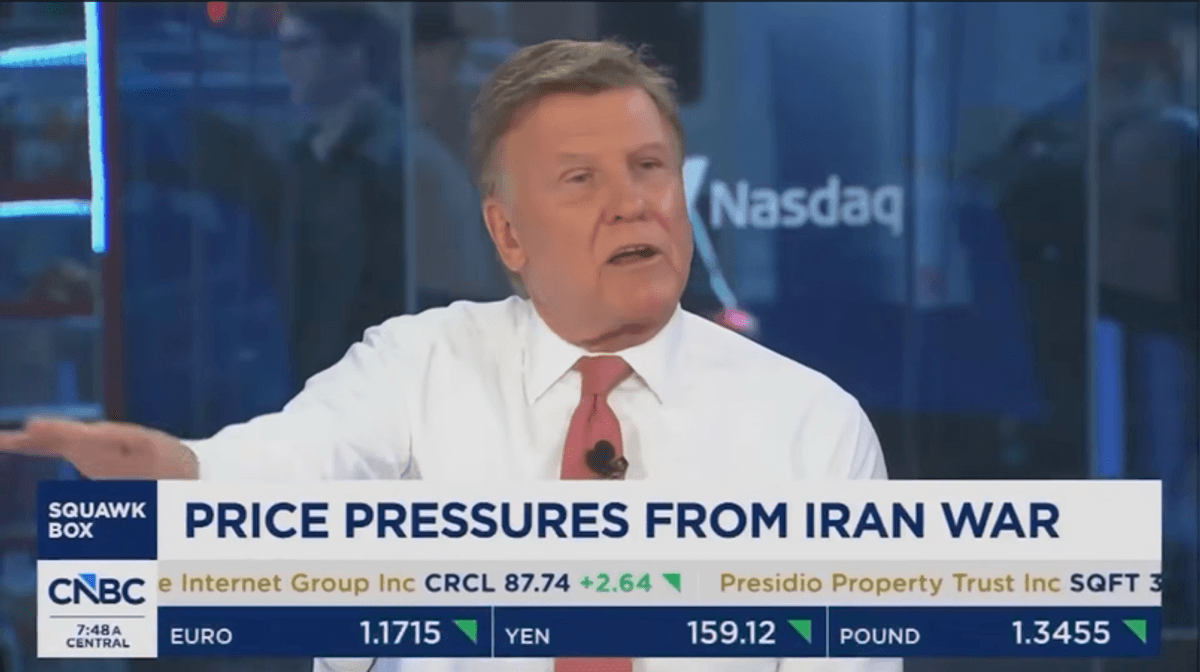
CNBC screenshot

A political commentator mocked a MAGA TV host for having a complete meltdown after being fact-checked on air.

David Pakman, host of the liberal news commentary show, "The David Pakman Show," said in a new video that MAGA CNBC host Joe Kernan got "dogwalked" by Democrat Pete Buttigieg during an interview on Monday. Buttigieg fact-checked Kernan on a couple of claims he made about the economy during the Biden administration, which caused Kernan to lose his cool.

"It takes two to tango ... On the one hand, Pete Buttigieg is really good at this stuff. On the other hand, Joe Kernan, who has come after me on Twitter and is just a triggerly guy overall, is not well-suited to remaining calm when he's getting dogwalked by Pete," Pakman said.

In one exchange, Buttigieg said he doesn't see an "obvious" way out of the war in Iran, which has caused global energy prices to skyrocket since the skirmish began about six weeks ago. Rising energy prices have also driven consumer prices to the highest point in two years, according to the latest economic data.

Kernan claimed that Trump's economy is doing better than Biden's because inflation is lower. Buttigieg reminded Kernan that the latest data show prices increased by 3.3% year-over-year, compared with the 2.9% inflation rate under the Biden administration.

"He said on day one it would go down, and he came in, and now it's up," Buttigieg said.

Kerner lost his cool and continuously interrupted Buttigieg during the segment.

"This is not a debate in any sense of the word," Pakman said. "When one person loses control of their ability to think and their ability to remain calm, this is what it looks like."


'They're getting sick of him': Ex-GOP operative in awe as Trump booed at UFC Miami

Robert Davis
April 13, 2026 
RAW STORY


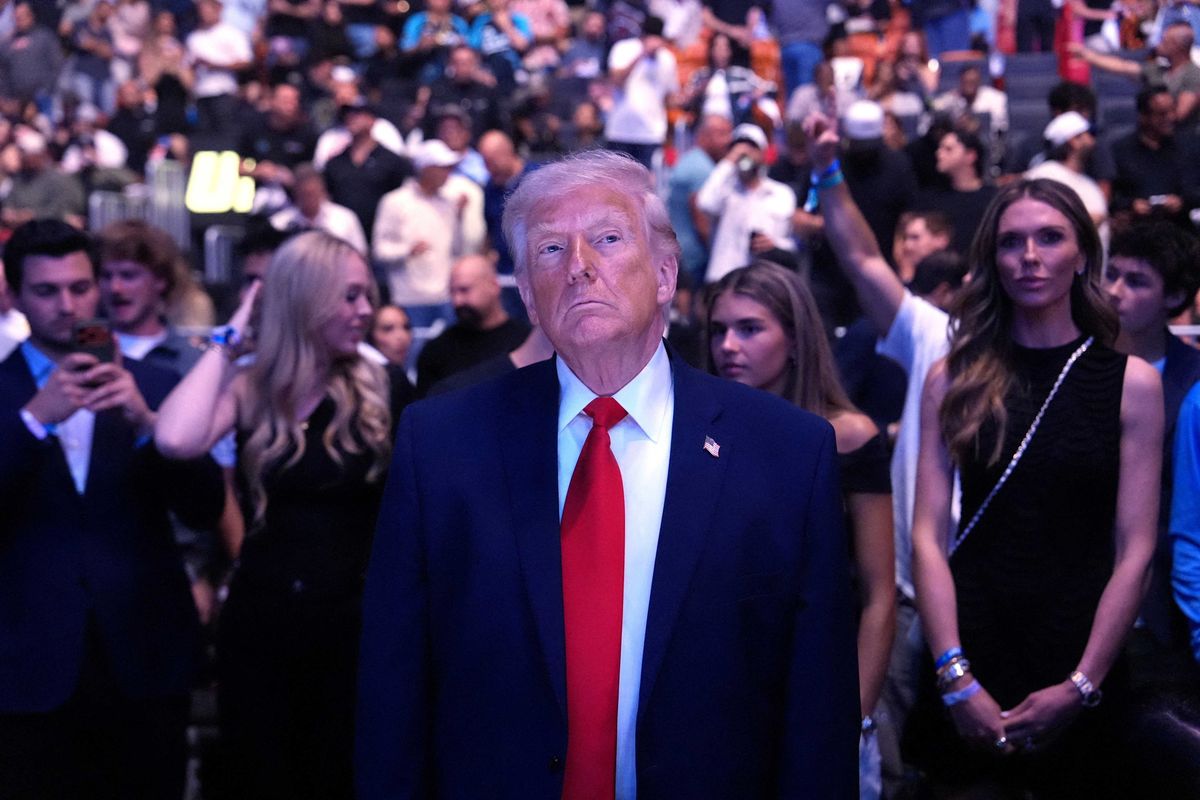
President Donald Trump attends UFC 327 at Kaseya Center in Miami, Florida, on April 11, 2026. Julia Demaree Nikhinson/Pool via REUTERS TPX IMAGES OF THE DAY

A former GOP operative said on Monday that he was in awe watching President Donald Trump get booed when he attended a UFC fight in Miami last week.

Trump was booed at the event on Saturday night while his family walked behind him as they entered the area. The event occurred as reports emerged that peace talks between the U.S. and Iran were falling apart.

Steve Schmidt, author of "The Warning" on Substack, said in a new video that the video of the event shows MAGA is getting sick of Trump.

"Can you hear the sound? The sound of the booing," Schmidt said. "This is a UFC match. This is Donald Trump's base in Miami. And it seems that if you listen to the crowd, they're getting sick of him."

Schmidt pointed to Trump's handling of the war in Iran as part of the reason why his fans were booing him.

"The war has traveled in unexpected directions," he said. "Who would have guessed at the beginning, when Donald Trump was saying the Iranians would soon make an unconditional surrender to him, that within 45 days' time the American position and the Iranian position would be the same."


Trump's attacks prompt key ally to cut US out of new defense plan: WSJ

Tom Boggioni
April 15, 2026 
RAW STORY


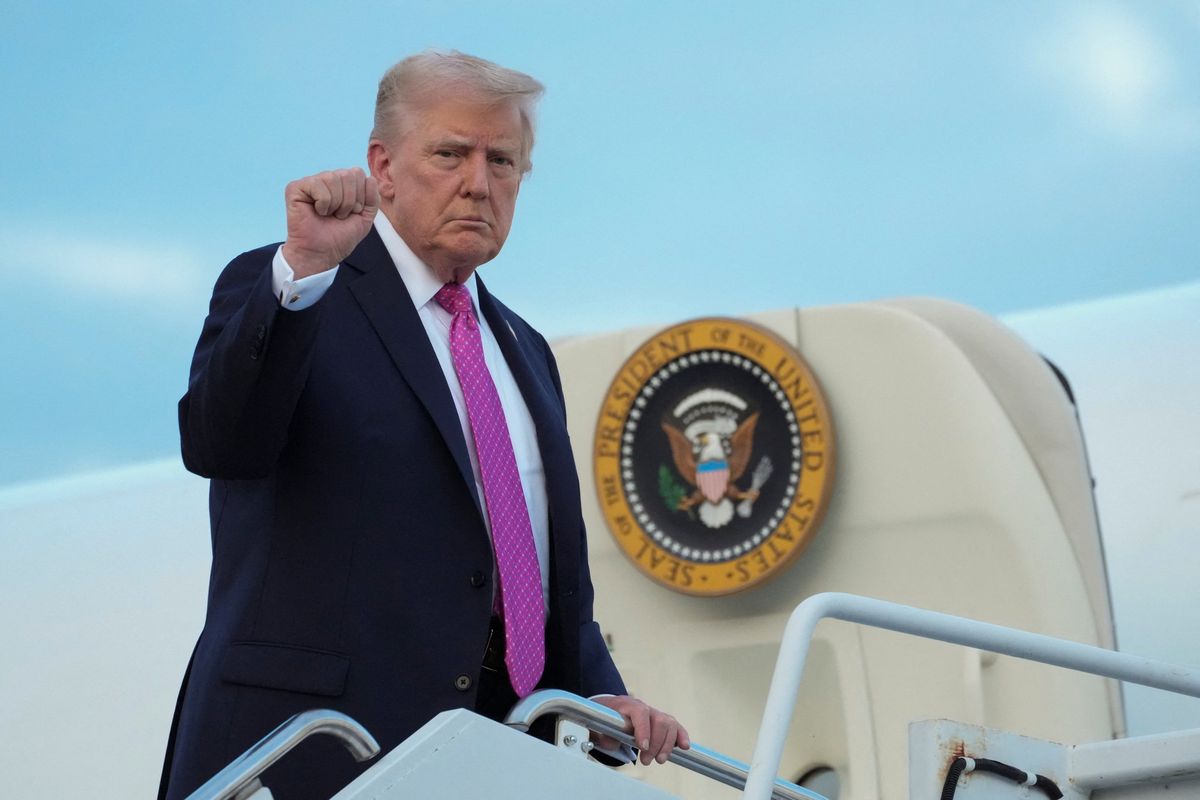
Donald Trump gestures as he boards Air Force One. REUTERS/Ken Cedeno

With Donald Trump becoming more erratic and lashing out at the traditional allies of the US, plans are afoot by members of the North Atlantic Treaty Organization (NATO) to create a separate version of the organization beyond the American president's reach.

According to the Wall Street Journal's Bojan Pancevski and Daniel Michaels, European officials are advancing informal plans for what some are calling "European NATO," a parallel structure that would give Europeans greater command-and-control authority and supplement U.S. military assets with their own capabilities.

The plans represent a massive shift in European strategic thinking now that Germany has ceased resisting French calls for greater European defense sovereignty, preferring American military guarantees. That calculus has fundamentally changed under German Chancellor Friedrich Merz, who is now actively participating in the initiative over concerns about U.S. dependability as an ally during the Trump presidency and beyond.

European officials are explicit about their purpose: preserve deterrence against Russia, operational continuity and nuclear credibility even if the Trump administration withdraws forces from Europe or refuses to come to its defense, as the president has repeatedly threatened.

Trump's recent rhetoric has only accelerated the timeline. He branded European allies as "cowards," called NATO "a paper tiger," and added menacingly, in reference to Putin: "Putin knows that too." He has also threatened to leave NATO entirely over Europe's refusal to support his Iran war, describing the move as already "beyond reconsideration," the Journal is reporting.

The momentum is undeniable. Finland's President Alexander Stubb, one of the leaders involved in the initiative, signaled the permanent nature of the shift: "A burden shifting from the U.S. toward Europe is ongoing and it will continue…as part of U.S. defense and national security strategy."

The report notes Europe is not waiting for Trump to make good on his threats. The plans, first conceived last year, have accelerated dramatically after Trump threatened to seize Greenland from NATO member Denmark and intensified amid the standoff over Europe's refusal to back the highly criticized Iran war.

Though congressional approval would be required for a formal NATO withdrawal, Trump retains broad authority as commander-in-chief to move troops or assets out of Europe or withhold support — a threat that has transformed European defense planning from theoretical to urgent.


Supreme Court justice's dire 1952 warning has come true: legal scholar


Daniel Hampton
April 14, 2026
RAW STORY

A Harvard-trained legal scholar sounded the alarm Tuesday that President Donald Trump has fulfilled a chilling Supreme Court prophecy from 1952 in which a justice warned that emergency powers, left unchecked, would "kindle emergencies."

Writing in Lawfare, Ben Diamond, a fellow at the Center for Applied Environmental Law and Policy, argued that Trump's second term has shattered historical norms around the use of emergency authority.

And Congress is powerless to stop it.

“Emergency powers would tend to kindle emergencies,” Justice Robert Jackson wrote in 1952, wrote Diamond, noting the warning came as the high court banned President Harry Truman from using emergency powers to seize the nation’s steel mills during the Korean War.

"Today, Justice Jackson’s words are more relevant than ever: In February, Chief Justice John Roberts echoed Jackson’s alarm in his opinion invalidating President Trump’s use of emergency authority to impose global tariffs," wrote Diamond.

In just one year, Trump issued roughly as many non-tariff emergency orders as any of his predecessors issued across their entire terms in office, he noted. Trump is on track to issue 6 1/2 times more emergency orders than the average president this century — more than every administration since 2000 combined.

"Justice Jackson's warning has become a reality," Diamond wrote.

Trump declared a "National Energy Emergency" on his first day back in office, then used it to kill renewable energy projects and prop up fossil fuels, canceling $35 billion in clean energy investments in the process. Diamond warned that MAGA activists are also lobbying the White House to use emergency powers to seize elections.

"At bottom, the administration is weaponizing emergency authority, transforming it from a tool for responding to crises into a means of kindling them," wrote Diamond.

With Congress unable to override a presidential veto and courts slow to intervene, Diamond said the judiciary must act before emergency powers become a permanent tool of authoritarian governance.

"Courts should continue to heed Justice Jackson’s prescient warnings and prevent this administration—and all future ones—from eroding the separation of powers under the guise of emergency," he concluded.
ANOTHER DAY, ANOTHER WAR  CRIME
Trump admin admits to striking another foreign boat and killing 4


Robert Davis
April 14, 2026 
RAW STORY


President Donald Trump's administration admitted on Tuesday to striking another foreign boat and killing four people, according to a new report.

The strike is the second in as many days, the New York Times reported, and marks the revival of one of the administration's most controversial policies. Since Trump began his second term, the administration has conducted 50 strikes against foreign boats, many of which were alleged to be carrying drugs. In all, the strikes have killed roughly 174 people.

"The U.S. Southern Command, led by Gen. Francis L. Donovan of the Marine Corps, announced the strike on social media with a 16-second video that showed a stationary boat floating in the water and then exploding," the report reads in part.

"Legal specialists on the use of lethal force have said the strikes are illegal, extrajudicial killings because the military cannot deliberately target civilians who do not pose an imminent threat of violence, even if those people are suspected of engaging in criminal acts," it added. "The Trump administration has not provided evidence of drug smuggling."

‘More Murder’: Trump Admin Kills Two People in Latest Illegal Boat Bombing

The attack was announced hours after Trump threatened Iranian vessels near the Strait of Hormuz with “the same system of kill that we use against the drug dealers on boats at Sea.”


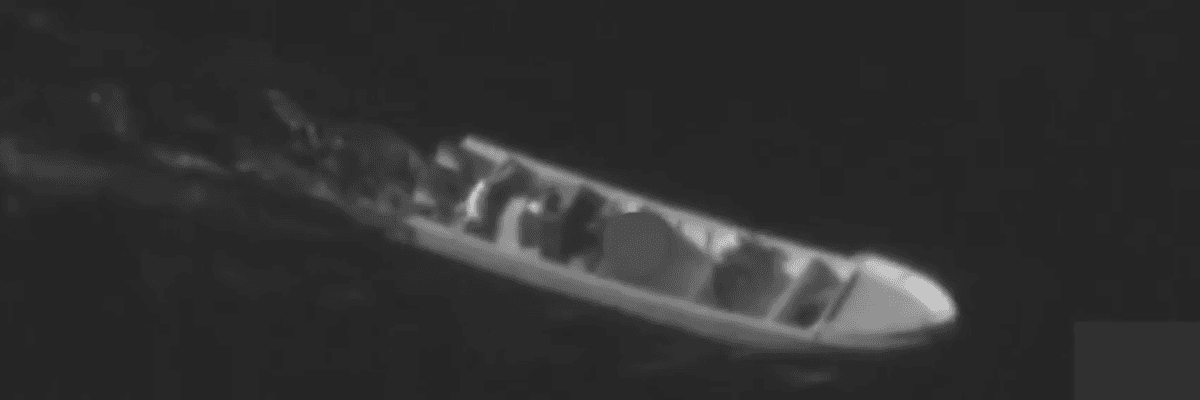
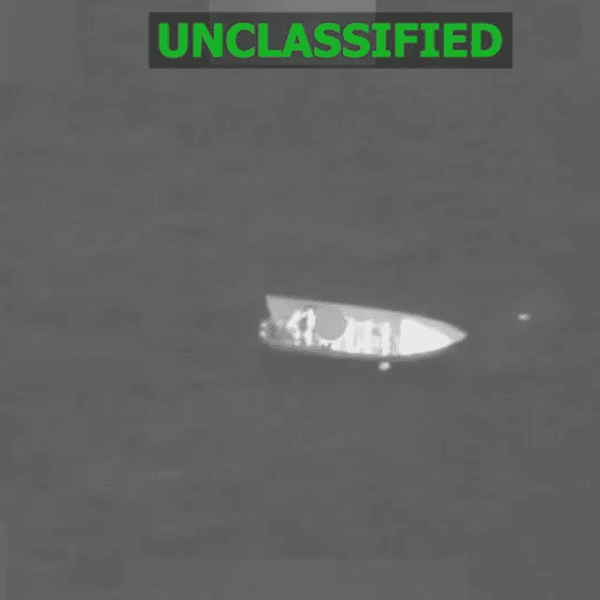
A screengrab of video footage posted by US Southern Command shows a boat in the eastern Pacific just moments before it was bombed by American forces on April 13, 2026.
(Photo: US Southern Command)

Jake Johnson
Apr 14, 2026
COMMON DREAMS

The US military on Monday attacked a vessel in the eastern Pacific accused, without evidence, of engaging in “narco-trafficking operations.” The strike killed at least two people and brought the known death toll from the Trump administration’s lawless boat-bombing spree in international waters to more than 170.

As has been its custom since the boat bombings began last September, US Southern Command posted an unclassified video clip of the attack on social media. SOUTHCOM described the bombing as “a lethal kinetic strike on a vessel operated by Designated Terrorist Organizations,” but did not provide any evidence against the boat’s operators.

Monday’s deadly strike came days after the April 11 US bombings of two other boats in the eastern Pacific, attacks that killed at least five people. United Nations experts and human rights organizations have condemned the bombings in international waters as extrajudicial killings and murder—and argued those ordering and carrying out the attacks should be prosecuted for homicide.

“More murder,” The Intercept’s Nick Turse wrote in response to Monday’s boat bombing.

Hours before SOUTHCOM announced the latest strike, Turse reported that the Trump administration is “waging a pressure campaign against the leading inter-American human rights watchdog to squash a potential investigation into illegal US attacks on boats in the Caribbean Sea and the Pacific Ocean.”

Brian Finucane, a senior adviser to the US Program at the International Crisis Group, said Monday that it is “funny how the Trump administration is very happy to continue to post snuff films of these lawless killings but not defend the legal merits of these strikes.”

Last month, the Inter-American Commission on Human Rights held a hearing during which experts testified to the illegality of the boat strikes.

“The administration’s desire to play imperial superpower in the region cannot be a reason to completely displace the foundations of international law,” Angelo Guisado, senior staff attorney at the Center for Constitutional Rights, told the commission.

On Monday, US President Donald Trump threatened to expand his administration’s illegal boat-bombing spree to Iranian vessels that “come anywhere close” to the US naval blockade of the Strait of Hormuz that the president ordered over the weekend.

Trump wrote on social media that Iranian vessels seen approaching the blockade “will be immediately ELIMINATED, using the same system of kill that we use against the drug dealers on boats at Sea.”

“It is quick and brutal,” the president added.


Trump’s Military Murders 5 More People in ‘Lawless’ Boat Bombing Campaign

The Trump administration’s boat strikes have now killed at least 168 people, according to NPR.


US Southern Command shared on social media a 34-second clip of two strikes on boats in the eastern Pacific that killed five people on April 13, 2026.
(Photo: screen cap via SOUTHCOM / X)


Brad Reed
Apr 13, 2026
COMMON DREAMS

The United States military has killed five more people suspected of drug smuggling in the latest boat bombing operation that many international law experts consider to be acts of murder.

In a Sunday social media post, US Southern Command (SOUTHCOM) announced it had “conducted two lethal kinetic strikes on two vessels” that it had deemed to be run by “designated terrorist organizations.” As with the dozens of other boat bombings the Trump administration has conducted since last September, the military did not provide evidence that the vessels were involved in drug trafficking.

“Intelligence confirmed the vessels were transiting along known narco-trafficking routes in the Eastern Pacific and were engaged in narco-trafficking operations,” SOUTHCOM said. “Two male narco-terrorists were killed, and one narco-terrorist survived the first strike. Three male narco-terrorists were killed during the second strike.”

SOUTHCOM said that it had alerted the US Coast Guard to conduct a search and rescue operation of the lone survivor of the two strikes, although it provided no further details of his well-being.

According to NPR, the US has now killed at least 168 people with its strikes on suspected drug boats, which began in September and have since continued despite being denounced by human rights organizations such as Human Rights and Amnesty International.

Brian Finucane, senior adviser with the US Program at the International Crisis Group, took note of the latest boat strike by remarking, “The lawless killing spree at sea continues.”

A coalition of rights organizations led by the ACLU last year sued the Trump administration to demand it release documents that provide legal justification for its boat-bombing campaign.

The groups said that the Trump administration’s rationales for the strikes deserve special scrutiny because their justification hinges on claims that the US is in an “armed conflict” with international drug cartels akin to past conflicts between the US government and terrorist organizations such as al-Qaeda.

The groups argued there is simply no way that drug cartels can be classified under the same umbrella as terrorist organizations, given that the law regarding war with nonstate actors says that any organizations considered to be in armed conflict with the US must be an “organized armed group” that is structured like a conventional military and engaged in “protracted armed violence” with the US government.

Before President Donald Trump’s Pentagon began conducting the lethal boat strikes last year, drug trafficking in international waters was treated as a criminal offense, with law enforcement agencies and the US Coast Guard intercepting boats suspected of carrying drugs and arresting suspects.

Trump’s bombings of boats in the Caribbean and eastern Pacific have been called “extrajudicial killings” by advocacy groups including Amnesty International


State Department Pushes Human Rights Watchdog to Ignore Deadly, Illegal Boat Strike Campaign

As the Inter-American Commission on Human Rights was advised not to investigate the bombings, Pentagon officials expressed support for strikes on land, ostensibly against drug traffickers.


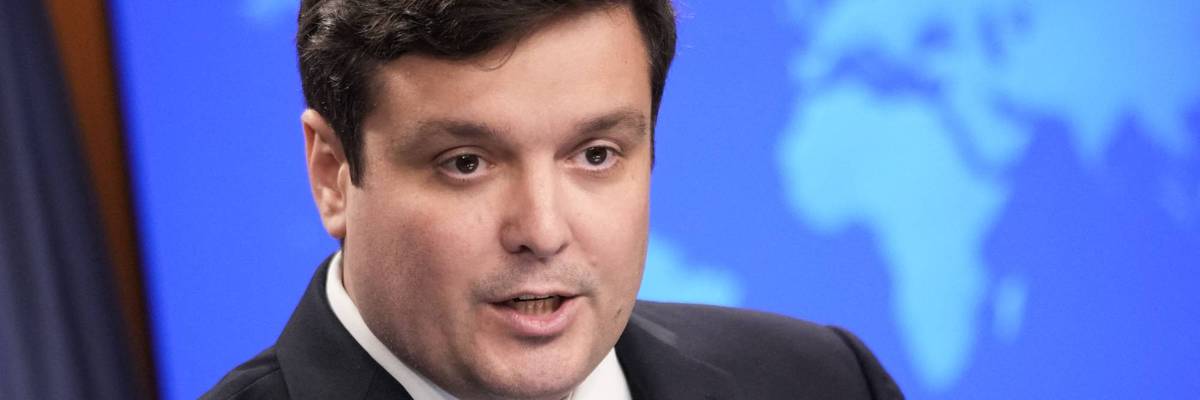
US Deputy State Department spokesperson Tommy Pigott speaks during a press briefing at the State Department in Washington, DC on July 31, 2025.
(Photo by Oliver Contreras/AFP via Getty Images)

Julia Conley
Apr 14, 2026
COMMON DREAMS


The former president of a top international human rights watchdog views the United States’ monthslong campaign of bombing boats in the Caribbean Sea and eastern Pacific Ocean as a clear-cut case of “murder,” he told The Intercept Monday, but he warned that pressure from the Trump administration may stop the body from investigating the Pentagon’s actions.

Juan Méndez, a former president of the Inter-American Commission on Human Rights, noted that a month after the IACHR held a hearing on the boat bombing campaign, officials “may well feel that this is a very delicate situation, and if they take the initiative, they’re going to incur the wrath of the United States.”


With Nearly 50 Boats Attacked, US Strikes Highlight ‘Pattern of Unlawful Use of Lethal Force’: Human Rights Watch


The hearing last month was the first of its kind and included testimonies from the ACLU, the Center for Constitutional Rights, International Crisis Group, and Ben Saul, the United Nations special rapporteur on counterterrorism and human rights. The groups presented evidence that the US has been violating both domestic and international law by bombing vessels that it has claimed—without making any evidence publicly available—are involved in drug trafficking. Nearly 170 people have been killed in dozens of strikes, and legal experts worldwide have asserted the US is violating international law and has committed extrajudicial killings—potentially making those involved in the strikes liable for murder.

The hearing was followed by a statement from Tommy Pigott, a State Department spokesperson, who said the IACHR had “strayed far outside its mandate” by looking into the boat attacks—as the family of one man killed in a bombing requested it to—and accused the ACLU of trying to manipulate the body.

“The United States calls on the commission to adhere to its statute and rules of procedure in the future and avoid inserting itself into matters that are in active domestic litigation and fall outside the human rights sphere,” said Pigott. “Convening hearings under these circumstances risks undermining—not strengthening—the credibility of the inter-American human rights system.”

Pigott also called on the commission to “redirect its focus toward the individual petitions languishing on its docket, sometimes for decades.” He did not mention specific petitions or issues the IACHR should focus on.

Carl Anderson, a legal adviser at the State Department, also rebuked the commission for holding the proceedings.

“If the United States cuts the funding, they probably would have to shut down—at least for a while.”

A person with close ties to the IACHR told The Intercept that Pigott’s demand that the commission focus on other topics pointed to a pressure campaign aimed at stoking fear that the IACHR could lose its funding.

President Donald Trump’s zeroed out US contributions to the commission during his first term in 2018, and withdrew some funding the following year due to its support for abortion rights. The administration terminated funding last year for at least 22 programs under the IACHR’s parent body, the Organization of American States, of which the US is the largest international funder.

“They are stretched for funding,” Méndez told The Intercept. “And if the United States cuts the funding, they probably would have to shut down—at least for a while.”

Stuardo Ralón, the IACHR’s current president, denied that there is “pressure from the United States on the Inter-American Commission on Human Rights,” but suggested it may not conduct a comprehensive investigation into the Trump administration’s boat bombings—saying the body “does not conduct investigations.”

The Intercept noted that the IACHR has conducted numerous investigations that it has publicly acknowledged and described as such, including into US immigration detention centers and the kidnapping and apparent killing of 43 students in Mexico in 2014.

Ralón told the outlet that it has not yet taken any steps to launch an investigation into the strikes following the hearing, and said it “will continue to monitor the situation in accordance with its mandate.”

Jamil Dakwar, director of the ACLU’s human rights program, emphasized that “the commission is within its competency and its bounds to fully investigate the egregious violations of international law happening in its own backyard.”

“We have asked the commission to fulfill its responsibilities as the premier regional human rights body to conduct a fact-finding investigation of these heinous killings,” Dakwar told The Intercept, “and to ensure that no country can act in this fashion because that will have severe implications on human rights in the region and beyond.”

As the State Department has pushed the IACHR away from probing the legality of the boat bombings, administration officials like Joseph Humire, acting assistant secretary of war for homeland defense and Americas security affairs, have warned that the attacks at sea are “just the beginning” of what officials claim is an effort to defeat drug cartels—against which Congress has not authorized any military action.

US Southern Command announced a joint ground operation with Ecuador last month to defeat “narco-terrorists.”

Humire said the Pentagon supports “joint land strikes,” while Gen. Francis Donovan, the head of US Southern Command who has been directing the boat attacks, told the Senate Armed Service Committee that the Pentagon is moving toward “a counter-cartel campaign process that puts total systemic friction across this network.”

“I believe,” he said, “these kinetic [boat] strikes are just one small part of that.”


Hormuz toll preferable to closure, TotalEnergies CEO says

By AFP
April 13, 2026


Patrick Pouyanne, CEO of TotalEnergies SE said the uncertainty over the Strait of Hormuz was driving a risk premium in petroleum prices - Copyright AFP Mandel NGAN

The head of the French energy giant TotalEnergies said Monday that reopening the Strait of Hormuz — even with a toll — was critical for global markets.

“It’s clear that reopening and the free circulation through the Strait of Hormuz, even if you have to pay to anybody, is fundamental for the freedom of markets and global markets,” Patrick Pouyanne, the company’s CEO, said at an event on the sidelines of the IMF and World Bank spring meetings in Washington.

Since the start of the war in the Middle East on February 28, shipping across the strait — through which some 20 percent of the world’s oil and gas is transported — has been largely paralyzed.

On Monday, US President Donald Trump further ordered a naval blockade of Iranian ports — another obstacle for passage through the strait.

This move will add a “layer of less liquidity in the market,” Pouyanne said at the Semafor World Economy Conference.

The energy CEO said that Western countries had largely been buffered from the worst economic effects of the war through their stockpiles of oil and gas.

He warned, however, that “if this war and this blockade last more than three months, we’ll begin to face some serious supply issues,” notably in jet fuel and diesel.

He also pointed to fertilizer — derived from petroleum products — being “almost a system risk,” as shortages could lead to higher food prices and thus inflation.

Pouyanne noted that fees are paid by ships transiting the Panama and Suez canals.

“The real problem is the threat” of sudden closure of the Strait of Hormuz, he said, explaining that the uncertainty will drive up prices.

‘Makes No Sense’: NATO Allies Bash Trump’s Strait of Hormuz Blockade as Oil Rises Above $100 a Barrel

“It’s one more episode in this whole downward spiral into which we’ve been dragged,” said Spain’s foreign minister.


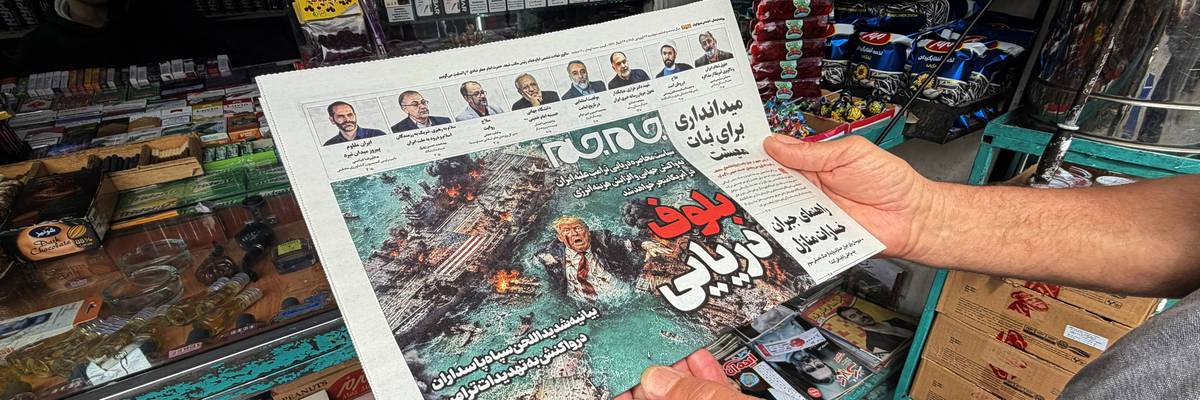
A man looks at the front page of the Jam Jam newspaper on sale at a newsstand, featuring a cartoon of US President Donald Trump drowning in the Strait of Hormuz with the headline “Marine Bluff,” in Tehran on April 13, 2026.

(Photo by Atta Kenare/AFP via Getty Images)


Julia Conley
Apr 13, 2026
COMMON DREAMS

Contrary to President Donald Trump’s claim that “other countries will be involved” in imposing a blockade on the Strait of Hormuz after ceasefire talks ended over the weekend without a deal with Iran, North Atlantic Treaty Organization member countries on Monday made clear they did not plan to join Trump’s effort as the news of the blockade sent global oil prices skyrocketing once again.

“We are not supporting the blockade,” British Prime Minister Keir Starmer told the BBC Monday before the closure began at 10:00 am Eastern time. “It is in my view vital that we get the strait open and fully open, and that’s where we’ve put all of our efforts in the last few weeks, and we’ll continue to do so.”

Turkish Foreign Minister Hakan Fidan called for the Strait of ⁠Hormuz to be reopened through diplomatic means, while Spanish Defense Minister Margarita Robles told Al Jazeera that Trump’s decision to block ships “entering or departing Iranian ports and coastal areas” in the strait “makes no sense.”

“It’s one more episode in this whole downward spiral into which we’ve been dragged,” said Robles, who along with Spanish Prime Minister Pedro Sánchez has vehemently condemned the US and Israel’s decision to go to war with Iran and has refused to involve Spain’s military assets in the conflict.

Starmer called the closure of the strait “deeply damaging” and said that this week the UK and France will convene a summit “to advance work on a coordinated, independent, multinational plan to safeguard international shipping when the conflict ends.”


US Central Command said Monday that US forces “will not impede freedom of navigation for vessels transiting the Strait of Hormuz to and from non-Iranian ports,” appearing to step back from Trump’s original Sunday statement, which he reiterated Monday on Fox News, that he would impose a “complete blockade” on the key trade waterway.

The news of the blockade came after Iranian negotiators accused Vice President JD Vance of acting in bad faith in the high-level ceasefire talks and Vance claimed Iran would not comply with US demands regarding nuclear development.

The two-week ceasefire deal that was announced last Tuesday—just before a deadline Trump had imposed, saying the US would obliterate Iran’s “whole civilization” unless the government struck a deal—sent oil and gas prices tumbling blow $100 per barrel, but prices rose again after Trump’s new threat of a blockade.

Brent crude prices were at $102.52 per barrel on Monday, a 7.7% increase, while US crude also rose nearly 8% to $104.02. The UK’s wholesale gas contract for the month of May rose by 11.7%.

About 20% of global oil and liquefied natural gas supplies passed through the Strait of Hormuz before Iran effectively closed the waterway after the US and Israel began the war, as well as major shipments of fertilizer.

Priyanka Sachdeva, a senior market analyst at the broker Phillip Nova, told The Guardian that “the market reaction” to Trump’s threat “underscores a simple but powerful reality: Hormuz risk is not theoretical; it is structural, and it is real.”

“In today’s environment, every barrel of risk added to oil markets carries an inflation price tag for the global economy,” Sachdeva said.

Trump’s threat of a blockade included any ship that has paid Iran a toll to pass through the strait since the Middle Eastern country began its blockade, with the president accusing Iran of “extortion.”

At Responsible Statecraft, Kelley Beaucar Vlahos wrote on Sunday that under Trump’s threat, the US is now planning to block “major allies.”

“The Philippines is a treaty ally and gets 98% of its energy resources through the strait,” Vlahos wrote. “A Japanese vessel carrying liquefied natural gas reportedly passed through the strait two weeks ago.”

Sarang Shidore, director of the Global South program at the Quincy Institute for Responsible Statecraft, said the US blockade “is another step toward a might-makes-right world.”

“Illegalities are being heaped on top of illegalities. The attack on Iran that started this war was compounded by Tehran’s seizure of the Strait of Hormuz. Washington’s blockade of the strait has further upped the ante,” said Shidore.

An adviser to Iranian Supreme leader Mojtaba Khamenei said that Iran has “large, untouched levels” to fight back against a US blockade, while Mohammad Bagher Ghalibaf, the speaker of the Iranian Parliament, said that Americans will soon “be nostaligic for $4-$5 gas.”


At The Conversation, international law professor Donald Rothwell of Australian National University wrote that Trump’s blockade would “certainly” imperil the fragile temporary ceasefire while roiling international markets.

“In purely legal terms, if the US imposes a blockade then the ceasefire is over and hostilities have resumed,” wrote Rothwell.

Trump's naval blockade crumbles after Iran-linked vessels breach barricade: report

Alexander Willis
April 14, 2026 
RAW STORY


A map showing the Strait of Hormuz and a 3D-printed miniature model depicting U.S. President Donald Trump are seen in this illustration taken March 23, 2026. REUTERS/Dado Ruvic/Illustration

A U.S. naval blockade of the Strait of Hormuz went into effect Monday at 10 a.m. EST at the direction of President Donald Trump, but in a matter of hours, the blockade was breached without incident by at least four Iran-linked vessels, BBC reported Tuesday.

On Monday, Trump said that he had instructed the U.S. Navy to “seek and interdict every vessel in international waters that has paid a toll to Iran,” and the U.S. military later said that the “blockade will be enforced impartially against vessels of all nations entering or departing Iranian ports and coastal areas.”

However, ship tracking data analyzed by BBC Verify revealed that at least four Iran-linked vessels “crossed the Strait of Hormuz” without incident; two on Monday, and two overnight.

“The Rich Starry, a tanker that is sanctioned by the United States under a different name, sailed through the strait overnight Monday,” CBS News reported, with the outlet having also analyzed ship tracking data. “The Elpis, another sanctioned tanker, sailed through the strait after the blockade began, having apparently come from the Iranian port of Bushehr, according to tracking data.”

The Rich Starry is a U.S.-sanctioned Chinese oil tanker, and was the first vessel to breach the blockade since its implementation Monday morning. The Chinese government called the United States’ blockade "dangerous and irresponsible,” with Chinese President Xi Jinping warning that the world must not be allowed to “revert to the law of the jungle,” NBC News reported.

Despite news organizations having analyzed tracking data, the outlets could not confirm whether or not the Iran-linked vessels had broadcasted false location reports using a tactic called "spoofing," which CBS News describes as a method to conceal a vessel's true location.

Trump’s decision to respond to Iran’s partial blockade of the Strait of Hormuz with another blockade has baffled experts, including Karen Young, a senior scholar at the Center on Global Energy Policy at Columbia University, who told CNN on Sunday that Trump’s blockade would only exacerbate the increasing scarcity of oil.
Stephen Miller's Dem blackmail theory backfires: 'Every accusation is a confession'


Daniel Hampton
April 14, 2026 
RAW STORY

Stephen Miller, White House deputy chief of staff for policy and homeland security adviser in the Trump administration, sparked online backlash Tuesday night when he told Fox News the Democratic Party "controls its members through blackmail."

Miller joined Jesse Watters on his eponymous show to discuss the fallout of the resignations of Reps. Eric Swalwell (D-CA) and Tony Gonzales (R-TX), who were both accused of sexual misconduct with staffers.

"Couldn't have happened to a better person," Miller quipped over Swalwell's "bad week."

Miller then lobbed a wild theory.

"The most important part about this story — and look, Swalwell is a scumbag, he is a terrible person, the worst of the worst, the lowest of the low, the most dishonest of the most dishonest — but the real story here," Miller said, pointing a finger, "is how the Democrat party controls its members through blackmail."

"It's got a blackmail file on all of its politicians and it uses them to leverage and control them until it's time to release it," Miller declared. "That is how sick and twisted the Democrat Party is."

The bizarre theory echoes similar conspiracies that have followed the Epstein case.


And the internet predictably had thoughts about the comments.

Zeteo founder Mehdi Hasan replied, "Every Republican accusation is a confession."

Conservative attorney and Democratic Congressional candidate George Conway replied on X, ".@StephenM is a sick man, exhibit number 2,459,729."

Behavioral scientist Caroline Orr Bueno wrote on X, "Of course, Republicans would never blackmail each other. Putin is in charge of that."

"Jeopardy!" champion and YouTuber Hemant Mehta added, "Given that everything this administration says is projection…"


Stephen Miller using ‘less visible’ immigration strategies after backlash: analyst


Nicole Charky-Chami
April 14, 2026 
RAW STORY

Stephen Miller's aggressive immigration policy has led to disastrous outcomes and criticism, forcing him to change course, an analyst explained on Tuesday.

The White House deputy chief of staff has had to develop a new strategy for the Trump administration's immigration policy, according to a new New York Times report and video featuring White House correspondent Zolan Kanno-Youngs.

Miller's different approach involves zeroing in on social services fraud and placing less emphasis on deportation raids. He recently joined Vice President JD Vance at a White House event on the anti-fraud task force centered on the administration's crackdown on immigrants who were abusing benefits and allegedly committing fraud, Kanno-Youngs reported.

"The people at this table are all united in absolute determination to stop this plague of fraud, criminality and abuse," Miller said at the event.

This move has been on Miller's mind all along, Kanno-Youngs explained.

"Miller has long tried to establish a link between immigrants and fraud, but there was a legitimate case of fraud in Minnesota that presented an ideal opportunity to ramp up these attacks," Kanno-Youngs said.

"However, the anti-fraud task force is also just one piece of a much broader effort that Stephen Miller is pursuing to make the lives of immigrants without legal status so uncomfortable that they end up leaving the country voluntarily," Kanno-Youngs explained. "This shift is largely the result of the political backlash that the administration faced after the deportation raids in Minneapolis. Stephen Miller is now focused on advancing policies that can target how immigrants access public housing."

Miller has also started questioning how immigrants use credit cards and has started working with different state officials, including Tennessee, to try and limit how immigrants access hospitals and social service agencies. In Texas, he's been asking how children of immigrants access public schools.

"These less visible policies are incredibly impactful," Kanno-Youngs added.


America is better than Trump and his chief bigot


U.S. President Donald Trump looks on during a cabinet meeting at the White House in Washington, D.C., U.S., March 26, 2026. REUTERS/Evelyn Hockstein

April 15, 2026
ALTERNET

Trump’s chief bigot, Stephen Miller, said on Fox News that immigrants to the United States bring problems that extend through generations.

“Not only is the first generation unsuccessful,” Miller claimed. “You see persistent issues in every subsequent generation. So you see consistent high rates of welfare use, consistent high rates of criminal activity, consistent failures to assimilate.”

Bullshit. The children and grandchildren and great-grandchildren of most immigrants are models of upward mobility in America.

In a recent paper, researchers found that immigrants today are no slower to move into the middle class than immigrants were a century ago. In fact, no matter when their parents came to the U.S. or what country they came from, children of immigrants have higher rates of upward mobility than their U.S.-born peers.

Stephen Miller’s great-great-grandfather was born in a dirt-floor shack in the village of Antopol, a shtetl in what is now Belarus. He came to America in 1903 with $8 in his pocket and spoke no English. Three generations later, little Stephen was born in 1985 to American parents but somehow developed a visceral hatred for immigrants.

Miller and Trump have been dealing with immigrants the same way Pete Hegseth and Trump have been dealing with Iran and the Strait of Hormuz — inflicting pain on both them and the United States, in the hope their pain will be worse than the pain we endure.

Today’s Tax Day was supposed to be a big PR boon for Trump, in which he touts his “no taxes on tips” and other ersatz tax “cuts” for average working Americans (while hiding that his Big Ugly bill actually gave most of its benefits to the wealthy and big corporations, and paid for them by taking money from Medicaid and food stamps and other programs the working class and poor rely on).

But the war in Iran has made everything — even Stephen Miller’s war on immigrants — feel like the Strait of Hormuz.

Consider that before Miller ordered the Internal Revenue Service to give ICE officials the addresses of people subject to deportation, undocumented immigrants had been paying roughly $60 billion annually in federal taxes, much of it going into Social Security and Medicare — programs from which they don’t benefit.

Now, tax experts fear many immigrants won’t file returns, and those who formerly had their taxes withheld in every paycheck will shift into under-the-table jobs. The Yale Budget Lab, a nonpartisan research center, projected lost tax revenue of about $300 billion over a decade.

Meanwhile, Miller’s vast, sadistic crackdown on undocumented workers is causing significant pain for the U.S. economy. There aren’t enough workers in construction, hospitality, and agriculture to keep these sectors going. Another Strait of Hormuz situation.

Let’s be clear. Apart from Native Americans, we are all immigrants — all descended from “foreigners.” Some of our ancestors came here eagerly; some came because they were no longer safe in their homelands; some came enslaved.

As Ronald Reagan put it in a 1988 speech,
You can go to Japan to live, but you cannot become Japanese. You can go to France to live and not become a Frenchman. You can go to live in Germany or Turkey, and you won’t become a German or a Turk. But … anybody from any corner of the world can come to America to live and become an American. A person becomes an American by adopting America’s principles, especially those principles summarized in the “self-evident truths” of the Declaration of Independence, such as “life, liberty, and the pursuit of happiness.”


Reagan understood that America is a set of aspirations and ideals more than it is a nationality.


Miller and Trump, on the other hand, want to fuel bigotry. Their entire project depends on hate. Like dictators before him, Trump’s road to tyranny is paved with stones hurled at “them” — whether “they” are immigrants, Iranians, or anyone else who doesn’t fit the white Christian nationalist mold.

America is better than Trump and his chief bigot.

Robert Reich is a professor of public policy at Berkeley and former secretary of labor. His writings can be found at https://robertreich.substack.com/.
Trump's 'grim reaper' gets tongue-lashing from WSJ editors for obstructing cancer research

 President Donald Trump thinks his diet soda habit prevents cancer because pouring diet soda on grass causes it to die.


Matthew Chapman
April 14, 2026 
RAW STORY


President Donald Trump's administration got another tongue-lashing by the conservative Wall Street Journal editorial board, as yet another Health and Human Services official moves to obstruct groundbreaking cancer research.

"Food and Drug Administration biologics chief Vinay Prasad is stepping down at the end of this month after torpedoing breakthrough rare disease treatments," wrote the board, referencing a controversial figure who has been responsible for shutting down a number of promising therapies. "The grim reaper can’t leave soon enough, but he’s not leaving without kicking patients with late-stage melanoma on his way out."


Specifically, the board wrote, he and FDA commissioner Marty Makary rejected an experimental melanoma immunotherapy for a second time — cutting off a potential treatment avenue for people suffering from a lethal form of skin cancer.

"Some 8,500 Americans die every year of melanoma, many of whom could be saved by Replimune’s RP1. But Dr. Prasad and Commissioner Marty Makary have decided that for whatever reason they aren’t worth saving," wrote the board. "RP1 is an oncolytic virus therapy that turbo-charges the immune response in people resistant to other immunotherapies. A modified herpes virus is injected into tumors, which causes cancer cells to burst and release flares that activate and train the immune system to attack cancer cells throughout the body."

Nearly all patients responded to this treatment, and a third went into remission — a massive deal for a particularly dangerous form of cancer that typically kills patients who stop responding to other immunotherapies within a year. However, Prasad and Makary rejected approval because there was no control group — even though control groups are never used in trials for this type of deadly disease because leaving some patients with zero treatment whatsoever is considered unethical.

"Drs. Makary and Prasad may not care if they kill a company, but what about the patients who will die as a result?" wrote the board. "The rejection will have a chilling effect on drug development by signaling that the FDA is slamming the door on accelerated approvals and requiring a level of evidence of efficacy that fewer cancer drugs could meet."

This comes after Medicare and Medicaid administrator Dr. Mehmet Oz revealed that President Donald Trump thinks his diet soda habit prevents cancer because pouring diet soda on grass causes it to die.
US Postal workers hit back at Trump with national TV ad over attacks on mail-in voting

Nicole Charky-Chami
April 14, 2026 
RAW STORY


A U.S. Postal Service letter carrier makes a delivery in Fullerton, Calif. in August 2020 (Shutterstock/Matt Gush)

The American Postal Workers Union swung back at President Donald Trump this week with a new national television advertisement blasting his attacks on mail-in voting and describing why it's so important to Americans, The Hill reported.

In the spot, "America Needs Vote by Mail," the campaign features everyday Americans — a flight attendant, college student and farmer — identifying why they rely on absentee ballots. The 30-second commercial is sponsored by the 200,000 member union and starts airing in Ohio this week, where the first mail-in ballots were cast in 1864 by Union Army soldiers, according to The Associated Press. After that the campaign moves to other states.

The message of the advertisement is clear: "Vote by mail. Keep it. Protect it. Expand it."

The union's counteroffensive comes as Trump ratchets up his assault on voting access ahead of the midterms. Late last month, he signed an executive order to restrict mail-in ballots, demanding states create voter eligibility lists and limiting absentee voting to names on those lists.

Trump doubled down on his debunked claims about widespread mail-voting "cheating," despite zero evidence supporting the allegation.

Democrats then filed a lawsuit to block Trump's executive order.

"Our Constitution’s Framers anticipated this kind of desire for absolute power," Democratic election lawyer Marc Elias said in the complaint. "They recognized the menace it would pose to ordered liberty and the ways in which it would corrode self-government like an acid."

"And so, to preserve the People’s own sovereignty, they crafted a system of government to resist that threat," Elias added.