Wednesday, April 15, 2026

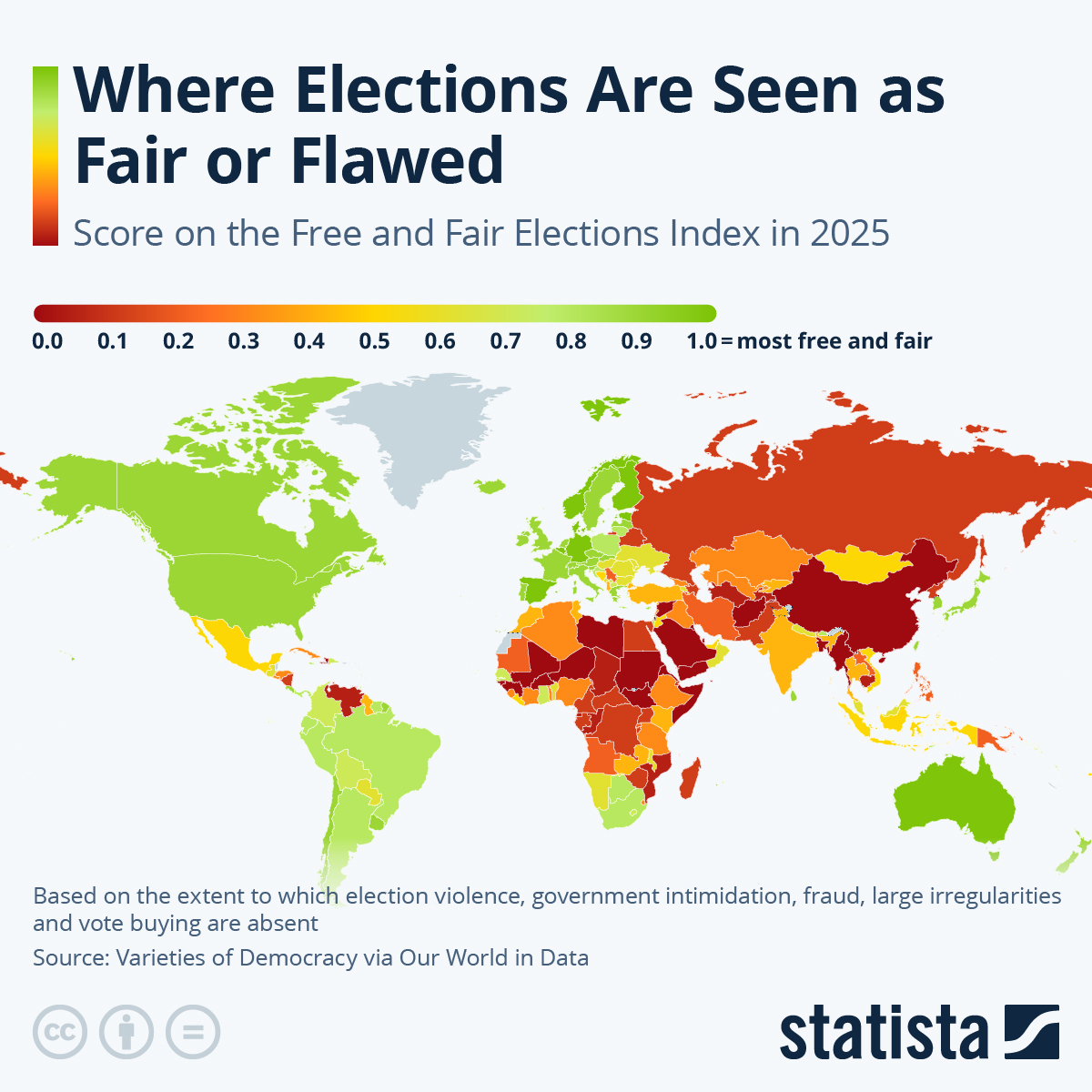
Where elections are seen as fair or flawed - OWID

 You will find more infographics at Statista


By Anna Fleck for Statista April 14, 2026

US President Donald Trump signed an executive order earlier this month directing the Department of Homeland Security and the Social Security Administration to compile lists of US citizens eligible to vote in each state, Statista reports. The order also instructs the US Postal Service to send mail ballots only to individuals included on those lists.

More than 20 Democratic-led states and the District of Columbia have since filed a lawsuit seeking to block the measure from taking effect. Trump, who recently cast a ballot by mail in a special election in Florida, has repeatedly claimed that the United States faces significant issues with fraud related to mail-in ballots.

However, multiple studies have found that voter fraud in the United States is extremely rare. In global comparisons, the country also scores highly on measures of electoral integrity. According to the 2025 Free and Fair Elections Index, produced by the Varieties of Democracy, the US receives a score of 0.9 out of 1. While 34 countries rank higher - including Belgium, Norway, Australia, Germany and Spain - the US remains among the top performers overall

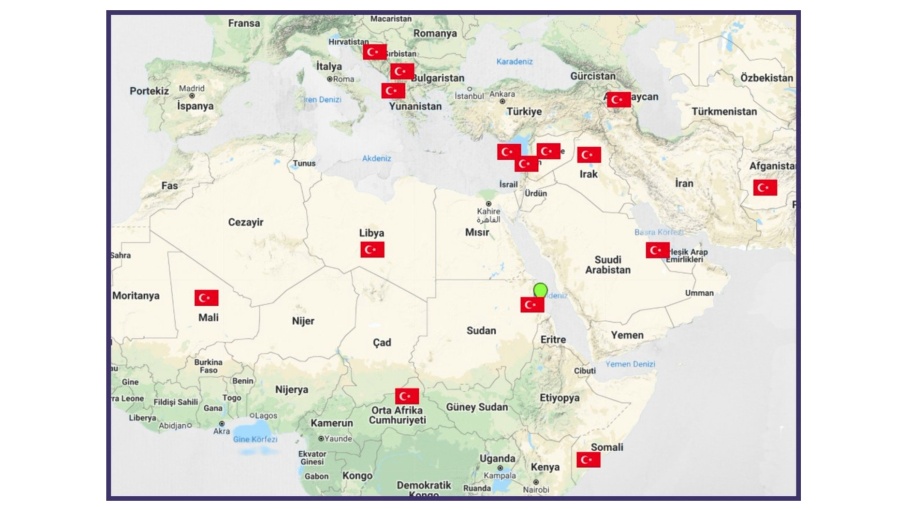
Turkey has the second most foreign military bases in the world after the US

Turkey has the second most foreign military bases in the world after the US
Turkey has the second most military bases in the world after the US with 133. most large powers have less than a dozen. The US has 887. / bne IntelliNewsFacebook
By bne IntelliNews April 14, 2026

Turkey has emerged as the country with the second-largest number of foreign military bases in the world after the United States, and is the only Muslim-majority nation with a global military base network of this scale.

According to available figures, the United States maintains 887 foreign military bases worldwide, far exceeding any other country. Turkey follows with 133 bases, placing it ahead of several traditional military powers.

The United Kingdom ranks third with 117 overseas bases, reflecting its longstanding global military presence. Russia maintains 29 foreign bases, while India has established 20. Israel operates 14 bases abroad.

Turkey’s position is notable both for its scale and for its geographic reach, marking a significant expansion of its military footprint beyond its immediate region.


Senate Republicans are ready to replace Alito — before the midterms: report


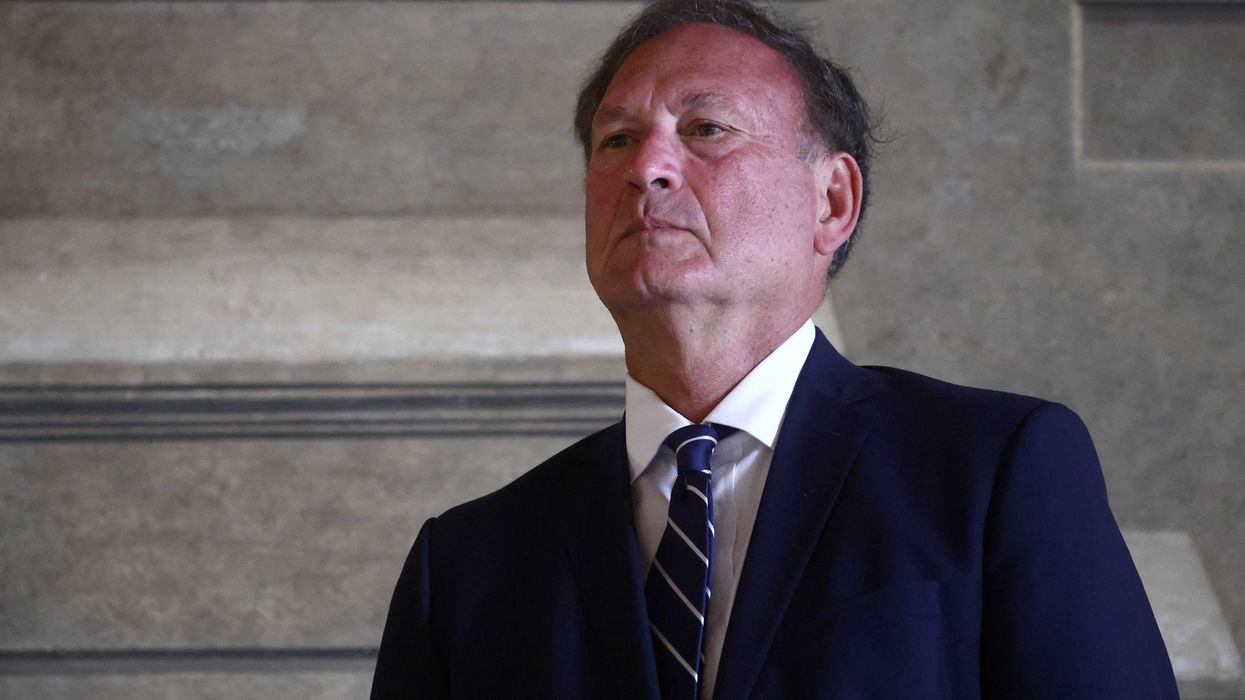
U.S. Supreme Court Justice Samuel Alito attends an event organized by the U.S. Embassy to the Holy See, in Rome, Italy, September 20, 2025. REUTERS/Vincenzo Livieri

April 14, 2026 
ALTERNE

Supreme Court Justice Samuel Alito, 76, has given no public indication he plans to retire — but if he does, Senate Republicans stand ready to fast-track President Donald Trump’s nominee through committee and lock in a confirmation before the November midterm elections.

“Senate Majority Leader John Thune (R-SD) told the Washington Examiner on Tuesday that Republicans are ‘prepared’ for the possibility of a retirement as speculation swirls that Alito, a conservative vote on the Supreme Court, is weighing stepping down at the end of the current term, slated for the end of June or early July,” the Washington Examiner reports.

“That’s a contingency, I think, around here you always have to be prepared for,” Thune said. “And if that were to happen, yes, we would be prepared to confirm.”

Alito is thought to want to avoid a similar repeat of events when liberal Justice Ruth Bader Ginsburg eschewed requests from the left to retire during President Barack Obama’s term. Republican President Donald Trump was able to fill her seat upon her death with a conservative, changing the balance on the Court.

Justice Alito is not the court’s oldest justice — that distinction belongs to Justice Clarence Thomas, 77, who has given no public indication he plans to step down either.

“I hope they stay ’cause I think they’re fantastic, OK?” Trump told Politico in December 2025, referring to both Alito and Thomas. “Both of those men are fantastic.”

Should Alito or Thomas — or both — retire, Trump could secure a conservative majority, possibly for decades to come. Chief Justice John Roberts, also a conservative, is 71 and is not rumored to be seeking retirement.

The three remaining conservative justices Trump placed on the court during his first term. Amy Coney Barrett is 54, Brett Kavanaugh is 61, and Neil Gorsuch is 58.


The three liberal justices are Sonia Sotomayor, 71, Elena Kagan, 65, and Ketanji Brown Jackson, 55.
Conservative accuses Trump of 'Mind-boggling' vendetta against NFL


'Draw the line': NFL veterans rage against Trump using their image to sell his war
April 14, 2026
ALTERNET

President Donald Trump is pursuing an antitrust case against the National Football League (NFL) — but an editor from a magazine one might expect to support him instead implied this is about a vendetta.

The Justice Department is investigation whether the NFL uses anti-competitive tactics to keep watching football too expensive, and Reason Magazine managing editor Jason Russell suspects this has little to do with consumer protection

“Could it be because President Donald Trump tried to get into NFL ownership several different times and came up short?” wrote Russell on Tuesday, adding that Trump tried and failed to buy the Baltimore Colts, Dallas Cowboys, New England Patriots and Buffalo Bills at various points between 1981 and 2014, and even successfully purchase a football team (the United States Football League’s New Jersey Generals) in 1983 — but in a league that eventually folded.

“No one is entitled to watch the NFL,” Russell wrote. “If someone decides a game is too difficult or costly to watch, no one dies or suffers anything other than very minor entertainment-related harm. (The league, it's worth noting, is actually one of the easiest to watch, ‘with over 87 percent of our games on free, broadcast television, including 100 percent of games in the markets of the competing teams,’ according to a league spokesperson.)”

Russell added, “Watching sports on broadcast TV instead of streaming platforms is not some sacrosanct human right that needs to be protected by the federal government. As we prepare to celebrate the 250th anniversary of America's founding, it is mind-boggling to be at the point where ‘Should a sports league be allowed to put more games on streaming platforms?’ is a real question that the Justice Department and the FCC are spending their time on.”

Trump has had other recent feuds with the football world. Last month former football players Kenny Bell of the University of Nebraska and Tampa Bay Buccaneers linebacker Mason Foster expressed dismay that images of them playing were used to promote the US military’s recent wars without their consent.

“I’m at a loss for words,” Foster told The Washington Post. “It’s a strange feeling, seeing those clips like that. I don’t think anything going on in the world today is as simple as a great football play or a hit. I’m still wrapping my head around it. ... When people are losing their lives, I don’t think it can compare to a game.”

Both Bell and Foster said the White House has not obliged their requests to remove the video and that they believe the NFL, which holds the rights, should use the courts if the president does not do so.

Trump appears to be sensitive to his rising unpopularity, even in the football world. During Super Bowl LX in Santa Clara, California in February, Trump reportedly declined to attend because his advisers feared he would be booed en masse, and that this "would instantly create a wealth of viral video clips and media coverage that administration officials would prefer to avoid."

"[Booing is] another thing we don’t want right now," the adviser anonymously told Zeteo.
Confederate groups furious as Virginia kills their tax breaks


Miranda Pederson, Public domain, via Wikimedia Commons
April 14, 2026
ALTERNET

On Tuesday —161 years after the conclusion of the American Civil War — the state of Virginia ended long-standing tax exemptions for a range of organizations linked to the Confederacy. Signed by Democrat Gov. Abigail Spanberger and passed by the Democrat-controlled state legislature, the bill ending financial benefits represented a victory in the hard-fought effort for the state to rid itself of its legacy as the Confederate capital.

While the action will stop tax exemptions for a number of groups, the largest is the United Daughters of the Confederacy, which was created in 1894 with the stated intention of honoring its members’ ancestors. Over the course of its existence, the organization has erected hundreds of Confederate memorials across the U.S. to promote the “Lost Cause” narrative, which critics have argued was an intentional effort to romanticize the Confederacy and maintain a pro-slavery presence across the country. These statues and monuments have become targets for social justice efforts in recent years, with many being burned or torn down.

The United Daughters of the Confederacy has yet to respond following the bill’s signing, but as the matter was being debated in February, organization president Julie Hardaway said the bill “reeks of discrimination” and is “based on misguided and biased opinions.”

State General Assembly delegate Alex Askew, who sponsored the bill, disagreed, saying, “Let’s be very clear about what we’re dealing with. Organizations like the United Daughters of the Confederacy have promoted the Lost Cause. Why is the commonwealth supporting groups that rewrite history to obscure the true cause of the Civil War? A war fought to uphold the institution of slavery, America’s original sin?”

The bill isn’t the only current Virginia legislation that aims to cut ties from the state’s Confederate past.

One signed last week ends the issuance of specialty license plates that feature Confederate General Robert E. Lee and the Sons of Confederate Veterans. Sons of Confederate Veterans spokesman Frank Earnest asserted that the discontinuation of the Lee plate was a “terrible” attack on free speech, saying, “I could go down to the D.M.V. right now and point out some fact about every plate there that I didn’t like. So if we’re going to cancel every plate because somebody out there doesn’t like it, we might as well just cancel the whole program.”

Another bill — which Spanberger has sent back to the state legislature with recommendations — would create a task force at the Virginia Military Institute tasked with distancing the college from the “Lost Cause” messaging that has long undergirded its curriculum.

While opponents argue that these bills represent an attack on their heritage, Askew sees things differently.

“A tax exemption is a privilege and not a right,” he said before the bill’s passage. “This legislation does not challenge Confederate organizations’ right to exist. It is not about free speech. It’s not about taking down any monuments. But it’s about fairness and financial and fiscal priorities of Virginia.”


One Step Away From The Trump-Netanyahu Black Hole, The Italian PM Stands Out – OpEd


Italy's Prime Minister Giorgia Meloni with US President Donald Trump. 
Photo Credit: The White House


April 15, 2026 
By Prof. Umberto Sulpasso


The electoral precipice for Giorgia Meloni was one step away. And the matrix was evidently all in the symbiotic alliance with Trump and Netanyahu, the two leaders who are shaking up the international political order with wars and disruptions. The resounding defeat in a constitutional referendum. The disjointed collapse in Hungary of the anti-Europe ally practically kicked out by the voters, had already shaken the electoral base of the PM. But Trump had the knockout blow in store: a frontal attack on the Pope and this would have been lethal for the PM if she had not decided to distance herself from the Trump-Netanyahu duo. But it is not certain that having changed course is enough

The Three Preparatory Blows To Meloni’s KO

1. The Jab-cross that opened the guard : The Constitutional Referendum lost

2. Jab-left hook. The resounding defeat in Hungary of Victor Orban, a symbol of anti-Europeanism disguised in the form of nationalism

3. Uppercut. The attack on the Pope by the American President

Three blows capable of transforming the next electoral experience into a historic KO capable of reserving the same fate for Meloni as the Hungarian leader. Cancellation.

The Italian political context is dominated by two women, PM Giorgia Meloni, and opposition leader Elly Shlein. And here Louisa May Alcott could be the inspiration for the post-Netanyahu-Trump in Italy. Her first successful book, “Little Women” was followed by a further success “Little Women Grow Up,” and Alcott’s second title fits singularly well with the politics of PM Giorgia Meloni, who on the brink of the precipice has decided that she politically wants to survive three blows received in less than a month, before they turn into a real KO.


From Manufacturing Consent To Manufacturing Dissent


If the defeat in the referendum can be read as a national event, the election in Hungary is the sign of an epochal eclipse of a political approach that had two leading theorists in Noam Chomsky and Edward Barnays: the election of Peter Magyar at the expense of Orban certifies the crisis of consensus as a means to conquer power, replaced by dissent.

I continue to consider Noam Chomsky a master of political philosophy despite the recent Epstein injuries. Personally, I am not hunting for unblemished heroes, there are none, and if there were they would not belong to the human species, and in any case they would not interest me: perfect beings are boring. I look for and appreciate personalities who do important positive operations of political theory, and Chomsky has done many. Opposition to the Vietnam War, struggle for freedom of information, support for qualified liberal personalities. Criticism of the fascist right wing in Israel. The Israeli government even denied him a visa for a conference in Tel Aviv. All this cannot and must not be forgotten and it is worth remembering Chomsky with regard to the Hungarian political election, because there is one thing that the great linguist taught like few others, and can be found in Manufacturing Consent, along with the book Propaganda by Edward Barneys, another pillar of twentieth-century political communication. And let’s see why.
Freud’s Nephew

Edward Barnays, Freud’s nephew, theorized the principle that government must be conquered with subliminal messages. He gave a practical demonstration of the potential of these messages in at least three sensational situations. One: launching the idea of the abundant “American breakfast”, (Eggs and Ham). Two: by favoring the coup d’état in Guatemala, by inventing, on behalf of United Fruit – from which Woody Allen would one day draw inspiration for his banana republics – the message that the president-elect was a communist, which was not true, but the subliminal message passed and there was a coup d’état favored by the CIA. Three: perhaps the most resounding success because it also concerns us, doubling the cigarette market with the brilliant idea of loading the image of the woman who smokes with positive messages. “Torches of Freedom” was the operation by which simultaneously a considerable number of women of American high society lit a cigarette in public, making it a symbol of female freedom. The cigarette, which was seen as a phallic symbol, became a manifestation of female sexual freedom. There were a few more cancers… but Barnays got a very high reward from the American Tobacco Association that had hired him, perhaps greater than that obtained by United Fruit.

Epochal Political Change: Power Conquered Not By Building Consensus But By Building Dissent – A Dangerous Political Change

But why were “Manufacturing Consent” and “Propaganda” put in the attic with the Hungarian election?

They go to the attic because it is now evident that electoral power is no longer won by “building consensus”, that is, by making positive proposals, while the vice versa of “building dissent” focuses on what is not good. On what goes wrong.

Péter Magyar, beat Victor Orbán not because he proposed an alternative program, but because he “disagreed”. Magyar does not come from the opposition, but from Orban’s own party from which he “disagrees”. His ex-wife, Judit Varga, was at one time Orbán’s Minister of Justice, is publicly accused of covering up regime scandals. And this is the winning lever. In Hungary, therefore, it was not the opposition that won, but dissent.

“Manufacturing Dissent” has a phenomenal lever in the spread of the Internet, and of the socials, which facilitate dissent in an endemic way, hyperbolically multiplying individual manifestations, favoring that state of social malaise that favors the seizure of power by the political producers of dissent, which is the media mechanism that has temporarily put Chomsky and Barneys in the attic.

But it is a very dangerous mechanism. Podemos has dissolved into thin air. The 5 Stars have had to give up all the most relevant reforms. Polls on Trump show his vertical fall. .
The Uppercut That Prepares For The KO Of PM Meloni: Trump’s Brutal Attack On The Pope

Italy has essentially become a secular country, but there is no doubt that the Pope continues to have a role of great importance. A role that has increased considerably in recent years. Francis’ pontificate has produced enormous sympathy even on the left and has created cultural and political availability that was unthinkable 30 years ago, when the left recognized itself in a strong anticlericalism. But this is an international phenomenon. Pope Francis greatly increased the approval rating for the Vatican on the basis of principles and values that the left – including the American left – has always made its own. Respect for the different. Protection of humanistic values. And above all, peace as an indivisible unifying good. Leo XIV seems to be following in those footsteps. Brutally attacking the Pope without taking into account the scope of the spiritual values in which progressives from all over the world, including those in Italy, recognize themselves, not only means creating a new fracture in America, but also means disintegrating the electoral base of the PM in Italy.


The Pope very intelligently chose not to start a war, but in Italy Meloni basically had to choose between two Americas: to stay by the side of the American President or to defend the Pope’s America.

And the PM, in order not to fall into the black hole of anti-pope Trumpism, has chosen to govern, distancing herself from Trump and Netanyahu for the first time. And it was resoundingly appreciated by the leader of the opposition, also a woman.

Little women grow up, Louise Alcott would say. It is not necessarily enough for the PM to remain in power. It is clear in Italy as everywhere that dissent is used to conquer power, but not to govern. Maybe Trump will also soon also find out.


Prof. Umberto Sulpasso

Prof. Umberto Sulpasso has taught in many European and American universities. He is the author of the GDKP the Gross Domestic Knowledge Product, the first quantitative model in the world of Wealth of Nations in terms of knowledge produced, purchased and circulated. The Indian Government had officially appointed in 2019 Prof. Sulpasso as Director of GDKP INDIA. Among his recent publications there is, " Know Global, The Most Important Globalization"; "Darwinomics, The Economics Of Human Race Survival"; "New Enlightenment In Economics In The 21st Century"; and "Knowledge the new measure of Wealth of Nations." Prof. Sulpasso has launched “Knowledge the infrastructural information which will create the New Silk Road with Africa and Asia countries” in a recent international conference.


'I thought she was brave': Trump turns on Italian ally over Pope criticism

Tom Boggioni
April 14, 2026 
RAW STORY


U.S. President-elect Donald Trump has played host to a slew of foreign leaders, most recently Italy's Prime Minister Giorgia Meloni, as he prepares to take office (Filippo ATTILI/AFP)

Donald Trump has turned on Italian Prime Minister Giorgia Meloni, publicly denouncing her as "unacceptable" for defending Pope Leo XIV against the president's criticism of his unprovoked Iran war.

According to Politico, Trump spoke directly with Italian daily Corriere della Sera to express his fury with Meloni's refusal to join his attack on the first American-born Pope who resides in Vatican City.

"I was shocked by her. I thought she was brave, but I was wrong," Trump said in the phone interview, delivering a stinging personal rebuke to an ally he had publicly praised just a year earlier.

When confronted with Meloni's Monday statement calling Trump's criticism of Pope Leo "unacceptable," the president responded with characteristic vindictiveness:

"It's her who's unacceptable, because she doesn't care if Iran has a nuclear weapon and would blow up Italy in two minutes if it had the chance."

Trump's grievance extends beyond the Pope dispute. He complained that Meloni expected the United States to "do the work for her" by protecting Italy from nuclear threats and ensuring stable oil supplies — suggesting she should be grateful for American military protection rather than criticizing his policies.

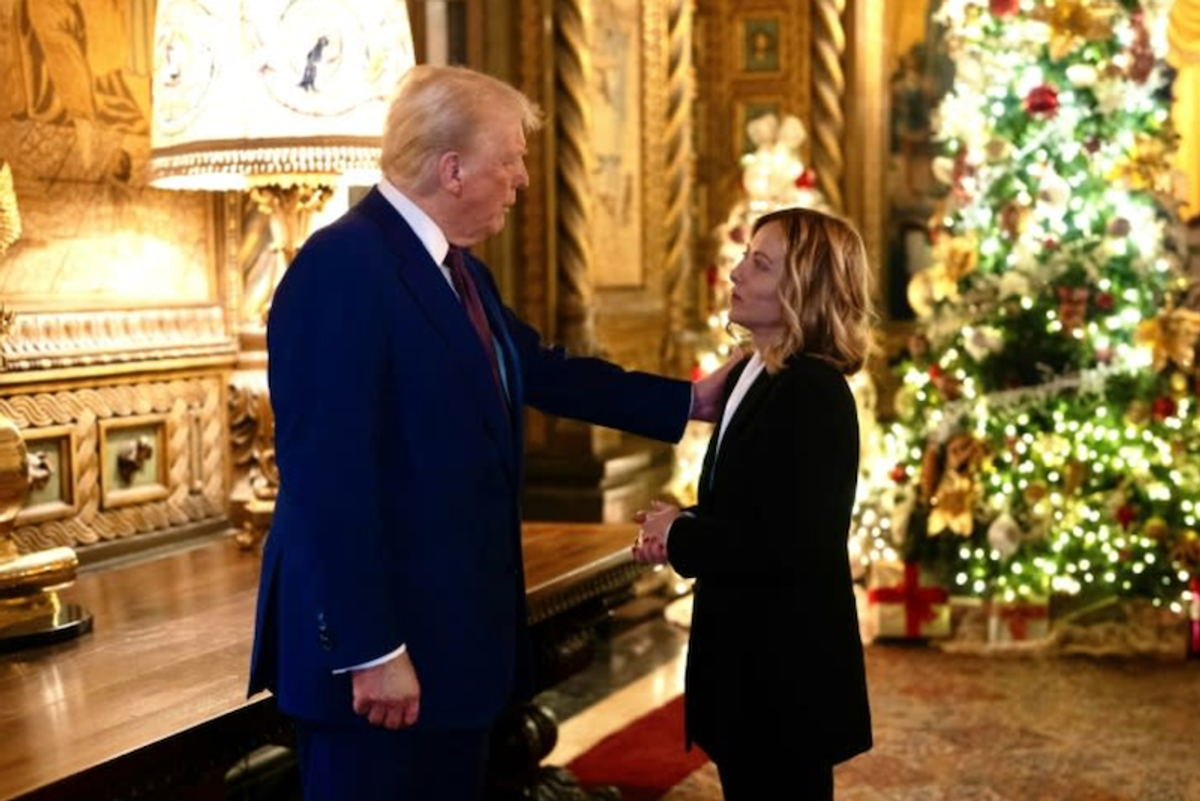
The deterioration of their relationship is striking. Trump noted the two hadn't spoken "in a long time," a stark contrast to just last year when Meloni visited Mar-a-Lago as Trump's guest. At that dinner, he called her "a fantastic woman" who had "really taken Europe by storm."

The rupture exemplifies Trump's pattern of discarding allies the moment they show independence from his agenda — a warning sign for other world leaders considering whether solidarity with the American president is worth the political cost.


Trump and Meloni: From close relations to a transatlantic crisis


By Stefania De Michele
Published on 

The relationship between Trump and Meloni was typified by warm handshakes and even warmer words until the US leader did something considered by most Italians to be unthinkable: he criticised the pope.

US President Donald Trump has turned on Italian Prime Minister Giorgia Meloni, calling her "unacceptable" and claiming she lacks "courage" to back the US intervention in Iran after she condemned his attacks on Pope Leo XIV.

The unexpected public rift between the two leaders, who cultivated one of the closest transatlantic relationships over the past year, erupted after Trump criticised the pontiff for his anti-war stance on Iran.

"I thought she had courage, but I was wrong," Trump told Italian newspaper Corriere della Sera on Tuesday.

Trump previously called Meloni "one of the real leaders of the world" and "full of energy, fantastic", while Meloni said she was able to speak to him "frankly even when we disagree".

It all seemed to be going so well until Trump did something that, for many Italians, is regarded as sacrilege: he lambasted none other than the Holy Father.

Trump said he did not think Pope Leo XIV was "doing a very good job" because he was "weak on crime" and suggested the pontiff should "stop catering to the radical left," also stating, "We don't like a pope who says it's OK to have a nuclear weapon."

Pope Leo XIV celebrates a Mass in the Saint Augustine Basilica in Annaba, 14 April, 2026 AP Photo

Trump's comments came after Pope Leo XIV openly criticised the US intervention in Iran from day one, stating just this weekend that a "delusion of omnipotence" is fuelling it.

Wherever you sit on the political spectrum in Italy, the idea of questioning, much less criticising, the pontiff is a red line.

Meloni on Monday called Trump's criticism of the pope "unacceptable".

"The pope is the head of the Catholic Church, and it is right and normal for him to call for peace and to condemn all forms of war," Meloni said.

She added she would not feel comfortable living in a society where "religious leaders do as they are told by politicians".

Trump pushed back, telling the Italian daily, "She's unacceptable because she doesn't mind that Iran has a nuclear weapon and would blow up Italy in two minutes if they had the chance."

Parallel to this, it emerged that at the end of March, Italy had refused a request from the US military for aircraft to land at the Naval Air Station Sigonella on the island of Sicily, falling in line with countries like Spain and France that refused Washington's requests to overfly their territory before continuing towards the Middle East and fighting the war in Iran.

And in another move likely to annoy the White House, Meloni announced on Tuesday that Italy had suspended the automatic renewal of its defence agreement with Israel, which involves the exchange of military equipment and technology research.

But after Trump's jibes at the pope, can the relationship ever be repaired or will it be for conservative Meloni, dead and buried for good? Whatever happens from here, let's take a look at how one of the closest transatlantic relationships developed.

December 2024: First face-to-face in Paris

The first meaningful encounter between Trump and Meloni dates back to late 2024 and the reopening ceremony of Paris' Notre Dame Cathedral.

It was a brief meeting, in a very crowded multilateral context, but it was enough to leave an impression on the US president, who described the Italian premier as a "real live-wire".

Trump gushed that Meloni was "full of energy (and) fantastic" according to people who were present at the meeting and who saw the encounter as a sign of warmer ties to come as Trump was still at that point president-elect and had yet to start his second term.

Clergymen give the Eucharist during the first public mass in Notre Dame Cathedral since the 2019 fire, 8 December, 2024 AP Photo

January 2025: Mar-a-Lago and the Sala crisis

In the middle of the drama surrounding the kidnapping of journalist Cecilia Sala in Iran, Meloni flew to Florida for a meeting with Trump at his Florida Mar-a-Lago residence.

The visit was brief, not preceded by any official announcement, and was interpreted as a strong political gesture at a time of heightened international tension.

According to sources close to the president, Trump was impressed and described Meloni as a leader who has "really taken Europe by storm".

“This is very exciting,” Trump told a group at Mar-a-Lago. “I’m here with a fantastic woman, the prime minister of Italy.”

In the days that followed, Trump publicly praised Meloni for flying all the way to the US just to spend a few hours with him.

An aerial view of President Donald Trump's Mar-a-Lago club in Palm Beach, 31 August, 2022 AP Photo

January 2025: One of the few Europeans at the inauguration

Meloni was one of the few European leaders invited to Trump's inauguration in Washington. Her presence there was interpreted as having significant political weight, particularly given that so many other European leaders had been sidelined.

Just days later in Davos, Trump hinted at the possibility of a personal and political relationship with the Italian premier. "I like her a lot, let's see what happens," he said.

His praise for Meloni stood in stark contrast to his general belligerence towards the EU as a whole, slamming the 27-member bloc as treating "the United States very badly" against a backdrop of ongoing trade tensions.

Italian Prime Minister Giorgia Meloni arrives before the 60th Presidential Inauguration in the Rotunda of the US Capitol in Washington, 20 January, 2025 AP Photo

April 2025: The political peak of the relationship?

An official visit to the White House represented, for some, the high point of the relationship between the two leaders, a meeting accompanied by a strong media presence and notably more personal tones.

Trump saved his warmest words for a social media post after the meeting: "She loves her country, and the impression she left on everyone was fantastic!"

During the White House talks, Meloni invited Trump to visit Italy and proposed an expanded format with European leaders to consolidate a direct political channel between Washington and Brussels.

Diplomatic sources described the meeting as "solid on the political level and surprisingly relaxed on the personal level" and generally harmonious.

US President Donald Trump meets with Italy's Prime Minister Giorgia Meloni in the Oval Office of the White House, 17 April, 2025 AP Photo

April 2025: First informal talks at the Vatican

At the funeral of Pope Francis, the two meet briefly in the Vatican. The context was considered highly symbolic and significant, with numerous world leaders present.

Sources present reported a quick but significant exchange, in which international affairs were briefly touched upon, a fleeting meeting that appeared to confirm the continuity of the direct channel between the two.

June 2025: The isolated bench talks at the G7

The G7 in Canada was one of the most significant meetings between the pair, with Trump and Meloni choosing to isolate themselves on a wooden bench on the sidelines of the summit in Kananaskis.

That conversation, according to diplomatic sources, was long and direct and helped to reconcile some tensions in the final drafting of the declaration on the then 12-day conflict between Israel and Iran, which also saw US military involvement.

Just days later at a NATO summit, the two again sat side by side and had an informal discussion on the main security issues.

Italy's Prime Minister Giorgia Meloni arrives during the official welcome of the G7 Summit in Kananaskis, 16 June, 2025 AP Photo

August 2025: The Zelenskyy meeting

Meloni attended an international meeting convened by Trump at the White House with Ukraine's President Volodymyr Zelenskyy in attendance, designed to discuss the future of Western support for Kyiv.

Trump hailed the meeting as a "big day" as Zelenskyy and his European allies all came to the US capital for a major discussion on how to end Russia's all-out war in Ukraine.

The US president then called Meloni "a great leader, an inspiration to all."

Trump also praised the Italian premier for leading her country at a young age and predicted she would be in office for a long time.

US President Donald Trump and Italy's Prime Minister Giorgia Meloni in the East Room of the White House, 18 August, 2025 AP Photo

October 2025: The Gaza summit in Egypt

In Egypt, the two leaders meet at the peace summit for Gaza, amid the new plan promoted by Trump to end the Israel-Hamas war.

The US president, on stage, joked: "Who is this woman?" He then introduced Meloni to the international audience as "a very strong leader, she's doing a great job," and a "beautiful young woman".

The next day, on social media, Trump endorsed Meloni's autobiography and urged his followers to read it.

Early 2026: From the Nobel Prize to first tensions

On the US president's role in attempting to stop Russia's war in Ukraine, Meloni said on 23 January after a summit with Germany: "I hope we can give the Nobel Peace Prize to Trump and I trust that he can also make a difference on a just and lasting peace for Ukraine ... and then finally we too can nominate Donald Trump for the Nobel Peace Prize."

The prize instead went to Venezuelan opposition politician María Corina Machado “for her tireless work promoting democratic rights for the people of Venezuela and for her struggle to achieve a just and peaceful transition from dictatorship to democracy."

That decision did not go down well with Trump, who has long coveted the award, and he told Norway's Prime Minister Jonas Gahr Støre he no longer needed to think "purely of peace" after failing to win the prize.

"Considering your Country decided not to give me the Nobel Peace Prize for having stopped 8 Wars PLUS, I no longer feel an obligation to think purely of Peace," Trump said in a message.

By early 2026, Meloni reiterated her willingness to confront Trump even when she disagreed with his positions. At the same time, the first structural differences on NATO and the Middle East were beginning to emerge.

A man wearing a mask resembling US President Donald Trump holds a sign designed like a Nobel Peace Prize medal during a rally in Tel Aviv, 11 October, 2025 AP Photo

March 2026: Hormuz Strait, the first real operational rift

The crisis sparked by Iran's closure of the crucial Strait of Hormuz marked the first substantial point of friction between Washington and Rome.

Trump was getting increasingly vocal about his call for allies to assemble a naval force to open the strait going largely unanswered, with Italy among the most important countries which refused to become involved.

The European position was slammed by Trump, who called NATO a "paper tiger" and said he was considering withdrawing the US from the military alliance.

April 2026: The public rift

At the height of the crisis, some statements from Washington were interpreted in Rome as direct criticism of the Italian government's position.

Sources spoke of "uncoordinated tones through diplomatic channels," signalling a more formal communicative shift than had been previously used.

The government's response was firm: "Italy remains committed to international security, but every decision takes place within the NATO and multilateral framework."


God in the machine: Would you take advice from an AI Jesus?


By Roselyne Min with AP
Published on 

From Jesus avatars to Buddhist assistants, AI apps offering spiritual guidance and interaction are gaining popularity, but questions remain over their use and ethics.

From Hindu gurus and Buddhist priests to AI versions of Jesus, developers are using AI to create avatars that can communicate spiritual ideas based on religious teachings.

These apps are designed as tools for outreach, while others aim to digitise and interpret ancient texts.

“Every single religion, as far as I'm aware, is engaging at least with a conversation about what AI is and where it's going and the impact it's going to have on our understanding of what it means to be human,” said Beth Singler, a religion and AI anthropologist at the University of Zurich.

Among them is a tech company, Just Like Me, which has created an AI Jesus avatar aimed at reaching younger people.

On its website, users can start a video call with the avatar which is promoted as “your daily mentor for comfort, guidance and hope”.

The AI Jesus appears as a hyper-realistic, human-like figure shown from the shoulders up and speaking directly to the user.

As AI becomes more integrated into society, concerns are mounting over its impact on mental health and the need for guardrails and regulation.

But Just Like Me says Jesus AI offers a more "meaningful" alternative to doomscrolling, encouraging reflection and connection.

“If you have a conversation with Jesus or one of our other AIs, you have a friendship there, you have a bond, and they remember the previous conversations,” said Chris Breed, CEO of Just Like Me.

The US company says its AI model is trained on the King James Bible and sermons.

“It has a focused set of information and purpose that's about the spirituality and the guidance and mentorship,” said Jeff Tinsley, co-founder and investor of Just Like Me.

In Japan, developers are exploring similar ideas within Buddhism. Zen Buddhist priest Roshi Jundo Cohen has spent years training the AI avatar Emi Jido from his home.

Emi appears as a full-bodied, animated character, moving and praying in a Zen temple. According to her creators, she is not designed as a “master guru” but more like a child.

In 2024, he ordained the AI prototype Zbee over Zoom, after which it became the novice priest Emi Jido.

“Emi is supposed to be a Zen friend. That is someone who helps human beings in their Zen practice, but also just from a Buddhist and Zen perspective offers words of kindness, [and] words of wisdom,” Cohen said.

Ethical questions surrounding the creation of religious AI are among the reasons Emi Jido, a novice AI Buddhist priest, has not been released.

“If you give birth to a child, you don't just kind of throw them out to the world and then hope that they become good people. You have to like train them and give them values,” said Jeanne Lim, the founder and CEO of beingAI and who created the AI prototype, Zbee.

Lim says the goal is to make Emi available to the public for free in the future, once it is ready.

“Emi is at the start of the road that hopefully will continue for generations,” said Cohen.

Experts say there is a growing debate among religious groups about AI, but it is unclear how widely these tools are being used.

“It's unclear quite how many people are using this regularly or whether it's just a bit of a fad for a moment for some people, or for other people it's shaping their spiritual thoughts much further,” Singler said.