Thursday, April 16, 2026

South Korea Has An Oil Problem. Canada Is Helping To Fix It

  • The Strait of Hormuz blockade and failed Iran talks are triggering global fuel shortages, forcing rationing in multiple countries and driving up energy costs.

  • Major importers like South Korea are scrambling to diversify supply, with Canadian crude emerging as a competitive alternative due to price and availability.

  • Canada’s Trans Mountain pipeline is enabling a major shift in global oil flows, boosting exports to Asia and reducing reliane on the U.S. market.

Negotiations for an end to the Iran war have so far failed, and the Strait of Hormuz remains effectively closed. 

On Monday, the US military started blockading ships entering and exiting Iranian ports. President Trump said Iranian ships would be “immediately eliminated” if they approach the blockade, which is meant to force Tehran back to negotiations.

At least five countries — Sri Lanka, Myanmar, Cambodia, Bangladesh, and Slovenia — are rationing fuel and implementing mandatory purchase limits to conserve supply.


Major oil-importing nations are seeking Middle East workarounds to preserve a steady supply of oil and natural gas.

Wood Mackenzie, a commodities consultancy, estimates the biggest loser from the Hormuz closure will be South Korea, the world’s fourth largest oil importer, while Italy will be the hardest hit in Europe.

If the war continues and fuel costs remain high all year, South Korea would face a 74% increase in the cost of a kilowatt-hour of electricity, while Italy would see an 80% jump, CBC News reports. Japan and the UK, respectively, could face a 41% and a 27% increase.

Until recently, the United States was the only destination for Canadian crude, buying an eye-popping 96%.

The reason Canada had one single customer for its oil was not out of choice but because most oil pipelines run north-south, to refineries in the US Midwest and the Gulf Coast.

Attempts to build pipelines east to west — Energy East, a proposed line to move Alberta crude to New Brunswick and Quebec, along with the Northern Gateway pipeline that would have run across northern Alberta and British Columbia to tidewater — both failed due to local opposition.

The Americans effectively held Canadian oil hostage. Alberta crude, which is heavy and contains impurities like sulfur, was sold at a discount to the US benchmark WTI, sometimes up to $20 a barrel less.

As a video explainsBillions of dollars evaporated every year, simply because Canada had no exit. That’s the problem Trans Mountain was built to solve.

Everything changed in 2024 with the completion of the Trans Mountain Expansion Project, a twinned pipeline that extended from Edmonton, Alberta, to the Westridge Marine Terminal in Burnaby, a suburb of Vancouver.

When it came online in May 2024, TMX pushed capacity from 300,000 to 890,000 barrels per day. For the first time, Canadian oil could reach the Pacific coast at genuine commercial scale.

Skeptics complained that the ballooning cost of the pipeline — nearly CAD$34 billion — and projected lower demand for oil due to electrification and renewables — would make TMX a white elephant.

That, high shipping fees and the fact that Vancouver’s port could only handle Aframax-class tankers, too small for the VLCC supertankers that Asian markets typically rely on, all seemed to spell doom for TMX.

Then came the re-election of President Donald Trump.

When the mercurial POTUS slapped a 10% tariff on Canadian energy imports in early 2025, it hurt Alberta oil exporters and sent a chill through the Canadian oil patch. Suddenly Canada’s guaranteed energy customer didn’t look so reliable.

Enter TMX, the pipeline many loved to hate, strengthened by a change of direction by the Canadian government in favor of resource development, and diversification of Canadian exports away from the United States.

When the US and Israel attacked Iran on Feb. 28, the Strait of Hormuz, through which 20% of the world’s daily oil supply passes through, was blocked within 72 hours.

South Korea, which gets nearly 70% of its oil supply from the Middle East, suddenly faced an energy crisis. Big Korean refiners like HD Hyundai Oil Bank and SK Energy activated emergency diversification plans. They needed oil, fast. The product needed to be price-competitive, available immediately, and most importantly, didn’t have to run any geopolitical gauntlets.

Canada’s TMX pipeline and the oil stored at Westridge Terminal was seen as a good option because it fit all three criteria. Moreover, Korea was already doing business with the terminal.

To explain, we need to go back to 2023, when Canada exported exactly $0 worth of oil to South Korea — despite sitting on the world’s fourth largest proven oil reserves.  

After the TMX pipeline was completed in May 2024, Asian buyers started making enquiries. South Korea was front of the line.

GS Caltex took the first test cargo back in September 2024, 300,000 barrels shared with Japan's ENEOS. HD Hyundai Oil Bank followed with 548,000 barrels in April 2025. SK Energy is currently in long-term contract negotiations.

Total Canadian oil exports to South Korea from May 2024 through September 2025 reached CAD$411 million — from zero to 411 million dollars in under 17 months.

In TMX's first year of operation, Canadian oil exports to markets outside the United States jumped nearly 60%, hitting a record of roughly 183,000 barrels per day. China overtook the US to become the pipeline's single largest customer.

Japan, India, Brunei, Taiwan are all taking deliveries.

Another video source reports that, in spring 2026, Korean refiners facing the worst Middle Eastern supply disruption in a generation began making phone calls that would have seemed absurd just three years ago. Not to Houston, not to Riyadh, to Calgary. A Korean government official overseeing the country's oil imports confirmed the shift in terms that leaves zero room for ambiguity.

Korean refiners are actively bringing in Canadian crude as an alternative supply amid the current inability to secure Middle Eastern barrels.

Back to the three criteria South Korea was looking for, amid the Middle East oil crisis, Canada’s cheap crude, known as Western Canadian Select, beat its competitors on price.

The landed cost of Canadian crude in Korea was $64.65 per barrel as of 2025. American crude, $73.64. Saudi crude, $73.80. Canadian oil is arriving in South Korea nearly $10 cheaper per barrel than the competition.

A spokesman for HD Hyundai Oil Bank confirmed the company plans to gradually increase Canadian volumes going forward. Two of Korea’s largest energy companies, SK Energy and GS Caltex, are also reportedly actively pushing to secure Canadian supply.

While the amount of oil South Korea is importing from Canada is currently small — only about half a percent of total imports — changing trading partners takes time and shipment volumes are incremental.

Consider: Canadian oil exports to Korea went from zero to 4.54 million barrels in just two years. Within the next several years, Canada could be supplying tens of millions of barrels annually. And then there’s this:

Seoul has authorized its refiners to exchange crude imported from non-Middle Eastern countries for government-held Middle Eastern reserves. 20 million barrels are slated for these swaps, with 2 million already released.

This mechanism essentially gives Korean refiners a financial incentive to buy Canadian. The government is actively subsidizing diversification away from the Middle East, and Canada is positioned to be a primary beneficiary.

By Andrew Topf for Oilprice.com

Op-Ed: Critical mineral sovereignty starts with deep tech


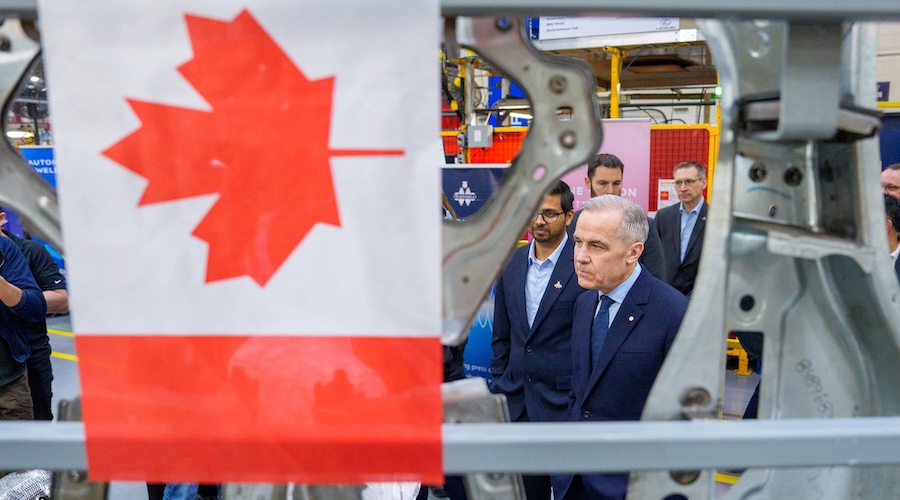
Canada’s policy language frames critical minerals in terms of sovereignty, economic resilience, and geopolitical risks. (Image: Prime Minister Mark Carney at auto parts manufacturing facility. Prime Minister Office | Lars Hagberg.)

Sovereignty is one of those words governments use when they want to sound serious. In critical minerals, it should be taken literally. Ottawa’s March 2026 announcement of up to $40 million for the Canadian Digital Core Library is more than another mining news release, and an admission that geological data is strategic infrastructure. It also marks a shift toward treating drill samples as part of Canada’s competitiveness toolkit.

It is too early to treat this as mission accomplished. Sovereignty in critical minerals is synonymous with controlling enough of the value chain to matter, and the federal critical minerals strategy makes that plain. It frames the opportunity across the full chain, from exploration and extraction through processing, manufacturing, and recycling, and argues that value must be added across that system if Canada is to become a supplier of choice. Sovereignty, in other words, starts long before production.

Norway understood that in oil and gas, influence came from more than hydrocarbons alone. Since its early offshore discoveries, the country has turned that resource base into technical competence and an exportable service industry.

Critical minerals now sit in that same category. Historically, global supply was treated as a market problem, with the assumption that price signals would do the rest. China treated critical minerals as strategy, while much of the rest treated them as procurement. Canada’s own policy language shows the shift by explicitly frame critical minerals through sovereignty, economic resilience, and the risks of geopolitical threats, unfair market practices, and foreign control. 

That is why a small investment in drill-core digitization matters far beyond a technical side project or modernization exercise. It is part of the upstream capability stack that determines how quickly geology is turned into strategic advantage. The federal drill-core initiative is a real opportunity, and related geoscience data efforts across the country point in the same direction. These are early pieces of a modern exploration system.

The argument turns blunt here. Scanning is absolutely necessary, and scanning is insufficient on its own. Institutions that capture data while leaving preprocessing, interpretation, hosting, and workflow integration to external dependency digitize the rock and export the advantage. Buying tools while outsourcing the brains creates dependence rather than sovereignty. The same is true when operation of equipment is mistaken for the competence to analyze, interpret, and apply data at scale. That is the line between procurement and nation-building.

The right policy funds the full capability stack around tools, workflows, and domestic analytical competence. In the near term, that means pairing any scanning program with Canadian-led hardware and software infrastructure. It also means procurement rules that reward domestic analytical capability over foreign pass-through arrangements or domestic front ends for foreign-controlled platforms, processing, or commercial capture.

Just as important, this cannot be treated as a one-time modernization project. There are better models. Australia’s National Virtual Core Library has been two decades in the making. Today, the system is large, open, and continuous.

The process and mechanism for digitizing geological assets are just as important as the outcome. The larger opportunity is to use that effort to build the domestic capability that critical mineral sovereignty requires.

––––––––––––––––––––––––––––––

*Masoud Aali is the founder and CEO of Nova Scotia, Canada-based Scient Analytics Inc.


CATL earmarks $4.4B for critical minerals mining arm


CATL’s headquarters in Ningde, in China’s Fujian Province. (Image courtesy of CATL.)

Contemporary Amperex Technology Ltd (CATL) has earmarked $4.4 billion to expand its critical minerals mining business amid a global energy shock that raised fears over its supply of battery raw materials.

On Wednesday, the Chinese EV battery maker — one of the world’s largest — said it will create a new subsidiary to act as an investment and operations platform for the new energy mining sector. Its business scope would include mineral resources exploration, metals processing and sales of chemical products, it added.

The investment arm, with a registered capital of 30 billion yuan (approximately $4.4 billion), will “integrate existing mining assets, pursue high-quality mineral projects at home and abroad, and safeguard supply of raw materials for the company’s core business,” its securities filing to the Shenzhen Stock Exchange reads.

The move comes at a time when battery manufacturers are grappling with rising costs and supply uncertainty for their raw materials such as lithium, whose price has risen more than 140% over the past year. Other metals like nickel and cobalt have also seen their prices surge in recent months due to measures taken by their respective leading suppliers (Indonesia and Congo).

CATL already owns a major lithium mine in Jiangxi province, but that has been mothballed since August due to permit issues. The company said it has since gradually increased exposure to upstream materials including lithium, nickel and phosphorus.

CATL’s plans to establish an upstream mining business could also accelerate its entry into the automotive and energy storage system (ESS) markets, analysts said. “The slumbering EV market in China will not stop CATL from improving its earnings as ESS becomes a new growth driver,” Zhou Ling, a hedge fund manager at Shanghai Shiva Investment, told the South China Morning Post.

Last week, Bloomberg reported that the company has tapped Chen Jinghe — founder and ex-chairman of Zijin Mining Group — as an advisor for its growing mining business. Chen, who stepped down last year, helped to transform Zijin from a small gold operation in China to one of the world’s largest miners.

Also on Wednesday, CATL released its results for the January-March quarter, highlighted by a 49% year-on-year jump in net income in the first quarter to 20.7 billion yuan, beating analysts’ estimates. In 2025, the Ningde, Fujian-based company posted a net profit of 72.2 billion yuan, up 42% from a year earlier.


India-Zambia talks on critical minerals stall over mining rights


Lusaka, Zambia. Stock image.

India’s talks with Zambia over critical minerals mining have stalled amid a lack of assurances from Lusaka on mining rights, two sources familiar with the matter told Reuters.

India last year received an allocation of 9,000 square km (3,474.92 square miles) to explore cobalt — a key component in batteries for electric vehicles and mobile phones — as well as copper, widely used in power generation, electronics and construction.

India dispatched a team of geologists last year, who have since returned with samples of minerals, including cobalt and copper.

The exploration program in Zambia was set to run for three years, after which New Delhi had planned to invite private sector companies to participate, subject to securing mining rights.

It was not immediately clear why Zambia was withholding assurances for mining rights.

New Delhi is making efforts to restart discussions with Zambia, but the situation is still uncertain, one of the sources said.

They declined to be identified as the discussions are not public. India’s federal Ministry of Mines did not respond to a Reuters request for comment.

India has been in talks with several African countries to acquire critical mineral blocks on a government-to-government basis, while also exploring opportunities in Australia and Latin America.

The Indian government last year held internal discussions over the country’s growing vulnerability to a tightening global copper market and ways to secure supplies from resource-rich countries during ongoing trade negotiations.

India’s copper imports have risen sharply since the 2018 closure of Vedanta’s Sterlite copper smelter. The country imported 1.2 million metric tons of copper in the fiscal year ending March 2025, up 4% from the previous year.

India is almost entirely dependent on cobalt imports, with shipments of cobalt oxide rising 20% in 2024-25 to 693 metric tons, government data showed.

(By Neha Arora; Editing by Mayank Bhardwaj and Janane Venkatraman)


Mexico’s Forced Pivot Away from US Gas Dependence


  • Mexico’s near total reliance on U.S. natural gas (covering 70–75% of its consumption) has shifted from an economic convenience to a geopolitical vulnerability as Washington’s pressure intensifies.

  • President Claudia Sheinbaum, long opposed to fracking, is now pivoting toward shale gas development as dependence turns into strategic risk.

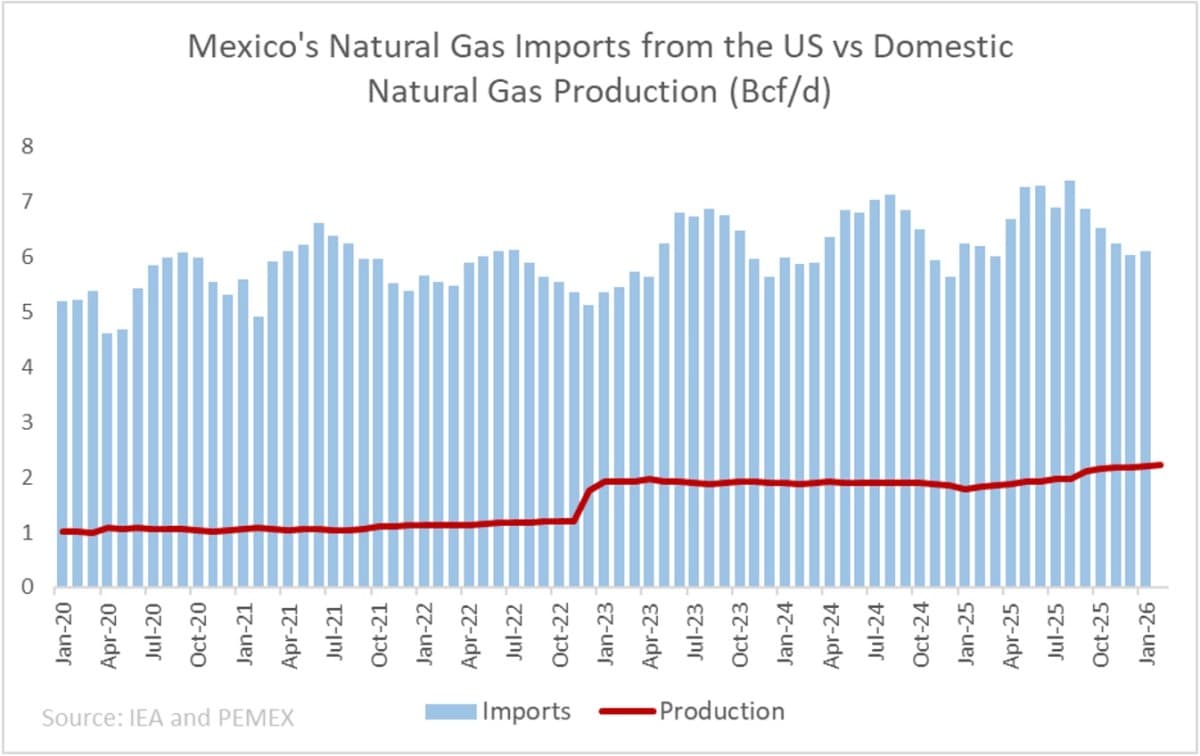
  • With domestic output stuck at 2.3 Bcf/d, unconventional gas is emerging as the only viable path to rebalance supply - despite higher costs and infrastructure gaps.

Who could ever transform a climate activist into a shale gas champion? Apparently, Donald Trump. This is exactly what is happening to President Claudia Sheinbaum, who is finally coming to terms with her country’s worsening imbalance between natural gas production and imports. Domestic demand stands at around 9 Bcf/d, while production covers only 2.3 Bcf/d, leaving roughly 6.8 Bcf/d - or 70–75% of consumption – to be met by imports from the United States. This is not just dependence, it is near-total reliance on a single external supplier for the backbone of the country’s energy system. That imbalance is now colliding with geopolitics. Now, with pressure from Washington intensifying, that dependence is turning into leverage.

Mexico’s natural gas dependency on US imports has deepened steadily over the past decade, with pipeline imports rising from 2.2 Bcf/d in 2015 to an average of 6.6 Bcf/d in 2025. The arrangement has been underpinned by favourable pricing: Mexico effectively accesses US domestic gas markets through Henry Hub-linked purchases, currently below $3/MMBtu, making it one of the cheapest sources of supply globally.


This affordability has shaped Mexico’s energy mix. Natural gas now accounts for more than 60% of power generation, embedding US supply directly into the country’s electricity system.  More than 70% of imported gas is used to generate roughly half of Mexico’s electricity, with gas consumption reaching approximately 5.5 Bcf/d during peak summer demand in 2025.  The scale of this reliance currently leaves the system exposed not so much to price fluctuations but rather to geopolitical risk, particularly as US foreign policy becomes more assertive.

Domestic vulnerabilities are amplifying the risk. Mexico’s grid is increasingly strained by heatwaves, hurricanes, and seasonal volatility, while hydropower (once a key buffer) is losing reliability. Summer output in 2023–2025 fell to around 2 TWh, roughly half of 2018 levels, forcing greater reliance on gas-fired generation and tightening the link between weather shocks and gas demand. At the same time, domestic supply is struggling to respond. Production declined until 2018 and has only seen sporadic gains since, with the last meaningful increase in 2023 – up by over 600MMcf/d, driven by Quesqui and Ixachi. Since then, output has plateaued, leaving unconventional gas as the only viable path to materially lift supply.

Mexico is once again confronting the question it has long avoided, whether to fully embrace shale gas. Its share of the Eagle Ford formation offers clear potential, and Pemex tested it through pilot projects and dozens of fracked wells between 2010 and 2016. But the 2014 oil price collapse and a policy shift under Andrés Manuel López Obrador (including a halt to shale bidding rounds) stalled development. That stance is now shifting. President Claudia Sheinbaum, an environmental scientist and long-time opponent of fracking, is reconsidering unconventional gas as import dependence becomes a strategic risk. On April 8, she announced a new committee to evaluate shale development, focusing on making the process less environmentally damaging.

Yet even with political backing, the transition to large-scale shale development would be far from straightforward. The US experience illustrates both the potential and the challenge. Over the course of the 2010s, technological advances in horizontal drilling and hydraulic fracturing (combined with scale efficiencies across the Lower 48 states) reduced the marginal cost of shale gas production from nearly $15/MMBtu to around $4/MMBtu by 2014. This transformation enabled the US to offset declines in conventional production and establish itself as the world’s lowest-cost large-scale shale gas producer. Replicating this model in Mexico could significantly improve project economics, potentially reducing breakeven costs from the $5–6/MMBtu range typical of other regions to approximately $3-4/MMBtu, bringing domestic production closer to parity with imported gas.

However, the ’Lower 48 US model’ is not simply a set of technologies but an integrated system, combining extensive pipeline infrastructure, a mature oilfield services sector, and a high degree of operational scale. Mexico lacks much of this supporting framework, meaning that even with regulatory backing, development timelines would be longer and costs structurally higher.

This creates a fundamental economic constraint. Even under improved conditions, domestically produced shale gas would likely struggle to compete with imported US pipeline gas priced at Henry Hub levels. Sustaining investor interest in large-scale shale development would therefore require either direct state support – a significant burden on already constrained public finances – or access to higher-priced export markets.

In that context, Asia may be the only commercially viable outlet. Spot LNG prices in the region, as reflected by the JKM benchmark, are currently in the range of $15–18/MMBtu, and even prior to the latest supply disruptions were trading at $10–11/MMBtu. At those levels, exporting domestically produced gas would materially improve project economics and potentially make upstream development profitable. Yet this solution introduces a new layer of contradiction. Prioritizing exports would leave domestic demand structurally reliant on U.S. imports, preserving (rather than resolving) Mexico’s exposure to external pressure.

Mexico does, in fact, have an LNG export project under development: the Energía Costa Azul terminal. However, it does not serve domestic production. The project is a joint venture involving TotalEnergies and Japanese buyers and is operated by the U.S.-based Sempra Infrastructure. Its business model is to liquefy U.S. pipeline gas for export to Asia. As a result, Mexico’s emerging LNG capacity reinforces the existing dependency rather than alleviating it. Dedicated infrastructure for exporting domestically produced gas is effectively absent, and building it would require substantial additional investment, likely led by state-owned Pemex alongside private partners (assuming sufficient capital can be mobilized).

This duality defines Mexico’s current position. The existing system delivers low-cost energy and supports industrial competitiveness, but it also concentrates risk in a single external supplier. The alternative – developing domestic unconventional resources – offers greater autonomy but requires substantial investment, technological transfer, and a recalibration of environmental policy. As external pressures mount and internal vulnerabilities become more pronounced, the balance between these two models is becoming increasingly difficult to sustain.

By Natalia Katona for Oilprice.com


Manganese X receives US patent for purification technology


Credit: Manganese X Energy Corp.

Manganese X Energy (TSXV: MN) said on Wednesday it has been granted a US patent for the proprietary purification technology it has developed for processing manganese sulphate.

The US patent expands the company’s global intellectual property portfolio, following its recent patent acceptance in South Africa. Applications for patents in Canada, Mexico and Australia have also been submitted for its technology, the company said.

“This achievement reinforces the strength of our technology and our commitment to building a secure and scalable domestic supply chain,” CEO Martin Kepman said, noting the importance of high-purity manganese sulphate in the rapidly growing lithium-ion battery market.

Manganese sulphate is a cathode material used in the production of lithium-ion batteries for electric vehicles and stationary energy storage systems.

Issuance of the US patent adds further value to the development of its flagship Battery Hill project in New Brunswick, the company said. The project, covering over 12.2 sq. km and five distinct zones, is considered to be one of the largest manganese carbonate deposits in North America. Based on a historical report cited by the company, it has a mineral resource of 194 million tonnes.

A pre-feasibility study is currently underway to evaluate multiple processing pathways to optimize both technical performance and economics, Manganese X said.

Shares of Manganese X surged over 9% to C$0.12 by midday, taking the Canadian junior’s market capitalization to C$25.8 million ($18.9 million).


LKAB plan for Swedish rare earths mine could breach Sami rights, report says


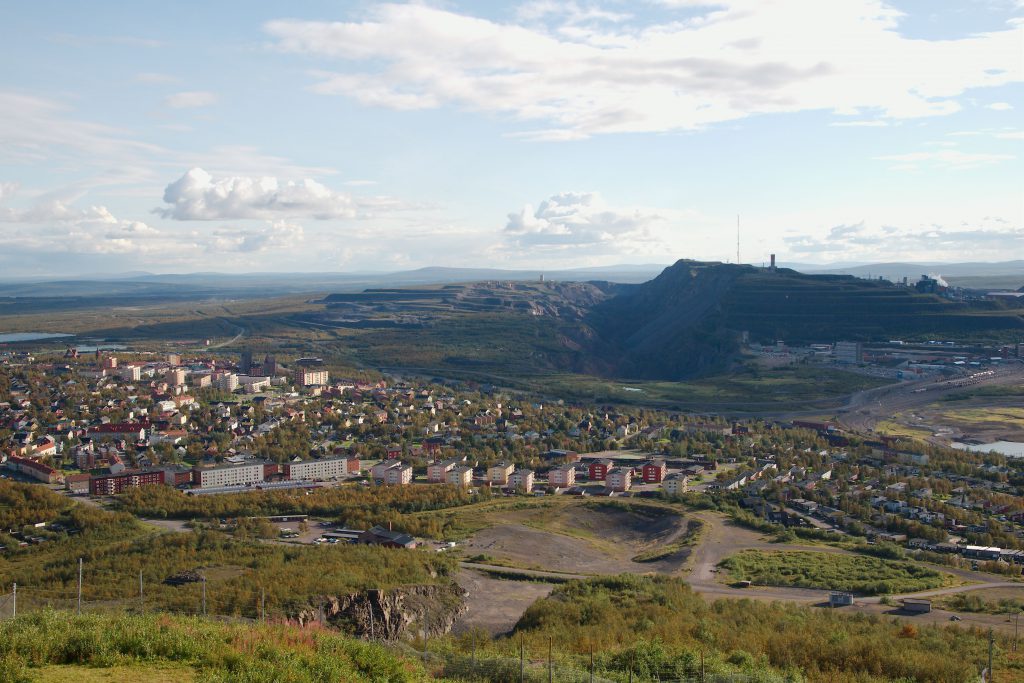
The town and mine of Kiruna, Sweden. Credit: Wikimedia Commons

LKAB’s plans for an iron ore and rare earths project in Sweden’s far north could violate the rights of the indigenous Sami reindeer-herders if it is opened, a report by Stockholm Environment Institute (SEI) published on Wednesday said.

Per Geijer, located near LKAB’s existing Kiruna mine, is one of the European Union’s flagship projects in its strategy to reduce reliance on China for rare earths needed for the transition to clean energy, defence and electric vehicle production.

But Sami reindeer-herders say it would spell the end of their traditional way of life, and have vowed to fight the mine in the courts.

“LKAB’s project carries a significant risk of violating the indigenous rights of the Sami community members,” said Rasmus Klocker Larsen, senior research fellow at the non-profit SEI.

SEI said LKAB’s plans for Per Geijer would breach Sweden’s duties under the United Nations’ International Covenant on Civil and Political Rights and the UN’s Declaration on the Rights of Indigenous Peoples.

The mine would prevent herders from moving their reindeer from winter to summer pastures, among other things.

LKAB said it had not reviewed the report.

“We understand our plans for the new deposit would have an impact and we want to engage in dialogue with the Sami village to develop appropriate and far‑reaching measures for compensation and to identify various solutions going forward,” the company said.

The conflict highlights the tensions and competing legislation that exists between Europe’s economic security goals and commitments to human rights.

Per Geijer, with 1.2 billion tonnes of total mineral resources, of which 2.2 million tonnes are rare earth oxides, is one of Europe’s biggest rare earth finds.

It is designated a strategic project by the EU, which means permitting should be accelerated. Sweden’s government wants to lead a new “green” industrial age in Europe and is cutting red tape for new mines.

LKAB has said Per Geijer is crucial for the long-term viability of the Kiruna mine – the world’s biggest underground iron ore mine. It applied for a mining concession last year. If granted, it would still need an environmental permit to start operations. Both could be appealed.

The Sami say they are not against mines if they don’t threaten their culture.

“This could be the last nail in the coffin that means the end of the whole community,” said Lars-Marcus Kuhmunen, chairman of the Gabna Sami.

(By Simon Johnson; Editing by Paul Simao)

 Ivanhoe holds ‘captive audience’ on Congo sulphuric acid market, CEO says


Credit: Ivanhoe Mines

Ivanhoe Mines has a “captive audience” for its sulphuric acid in the Democratic Republic of Congo, its CEO said on Wednesday, as prices for the chemical soar on limited supplies due to the Iran conflict.

Vancouver-based Ivanhoe this year started selling sulphuric acid as a byproduct of copper smelting at its Kamoa-Kakula project to other mine operators on the DRC copper belt, which need acid to dissolve copper from ore in a process known as leaching.

Supplies from the key Middle East region have struggled to reach world markets, raising fears of a global sulphuric acid squeeze. The DRC alone has an acid market of about 2 million metric tons per year, Ivanhoe CEO Marna Cloete told Reuters on the sidelines of a copper industry gathering in Santiago.

“We just produced just over 100,000 tons in the first quarter, but that’s going to the likes of Glencore, to ERG (Eurasian Resources Group) … so it’s local distribution,” she said, adding that annual acid output would reach 600,000 to 700,000 tons once its smelter was running at full capacity.

“The local market is more than sufficient for us to sell to,” she added, noting that restrictions on exporting sulphur from neighbouring Zambia had stopped DRC companies from making their own acid. “We’ve got a captive audience in terms of our distribution,” Cloete said.

Ivanhoe said in a statement on Monday the Kamoa-Kakula smelter had ramped up to 60% of capacity, with a further increase constrained by a lack of concentrate feed.

The company’s price for high-strength sulphuric acid was around $500 per ton in the first quarter, with spot prices generally increasing over the three months, Ivanhoe said.

(By Tom Daly; Editing by Rod Nickel)

Chinese nickel tycoon taps top global traders for aluminum push

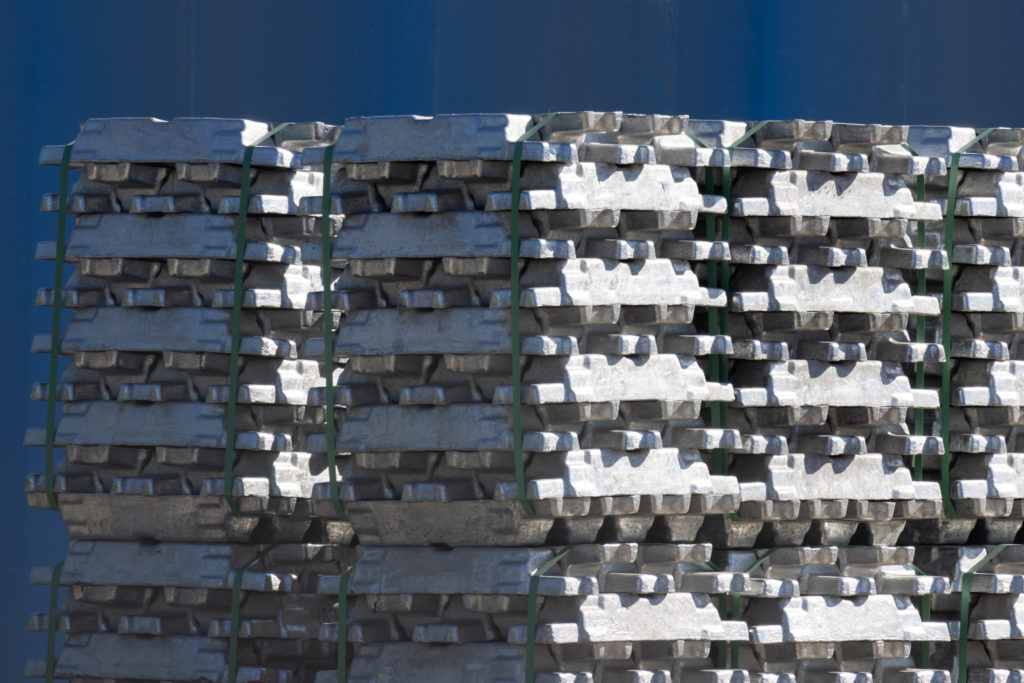
Aluminum ingots. Stock image.

A Chinese tycoon who helped transform Indonesia’s metals industry over the past decade is in talks with commodity trading giants Mercuria Energy Group, Glencore Plc and Trafigura Group to secure investments in his new $3 billion aluminum smelter.

A deal between Xiang Guangda’s Tsingshan Holding Group Co. and the trading houses over minority stakes in the Weda Bay industrial park smelter would provide the merchants with a share of output from the 800,000-ton facility, people familiar with the matter said, adding the talks were already advanced. They asked not to be named as discussions are not public.

For Tsingshan, the involvement of high-profile Western investors with a global outlook and client base could be helpful in securing the support of an Indonesian government that has soured on local mining billionaires, the people said. It would also help limit the group’s financial exposure, they added.

For the traders, it would ensure a new source of metal at a time when a war in the Persian Gulf — a region that accounts for around a tenth of global aluminum supply — has upended flows and underscored the importance of diversified sourcing. Emirates Global Aluminium PJSC, the region’s biggest producer, has said it could take as long as a year to restore full output at its Abu Dhabi plant following an Iranian attack.

Tsingshan — a company that has been key to Indonesia’s emergence as a dominant player in nickel — has typically partnered with local producers and leading Chinese metals companies. In aluminum, it has teamed up with Huafon Group and Xinfa Group to build and run smelters in both the Morowali industrial park, in Sulawesi and in North Maluku, home to Weda Bay.

Spending on the new aluminum project is expected to top $3 billion, including smelters and associated power-generation facilities, the people said. The project will be developed in two phases, each with a capacity of 400,000 tons, they added.

Officials at Tsingshan did not respond to requests for comment. Mercuria, Glencore and Trafigura declined to comment.

Tsingshan is also speeding up other aluminum projects to allow the group to step in at a time of supply upheaval. Two plants in Indonesia will add production capacity totaling about 600,000 tons a year as early as next month, the people said — earlier than a planned third-quarter target.

Xiang, whose giant nickel bet sent shockwaves through the London Metal Exchange in 2022, is one of a number of Chinese entrepreneurs boosting aluminum capacity in Indonesia. China, the world’s largest producer, has hit a domestic cap on output, pushing companies to seek alternative venues with cheap energy and accommodating policy.

Aluminum prices in London rose to a four-year high this week after US President Donald Trump’s blockade of Iranian ports threatened more disruptions to shipments from the Persian Gulf. Fees paid by Japanese clients to obtain aluminum have surged to the highest level in 11 years, while premiums paid in the US have also climbed.

The acute supply-chain disruptions have pushed Japanese auto-parts manufacturers into talks with Russian giant United Co. Rusal International PJSC for its high-end alloy products, Bloomberg reported last month. Other metal buyers usually dependent on the Middle East are looking for alternative suppliers in other regions, including Indonesia.

(By Alfred Cang)

AG

Silver faces sixth year of deficit with stock drawdown raising squeeze risks, research shows


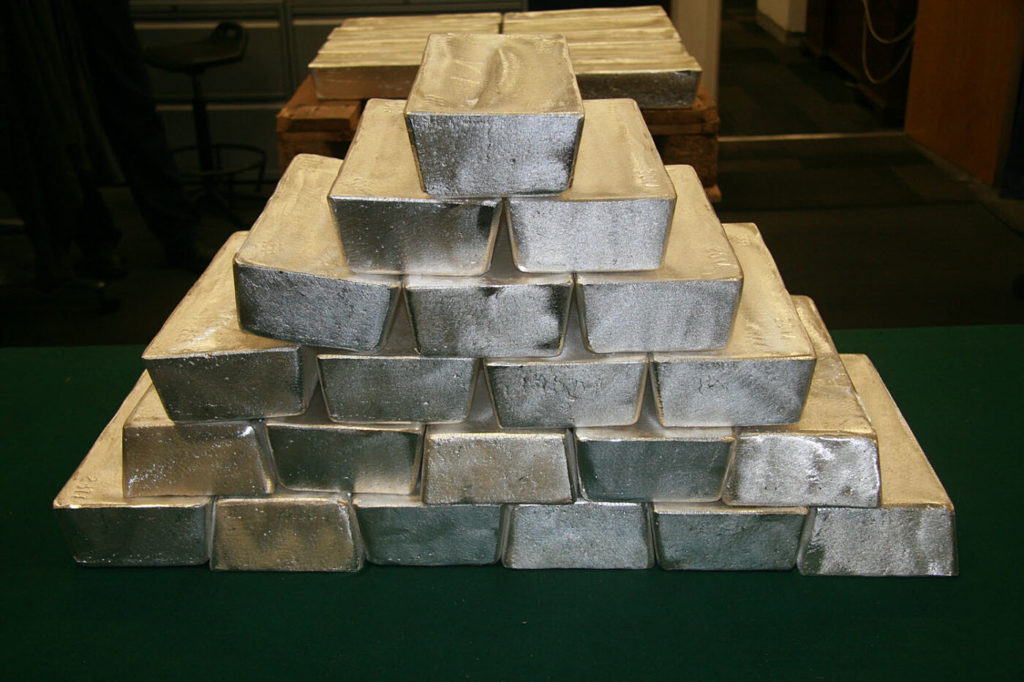
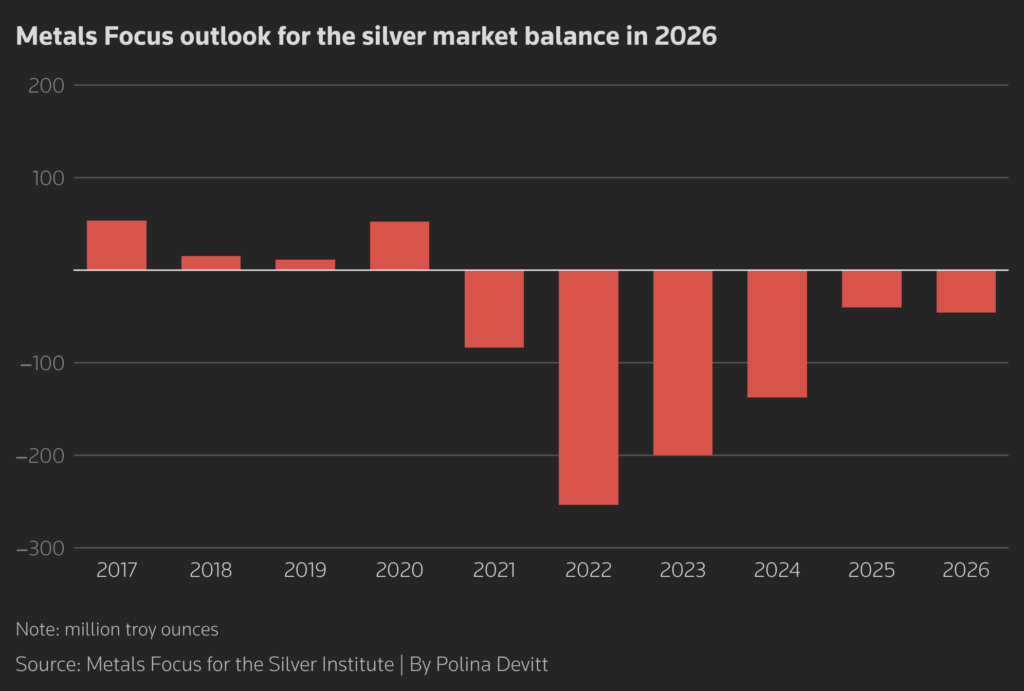
The silver market is heading for a sixth year of structural deficit, with 762 million troy ounces drawn from stocks since 2021, raising the risk of a renewed liquidity squeeze despite weaker demand expectations, the Silver Institute and consultancy Metals Focus said on Wednesday.

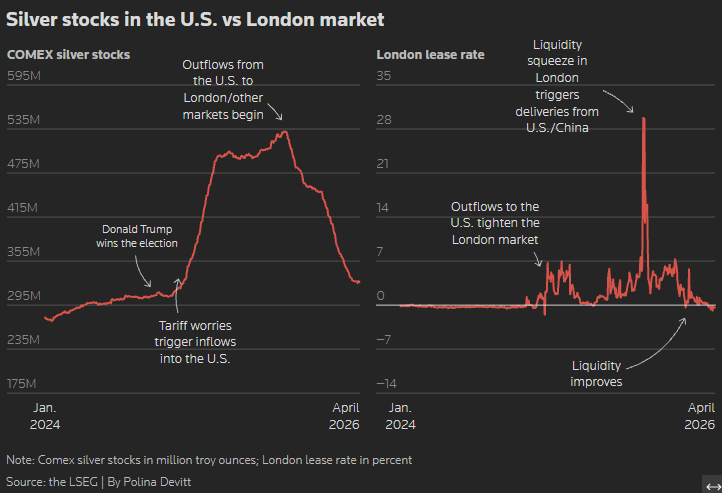
Silver , used in jewellery, electronics, electric vehicles and solar panels as well as for investment, is down 35% since a bout of frenzied retail buying – following a 147% surge in 2025 – drove prices to a record high of $121.6 an ounce in January.

The base for that rally was created in 2025 by months of inflows of the metal to the US inventories and silver-backed exchange-traded products (ETPs) alongside a spike in physical demand that triggered a liquidity squeeze in the benchmark London market in October.

Since then, liquidity has improved as metal flowed back from the US, ETPs saw outflows and Indian demand eased.

“Lease rates in London have largely normalized, but risks of another liquidity squeeze this year remain,” said Philip Newman, managing director at Metals Focus, which prepared the research for the Silver Institute industry association.

Metals Focus estimates that 28% of 884 million ounces of silver held in London vaults at end-March were not tied to ETPs and were potentially available to support liquidity, the highest share since January 2025 and up from a historic low of 17% in September that helped precipitate the October squeeze.

Conditions for a silver squeeze will be created again, requiring further outflows from the US, if the price becomes more volatile and Indian demand gets active, especially coupled with inflows to ETPs storing their metal in London, Newman said.

The global silver market deficit is expected to widen to 46.3 million ounces in 2026 from 40.3 million in 2025, even as total demand falls 2% due to weaker industrial and jewellery consumption, partly offset by stronger coin and bar demand, the research showed.

Industrial silver fabrication is forecast to fall 3% to a four-year low with the Iran war’s damage to global growth threatening further downside. By contrast, coin and bar demand is seen rising 18% supported by a recovery in the US buying.

Total global silver supply is forecast to decline 2%, reflecting producer hedging normalizing after jumping in the second half of 2025.

(By Polina Devitt; Editing by Joe Bavier)

CU

DRC boosts US copper sales fivefold to 500,000 tonnes


Gecamines’ Mutoshi copper-cobalt project.(Image courtesy of Trafigura.)

The Democratic Republic of Congo has raised planned copper sales to the United States to 500,000 tonnes through a state-backed marketing venture, marking a fivefold increase from its initial January commitment.

The deal, first reported by Semafor, is led by state miner Gécamines and marketed through a joint venture with Mercuria Energy Group, with backing from the US International Development Finance Corporation. It targets copper output from Gécamines’ minority stakes in major operations, including Kamoto Copper Company and Tenke Fungurume.

The expanded agreement highlights the DRC’s growing influence in global copper markets while intensifying competition between Western and Chinese players for control of critical mineral supply chains, as Kinshasa seeks to convert passive stakes into direct revenue and greater commercial control.

Gécamines has been working to transform its holdings in some of the country’s largest mines into physical copper it can market independently. Its stakes include Glencore’s (LON: GLEN) Kamoto Copper Company and the Chinese-run Tenke Fungurume mine, one of the world’s highest-grade copper-cobalt deposits. While the partnership is intended to improve transparency and control, Mercuria remains the seller of record as Gécamines develops an in-house trading arm

Analysts say that transition will require significant investment in financing, insurance and risk management, as well as access to physical markets. 

Congo’s copper production has surged to 3.5 million tonnes in 2025, cementing its position as the world’s second-largest supplier after Chile. The growth comes amid record prices and rising demand driven by electric vehicles, renewable energy and data centre expansion.

Strategic reserve

In a parallel move to tighten its grip on critical minerals, the DRC has established a strategic reserve for cobalt and other key materials, handing control to regulator ARECOMS. The agency can now acquire, hold and market designated minerals, allowing the state to stockpile unused export quotas and intervene more directly in global markets.

The reserve, which will also include germanium and could be expanded to other minerals, builds on previous measures to bolster cobalt prices, including a temporary ban on exports last year followed by a quota system.

“It will allow the Congolese state to intervene in a targeted manner regarding the quantities of strategic mineral substances available in order to maintain the balance of the international market and contribute to strengthening its economic sovereignty,” ARECOMS said in an emailed statement.

Congo, which produces about 70% of the world’s cobalt, has already moved to curb oversupply through export bans and quotas. It shipped about 48,800 tonnes in the first quarter, down sharply from roughly 123,000 tonnes a year earlier, when exports were frontloaded ahead of a four-month freeze.

Under the quota system, 10% of national cobalt exports are reserved for strategic use, amounting to 9,600 tonnes in 2026. Any unshipped volumes risk being transferred to the state reserve, adding another lever for the government to influence supply.

China’s hold

Chinese companies such as CMOC, Zijin and Huayou dominate copper and cobalt production in the DRC, where the metals are often mined together, while US firms have historically stayed away because of conflict, corruption and logistical hurdles.

Kinshasa hopes American capital can dilute that dominance after years of Chinese expansion. In 2007, Congo granted Chinese miners tax breaks running to 2040 in exchange for $9 billion in promised investment, of which about $6 billion materialized, as Western governments showed little appetite to curb sales to Chinese buyers.

By the time US President Donald Trump returned to office in January 2025, Chinese firms controlled about 80% of Congo’s mining output, underscoring Beijing’s dominance in the sector. Western interest is increasing, however, with Orion CMC — backed by the US development finance agency — moving to acquire stakes in Glencore’s Congolese assets as Washington looks to secure critical mineral supply.

While the Congolese state holds a 30% stake in Kamoto, Gécamines can tender up to half of the mine’s copper production in 2026 and 2027 to offset volumes it was previously unable to market, potentially extending beyond that period if needed.


Blue Moon outlines 13-year mine at Norway copper project


The Nussir project is a new copper mine in Northern Norway based on the brownfield site of a mine that stopped operations in 1979. Credit: Nussir ASA

Blue Moon Metals (TSXV: MOON) (NASDAQ: BMM) says a newly feasibility study for its Nussir copper project in northern Norway has confirmed what it calls a “long-life asset with strong economics”.

The study, published on Thursday, outlined a potential 13-year mine operation with average annual production of 19,000 tonnes in copper equivalent (CuEq), including 3,600 oz. of gold and 546,000 oz. of silver.

Under the base-case scenario, including long-term price assumptions of $4.78/lb. copper, $3,515/oz. gold and $45.26/oz. silver, the project has a net present value (after tax, discounted at 8%) of $235 million, with an internal rate of return of 19%. Initial capital expenditures are estimated at $184 million. The total payable metal mix breaks down as 77% copper, 6% gold and 13% silver.

The FS results are based on a current measured and indicated resource of 28.72 million tonnes grading at 1.2% CuEq, inclusive of proven and probable reserves of nearly 25 million tonnes at 0.99% CuEq.

According to Blue Moon, there is potential to expand this resource as the deposit remains open to the west and at depth. Adding 5 years to the mine life utilizing 50% of the inferred resources would result in a 52% increase to the calculated NPV, the company estimates.

It also noted that FS only considers the underground resource of the Nussir deposit and not the Ulveryggen deposit part of the project.

Production in late 2027

The FS provides strong support to make a final investment decision on the project and confirms that the timeline to hot commissioning of the process plant is the third quarter of 2027, the Canadian-based junior said. The start of production is pegged for December 2027.

“The completion of this feasibility study update marks yet another significant milestone for our Nussir project and reaffirms the strength and value of this asset and resource,” CEO Christian Kargl-Simard stated in a press release.

“Through our ongoing exploration efforts at Nussir, including 200-metre step out holes at over 1-kilometre depth, we believe this will be a generational copper mine, so we believe these results are just the beginning,” he added.

Blue Moon acquired the Nussir project in late 2024 as part of its efforts to diversify away from its zinc project in California, focusing on near-production assets. The project is host to a historic mine that was in production during the 1970s, with mining occurring from four shear-hosted open pits until operations halted in 1979.

Shares of Blue Moon Metals inched higher to trade at around C$11.20 apiece, for a market capitalization of C$974 million ($710 million).

China copper consumption to grow by 3.7% annually through 2035, Minmetals says


Stock image.

Refined copper consumption in top metals market China shows no signs of peaking and could grow by an average of 3.7% annually over the next decade, a researcher from state-owned China Minmetals Corp said on Tuesday.

China’s demand growth this year will be much lower at about 1%, Zuo Haoen, market research director at Minmetals Non-Ferrous, told the World Copper Conference in Santiago, citing a slowdown in the pace of the energy transition – especially in copper-intensive solar power – and high copper prices.

Under Minmetals’ “most realistic” scenario, Chinese copper consumption will grow by 3.7% a year to 22.95 million metric tons by 2035, up a total 43% from 16 million tons in 2025.

If China’s copper intensity can be maintained, consumption will grow by more than 50% over the decade, Zuo said, noting that the country had ground to make up on developed economies in terms of per capital copper consumption.

The Minmetals forecast is based on a projected population of 1.35 billion in China in 2035. “Even with a mild population decline, future incremental copper demand will remain substantial,” Zuo said.

(By Tom Daly; Editing by Neil Fullick)