Saturday, May 17, 2025


America’s Impact on the Global Thermostat


America is targeting a hotter planet… Bring it on!

That’s the only plausible explanation for the Trump administration’s gung-ho push for 100% fossil fuels and as much coal burning as possible while trashing mitigation of climate change, which is characterized as an expensive hoax, a farce, a threat to the U.S. economy, plus massive roll backs of environmental regulations that force American businesses to spend more to keep America’s environment clean. Based upon these cutbacks of environmental regulations, they’re clearly ignoring climate change.

But the property/casualty insurance industry has no choice in the matter. They are forced to recognize the damage caused by climate change. And, Boy, Oh Boy! are they ever squealing!

More to the point: Climate Change has Trapped the Unites States in a vicious Property Insurance Maelstrom that is negatively impacting homeownership, much more on this sensitive subject follows.

It’s indisputable that the U.S. is intentionally turning up the thermostat at the same time as the world is trying to tone it down. The United States pulling out of the Paris ’15 climate accord is already influencing others to join the U.S., Libya, Iran, and Yemen as the only countries not party to Paris ’15.

But pulling out of Paris ’15 is only part of the hotter climate equation: “Under the Trump administration, U.S. greenhouse gas emissions levels are estimated to rise up to 36 percent higher than current policy by 2035.” (“The Trump Administration’s Retreat from Global Climate Leadership,” Center for American Progress, Jan. 21, 2025). This certainly helps guarantee a hotter planet.

In addition to withdrawing from Paris ’15, the U.S. has signaled its intent to go one step further and withdraw from the U.N. Framework Convention on Climate Change (UNFCCC, est. 1992). This is the underlying framework, “the father of international cooperation on climate change” that led to meetings such as Paris ’15. Abandonment will freeze-out the U.S. from any future global climate change negotiations and set a dangerous precedent. This could trigger a domino effect among nations questioning climate obligations and destabilizing the global consensus the Paris Agreement represents.

Already, Argentina’s President Javier Milei is reconsidering his country’s commitment to Paris ’15. Already, countries such as Germany are cutting back on mitigation commitments. Already, several brand-name corporate commitments to cut CO2 emissions by 2030 are out the window. Already, the fossil fuel industry is reneging on reduction of CO2 emissions promises.

Yet, the more the U.S. abandons efforts on global warming, the more property insurance companies abandon insurance altogether or crank up moonshot rates, for example, according to Insurify (a website partnered with major insurance companies) 15 States Facing an Imminent Insurance Crisis, October 4, 2024.

Moreover, the overall insurance industry is feeling the heat as explained in a message from a senior officer of Allianz SE, the world’s largest insurance company: “Climate, Risk, Insurance: The Future of Capitalism,” March 25, 2025).

Unfortunately, the world, other than the property/casualty insurance business, is truly out of touch with the gravity of climate change. Yes, “global warming” is a universal catchall phrase that everybody knows, but “global warming” is too hackneyed to trigger a strong emotional response, and it fails miserably at describing the depths of the biggest challenge in human history. For starters, serious disruptive danger is brewing at both poles and spreading across the land. It’s the reason why 350 polar scientists called an emergency meeting (see below) to warn the world: “Antarctica is starting to come unglued.” This is the nightmare of nightmares.

Already, according to Mau Lau Observatory, CO2 emissions, the primary cause of global warming, are flashing red at 430 ppm. According to an IPCC (Intergovernmental Panel on Climate Change) report: “In 2016, a worldwide body of climate scientists said that a CO2 level of 430 ppm would push the world past its target for avoiding dangerous climate change.” (MIT Climate Portal).

And, making matters worse yet, it was only a couple of months ago when the aforementioned 350 polar scientists held an urgent ad hoc session in Australia to declare an Antarctic emergency on course to catastrophically cascade because of global warming.  That emergency session of November 2024 sent a chilling message to the world: “The experts’ conclusion, published as a press statement, is a somber one: if we don’t act, and quickly, the melting of Antarctica ice could cause catastrophic sea levels rise around the globe.” (Source: “Emergency Meeting Reveals the Alarming Extent of Antarctica’s Ice Loss,” Earth.com, Nov. 24, 2024)

“Runaway ice loss causing rapid and catastrophic sea-level rise is possible within our lifetimes,’ the team warned in their statement,” Ibid.

Shortly after that spooky news item, another unnerving announcement: Immense methane leaks discovered for the first time in Antarctica. To say “this is troubling” is an understatement. Rapusia.org, March 14, 2025, “Massive Methane Leaks Detected in Antarctica,” Posing Serious Climate Risks: “A team aboard the Sarmiento de Gamboa research vessel observed large columns of gas escaping from the ocean floor, with some extending up to 700 meters (2,300 feet) long and 70 meters (230 feet) wide.” These leaks are whoppers. The methane (CH4) molecule is extremely proficient at blanketing atmospheric heat.

Anthropogenic (human-caused) global warming is indisputable. Global mean temperature has increased far-far beyond nature’s normal course. NASA claims: “The rate change since the mid 20th century is unprecedented over millennia… Scientific evidence for warming of the climate system is unequivocal.” (Evidence, NASA)

Climate change is frustrating; public interest is declining. Climate change/global warming is cast aside as no big deal by people in positions of authority, no worries, blah-blah-blah, whilst perpetrators lose interests in mitigation efforts, with governmental policies abandoning the issue, the reality of global warming falls onto the shoulders of the insurance industry, which is abandoning coverage in some regions and raising prices across the board because of ‘never-witnessed-before’ damage. The property insurance biz is experiencing a crisis. They’re the first ones to admit it

Along the way, every homeowner is getting hosed by insurance rates because of climate change: “Even if you haven’t suffered direct damage, you’re paying for increasingly extreme weather.” (“Nobody’s Insurance Rates are Safe from Climate Change,” Yale Climate Connections, Jan. 14, 2025)

How does this end? Does the world, out of necessity, become insurance-less? Here’s how Insurance Europe views the dilemma: “The statistics are alarming, as is the destruction happening across Europe and beyond, and this makes the urgency for action undeniable. Cutting greenhouse gases remains a priority.”

Yet, confusion reigns supreme as the world’s largest economy, the U.S. at $30 trillion GDP, rejects the IPCC claim of human-caused climate change as a threat to society. This is completely rejected. But how can the White House ignore: “Homeowners Insurance Has Soared Over 50% in These States,” CNBC, May 9, 2025. In Florida, a homeowner with fair credit and $350,000 in dwelling coverage could expect to pay $9,462 a year, or $789 a month for insurance in 2024. Climate change is a costly protagonist.

And more troubling yet: “South Florida Homes for Sale Quadruple as Residents Leave En Masse,” Newsweek, May 11, 2025. As of April 2025, 52,000 listings versus 12,000 a few years ago, hit the South Florida market like a ton of bricks. Are people running-scared?

Confusion about U.S. climate change policy, and its consequences, is hitting American homeowners with a loud thud that reverberates from coast-to-coast as speculation about a RE-recession builds, in large part, fueled by climate change: “The Climate Crisis is Set to Erase $1.47 Trillion in US Home Values,” Business Insider, Feb. 4, 2025. According to the study, 40% of the losses will come from “climate abandonment communities.”

When will the Trump administration address this ongoing threat to homeownership? It’s an issue that’s well beyond State’s Rights; it’s a national failure with fossil fuel CO2 emissions trapping heat, upending five-thousand years of a Goldilocks climate system. Exxon scientists saw this coming decades ago. Now, it’s become a national nightmare and an emergency in the face of diminishing guarantors.

“How to end this madness?” is the question of the times.

Robert Hunziker (MA, economic history, DePaul University) is a freelance writer and environmental journalist whose articles have been translated into foreign languages and appeared in over 50 journals, magazines, and sites worldwide. He can be contacted at: rlhunziker@gmail.comRead other articles by Robert.


What Does It Take to Make Community?


A vibrant and strong and active press


The ingredients for any community should start with the basics: active and informed citizens. Participants in a community’s past (context, knowledge), present (all those factors tied to the weakest and most vulnerable, are they included?) and future (getting to a place where climate chaos, predatory capitalism, neofascism doesn’t completely pull all the loose strings of a threadbare set of safety nets). There are plethora of planning books on the smalltown.

Then what about a sustainable city? Unfortunately, when planners and politicians talk about making cities more sustainable, they are thinking of large urban centers like Portland or Seattle. Oh, the buzz phrases: walkable neighborhoods, traditional architecture, and diverse land uses. It’s neighborhoods that sort of look like small towns. The fix is in for those large cities as planners and developers are B.S.-ing introducing a “small-town feel” into large cities and suburbs. This will never ever create a sense of community, nor will it reduce the use of automobiles.

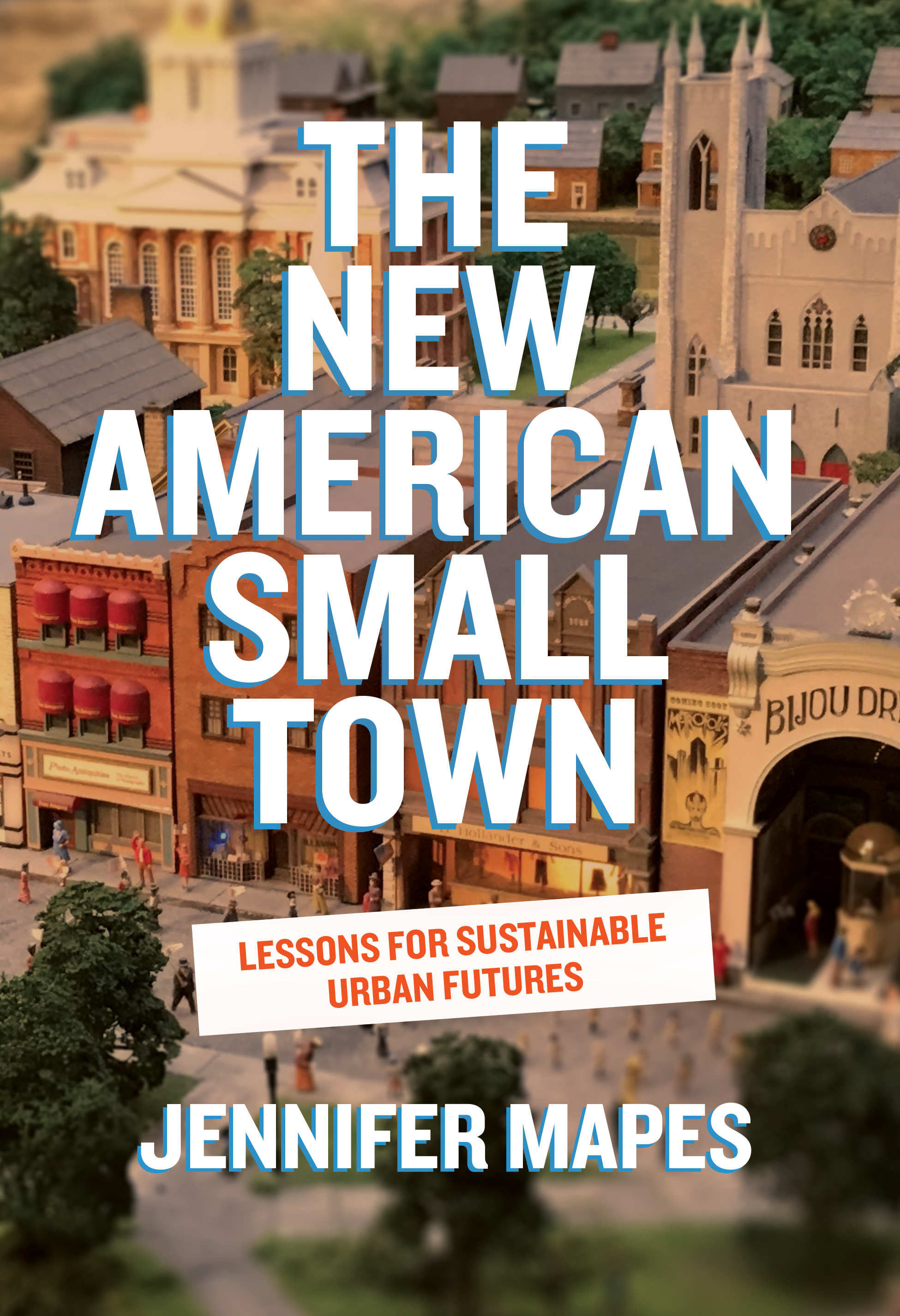
From the promo stuff on the book, The New American Small Town: “So, what of small towns themselves? We don’t talk about these places as much. They are often assumed to be utopias of the past or crumbling ghost towns of the present day rather than places with potential for sustainable living. This book critically examines narratives of American small towns, contrasting them with lived experiences in these places, and considers both the myth and reality in the context of current urban challenges. Interweaving stories from and about U.S. small towns, the book offers lessons in sustainable urbanism that can be applied both in the towns themselves and to the larger cities and suburbs where most Americans now live.”

Like I stated above, there are dozens of books for planning students and developers and chambers of commerce and policy wonks on how to jigger things for smalltowns.

“The book offers hope-filled portraits of small towns as livable, sustainable, and diverse places and serves as an important corrective to the media narrative of alienated, left-behind rural voters.”

—Mark Bjelland, author of Good Places for All

New American Small Town cover

Thinking of community from that large urban space, Jane Jacobs approached cities as living beings and ecosystems. She suggested that over time, buildings, streets and neighborhoods function as dynamic organisms, changing in response to how people interact with them. She explained how each element of a city – sidewalks, parks, neighborhoods, government, economy – functions together synergistically, in the same manner as the natural ecosystem. This understanding helps us discern how cities work, how they break down, and how they could be better structured.

She was looking at big urban places, like her home, New York:

“Whenever and wherever societies have flourished and prospered rather than stagnated and decayed, creative and workable cities have been at the core of the phenomenon. Decaying cities, declining economies, and mounting social troubles travel together. The combination is not coincidental.” (source)

In my small town, population 2,300, we look toward the sea and the forest as reminders of how vital ecosystems are. The county becomes a network of towns along the coast and inland — Lincoln City, Depoe Bay, Newport, Seal Rock, Waldport, Yahcats.

We drive a lot, and the traffic during tourist summer season balloons. The town of Lincoln City is around 10,000, but on some weekends, it swells to 50,000. All that infrastructure, all that water, all those restaurants and beaches, well, think of five times the impact, or more, since locals do not all swarm to the beaches or the restaurants all in one fell swoop.

We are living on unceded land, and in many cases, sacred burial land: Indigenous Communities in Oregon.

The links below are the websites of Oregon’s nine federally recognized tribal communities:

The story of a community is all wrapped up in its context, history, and in this age of a memory hole crazy presidency —  with white supremacists like Jewish Stephen Miller running the Trump team’s Gestapo and Big Brother training camp —  we will see history literally erased.

Communities that are small are more vulnerable than those large urban areas Jacobs wrote about, and studied.

From my urban and regional-planning graduate-student days (looking at concepts of small is better and scaling down) there are so many quotable axioms tied to communities that are considered small. Here are some notes from one of my planning classes looking at regional smalltown planning:

  • “A small town is where everyone knows everyone, and everyone has a secret.”
  • “In the quiet of the village, the soul finds its reflection.”
  • “A village is a symphony of nature and humanity.”
  • “Simplicity and serenity find their home in village life.”
  • “The best laid plans of mice and men often go awry.”
  • “If it is to be successful it must be folk-planning. This means that its task is … to find the right places for each sort of people; places where they will really flourish.”

For me, big ideas and a global perspective capture where I live. There is a deep economic tie to tourism and Air B & B sort of lifestyle out here. Fishing as an industry is big. Logging and a pulp mill in the town of Toledo are still big economic drivers. A big brewery, Rogue, gobbles up precious freshwater, as does the pink fish industry of Pacific Seafoods.

We have the NOAA station and the Oregon State University Hatfield Marine Sciences Center, as well as the Oregon Coast Aquarium. Many highly educated (college) retirees end up here since many worked for those two large entities listed above. I’ve written about “this place” for Dissident Voice, capturing my old gig as a columnist for Oregon Coast Today. I write for the local rag, called the Newport News Times, with a name change of Lincoln County Leader.

Conference celebrates how the ocean connects to all of us — coastlines, people, cultures

This one captures my day in and day out life on the wrack line:

Respite: Smart People, Concerned Environmentalists, Talking Whales, Kelp, Tidepools.”

I’ve worked with poor people and homeless folk, with developmental delayed clients, and I have had columns in two newspapers, one of which became a book out there, to be purchased on Amazon — Coastal People inside a Deep Dive: stories about people living on the Central Coast and other places in Oregon.

Here’s an interesting one, while I was training to be a bus driver, but alas, that fell through because of bad HR, MAGA co-workers, and a multinational company, First Student, ruling over the local school system’s transportation:

More and More Boys are Coming Home from School with Behavior Sheets!

Here’s a weird idea of mine, a letter to Jeff Bezos’ ex, billionaire  MacKenzie Scott Tuttle. “Another 400 Acres Up for Sale!

The big idea around homelessness. That was more than three  years ago, and today, those first 100-plus days in this DOGE — Department of Oppression Greed Excrement — nightmare, and the signs of fascism, “at the foothills of fascism” as professor Gerald Horne calls it, I see the major trauma cracks in this smalltown existence.

Daily, the Meals on Wheels delivery route I volunteer for shows America in a microcosm — old people, alone aging in place, many in homes or apartments that are long in the tooth, with major repair issues facing them. The TV “news” is usually blaring in the background. And the people energy is thankfulness and fear.

Just a few minutes with each free meals recepient will help them feel somehow connected to the outside world, a world not wrapped up in medical visits and isolation. The Meals on Wheels programs get state and federal grants. The MOW programs are on the DOGE chopping block, part of the billionaires’ scheme to hobble the weak, vulnerable, the 80 Percenters.

Just put in your Google-Gulag search, “Paul Haeder Newport News Times,” and you’ll find the thousand word Op-Eds that are still getting published in the local rag, though after a few looks at the stories, the PayWall comes into play. Some of those pieces have been republished in Dissident Voice.

You can search Dissident Voice for those, or Muck Rack.

“Community” includes all those puzzle pieces, from education, health care, environment, economics, people, transportation, etc. From an urban planning point of view, the boiler plate definition of planning encompasses a broad range of fields and specializations focused on shaping the built environment and improving the quality of life in urban and regional areas. This interdisciplinary field taps into various disciplines, including geography, economics, sociology, and public policy.

The rise of sustainability as a force to critique, celebrate and co-modify

And I did the “sustainability” thing, even going to Vancouver for the University of British Columbia’s summer sustability program.

Fourteen years ago, and boy have I changed on that green is the new black and new green deal mentality:

The rise of sustainability as a force to critique, celebrate and co-modify.”

Journalism seems to be one avenue into a MURP degree, as I ended up in the Eastern Washington University program in 2001, just new to the Pacific northwest coming from El Paso. The program included tribal planning, looking at scenic by-ways, neighborhood planning, even planning principles around farmer’s markets and sustainable businesses.

I was teaching English at community colleges and Gonzaga when the advisors at EWU said I should get into that master’s program, emphasizing that many journalists have entered into the field of planning.

One dude, James Howard Kunstler, I brought to Spokane, putting him through a whirlwind set of speaking engagements. Here, myew of him on my radio show, Tipping Points: James Howard Kunstler calls suburban sprawl “the greatest misallocation of resources the world has ever known.” His arguments bring a new lens to urban development, drawing clear connections between physical spaces and cultural vitality. Books like The Long Emergency and The Geography of Nowhere made him famous.

In Spokane, I created local and regional news interest, with a column in the monthly magazine, Spokane Living — Metro Talk. Dozens of columns: “Go Tell It on the Mountain” is just one example of that journalism. Music Therapy? Check that out: “Music to the Ears.” And  then a column in the weekly, Pacific Northwest Inlander (“War and Peace In Vietnam“), and had a column in the Spokesman Review, tied to Down to Earth (“You Never Know a Place is Unique Until the Story Gets Told“), and then a radio show, Tipping Points.

The guests on that show were varied in background, political leanings and creative impetus. See those shows here at Paul Haeder (dot) com.

Now? At age 68? I teach a memoir writing class for the community college, and even that gig is all messed up with MAGA, or the fear of MAGA, as I was warned this spring quarter that a student who received an email from me along with the other enrolled students complained that she thought the class was misrepresented in the Oregon Coast Community College catalogue. The class is about writing, including memoir writing, fiction, poetry, long and short form creative non-fiction, editorial writing, and flash fiction and flash essays.

My email to the class, all blind copied, included articles from the Chronicle of Higher Education and articles in literary magazine around the cuts to humanities, including the cuts to journalism, writing programs, etc. This person wanted her money back and she wrote to a vice president who, like most in educatoin, are spineless creatures.

Can you issue a full refund for my registration to the “Writing As Gift Class” in Waldport which starts this afternoon?  This class is not as described in the Catch the Wave catalgue.  I write about nature and short stories of personal experiences.  This class appears to be biased towards politics.  Can you also let the instructor know to delete my email and contact information permanently?  I do not give the instructor permission to forward my contact information or use it for any other purposes.

Well well, you have read plenty of my work at Dissident Voice around the decay-rot-putridity in higher education, part-time faculty organizing, and the rise of the administrative class in education.

See: “Disposable Teachers

Fifteen Dollars and Teaching for Scraps

Hoodwinked — Hook-Line-and-Sinker the School is Drowning

So, yes, big towns like Seattle or Portland or El Paso, where I worked as a journalist, educator, activist, and social services person, all the while writing novels and essays, they too are bastions of that mean as cuss Americanism. Seattle and Portland? “Death by a Thousand Cuts: Vaccines, Non-Profits, and the Dissemination of Medical Information“;   “Falling into the Planned Parenthood Gardasil Snake Pit.”

I deploy D.H. Lawrence in setting the stage for this brutish culture, America:

America is neither free nor brave, but a land of tight, iron-clanking little wills, everybody trying to put it over everybody else, and a land of men absolutely devoid of the real courage of trust, trust in life’s sacred spontaneity. They can’t trust life until they can control it.

— D. H. Lawrence  (Studies in Classic American Literature. Ed. Ezra Greenspan, Lindeth Vasey & John Worthen. Cambridge: Cambridge University Press, 2003.)

So, here is part of that smalltown community college sort of fearful letter from the spineless administrator, the same sort of spinelessness I received decades ago from the University of Texas, or Gonzaga University or Clark College or Greenriver College:

I’m going to ask that you not bulk email the students henceforth. Our team will send emails on your behalf about any announcements – assignments, presentations, date/time changes, etc. Just send those to us and we’ll distribute. (Of course, any student who wishes to hear from you directly can tell you so and provide their preferred email address; we have no interest in interfering with that.)

Time is short, but we’re forced to consider canceling the class this morning for two reasons: First, in your email, you introduce an experience far from what we advertised in our catalog. Second, in my estimation it doesn’t conform to our Academic Freedom policy. Based on your email, the class certainly does not appear to be an examination of issues, but presents a singular political agenda. (Note that I’m setting aside here the fact that you and I may share many viewpoints raised in your email to students; this isn’t about my personal beliefs and concerns.) If you wanted to present a workshop focused on your personal opinions, and your past writings, about the current or former administrations or other political issues, one alternative would have been to rent a room from the College or a Library and delivered the event without being tethered by the College’s commitment to freedom of expression of all viewpoints. That may be an option to consider in the future.

Ahh, my class will/is explore/exploring writing in a time of “community and societal and family estrangement”  which is the blurb at the top of the description printed in the Oregon Coast Community College catalogue. Utilizing fiction and non-fiction.

Writing As A Gift

…to yourself, and to the world

We’ll tackle fiction and non-fiction. We’ll explore writing in a time of community and societal and family estrangement. Personal essay or hard hitting poetry. Writing is an act of internal dialogue ex-pressed to an audience. We will start off with class input on where individuals are in this process. Beginner fiction writer or aficionado of creative non-fiction? We’ll discover through writing who we are as a creative community. Paul Haeder’s been in this game of teaching and publishing and editing writing  for five decades.

And so it goes, so it goes. You know that being a dissident, or a voice of dissidence, well, it has always been a Joe McCarthy moment for those of us in academic-journalism who would date challenge people to think.

And the language of the administrator or provost or gatekeeper will always sound like a two-bit lawyer’s verbiage:

01/21/2015: Institutions of higher education exist for the common good, and the unfettered search for truth and its free exploration is critical to the common good. The college seeks to educate its students in the democratic tradition, to foster recognition of individual freedoms and social responsibility, and to inspire meaningful awareness of and respect for a collaborative learning environment. Freedom of expression will be guaranteed to instructors to create a classroom atmosphere that allows students to raise questions and consider all sides of issues. OCCC instructors are responsible for exercising judgment in selecting topics of educational value for discussion and learning consistent with course requirements, goals, and desired outcomes.   (Emphasis added, DP)

Not sure how my email exploring higher education’s fear of losing all of the humanities, losing all the Diversity Equity Inclusion courses, and gutting liberal arts in general, how all of that is “not allowing” students to raise questions and consider all sides of issues.

Small towns or big towns, pick your institution and Kafkaesque poison.

But part of my role in community consciousness raising is primarily community journalism, also known as solutions journalism, so in this most recent iteration of Haeder, I have a fairly new show, one hour a week, dealing with public affairs, but truly an interview show, a deep dive with a guest or guests, and alas, all shows, all topics, all of it derives from my own deep well of experience, exploration, education and emancipation — the Four E’s, man, of life!

KYAQ Home -

Some upcoming shows, Wednesday, on the air, 6 to 7 PM, Finding Fringe: Voice from the Edge, KYAQ.org (streaming live) and 91.7 FM, Lincoln County.

I’m shifting some of the program dates around since we have current news around the mayor of a small town, Waldport, being arrested and removed from her position as elected mayor. That’s May 14.

You have to listen to her. May 14. 6 pm. again, stream the show, kyaq.org

  • Then, have you ever heard of the Amanda Trail in Yachats?
  • Do you know what it is like to be incarcerated and then put on 6 years house arrest? Part I & II.
  • Rick Bartow, the famous artist, will be a living reflection at the Yakona Nature Preserve.
  • The Rights of Nature and the Community Bill of Rights? Kai of CELDF will tell us all about that.
  • Siletz is the Home of the Elakha Alliance, a non-profit to work with stakeholders of every sort to reintroduce sea otters to Oregon’s coast.
  • So you leave prison and you have a farm to work on to heal, to reorient oneself, to let the soil salve the PTSD. Freedom Farms.
May 14 — Heide Lambert, Waldport Mayor controversy
May 21 — Amanda Trail,  Joanne Kittel
May 28 — Prisons, Incarceration, Probation — Kelly Kloss
June 4 — Prisons, Incarceration, Alcoholism — Kelly Kloss
June 11 — Three women from Yakona Nature Preserve & Learning Center — Anna, Rena, JoAnn
June 18 — CELDF, Rights of Nature & Community Rights — Kai  Huschke
June 25 — Chanel Hason, Elakha Alliance, sea otters
July 2–  Freedom Farms — Sean O Ceallaigh

Past shows are on the website, but only in limited form. Go to archives, and then put in Finding Fringe.

Try listening to a smalltown radio station, tuning into a smalltown resident’s take on what it TAKES to be a citizen of the world in a small town, this one called Waldport.

Here, yet another global thing attached to Waldport — a former Georgia slave paid for his freedom and ended up out here!  You Can’t Have Your Mule and Forty Acres, Too!

How about the legacy of genocide out here? Not Just One of those Tales of Another Dead Indian

You’ll get the picture that Waldport or Vancouver, BC, or El Paso or Mexico City, we all face the same problems that the rich and the militarists and the oligarchs force us to fight.

Tune in, KYAQ.org, streaming worldwide, Wednesdays, 6 PM, PST.

Paul Haeder's been a teacher, social worker, newspaperman, environmental activist, and marginalized muckraker, union organizer. Paul's book, Reimagining Sanity: Voices Beyond the Echo Chamber (2016), looks at 10 years (now going on 17 years) of his writing at Dissident Voice. Read his musings at LA Progressive. Read (purchase) his short story collection, Wide Open Eyes: Surfacing from Vietnam now out, published by Cirque Journal. Here's his Amazon page with more published work AmazonRead other articles by Paul, or visit Paul's website.


Despite Setbacks, Latin America’s Long History of Anti-imperialism Continues


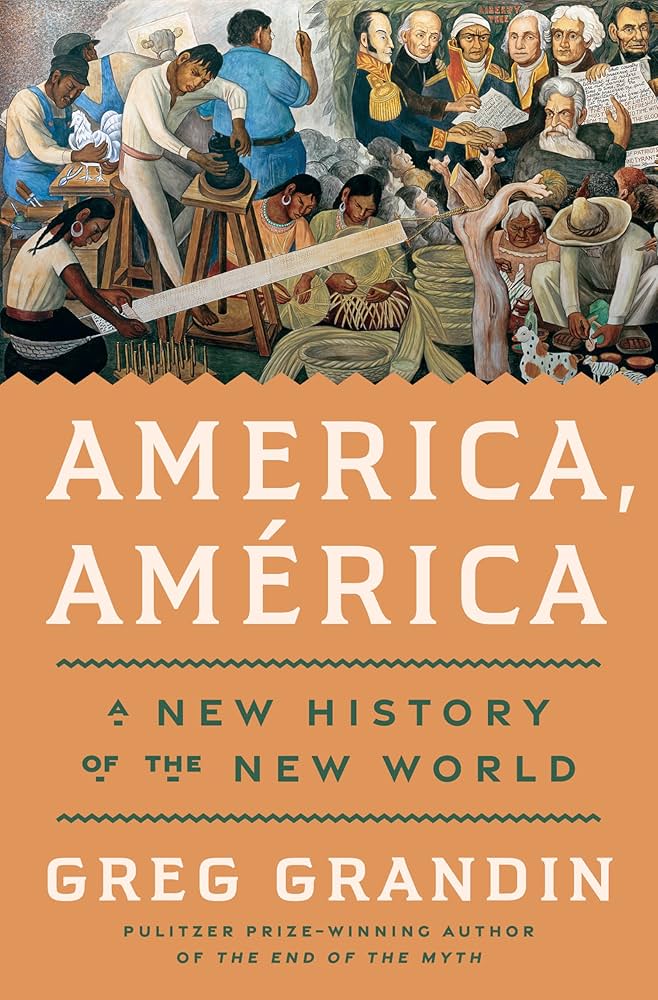
A review of AMERICA, AMÉRICA: A New History of the New World, by Greg Grandin


“An American team will win the next soccer World Cup,” a Nicaraguan boy once told me. It took me a second to realize he meant Brazil or Argentina, not the United States. Greg Grandin’s new book shows that America (or, in Spanish, América) was the name used for the whole hemisphere by the late 17th century. In the 18th century, the great liberator Simón Bolívar set out his vision of “our America”: a New World free of colonies, made up of distinct republics living in mutual respect. He even cautiously welcomed the newly declared Monroe Doctrine as a rejection of European imperialism. Bolívar died without realizing his dream of a Pan-American international order but, Grandin argues, his ideals would be revived and eventually be enormously influential.

Yet the visionary Bolívar was under no illusion that an expanding United States would behave respectfully towards its neighbors. Already, by 1825, politicians in Washington began to insist that their countrymen were the only “Americans,” claiming hemispheric superiority. The tussle over words was symptomatic of a widening rift. From Mexico southwards, many of those who had liberated their republics from Spanish rule were idealists who (at least, in theory) recognized the universal rights of all their peoples. But the prosperity of a growing United Sates depended on “stolen Indian land and slave labor” and, within two decades, the stealing of half of Mexico to form the state of Texas.

Worse was to follow. In 1855, the adventurer William Walker did “Texas all over again.” His mercenaries invaded Nicaragua and – recognized by Washington – installed him as president. Chilian radical Francisco Bilbao summarized the fears this raised in Spanish America: “Walker is the invasion. Walker is the Conquest. Walker is the United States.” A Costa Rican newspaper said he threatened the whole of “Latin America” (the first known use of the term).

By the end of the 19th century, the United States had intervened militarily in Honduras, Haiti, the Dominican Republic and Colombia as well as Mexico and Nicaragua. Washington began  to use “human rights” to spin its foreign-policy objectives when it suited US interests, as it did when Spain harshly repressed those fighting for the independence of its last remaining colony, Cuba. Spain lost, but instead of gaining full independence Cuba became a de facto US colony and Cubans’ human rights barely improved.

Grandin’s argument is that Pan-American humanist internationalism was first kindled in response to the horrors of the Spanish conquest (“the greatest mortality event in history”). The Dominican friar Bartolomé de las Casas and other scathing critics of Spain’s atrocities in the 16th century established the principles of a common humanity that would be developed further by Bolívar and his successors. The “Bolivarian dream” might have been taken to global level after the First World War with the establishment of the League of Nations, of which many Latin American countries were founding members. But lacking US support and dominated by the old imperial powers of Britain and France, it quickly failed.

Idealism receded in the inter-war period when Latin America became the focus of the US’s nascent military-industrial complex. Huge arms imports fed massacres of rebellious workers, brutal suppressions of dissidents and the pointless and chaotic Chaco war which cost 150,000 lives in the 1930s (when Bolivia and Paraguay fought over what turned out to be a non-existent oil field). US marines again pillaged Nicaragua, the Dominican Republic and Haiti.

Eventually, however, Pan-American idealism resurfaced in the US in the form of Franklin D. Roosevelt’s “good neighbor” policy which – had it been sincerely implemented – would have eschewed intervention and conquest. FDR even added that the constitutional arrangements in Latin American republics were not something that warranted US interference. The New York Times felt able to announce, in 1934, that the era of imperialism “nears its end.”

However, Grandin is rather too effusive in his praise for a policy that to a large extent was a rebranding. He doesn’t mention that 1934 was also the year in which the guerilla leader Augusto César Sandino was assassinated in Nicaragua after ending its 20-year-long occupation by US marines. The Washington-backed Somoza dictatorship would last until 1979. FDR is alleged to have excused his role in this, remarking that “Somoza may be a son of a bitch, but he’s our son of a bitch.”

Nine years later, Pan-Americanism provided the basis for FDR’s model of a post-war world order based on cooperation and social justice. According to diplomat Sumner Welles it would be “the cornerstone in the world structure of the future.” Latin Americans would go on to write the Universal Declaration of Human Rights. At this moment, Grandin argues, Washington had the luxury of “an entire resource-rich hemisphere” eager to work with it to create a new world order.

It would be short-lived. A brief social democratic interlude in Latin America after the Second World War, paralleling that in Europe, was eclipsed after the final Pan-American conference, held in Bogotá in 1948. Grandin highlights the murder of the Colombian progressive Jorge Eliécer Gaitán and the subsequent mayhem (the “Bogotazo”, witnessed by both Fidel Castro and Gabriel García Márquez) as instrumental, because it occurred while the conference was in progress. It enabled the US delegation to successfully push through anti-communist resolutions. The event also saw the creation of the Organization of American States (OAS), which was never a progressive body and soon afterwards legitimized military coups in Venezuela and Peru.

Practically all of Latin America had, by 1950, reverted to dictatorships. Backed by the US military industrial complex, death squads and repression became commonplace. Covert action eclipsed even mildly progressive forces, epitomized by the CIA’s 1954 coup against the democratically elected Arbenz government in Guatemala. This began more than three decades of repression and revolt in Central America in which 100,000s would die. Only between 1961 and 1969, Washington engineered 16 Latin American regime-change operations.

Grandin underrates the Cuban revolution as a turning point, singling out liberation theology, economic theories of dependency and radical literary and artistic movements as the agents of a fresh wave of change during the 1970s that he calls a second Enlightenment. It is exemplified by Salvador Allende’s short-lived left-wing government in Chile and the Sandinista revolution in Nicaragua. Grandin captures the feeling that many of us had at that time, that political struggle and solidarity were key to an individual’s self-actualization and this was nowhere more evident than in Latin America’s radical efforts to change its realidad social.

If Latin America could be inspiring, it could still also be horrifying. Pinochet’s Chile pioneered neoliberalism, laced with corruption, and exported it to Mexico, Argentina and globally. Reagan’s response to the Sandinista revolution was to finance the Contra war and kill 30,000 Nicaraguans, in the process rejecting a ground-breaking judgment against the US by the International Court of Justice. George H. W. Bush’s 1989 invasion of Panama was another blatant violation of the supposed principle of non-intervention, his action blessed by the ever-compliant OAS.

As a North American himself, it is unsurprising that Grandin is in despair at the evolution of both domestic and foreign policy in the US. He notes that it has rendered nearly worthless the international law and institutions that Latin America helped create. He laments that US presidents pay little attention to wise advice from Latin American governments which refuse to join its wars and argue for reconciliation in Ukraine, Palestine and Iran.

If he is more optimistic about Latin America, he acknowledges the danger of the rise of the right (Milei, Noboa, Bukele et al). Latin America “teeters between the dark and the light” he says. Yet he believes the “indomitable spirit of Latin American humanism” will prevail. Writing in the New York Times, Jennifer Szalai accuses Grandin of engaging in “mythological thinking” and glossing over Latin America’s many defects. On this, as a resident of Latin America, I side with Grandin.

My criticism is a political one. Grandin notes that, by the end of the 19th century, the term “anti-imperialism” had entered the vocabulary of Latin American intellectuals, referring not only to Spain but to the imperial designs of the US. While anti-imperialism crops up throughout the book, he fails to acknowledge how fundamental it is. Take the example of Honduras – the country was Washington’s long-term lackey, it temporarily broke free only to be reined in by a coup in 2009 and the imposition of corrupt, neoliberal governments. Under Xiomara Castro in 2021 it broke free again, but she has to be continually on the watch for new interference by Washington.

US-inspired coups, covert action and more recently economic sanctions and “lawfare” have deposed or undermined progressive leaders across Latin America. Cuba, Venezuela and Nicaragua have had to curtail US intervention (masquerading as “democracy promotion”) to preserve peace and maintain their revolutionary progress. They deserve more respect for their achievements than Greg Grandin offers them.

Furthermore, a book which fully recognizes the struggle against a reborn Monroe Doctrine should have space between its covers for key figures such as Rafael Correa in Ecuador, Evo Morales in Bolivia and Daniel Ortega in Nicaragua. Above all, the omission of Hugo Chávez Frías, who led Venezuela’s new Bolivarian government for 14 years and inspired leftists across the hemisphere, is inexcusable. It was Chávez, speaking at the UN General Assembly after George W. Bush, who said that the podium “still smells of sulfur.” Simón Bolívar’s anti-imperialism – as well as his humanism – are alive and well in Latin America.

John Perry is based in Masaya, Nicaragua and writes for several independent media. Read other articles by John.


Calls for Resistance Against the Accelerating Imperialist War on Black/African Peoples in Our Americas


The Haiti/Americas Team of the Black Alliance for Peace condemns the increasing militarist aggression by U.S. imperialists in Our Americas that targets Africans, indigenous peoples and poor communities and calls for regional pan Africanist strategy and anti imperialist unity to defeat the war on Africans and colonized people at home and abroad. The increase of violence in the region, whether in Haiti, Ecuador or the Caribbean, through armed paramilitary groups often with ties to neo colonial puppets and the US/West, is used as a justification to expand U.S./NATO militarism, economic domination, and interventionism in the region to guarantee full spectrum dominance.

African peoples, along with indigenous communities, across Our Americas bear the brunt of U.S.-led militarism, often with deadly interactions between state forces and armed groups in poor neighborhoods leading to fatal consequences for the masses, as part of a broader effort to expand militarism in the region. This must be framed as an escalation of war on Africans, colonized and poor communities at large by US imperialist forces to maintain its hegemony over the region, particularly against what it sees as threats to its interests from Russia and China.

The State Department’s recent designation of armed paramilitary groups in Haiti as both Foreign Terrorist Organizations and Specially Designated Global Terrorists to use as the justification to continue violating the sovereignty of the Haitian people, clear out and occupy land, and operate with even more impunity. The  U.S.-orchestrated Multinational Security Service Mission (MSS) in Haiti that has only further degraded safety and violated national sovereignty has not slowed down any of this violence, in fact it has increased. Now, declaring Haitian armed paramilitary groups as terrorists will only serve as justification for further militarized assaults on the nation and its people, with little regard for their wellbeing. Amidst a three month long teachers strike, the Executive Board of National Union of Haitian Educators (UNNOH) wrote, “in the current context of cynically manufactured chaos—orchestrated by powerful international criminals and their local collaborators—” and call for international mobilization amid a “silent genocide.”

Looking at another assault on Africans in Our Americas, on April 13 in Ecuador, Daniel Noboa declared himself president in a still contested run off election amidst heavy militarization at the polls, which the Revolución Ciudadana opposing candidate Luisa Gonzalez has publicly denounced.  Despite attempts to limit international observers , the North South Project for People(s)-Centered Human Rights, in partnership with Movimiento Afrodescendiente Nacional Ecuatoriano and Global Black, were able to observe intentional oppressive tactics by Ecuadorian state forces leading up to and throughout the electoral process that have not subsided post-election.

Furthermore, cases like the Guayaquil Four become all too normalized as the war on poor African communities in Ecuador intensifies through US-led militarism as President Noboa changes the constitution to allow foreign military bases, along with reaching a “strategic alliance” with private mercenary Blackwater’s Erik Prince to “fight organized crime.” Prince also negotiated contracts in Haiti last month to provide attack drones and training for an anti-gang unit. The increase in violence in the region also means profits for the private mercenaries, not to actually address violence against African peoples throughout the region, including in the United States, but to use as a proxy to intervene and support their geopolitical and imperialist interests.

The expanding role of SOUTHCOM not just in Haiti, Ecuador or the Caribbean but throughout the region, particularly through joint military exercises such as Operation Tradewinds with militaries in the region under the command of the US and NATO and increased military bases, from the Panama Canal down the Pacific Coast, is not unrelated to this expanding crisis of violence throughout the region. The war on crime, war on drugs and war on terror have exposed the parallels behind the use of state violence as a trojan horse for resource extraction whether in West Asia, including the genocidal onslaught in Palestine, violence against Yemen, Lebanon and the people of Syria, or the expanding use of violence in Trinidad and Tobago, Guyana or Suriname for resource extraction of fossil fuels. US imperialism is using the same playbook to justify its presence, expansion and full spectrum dominance.

While member states of the Community of Latin American and Caribbean States (CELAC) have condemned the intervention in Haiti, they do so while also upholding the Kingston Declaration , continuing a historic trend in the region of supporting neocolonialism in Haiti led by Brazil. Whether officially sanctioned as a UN mission or not, Western interventions have never been the answer for the Haitian people. More importantly, the lack of solidarity with Haiti undermines the sovereignty of all nations as Haiti is used as a laboratory for the rest of the region. It was precisely the lack of solidarity with Haiti that Nicaragua highlighted as to why they did not sign the Tegucigalpa Declaration – “[the text must] reject the extortions against and express unequivocal solidarity with the brotherly people of Haiti without external interventions.”

BAP invites organizations and individuals to join the U.S./NATO Out of Our Americas Network as a platform to collectively develop regional Pan-Africanist strategy to oppose intervention in Haiti, a core demand of the Zone of Peace campaign, through mass based popular struggle. As Haitian Flag Day approaches on May 18th, we call for renewed and strengthened solidarity with the people of Haiti, in connection with all African peoples, oppressed peoples, and popular movements of Our Americas struggling to free our region of US military and economic dictates.

The Black Alliance for Peace asserts the right of African/Black peoples across Our Americas to self defense and organized resistance in response to this escalating imperialist war against the masses of our people, whether in Port au Prince, Guayaquil, or Los Angeles. No compromise, no retreat!

The Black Alliance for Peace (BAP) seeks to recapture and redevelop the historic anti-war, anti-imperialist, and pro-peace positions of the radical black movement. Read other articles by Black Alliance for Peace, or visit Black Alliance for Peace's website.