Friday, June 27, 2025


Cascading impacts of groundwater input to coral reefs


University of Hawaii at Manoa
Coral reefs 

image: 

Coral reef from a lagoon reef in Mo'orea, French Polynesia.

view more 

Credit: Nyssa Silbiger


Groundwater input to coral reefs directly affects water chemistry and triggers a cascade of changes in the coastal ecosystem, according to a new study led by University of Hawaiʻi (UH) at Mānoa oceanographers. Freshwater from land that flows into the ocean beneath the sea surface, termed submarine groundwater discharge, was found to increase nutrient availability, change acidity of the seawater, and impact the process by which corals build their skeletons. This research, published recently in Ecological Monographs, provides critical insights into the complex interactions between the land and ocean. 

“Submarine groundwater discharge is a widespread and underappreciated land–sea connection that delivers terrestrial nutrients and carbon to coastal ecosystems,” said Nyssa Silbiger, lead author of the study, associate director of the Uehiro Center for the Advancement of Oceanography, and associate professor in the Department of Oceanography at the UH Mānoa School of Ocean and Earth Science and Technology. “This profoundly influences coral reef health by triggering a cascade of chemical and biological changes that alter the cycling of carbon in these ecosystems.” 

The fundamental connection between land and sea through the flow of freshwater is a universal principle recognized as important for coastal health across all cultures. Porous volcanic islands throughout the tropics deliver much of this water through rivers and streams, but a major fraction emerges unseen directly into the coral reefs that ring these islands. This submarine groundwater discharge has long been recognized by Pacific peoples as important, with seeps frequently named and associated with specific communities of algae and fish relevant to subsistence. The new research has helped define the complex interplay of chemistry and biology that makes these inputs so important to the ecology of coral reefs. 

Cascading impacts on Mo‘orea reefs

Silbiger and collaborators studied two coral reef sites in Moʻorea, French Polynesia that were chosen based on surveys of salinity and isotopes indicating fresh groundwater, as well as discussions with local fishers who have historical knowledge of submarine groundwater discharge seepage points around the island. The research team measured a suite of water quality parameters that can change directly in response to the groundwater input as well as change indirectly in response to altered biological activity of the coral reef community. 

Nutrients from submarine groundwater boosted the productivity of both photosynthetic algae and corals which, in turn, changed seawater acidity ultimately altering calcification of coral skeletons. Defining this complex exchange between organisms and the chemistry of the seawater around them is crucial for developing a more holistic understanding of how reefs work.

“We show that adding new nutrients to the coastal ocean alters the metabolism of coral reef ecosystems, thereby changing the patterns of uptake and release of carbon,” said Silbiger. “This highlights a chain reaction where enhanced biological activity, fueled by submarine groundwater discharge, directly affects the acidity of the water and, subsequently, the ability of reefs to grow.”

Informing management of Pacific coral reefs

Concerns over pollution often dominate the conversation surrounding runoff and inputs from land to coral reefs. 

“One idea we hope this research can communicate is the natural role of groundwater in feeding healthy reefs,” offered Craig Nelson, study co-author and faculty in the UH Mānoa Daniel K. Inouye Center for Microbial Oceanography. “Runoff and springs bring subsidies of nutrients and organic matter that can help reefs thrive, and the complex interplay this work illuminates demonstrates that some reefs are adapted to these inputs.” 

The authors hope that their work can help emphasize the importance of keeping groundwater free of contaminants for the benefit of both land and ocean ecosystems.

“These findings are vital for protecting coral reefs across the Pacific from land-based pollution and informing sustainable land management,” said Megan Donahue, study co-author and director of the Hawai‘i Institute of Marine Biology in SOEST. “Understanding these cascading effects  allows us to predict how coral reefs respond to a changing world and provides a framework to connect ecosystem ecology to land-based activities.” 


Groundwater seep (IMAGE)

University of Hawaii at Manoa


Hide and seek: Uncovering new ways to detect hidden apps on smartphones


Edith Cowan University


Researchers have discovered a modern solution to detect vault applications (apps) on smartphones, which could be a game-changer for law enforcement.

The analysis, led by researchers from Edith Cowan University (ECU) and University of Southern Queensland, demonstrates that machine learning (ML) can be used to effectively identify vault apps.

Smartphones are an integral part of daily life, used by an estimated 5 billion people around the world.

With the growing concern for digital privacy, vault apps are becoming increasingly popular, providing users with secure storage by encrypting files and hiding their presence in the smartphone system.

ECU Associate Professor and cyber security expert Mike Johnstone said while these apps can be used for legitimate purposes, they are regularly associated with illegal activity.

“Content hiding - or vault apps - allow users to hide files, messages and even entire apps behind additional layers of encryption,” Associate Professor Johnstone said.

“This could be for very good reasons, such as securing personal photos, files or sensitive information.

“However, they may also facilitate espionage, enable unauthorised spying and support a wide range of malicious activities that compromise user privacy and security.”

Associate Professor Johnstone said vault apps are not easily identified by existing detection systems.

“These apps can look and behave like their normal equivalents, which can make them hard to identify,” he said.

“Conventional methods of detection also require prior knowledge of which apps are classified as improper – so it makes things difficult if you don’t already know which apps to look for.

“This is a key challenge for smartphone forensics, making it difficult for police to investigate crimes.”

Researchers found that they could effectively identify vault apps by using ML, with significant accuracy on Android phones.

“This research shows a better way, by using machine learning to spot vault apps without the need for a fixed list or database that must be constantly updated,” Associate Professor Johnstone said.

“Our findings reveal that it is entirely possible to detect an Android vault app with 98 per cent accuracy.”

With this level of accuracy, Associate Professor Johnstone said this method could be extremely valuable for law enforcement agencies.

“This approach could be instrumental for law enforcement in their efforts to address this critical issue,” he said.

“Given the popularity of phones, any approach that is non-invasive and accurate would be of use.”

Associate Professor Johnstone said the next phase of research will involve additional algorithms, a larger sample size, investigating whether it will work for non-Android devices, as well as the use of vault apps by cyber criminals.


COMMENT: Competing Trans-Afghan transport routes could split Central Asia

COMMENT: Competing Trans-Afghan transport routes could split Central Asia
Central Asia is bottled up by an unstable Afghanistan and Uzbekistan wants to play a leading role as a transport hub, but competing projects may stymie development. / bne IntelliNews
By bne IntelliNews June 27, 2025

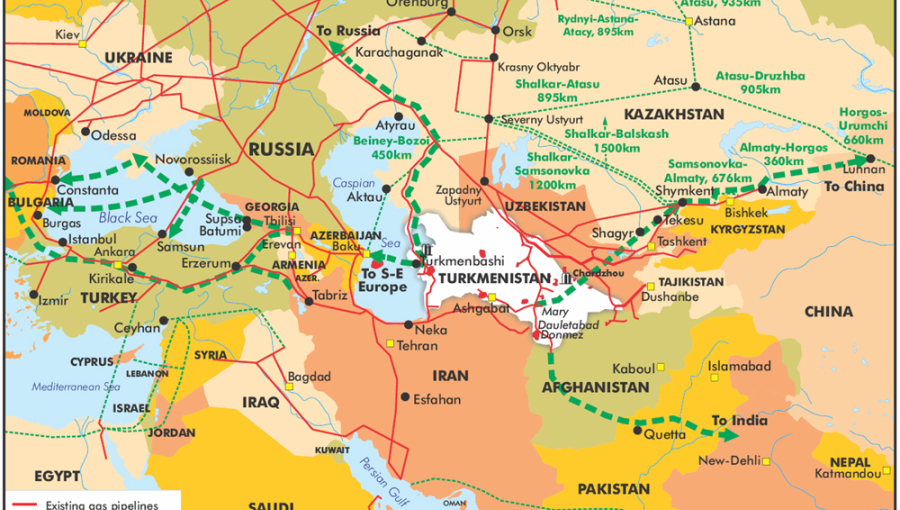
Central Asia is bottled up by an unstable Afghanistan. It would dearly love to open a southern corridor that leads to the huge and lucrative markets of Southeast Asia that could transform the economy of the region.

Since taking office in 2016, Uzbek President Shavkat Mirziyoyev has worked hard to normalise relations with Afghanistan and help bring stability to the country. A key project has been talks with India and Iran since 2020 to win access to the deep-water port of Chabahar, which provides direct access to the Indian Ocean and the wealth beyond.

Uzbekistan’s economy is flourishing, growing by 6.5% a year for the last six years, with one year off during the pandemic. Mirziyoyev's industrial policy is to add value to everything the country produces and boost exports. It needs new markets.

Tashkent wants to revive its Silk Road legacy and become a regional transport hub but the programme is complicated as competing rail corridors through Afghanistan accelerate. Some of those threaten Tashkent’s preferred route via Kabul that would put Uzbekistan at the centre of the regional transshipment network, according to a note by Nargiza Umarova, a political analyst at the Carnegie Endowment for International Peace.

Since 2020, Uzbekistan has actively engaged with India and Iran to secure access to Iran’s deep-water port of Chabahar on the Indian Ocean as an alternative route out of Central Asia. The port is central to Tashkent’s southern transit strategy, offering a maritime gateway to Afghanistan and Central Asia. For India, Chabahar is both a strategic and economic imperative, facilitating access to uranium, oil and other raw materials while bypassing rival Pakistan.

"Transit through Iran reduces the cost and duration of Indian cargo shipments to and from Central Asia by nearly one-third relative to maritime routes via Europe or China," Umarova noted.

The key infrastructure link is the Chabahar–Zahedan–Mashhad railway, now nearing completion. Its route will eventually connect to the Afghan city of Herat via Khaf, forming Afghanistan’s first cross-border railway with Iran. The Khaf–Herat line, with an annual capacity of 3mn tonnes, is expected to handle predominantly transit cargo and could soon become part of a broader China-led transport corridor stretching through Iran and Central Asia.

“The Taliban administration seeks comparable advantages for Afghanistan and is actively encouraging Tashkent to extend the railway from Mazar-i-Sharif to Herat,” Umarova said, adding that such a move would boost Uzbekistan’s access to Chabahar while circumventing Turkmenistan.

However, the construction of parallel routes could undermine Uzbekistan’s transit leadership. Iran is promoting a five-nation corridor—China, Kyrgyzstan, Tajikistan, Afghanistan and Iran—relying heavily on the Herat–Mazar-i-Sharif segment. From there, only a short extension to the Tajik border would be needed to give Dushanbe a direct route to Chabahar, weakening Tashkent’s logistical advantage.

Compounding the challenge is the proposed Kandahar Corridor, extending the Herat line south to Kandahar and Pakistan. Umarova highlighted that “the attractiveness of the Kandahar Corridor lies in its capacity to extend toward both Iran and Pakistan,potentially establishing the shortest overland route between Moscow and New Delhi.

Russia, which sees the Trans-Afghan railway as an extension of its International North–South Transport Corridor, may reroute 8mn to 15mn tonnes of cargo annually through Chabahar, bypassing the instability of Pakistan’s Khyber Pakhtunkhwa and Balochistan provinces.

Yet, Iran’s confrontation with Israel adds new volatility. “A protracted period of hostilities, accompanied by potential political destabilisation within Iran, will unavoidably impact the reliability of established logistics networks in West Asia,” Umarova warned. In this case, reliance on Pakistan’s corridors may increase, despite existing security concerns.

Umarova argued that Uzbekistan must adapt by seeking regional consensus and avoiding competition among Central Asian states. “It is essential to implement a coordinated policy aimed at identifying and advancing mutually beneficial transport routes through Afghanistan,” she said. Failure to do so, she cautioned, could allow external actors to influence the Taliban’s decisions in ways that undermine Central Asian interests.


Crypto token launched in Kyrgyzstan by Moldovan oligarch facilitates sanctions-dodging billions for Russia, says report

Crypto token launched in Kyrgyzstan by Moldovan oligarch facilitates sanctions-dodging billions for Russia, says report
A7A5 appears to have emerged after US law enforcement took down major Russian shadow payments system Garantex. / a7a5.io/
By bne IntelliNews June 25, 2025

Some $9.3bn in four months has reportedly been moved via a new cryptocurrency token launched in Kyrgyzstan that is designed to enable cross-border payments despite Western sanctions on Russia.

Fugitive Moldovan oligarch Ilan Sor and Russian defence sector bank Promsvyazbank are behind the A7A5 token, said to be the first stablecoin pegged to the Russian ruble, according to a June 25 report from the Financial Times.

The $9.3bn was moved on dedicated crypto exchange Grinex, also initiated very recently in Kyrgyzstan, and trading only in A7A5, rubles and a dollar-pegged stablecoin, the FT found from an analysis of wallets linked to Grinex.

Kyrgyzstan has several times hit the headlines for sanctions-busting in Russia’s favour since Moscow launched its war on Ukraine in February 2022.

The A7A5 token appears to facilitate large-scale financial flows into and out of Russia. Such flows have been severely complicated by Western restrictions.

The stablecoin says it is backed by ruble deposits in Promsvyazbank, a bank subject to US, UK and EU sanctions.

The token also appears linked to the Kremlin’s attempts to use cryptocurrencies to finance political influence campaigns abroad, concludes a report by the Centre for Information Resilience (CIR), a London-based non-profit research group.

The company initially stated as behind the token is A7. Now targeted with UK sanctions, it is majority-owned by Sor, Russian corporate records looked at by the FT show. Sor fled house arrest in Moldova in 2019. He went on the run after being convicted of thieving $1bn in what was the largest ever Molovan bank fraud. 

Sor moved to Moscow. Now a Russian citizen, he was in 2024 accused by Moldovan police of operating a huge vote-buying operation in Moldovan elections. He dismissed the claims as an “absurd spectacle”. 

“Russian business figures and government officials have been talking for a while about how they might use cryptocurrency to evade sanctions in a large-scale way, particularly by creating their own stablecoin,” Elise Thomas, senior investigator at CIR, was cited as saying by the British financial daily.

Kyrgyzstan was selected given it is a “friendly jurisdiction that is not so subject to sanctions”, A7A5’s director Leonid Shumakov has said. “It is no secret that this jurisdiction is currently helping a lot to cope with the pressure [Russia] is under.”

A7A5 and Grinex seem to have taken shape and grown following the collapse of major Russian shadow payments system, Garantex, Russia’s largest crypto exchange. It was brought down by US law enforcement in March.

CIR’s Thomas was further reported as saying that “if you have a stablecoin that is controlled by an entity that is based in the West . . . you could lose your money”, meaning Russia-friendly Kyrgyzstan is a safer bet.

Last year, Sor took part in talks with Keremet Bank in Kyrgyzstan, according to the US Office of Foreign Assets Control (OFAC). It said the discussions were linked to plans “to create a sanctions evasion hub for Russia to pay for imports and receive payment for exports”. OFAC sanctioned Keremet in January.


A row has broken out between Hungary and Ukraine over Kyiv’s right to join the EU

A row has broken out between Hungary and Ukraine over Kyiv’s right to join the EU
Hungarian Prime Minister Orban said 95% of his population oppose Ukraine's accession to the EU. Ukraine's foreign ministry said Hungarians have no right to have an opinion on the matter. Now Hungary’s Foreign Minister Péter Szijjártó shot back saying: Yes they do. / bne IntelliNews
By bne IntelliNews June 27, 2025

As bne IntelliNews reported, Hungarian Prime Minister Viktor Orban claimed this week that 95% of Hungarians are against Ukraine’s accession to the EU.

The Ukraine’s Ministry for Foreign Affairs shot back that Hungary’s people don’t have the right to have an opinion on Ukraine’s accession. Now the Hungarian Ministry of Foreign Affairs has answered saying: yes they do.  

Hungary’s Foreign Minister Péter Szijjártó said in a post on social media on June 27: “The MFA of Ukraine said yesterday that the Hungarian people have no right to decide whether they support Ukraine’s accession to the EU. Well, the MFA of Ukraine is wrong.

“Dear Ukrainian colleagues, it’s not you, not [Ukrainian President Volodymyr Zelenskiy] and not the Ukrainian government who decides on EU membership. That decision belongs to us, the citizens of the EU, Hungarians included,” he added.

Orban has vowed to “do everything” in his power to prevent Ukraine from joining the European Union, and is supported by Slovak Prime Minister Robert Fico. Both countries remain highly dependent on Russia for energy imports, from which they are also making a lot of money by reexporting the surpluses to the rest of the EU, in effect ignoring sanctions on Russian exports of oil and gas to the EU.

Other countries such as Poland are lukewarm on Ukraine’s accession. While Warsaw is a staunch supporter of Ukraine’s military effort to face down Russia’s invading forces, it is worried about giving Ukraine’s vast agricultural sector access to EU markets.

As bne IntelliNews reported, Ukraine cannot join the EU unless the Common Agricultural Policy is reformed, as under current rules Kyiv would be entitled to €186bn of subsidies and countries like Poland would go from being net beneficiaries of the EU budget to net contributors.

Cheap Ukrainian grain exports have already wrecked the Polish grain market once in 2023.

The duty-free exemptions on Ukrainian agricultural imports to the EU were allowed to expire on June 5, which will cost Kyiv billions of euros in lost revenue this year.

The EU is due to discuss Ukraine’s accession at a meeting of foreign ministers this week and EU foreign policy chief and former Estonian prime minister Kaja Kallas is trying to find a way around Budapest’s de facto veto. She has said that she has a Plan B, which may involve trying to strip Hungary of its voting rights.

“It’s time for you to understand: without the will of the Hungarian people, Ukraine’s accession will simply not happen,” said Szijjártó in his post, as Budapest digs its heels in. “We do not want to be part of an integration process with a country that threatens us with war, puts our energy security at risk and has nearly destroyed our farmers once.”


Polish public support for Ukraine’s EU and NATO membership drops sharply – poll

Polish public support for Ukraine’s EU and NATO membership drops sharply – poll
Poland has been one of Ukraine's staunches allies, but war weariness is setting in and support for Ukraine is starting to fade, according to a new poll. / bne IntelliNews
By bne IntelliNews June 25, 2025

Public backing in Poland for Ukraine’s accession to the European Union and Nato has fallen significantly since the start of the war, according to a new survey by the research agency IBRiS, commissioned by Polish defence website Defence24 and the Stand With Ukraine foundation.

Only 35% of Poles now believe their country should support Ukraine’s EU membership bid, while 37% back Nato accession. In both cases, 42% of respondents were opposed. These figures stand in stark contrast to polling conducted by IBRiS in 2022, shortly after Russia’s full-scale invasion, when 85% supported Ukraine’s EU bid and 75% supported joining Nato, Notes from Poland reports.

“The shift reflects a broader cooling of public sentiment on Polish support for Ukraine,” IBRiS noted.

The survey comes as war weariness and EU sceptics weigh on the Ukrainian cause. Hungarian Prime Minister Victor Orban said during a speech at the Nato summit on June 25 in the Hague that Ukraine should not be admitted to either the EU or Nato as that could spark a war with Russia.

“Russia is not a threat to Europe; the real danger for it comes from the loss of competitiveness in the global economy and trade,” the Hungarian prime minister said during a brief conversation with journalists before the start of the plenary session at the Nato summit.

The ceasefire discussions that kicked off in Riyadh on February 18 have also come to a dead end and US President Donald Trump is clearly losing interest in the talks. Trump and Ukrainian President Volodymyr Zelenskiy didn’t discuss the ceasefire deal with Russia during their closely watched meeting on the sidelines of the Nato Summit.

“I did not discuss the ceasefire with Zelenskiy. I just wanted to see how he was doing,” Trump told reporters. He also dodged a question about the US continuing to provide military aid to Ukraine. Since he took office, the Trump administration has introduced no new sanctions on Russia whatsoever, nor committed to any new funding or weapons commitments.

As the war drags on into its fourth year, the enthusiasm amongst the general public is also starting to fade. The IBRiS study found that half (52%) of Poles believe the country should continue to support Ukraine in international forums, while 29% disagreed. Economic assistance drew less support, with only 35% in favour and 44% opposed.

The shift also comes amid a changing political landscape. During the 2025 presidential election campaign, three right-wing opposition candidates – Karol Nawrocki, Sławomir Mentzen and Grzegorz Braun – who together secured 51% in the first round, all opposed Ukraine’s membership in Western institutions. Nawrocki later won the second-round run-off. Right leaning parties with anti-war platforms have also done well in recent elections in Germany and Austria, among other countries.

The Polish slide in support marks a divergence from earlier political consensus. In 2022, President Andrzej Duda called for Ukraine to be given an “express path” to EU membership, while then Prime Minister Mateusz Morawiecki declared Poland “wants to support Ukraine in its efforts to join”. Current Prime Minister Donald Tusk’s government reiterated support for Ukraine’s EU ambitions as recently as May and leads European countries in plans to ramp up military spending to the 5% of GDP demanded by the US. Warsaw is in the process of building the largest conventional army in Europe in response to the heightened Russian aggression.

Although Poland has been one of Ukraine’s staunchest allies – hosting millions of refugees and delivering military, economic and humanitarian aid – the new data underscores the growing Ukraine fatigue that has been building slowly for the last two years. Nearly half of respondents (46%) said military aid should be reduced or ended, while only 5% supported increasing it. Another 35% wanted it maintained at current levels.

Despite this, 45% said that Poland’s support for Ukraine enhances the country’s security, compared to 37% who disagreed. Only 15% backed sending Polish troops to Ukraine on a peace mission after the war, with 64% opposed.

On the war’s end, 62% of Poles said Ukraine should begin peace talks with Russia even without a ceasefire. Meanwhile, 35% believe Ukraine should accept the loss of some territory to end the conflict, while 34% disagreed.

Poles are divided on the threat of Russian aggression. When asked to rate the likelihood of a Russian attack on a scale of one to seven, 24% chose the lowest two points, and only 12% selected the highest. Still, 57% believe the United States would honour its Nato obligations and defend Poland if attacked, while 18% thought Washington would not.

Support for increased defence spending remains strong, with 50% in favour and only 5% supporting a reduction. Poland currently spends 4.7% of GDP on defence, the highest proportion in Nato.

A separate Pew Research Center poll published earlier in June found confidence in the US president among Poles has dropped from 75% under Joe Biden to 35% under Donald Trump.


Erdogan ‘not feeling even 10%’ of pressure he should from Western capitals over jailing of rival, says Turkish opposition chief

Erdogan ‘not feeling even 10%’ of pressure he should from Western capitals over jailing of rival, says Turkish opposition chief
Imamoglu in mid-April shared an illustration depicting him in his cell at Silivri Prison. / @ekrem_imamoglu
By bne IntelliNews June 26, 2025

The continuing international silence over the prosecution and jailing of Turkish President Recep Tayyip Erdogan’s chief political rival, Ekrem Imamoglu, on June 26 prompted an angry outburst from Turkey’s main opposition leader Ozgur Ozel.

“It would be inaccurate to say Erdogan is even feeling 10% of the pressure he should be under from the EU and the international community,” Ozel told a meeting of the Party of European Socialists (PES) held in Brussels ahead of an EU leaders’ summit, as reported by Anka news agency.

Turkey right now was enduring an escalating crackdown by Erdogan on democratic institutions and political opponents in the country—particularly targeting Imamoglu, the politician seen as having every chance of beating Turkey’s leader of 22 years at the ballot box—noted Ozel.

“Unfortunately,” he added, “European leaders continue to treat Erdogan as irreplaceable and are signalling this to him. He uses that perception to his advantage domestically, reinforcing the idea that the world has no alternative to Erdogan.”

Ozel says part of the Erdogan crackdown on the threat of Imamoglu and democracy to his continuing rule over Turkey is the targeting of the CHP with multiple politically driven court cases and arrests (Credit: CHP).

Ozel is head of the Republican People’s Party (CHP) that, after the March 19 detaining of Imamoglu in a dawn swoop on his Istanbul home, held a vote, open to both party and non-party members, to make Imamoglu its presidential candidate.

He warned that the West’s perceived tolerance of Erdogan had encouraged him to tighten control at home, especially by targeting the CHP with multiple politically driven court cases and arrests.

He also accused Erdogan of “acting like the owner of Turkey” even though public support for his ruling AKP party has sunk below 30% in recent polls.

“Meanwhile, the CHP has become the leading party, polling at 41% after our recent electoral victory [in last year’s local elections],” he added.

“Turkey is more than Erdogan’s government. Our party is now the main political force, and a change in power is only a matter of time,” Ozel also said.

He called on European leaders to connect with Turkey’s democratic institutions and civil society, not just its government. “Turkey should move closer to the EU, but this must be based on democracy and the rule of law,” he said. “Our people still look to Europe.”

Since Imamoglu’s arrest on corruption charges he says are based on faked evidence that serves an obvious political agenda, this publication has been critical of Ozel’s politics-as-normal approach, contending that a regime that is ready to kill to stay in power will never allow itself to be removed by conventional reliance on free and fair elections or demonstrations that do not strike at the heart of the government and economy, no matter how large.

“It is ultimately the responsibility of the CHP to galvanise this protest movement, and the wider population for that matter,” said an analyst writing in May for The New Arab, using a pseudonym, Orhan Kaya, due to the sensitivity of the situation and his work.

“It is, after all, by far the largest opposition party that has a national network of party officials and members, infrastructure and finances, connections to trade unions and businesses, and the longstanding loyalty of older opposition-minded Turks,” he added. “Not to mention, it is the imprisonment of their future presidential candidate that sparked the protests. However, so far the CHP has failed to take up this challenge.”