It’s possible that I shall make an ass of myself. But in that case one can always get out of it with a little dialectic. I have, of course, so worded my proposition as to be right either way (K.Marx, Letter to F.Engels on the Indian Mutiny)
Sunday, March 29, 2026
March 29, 2026
Balkan Insight
By Jelena Zoric, Milos Katic and Gordana Andric
BIRN has located one of the alleged ringleaders of a group of Serbs accused of staging stunts in Paris and Berlin to whip up social tensions on behalf of Russia.
In late January, members of the Serb community in Moscow gathered in a church in the Russian capital to remember St. Sava, the first archbishop of the Serbian Orthodox Church in the early 13th Century.
Among the silent worshippers was a 29-year-old man called Momcilo Gajic, pictured tall and solemn next to the Church’s most senior representative in Russia, the head of the Church of Peter and Paul, Bishop Stefan.
Such a prominent position is a sign of Gajic’s standing in the church community, as is a decision by the church – reported on its website – to bestow upon him the honour of ‘hosting’ next year’s St. Sava Day celebration alongside the church.
However, in the eyes of European law enforcement agencies, Gajic is not so virtuous.
According to court verdicts obtained by BIRN, he and another unidentified individual codenamed ‘Hunter’ are suspected of staging a string of stunts in France and Germany on the orders of Russian intelligence services, all with the aim of inciting religious and ethnic hatred.
They formed a group of at least 13 people, mostly men, who travelled to Paris and Berlin in spring and autumn last year.
The group is suspected of placing hundreds of stickers referring to the World War One mass killing of Orthodox Christian Armenians by Ottoman Turks all over the French capital’s 18th arrondissement, home to a large Muslim community; of tossing green paint – a colour associated with Islam – over Jewish religious sites in Paris, the Holocaust Museum and Jewish restaurants; of placing pig heads outside mosques across Paris, scribbled with the names of French politicians and the date ‘September 10’, when mass protests had been called against austerity measures; and, in Berlin, placing five plastic skeletons in plastic containers in front of the Brandenburg Gate, near the city’s Holocaust Memorial, bearing the words ‘I’m still waiting for my pension. Thank you, Merz’.
In September last year, acting on warrants issued by the High Prosecution Office in the Serbian town of Smederevo, Serbian police arrested 11 alleged members of the group, but not Gajic or the person known as Hunter. A police statement at the time said a suspect it identified by the initials M.G. was “on the run” and suspected of “acting on behalf of a foreign service”.
In December, three of the 11 agreed plea deals and were convicted by the High Court in Smederevo of espionage, membership of a criminal organisation and racial and other discrimination.
In the three verdicts, issued on December 22 and 24 and obtained by BIRN, the court states that Gajic and ‘Hunter’ “received orders, instructions and financial funds from the Russian Federation’s intelligence service”. The verdicts were first reported on by Radio Free Europe.
It is unclear how Gajic evaded arrest. BIRN could not reach him for comment but tracked him to Moscow using Open-Source Intelligence tools. Asked to confirm whether a warrant had been issued for his arrest, the court in Smederevo referred BIRN to the prosecution, which did not respond.
The Russian Foreign Ministry did not respond to requests for comment. The Foreign Intelligence Service, SVR, merely referred BIRN to its “current commentary on international affairs” on its website, but there is no reference there to the case involving Gajic.
In Moscow, Gajic has some powerful friends. Bishop Stefan, who studied in the Russian capital in the 2000s, was previously head of the St. Sava Temple in Belgrade and personally received Vladimir Putin during the Russian president’s last visit to Serbia in November 2019.
‘Destabilisation operations’
The stunts Gajic is accused of staging bear all the hallmarks of what European law enforcement agencies say has been a string of Kremlin-sponsored vandalism operations in recent years.
In 2023, in the wake of the October 7 attack on Israel by the Palestinian militant group Hamas, around 250 blue Stars of David were stencilled on walls across Paris; Moldovan businessman Anatolii Prizenko claimed responsibility, but media reports pinned it on the Russian intelligence service GRU. The European Union said it had a “significant destabilising effect in the context of the conflict between Israel and Hamas” in Gaza, where Israel unleashed a massive military operation in which more than 72,000 Gazans were killed.
In May 2024, a Bulgarian group painted red handprints on the Paris Holocaust Memorial and several other buildings. Four men were later jailed in a verdict that linked the vandalism to Russia. One of them was Mircho Angelov.
As BIRN has previously reported, both Prizenko and Angelov have been involved in Russian operations in Serbia and Bosnia, including camps run by Russian operatives that Moldovan authorities say were used to train Moldovans in destabilisation techniques ahead of Moldovan elections in 2024 and 2025. Prizenko is currently on trial in Moldova for his role in the camps; Angelov is accused in Moldova of acts of vandalism and was convicted in absentia in France for his role in the red handprints stint. He is currently on the run.
Politico quoted Moldovan investigators as saying the camps were part of “a coordinated Russia-backed effort to recruit operatives for destabilisation operations as far away as France and Germany”.
He delegated recruitment to a man identified as Bogdan Djinovic, who found most of the most recruits in his hometown of Velika Plana, a town of some 15,000 people roughly 90 kilometres southeast of Belgrade and directly south of Smederevo. They included a local waiter and friend of Djinovic called Aleksandar Savic, who was later among the three who struck plea bargains.
Djinovic and two other members of the group were arrested in France on June 2. The Tribunal de Paris, which is handling the investigating, did not respond to requests for comment regarding the status of the case.
Savic was sentenced to 18 months in prison for espionage, membership of a criminal organisation and racial and other discrimination. The other two – Filip Petrovic and Nemanja Cevap – were sentenced to house arrest for a year and six months respectively, on the same charges.
The verdicts repeatedly state that Gajic and Hunter worked on the orders of and with funding from Russian intelligence services. The aim in Paris, the court found, was to “incite religious and ethnic intolerance and to destabilise the situation in Paris and the French Republic”.
Church-run rehab
Gajic’s connections to the Serbian Orthodox Church go back years.
In an interview on YouTube, Gajic says he was sent as a 15-year-old to a church-affiliated rehabilitation centre called Land of the Living near his hometown of Novi Sad, northern Serbia, because of an addiction to internet gaming. The centre is run by an NGO, whose legal representatives are listed as Serbian Patriarch Porfirije and a priest called Branko Curcin.
Gajic spent eight months at the centre. In 2017, he told a film crew that, before entering rehab, he was mixing in criminal circles and decided to seek help after he was shot out. He denied any personal involvement in crime and said he sang in a church choir.
After rehab, Gajic found work as a nightclub waiter. In 2015, a former Novi Sad city councillor registered an NGO on Gajic’s behalf. Gajic remained at the helm of the NGO, called Ravnicar, until 2018, when he was replaced by a man called Sava Curcin. It is unclear whether Sava is related to priest Branko Curcin, but social media posts suggest the priest has been engaged with the NGO and in February he blessed one of its initiatives that aim to safeguard Serbian traditions.
Since 2017, the NGO has received at least 36,000 euros in funding for a variety of projects from the City of Novi Sad.
In 2023, Gajic served as host of the Feast of the Ascension in Novi Sad’s church Temple of the Ascension, a role he will again play in Moscow on January 27 next year for St. Sava’s Day.
Balkan Insight
The Balkan Insight (formerly the Balkin Investigative Reporting Network, BIRN) is a close group of editors and trainers that enables journalists in the region to produce in-depth analytical and investigative journalism on complex political, economic and social themes. BIRN emerged from the Balkan programme of the Institute for War & Peace Reporting, IWPR, in 2005. The original IWPR Balkans team was mandated to localise that programme and make it sustainable, in light of changing realities in the region and the maturity of the IWPR intervention. Since then, its work in publishing, media training and public debate activities has become synonymous with quality, reliability and impartiality. A fully-independent and local network, it is now developing as an efficient and self-sustainable regional institution to enhance the capacity for journalism that pushes for public debate on European-oriented political and economic reform.
March 30, 2026
By P. K. Balachandran
While Iran was concentrating on building missile and drone capability to fight an asymmetric war, the US and Israel were concentrating on a less important thing, Iran’s (non-existent) nuclear weapons programme. They were flummoxed when Iranian missiles and drones rained on them.
Iran has surprised or shocked the world by the display of missile and drone power against the US and Israel when the latter thought that their airpower would crush Iran, which has no air force worth the name. The air escalation that the US and Israel resorted to only resulted in a greater and stronger retaliation by Iran with an endless supply of missiles and drones.
While Iran was concentrating on building missile and drone capability to fight an asymmetric war, the US and Israel were concentrating on a less important thing, Iran’s (non-existent) nuclear weapons programme, and were flummoxed when Iranian missiles and drones rained on them.
Unnoticed or poorly evaluated by the US and Israel, Iran had been preparing for missile and drone warfare for decades with innovative procurement, manufacturing and locational techniques that conventional militaries did not think about and plan for.
All that the US and Israel were aware of was that Iran’s arsenal of missiles was hidden underground. What was not so well known was the way the arsenal was built up and was being maintained.
The Iranians built their ballistic missiles by putting together smaller pieces that could be more easily smuggled and reassembled, making the task of finding them more difficult. The Israelis got an inkling of this when they found that Iran had largely renewed its ballistic missile project after the 12-day war in June 2025.
The Israelis were shocked to find that Iran had developed different types of ballistic missiles, which followed an “arcing path” high into the atmosphere and then used gravity to reach velocities many times faster than the speed of sound, pointed out John Ismay in The New York Times.
Iran’s longest-range ballistic missile can strike targets about 1,200 miles away. In 2019, the Defence Intelligence Agency said that Iran possessed “the largest and most diverse ballistic missile arsenal in the Middle East.”
Iran has built an arsenal of ballistic missiles categorised as “close-range” that can hit targets from about 30 to 190 miles away, “short-range” weapons that fly 190 to 620 miles, and “medium-range” missiles that have a maximum range of about 1,240 miles, Ismay says.
Both the Americans and the Israelis realised that powerful bombs had not dented Iran’s missile launching capability, and concluded that a ground invasion with special forces would shock and awe the Iranians, forcing them to surrender. Since this would lead to colossal human casualties, an alternative was mulled – negotiating peace with the support of other powers using the global energy crisis as the excuse. The bid for a peaceful end is currently in motion with Pakistan, Turkiye and Saudi Arabia lending a helping hand to the US.
But the preconditions placed by Iran and the US/Israel make bridging the gulf almost impossible. Both sides are not in a position to dilute their demands, Iran because its very existence is threatened and the US because President Trump’s bloated ego and Israeli Prime Netanyahu’s insecurities will not allow going halfway.
Therefore, while the US and Israel will continue to pound Iran and possibly try to take Kharg Island, Iran will continue enhancing its missile production and retaliatory capabilities.
Iran’s Missiles Production
As pointed out earlier, Iran maintains its weapons production through a combination of domestic self-sufficiency, underground location and global procurement networks.
The main planks of Iran’s missile/drone production and storage systems are as follows:
(1) Indigenisation – Iran produces roughly 90% of its own weapons. Due to decades of sanctions, it has mastered the art of “adaptive innovation”.
(2) Reverse Engineering – According to the US, Iran uses “corporate espionage and intellectual theft” to create local copies of Western and Soviet equipment.
(3) Using dual-use components – For its famed “Shahed” drones, Iran sources off-the-shelf commercial components that are difficult to track or sanction.
(4) Building “Missile Cities” and Underground Facilities – To protect production from airstrikes, Iran has built vast underground “missile cities”. These facilities are carved deep into mountains and reinforced with concrete.
(5) Mobile Launchers – Some facilities use rail tracks to move missiles rapidly to concealed launch hatches, ensuring the arsenal remains operational even during active conflict.
(6) Global Production and Supply Networks – Iran has expanded its manufacturing footprint beyond its borders, establishing drone and weapons assembly plants in countries like Tajikistan, Russia, Ethiopia, and Venezuela.
(7) Axis of Resistance: Iran has formed an axis of resistance, which provides the technology and training for its regional allies (Hezbollah in Lebanon and the Houthis in Yemen) to manufacture their own drones and missiles locally, creating a self-sustaining decentralised network.
(8) Strategic Partnerships – Despite sanctions, Iran continues to receive critical materials and advanced systems (like trainer jets and armoured vehicles) from Russia and imports specialised missile components, like solid fuel mixers, from China.
(9) High-Volume, Low-Cost Strategy – Iran focuses on a “cost-imposition” strategy, producing massive quantities of inexpensive weapons to overwhelm advanced and expensive defences.
(10) Exploiting Asymmetric Advantage – Iran produces and deploys low-cost loitering munitions (drones) that allow Iran to maintain a credible deterrent at a fraction of the cost of traditional air forces.
Recent estimates suggest Iran can produce over 100 missiles per month, far outstripping the production rate of the expensive interceptors used to stop them.
Russian and Chinese Help
China and Russia are helping Iran through weapons delivery, supply chains and satellite intelligence. Iran, China and Russia form what The Atlantic Council calls an “Axis of Evasion.” The axis helps evade US sanctions.
China enables Russia and Iran by importing their sanctioned oil and selling them sophisticated dual-use technology in turn. Russia’s shadow fleet of oil tankers, as well as on alternative payment systems, and barter trade play a part in breaking US sanctions.
There is an integrated supply chain among the three. Trade and technology transfer between China, Russia, and Iran—and the associated supply chains—are the result of geography as well as significant Western economic pressure. Due to restrictive export controls and sanctions, these states cannot easily access Western technology and components directly from the US and other Western countries. Because trade among the Axis of Evasion occurs outside of the Western financial system and, therefore, the reach of Western economic restrictions, these integrated supply chains are more resistant to sanctions and export controls enforcement, the Atlantic Council says.
Iranian UAVs, such as the Shahed series, rely on an ecosystem of imported electronics, engines, navigation components, batteries, and semiconductors. While many of these parts originate in the US, Europe and Japan, procurement networks frequently get them through Chinese distributors or trading companies before they reach Iranian manufacturers. Chinese dual-use exports to Iran spiked in January 2024.
Since 2022, Moscow and Tehran have exchanged drone technology and production know-how, allowing both countries to expand manufacturing capacity. As part of a deal, Iran transferred 600 disassembled Shahed-16 drones, components for 1,300 drones, training, and technical expertise to Russia to assist in its war in Ukraine.
Navigation systems
Chinese electronics markets and distributors play a critical role in this process. Components originally manufactured for civilian applications—such as inertial sensors or satellite navigation modules—can be purchased through Chinese intermediaries and integrated into Iranian weapons systems. Russia’s experience adapting commercial electronics also feeds into this innovation ecosystem.
Some experts believe that Iranian drones and missiles incorporate Chinese satellite navigation systems to target US and Israeli military assets. In November 2025, a separate network connected to Iran’s Aircraft Manufacturing Industrial Company was accused of using shell firms to acquire Chinese sensors and navigation equipment.
In 2021, China gave Iran access to BeiDou, the global positioning satellite system owned and operated by the China National Space Administration. Since the start of the war with the United States and Israel, Iran has used BeiDou to produce decoy signals to confuse threat analysis and conceal actual Iranian military movements.
Chemical precursors
Iran’s ability to sustain missile and explosives production depends on access to chemical precursors and industrial materials. Although these substances are subject to Western export controls, enforcement is more difficult when production is distributed across multiple jurisdictions, the Atlantic Council says.
March 30, 2026
By Anchal Mathur
Recently, US President Donald Trump threw yet another bombshell by revoking the ‘Endangerment Finding’ clause under the Clean Air Act 2002, that can further cripple America’s environmental protection. The ‘endangerment finding’ was drafted by America’s Environmental Protection Agency (EPA) in 2009. In 2007, in Massachusetts vs. EPA case, the federal court ordered EPA to confirm if greenhouse gases (GHG), that warm the Earth, are also pollutants that can potentially harm public health. It was in response to Federal court’s direction that the EPA issued this finding claiming that six GHGs- carbon dioxide, methane, nitrous oxide, hydrofluorocarbons (HFCs), perfluorocarbons (PFCs), and sulphur hexafluoride in the atmosphere threaten the public health and welfare of current and future generations. This endangerment finding was included in America’s Clean Air Act, giving legal authority to the federal government to curb carbon emissions especially from vehicular sector and fossil-fuel based power plants.
However, unlike his recent measures that came as a shock to the world, this move is not out of the blue. President Trump has been one of the most vocal critics of climate change, denying its existence altogether. His climate scepticism stems from the fear of losing revenue and markets for the oil industry as well as the automobile sector. Trump justifies his move by arguing that this clause had put greater burden on the automobile companies to raise their anti-pollution standards, raising the cost of vehicles and burdening the consumers with higher prices. Clearly his climate scepticism is nothing but a mercantilist attitude prioritising profits over the planet.
This move has been hailed by his MAGA crowd in anticipation of lower vehicular prices. In the short term, such moves can help garner public support. But in the long run, denial of climate realities can cost a bomb. America, in recent times, has seen one of the worst disasters, unprecedented in scale. There is ample scientific evidence proving that climate change has the potential to derail developmental progress, development that the Trump regime is working hard for. Data from National Centers for Environmental Information (NCEI) shows that frequency and cost of disasters have increased in the USA over the last century. In 2024 alone, USA witnessed 27 climate disaster events with losses amounting to $1 billion.
Moreover, disasters in his own constituencies like Pennsylvania’s flash floods and North Carolina’s hurricane helene are a grim reminder of worsening of the crisis waiting for acknowledgement. In fact, as per The U.S. Climate Vulnerability Index, states such as Kentucky and South Carolina are some of the most vulnerable states which have shockingly been Trump loyalists in each of his three campaigns. However, the Trump regime has been audacious enough to leave his own support base in peril. He has called for repealing the Federal Emergency Management Agency (FEMA) that looks after hazard and disaster management in the USA, even though 50% of FEMA funding from 2015 to 2024 went to states that voted for Trump in 2024 [3].
In face of dwindling support from America for the climate cause, the world should now prepare itself for a post-American climate order. Such a system shall be less dependent on America for climate action. Instead, it must be led by serious actors like India. India’s curation of the International Solar Alliance (ISA) can be seen as an effort to move away from America-led environmental institutions. Further, climate multilateralism needs to be more issue-specific rather than generic, making climate action precise, targeted and effective. The climate crisis is multifaceted and so are its solutions. With generic framework and overarching goals, little can be achieved. The world must identify the priority areas and create separate institutional structure for each. For instance, India launched the Global Biofuel Alliance (GBA) in 2023 to decarbonise the transportation sector by popularising use of alternate cleaner fuels and given that the transportation sector contributes a massive 14% of annual GHG emissions, this initiative can indeed be a way towards greener mobility.
One relatively reassuring aspect about America’s climate politics is that Trump will not remain in office indefinitely, leaving room for hope that new leadership can recalibrate the country’s climate foreign policy. However, the concern is that America’s foreign climate posture has often dwindled, failing to exhibit sincerity in dealing with climate challenges. Even during the Kyoto negotiations, the US remained reluctant to commit to binding targets and accept the responsibility of having caused climate change in the first place. It did not ratify the protocol and insisted on binding promises from India and China like countries that were neither responsible for the cause nor had the capacity to commit to emissions reduction, given the need for development and poverty alleviation. Such hypocritical behaviour has remained almost consistent in America’s foreign climate policy.
The subnational governments such as California, on the contrary, are working earnestly to follow a low-carbon economic model and minimize the country’s reputational damage due to federal inaction. However, subnational diplomacy has its limitations. Despite best efforts, they cannot represent their nations as federal governments can. And therefore, the world should prepare for a new climate order that is less dependent on America for climate resources, where partnering with America is a choice and not compulsion and where promises translate into action
Anchal Mathur
Anchal Mathur is a doctoral candidate at the Jindal School of International Affairs, with research interests centred on climate diplomacy and international climate governance. She holds a Master’s degree in International Relations, Security and Strategy from JSIA.
Airstrikes against fuel depots in Tehran, Iran. Photo Credit: PMOI
March 30, 2026
By Mohammed El-Said
Environmental experts are warning that the ongoing war in the Gulf region is likely to leave a legacy of severe and long-lasting environmental damage, extending far beyond the immediate conflict zone.
The impacts, they say, could spread across the Eastern Mediterranean, affecting air, land, and marine ecosystems, and ultimately human and animal health.
Since the United States and Israel launched attacks on Iran on 28 February, sustained bombing on both sides has led scientists to repeatedly caution about risks of pollution to air, water, and foodsystems.
Fires in oil facilities and the destruction of industrial infrastructure are already releasing pollutantsthat may persist in the environment for years, if not decades, they warn.
“It is often less about the materials from the bombs themselves […] and more about what they are striking,” Richard Marcantonio, assistant professor of environment, peace and global affairs at the University of Notre Dame, in the US, told SciDev.Net.
“For example, if a building is destroyed that is lined with asbestos or an oil refinery and the fires continue extensively, it is these sorts of materials that tend to be the most impactful to human health risks.”
Toxic fallout
US-Israeli airstrikes on energy infrastructure near Tehran in early March ignited massive fires, sending thick plumes of black smoke over the Iranian capital. Reports indicated that oil storage depots and fuel transport networks in Tehran and Alborz province were among the targets.
As the crisis escalated, attacks spread to major oil and gas facilities, including the South Pars gas field and the Asaluyeh refinery. Iran’s retaliatory strikes across the Gulf, in Qatar, the United Arab Emirates, Saudi Arabia, and Kuwait, included a number of energy infrastructure targets.
A wide range of pollutants can be released during such conflicts, particularly as a result of bombing and the subsequent redistribution of materials, says Marcantonio.
Oil facility fires release toxic gases such as nitrogen oxides, sulfur oxides, carbon monoxide and hazardous organic compounds, explains Alaaeddin Alsbaiee, director of research and development at BASF Chemicals.
“Explosions and oil fires release large quantities of fine particles with diameters of less than PM 2.5, in addition to toxic carbon smoke, which are particles capable of reaching deep into the lungs and blood,” he told SciDev.Net.
These pollutants can spread over wide distances in the atmosphere by wind, raising pollution levels in areas near bombing sites and increasing the risk of respiratory diseases, especially among children and the elderly, Alsbaiee says.
The World Health Organization has already warned of risks posed by pollution from burning fuel depots in Tehran. Reports of so-called “black rain” following the strikes point to the presence of hazardous compounds in the atmosphere, including hydrocarbons, sulphur oxides and nitrogen compounds.
Soil, water contamination
According to experts, pollutants from explosions and fires can transfer to the soil, surface water, and groundwater.
Soil and groundwater contamination is among the most serious long-term consequences of war, says Marcantonio.
Pollutants resulting from bombing or fires can seep into the soil and groundwater layers and may remain in the environment for long periods if they are not treated by effective environmental cleanup processes, such as filtration or burning.
“Those pollutants can persist in the environment for generations or more,” Marcantonio warns.
Alsbaiee explains that oil facilities are among the most dangerous sources of environmental pollution during wars, because they combine air pollution resulting from fires with water and soil pollution resulting from oil leaks.
He adds: “Oil spillage into soil or water can also lower oxygen levels in the water, leading to the death of fish and aquatic organisms, as well as weakening soil fertility and affecting microorganisms necessary to maintain its biological balance.”
Threat to desalination
In the Gulf region, environmental risks are compounded by heavy reliance on seawater desalination for drinking water.
Experts warn that attacks on oil tankers at sea could be especially damaging. Large spills can spread on currents and winds, potentially reaching desalination plant intakes within hours or days. This scenario could disrupt water production or degrade water quality, raising the prospect of a dual crisis affecting both water and energy systems in the region.
Oil pollution can also damage desalination infrastructure directly. Hydrocarbon compounds may clog filtration membranes, reducing efficiency, increasing maintenance needs, and driving up energy consumption, says Mohamed Dawoud, a water expert at the Abu Dhabi Environment Agency, in the United Arab Emirates. In severe cases, plants may be forced to shut down temporarily to prevent contamination, he says.
A previous study indicates that oil spills resulting from maritime accidents or wars in the Gulf region can reach the intakes of desalination plants within hours or days, depending on the direction of the winds and sea currents.
Lasting consequences
Moreover, the environmental effects of war do not end when the fighting stops, researchers stress. While air quality may gradually improve once fires are extinguished, contaminants in soil and water can linger for decades.
Experiences from other conflict zones illustrate the scale of the challenge. In Gaza, for example, clearing millions of tonnes of debris is expected to take decades, with cleanup efforts themselves generating additional emissions and pollutants.
The pace of environmental recovery depends on several factors, including the type and extent of contamination and the characteristics of the affected ecosystems, says Alsbaiee. While some may be mitigated within months or years through remediation techniques, heavy oil pollution or groundwater contamination often requires long-term, complex interventions.
Panagiotis Kosmopoulos, a senior researcher at the National Observatory of Athens in Greece, agrees that the long-term impacts on air, soil, water and ecosystem health “may persist for years or even decades after the conflict ends”.
Given these risks, monitoring or air and water quality using satellites and ground-based monitoring stations is important, he says.
“Real-time environmental monitoring can help authorities and international organisations better understand the scale of pollution and take measures to reduce risks to public health and critical water infrastructure,” he tells SciDev.Net.
This article was produced by the SciDev.Net Middle East and North Africa regional office and adapted for the Global edition.
Mohammed El-Said writes for SciDev.Net.
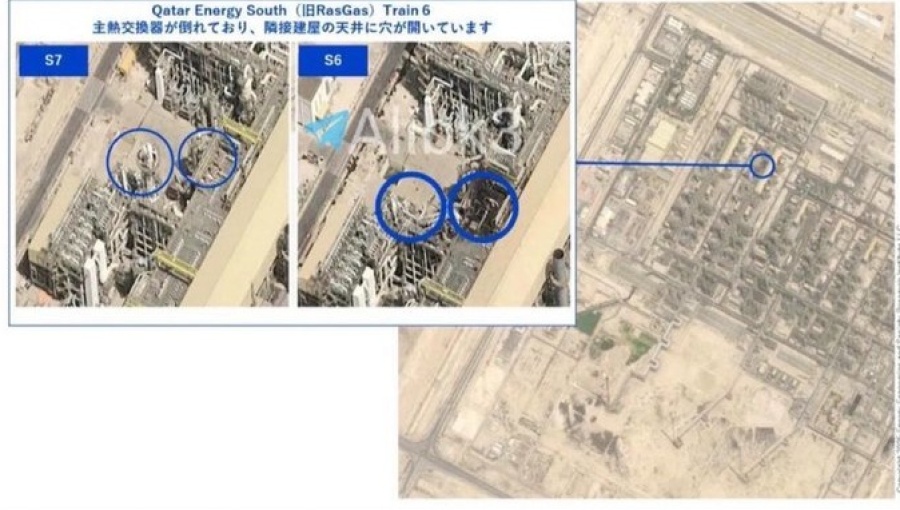
Satellite imagery confirms extensive damage at Qatar’s Ras Laffan LNG plant

Satellite imagery indicates significant damage at Qatar’s Ras Laffan LNG plant that was hit by Iranian missiles on March 18, including the apparent collapse of primary heat exchangers at Train 6 and structural damage to adjacent facilities, according to open-source analysis.
The extent of. The damage has raised concerns the time table for effecting repairs might be increased from the preliminary estimate of one year to closer to fire years if critical equipment has been destroyed. That would have the short-term effect of pushing up gas prices and long-term effect of leaving the US as the predominant supplier of LNG to the international market.
The extent of the damage has prompted expectations of a fresh force majeure declaration, with QatarEnergy’s chief executive now saying that repairs could take between three and five years, contingent on an immediate halt to hostilities. The disruption could result in an estimated $20bn in lost revenue annually.
The attack took two of the facility's 14 trains offline but it has been unclear just how much damage was done. The key component in an LNG plant is the brazed aluminium heat exchanger known as a BAHX (brazed aluminium plate-fin heat exchanger) that cools gas to close to absolute zero. One of the most complicated pieces of machinery in the world, only five firms worldwide can make them and already have a backlog of orders. If Ras Laffan has to order new ones from makers, delivery could take up to five years.
Train 6 forms part of Qatar’s liquefied natural gas infrastructure at Ras Laffan, the world’s largest LNG export facility. The reported damage is estimated to have removed approximately 17% of the country’s LNG export capacity from the market.
Major importers, including Italy, Belgium, South Korea and China, are expected to be affected by any sustained outage. The scale of the disruption has raised concerns among market participants about tightening global gas supplies, particularly as demand remains elevated in both Europe and Asia.
One market participant described the situation as “as close as you get to an Armageddon scenario for global gas markets”. Another comment circulating online attributed to Russian President Vladimir Putin, saying “it’s a shame Europe no longer has Nord Stream”.
Iranian strikes on Gulf aluminium plants raise supply concerns

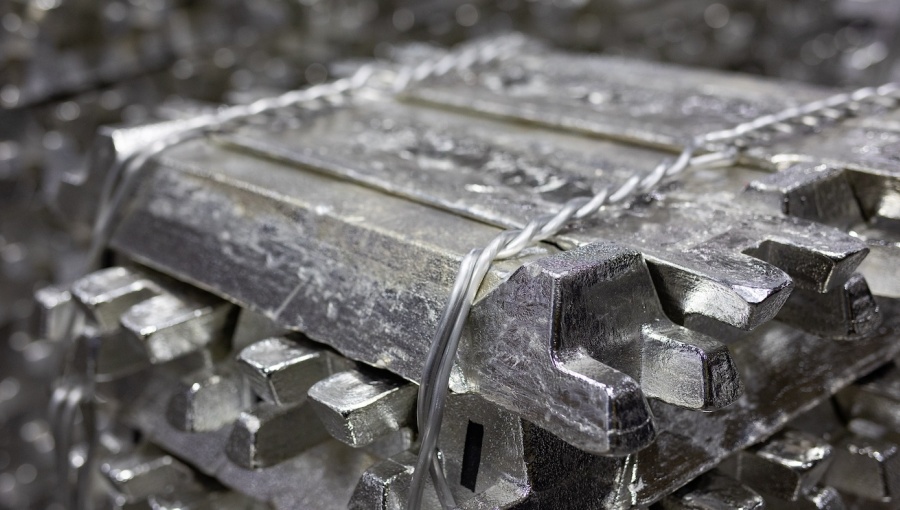
Two major aluminium production facilities in the Middle East were hit by Iranian strikes on March 28, raising concerns over global supply as disruption in the region intensifies.
Emirates Global Aluminium (EGA), one of the world’s largest producers, sustained “significant damage”, while Aluminium Bahrain (Alba) said it is “assessing the extent of the damage” following a separate strike on its operations.
The Iranian Revolutionary Guard Corps (IRGC) claimed the sites targeted were linked to the United States military, in a statement carried by Iran’s state broadcaster IRIB. The strikes were retaliation for a US-Israeli attack on Iranian industrial infrastructure launched from military bases hosting US forces in the Gulf states, the IRGC said.
EGA said on March 28 its Al Taweelah site sustained significant damage during Iranian missile and drone attacks at Khalifa Economic Zone Abu Dhabi, with assessments ongoing. The company said a number of employees were injured, but added that none of the injuries were life-threatening.
The biggest non-energy industrial company in the UAE, the Al Taweelah smelter produced 1.6mn tonnes of cast metal in 2025. The company added it had "substantial metal stock on the water when the conflict began, and stock on the ground in some overseas locations." EGA operates two smelters, one each in the emirates of Dubai and Abu Dhabi.
Alba said in a statement that two employees were injured in the attack on its facility.
The Middle East accounts for approximately 9% of global aluminium supply, making it a critical source for international markets. Analysts warn that disruption to production and exports could tighten supply chains already under pressure from logistical constraints in the Gulf.
Emirates Global Aluminium, jointly owned by Abu Dhabi’s sovereign wealth fund Mubadala and the Investment Corporation of Dubai, is a major supplier to international markets, including the US. The UAE is the second-largest aluminium exporter to the US after Canada.
The company is also involved in plans to develop what has been described as the first new aluminium smelter in the US in decades, a project in Oklahoma backed by state-level incentives and aimed at strengthening domestic supply.
Damage to facilities in both the UAE and Bahrain could therefore have implications beyond the region, particularly for US manufacturers reliant on imported aluminium.
There has been no independent verification of the extent of the damage, and neither company has provided detailed operational updates.
“Emirates Global Aluminium sustained ‘significant damage’,” according to the report, while Alba said it is “assessing the extent of the damage”.
Iran Claims Aluminum Plant Attacks In Bahrain, UAE
Iran launches a missile. Photo Credit: Tasnim News Agency
March 30, 2026
By Arab News
Iran’s Revolutionary Guards said Sunday they launched missile and drone strikes on aluminum plants in Bahrain and the UAE over the weekend, targeting what they described as industries linked to the US military.
The Guards also threatened to target US universities in the Middle East, while saying US-Israeli strikes had destroyed two Iranian universities. They demanded a US condemnation of the bombing of universities by noon (0830 GMT) Monday.
Since the Middle East war erupted at the end of February, Bahrain and other Gulf countries have regularly been targeted by Iranian missile and drone strikes in retaliation for the US-Israeli campaign, now in its second month.
In a statement carried by Iranian state broadcaster IRIB, the Guards said they hit an aluminum facility in the UAE and Aluminium Bahrain’s main plant, calling both sites “industries affiliated with and connected to the US military and aerospace sectors in the region.”
The IRGC said the strikes were retaliation for a US-Israeli attack on Iranian industrial infrastructure launched from bases in Gulf states.
Aluminium Bahrain, one of the world’s largest aluminum producers, said two employees were wounded in an Iranian strike targeting its facility on Saturday.
The company, also known as Alba, said the workers suffered minor injuries.
Alba added that it was assessing the impact on operations and would provide updates when available. It gave no details on damage to the site.
Emirates Global Aluminium confirmed on Saturday that the company’s Al-Taweelah site sustained significant damage during the Iranian missile and drone attacks at Khalifa Economic Zone Abu Dhabi.
A number of EGA employees were injured. None of the injuries were life threatening.
Abdulnasser Bin Kalban, chief executive of EGA, said: “The safety and security of our people is our top priority at EGA at all times. We are deeply saddened and are assessing the damage to our facilities.”
EGA’s Al-Taweelah smelter produced 1.6 million tonnes of cast metal in 2025. EGA had substantial metal stock on the water when the conflict began, and stock on the ground in some overseas locations.
Gulf states intercept Iranian missile and drone attacks
Defense forces in the UAE and Kuwait said early Sunday they were actively responding to new waves of hostile missile and drone attacks launched from Iran, as the conflict triggered by a joint US-Israeli assault on Tehran entered its second month with no sign of abating.
The defense ministries of both states posted on X to reassure citizens that the explosions they were hearing were the result of air defense systems intercepting incoming fire.
“Everyone is requested to adhere to the security and safety instructions issued by the competent authorities,” Kuwait’s Army General Staff said in a separate statement, as four Iranian drones were intercepted and destroyed.
Air defenses engaged 16 ballistic missiles and 42 drones on Sunday, the UAE defense ministry said.
In Saudi Arabia, the defense ministry reported Sunday morning the interception and destruction of 10 drones during the past hours.
Bahrain’s Defense Force reported it has engaged a total of 385 drones and 174 missiles since February 28.
March 30, 2026
Al Bawaba News
By Mansour Al-Maswari
(Albawaba) — A large fire broke out at a plastic factory in Wanaherang, Gunung Putri, Bogor Regency, West Java, on Sunday evening, sending thick black smoke into the sky as flames rapidly consumed the facility.
The factory, which processes plastic materials, was reported by local residents around dusk, prompting a swift response from emergency services.
Firefighters deployed multiple units to contain the blaze, which continued into the night. No casualties have been officially reported so far, and authorities are still investigating the cause. Industrial fires in plastic factories are often linked to flammable materials, electrical faults, or storage issues.
Indonesia’s manufacturing sector has faced recurring safety challenges, including dense factory clusters and inconsistent enforcement of fire regulations. Similar incidents occurred recently, such as a February 2026 fire at a plastic facility in Bandung and earlier blazes in East Java.
File photo of Arakan Army soldiers in Myanmar. Photo Credit: Arakan Army
March 29, 2026
IPCS
By Fiona Raval
Recent reports document accusations against the Arakan Army (AA) of detaining, extorting, and abusing refugees returning to Maungdaw from Bangladesh. As Myanmar’s civil war continues unabated, instances of brutality and human rights violations against civilians have increasedexponentially, with the AA emerging as a particularly notorious entity.
As per the most recent estimates, the AA, an anti-junta ethnic armed organisation, controls around 90 per cent territory in Myanmar’s Rakhine state. It came into being in 2009 for Arakan self-determination through the ‘way of the Rakhita’ (Rakhine way of life) and is known for its commitment to a people-first approach, with an emphasis on inclusive governance.
The discord between the AA’s purpose and practice raises the question of whether the AA has sidelined its raison d’etre by perpetrating the same violence that necessitated its creation.
AA on Paper
The AA was established with the intention of liberating the people of Arakan from Burmese ‘colonialism’ and building a just, free, developed, and sovereign future for them. The AA proposes a confederate status within the larger state of Myanmar. It is part of a long-standing anti-state resistance in the Rakhine region, stemming from concerns about poverty, lack of development benefits, state repression, and political under-representation.
The AA has consistently presented itself in ‘oneness’ with the people and maintained that the protection of people is its prime consideration. It has been able to amass popular support by invoking cultural notions like ‘way of the Rakhita’ and involving all communities. It is through this support that people have not only signed up as recruits for the AA but also granted it legitimacy and success.
The AA, through its political wing, the United League of the Arakan (ULA), has been able to establish administrative systems, an independent police force, a tax regime, and a judicial set-up within Rakhine. In its foray as a parallel government, the AA has set up multiple committees and commissions, both to ensure better political representation from minority communities and to focus on targeted issues, like Humanitarian and Development Coordination Office (HDCO) for human rights matters.
In order to further its goal of administrative inclusion and in an effort to address the communally charged nature of the region, the AA eased many restrictions for the Rohingya Muslims. They were allowed to move from one town to another as long as they had a permit and were given some freedom to seek occupation. The Rohingya have been allowed to form a ‘Muslim Affairs Association’, granting them some autonomy in managing minor, intra-community affairs. The AA Commander-in-Chief also articulated that all ethnic people living in Arakan are “citizens” of Arakan, and gunned for their dignity and protection without any discrimination. Post such leadership proclamations, some Rohingya individuals claim a dial-down in racism and reduced discrimination while accessing public facilities like healthcare centres.
AA in Practice
Despite its professed policies based on the inherent right of the Arakan people’s dignity and right to life, the AA has been carrying out major human rights violations in the region to maintain and expand control.
The AA has been committing civilians into forced labour. A Fortify Rights report indicates that civilians, usually ethnic minorities like Rohingya Muslims, Hindus, and Chakmas, among others, have been either arbitrarily detained to be used as forced labour or been forced into hard labour at gunpoint. Such labour is both military and non-military in nature and includes repairing roads, making and repairing trenches and barracks, transporting ammunition and rations, tending to cattle, farming, etc. Survivors have recounted that they were made to work in inhumane conditions, without access to food or water, for prolonged hours. They were reportedly subject to hefty fines, beatings, and physical torture as punishment for poor work or resisting work.
The AA introduced military conscription to bolster its forces in March 2025 and even banned travel of all conscription-aged individuals outside AA-controlled areas. In early February 2026, the AA forcibly conscripted 20 youth into military service while introducing a minimum quota of 25 recruits per village, including women. There are also reports of civilians being sent to the frontlines without any training to serve as human shields.
The AA has been detaining individuals on grounds (founded or unfounded) of having pro-junta allegiances. Not just the individuals in question but their families, including children and the elderly, have also been held in prolonged detention. Detained individuals have been subjected to vicious physical and mental torture. Another report highlights brutal killings and mutilations of individuals taken away for detention. The AA abducted and detained journalist Mu Dra in September 2025 for alleged investigative overreach but with no proof to support the grounds on which she has been detained. Mu Dra is yet to be released.
Despite its ‘progressive’ policy for the Rohingya, the community is the worst persecuted by the AA. The AA doesn’t acknowledge the Rohingya as native to the Arakan and refers to them as Muslim inhabitants of Rakhine. They continue to face livelihood restrictions by losing land for agriculture and areas for fishing. While they are allowed inter-village movement, the required permits are often denied and are hard to access. There is a disproportionately high number of Rohingya among victims of arrests, detention, and killings. The AA has also been accused of contributing to the ‘second genocide’ of Rohingya people by using scorched earth tactics like burning villages, forcing displacement, and orchestrating mass-killings.
Most infamously, the AA has been accused of the brutal killings of over 150 individuals, mostly Rohingya, by drone strikes while they were attempting to flee through the Naf River in August 2024. While the AA has denied responsibility, in the subsequent months, they did close off access to the same route on the grounds that militant groups were using it for escape. The Rohingya also get caught in the brutal crosshairs of the increasingly violent rivalry between the AA and some Rohingya representative organisations like the Arakan Rohingya Salvation Army and the Rohingya Solidarity Organisation.
The AA has also reportedly ‘nationalised’ properties belonging to individuals who were accused of supporting the junta or having anti-AA loyalties. Among other things, the AA has been involved in drug trafficking and opium production in order to obtain arms and fund recruitment drives.
Conclusion
The AA has routinely and vociferously denied all allegations of excessive use of power against civilians. However ground-reports and survivors’ testimonies point to the opposite. While the AA has been a formidable military force since its inception and an important contestor of political power, their antagonisations were traditionally targeted only at the power centre in Naypyidaw. The crux of their policy is to strengthen popular support and represent the people. Their contradictory on-ground practices therefore appear particularly hypocritical. These violations dilute the AA’s core distinguishing factor by eroding public trust. Public legitimacy is foundational to the organisation’s success—disregarding this is poor strategy.
IPCS (Institute for Peace and Conflict Studies) conducts independent research on conventional and non-conventional security issues in the region and shares its findings with policy makers and the public. It provides a forum for discussion with the strategic community on strategic issues and strives to explore alternatives. Moreover, it works towards building capacity among young scholars for greater refinement of their analyses of South Asian security.
Since 2003, Geneva’s International Film Festival and Forum on Human Rights (FIFDH) has put the spotlight on abuses and crises around the world. This year, the festival also reflects a crisis at home for International Geneva.
March 29, 2026
SwissInfo
By Sarah Toms
Taking the stage to cheers and applause after the screening of Disunited Nations, Francesca Albanese, UN Special Rapporteur on the situation of human rights in the Palestinian territories, spoke of her anger and frustration over the failings of the global community to prevent widespread death and destruction in Gaza.
At the sold-out event, the discussion offered behind-the-scenes insights about the film that follows Albanese for two years as she documented violations of international law in the Gaza war under intense political pressure.
“International law is not dead but it’s not [a matter of being] dead or alive,” she told the audience alongside Disunited Nations director Christophe Cotteret at one of the most anticipated sessions of this year’s International FIFDH in Geneva.
“It’s an instrument. There’s no point being romantic and saying international law is going to stand up with its sword, slay the evil in the world, and save us all. No, the fact is we aren’t capable of exercising the power that we have, even in democracy,” she said.
brings together filmmakers, international organisations, human rights activists, journalists, academics, philanthropists and audiences from all walks of life.
From March 6 to 15, people packed into screenings of 54 films from 40 countries, plus the forums and community events that embody the FIFDH concept of “a film, a subject, a debate” as a collective way to defend human rights, raise awareness and inspire commitment to universal values.
“The films bring us to issues through their stories. Then we have this format of the forum, the panel discussion that follows the screening to make sense of the geopolitical challenges for multilateralism,” Laura Longobardi, FIFDH’s editorial co-director, told Swissinfo.
For audiences, it was a chance to share in the lives, struggles and hopes of people dealing with the perilous state of human rights and international law all over the world – from the scars of colonialism and the plight of the displaced to violence fuelled by natural resources and the dangers of technology for democracy and mental health.
Geneva under fire
This year, with conflicts raging on many fronts, geopolitics in flux, and the United Nations suffering from severe cuts, the 24th edition of FIFDH also echoed the uncertainties hanging over International Geneva.
“It stood out quite clearly that there was something to talk about what will happen to International Geneva as much as the concerns about what will happen on the ground as this system is being defunded and attacked,” says Longobardi.
The implications are acute for Geneva as a hub for humanitarian aid, development aid and diplomacy with more than 40 international organisations and nearly 500 NGOs.
Due to huge funding cuts by the United States, delayed payment of dues by China, Russia and other member states, and less foreign aid spending by many governments, the UN and its agencies have seen their budgets slashed by 15% in 2026. The effects of restructuring and staff layoffs are already being felt.
“At a time when multilateralism is undergoing a profound crisis and international institutions are seeing their resources and legitimacy challenged, the festival serves as a reminder of why International Geneva remains essential,” Thierry Apothéloz, President of Geneva’s cantonal government, said in an official message on the FIFDH website. “It also questions what Geneva must become in order to continue to uphold, with credibility and courage, the values upon which it was founded,” he added.
Accordion Geneva
After the screening of Solidarity by David Bernet, a panel of speakers continued the conversation at a forum on the future of International Geneva, envisioning how multilateralism must evolve and what Switzerland could contribute to a new model of global governance.
One of the possibilities set out by Yves Daccord, chairman of Principles for Peace, a Swiss foundation focused on peacemaking, was an “accordion scenario” where International Geneva would contract before refocusing and recovering.
“The status quo is not an option,” Daccord told the audience, adding that Geneva should have a major role to play in “the new global social contract”.
“What are the things that we need to fight for basic principles? How do we defend international law? That is possible – that Geneva will suddenly find itself again as an interesting and important hub,” he said.
Heba Aly, director of the Article 109 Coalition, a group of civil society organisations seeking to update the UN Charter, said the world needs a more inclusive, effective and equitable system of governance, without throwing away concepts of the UN that still have value.
“If we do this right – and I do think Geneva can be the home of a new multilateral system in the same way it has been at the heart of multilateralism 1.0 – it should help seed multilateralism 2.0,” she told the audience.
“Let’s try to reform it and renew it for a new generation but maintain what I think all of us in Geneva believe in, which is a multilateralism that is truly universal.”
United values
In an interview with Swissinfo at a café in Geneva, Cotteret, director of Disunited Nations, said the unresolved conflicts in Gaza and elsewhere highlight why we need to renew respect for international law and put pressure on governments to support the value of the UN.
“That’s the question people ask most basically: There’s the United Nations, it’s absolutely useless because it can do nothing. I disagree with that. The United Nations can do a lot. It’s not a problem of the United Nations. It’s the problem of the nations’ short-sightedness,” he said. “We have to think differently with the new world we have to live in.”
With so many uncertainties ahead for multilateralism and International Geneva, the FIFDH organisers remain committed to investing in filmmaking that supports human rights and international law, including the festival’s professional Impact Days to focus ideas and foster new collaborations.
“In the last seven years we’ve been developing an industry programme on impact production with filmmakers coming from around the world for two days and really reflecting and working together on how films can become tools for social change,” Longobardi, the festival’s co-director, told Swissinfo.
“We will keep on looking for films and voices that can express not only the world around us but also the world that we would like to build together, so that we are going in a direction which is more hopeful.”
SwissInfo
swissinfo is an enterprise of the Swiss Broadcasting Corporation (SBC). Its role is to inform Swiss living abroad about events in their homeland and to raise awareness of Switzerland in other countries. swissinfo achieves this through its nine-language internet news and information platform.
Russians’ trust in Putin falls to lowest level since Ukraine invasion

Trust in Russian President Vladimir Putin has fallen to its lowest level since before the full-scale invasion of Ukraine, as economic pressures and prolonged war fatigue weigh on public sentiment, according to new VTsIOM survey reported by Bloomberg on March 27.
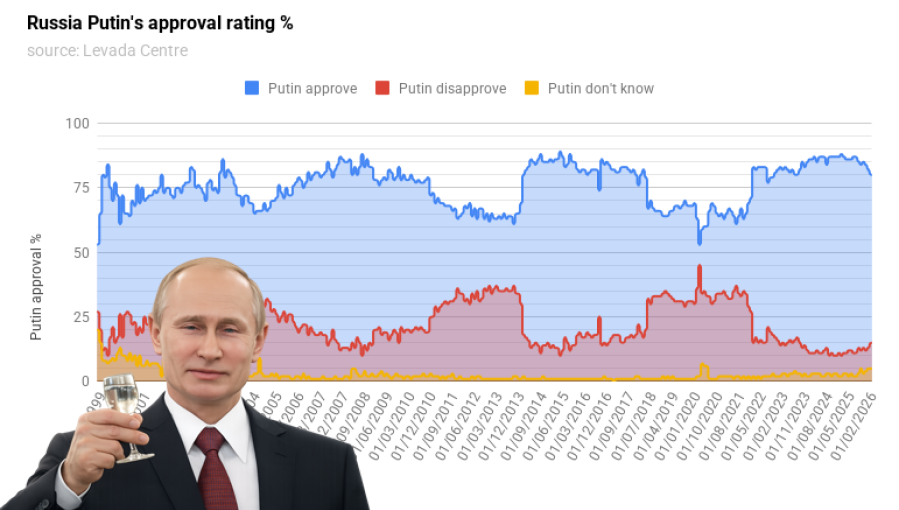
Putin’s popularity has also dipped in the last Levada Centre poll to 82%, down from a Ukraine war high of 85%-88% where it hovered for most of 2025.
The polls highlight the swings in the progress in the war. 2025 was a good year for the Armed Forces of Russia (AFR), which made considerable progress on the battlefield and retook the captured territory in the Kursk region. However, a slowdown in Russia’s advances, and a limited reversal in the last month, was matched by increasing budget pressures that mean the effects of the war are finally starting to feed through and affect the general population, leading to a weaking of sentiment since the start of this year.
The share of respondents in the VTsIOM poll saying they trust Putin declined to 75%, down from 76.7%, based on figures from state-run pollster VTsIOM. Approval of his job performance slipped to 70.1%, a fall of 1.9 points from the previous week. Both indicators mark their weakest levels since February 20, 2022, just days before Russia launched its invasion.
Negative sentiment has also edged higher. Around 20.1% of respondents said they explicitly distrust Putin, while 18.3% disapprove of his performance — the highest levels recorded since the conflict began.
The findings, based on surveys conducted between March 19 and 22, signal a gradual shift in public attitudes as the war enters its fifth year and economic conditions tighten. A separate poll by the independent Levada Center, published on March 3, found that 67% of respondents favour moving towards peace negotiations.
“Public fatigue is the reason for the ratings stagnation,” said Andrei Kolesnikov, a Moscow-based political analyst. “At the practical level, everyone is simply surviving,” he said, adding that widespread internet outages have added to the discontent.
The Kremlin has sought to contain a widening budget deficit driven by sustained military spending, including raising value-added tax at the start of the year. The move has compounded pressure on households and businesses already facing high borrowing costs introduced to curb inflation, contributing to a slowdown in economic activity.
Efforts to reach a diplomatic settlement have made little progress. US-brokered talks aimed at ending the conflict have stalled, while fighting along much of the front line has settled into a pattern dominated by drone warfare, limiting the ability of conventional forces to secure territorial gains.
While President Vladimir Putin’s approval rating has remained comparatively resilient, the broader set of indicators points to a parallel, if more gradual, softening in public sentiment toward state institutions and the country’s overall direction.
Across government, the prime minister, the State Duma and regional governors, approval levels generally held steady or peaked in the first half of 2025 before trending downward into early 2026, accompanied by rising disapproval and, in some cases, growing uncertainty, as the Russian advances on the Ukrainian battlefield slowed down and reserved to some extent in March.
At the same time, growing budget deficit pressure has led to cuts that have also pressed sentiment. However, the Kremlin might be in for some luck thanks to the Iran war.
The Ministry of Finance (MinFin) is abandoning plans for a sharp downgrade to its 2026 growth forecast and 10% of cuts to spending this year, due to an expectation of boosted oil revenue thanks to energy market instability.
As military spending remains sacrosanct, most of the spending cuts have come from the social sphere and military spending has already overtaken social spending for the first time since the war started four years ago. This year MinFin was intending to cut social spending further but those cuts are likely to be suspended. Russian President Vladimir Putin has been careful to shelter the population from the effects of the war but now will probably have the opportunity to direct a little more spending to the social sphere and improve the government’s ratings as a result.
The economy shrank by an estimated 2.6% in the first quarter, according to preliminary estimates, but now is expected to put in at least 1.3% of growth in 2026, according to MinFin estimates. That marks a sharp reversal in sentiment from just a month ago, when the government was weighing a downgrade to about 0.7% to 1% in its growth forecast.
An increase in Russia’s average Urals price to $75–$80 per barrel or higher this year from the baseline assumption of $59 in the budget, would bring an additional RUB3–4 trillion ($37-$49 billion) in oil and gas revenue – almost enough to completely cover the projected budget deficit for this year -- helping reduce the forecast deficit to 1% of GDP, less than the 3-4% of GDP economist were expecting only three weeks ago.
Russia is going in the “right” direction
According to Levada, the share of respondents saying Russia is moving in the “right direction” remained dominant over the last year, but showed a gradual downward trend. It rose from 71% on January 1, 2025 to a peak of 74% in March, before fluctuating around the high 60s during the summer months. Over the same period, those saying the country was on the “wrong direction” held relatively steady at around 16–18%, while the proportion of undecided respondents remained elevated in the low-to-mid teens.
From the autumn onwards, sentiment became more negative. The share viewing the country as moving in the right direction declined from 70% in September to 61% by March 1, 2026, while those saying it was on the wrong path rose to 26%. The proportion of respondents unsure remained broadly stable at around 13–15%, indicating that the shift was driven primarily by a movement from positive to negative assessments rather than increasing uncertainty.
Government approval remains strong
Government approval remained relatively strong through the first half of the period, rising from 71% on January 1, 2025 to a peak of 76% on May 1 before fluctuating in the mid-70s over the summer months. Disapproval tracked in the low 20s during this phase, indicating a stable margin of net support, while the share of respondents unsure remained consistently low at around 4–5%.
From the autumn onwards, however, the data shows a gradual erosion in support. Approval fell from 74% on September 1 to 64% by March 1, 2026, while disapproval increased from 21% to 29% over the same period. The proportion of undecided respondents also edged higher, reaching 8% at the end of the series, suggesting a modest but broad-based softening in public confidence.
PM Mishustin gradual decline in support
Approval ratings for Prime Minister Mikhail Mishustin remained consistently high through the first half of the period, holding in the mid-to-high 70s and peaking at 77% in March and May 2025. Disapproval stayed comparatively low, generally between 15% and 18%, while the share of respondents offering no answer hovered in the high single digits, indicating a stable and broadly favourable perception.
From late 2025 onwards, however, the figures show a gradual decline in support. Approval fell from 75% in September to 66% by March 2026, while disapproval rose to 21%. Notably, the proportion of respondents giving no answer increased into the low teens during this period, suggesting a growing degree of uncertainty or disengagement alongside the softening in overall approval.
Duma approval falling
Approval of the State Duma remained comparatively lower than that of the executive but broadly stable through the first half of the period, rising from 61% on January 1, 2025 to a peak of 66% in May before settling in the low 60s over the summer. Disapproval stayed close to 29–31% during this phase, while the share of undecided respondents remained limited, generally between 5% and 7%.
From the autumn onwards, the data indicates a steady deterioration in sentiment. Approval declined from 62% in September to 53% by March 1, 2026, while disapproval rose to 37%. The proportion of respondents unsure also increased to around 9–10%, pointing to a gradual weakening of confidence in the legislature alongside a rise in more critical views.
Regional governors still more popular than government
Approval of regional governors remained relatively steady in the low-to-mid 70s for much of 2025, beginning at 71% on January 1 and peaking at 75% in June. Disapproval was consistently contained in the low 20s during this period, while the proportion of respondents unsure fluctuated modestly, generally remaining below 6% aside from a brief rise in April.
In the later months, the data shows a gradual softening in support. Approval declined from 73% in September to 66% by March 1, 2026, while disapproval edged up to 25%. The share of respondents who did not express a view also increased to 9%, indicating a slight rise in uncertainty alongside the broader downward trend in approval.