Thursday, April 16, 2026

Workers over 65 in Germany up 46% in just five years

16.04.2026, DPA


Photo: Jan Woitas/dpa

The number of people aged over 65 still in work in Germany has risen by about 46% over the past five years to around 1.9 million, official figures showed on Thursday.

The trend has been building for years, driven in part by a gradual increase in the statutory retirement age from 65 to 67, with the threshold reaching at least 66 years and two months in 2025.

Early retirement typically comes with reduced benefits, encouraging more older people to remain in the workforce.

Official figures show that 1.28 million people over 65 were registered as employed in 2020, rising steadily to 1.88 million in 2025.

Of these, 653,000 were aged 70 or older, up from 469,000 in 2020, while about 229,000 were over 75, compared with 175,000 five years earlier.

Experts cite multiple factors behind the rise, including labour shortages, personal motivation and financial necessity.

The data from the Federal Statistical Office was requested by the minor Sahra Wagenknecht Alliance (BSW) party.

Founder Sahra Wagenknecht said many older people were not working by choice but out of financial need, adding that the increase suggests hundreds of thousands of pensioners are compelled to supplement relatively low incomes.

She said Germany could look to Austria's pension system as a model, where payouts are higher on average, though contribution rates are also higher.

Despite the increase, older workers still represent a relatively small share. Around 18.4 million people in Germany were aged over 65 in 2025, while the total workforce was about 42.5 million.

Germany's Lufthansa cancels hundreds of flights as crews renew strike

16.04.2026, DPA


Photo: Hannes P. Albert/dpa


Hundreds of flights were cancelled again across Germany on Thursday as flight crew at flag carrier Lufthansa held a further round of strikes.

At the country's largest airport in Frankfurt, operator Fraport said 656 of 1,313 scheduled take-offs and landings were cancelled, with the overwhelming majority attributable to Lufthansa.

An attempt at arbitration in the deadlocked pay negotiations for pilots failed on Wednesday. Lufthansa and the pilots’ union Vereinigung Cockpit (VC) were unable to even agree on a list of issues to be resolved.

The employees’ protests overshadowed a ceremony marking the centenary of the German airline.

Flights were cancelled at the main Lufthansa airline, as well as subsidiaries Lufthansa Cargo and Lufthansa Cityline.

At the low-cost airline Eurowings, strikes were scheduled only for Thursday, while further industrial action was likely at the group's other German airlines on Friday.

A company spokesman said Eurowings is managing to operate more than 70% of its scheduled flights. While only part of the fleet is subject to German strike law, a three-digit number of pilots on German aircraft have also volunteered for duty.

New whale sighting on German-Danish border
DW 04/15/2026

A Beluga whale has made its way from the coast of Denmark towards the border with Germany, according to local media. The sighting comes after a humpback whale stranded in the Baltic Sea captivated Germany last month.

A white Beluga whale (like this one seen in Norway in 2019) has been spotted near the northern German city of Flensburg
Image: Jorgen Ree Wiig/Norwegian Directorate of Fisheries/AP/picture alliance

A white Beluga whale has been spotted in the narrow straits around the Flensburg Firth, the waterway which divides Germany from Denmark near the northern German city of Flensburg.

According to the local Nordschleswiger (North Schleswig) newspaper, a Danish publication serving Denmark's German-speaking minority in the region, the white whale was first spotted near Arosund last month and has since made its way south past the island of Als and into the firth, known as the Flensburger Förde in German or Flensborg Fjord in Danish.

Beluga whales are said to be friendly, social animals which often travel in groups. They are known for their varied methods of communication with a "language" made up of whistles, chirps and clicks, earning them the nickname "canaries of the sea."

Feeding on herring, salmon, squid and crustaceans, Beluga whales can grow up to six meters long and can weigh over a ton.

They are normally found in sub-arctic regions like Greenland and Norway, but it's not the first time that a Beluga whale has been spotted in southern Denmark, with previous sightings reported in 1903, 1964, the 1980s and 2012.

According to Danish whale researcher Carl Christian Kinze, Beluga whales like coastal areas and this particular individual will likely find its own way back out into more open waters.
What happened to 'Timmy' the humpback whale?

Unfortunately, the same couldn't be said for "Timmy" the humpback whale which has been repeatedly stranding, freeing and stranding itself again off Germany's northeastern coast for the past month, and is now to be left to die in peace after captivating the country.


Edited by: Elizabeth Schumacher


Germany expects further whale stranding's amid latest rescue attempt

16.04.2026, DPA

Photo: Philip Dulian/dpa

The environment minister of the German state of Mecklenburg-Vorpommern expects further whale strandings on German coasts in the future, after a high-profile saga involving a humpback whale that has repeatedly become stuck in the Baltic Sea.

"The next whale is bound to turn up," said Till Backhaus, before the start of a private rescue operation for the whale in the shallow waters off the small Baltic Sea island of Poel on Thursday.

The 12.35-metre animal has been stranded four times off Germany's Baltic coast since the beginning of March.

It most recently got stuck off Poel Island in the Bay of Wismar earlier this month. All rescue attempts for the struggling whale were called off, as experts said they expected the animal to die in the bay, but it has remained alive for more than a week.

Backhaus also referred to a beluga whale that has been sighted off Flensburg. "This means we will have to continue addressing the issue."

Backhaus called for inter-regional coordination to deal with future strandings, and told the television channel News5 that the Maritime Emergency Command was a suitable body for this.

The command was established by Germany's federal government and coastal states to deal with shipping accidents, and has scientists and technical resources at its disposal.

Backhaus said he had submitted a proposal concerning the issue for the conference of Germany's environment ministers in May. He was convinced that the proposal would be approved.

"Money must also be invested here," Backhaus continued, adding that the Federal Agency for Nature Conservation should "find solutions" for staffing and investment.

World's oldest gorilla celebrates birthday at Berlin Zoo
04/13/2026

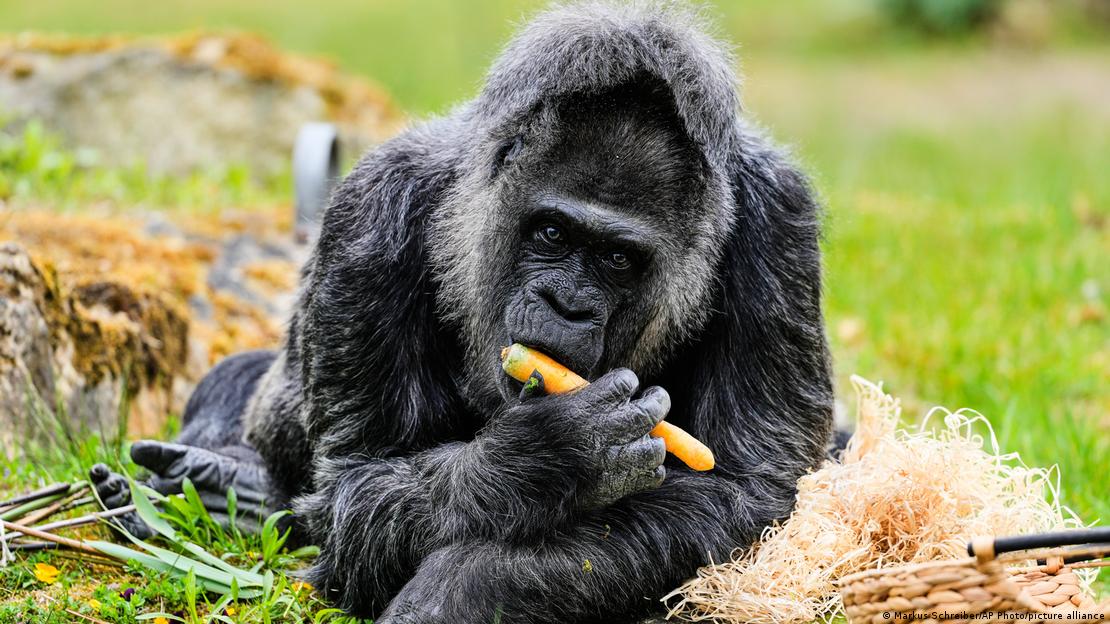
Lady Fatou, known as the "grand dame" of the Berlin Zoo, was certified last year by Guinness as the oldest living gorilla in the world.


When you're a 69-year-old gorilla, you get vegetables as a birthday gift
Image: Markus Schreiber/AP Photo/picture alliance

At 69 years old, Lady Fatou on Monday became not only the Berlin Zoo's longest-residing tenant but also maintained her title as the oldest gorilla in the world.

Born somewhere in West Africa in 1957, she arrived in Europe at the port of Marseilles in 1959 in the luggage of a French sailor. According to the Berlin Zoo, the sailor found himself unable to pay his bill at a tavern and gave Fatou to the landlady as payment. From there, she soon ended up in the German capital.

Fatou is a western lowland gorilla. In the wild they usually don't live past their 40s, and even in captivity 50 is considered advanced old age.

In 1974 she gave birth to Dufte, the first gorilla born at the Berlin Zoo. Although her daughter passed away in 2001, Fatou's granddaugther M'penzi still keeps her co
mpany in Berlin. She has at least three great-great-great grandchildren as of 2026.

Fatou's favorite foods are usually pre-cooked, as the grand dame no longer has teeth
Image: Markus Schreiber/AP Photo/picture alliance

"We are very proud to have been able to accommodate an animal with us now for more than half a century. We are pleased that Fatou is in such good health despite her age," zoo director Andreas Knieriem said on one of her previous birthdays.

Nowadays, Fatou has her own private enclosure and staff members dedicated solely to her care. She prefers to sit back and watch the other gorillas play rather than get involved in the action, zoo workers say.

Edited by: Louis Oelofse
 reports on gender equity, immigration, poverty and education in Germany.


OUTLAW PALM OIL

Critically endangered Borneo orangutan born at Madrid zoo

A Borneo orangutan in the Madrid Zoo Aquarium gave birth in early April to a healthy baby, the zoo said. Habitat loss and the illegal wildlife trade have severely curtailed the number of these gentle primates living in the wild.


Issued on: 15/04/2026
By: FRANCE 24

A critically endangered Bornean orangutan holds her newborn at Madrid Zoo Aquarium after the infant's birth on April 2. © Madrid Zoo Aquarium via AFP

A critically endangered Borneo orangutan has been born at Madrid's zoo, described by keepers as strong and developing normally.

After an eight-and-a-half-month pregnancy, mother Surya gave birth to a male weighing about 1.5 kilos on April 2, the Madrid Zoo Aquarium said in a statement.

The zoo released a video showing Surya cradling the newborn, which will be named through a public vote from a list of options proposed by the caretakers.

Surya has now given birth to four offspring, with keepers describing her maternal care from the outset as exemplary, and the baby feeding regularly, a key indicator of healthy development.

In this handout photo released on April 14, 2026 by Madrid Zoo Aquarium, Surya, a female Bornean orangutan, cradles her newborn shortly after its birth on April 2, 2026 at the Madrid Zoo Aquarium, in Madrid. © Madrid Zoo Aquarium via AFP


"When the baby is nursing, everything stops. She stays completely still until he finishes, and only then moves to eat or do anything else. She is a real supermom," said Maica Espinosa, a primate keeper at the zoo.

Orangutans usually give birth to a single baby or occasionally twins. They give birth, at the most, once every six years, and the interval between babies can be as long as 10 years.

Surya, a female Bornean orangutan (Pongo pygmaeus), cradles her newborn. © Madrid Zoo Aquarium via AFP

The International Union for Conservation of Nature classifies Bornean orangutans – known for their dark brown fur and gentle temperament – as "critically endangered", citing rapid habitat loss and illegal wildlife trade as major threats.

The species lives in the wild only on the Indonesian island of Sumatra and on the island of Borneo, which is divided among IndonesiaMalaysia and Brunei.

(FRANCE 24 with AFP)
Merck's Keytruda: A lifesaving drug, a global divide

Pelin Ünker
DW April 13, 2026

A cross-border investigation by DW and ICIJ reveals how pricing and patents helped turn a life-saving medicine into one of the world's best selling drugs while leaving many patients struggling to access it.

The cancer drug in question is manufactured by the US-based company Merck
Image: Rafael Henrique/SOPA Images/Sipa USA/picture alliance

A yearlong international investigation into one of the world's most important cancer drugs shows how a medical breakthrough has also become a fault line in global health, exposing how pricing systems, patent protections and regulatory frameworks determine who can access life-saving treatment and who cannot.

The Cancer Calculus, coordinated by the International Consortium of Investigative Journalists (ICIJ) with Deutsche Welle and 46 media partners, brought together 124 journalists in 37 countries. Drawing on hundreds of interviews with oncologists, patients and their families, lawyers, regulators, pharmacists, pharmaceutical industry insiders and others as well as exclusive pricing data and patent analyses, the project examines how Merck's cancer drug Keytruda became both a therapeutic milestone and a symbol of unequal access. ICIJ's media partners also obtained public health records, meeting minutes, and pricing and reimbursement data through at least 1,018 public records requests across 27 countries.

Partners including The Indian Express, De Tijd, El País, La Nación and DW Turkish documented how the drug's impact varies dramatically across regions — from hospitals forced to ration treatment to patients turning to courts or crowdfunding to survive.
A drug that changed cancer care

Keytruda (pembrolizumab), first approved in 2014, belongs to a class of immunotherapy drugs that enable the immune system to attack cancer cells. Now approved for at least 19 types of tumors, it has extended survival for millions and, in some cases, turned previously fatal diagnoses into manageable conditions.

Cancer immunotherapy drug
Image: SoniPhotography/Pond5 Images/IMAGO

But it has also become one of the most best sellings drugs in pharmaceutical history. Keytruda generated $31.7 billion (€27.1 billion) in sales in 2025 — nearly half of Merck's total revenue — and around $163 billion globally since its launch. About 60% of those sales come from the United States. Meanwhile, the company has funneled nearly $75 billion in dividends to shareholders and $43 billion into share buybacks.

Keytruda's global expansion has accelerated sharply in recent years. From 2020 to 2024, sales rose by 232% in France to $2.8 billion, 265% in Brazil to $753.7 million, 491% in Mexico to $137.3 million, and 584% in Turkey to nearly $100 million, according to exclusive data shared with ICIJ by the IQVIA Institute for Human Data Science.

As drug prices continue to rise, US President Donald Trump met with pharmaceutical executives in December and pledged to lower costs. While companies signaled price cuts, Merck did not publicly commit to reductions for Keytruda.

At the same time, the cost of treatment has placed growing pressure on health systems worldwide. Annual treatment costs — about $80,000 in Germany to $208,000 in the United States, $93,000 in Lebanon to around $130,000 in Colombia, and from roughly $65,000 in South Africa to $116,000 in Croatia — are straining government budgets, even in wealthy countries.

In the United Kingdom, research has shown that the National Health Service has overpaid for Keytruda in some cases, with one study finding that the drug cost up to five times more than its assessed value for certain lung cancer patients.

Prices, patents and power


The investigation found that Merck has relied on a combination of legal and commercial strategies to maintain its dominance.

One of the most significant is its extensive use of the patent system. Reporters identified at least 1,212 patent applications related to Keytruda across 53 jurisdictions. While the drug's main patents are set to expire in 2028, follow-on patents could extend market exclusivity until at least 2042, delaying cheaper alternatives for more than a decade.

Critics describe this as a "patent fortress" designed to deter competition. Merck rejects that characterization, saying its filings reflect ongoing innovation, including new uses, formulations and combinations.

The investigation also points to regulatory pathways and lobbying efforts that helped expand the drug's use, alongside financial relationships with doctors and patient groups. In the United States alone,records show that Merck made Keytruda-related payments to healthcare professionals totaling nearly $52 million between 2018 and 2024.

Merck says such collaborations help inform the medical community and improve patient care, and that any support for patient organizations is independent of prescribing decisions.

The scale of Keytruda's development costs is also contested. In 2024 congressional testimony, Merck CEO Robert M. Davis said the company had invested $46 billion between 2011 and 2023 to research, develop and manufacture the drug, citing more than 2,200 clinical trials and plans to invest another $18 billion in future studies.

But an analysis by Swiss nonprofit Public Eye estimates the drug's R&D costs at around $1.9 billion, or about 1% of its global revenue since launch. Even when costs of failed trials are included that estimate only rises to $4.8 billion, or roughly 3% of total revenue.
Extreme prices, opaque systems

Keytruda's list prices vary widely, from about $850 per vial (100 mg) in Indonesia to more than $6,000 in the United States, reflecting opaque pricing systems shaped by confidential discounts and negotiations.

Even where prices appear lower, affordability is often worse. In the United States, a patient earning the median income can afford fewer than five doses per year.

In South Africa, by contrast, a person earning the median income cannot afford even a single dose (200 mg) in a year, underscoring how differences in income — not just price — determine access.

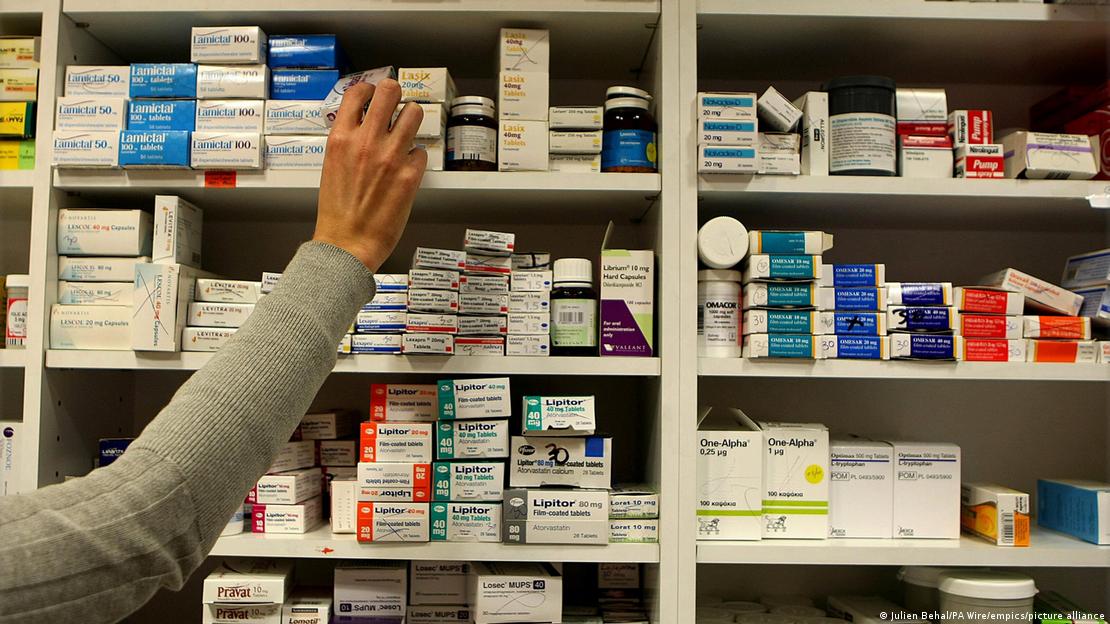
The drug pembrolizumab helps cancer patients
Image: Julien Behal/PA Wire/empics/picture alliance

According to ICIJ's analysis, people with median incomes in the United States can afford less Keytruda than those in some Western European countries such as France and Belgium, while the drug is even less affordable in lower-income Eastern European countries like Bulgaria and Hungary.

In India, where access largely depends on out-of-pocket payments or limited assistance programs, treatment costs can exceed a patient's annual income, effectively restricting access to a small share of the population.

In Brazil, the high cost of cancer drugs has driven a surge in litigation, with thousands of lawsuits filed in recent years as patients seek court-ordered access to treatment. Similar patterns have been observed across Latin America, where legal systems have become a critical pathway to access.

The investigation also documented cases in which limited supply forced doctors to make life-and-death decisions. In Guatemala, one oncologist described being forced to choose which patients would receive treatment, saying it felt like "playing God."

Since Keytruda came to market in 2014, ICIJ found at least 632 cases in which patients in 51 countries used GoFundMe and other crowdfunding sites to raise money for Keytruda treatments. In some cases, patients have turned to black markets, exposing themselves to counterfeit medicines. Others have taken governments to court — and in some cases died before their claims were resolved.

Across countries, a common feature emerges: secrecy. Authorities in several countries refused to disclose public spending or patient numbers for Keytruda, often citing "trade secrets," making it difficult to compare prices or assess fairness across health systems.

Turkey: Price policy, reimbursement gaps and litigation


Against this global backdrop, Turkey illustrates how pricing policy, reimbursement rules and judicial processes intersect in access to high-cost cancer drugs.

In Turkey, drug prices are calculated based on a government-set fixed euro exchange rate, which is typically below the market rate. As of April 1, 2026, the reference rate was increased to 29.11 Turkish lira, and the retail price rose to 88,783.52 lira per vial (approximately €3,049).

The drug is administered in two doses every three weeks, bringing the cost of a single treatment cycle to approximately 177,567 lira (€6,099). This corresponds to about 6.5 times the monthly net minimum wage in Turkey, which stands at 28,075.50 lira.

For years, Keytruda remained outside the Social Security Institution (SSI) reimbursement system, pushing patients to seek access through the courts. The drug entered reimbursement in July 2025 for six indications, but eligibility restrictions and off-label uses continue to generate disputes.

A DW Turkish analysis of 50 lawsuits filed in Turkey shows how legal processes themselves have become a defining factor in access. In 10 out of 34 open labor court cases, the patient died while proceedings were still ongoing.

This points to a structural problem: even where a legal right to treatment exists, delays in the judicial process can render that right ineffective, particularly in life-threatening conditions such as cancer.
Dosing debates and rising costs

The investigation also raises questions about how the drug is prescribed. Some researchers argue that Keytruda is often administered at higher doses than necessary.

The World Health Organization estimates that switching to weight-based dosing for lung cancer patients alone could save around $5 billion globally over 15 years, based on modeling scenarios.


3D molecular model of the immunotherapy antibody
Image: Kon/YAY Images/IMAGO

Hospitals in several countries have begun testing lower-dose approaches, with early findings suggesting similar effectiveness. Hospitals in Singapore, Malaysia and Taiwan have arrived at the same conclusion, and several nations, including the Netherlands, Canada and Israel, have started to switch to weight-based dosing — in which a patient's body weight determines how much medication to use — with promising results.

Merck maintains that its dosing recommendations are based on extensive clinical evidence and regulatory approvals.

Merck: Prices reflect value

In responses to ICIJ, Merck defended its pricing strategy, saying Keytruda's price "reflects its value to patients and health care systems."

Merck also said that access to medicines is "multifactorial," depending on healthcare systems, reimbursement policies and infrastructure, not just price.

The company said it uses differential pricing across markets and operates patient assistance programs. It added that it actively engages in access programs in low- and middle-income countries to expand availability. In the United States, it reported providing $1.7 billion in free medicines across its portfolio in 2024, along with about $125 million in co-pay assistance.

Merck also pointed to broader systemic factors, including insurers and intermediaries, as major drivers of high costs, particularly in the US.

Merck has not publicly detailed how it calculates R&D costs for individual medicines but has consistently argued that pricing reflects long-term investments and risks across its portfolio.

At the same time, the company acknowledged "increasing political and business pressures" over pricing and access, especially in emerging markets, but said it is working to make healthcare more "affordable, efficient, equitable and sustainable."
A global system under pressure

The investigation concludes that Merck's practices are not unique, but reflect broader dynamics in the pharmaceutical industry where patent protections, pricing strategies and regulatory frameworks often favor manufacturers.

For patients, however, the consequences are immediate.


Access to a life-extending treatment often depends not only on medical need, but on geography, income and the ability to navigate complex legal and financial systems.

For Nasır Nesanır, chair of the public health branch of the Turkish Medical Association, these disparities point to deeper structural questions. Speaking to DW Turkish, he said the issue goes beyond healthcare itself.

"Should medical innovation be regarded as a common gain of humanity?" Nesanır asked. "Or should it remain a commercial asset under patent protection that deepens global inequality?"

The result is a deep global divide, where a breakthrough drug can mean survival for some, and remain out of reach for many others.

German health minister announces billions in cutbacks

$$$ FOR DEFENSE NOT HEALTHCARE

DW April 14, 2026

The comprehensive reform package aims to plug a multibillion-euro hole in Germany's expensive health care system. Reforms include mandatory second opinions for costly surgeries and no more coverage for homeopathy.


Health insurance contributions by Germans who pay into the public health insurance system rose by an average of 3% in 2026
Image: Ina Fassbender/AFP/Getty Images

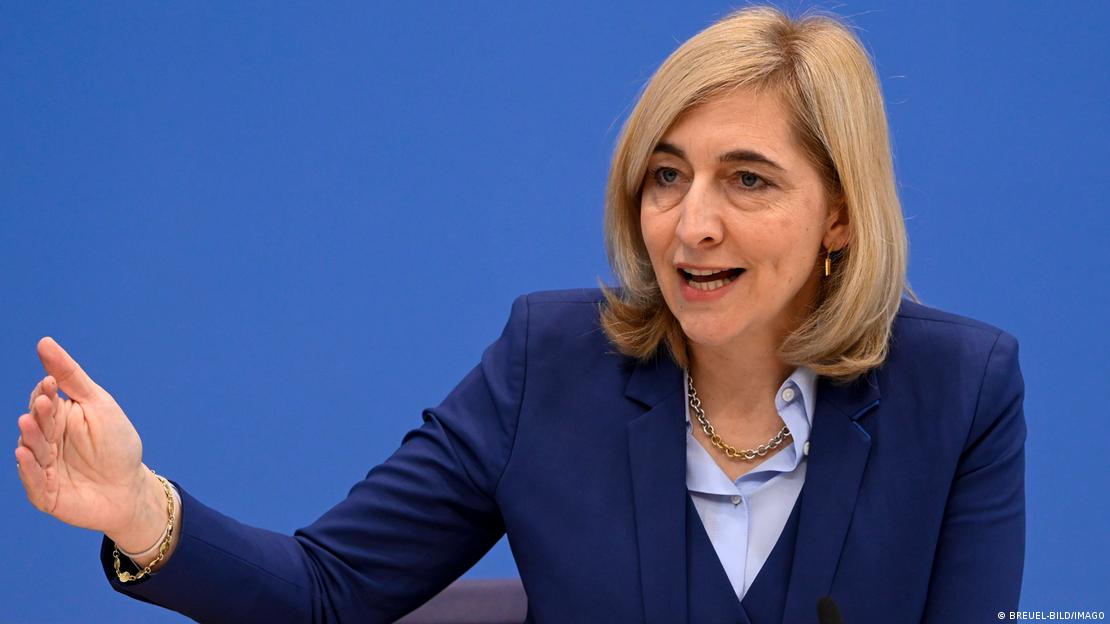
German Health Minister Nina Warken, of the ruling conservative Christian Democrats (CDU), has outlined key features of the government's planned reforms for ailing health care system.

Warken's draft legislation, on track to be passed this summer, aims to prevent further increases to the health insurance contributions. "We simply cannot spend more than we take in," Warken said at a press conference in Berlin on Tuesday.

Health Minister Nina Warken wants to prevent increases to public health insurance contributions
Image: BREUEL-BILD/IMAGO

Health insurance in Germany is mandatory, with 90% of the population paying into the income-dependent public insurance (Gesetzliche Krankenversicherung, or GKV). Contributions are roughly 14.5% of income shared evenly between employer and employee, plus a small additional premium depending on the provider.

Health insurance contributions by Germans who pay into the public health insurance system rose by an average of 3% this year, on top of a 2.5% rise in 2025. Meanwhile, public insurers' expenditures are increasing even more rapidly.

Without the cost-saving measures, Germany's public health insurance funds face a budget shortfall of over €15 billion ($17.7 billion) by 2027.


Germany has one of the world's most expensive health care systems. In March, a commission of experts presented a list of 66 cost-saving proposals to help curb spiraling costs. Warken has now announced which of these will be implemented. The measures include: Patients will have to pay between €7.50 and €15 (up to $18) for prescriptions, up from the current €5 to €10.Mandatory second opinions to approve expensive hip or knee surgery from doctors who do not benefit financially from the procedures.From 2028, spouses without their own source of income who are currently insured free of charge will have pay a flat rate of 3.5% of their spouse's income. This will be lower for low and middle-income earners and includes exemptions for those caring for children under the age of 7, parents of children with disabilities, caregivers and pensioners.Homeopathy will no longer be covered by health insurance.Increased mandatory discounts for public health insurance funds from the pharmaceutical industry.New limits on fees for health insurance executives, as well as their administrative and advertising costs.Extra-budgetary payments for family doctors for services such as walk-in consultation hours and referred patients will be eliminated.

The environmentalist Greens have criticized the plans, calling them "a real disappointment."

"Minister Warken is disproportionately shifting the burden of stabilization onto employees and employers — while she doesn't dare to confront influential lobbies on the expenditure side," Janosch Dahmen, the Green Party health policy spokesperson, told German news weekly Der Spiegel on Wednesday.

Oliver Blatt, the chairman of the National Association of Statutory Health Insurance Funds (GKV-Spitzenverband), said in a statement that he "expressly welcomed" the health minister's announcement that revenue will serve as a benchmark for health insurers' expenditures.


"The statutory health insurance funds currently spend over €1 billion per day on the care of the 75 million citizens insured under the statutory health insurance scheme. That is a lot of money, and it has to be enough. However, in the last year alone, hospital expenditures rose by almost 10%. for doctors by almost 8% and expenditures for medications by around 6%," the statement said.

The reform package does not include the commission's one recommendation with the greatest potential for savings, namely for the health insurance costs for welfare recipients to be paid out of state coffers. The commission estimated this could save the insurers €12.5 billion in 2027 alone.

Warken appears to have bowed to pressure from Finance Minister Lars Klingbeil, of the center-left Social Democrats, who threatened to veto such a move.

The proposals will now become a draft law, which is scheduled to be passed by the cabinet at the end of April. A vote is expected in the Bundestag and the Bundesrat — the legislative body representing Germany's 16 federal states — before the summer recess.

Edited by: Rina Goldenberg
ANALYSIS

Sudan's forgotten war: three years on, humanitarian catastrophe has no end in sight

Three years into a war that has displaced 11 million people and killed tens of thousands, Sudan’s conflict remains deadlocked, with civilians trapped in a cycle of violence and deprivation and no viable path to peace.

Issued on: 15/04/2026 
FRANCE24

In this file photo, smoke billows after drone strikes by the paramilitary Rapid Support Forces (RSF) targeted the northern port in the Red Sea city of Port Sudan on May 6, 2025. AP

On the third anniversary of fighting between the Sudanese Armed Forces (SAF) and the paramilitary Rapid Support Forces (RSF), international donors gathered in Berlin on Wednesday, pledging $1.3 billion in aid. The conference, however, underscored the diplomatic paralysis surrounding the conflict: neither warring party was invited, and Khartoum denounced the meeting as “surprising and unacceptable”.

It followed similar gatherings in Paris and London that failed to yield progress in a pattern that reflects deeper structural obstacles.

“The Sudanese authorities do not accept the idea of placing the RSF on an equal footing in negotiations,” says Christropher Tounsel, associate professor of history at the University of Washington. “For Khartoum, engaging in that format risks legitimising a paramilitary force it considers illegitimate.”

He added that Sudan’s army has remained consistent in its demands that RSF fighters withdraw from territories they control, a precondition that has effectively stalled ceasefire efforts.

For Lucie Revilla, a researcher at France’s CNRS, the stance also reflects a broader dynamic. “The SAF wants to impose itself as the central actor in any negotiation, one you cannot bypass, and they try to monopolise any future solution,” she says.
‘The greatest humanitarian crisis of our time’

On the ground, the scale of suffering contrasts starkly with the limited international attention.

More than 33 million people now require assistance, while nearly half the population faces acute food insecurity. Over 4.5 million have fled to neighbouring countries, including more than one million to Chad alone. The United Nations has appealed for $1.6 billion to support refugees across the region.

Beyond access constraints, humanitarian agencies face a chronic funding shortfall.

While the money raised will provide short-term relief, the scale of needs far exceeds current commitments.

“This is a multi-billion-dollar crisis over years,” Tounsel estimates. “We are talking about displaced populations, children out of school, entire regions devastated.”

German Chancellor Friedrich Merz described the situation as “the greatest humanitarian crisis of our time, which is not very often in the public eye”.

Violence has intensified in recent months. The United Nations says hundreds of civilians have been killed in drone strikes since January.

UN chief Antonio Guterres on Wednesday said the third anniversary marked a "tragic milestone" and called for an end to the "nightmare".

WATCH MOREUN warns of ongoing fatal drone strikes on civilians in Sudan's Kordofan

“Both sides are committed to military victory,” says Eric Reeves, a Sudan researcher at Smith College and founder of the NGO Team ZamZam, whch operates at the Chad-Sudan border. “And the level of equipment and sophistication has risen, this is increasingly a drone war, often conducted indiscriminately, especially by the RSF.”

In areas such as South Kordofan, now emerging as a central battleground, civilians face an impossible choice. “Where do you go?” Reeves said. “In many places, there is simply no safe direction left.”
Aid workers targeted

For humanitarian organisations, access is shrinking as needs surge.

“Many people have been displaced again and again,” underlines Laetitia Bader of Human Rights Watch for the Horn of Africa on FRANCE 24. “This is not just a humanitarian crisis, it is a crisis of atrocities, with a complete disregard for civilian lives.”

© France 24
01:48


Aid delivery is hampered not only by insecurity but also by deliberate obstruction. Both sides have used sieges and blockades to cut off supplies, particularly in Darfur.


“Food is being used as a weapon of war,” adds Reeves. “You restrict access, force a town to surrender and only then allow aid to flow.”

Humanitarian groups themselves have become targets. “They attack aid agencies because they want to loot supplies for their own troops,” Tounsel argues.

The consequences are stark. CARE reports that community kitchens across the country are “closing or reducing meal provision by 50 percent or more”, for instance “only providing one meal a day”.

Revilla says the targeting of civil society predates the current war. “Doctors have been assassinated. Associations dismantled. For years, NGOs have had to rely on Sudanese staff operating in extremely dangerous conditions,” she continues.
Underfunded

Diplomatic efforts led by the United States, Saudi Arabia, the United Arab Emirates and Egypt, the so-called "Quad", have repeatedly stalled.

Analysts point to conflicting agendas among external powers. The UAE, in particular, has been accused of backing the RSF.

“They are reluctant to see a democratically led state emerge in Sudan,” says professor Revilla. “Maintaining influence appears to be the priority.”

Reeves is more blunt: “Behind all of this is the UAE, which sees the RSF as a military instrument in Africa. Without serious pressure on Abu Dhabi, it is hard to see the trajectory changing.”

Berlin hosts Sudan conference amid brutal, forgotten war
DW April 14, 2026


The war in Sudan has been raging for the past three years, and a ceasefire is nowhere in sight. Participants at a conference of donors in Berlin hope at least to ease the suffering of the people caught in the middle.


Millions of people in Sudan are dependent on foreign aid
Image: Rian Cope/AFP


Over the past three years, the most severe humanitarian catastrophe in the world has been unfolding in Sudan — largely unnoticed by the global community.

Rival factions of the country's ruling military are engaged in bitter fighting, with around 150,000 people lost in the conflict so far. Approximately 12 million Sudanese have been forced to flee, nearly a quarter of the country's population. Meanwhile, more than 33 million people within the country — about two-thirds of the population — are dependent on aid.

The subject of the conference that got underway in Berlin this Wednesday is the plight of the people of this East African nation. Representatives from the European Union, the United Kingdom, the United States and the African Union — which comprises 55 countries on the continent — gathered at the Federal Foreign Office in Berlin. Their main goal was to secure additional funds to support the Sudanese population and to ensure that the conflict is not overshadowed by the many other global crises.


Mahmoud Ali Youssouf, a diplomat from Djibouti and chairperson of the African Union, held a brief meeting with German Chancellor Friedrich Merz on Tuesday to discuss Sudan.

"Over 20 million people there are currently facing starvation. That is nearly half the country's population," said Merz. "Germany is one of the largest providers of humanitarian aid. That is why we also support all efforts by the US, Saudi Arabia, the United Arab Emirates and Egypt to secure a ceasefire there."

Focus on financial pledges for Sudan

But Merz is also well aware that the chances of a ceasefire between the Sudanese Armed Forces (SAF) and the paramilitary Rapid Support Forces (RSF) are exceedingly slim. Notably, representatives of the two conflicting parties were not even present in Berlin. A year ago, a similar conference held in London ended without results, as did the one in Paris in 2024. That is why financial pledges for the starving population have become the main focus of the conference in Berlin.

While Ali Youssouf also highlighted the urgent need for a ceasefire in Sudan, he noted that it is currently even more important to draw greater global attention to the suffering of the people living there.

"When the whole world is focusing on Iran and Ukraine and other crises, I think it is very much appreciated that Germany puts this agenda on the table, so that we do not lose sight of the suffering of the people of Sudan," he said.

Donations from donor countries are declining

In 2024, global donor countries collectively donated $2.07 billion (€1.91 billion) to supply the people of Sudan with basic necessities. By 2025, that figure had dropped to just $1.77 billion, which experts have estimated covered only about 40% of actual needs.

One reason for the sharp decline has been the significant cuts to aid by US President Donald Trump, as well as a shift among wealthy Western nations toward focusing more on the conflicts in Iran and Ukraine.

At the Sudan conference in London last year, pledges totaling around €1 billion were secured. According to German Foreign Minister Johann Wadephul, a similar amount of aid can be expected in Berlin this week.

€20 million more in support from Germany

German Development Minister Reem Alabali Radovan plans to increase German aid for those in need by €20 million, focusing primarily on women.

In a press release issued before the conference, the minister wrote: "While many men are absent due to the war, women are taking care of their families and providing for them. Germany's development cooperation supports the Sudanese population, as well as refugees in host communities in neighboring countries, thereby laying the groundwork for a peaceful future in Sudan."

In total, all German funding for Sudan now amounts to €232 million.

But Sudan is far from a peaceful future. Experts fear the conflict could soon spread to neighboring countries such as Chad. Conditions within Sudan itself are unspeakable.

At the conference, British Foreign Secretary Yvette Cooper pointed out that rape has repeatedly been used as a weapon of war — almost on an industrial scale, she emphasized.

Cooper announced that the UK would provide funding for Sudan amounting to the equivalent of around €168 million for 2026.


Drones from abroad exacerbating conflict

Three and a half years ago, Volker Türk began to serve as the United Nations high commissioner for human rights. Speaking to DW at the Berlin conference, the Austrian lawyer said the situation in Sudan is being further fueled by large-scale arms shipments to the warring parties from many countries.

"Not a single weapon is being produced in Sudan. The most modern weapons systems are now coming into Sudan; we've just seen this with drones. Since the beginning of the year, my office has documented 700 civilian deaths resulting from drone attacks," he said.

So why is this brutal conflict still so often ignored? Thorsten Klose-Zuber, head of the German nongovernmental organization Help–Hilfe zur Selbsthilfe, told the Catholic News Agency on Wednesday that this is partly because so few refugees from the country have made it to Europe.

According to the UN refugee agency, only about 14,000 refugees from Sudan were counted in Europe in 2025. This is significantly fewer than, for example, from Syria. Public awareness is correspondingly low, despite all the appeals made at conferences such as the one in Berlin.

This article was originally written in German.

Jens Thurau Jens Thurau is a senior political correspondent covering Germany's environment and climate policies.@JensThurau

India walked away from its bid to host COP33 — here's why

Murali Krishnan in New Delhi
DW April 14, 2026

India has quietly abandoned its bid to host the UN's top-tier climate conference COP33, marking a shift from PM Narendra Modi's pledge in 2023. Experts and analysts explore what's behind the decision.

India has walked back on the pledge Modi made at COP28 in Dubai 

[FILE: December 2023]Image: Mahmoud Khaled/Reuters


When Prime Minister Narendra Modi took the stage at the Dubai climate summit in December 2023, he pledged that India would host the climate conference. It was a moment of ambition, a signal that India was ready to lead, particularly as a self-declared voice of the Global South.

The bid to be host from the UN's Asia-Pacific Group was supported by the BRICS group of Brazil, China, India and South Africa in July 2025.

But just 18 months later, India quietly withdrew in a four-paragraph letter dated April 2, according to Climate Home News, which first broke the story.

The annual Conference of the Parties or COP is the United Nations climate summit where 198 parties — 197 countries plus the European Union — gather to measure progress and negotiate responses to climate change. Hosting the conference confers status, agenda-setting power, diplomatic visibility and a platform to shape the global conversation.

A weakened climate consensus

Experts and policy analysts say that India's withdrawal reflects a shift in global priorities, with COP wielding less status than previously amid global instability and the pull of priorities at home. In recent years, the global climate consensus has weakened. The Paris Agreement, the 2015 global pact under which countries set voluntary national targets to limit global warming, has been under increasing strain, particularly with the Trump administration withdrawing the US from the agreement for the second time.

Ten years on: Has the Paris climate deal delivered?  02:44

"One of the key reasons for India's withdrawal appears to be the steadily declining relevance of COP in driving meaningful global climate action," said Chandra Bhushan, head of the Delhi-based International Forum for Environment, Sustainability and Technology.

"The complete erosion of trust among countries at the Belem summit in Brazil, where several nations reneged on previously agreed commitments, seems to have been the tipping point," added Bhushan.

There was low attendance and little high-level political engagement at the summit, including the US, which notably sent no high-level attendees.

Bhushan points out that India has demonstrated its willingness to engage in climate multilateralism: it recently updated its Nationally Determined Contribution (NDC) for the years 2031-35 — the name for countries' climate action plans under the Paris Agreement: India has pledged to cut the emissions intensity of its economy by 47% from 2005 levels by 2035, ensure that 60% of its installed power capacity comes from non-fossil fuel sources, and create an additional carbon sink of 3.5 to 4 billion tonnes of carbon dioxide through increased forest and tree cover.

But there is now a growing consensus within the country that domestic climate action will be central to achieving sustainable development. "This approach is likely to continue until more favourable conditions emerge for genuine and effective multilateral cooperation,” Bhushan explained.

In this environment, hosting a summit carries diminishing returns. While the symbolic value remains, the ability to extract meaningful outcomes or even global attention has become less certain.

India is still committing to renewables energies at home [FILE: October 2024]Image: Rajesh Kumar Singh/AP Photo/File/picture alliance


Carrying the financial burden

Abinash Mohanty, global sector head of climate change and sustainability of IPE Global, an international development organisation, views India's withdrawal as pragmatic.

"First, the global system is falling short. Developed countries promised $100 billion (€ 91.4 billion) per year by 2020 in climate finance, but have repeatedly under-delivered. Even newer pledges, like $300 billion (€273 billion) annually by 2035, cover only a fraction of what developing countries need. At the same time, the US has weakened trust by exiting the Paris Agreement twice,” Mohanty told DW.

For countries like India, which have consistently emphasised equity and climate finance, the imbalance becomes harder to ignore, according to Mohanty.

In Mohanty's estimate, India has delivered at home by crossing 50% non-fossil installed capacity, reaching 200GW of installed renewable energy capacity and cutting emissions intensity by over a third since 2005, largely using its own resources rather than external funding.

"Hosting COP33 would come at a cost. It would mean spending significant money and political capital to support a global process that, from India's perspective, has not delivered fairly for the Global South," argues Mohanty.

"Instead, India is shifting strategy, focusing on platforms it can shape more directly, like the International Solar Alliance and similar coalitions," he added.


Avoiding scrutiny

Hosting COP33 would have placed India at the centre of the next global stocktake cycle. This is the mechanism under the Paris framework that assesses collective progress on emissions reductions and climate goals.

For India, this would mean intensified scrutiny of its coal dependence, emissions trajectory, and timelines for transition. While India has made significant strides in implementing renewable energy, it is still the world's second-largest consumer and producer of coal.

Jayanta Basu, a Kolkata-based environment and climate correspondent, told DW, "As host, India would have faced pressure to show stronger climate action on future targets, timelines for cutting emissions, and its reliance on coal — especially with a global review of progress coming up under the Paris Agreement," he said.

Basu suggests that India's government is recalibrating its priorities ahead of the 2029 general elections. "With multiple demands on the system, the government may have chosen to focus on domestic priorities and other big events instead," Basu said.

Additionally, hosting the conference could amplify pressure from countries and climate advocates alike, potentially constraining policy flexibility at home, which could be bad timing ahead of the elections. "The heightened scrutiny will be not just of India's domestic energy choices but also of India's engagement with dissenting and activist voices, non-state actors, and civil society,” said Lavanya Rajamani, Professor of International Environmental Law at the University of Oxford.
Despite significant strides, India is still the world's 2nd largest producer and consumer of coal [FILE: November 2025]Image: Avijit Ghosh/REUTERS

A missed opportunity?


"I would characterize the global climate consensus as 'biding its time' rather than weakening," Rajamani told DW.

"India's withdrawal is more likely driven by domestic factors, but it comes at a time when international attention is sufficiently diverted that the decision will have fewer political and reputational consequences," said Rajamani. "It is, however, a missed opportunity for India to assume a leadership role in this space," she added.

For now, India appears to be choosing its performances on the world stage more carefully.

Edited by: Kate Martyr

Murali Krishnan Journalist based in New Delhi, focusing on Indian politics, society and business


Fire at one of Australia's two oil refineries to hit fuel output

16.04.2026, DPA


Photo: Jay Kogler/AAP/dpa


By Daniel Georgakos, dpa

A major fire at one of Australia's two operational oil refineries was extinguished on Thursday after burning overnight, the fire service said, but concerns remained over possible disruption to petrol supplies.

Firefighters responded late on Wednesday after reports of explosions and flames at Viva Energy's refinery in Geelong, some 70 kilometres west of Melbourne, Fire Rescue Victoria said in a statement.

The fire at the MOGAS, or motor gasoline, unit was brought under control around 13 hours later, the fire service said. No injuries were reported.

Viva Energy says the refinery in Geelong, one of two remaining refineries in Australia, supplies over 50% of the fuel used in the state of Victoria and 10% of Australia's total fuel needs. The refinery can process up to 120,000 barrels of oil per day.

It comes as Australia is already facing pressure on fuel supplies linked to the war in the Middle East.

Energy Minister Chris Bowen told public broadcaster ABC on Thursday morning that the main impact appeared to be on petrol production, while diesel and jet fuel were still being produced at reduced levels as a safety precaution.

"I'm sure petrol production will continue, but it may be impacted for some time obviously," the minister said, calling the fire "not great timing."

Incident Controller Anthony Pearce later told a press conference that the exact cause of the blaze was still being investigated, but confirmed there was a gas leak.

"There was a leak of gas from a mechanical component in the system," he said.

"The gas has then appeared to have ignited, but the details of the investigation will come to light in days to come."

Authorities said there had been no immediate danger to the public, though residents in the area were advised to keep their windows closed as a precaution. The full extent of the damage and any longer-term impact remain unclear.

Firefighters battle huge blaze at Australian oil refinery


DW with AFP, Reuters
15/04/2026


The fire is burning out of control at the Geelong oil refinery, one of only two in Australia.


The Viva Energy facility near Geelong, seen here in April 2026, is one of only two refineries in AustraliaImage: Joel Carrett/AAP/dpa/picture alliance


Firefighters are battling a major fire at one of Australia's two operating oil refineries.

The fire broke out just after 11 p.m. local time (1300 GMT/UTC) on Wednesday at the Viva Energy Group's refinery near Geelong in the Australian state of Victoria.

Fire Rescue Victoria said it responded after multiple reports of explosions and flames at the refinery in the industrial suburb of Corio.

"The fire is not yet under control although is currently contained to the plant," Fire Rescue Victoria said in a statement early Thursday local time.

It said the blaze involved "liquid fuels and gases."

It has told people in Geelong and the surrounding area to stay indoors, close ‌windows and doors and turn off heating and cooling systems.

Some 300,000 people live in the port city, ‌which is about an hour's drive from Melbourne.

All refinery staff were accounted for, Fire Rescue Victoria said, and there were no reported injuries.

Ronnie Hayden told Australia's national broadcaster ABC that about 100 staff members were working at the time. All of them escaped unhurt, he said.

The Country Fire Authority downgraded its threat alert on Thursday morning, saying that "the fire is still being fought by firefighters, but there is no threat to the public."

Geelong's Mayor Stretch Kontelj told ABC Radio Melbourne that the fire was "unprecedented" and would burn for some hours yet.

Australia has only two operational oil refineries

The Viva Energy refinery in Geelong one of two remaining refineries in Australia.

It supplies more than 50% of Victoria's and 10% of Australia's fuel, ⁠according to the refinery's website.

The refinery can process up to 120,000 barrels of oil per day, the  website says.

Australia has faced fuel security concerns since the Iran war all but closed the Strait of Hormuz.

It imports 90% of its refined fuel needs.

Energy Minister Chris Bowen told Australia's Nine News that the fire would mainly impact petrol production.

"At this point, production of jet fuel and diesel is continuing at the refinery at reduced levels for safety reasons as a precaution," he told the broadcaster on Thursday morning local time.

It appears to be an accident, he said, adding that there would be an investigation into the incident.

The Geelong refinery supplies a large proportion of jet fuel to Melbourne's Tullamarine airport.

Edited by: Sean Sinico


INDIA

At least 19 people died in Vedanta power plant blast

The death toll due to a boiler blast at Vedanta's power plant in central India has risen to 19, a police officer said on Wednesday, noting 17 others were injured.

"The death toll in the power plant blast has reached 19 whereas 17 are undergoing treatment in various hospitals," district police chief Praful Thakur told the AFP news agency.

The incident took place on Tuesday ​at ‌Singhitarai, in the central ⁠Indian state of Chhattisgarh.

Anil Agarwal, chairman of Vedanta Resources, said he was "distressed by the extremely tragic accident."

"A high-level investigation into this incident has been initiated... We will leave no stone unturned in getting to the bottom of this matter," he said in a statement.