Thursday, April 16, 2026


MAIB: Lost Trawler's Crew Couldn't Isolate Source of Flooding

RNLI
Freedom II capsizing (surveillance video frame courtesy RNLI)

Published Apr 13, 2026 10:05 PM by The Maritime Executive


The UK’s Marine Accident Investigation Branch (MAIB) is yet again putting the spotlight on safety standards in the fishing industry after publishing the investigation report on the flooding, capsizing and foundering of a fishing trawler in Scottish waters in 2024.

The prawn trawler Freedom II suffered engine room flooding at a position about  11 nautical miles southwest of Oban, Scotland, on February 21, 2024. The four crewmembers could not correctly identify the source of the flooding, and they had to be rescued by a Royal National Lifeboat Institution all-weather lifeboat.

According to investigators, a vibration-induced fracture of the seawater suction pipe for the deck wash pump was the most likely source for the flooding. The rate overwhelmed the available bilge pump, and the other pumps were disabled. Rising water caught by the main engine's flywheel sprayed the electrical panel for the auxiliary engine, preventing it from starting up and providing electrical power to the self-priming bilge pump and submersible pump. A portable salvage pump was deployed, but it failed to restart after it was shut down once for repositioning. 

The investigation found that the pumping capacity available was not enough to combat the volume of water; if all the pumps on board had been functional, it is possible that they could have bought enough time to allow for the transfer and use of another dewatering pump from the RNLI lifeboat, MAIB concluded. Other contributing factors included the lack of an effective response plan and the crew's mistaken conclusion about the likely source of the flood (they incorrectly believed it to be a stern tube seal leak) which may have distracted them from a more thorough search. 

On the fateful day, the vessel departed the port of Crinan at about 0400 to fish for prawns in Loch Linnhe. Due to weather, the skipper decided to head west through the Gulf of Corryvreckan to fish in the Firth of Lorn. By about 0700, the crew had deployed their fishing gear for the first trawl of the day and at about 1000, they started to recover the gear.  

At about the same time, the skipper noted a strong vibration coming from the propeller shaft. Though he tried to clear the fouled propeller by pulsing it ahead and astern about five times, the vibration did not improve, and he decided to head to Oban at low speed for repairs.

The vessel could not complete the four-hour transit because of significant flooding, despite efforts at containment by the crew. By 1302, the water level in the vessel’s engine room had reached halfway up the side of the engine, forcing the skipper to shut down propulsion. At 1535, Freedom II rolled to port and sank beneath the surface. While all the crewmembers were rescued, the vessel could not be located.

According to MAIB, the incident involving Freedom II was the latest in a long line of fishing vessels lost to engine flooding. Over the period between 2013 and 2022, the agency received 230 reports of fishing vessel flooding, including 78 that resulted in the loss of the vessel. The engine room was the most common location for fishing vessel flooding casualties.

“Without effective guidance on the management of floods, fishing vessels remain at significant risk of foundering should uncontrolled flooding occur,” stated MAIB in the report.


Cruise Ship That Grounded Near "Cast Away" Island Will Be Retired

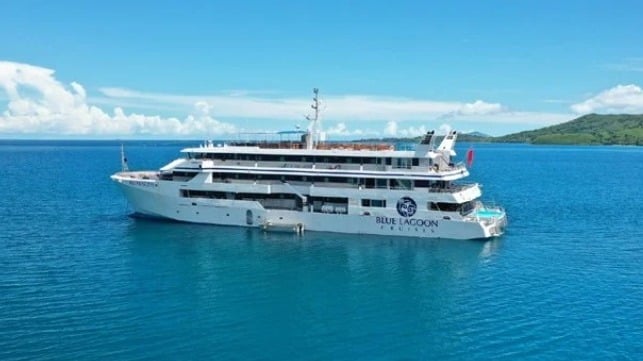
Blue Lagoon
File image courtesy Blue Lagoon

Published Apr 13, 2026 5:45 PM by The Maritime Executive


A Fiji cruise ship that gained unprecedented global attention after grounding on an island where the 2000 Tom Hanks film “Cast Away” was filmed has been retired comparatively early after 22 years in service.

Blue Lagoon Cruises, the owner of the Fiji Princess, has announced that it has made the difficult decision to retire the vessel following her grounding at a reef near uninhabited Monuriki Island on April 4.

The ship had 30 passengers and 31 crewmembers aboard when she grounded in severe weather. The passengers and 17 crew members were safely disembarked with some crew remaining to support response operations.

“With much sadness and following initial recovery efforts, Blue Lagoon Cruises has made the difficult decision to retire MV. Fiji Princess following an incident on the 4th of April 2026,” said the operator in a social media post.

The company said that guests impacted by the retirement of the vessel will be contacted and provided with an array of alternate options.

The immediate retirement of the ship comes as the Maritime Safety Authority of Fiji (MSAF) continues to monitor the grounding site to prevent fuel leakage and prevent any environmental catastrophe. The vessel is said to have been loaded with approximately 20,000 liters of diesel fuel at the point of grounding.

According to MSAF, while initial assessment indicates significant damages to the vessel’s port-side stern, no damage has been detected on the fuel tanks.

Blue Lagoon Cruises has since engaged the services of Australian salvors to spearhead the technical recovery operations of the 55-meter vessel.

The Fiji Princess attracted global attention following her grounding on the Island from the famous Tom Hanks “Cast Away” movie. Located some 45 kilometers west of the city of Nadi, Monuriki Island is part of the Mamanuca Island chain, where the US version of reality show Survivor has been filmed since 2016.

The islands are popular tourist destinations with cruise companies operating trips around the region, including marketing Monuriki with a “Cast Away” theme.


Following the abrupt retirement of Fiji Princess, Blue Lagoon Cruises is hoping that her memories will live through the many passengers that boarded her voyages for over two decades.

“The team at Blue Lagoon Cruises appreciates the many guests who cruised on board Fiji Princess, and we know many amazing memories were created on board. We would therefore love for you to share your images, memories, or comments as a final salute and as a fitting end to an amazing era of cruising,” said the operator.

Coast Guard Completes Difficult Rescue to Save Hunters Trapped on Ice

Coast Guard rescue

Published Apr 15, 2026 2:54 PM by The Maritime Executive


On Sunday, the U.S. Coast Guard rescued four seal hunters from a small boat that had become trapped on an ice floe near the remote town of Chefornak, Alaska. 

At about 1630 hours on Saturday afternoon, Coast Guard Arctic District received word from the Alaska State Troopers that four people on a seal-hunting excursion had been trapped on the ice off Chefornak for more than 24 hours. They had freed their boat overnight, but could not reach a rescue party that was attempting to venture out from shore. Luckily they had satellite-based communications equipment, and were able to coordinate with rescuers directly.  

To get assets to the scene, the Coast Guard deployed both an HC-130 search aircraft and an MH-60 helicopter aircrew out of Air Station Kodiak, about 370 nautical miles away to the southeast on the other side of the Aleutian range. The helicopter's range is not sufficient to make this trip in one run, so the crew landed twice to refuel en route, once in King Salmon and again in Bethel. After fighting through difficult weather en route, they arrived at about 0500 hours on Sunday morning, about 12 hours after receiving the call. 

Weather on scene was difficult, with winds near 25 knots, temperatures below freezing and a low cloud ceiling. The helicopter's rescue swimmer deployed and helped hoist all four survivors aboard. They were delivered back to Chefornak in good health. 


Chefornak is a town on the Kinia River, on the mainland Alaska side of the Bering Sea. Located within a wildlife refuge, it is predominantly populated by Yup'ik Eskimo, who have Alaska Native subsistence hunting rights. 

“Our entire crew agreed this was one of the most challenging missions any of us had ever flown,” said Lt. Cmdr. Alexis Chavarria-Aguilar, pilot-in-command for the helicopter. “We battled nearly every Alaska-centric aviation weather hazard imaginable, such as flying over 800 miles in near-zero visibility through mountainous terrain, blowing snow and icing conditions."


Cefor: Machinery Damage and Fires Drive Increase in Claim Cost

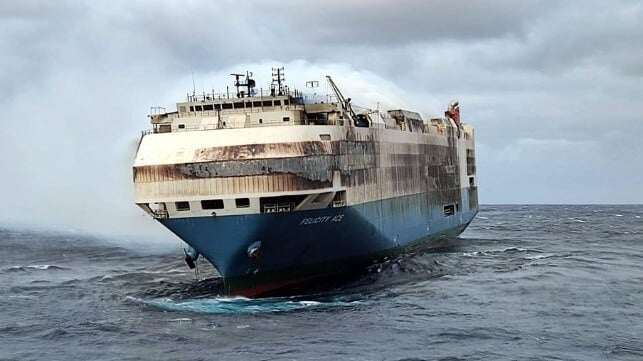
Felicity Ace
The 2022 fire aboard the PCTC Felicity Ace is an iconic example of a fire-driven total loss (File image courtesy Portuguese Navy)

Published Apr 15, 2026 8:27 PM by The Maritime Executive


Machinery damage and fires continue to dominate as the leading causes of elevated claim costs in the Nordic marine insurance market, according to the Nordic Association of Marine Insurers (Cefor). Cefor members underwrite Hull and Machinery for about 31% of the world fleet, including 3,538 vessels of more than 20,000 gross tons.

 2025 is the third consecutive year to record an increase in claims above $10 million, according to the year’s report by published this week. Notably, total losses on vessels with values above $10 million have also been on the increase. This is rather unusual as total losses historically have occurred on low-value vessels.  

These substantial losses have seen claim cost per vessel increase by 33 percent in 2024 and 2025 compared to 2021. In 2025, there were 13 claims of above $10 million, slightly lower than 18 reported in 2024. Fires dominate these high value losses, constituting 7 out of the 13 claims in 2025. In six of the past 10 years, fires accounted for 40- 70% of the costliest losses, increasingly affecting even younger vessels.

The frequency of machinery claims is also 30% higher in the period from 2022-2025 compared to prior years. Cefor said that the rise in machinery damage could be seen in the context of an ageing fleet. It is also coded as human error, which could be linked to crew shortages. 7 out of 18 claims above $10 million in 2024 were machinery claims, the same number as the total count over the previous six years.  

But even as fires and machinery damage drive up claims cost, inflation is another silent factor. Following the pandemic, inflation rates in major economies have been on the rise. As a result, steel prices, the cost of spare parts and labor costs have all surged, influencing repair costs.

“Bottom line is the claims environment is now costlier. We call for loss prevention, focus on manning, regulatory action on fire safety, and focus on reserving under inflationary pressure,” commented Cefor.


Court Approves Sweden's Icebreaker Contract Award to Korean Yard

As the U.S. contracts with Swedish yards to build icebreakers, Sweden is contracting out its own icebreaker order to South Korea

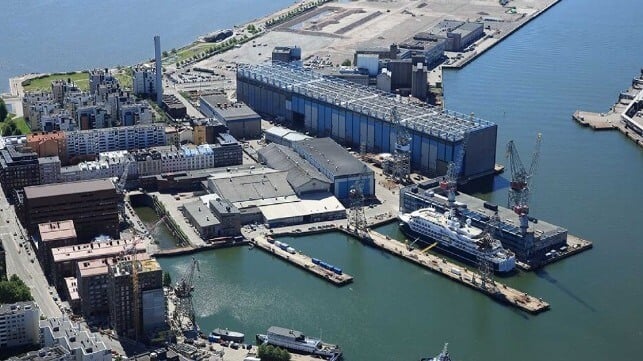
Helsinki Shipyard (above) sued to block the award to HHI (file image courtesy Helsinki Shipyard)

Published Apr 15, 2026 8:35 PM by The Maritime Executive


Sweden’s Court of Appeal has dismissed an appeal challenging the ongoing procurement of a new state-owned icebreaker. In June last year, the Swedish Maritime Administration (SMA) awarded South Korea’s Hyundai Heavy Industries (HHI) a contract to build the country’s next icebreaker. In the tendering process, Finland’s Helsinki Shipyard came in second but decided to appeal the award decision, citing irregularities.

The matter was initially filed in an administrative court, which upheld the award to HHI. Helsinki Shipyard appealed the decision at the Administrative Court of Appeal in Jönköping, asserting that the reference vessels submitted by HHI in its bid did not meet the requirements set by SMA. The appeals court affirmed the icebreaker procurement decision in a judgement rendered last week.

In a statement after its appeal was dismissed, Helsinki Shipyard said that although the company was deeply disappointed not to have been selected, it acknowledged the court’s ruling.

The tender document required bidding shipyards to submit three different reference vessels, which would prove technical capabilities in delivering an icebreaker. For the first reference, shipyards had to demonstrate they had constructed a vessel in Polar Class1 to 6 or equivalent, and delivered in year 2012 or later. For this requirement, HHI referenced the New Zealand Navy replenishment ship HMNZS Aotearoa, which it delivered in 2020. HHI stated the vessel has a polar class equivalent of PC 6. Helsinki Shipyard doubted this designation, claiming that it could not be verified in any ship registers as the vessel (now sunken) was in military service.

The next reference project was to show experience in construction and delivery of a vessel equipped with specific types of diesel-electric propulsion. HHI listed ROKS Donghae, a multi-purpose frigate of South Korea’s navy, which it delivered in 2021. The frigate utilized a combine diesel-electric or gas (CODLOG) propulsion system. Helsinki Shipyard argued this was a different propulsion system from the one specified by SMA. Further, the company argued that in icebreaking, there is constant change in propulsion force and direction, thus an AC/DC diesel-electric propulsion system is highly preferred.

With these arguments now set aside by the court, HHI will proceed with the construction of Sweden’s next icebreaker, valued at over $350 million. The EU will provide some funding, estimated to be around $35 million. Currently, Sweden has six state-owned icebreakers; Ale, Atle, Frej, Oden, Ymer and Idun. Most of these vessels were built in the 1970s and 80s and thus are nearing end of life. Icebreakers are critical to Swedish economy, specifically to support shipping in the Baltic Sea during winter.

ANALYSIS

Orban ousted: What Magyar’s victory means for Hungary and the EU

Peter Magyar's landslide victory over Viktor Orban in Sunday’s Hungarian legislative elections marks a seismic shift for Hungary and the EU, but Brussels may need to temper its enthusiasm. On the rule of law, migration and LGBTQ rights, the road ahead is neither straight nor guaranteed.


Issued on:  14/04/2026 
FRANCE24
By:Mehdi BOUZOUINA


Peter Magyar speaks to the media in Budapest, Hungary, Monday, April 13, 2026, after defeating Prime Minister Viktor Orban's party in the country's parliamentary elections. © Denes Erdos, AP

The images from Budapest said it all. Tens of thousands of Hungarians, many in tears, waving flags along the Danube as Peter Magyar declared: "We have freed Hungary." After 16 years, Viktor Orban, the man who turned his country into a template for European "illiberalism", had been swept from power.

With 53.56 percent of the vote and 138 seats out of 199 in parliament, Magyar's Tisza party secured a two-thirds supermajority, the same constitutional lever Orban once used to dismantle checks and balances. Magyar has promised to use it to rebuild them.

For the European Union, Sunday's result was greeted with undisguised relief. "Hungary has chosen Europe," said European Commission president Ursula von der Leyen on X. But the jubilation in Brussels will be getting ahead of the reality on the ground.

"One can be cautiously positive," Ian Bond, director of the Centre for European Reform in London, told FRANCE 24. "But not everything is going to change."

WATCH MORE'Love has triumphed': Hungarian papers react to Orban loss in historic elections

Magyar is a conservative, a former Fidesz insider who broke with Orban in 2024. His Tisza party draws a strikingly mixed crowd: 43 percent of his voters identify as liberal, 22 percent as left-wing, 10 percent as Green, and only 11 percent as right-wing conservative. Keeping that coalition together while delivering on sweeping institutional reform will be a balancing act of its own.

"His first priority is rule of law, and that will keep him very busy," says Denis Cenusa, an associate expert at the Geopolitical Security Studies Centre in Vilnius. "Because it will depend entirely on his ability to revive the Hungarian economy, including by regaining access to EU structural funds."
The corruption mountain

The economy was among the top priorities that drove Hungarians to the polls in record numbers, with a historic turnout of 79.5 percent, the highest since the country adopted democracy at the end of the Cold War.

Prices in Hungary have surged by 57 percent since 2020, the highest increase in the EU, and nearly double the bloc's average of 28 percent. The average monthly salary stands at €1,037, compared with a €2,654 average in the euro area.

Behind those numbers lies a deeper malaise. Hungary ranked last in the EU on Transparency International's 2025 Corruption Perceptions Index, scoring just 40 out of 100, its worst result ever. Its score has dropped 15 points since 2012, the most significant decline of any EU member state.

Magyar’s first announced move after his victory was clear and pointed: Hungary would join the European Public Prosecutor’s Office, the EU’s powerful anti-fraud and anti-corruption body.

It is a promise that resonates, but one that will collide head-on with the institutional architecture Orban spent 16 years constructing. The judiciary, the media, the electoral system and the public procurement networks have been reshaped in Fidesz's image.

READ MOREHow Orban benefits from Hungary's tailor-made election system
Polish warning

Europe has been here before. When Prime Minister Donald Tusk's coalition ousted Poland's PiS government in late 2023, Brussels also celebrated. The lesson, according to Tania Rancho, a researcher in EU fundamental rights law at Paris-Saclay University, is to manage expectations.

"Tusk didn't overturn everything. Not on immigration, not on women's rights," she says. "The Polish precedent shows that a pro-European replacement doesn't automatically mean a progressive one."

The parallel is instructive. Magyar, like Tusk, is pro-EU and anti-corruption. But on the politically charged questions that defined the Orban era, his positions remain largely unknown or deliberately vague.

On LGBTQ rights, for instance, Magyar said almost nothing during the campaign. The EU is currently awaiting a landmark ruling from the Court of Justice of the European Union (CJEU) on Hungary's 2021 anti-LGBTQ law, a piece of legislation that, in the words of the Court's Advocate General, "establishes systematic discrimination" against LGBTQ people. In May 2025, twenty EU member states had already denounced the law as a violation of fundamental freedoms. What Magyar will do if and when the CJEU strikes it down remains to be seen.

WATCH MORE‘Change is feasible’ in Hungary after Magyar victory: FT reporter Marton Dunai

On migration, arguably Orban's most resonant wedge issue, the picture is equally complex. Magyar has nationalist instincts on the topic, says researcher Denis Cenusa, "but he won't make a political brand out of it. That means he'll be more likely to find common ground with Brussels,” as it is moving in a harder direction.

Orban's Hungary was a grotesque extreme of that tendency, deporting asylum seekers at the border while quietly issuing work visas to Asian migrants in the name of economic need. But the underlying logic of "chosen" versus "imposed" migration is one that resonates well beyond Budapest.
Geopolitical ripple effects

For the rest of the EU, Sunday's result removes a persistent irritant from the bloc's decision-making machinery. Orban had used his veto power to block or delay EU aid to Ukraine, sanctions against Russia, and the accession process for Kyiv.

But Bond, the former senior diplomat, urges caution on Ukraine in particular. Magyar, he notes, "still has reservations", as he has opposed sending weapons to Kyiv and remains sceptical of Ukrainian EU membership. "I don't believe in an overnight conversion," Bond says flatly. Magyar reiterated that stance on Monday, saying: "We are talking about a country at war. It is completely out of the question for the European Union to admit a country at war."

WATCH MORE  'Undeterred': Hungarian journalist faces threats, espionage claims from Orban

Cenusa is equally measured on the wider geopolitical significance. "The Orban factor on EU integration was slightly exaggerated," he says. "He was creating problems, but he was not the only one. With or without him, EU integration will proceed."

What does change, he argues, is the symbolic register. The defeat is "a blow to European illiberalism" but it may also, paradoxically, be "an incentive for far-right forces to learn from Orban's mistakes."

Peter Magyar calls on Hungarian president to step down, announces plans for media shake-up in fiery interview

Peter Magyar calls on Hungarian president to step down, announces plans for media shake-up in fiery  interview
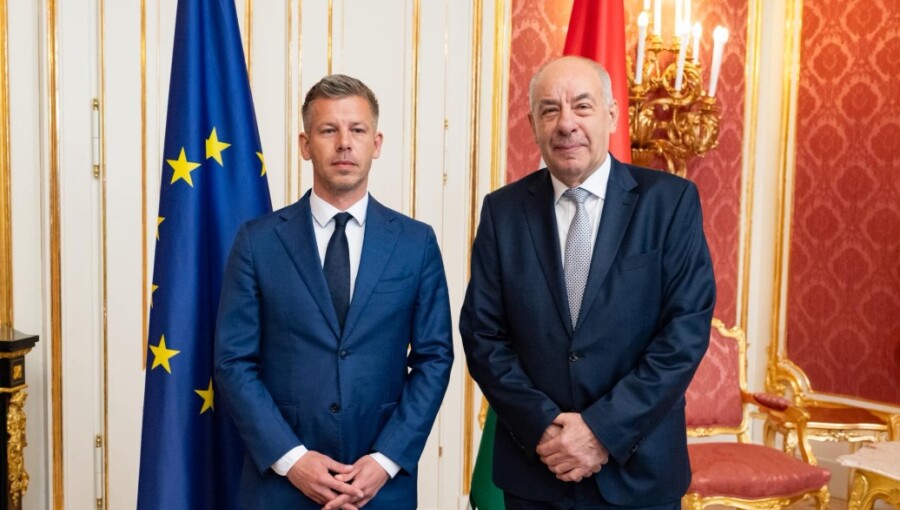
Tisza Party leader Peter Magyar with Hungarian President Tamas Sulyok at his office. / Facebook/Tamas SulyokFacebook
By IntelliNews April 16, 2026

Incoming Prime Minister Peter Magyar called on the president, Tamas Sulyok, to resign after the new government is formed, saying otherwise the new majority would seek his removal, Telex.hu reported on April 15.  According to Magyar's account, President Sulyok had told him that he, too, wished to preserve the rule of law and would "consider" his arguments for resignation.

The meeting unwound after Sulyok invited leaders of the Tisza Party, Fidesz and radical-right-wing Our Homeland to outline the parliamentary timeline for the coming weeks. Sulyok formally invited the leader of the Tisza Party to form a government.

Formal talks on forming the new government would take place at the end of the week and the inaugural session is expected in early May, but no later than 30 days after the final results are validated.

This is expected to come on April 18, when votes casts at consulates are counted. The ballots of those voting outside their constituencies will also be added to the results of the respective electoral districts, which according to analysts could still swing mandates in favour of Tisza due to the tight lead there.

After the meeting, Magyar said he had asked Hungary's head of state to preserve what is left of Hungary's rule of law and democracy by voluntarily resigning.

Hungarians voted not just for a change of government but a regime change, and Sulyok was "unworthy and unfit in the eyes of the Hungarian people to embody national unity, uphold the law or serve as a moral compass and role model", citing several high-profile cases where the president remained silent, which included the abuse of children at foster homes, the financial scandal surrounding the foundations of the central bank, and how the executive had weaponised intelligence services for partisan ends against the Tisza Party.

"I told him that if he did not resign voluntarily, we would use the mandate given to us by voters to remove him and every other puppet appointed by the Orban regime from office through constitutional amendments and necessary legal changes."

Sulyok took office in March 2024, after the resignation of Katalin Novák, who was forced to step down after Prime Minister Viktor Orban signed off on a pardon for the deputy head of the Bicske youth home, who covered up the paedophilic abuse carried out by the head of the institution. One of the largest public scandals in Hungary's modern history, and the public indignation that followed led to the emergence of Peter Magyar in public life, who just two months later founded his Tisza Party.

Magyar said the talks were polite and non-personal, with the president indicating he would consider the points raised. 

They also discussed possible constitutional changes to strengthen the presidency, that would possibly include direct elections, while Magyar backed stronger checks on prime ministerial power. 

Hungary's president has a rather ceremonial role, with limited executive powers mainly focused on representing the state, signing legislation, and overseeing certain constitutional functions. Since the regime change, there has been no instance of a president being removed from office.

The meeting in the President's Office, with a direct view of the prime minister's office, produced one surreal moment. Magyar posted a Facebook photo showing him waving to Orban from the balcony of Sandor Palace, before the outgoing prime minister was due for his meeting with Sulyok.

The outgoing prime minister entered the president's office from the back door, not from the front, to avoid meeting the press. Hungary's veteran leader did not post anything about the talks, which according to the short statement from the president's office focused on the first tasks for the next period.

Our Homeland Movement (Mi Hazank) has launched a legal challenge to the election outcome, alleging its campaign was hindered on Facebook, party leader Lászlo Toroczkai said after meeting. The radical right-wing party won 5.7% of the vote, securing six seats in the 199-member parliament.

Toroczkai urged the winning party to "restore constitutional order" by revising what he described as a flawed and partisan constitution, while adding that he opposes removing the president before the end of his term.

Magyar made headline news on April 15 with his first appearance in state media since September 2024 in the early hours, where he was questioned about his programmes and his comments  shaking up the media landscape. Magyar pledged to restore free and open press in public media in the campaing trail and this promise is a key to unlocking frozen EU funds

Magyar said that one of his first steps after forming a government would be suspending the "propaganda media's" news service, insisting it had "inflicted enormous damage on Hungarians"  The exchanges quickly became very tense and confrontational, with Magyar and the interviewers frequently interrupting each other, and the opposition leader was also seen losing his composure at times.

Addressing Fidesz voters, Magyar stressed that 1mn pensioners were living below the subsistence level, 400,000 children were in deep poverty and hundreds were freezing to death in their own homes, that Orban's childhood friend, seen as his proxy "Lorinc Meszaros became five times richer in a decade than the British royal family in 400 years", and that the state burns HUF160bn (€440mn) each year just on the budget of the state media conglomerate MTVA, which merged the operations of state radio, television and the Hungarian news agency MTI.

In a circular sent to MTVA news directors, some 100 employees of MTI on April 15 called for editorial independence, or restoring their right to edit and publish stories without external approval.

MTI journalists have openly confirmed what had already been reported: that content originating from state secretary level or above must be automatically forwarded for approval to the office of Antal Rogan, who oversees government communications as well as intelligence operations. Foreign policy topics such as gender issues, Ukraine, and corporate stories of government-linked companies such as 4iG, Opus, and MBH Bank also require higher-level approval.

The demand followed a day of heightened tensions after Peter Magyar gave interviews to public media outlets and was later applauded by some staff members inside the building.

MTVA news director Zsolt Nemeth, nicknamed "Pitbull", told an early afternoon staff meeting that editorial operations would remain unchanged until a change of government, and that employees unable to accept the situation should take leave or work in a reduced capacity.

Peter Magyar also reacted to the latest developments, calling on management not to take disciplinary action against employees who sign the circular.

He thanked staff for their reception and wished public media employees strength in the coming weeks until what he called the removal of "political commissars". The new government's first measures would include the immediate suspension of public media news services until conditions for impartial and objective reporting are restored, he added.

Major fiscal challenges ahead for Hungary's incoming Tisza government

Major fiscal challenges ahead for Hungary's incoming Tisza government
/ Facebook/Peter MagyarFacebook
By IntelliNews April 15, 2026

The new Hungarian government will face significant macroeconomic and public finance challenges following the election, driven by weak economic growth, a high budget deficit and a rising public debt burden, Fitch Ratings said in an assessment published in London, financial website Portfolio.hu wrote on April 14.

The decisive victory of the Tisza Party is expected to improve relations between Hungary and the European Union, while reducing the risk that institutional resistance could hinder the implementation of the new government’s policy agenda, it said.

Fitch analysts said they would now focus their sovereign credit assessment on the credibility and feasibility of the incoming government’s fiscal consolidation strategy, as well as its impact on debt dynamics and economic growth.

The agency said pre-election fiscal loosening, rising debt levels and an uncertain consolidation path had been key factors behind its decision in December to revise Hungary’s “BBB” sovereign rating outlook to negative.

Fitch said the Hungarian economy has essentially stagnated since 2023, with average annual GDP growth of just 0.1%, significantly below the 4.2% average recorded between 2015 and 2019.

According to the report, weak growth has been driven by an unfavourable external environment, rising uncertainty, a decline in public investment, and structural economic challenges, including stagnating labour productivity and weakening external price competitiveness.

At the same time, Fitch said it expects Hungary’s economic growth to accelerate to 2% in 2026 and 2.4% in 2027, which is below the government’s 3% target for 2026.

The recovery is expected to be supported by a rebound in private consumption following pre-election fiscal easing, stronger investment activity, and new export capacity from the automotive and battery manufacturing sectors, it added.

However, the agency warned that sustained high energy prices due to geopolitical tensions could pose risks to the outlook, noting that Hungary is a net energy importer and highly dependent on EU economic performance.

Fitch also said that the pro-EU stance of Tisza Party leader Peter Magyar and the party’s strong parliamentary mandate are likely to improve cooperation with Brussels, including the possible unblocking of EU funds and progress on addressing rule-of-law, judicial independence and corruption concerns.

This could pave the way for the release of currently frozen EU financing, although it remains unclear how quickly this would translate into stronger growth, it added.

The budget gap is slated to rise to 5.6% of GDP this year from 4.7% last year, mainly due to pre-election fiscal expansion and energy-related subsidies, and is projected to decline to 5% of GDP by 2027, it added.

Just days before the election, the National Economy Ministry released Q1 fiscal data showing that the cash-flow-based deficit exceeded 80% of the full-year target. In a short comment, the ministry added that the 5% deficit target could be met.

The agency said the new government would need to restore confidence in fiscal policy and strengthen the budgetary framework after developing a medium-term consolidation strategy, pointing to frequent changes in fiscal targets and repeated deviations from budget plans in recent years.

Fitch also noted that Hungary’s commitment to reducing public debt has not been reflected in recent performance, as the debt-to-GDP ratio increased from 73.3% in 2023 to 73.5% in 2024 and 74.6% last year.

The government is in a tight spot as reviews by the top three rating agencies are due within the next two months. Moody’s is due to review Hungary on May 22, followed by Standard & Poor’s on May 29 and Fitch Ratings on June 5.

The economic programme of the incoming government is based on restoring EU funding, tax reform, pension increases and a more competitive growth model, as the Orban government's fiscal policy had lost credibility, Andras Karman, Tisza Party’s expert on budgetary and tax policy, told leftist daily Nepszava. After a revision, the government will submit a new budget within 100 days. The election pledges would be financed through a combination of EU funds, fiscal reforms and economic growth, while also aiming to ensure a sustainable reduction in the budget deficit.

On the broader outlook, he said GDP has stagnated over the last three years, due to deep structural problems rather than cyclical ones.  Hungarian wages have fallen behind the EU average, with only Bulgaria and Greece ranking lower, and Romania is now ahead of Hungary. However, wage convergence cannot be sustained without productivity growth. The Orban government’s economic policy in the past 15 years has been characterised by an extensive growth model, driven by low-cost labour and foreign investment in assembly industries, which boosted output until 2020 without improving productivity. This model, he argued, had exhausted its potential and called for a shift towards fair competition, reduced corruption, and greater investment in education, healthcare, and human capital.

The budget expert also urged a more innovation-driven, productivity-focused economy with a stronger role for SMEs, which he said would be key to restoring growth and wage convergence.

On taxation, he said the system was unfair as lower-income households bear a relatively higher burden due to the highest VAT among OECD countries. He flagged that the headline 27% rate will remain in place, but consumers would pay 5% or no taxes on medicines, firewood and healthy food, saying that targeted reductions would be more effective.

Targeted income tax cuts would be launched via a tax credit for incomes below the median wage, affecting around half of taxpayers, while the minimum wage tax burden would fall from 15% to 9%.

The new Tisza government, in line with its election promises, will introduce a new annual wealth tax of 1% on assets above HUF1bn, covering both productive assets, such as company ownership and non-productive assets, such as luxury property.

The pension reforms would address long-standing disparities, including higher minimum pensions, retention of the 13th and 14th month pensions and the introduction of a voucher card for pensioners that can be used for food and medicine.

He said pension indexation could be adjusted in the longer term to better track wage growth, with details to be worked out after consultations.

The reduction of the retail sector taxes would be considered in the longer term, provided they led to lower prices for households. Multinational companies, bearing much of the impact of the windfall tax, have called for a reduction in the levy, which has led to massive losses, as well as unorthodox measures such as a profit margin cap.

In the interview, Karman did not touch on that, nor on plans on the fuel price cap. The measure was introduced without an end-date on March 9, and according to energy analysts the measure has played a part in the steep fall of the strategic reserves. This had fallen to a record low of 44 days from over 90 days, at the onset.

On the government’s broader fiscal policy plans, he said the focus was not on rapidly cutting the deficit but on establishing a credible, medium-term fiscal policy that would put public debt on a declining path. Predictable budget management and sustained economic growth are both needed to achieve lasting deficit reduction, he said, noting that the release of some €22bn of frozen EU funds is the most vital thing.

Additional resources could be generated by reducing corruption and eliminating overpriced public procurements, which he said could yield HUF1 trillion in savings each year and that setting target dates for the euro could cut risk premiums. 

Additional savings are expected from reducing unnecessary expenditures, including spending on propaganda, excessive funding for public media, and support for quasi-civil organisations.

He also highlighted the high cost of Hungary’s debt financing, noting that interest payments approach 5% of GDP, significantly above regional levels, leaving room for savings through more credible economic policy.

Strengthening policy credibility and setting a clear path towards euro adoption could lower risk premiums and borrowing costs, he said.

The government aims to meet the criteria for adopting the euro by 2030, which he said would support lower inflation, faster growth and improved investor confidence.  A revised budget and a medium-term economic programme outlining the path to euro adoption are expected to be prepared in the coming months, he added.

In his first international press briefing after the election, Magyar also spoke about the government’s plans to adopt the euro, comments that helped drive the forint to a four-year high. The EUR/HUF pair moved from 376 to 363 in the last two days.

In an interview with Portfolio.hu, former central bank governor Akos Peter Bod, said the new government will inherit a significant economic legacy, uncertain public finances, and a challenging external environment.

The election outcome quickly calmed markets, with the forint strengthening due to reduced political uncertainty and the clear two-thirds parliamentary mandate.  Restoring confidence could in itself support economic growth, as many companies had delayed investment decisions due to political uncertainty. The coming weeks will be crucial as early decisions are required on the budget, energy policy, pricing and EU relations during the government transition period.

In its latest forecast released on April 14, the IMF lowered its 2026 global GDP outlook from 3.3% in January to 3.1%, below its long-term average. For Hungary, it expects growth to pick up from 0.4% 2025 to 1.7%, and by 2% in 2027. Inflation is expected to slow, falling from 4.4% last year to 3.8% in 2026 and 3.5% in 2027. The IMF’s previous autumn forecast had projected 2.1% growth for Hungary.

Hungary vote driven by domestic anger but opens door to EU reset, analysts say
Hungary vote driven by domestic anger but opens door to EU reset, analysts say
/ Tisza via FacebookFacebook
By Clare Nuttall in Glasgow April 14, 2026

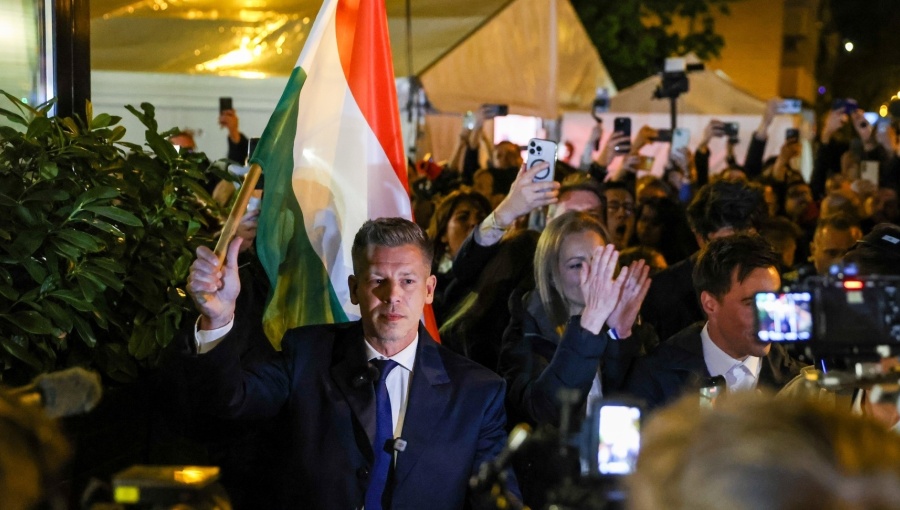
Tisza's April 12 landslide election victory in Hungary reflects deep domestic frustration rather than foreign policy concerns, but could pave the way for a reset in relations with the European Union, analysts told a European Council on Foreign Relations (ECFR) webinar on April 13.

The result was a dramatic shift in Hungarian politics, with opposition leader Péter Magyar securing more than 3mn votes, ending Prime Minister Viktor Orban’s long era in power.

“The election showed overwhelmingly that Hungarian society wanted change,” said Zsuzsanna Végh,  programme officer at the German Marshall Fund. 

“The result is incredibly impressive from a party that has just been around for less than two years. We have never seen such a high turnout in Hungary … it is a massive landslide victory that went well beyond the capital.” She highlighted the scale of mobilisation, noting that “nearly 6mn voted, we have never seen a party getting this much support.”

Végh said voters were driven primarily by domestic grievances. “There was frustration because of the erosion of democracy, but it was largely economic issues,” she said. Cost-of-living pressures and dissatisfaction with governance dominated voter concerns.

Domestic focus, European implications

That assessment was echoed by Paweł Zerka, senior policy fellow at the ECFR, who said voters were motivated mainly by internal issues rather than foreign policy.

“Few people voted because of foreign policy or European issues,” Zerka said. Among Magyar’s supporters, he noted that one third cited corruption and governance; others prioritised the cost of living and inflation, or decaying public services.”

However, he argued that these concerns overlap with Hungary’s relationship with Europe. Voters may have supported change in order for Hungary “to become — or re-become — a normal European country, with not too much corruption, that benefits from EU funds to support the growth of the national economy.”

The scale of the victory gives the incoming government a strong mandate to repair ties with Brussels, analysts said, although questions remain.

According to Végh, early priorities are likely to include reforms aimed at unlocking frozen EU funds. “Immediate reforms necessary for the release of Hungary’s frozen structural funds and recovery funds… will also necessitate a reset with the EU,” she said.

Piotr Buras, head of ECFR Warsaw and senior policy fellow  said the result signals a broader shift in Hungary’s European orientation, pointing to Magyar’s mandate for reorientation of Hungary’s foreign policy, though he cautioned against excessive optimism.

“I would warn against too high expectations,” Buras said, drawing parallels with Donald Tusk’s victory against the rightwing Law and Justice (PiS) party in Poland where, he said, after the initial euphoria after the election, “some of the expectations have been disappointed because of domestic constraints, the expectations of Polish society.”

Ukraine and Russia policy

One key test will be Hungary’s stance on Ukraine. Buras said a minimum expectation from the EU would be that Budapest aligns with core European positions. “Whether Budapest subscribes to the European consensus… I think this is the minimum,” he said.

But deeper support may prove more complicated. Zerka noted divisions among voters; while Magyar’s supporters are generally more sympathetic to Ukraine than Fidesz’, they are split on issues such as financial aid and EU membership. “The government won’t have national numbers to be too pro-Ukrainian,” she said.

On Russia, analysts suggested there is more room for change. Végh argued that previous policies were influenced by external factors rather than domestic demand. “Not the promotion of Hungarian interests, but the protection of Russian interests,” she said. A series of recent scandals exposing apparent links between Moscow and top-level Fidesz officials has sparked a backlash against Orban’s pro-Russian stance, which is likely to give the new leadership space to shift position.

Despite expectations of a reset, analysts stressed that change is likely to be gradual and selective.

Végh said reforms would initially focus on core democratic institutions. “Rule of law, anti corruption, judiciary reforms will be a priority, the institutional core of democracy,” she said, while noting uncertainty over broader issues such as pluralism and minority rights.

Buras also pointed to Hungary’s continued dependence on Russian energy. Plans to end reliance on Russian oil and gas by 2035 make Hungary an outlier in the EU. 

The Hungarian election could also reshape dynamics within the EU, particularly within the centre-right European People’s Party (EPP). Buras suggested Magyar’s victory might strengthen more conservative voices in European debates. For example Hungary’s new leadership, alongside figures such as Tusk, could play a greater role in shaping EU policies on issues like migration and climate.

However, initially, the immediate focus will be on domestic reforms and rebuilding trust with European partners.