Sunday, April 19, 2026

World Cup fans will have to pay $150 for NY stadium train ticket, officials say


A 58-km roundtrip train ride between New York and Meadowlands stadium will cost football fans $150 during the World Cup, local officials said Friday. The journey normally costs just $12.90.


Issued on: 17/04/2026 -
By: FRANCE 24
Just 40,000 tickets will be available for each of the games to be played at the New Jersey stadium, a return rail trip to which is typically just $12.90. © David Ramos, Getty Images North America via AFP

World Cup fans will have to pay $150 for the 58-km roundtrip train ride between New York and Meadowlands stadium when it hosts eight matches including the final, local officials said Friday.

Just 40,000 train tickets will be available for each of the games to be played at the New Jersey sports complex, a return rail trip to which is typically just $12.90, officials said at a briefing.

"We are going to charge $150 for our roundtrip ticket on our system. So from New York to MetLife, MetLife back to New York," said Kris Kolluri, the president and CEO of NJ Transit, using another name for the stadium.

After reports first emerged in The Athletic of the plans to charge World Cup fans far in excess of normal fares, New Jersey Governor Mikie Sherrill blamed FIFA for the price hikes.

She pointed to a $48 million bill the state faces to ensure the safety of fans going to the eight games at the MetLife stadium.

"I won't stick New Jersey commuters for that tab for years to come, that's not fair," Sherrill wrote on social media, adding that FIFA stood to make $11 billion at the World Cup.

"So here's the bottom line: Fifa should pay for the rides, but if they don't, I'm not going to let New Jersey commuters get taken for one."
'Quite surprised'

That sentiment was echoed by Senate Minority Leader Chuck Schumer, who wrote on social media on Tuesday that FIFA should foot the bill for transport costs to World Cup venues.

FIFA, which is already facing severe criticism over the sky-high cost of many match ticket prices, issued a strongly-worded statement criticising the transport price hike.

FIFA said that the original host city agreements "required free transportation for fans to all matches".

At the 2022 World Cup in Qatar, fans could use the Doha Metro for free with their matchday tickets.

A re-negotiation stipulated that transport would be offered "at cost" on match days, FIFA added.

"We are quite surprised by the NJ Governor's approach on fan transportation," FIFA said.

"The FIFA World Cup will bring millions of fans to North America along with the related economic impact."

It added: "FIFA is not aware of any other major event previously held at NYNJ Stadium, including other major sports, global concert tours, etc., where organisers were required to pay for fan transportation."

New York Governor Kathy Hochul was another to take aim at the reported price hike.

"Charging over $100 for a short train ride sounds awfully high to me," Hochul wrote on X.

Some $100 million in US federal funding has been allocated to host cities for transit network costs, including $8.7 million for Boston and Massachusetts, and $10.4 million for the New York-New Jersey area, according to local media reports.

(FRANCE 24 with AFP)
GLOBALIZATION 101

Hormuz domino effect: How the Middle East crisis affects food, flights and global supply chains


The closure of the Strait of Hormuz triggered by the war in the Middle East hasn't just affected oil prices. Despite a provisional reopening during the current 10-day ceasefire, global supplies of jet fuel, fertilisers, industrial CO2 and naphtha have already been affected, potentially leading to shortages of food and other essential products across the globe.


Issued on: 18/04/2026 - 
FRANCE24
By: Pauline ROUQUETTE


A billboard with a graphic design about the Strait of Hormuz on a building in Tehran, Iran, April 13, 2026. © Majid-Asgaripour, Reuters

Iran announced Friday it was reopening the Strait of Hormuz for all commercial vessels for the remainder of a 10-day ceasefire between Israel and Iran-backed Hezbollah, raising hopes of an end to the standoff that has rattled energy markets and sent global fuel prices soaring.

Tehran had effectively blocked the strategic waterway, one of the world's busiest oil shipping channels, since the US and Israel attacked the country on February 28. Washington hit back this week with its own blockade of Iranian ports, which US President Donald Trump said Friday would "remain in force".

Closure of the strait has sent oil prices soaring to over $100 a barrel and gas climbing by more than 12 percent, in turn unleashing a domino effect of consequences – from kerosene shortages to a looming world food crisis.

Here's a look at some of the ripple effects from the Hormuz crisis.


Jet fuel shortages

The risk of kerosene shortages is greatest in Asia, and to a lesser extent Europe, as they both rely on oil from the Gulf and its refineries for their supplies. About 75 percent of Europe’s supplies come from the Middle East.

Yet opinions diverge on the moment when jet fuel supplies will be so low that flights will have to be cancelled.

"The situation can, within the next three, four weeks, become systemic," Rystad Energy economist Claudio Galimberti told the US financial news channel CNBC on Tuesday.

"So you can have severe cuts of flights in Europe, already starting in May and June," he warned.

Galimberti said flights had already been cancelled due to fuel shortages, but the European Commission on the same day said there was no lack of fuel yet.

"There is no evidence for fuel shortages in the European Union at present," said spokeswoman Anna-Kaisa Itkonen.

The Airports Council International Europe warned last week that jet fuel shortages could begin in May if tankers don't resume sailing through the Strait of Hormuz before then.

The head of the International Energy Agency (IEA), Fatih Birol, also warned that Europe could face shortages of jet fuel "maybe beginning of May".

On Thursday, Lufthansa said it was shutting down its regional subsidiary CityLine earlier than expected, due to "significantly increased kerosene prices, which have more than doubled compared to the period before the Iran war”.

Pain at the pump: How Europe is tackling rising fuel prices
© France 24
01:53


Fertiliser deliveries disrupted


Knock-on effects from the turmoil in the Middle East could eventually push millions around the world into hunger, the World Bank's chief economist Indermit Gill warned in an interview with AFP on Wednesday.

"You have about 300 million people who suffer from acute food insecurity already," Gill said. "That'll go up by about 20 percent very, very quickly," as knock-on effects grow.

The blockade of the Strait of Hormuz is significantly disrupting the delivery of fertilisers, particularly exposing African countries which depend on them.

Nearly half of the world’s supply of fertiliser-grade urea and over 30 percent of ammonia and 20 percent of diammonium phosphate, essential ingredients for fertilisers, are delivered to the rest of the planet through the Strait of Hormuz, according to the Canadian press agency Agence Science-Presse.

Higher prices may cause farmers to reduce their use of fertilisers, which would diminish the world production of cereals and could entice countries to halt food exports to protect their own supplies, further increasing food prices.

"Those export bans scare us massively," said Gill. If the situation isn't resolved soon, "hunger will start to stalk these countries", he added.

A looming food crisis

While the war's economic fallout is currently most acute in Asia, "as the crisis gets longer, it's very rapidly going to spread first to Africa", Gill warned.

On the other side of the Atlantic, Brazil, an agricultural superpower, also buys 20 percent of its fertilisers from the Gulf. UN forecasts estimate that Latin American grain producers could see their incomes fall by more than 7 percent by 2026, reported the magazine Le Grand Continent. This phenomenon would have direct consequences on global food prices.

Beyond the commercialisation of fertilisers from the Gulf countries, “it’s the production itself of these fertilisers in other countries which is also affected by the crisis”, wrote the magazine. The rise in oil prices has already led to the partial closure or production reductions in fertiliser plants in India, Malaysia and Bangladesh.

The full impact on food prices will take time to appear.


"The food that's in the market right now has already been grown," Gill said, adding that the real effects could be felt in a few months.

Yet the countries of sub-Saharan Africa, which depend on their imports to feed their megapolises and where food prices condition social peace, cannot politically afford a rarification of their means of production, said the economist and geographer Sylvie Brunel, interviewed by Atlantico.

“All periods of scarcity (like the Covid-19 pandemic in 2020) have been periods of soaring hunger, with all the political unrest that follows,” she said.

UK prepares for CO2 shortage

Wealthy countries are also concerned about the potential for food insecurity.

The British government is preparing contingency plans amid concern that shortages of carbon dioxide (CO2) could affect the food-processing industry, according to details first reported by the Times on Thursday.

A by-product of the manufacture of fertilisers from natural gas, CO2 is essential for the slaughter of pigs and chickens. It is also widely used in the packaging of fresh meats and fresh produce, where it stops the spread of bacteria and increases shelf life.

A decrease in the supply of CO2 is not expected to create major shortages in the supermarkets but rather reduce the diversity of the products being sold, the Times reported.

The government's contingency plans include ensuring that supplies of CO2 are made available to the civilian nuclear industry and the health sector, where the gas is used to refrigerate blood supplies, organs and vaccines.

Energy crisis not over despite relief rally

business © France 24
05:12


Japan's 'naphtha crisis'


In Japan, concern about the economic fallout from the Middle East war has focused on disruption to the flow of naphtha – an oil product produced by distilling crude oil that is essential to making many medical goods.

The Japanese newspaper Tokyo Shimbun has already coined it a “naphtha crisis”.

Japan covers 80 percent of its domestic needs of the raw material by importing. About half of domestically produced naphtha is imported in crude oil form, while the other half is imported in a form of gasoline which was already refined in the Middle East.

There are concerns about inflation, or even shortages, for products such as sterile gloves and other disposable medical products.

Beyond the military tensions it creates, the chokehold of the Strait of Hormuz is a stress test for globalisation. The blockade is a reminder that food, energy and health security depend on strategic maritime corridors whose closure can rattle economies in a matter of weeks.

This article has been translated from the original in French.
'Allies, not vassals': How Meloni's break with Trump became a political moment for Italy


EXPLAINER


Italian Prime Minister Giorgia Meloni is managing the repercussions of a public rebuke from US President Donald Trump this week over the pope, Iran and a defence deal with Israel. It's a rupture that had been building since the outbreak of the US-Israel war with Iran and may ultimately serve her political interests ahead of the 2027 legislative elections.


Issued on: 17/04/2026 -
FRANCE24
By:  Mehdi BOUZOUINA


This combination of file pictures created on April 14, 2026 shows Italy's Prime Minister Giorgia Meloni and US President Donald Trump. © Andreas Solaro and Mandel Ngan, AFP
01:29


It was on a government plane somewhere between Verona and Rome that Itay's PM Giorgia Meloni learned that US President Donald Trump had called her "unacceptable". Her aides had flagged an interview the US president had given to Corriere della Sera published on April 14. She read it. Then, according to the Italian daily's account, the far-right PM settled on a line she had already used that afternoon: "Being allies does not mean there are no red lines, and it certainly does not mean being vassals or subjects."

Trump had been blunt. "I'm shocked at her. I thought she had courage, but I was wrong," he said in the Corriere interview. His grievances were twofold: Meloni's refusal to back the US-led war on Iran and her condemnation of his attacks on Pope Leo XIV as "unacceptable". “She is the one who is unacceptable,” Trump added, “because she doesn’t care if Iran has a nuclear weapon and would blow up Italy in two minutes if it had the chance”.

The dispute also comes against the backdrop of Rome’s decision to suspend the renewal of a defence cooperation agreement with Israel, further fuelling tensions.

The exchange sent shockwaves across Italian political life, though not quite in the direction Trump may have intended.


Back at the Palazzo Chigi (the official residence of Italian prime ministers) by late afternoon, Meloni's government moved quickly. Foreign Minister Antonio Tajani, also head of the centre-right Forza Italia party, and Defence Minister Guido Crosetto posted near-identical messages on social media emphasising national interest and Italy's dignity as an ally. "We are and remain staunch supporters of Western unity and steadfast allies of the United States, but this unity is built on mutual loyalty, respect, and honesty," Tajani wrote.

The front pages the following morning told the story of a rare political consensus. La Repubblica described the moment as one of Italian unity, framing Meloni's pushback as a "new Maginot line" against what it called the "unpredictable man occupying the White House". Il Giornale, on the right of the spectrum, celebrated an "Italy first" stance.
Suspending the Israel defence deal

Meloni also made another move that underlined the new direction. "In view of the current situation, the government has decided to suspend the automatic renewal of the defence agreement with Israel," she announced on the sidelines of the Verona event. An Italian diplomatic source confirmed the suspension to AFP, saying bluntly: "It would have been politically difficult to keep it going."

The agreement, approved by Israel in 2006 and renewed every five years, covers cooperation across defence industries, military training, research and development and information technology.

The move followed a sharp deterioration in bilateral ties. Tensions between the two countries had risen after the Italian government accused Israeli forces of firing warning shots at a convoy of Italian UN peacekeepers in Lebanon, damaging at least one vehicle. Italy summoned Israel's ambassador in protest on April 8. Israel then summoned Italy's ambassador after Tajani condemned what he called "unacceptable attacks" on Lebanese civilians during a visit to Beirut.

While the suspension marks a visible break, its practical impact may be limited. “The choice not to renew the defence cooperation agreement with Israel is politically significant,” said Daniele Amoroso, a professor of international law at the University of Cagliari, “but its importance should not be exaggerated. It is likely to be more symbolic than substantive.”
The bridge that couldn't hold

Until recently, Meloni had been Trump's closest European ally by some margin. She was the only European leader to attend his inauguration in January 2025, and had since positioned herself as a transatlantic bridge. Her political memoir "Io Sono Giorgia" (I Am Giorgia), reissued in English in 2025, carries a foreword from Trump.

For Mario Del Pero, professor of international history at Sciences Po Paris, the rupture was structurally inevitable. "It was becoming politically unsustainable for Meloni to be associated with Trump," he told FRANCE 24. "He is immensely unpopular in Europe and in Italy. Being too close to him is a kiss of death for a European politician." He points to Hungarian PM Viktor Orban's electoral defeat last Sunday as a cautionary tale – a leader whose proximity to Trump, and a last-minute phone call with US Vice President JD Vance, may have cost him additional votes.

The ambition to act as a connexion between Washington and Brussels, Del Pero argues, was always an illusion: "On some key issues, you have to go along with one side or the other. Italy signed the joint declaration on Greenland, signed the same on Iran. Being a bridge is hard." With Italian elections due in 2027, he argues the domestic political logic of distancing herself from Trump is clear.


Professor Amoroso offers a similar reading. “Meloni has distanced herself from Trump quite visibly, and his harsh comments were simply unprecedented,” he said, adding that the tensions reflect “a politically necessary recalibration” rather than a fundamental shift in foreign policy.

Italy’s core strategic priorities remain intact, he noted, pointing to its commitments within NATO, support for Ukraine and continued alignment with the European Union.

Still, the political calculus has changed. “Polls suggest that Trump is deeply unpopular in Italy,” Amoroso said. “Against this backdrop, [Meloni's] distancing [of] herself from Trump may be the least costly option.”
Ambiguity as a governing strategy

Italy was not spared the pain of Trump's tariffs, and the country last month refused US bombers authorisation to land at a pivotal air base in Sicily. Italy has historically maintained strong ties with Iran, Del Pero notes, and continued to engage with Tehran after the 1979 Islamic Revolution, albeit within the constraints of Western sanctions and shifting international tensions. The war in the Middle East, he says, is one "Europe didn't want, wasn't asked about, and wasn't informed of."

Vincenzo Susca, a lecturer in Italian politics at the UniversitĂ© Paul-ValĂ©ry in Montpellier who spoke with FRANCE 24's French-language channel in October 2025 on the occasion of Meloni's three years in power, argued that her government had achieved something historically unusual in Italy: a durable alliance between the far right, the traditional right, and Catholic Christian-democratic forces held together by carefully managed ambiguity. With legislative elections due in 2027, that coalition will be key to Meloni’s political survival. Preserving its internal balance will be essential if she hopes to remain in power.

On immigration, he observed, the government maintained an "aggressive rhetoric", including the since-failed migrant camp scheme in Albania, while the underlying practice changed little. Internationally, the same logic applied. "It's a marketing-oriented face," Susca said, "designed to make the government seem moderate, particularly internationally, when it isn't quite." The need for ambiguity, he argued, is structural: Meloni has been governing in a space suspended between European expectations and Trumpian impulses.
Pope Leo XIV condemns 'logic of extractivism' in Angola visit

Pope Leo XIV denounced the “social and environmental disasters” linked to a “logic of extractivism” on Saturday, the first day of his visit to Angola, a country marked by decades of exploitation of its vast resources.


Issued on: 18/04/2026 - 
By: FRANCE 24 

Pope Leo XIV speaks as he attends a meeting with the authorities, civil society and the diplomatic corps in Luanda, Angola on April 18, 2026. © Guglielmo Mangiapane, Reuters


Pope Leo XIV challenged Angola’s leaders to break the "cycle of interests” that have plundered and exploited Africa for centuries, as he arrived in the southern African country on Saturday with a message of encouragement for its long-suffering people.

Leo's arrival in Angola, the oil-and-mineral rich former Portuguese colony, marked the third leg of his four-nation African voyage. En route from Cameroon, he spoke again of the ongoing back-and-forth with US President Donald Trump over the Iran war.

Leo, history’s first US-born pope, said that it was “not in my interest at all” to debate Trump, but that he would continue preaching the Gospel message of peace, justice and brotherhood in Africa.

Pope vs Trump: Has the week of tension weakened the US president?
© France 24
15:44


In Angola, Leo met with President Joao Lourenco and delivered his first speech to Angolan government authorities, in which he referred repeatedly to Angola’s tortured history of colonial plunder and civil war.

“I desire to meet you in the spirit born of peace and to affirm that your people possess treasures that cannot be bought or stolen,” he said. "There dwells within you a joy that not even the most adverse circumstances have been able to extinguish.”

Angola, which has a population of around 38 million, gained independence from Portugal in 1975. But it still bears the scars of a devastating civil war that began straight after independence and raged on and off for 27 years before finally ending in 2002. More than a half-million people are believed to have been killed.

For years, the civil war was a Cold War proxy conflict, with the US and apartheid South Africa backing one side and the Soviet Union and Cuba backing the other.

Angola is now the fourth-largest oil producer in Africa and among the world’s top 20 producers, according to the International Energy Agency. The country is also the world’s third diamond producer and has significant deposits of gold and highly sought after critical minerals.

But despite its varied natural resources, the World Bank estimated in 2023 that more than 30 percent of the population lived on less than $2.15 a day.

“You know well that all too often people have looked – and continue to look – to your lands in order to give, or, more commonly, in order to take,” Leo told the Angolan authorities.

The pontiff said: “It is necessary to break this cycle of interests, which reduces reality, and even life itself, to mere commodities.”

While in Cameroon, Leo had railed against the “chains of corruption” that were hindering development, as well as the “handful of tyrants” who were ravaging Earth with war and exploitation. He raised similar points in Angola.

“How much suffering, how many deaths, how many social and environmental disasters are brought about by this logic of extractivism! At every level, we see how it sustains a model of development that discriminates and excludes, while still presuming to impose itself as the only viable option.”

Leo and 'the tyrants': Does new pope's defiant message resonate?
debate1604 © France 24
43:10


Jose Eduardo dos Santos, the late former president who led Angola for 38 years from 1979 to 2017, was accused of diverting billions of dollars of public money to his family, largely from the country’s oil revenue, as millions struggled in poverty.

After Lourenco took over as president, his administration estimated that at least $24 billion was stolen or misappropriated by dos Santos. Lourenco’s administration has vowed to crack down on corruption and has worked to recover funds allegedly stolen during the dos Santos era.

But critics note that Angola still has deep problems with corruption and have questioned if Lourenco’s actions were more aimed at political rivals so as to consolidate his power.

Angola, on the southwest coast of Africa, was considered to be the epicenter of the trans-Atlantic slave trade as a Portuguese colony. More than 5 million of the roughly 12.5 million enslaved Africans were sent across the ocean on ships departing from Angola, more than any other country, though not all of them were Angolans.

The highlight of Leo’s visit to Angola is expected to be his visit on Sunday to Muxima, south of Luanda. It’s a popular Catholic shrine in a country where around 58 percent of the population is Catholic.

The Church of Our Lady of Muxima was built by Portuguese colonizers at the end of the 16th century as part of a fortress complex and became a hub in the slave trade. It remains a reminder of the inextricable link hundreds of years ago between Roman Catholicism and the exploitation of the African continent.

Leo has Black and white ancestors who included both enslaved people and slave owners, according to genealogical research. He's going to Muxima to pray the rosary, in recognition of the site becoming a popular pilgrimage destination after believers reported an appearance by the Virgin Mary around 1833.

(FRANCE 24 with AP)

Pope Leo warns AI boom could fuel polarisation, violence in Cameroon address

The proliferation of artificial intelligence could spread “polarisation, conflict, fear and violence”, Pope Leo XIV told students at the Catholic University of Central Africa in Cameroon’s capital YaoundĂ© on Friday. The pope has slammed tyrants, corruption and neocolonial world powers over the course of his 11-day tour of Africa.


Issued on: 17/04/2026 - 
By: FRANCE 24

Pope Leo XIV arrives in procession to celebrate Mass at the Japoma Stadium, in Douala, Cameroon, Friday, April 17, 2026 on the fifth day of his 11-day pastoral visit to Africa. © Andrew Medichini, AP

Pope Leo XIV on Friday warned against the use of AI to fan "polarisation, conflict, fear and violence" and criticised the "environmental devastation" caused by the extraction of rare earths to fuel the digital boom.

"The challenge posed by these systems is greater than it appears: it is not just about the use of new technologies, but about the gradual replacement of reality by its simulation," he said in a speech at the Catholic University of Central Africa in YaoundĂ©, Cameroon.

"In this way, polarisation, conflict, fear and violence spread. What is at stake is not merely the risk of error, but a transformation in our very relationship with truth."

The pope had earlier held a giant open-air Mass at a stadium in Cameroon's economic capital Douala, the biggest event of a visit marked by his calls for peace and spat with US President Donald Trump.

More than 120,000 people attended the celebration, the Vatican said based on local authority figures, with some travelling far or arriving the previous night for a chance to see the leader of the world's 1.4 billion Catholics.

Amid a heavy security presence, Cameroonians began filing into the stadium on Thursday, staying there overnight ​so they could witness Leo’s homily in person.

Leo, the first ‌US pope, on Thursday criticised leaders who spend billions on wars and, in unusually forceful remarks, said the world was “being ravaged by a handful of tyrants”.

After arriving in Douala by plane from YaoundĂ©, Leo ​said on Friday that many in Cameroon experience "material and spiritual poverty" but called on believers to reject violence as a ‌means to get ahead, regardless of the hardships they face.

"Do not give in to distrust and discouragement," the pope urged, in an appeal made in English during a speech that was otherwise mostly in French.

"Reject every form of abuse or violence, which deceives by promising easy gains but hardens the heart and makes ‌it insensitive."

The pontiff invoked the miracle of the loaves and fishes recounted in the Gospels, in which Jesus fed thousands with meagre resources.

"There is bread for everyone if it is given to everyone," he said. "There is bread for ​everyone if it is taken, not with a hand that snatches away, but with a hand that gives."

Leo's call for caution towards AI came after Trump on Sunday posted an AI-generated image portraying himself as a Christ-like figure with a glowing halo. The image was taken down on Monday.

The pontiff conceded that "Christians, and especially young African Catholics, must not be afraid of new things".

But the continent "also knows the darker side of the environmental and social devastation caused by the relentless pursuit of raw materials and rare earths", he added.

The AI boom is largely reliant on the extraction of cobalt needed to run energy-hungry data servers, with Africa often bearing the environmental, social and human cost of mining.
'Hope will come to rise again'

Notably, competition for the Democratic Republic of Congo's rich veins of cobalt, copper, lithium and coltan has fuelled a spiral of violence in the mineral-rich east that has lasted three decades.

On a 11-day tour across Africa, the pontiff has also decried violations ​of international law by “neocolonial” world powers and said “the whims of the rich and ​powerful” threaten peace.

Cameroon, an oil- and cocoa-producing country, faces ​grave security challenges, including a simmering Anglophone conflict in which thousands of people have been killed since 2017.

Crowds greeting the ​pope on his visit have been enthusiastic, lining the streets along his routes and wearing colourful fabrics featuring images of his face.

Bishop Leopold Bayemi Matjei called Leo’s visit “a moment of great joy” and said he hoped it meant God would bless Cameroon.

“Our ⁠country needs a lot of blessing, a powerful blessing, so that hope will come to rise again,” ⁠said the bishop, ​who leads the Church in Obala, about an hour north of Yaounde.

(FRANCE 24 with Reuters and AFP)


Iraq fish die-off leaves farmers mourning lost livelihoods

Az ZubaydÄ«yah (Iraq) (AFP) – On the banks of Iraq's Tigris River, Haidar Kazem mourned 300 tonnes of the fish he had carefully raised in ponds wiped out by a flood of polluted water.


Issued on: 19/04/2026 - FRANCE24

A massive fish die-off in Iraq has left farmers worried © AHMAD AL-RUBAYE / AFP

Water supplies in Iraq, the eastern half of what is known as the region's fertile crescent and which the United Nations ranks among the countries most affected by climate change, are in a dire state.

"In just two hours, my entire project was gone -- fish I had spent a year-and-a-half raising. I am back to zero," the 43-year-old fish farmer told AFP.

Earlier this month, after yet another very dry season, a brief spate of rain led authorities to open the gates of the Hamrin Dam, sending water into the Diyala, a tributary that is choked with untreated sewage.

The flood then swept the contaminated water into the larger Tigris, and the pollution was so severe that it was visible in satellite images.

A man holds dead fish from a tank at his farm in southern Iraq © AHMAD AL-RUBAYE / AFP


Images from Copernicus Sentinel analysed by AFP show that, following the late-March rainfall, a noticeably dark stream flows from Diyala to the Tigris throughout the period from March 28 to April 12.

"No one told us that polluted water was headed our way," Kazem said, adding that the contaminated stream reached his ponds on April 5, killed all his fish and caused losses exceeding a million dollars.

Kazem buried his stock -- carp for Iraq's beloved grilled dish masguf -- and now spends his days cleaning their floating cages on the banks of the Tigris, haunted by the question: how will he save his livelihood?

"I don't know any other trade, and I don't have the money to restart," he said.
1,000 tonnes

Arkan al-Shimari, the head of the agriculture department in Kazem's province Wasit, said that the sewage stream has killed more than 1,000 tonnes of fish.

According to authorities, several water treatment plants discharge untreated sewage into the Diyala River, which years of drought in Iraq have left low and notorious for its foul odour.

Environmental open-source investigator Wim Zwijnenburg said that the Diyala consistently appears darker than the Tigris due to wastewater discharge, its low depth and weaker currents.
Fish farmers clean tanks of dead fish in southern Iraq © AHMAD AL-RUBAYE / AFP

Normally, it would gradually mix into the Tigris, but this time heavy rain created a stronger current in Diyala, sending a less-diluted polluted water into the Tigris, and "thus affecting downstream fisheries and potentially also water treatment plants".

As the situation worsened, authorities restricted water supply -- normally treated water from the Tigris -- in several areas of Wasit, reporting 20 documented cases of poisoning and rash.

Declining rain over recent years, coupled with rising temperatures, has brought water levels in the Tigris and Euphrates rivers to staggering lows, for which Baghdad also accuses upstream dams built by neighbouring Turkey and Iran.
Black water

Following the recent fish die-off, authorities vowed they would take the necessary measures to treat wastewater before discharge.

But decades of conflicts have left the country's infrastructure in a pitiful state and its water management systems in disrepair.

Iraq's new agency INA quoted a Baghdad official as saying that authorities will soon open seven more water treatment plants in the city.

In the town of al-Numaniyah, fish farmer Mazen Mansour, 51, gazed over the still water in his empty floating cages, which until recently held 38,000 fish he had been counting on selling next month.

Following the fish die-off, authorities have vowed they will take the necessary measures to treat wastewater before discharge © AHMAD AL-RUBAYE / AFP

Mansour said he did not realise polluted water had flooded the area until he saw his fish dying in the evening. He tried to save them by pumping air into his basins to provide oxygen, but it was too late.

"The water was black and filled with sewage," he said.

"All our work was gone in one night," added the father of four.

Now, he said, there is nothing he can do but wait and hope for compensation from the government.

"We urge the state to compensate us and hold those responsible accountable."
French children spend 10 times longer on screens than reading, study finds

Reading for pleasure is slipping among young people in France, as screen use continues to dominate their free time, according to a new study by the country’s National Book Centre (CNL).


Issued on: 17/04/2026 - RFI

In their free time, young people in France spend 10 times longer on screens than reading books. © Hollie Adams / Reuters


Young people in France now spend far more time on screens than on books, with the gap widening sharply in recent years, the CNL's survey of 7 to 19-year-olds shows.

The study found young people spend on average 18 minutes a day reading for pleasure – one minute less than in 2024 and eight minutes less than in 2016.

Meanwhile, they spend three hours and one minute per day on screens, rising to as much as five hours for 16 to 19-year-olds – 99 percent of whom spend time on social media every day.

The study found that leisure reading declines with age, particularly among boys.


'Instant gratification'


"The role of screens in families and schools, and the toxic addiction created by algorithms and social media, are factors," Régine Hatchondo, president of the CNL, told France Inter.

According to her: "Reading does not provide immediate pleasure, unlike social media, which offers instant gratification."

Hatchondo added that she is "fully in favour of banning social media" for under-15s, a proposal backed by the French Senate on 1 April, following a vote in the National Assembly in January.

In 2026, reading among young people remains broadly stable compared to 2024, with 84 percent of those surveyed reading for school, study or work and 81 percent for leisure.

However, the drop-off among 16 to 19-year-olds is significant, with the study finding more than a third of this age group do not read at all.

The quality of reading time is also declining, particularly because it has become fragmented, with 67 percent of young people in the 16-19 age group saying they do something else whilst reading.


Comic books


Despite a slight decline, comic books remain the first choice of reading material for young people.

The CNL's data also shows that recommendations from friends and family, the cover, the hero and the blurb are still the main factors that prompt them to choose to read a certain book or comic book.

As for reasons for reading, relaxation was the top reason given, ahead of enjoyment. When young people would rather do something other than read, they turn first to screens, and then to sports or social activities.

(with newswires)

Saturday, April 18, 2026

Civilians count costs of war as they return to southern Lebanon

People displaced by weeks of airstrikes have begun returning to Beirut and southern Lebanon as a 10-day ceasefire between Israel and Hezbollah took hold on Friday. Residents described scenes of destruction and fears of further conflict as they arrived home.


Issued on: 18/04/2026 - RFI

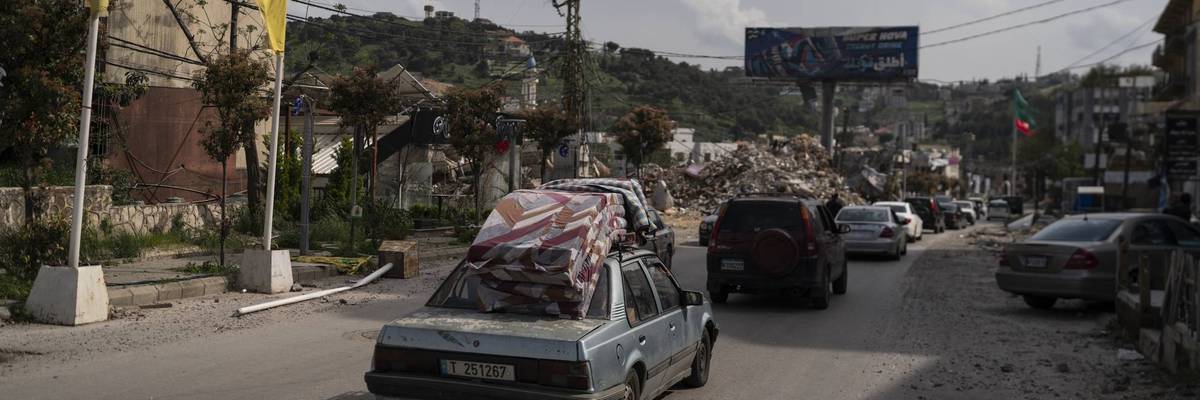
People drive past the rubble of destroyed buildings in Dahiyeh, a southern suburb of Beirut, Lebanon, on 17 April 2026, following a ceasefire between Israel and Hezbollah. © AP - Bilal Hussein

“Thank God, we’re happy, of course! It’s a victory, even though we know our three-story house has collapsed. It’s still something to be proud of,” one man told RFI as he made his way to the village of Kharayeb in southern Lebanon, which has been heavily bombarded by Israeli missiles.

“We’re returning with our heads held high,” his wife added. “And we’re not afraid of anyone, even if Israel bombs us, because we have our heroes on the front lines everywhere, and we’re proud of them.”

More than 2,000 people have been killed in Israeli airstrikes in Lebanon since early March, according to UN figures. Over 1.2 million people have been displaced, the equivalent of one in five of the population.

Israeli ground forces have invaded the country's south, a Hezbollah stronghold. Prime Minister Benjamin Netanyahu has said the troops will not withdraw during the truce, and has warned civilians not to return.


People sit at a site of an Israeli strike in Tyre carried out just before the 10-day ceasefire between Lebanon and Israel went into effect, on 18 April 2026. © Louisa Gouliamaki / Reuters


Many ignored the warning and came home on Friday, even if just to assess the damage.

“It’s sad to see my house in this state. The doors and windows have blown out,” said Nour, a woman returning to the town of Nabatieh. “But it’s good to be back. I wish it weren’t just temporary.”

In the town centre, Hassan was busy repairing his bakery. “We’ve seen much worse. Now we’re going to clean up. I have to fix the door myself. And tomorrow, we’ll open, God willing.”


'People need to go home'


In the southern suburbs of Beirut, another area that Hezbollah's strong influence has made a target for Israeli strikes, returning residents found similar scenes.

“I lost my home and all my furniture. But what matters most is our dignity,” local man Hassan Dib told RFI. “When Hezbollah says we can go back, we’ll go back. That’s why so few people have returned yet.”

Hezbollah has instructed residents not to return to affected areas until a formal and final ceasefire is declared.

Ali Mrad had just arrived from the city of Tripoli in northern Lebanon, where he had been staying with relatives. “I came to check on my house, to see if it’s still standing or not. The situation is good now... I can’t describe how I feel. It’s like emerging from a very serious crisis.”

Others remained wary. “We’re in the process of returning home, but I expect the Israelis to break the truce and bomb us,” said Zahra ChehadĂ©, displaced from her house in southern Beirut.

“I don’t feel safe. But people need to go home. Buildings can be rebuilt. The most important thing is that Israel doesn’t occupy Lebanon.”

This article has been adapted from original reporting in French by RFI's correspondents in southern Lebanon, Aabla Jounaidi and Jad el-Khoury, and Beirut correspondent Sophie Guignon.

France's Macron says fragile Lebanon ceasefire 'may already be undermined'

A 10-day ceasefire between Israel and Hezbollah – which took effect at midnight on Thursday after weeks of escalating cross-border fighting – risks collapsing, French President Emmanuel Macron warned, after reports of violations in southern Lebanon.


Issued on: 17/04/2026 - RFI

Displaced residents return to Dahiyeh, in Beirut's southern suburbs, on 17 April 2026, following a ceasefire between Israel and Hezbollah. © AP/Bilal Hussein

The ceasefire agreed between Israel and militant group Hezbollah took effect at midnight local time, after almost seven weeks of war.

Israel's Prime Minister Benjamin Netanyahu said he agreed “to advance” peace efforts with Lebanon, but said Israeli troops would not withdraw.

The ceasefire appeared to be holding across most of Lebanon early Friday, but within hours, the Lebanese army accused Israel of “a number of violations" in the south of the country.

Macron on Friday said he fully supported the ceasefire, brokered by the United States and announced by President Donald Trump, but was concerned that it "may already be undermined by ongoing military operations".

"I call for the safety of civilians on both sides of the border between Lebanon and Israel," he said on X, formerly Twitter. "Hezbollah must lay down its arms. Israel must respect Lebanese sovereignty and end the war."

Deadly airstrikes


Israel has been fighting Hezbollah since the militant group launched rocket attacks in support of Iran last month, following the killing by Israel of Iran's supreme leader Ayatollah Ali Khamenei.

Hezbollah has not officially said if it will recognise the ceasefire, but one of its lawmakers told France's AFP news agency on Thursday that the group would respect it if Israel stopped its attacks on its militants.

More than 2,000 people have been killed in Israeli airstrikes in Lebanon since early March – including health workers and journalists, according to Lebanese authorities. Over 1.2 million people have been displaced, or one in five of the population, most of them from Shia Muslim communities.

Israel halted strikes in capital city Beirut on 8 April after a deadly bombardment that hit several crowded commercial and residential areas and killed more than 350 people in one day.


France-Lebanon bond


"We must do everything possible to ensure the ceasefire is respected," Defence Minister Catherine Vautrin told French television channel TF1, calling the situation in Lebanon "absolutely dire".

Responding to comments by the Israeli ambassador to the United States, who claimed that Paris had no business interfering in negotiations between Israel and Lebanon, the minister stated that "no one can call into question the relations between France and Lebanon".

She said: "We have a permanent presence alongside the Lebanese [...]. France and Lebanon share a common history and a bond that nothing can break."

(with newswires)


French soldier killed in Lebanon in attack on UN peacekeepers

A French soldier was killed and three others were wounded in an attack on UN peacekeepers on Saturday, President Emmanuel Macron announced, saying that the evidence suggested Hezbollah was responsible. The militant group has denied involvement.


Issued on: 18/04/2026 -  RFI

UN peacekeepers stand guard in in Qasmiyeh, Lebanon, as displaced people return home after the ceasefire between Israel and Hezbollah, on 18 April 2026. © Louisa Gouliamaki / Reuters


Macron named the soldier as Florian Montorio, a staff sergeant in the 17th Parachute Engineer Regiment of Montauban serving with Unifil, the United Nations' peacekeeping mission in Lebanon.

He was killed on Saturday morning in southern Lebanon, the president said in a post on X. The three soldiers wounded in the same attack were evacuated, he added.

"Everything suggests that Hezbollah is responsible for this attack," Macron said. "France demands that the Lebanese authorities immediately arrest the perpetrators and assume their responsibilities alongside Unifil."

But Hezbollah denied any connection to the attack. In a statement, the group urged "caution in making judgments and assigning responsibilities" pending the results of an investigation by the Lebanese army.

The attack came on the second full day of a 10-day ceasefire, agreed between Israel and Hezbollah on Thursday in order to negotiate an end to six weeks of war.

Macron's office said he held calls with Lebanon's President Joseph Aoun and Lebanese Prime Minister Nawaf Salam to urge them to guarantee the security of Unifil soldiers.

Both Aoun and Salam condemned the attack. The prime minister said he had ordered an "immediate investigation".

Ambush

Montorio is the second French soldier to die since the start of the war in the Middle East, after an Iranian-designed drone killed Arnaud Frion last month in Iraq's Kurdistan region.

Montorio was "ambushed by an armed group at very close range", according to French Defence Minister Catherine Vautrin.

She said he had been on a mission to clear a route to a Unifil post Deir-Kifa region that had been cut off for several days by fighting. He was struck by direct fire, Vautrin said, paying tribute to his 18 years of military service.

In a statement, Unifil said the peacekeepers "came under small-arms fire from non-state-actors" as they were clearing ordnance from a road in the village of Ghanduriyah.

Its initial assessment indicates the incoming fire was "allegedly Hezbollah", it said, adding that it had launched its own investigation into what "may amount to war crimes".

Peacekeepers from the United Nations Interim Force In Lebanon (Unifil) patrol near the southern Lebanese border village of Sarada on 24 February 2026. AFP - RABIH DAHER

The fighting in Lebanon has seen Unifil repeatedly targeted, by both Israeli and Hezbollah forces.

Unifil patrols in southern Lebanon, near the Israeli border where Israel and Hezbollah have been fighting since last month. The militant group drew Lebanon into the Middle East war with rocket fire at Israel in support of its backer, Iran.

Three Indonesian peacekeepers were killed last month, with a preliminary UN investigation finding one was killed by Israeli tank fire, while the two others were killed by an improvised explosive device likely planted by Hezbollah.

Other Unifil peacekeepers have also been wounded since the war broke out.

In April, Israeli soldiers destroyed surveillance cameras in Unifil's headquarters, the peacekeeping body said, and last week an Israeli tank twice rammed peacekeeping vehicles, causing damage but no injuries.

UN peacekeepers have served as a buffer between Lebanon and Israel since 1978, but their mandate expires at the end of this year.

(with AFP)
TRUMP'S IMPOTENT

Israel Strikes Lebanon Less Than an Hour After Trump Says It’s ‘PROHIBITED’ From More Attacks

“This fragile truce must not be undermined,” said the secretary general of the Norwegian Refugee Council.


Residents return to check the aftermath of their businesses and houses on the first day of a ceasefire agreement on April 17, 2026, north of Saida in Nabatieh, Lebanon.
(Photo by Adri Salido/Getty Images)

Stephen Prager
Apr 17, 2026
COMMON DREAMS

Less than an hour after US President Donald Trump announced that Israel was “PROHIBITED” from attacking Lebanon under a 10-day ceasefire reached Friday, an Israeli drone strike reportedly killed at least one person in southern Lebanon.

Citing Lebanese media, The Times of Israel reported that an Israeli drone targeted a motorcycle between the southern towns of Khounine and Beit Yahoun. The Israel Defense Forces have not commented on the attack.

It was the latest in what the Lebanese Army said on Friday morning were “a number of violations” of the ceasefire within hours of it going into effect at midnight local time on Friday, as well as “intermittent shelling targeting a number of villages.”

Lebanon’s National News Agency reported that hours after the ceasefire went into effect, Israel struck an ambulance in the town of Khounine, near the Israeli border, which resulted in multiple casualties among the medical workers.

Israeli attacks on Lebanon since early March have killed nearly 2,300 people, according to Lebanese health officials and forced evacuation orders from Israel have resulted in the displacement of more than 1.2 million.

Trump said in a Friday social media post that under the framework reached Friday, “Israel will not be bombing Lebanon any longer. They are PROHIBITED from doing so by the U.S.A. Enough is enough!!!”

The US president has insisted that any agreement between Israel and Lebanon is separate from his ongoing two-week truce with Iran. Although Iran also announced on Friday that, following the Lebanon agreement, it stopped blocking travel through the Strait of Hormuz.

Iranian Foreign Minister Abbas Aragchi has specified that “the passage for all commercial vessels through the Strait of Hormuz is declared completely open for the remaining period of the ceasefire” between Israel and Lebanon.

Trump has claimed that the Iranian government “agreed to never close the Strait of Hormuz again,” and that the US will maintain its naval blockade of Iran.


Israel’s continued attacks on Lebanon have already put the peace deal between the US and Iran in jeopardy. After Iran briefly reopened the strait in response to the two-week ceasefire earlier this month, it began blocking travel again after Israel launched its most devastating attacks on Lebanon of the entire war, which killed hundreds of civilians.

Israel launched the attacks despite Lebanon having initially been announced as a party to the ceasefire, which Israeli Prime Minister Benjamin Netanyahu and then Trump quickly rejected.

After another agreement with Israel was reached on Friday, Lebanese President Joseph Aoun urged that the opportunity “must not be squandered because it may not come again.”

According to the US State Department, the agreement reached Friday still grants Israel the “right to take all necessary measures in self-defense, at any time, against planned, imminent, or ongoing attacks.” However, it is not clear at this time what imminent attack Friday’s strikes were intended to prevent.

Israel routinely violated its previous ceasefire with Lebanon that began in November 2024, with more than 10,000 air and land attacks over the first year, which the United Nations Interim Force in Lebanon (UNIFIL) said demonstrated a “total disregard of the ceasefire agreement.” It has done the same in Gaza, where hundreds of Palestinians have been killed since a ceasefire began in October 2025.

Netanyahu said on Friday that despite the ceasefire, Israel will continue its occupation of Southern Lebanon, where satellite images show the military has totally razed several towns and villages in what Israeli Defense Minister Israel Katz has described as a continuation of the “Gaza model,” which left most buildings in the strip totally destroyed.

Israel’s military spokesperson Avichay Adraee issued an “urgent message” to displaced Lebanese civilians following the ceasefire, urging them not to return to their homes south of the Litani River “until further notice.”

According to The Associated Press, thousands have begun heading home regardless to find their villages reduced to rubble.

“Across the country, roads are already congested with hopeful families trying to return to their homes. That alone shows how deeply people want this war to end,” said Jan Egeland, the Norwegian Refugee Council’s secretary general.

“This fragile truce must not be undermined. We cannot afford a repeat of the ineffective 2024 ceasefire, which saw countless violations. Worryingly, there are already reports of violations by the Israeli army, which also issued a warning against civilians returning to their homes south of the Litani river, home to hundreds of thousands of people,” Egeland said. “For this ceasefire to be meaningful for civilians, it must lead to a real and durable halt in hostilities.”
New Hungarian PM's campaign silence on gay rights worries activists

In his winning campaign, Peter Magyar focused on corruption, the cost of living and Hungary’s place in Europe – but stayed silent on LGBTQI+ rights, which were chipped away under former prime minister Viktor Orban. For Tamas Dombos, a Budapest-based gay rights activist, Magyar’s caution is both understandable and unsettling.


Issued on: 15/04/2026 - RFI

Demonstrators protest against former Hungarian prime minister Viktor Orban in Budapest, 14 June, 2021. REUTERS - MARTON MONUS

By: Jan van der Made

“They very strategically and tactically avoided discussing this topic,” says Dombos, director of the Hatter Society.

"They did not want this topic to dominate the election campaign, they avoided it as much as possible. They focus on issues that are not divisive, such as healthcare or corruption."

The concern, he says, is that Magyar “failed to make very clear commitments to LGBTQI+ rights” – even as he promised to end the erosion of rights seen throughout the Orban years.


A series of laws

Orban came to power in 2010, and what followed was not a dramatic crackdown but rather, according to Dombos, “a series of [pieces of] legislation being adopted that curtailed the rights of LGBTQI+ people”.

Dombos says the state pushed through laws banning legal gender recognition, restricting adoption, removing gender identity from anti-discrimination rules, limiting minors’ access to LGBTQI+ content and banning Pride-related activities.

“So our work got more difficult, but not to the level of making it impossible,” he says. “The difficulties here came more from banning certain types of activities.”

Tamas Dombos, director of the Hatter Society, in Budapest, 9 April. © RFI/Jan van der Made

The impact was especially severe on transgender people and young LGBTQI+ Hungarians.

“Many people decided to leave the country or were considering it,” said Dombos.

Others, he says, stayed and responded by mobilising. “They stood up for their own rights. They started volunteering in organisations.”


How Hungary eroded LGBTQI+ rights under Orban
May 2020: Ban of legal recognition for trans and intersex people
December 2020: Amendment to the constitution to include the phrases "father is male, mother is female” and "children’s right to identity based on sex at birth"
December 2020: Restriction of adoption by unmarried people
December 2020: Abolishment of the Equal Treatment Authority
June 2021: Ban on promotion or portrayal of homosexuality, transgender identity and gender reassignment for minors
August 2021: Amendment of commerce decree to ban the display and sale of products with LGBT content within 200 metres of schools and churches, and to require such products are packaged and displayed separately
March 2025: Ban of LGBT-themed assemblies, and introduction of facial recognition to monitor participants
April 2025: Amendment to the constitution to include the phrase "human is male or female”, and to say children's rights trump all other rights but the right to life
April 2025: Removal of gender identity as a protected characteristic from the Equal Treatment Act

While Hungary never reached the level of open repression seen in Russia, Dombos says the Orban government helped normalise hostility.

“I don’t think it fundamentally changed how people think about the LGBTQI+ question,” he says, “but they did encourage the expression of hatred and negative feelings.”

He recalls one case in which a man threatened a lesbian couple on a tram with a knife, later claiming he was only enforcing the prime minister’s message that homosexuality did not belong in public life.

Protesters face off with police as they demonstrate against a constitutional amendment in Budapest, 14 April, 2025. AFP - PETER KOHALMI

Shifting public opinion


Hatter, which he describes as “the oldest and largest LGBTQI+ organisation in the country,” responded through legal action, public education and training.

“We have taken dozens and dozens of cases [to] domestic courts,” he said, adding that some are already before European courts.

However, Dombos says the picture was not uniformly bleak: “The political climate was terrible, but the social climate was slowly but increasingly more welcoming."

One campaign on same-sex parenting helped shift public opinion significantly.

“In 2019, only 17 percent of people agreed fully that a same-sex couple can also be good parents. Now over 60 percent of people agree with this statement.”


A protester holds a placard depicting Hungary's former prime minister Viktor Orban, after parliament passed a law banning LGBTQI+ communities from holding the annual Pride march, 25 March 25. © Marton Monus / Reuters

For now, the question remains what a new government will do with the legacy activists such as Dombos have been gradually building.

“Our first hope is that after 16 years, there will be change,” he said – but added that the country’s new leadership will have to do more than just stop attacking LGBTQI+ people.

“It’s not enough to just say, OK, we’re no longer targeting the LGBTQI+ community,” he said. “The legislation that has been adopted in the past six or seven years has to be revoked.”


EU rushes to unlock billions for Hungary as Magyar prepares for power

European Union officials are meeting Hungarian prime minister-elect Peter Magyar's team in Budapest on Friday, hoping to fast-track cooperation and work towards unblocking billions in funding before he takes office next month.


Issued on: 17/04/2026 - RFI

Celebrations in front of the Hungarian parliament on 13 April 2026, after Peter Magyar defeated Prime Minister Viktor Orban in elections and ended his 16 years in power. © AP - Sam McNeil


The talks will cover several urgent issues, including a massive loan for Ukraine and roughly €17 billion in EU funds frozen during Viktor Orban's 16-year rule.

Magyar's party, Tisza, won a sweeping victory in the 12 April elections.

One of Tisza's campaign pledges was to restore Hungary's ties with the EU and convince it to unblock the funding, which has been withheld since 2022 over concerns about corruption and rule of law.

Brussels accused Orban's government of dismantling judicial independence, restricting media freedom and infringing on minority rights.

Of the €27 billion earmarked for Hungary, €17 billion remains frozen.

"The clock is ticking for a number of topics," European Commission spokesperson Paula Pinho said in Brussels on Thursday. Officials want to ensure that "once the government is in place, action can be taken" without delay, she said.

Commission President Ursula von der Leyen urged swift action to "restore the rule of law, realign with shared European values, and reform" Hungary's policies.

'Difficult financial situation'


Magyar has pledged to prioritise judicial independence, academic and media freedom, and anti-corruption measures to unlock the money.

"Hungary is in a very difficult financial situation," Magyar said on Monday, adding that his government's task would be "to bring home the money that is hers".

The frozen funds comprise €10 billion in Covid recovery money and €6.3 billion in cohesion funds. The deadline to claim the pandemic funds expires at the end of August.

Hungary has already lost around €2 billion due to the two-year suspension. It has also been paying €1 million a day since June 2024, plus a €200 million fine, over Orban's refusal to align asylum processing with EU standards.

Magyar has also confirmed he would honour a December deal to support a €90 billion loan for Ukraine, which Orban consistently vetoed.

Beyond frozen funds, Hungary could access up to €16 billion to invest in defence through the EU's new SAFE security initiative. Combined with the other tranches, total available funds could represent roughly 15 percent of the country's GDP.


EU rushes to Budapest talks with Magyar team to unlock frozen funds amid Ukraine tensions

A man wrapped in the European Union flag waves a Hungarian flag, backdropped by the parliament building, early Monday April 13, 2026 as people celebrate Peter Magyar ousting
Copyright AP Photo

By Sandor Zsiros
Published on 

European Commission officials are due to meet the team of Hungary’s prime minister-designate, PĂ©ter Magyar, in Budapest on Friday, just five days after his election victory, to begin the process of unfreezing €17 billion in EU funds, with Ukraine-related disputes also on the agenda.

European Commission officials will meet PĂ©ter Magyar’s incoming team on Friday, as Brussels races against time to release EU funds that have been frozen during the current Orbán administration.

Magyar secured a sweeping victory in last Sunday's election, ending Viktor Orbán's 16-year rule. A key campaign pledge was to restore Hungary's ties with the EU and unblock billions in funding that had been withheld over rule-of-law and corruption concerns. Of the €27bn earmarked for Hungary, €17bn remains frozen.

"The clock is ticking for several topics, whether we're talking about the Ukraine loan, whether we're talking about Next Generation EU funds. It is in the interest of Hungary, it is in the interests of the EU, that we make progress as soon as possible," Commission Spokesperson Paula Pinho said.

Euronews understands that the EU delegation will include experts from the budget and the Recovery and Resilience Facility (RRF) — the EU’s post-Covid recovery fund. They are expected to provide technical assistance to Magyar’s team to help amend legislation in Hungary.

"There's a big menu from which to choose, and these are first talks. Not sure we'll be able to cover everything" Pinho added.

The recovery funds question is particularly urgent: Hungary stands to lose nearly €10bn if payments are not disbursed before the end of August.

On Monday, Magyar outlined a four-step plan to meet the conditions for accessing the funds, including joining the European Public Prosecutor's Office, restoring judicial independence, and safeguarding academic freedom.

Magyar has already spoken twice with European Commission President Ursula von der Leyen, who pledged her support. The decision by Brussels to send a delegation just five days after the vote is widely viewed as a political signal in its own right.

"There is swift work to be done to restore, realign, and reform" Ursula von der Leyen said in a post on social media following her call with Magyar on Wednesday.

Ukraine-related disputes also on the agenda

Unblocking EU funds will not be the only item on Friday's agenda. Hungary has a raft of outstanding disputes with Brussels, particularly over Ukraine. The country is currently withholding the EU's €90bn aid package to Ukraine, after Orbán blocked a previously agreed decision at the March EU summit.

Hungary has also held up the opening of negotiating chapters in Ukraine's EU accession process and withheld payments through the Ukraine Peace Facility.

It remains unclear whether an agreement on EU funds and Ukraine-related issues will be bundled together. Brussels has stressed that it is not imposing any new conditions for releasing the funds and that its stance on the Ukraine loan remains unchanged.

For Magyar’s incoming government, moving quickly to endorse Ukraine-related commitments upon taking office carries political risks. During the campaign, Orbán repeatedly cast Tisza as a puppet of Ukraine and Brussels. On Wednesday, Magyar urged Orbán to lift his veto before leaving office.

Hungary blocked the Ukraine loan partly over a longstanding dispute concerning the Druzhba oil pipeline, a key artery of Hungary's energy supply that was damaged in a Russian strike in late January.

"In the next 30 days, the Orbán government is still operating as an executive government. So I think, if Druzhba restarts, Viktor Orbán will release his technical veto" Péter Magyar said in an interview with the Hungarian public broadcaster on Wednesday.

Ukraine had been reluctant to carry out repairs, citing technical difficulties and security concerns. However, days after the Hungarian election, President Volodymyr Zelenskyy announced plans to restore the pipeline by the end of April.