Op-Ed: US midterms won’t change mining policy. They’ll change who gets subpoenaed
Over the next two years, committees will intensify scrutiny around several core pressures facing the industry, writes Jonathan Drimmer.
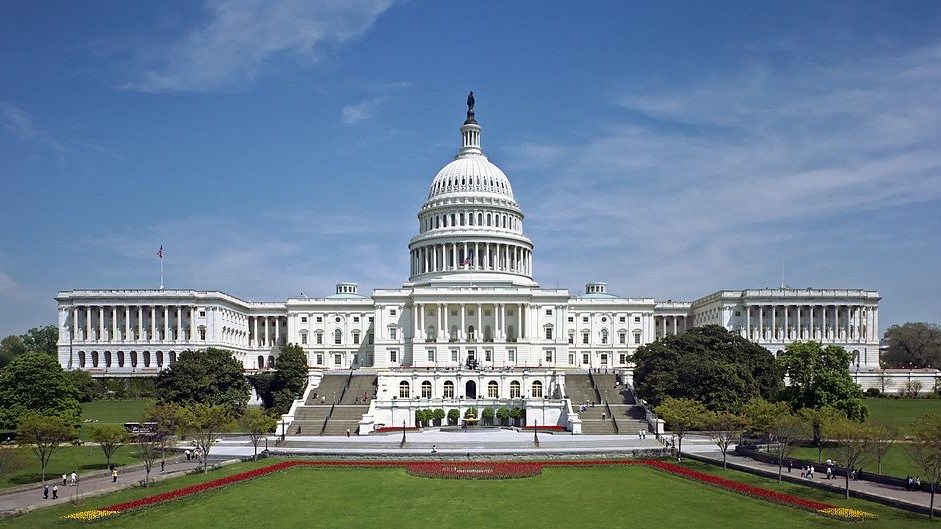
US Congress. Credit: Wikimedia Commons
The 2026 U.S. midterm elections are unlikely to produce sweeping statutory changes for the mining sector, as the executive branch maintains control over permitting, public land management, trade policy, tariffs, or critical mineral financing. However, shifting control of Congress determines who wields the gavel—and who holds hearings, issues subpoenas, and commands public attention.
Over the next two years, committees will intensify scrutiny around several core pressures facing the industry, including investments and project selection, political influence, environmental and social impacts, and China. The consequence is not a different policy landscape, but greater scrutiny of decisions, capital allocation, and performance.
For mining companies, the core policy drivers of project development, permitting, and mineral security remain under executive branch control and will not shift.
Critical minerals remain a bipartisan national priority
Securing critical minerals is accepted as a national security imperative. Lithium, copper, graphite, rare earths, cobalt, nickel, and uranium are widely viewed as foundational to defense systems, advanced manufacturing, artificial intelligence data centers, and grid infrastructure.
Lawmakers remain aligned on the need for domestic extraction, strategic stockpiling, battery recycling, and allied overseas investments—along with downstream priorities, like rare-earth separation, chemical refining, and permanent magnet manufacturing, where the U.S. depends on foreign suppliers.
That commitment is unlikely to shift with the election. Neither party is retreating from reducing U.S. reliance on foreign-controlled mineral supply chains, and investors and developers who have adapted to treating minerals as national-security assets can expect that framework to remain intact.
Federal financing tools and market momentum remain intact
Key federal financing mechanisms, including Defense Production Act Title III grants, loans from the Department of Energy’s Loan Programs Office, strategic capital initiatives at the Pentagon, and overseas project financing through the Export-Import Bank (EXIM) and International Development Finance Corporation (DFC), remain largely under executive branch control and continue to enjoy broad bipartisan backing.
Already-obligated awards are unlikely to be clawed back, and the administration retains substantial latitude to deploy these tools in support of domestic extraction and allied processing projects.
Market fundamentals reinforce that policy tailwind. Elevated prices for gold, copper, silver, and other industrial metals have expanded the pool of economically viable projects, while national security priorities continue to attract public and private capital across the sector.
Although higher interest rates and construction costs remain constraints, the combination of supportive commodity markets, federal financing tools, and strategic demand for critical minerals has created momentum likely to persist regardless of increased congressional oversight.
What changes is not the availability of support, but the scrutiny attached to it.
Critical mineral investments, waivers, and project selection
Incoming committees will examine how federal support programs have been deployed and who has benefited. Oversight panels—backed by formal requests to the Government Accountability Office (GAO)—are poised to scrutinize the administration’s reliance on expedited authorities and non-traditional deal structures.
Specifically, lawmakers will likely scrutinize whether agencies used Cold War-era Defense Production Act procurement waivers (“without regard to” contracting rules) to bypass competitive bidding, whether conflicts of interest were properly mitigated, and whether underwriting standards were relaxed to accelerate awards.
This scrutiny will extend beyond traditional grants and loans into novel public-private financing vehicles. Committees are likely to audit direct federal equity stakes—such as the Pentagon taking ownership positions in domestic rare-earth producers—alongside multi-billion-dollar EXIM and DFC project loans, DOE financing, and controversial stockpiling mechanisms like EXIM’s $12 billion public-private “Project Vault.”
For companies receiving substantial federal backing, the burden of proof is shifting: recipients will increasingly be asked to defend both their commercial viability and technical readiness, and the transparency of their selection process, beneficial ownership, and compliance with statutory eligibility rules.
Political influence and mining projects
Few issues are likely to attract congressional attention more quickly than allegations that political relationships, rather than project merit, influenced access to federal support. Public reports have highlighted connections between family members of senior administration officials—and their affiliated firms—and mining and critical mineral ventures.
A June 2026 New York Times investigation identified some 14 critical mineral companies pursuing federal support with financial ties to administration family members, including rare-earth projects in North Carolina and California, a tungsten project in Kazakhstan, and an antimony and gold project in Idaho. Given incoming committees’ intense focus on undue influence and corruption, lawmakers almost certainly will ask how these relationships intersect with federal financing, permitting, and procurement decisions.
In many cases, the central issue may not be legality, but legitimacy. Congressional committees are often as interested in whether decision-making appears transparent and impartial as whether a specific rule was violated. For mining companies, the practical question is not simply whether they can withstand a regulatory review, but how they stand up in a hearing.
Social license, governance and project legitimacy
Congressional attention will focus increasingly on how mining projects affect local communities. Public reports have highlighted government efforts to advance mining projects while weakening or bypassing environmental and social safeguards, domestically and internationally.
Domestically, those include proposed Bureau of Land Management (BLM) land-use overrides, compressed 28-day emergency reviews under the National Environmental Policy Act (NEPA) for energy and mineral projects on federal lands, and the addition of domestic mines and processing facilities to the FAST-41 expedited permitting dashboard.
Internationally, scrutiny is mounting over bilateral critical mineral deals negotiated without enforceable labor, human rights, Indigenous consent, or environmental protections. As an early preview, following the midterms, incoming Democratic majorities have already announced plans to review all 11 Latin American mineral instruments, alongside billions in financing through EXIM and the DFC.
That scrutiny will also target corruption, state capture, and opaque joint ventures in high-risk mineral jurisdictions across Africa, Latin America, and Central Asia — companies operating through local intermediaries or state-linked partners will be tested to show their anti-corruption vetting and governance controls withstand close scrutiny. Expect oversight hearings focused squarely on tribal consultation, sacred sites, Free, Prior, and Informed Consent (FPIC), community engagement, and environmental compliance.
China, foreign investment, and midstream chokepoints
Scrutiny of mining is not limited to extraction; congressional oversight is shifting downstream to processing and refining. Even when ore is mined domestically or in allied nations, projects frequently rely on Chinese separation technology, state-backed financing, or Chinese refiners—which still control roughly 90% of global rare-earth processing and over 75% of cobalt and nickel refining.
With the new Congress preparing to exercise heightened oversight, anticipate lawmakers scrutinizing whether federal loans, equity stakes, and permitting fast-tracks are genuinely severing reliance on Beijing or merely subsidizing upstream extraction while leaving the midstream bottleneck intact.
Oversight will likely include joint ventures, licensing agreements, and exposure to Beijing’s expanding export controls on heavy rare earths, permanent magnets, and processing technologies — including extraterritorial rules for foreign products containing trace amounts of Chinese-refined materials. As Beijing restricts supply-chain data, companies will face a widening bind: diligence gets harder at the exact moment regulations, committees, Section 232 probes, and FEOC rules demand visibility into every tier.
Forced labor enforcement and chain-of-custody traceability
Scrutiny is also likely to remain sharply focused on forced labor risks and end-to-end mineral traceability. Lawmakers across both parties increasingly treat supply-chain transparency as a human rights mandate and industrial competitiveness tool—using forced labor enforcement to counter state-subsidized Chinese supply chains.
U.S. Customs and Border Protection (CBP) has expanded enforcement of the Uyghur Forced Labor Prevention Act (UFLPA) beyond polysilicon and aluminum into lithium, battery-grade graphite, steel, and copper, with oversight focusing high-risk processing corridors—including Xinjiang, artisanal cobalt mining in the Democratic Republic of Congo, and Chinese-operated nickel hubs in Indonesia.
For mining companies, traders, and downstream manufacturers, traceability is no longer a passive compliance exercise or a reliance on self-reported Tier-1 supplier certifications. Under the UFLPA—and growing disclosure demands from automotive, defense, and clean-energy buyers—companies face border detentions, export-financing disqualifications, and reputational fallout unless they can produce auditable chain-of-custody records. Increasingly, regulators, lenders, and congressional investigators expect firms to map commingled feedstocks across intermediary traders and third-country smelters, proving with verifiable data where raw ore originates and how labor risks are monitored at every step of the value chain.
Tariffs, bilateral frameworks, and mineral trade security
Trade policy will remain central to the mining sector. While unilateral tariff powers under Sections 301 and 232—including the administration’s January 2026 Section 232 critical-minerals proclamation—remain largely within the Executive Branch, incoming committees are poised to scrutinize how import duties, export controls, and price-stabilization mechanisms affect midstream processing bottlenecks and downstream U.S. manufacturers.
Lawmakers are already asking whether broad tariffs shield domestic refiners from Chinese predatory pricing or inadvertently raise input costs for U.S. defense, automotive, and grid-infrastructure projects before domestic refining capacity is ready to scale.
Congressional attention will also focus on the administration’s growing web of bilateral critical-minerals agreements across Latin America, Africa, and the Indo-Pacific. With incoming committee leaders signaling plans to review executive-negotiated mineral pacts, public-private stockpiling initiatives, and allied-country carve-outs, lawmakers will examine whether these frameworks genuinely diversify processing away from China or simply create tariff-free backdoors for foreign-controlled supply chains. For mining companies and traders, securing preferential market access, tariff exemptions, or federal off-take support increasingly requires proving strict rules-of-origin compliance—demonstrating not just where ore is extracted, but where it is refined and how the project measurably reduces strategic reliance on foreign adversaries.
What to watch
Four signposts will define the landscape of what to watch:
- Early Subpoenas and GAO Inquiries. Watch the opening oversight agendas of the House Natural Resources, Energy and Commerce, and Oversight committees—alongside pending GAO inquiries—for early document requests targeting EXIM, DFC, DOE, and Pentagon financing awards, particularly deals involving procurement waivers or politically exposed investors.
- FEOC and China Stress-Testing. Companies relying on federal loans, tax credits, or defense offtake agreements should expect tighter audits of joint ventures, licensing deals, and third-country refiners to ensure compliance with FEOC rules and resilience against Chinese export-licensing delays.
- Litigation Over Permitting. Watch for federal court injunctions and congressional hearings testing whether streamlined reviews came at the expense of defensible tribal consultation and environmental records.
- Traceability. Companies that move beyond self-reported supplier certifications toward verifiable, smelter-level traceability will be best positioned to avoid border detentions and secure allied buyer contracts.
Bottom line
With the 2026 midterms, the mining sector is entering a period in which congressional scrutiny may matter almost as much as commodity prices. Permits, financing, and government support should remain available. The harder question is whether companies can demonstrate the transparency, legitimacy, and strategic value needed to withstand close scrutiny.
Jonathan Drimmer, a partner at Steptoe LLP, is former Deputy General Counsel and Chief Compliance Officer at Barrick Gold and served as a deputy director in the U.S. Department of Justice’s Criminal Division.

No comments:
Post a Comment