UK Vows Global Climate Leadership as PM Doubles Down on Net Zero
The UK will aim to show leadership in global climate issues that have taken a backseat in recent years, as Britain remains committed to reaching net zero by 2050 and working with all its partners to reach their respective climate goals, Prime Minister Andy Burnham said at the COP31 climate summit in Antalya on Thursday.
“The message I carry here at my first COP as UK Prime Minister is this. We’re committed to meeting our 2050 net zero target and committed to working with all of our partners to reach theirs,” Burnham said at the global summit in the Turkish resort.
“Britain will live up to its commitments. We will help our friends as they live up to theirs. Britain is back and ready to play its full part,” the official added.
The UK will also support the summit’s focus on electrification, as it boosts energy security, creates good jobs, and lowers energy bills, Burnham noted.
The climate summit is focusing on efforts, targets, and means to raise the share of electrification to 35% of final energy consumption by 2035, the so-called ‘35-35 target’, rather than on cutting fossil fuel production.
Turkey, the COP31 summit’s host, plans to develop natural gas discoveries in the Black Sea and drill for oil and gas both offshore and onshore to boost its energy independence.
“Türkiye's COP31 Presidency is placing a strong emphasis on accelerating action across several energy priorities, including the 35-by-35 electrification ambition, zero waste and methane, efficient buildings and resilient cities, and clean cooking and energy access,” the International Energy Agency (IEA) said on the eve of the summit.
Britain, despite doubling down on net zero and pledging leadership in climate issues, has recently taken a ‘pragmatic’ approach to new oil and gas projects in the UK North Sea.
The UK government last month approved the long-delayed Jackdaw gas field in the first approval of a new North Sea project since the Iran war hiked energy prices.
By Michael Kern for Oilprice.com
Soaring Electricity Costs Force Britain to Rethink Its Green Agenda
- Labour is making affordable energy a central priority as high electricity prices undermine British industrial competitiveness.
- Decisions on North Sea drilling and electric vehicle targets are testing the government's commitment to net zero.
- Ministers face pressure to reform electricity levies while balancing economic growth against long-term climate goals.
While it didn’t make the headlines, Chancellor John Healey’s Budget speech signalled a huge shift in positioning from previous governments over net zero.
“Today I’m setting a new course on energy: to get UK energy costs down in line with Europe,” Healey said. “From this point, our government priority is first and foremost cheaper energy, with clean power key to achieving this.”
The lines raised eyebrows in Westminster. The test of that new commitment came when the energy secretary, Miatta Fahnbulleh, approved the gas field project at Jackdaw – apparently against her instincts – and will once again come into focus this week as Andy Burnham takes a double trip on Thursday to the COP 31 climate summit in Turkey before looking to clinch an energy market deal with European leaders in Dublin.
While higher international energy prices caused by the Iran war have raised the stakes of diplomacy across government, policy researchers working under the new Prime Minister are tasked with finding effective ways of easing the cost of living for both households and businesses.
In particular, Healey and Fahnbulleh may struggle to align Labour manifesto commitments on net zero with a renewed push to get costs down – in what could divide the party between environmental zealots and centrists conscious of economic trade-offs.
The crunch energy decisions facing ministers
The energy giant Equinor is awaiting a decision on whether Rosebank’s oil field will get the go-ahead for an opening, with ministers including Fahnbulleh and Healey reportedly sparring over the coherence of a policy to allow more drilling for fossil fuels with a manifesto promise not to offer new licences for oil and gas fields. Labour backbenchers are lining up to publicly condemn Rosebank.
Meanwhile, Louise Haigh, who enforces Burnham’s agenda in government, is expected to dial down electric vehicle sales targets to help carmakers despite the risk of derailing Labour’s decarbonisation agenda.
And most emphatically of all, Fahnbulleh has suggested that the party’s ambition to eliminate almost all fossil fuels from the power supply by 2030 would be thrown out if the UK’s “affordability challenge” was not solved first. That affordability crisis facing households, firms have argued, stems from sky-high energy costs facing manufacturers up and down the country.
Getting industry on electricity
The Labour government has talked up its policy to give about 10,000 energy-intensive businesses a discount of up to 25 per cent from April on electricity bills, costing taxpayers billions by 2030. Additional funding will come from aligning UK and EU carbon markets and exempting businesses from existing levies, according to the government.
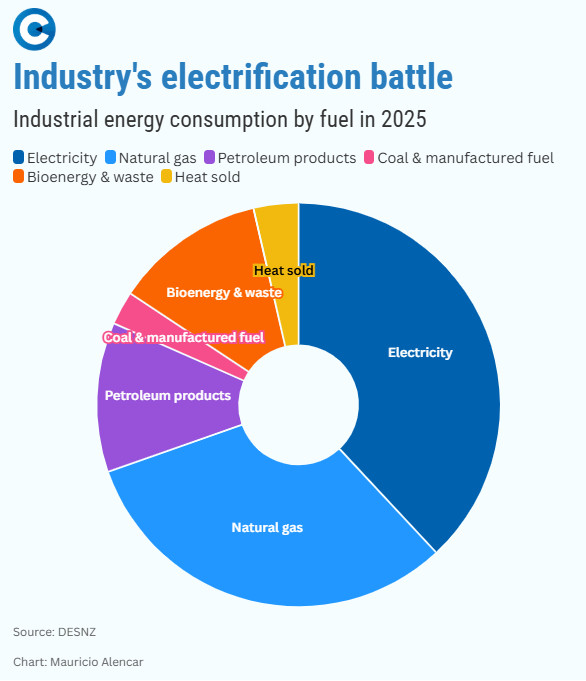
But the UK falls short, on some metrics, to fully “electrify” industry, which remains heavily reliant on fossil fuels.
Sky-high costs
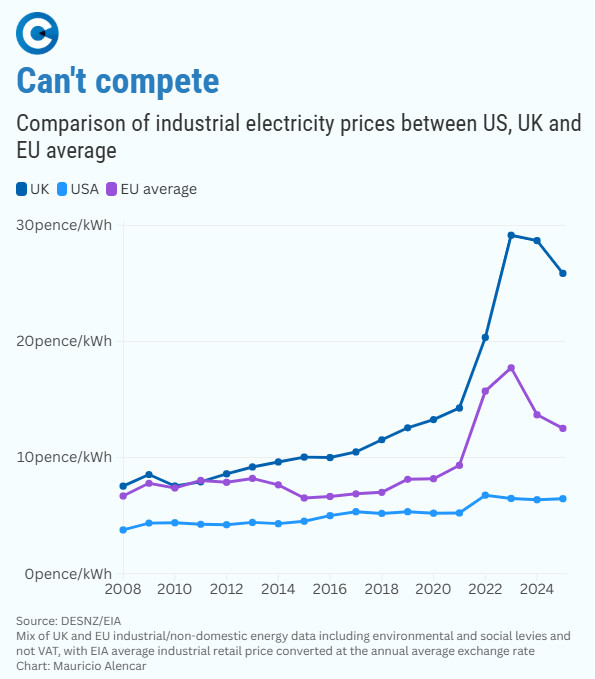
Even for manufacturers using greener power, British industry has struggled to keep up with both European and significant international counterparts in keeping costs low.
Data taken from government analysis and international agencies suggests British firms pay four times as much on electricity as American companies, and about twice as much as European counterparts.
How to apply taxes
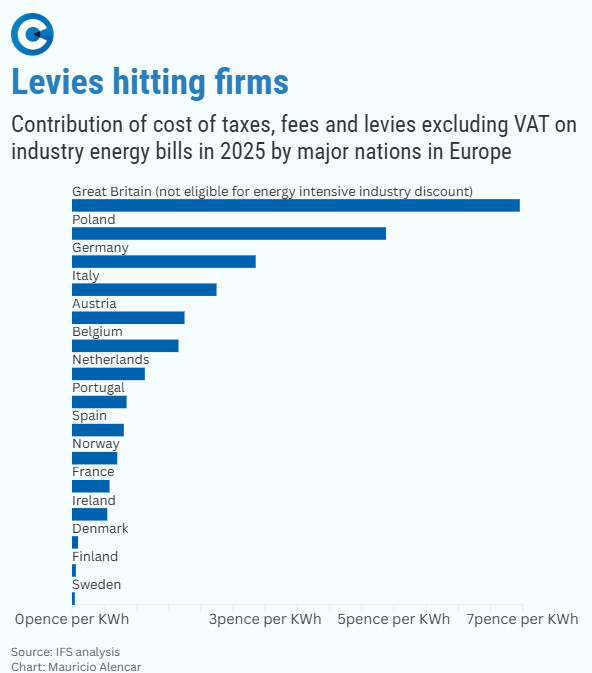
The consensus among energy market observers is for the government to strip levies from bills and use general taxation to fund subsidies. A cross–party group of MPs on the Energy Security and Net Zero Committee, led by Labour’s Bill Esterson, said all net zero costs should be stripped off the price of electricity as a “critical means for substantially bringing down bills”.
Research by the Institute for Fiscal Policy showed that taxes and policy costs, such as the climate change levy, made up over a third of industrial electricity costs for businesses that are not energy-intensive. The think tank suggested that the government could spread the cost of decarbonisation across the entire economy or take all fixed costs off the unit price.
Climate change damage
But even as the Conservatives and Reform UK have pledged to scrap net zero legislation and take out levies in order to bring electricity costs down, opposition parties face questions over measuring the long-term costs of climate change for the UK economy.
Research by Transira Energy and Onward, backed by the Tories, suggested abandoning net zero regulations and taxes could save households as much as £540 a year between 2030 and 2050. But the report concedes that the UK economy could be left more exposed to international gas price shocks by slowing the race for electrification.
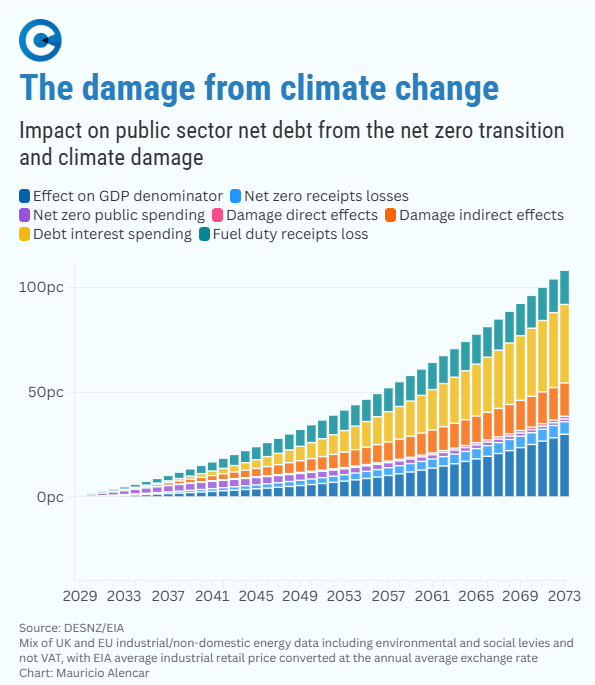
In its 2025 fiscal risks report, the Office for Budget Responsibility warned in one scenario for global temperatures rising by three degrees Celsius that climate change damage could contribute to around three-fifths of the addition to public sector debt by 2074.
It’s in the context of the sky-high costs for British industry today that Burnham and Healey appear to be taking Labour down a “new course on energy”. In negotiations with EU chiefs and international representatives in Turkey this week, the Prime Minister faces a tussle in balancing advocacy for long-term net zero policy with a reality that Britain is unattractive for manufacturers – complicating his effort for “re-industrialisation”.
By City AM

No comments:
Post a Comment