Monday, August 10, 2026

 Russia’s War Against Ukraine: Diplomatic Talks And U.S. Policy – Analysis


Map of Ukraine. Source: CRS, using data from the Institute for the Study of War and the American Enterprise Institute Critical Threats Project, Global Administrative Areas


August 10, 2026
the Congressional Research Service (CRS).
By Andrew S. Bowen and Cory Welt


Key Takeaways:

More than four years into Russia’s full-scale invasion, neither side appears close to a decisive military victory; formal U.S.-mediated peace talks have stalled since February 2026 amid the Iran conflict, with limited prospects for an immediate resumption.

The Trump Administration continues security assistance to Ukraine at reduced levels, largely through NATO-funded procurement of U.S. equipment, while maintaining most sanctions on Russia (with temporary oil-related relief earlier in 2026) and exploring limited defense-industrial cooperation.

Congress is weighing continued support, potential new sanctions legislation, and the costs and benefits of further U.S. mediation, including implications for NATO relations and long-term European security guarantees for Ukraine.


The Russian Federation (Russia) launched a full-scale invasion of Ukraine in February 2022. More than four years later, Russia and Ukraine remain engaged in Europe’s largest war since World War II. With estimates of up to 2 million or more killed or wounded, and with Russia controlling about 20% of Ukraine’s territory, neither side appears poised to achieve a decisive military victory. In 2026, Ukrainian forces have limited—and in some cases reversed—Russian gains and markedly expanded a campaign of long-range attacks against Russian oil facilities and logistics infrastructure.

The second Trump Administration has engaged in efforts to facilitate an end to the Russia-Ukraine war. Formal negotiations were last held in February 2026; whether negotiations will resume—and, if so, when—is uncertain. Members of Congress may evaluate the prospects for, and potential costs and benefits of, continued U.S. mediation between Russia and Ukraine, including implications for U.S. strategic interests.

Aspects of Negotiations

Building on discussions in 2025, Russian, Ukrainian, and U.S. officials met for the first time in a trilateral format in Abu Dhabi, United Arab Emirates, in January 2026. Two rounds of U.S.-mediated talks followed, but formal peace talks have not resumed since U.S.-Israeli military operations against Iran began in late February 2026.

In an August 2025 meeting with President Trump in Anchorage, AK, Russian President Vladimir Putin reportedly proposed a ceasefire along the line of contact in two of Ukraine’s southern regions, if Ukraine transferred populated areas of its eastern Donetsk region to Russia. This proposal appeared to be included as an element of subsequent talks, but Ukrainian authorities rejected it, maintaining (among other reasons) that the transfer of this heavily fortified “fortress belt” would greatly diminish Ukraine’s ability to defend itself from further Russian aggression.

In May 2026 remarks to the press, Secretary of State Marco Rubio said Russia-Ukraine talks had not been “fruitful” and the Trump Administration was “not interested in getting involved in an endless cycle of meetings that lead to nothing.” In July 2026, Secretary Rubio referred to the “failed” efforts that began in Anchorage but said “if the opportunity presents itself and the conditions are right,” the United States was “prepared to offer some [new ideas] in the right setting and forum.”

In June 2026, Ukrainian President Volodymyr Zelensky proposed meeting with President Putin in a neutral country to kickstart negotiations and called for “a full ceasefire for the duration of the negotiations.” President Putin reportedly rejected the proposal and suggested Russia would continue fighting until it achieved its stated goals.

Security Cooperation. The Trump Administration has announced new security assistance for Ukraine, at levels lower than from FY2022 to FY2024, while continuing to provide certain previously committed assistance. In 2025, the United States and NATO allies launched the Prioritized Ukraine Requirements List (PURL) initiative, whereby NATO allies fund procurement of U.S. defense articles for Ukraine. As of July 2026, NATO allies and partners had contributed more than $6 billion in PURL-related assistance. Some NATO and European officials reportedly have expressed concern that U.S. military operations against Iran could lead to procurement shortages and delays that may affect assistance to Ukraine. Ukrainian officials state they are running low on air defense munitions to intercept Russian ballistic and hypersonic missiles.

Ukraine has concluded some, and is seeking more, joint production and defense agreements and has removed barriers to exporting surplus defense production. Some reports indicate U.S. and Ukrainian officials are exploring ways to improve defense industry cooperation. In July 2026, President Trump indicated the United States was considering options to allow Ukraine to coproduce Patriot missiles but subsequently noted this would be a “big step” and “we have to be very careful.”

Ukrainian officials have sought guarantees against further Russian aggression, including through the deployment of Western peacekeeping forces and closer integration with NATO and the European Union. President Trump and other Administration officials have expressed the view that NATO membership for Ukraine is unrealistic while indicating support for the provision of some kind of European-led security guarantees, potentially with U.S. involvement.

U.S. Sanctions Against Russia. The Trump Administration generally has maintained previously established U.S. sanctions on Russia. The U.S. Department of the Treasury listed some new entities for sanctions, most notably two of Russia’s largest oil companies, Rosneft and Lukoil, and several subsidiaries. After the start of U.S.-Israeli military operations against Iran, the Treasury Department, to help stabilize oil markets, issued a series of general licenses temporarily relaxing sanctions on certain Russian oil exports. The last of these licenses expired on June 17, 2026, and was not renewed.


Prisoners, Detainees, and Forcibly Transferred Populations. Talks have addressed the exchange of prisoners of war, the remains of deceased persons, and the release of Ukrainian civilian detainees and forcibly transferred populations, including children.


Potential Considerations for Congress

Members of Congress may assess the costs and benefits of potential outcomes of U.S.-mediated negotiations and the likelihood of a sustainable ceasefire or peace agreement. Members may evaluate the potential impact of negotiations on other U.S. policy interests, including relations with NATO allies.

The Trump Administration and Congress may assess whether and on what terms to provide continued support to Ukraine alongside U.S. allies. For FY2026 and FY2027, Congress authorized $400 million annually in security assistance for Ukraine (P.L. 119-60, §1243); for FY2026, Congress appropriated $400 million in European capacity building, to include Ukraine (P.L. 119-75, Division A). On June 4, 2026, the House of Representatives passed the Ukraine Support Act (H.R. 2913), by a vote of 226-195, following a discharge process on a special rule that provided for the bill’s consideration.

On August 7, 2026, the Senate passed (by a vote of 86-11) a revised version of a sanctions bill first introduced in 2025, now titled the Lindsey O. Graham Sanctioning Russia and Iran Act of 2026 (S.Amdt. 6711 to H.R. 5334). This bill would reinforce existing sanctions authorities, authorize tariffs against Russia and third countries that import certain Russian products, and expand congressional oversight of most Russia sanctions imposed since 2022.

About the authors:

Andrew S. Bowen, Analyst in Russian and European Affairs

Cory Welt, Specialist in Russian and European Affairs

Source: This article was published by the Congressional Research Service (CRS).


About CRS

The Congressional Research Service (CRS) works exclusively for the United States Congress, providing policy and legal analysis to committees and Members of both the House and Senate, regardless of party affiliation. As a legislative branch agency within the Library of Congress, CRS has been a valued and respected resource on Capitol Hill for nearly a century.

View all posts by CRS →


By Magnus Lund Nielsen

Key Takeaways:

  • Poland’s government has rejected as “absurd” and populist an opposition PiS proposal to deport military-age Ukrainian men who are not legally employed, noting that more than 90% of them already work and that many others are wounded soldiers or carers.
  • PiS has pledged to create deportation centres and a central register of foreigners if it returns to power, framing the policy as enabling these men to “fight for their homeland.”
  • The party is simultaneously dealing with internal splits, including former Prime Minister Mateusz Morawiecki’s departure to form a new movement, amid declining poll numbers.

(EurActiv) — Poland’s government has dismissed as unworkable an opposition proposal to deport military-age Ukrainian men who are not legally employed, describing it as an attempt to win over far-right voters.

“These plans are pure absurdity and populism,” an interior ministry spokesperson said on Saturday.

Deputy Interior Minister Maciej Duszczyk said on Friday that more than 90% of military-age Ukrainian men living in Poland were employed. Those outside the labour market include wounded Ukrainian soldiers receiving rehabilitation and parents caring for disabled children, he said.

On Thursday, Poland’s right-wing Law and Justice party (PiS) pledged to deport Ukrainian men of military age who are not legally employed if it returns to government after next year’s parliamentary election.

One of PiS’ first major decisions would be to deport Ukrainian men aged 25-60 who lack legal employment in Poland, deputy leader and MEP Tobiasz Bocheński announced at a party conference on Thursday.

“They will have the opportunity to fight for their homeland,” Bocheński said, according to local news media, Polsat News. 

PiS is proposing dedicated deportation centres and a central register of foreign nationals, under which failure to meet administrative obligations could initiate deportation proceedings. The proposal would also cover Ukrainians working in the informal economy.

Separately, the EU plans to deny temporary protection to newly arriving military-age Ukrainian men (who are barred from leaving Ukraine under Ukrainian law), while extending the scheme for other Ukrainians until March 2028.

A party divided

PiS – part of the European Conservatives and Reformists (ECR) group in the European Parliament, which also includes Giorgia Meloni’s Brothers of Italy – has been shaken by internal divisions in recent months.

In late July, Mateusz Morawiecki, former Polish prime minster during the last PiS-government, splitfrom the party to create his own movement, Rozwój Plus.

Tensions escalated after the PiS leadership named a eurosceptic candidate for prime minister in next year’s election.

“Of course, we have to confront Brussels’ bureaucratic excesses and absurdities, but Poland’s membership of the European Union brings many benefits,” he said.

Recent polling puts Rozwój Plus at around 8% support in a parliamentary election. PiS is polling at 18%, down from 35% at the 2023 parliamentary election.

Only ‘About 15 Percent’ Of Orthodox Priests In Russia Support Putin’s War – OpEd


August 10, 2026
By Paul Goble


Many assume that Moscow Patriarch Kirill’s regular statements of support for Putin’s war in Ukraine set t
he weather for Orthodox priests and laiety in the Russain Federation, Nikolay Mitrokhin says; but that is not the case: Indeed, “only about 15 percent” of Orthodox priests there actively support the expanded Russian invasion.

Kirill’s delarations, the scholar at the University of Bremen says, are not so much directed at the priests and believers to get them to accept his position – in Orthodoxy, even a patriarch doesn’t have that right – as a sign to the Kremlin that the Patriarchate as such is loyal to Putin (vot-tak.tv/94741767/rpc-voyna).

Mitrokhin notes that “Patriarch Kirill is often perceived by analogy with the Pope or Ayatollah Khomeini – as a figure whose words automatically encourage believers to act. However, in Orthodoxy in general and in the ROC in particular, there is no direct connection between the rhetoric of the top leadership and the behavior of ordinary laity.”

Kirill’s words, he points out, “are addressed primarily to the state power, as a demonstration of loyalty. Their practice influence ends at the church pulpit where the speech was made and the real administrative powers of the patriarch are limited to the boundaries of the Moscow diocese alone,” where Kirill is bishop.

Most priests avoid talking about the war to avoid sparking conflicts within their parishes, and the Patriarchate does not encourage them to travel to Ukraine or to serve in the ranks of the Russian army. It decided on that course when priests who did early in the expanded war began to die, forcing the Patriarchate to take a public position it preferred not do so, Mitrokhin says.

Few Russian parishes are enthusiastic about the war or actively involved in getting people to serve there either from their own faithful or more generally, although many more are quite prepared to collect money and goods for humanitarian assistance, something they see as a Christian duty but not an indication of support for Putin’s political goals.


Russia could use nuclear weapons as “last option” in face of expanding Ukraine war, warns Turkish foreign minister
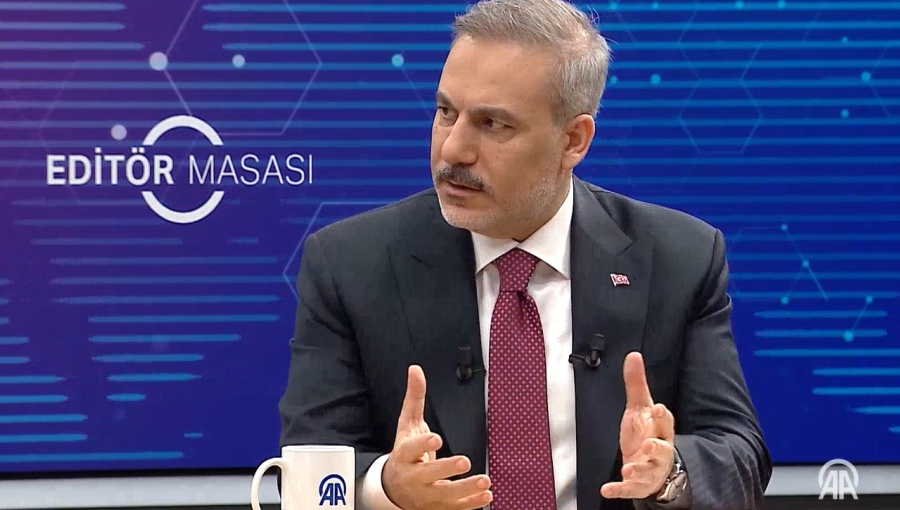
Russia could use nuclear weapons as “last option” in face of expanding Ukraine war, warns Turkish foreign minister
“Everything that it was said could not happen is happening,” warned Fidan, reflecting on the course the war has taken since it ignited four and a half years ago. / Screenshot, Anadolu AgencyFacebook
By IntelliNews Turkey desk August 9, 2026

Turkey’s foreign minister has warned that an “expanding war of destruction” could cause Russia to use nuclear weapons as “the last option available to it”.

Hakan Fidan said that during a recent visit to Moscow, the Turkish delegation was close to raising the issue in talks with their counterparts because  the “public is now demanding such a thing.”

“We also told the Westerners of this [concern over nuclear use], and the Westerners know it,” Fidan added in an August 8 appearance on the Anadolu Editor’s Desk programme of Turkish official news service Anadolu Agency.

Warning that “everything that it was said could not happen [in the Russo-Ukrainian conflict] is happening”, Fidan observed that the war, which ignited in February 2022, had spread beyond the battlefield and was now having severe impacts inside Russia. It was, he said, expanding geographically and becoming more extensive in terms of targets and methods, and the international community must step in to stop the fighting.

“But where no one makes concessions, the war continues with growing violence until it creates its own area for concessions. Unfortunately, this is what we are witnessing,” he said.

Call for Black Sea attacks "moratorium"

During the discussion on the show, Fidan called for a “moratorium” on attacks by Russia and Ukraine in the Black Sea following a series of strikes on civilian ships there. “The conflict has spread across the whole Black Sea,” he said. “To begin with, they targeted the ports and the military ships. Now, they are attacking all commercial shipping without distinction,” he added, noting vessels belonging to Turkey or flying the Turkish flag were among those targeted.

Fidan added that it seemed the two sides in the war seem to be waiting until they have completely exhausted each other before embracing the mentality of “now let’s sit around a table and make peace”, and with another reference to Russia’s nuclear arsenal, he cautioned: “When this destruction, this attrition on the front, turns into attrition behind the front, the issue is no longer about whether you win or lose a war or a battle on a front; it becomes an issue of whether you exist as a nation. Then you use whatever last means you have at your disposal.”

Fidan also referred to how some parties believe ending the conflict under current conditions would cost them more than allowing it to continue. This, he said, was among the reasons they remain unwilling to bring the war to an end.

In June, Reuters reported that prominent Russian nationalist figures had publicly urged President Vladimir Putin to abandon diplomacy with the US and consider more drastic military measures, including the possible use of tactical nuclear weapons. Their calls came after a series of successful Ukrainian long-range strikes inside Russia.

Though a Nato member, Turkey, as a Black Sea neighbour of both Ukraine and Russia, attempts to largely steer a path of neutrality in the conflict, with President Recep Tayyip Erdogan periodically offering to revive his previous role as an active mediator hosting peace talks attended by Kyiv and Moscow. However, Turkey does sometimes go ahead with notable arms sales to Ukraine and this weekend caused some surprise by agreeing a weapons deal that will see 70 M39 ATACMS tactical ballistic missiles, 12 M270 multiple-launch rocket systems and tens of thousands of cluster munitions from Turkish stockpiles sold to the Ukrainians. 

At the end of June, IntelliNews published a comment piece, headlined "Steadily but surely, Erdogan has broken with Putin."


Hungary’s Nuclear Power Returns as Rain Lifts Danube Water Levels

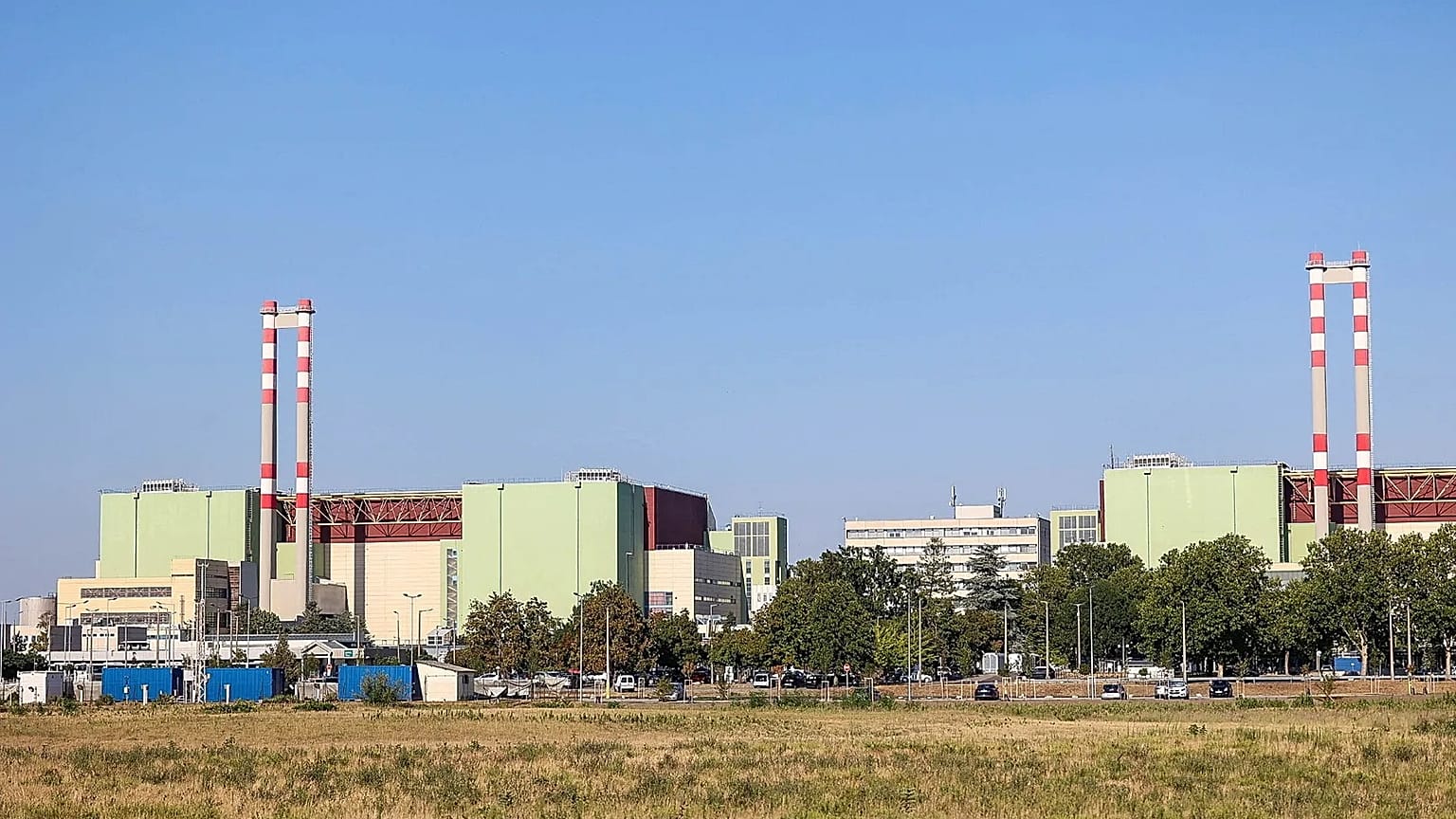
Hungary expects its only nuclear power plant to resume producing electricity as early as Monday evening after one of the turbines at the Paks nuclear plant is switched on, Prime Minister Peter Magyar said.    

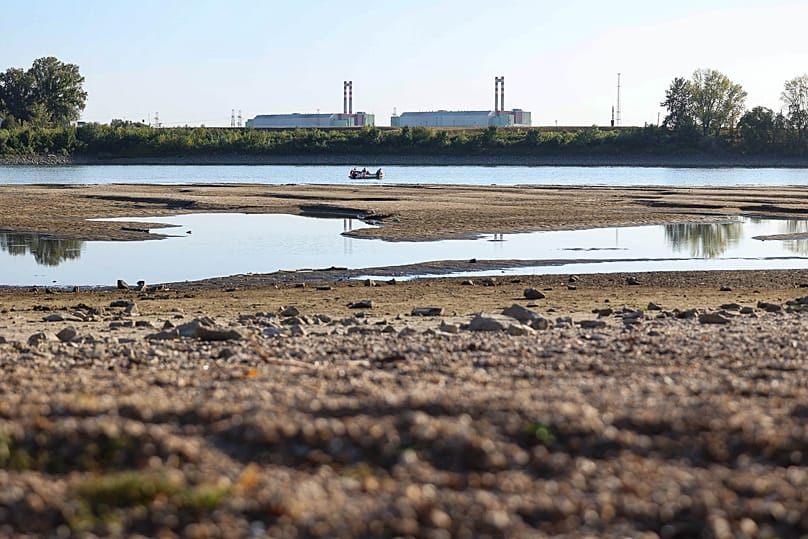
Hungary and Romania have been hit in the past weeks by power supply issues after the heatwaves and the lack of rainfall this summer led to the lowest water levels of the Danube in nearly 90 years. Hungary and Romania were forced to curb the respective nuclear power output of their plants that use the water from the river for cooling of the reactors.

Last week, Hungary shut down the Paks Nuclear Power Plant, for the first time in 44 years, due to the continued drop in the water level of the Danube, Hungarian Prime Minister Peter Magyar said on August 2.

The water levels on the Danube started rising at the end of last week as rain started falling in the Austrian catchment areas of one of Europe’s biggest rivers.

On Thursday, Hungary’s Magyar said: “We are already nine centimeters above the Danube’s Sunday low point, and rain is expected in the Austrian catchment areas.”

Despite the good news about rising water levels, last week Hungary reiterated calls for “a strong need for voluntary reductions in electricity consumption” amid a heatwave that is gripping Europe these days.

On Monday, Magyar said that “The Danube's water level was 19 centimeters above the low point from one week ago this morning. The reconnection process of a Paks turbine has begun. From evening, the No. 3 turbine of the second unit will also generate power.”

Romania, another European country relying on nuclear power output from a power plant on the Danube, last week blasted a rock formation and sank barges filled with rocks to deviate the Danube’s flow and secure enough water for cooling the reactors of its only nuclear power plant at Cernavoda. 

The operation was successful, and water levels at Cernavoda rose this week, which means the second nuclear reactor at the plant could operate for at least nine more days.

By Tsvetana Paraskova for Oilprice.com


Danube water level rising: Another Paks nuclear plant turbine may restart

The MVM Paks Nuclear Power Plant in Paks, 29 July, 2026
Copyright AP Photo

By Ferenc Szekely
Published on

The Danube's level at Paks, south of Budapest, has risen by about 19 centimetres from its previous low, allowing the first additional Paks nuclear plant turbine to be restarted and reconnected.

The phased reactivation of the previously shut-down capacity has begun at the Paks Nuclear Power Plant, after the level of the River Danube started to rise.

Once the river had climbed back above the critical low recorded a week earlier, it became possible for one turbine to start producing electricity again from Monday evening. The reconnection is taking place under strict technical and safety conditions.

At the beginning of August, the Danube’s water level dropped to a historic low, reaching minus 134 centimetres at Paks. As a result, three of the four reactor units had to be shut down gradually and in a controlled manner. Only a single turbine remained in operation.

Thanks to rainfall over the Austrian catchment areas, the river began to swell along its upper reaches. That flood wave has now reached the Paks section as well. A rise of 19 centimetres in the water level provides enough volume to extend safe cooling.

The MVM Paks Nuclear Power Plant in Paks, 29 July, 2026 MTVA - Media Service Support and Asset Management Fund

Plant increases power output

With the launch of another generating unit, the plant’s output to the grid will increase from the 240 megawatts recorded during the critical period to 500 megawatts.

During the restart and operation of the nuclear power plant, nuclear safety takes absolute precedence over electricity production, so the reconnection has to meet several stringent requirements. In terms of adequate pump pressure, the rise in the Danube has restored the efficiency of the cold-water channel pumps, ensuring that the condensers can be cooled.

The systems responsible for cooling the reactor core and the spent fuel pools must function flawlessly; they remained continuously in operation even during the period of low water. Before the turbine can be started, an adequate vacuum has to be created in the condenser. The quality of the secondary-circuit water also needs to be checked.

The reactor’s thermal output and the volume of steam are not adjusted in one go but synchronised step by step with the generator’s connection to the grid, according to a strict timetable.

Around half a million components also have to be subjected to diagnostics. Operating specialists will ensure that the heat and the temporary shutdown have not caused microscopic material defects in the equipment.


What Does It Take to Reopen a Nuclear Power Plant?

  • The Trump administration wants to expand U.S. nuclear capacity through new reactors, power uprates, and the return of previously shuttered plants.

  • Holtec’s Palisades restart has encountered corrosion, equipment repairs, supply-chain problems, and other unexpected challenges that illustrate the difficulty of reviving an aging reactor.

  • Other projects, particularly Constellation’s Crane Clean Energy Center, could prove easier to restart and demonstrate that the viability of reactor recommissioning varies significantly by plant.

In the United States, President Trump aims to expand the country’s nuclear power capacity by developing new projects and restoring old reactors. However, restarting disused reactors is not as simple as just turning them back on, as rigorous safety standards must be considered.

In May 2025, President Trump published an executive order entitled “Reinvigorating the Nuclear Industrial Base”, in which he outlined plans to start construction of 10 new large reactors and add 5 GW of power to existing nuclear reactors by 2030.

Several U.S. reactors were shut down in previous decades as confidence in nuclear power fell to an all-time low following three prominent nuclear disasters – Chornobyl, Fukushima, and Three Mile Island. However, the public perception of nuclear power has significantly improved in recent years.

Last year, Trump announced plans to recommence operations at the Palisades Nuclear Plant in Michigan, a 789-MWe plant owned by Holtec International that shut down in 2022; the Constellation Energy 835-MWe Crane Clean Energy Centre on the Three Mile Island site in Pennsylvania; and NextEra’s 615-MWe Duane Arnold in Iowa. This supports Trump’s aim for a U.S. nuclear renaissance.

After a year of fast-tracked efforts to rejuvenate nuclear operations, on Friday, 24th July, the Trump Administration announced it had achieved the goal of bringing three new advanced test reactors to criticality – the stable state where a self-sustaining chain reaction is achieved – by July 4, 2026.

When the reactor was shut down at Michigan’s Palisades Power Plant in 2022, it was expected to be permanent. However, the firm Holtec International decided to change plans for the plant by developing a strategy to restart the shuttered nuclear reactor, something that had not previously been seen. Holtec said it expected the recommissioning to take around two years, although this estimate was not accurate.

It proved much more difficult to restart a nuclear reactor than previously anticipated due to unexpected challenges and high costs. When assessing the reactor, the company discovered extensive corrosion on the equipment that uses hot radioactive water to produce high-pressure steam. Other setbacks included supply chain disruptions, a leaking underground water line, and the need for new valves.

While many of these challenges were predictable for nuclear energy companies, Holtec had never operated a nuclear plant before. When it purchased the plant from the utility company Entergy, Holtec had not yet inspected the entire Palisades plant, according to the general manager of plant operations, Jeff Borah. “We didn’t take the time to really plan out the whole project before we started doing work,” Borah stated. “It’s like building a fire truck on your way to the fire.”

However, Holtec’s president, Rick Springman, said that “There are some systems you can’t really inspect until you start the project.” This includes equipment such as the turbine, which required dismantling to be fully inspected over several months. “The difference between building a new house and rehabbing an old house is there is going to be discovery,” said Springman.

Nevertheless, Holtec has a contractual deadline of March 2027, which it intends to meet. Holtec plans to begin loading fuel into the reactor as soon as September. Holtec’s move has encouraged other firms to take on recommissioning projects, including Constellation Energy and NextEra.

Other ventures have been more straightforward, such as Constellation Energy’s Three Mile Island project. As the reactor being rehabilitated was undamaged, the company hopes to restart it as soon as next year. It helped that Constellation has owned and operated the facility for several years, giving insight into the inner workings of the space and reactors.

The Trump administration is supporting the recommissioning of U.S. nuclear reactors by providing billions of dollars in funding to companies looking to take on the challenge. There are concerns that the high cost of renovating and restarting shuttered nuclear reactors will, therefore, fall on the taxpayer. There are also safety concerns, particularly in the case of Holtec, as the company has not previously operated a nuclear plant.

The co-chairman of the environmental group Don’t Waste Michigan, Michael J. Keegan, voiced concerns about repairing the corroded steam generators. He suggested that Holtec should have purchased new generators instead. Keegan said, “Here at Palisades, there have been so many compromises.” However, Springman assured the public that the generators have been extensively inspected and tested and that the company “feel[s] very comfortable with the safety of the component.”

The Palisades first commenced operations in 1971, which has led many to suggest that funding could be better used to develop a new nuclear reactor, rather than to restart an old one that requires so much work. However, the relatively rapid turnaround of Constellation Energy’s project suggests that some recommissioning operations could be faster and more straightforward than others. This suggests that federal permission to restart old reactors could be given on a case-by-case basis, depending on an extensive assessment of the task.

By Felicity Bradstock for Oilprice.com


Heat Waves Could Cost the EU 1% of GDP, Dutch Bank Says

This year’s heat waves and related productivity declines and lower agricultural output could erase as much as 1% of the gross domestic product of the European Union, wiping out most of the EU’s economic growth expected for 2026, according to Dutch bank Triodos.

The bank and wealth manager, which focuses on financing environmentally and socially sustainable projects, expects labor productivity losses due to the extreme heat waves to reduce the European Union’s GDP by some 0.6% this year. Agricultural output alone is expected to fall by 3% to 7% due to the many heat waves, the bank said in a report carried by Reuters.

After reaching 1.5% in 2025, EU GDP growth is projected to slow down to 1.1% this year, the European Commission said in its spring forecast nearly three months after the war in Iran crippled oil and gas flows through the Strait of Hormuz. The Commission revised down its GDP growth estimate by 0.3 percentage point due to the new energy shock, expecting inflation to rise to 3.1%, an upward revision of a full percentage point compared to the Autumn 2025 Forecast.

“Higher food prices, constrained power generation and higher electricity prices, and disruption to roads, ‎rail and inland waterways add to the damage,” analysts at Triodos said in their report this weekend.

France, the EU’s second-largest economy behind Germany, is set to be worst hit by the loss of GDP and labor productivity, according to the bank.

GDP in France could dip by about 1.4% due to several extreme heat waves this summer, meaning that the economy could contract by as much as 0.6%.

This summer, France has been forced to slash nuclear power generation amid low water levels on the rivers used to cool reactors.

The power supply and energy issues have spread to central and eastern Europe, with extreme heat and drought disrupting Europe's energy system, reducing refinery efficiency, forcing cuts to nuclear and hydropower generation, and driving diesel refining margins toward 20-year highs.

By Michael Kern for Oilprice.com


Europe's Next Energy Crisis Won't Be a War, It'll Be Peak Oil

  • A new report from the National Interest warns Europe's next energy shock will come from peak oil, not war or climate, as exporting nations hit terminal production decline.

  • The EU imported 435 million tonnes of crude oil in 2025 and spent more than €212 billion, remaining heavily reliant on foreign suppliers even after cutting Russian imports.

  • Diplomats and analysts warn Europe keeps repeating the same short-term scramble after every crisis, from Russia's invasion of Ukraine to the Red Sea attacks to Iran's closure of the Strait of Hormuz.

Europe is currently contending with its third energy crisis in four years against the backdrop of near-constant global geopolitical friction and fracas. The continent’s over-reliance on foreign fossil fuel imports has been thrown into sharp relief in recent months and years as the European Union has struggled to catch its breath and stabilize markets in the vanishingly short time spans between global oil shocks.

When Russia invaded Ukraine in February of 2022, Europe as a whole depended on Russian producers for 40 percent of the continent’s natural gas. This threw European markets into turmoil as the European Union struggled to set and maintain sanctions on Russian energy exports, kickstarting a pyrrhic war between Brussels and the Kremlin. Europe has never fully recovered from that turmoil, as it has since been battered by conflicts blocking the passage of the Red Sea in 2023 and 2024, and now the United States and Israel’s war in Iran. On top of these geopolitical shockwaves, Europe is now the most rapidly warming continent in the world, causing an unprecedented climate-related energy crisis in the region.

“We swore we’d learn. We promised things would change but here we are,” a ‘highly frustrated European diplomat’ was recently (anonymously) quoted by the BBC in response to market turmoil driven by Iran’s closure of the Strait of Hormuz, through which one-fifth of the world’s oil and gas trade flowed on an average day before the United States and Israel began their military operations in the region earlier this year.

“Instead of concentrating on much-needed long-term plans - about how to make Europe more competitive in this increasingly volatile world, [European] prime ministers and presidents are now in a panic over [energy] prices, worried about angry voters and scrambling for short-term solutions,” the source continued. “Just like the crisis after Russia’s fullscale invasion of Ukraine. Different conflict. Same European divisions; same dilemmas over energy. We can’t keep going round in these circles. Something’s got to give.”

Indeed, if Europe does not learn from its previous mistakes, much, much more disastrous crises could be just beyond the rapidly warming riverbend. A brand new report from the National Interest warns that Europe’s next energy catastrophe won’t come from global conflict nor from climate pressures, but from peak oil.

To be sure, Europe has made major progress when it comes to weaning itself of its dangerous reliance on Russian fossil fuel imports over the past four years. But while the Kremlin no longer boasts the same leverage over the European Union, the bloc remains problematically dependent on foreign oil from a variety of sources. According to official figures released by the European Council, the European Union imported 435 million tonnes (Mt) of crude oil in 2025 alone, representing an expenditure of more more than €212 billion.

If the EU does not hasten its transition away from fossil fuel imports and toward indigenous clean energy development, it could be caught flat-footed by terminal oil production decline, warns the National Interest. In fact, many of the bloc’s key importers have already started to see waning exports thanks to ageing wells and finite resources. And the result will be a much more insidious and hard-to-detect crisis – until it isn’t.

“Unlike wars or sanctions, terminal decline does not create an immediate supply shock. Instead, it gradually reduces the amount of oil available for export,” the report states. “As more exporting countries pass their production peak, fewer producers will be able to increase output when markets tighten, or supply disruptions occur. For an import-dependent region such as the European Union, this means that diversification alone may become increasingly difficult over time.”

What is more, the potential fallout from the next crisis could extend far beyond market turmoil and energy poverty. Without energy autonomy, the continent could be rendered extremely vulnerable to foreign aggression. Energy insecurity could pose a far greater threat to European safety and freedom than any weapon if expert warnings continue to go unheeded.

By Haley Zaremba for Oilprice.com


How Engineers Are Reinventing the Wind Turbine

  • Larger blades, taller towers, sensors, and increasingly powerful turbines are improving the efficiency and generating capacity of modern wind farms.

  • Floating offshore technology could unlock wind resources in deep waters where conventional fixed-bottom turbines cannot be installed economically.

  • Experimental technologies including airborne and bladeless wind systems could eventually expand wind generation into locations poorly suited to conventional turbines.

To accelerate the global green transition, several energy companies are developing more durable and efficient renewable energy equipment, such as wind turbines and solar panels. This has been hugely successful in recent decades, with the creation of larger, stronger wind turbines and more efficient, resilient solar panels. As companies continue to improve renewable energy equipment and technology, several innovations could significantly help to boost energy production in the coming years.

Global wind energy additions are expected to total 160 GW in 2026, as several countries continue to invest in a green transition, according to a January analysis by Wood Mackenzie. However, this marks a 6 per cent decrease in additions compared to those of 2025, when a record-breaking 170 GW was added. The research consultancy cited China’s completion of a five-year development cycle as part of the reason for the decrease.

The United States is expected to add 46 GW of new wind capacity between 2025 and 2029. However, Trump administration policies that hinder wind energy development could have a negative impact on the U.S. wind sector in the coming years.

Over the last decade, there have been significant advances in wind turbine technology as companies worldwide invested heavily in research and development. Researchers have greatly improved blade design, while companies have deployed offshore and floating technologies, smart grid integration, and battery storage to enhance clean energy production. This has been supported in several countries by the introduction of favourable policies, which support the deployment of onshore and offshore wind energy.

Most modern wind turbines consist of a rotor, with two or three blades mounted on a hub. These blades have been developed to aerodynamically capture the kinetic energy from the wind as they turn. When the wind blows, it makes the rotor spin, converting wind energy into mechanical energy, which is then transmitted through the shaft into a gearbox to enhance the rotational speed and drive a generator. The generator converts the mechanical energy into clean electrical energy, which is sent to the grid system for transmission.

The blade design for wind turbines has improved dramatically in recent years. New turbines are constructed with larger, lightweight rotor blades that can capture more wind energy, even at lower wind speeds, making turbines more efficient and suitable for use in a wide range of locations. Some of the world's largest turbines, such as the GE Haliade-X, have a rotor diameter of 220 metres - others near surpass 30 meters.

Researchers have also incorporated advanced technology into new blades, such as sensors and actuators that adjust their angle in real time to enhance energy production. Turbines are also growing taller to harness more wind power, with some exceeding 150 metres. In addition, modern turbines now exceed 15 MW per unit, meaning that fewer turbines are needed to produce vast quantities of clean electricity.

Significant advances are being seen in offshore wind. The Spanish start-up Optimised Generators has developed a 15 MW wind turbine generator that is cheaper, lighter, and easier to repair than current models as part of the EU-funded LIGHTWIND project. This is expected to advance floating offshore wind.

Much of the world’s offshore wind generation potential lies in water over 60 metres deep, too deep for fixed-bottom turbines. Companies are increasingly deploying floating offshore wind turbines in these waters, but challenges such as complex installations, high repair costs, and top-heavy nacelles have limited the rollout of the technology. The OptiGen design could help energy companies overcome some of these challenges and encourage the development of more floating wind farms.

In China, tests have been successfully completed on an airborne turbine that can produce electricity while hovering 2 km in the air. The S2000 Stratosphere Airborne Wind Energy System was tested at an altitude of 2,000 metres in southwest China’s Sichuan Province, where researchers proved the device could produce power to send to the grid via overhead cables from the air down to the ground. The technology works as an airborne power station, consisting of an airship platform with wind turbines.

Another design gaining traction is the bladeless turbine. The startup Vortex has developed a 3-metre-tall bladeless turbine with a curve-topped cylinder fixed vertically with an elastic rod. The device is designed to oscillate within the wind range and generate electricity from the vibration.

Vortex hopes its design will be used in urban and residential areas where traditional turbines are not suitable. David Yáñez, the inventor of Vortex Bladeless, explained, “We are not against traditional windfarms… Our technology has different characteristics which can help to fill the gaps where traditional windfarms might not be appropriate.”

Researchers have made strides in wind turbine design and development in recent years, helping to improve the efficiency and production capacity of windfarms worldwide. Several new wind-production technologies are expected to be rolled out in the coming years, including innovative floating wind turbines, airborne power stations, and bladeless turbines.

By Felicity Bradstock for Oilprice.com