Showing posts sorted by relevance for query SINTI. Sort by date Show all posts

Sunday, May 29, 2022

Discrimination against Roma 'is an echo from back then'

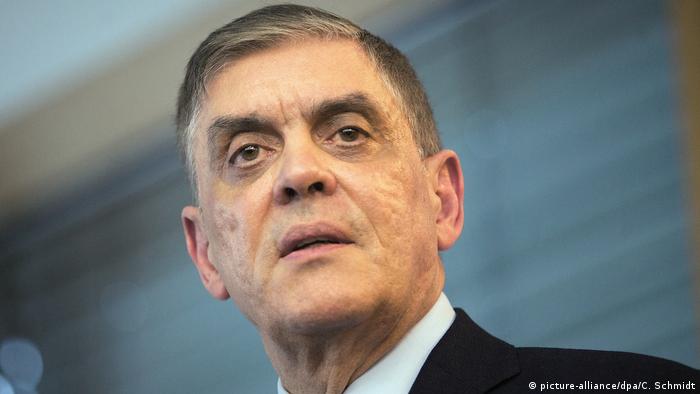
Mehmet Daimagüler is Germany's first commissioner for combating discrimination against Sinti and Roma. He says ending such discrimination is a task for all Germans.
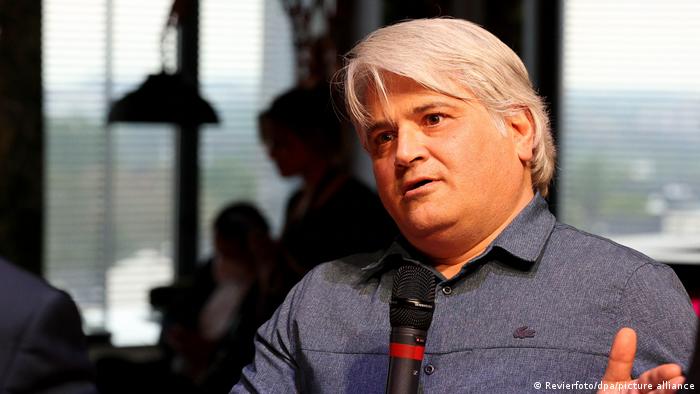


Daimagüler is leading Germany's efforts to combat discrimination against Sinti and Roma


The German lawyer Mehmet Daimagüler has long examined the historical legacies of racism and discrimination in Germany and their influence on present state institutions. Born to Turkish parents in North Rhine-Westphalia in 1968, Daimagüler has been dealing with racism for decades. He was a victims advocate during the trial of members of the National Socialist Underground, a neo-Nazi terror group that killed at least 10 people, almost all of them targeted for their perceived foreign roots.

In May, Daimagüler became Germany's first commissioner on antiziganism, or discrimination against Sinti and Roma. He told DW that many of the issues he plans to tackle are a result of Germans' failure to come to terms with their country's history, specifically the Holocaust.
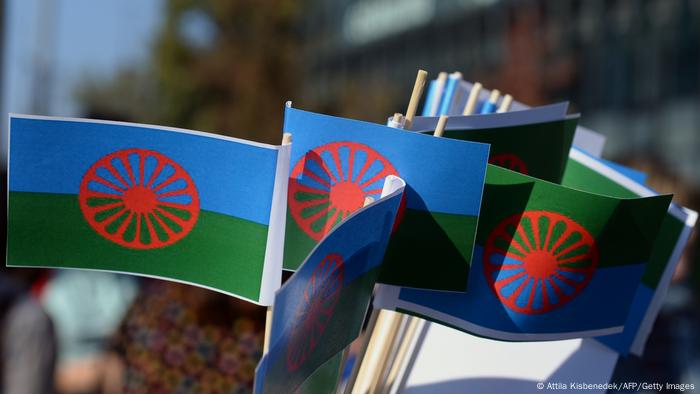

Sinti and Roma flags fly on April 8, the unofficial day of commemoration of Nazi genocide of the Roma and Sinti people

"What was suppressed was that the perpetrators were not just Nazis," Daimagüler said. "They were also Germans. Our grandparents had their grandparents murdered — or murdered them themselves. That's why, even after 1945, everything was done so that the perpetrators from that time remained clean. That's why the dead were criminalized. And that narrative, about the inherent criminality of Sinti and Roma people, is an echo from back then."

The stereotype still informs the work of police, prosecutors and judges, Daimagüler said. It is his job to change the mindset of the next generation of officials through recruitment and the teaching, training and professional development of civil servants.
Better education for authorities

Sinti and Roma who have had negative experiences with the police are often less likely to report crimes committed against them. "Many of them have little trust in the police or the public prosecutor — and justifiably so," Daimagüler said. "And it's exactly these invisible cases that politics should, and must, pay more attention to."

"Police officers must regularly attend shooting training, but they should also regularly attend training in human rights," Daimagüler said, calling for Sinti and Roma to be included in the development of the curriculum. "People from the community should be involved in this as an important resource and as equal partners."
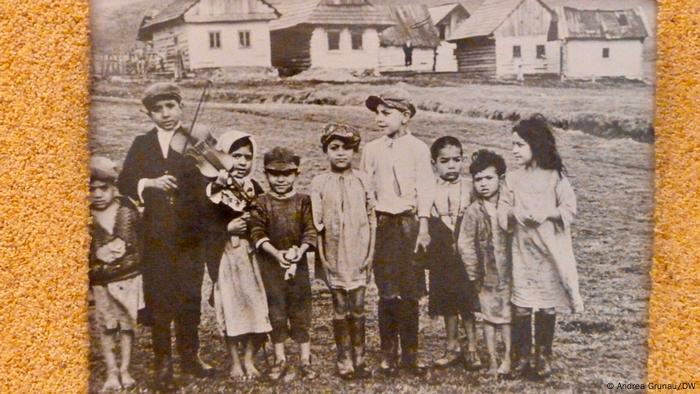
A picture on display at Auschwitz showing Roma children in Slovakia before World War II


A new center known as the MIA will permit victims to make complaints without having to go to a police station. "The MIA is going to be an important tool for recording how many such cases there actually are," Daimagüler said. "And this won't just be about criminal cases that could be prosecuted in a court, but also related assaults."

An oft-used racist narrative about "clan criminality" — or perceived mafia-style groups said to be run by gangsters of Arabic or Turkish descent — in Germany also applies to media representations of Sinti and Roma people, Daimagüler said. He said sensationalist media attempted to increase their readership through so-called investigative articles intended to stoke fear and outrage.

"They take frightening crimes committed by individuals and use them to draw conclusions about the behavior of an entire community," Daimagüler said. The reports "like to claim that the cause of such criminal behavior must be cultural and an alleged inability to accept rules."
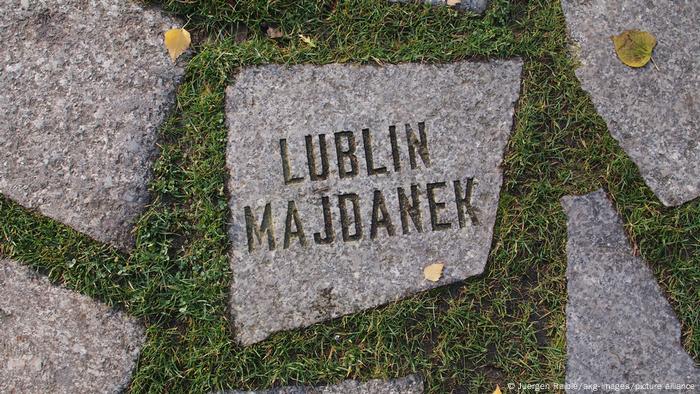

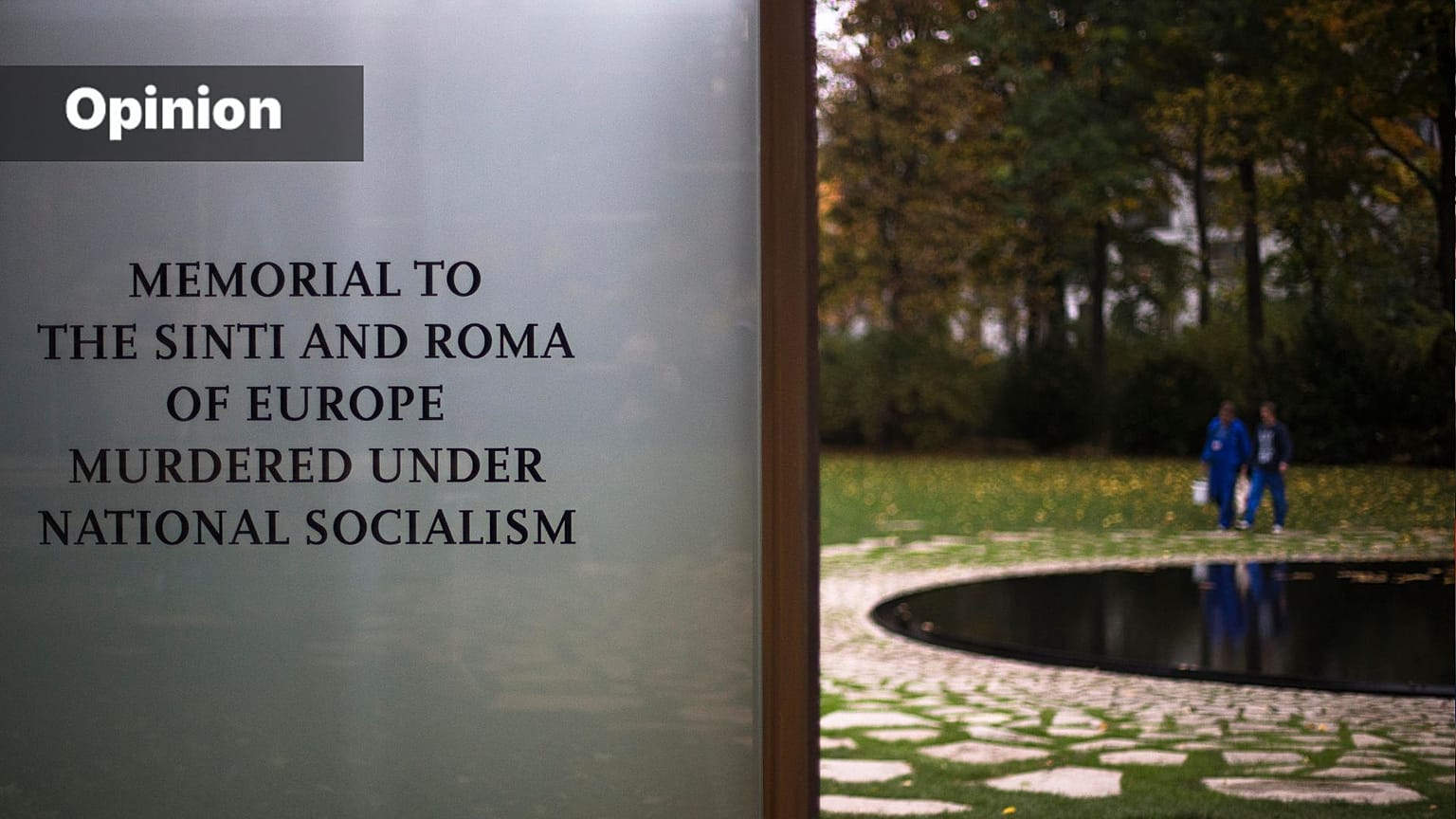
The Berlin Memorial to the Sinti and Roma Victims of National Socialism

Such articles demonstrate "a fundamental lack of respect for the craft of journalism" and "irresponsible sensationalism just for the sake of ratings," Daimagüler said. He added that Roma who arrive to Germany as refugees are frequently treated with even more suspicion.

"In general, Roma — especially those from the Balkans, some of whom have been here for decades with uncertain residency status — should be categorized as worthy of protection," Daimagüler said. "It's not safe for Roma there. It's immoral and indecent to send these people back to the danger that awaits them there. At the moment, Roma people who are fleeing Ukraine are being selected at train stations — I am using that word deliberately — and being treated worse than other people."
Decadeslong discrimination

Daimagüler's new role will be heavily informed by an 800-page report issued by an independent expert commission on discrimination against Sinti and Roma that was ordered by the German government. The report documents the continuing injustices against Sinti and Roma people and explains how they have been excluded from the education system and many professions long after Germany's Nazi era ended.
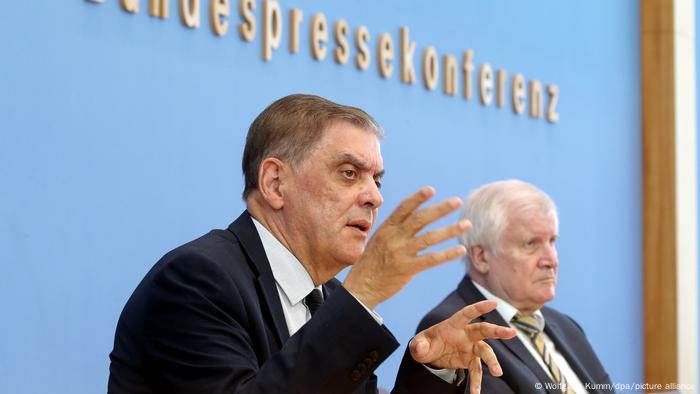

Romani Rose (left), the chairman of the Central Council of German Sinti and Roma, discusses a landmark report on discrimination

The report found that more than half of the incidents of discrimination that Sinti and Roma deal with happen during interactions with public authorities and state institutions. Daimagüler said dialogue with, and feedback and criticism from, Sinti and Roma would be the basis of his work. If he has his way, it will be community members themselves who guide transformation.

Daimagüler is conscious of the fact that he is not Sinti or Roma. He said his job was not to represent Sinti and Roma, but to provide the structure that ensures that the community has a say in political decision-making.

"I know I have to earn the community's trust," Daimagüler said. "The structural inclusion of Sinti and Roma in advisory bodies — and a substantive exchange with organizations and representatives — is enormously important to me and for the quality of our work."

In the end, it will be about the German state and society taking responsibility and ending discrimination against Sinti and Roma — and ensuring that the community is not isolated when combating racism. "Antiziganism is a problem for those who are impacted, but, above all, it's a problem for our society," Daimagüler said, "because antiziganism betrays our own values."

This story was originally written in German.


On August 2, 1944, 4,300 Sinti and Roma were killed in the gas chambers of the Auschwitz-Birkenau death camp. Genocide survivors described the horrors. To this day, many of their descendants are refused compensation.

Sinti survivor of the Nazis fights for compensation

Frieda Daniels is 89 years old, a high-wire acrobat — and Sinti. She and her family were persecuted under the Nazis, and Frieda is still fighting to obtain proper compensation for the injustice they suffered.

Sinti, Roma face systemic prejudice in Germany

On International Romani Day, some 76 years after the Nazi genocide that aimed to wipe out Germany's Sinti and Roma communities, DW looks at progress for Europe's largest minority group — but discrimination remains.

Saturday, August 01, 2020

Sinti and Roma fear for their Holocaust memorial in Berlin

Germany’s rail company, Deutsche Bahn, wants to build a suburban train line that would run under Berlin’s memorial to the Sinti and Roma murdered in the Holocaust. Activists are up in arms about the plan.


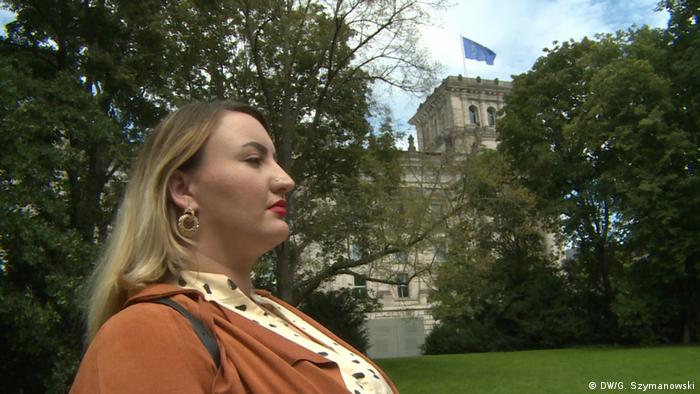
Whenever Roxanna-Lorraine Witt visits Berlin, she goes to the memorial to the murdered Sinti and Roma in Tiergarten, the city’s sprawling central park. It’s a special place for her. None of her grandmother’s five siblings survived the Nazi’s systematic murder of the Sinti and Roma.

The memorial may be under threat. Witt fears it won’t survive if a new track for the city’s commuter line gets built beneath it.

Read more: Nazis carried out mass murder of Sinti and Roma in Auschwitz

"It should be clear that this monument is sacrosanct," she said. "There is a political responsibility to protect it." That activists like her have to protest to protect it is itself a scandal, she added.

For Roxanna-Lorraine Witt the Memorial to the Sinti and Roma is a precious place

It has taken a long time for Germany to collectively remember the Sinti and Roma killed in the Holocaust.

The mass murder was called the Porajmos, meaning "devouring." Exact numbers don’t exist, but 500,000 people are estimated to have been killed. For decades, Sinti and Roma said they felt discriminated against by German authorities and overlooked as a victim group.

The German government only acknowledged the murder as a genocide in 1982.


The memorial is close to the Reichstag — a triangular stone in a circular pool representing the badges Sinti and Roma were forced to wear by the Nazis
Kept out of the loop

The memorial, just 50 meters (164 feet) from the German parliament building, was unveiled in 2012, and seen as Germany finally taking responsibility for the groups’ plight. It consists of a dark, circular pool of water upon which sits a triangular stone, which represents the badges Sinti and Roma were forced to wear in Nazi concentration camps to identify them as such.

Read more: Holocaust remembrance in Germany is a changing culture

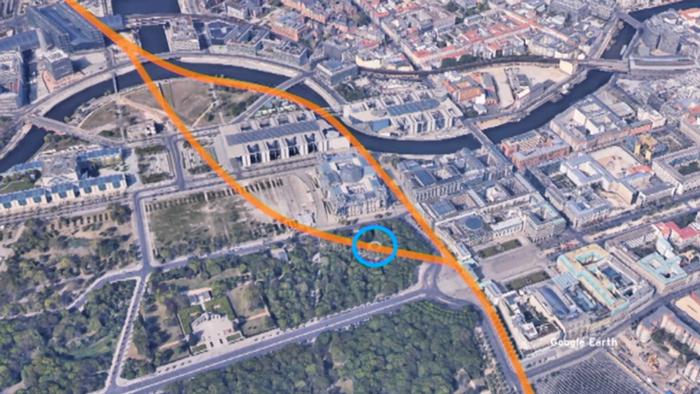
The proximity to the government quarter poses the problem. The new rail line is set to run right through it, which may lead to the monument being dismantled.


Plans for the new train line see it run right across the Sinti and Roma Memorial

"It’s inconceivable that something would happen to this monument without speaking to us," said Romani Rose, the head of the Central Council of Sinti and Roma in Germany.

Rose has spent his life fighting for the recognition of Nazi crimes against Sinti and Roma. He’s known for leading hunger strikes in 1980 on the grounds of Dachau, the former concentration camp, to raise awareness of the Sinti and Roma role in the Holocaust.

Romani Rose is the top representative of Sinti and Roma in Germany
Deutsche Bahn reacts

A spokesman for Deutsche Bahn says the company is "totally blown away" that the impact on a memorial could be problematic, according to the Tageszeitung newspaper. Witt organized a protest against the rail construction in June.

"The memorial is a gravesite for those whose ashes are still in Auschwitz. This is a holy place not only for Sinti and Roma, but for all people," Witt said, adding she is furious that the memorial’s future could be "negotiable" in a way others are not.

Read more: Jewish memorial stones dug out and taken to construction dump

Deutsche Bahn seemed to bend to the uproar in Berlin and online. Though declining to comment to DW, a company news release said "the memorial will not be touched." It also noted that the project is only in its early stages, and a long way off from seeking actual building permission.


REMEMBERING NAZI GENOCIDE OF SINTI AND ROMA
Serving the fatherland

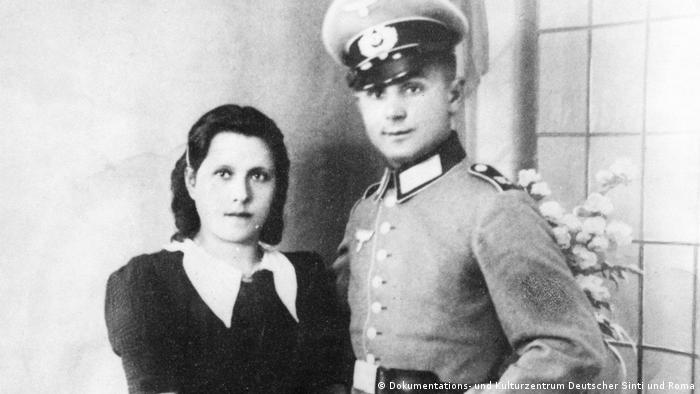
Many German Sinti fought for Germany not only in the First World War but also in the Wehrmacht from 1939 on. In 1941 the German high command ordered all "Gypsies and Gypsy half-breeds" to be dismissed from active military service for "racial-political reasons." Alfons Lampert and his wife Elsa were then deported to Auschwitz, where they were killed.

1234567891011
A sense of discrimination

Sunday, August 02, 2026

BORDERLESS PEOPLES

Euroviews. Memorial Day of Sinti and Roma: The genocide Europe struggles to remember

The entrance of the Memorial To The Sinti And Roma Murdered Under National Socialism near the Reichstag in Berlin, Germany, (AP Photo/Markus Schreiber)
Copyright (AP Photo/Markus Schreiber)

By Michaela Küchler, Secretary General of the International Holocaust Remembrance Alliance
Published on
The opinions expressed in this article are those of the author and do not represent in any way the editorial position of Euronews.

Every year on 2nd August, Genocide of the Roma Memorial Day, Europe remembers the hundreds of thousands of Roma and Sinti people persecuted and murdered during the Nazi era. The real question is what happens on 3rd August – and every day thereafter asks Michaela Küchler in an OpEd für Euronews.

Victims of persecution can be lost twice: first when their lives are taken, and then when their names are quietly mislaid by history.

Victims of persecution can be lost twice: first when their lives are taken, and then when their names are quietly mislaid by history.

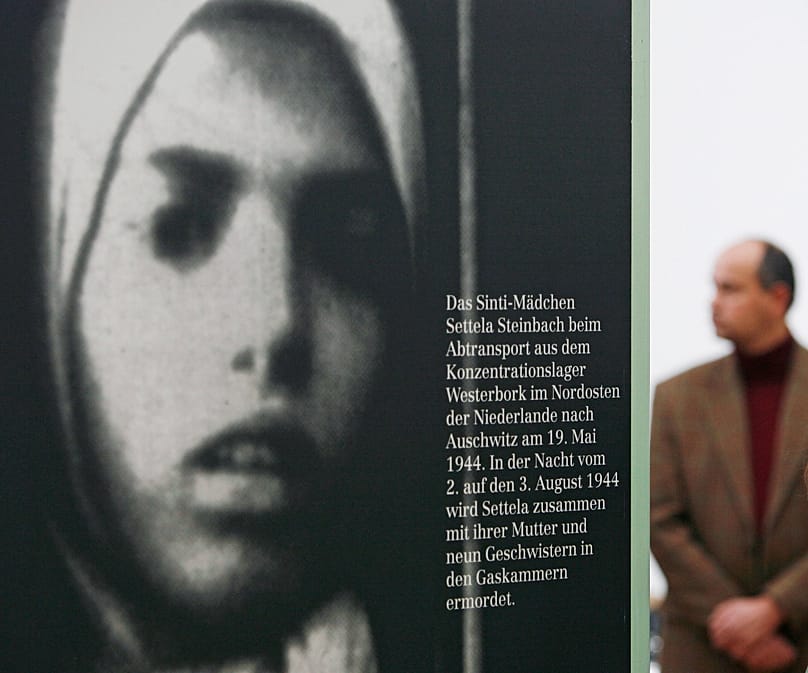
For decades, one of the most haunting images of Nazi persecution was known simply as the “girl with the headscarf”. She was filmed looking through the closing doors of a train leaving the Westerbork transit camp and widely assumed to be Jewish. The image became famous. The girl did not. Only years later did historical research restore her identity.

Her name was Settela Steinbach. She was Sinti.

Photograph of Settela Steinbach at the exhibition ‘The Nazi Genocide of the Sinti and Roma’ – January 2008, Weimar, Germany (AP Photo / Jens Meyer) AP Photo

Settela was nine when she and her family were deported to Auschwitz-Birkenau in May 1944. She was most likely murdered there with her mother, two brothers, and two sisters on the night of 2-3 August 1944. Only the photograph survived. Her name, her identity, and the history of the people to whom she belonged almost vanished from the story attached to it.

Hundreds of thousands of Roma and Sinti people were persecuted and murdered during the Nazi era

Every year on 2nd August, Genocide of the Roma Memorial Day, Europe remembers Settela and the hundreds of thousands of Roma and Sinti people persecuted and murdered during the Nazi era. The real question is what happens on 3rd August – and every day thereafter. It is crucial not to allow a memorial day to become an annual exercise in solemn words followed by institutional amnesia.

Roma and Sinti people were subjected to racist laws, imprisonment, forced labour, deportation, mass shootings and murder across Europe – yet their genocide remains one of the least recognised chapters of Nazi persecution.

Roma and Sinti victims were denied recognition from national histories. Many survivors received neither justice nor proper acknowledgement.

That neglect did not end in 1945 – for decades, Roma and Sinti victims were denied recognition from national histories. Many survivors received neither justice nor proper acknowledgement. The prejudices that had helped make persecution possible did not obligingly disappear when the war ended.

Recognition remains patchy

Of course, some progress has been made. Some memorials have been established and research has certainly deepened. Survivors, descendants, scholars and organisations have painstakingly recovered names and histories. Indeed, it was such difficult and important work that gave the “girl with the headscarf” her name again.

But recognition remains patchy. In too many classrooms and museums, the genocide is still presented as an optional appendix to the history of the Nazi era rather than an integral part of it. Ask what happened to Roma and Sinti people under Nazi rule and the answer may still be a blank look. That silence is not the fault of young people born decades later – they cannot know what they have never been taught.

Nazi crimes did not begin with mass murder. They began with stereotypes, exclusion, paperwork, racial classification, and the steady removal of rights – the bureaucratic preliminaries to barbarism. Teaching this history shows how prejudice emerges as administrative and legal and eventually becomes lethal.

Teaching history must show Roma and Sinti as more than anonymous victims

It must also show Roma and Sinti people as more than anonymous victims. They had families, professions, communities, and ambitions. They resisted persecution and rebuilt lives afterwards. Settela was not merely the frightened child caught on film for a few seconds: she was a daughter and sister; her father was a trader and violinist. These facts restore the individuality that persecution tried to erase – they are not decorative detail.

As opportunities to hear directly from living survivors and witnesses become fewer, responsibility passes increasingly to institutions.

As opportunities to hear directly from living survivors and witnesses become fewer, responsibility passes increasingly to institutions. Because recognition came so late, many Roma and Sinti voices were never recorded in the first place, making the testimonies that remain all the more precious. We must preserve the historical record while continuing to document the experiences of those who are still able to share them. Archives must be opened, sites connected to the genocide safeguarded, photographs correctly identified, and Roma and Sinti perspectives placed at the centre of education and commemoration.

Europe’s commitment to remembrance cannot be measured only by ceremonies held on 2nd August

The International Holocaust Remembrance Alliance’s “Recommendations for Teaching and Learning about the Persecution and Genocide of the Roma during the Nazi Era” were developed to turn that obligation into something more useful than good intentions. Designed for governments, policymakers, teachers, museums, memorial sites, archives and civil-society educators, they provide a practical framework for why this history should be taught, what students should learn, and how it can be approached responsibly. The Recommendations help countries bring this history into mainstream education and memory culture, safeguard the historical record, counter distortion, and ensure that teaching includes Roma voices, resistance and crucially – agency. They also offer guidance on curricula, educational resources, and teacher training, while recognising national and local experiences and involving Roma communities themselves.

But our Recommendations cannot manufacture political will. They can, however, remove the excuse that nobody knows what practical action looks like. Europe’s commitment to remembrance cannot be measured only by ceremonies held on 2nd August, however moving or well attended. It must be measured by what happens in classrooms, archives, museums, and public institutions throughout the year.

Europe cannot return those who were murdered. It can at least refuse to lose them twice

The test is whether future students will still encounter silence where this history should be taught– and whether people like Settela remain merely an anonymous face in an old film, or are remembered as people with names, families, and a history.

Europe cannot return those who were murdered. It can at least refuse to lose them twice.

A career diplomat, Michaela Küchler has held a range of positions including Press Attaché in Santiago de Chile, Cultural Attaché in former Czechoslovakia, and Consul General in Chennai. She also served as a negotiator for European Union enlargement and as a European policy adviser to two Federal Chancellors and three Federal Presidents. As Chair of the International Holocaust Remembrance Alliance (IHRA) German presidency in 2020, she spearheaded initiatives to counter distortion of the Holocaust and the genocide of the Roma.

Friday, June 27, 2025

Germany: Racism against Sinti and Roma increasing
DW
June 23, 2025

A new report about antiziganism in Germany has revealed alarming figures — and criticized the media for feeding cliches. But the community is also counting small successes.


Sinti and Roma, who still suffer widespread discrimination in Germany, marked Romaday with a parade in Berlin in April
Image: Thomas Bartilla/Geisler-Fotopress/picture alliance

Sinti and Roma are especially affected by prejudice, discrimination, racism, according to the Antiziganism Reporting and Information Center in Germany (MIA), which has documented the nature and scale of antiziganism in the country in its latest annual report.

The report recorded 1,678 antiziganism cases in 2024, ranging from verbal abuse to assaults — a significant increase on the 621 reported in its first edition, published for the year 2022.

"The incidents documented in this report clearly show that verbal stigmatization and antiziganism propaganda paves the way for discrimination and for physical attacks up to life-threatening violence," Mehmet Daimagüler, Germany's first federal commissioner against antiziganism, wrote in the foreword.

New federal antiziganism commissioner


A lawyer by profession, Daimagüler was appointed in 2022 but was replaced by the new German government in June with Michael Brand, a member of the Bundestag for the center-right Christian Democratic Union (CDU) and state secretary at the Family Ministry, which supported the MIA report.

Brand took over the office in difficult times. "It is absolutely clear, in light of the increase in extremism fanned from within and outside Germany, that we must now especially protect minorities such as the Sinti and Roma from the effects of extremism and discrimination," he said.


Increasingly hostile atmosphere 'poisoning the social climate'

The significantly higher number of antiziganist incidents can be attributed to the growing awareness of the MIA's work. But beyond the raw figures, the report shows that those affected are reporting a generally hostile atmosphere.

The almost 70-page report includes numerous concrete examples of degrading, sometimes violent discrimination. In one incident caught on camera, a Sinti boy who was bullied in school was held down by several boys after school one day, tied to a bench and beaten.

According to the report, the incident escalated further when the parents of the boy and two of their relatives confronted the parents of the perpetrators. Several people joined the row and attacked the Sinti family, one of whom suffered a broken foot. Another was threatened with a knife and injured.

A study has shown that such excesses are occurring repeatedly in German kindergartens and schools. The root of this development is what the report calls an increasingly hostile political debate: "The MIA observes that anti-Roma and Sinti statements, especially by right-wing parties, are poisoning the social climate."

Nazis committed genocide against Sinti, Roma


Romani Rose, who has headed the Central Council of German Sinti and Roma since 1982, draws a pessimistic conclusion in the MIA report.

"Unfortunately, we must acknowledge that despite our almost 50 years of political work in this country, a change in consciousness has only just begun," he said.

Rose also recalled the systematic extermination of his ethnic group by the National Socialists. By the end of World War II, more than half a million Sinti and Roma throughout Europe had been persecuted or murdered. Today, an estimated 80,000–140,000 live in Germany. Europe-wide, their population numbers between 10 and 12 million.

Media often spread cliches

The MIA also blamed the media for shaping the cliched image of Sinti and Roma. Distorted or false portrayals are found in commercial media outlets and public service broadcasters alike, the report found, and there have been more frequent complaints about stigmatizing or false depictions.

Fighting Sinti and Roma stereotypes with art 
04:36


One documented case concerned the supposed large-scale misuse of public funds by Roma allegedly posing as Ukrainian refugees. "More than 5,000 cases of social fraud via fake Ukrainians," read a March 2024 article published by the Ippen media group, which appeared on numerous German news outlets.

The background to the text was stories circulating shortly after Russia's invasion of Ukraine about people said to have posed as refugees. According to the MIA report, this was a typical case of media failure, as the story was specifically directed against Roma, who were accused either of traveling to Germany with forged Ukrainian passports or concealing possible Ukrainian-Hungarian dual citizenship. In fact, Ukrainian Romani people have suffered discrimination in Germany.

Successful complaint to German Press Council


The publishing of the report in the Hanauer Anzeiger newspaper was the trigger for a successful complaint to the German Press Council, the self-regulating body for Germany's print media and their online channels.

According to the council, the reports violated fundamental journalistic principles. Instead of scrutinizing the numbers, other media outlets were simply taken as a source. The council went on to condemn the story on three counts: Violating journalistic due diligence, the non-discrimination rule and disregarding the presumption of innocence.

Due to limited resources, the MIA is still unable to carry out its own systematic media monitoring. "Nevertheless, we closely follow the discourse and developments in media coverage," the organization's annual report said.
Discrimination 'must be clearly and decisively confronted'

The MIA welcomed the fact that the post of an antiziganism federal commissioner had been retained after all — something that had been in doubt because there was no commitment to the post in the coalition agreement of Germany's new federal government. Now the MIA team can breathe a sigh of relief and appeal to policymakers to strengthen the office with the appropriate resources and personnel.

The initial statements by the new antiziganism commissioner are likely to raise hopes in the Sinti and Roma community.

"Where discrimination occurs, it must be clearly and decisively confronted — by the state and society alike," said Brand. "It is important to me to also highlight the many positive examples of cooperation between the majority society and minorities."


Marcel Fürstenau Berlin author and reporter on current politics and society.

Thursday, March 30, 2023

Germany: Discrimination against Roma and Sinti on the rise

Roma and Sinti continue to be subject to prejudice in various areas of public life in Germany. The Berlin-based Amaro Foro youth organization has documented incidents in the capital.


Andrea Grunau
DW
MARCH 30,2023

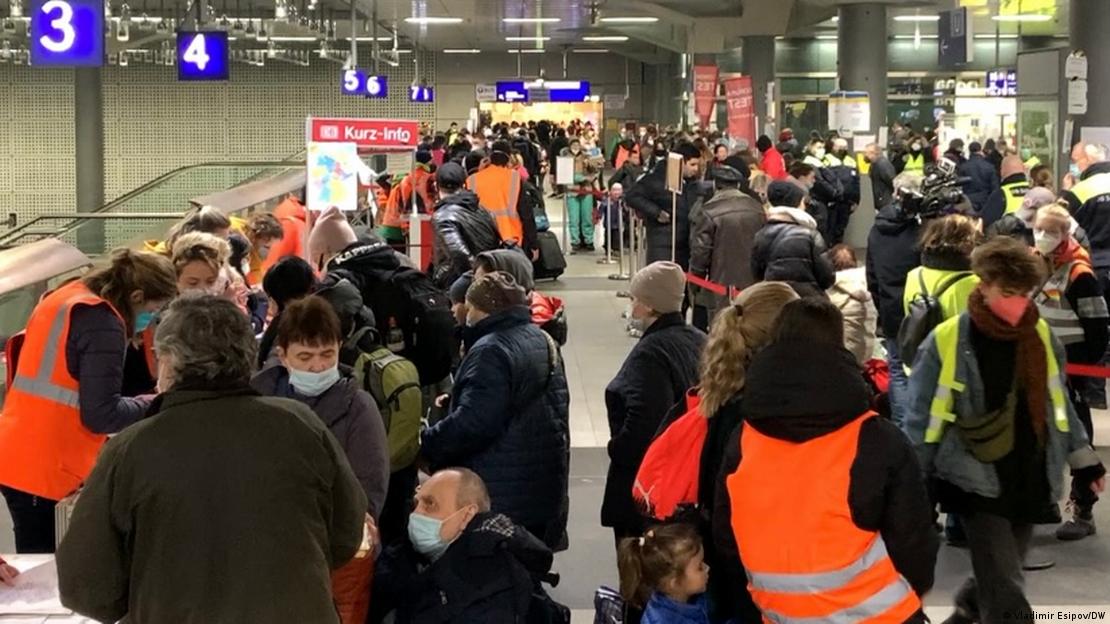
Over the past year, hundreds of thousands of refugees from Ukraine have arrived in Germany and most have received a friendly welcome. Some, however, have had to prove they are "real" refugees by showing their IDs in line for food handouts; others have been the target of racist insults. One family was blocked by security forces at the main train station in the capital Berlin, as its members made their way to a COVID test center. The guards tried to impose a blanket ban on them entering the building.

"Since the beginning of the Russian war of aggression, we have noticed that Roma who fled Ukraine are not identified as seeking protection, but as illegitimate refugees," said Violeta Balog, the head of DOSTA, a documentation center on antiziganism, which is also known as antigypsyism, at Berlin's Amaro Foro, a cross-cultural youth association of Roma and non-Roma. "War and crises strengthen anti-Roma sentiment," she added. Amaro Foro, according to the group's website, means "our city" in the Romanes language

Rise in anti-Roma incidents in Berlin

DOSTA says that Germany has a particular responsibilty because of Nazi crimes against Sinti and Roma in Europe: "The German extermination campaign also took place on the territory of Ukraine, the 'Holocaust by Bullets,' that is, mass shootings."

DOSTA has been documenting cases of racist discriminationagainst people who are Sinti and Roma, or perceived to be, in Berlin since 2014. It recorded 372 incidents in 2021 and 2022, more than ever since it started collecting the data, but thinks that there were probably a great number of unreported cases.

Thousands of refugees arrived in Berlin from Ukraine in 2022
Image: Vladimir Esipov/DW

On the recommendation of the Independent Commission on Antiziganism set up by the German parliament, last year a nationwide Reporting and Information Center on Antiziganism (MIA) was established.

Doubts as to refugee status


Mehmet Daimagüler, the Germany's first commissioner for combatting discrimination against Roma and Sinti, confirmed that Roma from Ukraine had been discriminated against at all stages of their journey from Ukraine to Germany. In one case, German police and rail staff forced more than 30 people to get off a train because their refugee status was doubted.

"I find it intolerable that Roma, descendants of people who survived the Holocaust, some of whom were taken to the gas chambers on Reichsbahn trains, are now being discriminated against on Deutsche Bahn trains," Daimagüler told DW.

Meanwhile, he said, the chairperson of the Deutsche Bahn board and the chairman of the Central Council of German Sinti and Roma had discussed the matter, and Deutsche Bahn had committed itself to educating its employees about anti-Roma and Sinti discrimination.


Refugees from Moldova have also faced very negative experiences in Berlin, according to DOSTA. They are often depicted as Roma and "illegitimate refugees," said political scientist Aron Korozs, who added that in Moldova Roma communities hardly had any access to education and health care. He also said that seriously ill people and heavily pregnant women had been deported from Berlin.

Antiziganism in everyday life


Incidents reported include the case of a woman who went to the emergency room of a Berlin hospital because she felt poorly as a result of chemotherapy. She reportedly vomited on the premises and was thrown out by security guards who said to her: "You only come here to eat and drink anyway."

In another incident, a Romanian woman lifted a watermelon in a supermarket to see if it was ripe. Security personnel chased her away "because 'gypsies' always steal." The woman filed a complaint after the racial slur. Sinti and Roma were persecuted under the Nazis and between 250,000 and 500,000 are estimated to have been murdered. In concentration camps, they were often ascribed serial numbers prefaced by a Z for Zigeuner (the German word for "gypsy"), which were tatooed on their arms. Balog said the term was "insulting, racist, hurtful."

DOSTA has found that whether they are shopping, working or dealing with neighbors and landlords, Roma — and people who are thought to be Roma — experience discrimination in all areas of life.

Balog said that it was difficult for people to defend themselves because often their basic needs, including housing and work, were at stake. Many feared the consequences if they stood up against discrimination. Not without reason: One man who turned to Amaro Foro for advice after facing discrimination from his landlord had been given notice, she said.

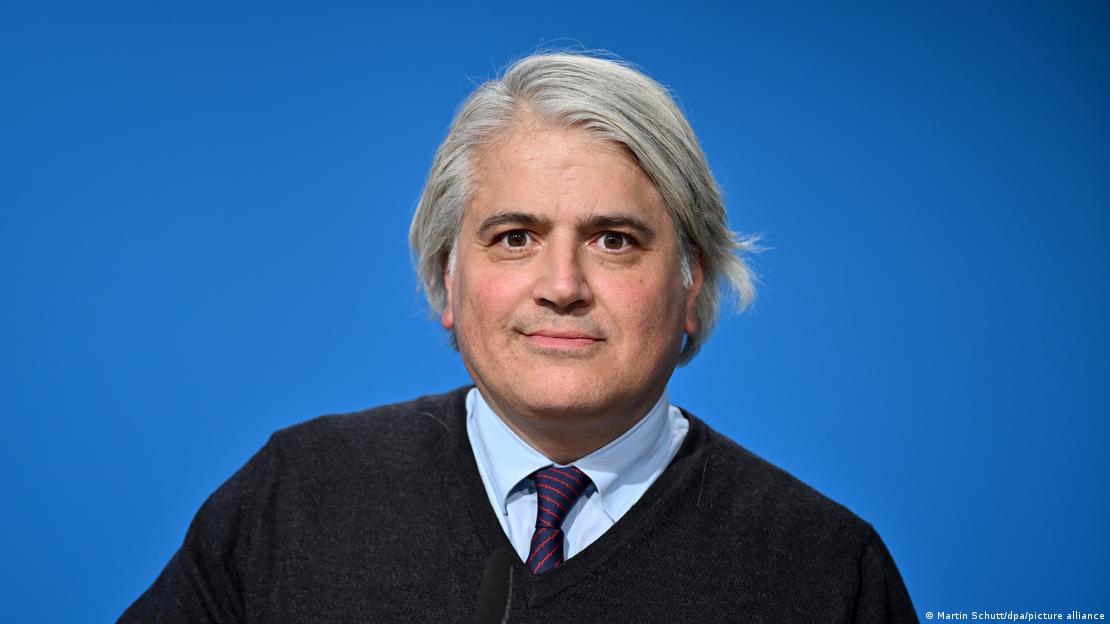
Figures show only a "fraction of the reality," says Mehmet DaimagülerImage: Martin Schutt/dpa/picture alliance

Antiziganist prejudices and crimes


The 2022 Leipzig Authoritarianism Study found that many people in Germany tended to be hostile when asked about Sinti and Roma. Over half of those surveyed had agreed with the statement "I would have problems with Sinti and Roma hanging out in my area" in eastern Germany, while over a third had agreed with it in the country's west. There was even more agreement with the statement "Sinti and Roma are prone to crime."

Antiziganism has led to a rise in crime against Roma and Sinti in Germany. "In 2022, 145 antiziganist crimes were reported, including 12 violent crimes," the German government said in response to a question from the Left party parliamentary group. Daimagüler told DW that this was the highest figure since these crimes began being recorded in 2017 but probably only showed "a fraction of the reality."
'Discrimination should not be tolerated'

In another case, a Romanian mother who was looking for a kindergarten place for her daughter had been told on the phone that there were vacancies. When she showed up, she and her daughter were sent away and told there were no places. She said that a few days later, an acquaintance of hers "who is taken for white" had been granted a spot at the same kindergarten.

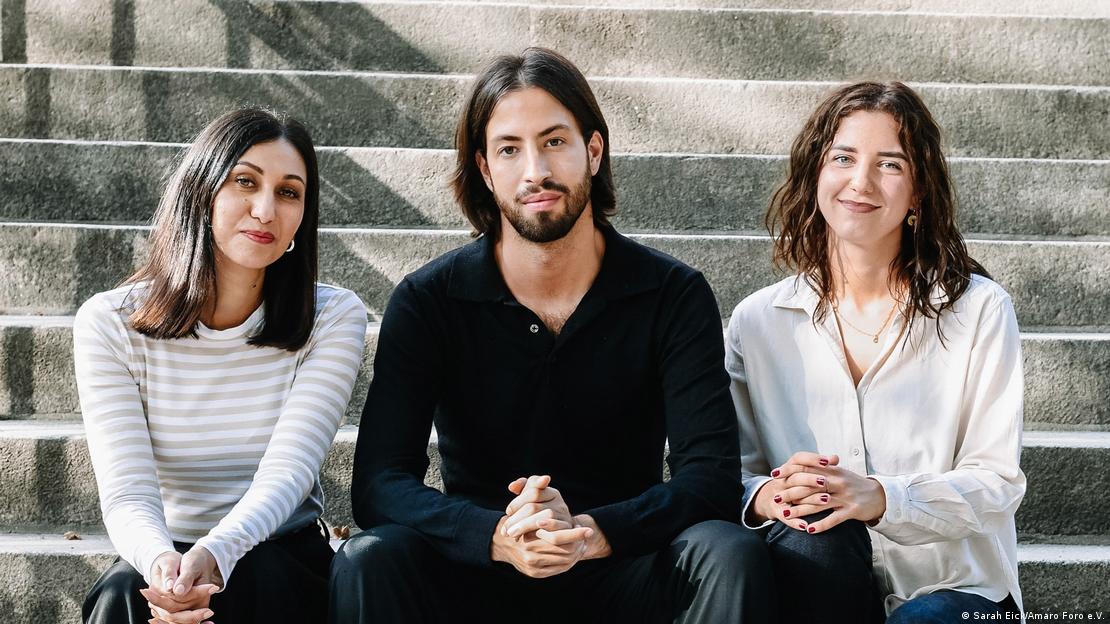
Violeta Balog, Aron Korozs and Valerie Laukat are part of the DOSTA team
Image: Sarah Eick/Amaro Foro e.V.

Balog said that finding a kindergarten place was not the only problem for Roma. She said that many children waited "forever" before being admitted to school. She saide that some school administrators rejected Moldovan children across the board because "they're going to be deported anyway."

She said that even when they did go to school, Roma and Sinti children often faced bullying from classmates and staff. A 2021 RomnoKher study conducted by the nationwide association of Roma and Sinti found that more than six in 10 experienced discrimination at school.

Balog said that racist bullying at school could have a strong impact on the education of children and limit their opportunities. She said that educational establishments had to be open to everybody and that all children should be taught together instead of being divided into seperate classes because of language barriers. She said that children should be given more support to learn German if necessary. Discrimination must not be tolerated, she said, adding there was a need for "independent complaints bodies with powers."

She also criticized the fact that history books often only mentioned the Nazi genocide of the Sinti and Roma in passing. "German Sinti in particular have been part of this society for more than 600 years," she argued, adding that it was unacceptable that "we still live in times of ignorance."

'Unemployment rates hardly differ'

The Berlin State Anti-Discrimination Act (LADG) entered into force in 2020. DOSTA says that progress has been made, but antiziganist incidents have still occurred, including on the part of federal agencies, such as job centers as well as social welfare offices, to which the LADG does not apply.

All children should have the same rights to an education, says Amaro ForoImage: 
Uwe Anspach/dpa/picture alliance

In 2019, Balog said that DOSTA had learned of a Federal Employment Agency document that suspected Romanian and Bulgarian nationals of "organized benefit abuse," through a leak.

She said that the document had since been amended but that in practice benefit payments were often delayed and applicants were frequently asked for "irrelevant" information and documents. DOSTA points out that employment rates for people from Romania and Bulgaria hardly differed from those for the German population in 2021, in order to refute accusations of "poverty immigration."

'Do not lump people together'

Another case is that of a social worker telling a colleague not to pay too much attention to a young woman in a shared residence because she had a Roma background, would soon drop out of school and get married, as that was part of the "culture." Horrified, the colleague replied that she too was Roma, had studied and did not have children. To which the social worker had replied: "Oh, you are Roma? You don't look it."

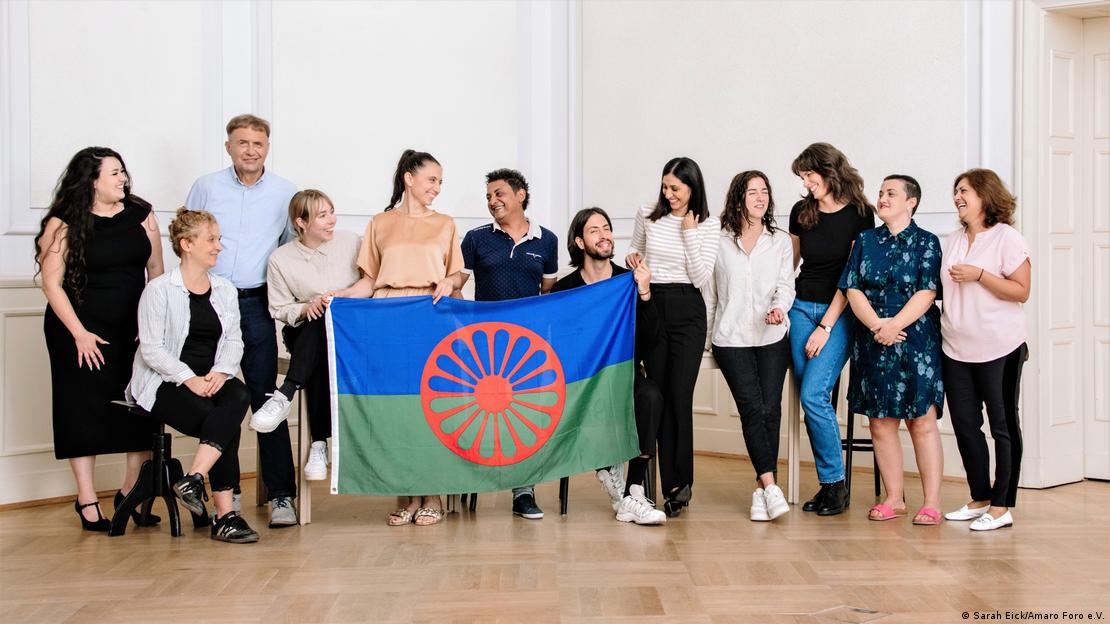
The Amaro Foro team in Berlin
: Sarah Eick/Amaro Foro e.V.

Aron Korozs said that this was a prime example of how antiziganistic images partly shaped the social work sector, in which a homogeneous Roma culture was that did not exist was assumed. He said that social workers should not lump people together but seek individual solutions.

Amaro Foro spokeswoman Andrea Wierich told DW she was worried about the way Roma and Sinti were depicted in the media. She said there had been some improvement but antiziganist stereotypes had not disappeared. "A beggar is immediately labeled as being Roma, a doctor is not," she said, adding that images contributed to stigmatization. "Roma are often not portrayed as individuals, but as a foreign-looking mass, seen from behind, often wearing long colorful skirts, and with dark hair."

She said that she hoped it would eventually become normal to see Roma and Sinti individuals in the media, "with a Rom presenting the weather in the daily news program, and not only seen as an activist on World Roma Day."

This article was originally written in German.

Monday, June 17, 2024

Germany: Attacks on Sinti and Roma double


German authorities documented more than 1,200 attacks on Sinti and Roma over the past year. Prejudice and discrimination are to be found on the streets as well as at government agencies.


Sinti and Roma face discrimination from society and government agencies
Image: Michal Cizek/AFP


According to the Antiziganism Reporting and Information Center (MIA)— a federal data tracking agency — the number of attacks on Sinti and Roma registered in Germany nearly doubled in 2023, to 1,233 — up from 621 in 2022.

Speaking of the dramatic jump at the report's presentation in Berlin, Romani Rose, head of the Central Council of Sinti and Roma in Germany, said, "This causes us great concern against the backdrop of history."

Germany is home to some 150,000 German Sinti and Roma, as well a further 100,000 Roma migrants.

Sinti and Roma were among those people singled out for extermination by the Nazis during the Holocaust, with some 500,000 killed.
Insults, threats, prejudice and discrimination

Federal Family Minister Lisa Paus of the Green Party called anti-Roma sentiment a "sad part of everyday life" for those affected and demanded society and government treat it with the same urgency as racism and anti-semitism

Federal Antiziganism Representative Mehmet Daimagüler was especially critical of police, who were a focus of the report.

Three of the ten "extremely violent" incidents documented in the 2023 index involved police; and in one, the use of police dogs on handcuffed detainees.

MIA Chair Silas Kropf called for fundamental changes among police in order to combat systemic discrimination.
 
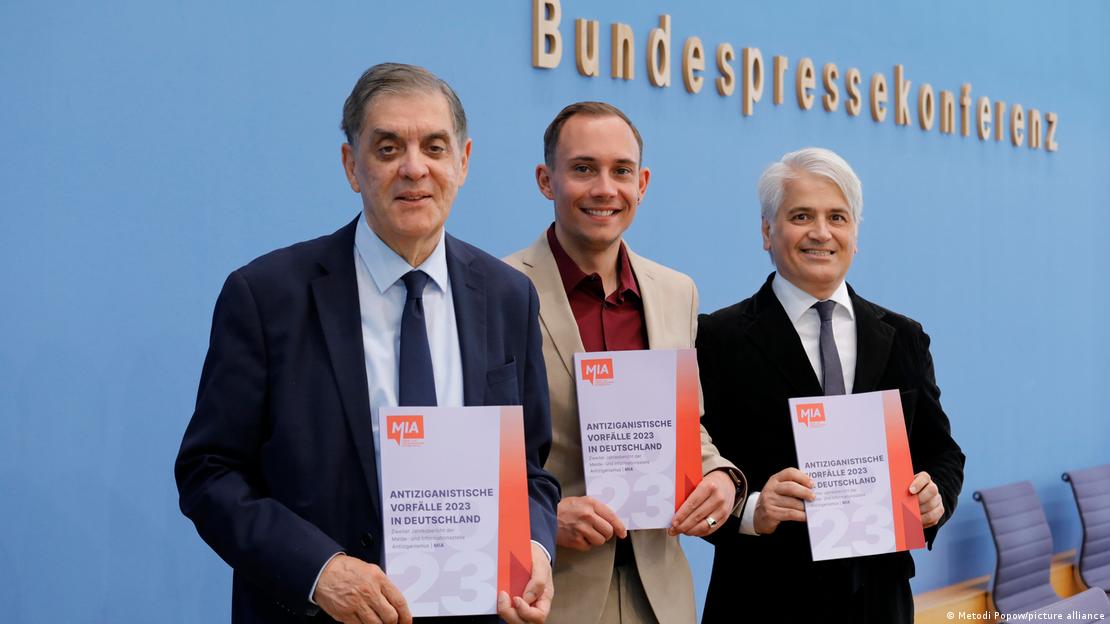
'Shameful' that there is no public outcry over anti-Roma attacks
Image: Metodi Popow/picture alliance

Daimagüler noted that the underlying prejudice evident in police attitudes toward Roma and Sinti, as well as a lack of trust of Roma and Sinti for police, had also led to an underreporting of discriminatory incidents.

Nevertheless, Kropf said the higher number of reported incidents did not necessarily reflect an increase in incidents — of which official numbers may only represent a small number of actual cases — but rather to the greater ease with which they can now be reported online, via mail or telephone in six German states.

In all, authorities recorded 50 violent attacks, 10 of which were characterized by "extreme violence," 46 threats, and 27 instances of property damage. Evidence of neo-Nazi motivation was found in 89 cases.
Prejudice baked into the German administrative system

MIA Chair Kropf said a rightward lurch in society, the failure of politicians to call out anti-Roma discrimination, and the deep-seated prejudices baked into the German administrative state were ultimately driving the numbers.

The study found discrimination most frequently occurred at schools, places of residence, and government agencies. Roma monuments and graves have often been targeted — with swastikas recently painted on the home of a Holocaust survivor, for instance — and racist chants and incitement are common.

Kropf implored the federal government to renew financing of the MIA — which was created in October 2021 — so that it can continue to get a more realistic idea of scale of anti-Roma sentiment in German society.

Federal Antiziganism Representative Mehmet Daimagüler said lack of public outcry over anti-Roma discrimination was "shameful," asking, "Where is society's indignation?"

My family was murdered - Sinti and the Holocaust  12:36

DW

js/lo (AFP, dpa, epd, KNA)

Tuesday, August 02, 2022

German lawmaker says Roma community is 'again being marginalized'

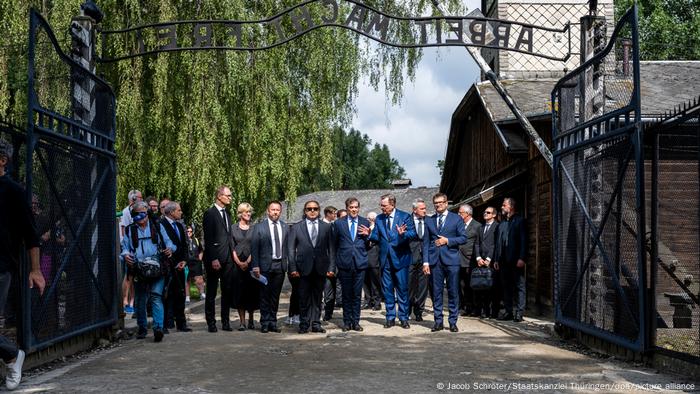
Europe's largest minority group is often subjected to "racism and the denial of rights," Bodo Ramelow said in a speech to mark the European Roma Holocaust Memorial Day at the Auschwitz-Birkenau concentration camp.

Half a million Sinti and Roma were killed during the Holocaust

German lawmaker and premier for the state of Thuringer Bodo Ramelow (Left Party) called for an end to the exclusion of Sinti and Roma people on Tuesday.

"We are here today, to look the horror in the face and thereby make it visible," the president of the Bundesrat, the parliamentary chamber that represents Germany's 16 states, said in a speech to mark the European Roma Holocaust Memorial Day at the site of the Auschwitz-Birkenau concentration camp.

Europe's largest minority group still experiences racism, says Ramelow

With an estimated population of 10 million people, the Roma community is Europe's largest ethnic minority. "And yet, in many places, they are once again being marginalized," Ramelow said. "They experience hatred, exclusion, racism, violence and the denial of civil and social rights in many countries."

Ramelow and Romani Rose, the chairman of the Central Council of German Sinti and Roma, both laid wreaths.

Wreaths were laid by both Ramelow (pictured) and the chairman of the Central Council of German Sinti and Roma, Romani Rose

On August 2, 1944, some 4,300 Sinti and Roma were killed in gas chambers at the death camp in Nazi-occupied southern Poland.

In 2015, the European Parliament declared the anniversary European Roma Holocaust Memorial Day to commemorate the 500,000 Roma — representing at least a quarter of their total population at that time — murdered in Nazi-occupied Europe.

'Sinti and Roma were persecuted to their deaths'

"Half a million Sinti and Roma were murdered during the Nazi dictatorship," Ramelow said. "Just like Jews and other minorities, Sinti and Roma were persecuted to their deaths because a racist ideology denied them the right to live."

It wasn't until 1982 that the Nazi mass-murder of the Sinti, a subgroup of Romani people mostly found in Germany and Central Europe, and Roma people became recognized as genocide. 

VIDEO: Postwar persecution - The plight of West German Sinti and Roma

Monday, August 02, 2021

Europe remembers Sinti, Roma murdered under Nazi rule

On August 2, 1944, 4,300 Sinti and Roma were killed in the gas chambers of the Auschwitz-Birkenau death camp. Genocide survivors described the horrors. To this day, many of their descendants are refused compensation.


Before the Holocaust: The German-Sinti Bamberger family in the 1930s


"Dear Banetla, I have to tell you that my two youngest children have died." Those words were written by Margarete Bamberger in a 1943 letter to her sister in Berlin. It was smuggled out of what was known as the "gypsy camp" at the Auschwitz-Birkenau concentration camp. Margarete, her husband Willi and their children were all detained at the death camp. Margarete and Willi survived the ordeal. Their children did not.

Bamberger had desperately implored relatives to send parcels containing cod liver oil, cough syrup, vitamin C, washing powder and anything that could be used to combat scabies. "Whatever it is, and however small, it might help us here," she wrote. She also used the Romani language to send a hidden message, expressing the full horror of their situation: "Special greetings from Baro Nasslepin, Elenta and Marepin" — code for the three horrors "disease, misery and murder."


A memorial stone at the Auschwitz-Birkenau camp marks the genocide: 'Here lie their ashes, may their souls rest in peace'


The remains of this letter, as well as 60 other testimonies, can be studied in the original version in German, English and Romani at the Voices of the Victims portal of the RomArchive. Coordinated by historian Karola Fings, scholars from across Europe have collected letters and statements from persecuted minorities from 20 countries: Belarus, Belgium, Bosnia-Herzegovina, Germany, Estonia, France, Italy, Croatia, Latvia, the Netherlands, Austria, Poland, Romania, Russia, Switzerland, Serbia, Slovakia, Czech Republic, Ukraine and Hungary.

Fings, of the Research Center on Antiziganism at the University of Heidelberg, told DW that what makes this resource so special is that the focus is not on the perpetrators. Instead, she said, the voices of the Sinti and Roma themselves are heard. The texts date from the time of the persecution itself, or from the period just a short while later when the victims began to bear witness to the crimes committed against their minority and early attempts were undertaken to bring the perpetrators to justice.


Like Margarete Bamberger's children, the vast majority of the prisoners killed at the Auschwitz-Birkenau death camp died of hunger, disease or unbridled violence. The night of August 2, 1944, was the "horrific high point" of the racially motivated persecution of the Sinti and Roma, said Fings.

The SS liquidated the "family camp" at Auschwitz-Birkenau, driving 4,300 screaming and wailing people to their deaths. It was truly a day of horror in the Romani Holocaust, known also as the Porajmos. In 2015, the European Parliament declared August 2 as Roma Holocaust Memorial Day for Sinti and Roma.

However, because of the COVID-19 pandemic, this year the day will largely be commemorated in digital ceremonies.

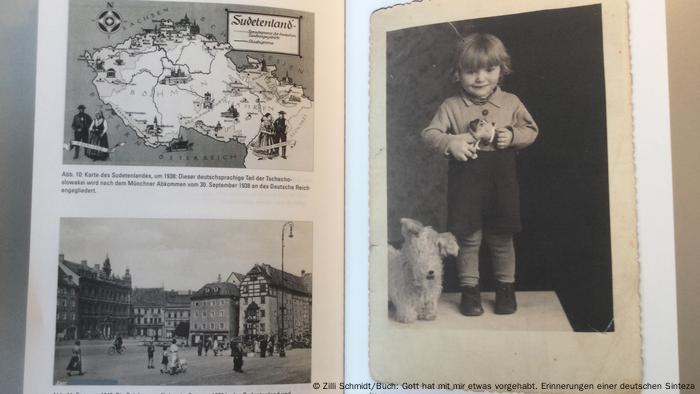
Among those gassed to death on that terrible night in 1944 was the daughter of Zilli Schmidt: 4-year-old Gretel died together with her grandparents, her aunt and her six cousins. Like other inmates deemed fit to work, Gretel's mother had been transported elsewhere just a short while earlier. She had tried to escape from the train that was to carry her away and run to her family. But notorious SS doctor Josef Mengele slapped her about the head and forced her back into the wagon: "He saved my life, but he did me no service," remembered Schmidt.


Zilli Schmidt's most precious belonging was this photo of her daughter, Gretel


Mano Höllenreiner, 10, from Munich was among those who had, together with his parents, been transported to the Ravensbrück concentration camp. But he lost many relatives in Auschwitz: cousins with their children, aunts and "my poor grandmother who I loved so much — also gassed."
From a Catholic children's home to Auschwitz

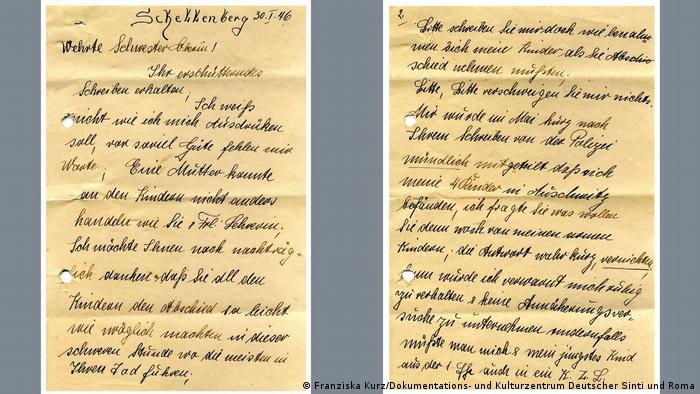
Franziska Kurz lost four of her children: Otto, Sonja, Albert and Thomas were taken away and kept in a children's home before they were later deported.

In 1946, Kurz wrote to the mother superior of the St. Josefspflege Catholic children's home in southern Germany. The police had told her that "my four children were in Auschwitz." So, I asked them: "What on Earth do you still want from my poor children? The answer was short: "extermination."

She had been warned to "keep quiet." Otherwise, Kurz was told, both she and her youngest child, Maria, would be sent to a concentration camp.

Otto, Sonja, Thomas and Albert were all murdered at Auschwitz; the Catholic Church did not protect them. Thirty-nine Sinti children passed through the St. Josefspflege children's home, and only four survived.

It wasn't the only case of its kind. In May 1943, as deportation to Auschwitz and forced sterilization threatened, Oskar Rose wrote the following to the archbishop of Breslau: "If our Catholic Church fails to give us its protection, we shall be exposed to measures that, both morally and legally, make a mockery of all forms of humanity." He was at pains to point out that it was not merely a threat to the well-being of a few isolated families, "but to 14,000 members of the Roman Catholic Church."


Franziska Kurz wrote a letter asking about the fate of her four children, who had been deported to Auschwitz


However, this appeal and others like it fell on deaf ears. By way of contrast, said Karola Fings, there were examples from occupied territories in Yugoslavia and the Soviet Union, "where Muslim communities protected Roma neighbors, helping them to avoid deportation."

Genocide in Europe: Cruelly systematic, horrifically spontaneous

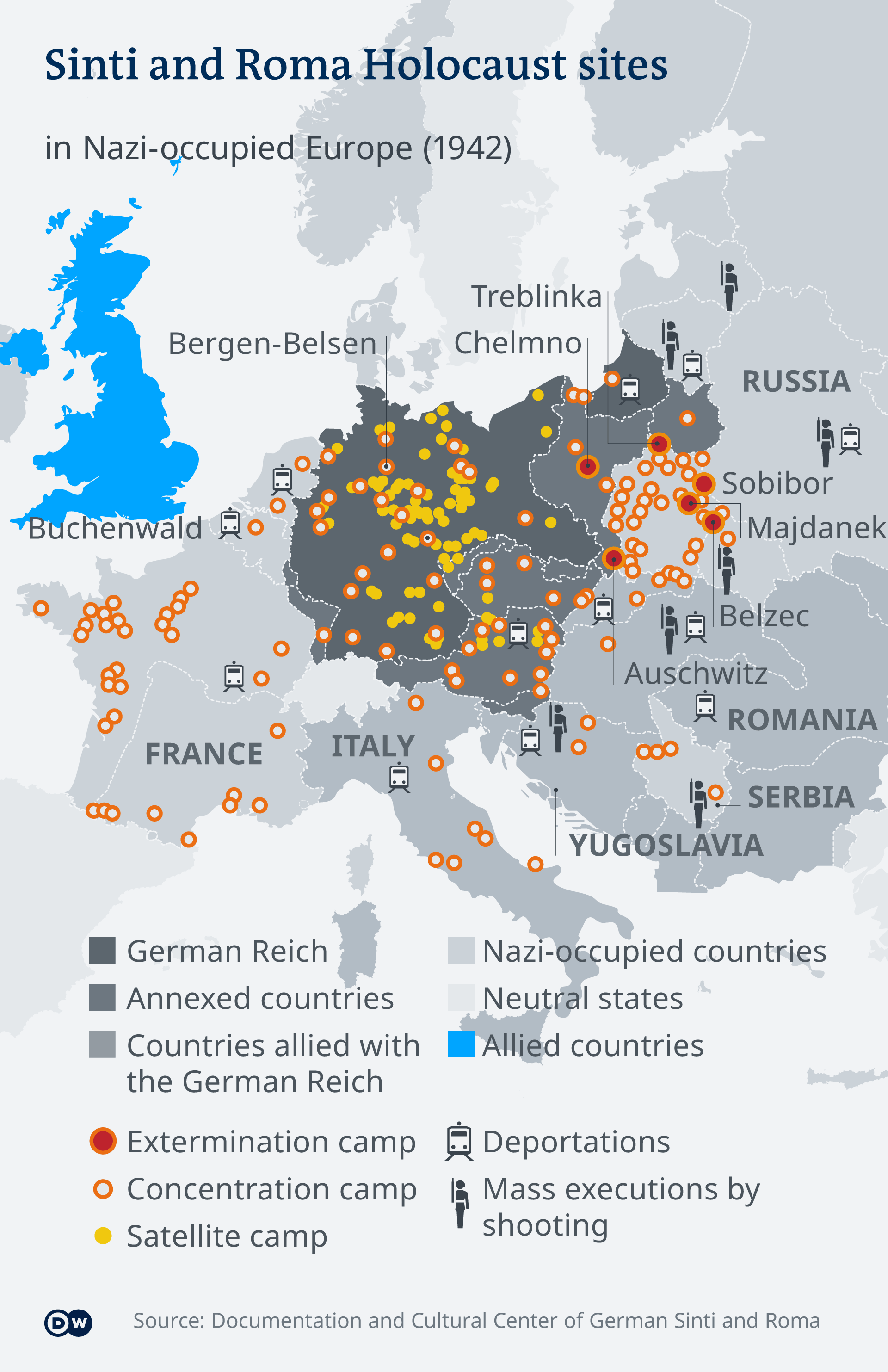
Wherever in Europe the Nazis gained ground, Sinti and Roma were persecuted and forced to fight for their lives. Many were murdered, in camps, or in mass shootings. "It all depended on local occupation policies and who the local proxies were," said Fings.

In German-occupied Poland, there were the death camps. However, there were also an estimated 180 other locations where massacres are known to have taken place. And when it comes to the Soviet Union or Yugoslavia, "most of the victims were not murdered in camps but wherever the killing happened to take place — on the spot."

In occupied Bohemia and Moravia — today's Czech Republic — Sinti and Roma were detained at the Lety and Hodonin camps before being deported to Auschwitz. In Croatia, Jasenovac "was a particularly horrific camp, where many were beaten to death."
Croatia: 'We were shipped here to die'

Josip Joka Nikolic was a musician, who lived his early years until 1942 in the small settlement of Predavac. Then the police and other men from the pro-fascist Croatian Ustasa movement that was loyal to the Independent State of Croatia (NDH) broke into the house and took his and other Roma families away.

It was said that they were being resettled, "from the oldest man to the youngest child." His wife, their 8-month-old daughter, parents, brothers and their families were all taken away in cattle trucks to the Jasenovac concentration camp.

Nikolic realized that they had been "brought there to die." He was brutally separated from his wife and child and led away with the other men to be executed. Somehow, though, he managed to escape and joined the resistance fighters, the partisans. But his whole family was killed at Jasenovac. Nikolic was a witness in a 1952 trial against the NDH interior minister, who however fled to the United States.
Serbia: Solving 'both the Jewish and the Gypsy question'

At the end of October 1941, reports Milena Stankovic, the Germans surrounded her Belgrade district. "Two agents and two gendarmes from the Serbian state security forces burst into our apartment," she remembered. Her husband and one brother were employed by the city authorities. Their stepson was a musician, and another brother was a laborer. All of them had children, and all had Serb citizenship. The men were taken away to a camp, where up to 1,500 Roma were interned. A few days later they were shot and killed outside the town.

Just over a month after the killing of the men, the Romnja — Romani women — were forced onto trucks together with their children and taken away to a concentration camp. The cold was extreme, as was the hunger. "My youngest child died because I could no longer breastfeed," reported Natalija Mirkovic.


The commemoration book at Auschwitz lists the names of almost 21,000 individuals deported from all across Europe

Anyone who could prove that they had a permanent place of residence was later allowed to go free. Some spoke out on behalf of their neighbors, and some were probably killed together with Jewish detainees. The head of the German military administration in Serbia boasted in August 1942 that Serbia was the only country in which both the "Jewish and the Gypsy questions" had been "solved."

Hungary: Shooting a pregnant woman with a machine gun

In February 1945, Angela Lakatos was in the late stages of pregnancy. Her contractions were painful. Suddenly, between 30 and 40 gendarmes arrived in her Roma settlement in western Hungary, determined to drive the Roma away. When Lakatos asked for help, one of the gendarmes answered: "Go to hell!" 120 Roma were forced inside a barn, and pleas for water were met with blows.

First, the men were taken away. Then the younger women. Another highly pregnant woman couldn't walk at all. One gendarme beat her. The next "used a machine gun to shoot the child out of her stomach." Lakatos and the others were driven into a pit: "I saw my father lying there dead. And both of my brothers. I myself half jumped into the pit, half fell."

She pulled her scarf over her head "to avoid seeing what was about to happen. But then it began to rain bullets." She was hit eight times: in her arm, her leg, her stomach. Others fell on top of her, their bodies catching the bullets. It was hours before she climbed out of the pit.

Lakatos survived, but she was severely wounded. She lost her whole family and her unborn child. After the war, she was a witness against the commander of the operation, Jozsef Pinter. She emphasized how thorough and systematic the operation had been. Pinter was found guilty of war crimes and in September 1948 he was executed — one of the very few perpetrators brought to justice for involvement in the killing of the Roma people.

Russia: Stripped naked and thrown into a pit alive

Lidija Nikiticna Krylova tells of a "nightmarish crime" committed by "German invaders in the village of Aleksandrovka on peace-loving Soviet citizens — members of a Roma collective farm." In April 1942, a German officer had a list that he used to call out the names of villagers one by one. Non-Roma were sent home.

Roma families were then forced to undress before being driven with whips "like cattle" to the edge of a pit. The older children were shot before the eyes of their mothers. Then babies were torn from their arms and thrown into the pit.

"Not only children were thrown alive into the pit," reported Nikiticna Krylova. "The Germans also shoved a sick old woman carried by her daughters into the pit. Krylova and others only escaped death at the very last moment. They later gave their testimony in Soviet investigations into Nazi war crimes.
Roma in Eastern Europe shut out from compensation

In many countries today there is still very little awareness that Sinti and Roma were victims of systematic genocide, said Karola Fings. She believes the full extent of the murderous violence will only become clear with a wider European perspective.

In response, researchers are working on an encyclopedia of Nazi genocide — a project that the German Foreign Office is backing with €1.2 million ($1.4 million).

Watch video02:11 Sinti, Roma memorial in Berlin threatened

In Germany, the genocide was largely ignored for decades. Members of the police continued to employ racist methods, using Nazis files in investigations and blocking acceptance that Sinti and Roma have been gravely persecuted. That, in turn, led to further trauma for survivors: trauma that has extended into the second and third generations, said Fings.

The historian was a member of the German government's Independent Commission on Antigypsyism which recently issued its final report. Alongside clear recognition of the genocide committed against Sinti and Roma and further investigation through the mediation of a truth commission, Fings said there must be material compensation — and not just in Germany.

"This also applies to those living in other countries, especially in Eastern Europe who after 1945 were completely shut out from compensation," she said.

The commission also said that, as is the case with Jewish victims of Nazi persecution and their descendants, Germany must also take responsibility for ensuring "that Roma and Romnja are recognized as an especially marginalized and vulnerable group."

This article has been translated from German


REMEMBERING NAZI GENOCIDE OF SINTI AND ROMA
Serving the fatherland
Many German Sinti fought for Germany not only in the First World War but also in the Wehrmacht from 1939 on. In 1941 the German high command ordered all "Gypsies and Gypsy half-breeds" to be dismissed from active military service for "racial-political reasons." Alfons Lampert and his wife Elsa were then deported to Auschwitz, where they were killed.

Sunday, March 20, 2022

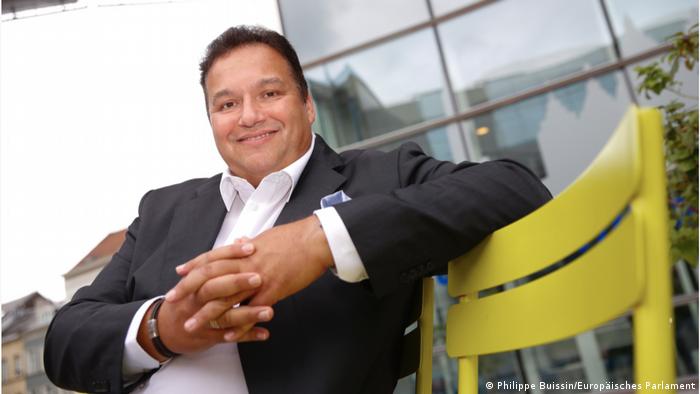
Green works for Germany — and Roma — in European Parliament

Romeo Franz worked for several years for civil rights within Germany before representing the country in the European Parliament. He keeps a close eye on Balkan affairs and remains an advocate for Sinti and Roma rights.

As the chair of the European Parliament's delegation for relations with Bosnia-Herzegovina, the German Green Romeo Franz keeps a close eye on politics in the Balkans, and he said Russia's invasion of Ukraine had not distracted from that. Quite the opposite, he said: President Vladimir Putin has an interest in further conflict and unrest in Europe. 

"After the attack on Ukraine, it is clear that Putin wants to create a security order in Europe according to his tastes," said Franz, a Sinto from Kaiserslautern who was elected in 2018. "He is a major supporter of the secession politics of the Serbs under Milorad Dodik." 

Serbian leader Dodik has repeated his threat to declare Republika Srpska independent from Bosnia-Herzegovina. Russia's government has expressed support.

'Important and right'

Franz came to international politics after years of working for civil rights within Germany. He said working at the European and international levels had broadened his perspective. He said a discussion while speaking with Black students in Washington, DC, had led him to think about how diverse groups can be united by similar experiences of racism. "We need an alliance of the discriminated against," Franz said. "That doesn't mean forgetting the specific forms of racism and disadvantaging — on the contrary, it means, with each other's help, making visible the systemic patterns with the ready knowledge of diverse groups."

Franz surprised many people with his decision to enter politics a few years ago. He said he had considered it long ago, but life had given him other tasks: In 2012, he founded the Hildegard-Lagrenne foundation, which uses education to combat antiziganism, or discrimination against Sinti and Roma. He traveled to schools to help deconstruct common racist slurs.

In addition to his work in international politics and civil rights in Germany, Franz is also an accomplished violinist: His "Mare Manuschenge" ("For Our People") is played at Berlin's Memorial to the Sinti and Roma of Europe Murdered Under National Socialism. That was a great honor, he said, and a great responsibility. He wanted to do right by the musical traditions of Sinti and Roma.

Preserving Sinti and Roma art and culture is also an important part of Franz's political work, and he hopes to see future generations engage themselves in such efforts, as well. "I want our young people to know that political work has a direct influence on our daily life and on which values we define together as important and right," he said. "Through politics, we can not only demand equal participation — but also take responsibility for it."


Franz would like to see an "alliance of the discriminated against"

Fighting racist stereotypes

Franz still laughs at the shocked looks his fellow members of the European Parliament gave him when he first showed up to work in a mobile home. Some deputies even asked him if he was trying to reproduce a stereotype. "There is no reason for me to disown my culture," he said. "That would be a capitulation to the thoughts of others, and there is no question of that for me."

Battling racist stereotypes and violence is at the forefront of Franz's work in helping put together a strategy for the inclusion and participation of Sinti and Roma in the European Union. He wants a legal basis for the equal participation of Roma communities. "There will be no process as long as the EU lets this remain voluntary," he said. "We want something tangible because only something put into law has weight in real life, too."

Franz said the European Commission had been slow to take such action. On one side, it can be complicated to involve communities in such a process, he said; on the other, conservative politicians often refrain from such topics.

Mehmet Daimagüler was recently named Germany's first federal antiziganism commissioner. Franz said this new position was important to helping the government achieve a comprehensive and effective strategy to increase inclusion and participation. "It is a sad truth that antiziganism is still a part of everyday culture in spite of the heavy heritage of the genocide of Sinti and Roma," Franz said. "Mehmet Daimagüler has the necessary expertise and political experience to bring this issue more visibility."

This article was originally written in German