China files complaint with World Trade Organization over Canadian steel tariffs
By The Canadian Press
August 15, 2025

OTTAWA — China is taking its dispute with Canada over steel tariffs to the World Trade Organization.
Beijing filed a complaint Friday with the WTO in response to Canadian restrictions on imports that contain steel melted or poured in China.
Prime Minister Mark Carney announced last month that he was imposing the 25 per cent surtax on products containing Chinese steel to protect the domestic industry in the face of steep U.S. tariffs. Latest updates on commodities here
But China said those duties are “discriminatory,” according to a translation of a statement issued by the Chinese commerce ministry.
“This is a prototypical measure reflecting unilateralism and protectionism, which damages China’s legal rights and disrupts the global stability of steel product supply chains,” the translated statement said.
China said it is disappointed by the move to impose tariffs and urged Canada “to correct its erroneous actions.” The statement also made reference to protecting the multilateral rules-based system of trade and improving Canada-China trade relations.
The Canadian Press reached out to Global Affairs Canada for comment on Friday but has yet to receive a response.
Carney said at his announcement of new steel industry protections in July that some foreign competition “unfairly benefits” from non-market policies.
This can include companies exporting products at a lower price than they charge domestically - a practice known as dumping.
Canada’s trade dispute with China ramped up this week after Beijing imposed a tariff of nearly 76 per cent on Canadian canola seed starting Thursday - an apparent response to Canada’s ongoing tariffs of 100 per cent on Chinese-made electric vehicles.
China imposed the duties after what it said was an anti-dumping investigation into Canadian canola. Ottawa has denied that Canada is dumping canola.
Lawrence Herman, a Toronto-based international trade lawyer, said in an email to The Canadian Press on Friday that the WTO complaint is a “cynical ploy.”
China often offends “the very basis of the WTO agreement” with its use of state capitalism and aggressive takeovers of foreign markets through subsidized exports, Herman said.
China exploits and disregards the WTO’s own trade rules by “preventing foreign companies from fair and open access to its own market and, in one way or another, acquires western technology though various devious mechanisms,” he argued.
Herman said Canada can defend itself at the WTO by pointing out China’s own “egregious actions.”
Herman said that even if China’s case were to be proven, he questions the ability of the WTO dispute settlement process to produce a substantive penalty.
The organization authorizes members to impose sanctions based on a consensus finding of wrongdoing, but cannot hand out penalties unilaterally.
“The result is that while Canada will contest the Chinese claim, at the end of the day the dispute process can’t lead to any meaningful legal result,” Herman said.
---
Craig Lord, The Canadian Press
This report by The Canadian Press was first published Aug. 15, 2025.
Cleveland-Cliffs inks multiyear steel pacts with US automakers in tariff aftershock

Cleveland-Cliffs Inc. has signed fixed-price contracts to supply steel to multiple US carmakers for up to three years, an unusually long duration that signals the auto industry is guarding against potential inflationary pressures.

The new two and three-year accords are for industry-standard sheet steel, according to a person familiar with the matter, who asked not to be identified because the details haven’t been publicly disclosed. General Motors Co. is one of the carmakers to agree to a multiyear pact, according to another person familiar with the matter.
While it’s unclear what prices were agreed to, the duration of the agreements mark a notable change for Cliffs, the biggest supplier of automotive steel in the US, whose previous automotive contracts were usually signed in one-year increments.
Shares of the Cleveland-based steelmaker surged as much as 3.9% after the Bloomberg report. The stock traded 1% higher as of 1:17 p.m. in New York.
The move is a hedge for both parties. It indicates some automakers are solidifying multiyear prices of key steel input for their cars and trucks amid widespread concern that President Donald Trump’s tariffs will stoke inflation. It also shows that Cliffs, which has lost auto market share in recent years, is trying to capitalize on Trump’s steel sector duties.
Trump imposed 25% tariffs on US imports of foreign steel in March, and then increased the levy to 50% in June. Trump contends tariffs will help protect US jobs and encourage companies to invest more in the country, as well as raise government revenue. But many economists say tariffs will hurt growth as higher prices for goods put a squeeze on household budgets. Trump’s broad-reaching tariffs policy — which includes sector-specific and country-level duties — are widely expected to push up vehicle prices by thousands of dollars.
Automakers are now taking the chance to lock in a fixed steel price as tariff costs risk sapping demand for new cars. While some companies have indicated they may raise consumer prices in the second half of the year, they are also constrained by the fear of losing market share to competitors with a bigger domestic footprint and lower costs.
It wasn’t immediately clear which carmakers entered into the longer-term supply agreements. Cliffs’ position makes it one of the most important suppliers to GM, Ford Motor Co. and Stellantis NV.
A Cleveland-Cliffs spokeswoman declined to comment.
GM had no immediate comment. Stellantis didn’t respond to a request for comment. Ford declined to comment.
Detroit automakers are particularly flummoxed that the Trump administration has negotiated trade deals with Japan, South Korea, and the European Union without hammering out accords with neighboring Canada and Mexico, saying the agreements put them at a disadvantage to foreign competitors.
US automakers face billions of dollars in tariff exposure from Trump’s duties on imported cars and parts as well as those on steel, aluminum and other goods.
Ford has said Trump’s tariffs on steel and aluminum are impacting the company, namely through price increases from its suppliers that purchase the raw materials. It expects a net $2 billion hit from tariffs this year.
Canada is the biggest foreign supplier of steel to the US, accounting for about 23% of American imports in 2024, according to US government data.
(By Joe Deaux, Gabrielle Coppola and David Welch)
Tsingshan to invest $800M in Zimbabwe steel plant
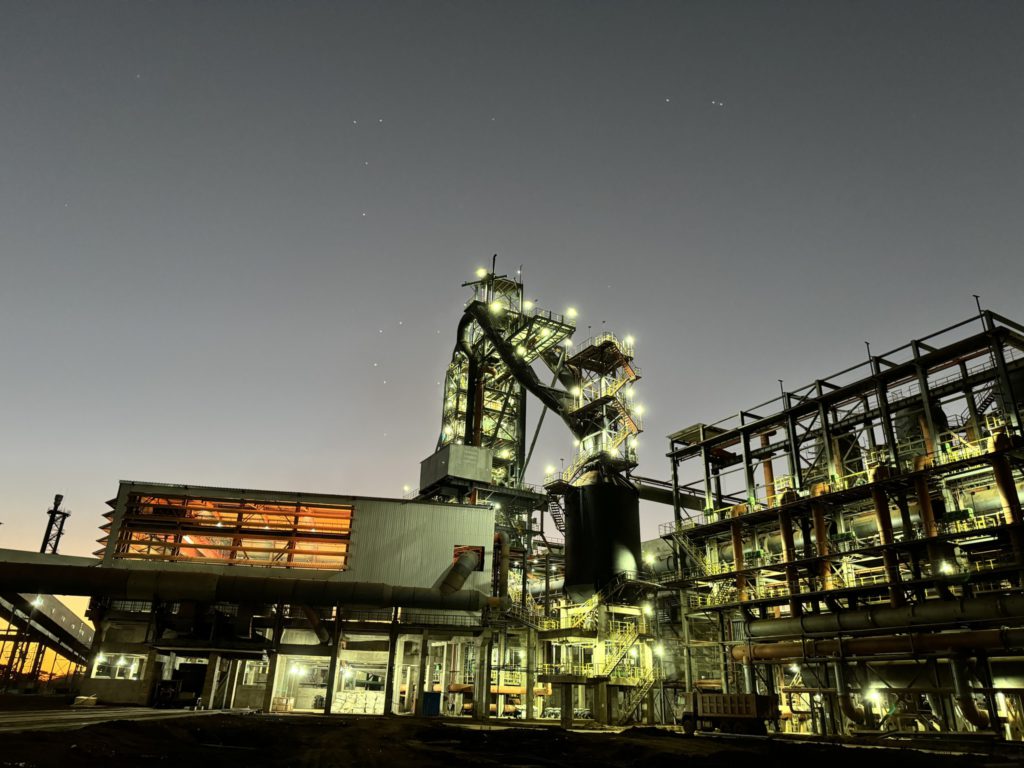
Chinese nickel producer Tsingshan Holding Group plans to invest $800 million in its steel plant in central Zimbabwe through its unit Dinson Iron and Steel Company, a top company official said at a media tour on Friday.
Tsingshan, one of the world’s leading nickel producers, has already made significant investments in Zimbabwe. Apart from the steel plant, Tsingshan also has ferrochrome, coking coal and lithium mining businesses in the Southern African country.
Project director Wilfred Motsi said on Friday the funds would be allocated towards a blast furnace and supporting infrastructure to lift capacity from the current 600,000 metric tons of carbon steel annually to 1.2 million metric tons.
But Motsi said the company would first assess whether market demand for carbon steel can absorb a sharp increase in output, adding that the funds would be used to build centering, rolling and steel plants and a blast furnace.
“We are ready for the next stage, but we will look closely at market conditions before committing. We need to be sure the market can take that much product,” said Motsi.
The first phase included a 50-megawatt thermal power plant to reduce reliance on Zimbabwe’s strained electricity grid. The plant will also generate additional power from furnace gas to cover about 20% of its needs, management said.
Zimbabwe’s Information Minister, Jenfan Muswere, said the plant would help reduce the country’s steel import bill, which he estimated at $1 billion annually.
(By Chris Takudzwa Muronzi; Editing by Sfundo Parakozov and Chizu Nomiyama)

No comments:
Post a Comment