‘No suggestion of democracy’ in US plan for future governance of the Gaza Strip
The only real positive for the people of Gaza is that Trump's plan specified Palestinians would not be expelled from the enclave.
As a fragile truce in Gaza holds, attention is turning to who will govern the devastated enclave. US President Donald Trump's 20-point plan envisions a temporary technocratic committee overseen by an international “Board of Peace”, with the Palestinian Authority reclaiming control later – a vision critics say sidelines many Gazans and revives echoes of colonial rule.
Issued on: 14/10/2025 - FRANCE24
By: Lara BULLENS
Is the Palestinian Authority well positioned to rule over the Gaza Strip?
The Palestinian Authority is extremely unpopular with the Palestinian people. Its leader, Mahmoud Abbas, was elected 20 years ago and his mandate has long expired. And the Palestinian Authority's governance in the West Bank has not brought any benefits to Palestinians living there – they continue to lose land to Israeli settlers and the Israeli army still runs the occupied territory. There is very little that looks promising.
It is worth remembering that even in the West Bank, the Palestinian Authority is really only able to do what Israel will allow it to. We are not talking about an independent government. So that is the best model we have on offer, and there is nothing very good about it.
Does Hamas have any future governing the Gaza Strip?
The line was that there would be no role for Hamas, but even Trump is giving mixed signals on this. He said he had approved giving them a role in managing internal security operations in Gaza, at least temporarily. Trump framed this as a measure to prevent chaos. There is inconsistency on this point.
Hamas has not agreed to disarm. There were reports that they may agree to give up power in exchange for amnesty, but that has not been confirmed.
What we do know is that Israel has not succeeded in its stated aim of destroying Hamas. The very fact that the group agreed to a ceasefire shows they retain some power in Gaza.
At least for now, Hamas is still part of the conversation.
Will Palestinians in Gaza have any say on the governance of the enclave?
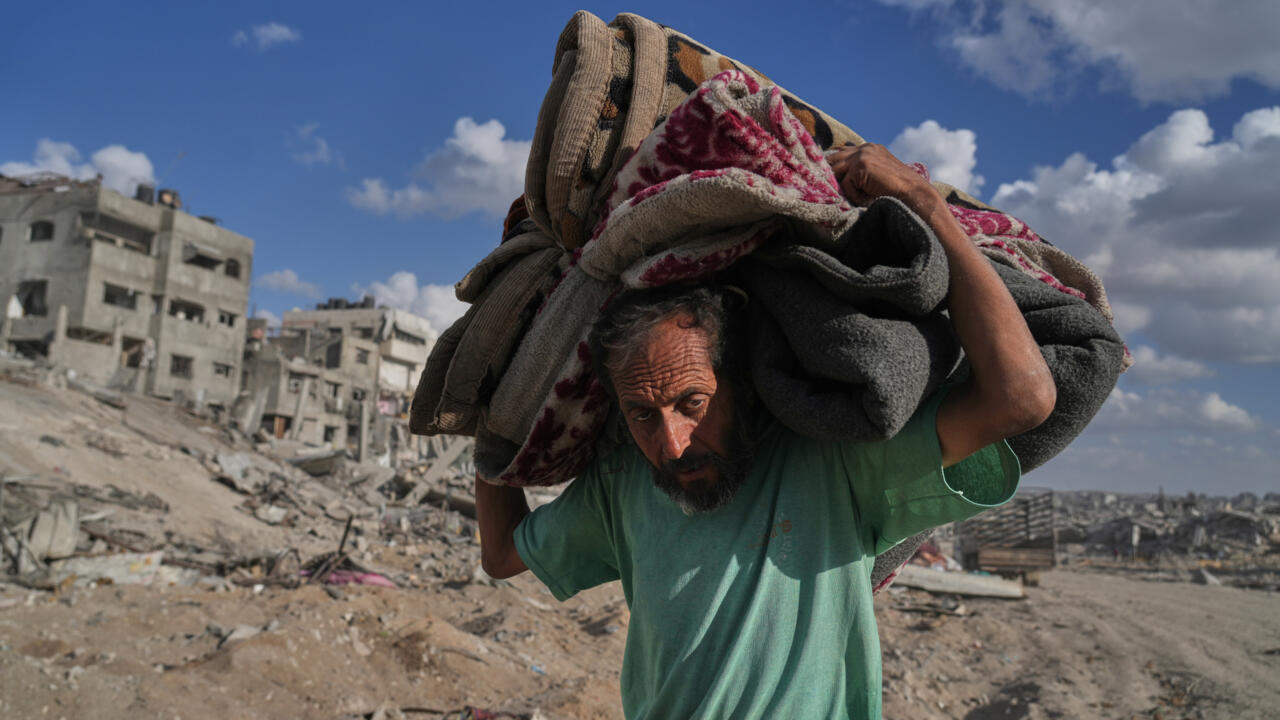
The Gaza Strip is almost completely destroyed. It is difficult to get past the huge numbers of people who are wounded, bereaved, homeless or traumatised
Dissent exists, we did see protests against Hamas in Gaza in March this year. For a long time, Palestinians in Gaza and the West Bank have been calling for an end to the intra-Palestinian division and demanding elections. It is hard to imagine that demand has now disappeared.
But there doesn't seem to be any suggestion of democracy coming into play here.
What we are seeing from this phase of the truce deal is that ultimately, it is the US who has the real power to force things through.
This interview has been edited for length and clarity.
Issued on: 14/10/2025 - FRANCE24
By: Lara BULLENS
Displaced Palestinian Muhammad Miqdad carries his belongings along the heavily damaged Al-Jalaa street in Gaza City on October 12, 2025. © Abdel Kareem Hana, AP
Phase one of the truce deal brokered by US President Donald Trump and agreed upon by Israel and Hamas is under way.
Since Friday last week, a ceasefire has taken effect. The 20 remaining living hostages held in Gaza by Hamas have returned to Israel, and the remains of those who died soon followed. The almost 2,000 Palestinian prisoners set to be freed have been released. And more desperately needed aid should start trickling into the Palestinian enclave again sometime soon.
But the “historic dawn of a new Middle East” that Trump claims will ring in “peace for all eternity” is still a very distant prospect. And the future of the Gaza Strip hangs in the balance.
In Trump's 20-point plan, he envisioned a Gaza initially governed by a temporary transitional committee made up of “apolitical” Palestinian technocrats that would be supervised by a so-called Board of Peace, spearheaded by Trump himself and involving former UK prime minister Tony Blair, a veteran Middle East negotiator.
Governance would then theoretically be handed over to the Palestinian Authority once it enacts key reforms. Mahmoud Abbas, the president of the Palestinian Authority, attended an international summit on Monday in Egypt aimed at finalising an agreement on how to end the war in Gaza.
But Israeli Prime Minister Benjamin Netanyahu has already pushed back on the Palestinian Authority's role in the plan and seems unlikely to accept it.
The Trump proposal also stipulates that Hamas would have no governing power in Gaza, but the group has said it expects to have some future role as part of a “unified Palestinian movement”.
And preceding all of this is the mammoth task of reconstructing the entire Gaza Strip, which has been devastated by two years of war.
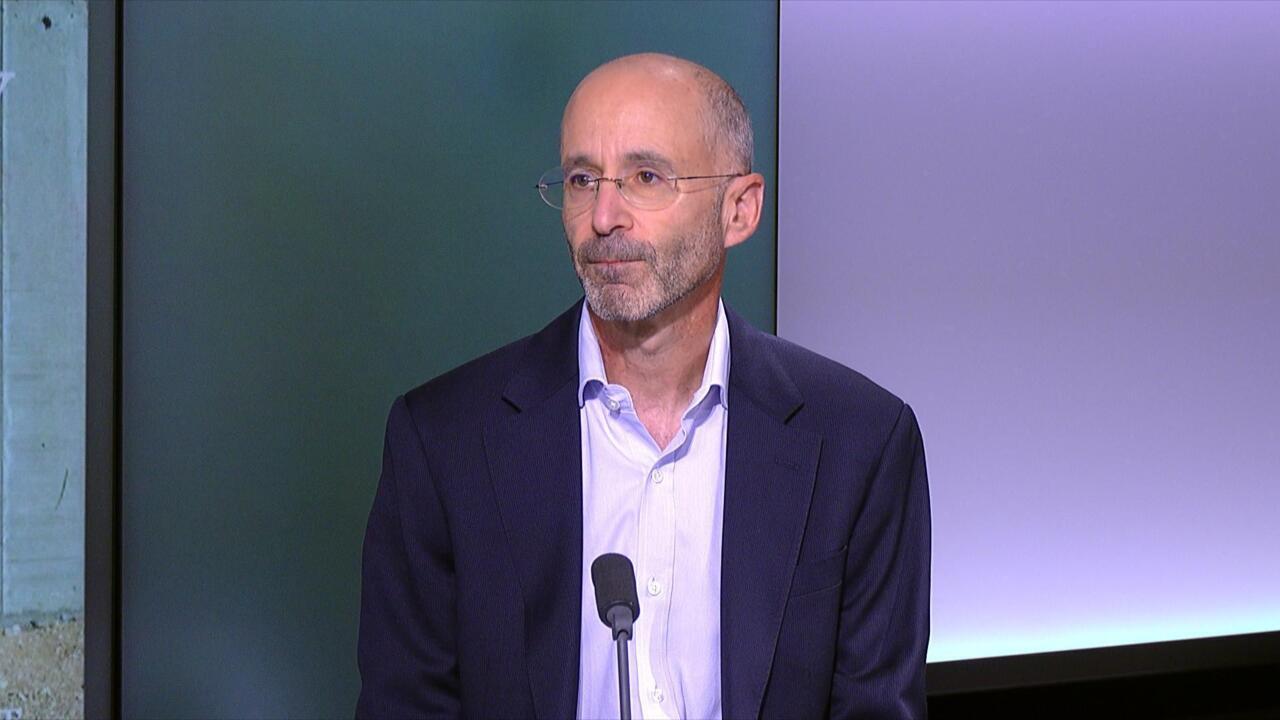
To shed light on who could govern Gaza in the future, FRANCE 24 spoke with Anne Irfan, an expert on the modern Middle East and author of “A Short History of the Gaza Strip”, as well as a lecturer in interdisciplinary race, gender and postcolonial studies at University College London.
FRANCE 24: What do we know about the Board of Peace and the transitional committee that would temporarily govern Gaza?
All we know is that Trump's plan is to have this apolitical technocratic committee overseen by the Board of Peace that he said would include qualified Palestinians and internationals. There are really big questions that still remain, like where does the Palestinian Authority fit into this? What about Hamas? How will members be selected? We also have not been given any information on how long this interim arrangement would be in place, or what would be needed to move on to the next stage.
It has been extremely vague, and that is a deliberate part of the strategy.
What have the reactions to this proposed framework been so far?
The point that has been made a lot is that it seems to have quite strong colonial overtures to it, particularly the involvement of Tony Blair. He is a very controversial figure in the Middle East and [his involvement] has raised comparisons to the British Mandate, which governed Palestine for 30 years prior to [the establishment of Israel] in 1948.
There has also been criticism from some Palestinian figures that the plan seems to be what some are calling the “remote control” of Gaza. Meaning it would not be led by people who are from Gaza, nor from people inside Gaza itself.
It would be a [major step] to see Gaza free of Israeli occupation for the first time since 1967, but that seems extremely unlikely. Israel's Prime Minister Benjamin Netanyahu has said there will never be a Palestinian state on his watch, and the terms of the [plan] do not involve a full Israeli withdrawal from Gaza.
The only real positive for the people of Gaza is that Trump's plan specified Palestinians would not be expelled from the enclave.
Phase one of the truce deal brokered by US President Donald Trump and agreed upon by Israel and Hamas is under way.
Since Friday last week, a ceasefire has taken effect. The 20 remaining living hostages held in Gaza by Hamas have returned to Israel, and the remains of those who died soon followed. The almost 2,000 Palestinian prisoners set to be freed have been released. And more desperately needed aid should start trickling into the Palestinian enclave again sometime soon.
But the “historic dawn of a new Middle East” that Trump claims will ring in “peace for all eternity” is still a very distant prospect. And the future of the Gaza Strip hangs in the balance.
In Trump's 20-point plan, he envisioned a Gaza initially governed by a temporary transitional committee made up of “apolitical” Palestinian technocrats that would be supervised by a so-called Board of Peace, spearheaded by Trump himself and involving former UK prime minister Tony Blair, a veteran Middle East negotiator.
Governance would then theoretically be handed over to the Palestinian Authority once it enacts key reforms. Mahmoud Abbas, the president of the Palestinian Authority, attended an international summit on Monday in Egypt aimed at finalising an agreement on how to end the war in Gaza.
But Israeli Prime Minister Benjamin Netanyahu has already pushed back on the Palestinian Authority's role in the plan and seems unlikely to accept it.
The Trump proposal also stipulates that Hamas would have no governing power in Gaza, but the group has said it expects to have some future role as part of a “unified Palestinian movement”.
And preceding all of this is the mammoth task of reconstructing the entire Gaza Strip, which has been devastated by two years of war.
To shed light on who could govern Gaza in the future, FRANCE 24 spoke with Anne Irfan, an expert on the modern Middle East and author of “A Short History of the Gaza Strip”, as well as a lecturer in interdisciplinary race, gender and postcolonial studies at University College London.
FRANCE 24: What do we know about the Board of Peace and the transitional committee that would temporarily govern Gaza?
All we know is that Trump's plan is to have this apolitical technocratic committee overseen by the Board of Peace that he said would include qualified Palestinians and internationals. There are really big questions that still remain, like where does the Palestinian Authority fit into this? What about Hamas? How will members be selected? We also have not been given any information on how long this interim arrangement would be in place, or what would be needed to move on to the next stage.
It has been extremely vague, and that is a deliberate part of the strategy.
What have the reactions to this proposed framework been so far?
The point that has been made a lot is that it seems to have quite strong colonial overtures to it, particularly the involvement of Tony Blair. He is a very controversial figure in the Middle East and [his involvement] has raised comparisons to the British Mandate, which governed Palestine for 30 years prior to [the establishment of Israel] in 1948.
There has also been criticism from some Palestinian figures that the plan seems to be what some are calling the “remote control” of Gaza. Meaning it would not be led by people who are from Gaza, nor from people inside Gaza itself.
It would be a [major step] to see Gaza free of Israeli occupation for the first time since 1967, but that seems extremely unlikely. Israel's Prime Minister Benjamin Netanyahu has said there will never be a Palestinian state on his watch, and the terms of the [plan] do not involve a full Israeli withdrawal from Gaza.
The only real positive for the people of Gaza is that Trump's plan specified Palestinians would not be expelled from the enclave.
TÊTE À TÊTE © FRANCE 24
11:45
11:45
Is the Palestinian Authority well positioned to rule over the Gaza Strip?
The Palestinian Authority is extremely unpopular with the Palestinian people. Its leader, Mahmoud Abbas, was elected 20 years ago and his mandate has long expired. And the Palestinian Authority's governance in the West Bank has not brought any benefits to Palestinians living there – they continue to lose land to Israeli settlers and the Israeli army still runs the occupied territory. There is very little that looks promising.
It is worth remembering that even in the West Bank, the Palestinian Authority is really only able to do what Israel will allow it to. We are not talking about an independent government. So that is the best model we have on offer, and there is nothing very good about it.
Does Hamas have any future governing the Gaza Strip?
The line was that there would be no role for Hamas, but even Trump is giving mixed signals on this. He said he had approved giving them a role in managing internal security operations in Gaza, at least temporarily. Trump framed this as a measure to prevent chaos. There is inconsistency on this point.
Hamas has not agreed to disarm. There were reports that they may agree to give up power in exchange for amnesty, but that has not been confirmed.
What we do know is that Israel has not succeeded in its stated aim of destroying Hamas. The very fact that the group agreed to a ceasefire shows they retain some power in Gaza.
At least for now, Hamas is still part of the conversation.
Will Palestinians in Gaza have any say on the governance of the enclave?
The Gaza Strip is almost completely destroyed. It is difficult to get past the huge numbers of people who are wounded, bereaved, homeless or traumatised
Dissent exists, we did see protests against Hamas in Gaza in March this year. For a long time, Palestinians in Gaza and the West Bank have been calling for an end to the intra-Palestinian division and demanding elections. It is hard to imagine that demand has now disappeared.
But there doesn't seem to be any suggestion of democracy coming into play here.
What we are seeing from this phase of the truce deal is that ultimately, it is the US who has the real power to force things through.
This interview has been edited for length and clarity.
Trump as saviour of Israel vs. The west’s immoral hypocrisy: Papers analyse Gaza deal
Issued on: 13/10/2025 -

PRESS REVIEW – Monday, October 13: Israeli papers, from right-wing to left-wing, have praised US President Donald Trump following the hostage release. Meanwhile, the Arab press highlights the West’s “outrageous” treatment of Palestinians. Finally, The New York Times describes the peace deal as a “defeat” for Israeli Prime Minister Netanyahu.
On the day of the hostage release and as Donald Trump declared the end of the Gaza war, some Israeli papers are expressing gratitude towards the US president. The right-wing Jerusalem Post features “God bless the peacemaker” on its front page, along with a thank-you note from the president of the World Jewish Congress, who praises Trump’s “visionary leadership” as “making history”. An opinion piece by the vice president of the same congress describes Trump as “the Alexander the Great of our time,” drawing a comparison: “Alexander, who saved the Jews, and President Trump – saviour of Israel.”
In its analysis, The Jerusalem Post covers the mixed reactions to Trump and Netanyahu at Tel Aviv’s hostage square, where Trump’s name was met with cheers and Netanyahu’s with boos. The article acknowledges Netanyahu’s role in securing the hostages’ release but also notes his “enormous responsibility for 7 October”. Finally, The Times of Israel reports that the prime minister warned of “major security challenges” ahead and that “some enemies are trying to recover to launch further attacks.”
Left-wing paper Haaretz also credits Trump. An opinion piece argues that “Trump rescuing hostages shows we must welcome help, even from controversial figures,” adding that Trump’s Middle East policy was more effective than Biden’s. It highlights the contrast between Trump and Biden, particularly in military operations in Gaza, asserting that “military pressure was indeed a factor in bringing the hostages back”. Another article in Haaretz discusses Israel’s “paradox of grief and joy”, noting that while some families will learn their loved ones will not return, even those reunited will feel the communal pain, creating a clash of emotions.
In the Arab press, Saudi Arabian Arab News features Pope Leo’s call for “courage” from those negotiating a peace plan for Gaza at the summit in Egypt. The Pope prayed to God for help in “accomplishing what now seems humanly impossible – rediscovering that the other is not an enemy”. Middle East Eye reported that on Sunday morning, the Israeli army raided the homes of some Palestinian leaders. The article also notes Israel’s refusal to include Palestinian leaders serving sentences in the deal, even threatening to sabotage the process if Hamas continued to pressure mediators for their release. Meanwhile, an opinion piece in Arab News condemns the West’s response to Gaza, titled “The immoral hypocrisy of West’s response to Gaza killings”. The author criticises the West for consistently emphasising Israeli tragedy while ignoring Palestinian suffering.
Finally, global analyses of the new peace deal are emerging. In The New York Times, an opinion piece discusses “the uncomfortable truth about Netanyahu’s victory”, suggesting that while the deal represents the beginning of the end for the conflict, Netanyahu is downplaying its significance and maintaining Israeli troops in Gaza. The piece argues that this deal contradicts Netanyahu’s government’s promises of “total victory and the destruction of Hamas,” rendering it a defeat for his leadership. In an editorial for the French left-wing Libération, deputy editor-in-chief Hamdam Mostafavi acknowledges Trump’s pivotal role in the ceasefire but emphasises that “many questions remain unanswered” – including the future of Gaza’s reconstruction, Palestinian leadership, and Netanyahu’s political fate. Lastly, a cartoon by Lebanese illustrator Hassan Bleibel illustrates Trump’s vision of peace: Palestinians returning home to find total destruction.
By: Elitsa GADEVA
Issued on: 13/10/2025 -
FRANCE24
Play (06:13 min)
Play (06:13 min)
PRESS REVIEW – Monday, October 13: Israeli papers, from right-wing to left-wing, have praised US President Donald Trump following the hostage release. Meanwhile, the Arab press highlights the West’s “outrageous” treatment of Palestinians. Finally, The New York Times describes the peace deal as a “defeat” for Israeli Prime Minister Netanyahu.
On the day of the hostage release and as Donald Trump declared the end of the Gaza war, some Israeli papers are expressing gratitude towards the US president. The right-wing Jerusalem Post features “God bless the peacemaker” on its front page, along with a thank-you note from the president of the World Jewish Congress, who praises Trump’s “visionary leadership” as “making history”. An opinion piece by the vice president of the same congress describes Trump as “the Alexander the Great of our time,” drawing a comparison: “Alexander, who saved the Jews, and President Trump – saviour of Israel.”
In its analysis, The Jerusalem Post covers the mixed reactions to Trump and Netanyahu at Tel Aviv’s hostage square, where Trump’s name was met with cheers and Netanyahu’s with boos. The article acknowledges Netanyahu’s role in securing the hostages’ release but also notes his “enormous responsibility for 7 October”. Finally, The Times of Israel reports that the prime minister warned of “major security challenges” ahead and that “some enemies are trying to recover to launch further attacks.”
Left-wing paper Haaretz also credits Trump. An opinion piece argues that “Trump rescuing hostages shows we must welcome help, even from controversial figures,” adding that Trump’s Middle East policy was more effective than Biden’s. It highlights the contrast between Trump and Biden, particularly in military operations in Gaza, asserting that “military pressure was indeed a factor in bringing the hostages back”. Another article in Haaretz discusses Israel’s “paradox of grief and joy”, noting that while some families will learn their loved ones will not return, even those reunited will feel the communal pain, creating a clash of emotions.
In the Arab press, Saudi Arabian Arab News features Pope Leo’s call for “courage” from those negotiating a peace plan for Gaza at the summit in Egypt. The Pope prayed to God for help in “accomplishing what now seems humanly impossible – rediscovering that the other is not an enemy”. Middle East Eye reported that on Sunday morning, the Israeli army raided the homes of some Palestinian leaders. The article also notes Israel’s refusal to include Palestinian leaders serving sentences in the deal, even threatening to sabotage the process if Hamas continued to pressure mediators for their release. Meanwhile, an opinion piece in Arab News condemns the West’s response to Gaza, titled “The immoral hypocrisy of West’s response to Gaza killings”. The author criticises the West for consistently emphasising Israeli tragedy while ignoring Palestinian suffering.
Finally, global analyses of the new peace deal are emerging. In The New York Times, an opinion piece discusses “the uncomfortable truth about Netanyahu’s victory”, suggesting that while the deal represents the beginning of the end for the conflict, Netanyahu is downplaying its significance and maintaining Israeli troops in Gaza. The piece argues that this deal contradicts Netanyahu’s government’s promises of “total victory and the destruction of Hamas,” rendering it a defeat for his leadership. In an editorial for the French left-wing Libération, deputy editor-in-chief Hamdam Mostafavi acknowledges Trump’s pivotal role in the ceasefire but emphasises that “many questions remain unanswered” – including the future of Gaza’s reconstruction, Palestinian leadership, and Netanyahu’s political fate. Lastly, a cartoon by Lebanese illustrator Hassan Bleibel illustrates Trump’s vision of peace: Palestinians returning home to find total destruction.
By: Elitsa GADEVA

No comments:
Post a Comment