Indian Navy is Quietly Guiding the Country’s Ships Through Strait of Hormuz
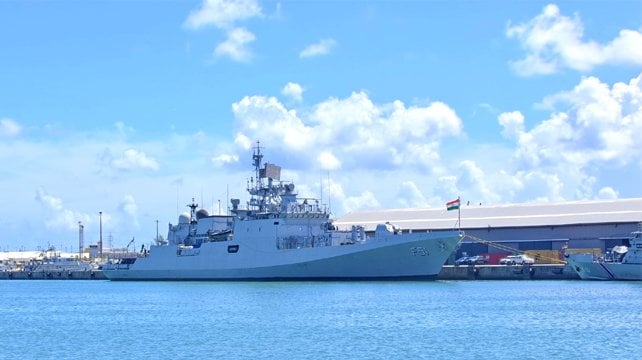
Indian government officials confirmed in media reports that the country continues to quietly guide its ships out of the Persian Gulf. The reports indicate that after contact with the Iranians to ensure safe passage, the government launched “Operation Urja Suraksha” to guide and protect critical shipping out of the region.
The IANS News Service detailed the operation with confidential information from government sources. According to the report, the operation is underway with the “highest degree of caution and minimal publicity” to ensure the safe evacuation of the Indian-flagged ships.
India’s Shipping Ministry had said there were 22 Indian-flagged vessels with over 600 seafarers in the western Persian Gulf. There were also three ships with an additional 76 Indian seafarers east of the Strait of Hormuz. According to the latest report, India identified 20 of the vessels as high-priority as they were carrying LNG, LPG, and crude oil.
More than five Indian warships have been dispatched, and they are leading the first element of the support operation. While none of the warships have entered the Strait of Hormuz, they remain above the Gulf of Oman near the terminus and are in constant communication with the merchant ships.
After securing permission from Iran for the ships to transit the Strait, the warships are providing guidance on the route. They are reported to be providing instruction as well as the procedures the ships should follow. This is considered to be critical as Iran is forcing the ships to take a different route from the Traffic Separation Scheme and closer to its coastline. Ships are being individually guided with precise instructions.
Once a ship clears the Strait of Hormuz, it is met by a series of destroyers and frigates. The support extends through the Gulf of Oman with additional warships and logistics in place.
IANS reported that two additional vessels loaded with approximately 92,000 tons of LPG were due to reach Indian ports on March 25 and 26. This comes about 10 days after the first vessels, LPG carriers Shivalik and Nanda Devi, as well as crude oil tanker Jag Laadki, cleared the Gulf and reached Indian ports with badly needed cargoes.
The Ministry of Ports, Shipping and Waterways, along with the Directorate of Naval Operations, are reported to be closely coordinating in the effort.
India has been actively managing the threat of scarcity of essential commodities born out of the ongoing conflict in West Asia, between Iran on one side and the US and Israel on the other.
Just as in the 2022 supply chain shock which manifested with the disruption in hydrocarbon shipments at the outset of Russia’s full scale invasion of Ukraine and then impacted other essential commodities such as fertilisers and grain shipments, such has been the case in the ongoing conflict in the Persian Gulf.
The biggest short term vulnerability for Indian energy security is liquified petroleum gas (LPG) used in cooking - of which India imports over half of its consumption demand via the Strait of Hormuz and from the countries of the Persian Gulf littoral region.
However a related commodity liquified natural gas (LNG) has also been affected, which apart from its direct fuel role in industrial processes for India also plays a major part in being a precursor chemical input for the production of fertilisers. Ammonia which is another key precursor used in fertiliser production has also been hit in the ongoing supply chain disruption.
While India has ample fertiliser stocks for its upcoming planting season according to a press briefing by India’s Ministry of External Affairs(MEA) on March 19 2026, that ensures availability only till late summer and that too if usage projections done with conservative consumption levels remain relevant.
India relies both on precursor chemical imports for domestic production as well as ready to use fertiliser imports from foreign sources to supply its farmers. The fertilisers supplied to farmers are also heavily subsidised and are a major column in the exchequer’s balance sheet under the category of social goods.
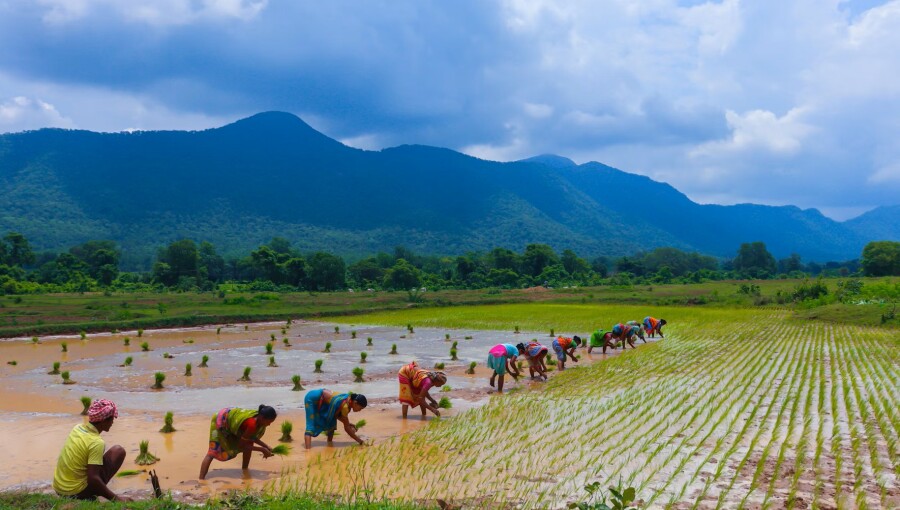
India’s grain crops countrywide but especially in its bread basket states of Punjab and Haryana depend on the steady supply of around 40mn tonnes of Urea which is a nitrogen based fertiliser, a report by the BBC says.
According to a press release by India’s Press Information Bureau, India had 61.11mn metric tonnes of Urea, 2.42mn metric tonnes of Diammonium Phosphate (DAP), 5.72mn metric tonnes of Nitrogen Phosphorus and Potassium (NPK), 2.48mn metric tonnes of Single Superphosphate (SSP) and 1.26mn metric tonnes of Muriate of Potash (MOP) in stock nationwide as of March 19 2026.
In the press briefing MEA spokesperson Randhir Jaiswal revealed that the Government of India had anticipated the supply chain disruptions and had already issued tenders globally to stock up on fertiliser stocks, and that they “expect the bulk of the quantities ordered from a variety of sources to arrive by the end of March”.
According to an official gazette notification on March 9 2026 by the Government of India, the country has vowed to supply fertiliser plants “with at least 70% of their average natural gas consumption based on the last six months.”
Furthermore, according to a report by MoneyControl, the Indian government has also asked domestic fertiliser manufacturing facilities to alter their maintenance schedules to accommodate higher levels of production and be available as the risk of imported supplies of ready to use products may become scarce.
In addition, according to a report by CRISIL Ratings, India could also be looking at an over 10-15% yearly dip in production of Urea and other complex chemical fertilisers if the disruption in precursor chemical supply chain extends to around 90 days.
Citing unnamed senior officials in the Indian government the MoneyControl report also paints China as India’s main alternate source, if supplies from its traditional partners are lower for any reason.
While China is certainly a surplus producer of both precursor chemicals and ready to use fertilisers, New Delhi would also be sourcing from traditional partners and vendors from Russia, Morocco, Canada and Togo which can potentially redirect fertiliser or precursor chemical cargos to India via maritime routes bypassing Strait of Hormuz.
In the wake of recent efforts by Central Asian leaders to open new trade routes to Pakistan, India is stepping up its diplomatic engagement with regional governments.
Trade volume between India and the five Central Asian states totalled close to $2.5bn in 2025, roughly triple that of Pakistan. But regional leaders have articulated plans in recent months to rapidly increase trade with Islamabad.
That seems to have provided impetus for a flurry of Indian diplomatic activity. Over the past 10 days, Indian officials have held talks with officials from Kyrgyzstan, Tajikistan, Turkmenistan and Uzbekistan looking to diversify commercial ties beyond primarily the energy and pharmaceutical sectors. No specific deals have been announced.
Regional observers are expecting an upcoming meeting of Indian-Uzbek Intergovernmental Commission on Trade, scheduled for April in Tashkent, to catalyse deal-making. In connection with that meeting, Uzbek officials and representatives of India’s Chamber of Commerce have discussed the organisation of two business forums, one in the Uzbek capital and another in Samarkand.
Elsewhere, India’s envoy to Turkmenistan, Bandaru Wilsonbabu, held talks with various top Turkmen government officials about developing trade in such sectors as chemicals, fertilisers, transportation and telecoms. Ashgabat continues to work on the long-sought construction of a pipeline to enable Turkmen natural gas to traverse Afghanistan and reach markets in Pakistan and India.
On the sidelines of an international conference sponsored by India’s Ministry of Power on March 22, Indian officials discussed potential electricity-sector cooperation with Tajik and Kyrgyz officials. The Tajik government is exploring potential deals with Tata Power (TATAPOWER.BO), a component of the Indian conglomerate, to develop renewable energy capacity and improve the efficiency of the country’s electricity distribution network.
Kyrgyzstan, meanwhile, is interested in attracting Indian investment in the long-standing Casa-1000 hydropower project that would enable the export of electricity generated in Central Asia to Afghanistan, Pakistan and India.
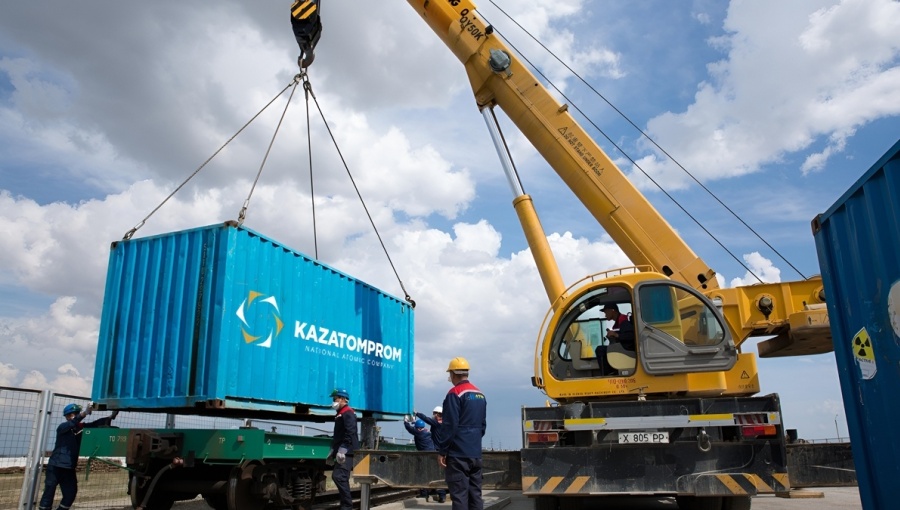
Meanwhile, Kazakhstan, currently India’s second largest individual trade partner among Central Asian states, is considering a blockbuster agreement involving the export of large amounts of uranium concentrate to India. The deal is potentially worth upwards of $3bn. The Kazakh nuclear energy agency, Kazatomprom, has scheduled a vote of its stakeholders for April 7. Approval is widely expected, given that the state-run sovereign wealth fund Samruk-Kazyna, a majority shareholder in Kazatomprom (KAP.L), is reportedly favouring the deal.
India’s outreach appears motivated in part by recent Central Asian efforts to upgrade relations with New Delhi’s arch-rival Pakistan, a country that can offer the landlocked region much-desired access to a seaport, enabling an expansion of trade with the broader world. Over the past four months, the presidents of Kazakhstan, Kyrgyzstan and Uzbekistan have all made ground-breaking visits to Islamabad. In early February, Uzbekistan set a target of increasing bilateral trade turnover from roughly $400mn in 2025 to $2bn by 2030.
This article first appeared on Eurasianet here.

No comments:
Post a Comment