Iran denies striking Turkey, Azerbaijan and Cyprus, says 'false flag'

Iran's Foreign Ministry spokesman Esmail Baghaei denied that Iranian forces carried out attacks against Turkey, Azerbaijan or Cyprus, saying no offensive actions were launched from Iranian territory against those countries, he said in his morning presser on March 9.
Baghaei suggested some of the reported strikes "may have been staged," saying Iranian authorities had already warned about the possibility of such provocations.
"No offensive actions were carried out from Iranian territory against these countries," he said.
The denial covers incidents across all three nations reported in recent days. Azerbaijan said Iranian drones struck Nakhchivan International Airport and a village on March 5, injuring two civilians.
A ballistic missile heading toward Turkish airspace was intercepted on March 4, prompting a phone call between the Turkish and Iranian foreign ministers. Cyprus temporarily closed Larnaca International Airport after an unidentified object was detected in its airspace.
Iran's General Staff had previously blamed Israel for the Nakhchivan strikes, calling them a "false flag" operation designed to damage relations between Muslim nations. Azerbaijan attributed the attacks directly to Iran and said they "will not go unanswered."
Baghaei said Tehran wished to maintain friendly relations with its neighbours but reserved the right to take retaliatory measures if neighbouring states' territories were used for strikes against Iran.
The spokesman accused the United States of sabotaging peace negotiations and said Washington and Israel were violating international law. He claimed the true aim of the US military campaign was to seize Iranian oil resources.
"Their plans are clear, their intentions are completely obvious: they want to divide our country to illegally seize our oil wealth," Baghaei said.
VIDEO: Bahrain’s Bapco halts oil operations following Iranian attack
.jpg)
Bahrain's national energy company Bapco Energies declared a force majeure on operations following an Iranian drone attack on its refinery complex in Sitra during the early hours of March 9.
Bahrain's government confirmed that at least 32 people were injured in the strikes, with four in critical condition.
Below is footage of the incident:
The Bapco attack shows the rapid spread of Persian Gulf energy shutdowns as the region remains under fire amid the Iran-Israel-US war.
QatarEnergy previously declared force majeure on LNG deliveries following production suspensions at its facilities, whilst the Kuwaiti National Guard reported intercepting a drone early on March 9.
Bahrain's Defence Force confirmed during the early hours of March 9 that it had so far intercepted 95 missiles and 164 drones from Iran since the outbreak of the current conflict.
The strike on Bapco's refinery poses substantial risks to Bahrain's energy sector, given the national oil company's central role in the country's petroleum industry.
While Bahrain's government maintains that food stocks remain secure despite the escalating regional conflict, the force majeure declaration signals significant operational damage to the energy sector and the economy at large by extension.
The broader impact on Gulf energy production capabilities remains a critical concern as Iranian attacks target key petroleum infrastructure across the region.
The accumulation of force majeure declarations from major Gulf producers threatens global energy supply chains, particularly as refining and LNG export operations face extended disruptions from the ongoing conflict.
Bapco declares force majeure as Iran sets Bahrain's only refinery ablaze
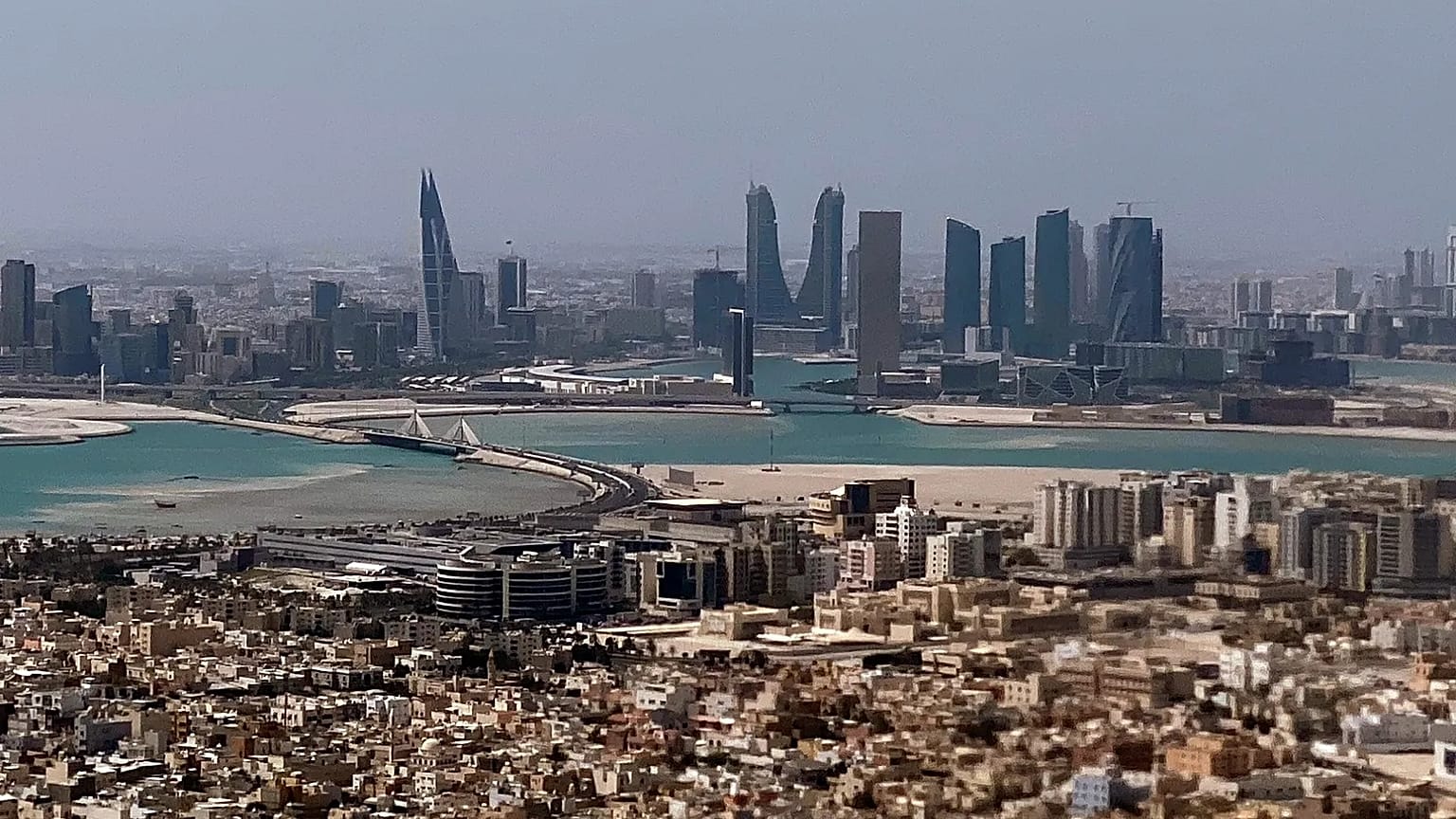
Bapco Energies invoked force majeure on Monday after a strike set the Al-Ma'ameer facility ablaze, joining Qatar and Kuwait in suspending shipments as Iran escalates its attacks on Gulf energy infrastructure.
Bahrain's state energy company declared force majeure on its oil shipments on Monday after an Iranian attack set its only refinery ablaze, becoming the latest Gulf state to invoke the clause as Iran widens its campaign against regional energy infrastructure.
A strike targeting Bahrain's sprawling Al-Ma'ameer oil facility caused a fire at the complex along with material damage, the Bahrain News Agency reported, though no casualties were recorded and firefighting operations were under way.
Videos widely shared on social media showed thick smoke billowing from the industrial zone housing the refinery.
In its force majeure notice, Bapco Energies said its "group operations have been affected by the ongoing regional conflict in the Middle East and the recent attack on its refinery complex."
Force majeure is a legal provision that frees parties from liability when failure to meet contractual obligations results from events beyond their control.
The company said it could still meet domestic demand.
The 90-year-old refinery was first reported damaged last week.
Bapco had recently modernised the plant and boosted its capacity to up to up to 380,000 barrels per day, upgrading units capable of producing more jet fuel and diesel.
Bahrain is not the first Gulf state to take the step.
QatarEnergy made a similar declaration last Wednesday after two of its liquefied natural gas facilities were struck, forcing a production pause and sending fresh volatility through global energy markets.
Qatar's energy minister had warned that all Gulf exporters would be forced to follow suit within days. Kuwait has also declared force majeure on oil sales after cutting output at its fields and refineries.
The energy shock comes as Iran also targeted a residential area in Bahrain, wounding 32 people including children and as a separate Iranian drone attack damaged one of the kingdom's desalination plants — the first time an Arab country had reported Iran targeting a desalination facility during the nine-day conflict, raising concern across a region that depends on such plants for its water supply.
Bahrain is an archipelago of 33 natural islands spanning approximately 760 square kilometres, roughly the size of Greater London, with a population of about 1.6 million, making it the third-smallest nation in Asia.
It is one of the most densely populated countries on earth, and one of the Gulf's smallest but most strategically significant oil producers.
Brent crude surged above $114 a barrel on Monday, roughly 60% higher than when the US and Israel first struck Iran on 28 February.
President Donald Trump sought to play down the spike, writing on social media that short-term oil prices "will drop rapidly when the destruction of the Iran nuclear threat is over".

No comments:
Post a Comment