Olivia Barber
Left Foot Forward
Refugee groups have said the policy is "divisive and scapegoating" and will trap people fleeing war in "a state of insecurity and fear"

Refugees and charities that support refugees have slammed the government’s decision to make refugee status temporary, saying that the policy throws “human rights under the bus”.
On Monday, the government announced that refugee status will now be temporary and subject to review every 30 months for all adults claiming asylum.
This means that if a person is granted refugee status, their designation as a refugee will be reassessed every two and a half years. If their home country is then deemed to be “safe”, they would be asked to return home or deported.
Yavuz (not his real name), who came to the UK as an asylum seeker but now has settled status and works for migrant charity Praxis, told Left Foot Forward: “People are fleeing from war and conflict, persecution and ill-treatment, these are not things that can change in 30 months.”
Yavuz added: “I don’t think the Home Office will have the capacity to understand if things are safe or not in different countries, which may actually result in misjudgements and people may be sent back prematurely and to the fear and horror of what’s happening in their home country.”
Highlighting the backlog of over 64,000 cases at the Home Office, Yavuz added: “they are creating something that they don’t have capacity to review every 30 months”.
He also criticised Labour’s decision to require refugees to wait 20 years to apply for Indefinite Leave to Remain.
He said that people fleeing war and persecution are “looking for stability and safety”, and that by requiring refugees to wait 20 years to settle “this is literally telling people you don’t deserve to live here, you don’t deserve to live a good life”.
Yavuz said that this will also negatively affect refugees’ ability to integrate and feel a sense of belonging in the UK.
Minnie Rahman, CEO of Praxis, said: “Scrapping permanent status will trap refugees in a state of insecurity and fear. Doing so says some people deserve fewer rights – and that inequality is lawful. This is inhumane cruelty.
“If the Government wants to foster cohesion and cut poverty, people need to be able to settle here simply, quickly and affordably. Allowing people to have secure futures enables them to reach their full potential, benefitting everyone – not just refugees.”
In a statement, Women for Refugee Women said they were “deeply alarmed” by the government’s decision. A spokesperson for the charity said: “For the women we support – many of whom have survived war, rape and trafficking – repeated reviews create a climate of permanent fear and insecurity.”
They added: “Already we know from Denmark – where this policy is borrowed from – women will be disproportionately harmed, particularly single mothers, trapping them and their children in cycles of poverty and harm. This is a shameful approach for a Government committed to tackling violence against women and girls.”
The charity said: “This divisive and scapegoating policy is designed to make the Government look ‘tough’ on immigration, but it is real people’s lives at stake. We urge the Government to uphold a system that provides genuine protection for those seeking safety in the UK – not institutionalise insecurity for those who have already endured profound harm.”
Yazan Miri, a spokesperson for the Joint Council of the Welfare of Immigrants (JCWI), said: “As many countries around the world make amendments to their asylum legislations to provide protection to more people at risk including those fleeing climate violence and environmental disasters, this government decides to throw human rights under the bus and make the UK a backward-moving country.
Miri added that “The government’s designation of a “safe country” is inadequate and lacks the comprehensive assessment of the risks for people seeking safety”.
Olivia Barber is a reporter at Left Foot Forward
UK Government attacks on migrant rights intensify
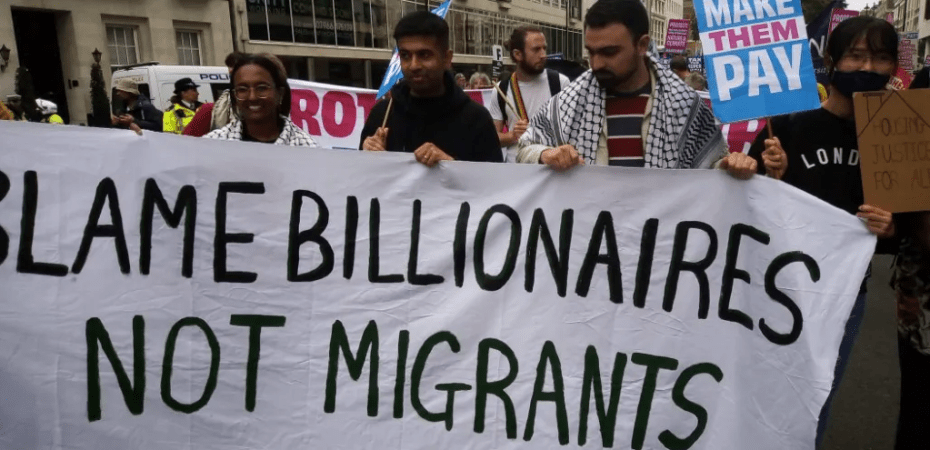
Shabana Mahmood’s attack on migrant rights continues. Following her announcement to double – and in some cases, triple – the length of time that migrants have to wait before getting settled status, the Home Secretary has now opened several new fronts.
Refugees targeted
The first is the decision that all new refugees entering the UK will be told that their right to stay is only temporary, to be reviewed every thirty months. The copying of Denmark’s draconian system has been widely criticised, not least by the Law Society of England and Wales’s President, Mark Evans. He said: “The changes stand in tension with Article 34 of the refugee convention, under which the UK has agreed to facilitate as far as possible the assimilation and naturalisation of refugees.”
Sophie McCann, of Médecins Sans Frontières UK, called the decision “cruel”, adding: “Embedding prolonged uncertainty and fear within the asylum system will create further psychological harm and inhibit refugees’ – including our patients’ – ability to heal from their experiences and rebuild their lives with dignity.”
Daniel Sohege, Director of the human rights advocacy and support organisation Stand For All, commented: “Leaving people in limbo, without any guarantee of security, creates the additional issue of placing them in more precarious positions. It is already shown that this increases the risks of both people becoming undocumented and of people being exploited, particularly by human traffickers. This would create a result from this policy which is entirely at odds with this government’s claim that they are focused on reducing the number of undocumented migrants and tackling exploitation and human trafficking.”
The policy is also at odds with the government’s claim to be focused on reducing division and increasing integration. Many Labour local authorities, particularly in urban areas with a high proportion of residents born overseas, are keen to tell a positive story about inclusivity and integration. Sheila Chapman, who is Islington Council’s Executive Member for Equalities, Communities and Inclusion called the announcement “really unwelcome.”
She added: “Making refugee protection temporary will make our work harder. It creates divides in our community as refugees are presented with yet another barrier to integration. For those who are not able to move on to work or study visas, the threat of deportation will loom over their lives and the lives of their dependents.
“We know firsthand the benefit that refugees have brought for generations. They become our neighbours, our classmates, our friends and family, and we do not agree that they should be made to leave.”
She has written to Shabana Mahmood, urging her to reconsider. Backbench Labour MP are also unhappy.
Bell Ribeiro-Addy MP said: “Those fleeing disaster and conflict deserve certainty and dignity, not repeated questioning of their right to feel safe. Progressive, humane policies strengthen communities. Division does not. We can choose compassion, and we should.”
Imran Hussain MP tweeted: “Making refugee status temporary and subject to review every 30 months is deeply misguided. It undermines the post war refugee protections Britain helped build and will fuel more insecurity and hostility towards people seeking safety. These changes must stop before we slide further down a dangerous path.”
And former Shadow Home Secretary Diane Abbott MP questioned: “After Labour’s drubbing in Gorton, this is the response??? My party implementing policies that used to get you thrown out of the Tory party.” Many others are also asking why Labour is aping the policies of Reform UK – particularly after the latter’s comprehensive drubbing in the Gorton and Denton byelection last week.
Study visas restricted
Midweek, the Home Secretary announced a new crackdown on issuing study visas, saying they would no longer be made available to people from Afghanistan, Cameroon, Myanmar and Sudan from this month. Skilled work visas to Afghans will also be stopped. All the countries targeted are in the midst of civil wars, with very high levels of civilian casualties and human rights abuses.
The University and College Union responded: “This attack on international students isn’t really about reducing asylum claims, it’s about aping Reform to try and win back votes. The Greens’ destruction of Labour in the Gorton and Denton by-election should have been a wakeup call – these tactics aren’t just immoral; they’re political suicide.”
National Union of Students president Amira Campbell said the move was “deeply immoral”. She said: “The ambition of the next generation is not paused during conflict. Which is why it is even more important that students from countries facing conflict or humanitarian disasters can come to the UK, access our world-leading education system and share their experiences with other students on campus.”
New restrictions
Then on Thursday, the Home Secretary, in a flagship speech, announced new measures, including a requirement that to be granted permanent settlement, immigrants must attain a higher standard of English language.
Echoing Reform UK, she said the current system was “out of control”. But Sile Reynolds, Head of Asylum Advocacy at Freedom from Torture, warned that Shabana Mahmood’s plans to remove accommodation and financial support from some asylum seekers will leave people homeless.
The Refugee Council agreed, saying the plans could lead to an uptick in rough sleeping, shifting costs to local councils and the NHS. Imran Hussain, its director of external affairs, said speeding up slow decision-making was a “far more effective” way to reduce costs.
The plans triggered an immediate backlash from Labour MPs. Tony Vaughan, the Labour MP for Folkestone and Hythe, organised a letter that he said had been signed by 100 of his party colleagues, saying the proposals undermined the government’s commitment to integration and social cohesion.
Stella Creasy, MP for Walthamstow, who said: “There’s no ‘fairness’ in repeatedly spending money on asking victims of trafficking and civil war if they are still in that category.” Sarah Owen, a leader of the Tribune group of centre-left Labour MPs, said: “The idea of deporting children mimics Trump’s ICE detention of children.”
These latest attacks follow last month’s proposal to make migrants wait longer before being allowed Indefinite Leave to Remain, which large numbers of Labour backbenchers outspokenly criticised in Parliament.
Corbyn broadside
Islington North Independent MP Jeremy Corbyn told the Home Secretary: “The premise of the proposals is fundamentally unfair and unjust, and it is deeply disturbing that these rules are being pushed through via secondary legislation without Parliamentary scrutiny. It is therefore no surprise that little attention has been paid to safeguarding those most vulnerable to exploitative employees, people with caring responsibilities, individuals trapped in abusive relationships, and children.”
He called the proposals “fundamentally unjust. They are set to apply retroactively, affecting many already living and working in the country, some of whom are mere months away from qualifying for settlement.” He added: “The criteria for reducing and increasing the qualifying period favour one group of people only: those on high income. In practice this means that following a decade of austerity, wage stagnation and a cost-of-living crisis, the vast majority of applicants will face a harder life and at worst, be susceptible to exploitation.”
He said the proposals were inconsistent with the government’s own rhetoric: “In 2024, the Secretary of State for Health and Social Care emphasised the need for carers to be ‘respected as professionals’. Yet it is carers who are having their minimum qualifying period extended from 5 to 15 years, leaving them vulnerable to predatory relationships as they rely entirely on individual company sponsorships. This callous treatment of migrants will likely achieve the goal of a decrease in legal migration. However, at a time when 111,000 posts remain unfilled in the care sector, it would be a hollow victory with devastating consequences for the vulnerable and elderly.”,
He said the prolonged temporary status migrants would now face would hit children particularly and could prevent them from feeling truly integrated as they continually are forced to rely on visa extensions. This would put vulnerable children at risk of social and cultural alienation.
He concluded: “People who migrate and make this country their home make enormous social and economic contributions to society. In the current climate of rising anti-immigrant sentiment pushed by far-right-racism, it is alarming to see this government amplify, through these changes, the false assumption that migrants are a burden to society.”
Rogue employers
The latest targeting of migrants comes at a time when Home Office action against rogue employers has hit an all-time high. The Government has revoked a record 1,516 sponsor licences from businesses in October to December 2025, with new data revealing exploitation of sponsored workers goes far beyond the care sector. Penalising exploitative employers is no bad thing – but the current approach also hits those who work for them, who lose their jobs and visas and end up destitute.
Work Rights Centre analysis of official immigration statistics finds that the Home Office revoked a record number of licences from businesses in 2025, totalling 3,100 revocations. This is the highest number of revocations in any year since records began in 2012.
Chief executive of the Work Rights Centre, Dr Dora-Olivia Vicol said: “We welcome increased action to hold exploitative employers accountable, but this should not come at the cost of migrant workers being left out in the cold. Every licence revocation means all migrant workers sponsored by that employer will lose their income and risk losing their immigration status.
“Migrant workers must not be punished for the crimes of their employers. This is not only unjust, but creates a disincentive for all workers to report exploitation, giving unscrupulous employers free rein to exploit as they please.
“Ministers have not done enough to support migrant workers who have fallen victim to unscrupulous employers and the UK’s broken immigration system. They were abandoned as collateral damage in the Home Office’s crackdown on rogue employers, many of which should never have been given a licence to sponsor migrant workers in the first place.
More analysis of Work Rights Centre’s Freedom of Information Request data can be found in its new publication: Home Office enforcement against exploitative sponsors hits all-time high, but fails to protect victims. Work Rights Centre is a charity dedicated to ending in-work poverty.
Image: c/o Labour Hub.
‘Labour’s lesson from Denmark: immigration alone won’t save you’
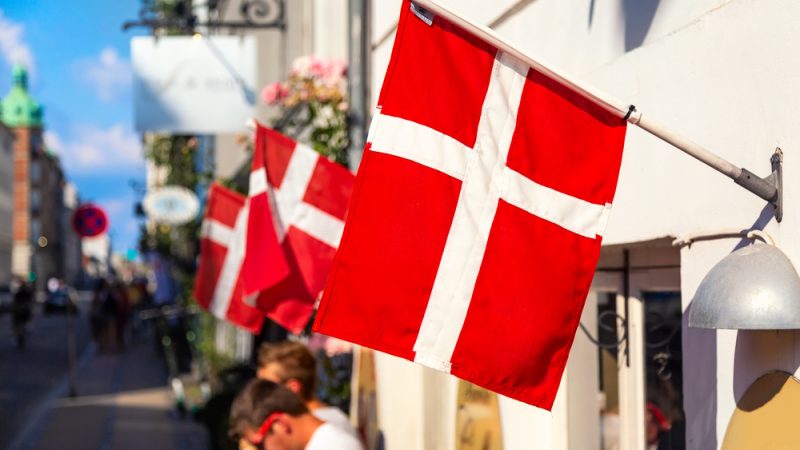
Labour has its eyes on Denmark. The story told by the Home Office is that the Danish Social Democrats owe their success to getting tough on migration. While that was part of the story when Mette Frederiksen first took office in 2019, it was never the full story.
As a Dane, the current political situation in the UK feels like slight deja-vu. While Denmark is, of course, very different, there are still lessons from the Danish Social Democrats that Labour might want to take note of – and oversimplifications of the Danish story that they should avoid.
Frederiksen is credited for writing the playbook for how left-wing parties can adopt right-wing immigration policies and combine them with social democratic welfare policies to fight off the populist right. Her 2019 election win was seen as proof; the populist right party, the Danish People’s Party, that had won more than 21 percent of the vote in the 2015 election, was halved.
However, the Social Democrats got more votes in 2015 than they did in 2019, and only ten percent of the Danish People’s Party’s voters went to the Social Democrats – most of the voters the Danish People’s Party lost went to other right-wing parties. Instead, Frederiksen was able to get a majority behind her because the smaller left-wing parties did significantly better in 2019 than 2015.
‘Trying to stop the drift to the right by focusing too much on one voter group can result in a stronger drift to the left’
Similar to Labour, the Danish Social Democrats have relied on a ‘hero-voter’ approach. In a multi-party system, they knew they could not be a party for everyone, so they made intentional choices of who they are for, who they are not for, and who they are against.
They identified their base voter as primarily pensioners and working-class people in provincial towns. They built everything around that group, combining tough immigration policies with retirement age reform and increased minimum wage for care workers, nurses and prison guards as flagship political wins. In doing so, they were prepared to sacrifice the young, university-educated metropolitan vote, knowing it would flow to other parties.
The consequences of this strategy, however, have been significant. In last year’s council election, they lost the mayoral seat in Copenhagen for the first time in more than 100 years. The current polls also predict that they will lose 19 percent of their 2022 voters to other left-wing parties.
The Social Democrats learned the hard way that trying to stop the drift of voters to the right by focusing too much on one voter group, might result in a stronger drift to the left.
‘The grocery cheque’
Realising this, Frederiksen’s 2026 campaign is bearing signs of ‘course correcting’; her priorities and announcement are clear returns to ‘traditional’ social democratic policies with broad appeal.
While Denmark has a strong economy, the cost of living is still the primary concern of voters in this election. Frederiksen therefore called the election right after the Danish Parliament passed what has been dubbed “the grocery cheque”: a one-off cash transfer of between £117 and £586 for more than a third of the population.
As a policy, it is easy to explain, easy to feel, and easy to remember. It shows that the Government takes voters’ concerns seriously and it is immediately felt in people’s pockets.
Recent IPPR research has argued that cost-of-living interventions should be a priority for this government in the UK. These interventions do not need to be large to be effective; but the longer the list, the more convincing the case becomes that the Government is doing everything within its power to ease the pressure on working people.
‘Danish wealth tax communicated whose side the government is on’
The clearest example of Frederiksen’s ‘course correction’, however, came in her election announcement speech: Frederiksen wants to introduce a wealth tax on the wealthiest 0.5 percent of the population, with the money ringfenced for reducing class sizes in primary schools.
This is a near perfect Social Democratic policy; it raises money on the principle that those with the broadest shoulders should bear the heaviest load, spends it on something universally valued, and communicates something clear about whose side the government is on: the 99.5 percent.
Labour might consider introducing similar broad-appeal policies to address voters’ concern with the growing inequality in the UK. Polling by IPPR and Persuasion UK from November 2025 shows that there would be public support for a ‘narrow’ wealth tax if it was clear that it would benefit the wider public.
‘Adopting a simplified Danish playbook is unlikely to be a silver bullet’
Frederiksen has been an impressive Prime Minister. But her story is about more than ‘getting tough on migration’. It is also a story about the consequences of getting too caught up in the ‘hero voter’ strategy. Denmark’s multiparty system kept her in power, but she has realised that she cannot afford to overlook her wider voter base.
Adopting a simplified idea of the Danish Social Democratic playbook is therefore also unlikely to be a silver bullet for Labour, especially if it largely just focuses on ‘getting tough on immigration’.


No comments:
Post a Comment