DEI
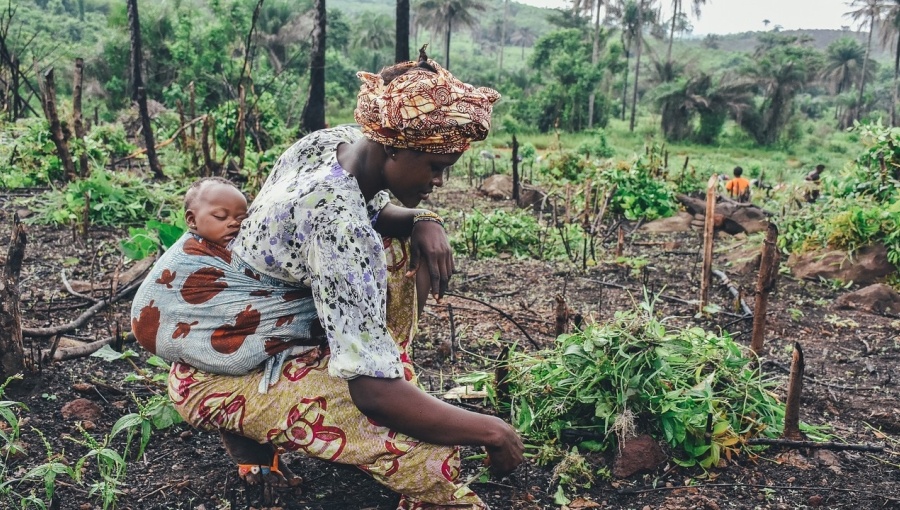
Laws designed to give women equal economic opportunities are only partly enforced worldwide, leaving billions unable to fully participate in the global economy and costing countries as much as a fifth of their potential output, the World Bank said in a report.
The lender’s latest ‘Women, Business and the Law’ report found that although many governments have adopted legislation supporting gender equality, the reality on the ground is markedly different. On average, countries score 67 out of 100 for the strength of laws promoting women’s economic equality, but enforcement drops that score to 53, while the systems needed to implement those rights score just 47.
“On paper, most countries are doing reasonably well,” said Indermit Gill, the World Bank Group’s chief economist and senior vice president for development economics, quoted in a press release from the development bank. “But when it comes to enforcing the laws, the average score drops to 53. And when the systems needed to implement those rights are assessed, the adequacy score is just 47.”
Only about 4% of women worldwide live in economies where legal frameworks offer nearly full equality with men, the report found.
Lost opportunities
Gill said the gap between legal commitments and implementation represented a huge lost opportunity for growth, particularly in developing economies.
“A paper that the Yale-World Bank team produced last year finds that treating women worse than men — through lousy laws, incompetent implementation and poor support services — can cost a country between 15% and 20% of its economic output,” he told a webinar to launch the report.
“Imagine if you take 15% to 20% of a country’s GDP and just dump the money in the ocean. That is pretty much what these countries are doing today.”
The findings highlight the economic consequences of barriers that limit women’s participation in the labour market or prevent them from entering higher-skilled, better-paid jobs.
“It is not just because you keep women out of the labour force,” Gill said. “It is also because you keep talented and skilled women out of demanding, and hence well-paid jobs… you’re really leaving a lot of skills and talent on the sidelines.”
“Equality begins with safety”
The report measures women’s economic participation across 10 areas including safety, employment, entrepreneurship, asset ownership and retirement security.
One of the most significant gaps identified is protection from violence. Norman Loayza, director of the World Bank’s Policy Indicators Group, said weak legal frameworks and enforcement undermine women’s ability to work consistently.
“True equality begins with safety,” Loayza said. “Whether at home, at work, or in public, women deserve protection to thrive.”
“Globally, we’re falling short. We have only a third of the safety laws we need, and even then, enforcement is failing 80% of the time.”
Childcare policies were also identified as a major barrier to women’s participation in the workforce. Less than half of the 190 economies analysed offer financial or tax support to help families afford childcare, while in low-income countries just 1% of the support mechanisms needed are in place.
Reliable childcare is often one of the strongest factors determining whether mothers can remain in employment or move into higher-productivity jobs.
Demographic shift
The report comes as developing economies prepare for a major demographic shift.
Tea Trumbic, manager of the Women, Business and the Law project and lead author of the report, said the coming decade would bring an unprecedented influx of young workers.
“Over the next decade, 1.2bn young people — half of them girls — will enter the workforce,” she told the webinar.
“Many will come of age in regions where women face the biggest barriers, and where the GDP boost that would result from their participation is most needed.”
Ensuring equal opportunities for women entering the labour market is therefore both a social and economic priority, Trumbic added.
“Ensuring equal opportunity for women here - and everywhere - benefits societies as a whole, not just women. It’s an economic must-have, in short, not just a nice-to-have.”
The report’s broader analysis suggests that removing barriers to women’s economic participation could increase national GDP by 15% to 20% in many countries.
“No economy can unlock its full potential while billions of women remain legally barred from equal economic opportunity,” Trumbic said.
Progress but uneven reforms
Despite persistent gaps, the report notes some progress. Over the past two years, 68 economies introduced 113 reforms aimed at expanding women’s economic opportunities, particularly in areas such as entrepreneurship and safety.
Sub-Saharan Africa recorded the largest number of reforms, with 33 changes enacted.
Several countries in the Middle East and North Africa also made advances. Egypt was identified as the world’s top reformer over the period, increasing its legal equality score by nearly 10 points through measures including extending paid parental leave and mandating equal pay.
Egypt, Jordan, Kyrgyzstan, Madagascar, Oman and Somalia were among the countries implementing reforms to improve women’s economic participation.
"In Jordan, we believe that advancing women’s economic rights is a direct driver for economic growth and job creation," said Jordan's Minister of Social Development, Wafa Bani Mustafa. "The political will has enabled us to draw a clear reform plan to enhance women’s status in Jordan and facilitate their entry into the labor force.
Still, progress remains uneven across regions. “The gaps are the biggest in the parts of the world where the needs are the most urgent,” Gill said, pointing to North Africa, the Middle East, South Asia and Sub-Saharan Africa, where populations are expanding and millions of young people are expected to enter the labour market.
Untapped talent
World Bank officials said the global economy is missing out on a vast reservoir of talent because women remain underrepresented in many sectors and leadership roles.
“We face now in the world this sort of a dual problem,” Loayza said. “For advanced economies, we have a shrinking workforce. For young economies, developing economies, we have an expanding labour force.”
In that context, increasing women’s participation is essential for growth. “Women don’t just fill roles,” he said. “They actually create jobs… through their entrepreneurial spirit and their leadership ability.”
With roughly 3.9bn women worldwide, Loayza said their economic potential remained largely untapped. “We have this massive pool of talent that we are not tapping sufficiently,” he said. “These are 3.9bn women whose power could be leveraged to increase the economy massively.”

No comments:
Post a Comment