Macquarie says copper is oversupplied and overpriced
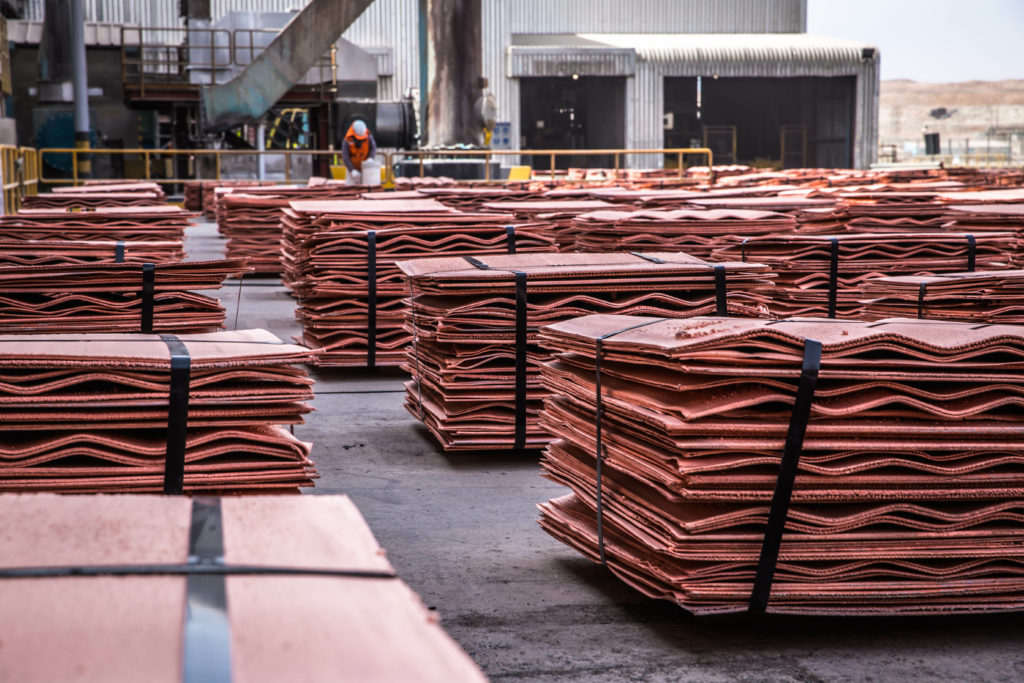
Copper ended Thursday down 1.5% from the previous close and May futures were last worth 5.47 per pound or little over $12,000 a tonne. Copper has given up more than 16% or $2,400 per tonne from its all-time high struck at the end of January, a day before the start of the Iran war.

In a new analysis from Macquarie Strategy, the bank’s 11 analysts in locations including Geneva, Houston, London, Shanghai and Singapore argue that copper’s extraordinary run since December was less about fundamentals and largely driven by investor flows into base metals. Shanghai futures exchange trading volumes in base metals in January was up 80% over December for instance.
Macquarie also points out aggregate open interest in copper contracts across New York, London and Shanghai swelled by $9.5 billion across December and January before reversing course, with a $24.6 billion decline through February and March accompanying the price correction.
In Macquarie’s view, the rally has left the market “overpriced, oversupplied and over the pond,” with little evidence of genuine tightness in physical supply.
Visible global inventories have risen sharply, increasing by more than 1 million tonnes since the start of 2025. Stocks on the LME have climbed to six-year highs, while inventories on COMEX have reached unprecedented levels. The bank also estimates that a further 480,000 tonnes of copper is sitting off-exchange in the United States, drawn in by arbitrage opportunities between CME and LME pricing.
Much of the excess metal has accumulated in the US, creating what Macquarie describes as an artificial sense of scarcity elsewhere. As for arb: COMEX premiums reached unheard of levels of more than $2,000 a tonne in December and January but has now compressed to more historic levels.
Nevertheless, the CME-LME arbitrage continues to pull metal into the US says Macquarie as traders position ahead of a potential Section 232 decision on copper imports, expected by June 30, 2026. While recent developments in US critical minerals policy may have reduced the likelihood of tariffs, Macquarie cautions that the outcome remains uncertain and continues to influence trade flows.
As prices have eased Chinese consumers have begun to return, with a notable drawdown in inventories reported in the latest week. Outside China, however, demand remains subdued. Spot premiums are well below contract levels and there is limited appetite for physical metal, suggesting that elevated prices have dampened consumption across key regions.
This weakening demand backdrop comes even as supply continues to build, reinforcing Macquarie’s estimate that the market was already in a surplus of roughly 602,000 tonnes last year.
Macro factors are likely to remain the dominant driver of prices in the near term. The bank expects copper to trade with heightened volatility, influenced more by investor positioning and geopolitical developments than by underlying supply-demand.
A resolution to tensions involving Iran could provide short-term support, but such gains would likely be sentiment-driven rather than rooted in fundamentals.
Ultimately, Macquarie sees mounting downside risks and warns that the market lacks fundamental support at current price levels.
The recent pullback may prove to be an early indication that copper’s rally has run ahead of reality, leaving prices vulnerable to a deeper correction as the year progresses.

No comments:
Post a Comment