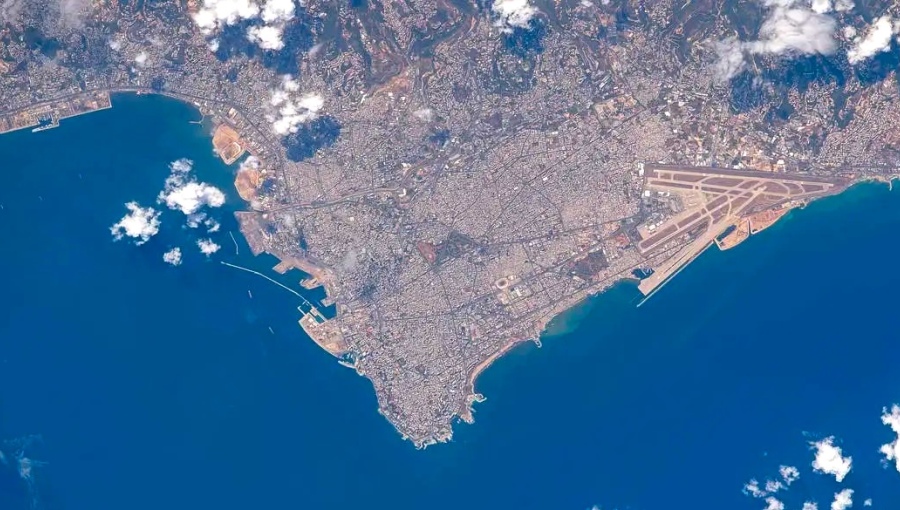
The modern history of Beirut is a chain of tragic ruptures that transformed the "Pearl of the East" from a radiant centre of commerce, culture, and coexistence into an open arena for regional and international conflict. It’s a city that pays the price for other people’s wars.
From the outbreak of the Lebanese war in 1975 to the major military operations of 2026, one recurring pattern stands out: the systematic collapse of the state under the pressure of armed groups operating outside its authority.
Beirut’s destruction was never the result of natural catastrophe. It was the direct consequence of violating sovereignty, of turning the Lebanese capital into a battleground where illegal weapons under different flags and ideologies fought their wars on Lebanese soil.
The outcome has always been the same: the dismantling of state authority, the destruction of the economy, and the devastation of civilian life.
The accumulation of illegal arms has destroyed Beirut at several defining moments: first through the long Lebanese war that began in 1975, then through the Beirut port explosion in 2020 and the military escalation that culminated in the large-scale war of 2026, and other milestones between these dates.
A city destroyed by foreign agendas
Lebanon’s tragedy is, at its core, the story of repeated failure to build sovereignty.
The weapons that devastated Beirut’s old markets in the 1970s under the banner of "liberating Palestine" are, in effect, the same weapons that brought Israeli missiles crashing into Beirut’s suburbs and commercial heart in 2026 under the banners of "supporting Iran" and "revenge for Khamenei."
The slogans changed.
The destruction did not.
What did these weapons ever bring Beirut?
They brought no development, no prosperity, and no stability.
They built no institutions, no schools, no roads, and no economy.
What they brought instead were conflict, bombardment, death, and the smell of blood in the streets of the capital.
In the 1970s, Beirut was drawn into war under the banner of the Palestinian cause, and not a sovereign war for the Lebanese state.
Today, the same pattern repeats itself in another form.
This time, Beirut is being dragged into a war tied to Iran’s regional project. Iran has brought Lebanon neither investment nor reconstruction, neither development nor recovery. It has brought missiles, weapons depots, military networks and with them, Israeli bombardment into the heart of the capital.
Once again, Beirut has become hostage to an external project imposed by force of arms outside state legitimacy.
A dangerous historical turning point
The events following March 2, 2026,when Hezbollah fired rockets into Israel in revenge for the assassination of Supreme Leader Ayatollah Ali Khamenei, mark a turning point that closely resembles the dangerous conditions that preceded the Lebanese war.
Just as the uncontrolled spread of Palestinian arms before 1975 undermined Lebanese sovereignty, the continued independent military structure of Hezbollah today has hollowed out state authority and exposed Beirut once again to direct war.
The pattern is unmistakable. When the state loses its monopoly over weapons, the capital loses its immunity from war. This is not merely a security failure. It is an existential crisis that strikes at the heart of Lebanese sovereignty.
From managing crisis to solving it
Lebanon can no longer afford to merely manage the crisis.
What is needed now is resolution. That requires the immediate and strict implementation of Cabinet decisions, especially those issued on August 5, 2025, and March 2, 2026 which affirm the necessity of restoring full state authority over all Lebanese territory.
It also requires the immediate deployment of the Lebanese Army across all areas, beginning with Beirut, with clear authority to fully secure the capital, pursue illegal armed groups and prevent residential areas from becoming military targets. This is how a state protects civilians: not through slogans, but through sovereignty.
A state that cannot impose its authority over all its territory loses the essence of its existence.
Sovereignty is not optional
Some argue wrongly that the Lebanese state lacks the capacity to impose sovereignty by its own means. But international law provides clear mechanisms. Under Paragraph 12 of UN Security Council Resolution 1701, and based on Chapter VII of the United Nations Charter, the Lebanese government may, by Cabinet decision, request international forces to support the restoration of sovereignty and civilian protection.
Such a step does not weaken sovereignty. It saves it. Because the real threat to sovereignty does not come from international support.
It comes from leaving Lebanon prey to those who transform its land into a battlefield for foreign agendas.
Beirut’s tragedy is not simply that it has known war. Its tragedy is that it is repeatedly dragged into wars chosen by others. If Lebanon does not restore the exclusive authority of the state over weapons, Beirut will remain condemned to relive the same destruction under different names, different banners, and different foreign patrons.
Beirut deserves better than to remain history’s recurring victim.

No comments:
Post a Comment