Chile uncovers criminal networks shipping millions of dollars of copper to Peru and China
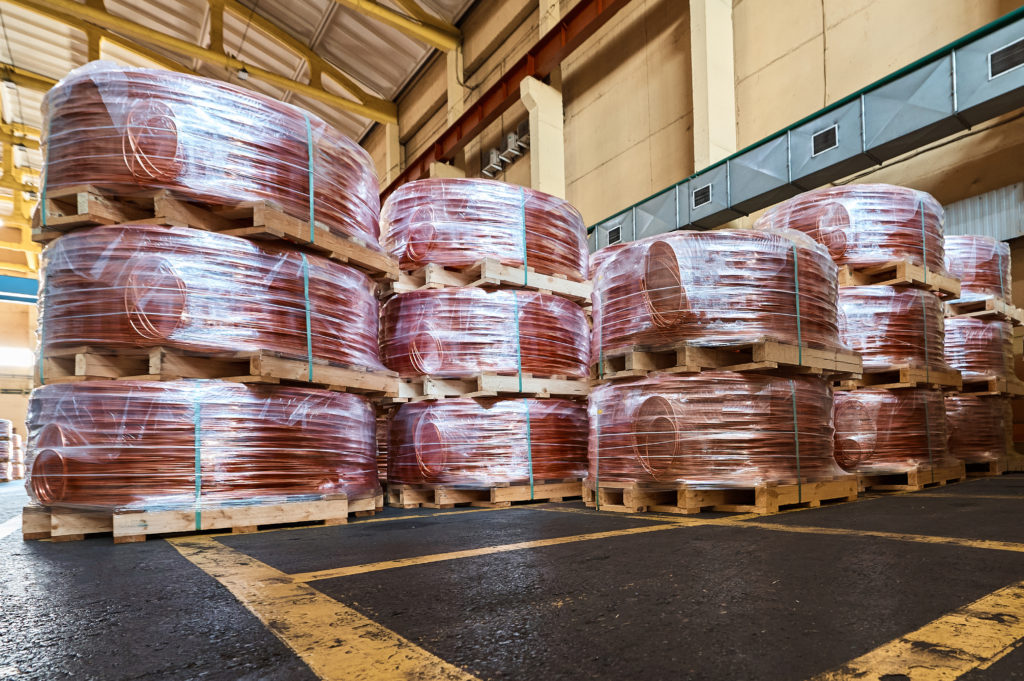
Chilean investigators have exposed how organized criminal groups steal, process and ship copper on a previously unreported scale as perpetrators seek to capitalize on high metal prices.

On Wednesday, authorities dismantled a network that had moved an estimated 817 billion pesos ($917 million) worth of copper between 2020 and 2025, first trucking the metal to the northern port of Iquique and then shipping it to China. Two weeks earlier, police seized cables, chips and cathodes from a storage site in the city of Arica which was set to be smuggled to Peru and then on to China.
The illicit organizations show both the profitability and sophistication of theft in a country that’s the world’s largest producer of copper. They also lay bare the scale of challenges facing the new administration of President José Antonio Kast, who has vowed to crack down on crime. His administration is considering stronger penalties to combat cable theft.
“This has been taken over by organized crime,” Energy Minister Ximena Rincón said in an interview. “We are reviewing whether the current legal framework is enough.”
Increasingly, thieves use heavy trucks to knock down power poles, strip cables and funnel copper into cross-border networks — a structured trade authorities say is driven by prices that hit record highs in January.
The method is blunt and effective: a truck plows into a row of power poles, bringing down entire sections of cable in minutes. The copper is quickly stripped, loaded and moved out — often before authorities can respond.
“It’s a very profitable business,” Rodrigo González, a prosecutor targeting organized crime in the northern border town of Arica, said in an interview, describing a pattern that has left communities without power and caused losses of as much as 60 million pesos in a single incident. “A few dozen meters can mean millions of pesos.”
In the most recent investigation, dubbed “Operation High Voltage,” police carried out coordinated raids on 49 properties across seven regions, leading to the arrest of 25 people, including alleged leaders and key operational members. Authorities seized 187 tons of copper, worth about $2.2 million at current prices.
The seven-month probe found that the organization relied on intermediaries that purchased copper from storage or aggregation sites, charged a commission and then sold it to exporters, said Santiago Bravo, an inspector with Chile’s Investigative Police and member of the copper task force. Each transfer helps obscure the origin, gradually eroding traceability, he said in an interview.
Organized crime
The thefts are no longer isolated acts. Authorities say they have identified organized groups with distinct roles: crews that steal cables, intermediaries who store and process the material and transporters who move it across borders.
The crimes have hit both public infrastructure and mining operations. In remote regions, attackers target electricity networks, temporarily cutting power to broad areas.
Once stolen, the copper is processed locally. Thieves burn or strip the plastic coating — often in informal sites — leaving behind bare metal that is harder to trace.
Some appears to be mixed with higher-grade metal linked to mining operations. Authorities have found melted copper plates and ingots — likely reprocessed to remove identifying marks such as serial numbers, González said.
So far this year, officials in one northern region have seized more than 10 tons of stolen copper, with estimates suggesting 30 to 50 tons annually could be moving through the area. The trade is facilitated by geography, with proximity to borders making overland transport relatively simple.

The scale of the problem has grown with copper prices. In response, authorities have begun centralizing investigations and using data analysis tools — including heat maps and pattern tracking — to identify hotspots and storage sites. Drones and other surveillance tools are also being deployed to monitor suspected areas.
Still, officials acknowledge the challenge of containing a trade that remains highly lucrative and relatively easy to replicate.
“It’s like car theft,” González said. “You dismantle one group, and another one appears.”
(By James Attwood and Antonia Mufarech)

No comments:
Post a Comment