BAN DEEP SEA MINING
The Metals Royalty debuts on Nasdaq with deep-sea bet
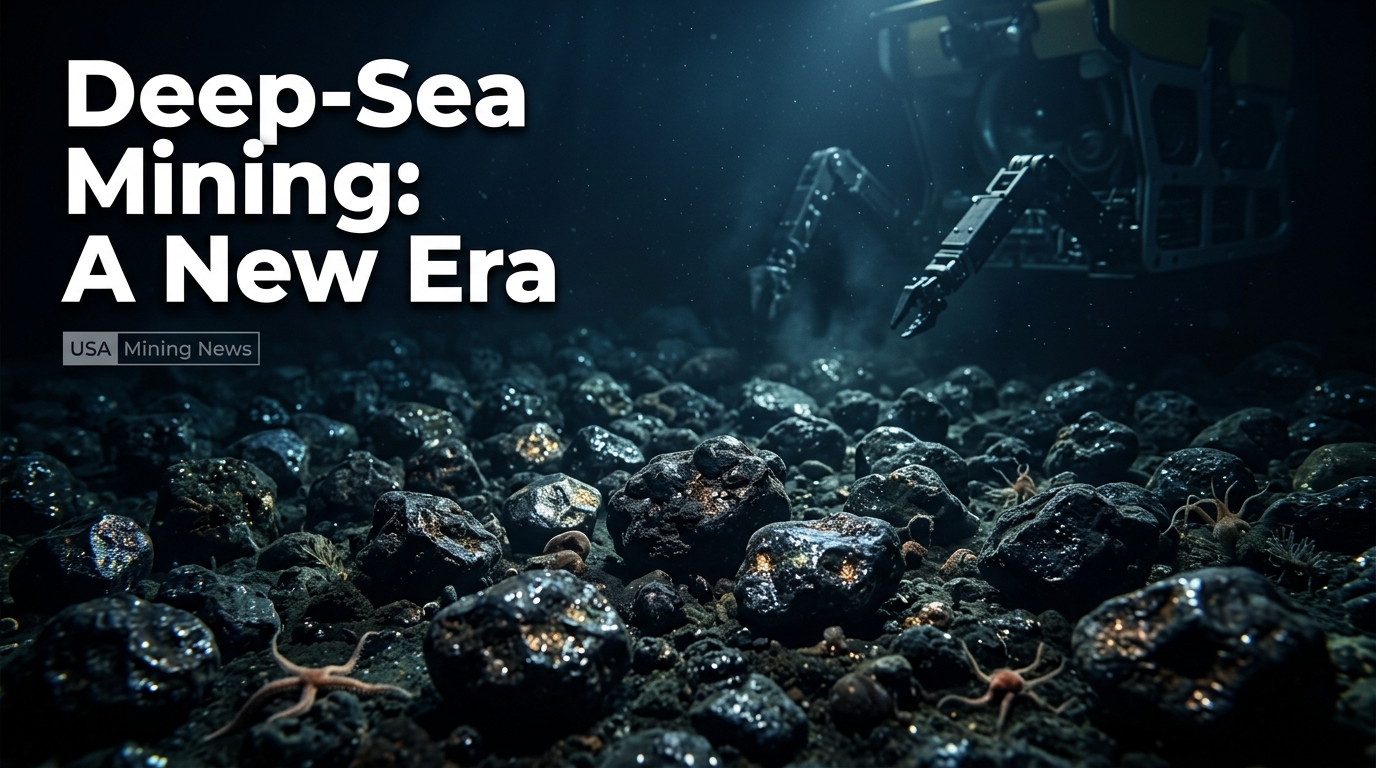
The Metals Royalty Company Inc. (TMCR) made its public market debut on the Nasdaq on Wednesday, April 8, 2026, marking a significant milestone for deep-sea mining finance. The company holds a crucial royalty interest in The Metals Company's (TMC) NORI project in the Pacific Ocean, which aims to extract polymetallic nodules rich in nickel, cobalt, and copper – essential battery metals. This move introduces a proven financing model into the nascent and high-potential deep-sea mining sector, addressing the accelerating global demand for critical minerals.
The Metals Royalty Company Debuts on Nasdaq, Charting a Course for Deep-Sea Mining Finance
In a significant development for the global mining investment landscape, The Metals Royalty Company Inc. (TMCR) commenced trading on the Nasdaq stock exchange on Wednesday, April 8, 2026. This public debut under the ticker symbol TMCR signals the arrival of a distinctive financing model applied to the burgeoning, yet complex, realm of deep-sea mining. The company's core asset is a royalty on the pioneering NORI project in the Pacific Ocean, operated by The Metals Company (TMC), an entity also listed on Nasdaq under TMCWW. This strategic entry into public markets is closely watched by industry analysts and investors, as it represents an early, tangible step towards monetizing deep-sea mineral resources crucial for the accelerating demand for battery metals.
A Novel Financing Model for a New Frontier
Royalty companies have long been an integral part of the terrestrial mining sector, providing upfront capital to developers in exchange for a percentage of future production or revenue from a mine. This model offers investors exposure to commodity prices with lower operating risk, while providing mining companies with non-dilutive financing. The Metals Royalty Company's Nasdaq listing, as explained by Chief Executive Officer Brian Paes-Braga in an interview with MINING.COM’s Devan Murugan, explores how this established financing mechanism can translate effectively to the unique challenges and opportunities presented by offshore resource extraction.
The debut of TMCR suggests a growing confidence among some parts of the investment community in the long-term viability of deep-sea mining. While the sector is acknowledged to be "still defining its path to production," as noted by Paes-Braga, securing predictable funding through royalty streams can de-risk projects for operators like TMC. For investors, it offers a diversified exposure to critical minerals without direct involvement in the operational complexities or the substantial capital expenditures typically associated with developing new mines, be they on land or underwater.
The NORI Project: Targeting Polymetallic Nodules
At the heart of The Metals Royalty Company's investment strategy is its royalty interest in the NORI project. This initiative, spearheaded by The Metals Company (TMC), focuses on the extraction of polymetallic nodules from the abyssal plains of the Pacific Ocean. These potato-sized concretions, formed over millions of years, lie on the seafloor and are rich in a suite of valuable metals. Specifically, the NORI project targets nodules containing economically significant quantities of:
- Nickel: A primary component in high-energy density lithium-ion batteries.
- Cobalt: Valued for its role in enhancing battery performance and stability.
- Copper: An essential metal for electrical conductivity, used extensively in wiring and power transmission, including in electric vehicles and renewable energy infrastructure.
The presence of these critical battery metals in polymetallic nodules makes deep-sea deposits particularly attractive amid forecasts of escalating demand for electric vehicles (EVs) and renewable energy storage solutions. As terrestrial deposits face increasing geological, logistical, and geopolitical challenges, deep-sea resources are viewed by proponents as a potential new frontier for securing vital raw material supplies.
The Accelerating Demand for Battery Metals
The timing of TMCR's public offering coincides with an unprecedented surge in global demand for battery metals. Governments worldwide are committing to decarbonization targets, accelerating the transition to electric vehicles and investing heavily in grid-scale energy storage. This transition is inherently metal-intensive, placing immense pressure on existing supply chains for nickel, cobalt, lithium, and copper.
Traditional mining operations, while expanding, often face lengthy permitting processes, community resistance, and diminishing ore grades. The search for alternative, reliable sources of these strategic minerals has intensified, pushing exploration efforts into less conventional environments, including the deep ocean. Deep-sea mining, despite its nascent stage, is positioned by its advocates as a potential solution to diversify supply sources and meet the projected demand deficits that current terrestrial production may struggle to satisfy. For investors in TMCR, the bet is not just on the NORI project's success, but on the enduring and growing need for its target commodities.
Uncertainty and the Path to Production
Despite the excitement surrounding deep-sea minerals, the route to full-scale commercial production remains fraught with considerable uncertainty. The sector is navigating a complex interplay of engineering challenges, evolving environmental regulations, and significant public scrutiny. Key areas of concern and development include:
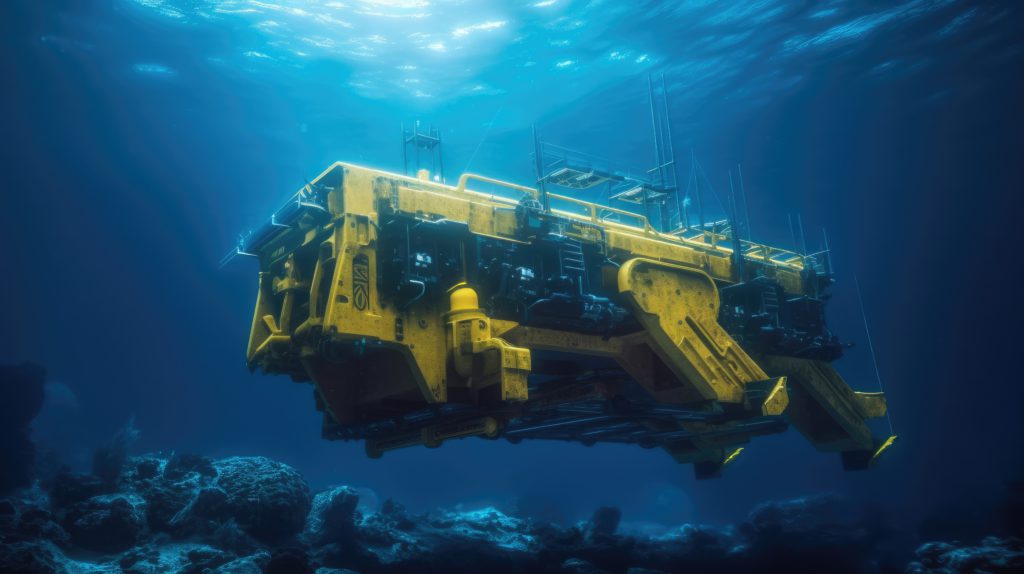
- Technological Readiness: Developing and deploying extraction and processing technologies capable of operating efficiently and reliably kilometers beneath the ocean surface is a monumental task. The harsh subsea environment, coupled with the need for precise collection and vertical transport systems, requires continuous innovation.
- Environmental Impact: Critics raise serious concerns about the potential ecological damage deep-sea mining could inflict on fragile and unique abyssal ecosystems. Understanding and mitigating these impacts are paramount, driving extensive scientific research and public debate.
- Regulatory Frameworks: International bodies, such as the International Seabed Authority (ISA), are still in the process of finalizing comprehensive regulations for commercial deep-sea mining in international waters. The pace and content of these regulations will significantly influence the sector's operational timelines and economic viability.
- Economic Viability: The capital intensity of developing deep-sea mining operations means that projects must demonstrate robust economic returns to attract sustained investment. The ability to process polymetallic nodules efficiently and cost-effectively, followed by metallurgical extraction on land, will be critical.
Brian Paes-Braga's acknowledgment that the sector is "still defining its path to production" underscores these inherent challenges. For investors in The Metals Royalty Company, evaluating this investment involves weighing the significant future demand for critical minerals against these developmental and regulatory hurdles. The royalty model, by its nature, hedges some of this risk by focusing on a percentage of future revenue rather than direct operational success, but it still relies on eventual successful production.
Implications for the Mining Industry and Future Investment
The public listing of The Metals Royalty Company is more than just a financing event; it is a bellwether for the evolving landscape of global resource extraction. It signifies that:
- Deep-Sea Mining is Gaining Traction: While controversial, deep-sea mining is undeniably attracting serious capital and public market attention, signaling its transition from a purely speculative concept to a tangible investment opportunity.
- Diversification of Supply Chains: The move highlights the industry's continuous quest for new mineral sources to diversify supply chains, which have proven vulnerable to geopolitical tensions and logistical disruptions in recent years.
- Innovation in Mining Finance: The application of the royalty model to such a nascent, high-potential sector demonstrates the adaptability and resilience of mining finance structures to support pioneering ventures.
As the global economy continues its push towards electrification and sustainable technologies, the strategic importance of critical minerals will only grow. Companies like TMCR are positioning themselves at the cutting edge of this demand, providing a unique avenue for investors seeking exposure to the next generation of mineral supply. Whether deep-sea mining can indeed deliver the returns anticipated by its proponents will depend on overcoming the technical, environmental, and regulatory hurdles that lie ahead. Nevertheless, The Metals Royalty Company's Nasdaq debut marks an undeniable and fascinating chapter in the ongoing story of global mineral resource development. The industry will be watching closely to see if this deep-sea bet pays off for shareholders and helps secure the vital resources of tomorrow.
The Metals Royalty Nasdaq debut: deep-sea nodule economics for mine financiers
Reviewed by Joe Ashwell
First reported on MINING.com
30 Second Briefing
The Metals Royalty Company has listed on Nasdaq under ticker TMCR, offering investors a royalty exposure to TMC’s NORI deep-sea polymetallic nodule project in the Pacific Ocean targeting nickel, cobalt and copper. Chief executive Brian Paes-Braga positions the structure as a conventional mining royalty model applied offshore, with returns linked to future production from nodules on the Clarion-Clipperton-type seabed rather than equity in TMC (NASDAQ: TMCWW). For mining financiers and project developers, the move signals growing capital-market appetite for seabed resource plays despite unresolved regulatory and production-risk questions.
Technical Brief
- Deep-sea nodules targeted contain nickel, cobalt and copper, aligning with battery and energy-transition demand profiles.
Our Take
TMC’s NORI project has already driven a $131 million increase in royalty liabilities, according to our 27 March 2026 coverage, signalling that The Metals Royalty Company’s deep-sea exposure is tied to a highly leveraged asset whose economics are very sensitive to permitting and valuation assumptions.
The recent NOAA ruling on TMC’s consolidated exploration and commercial recovery permit application in the Pacific Ocean means US regulatory outcomes will heavily influence the risk profile of this Nasdaq-listed royalty vehicle, even though the underlying critical minerals are destined for global battery supply chains.
Nickel and cobalt pieces in our database are still dominated by land-based projects, so this deep-sea royalty listing stands out as one of the few financing plays explicitly linked to polymetallic nodules, which may attract investors comfortable with higher ESG and regulatory uncertainty in exchange for potential long-life battery metals optionality
AOMC, Odyssey merge to build $1B deep-sea miner
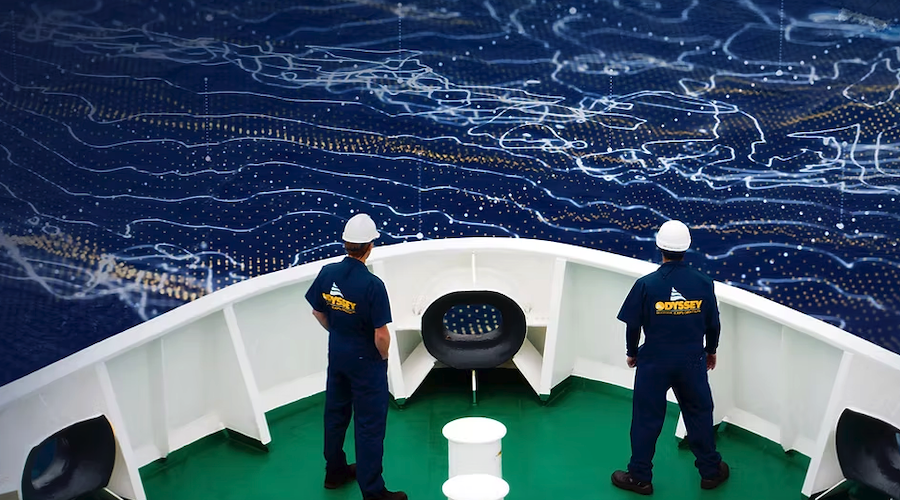
American Ocean Minerals Corp. is merging with Odyssey Marine Exploration (NASDAQ: OMEX) in a reverse takeover that will create a roughly $1 billion deep-sea mining company.

The all-stock transaction includes more than $150 million in private placement financing from institutional and strategic investors, alongside a $75 million pre-public raise completed in February by American Ocean Minerals.
The combined company will retain the American Ocean Minerals name and trade on the Nasdaq under the symbol AOMC, pending shareholder approval. Former Rio Tinto CEO Tom Albanese will serve as chairman, with capital markets veteran Mark Justh as chief executive officer.
“AOMC will be positioned to be a reliable, long-term supplier for American re-industrialization,” Albanese said in a statement. “We are taking a differentiated, responsible approach to the research and development of deep-sea resources. The work over the past decade has set a high standard for advancing the industry responsibly, and we are proud to play a role in maintaining that standard.”
Critical minerals push
The deal comes as the US and its allies push to secure alternative sources of critical minerals used in batteries, manufacturing and defence, amid growing concern over concentrated global supply.
It is also one of several moves to accelerate ocean-floor mining that have gained momentum over the past year, after US President Donald Trump issued an executive order to fast-track offshore mining, aiming despite strong opposition from environmental groups.
American Ocean Minerals is building a portfolio across the Cook Islands’ exclusive economic zone and US-regulated international waters, including the Clarion-Clipperton Zone and the Penrhyn Basin, with interests in two licensed exploration projects in the Pacific.
In US-regulated waters, the company has met compliance requirements for two exploration applications under the Deep Seabed Hard Mineral Resources Act, covering more than 1.4 billion tonnes of inferred resources.
The focus is on polymetallic nodules containing nickel, copper, cobalt, manganese, iron and rare earth elements, which are critical to electrification, steelmaking and energy storage.
Together, the assets represent billions of tonnes of mineral resources and position the company to advance toward prefeasibility and environmental studies as regulatory clarity improves.

No comments:
Post a Comment