Thursday, January 06, 2022


Coronavirus Has Provided A Wake-Up Call For Workers (GLOBAL)

FINANCIAL TIMES
By News Room 
Last updated Jan 4, 2022

It is often harder to identify tipping points while they are happening than after the fact. But that has not stopped people from questioning whether a lasting shift in the labour market is under way. After 40 years in which capital has had the whip hand over labour, is worker power on the rise?

If so, it would mark a profound change of economic direction for much of the rich world. Since 1985, trade union membership has halved on average across OECD countries, while coverage of collective agreements signed at the national, sector or company level has declined by a third. At the same time, workers have been taking a smaller share of the pie. Real median wage growth has failed to keep pace with productivity growth on average across 24 OECD countries over the past two decades.

But the pandemic has precipitated a shortage of workers in many countries that caught employers off-guard. Migrants have returned to their home countries, older people have retired early, and childcare or health problems have led others to exit the labour market.

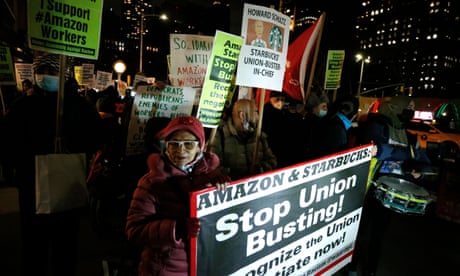
Workers have sought to capitalise on their sudden scarcity value. In the US, unionised workers have launched a series of strikes, from John Deere to Kellogg. Workers have also begun trying to organise in low-paid sectors without a history of union presence, from Starbucks to Amazon. In the UK, the proportion of employees who are union members has begun to creep higher after decades of decline. Workers are also finding new ways to fight for what they want. Organise, a UK-based worker campaign platform, now has more than 1m members after growing rapidly through the pandemic.

Policymakers in some countries are trying to help tilt the balance. Joe Biden, US president, has promised to be “the most pro-union president you’ve ever seen” and wants to pass legislation to make it easier for them to organise. The European Commission has published draft legislation which it says will put a stop to gig economy companies wrongly classifying people as “self-employed” to avoid giving them worker rights and protections.

Slow-moving demographic factors could contribute too. Some economists believe a global glut of workers in recent decades is set to end as population growth slows and the global share of working-age people begins to shrink. This could bolster wage growth by making staff relatively harder to find.

Alternatively, workers might find their moment of leverage proves shortlived. More jobs and tasks are likely to become susceptible to automation as robotics and artificial intelligence improve. The rise of remote working and crowd platforms, which break jobs into small tasks, could lead to a fresh wave of globalisation that hits white-collar staff in the industrialised world.

Increased use of algorithms to hire, assess and monitor workers is already beginning to feel disempowering for those on the receiving end. Gig workers managed by algorithms have told this news organisation how frustrating it is to be disciplined by machines that cannot be appealed to nor questioned.

Whether or not the balance of power between capital and labour has changed for good, the pandemic has been instructive for both sides. Employers have discovered that staff availability is not a given, but a business risk to mitigate against. Many are paying more attention to recruitment and retention, and not just in the professional world. And a new generation of workers, from shelf stackers to delivery drivers, have learned just how essential they really are.

UK

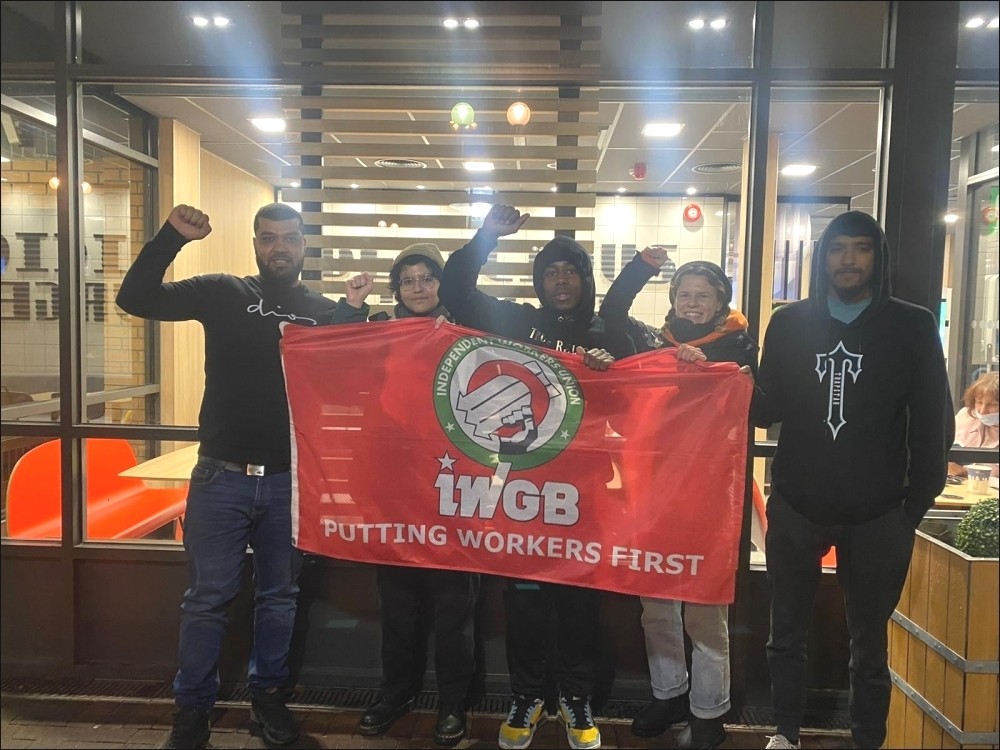
Sheffield JustEat couriers escalate dispute as action spreads

Couriers on strike in Sheffield. Photo: IWGB

Couriers on strike in Sheffield. Photo: IWGB   (Click to enlarge)

Alistair Tice, Sheffield Socialist Party

In the week before Christmas, JustEat delivery couriers in Sheffield, employed by Stuart Delivery, extended their targeted strike action to hit four Greggs shops. This is in addition to the six McDonald's outlets affected since 6 December.

The couriers, with around 100 now organised in Sheffield in the IWGB union, are striking against Stuart's cut in the base rate of pay from £4.50 a delivery to £3.40.

The 18 days of strike action, estimated to have cost Stuart and McDonald's around £250,000 so far, is the longest continuous food delivery app strike in UK history.

These self-employed workers, whose employer is an app, get no basic pay, no sick pay and no holiday pay. They are fighting this pay cut by demanding a pay rise, paid waiting times after ten minutes and recognition of the IWGB.

Their action has inspired trade unionists and students in Sheffield to support their pickets, and £13,500 has been donated to the strike fund.

Before Christmas, the strikes spread to Chesterfield, Huddersfield, Sunderland, Blackpool and Liverpool. International messages of support have come from South Korea, Australia, Italy, France, Austria and the USA.

Stuart, a subsidiary of the multinational DPD Group, is clearly rattled by the action. Before Christmas, it sent every JustEat courier in the country an insulting email implying that the drivers couldn't count! And in the first week of the New Year, Stuart organised an invite-only couriers' 'focus group' at a secret location in Sheffield.

It turned out that the secret location, which was tipped off by one of the 'invited' drivers, was so secret that even the hotel manager didn't know about it, nor the two security guards Stuart employed. Consequently, the secret meeting was cancelled and the Stuart manager reportedly escaped through a back door. Another Stuart PR disaster!

After this successful protest, the couriers will resume targeted strike action.

All trade unionists and socialists should support this important struggle and try to spread it to your city or town by contacting couriers picking up deliveries from any major fast food outlets, and organising meetings and protests.

As a small independent union, the IWGB has no strike fund, so is appealing for trade union donations to sustain and spread the strike action. You can donate by BACS to:

  • Account name: Couriers and Logistics branch
  • Sort Code: 23-05-80
  • Account number: 17001094
Sri Lanka railway strike results in Rs 25 million loss due to free rides; TUs warns of more strikes

BY DULYA DE SILVA AND NESHELLA PERERA
Monday January 3, 2022 

ECONOMYNEXT – Railway trade union action in Sri Lanka resulted in losses amounting to 25 million rupees over the last week of December as passengers rode free in the absence of ticket issuers at railway stations, an official said, though unionists claimed that the figure was much higher.

The Station Masters Union launched a strike from December 22 to 28 over 10 demands including coverage allowances and overtime compensation. With no one left to issue tickets, the five-day strike allowed passengers to enjoy virtually endless rides.

The union also withdrew from transporting essential items like fuel to the airport, cement and flour, while station Masters refrained from accepting parcels transported by train.

Railways General Manager Dhammika Jayasundra told reporters on Monday (03) that the strike cost the department five million rupees a day in revenue.

Witnesses said passengers used trains to travel long distances such as Beliatta, from the country’s deep south, to the commercial capital of Colombo, without paying a fare.


Chairman of the Station Masters Association Sumedha Someratne, however, said the railways general manager has understated the loss.

“Before COVID-19, we would operate around 300 to 400 trains, but now there are only around 125 trains running. If all those trains were running today, taking into account that the strike was held during the festive season, the loss per day would have been 20 million,’’ Someratne told EconomyNext.

The strike was called off following a discussion with State Minister of Transport Dilum Amunugama. However, Someratne said that solutions were coming at a very slow pace, and warned of future strikes.

“We will wait until changes are made, but if things don’t turn around we will have to take union action again,” he said. 

(Colombo/Jan.03/2022)
TUNISIA
Sousse General Strike Postponed Until January 13

In Daily Brief
January 6, 2022
Keely Dion


Photo: The Independent

A strike organized by the Regional Labor Union (URT) in Sousse, Tunisia has been postponed until January 13.

The strike has been organized to protest economic and social strife in the region. At issue, Sousse’s struggling economy after the tourism sector was hit hard following the COVID-19 pandemic. Several URT strikes have been implemented in the past to exert pressure on the government, making it a key civil society organization in Tunisia.

The strike will likely disrupt public services, except for health services due to the increasing number of cases of the Omicron variant. If launched, security forces would be deployed near government buildings and town centers. Despite postponements, expect further protests across the country as travel restrictions are likely to increase due to rising cases of COVID-19 in Tunisia.

There will also likely be increases in tourism from eastern European countries, most notably Russia, as Western countries are deterred from travel by their governments. Salvaging the tourist economy in cities like Sousse makes Russia an attractive ally for the Tunisian government. Noting the recent trend of more pronounced bilateral relations between Russia and North African countries, Tunisia is likely to see a growing presence of Russian influence.
UTAH
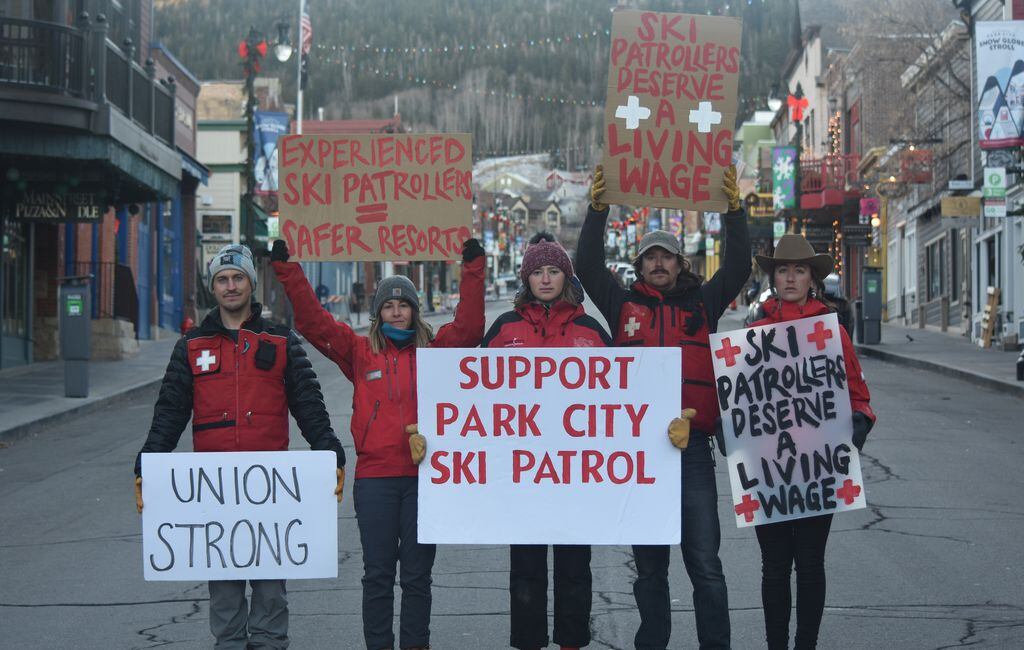
Park City ski patrol union, Vail Resorts fail to reach wage agreement in 47th bargaining session since 2020

The ski patrol union in Park City has raised over $56,000 for a solidarity fund since Christmas.


(Willie Maahs) The Park City Professional Ski Patrol Association has been pushing for a new contract with Vail Resorts since August 2020. In this courtesy photo, union members Tyler Grundstrom, Kate Foley, Lee Moriarty, Emmet Murray and Katie Woodward hold signs in Park City.

By Zak Podmore
| Jan. 6, 2022

Park City • The vacation giant Vail Resorts announced a $15 starting hourly wage for 14 of its ski areas last summer, boosting pay for thousands of its workers across the United States.

Restaurant staff, lift operators, parking attendants and ticket sellers all benefited from the policy. But one group has so far been left out: unionized ski patrollers at the Vail-owned Park City Mountain in Utah.

Ski patrollers — who train as first responders to provide on-mountain medical care and mitigate avalanche danger with explosives and other means — are still starting at $13.25 per hour, making rookie patrollers the lowest paid employees at Park City resort. Second year patrollers start at $14.50 per hour.

The corporation has offered the Park City Professional Ski Patrol Association, a union that represents just under 90% of the roughly 180 Park City patrollers, a $15 an hour starting wage during contract negotiations that have been dragging on for nearly a year and a half.

But the union has so far rejected those offers, according to Patrick Murphy, the union’s business manager, arguing they have fallen below industry standards.

“I think we’ve made it abundantly clear that that base wage offer comes short of being an appropriate and fair wage for what our job is — what we do on the ground,” Murphy, who has worked on the Park City’s ski patrol for five years, said.

The union is asking for a starting hourly wage of $17 with a one dollar per hour increase over the first three years of employment, which Murphy argued would better reflect the training, site-specific knowledge and exposure to inherent risks that are required to run a successful ski patrol program and keep guests safe.

“Name any resort in the West that runs an avalanche mitigation program comparable to ours,” he said. “They’re making at least $17 an hour for rookies.”

On Monday night, the union and Park City management held their 47th bargaining session since August 2020, and they again failed to reach an agreement after Vail offered $15 per hour again with only slight concessions on incentive pay.

“We’re surprised and disappointed that they continue to come back to that same base wage offer,” Murphy said.

Vail Resorts declined an interview request, but said in a written statement that it has “tremendous respect” for patrollers at its resorts, including at Park City, and has “listened to the concerns.”

“In this challenging staffing environment, we are proud that patrol is one our best staffed functions across our resorts,” the statement said. “Additionally, we were pleased that unionized patrols at two of our resorts recently agreed, overwhelmingly, to very similar terms as what we are offering Park City Ski Patrol. We remain actively engaged in conversations with the Park City Ski Patrol union and, given the progress already made, we certainly believe all parties should avoid any disruptions to this season.”
Solidarity fund offers options

The union launched a solidarity fund drive on Christmas Day that could compensate union members in the event of a work stoppage or strike, which the union has called a “worst case scenario.” As of Wednesday, nearly 1,000 people had contributed a total of $56,000 to the fund.

“It’s been incredible for us to see the community show up and support us so strongly,” said union president Brian Spieker. “We’re hoping that [the fund] is just one more tool in the arsenal that … gives us some options should we need to exercise it.”

The existence of the fund has not yet led to any major breakthroughs in the bargaining process, though Spieker said communications between the resort and the union have improved.

Murphy said the union is still discussing its next steps after failing to reach an agreement Monday.

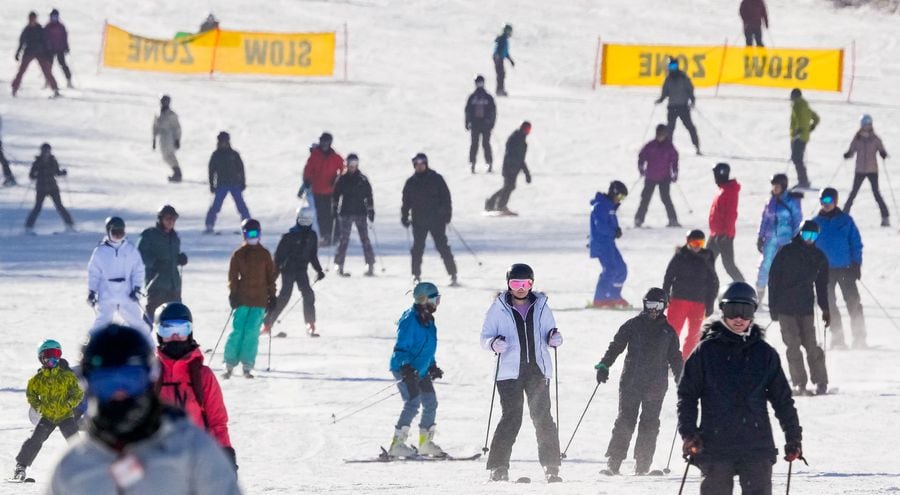
(Francisco Kjolseth | The Salt Lake Tribune) People take to the slopes of Park City Mountain Resort as clear skies and some recent fresh snow draws the crowds on Saturday, Dec. 18, 2021.

A strike by the Park City ski patrol would likely shut down Utah’s biggest ski resort, which along with other Vail-owned resorts is already struggling with understaffing, record numbers of visitors and long lift lines. Office staff have been helping run lifts at Park City this year, according to several ski patrollers who spoke to The Salt Lake Tribune, but it would be much more difficult to replace highly trained ski patrollers in the event of a work stoppage.

There are over 150 unique avalanche slide paths on the Canyons Resort side of Park City alone, said patroller Marla Gutmann. After four years on the ski patrol, Gutmann has been certified as a route leader on two of those paths.

“It’s not something that you can just learn as a rookie,” Gutmann said. “It takes a lot of time and training.”

Murphy said the current pay structure and incentives offered to patrollers at Park City has led to high turnover and the loss of institutional knowledge.

“You need to know the nuances of the terrain for medical transport and extrication,” he said. “So these are the things that I’m concerned we’re beginning to lose as retention drops — we’re losing experience and losing those good patrollers.”

Vail Resorts reported having nearly $1.5 billion in cash on hand at the time of its latest financial filings, and it purchased several new ski areas last year after pre-selling a record 2.1 million day tickets and passes for the current ski season.

“Sales have increased this year,” said Kate Foley, a fourth-year ski patroller and vice president of the union on the Canyons side of Park City. “It’s taken more money to fight us this whole time than it would have to meet us where we think it’s a fair starting place.”

Foley added that negotiations have never taken this long before.

A $2 an hour raise for fewer than 200 employees may not sound like a lot given Vail’s billions of dollars in annual revenue, but Marshall Steinbaum, assistant professor of economics at the University of Utah, said there may be other considerations at play.

“It’s probably easy enough for the company to meet the financial demands of this relatively small set of workers, but the precedent is costly for them,” Steinbaum said.

“In this case,” he added, “it seems like you have a small ‘craft’ union in a large company that employs many workers with either fewer skills or fewer labor rights, being immigrants with conditional work authorizations (or both), and the company does not want any gains by that union representing a small share of its workforce to influence the demands other workers would make.”

Vail has a long history of discouraging unionization efforts among its workers and has hired anti-labor consultants to fight union drives at Colorado resorts. Last year, the corporation offered bonuses to many of its employees but initially cut out union members, arguing it couldn’t provide bonuses under the terms of the union contract. (Vail eventually reversed course.)

“Once a union is formed,” Steinbaum said, “research shows that workplaces become permanently better-paid, and shareholders and executives lose out.”

Former Vail Resorts CEO Robert Katz, who stepped down in November, made $2.8 million in compensation in 2020.

In the early 20th century, Park City was the site of high-profile strikes by mine workers organized with the Western Federation of Miners and the Industrial Workers of the World. Labor organizer and songwriter Joe Hill worked at a silver mine in Park City before he was convicted of murder in a controversial trial and executed by a firing squad in Salt Lake City in 1915, sparking nationwide protests.

But Utah has all but lost its tradition of labor militancy in recent decades and union membership has steadily declined in the U.S. since the 1950s. As the Deseret News recently noted, Park City was the site of the only strike in all of Utah last year when eight non-union cinema employees walked out for two weeks, eventually gaining a $2 per hour raise.

Whether or not the resort town will see more labor actions in 2022 remains to be seen, but Spieker, the union president, said the rapid growth of the solidarity fund has been heartening.

“We’re phenomenally grateful for the overwhelming outpouring of support that we have experienced,” he said. “I think it has made [ski patrollers] feel like what they do does make a difference and is appreciated by the community.”

Zak Podmore is a Report for America corps member for The Salt Lake Tribune. 


Park City ski patrol union raises over $50,000

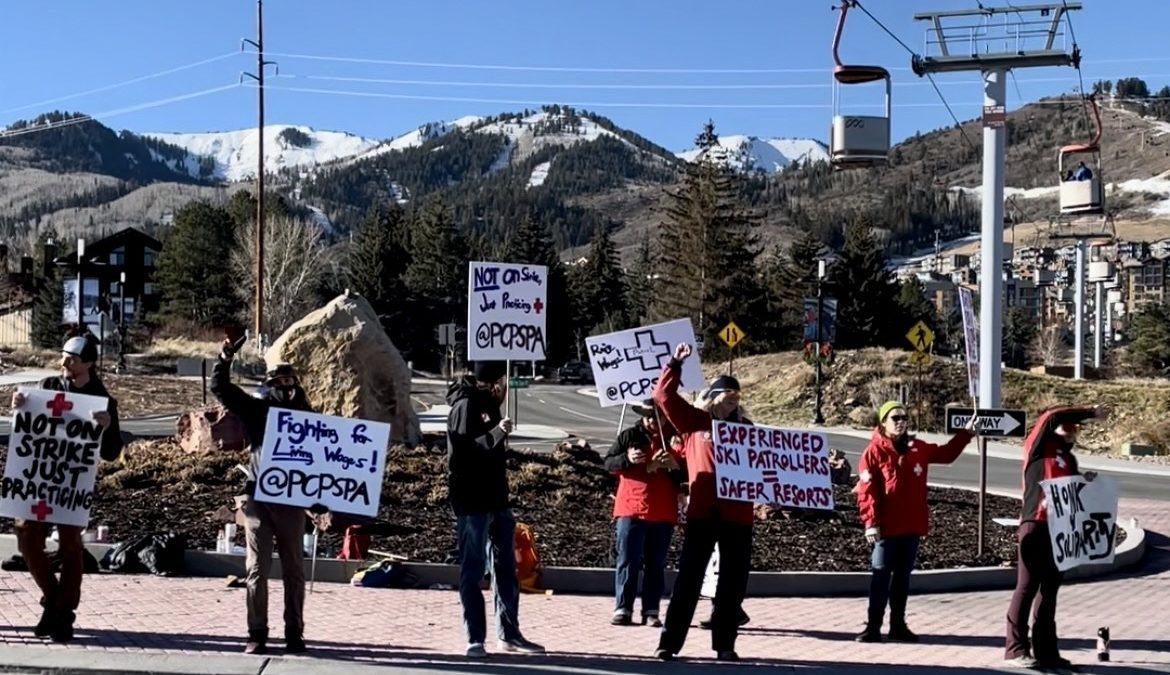
PARK CITY, Utah — The Park City Professional Ski Patrol Association (PCPSPA) has raised over $50,000 through its “solidarity fund” on GoFundMe, as contract negotiations continue between the union and Park City Mountain owner Vail Resorts.

PCPSPA labeled the fund a “safety net in the event we are forced into more significant action, and we are not receiving paychecks,” and added, “it is only utilized to help patrollers pay for basic needs such as rent and food in our last/worst-case scenario.” As of Monday evening, the union received 918 individual donations.

“If we achieve a reasonable contract without needing to use these action funds, we will donate this money to local charities related to our work and elevating the local labor force,” the union said. “We also intend to reserve a small portion of these funds to support the Local 7781 Patrols, which includes Big Sky, Breckenridge, Crested Butte, Steamboat, and Steven’s Pass ski patrols, and their efforts to improve conditions for patrollers throughout the industry.”

There is a bargaining session between the two parties scheduled for Monday night. PCPSPA recently rejected a proposed contract with starting wages at $15 an hour. Union patrollers are currently paid $13.25 an hour. Given the lack of a current agreement, union members follow the policies of the last expired contract, which ended on May 1, 2021.

The union’s goal is a $17 an hour starting wage. PCPSPA Business Manager Patrick Murphy has said it isn’t fair for the union to have the resort-wide starting wage of $15 an hour, given the physical challenges of ski patrol. He also said the union wants to see more wage incentives for experienced patrollers.

Park City Mountain Chief Operating Officer Mike Goar, a former patroller at Solitude in Big Cottonwood Canyon, told TownLift he has “an appreciation and understanding of what it takes to be a patroller” and “a great deal of appreciation for the hard work and the skill set it takes.”

He called the rejected proposal “excellent” and referenced recently ratified contracts with other patrol unions at Vail Resorts.


INDIA
As strike continues, SDMC asks new contractors to register themselves

The SDMC contractors’ union has been on strike since November 2021 over the non-payment of dues for the past three years. With municipal elections approaching, the pressure from municipal councillors to showcase development works is growing in the executive wing.

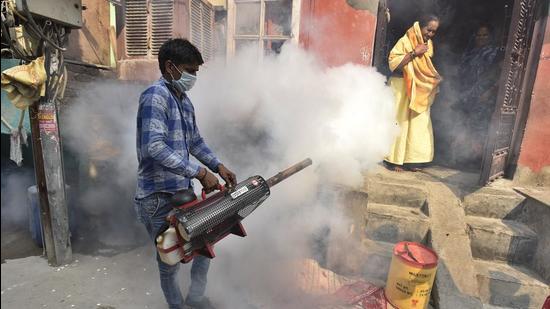
Contracts association says that threats of debarment/blacklisting are being issued to protesting contractors.(Representative image)

Updated on Jan 06, 2022

ByParas Singh

Facing a prolonged strike from contractors’ unions over non-payment of pending dues, the South Delhi Municipal Corporation (SDMC) on Wednesday decided to allow the registration OF more new contractors in its tendering process.

The SDMC contractors’ union has been on strike since November 2021 over the non-payment of dues for the past three years. With municipal elections approaching, the pressure from municipal councillors to showcase development works is growing in the executive wing.

On Wednesday, the SDMC spokesperson said that the corporation has allowed the registration of new contractors registered with the central public works department (CPWD), the state public works department and other urban local bodies (ULBs) in the tendering process. “With the decision, contractors registered with CPWD, state PWDs and ULBs are eligible to participate in the e-tendering process of the SDMC. As part of the current system, the SDMC allows only registered and enlisted contractors under various categories in South, North and East Delhi Municipal Corporation to participate in the tendering process,” a senior engineering department official explained.

“The step has been taken for better competition and higher quality standards in the tendering process and completion of work. The enlistment rules laid down by SDMC will be applicable to newly registered contractors. The parties will have to be registered on e-tendering website www.etendersgov.in,” the spokesperson said.

Leader of the House Inderjeet Sehrawat said that enlisting more contractors will improve the quality of work as more parties will be able to participate in the process. “We have held a meeting with the striking contractors’ unions on Tuesday. Payments worth ₹160 crore have been made this year, and while we are facing an acute financial crunch, we are able to release ₹20-25 crore every month. A solution to the strike will also be found soon,” he added.

Netra Kumar Sharma, the head of All SDMC Contractors’ Association said that the expansion of the list is being undertaken to create pressure on the protesting contractors. “We are also being threatened and notices of blacklisting and debarment are being sent to contractors. The corporation has pending dues worth ₹450 crore for the works which have been completed in the last three years. The association has submitted a memorandum to the corporation regarding the threats of debarment being issued by the executive engineers. This is a violation of our basic right to protest. If this does not stop, we will have to move court,” he added.

Earlier, HT had reported that municipal councillors have been raising the issues of pending development works over the last two months due to the strikes during the committee and House meetings even as the municipal elections are due in April this year.
Strikes started at most UPM mills in Finland – businesses still seeking to start negotiations with the Paperworkers’ Union

January 01, 2022 
Source: UPM-Kymmene Corporation

(UPM, Helsinki, 1 January 2022 at 07:30 EET) – Members of the Paperworkers’ Union, the Finnish Electrical Workers´ Union and the Trade Union Pro have this morning started strikes at UPM mills in Jämsänkoski, Kouvola, Lappeenranta, Pietarsaari, Rauma, Tampere and Valkeakoski. According to the unions, the strikes will continue until 6 o’clock on 22 January 2022 unless a new collective labour agreement is reached before that. The Paperworkers’ Union has not excluded any work from the strike, not even tasks critical to the society, such as operating and maintenance of water treatment and power plants.

UPM businesses falling under the strikes are UPM Pulp, UPM Biofuels, UPM Communication Papers, UPM Specialty Papers and UPM Raflatac. The strikes do not concern UPM Plywood and UPM Timber, both of which signed business specific collective agreements with the Industrial Union in December. Furthermore, UPM Energy operates as usual, as it complies with the generally applied collective agreements of the energy industry.

Previous collective agreements between the Finnish Forest Industries Federation and the Paperworkers’ Union, the Finnish Electrical Workers´ Union and the Trade Union Pro expired on 31 December and do not have after-effect, as UPM was not a party in the agreements. Since last spring, UPM has tried to initiate negotiations with the Paperworkers’ Union with no response. As there has not been opportunities to discuss terms of employment, UPM businesses announced temporary terms of labour to the members of the union in November. These terms are in effect until a new agreement will be reached.

UPM businesses under the strike will pay additional fixed-term compensation to those who come to work at mills and do extra work because of the strike. Together, the regular salaries and the fixed-term compensation exceed the salary level of the expired collective agreement.

“UPM’s goal remains the same – we want to negotiate business specific collective agreements with the Paperworkers’ Union as soon as possible. The only way forward is through negotiations,” says Jyrki Hollmén, Vice President, Labour Markets, UPM.

“UPM businesses differ significantly from each other in terms of products, production processes, markets and revenue models. Therefore, it is vital for their competitiveness to make business specific collective agreements,” Hollmén continues.

Another goal for UPM is to involve a much larger group of people in the negotiations than before. In addition to the union representatives and business management, local employee representatives would also be involved, bringing much-needed understanding of the business and the everyday work at the mills into the discussions, as was the case in the negotiations between The Industrial Union and UPM Plywood and UPM Timber. UPM aims to be an attractive employer that negotiates win-win agreements enabling UPM businesses to succeed in the future.

So far, negotiations have begun only in UPM Biofuels, but they were interrupted by the Paperworkers’ Union just before Christmas.

UPM will service its customers from its mills located outside of Finland to the extent possible. At this point, UPM does not disclose estimates of the economic impacts of the strikes.

UPM
We deliver renewable and responsible solutions and innovate for a future beyond fossils across six business areas: UPM Biorefining, UPM Energy, UPM Raflatac, UPM Specialty Papers, UPM Communication Papers and UPM Plywood. As the industry leader in responsibility, we are committed to the UN Business Ambition for 1.5°C and the science-based targets to mitigate climate change. We employ 18,000 people worldwide and our annual sales are approximately EUR 8.6 billion. Our shares are listed on Nasdaq Helsinki Ltd. UPM Biofore – Beyond fossils. www.upm.com


Cambodia: Arrests of strikers may be breach of human rights law


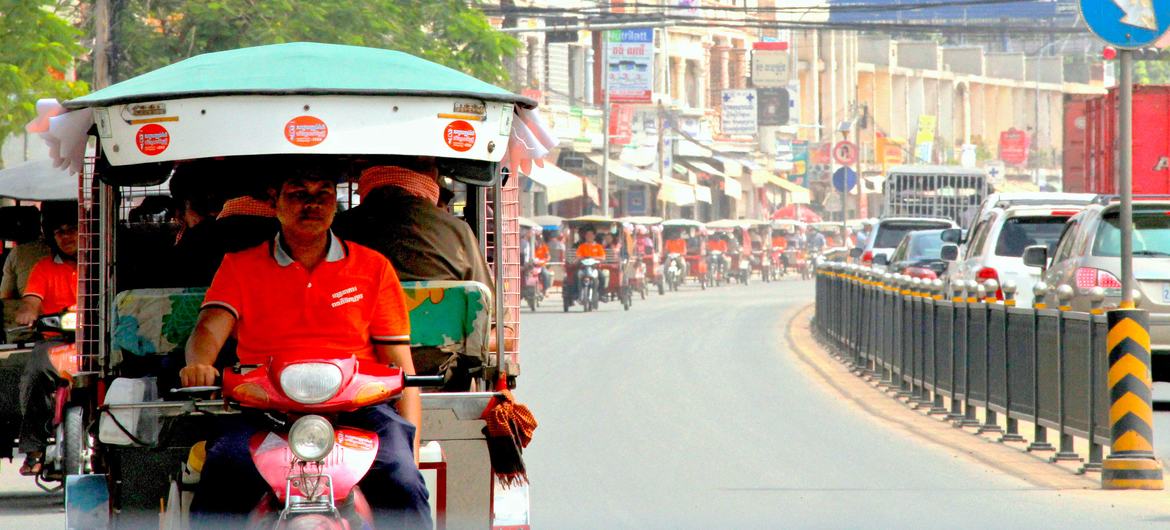
Tuk-tuk drivers in Phnom Penh, Cambodia.
 Photo: UN Women Cambodia/Mariken B. Harbitz


5 January 2022
Human Rights


The arrest and detention of at least 29 casino union leaders and activists during a strike that began on New Year’s Eve in Cambodia, may represent a breach of human rights law, independent UN rights experts said on Wednesday.

Most of the strikers were women and many of the arrests were conducted in “a violent way”, the experts added. The arrests appeared to contravene the right to freedom of association, assembly and expression.

“We also strongly condemn the manner in which the first arrests took place, after dark, on a day where multiple other events diverted public attention”, the experts said.

For them, this could be seen as “an underhanded way to clamp down on fundamental human rights and impinge on the free exercise of the rights to freedom of peaceful assembly and of association.”

The experts called on the Government to explain the response by the police, and said they were following developments closely.
Arrests

Nine people, including seven women and two men, have so far been charged with “incitement to commit a felony” under Articles 494 and 495 of the Cambodian Penal Code. They all remain in custody, while others have been released.

According to the experts, these same provisions have previously been used to prosecute human rights defenders in the country.

The first round of arrests took place at around 8pm on 31 December. Continued strikes resulted in a further 17 arrests, on 3 January.

The three most senior union leaders, including president Chhim Sithar, were separately arrested on 4 January, on their way to join the ongoing strikes.

Video footage of arrests shows police using what appears to be excessive force during the arrests.

Causes of strike

Trade union leaders and activists have been striking since 18 December against what they deem as the unfair dismissal of 365 Naga World casino and resort staff members.

The dismissals happened after unsuccessful negotiations with their employer, the Ministry of Labour and Vocational Training, and Phnom Penh Municipal authorities.

“The pattern and manner of these arrests, after industrial action failed to be resolved quickly, appears to be an escalation in tactics used in previous cases that have occurred in Cambodia over recent years and resulted in the wrongful imprisonment of human rights defenders,” the experts said.

The Cambodian Constitution includes the right to strike and the rights to freedom of association, expression, peaceful assembly, press and publication. The Cambodian Labour Law also guarantees the right to strike.

Obligations set out in international human rights treaties, to which Cambodia is a party, protect the same rights.

Civic space shrinks


As the country gears up for local elections this year and national elections in 2023, the experts said these arrests send “a chilling message to Cambodian people on their space to assemble freely.”

The experts also called on the Government to implement recommendations they have accepted during the 2019 Universal Periodic Review by the UN Human Rights Council, including a pledge to create conditions where “civil society, including human rights defenders, can freely carry out their work without interference or hindrance”.

The UN Special Rapporteur on the situation of human rights in Cambodia, Vitit Muntarbhorn, has previously spoken out on the shrinking of civic and political space in the country. 

Independent experts, Special Rapporteurs and members of Working Groups are appointed by the Human Rights Council to monitor and report on specific country situations or thematic issues. 

They serve in their individual capacity and are not UN staff, nor are they paid by the UN for their work.
Nurses ratify new contract, end nearly
 10-month strike

Nurses at a Massachusetts hospital have voted to ratify a new four-year contract with management that ends what their union calls the longest nurses strike in state history


By The Associated Press
3 January 2022

WORCESTER, Mass. -- The longest nurses strike in Massachusetts history came to an end Monday when unionized nurses at St. Vincent Hospital in Worcester voted to ratify a new four-year deal with management.

The agreement was overwhelmingly approved 487 to 9 in favor of ratification, according to the Massachusetts Nurses Association union. The 301-day strike was the longest in the nation in the past 15 years, the union said.

“We go back in that building with our heads held high focused on healing, not only our patients, but to work with all in our hospital community to rebuild and restore a sense of stability,” said Marlena Pellegrino, a longtime St. Vincent nurse and co-chair of the union’s bargaining unit.

“This is an enormous victory for our patients and our members, and it is a testament to the grit and determination of every nurse who walked that line, day in and day out," Pellegrino said in a statement from the union.

St. Vincent Hospital said in a statement it would “work diligently to heal the wounds of the past year as we integrate striking nurses.”

“We are ready to welcome back every nurse who chooses to return to St. Vincent, and we have plans in place to make that process as smooth as possible," the hospital said.

The tentative agreement between about 700 St. Vincent nurses and management had been announced on Dec. 17 after an all-day bargaining session mediated by U.S. Labor Secretary and former Boston Mayor Marty Walsh.

The nurses went on strike March 8, demanding that management at St. Vincent, owned by Dallas-based Tenet Healthcare, increase staffing ratios to improve patient care during the coronavirus pandemic and beyond.

The hospital countered that it was irresponsible to strike during a public health crisis and that staffing levels met industry standards. In July, the hospital announced it was scaling back some services and reducing capacity in response to the strike.

But while the sometimes-contentious work stoppage was originally over staffing levels, it later became about whether nurses who had been walking the picket line for months would be able to return to their old jobs after the hospital started hiring replacements.

The agreement includes staffing improvements and allows all nurses who went on strike the right to return to work in the same position, hours, and shifts that they held prior to the work stoppage.

It also includes language intended to better protect nurses from violent patients, pay increases through 2025, and enhanced health insurance benefits for some union members.

“They wanted nothing more than to return to work for months, and they risked their livelihoods on the picket line each day to achieve that goal,” U.S. Rep. Lori Trahan said in a statement Monday evening, praising the nurses for remaining on strike “until they secured the protections and staffing conditions their patients deserve.”

The hospital now has 30 days to issue recall letters to the striking nurses, but both sides expect them to start returning to work well before that deadline. St. Vincent said Monday it expects nurses to be back on the job by Jan. 22.

The benefits of the deal have already been seen. St. Vincent announced last week it has reopened 12 inpatient behavioral health beds that were closed in August due to staffing challenges presented by the strike.

There were a number of high-profile strikes across the country last year as labor unions feel emboldened to hold out for more amid ongoing worker shortages.

———

Follow AP coverage of how the coronavirus pandemic is transforming the economy at: https://apnews.com/hub/changing-economy
Workers across the US are rising up. Can they turn their anger into a movement?

Steven Greenhouse

So far, increasingly militant workers are lacking something vital: a leader who can unite them all. Will that change?


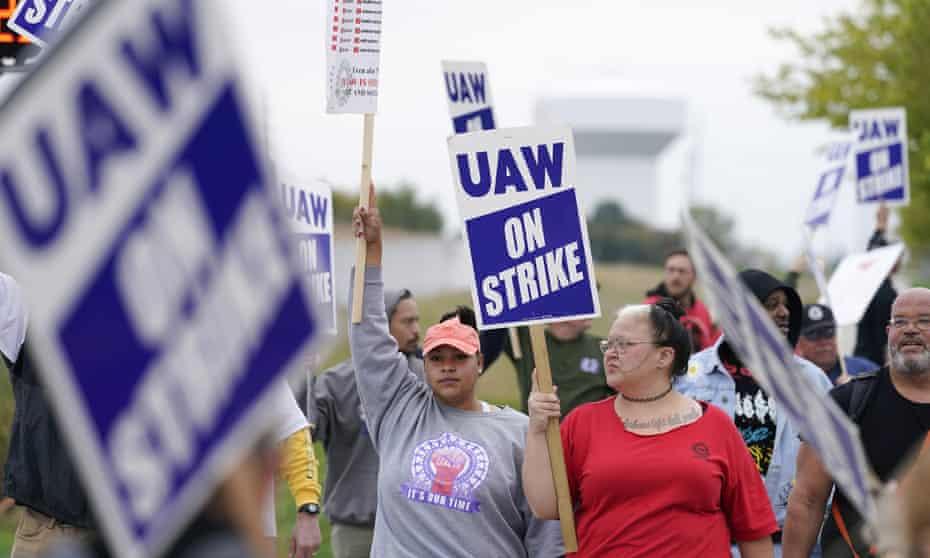
‘Public approval for unions is the highest it’s been in more than a half century.’ Photograph: Charlie Neibergall/AP
Mon 3 Jan 2022 11.15 GMT


Throughout 2021, American workers stood up and fought back to an unusual degree. Workers went on strike at Kellogg’s, Nabisco, John Deere, Columbia University and numerous hospitals, while non-union “essential” workers – furious about how they’ve been treated – walked out at supermarkets, warehouses and fast-food restaurants. Workers have sought to unionize at Starbucks, Amazon, even the Art Institute of Chicago. And a record number of Americans have been quitting their jobs each month, more than 4 million monthly, fed up and eager for something better.

Millions of workers are angry – angry that they didn’t get hazard pay for risking their lives during the pandemic, angry that they’ve been forced to work 70 or 80 hours a week, angry that they received puny raises while executive pay soared, angry that they didn’t get paid sick days when they got sick.


‘They are fed up’: US labor on the march in 2021 after years of decline


Out of this comes a question that looms large for America’s workers: will this surge of worker action and anger be a mere flash in the pan or will it be part of a longer-lasting phenomenon? The answer to this important question could turn on whether all this anger and energy are somehow transformed into a larger movement. At least for now, America’s labor leaders seem to be doing very little to tap all this energy and hope and to build it into something bigger and longer lasting. Yes, we are seeing unionization drives at this workplace and that one, but we are not seeing any bigger, broader effort to channel and transform all this worker energy and discontent into a new movement, one perhaps with millions of engaged and energetic nonunion workers, that would work in conjunction with the traditional union movement.

Worker advocates I speak to keep wondering: what are labor leaders waiting for? If not now, when?

In Joe Biden, we have the most pro-union president since Franklin Roosevelt, and public approval for unions is the highest it’s been in more than a half century. For decades, union leaders have said they are eager to reverse labor’s long decline – more than 20% of workers were in unions three decades ago, now just 10% are. Unless unions step up and do something bold, they’ll relegate themselves to continued decline.

Many labor leaders evidently think it’s impossible or improbable to turn this year’s energy and anger into a new movement or a big, new group. But building a movement from scratch isn’t impossible. 350.org was founded in 2008 by several college students and environmentalist author Bill McKibben, and within two years, it organized a mammoth Day of Climate Action with a reported 5,245 actions in 181 countries. After the horrific shootings at Marjorie Stoneman high school in Florida in 2018, a handful of students founded March for Our Lives, and within five weeks, their group had organized nationwide rallies with hundreds of thousands of people calling for gun control. Black Lives Matter also grew into a powerful national movement within a few years. None of these movements were one-shot or one-month affairs – they have become powers to contend with in policy and politics.

So why isn’t the labor movement seizing on this year’s burst of worker energy to build something bigger? I was discussing this with friend who is a professor of labor studies, and she said she thought that most of today’s union leaders were “constitutionally incapable” of building big or being bold and ambitious. She said that after decades of being on the defensive, of being beaten down by hostile corporations, hostile GOP lawmakers and hostile judicial decisions, many labor leaders seem unable to dream big or think outside the box on how to attract large numbers of workers in ways beyond the traditional one-workplace-at-a-time union drives.

But building big and outside the box isn’t impossible for labor. Just look at the Fight for $15. The strategists and SEIU leaders behind it had a vision: they wanted to push the issue of low wages into the national conversation and lift the pay floor for millions of workers. They started small, with walkouts by 200 workers at a dozen fast-food restaurants in New York City, and within two years, they built a powerful national movement that held strikes and protests in hundreds of cities. This movement ultimately got a dozen states to enact a $15 minimum wage, lifting pay for over 20 million workers.

Perhaps some brilliant, visionary workers or worker advocates will step forward to seek to channel this year’s burst of worker anger and energy into a new movement. Social media could certainly help build it, perhaps with the assistance of groups like Coworker.org, which has considerable experience engaging and mobilizing disgruntled rank-and-file workers via the internet.

In Joe Biden, we have the most pro-union president since Franklin Roosevelt

For many workers, a big new group or movement could be a waystation toward unionizing: helping educate and mobilize workers to unionize, guiding them on next steps and what their rights are, and promising a pool of ready support if they seek to unionize. This new group or movement could send out bulletins telling members how they could help other workers in their community or nearby communities – perhaps help unionization drives at Amazon or Starbucks or strikers at Kellogg’s or Warrior Met Coal in Alabama or food delivery workers who are cheated out of tips and don’t have access to bathrooms.

Members of this new group could be called on to protest outside the offices of members of Congress or state lawmakers about myriad issues, perhaps raising the federal minimum wage or enacting paid family leave or the Protecting the Right to Organize Act. Or they could join rallies for voting rights or immigrant rights or against police abuses or to combat global warming.

Working America, an arm of the AFL-CIO, does some of this, mainly urging its members to vote and to contact lawmakers. To truly help reverse labor’s decline and capitalize on today’s worker anger, much more will be needed – an organization that is far more connected to workers and does far more organizing, protesting and mobilizing.

America’s labor movement is terribly balkanized, with many unions engaged in turf battles and upset that another union has (perhaps) stepped into its territory. As a result, they too often find it hard to work together. But if America’s unions are serious about wanting to strengthen worker power and reverse labor’s decline, it’s time to put past divisions behind them and figure out how to build back something bigger.

There are three main reasons that America’s labor movement has declined: first, corporate America’s fierce resistance to unions, second, the decades-long slide in factory jobs, and, third, the Republican party’s decades-long fight to weaken unions and make it tougher to unionize.

But there’s another factor behind labor’s decline that is rarely discussed – many labor leaders don’t do nearly enough to inspire workers and expand the union movement. Today’s workers could use some vigorous, visionary leaders like Mother Jones, Sidney Hillman, John L Lewis and A Philip Randolph to lead and inspire, and build something bigger. Perhaps many union leaders haven’t been hearing what I often hear from rank-and-file union members: “Lead or get out of the way.”


Steven Greenhouse is a journalist and author, focusing on labor and the workplace. He is the author of Beaten Down, Worked Up: The Past, Present, and Future of American Labor


Our new year’s resolution for 2022: to rise up and fight back

Corporate greed and class warfare are crushing working people. No one is going to save us – we need to rise up together


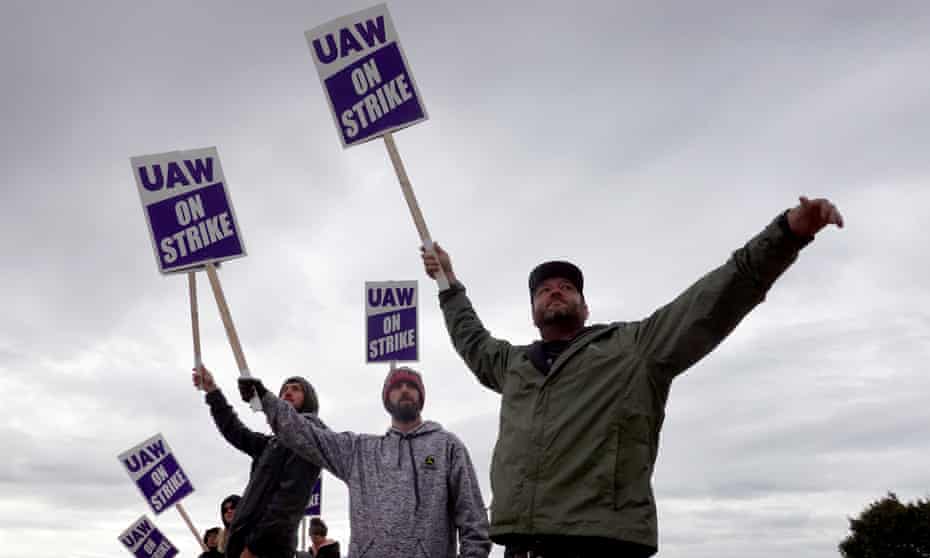
‘Working people all over the country, with extraordinary courage and determination, are taking on corporate greed, and they are winning.’ Photograph: Scott Olson/Getty Images


Bernie Sanders
Tue 4 Jan 2022

As we begin the year 2022, in these unprecedented times, I know it’s easy to give in to despair.

We are facing a raging pandemic with seemingly no end in sight. We are rapidly moving toward oligarchy and while income and wealth inequality grows, millions struggle to obtain the basic necessities of life. We have a dysfunctional healthcare system with more than 84 million uninsured or underinsured and nearly one out of four unable to afford prescription drugs. Climate change is ravaging the planet and systemic racism and other forms of bigotry continue to eat away at the fabric of our society. We have a corrupt political system in which corporate money buys elections and a mainstream media that largely ignores the pain that ordinary people experience.


And, in the midst of all this, Republicans across the country are working overtime trying to undermine democracy by making it harder for people of color, young people and those who oppose them to vote in our next elections.

In other words, the challenges we face are enormous and it is easy to understand why many may fall into depression and cynicism. This is a state of mind, however, that we must resist – not only for ourselves but for our kids and future generations. The stakes are just too high. Despair is not an option. We must stand up and fight back.
Here is some good news: working people all over the country are taking on corporate greed and they are winning

And here is some very good news. While the corporate-owned media may not be actively reporting it, working people all over the country, with extraordinary courage and determination, are taking on corporate greed, and they are winning.

Workers at John Deere waged their first strike in more than three decades, stayed on the picket lines and eventually won a contract with strong wage increases, a ratification bonus and improved health insurance.

Striking nurses in Buffalo won raises that moved all workers to at least $15 an hour and a reduction in staff shortages. These nurses fought not only for themselves, but their patients – and they won.

Kaiser Permanente healthcare workers won a major victory after rejecting a contract that would have given new workers lower wages and benefits.

Nabisco workers, struggling against forced overtime, inadequate wages and pensions, a two-tier health system and the outsourcing of jobs, went on strike and won. Once again we saw workers fighting not just for themselves, but for the next generation of workers.

More than 1,400 Kellogg’s workers in Michigan, Tennessee, Pennsylvania and Nebraska went on strike for months and won, fighting back against a plan to give new workers lower wages and benefits.

Starbucks employees in upstate New York, for the very first time, organized a union shop in a fight against a giant corporation that did just about everything it could to stop them.

Those are just some of the inspiring efforts that took place last year. Let me tell you about what’s happening right now as workers continue to stand up to some of the most powerful corporate interests in the country.

In Huntington, West Virginia, 450 steelworkers at the Special Metals company have been engaged in a major strike for almost 100 days. Special Metals is a profitable company owned by Warren Buffett’s Berkshire Hathaway. Buffett, of course, is one of the richest people in the world, with wealth of over $109bn.

While Special Metals made $1.5bn in profits last year and Mr Buffett became over $40bn richer during the pandemic, executives at this company offered workers an outrageous and insulting contract that includes a zero pay increase for this year, and a totally unacceptable 1% pay raise next year, while quadrupling healthcare premiums and reducing vacation time.

Striking Kellogg workers in Battle Creek, Michigan, in December. Photograph: Seth Herald/AFP/Getty Images

Sadly, the corporate greed that is going on in West Virginia is not an aberration. In Santa Fe Springs, California, about 100 bakery workers, who make cakes for Baskin Robbins, Safeway and Cold Stone Creamery, are on strike against the appropriately named Rich Products Corporation at the Jon Donaire Desserts production plant. About 75% of these employees are Latina women who are often forced into mandatory overtime with little to no notice and sometimes work up to 16 hours a day.

This is a company that made $4bn in revenue last year. During the pandemic, Bob Rich, the majority owner of Rich Products, increased his wealth by more than $2bn. While the workers he employs barely make more than California’s minimum wage, Mr Rich currently has a net worth of more than $7.5bn. Yet, despite his billions in wealth, the “best and final offer” Mr Rich has put on the table for his workers is an insulting $1-an-hour wage increase. That is pathetic.

But it’s also not unusual in the world of corporate greed. In Brookwood, Alabama, about 1,100 workers at Warrior Met Coal have been on strike since April. Just like the bakery workers in California and the steelworkers in West Virginia, these are workers who also have worked as many as seven days a week and up to 16 hours per day.


In 2016, under great pressure to keep the company afloat and keep jobs in their community, these coalminers agreed to a $6-an-hour pay cut – more than 20% of their average salary – and a substantial reduction in their healthcare and retirement benefits as part of a restructuring deal made by Wall Street vulture funds like Blackstone and Apollo.

Meanwhile, the executives at Warrior Met and their Wall Street investors made out like bandits. Since 2017, Warrior Met has rewarded $1.4bn in dividends to its wealthy shareholders while handing out bonuses of up to $35,000 to its executives. Yet, while the company has returned to profitability, Warrior Met has offered its workers a measly $1.50 raise over 5 years and has refused to restore the healthcare and pension benefits that were taken away.

The struggles that these workers are experiencing are not unique. There are millions of other Americans in exactly the same position – people who have to fight tooth-and-nail against wealthy and powerful corporate interests for decent wages, healthcare, pensions and safe working conditions. And let’s be clear. Class warfare in this country is intensifying. Greed is on the rise.
The greatest weapon our opponents have is their ability to create a culture that makes us feel hopeless and diminishes the strength of solidarity

What history has always taught us is that real change never takes place from the top on down. It is always occurs from the bottom on up. That is the history of the labor movement, the civil rights movement, the women’s movement, the environmental movement and the gay rights movement. That is the history of every effort that has brought about transformational change in our society.

And that is the struggle we must intensify today. At a time when the demagogues want to divide us up based on the color of our skin, where we were born, our religion or our sexual orientation, we must do exactly the opposite. We must bring people together around a progressive agenda. We must educate, organize and build an unstoppable grassroots movement that helps create the kind of nation we know we can become. One that is based on the principles of justice and compassion, not greed and oligarchy.

The greatest weapon our opponents have is not just their unlimited wealth and power. It is their ability to create a culture that makes us feel weak and hopeless and diminishes the strength of human solidarity.

And here is our new year’s resolution. Like the thousands of workers who stood up and fought courageously in 2021, we will do the same. No one individual is going to save us. We must rise up together.

Happy new year.


Bernie Sanders is a US senator and the chair of the Senate budget committee. He represents the state of Vermont