Tuesday, November 08, 2022

NYU Tandon researchers explore a more frictionless future

Elisa Riedo’s and her lab team’s discovery of a fundamental law of friction leads to new materials that can minimize energy loss

Reports and Proceedings

NYU TANDON SCHOOL OF ENGINEERING

NYU Tandon researchers explore a more frictionless future 

IMAGE: MEASURING ATOMIC SHEAR: IN THIS RENDERING, A NANO-SCALE TIP PULLS ATOMS SO THEY SLIDE ON TOP OF OTHERS. view more 

CREDIT: MARTIN REJHON

BROOKLYN, New York, Thursday, November 3, 2022 -- Professor of Chemical and Biomolecular Engineering Elisa Riedo and her team have discovered a fundamental friction law that is leading to a deeper understanding of energy dissipation in friction and the design of two-dimensional materials capable of minimizing energy loss.

Friction is an everyday phenomenon; it allows drivers to stop their cars by breaking and dancers to execute complicated moves on various floor surfaces. It can, however, also be an unwanted effect that drives the waste of large amounts of energy in industrial processes, the transportation sector, and elsewhere. Tribologists–those who study the science of interacting surfaces in relative motion–have estimated that one-quarter of global energy losses are due to friction and wear. 

While friction is extremely widespread and relevant in technology, the fundamental laws of friction are still obscure, and only recently have scientists been able to use advances in nanotechnology to understand, for example, the microscopic origin of da Vinci’s law, which holds that frictional forces are proportional to the applied load.

Now, Riedo and her NYU Tandon postdoctoral researcher Martin Rejhon have found a new method to measure the interfacial shear between two atomic layers and discovered that this quantity is inversely related to friction, following a new law.

This work–conducted in collaboration with NYU Tandon graduate student Francesco Lavini, and colleagues from the International School for Advanced Studies, the International Center for Theoretical Physics in Trieste Italy, as well as Prague’s Charles University–could lead to more efficient manufacturing processes, greener vehicles, and a generally more sustainable world. 

“The interaction between a single atomic layer of a material and its substrate governs its electronic, mechanical, and chemical properties,” Riedo explains, “so gaining insight into that topic is important, on both fundamental and technological levels, in finding ways to reduce the energy loss caused by friction.” 

The researchers studied bulk graphite and epitaxial graphene films grown with different stacking orders and twisting, measuring the hard-to-access interfacial transverse shear modulus of an atomic layer on a substrate. They discovered that the modulus (a measure of the material’s ability to resist shear deformations and remain rigid) is largely controlled by the stacking order and the atomic layer-substrate interaction and demonstrated its importance in controlling and predicting sliding friction in supported two-dimensional materials. Their experiments showed a general reciprocal relationship between friction force per unit contact area and interfacial shear modulus for all the graphite structures they investigated. 

Their 2022 paper, "Relation between interfacial shear and friction force in 2D materials" was published online in Nature Nanotechnology and was funded by the U.S. Department of Energy Office of Science and the U.S. Army Research Office.

“Our results can be generalized to other 2D materials as well,” Riedo, who heads NYU Tandon’s PicoForce Lab, asserts. “This presents a way to control atomic sliding friction and other interfacial phenomena, and has potential applications in miniaturized moving devices, the transportation  industry, and other realms.”

“Elisa’s work is a great example of NYU Tandon’s commitment to a more sustainable future,” Dean Jelena Kovačević says, “and a testament to the research being done at our newly launched Sustainable Engineering Initiative, which focuses on tackling climate change and environmental contamination through a four-pronged approach we’re calling AMRAd, for Avoidance, Mitigation, Remediation and Adaptation.”


About the New York University Tandon School of Engineering

The NYU Tandon School of Engineering dates to 1854, the founding date for both the New York University School of Civil Engineering and Architecture and the Brooklyn Collegiate and Polytechnic Institute. A January 2014 merger created a comprehensive school of education and research in engineering and applied sciences as part of a global university, with close connections to engineering programs at NYU Abu Dhabi and NYU Shanghai. NYU Tandon is rooted in a vibrant tradition of entrepreneurship, intellectual curiosity, and innovative solutions to humanity’s most pressing global challenges. Research at Tandon focuses on vital intersections between communications/IT, cybersecurity, and data science/AI/robotics systems and tools and critical areas of society that they influence, including emerging media, health, sustainability, and urban living. We believe diversity is integral to excellence, and are creating a vibrant, inclusive, and equitable environment for all of our students, faculty and staff. For more information, visit engineering.nyu.edu.

Substance use disorders linked to poor health outcomes in wide range of physical health conditions

Peer-Reviewed Publication

UNIVERSITY OF CAMBRIDGE

People who have a past history of hospitalisation because of substance use disorders have much worse outcomes following the onset of a wide range of physical health conditions, according to researchers in the UK and Czechia.

In a study published today in The Lancet Psychiatry, researchers looked at the risk of mortality and loss of life-years among people who developed 28 different physical health conditions, comparing those who had previously been hospitalised with substance use disorder against those who had not.

They found that patients with most of the health conditions were more likely than their counterparts to die during the study period if they had been hospitalised with substance use disorder prior to the development of these conditions. For most subsequent health conditions, people with substance use disorders also had shorter life-expectancies than did individuals without substance use disorders.

One in twenty people worldwide aged 15 years or older lives with alcohol use disorder, while around one in 100 people have psychoactive drug use disorders. Although substance use disorders have considerable direct effects on health, they are also linked to a number of physical and mental health conditions. Consequently, the presence of these contributes to higher risk of mortality and shorter lifespan in people with substance use disorders.

To explore this link further, researchers analysed patient records from Czech nationwide registers of all-cause hospitalisations and deaths during the period from 1994-2017. They used a novel design, estimating the risk of death and life-years lost after the onset of multiple specific physical health conditions in individuals with a history of hospitalisation for substance use disorders, when compared with matched counterparts without substance use disorder but with the same physical health condition.

Although the study only looked at people living in Czechia, the researchers believe the results are likely to be similar in other countries, too.

They found that people with pre-existing substance use disorders were more likely than their counterparts to have died during the study following the development of 26 out of 28 physical health conditions. For seven of these conditions – including atrial fibrillation, hypertension, and ischaemic heart disease – the risk was more than doubled. In most cases, people with substance use disorders have shorter life-expectancies than their counterparts.

Lead author Tomáš Formánek, a PhD student at the National Institute of Mental Health, Czechia, and the University of Cambridge, said: “Substance use disorders seem to have a profound negative impact on prognosis following the development of various subsequent physical health conditions, in some cases dramatically affecting the life expectancy of the affected people.”

It is not clear why this should be the case, though the researchers say there are a number of possible reasons. It is already known that substance use has a direct negative impact on physical health and is associated with lifestyle factors that affect our health, such as smoking, lack of exercise, and poor diet. Similarly, people with substance use disorders are less likely to take part in screening and prevention programmes for diseases such as cancer and diabetes and are less likely to use preventive medication, such as drugs to prevent hypertension. There are also some factors not directly related to substance use, such as diagnostic overshadowing, meaning the misattribution of physical symptoms to mental disorders. Such misattribution can subsequently contribute to under-diagnosis, late diagnosis, and delayed treatment in affected individuals.

Senior author Professor Peter Jones from the Department of Psychiatry, University of Cambridge, added: “These results show how important it is not to compartmentalise health conditions into mind, brain or body. All interact leading here to the dramatic increases in mortality from subsequent physical illnesses in people with substance use disorders. There are clear implications for preventive action by clinicians, health services and policy developers that all need to recognise these intersections.”

Co-author Dr Petr Winkler from the National Institute of Mental Health, Czechia, said: “It is also important to consider that the majority of people with substance use disorders go undetected. They often do not seek a professional help and hospitalisations for these conditions usually come only at very advanced stages of illness. Alongside actions focused on physical health of people with substance use disorders, we need to equally focus on early detection and early intervention in substance use disorders.”

The research was funded by the National Institute for Health and Care Research (NIHR) Applied Research Collaboration East of England at Cambridge and Peterborough NHS Foundation Trust.

Reference

Formánek, T et al.  Mortality and life-years lost following subsequent physical comorbidity in people with pre-existing substance use disorders: a national registry-based retrospective cohort study of hospitalised individuals in Czechia. The Lancet Psychiatry; 3 Nov 2022; DOI: 10.1016/S2215-0366(22)00335-2


First glimpse of what gravity looks like on cosmological scales

A team of international scientists have reconstructed gravity to find a more robust way of understanding the cosmos

Peer-Reviewed Publication

UNIVERSITY OF PORTSMOUTH

Scientists from around the world have reconstructed the laws of gravity, to help get a more precise picture of the Universe and its constitution.

The standard model of cosmology is based on General Relativity, which describes gravity as the curving or warping of space and time. While the Einstein equations have been proven to work very well in our solar system, they had not been observationally confirmed to work over the entire Universe. 

An international team of cosmologists, including scientists from the University of Portsmouth in England, has now been able to test Einstein's theory of gravity in the outer-reaches of space. 

They did this by examining new observational data from space and ground-based telescopes that measure the expansion of the Universe, as well as the shapes and the distribution of distant galaxies. 

The study, published in Nature Astronomy, explored whether modifying General Relativity could help resolve some of the open problems faced by the standard model of cosmology.  

Professor Kazuya Koyama, from the Institute of Cosmology and Gravitation at the University of Portsmouth, said: “We know the expansion of the universe is accelerating, but for Einstein’s theory to work we need this mysterious cosmological constant.

“Different measurements of the rate of cosmic expansion give us different answers, also known as the Hubble tension. To try and combat this, we altered the relationship between matter and spacetime, and studied how well we can constrain deviations from the prediction of General Relativity. The results were promising, but we’re still a long way off a solution.”

Possible modifications to the General Relativity equation are encased in three phenomenological functions describing the expansion of the Universe, the effects of gravity on light, and the effects on matter. Using a statistical method known as the Bayesian inference, the team reconstructed the three functions simultaneously for the first time.

“Partial reconstructions of these functions have been done in the last 5 to 10 years, but we didn't have enough data to accurately reconstruct all three at the same time”, added Professor Koyama.

“What we found was that current observations are getting good enough to get a limit on deviations from General Relativity. But at the same time, we find it's very difficult to solve this problem we have in the standard model even by extending our theory of gravity.

“One exciting prospect is that in a few years’ time we’ll have a lot more data from new probes. This means that we will be able to continue improving the limits on modifications to General Relativity using these statistical methods.”

Up and coming missions will deliver a highly accurate 3D map of the clustered matter in the Universe, which cosmologists call large scale structure. These will offer an unprecedented insight into gravity at large distances. 

Professor Levon Pogosian, from Simon Fraser University in Canada, said: “As the era of precision cosmology is unfolding, we are on the brink of learning about gravity on cosmological scales with high precision. Current data already draws an interesting picture, which, if confirmed with higher constraining power, could pave the way to resolving some of the open challenges in cosmology.”

Surface melting of glass

Konstanz physicists make a surprising discovery when they detect surface melting in glasses

Peer-Reviewed Publication

UNIVERSITY OF KONSTANZ

In 1842, the famous British researcher Michael Faraday made an amazing observation by chance: A thin layer of water forms on the surface of ice, even though it is well below zero degrees. So the temperature is below the melting point of ice, yet the surface of the ice has melted. This liquid layer on ice crystals is also why snowballs stick together.

It was not until about 140 years later, in 1985, that this "surface melting" could be scientifically confirmed under controlled laboratory conditions. By now, surface melting has been demonstrated in a variety of crystalline materials and is scientifically well understood: Several degrees below the actual melting point, a liquid layer only a few nanometres thick forms on the surface of the otherwise solid material. Because the surface properties of materials play a crucial role in their use as, e.g. catalysts, sensors, battery electrodes and more, surface melting is not only of fundamental importance but also in view of technical applications.

It must be emphasized that this process has absolutely nothing to do with the effect of, say, taking an ice cube out of the freezer and exposing it to ambient temperature. The reason why an ice cube melts on its surface first under such conditions is that the surface is significantly warmer than the ice cube's interior.

Surface melting detected in glass
In crystals with periodically arranged atoms, the thin liquid layer on the surface is typically detected by scattering experiments, which are very sensitive to the presence of atomic order. Since liquids are not arranged in a regular pattern, such techniques can therefore clearly resolve the appearance of a thin liquid film on top of the solid. This approach, however, does not work for glasses (i.e. disordered, amorphous materials) because there is no difference in the atomic order between the solid and the liquid. Therefore, surface melting of glasses has remained rather unexplored with experiments.

To overcome the above-mentioned difficulties, Clemens Bechinger, physics professor at the University of Konstanz, and his colleague Li Tian used a trick: instead of studying an atomic glass, they produced a disordered material made of microscopic glass spheres known as colloids. In contrast to atoms, these particles are about 10,000 times larger and can be observed directly under a microscope.

The researchers were able to demonstrate the process of surface melting in such a colloidal glass because the particles near the surface move much faster compared to the solid below. At first glance, such behaviour is not entirely unexpected, since the particle density at the surface is lower than in the underlying bulk material. Therefore, particles close to the surface have more space to move past each other, which makes them faster. 

A surprising discovery
What surprised Clemens Bechinger and Li Tian, however, was the fact that even far below the surface, where the particle density has reached the bulk value, the particle mobility is still significantly higher compared to the bulk material. The microscope images show that this previously unknown layer is up to 30 particle diameters thick and continues from the surface into the deeper regions of the solid in a streak-like pattern. "This layer which reaches far into the material has interesting material properties since it combines liquid and solid features", Bechinger explains.

As a consequence, the propertie of thin, disordered films depend very much on their thickness. In fact, this property is already being exploited in their use as thin ionic conductors in batteries, which are found to have a significantly higher ionic conductivity compared to thick films. With the new insights gained from the experiments, however, this behaviour can now be understood quantitatively and thus be optimized for technical applications.


Key facts:

  • Original publication: Tian, L., Bechinger, C. Surface melting of a colloidal glass. Nat Commun 13, 6605 (2022).
    DOI: 10.1038/s41467-022-34317-2
    Link: https://www.nature.com/articles/s41467-022-34317-2
  • Professor Clemens Bechinger is a professor of colloidal systems at the University of Konstanz. His research interests include phase transitions in colloidal systems and non-equilibrium states at the particle level. Clemens Bechinger is a principal investigator at the Cluster of Excellence "Centre for the Advanced Study of Collective Behaviour".
  • Li Tian is a doctoral researcher in the research team of Clemens Bechinger. She conducts research on the assembly of anisotropic micron-sized colloidal particles with critical Casimir forces.

Note to editors:
You can download an image here: https://www.uni-konstanz.de/fileadmin/pi/fileserver/2022/Oberflaechenschmelzen_von_Glaesern.jpg

Caption: Microscope image of surface melting of glass in a colloidal system. Highly mobile particles (red) mark the melting process at the surface. Remarkable is the fact that these highly dynamic regions extend far into the material and thus influence its properties.
Image: research team Bechinger, University of Konstanz


Contact:

University of Konstanz

Communications and Marketing

Email: kum@uni-konstanz.de


- uni.kn/en

The early bird may just get the worm

Verbal intelligence – normally linked to evening types – may be superior in morning risers despite previous thinking

Peer-Reviewed Publication

UNIVERSITY OF OTTAWA

The early bird may just get the worm 

IMAGE: DR. STUART FOGEL, A COGNITIVE NEUROSCIENTIST, PROFESSOR AT THE UNIVERSITY OF OTTAWA’S SCHOOL OF PSYCHOLOGY, AND RESEARCHER AT THE ROYAL’S INSTITUTE FOR MENTAL HEALTH RESEARCH AND DIRECTOR OF THE UNIVERSITY OF OTTAWA SLEEP RESEARCH LABORATORY. view more 

CREDIT: UNIVERSITY OF OTTAWA

Night owls may be looking forward to falling back into autumn standard time but a new study from the University of Ottawa has found Daylight Saving Time may also suit morning types just fine.

Research from Dr. Stuart Fogel, a cognitive neuroscientist, professor at the University of Ottawa’s School of Psychology, and researcher at the Royal’s Institute for Mental Health Research, is shedding light into how the impact of a person’s daily rhythm and activity levels during both wake and sleep relate to human intelligence. Contrary to the adage “the early bird gets the worm,” previous work suggests that evening types, or “owls,” have superior verbal intelligence.

Yet, “once you account for key factors including bedtime and age, we found the opposite to be true, that morning types tend to have superior verbal ability,” says Stuart Fogel, Director of the University of Ottawa Sleep Research Laboratory. “This outcome was surprising to us and signals this is much more complicated that anyone thought before.”

Fogel’s team identified individual’s chronotype – their evening or morning tendencies – by monitoring biological rhythms and daily preferences. A person’s chronotype is related to when in the day they prefer to do demanding things, from intellectual pursuits to exercise.

Young individuals are typically “evening types” while older individuals and those more regularly entrenched in their daily/nightly activities are likely “morning types”. The juxtaposition here is that morning is critical for young people, especially school aged children and adolescents, who have their schedules set by their morning-type parents and their routines. This might be doing youngsters a disservice.

“A lot of school start times are not determined by our chronotypes but by parents and work-schedules, so school-aged kids pay the price of that because they are evening types forced to work on a morning type schedule,” says Fogel.

“For example, math and science classes are normally scheduled early in the day because whatever morning tendencies they have will serve them well. But the AM is not when they are at their best due to their evening type tendencies. Ultimately, they are disadvantaged because the type of schedule imposed on them is basically fighting against their biological clock every day.”

The study enlisted volunteers from a wide age range, who were rigorously screened to rule out sleep disorders and other confounding factors. They outfitted volunteers with a monitoring device to measure activity levels.

Establishing the strength of a person’s rhythm, which drives intelligence, is key to understanding the results of this nuanced study, says Fogel, with a person’s age and actual bedtime proving important factors.

“Our brain really craves regularity and for us to be optimal in our own rhythms is to stick to that schedule and not be constantly trying to catch up,” adds Fogel.

Surgery is best to prevent amputations in certain people with poor leg circulation

American Heart Association Scientific Sessions 2022, Abstract 19587

Reports and Proceedings

AMERICAN HEART ASSOCIATION

CHICAGO, Nov. 7, 2022 — People with severe peripheral artery disease, or PAD, who received bypass surgery to improve blood flow to their legs and feet had 65 percent fewer repeat procedures and 27% fewer amputations than those who had minimally invasive procedures such as angioplasty and stenting, according to preliminary late-breaking research presented today at the American Heart Association’s Scientific Sessions 2022. The meeting, held in person in Chicago and virtually, Nov. 5-7, 2022, is a premier global exchange of the latest scientific advancements, research and evidence-based clinical practice updates in cardiovascular science.

PAD occurs when the arteries that carry blood away from the heart to the head, arms, legs and feet become narrow due to a build-up of fatty plaque. It affects more than 200 million people worldwide, and its prevalence is increasing because people are living longer, and more people have Type 2 diabetes, a major risk factor for PAD. The artery build-up results in ischemia, or poor blood flow, to the legs and feet. People with severe PAD may develop chronic limb-threatening ischemia (CLTI), which leads to a high risk for limb amputation and causes pain even while at rest, nonhealing wounds or ulcerations, and tissue damage to the foot and leg.

Re-opening or bypassing the blocked arteries, also called revascularization, is imperative for people with CLTI; without treatment, 20-40% of those with CLTI risk having a major leg amputation. The risk of death also increases for people with CLTI who do not receive proper treatment.

CLTI is treated with bypass surgery, which creates a passage around the blocked arteries using a patient’s leg vein or an artificial blood vessel, or a minimally invasive endovascular procedure such as angioplasty and stenting. In this procedure, a thin balloon-tipped catheter is inserted into the blockage to widen it, and a stent is placed to keep the artery open.

The study authors note, however, that while both procedures are considered standard of care, there is little data or guidance on which revascularization procedure is better for these patients. A 2021 American Heart Association scientific statement highlighted the need for more studies comparing surgical vs. endovascular treatment for PAD and CLTI.

“Procedure preference may vary by institution and by health care professional based on expertise and training, or availability of technology,” said principal investigator Alik Farber, M.D., M.B.A., an associate chief medical officer for surgical services and chief of the division of vascular and endovascular surgery at Boston Medical Center. “As minimally invasive techniques became more available two decades ago, there was a trend toward less bypass surgery. However, it is not clear what is best for people with chronic limb-threatening ischemia in whom the stakes are high.”

The Best Endovascular versus Best Surgical Therapy for Patients with Chronic Limb Threatening Ischemia (BEST-CLI) Trial enrolled 1,830 people with CLTI in 150 centers in the U.S., Canada, Italy, Finland and New Zealand beginning in 2014. Researchers compared the clinical, safety, quality of life and cost outcomes between those who had bypass surgery and those who had endovascular treatment. The study aimed to clarify the appropriate role for both treatment strategies to determine an evidence-based standard for this patient population.

The study participants were an average age of 67 years, 28% were female and 72% were white. Participants included 36% who smoked; 69% with diabetes (with and without insulin dependence); and 11% with end-stage kidney disease. About 22% of study participants reported leg pain at rest as a primary symptom.

The study divided patients into groups and subgroups:

  • Group 1 included 1,434 patients whose large leg veins (great saphenous veins) were suitable for bypass surgery. The people in Group 1 were then randomly assigned into two subgroups by their treatment team to undergo either bypass surgery or an endovascular procedure to restore blood flow to the leg.
  • Group 2 included 396 patients who did not have saphenous veins that were suitable for surgery. Each participant in Group 2 was then randomly assigned to one of two subgroups to either have bypass surgery using an arm vein or artificial blood vessel or undergo an endovascular procedure.

The researchers compared the outcomes of the subgroups within each larger group. The study was not designed to compare results between Group 1 (those with suitable leg veins) and Group 2 (without suitable leg veins). Major adverse limb events were compared, including the number of major repeat vascular procedures or amputations above the ankle on the limb that had been treated. The study also measured safety by assessing the rate of death, heart attacks or strokes among participants. Participants were followed up to seven years in Group 1, and up to five years in Group 2.

The study found:

  • Group 1 results: Among the participants who received bypass surgery using their great saphenous vein, there was a 33% reduction in major adverse limb events compared to the group who received endovascular treatment. There were 65% fewer major interventions and 27% fewer above-ankle amputations than in the endovascular subgroup. There was no difference in the number of patient deaths, heart attacks or strokes between the two subgroups.
  • Group 2 results: There was no statistical difference in repeat interventions or amputations between the people who had bypass surgery using an arm vein or an artificial blood vessel and those who had endovascular procedures.

“The results we found within Group 1 are interesting in that there were significantly fewer amputations and major reoperations performed in the people who had bypass surgery, and there was no difference between the treatment groups in the number of patient deaths,” said Farber, who is also a professor of surgery and radiology at Boston University School of Medicine. “This information debunks the idea that CLTI patients who need revascularization should have an endovascular procedure first due to concern that bypass surgery may be potentially more dangerous. In this group of people, who were at acceptable risk for surgery and had a good vein available, we determined that surgical bypass led to better outcomes.”

The study did have some limitations. The results may have been influenced by selection bias because each study location chose which patients were good candidates for revascularization. Additionally, each investigator selected the specific equipment and methods of treatment, therefore, the surgical and endovascular techniques were somewhat diverse. In addition, the percentage of females in the study was less than expected.

Co-principal investigators are Matthew Menard, M.D.; Kenneth Rosenfield, M.D.; Taye Hamza, Ph.D.; Mark J. Cziraky, Pharm.D., FAHA; and Niteesh Choudhry, M.D., Ph.D. Authors’ disclosures are listed in the abstract.

The study was funded initially by the National Heart, Lung, and Blood Institute, a division of the National Institutes of Health. Funding during the follow-up period (2019-2021) was provided by Vascular InterVentional Advances (VIVA), the Society for Vascular Surgery, the New England Society for Vascular Surgery, the Western Vascular Society, the Eastern Vascular Society, the Midwest Vascular Surgery Society, the Southern Association of Vascular Surgeons, the Canadian Society for Vascular Surgery, the Society for Clinical Vascular Surgery, the Society of Interventional Radiology, the Vascular and Endovascular Surgery Society, the Society for Vascular Medicine; Janssen; Gore; Becton Dickinson and Company; Medtronic; Cook; Boston Scientific; Abbott; Cordis; and Cardiovascular Systems, Inc.

Statements and conclusions of studies that are presented at the American Heart Association’s scientific meetings are solely those of the study authors and do not necessarily reflect the Association’s policy or position. The Association makes no representation or guarantee as to their accuracy or reliability. Abstracts presented at the Association’s scientific meetings are not peer-reviewed, rather, they are curated by independent review panels and are considered based on the potential to add to the diversity of scientific issues and views discussed at the meeting. The findings are considered preliminary until published as a full manuscript in a peer-reviewed scientific journal.

The Association receives funding primarily from individuals; foundations and corporations (including pharmaceutical, device manufacturers and other companies) also make donations and fund specific Association programs and events. The Association has strict policies to prevent these relationships from influencing the science content. Revenues from pharmaceutical and biotech companies, device manufacturers and health insurance providers and the Association’s overall financial information are available here.

Additional Resources:

The American Heart Association’s Scientific Sessions 2022 is a premier global exchange of the latest scientific advancements, research and evidence-based clinical practice updates in cardiovascular science. The 3-day meeting will feature more than 500 sessions focused on breakthrough cardiovascular basic, clinical and population science updates occurring Saturday through Monday, November 5-7, 2022. Thousands of leading physicians, scientists, cardiologists, advanced practice nurses and allied health care professionals from around the world will convene virtually to participate in basic, clinical and population science presentations, discussions and curricula that can shape the future of cardiovascular science and medicine, including prevention and quality improvement. During the three-day meeting, attendees receive exclusive access to more than 4,000 original research presentations and can earn Continuing Medical Education (CME), Continuing Education (CE) or Maintenance of Certification (MOC) credits for educational sessions. Engage in Scientific Sessions 2022 on social media via #AHA22.

About the American Heart Association

The American Heart Association is a relentless force for a world of longer, healthier lives. We are dedicated to ensuring equitable health in all communities. Through collaboration with numerous organizations, and powered by millions of volunteers, we fund innovative research, advocate for the public’s health and share lifesaving resources. The Dallas-based organization has been a leading source of health information for nearly a century. Connect with us on heart.orgFacebookTwitter or by calling 1-800-AHA-USA1.

###

Rice, Baylor to study how screen use affects young children

Rice engineers creating app to gather objective data about children’s screen use

Grant and Award Announcement

RICE UNIVERSITY

Dr. Teresia O’Connor 

IMAGE: TERESIA O’CONNOR IS AN ASSOCIATE PROFESSOR IN THE NUTRITION DIVISION OF THE DEPARTMENT OF PEDIATRICS AT BAYLOR COLLEGE OF MEDICINE AND ASSOCIATE DIRECTOR FOR HUMAN SCIENCES AT HOUSTON’S CHILDREN’S NUTRITION RESEARCH CENTER. view more 

CREDIT: COURTESY OF BAYLOR COLLEGE OF MEDICINE

HOUSTON – (Nov. 7, 2022) – Children are captivated by the electronic screens of televisions, laptops, smartphones and other devices, and researchers from Rice University, Baylor College of Medicine and Northern Illinois University have begun an innovative study of young children’s screen use and its potential effects on their physical and cognitive development. The research is funded by a $6.2 million grant from the Eunice Kennedy Shriver National Institute of Child Health and Human Development, a part of the National Institutes of Health.

The average child in the U.S. spends an estimated 2.5 hours a day in front of electronic screens, which is more than double the amount of screen time pediatricians suggest. Despite the pervasiveness of screens and their appeal, it has been difficult for researchers to determine how they impact children’s development.

“Research so far has been done using parents’ reports about what their children typically do when it comes to screen use,” said Baylor College of Medicine pediatrician Dr. Teresia O’Connor, the principal investigator on the NIH grant. “While parents are well-meaning, there are problems with conducting research that uses parent reports on typical use as the only source of information.”

O’Connor, an associate professor in the nutrition division of Baylor’s Department of Pediatrics and associate director for human sciences at Houston’s Children’s Nutrition Research Center, said it is easy for parents to overlook or forget how much time their children spend on screens each day, and inaccuracies in parent-provided data makes it very difficult for researchers to establish correlations between children’s screen usage and their health and developmental outcomes.

Rice engineers led by Ashok Veeraraghavan, a professor of electrical and computer engineering and a member of Rice’s Scalable Health Laboratories, are creating an open source system called FLASH — an acronym for Family Level Assessment of Screen use in the Home — to objectively and automatically measure children’s screen-viewing behaviors.

O’Connor said objective FLASH data could allow health professionals to make more informed recommendations for parents about children’s screen media use.

“If there are associations with poorer outcomes, we hope to provide guidance on how to reduce risk,” O’Connor said. “If there are no associations, we hope to put parents’ minds at ease that some screen use, with age-appropriate content, doesn’t put their child at risk.”

The Rice team that’s developing FLASH is drawing on advances in imaging, facial recognition, computer vision, signal processing and other technologies, said Anil Vadathya, the project’s lead engineer.

“We’re creating two versions of the system,” Vadathya said. “One will measure screen use on mobile devices, like smartphones and tablets. The other is for TVs and will measure both TV viewing and game console use.”

The five-year grant includes funding for three long-term studies of the impacts of screen use on young children. In the first, researchers will measure preschool-aged children’s screen use for one year and investigate potential impacts on sleep and physical growth. The second will follow the same group of children for one year to examine associations between screen use, learning and memory. It will also investigate how parents can help children use screens in a way that supports brain development. The third study will follow preschool-aged children over the course of a few weeks and examine how the use of screens at varying times prior to a child’s bedtime impacts their sleep and circadian rhythms.

“FLASH could have a significant impact on public health and clinical research regarding screen media use,” Veerarghavan said. “This could really change how scientists assess health outcomes of screen use and how they design interventions to address those outcomes.”

Houston’s Children’s Nutrition Research Center, one of six U.S. human nutrition research centers funded by the Department of Agriculture, is operated by Baylor in cooperation with Texas Children’s Hospital and USDA’s Agricultural Research Service.

-30-

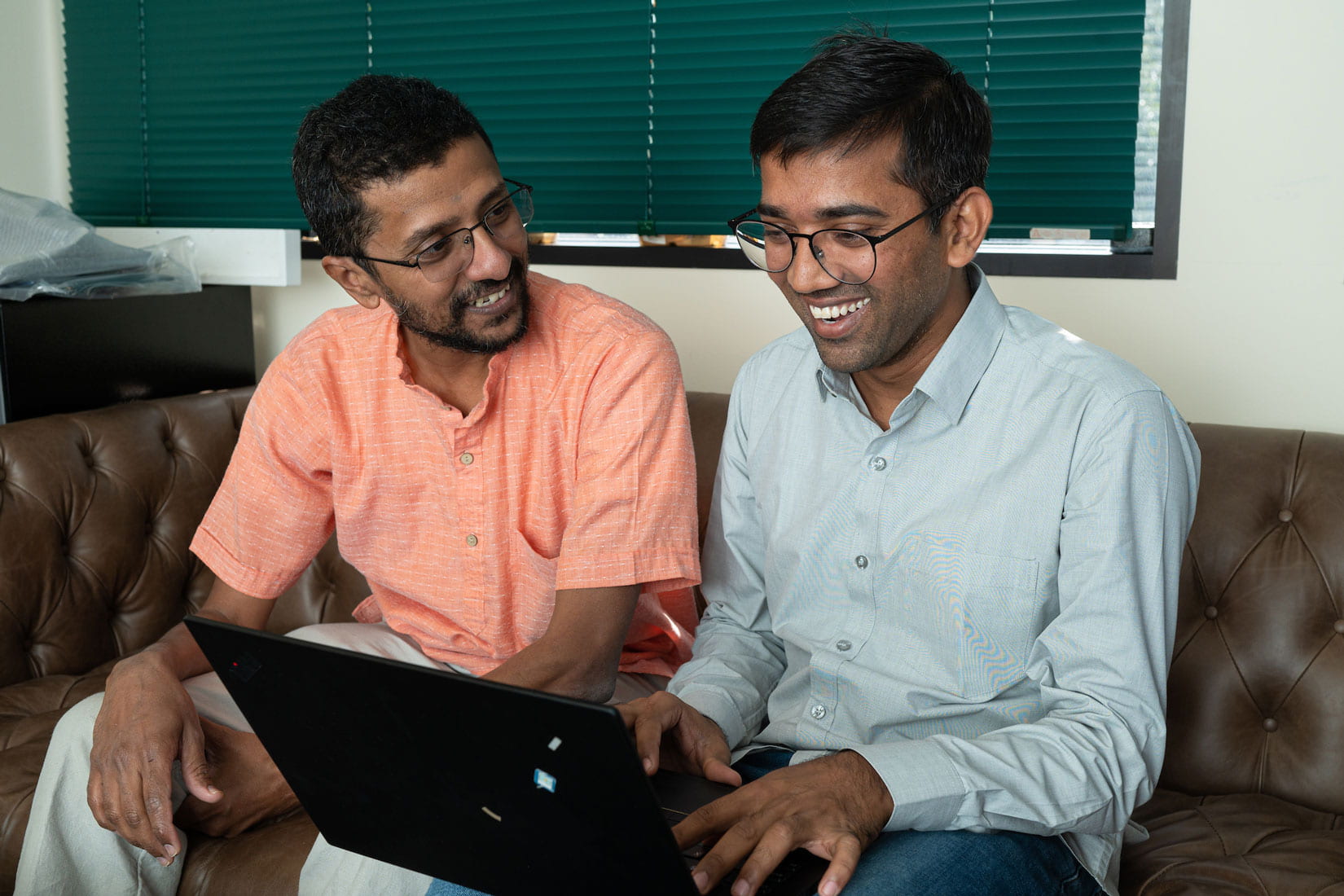
Rice University engineers Ashok Veeraraghavan (left) and Anil Vadathya are creating an open source system called FLASH to objectively and automatically measure children’s screen-viewing behaviors.

CREDIT

Photo by Jeff Fitlow/Rice University

Grant information:

“Development and Validation of an Automated Measurement of Child Screen Media Use: FLASH” | Eunice Kennedy Shriver National Institute of Child Health and Human Development | NIH Project No. 5R01DK113269-05

https://reporter.nih.gov/search/BneOYHrJk0K9RDKO-D-K9w/project-details/10128438

High-resolution IMAGES are available for download at:

https://news-network.rice.edu/news/files/2022/11/1107-SCREENTIME-main-lg.jpg
CAPTION: U.S. children average 2.5 hours of screen time per day, more than double the amount pediatricians recommend. (Image courtesy of 123rf.com)

https://news-network.rice.edu/news/files/2022/11/1107-SCREENTIME-toB-lg.jpg
CAPTION: Dr. Teresia O’Connor is an associate professor in the nutrition division of Baylor College of Medicine’s Department of Pediatrics and associate director for human sciences at Houston’s Children’s Nutrition Research Center. (Photo courtesy of Baylor College of Medicine)

https://news-network.rice.edu/news/files/2022/11/1107-SCREENTIME-aval29-lg.jpg
CAPTION: Rice University engineers Ashok Veeraraghavan (left) and Anil Vadathya are creating an open source system called FLASH to objectively and automatically measure children’s screen-viewing behaviors. (Photo by Jeff Fitlow/Rice University)

This release can be found online at news.rice.edu.

Follow Rice News and Media Relations via Twitter @RiceUNews.

Located on a 300-acre forested campus in Houston, Rice University is consistently ranked among the nation’s top 20 universities by U.S. News & World Report. Rice has highly respected schools of Architecture, Business, Continuing Studies, Engineering, Humanities, Music, Natural Sciences and Social Sciences and is home to the Baker Institute for Public Policy. With 4,240 undergraduates and 3,972 graduate students, Rice’s undergraduate student-to-faculty ratio is just under 6-to-1. Its residential college system builds close-knit communities and lifelong friendships, just one reason why Rice is ranked No. 1 for lots of race/class interaction and No. 1 for quality of life by the Princeton Review. Rice is also rated as a best value among private universities by Kiplinger’s Personal Finance.