Tuesday, November 08, 2022

Flexible working has benefits for employee well-being — but access to the right technology is crucial

Insider Inc.
Tue, November 8, 2022 


Research suggests that flexible work arrangements are a key driver of overall employee well-being.

Businesses must adapt their technology strategy to support employees in hybrid roles.

HP portfolio of products have key built-in features designed to accommodate the various facets of flexible work.


Whatever your grandfather did for a living, his work arrangements probably weren't very flexible — and they certainly weren't designed to maximize his sense of well-being or autonomy. Today, as the sudden shift to remote work gradually gives way to the age of hybrid offices, employers who don't prioritize worker flexibility, autonomy, and well-being may find it difficult to hire or retain talent.

What might surprise your grandfather's boss the most is that this could be a win-win situation for everyone. A growing body of research suggests that flexible work arrangements provide a wide range of well-being benefits, and can help drive productivity and employee engagement. Giving workers the freedom and flexibility to work from anywhere, at any time, and to seamlessly collaborate across boundaries not only leads to happier, healthier employees — it also builds more efficient companies that retain employees longer, encourages collaboration, and improves productivity.

A clear link between employee well-being and flexible working arrangements

Employees who have access to remote-work opportunities — including flexible work location, distributed teams, and virtual work options — were 43% less likely to experience workplace burnout, 75% more likely to report being often or always engaged with work, 63% more likely to report often or always being innovative, and 30% less likely to look for another job in the next year, according to a 2020 global study. Likewise, in a 2022 study of workers across England and Scotland, 78% said that being able to work from home gave them an improved work-life balance, 50% said it enabled them to more easily and quickly complete their work, and 47% said it improved their overall well-being.

Julia Yates, a senior lecturer in organizational psychology at City University of London, said the autonomy provided by flexible arrangements "leads to increased work satisfaction, increased life satisfaction, and decreased levels of stress — so generally it is a very positive thing to have in work."

"Autonomy definitely leads to increased productivity, because it makes people happier, which makes them more productive," she added, citing several studies, including a 2020 research project that used a neuroscience experiment to investigate the mechanisms through which greater autonomy affects individual and team performance. "It also makes them feel more valued, boosting their self-confidence and leading to more creativity, more resilience, and therefore more productivity. It allows them to play to their strengths."

For employers, the challenge now is to design a technology strategy that delivers not only flexibility but connectivity and security. That means providing tools that employees can use to work from almost anywhere, which enable them to seamlessly collaborate under any conditions.
Technology that is adapted to the flexible work age

For the large majority of workers, the one indispensable tool will be a versatile laptop. Though there are dozens of models advertised as ideal for hybrid work, many don't offer critical features that enable hybrid working, such as the ability to connect in low-Wi-Fi environments, long battery life, and a lightweight, portable design.

This is why the HP Elite Dragonfly G3 has consistently been a popular choice for employers. Not only does it check the necessary boxes, but it also provides innovative features specifically designed for working from unconventional spaces. For example, its AI Noise Reduction feature allows the user to filter out ambient or unwanted noises when on a video call — a potential lifesaver for parents of young children, or anyone working in a public environment, like a coffee shop. It also contains a wide field-of-view 5MP camera that allows users to move more freely during calls.

Indeed, being freed from ergonomically challenged office desks could be one of the great wellness benefits of the shift to remote work, assuming workers have the proper equipment. In a survey of nearly 900 remote workers, 40% said they no longer worked from a desk, and one-third admitted to purchasing their own equipment to accommodate their healthier posture.

Employers can accommodate these good habits with wireless equipment, such as the HP 655 keyboard and mouse combo. In addition to long battery life, the mouse contains a multi-surface sensor that allows it to operate on a wide variety of surfaces. And workers who need to be on frequent video calls but don't want to sit at a desk all day may appreciate an exterior camera like the HP 960 4K Streaming Webcam, which allows for greater movement than some other internal laptop cameras do.

Lastly, as any IT worker can tell you, a distributed workforce makes it exponentially harder to secure your organization's data. To give your employees the freedom they want without sacrificing the security your company needs, it's imperative to upgrade your IT architecture. The HP Wolf endpoint security solutions safeguard people, devices, and data.

Enterprise software platform HP Anyware was specifically designed to keep workers productive with secured access to their digital workspaces, without the headaches of a VPN. It also enables teams to work together in real-time by accessing the same desktop or application from virtually anywhere and avoiding large file downloads.

The rules of work have changed. Flexibility has joined paid time off and lunch hours as the minimum benefits employees will accept to work for your company. Smart employers already recognize that these new rules will benefit them, too, as employees become happier, better connected, and more productive. All they need is the right technology, and an employer that's bold enough to provide it.
How HP products make it easier to work from anywhere
HP Elite Dragonfly G3. Your best work, anywhere.

Ultra-light (it starts at less than 1 kilogram) and featuring HP Wolf Security for Business, HP's new Dragonfly G3 notebook is a powerhouse that has been painstakingly crafted for today's professionals. Its secret weapon is its 5G connectivity, enabling users to work well beyond the confines of a WiFi signal. The HP Elite Dragonfly is enhanced by HP Presence AI audio and video technology, which provides optimal conditions for collaborative and productive virtual meetings.
HP 950 4K Webcam. Best-in-class picture for meetings.

We all need to be camera-ready in the world of flexible work, and this webcam helps us put our best face forward. The built-in privacy shutter blocks the webcam from uninvited eyes and the AI face framing ensures that your face is always in focus. Best of all, there are universal mounting clips to mount the camera wherever it works best.
HP USB-C Travel Hub G2. Connecting your world.

Created with the demands of today's roving business traveler in mind, HP's versatile new hub lets remote workers expand their laptop's connectivity wherever they are. Adding an extra display is the work of moments — and when plug sockets are thin on the ground, you can plug in your phone to charge it too. You can even charge your devices and laptop battery at the same with the one single USB cable.

Find out more about how HP can support flexible working.

This post was created by Insider Studios with HP.
Philippines' unemployment hits new low since start of pandemic


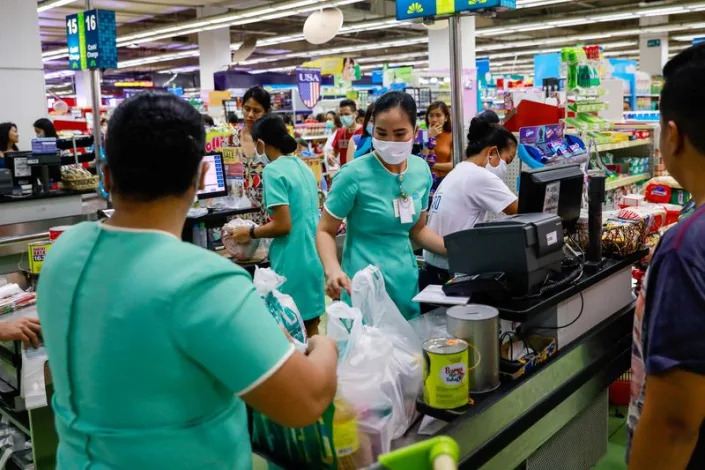
Daily life in Manila amid new coronavirus cases

Mon, November 7, 2022 

MANILA (Reuters) - The Philippines' unemployment rate in September fell to a new low since the COVID-19 pandemic began, highlighting more green shoots of recovery as the country fully reopens its domestic economy.

The unemployment rate eased for a third month in a row to hit 5% in September, the statistics agency said on Tuesday, which bodes well for third quarter growth.

"The recent survey results show the gains of the full reopening of our economy," Economic Planning Secretary Arsenio Balisacan said in a statement.

Gross domestic product was 7.4% in the second quarter, bringing the average growth in the first half of the year to 7.8%, above the government's 6.5-7.5% growth target for 2022. Official third quarter GDP data will be released on Nov. 10.
COP27 app gives Egypt’s Sisi access to every move attendees make

Sébastian SEIBT -


Egyptian authorities have unveiled a COP27 application to "help" participants at the climate change summit in Sharm El Skeikh, which ends on November 18. But NGOs and cybersecurity experts warn that President Abdel Fattah al-Sisi’s regime can very easily and effectively use the app to surveil attendees, including top diplomats and Egyptian activists.


COP27 app gives Egypt’s Sisi access to every move attendees make© Stefan Rousseau, AP


The 2022 UN Climate Change Conference, which began on Sunday, November 6 in the Egyptian resort city of Sharm El Sheikh, is a summit under tight surveillance. Human rights groups and cybersecurity experts believe the Egyptian application made available to COP27 participants is a weapon of massive espionage for President Abdel Fattah al-Sisi’s regime.

"It’s not the official UN application that’s the problem; it’s the one developed by the Egyptian government that bothers us," explained Katharina Rall, senior environment researcher at Human Rights Watch, who participated in the NGO’s investigation into the repressive measures put in place by Egypt ahead of COP27.

The Egyptian app, which was rolled out on October 24, is supposed to "improve the COP27 experience for all participants". It allows users to manage flight and hotel reservations, get information about Covid-19, and provides agendas for on-site meetings as well as a calendar of negotiations and roundtables.

The all-in-one tool has already been downloaded by more than 5,000 delegates and visitors (out of a total of 44,000 registered participants) who were probably reassured by the fact that this Egyptian application is promoted on the official UN website for the COP27. The UN imprimatur "appears very problematic to us, and we have the right to wonder why there was no verification beforehand", said Rall.

‘Unlimited trust certificate’ with access to all


Shortly after the app was rolled out last month, cybersecurity experts realised that it was "a cartoon super-villain of an app”, as Gennie Gebhart from the Electronic Frontier Foundation put it in an interview with the British daily, The Guardian.

It’s difficult to imagine a more intrusive app: It "requires access to all the communication connectors of the smartphone, such as Bluetooth, GPS, camera, microphone, address book, NFC ['near-field communication', a wireless data transfer technology for very short distances],” explained Frans Imbert-Vier, CEO of UBCOM, a Swiss cybersecurity agency that has analysed the mobile service developed by the Egyptians.

Unlike most other apps, the COP27 one does not offer warnings that they want to have access to this or that function of the smartphone. "In this case, an unlimited trust certificate is submitted to the user," said Imbert-Vier. After acceptance, the phone's operating system acts like the app can mostly do whatever it wants.

Specifically, it transmits geolocation data, photos taken, messages exchanged and allows access to outgoing email content, according to The Guardian, which conducted its own security assessment of this quasi-spyware.

Users cannot simply refuse to allow access to certain functions and still use the application, warned Imbert-Vier. It's all or nothing, even though all the experts interviewed agree that such an application does not need to have access to emails or the microphone, for example, for the services it offers.

Cheaper, faster, better than standard spying operations


Experts are especially concerned about the app’s uninstalling function. Rall from Human Rights Watch warns that, "uninstalling the application is not enough to get rid of it". The elements that enabling spying on communications linger on smartphones. "You have to reset the operating system settings [an advanced reset to clean the heart of the smartphone] to put everything back in order," added Imbert-Vier.

The Egyptian authorities have thus developed the perfect little cyber spy that is difficult to get rid of and that, in addition, steals the user’s consent.

For the Sisi regime, "the COP27 has provided a unique opportunity to update, at low cost, all their information on diplomats and high-ranking dignitaries of the countries attending this event. What’s more, it’s much faster and more reliable than doing all the espionage work on the ground, since the information is provided directly by the victim," noted Imbert-Vier.

The app is also an additional weapon for the regime to monitor domestic dissent in a country routinely singled out for its gross human rights violations, including crackdowns on freedoms of expression and association. "We must not forget that some of the participants in COP27 are local organisations, and most of the international NGOs also work with Egyptian activists," said Rall.

Human Rights Watch fears that in a country where tens of thousands of detainees are considered political prisoners by NGOs, and which has increased arrests in the run-up to COP27, the official application can be used as a tool to increase repression.

>> Mother of jailed Egyptian activist on hunger strike fears for son’s life

Spying opportunities for regimes hosting events


Egypt is not the first country to be accused of using an official application for a major event for espionage purposes.

For the 2022 Winter Olympics in Beijing in February, China asked athletes and participants to download "My2022", an equally intrusive application.

A similar scenario appears to be emerging for the 2022 World Cup in Qatar, which starts on November 18. Activists and experts have flagged two applications, Ehteraz, a local Covid-19 app, and Hayya, a digital permit required to enter stadiums and the country, for giving Qatari authorities wide access to information on smartphones.

All these examples suggest that hosting major international now provide authoritarian regimes with an easy gateway to extend the scope of their cyber-surveillance.
'Qatar is a mistake,' says former FIFA President Sepp Blatter


Former soccer officials Sepp Blatter and Michel Platini face corruption charges in Swiss trial

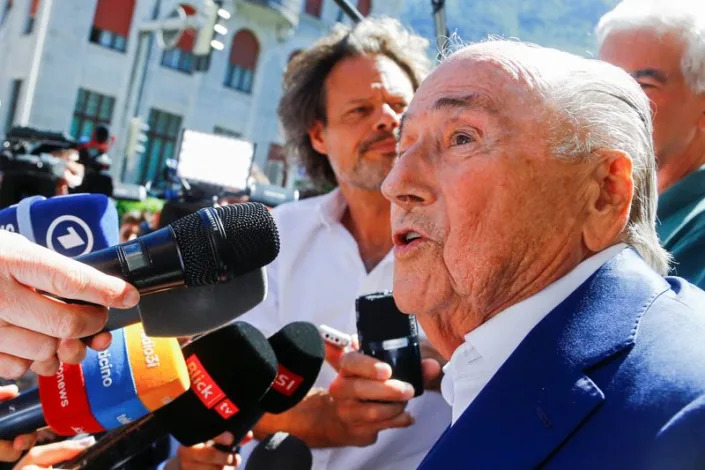
ZURICH (Reuters) - Sepp Blatter, the former president of FIFA when Qatar was awarded the 2022 World Cup hosting rights in 2010, told Swiss newspaper Tages Anzeiger "Qatar is a mistake," adding that "the choice was bad."

The Qatar decision has been marred by controversy, including allegations of corruption and human rights violations, since it was first announced.

Blatter, who led FIFA for 17 years, has also been embroiled in accusations of corruption during his tenure. He was cleared of fraud by a Swiss court in June. The prosecutors have appealed the ruling.

"It is too small of a country. Football and the World Cup are too big for it," Blatter said of Qatar, the first country in the Middle East to host the tournament.

He said FIFA in 2012 amended the criteria it used to select host countries in light of concerns over the working conditions at tournament-related construction sites in Qatar.

"Since then, social considerations and human rights are taken into account," he said.

Blatter said he will be watching the tournament, which kicks off in less than two weeks, from his home in Zurich.

(Reporting by Noele Illien; Editing by Hugh Lawson)

Miss Argentina and Miss Puerto Rico announce they are married after secret romance

Charlie Jones - 

Two beauty queens have announced they are married after keeping their relationship secret for two years.

Former Miss Argentina Mariana Varela, 26 and former Miss Puerto Rico Fabiola Valentín, 22, revealed they tied the knot on October 28.

The two met at Miss Grand International (MGI) 2020 but have kept the relationship secret since then.

Argentina made same-sex marriage legal in 2010, and Puerto Rico made it legal in 2015.

Mariana represented Argentina at the 2019 Miss Universe contest and ended up in the top 10 of MGI 2020 the following year.

Fabiola also reached the final 10 of the MGI competition that year, representing Puerto Rico.


The happy couple released pictures documenting their romance© Jam Press Vid


Their fans were quick to congratulate the couple© Jam Press Vid

Fabiola said on social media: “After deciding to keep our relationship private, we opened the doors to them on a special day. 10/28/22.”

The happy couple shared images of their romantic proposal, wedding and honeymoon period after first meeting at MGI in 2020 where they both made the final 10.

The models’ adoring followers wished them well in the comments section, with one Instagram user writing: “The best that Miss Grand has given us!”

“Omg congratulations MGI brought together a beautiful union,” commented another.


The two have married after years of keeping their affair secret© Jam Press

Someone else said: “Congratulations! May they be very very happy.”

“Beautiful couple. Congratulations and blessings on your marriage!”

“Congratulations ladies!” remarked another.

The pair have over 100,000 Instagram followers each.

Mariana thanked everyone for their kind words of support: “Thanks for all the love! We are very happy and blessed. I wish you that the love you are giving us is multiplied! Infinite thanks.”


Mariana Varela represented Argentina in the 2019 Miss Universe competition© Jam Press

Beauty pagents have been in the news recently but not for such heart warming reasons.

A beauty pageant turned ugly in New York when a brawl erupted between contestants at an after party.

In a now-viral video, a melee erupts as a mob of well-dressed men and women lay into each other after NYC's first ever Miss Sri Lanka beauty pageant.

The motive for the fight at the The Vanderbilt in South Beach, which is home to a large Sri Lankan population, is currently unknown.

Sujani Fernando, one of the organisers, said none of the contestants were involved in the brawl.

She said all 14 were inside the building as the fight erupted outside.


The loved up couple appeared thrilled to announce the news to their fans© Jam Press Vid


Picture from their happy day© Jam Press Vid

In 2021, a similar scuffle broke out at a top pageant in Sri Lanka.

The reigning beauty queen had to be handcuffed after she snatched the crown from her rival's head.

She claimed her competitor shouldn't have won, and should've been disqualified because she was divorced.

But the organiser said that social media users have blamed the scuffle on an inaccurate Sri Lankan stereotype, calling the ruck "just a fight".

“Sri Lankans are good people,” she said.

“It’s just a fight — fights happen, kids fight. That happens in any culture, any nationality, it doesn’t have to be Sri Lankans.

"We’re not that type of people.”


Opinion: Iran's regime cannot be fixed

Yalda Zarbakhch
Commentary
November 5, 2022

For weeks now, Iranian women have been fighting for democracy and freedom. Many have been arrested, beaten or killed. DW's Yalda Zarbakhch asks why Western governments still seek compromise with Iran's regime.

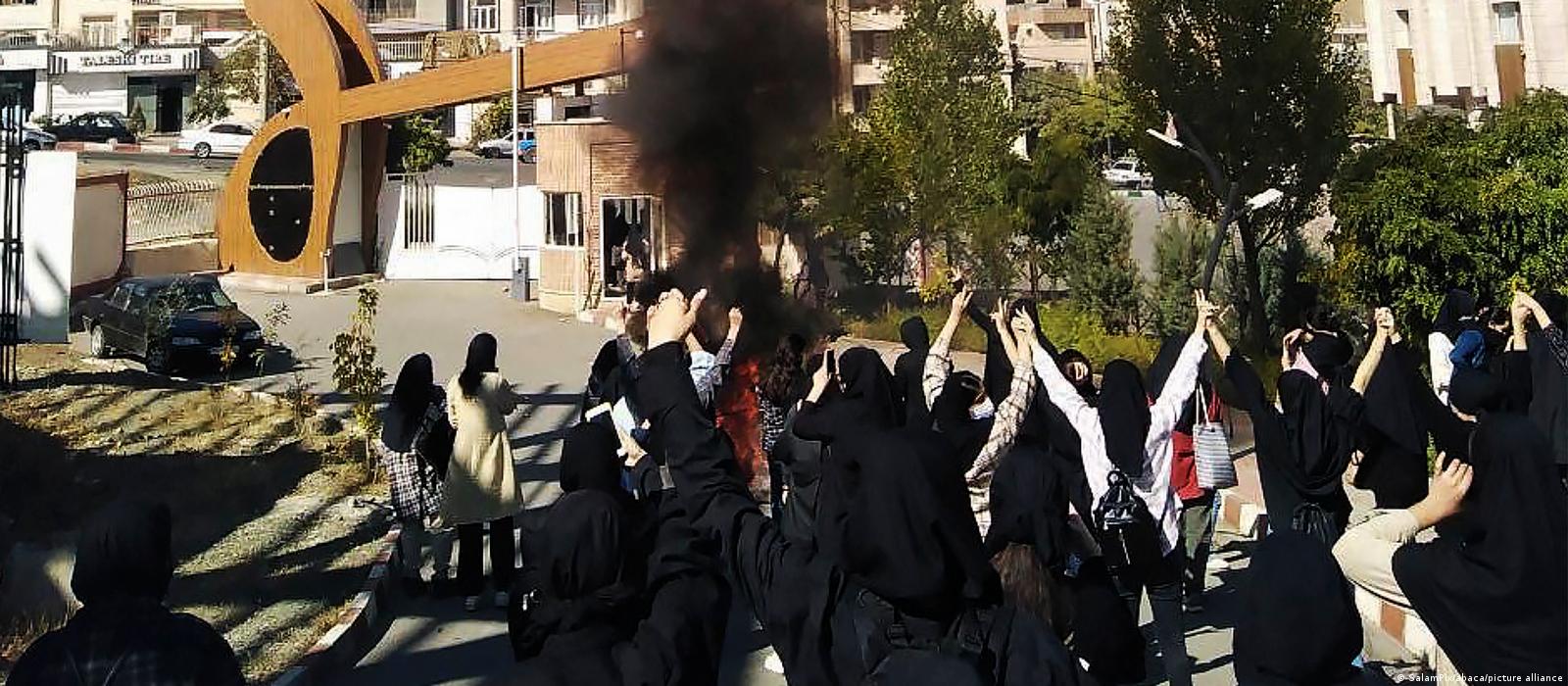
World leaders have kept mum as Iran's regime has intensified violence against protestersImage: SalamPix/abaca/picture alliance

Every day another funeral: young people carried to their graves by their families, mothers carried to their graves by their children. For weeks now, these images have dominated the news from Iran.

Right now, the picture circulating around the world is of a 5-year-old weeping beside her mother's grave. Fereshteh Ahmadi, who had two children, was shot and killed by security forces. The image of her little daughter at her grave is heartbreaking for me as a mother — for every mother, for every human being. Or so you would think.

To date, at least 270 Iranians — women, men and 30 minors — have been shot or beaten to death because they took to the streets to express their anger and outrage following the death of Jina Mahsa Amini on Sept. 16. People are being murdered because they are fighting for democratic values. They want to live according to these values. And for this they are paying with their lives.
Protests at graveyards

Every day marks 40 days since a protester's death in Iran right now — and relatives and demonstrators turn out to observe the occasion. Despite the significant security presence, tens of thousands of people come to gather in and around the cemeteries. They mourn Jina Mahsa, Nika, Sarina, Hananeh, Asra and Hadis, to name just a few of the brave girls and women killed. Parents are being arrested in order to force "confessions" by torture — made to say that their children died of heart failure or a stroke or by suicide.

Cemeteries and universities are now the biggest sites of protest. Every innocent victim increases the anger and determination of Iranian women and men, and strengthens their unity in standing up against the government.

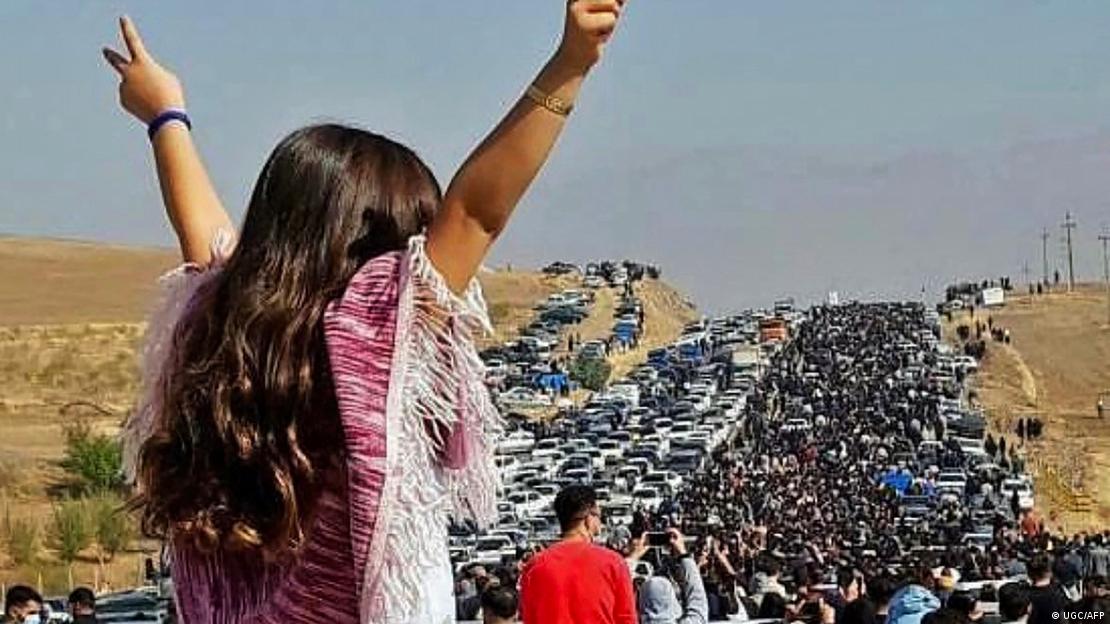
Protesters traveled to Jina Mahsa Amini's grave to mark 40 days since her death

Human rights organizations estimate that about 14,000 people are being held and abused in Iran's overflowing jails, including at Tehran's infamous Evin prison. These people, too, ought to be acknowledged by name: the activists, musicians, children and students abducted from their homes, schools and residences — some of whom may now face the death penalty.

Every day, their calls grow louder and more clear: "Death to the dictator, death to a regime that murders children," they cry. "Death to the whole apparatus of power, death to the Islamic Republic."
A regime beyond reform

In the West, of all places, it seems that many political leaders cannot hear the screams of Iranians. Or is it that they don't want to? Why is the West clinging to possible reform scenarios when people in Iran have known for many years that this system cannot be fixed?

With Iran in the midst of a unique feminist revolution, Germans have directed their expectations for a response to Foreign Minister Annalena Baerbock. But how is it possible that the German Chancellor, Olaf Scholz, remained silent for five weeks? It wasn't until Oct. 31 that he condemned, in a tweet, the "disproportionate violence of the security forces" against demonstrators in Iran. And why is the West still hoping for a resumption of the Iran nuclear agreement, signed in 2015 and abandoned in 2018? This is a slap in the face of all Iranian women and men who are currently putting their lives on the line.

The demonstrators do not want reforms or compromises. Because what compromises can you make with a regime that arrests schoolgirls, rapes them, shoots them, beats them to death?

As an Iranian, and as a journalist following the pictures, videos and flood of news stories coming out of Iran every day, I speak for my compatriots who have been protesting for weeks when I say that people want regime change. They want to live self-determined lives in a free and democratic country. This is not possible with the current regime in Tehran.
Listen to the protesters

I am not calling for intervention by the West — or for outside involvement in overthrowing the Islamic Republic. That is up to the people of Iran alone. What I am calling for, though, is governments to listen to the protesters: Do not contribute to the strengthening of the regime.

It is irresponsible to strengthen or legitimize a regime that will stop at nothing to remain in power. A regime that no longer has any legitimacy among its own population cannot be legitimized by the international community as a diplomatic partner for dialog.

It is a paradox. In the liberal West, of all places, there is a widespread fear of regime change. I keep hearing warnings that a revolution in Iran would result in instability throughout the region — that it could spark a civil war and turn the country into a second Syria.

I wonder what these warnings are based on. The region is already far from stable, and the Islamic Republic and its Revolutionary Guard, supported by Hezbollah, play a significant part in that, as well. The narrative of a second Syria or impending civil war as the sole alternatives to the Islamic Republic has put the brake on change for years now, both at home and abroad.

An initiative in Washington commemorates the at least 270 Iranians killed in the protests

Apart from the machinery of power that is centered on the Revolutionary Guard and Basij militias — who would give everything for their religious ideology and their leader, Ayatollah Khamenei — the vast majority of the population is united in the struggle against the Islamic Republic. This has seldom been as apparent as in the past six weeks: People of all ethnicities and minorities, Kurds, Baluchis, women and men, old and young, Muslims, people of other faiths, atheists: All are protesting together across the entire country — with and without hijabs.

Despite all the repressive measures, a strong civil society has developed in Iran in recent years. A great many activists, lawyers, women's rights activists, and others who could provide an alternative to the Islamic Republic are currently being held in Evin prison. If they are freed in time, they would be able to build a new Iran. This could stabilize the entire region. If they are not released, they face show trials and execution.

Ever since it was established, the Islamic Republic has cemented its power with brutality, oppression, and human rights abuses. It is still doing so 40 years later, and before the very eyes of the international community. For how much longer?

This article has been translated from German.

Yalda Zarbakhch Head of DW Persian@yaldina
SPAIN
Mallorca hotel cleaners fight exploitation

Without the women who clean hotel rooms every day, Mallorca's tourism industry would come to a halt. The so-called Kellys are fighting for better working conditions.

Jonas Martiny
November 7, 2022

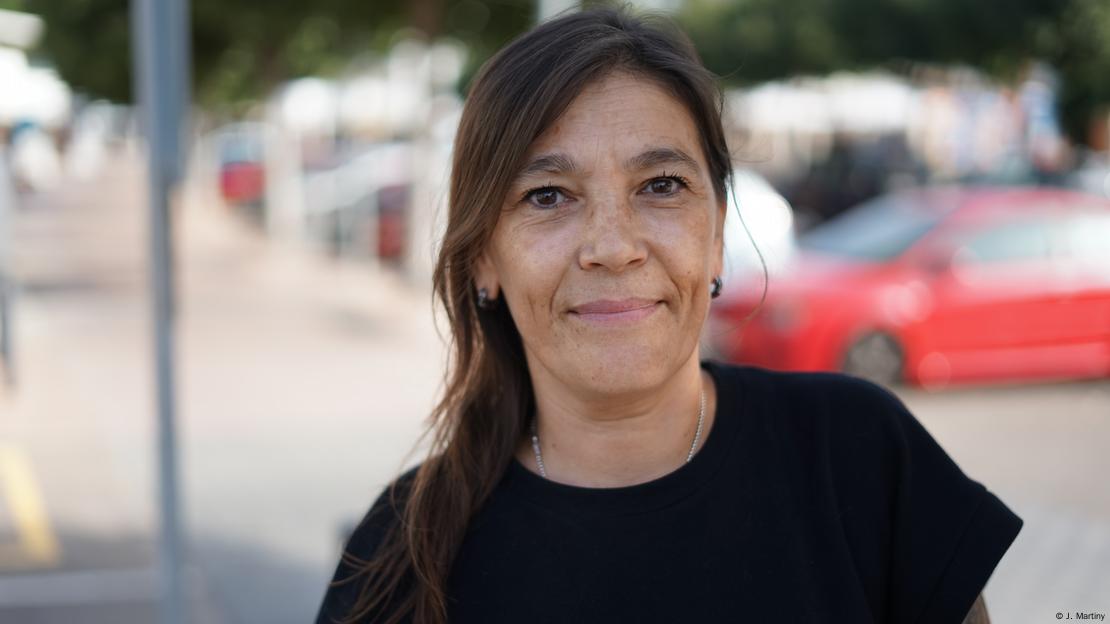
For the past 19 years, Sara del Mar has been working as a housekeeper in a Magaluf hotel on the Spanish island of Mallorca, which is especially popular with British holidaymakers. The 52-year old says she is perfectly healthy, although few of her colleagues are as fortunate. Housekeeping is strenuous work that entails constant bending and lifting to clean rooms and make beds. Despite this reality, del Mar has avoided developing spinal disc herniation, carpal tunnel syndrome or lateral epicondylitis, better known as tennis elbow. Such health problems blight many of the 30,000 hotel cleaners employed on Spain's Balearic islands.

Sara del Mar has been fighting for better working conditions
Image: J. Martiny


Tough working conditions

For the past six years, del Mar has headed the Mallorca housekeepers' association. Almost all cleaners are women, about half of them are immigrants. They call themselves the "Kellys," short for "Las que limpian," or "those that clean" in Spanish.

Their line of work is nothing short of break breaking. Every day, del Mar must tidy and clean 24 hotel rooms in just six hours — a quota that's practically impossible to meet, she says. Other cleaners face even bigger workloads. "The pressure is enormous, few of us can afford to take lunch breaks, let alone drink anything, because we can't afford to lose time going to the toilet," she says.

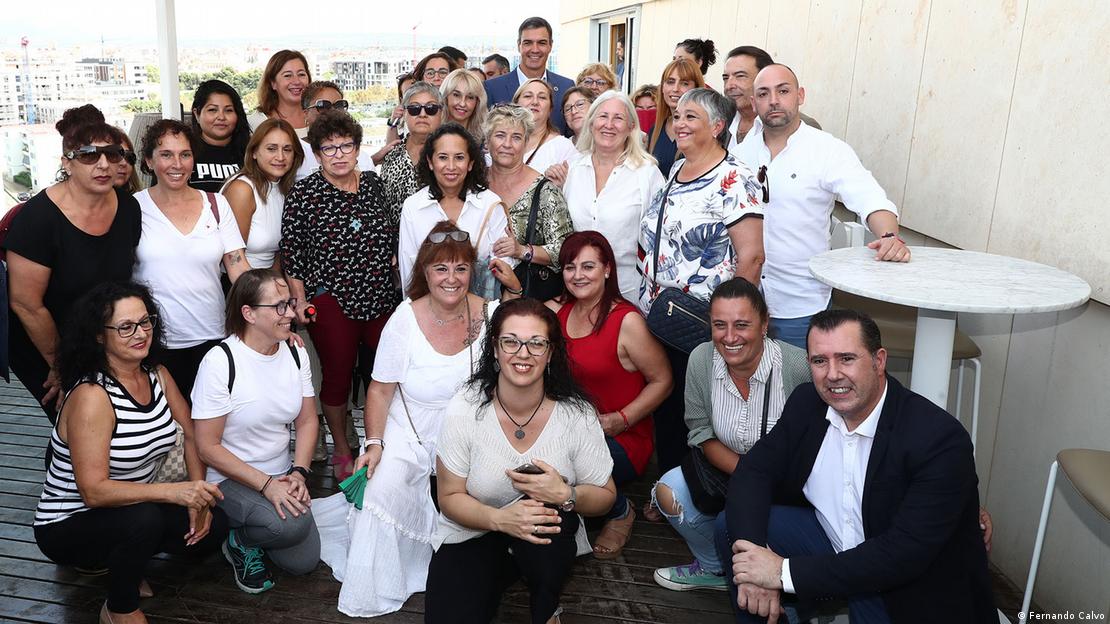
Their working conditions have attracted considerable attention in Spain lately. So much so that Spanish Prime Minister Pedro Sánchez met with a group of cleaners while visiting Mallorca in early October. In a press statement released after the meeting, Sanchez promised his government would work with determination to improve their working conditions, and that without cleaners, the "economically essential tourist sector would cease functioning."
Spanish leader Pedro Sanchez (pictured at the back) is under pressure to ease the plight on hotel workers

After all, the women put in hard work that often translates into health problems just to feed their families and keep the one of Spain's biggest economic sectors, the tourist trade, ticking along. Prime Minster Pedro Sanchez's meeting with Mallorca housekeeping representatives therefore carried huge symbolic significance.

Since organizing in 2016, the "Kellys" have already pushed through a spate of improvements: Many physical ailments common among housekeepers are now recognized as occupational illnesses. And a wage agreement established for the Balearic tourist sector guarantees workers a monthly take-home income of €1,400 euro ($13,900) — more than most Mallorca employees.
Hoteliers forced to install height-adjustable beds

Lawmakers on the Balearic islands recently decided that all hotels must install height-adjustable beds to improve the working conditions of housekeepers — a decision that sparked resentment among hoteliers due to the major investment costs involved. Members of Mallorca's hotelier association, for instance, do not understand why so much attention is devoted to housekeepers yet so little to cooks, receptionists and servers.

Hotel owners have installed height-adjustable beds to ease working conditions

One reason lies in in the cleaners' determination to improve their situation since banding together. "We achieved all this because we took to the streets," says del Mar. "We staged protests on the major squares in all key cities."

Arbitrary work quotas


That said that their most urgent request — that hoteliers be barred from setting arbitrary high daily work quotas to keep labor costs low — has not been fulfilled, says del Mar. She wants to see an agreement reached to determine how many rooms a housekeeper can be reasonably be expected to tidy and clean in a day, with an independent body assuring this quota isn't exceeded. The "Kellys" have, however, successfully pushed for a study to determine what workload should be considered too onerous for housekeepers.

Patrons should not take a freshly made bed and clean hotel room for granted

Sara del Mar's good health might well result from her willingness to stand up to her employer. Most recently, when she felt her hotel was asking too much of her, she filed a complaint with the labor inspectorate. It found that her workload was indeed too high. And "one day later, the hotel hired an extra housekeeper," says del Mar.

This article was originally published in German.
Renewable energy transition in 5 charts


Climate scientists have shown that heat waves, coastal floods and tropical cyclones will grow increasingly violent if the world does not rapidly build infrastructure to make clean electricity.


In 2015, nearly 200 governments promised to try to stop global warming at 1.5 degrees Celsius (2.7°F) by the end of the century. But seven years later, as they meet again for a climate summit in Egypt, they are pursuing policies that will heat the planet by almost double that.

For world leaders to honor their promises, they must sharply cut the amount of planet-heating gas humanity pumps into the air each year. Greenhouse gas emissions would have to fall 45% by the end of the decade and reach net-zero by 2050. A key driver of that titanic shift would be making electricity cleanly, instead of with fossil fuels, and electrifying activities that involve burning coal, oil and gas.

Here's where the world stands in cleaning up its electricity supply.


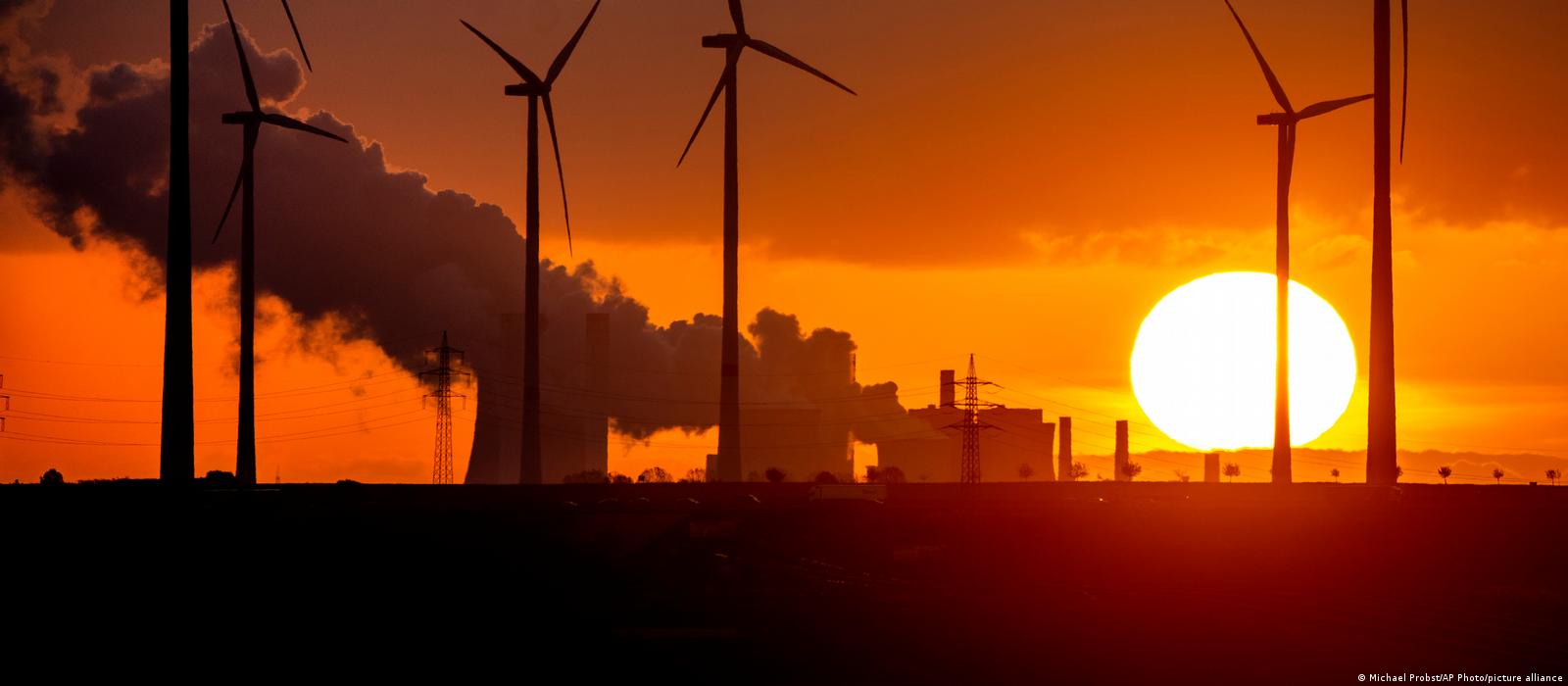
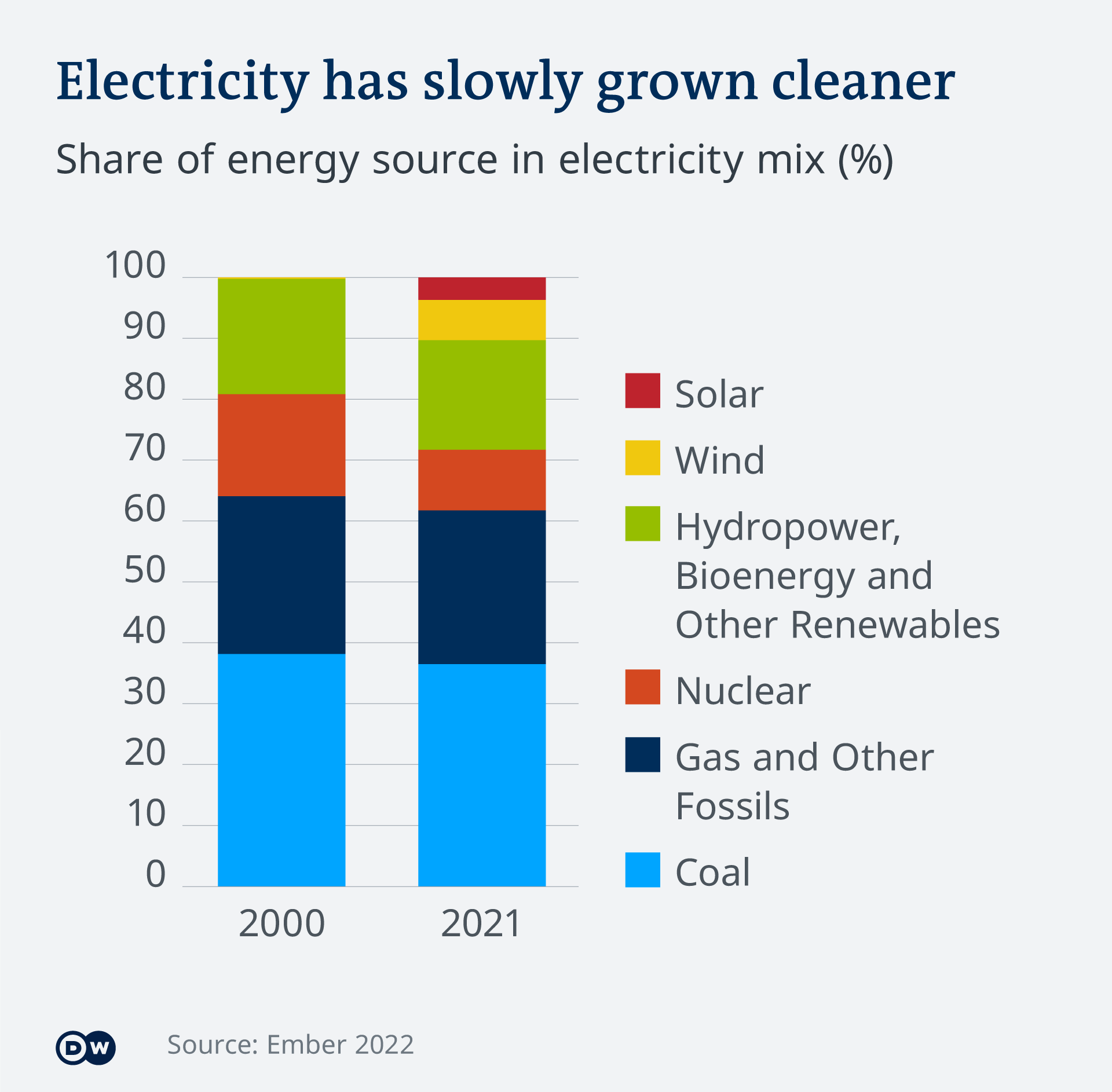
Most electricity is made from coal, the dirtiest source of energy, and fossil gas, which is cleaner but still polluting. Burning these fuels releases gases that act like a greenhouse around the Earth, heating the planet and making extreme weather worse.

Just under 40% of the world's electricity comes from low-carbon sources like solar, wind, nuclear and hydropower.

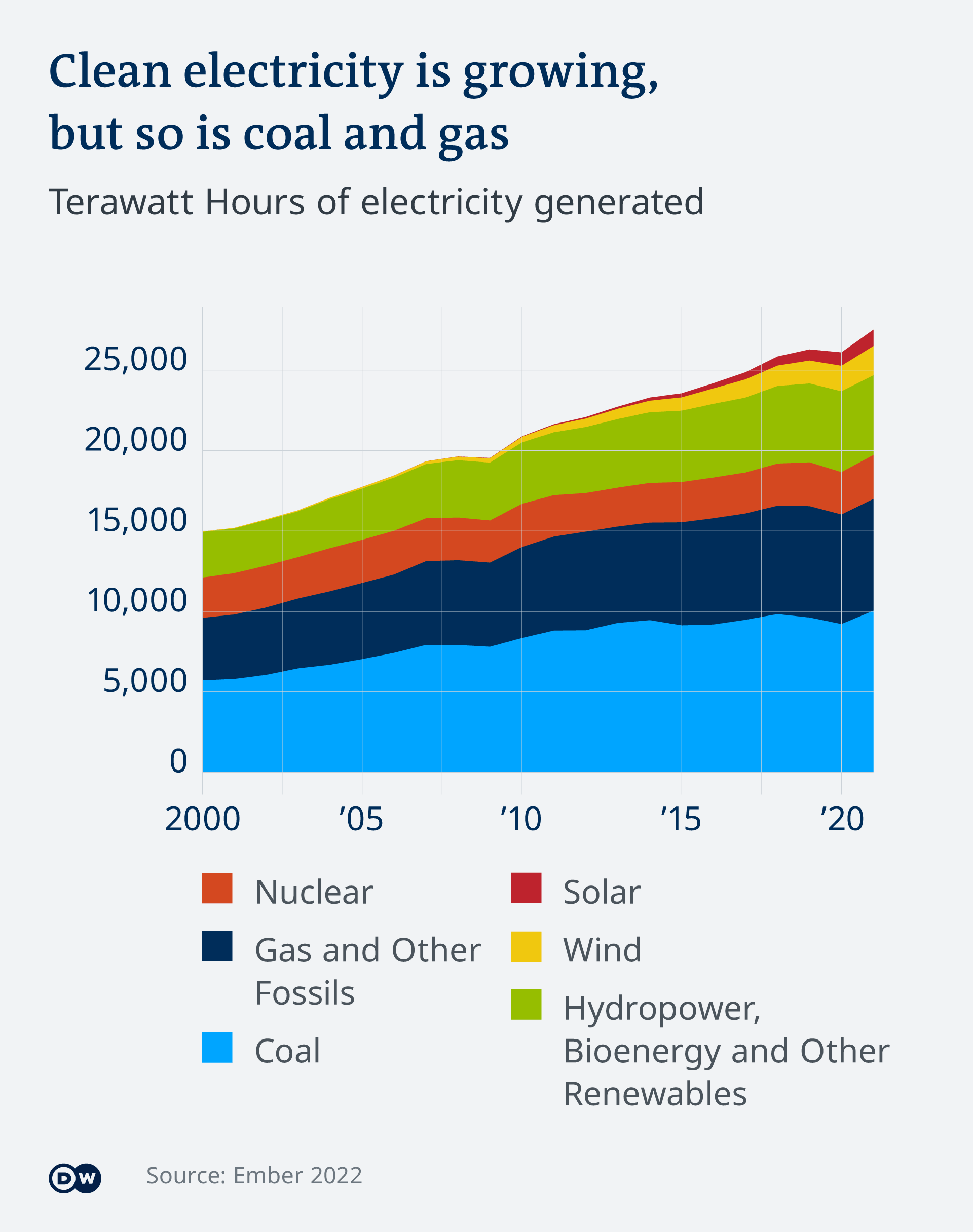
The share of renewable energy in the global electricity mix has risen rapidly in the last decade, while the share of nuclear has fallen. The amount of fossil fuels in the mix has remained steady.


Total demand for electricity has nearly doubled in the last two decades. In countries where living standards have risen rapidly, like China and India, people have burned more coal as governments have connected people in rural towns and sprawling megacities to electricity grids for the first time. In rich countries where electricity has grown cleaner, like the US and parts of Europe, people have swapped from coal to gas as the main source of electricity.

Renewable energy sources like solar, wind and hydropower now make up about a quarter of the world's electricity.


The rise of renewable energy is set to speed up. As manufacturers have built more solar panels and wind turbines, the technologies have improved and the industry has become more efficient, making them cheap and easy to build. The costs of making electricity from sunlight or wind have fallen sharply enough to make them competitive with fossil fuels. In most of the world, building a new solar farm is now cheaper than keeping an existing coal plant running, let alone building new ones.

The calculations do not include the costs of storing electricity on cloudy days with little wind, or account for the health costs of breathing dirty air from burning fossil fuels.


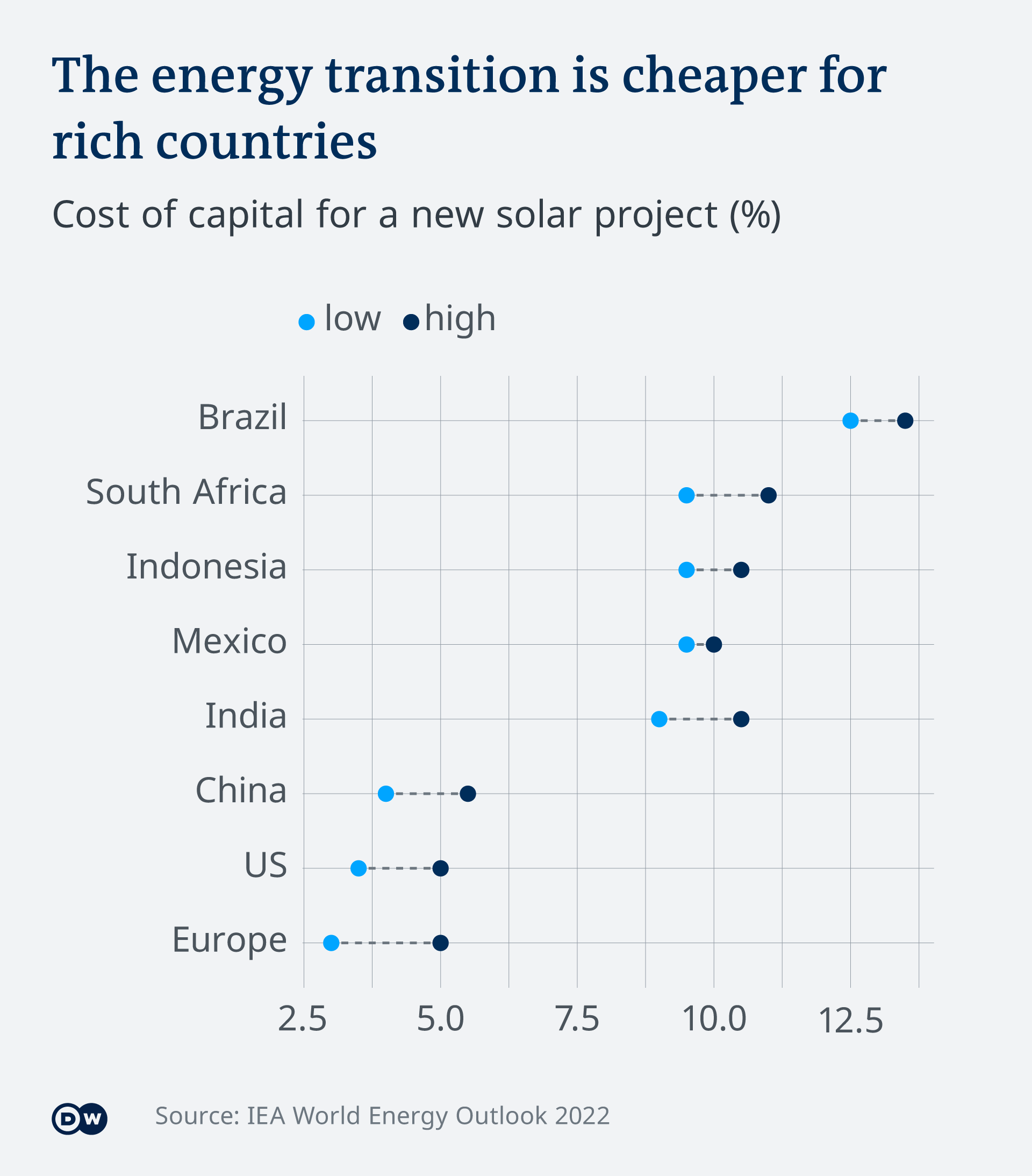
Spending on clean energy is expected to hit $1.4 trillion (€1.4 trillion) in 2022, according to the Paris-based International Energy Agency. But almost all the growth is in rich countries and China, where the costs of financing new infrastructure are lower. Middle-income countries must spend more than twice as much paying off debt, and struggle to get loans for projects. In sub-Saharan Africa, where 600 million people do not have access to electricity, finance is particularly hard to come by.

Rich countries promised poor ones $100 billion a year in finance by 2020 to cut their emissions and adapt to a hotter world. They broke their promise. The latest estimates show they raised $83 billion of public and private finance in 2020.


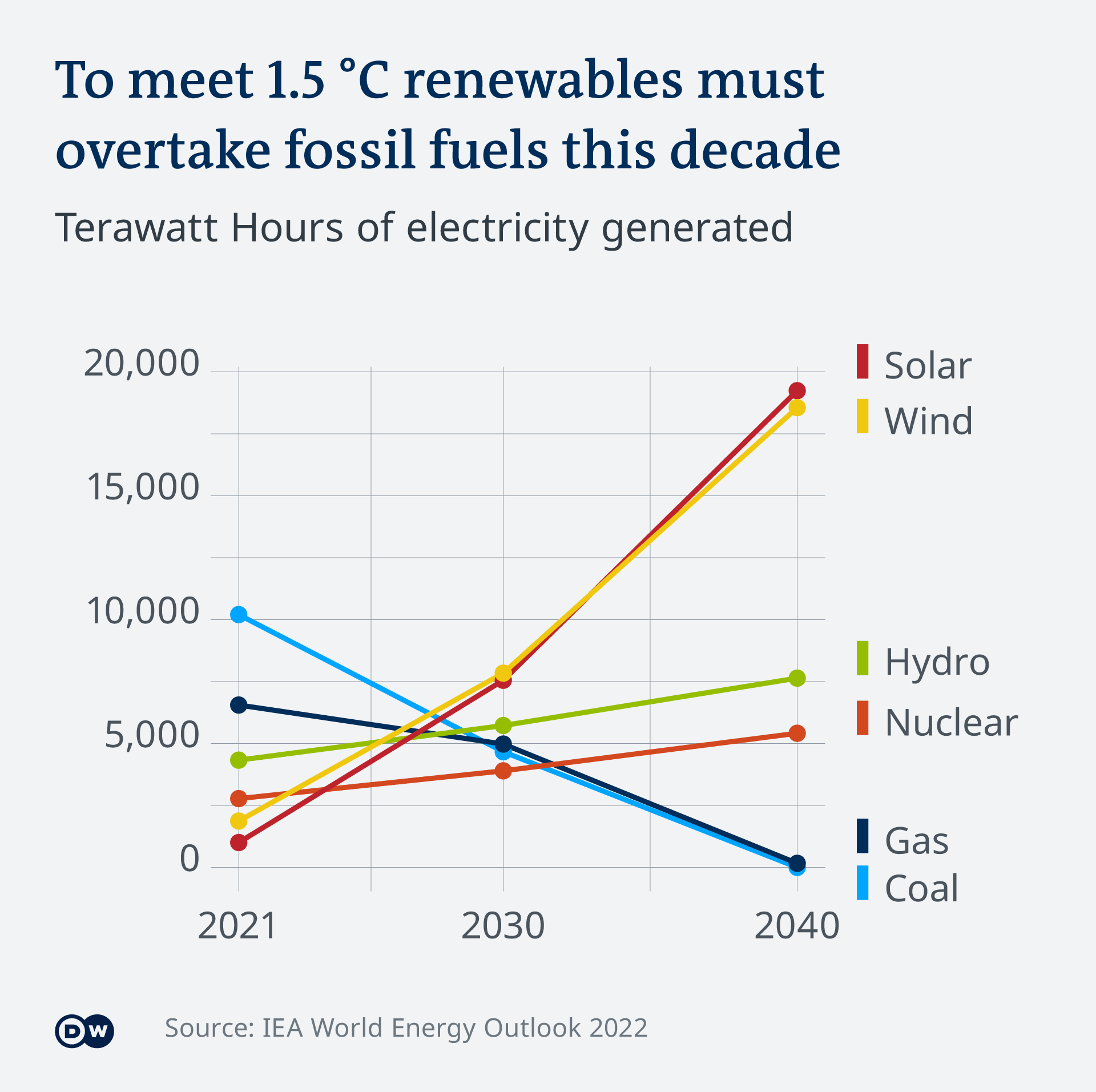
The share of low-carbon energy is growing. But it would have to rise six times faster than historical rates to put the world on track to keep global warming to 1.5 C, according to a report published in late October by two environmental research groups, Climate Action Tracker and the World Resources Institute.

Fossil fuels are projected to peak this decade, the International Energy Agency announced at the end of October. To cut emissions quickly enough for world leaders to honor their promises, electricity grids would have to become twice as clean by the end of the decade. In rich countries, they would have to hit net zero by 2035 – compensating for remaining emissions by sucking carbon out of the atmosphere – and in the rest of the world by 2040.
Ajit Niranjan Data journalist@NiranjanAjit

The COP27 is in Africa — but is it for Africa?


Felix Maringa


The COP27 serves as an opportunity for African leaders to voice their unique needs in the climate crisis. But, with the continent suffering disproportionately from climate change, calls for more funds are mounting.


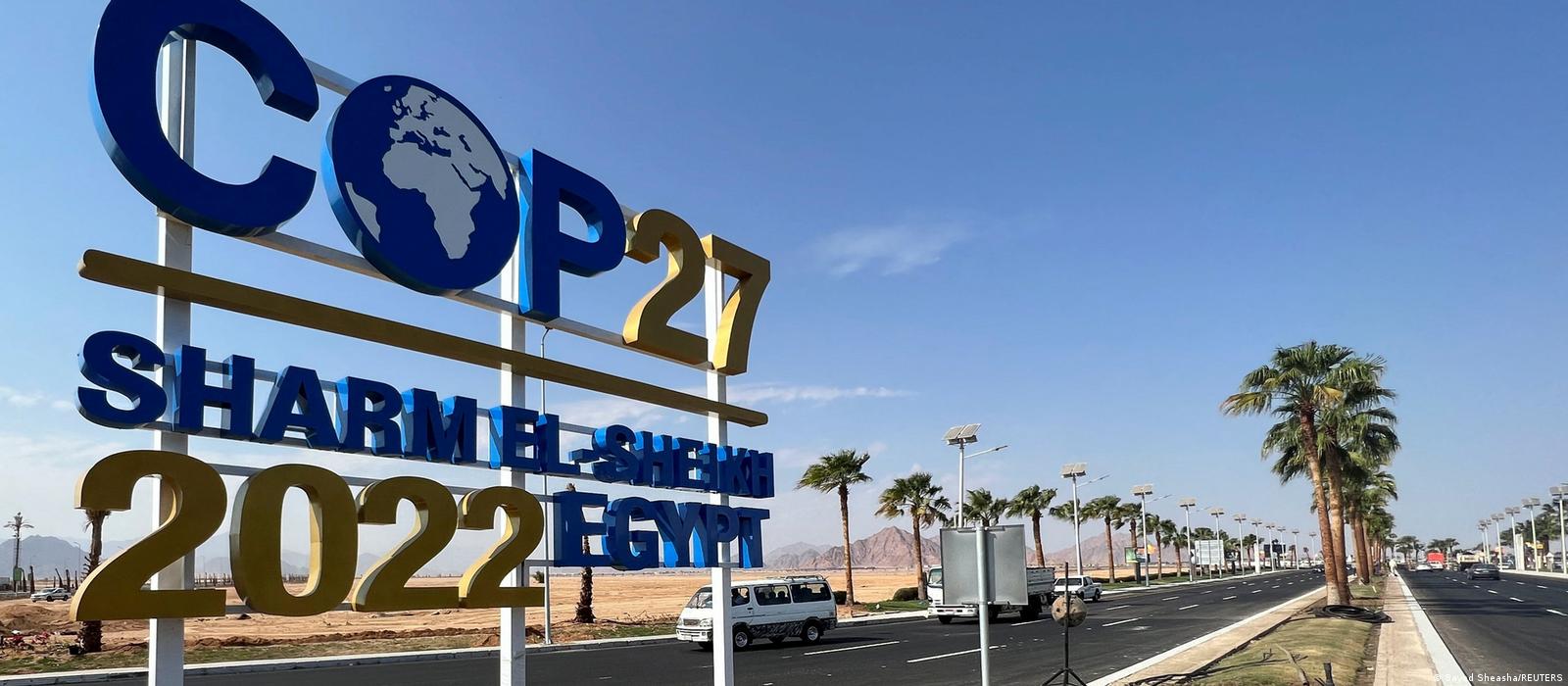
The COP27 talks are to referred as the "African COP” — and not just because of the location where they're taking place. World leaders are gathering in the Egyptian resort city of Sharm el-Sheikh, marking the fifth time the UN Climate Change conference has come to the African continent.

But, this time, there's also a clear focus on seeking solutions for countries in the Global South — in particular in Africa. In addition to finding ways to help the continent meet climate targets, the conference will also hear delegates plead for more help for societies already suffering the effects of the climate crisis.

Question of funding

Many African countries are reeling from more immediate problems or are in the thick of various crises. From corruption to famine, from civil war to failing infrastructure, there is no shortage of challenges pushing the reckoning with climate change onto the back burner.

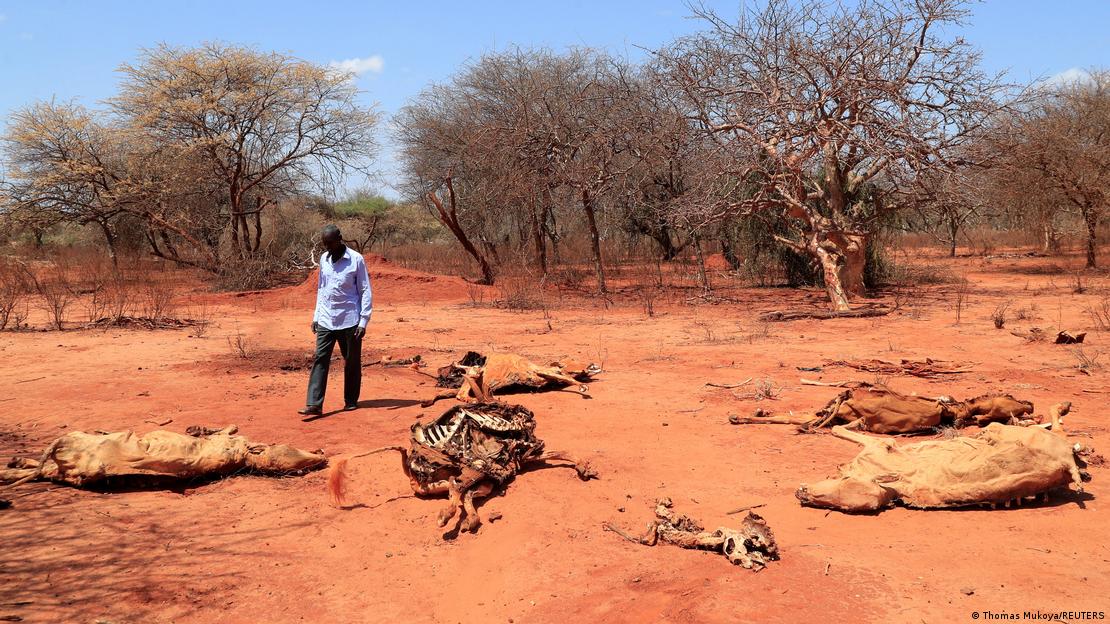
Africa is far more likely to suffer the effects of global warming — some of which are already being felt, such as during the ongoing drought that has taken hold over the Horn of Africa.

Meanwhile, the continent only receives 5.5% of climate financing, as it is responsible for generating less than 3% of all greenhouse gas emissions.

Africa Development Bank President Akinwunmi Adesina told DW that governments needs up to $1.6 trillion during this decade to implement the continent's commitments to the Paris Agreement on climate change.

During the 2021 COP climate talks in Glasgow, delegates from developing countries therefore asked the countries responsible for the biggest emissions of greenhouse gases to pay for climate-related damages — in addition to any funds already pledged to to help Africa cut emissions.

So far, global leaders have at best been slow in reacting to either demand.
Irreversible changes

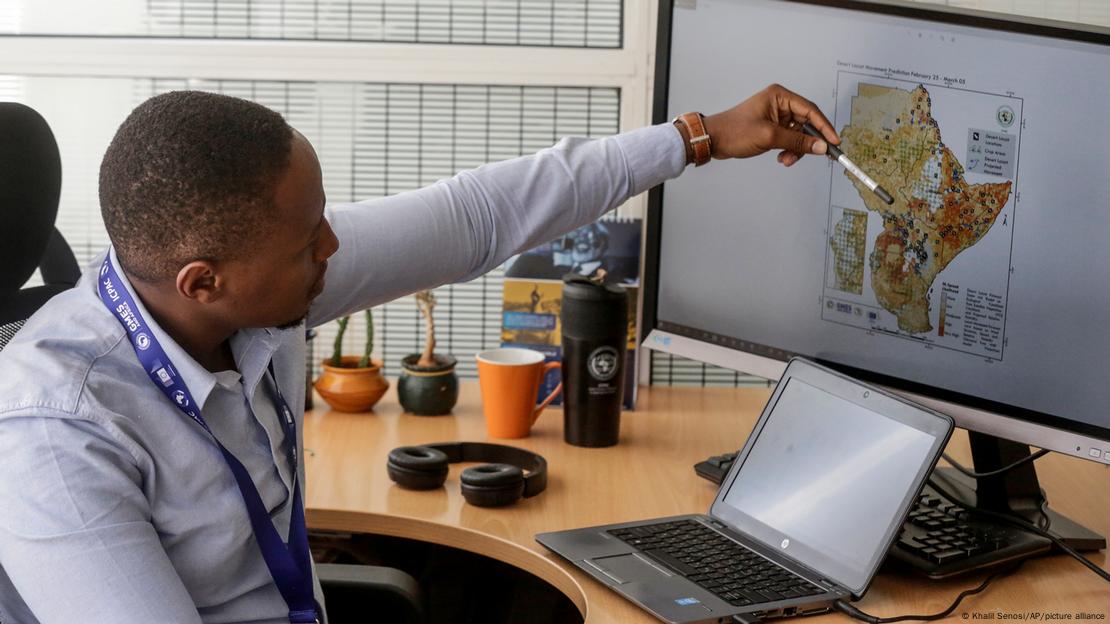
Regardless of what funds may or may not be made available to African nations, some of the effects of global warming are already irreversible, said Kenneth Kemucie Mwangi, a climate analyst who works with the Climate Prediction and Application Center, run by the Intergovernmental Authority on Development (ICPAC).

"Temperatures globally have increased at an average of 1.2 degrees in the last years, when you compare the current period to before industrialization," Mwangi said, "and that change is not reversible right now."

Kenneth Mwangi believes that some effects of global warming already are irreversible

Mwangi highlighted the fact that temperatures in the Western Indian Ocean in particular have warmed significantly, resulting in extreme weather events across much of Africa, including the ongoing drought situation. And those changes to climate patterns are likely here to stay, he added.

"We used to think we will get to climate impact in future," Mwangi said. "We used to talk about the future. Now, we are not talking about the future. We are in it, very deep in it."
Humanitarian aid needed

In addition to funding to mitigate the effects of global warming, many countries across Africa will also have to rely on increasing aid, as climate-related disasters are becoming more frequent.

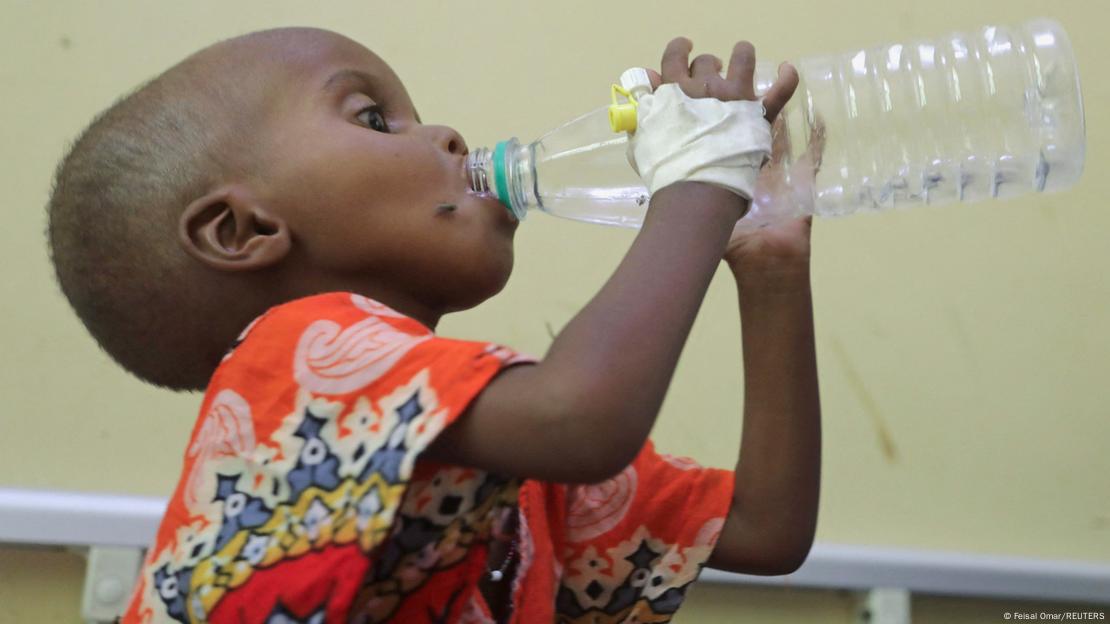
Gemma Connell, head of the Regional Office for Southern and Eastern Africa of the UN Office for the Coordination of Humanitarian Affairs (OCHA), told DW that the drought has already affected more than 36 million people.

"More than 21 million people are facing high acute levels of food insecurity, which means they do not know where their next meal will come from," Connell said, adding the 300,000 people in Somalia alone are imminently facing death from starvation.

Countries in the Horn of Africa such as Somalia are already suffering the effects of the climate crisis

Connell said the issue of unfairness needed to be highlighted above all others during the COP27. "If we look at this drought, every one of these countries — Kenya, Ethiopia, Somalia — contribute less than 0.1% of the global greenhouse gas emissions," Connell said. "Less than 0.1%! And yet it is their people who are dying as a result of the global climate crisis."
Immediate action needed

Connell said the talks in Sharm el-Sheikh presented an opportunity for African leaders to speak up on an issue that is affecting the people of the continent, and highlights that the voices of young people in particular are needed to bring about real change.

"Young people from the African continent are calling for accountability, are calling for justice. ... And I can only hope that it results in real change," Connell said.
The drought in Kenia and across the Horn of Africa is directly related to global warming

Mwangi said some change could still happen — but only if richer nations sign up to doing much more to combat the climate crisis in the Global South without shying away from paying the costs.

"We still have a chance of probably salvaging the situation," Mwangi said. "We can still reduce [emissions] in the next years, and that is the commitment that we want countries to commit to — especially the developed nations. …" he added. "But we may not be able to reverse the changes when we hit 1.5 degrees."

Connell said making funds available immediately to help regions already affected by climate change took precedence.

"Cash is a huge component of this, especially multipurpose cash that enables people to make choices in a dignified way about what they need in order to survive a crisis," she said.

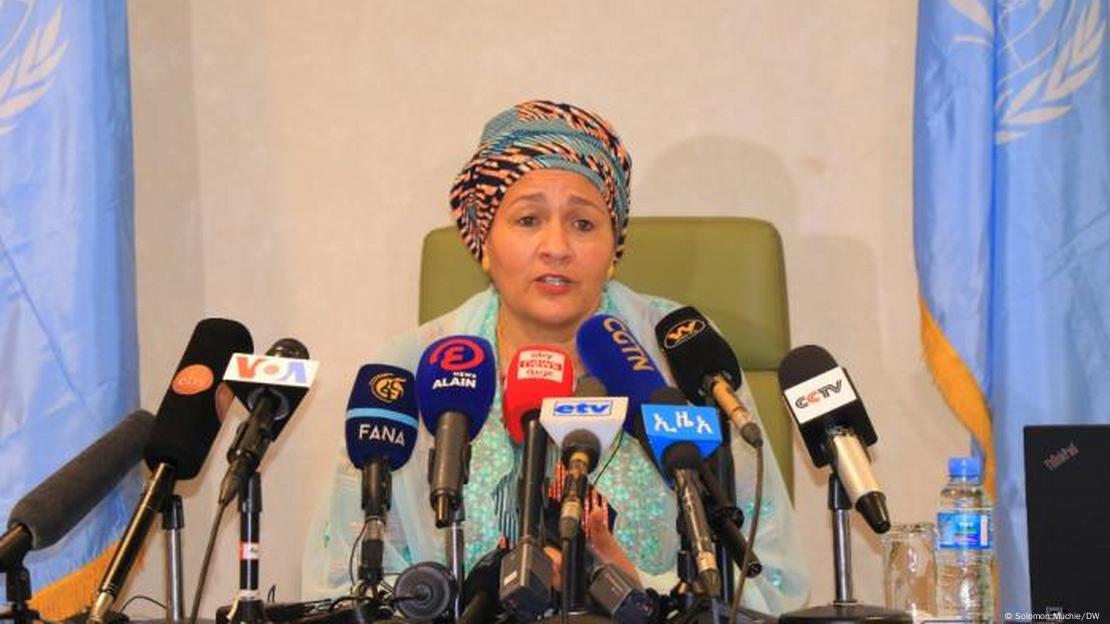
UN deputy Secretary-General Amina Mohammed wants to see Western nations keep their promises

UN Deputy Secretary-General Amina Jane Mohammed told DW earlier this year that the COP27 talks should serve as "an implementation COP," as little of the money available for climate finance found its way to Africa.

"It's happening in Africa," she said. "If we can't demonstrate commitments to Africa at this time, then really the promises are broken."Edited by Sertan Sanderson
Iran's universities under spotlight as protests persist

Universities in Iran have turned into a battleground between authorities and student demonstrators. The latest protests mirror the experiences of earlier generations.

Kersten Knipp

https://p.dw.com/p/4J9ln

In videos circulating on social media, male and female students students on Iranian university campuses are seen eating together, often outside the gender-segregated dining halls that were closed after students tore down the walls dividing men and women.

Eating together in front of the closed cafeterias is considered act of resistance. The videos are an act of protest and solidarity with anti-government demonstrations that have been going on for months in Iran.

In many videos, protesters holding placards also draw attention to fellow students who have been arrested. According to media reports, about 300 students have been detained by authorities .

The protesters appear not to be intimidated by the government's clampdown on the demonstrations.

"A student may die but will not accept humiliation," they chanted at Shahid Chamran University of Ahvaz, in the southwestern province of Khuzestan, in an online video verified by AFP.

The university students also show solidarity with Iranian schoolchildren, who are active in the protests and, as a result, paying a price.

Could Iran's protest movement pose a threat to the regime?
03:19


Schoolgirls at the Shahid Sadr Girls' Vocational School in Tehran, for instance, were recently beaten for taking part in the demonstrations, according to activists.

"Schoolgirls from Sadr High School in Tehran were attacked, strip-searched and beaten," the activist group 1500tasvir reported.

Iran's Education Ministry has denied reports that a female student was killed in the confrontation, according to the ISNA news agency.
Khomeini's mistrust of universities

Since the Islamic Revolution in 1979, Iranian students have faced pressure from the Muslim clergy.

When the Shah was overthrown, some sections of students, motivated by either Islamism or socialism, initially stood by the revolutionary leader, Ayatollah Khomeini.

But the two sides became estranged immediately after the new Islamic regime was established.

Students bore witness to how classmates who disagreed with the new leaders were kidnapped or killed by the regime's security forces. The mistrust between the two sides ran so high that the Revolutionary Council shut down all of the nation's universities in June 1980.

The decision was in line with Khomeini's distrust of students and professors. "We are not afraid of military attacks," he said. "We are afraid of colonial universities."

At the time, the regime viewed universities as the home of the "people's mujahedeen," which was the main source of opposition to the leadership.

Khomeini's supporters "removed thousands of books with 'anti-Islamic tendencies' from libraries and expelled thousands of teachers and professors from their posts labeling them 'lackeys of Western ideology,'" journalist Gerhard Schweizer wrote in his book "Understanding Iran."

Leading universities remained closed for years.

'Nothing more than a cultural revolution'

Khomeini's call had severe consequences, Mehdi Jafari Gorzini, an Iranian political analyst living in exile, told DW.

"Thousands of students were forcibly de-registered," Jafari Gorzini said. "Some fled abroad, while others were arrested and executed. Khomeini sought nothing more than a kind of 'cleansing' of the universities. In essence, this was nothing more than a cultural revolution."


Since their reopening, Iranian universities have been consistently expanded and modernized. The result is that they now have more than 4 million students enrolled, according to a study by the German Academic Exchange Service (DAAD). Modernization is also reflected in gender equality, with the proportion of female students in Iranian universities currently exceeding 50%.

According to DAAD, the Iranian university system also focuses on quality assurance and enhancement. Many Iranian scientists who were educated abroad, especially in the West, have also contributed to this development.

But, with the arrival of liberal ideas, the universities once again became centers of opposition. This was evident, for example, in July 1999.

At that time, the government decided to close the reform-oriented newspaper Salam. Students at Tehran University took to the streets in protest. Security forces then raided the dormitories on campus. At least one student was killed and hundreds were injured.

The protests soon morphed into a broader movement demanding accountability from the government. The memory of the security forces' brutality at the time is still fresh in the student milieu today, Jafari Gorzini said.

Liberal leanings and greater awareness

The students can still count on the liberal leanings of many professors. At the end of September, about 70 professors from Tehran University published an open letter to the government in the newspaper Etemad.

In it, they clearly described the political and economic grievances of the country and demanded the release of all demonstrators.

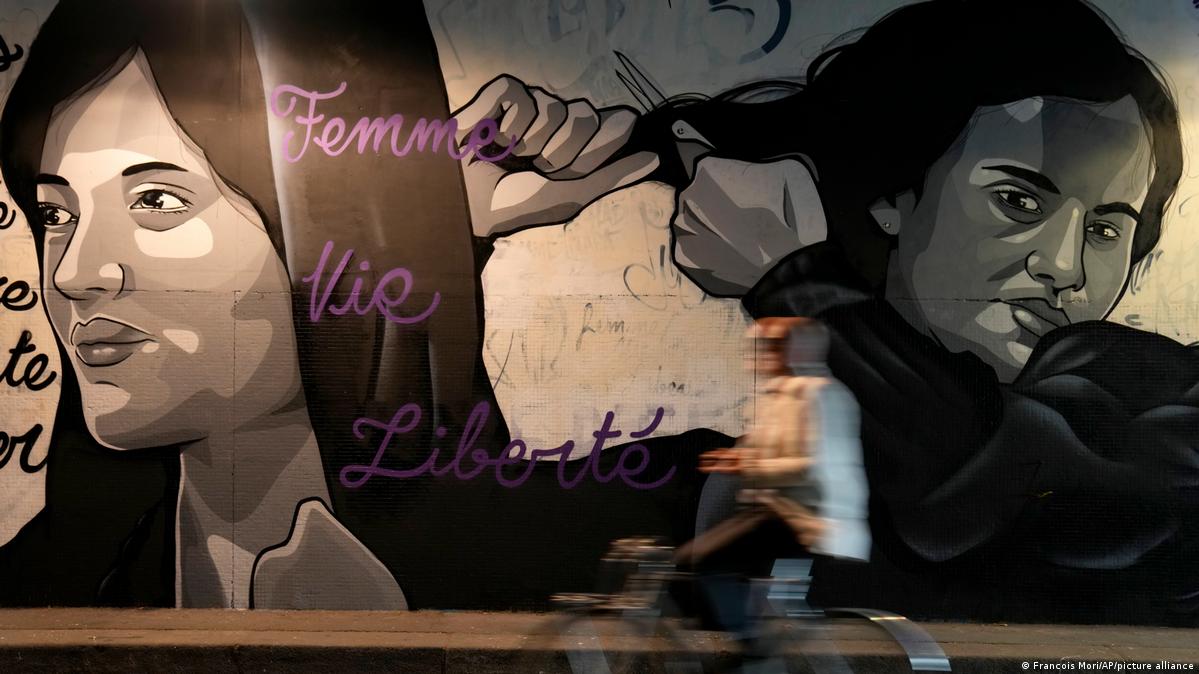
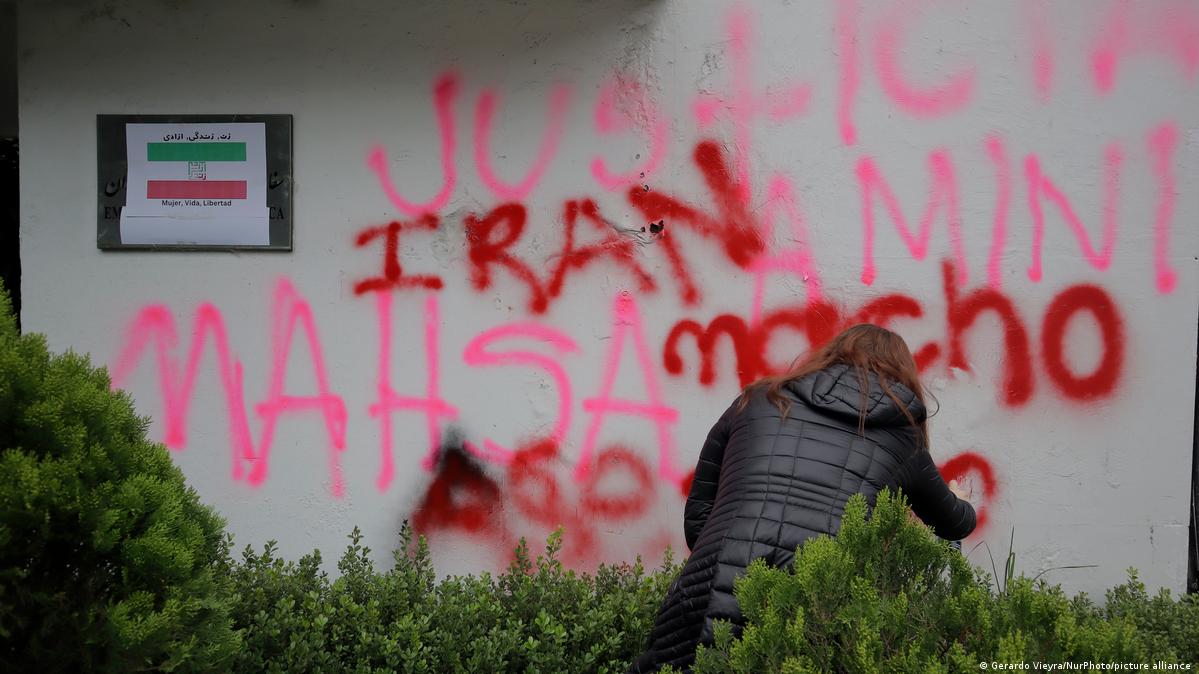
Iran protests: Rallies and graffiti worldwide in support of Iranian women

Graffiti artists all over the globe are creating art in support of the women-led anti-government demonstrations raging in Iran for the past few weeks. Solidarity rallies are also being held in various cities worldwide.

Francois Mori/AP/picture alliance


At the Iranian Embassy in Mexico City

A woman spray-paints messages against "macho country" Iran on a wall of the Iranian Embassy in Mexico City in solidarity with Iranian women and in memory of Jina Mahsa Amini — the 22-year-old woman who died in custody after she was detained by Iranian authorities for allegedly violating strict Islamic dress codes for women.Image: Gerardo Vieyra/NurPhoto/picture alliance


At a demonstration in Frankfurt

Protests calling for the fall of the Islamic regime have swept the Middle Eastern nation following the death of the 22-year-old in mid September. Authorities have denied responsibility for Amini's death but few believe them. Many women have experienced the brutality of the so-called morality police. This image shows protesters taking to the streets in Frankfurt in support of Iranian women.

Simpsons in solidarity in Milan

In Iran and abroad, many women have been cutting off locks of their hair in a gesture of support for the protest movement. On a wall in the Italian city of Milan, directly opposite the Iranian consulate, Marge

Jina Mahsa Amini to become honorary citizen of Paris

In Paris, it's not just murals that commemorate Jina Mahsa Amini and the protest movement. The French capital is also planning to posthumously make Amini an honorary citizen, Mayor Anne Hidalgo has said. A location in the city would also be named after Amini "so that no one forgets her," she noted. "Paris will always be on the side of those who fight for their rights and their freedom."Image: Francois Mori/AP/picture alliance


'Women, Life, Freedom' in Frankfurt

Artists from "Kollektiv ohne Namen" (Collective Without Names) have painted a picture of the Kurdish activist on a vacant building in Frankfurt. Next to it are the Kurdish words "Jin, Jiyan, Azadi" — women, life, freedom. This is the omnipresent slogan of the demonstrators against the Islamic regime in Tehran, borrowed from the Kurdish feminist movement in Syria.

Solidarity in Polan

The uprising of girls and women against their oppressors in Iran deserves solidarity, say many women worldwide. And they are taking to the streets around the world — as seen here in Krakow, Poland. In many places across the globe, women are disadvantaged or even discriminated against because of their gender. The idea of a feminist revolution in Iran has attracted their support.

Protest performance by art students in Tehran

Art students from Azad University in Tehran protested in front of the art faculty building on Monday, October 9. The red paint on their hands symbolizes the bloody repression of the protests by the security forces.


Desired domino effect


The protests following the death of Jina Mahsa Amini are not directed solely against the strict dress codes for girls and women. Throughout the country, demonstrators are questioning the legitimacy of the Islamic regime and chanting slogans like "Get rid of the mullahs" or "Death to the dictator," targeting the country's Supreme Leader Ayatollah Ali Khamenei.Image: NNSRoj

In the days that followed, the faculty of other universities formulated similar letters. However, this also widened the rift within the universities, as leadership roles within these institutions are held by confidants of the regime.

In addition to being well-educated, the students are also very familiar with life outside Iran's borders thanks to the new media, Jafari Gorzini said.

"Since the early 2000s at the latest, many young people, including students, have had their own blogs or webpages, and have used them to communicate with people in other countries," he said.

"This showed them how life is beyond the borders and at the same time gave them other concepts of life than the one spread by the regime," he added.

In addition, people have repeatedly tried to vote the system out of office, Jafari Gorzini said. "But that never worked, nor did attempts to initiate reforms. Even the youngest generation understood that."

They have been told by their parents the stories of failed attempts at reform, demonstrations and large protests, Jafari Gorzini said. "It is clear to this generation that everything so far has been in vain, that there can be no dialogue with the mullahs. Hence the radicalism we are experiencing right now."

This article was originally written in German.


Kersten Knipp Political editor with a focus on the Middle East