Tuesday, January 14, 2025

Germany: CDU, CSU prioritize Ukraine, defense. Voters don't

DW
January 12, 2025

During their election campaign, Germany's conservatives have prioritized defense spending and supplying more arms to Ukraine. Though they are polling well, their proposals do not reflect the priorities of German voters.


Merz (left) and CSU head Söder are divided over the issue of military support for Ukraine
Image: Michael Kappeler/picture alliance/dpa

The joint election manifesto for the Christian Democrats (CDU) and their Bavarian allies, the Christian Social Union (CSU) includes security guarantees for Ukraine that Germany could make good on along with the US and its European partners in NATO.

"Ukraine also defends us," the manifesto reads. "If Ukraine falls, there is the threat of an attack on another EU country."

The CDU and CSU consider it possible that Germany would participate in negotiations toward a ceasefire in Ukraine, even if that were to mean the deployment of Bundeswehr soldiers to keep the peace. Politicians for the parties are reluctant to talk about that part, as security is not a high priority for voters in February's election.
The Taurus question

The greatest skepticism about further arms deliveries to Ukraine comes from eastern Germany and the wealthy southern state of Bavaria.

So far, the government, led by Chancellor Olaf Scholz, of the center-left Social Democrats (SPD), has refused to supply Taurus cruise missiles on the grounds that Ukraine could use them to hit targets within Russia, which would make Germany a party to the war.

The US, the UK and France have already supplied similar longer-range weapons that allow Ukraine to strike targets across the border.

The argument that Germany should not allow itself to be drawn into the war was also used by Bavarian State Premiere Markus Söder, of the CSU, at his election campaign launch in Seeon.

But Söder did not respond to a question from DW about Taurus missiles, saying the decision would be up to the next chancellor.

Thomas Erndl, a CSU deputy who sits on the Bundestag's foreign affairs committee, told DW that "the opinion has become entrenched among the population that arms deliveries fuel war, while stopping deliveries slows it down."

"We have to contend with this mood," Erndl said.
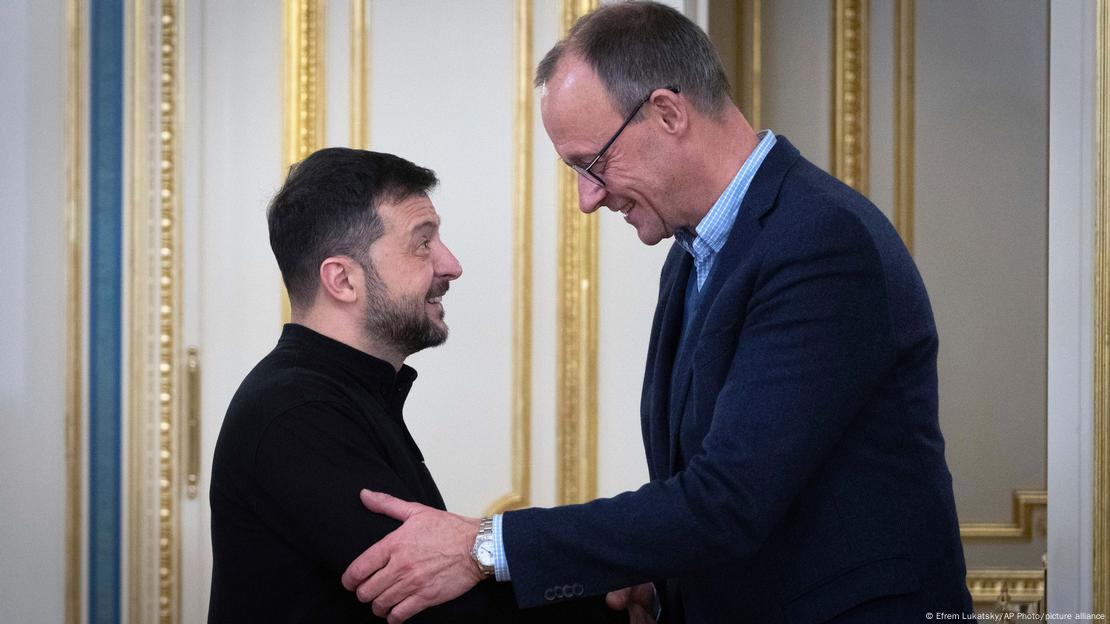
CDU leader Friedrich Merz right, pictured meeting Ukrainian President Zelenskyy
Image: Efrem Lukatsky/AP Photo/picture alliance

The CDU's candidate for chancellor, Friedrich Merz, has publicly declared his willingness to supply Taurus missiles, but only in consultation with European NATO partners. However, the CDU/CSU election manifesto stakes out no clear position on the issue.

In contrast, the neoliberal Free Democrats (FDP) are in favor of "the immediate delivery of Taurus cruise missiles," while the SPD is clearly against it.

How decisively Germany's next government will ultimately act largely depends on two factors.
Money for defense

The first has to do with the geopolitical dynamics after January 20, when Donald Trump will be sworn in as US president for the second time. Trump is likely to put considerable pressure on Germany, both economically and in terms of security policy.

Decisions would have to be made more quickly, and more money would be needed, a high-ranking CDU politician from eastern Germany told DW. "When the ceasefire in Ukraine comes," the politician said, "we will have to pay for it."

The populist-presenting parties, the far-right Alternative for Germany and the Sahra Wagenknecht Alliance, have been particularly successful with their pro-Russia stance in eastern Germany.

The CDU and CSU have stated that they will not cave to Trump's demands that Germany spend 5% of GDP on defense, noting that the United States does not spend that much either.

The policy platform states that Germany would spend 2% of GDP on defense. The parties even advocate a target of 3% in a country where the arms industry holds considerable political sway.

The SPD 'handbrake'

The second factor on which Germany's security policy depends is the question of the makeup of any future coalition government.

"If the CDU/CSU were to govern with the SPD, security policy would proceed with the handbrake on," Gustav Gressel, a former senior research fellow with the European Council of Foreign Relations whose areas of expertise include Russia and defense policy, told DW.

Gressel said he expected members of the SPD who "continue the 'peace policy,' which is actually 'peace populism,'" to join such a government.

"The SPD would then fall back into its old position and use the fear strategy to distance itself from its larger coalition partner," Gressel said.

Merz would likely face critics on foreign and security policy issues both from within the coalition through the SPD and within the CDU and CSU, he said.

CDU/CSU, Greens aligned

A coalition between the CDU/CSU and the Greens, the junior partners in the current government, could put Germany in a leading position in terms of security policy more quickly.

The Greens have done a complete U-turn on security policy since Russia's full-scale invasion of Ukraine in 2022. The party, which has many pacifists among its ranks, used to categorically reject arms deliveries to crisis regions.

Now, the Greens are among the biggest supporters of military aid for Ukraine — including the delivery of weapons systems.

CDU/CSU's policy plans

Though Taurus cruise missiles would not be a "game changer" in the war, Gressel said, they have become a powerful symbol of German angst.

Chancellor Scholz has "deliberately stirred up fear among the population with made-up arguments," Gressel said.

There is little doubt among experts and within the CDU/CSU that Germany would supply the Taurus missiles to Ukraine with Merz as chancellor as part of an overall effort to appear more robust on foreign policy than his predecessor.

This article was originally written in German.

Russia's Rosatom threatens to sue Germany's Siemens Energy
DW
January 12, 2025

Russia's Rosatom energy company is building Turkey's first nuclear power plant. But construction has been delayed because of the nondelivery of German-made parts.


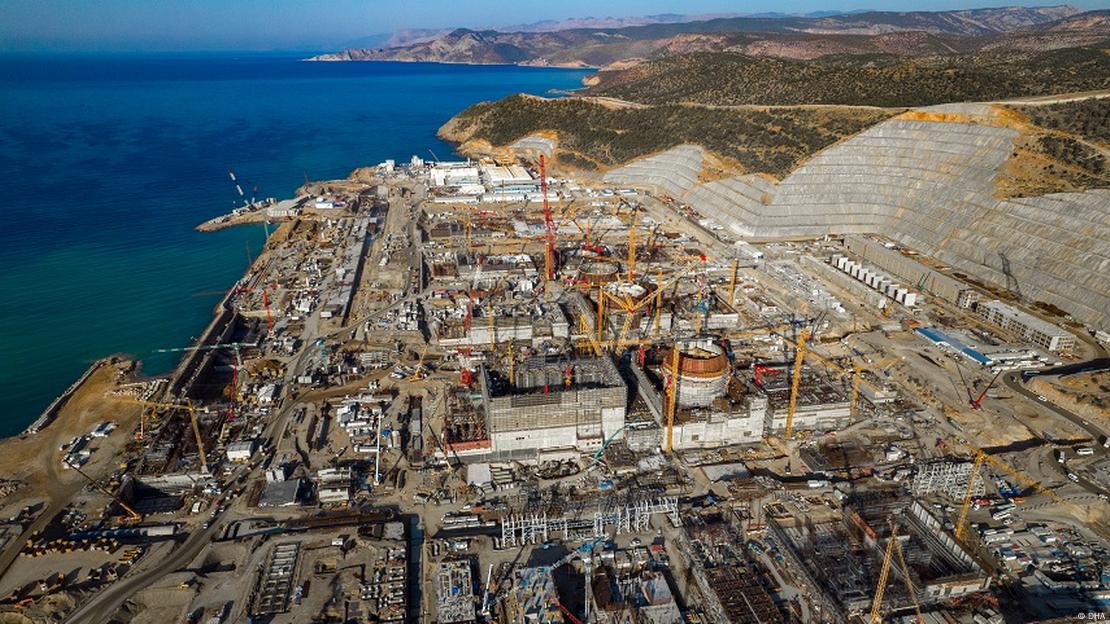
Construction of the power plant underway at Akkuyu, as at December 2024
Image: Serkan Avci/Andalou/picture alliance

The Russian state-owned energy corporation Rosatom reportedly plans to sue a German manufacturer for not delivering equipment meant for the construction of the Akkuyu nuclear power plant in southern Turkey.

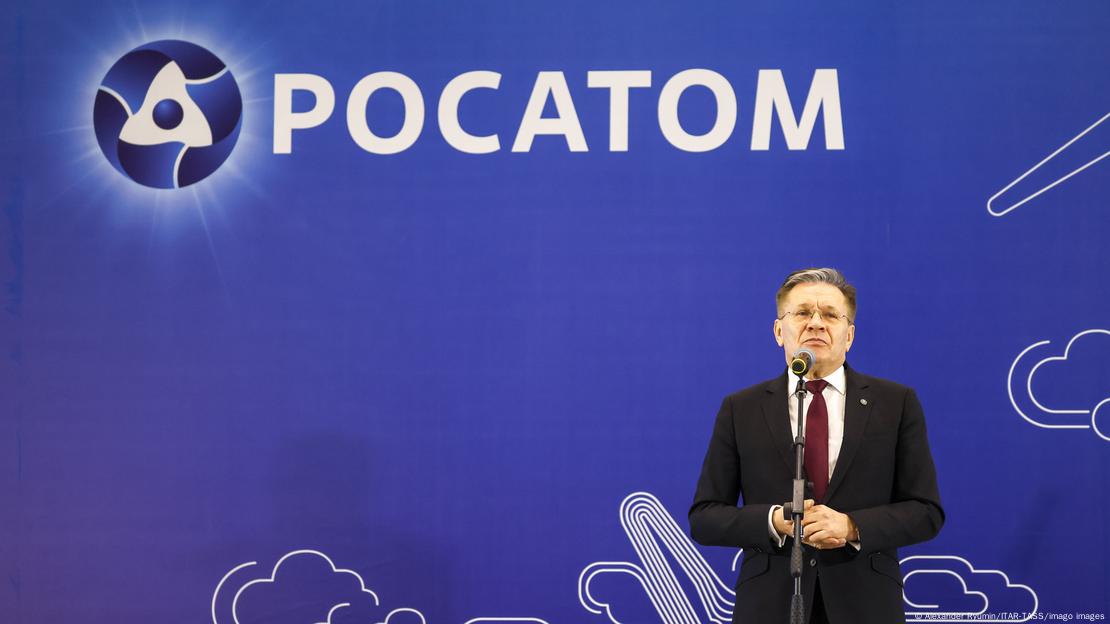
The plant would be the first of its kind in Turkey. It is also the largest energy project in Turkey's history. On January 4, Rosatom boss Alexey Likhachev made serious accusations against the German supplier and referred to German industrial giant Siemens, even though he was actually talking about another company, Siemens Energy.

"We have noticed media reports about this, but we do not currently have a lawsuit," Siemens Energy's spokesperson Tim Proll-Gerwe told DW.

Rosatom chief Likhachev has accused Germany's Siemens Energy of delaying construction in TurkeyImage: Alexander Ryumin/ITAR-TASS/imago images

Siemens Energy was previously the energy technology division of Siemens, but in 2020 it became an independent company and was listed on the stock exchange. Siemens currently owns 17% of Siemens Energy.

Proll-Gerwe confirmed that Siemens Energy was supposed to supply gas-insulated equipment for the nuclear plant's power distribution system, critical equipment needed to connect it to the Turkish power grid.

The contract to do so was signed with the Russian company Elektroavtomatika in 2020, two years before Russia's full-scale invasion of Ukraine. According to its website, the St. Petersburg-headquartered company is a regular Rosatom supplier.

Export permissions granted

Siemens Energy had been waiting a "long time" for export permissions from the Federal Office for Economic Affairs and Export Control, or BAFA, Proll-Gerwe told DW, adding that the company adheres to all local regulations.

The necessary permits for exporting the components have, in the meantime, been obtained, Proll-Gerwe said, adding that Siemens Energy could meet its contractual obligations in Akkuyu "if the customer still wants."

However, substitute products have apparently already been found for the delayed Siemens Energy components, and Rosatom could be seeking compensation for its losses. That's what Likhachev seemed to allude to in comments about additional expenses and the "adjustment of installation dates" for the power plant.


It appears the Russian firm would like to blame construction delays in Turkey at least partially on Siemens Energy and on German bureaucracy. The contract for the construction of nuclear power plants in Turkey was first signed in 2010. The cornerstone for the first section of the plant was laid in 2018, and the first reactor is supposed to go online, at the earliest, this year. The whole project is supposed to be finished by 2028.

The substitute components in Turkey appear to be Chinese. Last September, Turkish Energy Minister Alparslan Bayraktar said Rosatom had ordered alternative parts from China. According to Russian news agency Interfax, Russian Deputy Prime Minister Alexander Novak explained that substitute components had been purchased from "friendly countries" and that some had already reached the power plant in Akkuyu.

In the time it took for German authorities to approve the exports, permission to export other equipment was granted much faster, German news outlet ntv reported in September 2024.

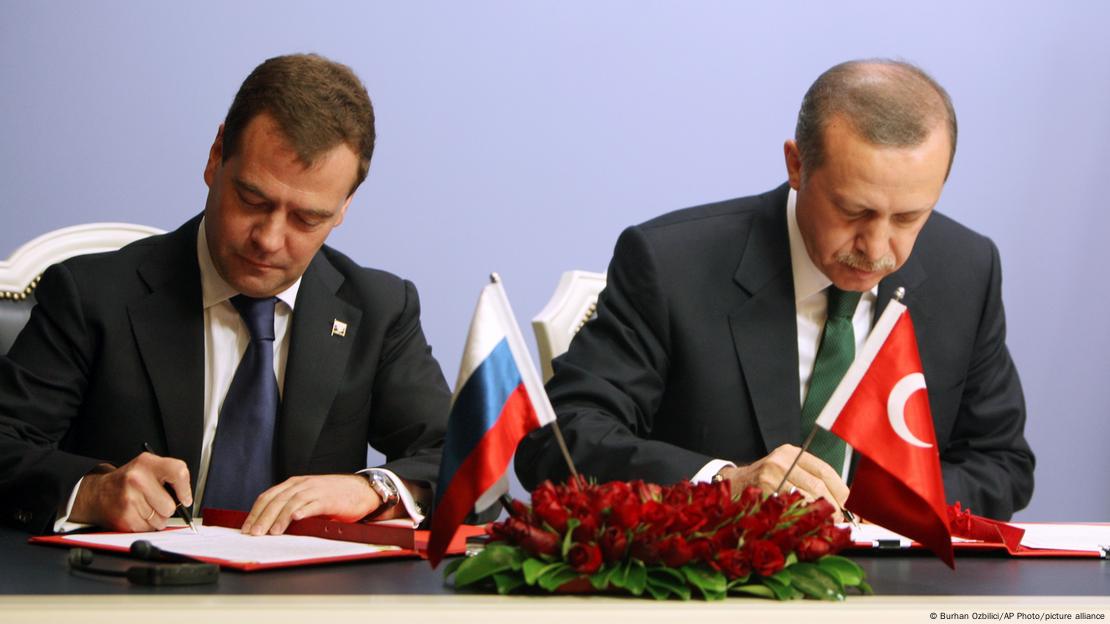
The contract between Rosatom and Turkey was first signed in May 2010 by former Russian President Dmitry Medvedev (left) and Turkish President Recep Tayyip Erdogan
Image: Burhan Ozbilici/AP Photo/picture alliance

Security issues?

But is it permissible for German companies to work with Russian businesses in a sector as sensitive as nuclear energy, given current tensions between Russia and the European Union?

"Siemens Energy ended all activities in Russia earlier and no longer has any contractual relationships there," Siemens Energy spokesperson Proll-Gerwe told DW. "Siemens Energy now only has to fulfill older, outstanding contracts, concluded before the start of the war in Ukraine. But, of course, this should always take place in accordance with any applicable sanctions and export control restrictions."


The Akkuyu nuclear power plant is in southern Turkey, sitting directly on the Mediterranean coast
Image: DHA

If BAFA has now issued an export license, it means Siemens Energy's equipment delivery to the Turkish nuclear power plant violates neither German export rules nor EU sanctions on Russia.

It seems unlikely, however, that Rosatom would replace Chinese deliveries with the delayed German equipment. So, there is a chance Siemens Energy could end up in court across from the Russian energy firm.

This story was originally published in Russian.
'Dubai chocolate' must come from Dubai, German court rules

A German court has had its say in the trademark battle over what legally constitutes "Dubai chocolate." Discount chain Aldi had been selling "Alyan Dubai Handmade Chocolate" — which is made in Turkey.


Dubai chocolates are filled with pistachio cream and crispy pastry threads
Image: Wolfgang Maria Weber/IMAGO

DW
January 12, 2025

A German court has banned a supermarket from selling a product as "Dubai chocolate," ruling that the trendy confectionary may only be labeled as such if it actually comes from the Emirate.

The court in the western city of Cologne ruled that the discount supermarket Aldi could no longer sell its "Alyan Dubai Handmade Chocolate" since the product in question was actually made in Turkey.

Aldi argued that this was made clear on the reverse label, but the court concluded that the product's name could lead consumers to assume "that the product is actually produced in Dubai and imported to Germany."

What's in a name?

The case had been brought by German candy importer Andreas Wilmers, who sells "Dubai chocolate" made by the brand "Fix" in Dubai.

In December, Wilmers filed similar complaints against Adli discount rival Lidl and Swiss confectioner Lindt that are ongoing.

Lidl has argued that the term "Dubai chocolate" merely refers to a type of chocolate with a creamy pistachio and "kadayif" filling, not to chocolate that specifically comes from Dubai.

The Association of the German Confectionary Industry (BDSI) also argued that "Dubai chocolate" could be produced anywhere in the world.

The court in Cologne disagrees, but Aldi could still appeal.

mf/lo (AFP, EPD)


Germany investigating suspected Russian drones over air base

Manching Air Base recorded at least 10 mysterious drone sightings in just one night. Authorities suspect that the activity is related to Russia's war in Ukraine.


DW
January 12, 2025

Authorities in Germany's southern state of Bavaria confirmed on Monday that up to 10 mysterious drones had recently been spotted above an air base.

Investigators have not ruled out espionage as a motive behind the drone flights, floating the possibility that they are connected to Russia's invasion of Ukraine.

Bavaria's State Criminal Police Office (LKA) said that officers had been able to detect at least ten drones flying above Manching Air Base near the city of Ingolstadt on Sunday evening.


String of similar incidents

Similar events were reported in December at Manching and nearby Neuburg an der Donau. The LKA believes the drone operators are trying to take pictures of military installations.

Later on Monday, it was announced that the Munich Public Prosecutor General's Office would be taking over the investigation.

Manching is used to test the airworthiness of new aircraft ordered for the German military.

Also in December, drones of unknown origin were spotted over Ramstein, the US air base in Germany.

es/lo (dpa, Reuters)

German-Iranian woman Nahid Taghavi released from prison

Amnesty International and Nahid Taghavi's family say she has been released from an Iranian prison after over four years. The women's rights activist had been sentenced to over 10 years for "propaganda against the state."


Women's rights activist Nahid Taghavi was arrested in October 2020
Image: Mariam Claren/dpa//picture alliance

DW
January 12, 2025

Women's rights activist Nahid Taghavi returned to Germany after over four years in custody in Iran late on Sunday, her family and Amnesty International announced early Monday.

According to Amnesty, she was tortured and put in solitary confinement, spending over 1,500 days in jail in Iran.

"It's over. Nahid is free! After more than 4 years as a political prisoner in the Islamic Republic of Iran my mother Nahid Taghavi was freed and is back in Germany," Taghavi's daughter Mariam Claren wrote online, posting an image of her and her mother at an airport.


Taghavi was arrested in October 2020 on a visit to Iran.

Her more than 10-year sentence for spreading "propaganda" and for membership of an illegal group was passed down in August 2021.
Daughter thanks supporters, says justice served

Mariam Claren had been campaigning for her mother's release while in Germany.
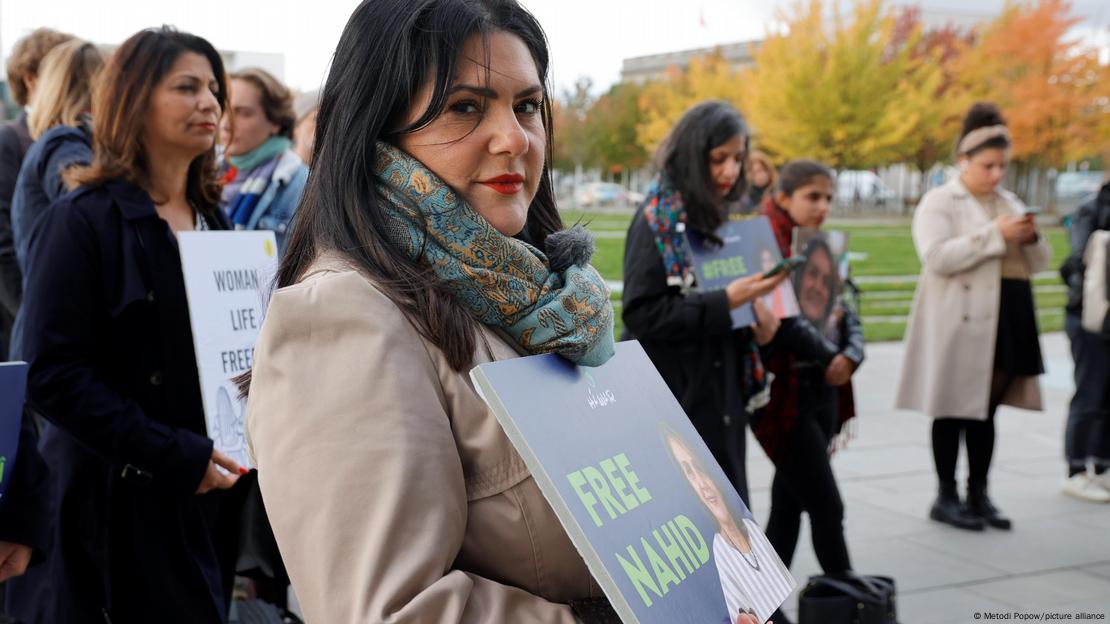
Taghavi's daughter Mariam Claren had publicly campaigned for her release, at events like this one in 2023 in Berlin
Image: Metodi Popow/picture alliance

"My mother is finally home," Claren said on Monday. "Mere words can't describe our joy. From Berlin to Tehran: your solidarity helped to achieve justice."

In Germany alone, more than 30,000 signatures were gathered demanding her release in recent years, with demonstrations in Berlin, Cologne and elsewhere.

However, Claren also said her mother was one case of many.

"Many more non-violent political prisoners like my mother are still in Iranian jails," she said. "The impunity of the Iranian authorities must come to an end."

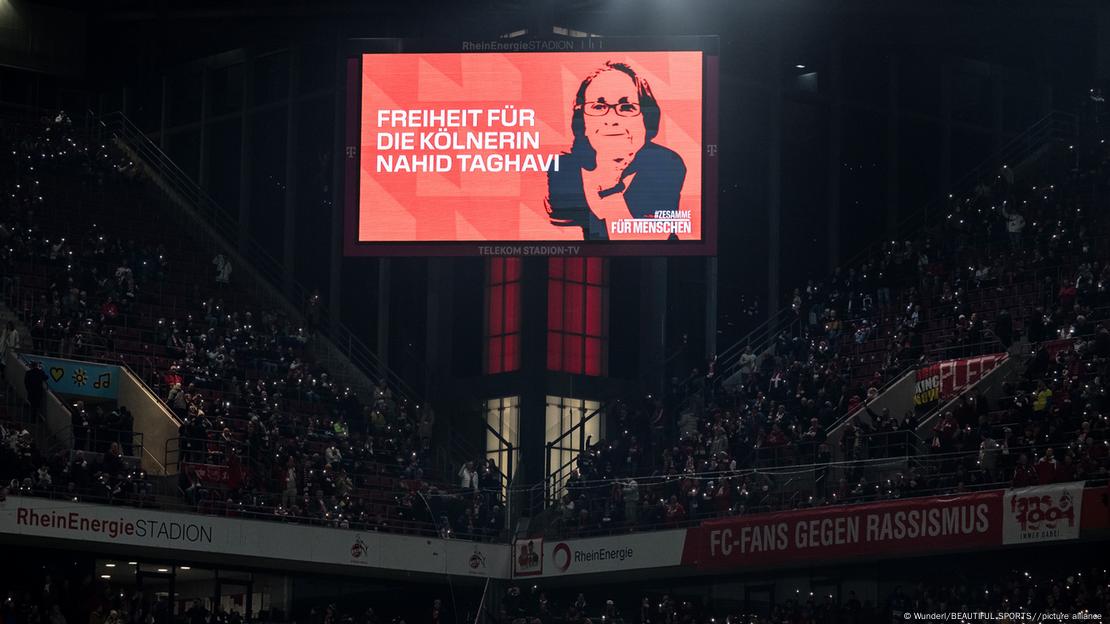
Cologne football club also publicized Taghavi's case, with this big screen appeal for 'freedom for Cologne's Nahid Taghavi'
Image: Wunderl/BEAUTIFUL SPORTS//picture alliance

Taghavi, an architect who's lived in Cologne since 1983, was a vocal advocate of democratic and particularly women's rights in Iran.

The speaker of the Bundestag parliament, Bärbel Bas, said in a prior appeal for her release that she was "arrested as a political prisoner solely because of her peaceful realization or her rights to free expression and freedom of assembly."

European countries pressing Iran on prisoners


Late last week, both Switzerland and France summoned Iranian officials to protest their nationals in prison, a day after Iran reported the "suicide" of a Swiss national in jail.

A few days before that, another prominent prisoner in Iran, Italian journalist Cecilia Sala, was freed.

Like Taghavi, Sala had spent time in Tehran's notorious Evin Prison.

The fate of a German-Iranian US resident, Jamshid Sharmahd, was also in sharp focus late last year.

First Iran reported that the activist had been executed, prompting consulate closures and other reactions in Germany, before claiming around a week later that Sharmahd had in fact died shortly before a scheduled execution.

msh/ab (AFP, dpa)

DEUTSCHE WELLE

The unions have called for a strike at DW from January 14 to 15. We regret that current programs may be affected. The right to strike is protected by German law.


Monday, January 13, 2025

Germany: Trump's 5% NATO demand too costly, Scholz says

German Chancellor Olaf Scholz has insisted that he is committed to NATO spending, but he says Donald Trump's demands are too high. One other NATO member, however, has welcomed the incoming US president's suggestion.


German Chancellor Olaf Scholz has dismissed demands from US President-elect Donald Trump that Germany and other NATO allies increase defense spending to at least 5% of gross domestic product (GDP).

"Five percent would be over €200 billion ($204 billion) per year — the federal budget is not even €500 billion," Scholz said at a campaign event in the western German city of Bielefeld on Monday.

"That would only be possible with massive tax increases or massive cuts to many things that are important to us," he said, insisting that he would not countenance cuts to pensions, local government or transport infrastructure.

Germany only reached the current NATO target of 2% of GDP last year, the first time it had done so since the end of the Cold War, and Scholz promised that the country would maintain that level.

"I guarantee that we will continue to spend 2% of our economic output on defense," he said. "Anyone who says that's not the way to go must also say where the [extra] money will come from."

During his famous "Zeitenwende" (historical turning point) speech to the German parliament in February 2022 in the immediate aftermath of Russia's full-scale invasion of Ukraine, Scholz announced a €100bn special fund for Germany's own underfunded and underequipped armed forces, known as the Bundeswehr.

But German defense expenditure remains restricted by a tight budget situation and strict constitutional rules regarding deficit spending.

Pistorius: '2% can only be the beginning'

Nevertheless, German Defense Minister Boris Pistorius contradicted Scholz somewhat by saying that military spending should increase.

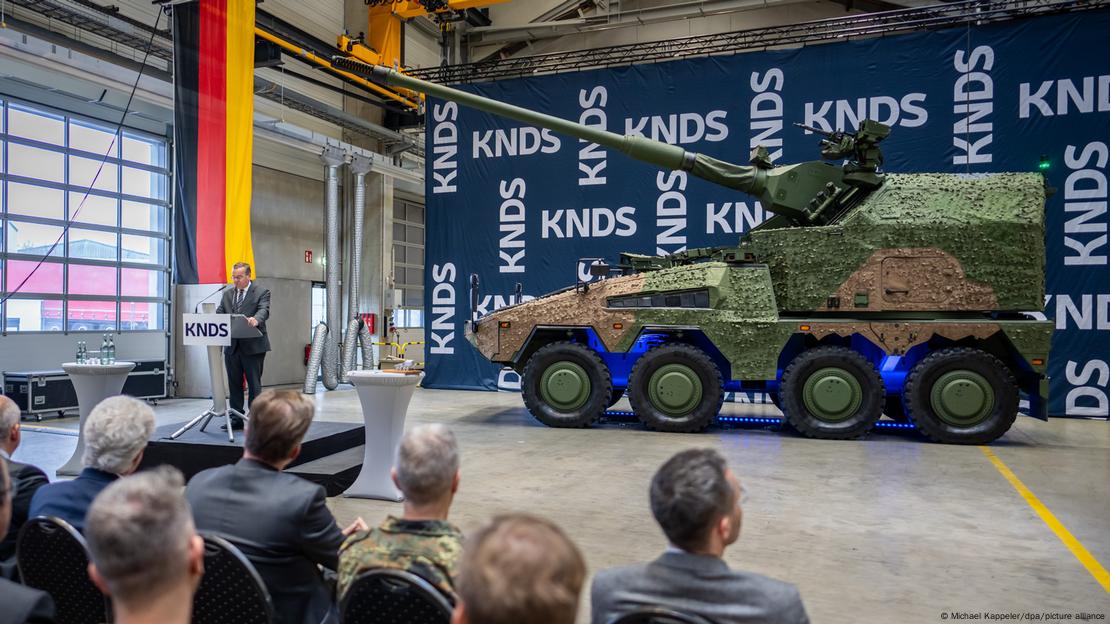
"Increasing the war capability of the Bundeswehr in the coming years is the top priority of the hour," he said in the central German city of Kassel, where he was handing over the first of dozens of advanced new German-built howitzers to Ukraine.

German Defense Minister Boris Pistorius speaking at the handover of dozens of howitzers to UkraineImage: Michael Kappeler/dpa/picture alliance

Pistorius, of Scholz's Social Democratic Party (SPD), has been topping polls as one of the most popular German politicians and was recently tipped to replace Scholz as the party's chancellor candidate for February's snap elections, but withdrew.

"We will continue on this path in 2025," he continued. "And we know that in the following years, we will have to invest even more in our security. Two percent can only be the beginning. It will have to be significantly more if we want to continue at the pace and to the extent that we have to."

Poland: Trump demands are a 'wake-up call'

Other key NATO figures have also expressed tacit support for Trump's suggestion, even if 5% may not be feasible in the immediate term.

In an interview with the British Financial Times newspaper, published on Mondy, Polish Defense Minister Wladyslaw Kosiniak-Kamysz said Trump's demands were an "important wake-up call" for NATO members.

"He should not be criticized for setting a really ambitious target because otherwise there will be some countries that will continue to debate whether more spending is really needed," he said.

Poland is NATO's biggest contributor in terms of relative defense spending, committing around 4.2% of GDP to its military in 2024, a figure which Warsaw intends to increase to 4.7% in 2026. The United States itself "only" spends around 3.37% of GDP on defense.

Other leading contributors include the Baltic States Estonia (3.43%), Latvia (3.15%) and Lithuania (2.85%) and Finland (2.41%) which, like Poland, share borders either with Russia, Russian exclave Kaliningrad or Russian ally Belarus.
Sierra Leone declares public health emergency over mpox

The West African nation has detected two cases in less than four days, spurring health authorities to take action to limit the spread of the viral disease.


A new strain of the virus spread to at least six African countries last year
Image: Moses Sawasawa/AP Photo/picture alliance


Sierra Leone declared a state of emergency Monday after the country reported its second case of mpox in less than four days, health authorities said.

Neither patients were known to have been in contact with infected animals or other sick individuals, authorities said, adding that both individuals were receiving treatment at a hospital in the capital, Freetown.


WHO declared outbreak a global health emergency in 2024

The World Health Organization (WHO) declared mpox, formerly known as monkeypox, a global health emergency in August 2024, because of the rapid spread of the new strain of the virus.

The virus causes fevers, headaches and painful boils on the skin. It can spread from person to person through close physical contact, including sexual intercourse.

Congo has borne the brunt of the ongoing outbreak of mpox, with a vast majority of the roughly 43,000 suspected cases and 1,000 deaths across the continent, occurring in the central African country.

The new strain circulating this time has raised concerns because it is believed to transmit more easily than other strains and evidence suggests that it causes a more severe version of the disease.

The strain is different from the kind of mpox that spiked in 2022, which mainly affected men. The WHO declared an emergency at the time and it lasted until mid-2023. Vaccinating vulnerable groups brought it under control.

Sierra Leone was previously the epicenter of the 2014 Ebola outbreak, the deadliest in history.

rm/jsi (AP, AFP)
French court to rule on fate of adopted wild boar 'Rillette'

A French court convened on Monday to rule on the fate of a wild boar adopted by a horse-breeder in 2023. The sow, known as "Rillette", has become a cause célèbre in France and abroad after officials declared her a health and safety risk and threatened to put her down.

Elodie Cappe with "Rillette", a wild boar she rescued as a piglet in 2023.
 AFP - FRANCOIS NASCIMBENI
RFI


Wild boars are generally viewed as pests in France – farmers say they damage crops, health officials argue they spread disease. And they can also cause fatal car accidents by crossing the road at inopportune moments.

They're hunted for their meat, which most often finds its way into sausages or a kind of spread known as "rillettes".

But one wild boar has captured the hearts of animal lovers both in France and abroad after local authorities in the Aube region of eastern France threatened to put her down.

Horse-breeder Elodie Cappé first spied the animal as a lone piglet rummaging around the bins among rotting vegetables in April 2023. The sow, named "Rillette" grew up alongside Cappé on her farm near Chaource.

"She's an integral part of the family," Cappé told Le Figaro.

French authorities, however, have taken a dim view of the situation.

They argue that keeping non-domesticated animals is unlawful and that the risk of spreading disease is a threat to public safety.

Rillette will be put down unless a "suitable place" can be found for her.

France considers extending the boar hunting season


Bardot to the rescue

What could have remained a local affair turned global after actress and animal rights activist Brigitte Bardot threw her weight behind a petition to save the sow.

Launched in early December, the petition has garnered more than 187,000 signatures.

“Help! I demand that Rillette be spared. What monsters are asking for her euthanasia?...This little animal has the right to live, it’s even a duty, she’s innocent,” Bardot raged in a hand-written note published online.

"Euthanasia is a crime! We are governed by murderers!"

There've been protests, even a song in Rillette's honour.

On Sunday some 500 people gathered in Chaource for a silent march to prevent public health officials getting their way.

Cappé says she's received "letters of support" from fond followers not just in France but from many different countries.


French pensioner ready to die to stop pet wild boar being seized


Passing the buck


When Cappé found the piglet, she says she tried to hand her over to animal sanctuaries and parks but they refused to take her. "They passed the buck," she told France 3 public television.

The horse breeder built an enclosure on her farm to comply with regulations, but that didn't satisfy the authorities.

"The legislation is justified by the health risks entailed in keeping such animals... there is a high risk of diseases spreading to farms or domestic animals," the local prosecutor said, citing swine fever and bovine tuberculosis. 
BULLSHIT 💩 THESE ARE HERD DISEASES NOT THAT OF A SINGLE BOAR.

In late December, Cappé was ordered to hand the animal over to a company that trains animals to appear on film and television.

She refused, saying it was "shameful" to want to send Rillette there for financial gain.

The courts are due to render their decision this week. Cappé risks three years in prison and a €150,000 fine. Rillette risks far more.


REALLY BAD IDEA

Zelensky says he discussed idea of Western  troops in Ukraine with Macron

Ukrainian President Volodymyr Zelensky said he had discussed the idea of Western "contingents" being deployed in Ukraine with his French counterpart Emmanuel Macron on Monday. Zelensky did not give further details about what these "partner contingents" might entail.


13/01/2025 - 
FRANCE24
By: NEWS WIRES
France's President Emmanuel Macron and Ukraine's President Volodymyr Zelensky pose before a meeting in Brussels, Belgium on December 18, 2024. © Nicolas Tucat, Reuters


Ukrainian President Volodymyr Zelensky said he spoke with his French counterpart Emmanuel Macron on Monday and discussed the idea of Western "contingents" being deployed to Ukraine.

The Ukrainian leader did not say whether he was talking about the West sending combat troops or peacekeepers as part of a settlement to end the nearly three-year war with Russia.

"Today I spoke with the president of France. It was a rather long and detailed conversation. We discussed defence support – various forms of defence, arms packages for Ukraine," Zelensky said in his evening address.

"We also discussed the deployment of partner contingents and the training of our military," he added.

Macron has floated the idea of sending Western troops to Ukraine before, including last month when he and Polish Prime Minister Donald Tusk discussed the possibility of stationing peacekeepers there in the event of a ceasefire.

Moscow accelerated its advances in Ukraine last year, as Kyiv's overstretched army suffered from exhaustion and a lack of manpower.

US President-elect Donald Trump has promised to bring a swift end to the fighting when he enters office next week, raising fears in Ukraine that it will be forced to make major territorial concessions in exchange for peace.

(AFP)