First fuel produced for molten salt reactor experiment
Idaho National Laboratory has launched full-scale production of enriched fuel salt for the world's first test of a molten chloride salt fast reactor - technology that could be deployed as soon as the 2030s for both terrestrial and maritime applications.
_33584.jpg)
The Molten Chloride Reactor Experiment (MCRE) project - a public-private collaboration between Southern Company, TerraPower, CORE POWER, and the US Department of Energy (DOE) - is planned to be the first reactor experiment hosted at the Laboratory for Operation and Testing in the United States (LOTUS) test bed being built at the lab by the DOE's National Reactor Innovation Center. It uses liquid salt as the fuel and the coolant, allowing for high operating temperatures to efficiently produce heat or electricity.
The Molten Chloride Reactor Experiment will need 72 to 75 batches of fuel salt to enable it to go critical - giving Idaho National Laboratory (INL) its largest fuel production challenge in 30 years, according to the DOE Office of Nuclear Energy. The fuel salt production process began in 2020, but early attempts yielded far below the goal of 90% conversion of uranium metal into uranium chloride and production of 18 kg of fuel salt per batch. But a breakthrough in 2024 - when the team developed a new step to improve uranium utilisation - eventually led to the achievement of 95% conversion and full-batch production. They have since demonstrated they can produce a batch in as little as one day, according to INL.
The first fuel salt production batch was delivered at the end of September, with four further batches to be produced by March 2026, supporting a key national goal to advance nuclear energy outlined in an executive order issued earlier this year by President Donald Trump, the lab said.
"This is the first time in history that chloride-based molten salt fuel has been produced for a fast reactor," said Bill Phillips, INL's technical lead for salt synthesis. "It's a major milestone for American innovation and a clear signal of our national commitment to advanced nuclear energy."
The US Department of Energy released a final environmental assessment and draft finding of no significant impact for the design, construction, and operation of the MCRE, to be built at INL by Southern Company, in 2023.
Results from the Molten Chloride Reactor Experiment will help inform the commercial deployment of TerraPower and Southern Company's Molten Chloride Fast Reactor that could be deployed in the 2030s. But it also has significant implications for the maritime industry, according to Don Wood, senior technical advisor for MCRE. "Molten salt reactors could provide ships with highly efficient, low-maintenance nuclear power, reducing emissions and enabling long-range, uninterrupted travel. The technology could spark the rise of a new nuclear sector - one that is mobile, scalable and globally transformative," he said.
Deep Isolation completes three-year waste canister project
Project UPWARDS has culminated in the manufacture, physical testing and validation of a disposal-ready Universal Canister System for used nuclear fuel and high-level radioactive waste from advanced reactors.
_30903.jpg)
The project's name stands for Universal Performance Criteria and Canister for Advanced Reactor Waste Form Acceptance in Borehole and Mined Repositories Considering Design Safety. It included the development of waste form acceptance criteria, and integrated safety and performance assessments across multiple repository types. The project was carried out by Deep Isolation in partnership with the University of California, Berkeley, Lawrence Berkeley National Laboratory, and NAC International, with grant funding from the US Department of Energy's ARPA-E initiative.
The first prototype canister was fabricated in conjunction with Pennsylvania-based R-V Industries, Inc. Testing of the Universal Canister System at the Deep Borehole Demonstration Center in Texas has provided evidence of mechanical integrity and operational viability in simulated real-world geologic conditions which Deep Isolation said has provided a rare level of physical validation for a nuclear waste disposal system.
The Universal Canister System is designed to accommodate a range of advanced reactor waste streams, including vitrified waste from reprocessing, TRISO spent fuel, and halide salts from molten salt reactors. It is compatible with modern dry storage and transport infrastructure, and meets performance and safety requirements across both borehole and mined repository options, which gives greater flexibility and reduced uncertainty in future waste disposition, the company says.
The results from Project UPWARDS provide a strong technical foundation which is expected to support future regulatory engagement, pilot deployment, and commercialisation efforts, the company said.
"By fabricating and testing a universal, triple-purpose canister that is engineered for storage, transportation, and disposal of nuclear waste in multiple repository types, we have delivered a flexible and technically robust solution that has undergone extensive testing and is intended to support future real-world deployment," said Jesse Sloane, Executive Vice President of Engineering at Deep Isolation.
The Universal Canister System has been developed by Deep Isolation in collaboration with NAC International Inc. NAC CEO Kent Cole said the company is "eager to advance the integration of this exciting innovation into our existing licensed systems for storage and transportation of spent nuclear fuel and to partner with Deep Isolation in commercialising it around the world".
‘Philanthropy can help nuclear energy growth in emerging economies’
The Role of Nuclear Energy in Powering Universal Energy Abundance for Emerging Economies, carried out by Bayesian Energy and Radiant Energy for the US-based Rockefeller Foundation, included Brazil, Ghana, India, Nigeria, the Philippines, Rwanda and South Africa in its assessment.
Ashvin Dayal, Senior Vice President, Power, at the Rockefeller Foundation, said it "offers an empirically grounded perspective on the conditions under which investing in nuclear power makes economic sense, and specific actions that philanthropy can take to spur the adoption of nuclear technologies, including small modular reactors (SMRs), within the global energy system".
The report says that "under the right policy and regulatory conditions, nuclear power - including small modular reactors - could play a more meaningful role in these countries' energy futures than previously assumed".
"Rather than solely focusing on Levelised Cost of Energy, we use a comprehensive energy systems modelling framework that evaluates total system costs. Our modelling shows that by 2050 nuclear energy represents 10-20% of generation in cost-optimal pathways, lowering total system costs by 2-31% compared to renewables only trajectories," the report says.
It adds that "the firm output of nuclear power lessens the need to overbuild solar and storage to reach a zero-carbon system. Compared with pathways that rely solely on renewables, scenarios with nuclear decrease the total rollout of solar, storage, and transmission by 9-26%, 19-38%, and 12-27%, respectively, across all eight countries. This is a critical point for EMDE (Emerging Markets and Developing Economies) facing land, finance, and supply chain constraints".
Rajiv J Shah, President of the Rockefeller Foundation, said: "As global energy demand grows, it's never been more urgent to explore new technological pathways for emerging economies to access power and unlock opportunity for their people. This report demonstrates how nuclear energy can play a critical role in meeting that need with clean, continuous power."
The study combined Bayesian Energy’s systems modelling "with structured qualitative research and expert interviews to assess the potential for nuclear deployment" across the eight countries which have a combined population of more than two billion people. The models looked at power systems scenarios with and without nuclear.
Key findings included that renewables and nuclear are complementary technologies rather than rivals and that enabling factors are needed to tackle financial, institutional and social barriers that may be identified.
It also said philanthropy in this field had been "long overlooked" but there was a "catalytic role that philanthropy could play - despite its historical absence from this sector - in enabling early adoption, including supporting regulatory readiness, strengthening public engagement, facilitating access to international expertise, and helping governments de-risk investment decisions".
It said nuclear technology "delivers broader socio-environmental benefits, aligning closely with philanthropy's many development and climate objectives" and said philanthropy could target the main obstacles identified, which "fall under the categories of government efficacy, public engagement, and nuclear financing - in the broader energy ecosystem, philanthropy has a proven track record of delivering strong impact in these areas".
Aman Majid, co-founder of Bayesian Energy, said: "Our modelling shows that nuclear can work with renewables and storage, not against them. Pathways with nuclear still rely on major renewable buildouts, but require far less storage and transmission. That means billions of dollars in avoided costs for countries where every dollar counts - along with less land use, fewer transmission lines, and fewer permitting challenges. But those benefits only materialise if nuclear projects can be built on time and on budget and that’s where the hard work begins."
Bilibino’s units being shut down for decommissioning
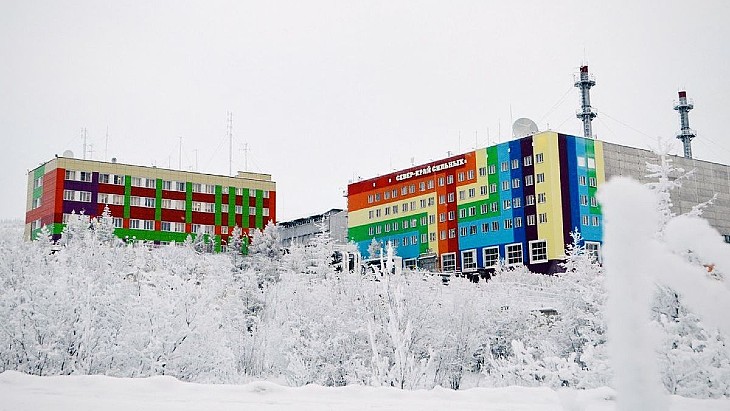
The first of the three 12 MWe EGP-6 light water graphite-moderated reactors to be taken offline was Bilibino Unit 2. Unit 3 is scheduled to be shut down on 11 December, with Unit 4 following on 22 December. The first unit was shut down in 2018 and its used nuclear fuel removed to a storage pool.
Bilibino Nuclear Power Plant, in Russia’s Arctic north east, has been operating for 50 years in the permafrost zone, with its reactors operating for a combined 190 reactor-years, generating 11.6 billion kWh of electricity.
Decommissioning is expected to last about eight years, with Andrey Kuznetsov, Chief Engineer of Bilibino NPP, saying: "It will begin with obtaining a Rostekhnadzor licence and will conclude with the full implementation of the work in accordance with the design documentation. Specialists will need to carry out a comprehensive range of operations, including spent fuel removal, dismantling equipment and structures, and waste management - all of which will require decades of work."
The beginning of full site rehabilitation is expected to occur from around 2054.
Rosatom said that Bilibino's decommissioning experience will be unique, in terms of both the northern conditions and also because it is the first such Russian site to shut down its power units simultaneously. Unloading of the used nuclear fuel is expected to last about two years.
Its capacity has been replaced by the floating nuclear power plant (FNPP), the Akademik Lomonosov, which has a capacity of 70MW and which will be providing electricity and heat to the region.
Konstantin Kholopov, Director of the Bilibino NPP, said: "We've been preparing for the transition to this new reality for the NPP and the town of Bilibino for years: a replacement power centre and other infrastructure have been built and are already operational. Furthermore, electricity will be supplied to us from Pevek, where the FNPP is located: even during the site selection stage, its capacity was planned to be used to supply power to Bilibino, among other cities."

No comments:
Post a Comment