Wednesday, January 22, 2025


Trump Withdraws All Federal Waters From Future Offshore Wind Leasing
LIKE ALBERTA CUTTING NOSE TO SPITE FACE

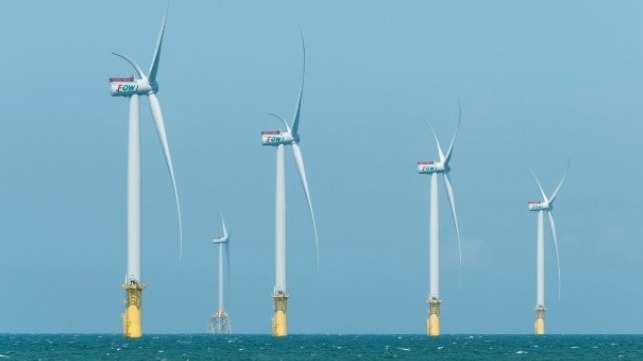
Wind turbines
iStock

Published Jan 20, 2025 10:00 PM by The Maritime Executive


In an executive order signed on the first day of his new term, President Donald Trump used the Offshore Continental Shelf Lands Act (OCSLA) to withdraw all federal waters from future offshore wind leasing. The ban does not apply to existing leases, but it prohibits any further auctions, ending the Biden administration's plans for new lease sales off southern Oregon and the U.S. Gulf Coast

In the order, Trump said that his decision stemmed from a desire to keep energy costs for consumers low and maintain a robust fishing industry - factors that have driven criticism of the offshore wind industry on the East and West Coast.

In response, offshore wind proponents warned that a shutdown of wind leasing could endanger thousands of U.S. jobs, put at risk $1.8 billion in Jones Act shipbuilding orders, and slow down a supply chain that brings economic benefitis to 40 states. 

"Today’s actions threaten to strand $25 billion already flowing into new ports, vessels, and manufacturing centers, and curtail future investments across our country. We urge the administration to reverse this sweeping action and keep America working in offshore energy as part of its commitment to an “all-of-the-above” energy strategy," said Liz Burdock, head of the Oceantic Network (formerly Business Network for Offshore Wind). 

Some offshore wind industry players expressed support for a temporary withdrawal. In a statement, the Offshore Marine Service Association (OMSA) said that the order is "a critical opportunity to reassess the industry’s direction." The trade group said that it welcomed a chance to address concerns about "over-reliance on foreign renewable energy companies, foreign vessels, and foreign mariners to build American offshore wind farms."

"We view this pause in offshore wind development as a critical moment to reset the industry’s priorities," said Aaron Smith, President of OMSA. "By addressing these systemic issues, we have an opportunity to ensure that offshore wind is delivering on its promise by creating jobs for American mariners, supporting U.S. shipyards, and reinvesting in the American economy."

While the White House called the order a temporary measure, an OCSLA lease withdrawal may be reversible only by an act of Congress (or a Supreme Court decision). When Congress wrote OCSLA in 1953, it included text to give the president broad authority to withdraw areas from future leasing, but it did not include language to let the president take back a withdrawal. The United States District Court for the District of Alaska ruled in 2019 that Congress kept that authority for itself. 

In a separate executive order, Trump ordered the revocation of former President Joe Biden's OCSLA withdrawal order for offshore oil and gas leasing on the West Coast and East Coast. He also declared a national energy emergency, directing the use of the U.S. Army Corps of Engineers' emergency port and waterway permitting powers to expedite energy projects, with particular attention to projects on the West Coast and in the Northeast. 


Ørsted Takes $1.7B Charge in Q4 Citing Decline in Value of US Seabed Leases
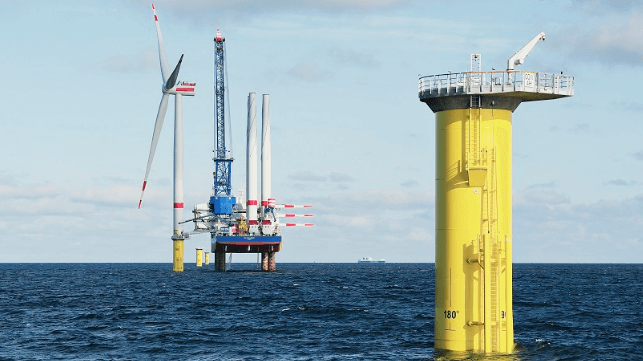
offshore wind farm
Orsted built the Block Island wind farm, the first in the U.S. and is moving forward with new sites (Orsted file photo)

Published Jan 21, 2025 4:54 PM by The Maritime Executive


Ørsted which is focused on offshore and onshore wind farms, solar farms, energy storage facilities, renewable hydrogen and green fuels facilities, disappointed investors by announcing on Monday, January 20, an additional $1.7 billion in impairment charges. The company cited developments relating to the interest rate increases, the declining value of its U.S. seabed leases, and costs related to the construction of Sunrise Wind, a project located roughly 30 miles off the coast of New York.

“The impairments announced today, and especially the continued construction challenges, are very disappointing,” said Mads Nipper, Group President and CEO of Ørsted. He however noted, “We remain committed to the U.S. market in the long term with its potential for renewables to meet the growing electricity demand.”

The comments came on the same day as Donald Trump returned to the presidency and quickly moved to reign in future development. In an executive order, Trump moved to end future leasing of U.S. federal lands for wind farms, but experts question the administration’s ability to cancel existing leases. However, it is expected they will slow-walk future construction permits and cancel tax incentives.

Ørsted attributed $490 million of the planned charges to “market-informed valuation indications for our seabed leases located off the coasts of New Jersey, Maryland, and Delaware, which reflect prevailing market uncertainties among other factors. While this impairment substantially reduces the book value of the seabed leases, we believe the leases continue to hold strategic optionality and value, based on the long-term potential of the US offshore market.”

The company also cited U.S. interest rates which it said led to a 75-basis-point increase in the weighted average cost of capital. The increase adversely impacted the value-in-use for the U.S. portfolio, primarily the offshore wind projects, leading to a further $600 million of the total impairment charge.

Sunrise Wind, which followed Revolution Wind into construction is progressing on “a tight construction schedule and is navigating challenges related to supply chain and construction,” said Ørsted. It reported a reassessment of the Sunrise Wind project to include schedule delays and increased costs based on the experiences with Revolution Wind. 

The expected commissioning of Sunrise Wind they reported has been delayed into the second half of 2027. High costs are expected for the project in part due to increases for the monopile foundations to keep fabrication and installation on track with Ørsted saying it will result in a further $600 million of the total impairment charge.

“We continue to navigate the complexities and uncertainties we face in a nascent offshore industry in the new US market,” Nipper said. 

The company however emphasized that operating profits for 2024 will be in line with guidance. They reported that operational earnings from offshore and onshore were the main contributors and delivered in line with its expectations.

The company’s stock price has been under pressure due to the continued challenges in the execution of its strategy. The price of the stock is down by a third in the past six months, having lost more than 17 percent in the past month. 

This marks the second major impairment charge recorded by the company. In 2023, it recognized more than $3.7 billion for impairments related in large part to the cancelation of Ocean Wind 1 which would have been built off New Jersey. It also included more than $1.3 billion in fees and costs for 2023 associated with changes in its wind farm portfolio.


Suspension Lifted at Vineyard Wind with New Plan Calling for Blade Removal
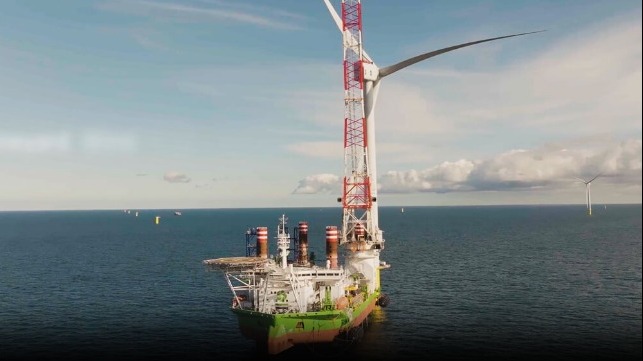
offshore wind farm
Vineyard Wind's plan will blades at up to 22 sites uninstalled and prevents replacements from the plant in Canada (Avangrid file photo)

Published Jan 20, 2025 5:17 PM by The Maritime Executive


A revised Construction and Operations Plan has been approved for the troubled U.S. offshore wind farm known as Vineyard Wind approximately six months after one of its turbine blades fractured. In one of its final acts, the Biden administration’s Bureau of Ocean Energy Management and Bureau of Safety and Environmental Enforcement completed the review and approved the revised plan on January 17, including lifting the suspension orders in place for the project.

A spokesperson for Vineyard Wind confirmed to the local media in Massachusetts that a single turbine has been placed back into operation to generate power. It emphasized that safety remains the top concern while the plan addresses the blades and moving forward with the work. Previously, the company had been approved to proceed with the installation of the jackets for the monopole foundations.

The new plan cites the root cause analysis completed by GE Vernova for the July 13 failure of one of the blades. It found that there was insufficient bonding at certain locations within the blade, which should have been detected at the manufacturing plant. Reprocessing of manufacturing data reports that additional blades with insufficient bonding were identified.

GE Vernova reached a decision and it is being directed by BSE that all the blades manufactured at GE Vernova’s plan Gaspe, Canada plan be removed. This will be at up to 22 locations and pending further review by BSE potentially two additional locations with blades from other manufacturing plants. In June 2024, Vineyard Wind highlighted that it had completed the installation of blades at 21 turbines and was completing a 22nd site shortly before the failure. Blades have already been removed at two of the 22 sites. The plan calls for a total of 62 turbines. When the wind farm off Massachusetts is completed.

Vineyard Wind reports that the jack-up vessel Sea Installer, which has already been employed in the wind development area, will be working on the removal. They presented alternatives including using a second unnamed vessel to speed the removal and installation of new blades. It is estimated it could take up to seven months to remove all the blades.

The new plan calls for installing blades from the GE Vernova manufacturing plant in Cherbourg, France. Vineyard Wind will have to demonstrate that the French blades meet the original design specs. Inspections of the manufacturing process are required along with drone or rope external inspections within six months of installation.

Friday’s approval and lifting of the suspension cleared the path for the wind farm which had been billed as the U.S.’s largest operating offshore wind farm. The bureaus took these steps on the last working day of the Biden administration along with approval of the construction plan for another Vineyard wind plan.

With the change in administrations on January 20, the future of wind energy development is in doubt. Among a long list of “priorities” released by the White House shortly after the inaugural, it lists, “President Trump’s energy policies will end leasing to massive wind farms that degrade our natural landscapes and fail to serve American energy consumers.” Reports last week said the new administration would impose a moratorium for further review of offshore wind energy installations and issues ranging from whale deaths to the need for government subsidies. President Donald Trump has vowed not to build new “windmills” during his second administration

.

World’s Largest Floating Wind Turbine Hoisted for Tests
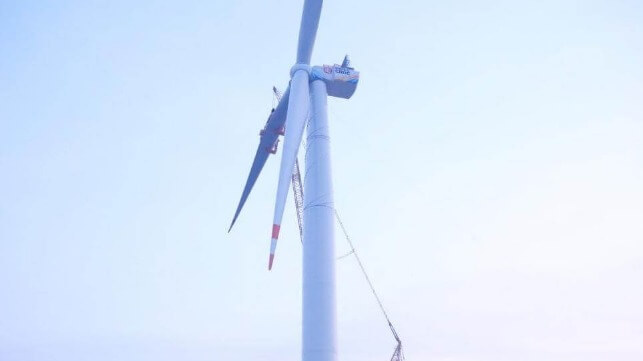
large wind turbine for testing
China's CRRC says the massive 20 MW floating turbine was hoisted to being testing (CRRC)

Published Jan 20, 2025 7:14 PM by The Maritime Executive


A new 20 MW wind turbine designed for floating applications was recently successfully hoisted in China ahead of the start of testing. The state-owned company CRRC is calling the new unit the world's largest power-class floating wind turbine and an important step in the exploration of ultra-large offshore wind turbines.

The "Qihang" is a 20MW floating offshore wind turbine independently developed by CRRC. The unit rolled off the production line in Sheyang, Jiangsu in October 2024, and departed from Sheyang Port to Guangli Port in Dongying in mid-December. It was transferred to the Shandong Dongying Wind Power Equipment Testing and Certification Innovation Base test site using a self-propelled modular transport unit and on January 11, was successfully hoisted into position for testing.

The company reports the design has reached 20MW, which exceeds Envision Energy’s 16.7 MW prototype and Dongfang Electric’s 18 MW prototype, which both reported began testing in June 2024. However, China’s Mingyang Wind Power is working on an even larger 22 MW unit expected to be completed this year.

China seeks to dominate the offshore wind sector and has already surpassed the UK to have the largest installed base. The companies are working to break into the international market and become a supplier to European projects.

The new unit is massive in scale. CRRC reports the diameter of the wind rotor has reached 260 meters (853 feet), which it says is equivalent to seven standard football fields. The hub height is 151 meters (495 feet). The massive blades it reports have a tip speed "in line" with the speed of high-speed rail. Each rotation of the unit it says can meet the electricity demand of a family for 2 to 4 days, saving about 25,000 tons of coal consumption and reducing carbon dioxide emissions by about 62,000 tons per year.

The "Qihang" reportedly integrates cutting-edge innovative control technologies to ensure that the floating unit maintains extreme stability and minimal swing during operation. It adopts multiple typhoon-resistant technologies and strategies. It is also designed to take into account the reusability and scalability of some components and further improves the flexibility and efficiency of the unit through the modular construction of key system interfaces and structural parts. 

To assess the changeable wind, wave, and current conditions at sea, the unit is planned to have more than 200 test points, covering blades, frames, transmission chains, towers, floats, and mooring systems. It will be collecting three-dimensional wind conditions, waves, 6-DOF floating platforms, and the response curves of each test point of the unit. 

After completing the relevant tests and certifications, the unit will be put into deep-sea areas for grid-connected power generation.

Syria's New Government Cance Russian Port Lease at Tartu

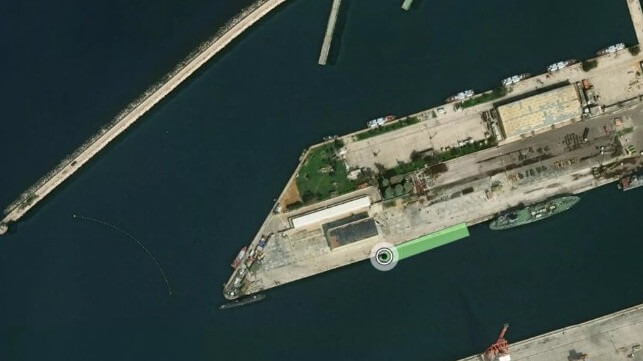
Sparta II (light green overlay) next to the Russian pier in Tartus (MarineTraffic)

Published Jan 21, 2025 2:10 PM by The Maritime Executive


On Monday, the new government of Syria canceled Russia's 49-year operating lease at the port of Tartus, bringing a multi-decade Russian naval presence in the Eastern Mediterranean to a close. A military cargo ship that had been loitering just off the coast has now berthed at the Russian naval pier, where military vehicles are staged for a likely evacuation.

"According to the Director of Tartous Customs, the agreement signed with the Russian company to invest in Tartous Port has been canceled and all its revenues are now for the benefit of the Syrian state," reported local news agency Levant24. 

In early December, U.S.-designated terror group Hay'at Tahrir al-Sham (HTS) ousted Syrian dictator Bashar al-Assad, driving Assad's Russian military backers to retreat to their longtime bases at Tartus and Hmeimem. 

Under Assad, Russia had secured a 49-year renewal of its longtime lease on the port of Tartus, home of the only Russian naval base in the Mediterranean. When HTS forced Assad to flee the country in December, that long-term port agreement was thrown into doubt, since the Russian Air Force had bombarded HTS and its allies throughout the civil war. 

As an apparent precaution, the Russian Navy's Mediterranean Flotilla left Tartus en masse and took up station off the coast. The military cargo vessels Sparta and Sparta II joined the task force in early January, and held station in a racetrack pattern for weeks, prompting speculation about a possible evacuation. 

Amidst rumors of failed negotiations over a continuing Russian presence in Syria, Russian ground forces accumulated a stockpile of valuable equipment on the quayside at Tartus. Ukraine's military intelligence agency, HUR, claimed earlier this month that Syria's new rulers were not allowing Russian ships to enter Tartus to remove the giant accumulation of gear - which may include several top-end S-400 air defense systems. 

On Tuesday, after news broke of the cancelation of Russia's long-term port lease, Sparta II entered the inner harbor and berthed next to the equipment stockpile. Satellite imaging will soon confirm whether the vessel begins loading out the staged vehicles for shipment. The next destination, whether in Russia or in another part of the Mediterranean, remains to be seen. 

"There is no comparable alternative base for the [Russian Navy] in the region," UK military intelligence said in a statement Tuesday. "Its ability to logistically support both its military and its private military contractors in Africa, as well as limiting the reputational damage incurred through the fall of the Assad regime, will almost certainly be priorities for the Russian government."

Another key change may be coming soon for Syria's ports. There are early signs that HTS is dismantling the drug-smuggling industry that sustained the al-Assad regime in the later years of the civil war. The manufacture and export of illicit stimulants generated billions in revenue for Assad's family and for the Syrian military. Under the leadership of Bashar's brother Maher al-Assad, Syria became the world's leading exporter of the amphetamine known as captagon; the small yellow pills became a familiar sight across the Mideast, and were favored by terrorist groups like Islamic State for the drug's tendency to enhance energy and courage in combat.  

HTS security forces cut open equipment to reveal illicit cargo of captagon pills (HTS)

Latakia was the captagon industry's primary port for importing the precursors needed for manufacturing the drug, according to security researchers. Most exports were smuggled across the Jordanian border, but substantial quantities were also hidden in ocean freight shipments dispatched via Tartus and Latakia. 


Syria's southern rebels loom large as the country's new rulers try to form a national army

ABBY SEWELL
Tue, January 21, 2025


NAWA, Syria (AP) — As insurgents raced across Syria in a surprise offensive launched in the country's northwest late last year, officials from several countries backing either the rebels or Syria’s government met in Qatar on what to do.

According to people briefed on the Dec. 7 meeting, officials from Turkey, Russia, Iran and a handful of Arab countries agreed that the insurgents would stop their advance in Homs, the last major city north of Damascus, and that internationally mediated talks would take place with Syrian leader Bashar Assad on a political transition.

But insurgent factions from Syria’s south had other plans. They pushed toward the capital, arriving in Damascus’ largest square before dawn. Insurgents from the north, led by the Islamist group Hayyat Tahrir al-Sham, arrived hours later. Assad, meanwhile, had fled.

HTS, the most organized of the groups, has since established itself as Syria’s de facto rulers after coordinating with the southern fighters during the lighting-fast offensive.

Wariness among the southern factions since then, however, has highlighted questions over how the interim administration can bring together a patchwork of former rebel groups, each with their own leaders and ideology.

HTS leader Ahmad al-Sharaa has called for a unified national army and security forces. The interim defense minister, Murhaf Abu Qasra, has begun meeting with armed groups. But some prominent leaders like southern rebel commander Ahmad al-Awda have refused to attend.

Officials with the interim government did not respond to questions.

Cradle of the revolution

The southern province of Daraa is widely seen as the cradle of the Syrian uprising in 2011. When anti-government protests were met with repression by Assad’s security forces, “we were forced to carry weapons,” said Mahmoud al-Bardan, a rebel leader there.

The rebel groups that formed in the south had different dynamics from those in the north, less Islamist and more localized, said Aron Lund, a fellow with the Century International think tank. They also had different backers.

“In the north, Turkey and Qatar favored Islamist factions very heavily,” he said. “In the south, Jordanian and American involvement nudged the insurgency in a different direction.”

In 2018, factions in Daraa reached a Russian-mediated “reconciliation agreement” with Assad’s government. Some former fighters left for Idlib, the destination for many from areas recaptured by government forces, while others remained.

The deal left many southern factions alive and armed, Lund said.

“We only turned over the heavy weapons … the light weapons remained with us,” al-Bardan said.

When the HTS-led rebel groups based in the north launched their surprise offensive last year in Aleppo, those weapons were put to use again. Factions in the southern provinces of Daraa, Sweida and Quneitra reactivated, forming a joint operations room to coordinate with northern ones.

Defying international wishes

On Dec. 7, “we had heard from a number of parties that there might be an agreement that … no one would enter Damascus so there could be an agreement on the exit of Bashar Assad or a transitional phase,” said Nassim Abu Ara, an official with one of the largest rebel factions in the south, the 8th Brigade of al-Awda.

However, “we entered Damascus and turned the tables on these agreements,” he said.

Al-Bardan confirmed that account, asserting that the agreement “was binding on the northern factions” but not the southern ones.

“Even if they had ordered us to stop, we would not have,” he said, reflecting the eagerness among many fighters to remove Assad as soon as possible.

Ammar Kahf, executive director of the Istanbul-based Omran Center for Strategic Studies, who was in Doha on Dec. 7 and was briefed on the meetings, said there was an agreement among countries’ officials that the rebels would stop their offensive in Homs and go to Geneva for negotiations on “transitional arrangements.”

But Kahf said it was not clear that any Syrian faction, including HTS, agreed to the plan. Representatives of countries at the meeting did not respond to questions.

A statement released by the foreign ministers of Turkey, Russia, Iran, Qatari, Saudi Arabia, Jordan and Iraq after the Dec. 7 meeting said they “stressed the need to stop military operations in preparation for launching a comprehensive political process” but did not give specifics.

The initial hours after armed groups' arrival in Damascus were chaotic. Observers said the HTS-led forces tried to re-impose order when they arrived. An Associated Press journalist saw an argument break out when HTS fighters tried to stop members of another faction from taking abandoned army munitions.

Abu Ara acknowledged that “there was some chaos” but added, “we have to understand that these people were pent-up and suddenly they achieved the joy of victory in this manner.”

Waiting for a state


During a visit by AP journalists to the western countryside of Daraa province this month, there was no visible presence of HTS forces.

At one former Syrian army site, a fighter with the Free Syrian Army, the main faction in the area, stood guard in jeans and a camouflage shirt. Other local fighters showed off a site where they were storing tanks abandoned by the former army.

“Currently these are the property of the new state and army,” whenever it is formed, said one fighter, Issa Sabaq.

The process of forming those has been bumpy.

On New Year’s Eve, factions in the Druze-majority city of Sweida in southern Syria blocked the entry of a convoy of HTS security forces who had arrived without giving prior notice.

Ahmed Aba Zeid, a Syrian researcher who has studied the southern insurgent groups, said some of the factions have taken a wait-and-see approach before they agree to dissolve and hand over their weapons to the state.

Local armed factions are still the de facto security forces in many areas.

Earlier this month, the new police chief in Daraa city appointed by the HTS-led government, Badr Abdel Hamid, joined local officials in the town of Nawa to discuss plans for a police force there.

Hamid said there had been “constructive and positive cooperation” with factions in the region, adding the process of extending the “state’s influence” takes time.

Abu Ara said factions are waiting to understand their role. “Will it be a strong army, or a border guard army, or is it for counterterrorism?” he asked.

Still, he was optimistic that an understanding will be reached.

“A lot of people are afraid that there will be a confrontation, that there won’t be integration or won’t be an agreement,” he said. “But we want to avoid this at all costs, because our country is very tired of war.”


Negotiators zero in on potential deal to disarm Syria's last battleground

Jonathan Spicer, Tuvan Gumrukcu and Maya Gebeily
Sun, January 19, 2025 


 Member of Kurdish-led Syrian Democratic Forces (SDF) stands along a street in Hasakah

ISTANBUL/DAMASCUS (Reuters) - Negotiators are zeroing in on a potential deal to resolve one of the most explosive questions looming over Syria's future: the fate of Kurdish forces that the U.S. considers key allies against Islamic State but neighbouring Turkey regards as a national security threat.

Diplomatic and military negotiators from the United States, Turkey, Syria and the Kurdish-led Syrian Democratic Forces (SDF) are showing more flexibility and patience than their public statements suggest, a dozen sources told Reuters, including five directly involved in the intensive web of discussions in recent weeks.

This could set the stage for an accord in the coming months that would see some Kurdish fighters leave Syria's restive northeast and others brought under the authority of the new defense ministry, six of the sources said.
ADVERTISEMENT


However, many thorny issues need to be resolved, they said. These include how to integrate the SDF alliance's well-armed and trained fighters into Syria's security framework and administer territory under their control, which includes key oil and wheat fields.

In an interview with Saudi Arabia's Asharq News channel on Tuesday, SDF commander Mazloum Abdi said the alliance's "basic demand" is for decentralised administration - a potential challenge to Syria's new leadership, which wants to bring all of the country back under the government's authority after ousting Bashar al-Assad last month.

Abdi indicated that the SDF has no intention of dissolving, saying it was open to linking with the defense ministry and operating according to its rules, but as "a military bloc".

Syria's new defense minister, Murhaf Abu Qasra, rejected that approach in an interview with Reuters on Sunday, saying the suggestion that the SDF remain one bloc "is not right."

The former rebels now in power in Damascus have said they want all armed groups to integrate into Syria's official forces, under a unified command. The SDF, when asked for comment, referred Reuters to its commander's interview.
ADVERTISEMENT


How much autonomy Kurdish factions retain likely hinges on whether incoming U.S. president Donald Trump continues Washington's longtime support of its Kurdish allies, according to diplomats and officials on all sides.

Trump has not spoken publicly about his intentions, including his plans for some 2,000 U.S. troops stationed in Syria. A Trump representative did not comment.

Any deal also depends on whether Turkish President Tayyip Erdogan holds off on a threatened military offensive against the People's Protection Units (YPG), the Kurdish militia that spearheads the SDF alliance.

Ankara views them as an extension of the Kurdistan Workers Party (PKK), which has been waging an insurgency against the Turkish state since 1984 and is deemed a terrorist group by both Turkey and the U.S.

Turkish Foreign Minister Hakan Fidan said this month that Syria's new authorities "should be given an opportunity to ... end the occupation and terror the YPG created", but he did not say how long Ankara would wait for it to disarm before launching an incursion.

A Turkish Foreign Ministry source said disarming armed groups and the departure of "foreign terrorist fighters" were essential for Syria's stability and territorial integrity, so the sooner this happens the better.

"We are voicing this expectation of ours in the strongest terms during our contacts with both the United States and the new administration in Damascus," the source said.

INTENSIVE TALKS

U.S. and Turkish officials have been holding "very intensive" discussions since rebels led by Hayat Tahrir al-Sham (HTS), a former al Qaeda affiliate, launched a lightning offensive from their northwestern stronghold that deposed Assad on Dec. 8, a senior U.S. diplomat told Reuters.

The two countries share a "common view of where things should end up", including a belief that all foreign fighters should exit Syrian territory, the diplomat said, noting Turkish negotiators "have a very high sense of urgency" to settle things.

However, the diplomat, who like some other sources requested anonymity to discuss sensitive negotiations, said the talks were "hugely complex" and would take time.

Parallel talks are taking place between the U.S. and both the SDF and HTS, Turkey and HTS, and the SDF and HTS, officials from all sides say.

Part of a stateless ethnic group straddling Iraq, Iran, Turkey, Armenia and Syria, Kurds had been among the few winners of the Syrian conflict, gaining control over Arab-majority areas as the U.S. partnered with them in the campaign against Islamic State. They now hold nearly a quarter of the country.

But Assad's fall has left Syrian Kurdish factions on the back foot, with Turkey-backed armed groups gaining ground in the northeast and the country's new rulers in Damascus friendly with Ankara.

Turkey, which provided direct support to some rebel groups against Assad, has emerged as one of the most influential power brokers in Syria since his fall. Like the U.S., it has designated HTS a terrorist group because of its al Qaeda past, but Ankara is believed to have significant sway over the group.

Officials on all sides worry that failure to reach a ceasefire and longer-term political accord in the northeast could destabilise Syria as it seeks to recover from a 13-year civil war that killed hundreds of thousands, displaced millions and drew in countries including Russia, Iran and Israel.

Dozens of people in northern Syria have been reported killed since December in clashes between the Kurdish-led SDF and Turkey's allies, and in cross-border Turkish airstrikes.

Failure to resolve the fate of Kurdish factions in Syria could also undermine nascent efforts to end the PKK's insurgency in Turkey.

The United Nations has warned of "dramatic consequences" for Syria and the region if a political solution is not found in the northeast.

POTENTIAL TRADE-OFFS

U.S. support for the SDF has been a source of tension with its NATO ally, Turkey.

Washington views the SDF as a key partner in countering Islamic State, which Secretary of State Antony Blinken has warned will try to use this period to re-establish capabilities in Syria. The SDF is still guarding tens of thousands of detainees linked to the group.

Erdogan said on Wednesday that Turkey has the power to "crush" all terrorists in Syria, including Islamic State and Kurdish militants.

Turkey wants the management of camps and prisons where Islamic State detainees are being held transferred to Syria's new rulers and has offered to help them. It has also demanded that the SDF expel all foreign fighters and senior PKK members from its territory and disarm the remaining members in a way it can verify.

Abdi, the SDF commander, has shown flexibility regarding some Turkish demands, telling Reuters last month that its foreign fighters, including PKK members, would leave Syria if Turkey agrees to a ceasefire.

The PKK said in a statement to Reuters on Thursday that it would agree to leave if the SDF maintains control of the northeast or a significant role in joint leadership.

Such assurances are unlikely to satisfy Ankara at a time when the SDF is "trying to stay alive and autonomous" in Syria, Omer Onhon, Turkey's last ambassador to Damascus, told Reuters.

In Ankara on Wednesday, Syrian Foreign Minister Asaad Hassan al-Shibani said the extensive U.S.-backed SDF presence was no longer justified, and the new administration would not allow Syrian land to be a source of threats to Turkey. Standing next to him, his Turkish counterpart, Fidan, said it was time to put anti-terror pledges into practice.

Abdi told Asharq News that he has met with Syria's de facto leader, Ahmed al-Sharaa, and the two sides agreed to set up a joint military committee to decide how the SDF would integrate with the defense ministry. He described the meeting with Sharaa, who heads HTS, as positive.

Abu Qasra, the defense minister, accused SDF leaders on Sunday of "procrastinating" on the issue, saying "consolidation of all areas under the new administration ... is a right of the Syrian state."

The new leadership believes that allowing SDF fighters to continue operating as a bloc would "risk destabilisation, including a coup", a ministry official told Reuters.

Abdi argued that a decentralised administration would not threaten Syria's unity, saying the SDF is not demanding the kind of federalism introduced in Iraq, where Kurds have their own regional government.

Some Syrian officials and diplomats say the SDF will likely need to relinquish control of significant territory and oil revenues, gained during the war, as part of any political settlement.

In return, Kurdish factions could be granted protections for their language and culture within a decentralised political structure, said Bassam al-Kuwatli, president of the small Syrian Liberal Party, which supports minority rights but is not involved in the talks.

A senior Syrian Kurdish source acknowledged that some such trade-offs would likely be needed but did not elaborate.

Abdi told Asharq News that the SDF was open to handing over responsibility for oil resources to the new administration, provided the wealth was distributed fairly to all provinces.

Washington has called for a "managed transition" of the SDF's role.

The U.S. diplomat said Assad's ouster opens the door for Washington to eventually consider withdrawing its troops from Syria, though much depends on whether trusted forces like its Kurdish allies remain engaged in efforts to counter any Islamic State resurgence.

Trump's return to the White House on Monday has raised hopes in Turkey of a favourable deal, given the rapport he established with Erdogan during his first term.

Trump has spoken approvingly about Erdogan's role in Syria, calling him a "very smart guy", and said Turkey would "hold the key" to what happens there.

"The Americans won't abandon (the SDF)," said Onhon, Turkey's former ambassador. "But the arrival of someone as unpredictable as Trump must worry them in a way too."

(Reporting by Jonathan Spicer in Istanbul, Tuvan Gumrukcu in Ankara and Maya Gebeily in Damascus; Addional reporting by Timour Azhari in Damascus, Suleiman Al-Khalidi in Amman, Tom Perry in Beirut, Ahmed Rasheed in Baghdad and Orhan Qereman in Qamishli, Syria; Editing by Alexandra Zavis)


Syria Fractured Fighters
Damaged tanks that belonged to the Assad regime, in Nawa, near Daraa, Syria, Jan. 4, 2025. (AP Photo/Mosa'ab Elshamy)


Exposure to stress during early pregnancy affects offspring into adulthood


Long-term study on wild monkeys in Thailand reveals health risks and opportunities for intervention


Deutsches Primatenzentrum (DPZ)/German Primate Center

A female Assamese macaque (Macaca assamensis) with her infant at Phu Khieo Wildlife Sanctuary, Thailand. 

image: 

A female Assamese macaque (Macaca assamensis) with her infant at Phu Khieo Wildlife Sanctuary, Thailand. Photo: Thawat Wisate

view more 

Credit: Photo: Thawat Wisate


Maternal stress hormone levels during early pregnancy can have a lasting effect on the stress system of the offspring. The results of a long-term study on wild Assamese macaques in Thailand indicate that maternal stress in the first half of pregnancy is particularly relevant. Elevated stress hormones later during pregnancy or after birth did not have the same effects. The long-term study conducted by the University of Göttingen and the German Primate Center – Leibniz Institute for Primate Research provides important insights into the influence of early life stages on the development of the stress system under natural environmental conditions (Proceedings of the Royal Society B).

Influence of very early life stages

The research team investigated how maternal stress affects the stress hormone system of the offspring. They found that the activation of the hypothalamic-pituitary-adrenal (HPA) axis, which plays a central role in coping with stress, can be significantly influenced by exposure to maternal glucocorticoids during development. The early phase of organ differentiation in the first half of pregnancy proved to be a particularly critical period. “Our results show that the HPA-axis activity of offspring was enhanced, the more adversity the other had experienced during early pregnancy – which could be food shortages or social conflicts for example,” says Simone Anzá, former doctoral student at the University of Göttingen and the German Primate Center and first author of the study.


Investigation in the wild

In contrast to studies in the laboratory, the monkeys were observed in their natural habitat. Over a period of nine years, the researchers repeatedly collected fecal samples from pregnant females and measured the concentration of glucocorticoid metabolites in them in order to determine the animals' exposure to environmental factors such as food scarcity, temperature fluctuations and social interactions. These values were compared with the stress hormone levels of the offspring at different ages. The effects on the stress axis of the offspring were evident from infancy through the juvenile period and into adulthood at nine to ten years of age. Previous analyses from the same study had already shown that early prenatal stress was also associated with altered growth, negative changes in the gut microbiome and impaired immune function, underlining the comprehensive influence of the environment in the early prenatal period on various physiological systems. In contrast, maternal glucocorticoid levels in late pregnancy or during lactation had no or different influences.


Relevance for health research

“Our research results indicate that the timing of maternal stress hormone exposure during and after pregnancy crucially affects the consequences for the development and health of the offspring. It is also important to note that these effects do not require catastrophic events, but that even moderate changes in environmental conditions are sufficient,” says Oliver Schülke, scientist at the University of Göttingen and the German Primate Center and head of the study. Stress in early pregnancy can also have a long-term effect on health in humans and increase the risk of stress disorders and immune problems. “Our findings may help to identify the timing and mechanisms that preventive measures should address in order to reduce long-term health risks,” says Oliver Schülke.


Childhood poverty and/or parental mental illness may double teens’ risk of violence and police contact


These kids more likely to carry/use weapons and get on wrong side of the law by age of 17. Factors may explain nearly third of UK teen weapon issues + quarter of police contact cases


BMJ Group


Living with persistent poverty and/or parental mental illness throughout childhood may double the risk of carrying and/or using a weapon and getting on the wrong side of the law by the age of 17, suggests research published online in the Journal of Epidemiology & Community Health.

These factors may account for nearly 1 in 3 cases of weapon use or carriage and more than a quarter of all police contact among 17 year olds, nationwide, estimate the researchers.

Youth crime and violence are common around the world, they note. In England and Wales, for example, around 104,400 first-time offenders were recorded in the criminal justice system in 2020, with 11% of them aged between 10 and 17.

As risk factors tend to cluster, the researchers set out to assess the extent to which early life exposure to poverty and family adversities might be associated with involvement in youth violence, crime, and contact with the justice system. 

They drew on long term data from the representative UK Millennium Cohort Study for 9316 children whose exposure to family adversities and household poverty had been reported from birth to the age of 14. 

When they were 17 the teens were asked, via questionnaire, if they had carried or used a weapon, such as a knife, and/or had been in contact with the police, to include being stopped and questioned, given a formal warning or caution, or being arrested.

The overall prevalence of weapon use/carriage was just over 6%, while that of police contact was 20%.

Analysis of the data showed that exposure to poverty and family adversity throughout childhood, either singly or combined, significantly increased the likelihood of violence and criminal justice involvement during their teenage years.

Nearly 1 in 10  (just under 9%) of the teens exposed to persistent poverty and poor parental mental health throughout childhood said they had carried or used a weapon while more than 1 in 4 (28%) of them had come into contact with the police. 

This compares with 5% and just over 17%, respectively, of those who had not grown up in this environment.

Overall, those who had been exposed to persistent poverty and poor parental mental health throughout their childhood were twice as likely to carry/use a weapon and to report contact with the police, after accounting for potentially influential factors, including the mother’s ethnic background and educational attainment.

And as teens, they were more than 5 times as likely to be arrested or taken into police custody, 3 times as likely to be warned or cautioned by the police, and twice as likely to be stopped and questioned by them.

Based on these figures, and population estimates, the researchers estimate that persistent poverty and family adversities account for around a third (32%) of all cases of weapon use/carriage and nearly 1 in 4 (23%) cases of contact with the police among 17 year olds across the UK.

This is an observational study, and as such, no firm conclusions can be drawn about cause and effect. And the researchers acknowledge that there might have been other as yet unaccounted for influential factors.

But they write: “Our analysis provides strong evidence that persistent adversity throughout childhood is strongly associated with risk of involvement in violence and contact with police in adolescence, highlighting the negative effects of both accumulation and duration of childhood adversity.” 

And they conclude: “Our findings suggest the need for a whole system approach and the implementation and strengthening of national and local policies focused on early intervention and support for families with low incomes and those experiencing family adversity, such as mental health problems. 

“Addressing these issues comprehensively and syndemically earlier in the life course across multiple sectors, such as schools, communities, healthcare providers, and the law system, may reduce risk-taking behaviours in adolescence, ultimately contributing to better outcomes for young people.”