Saturday, March 08, 2025

Alex Callinicos: What does Zelensky’s humiliation mean?

Volodymyr Zelensky faced a hostile welcome from Donald Trump. But what does the exchange tell us about the wider context of the Ukrainian war?


Starmer and Trump smile through their disagreements (Picture: White House/Flickr

Monday 03 March 2025     
SOCIALIST WORKER Issue 2945
Alex Callinicos

Donald Trump had already turned the Oval Office into a theatre of power. But last Friday we were treated to a display of the brute realities of imperialism.

Usually, an abandoned client’s resistance takes place in private. In 1973, the United States under Richard Nixon and Henry Kissinger made a peace deal with North Vietnam. And all Nguyen Van Thieu, the puppet president of South Vietnam, could do was flee into exile.

But Ukrainian president Volodymyr Zelensky was puffed up into a hero of the liberal West by Joe Biden and his European allies. It doesn’t really matter whether his very public roughing up by Trump and his vice president J D Vance was a set-up or provoked by Zelensky’s losing his temper. This is what happens when an imperial power decides a proxy is no longer useful.

European governments—even Keir Starmer’s—have rallied to Zelensky. Their strenuous support reflects the anxiety that they too will be abandoned. Friedrich Merz, Germany’s next chancellor, said after he won last week’s election, “It is clear that the Americans, at any case the Americans in this administration, do not care much about the fate of Europe.”

Martin Wolf, arch-apologist of liberal capitalism, went further in his Financial Times newspaper column, “The US is now the enemy of the West.” US international relations academic Stephen Walt was more specific, “Yes, America is Europe’s enemy now.”

Walt’s argument is based on the Trump administration’s support for the European far right, flaunted by Vance in Munich two weeks ago. But that’s not what mainly worries the likes of Merz and Starmer. They fear that Trump will drop the security guarantee the US offers Western Europe through the Nato alliance.

I find this very doubtful. The US isn’t in Europe out of love for liberal “values” and the Mona Lisa. Europe accounts for 21 percent of global GDP. The idea that any US administration would let Russia dominate this key economic region is laughable. Trump will certainly cut US troop numbers in Europe and continue to squeeze more defence spending from his allies. But the Nato command structure gives the Pentagon the great advantage of effectively controlling the continent’s armed forces.

The Trump administration’s attacks on the “rules-based international order” constructed by Washington after the Second World War are designed to give the US greater room for manoeuvre. Secretary of state Marco Rubio spelled it out in an interview last week.

“The big story of the 21st century is going to be US-Chinese relations,” he said.

“But I think having a situation where the Russians are permanently a junior partner to China, having to do whatever China says to do because they are dependent on them, I don’t think that’s a good outcome for Russia and it’s not a good outcome for America or for Europe or the world.”

This confirms speculation that Trump’s courtship of Vladimir Putin is what has been called a “reverse Kissinger” strategy. Nixon and Kissinger in opened negotiations with China under Mao Zedong in 1971-2 to help end the Vietnam War. They also began the process through which China became effectively a US ally against the Soviet Union in the final phase of the Cold War.

Now Trump and Rubio want to isolate China by prising Russia away. Undoubtedly there are tensions arising from Beijing’s encroachments in Central Asia, Siberia and the Russian Far East. Nevertheless, Trump’s ploy is very unlikely to succeed. The common front against the US based on Russian energy and Chinese high-end manufacture is too convenient for both Putin and Chinese president Xi Jinping.

Ukraine is an obstacle to the rapprochement with Russia. European military and economic assistance to Ukraine is greater than that from the US. But sustaining the war effort without the Pentagon’s advanced capabilities would be very hard.

In the end Zelensky will cave in or be replaced. In the words of the ancient Greek historian Thucydides, “the strong do what they have the power to do and the weak accept what they have to accept.”


How have Europe's far-right reacted to Trump's Ukraine policy and treatment of Zelenskyy?
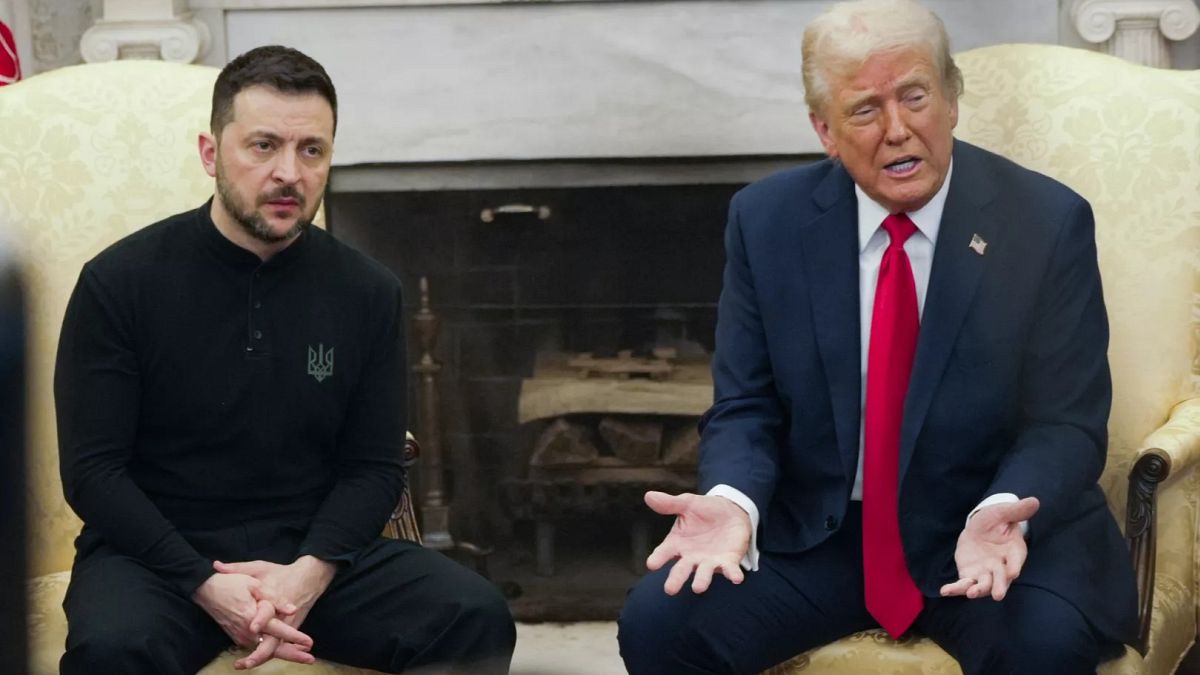
President Donald Trump, right, meets with Ukrainian President Volodymyr Zelenskyy in the Oval Office at the White House, Washington, 28 February 2025.
Copyright AP Photo

By Estelle Nilsson-Julien
Published on 

Many far-right MPs in Europe are trying to stay in Donald Trump's good books and avoid criticising him, all while retaining credibility at home.

European far-right and conservative circles have long sought to build ties with the US Republican party while admiring its right-wing and conservative policies.

But US President Donald Trump's decision to halt military support to Ukraine and his spat with his Ukrainian counterpart Volodymyr Zelenskyy have provoked cross-party outrage across Europe.

Many right-wing and far-right parties are engaging in a complex balancing act, which entails publicly demonstrating their support for Trump — or at the very least refraining from criticising him — while striving to stay popular and credible domestically. 

Le Pen: 'Harsh words pretty normal'

Politicians from France’s far-right National Rally party have long sought to build ties with Trump and the Republican party. The US president described the party's former leader Marine Le Pen as the "best candidate" in the 2017 French presidential race.

But after Trump's harsh exchange with Zelenskyy in the Oval Office last week, Le Pen called out the "brutality" of the suspension of US military support to Ukraine.

She did not criticise the motivations behind Trump's decision. However, she told Le Figaro newspaper she found "the brutality of this decision reprehensible", adding that the move was "very cruel for Ukrainian soldiers engaged in the patriotic defense of their country".

Those statements marked a shift from the stance Le Pen held days earlier, having glossed over the Oval Office incident when questioned about it by reporters in Paris.

Le Pen said that "world leaders are able to speak to each other with passion, are able to have frictions, that harsh words can be exchanged is pretty normal after all", but recognised that the spat may have generated "legitimate emotions".

When Russia illegally annexed Crimea from Ukraine more than a decade ago, Le Pen asserted it was Russian territory and opposed sanctions imposed by the EU on Moscow.

Other National Rally members have defended Trump's exchange with Zelenskyy.

In an interview with French radio broadcaster RTL, lawmaker Jean-Philippe Tanguy asserted that Zelenskyy "was not humiliated", refuting claims that Trump and his Vice President JD Vance adopted bully-like behaviour.

These contradictions come as the National Rally — under Jordan Bardella's leadership — has sought to tidy up its image and its former ties to Russia, which have not gone down well with the French electorate following Moscow's full-scale invasion of Ukraine in 2022.

Farage: 'I wouldn't expect a guest to be rude to me in my own house'

Last month, Nigel Farage, the leader of the UK's far-right Reform party and former leader of the pro-Brexit United Kingdom Independence Party (UKIP) told his supporters that Trump’s 2024 presidential election win "should serve as an inspiration".

But weeks later, when Trump claimed that Zelenskyy was a "dictator" on his Truth Social platform, Farage said, "you should always take everything Donald Trump says seriously, you shouldn’t always take things Donald Trump says absolutely literally. I think that applies very much in this case."

Farage's comments echo a statement made by the US president’s former campaign manager Corey Lewandowski in a 2016 interview.

"You guys (the media) took everything that Donald Trump said so literally," he said then.

Like Lewandowski, Farage did not exactly contradict Trump. Instead, he blamed the media and those who held him accountable for his statements.

“Trump says jump and Farage asks, 'How high,'" Russell Foster, a senior lecturer in International Politics at King’s College, told Euronews. 

"Nigel Farage is still going on about his support for Trump, even though the British people clearly do not like him. He has misread the room and this could massively hamper his political standing," Foster explained.

Although Farage's supporters are more inclined to be sympathetic to Russia and Trump, criticism of the US president has intensified in the UK following his spat with Zelenskyy.

A poll carried out by YouGov after the Trump-Zelenskyy meeting revealed that 80% of Britons were unfavourable to the US President, compared with 73% two weeks earlier.

In a recent interview with British broadcaster LBC, Farage tried to dodge questions on the issue. Asked about whether there was anything "intemperate" about Trump’s language, he said "whether there was or there wasn't, we're heading towards peace".

While Farage said he was not "defending Vance and Trump", he echoed the pair's claims that the Ukrainian president was rude to them, saying, "I wouldn’t expect a guest to be rude to me in my own house."

Farage also criticised Zelenskyy's appearance, stating, “if I turned up at the White House, I would make sure I was wearing a suit and my shoes were cleaned".

AfD: 'Peace even without the beggarly Zelenskyy'

Germany's Alternative for Germany (AfD) has worked hard to build ties with the Trump administration, with the US president's tech billionaire aide Elon Musk dialling into an election campaign event by the far-right party back in January.

After last week's Oval Office spat, AfD co-leader Alice Weidel posted a picture of Trump wagging his finger at Zelenskyy with the caption "Historic. Trump & Vance".

Her party does not have a record of being supportive of Ukraine.

Last year, a large number of AfD politicians left the German Bundestag building when Zelenskyy appealed to lawmakers for more support for his country. During its election campaign, the AfD also called for an end to German military support for Ukraine.

In another post shared on X, AfD politician Tino Chrupalla said peace in Ukraine should be achieved even if Zelenskyy was not involved.

"President Trump is cancelling talks with President Zelensky because he is not ready for peace. Peace must still be achieved, even without the beggarly President Zelensky," Chrupalla said.

Meanwhile, Björn Hoecke, who is the leader of the party's most radical wing, blamed Zelenskyy for the outcome of the Oval Office meeting, stating that the Ukrainian president had "decided to insult his hosts".

While the AfD continues to back Trump, some experts say that their rhetoric has been relatively cautious in light of recent events.

"They seem to have toned down quite a bit pro-Trump, pro-Putin rhetoric", said Foster of King’s College. 

Orban: 'Strong men make peace, weak men make war'

Some European politicians may be reining in their public courting of Trump, but Hungarian Prime Minister Viktor Orbán is not one of them. 

In a post shared on X, shortly after the Trump-Zelenskyy Oval Office meeting, the leader of the ruling Fidesz party wrote, "strong men make peace, weak men make war," praising Trump for standing "bravely for peace".

Orbán has long been one of the EU's most vocal critics. Friendly with Russian President Vladimir Putin, the Hungarian premier has consistently blocked European military support packages for Ukraine, claiming that Western support prolongs Russia's war. 

"I don't think Orbán is necessarily sympathetic to Trump, but he's very pro-Putin, so he views Trump as an avenue to Putin," said Foster.

The Hungarian prime minister has urged the EU to follow in Trump’s footsteps and open up direct talks with the Kremlin while blocking the approval of joint conclusions supporting Ukraine at a summit held by Europe's 27 leaders in Brussels on Thursday.

"Orban's genuinely likes Putin and wants to be his ally, but also loves to have the power to portray himself as leading some sort of resistance to the European Union and globalisation," Foster concluded.

UK


5 times Eddie Dempsey has torn apart right-wing, anti-worker arguments

NEWLY ELECTED RMT UNION GNERAL SECRETARY
Yesterday
Left Foot Forward


Dempsey has shut down questions on whether striking workers are "greedy" and false claims about union pay with skill and poise


Today, Eddie Dempsey will take over as RMT’s general secretary following the retirement of the legendary Mick Lynch. As he steps into the role, we look back at some of his most powerful takedowns of right-wing, anti-worker rhetoric – of which there are many.

It’s no surprise, then, that the right-wing press is getting worried about his appointment.

The Telegraph published an article yesterday describing Dempsey as “a longstanding ideologue of the hard-Left” and stating that critics fear he will push the agenda of the RMT “into further strikes – and even into more broader anti-government action across the trade union movement”.
“When are we going to ask if they [corporations] are being greedy?”

During the rail strikes in the summer of 2022, a reporter on the Jeremy Vine on 5 show posed a textbook right-wing question to Dempsey, asking whether rail workers were being “greedy” for striking for higher pay.

He said: “It’s a bit of a cheek having a programme asking trade unions if they’re being greedy for asking for a pay rise.”

“The FTSE 350 top companies in this country – their profits have gone up 73 per cent since 2019. When are we going to ask if they are being greedy?”.

The reporter then argued that the strike would impact “everyday people going to work, at the start of the Commonwealth Games.”

Dempsey shot back: “Listen, people will find it hard on a strike day but people will find it hard when it’s not a strike day because there’s people in this country spending 18% of their income travelling on trains when we’ve got the highest fares in Europe because profiteers have been robbing this country blind for years.”
“You only care about workers when they can’t get to work”

In another interview on Jeremy Vine on 5 in July 2022, Vine himself said rail passengers might have to factor in that for two or three days a month, when there might be no train service.

Daily Express columnist Carole Malone chimed in: “What I don’t get, Eddie, is why your right to strike is more important than other people’s right to get to work.”

Dempsey said: “Well Carole, I’ve got to say, you only seem interested in workers when they can’t get to work and we’re on strike. I’m more interested about what happens to workers when they get there.”

He stressed that his concern extends beyond workers on their way to work, highlighting that they have seen their living standards decline over the past 30 years, and stated, “Workers in this country need a pay rise.”
The Tories have delivered “Pain, lower wages, a fall in living standards”

Reflecting on the Tories’ legacy in government and what they have done for workers, Dempsey told Politics Joe: “Pain, lower wages, higher costs, a fall in living standards, insecurity at work, restrictive laws preventing them from striking, restrictive laws preventing them from protesting.”

He added: “They’ve done an awful lot for workers, and all of it has been negative, all of it has been very bad.”

Dempsey, speaking outside Parliament, explained that the RMT was protesting P&O Ferries’ shocking decision to fire 800 shipping staff in March 2022 via Zoom, while some were dragged off their vessels by private security guards.

He said the RMT was demanding that “bare minimum legal protections” for domestic workers be extended to seafarers, calling the situation “a national scandal”.
“They’re all up for their mates in the banks getting pay rises”

In an interview on TalkTV Julia Hartley-Brewer, also in 2022, grilled Dempsey on why the RMT had not been able to make a pay deal with Network Rail. Dempsey explained: “You have to appreciate Julia, everywhere where we’re not dealing with a company controlled by the Department for Transport, we’ve got a deal.”

Hartley-Brewer asked whether the government was not giving RMT an inflation-busting pay rise because it would lead to other public sector workers striking, adding “as a country we can’t afford to have tens of thousands, hundreds of thousands ultimately across the public sector, millions, getting those sorts of pay rises”.

Dempsey fired back: “Well I tell you what Julia they soon stop worrying about pay rises when it’s their mates in the banks with their bonuses.

He continued: “They’ve very worried about us getting a pay rise but they’re all up for their mates in the banks getting them and the private companies making profits.”
Dempsey slams Jeremy Kyle’s false claims about Mick Lynch’s salary

Not only does Dempsey deliver strong arguments in defense of workers, but he’s also had to dismantle misleading claims about union pay put forward by the right-wing press.

In a June 2022 interview with Jeremy Kyle on TalkTV, Dempsey slammed Bank of England boss Andrew Bailey, who hypocritically called for pay restraint in annual wage increases despite earning £575,000 himself.

Jeremy Kyle used the comments to wrongly claim that Mick Lynch was on £124,000 a year, saying “why doesn’t he give £80,000 of his money to his trade union comrades”.

Dempsey clarified, “That’s what the Daily Mail says, but it’s not true,” and explained the right-wing press had included employer National Insurance contributions in their calculation. “That’s not how you work out someone’s pay, it’s just to get a soundbite,” he said.

“He doesn’t earn more than the prime minister, […] he doesn’t have a company car, he doesn’t live in a mansion, […] he’s just a former railway worker like myself who has been elected by his peers to represent them because he’s a good trade unionist,” Dempsey said.

Olivia Barber is a reporter at Left Foot Forward
UK

‘Manifestly excessive’ Just Stop Oil sentences reduced following critical legal appeal

Yesterday
Left Foot Forward


Some of the original sentences did not comply with human rights laws


A critical legal appeal over the right to protest has culminated in an important win at the Court of Appeal today.

A judge has ruled that some of the original sentences handed down to 16 climate activists were “manifestly excessive” and did not comply with human rights laws.

Friends of the Earth and Greenpeace UK, who supported the appeal, said the judgment “goes some way to improving the law for those sounding the alarm about the climate and nature crises through peaceful protest”.

The mass-appeal hearing for the 16 Just Stop Oil activists, which took place over two days last month, has resulted in sentence reductions for six of the activists.

Cressie Gethin, Roger Hallam, Lou Lancaster, Daniel Shaw and Lucia Whittaker De Abreu were convicted for plotting action that caused major disruption to traffic, with protesters climbing onto gantries over the M25 motorway for four successive days in November 2022.

Co-founder of JSO and Extinction Rebellion, Roger Hallam, who was originally sentenced to five years, has had his sentence reduced to 4 years.

Gethin and Whittaker De Abreu will now serve a two and a half year sentence instead of four years.

Lancaster and Shaw’s sentences have been lowered from four to three years.

78-year-old Gaie Delap, who was also involved in the M25 protest, had her sentence reduced from 20 months to 18.

The sentences of 10 other protesters involved in the same appeal were not reduced, including those of Phoebe Plummer and Anna Holland, who threw soup on the glass protecting Van Gogh’s Sunflowers painting.

A University of Bristol study published last December found that Britain leads the world in cracking down on climate activism. British environmental protesters are arrested at nearly three times the global average rate.

Greenpeace has pointed out that before the Conservative government introduced new protest laws during the last Parliament, peaceful protest rarely resulted in jail time.

Areeba Hamid, co-executive director at Greenpeace UK, said: “Despite some modest reductions, these sentences are still unprecedented and they still have no place in a democracy that upholds the right to protest.

“This appeal has led to some important clarifications and a recognition that the trial judge was mistaken in denying the protestors the protection of certain legal rights and in discounting the conscientious nature of their motivations.”

However, Hamid warned that the ruling will not halt or reverse “the UK’s slide towards authoritarianism” which began under the Conservatives but she says is “being enthusiastically embraced” by Labour.

She added: “Even the most everyday protests, marches and rallies organised in cooperation with the police, are being demonised and blocked.

“If you care about anything any corporation or anyone in a position of power is doing, or should be doing, you should be incredibly concerned about your freedom to speak out. If you don’t raise your voice now, you may lose it forever.”
UK
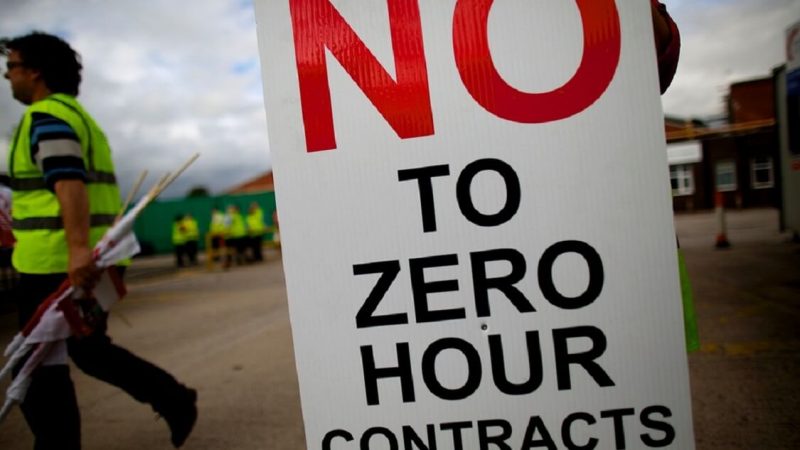
Calls for stronger worker protection as over-50s on zero-hour contracts soar

Today
LEFT FOOT FORWARD


Older workers now account for a quarter of all zero-hour contract workers in the UK.


The government is being urged to strengthen protections for workers, following a sharp rise in the number of over-50s on zero-hour contracts.

Research by Rest Less, a digital community for people aged 50 and above, shows that more than 300,000 workers in this age group are now employed on zero-hour contracts in Britain, up from 190,000 a decade ago. Older workers now account for a quarter of all zero-hour contract workers in the UK.

Rest Less chief executive Stuart Lewis explained that this increase reflects both the evolving nature of work and the growing pressure on older workers to accept less secure employment. While zero-hour contracts can offer flexibility for some, allowing them to balance work with other life commitments, Lewis said that for others, they are often the only option available and older workers can find themselves “shut out of standard employment opportunities due to age discrimination.”

Lewis is also calling for stronger worker protections in the Labour Party’s employment reform plans.

The report comes after Steve Wright, head of the Fire Brigades Union (FBU), raised the alarm in January over potential threats to workers’ rights under the government’s economic policies.

Wright expressed support for Labour’s employment rights legislation but urged the party to take decisive action to protect workers, particularly with regard to zero-hour contracts and unfair dismissal protections.

He insisted that additional protection against unfair dismissal must come into force by this summer at the very latest.

“The full delivery of the Labour manifesto commitment on workers’ rights must be reflected in substantial pay rises for firefighters and all other workers.”

Wright also warned that any attempt to scale back workers’ rights or suppress pay rises would face strong opposition.

Following Rest Less’s report on the over 50s and zero-hour contracts, a spokesperson from the business and trade department said:

“Our Employment Rights Bill will ensure workers can have flexibility that suits them as well as their employer by giving people the right to a guaranteed hours contract. Those who want to remain on their current arrangement can do so.”

“These measures are not about restricting choice, they are seeking to end exploitative zero-hour contracts. We are committed to ending one-sided flexibility to ensure workers who want to have more predictability are able to.”


Sexist system means women more likely to be on zero hour contracts

Low-paid, insecure and part time work is forced on women


The UK Women’s March in London on 18 January (Picture: Guy Smallman)

By Sarah Bates
Thursday 06 March 2025
\SOCIALIST WORKER Issue


sexist system is forcing women into low-paid, insecure jobs.

Women are a third more likely to be on zero-hours contracts than men—and more likely to stay on them for more than a year.

And they are overrepresented in eight of the ten occupations with the highest numbers of zero-hours contracts.

Those are the damning findings of new research from the TUC trade union federation. Paul Nowak, TUC general secretary, said, “As ever, women workers are bearing the brunt.

“They are more likely to be concentrated in sectors with endemic levels of insecure work.

The research backs up what socialists say about how women under capitalism face the double burden of work and childcare and domestic labour.

Low-paid, insecure and part time work isn’t chosen by women—it is forced on to them.

Sexist ideas about women as “naturally caring” or “care givers” sees them pushed into the sorts of jobs.

Women often take jobs in sectors such as social care and hospitality because they tend to be able to fit in around the rhythms of family life.

Sky-high childcare costs mean that many families are unable to support both parents working full time jobs.

The raft of childcare facilities closing down, alongside long school holidays, means that it often makes sense to have one parent ready to step in. Because of the sexist ideas about parenting it is often women who take on this role.

Just last week it was revealed that some 74,000 women lose their jobs each year for getting pregnant or taking maternity leave.

Bosses target pregnant women and those with families because their caring responsibilities can sometimes get in the way of maximising profits. As a result, many are forced to take poorly-paying roles in other sectors.

It is a damning indictment of all the ways in which life is getting harder for women. Instead of aspiring to smash the “glass ceiling” of the capitalist workplace, working class women are consigned to the “sticky floor”.

The relationship between work and family life often sits at the centre of women’s daily experience. They are often forced to balance impossible work demands with the chaos and pressures of family life.

Ensuring that women have access to high quality, cheap childcare would be a first step to challenging the sexism within work.
Trump’s media divide: Business barons cower to his power, while Murdoch resists

Today
LEFT FOOT FORWARD
Right-Wing Watch


The coercion of the media to conform to the new administration undermines the integrity of unbiased, factual journalism.


Donald Trump has long harboured a deep disdain for the mainstream media. During his first presidential campaign, he blacklisted reporters and entire news outlets from events, called journalists “scum” and “slime,” and even mocked a reporter for having a disability.

Now, emboldened and vengeful, his contempt for the press has reached new extremes, with no holds barred.

By dictating which journalists are allowed access to Trump, the White House is openly threatening and punishing news organisations that dare to challenge the president. Among them is the Associated Press, which went to federal court to reverse a ban of its journalists after the White House kicked the news service out for refusing to adopt Trump’s name for the Gulf of Mexico – the Gulf of America.

This coercion of the media to conform to the new administration undermines the integrity of unbiased, factual journalism.

But an interesting divide is beginning to emerge among a vulnerable media. Notably, business billionaire media proprietors are rallying behind Trump and his allies in pursuit of potential regulatory favours. In contrast, Rupert Murdoch’s media outlets, including those in the UK, have adopted a more critical position, particularly in response to Trump’s combative approach to Zelensky and Ukraine and his cosy relationship with the “dictator” Putin.

Bezos and the Washington Post

Take the Washington Post, a newspaper that was once a bastion of media freedom and fiercely independent investigative journalism, which helped unseat a corrupt president, forcing Richard Nixon to resign following an investigation by two of its reporters.

Under the ownership of the billionaire Amazon CEO Jeff Bezos, concerns have been raised about the Washington Post’s objectivity and the newspaper’s global reputation is being questioned.

During the presidential election, the Washington Post did not back a presidential candidate for the first time in decades and said it would no longer do so in future races. Sir Will Lewis, the former Daily Telegraph and Murdoch executive brought in as CEO by Bezos, ruled that the Post would immediately abandon its decades-old practice of endorsing political candidates. An editorial backing Kamala Harris had already been agreed but was never published.

More recently, Bezos, a major donor to Trump’s inauguration, instructed that the newspaper’s opinion section is to only feature content supporting “personal liberties and free markets,” effectively excluding opposing views.

The decision led to the resignation of opinion editor David Shipley and praise from Elon Musk, who tweeted “Bravo, @JeffBezos!”


X’s owner Musk is of course another business billionaire media proprietor that has turned a once liberal platform into a pro-Trump propaganda machine.

Marty Baron, meanwhile, a highly regarded former editor of the Post, said Bezos’s decision was a “betrayal of the very idea of free expression” that had left him “appalled.”

“It’s craven. He’s basically fearful of Trump. He has decided that, as timid and tepid as the editorials have been, they’ve been too tough on Trump,” Baron warned. “We’re at a point where we’re not having a difference of opinions, we’re have a difference about what the facts are.”

Earlier this year artist Ann Telnaes quit after more than a decade at the Washington Post when her cartoon depicting Bezos among Trump’s sycophants was dropped. Last month, the paper turned down $115,000 and refused a wraparound cover advertisement asking:

“Who’s running this country: Donald Trump or Elon Musk?”

Looking at the newspaper’s stories in response to the Trump and Ukraine debacle, critical analysis is notably absent.

‘Washington now ‘largely aligns’ with Moscow’s vision, Kremlin says,’ is one headline.

‘Trump and the end of the geopolitical ‘West,’’ was another column that argues “Donald Trump and JD Vance may delight in shocking Europe, but their counterparts across the pond are coming to terms with the collapse of a united West.”

There is a sub text in all of this of concerns about the reconfiguring of American policy away from traditional allies towards autocrats like Putin, but it’s done so very quietly as to be almost silent.

The editors are clearly nervous of someone – who I wonder? Forthright, courageous journalism seems to be disappearing like water down a plughole.

LA Times shows signs of bowing to pressure

Even the LA Times, a prominent liberal newspaper, appears to be adjusting its editorial line under the ownership of billionaire businessman Dr Patrick Soon-Shiong. Much like Jeff Bezos, Soon-Shiong’s influence is raising questions about the paper’s direction.

In October, the paper announced it would not endorse a candidate in the presidential election. The decision to withhold an endorsement of Kamala Harris, despite one having been prepared, caused turmoil at the newspaper. Three editorial board members resigned, numerous staffers openly protested, and thousands of readers cancelled their subscriptions.

It also raised speculation about the rationale behind Soon-Shiong’s decision, with the outgoing leader of the paper’s editorial board decrying it as “complicity” in “dangerous times.”

In a CNN interview, Soon-Shiong explained that Harris’ position on Israel’s war in Gaza influenced his choice to block the endorsement. He also announced plans to “balance” the paper’s opinion pages by featuring more conservative and centrist voices.

Yet despite this shift, the LA Times has continued to offer some critical commentary. A recent article focused on Trump’s renewed attacks on the media, referencing warnings from media experts about the new administration’s aggressive use of government power to intimidate an increasingly polarised press.

UCLA 1st Amendment law professor Eugene Volokh was quoted saying that during Trump’s first term, media organisations showed resistance to Trump. “It’s unsurprising that Trump is returning that hostility. I don’t think he ever particularly liked them, but now it seems that he dislikes them even more,” said Volokh.

Murdoch resists

As the business media proprietor moguls rush to cater to the president’s unpredictable demands and navigate his hostility toward the press, Rupert Murdoch is appearing more critical.

The media mogul is well known for aligning his business interests with the politician of the hour yet his relationship with Trump has long been tempestuous. But despite their previous feuds, Murdoch joined the president as a guest at the Oval Office last month, suggesting that the two men were ‘back in business.’

Not quite it seems, as Murdoch publications have been notably critical of the style and substance on Trump’s return to power, particularly in response to Ukraine.

The New York Post and the Wall Street Journal, both owned by Murdoch’s News Corp., launched attacks on Trump’s abandonment of support to Ukraine and his cosying up to Putin.

‘Mr. President: Putin is THE dictator and 10 Ukraine-Russian war truths we ignore at our peril,’ headlined the New York Post in February.

And the author? None other than Douglas Murray, a well-known Trump bootlicker, who just weeks earlier had praised the President’s ‘one flag’ policy, banning US buildings from buildings from flying anything but the American flag.

Sources close to Murdoch have reportedly said that standing by Ukraine against Putin is “personal” to Murdoch, as a Fox News journalist covering the conflict was seriously injured in a Russian attack, which killed two other reporters.

The New York Post has also extended its hostility to Elon Musk, with a recent editorial headlined: ‘Why Team Trump should beware its job slashing triumphalism,’ warning both Trump and Musk against “gleefully declaring how much they enjoy making tens of thousands unemployed.”

You wonder what Trump now thinks of what was once his “favourite newspaper”?

The Wall Street Journal (WSJ), also Murdoch-owned, has been equally critical of Trump of late.

In an article this week entitled ‘Trump takes the dumbest tariff plunge,’ the WSJ slammed his decision on tariffs. It reads: “We’ve courted Mr. Trump’s ire by calling the Mexico and Canada levies the “dumbest” in history, and we may have understated the point. Mr. Trump is whacking friends, not adversaries. His taxes will hit every cross-border transaction, and the North American vehicle market is so interconnected that some cars cross a border as many as eight times as they’re assembled.”

But the WSJ and Trump have not always seen eye-to-eye. In 2015, Trump took issue with the newspaper’s editorial board after it hammered him over his positions on trade, calling for an apology after he said it mischaracterised his views. Several months later, Trump referred to a poll co-sponsored by the paper showing him behind as a “Rupert Murdoch hit,” in reference to the publication’s owner.

Press hostility spreads to Britain

The Murdoch media’s antagonism towards Trump is making waves across the UK.

‘Forget bully boy Trump or hypocrite Swinney – Keir Starmer knows how to treat our allies,’ headlined the Scottish Sun this week.

Then again, like the WSJ, the Sun and Trump haven’t exactly got a cordial history. In an interview with the newspaper during his first presidency in 2018, Trump said the then prime minister Theresa May had “probably killed” any hopes of a free trade deal between the two countries by ignoring his advice to go for a clean break with the EU. But he then accused the Sun of ‘fake news’, after the newspaper revealed he had blasted the Brexit plan put forward by May and insisted the two nations would be free to strike a deal after Brexit.

But the UK right-wing media’s seeming hostility towards Trump and his allies isn’t limited to Murdoch’s outlets.

A series of recent frontpages have forced you to look twice, some even suggesting solidarity with Keir Starmer, and, dare we say, Europe.

‘Now stop the state visit for ‘bully’ Trump,’ splashed the Mail on Sunday, accompanied with a photo Starmer hugging Zelensky. “THAT’s how to treat a war hero… PM’s hug ahead of crunch summit,’ the article continued.

Even the typically anti-EU Express took a less derogatory position. ‘Now’s the time for allies to unite for peace,’ it splashed in reference to Starmer’s message as Zelensky arrived at No. 10.

Meanwhile, the comments made by Vice President JD Vance about Britain’s war history triggered a furious backlash in the UK media.

‘’Clown’ Vance’s slur on 636 war heroes,’ splashed the Daily Express on March 5, noting a ‘blundering US vice president’ saying Britain has ‘not fought in a war in 40 years.’

While the Sun fired: ‘Show some respect: Brits heroes hit back at ‘ghastly’ JD Vance after Trump’s No2 sparks fury for forgetting UK’s 636 Iraq and Afghan war dead.’

Driven by business interests, notably the desire to deregulate their social media platforms, and to protect their vast financial empires, the billionaire media class is buckling under the pressure of potential lawsuits for any coverage that might anger Trump. As a result, they’re failing as stewards of the press, offering tepid and insipid coverage while Trump’s influence only grows stronger.

Meanwhile, more seasoned media magnates, less afraid of confrontation and with a rather different set of business priorities, seem more willing to expose Trump for what he truly is. Have they at last woken up to what the rest of us knew all along – that capricious Trump is a real threat to any kind of orderly conduct in the world? One thing remains clear: journalists must redouble their efforts in the face of the grave threat to democracy that Trump represents.
European Movement launches campaign to strengthen EU-Canada ties in response to Trump’s trade war


Today
LEFT FOOT FORWARD

‘The time has come for a European Movement Canada.’


In response to Donald Trump’s trade war with Canada, the European Movement has launched a European Movement Canada campaign, aiming to establish closer ties between Canada and Europe on all fronts.

The move comes after Trump has spent months mocking Canadian prime minister, calling him “Governor Trudeau” and even threatening to annex Canada as the 51st US state.

This week, Trump reversed his 25 percent tariffs on imports from Canada and Mexico just days after they were implemented. In response, Canada’s finance minister announced the country would delay its retaliatory tariffs. Trudeau said that he had a “colourful” phone conversation with Trump about the tariffs and warned that a trade war with the US was likely for the foreseeable future, despite some targeted relief.

“Our goal remains to get these tariffs, all tariffs removed,” he said.

The tensions between the two allies have rattled global markets and raised concerns over economic instability.

Within this turbulent climate, the European Movement aims to seek closer ties with Canada. In a post on X, Guy Verhofstadt, president of European Movement International, said:

“As Trump chooses to attack allies and embrace autocrats, Europe and Canada must unite to defend democracy, liberty, and the rule of law. These are the core values the European Movement represents. We invite our Canadian friends to join us in in building a movement capable of resisting those who threaten our fundamental rights and freedoms. The time has come for a European Movement Canada.”

The European Movement is encouraging people to support the European Movement Canada initiative.

With enough backing, the organisation plans to collaborate with political leaders across the spectrum, stakeholders, and citizens to create a powerful alliance that will unite Canada and the EU, defending shared values.

Its goal is to establish a sustainable movement that represents all Canadians, regardless of political affiliation, with a focus on deepening cultural, political, and trade relations with Europe while defending democracy.

As for Canada’s potential EU membership, the European Movement clarifies that the decision lies with the EU and its member states. However, if Canada ever seeks membership, the European Movement will fully support that aspiration.

The movement highlights the urgency of building stronger, united bonds between Canada and Europe as bulwarks against authoritarianism and isolationism in the face of Trump’s unpredictable foreign policy.

Image credit: European Movement International

Modern work makes you miserable

Mike Phipps reviews Laura Carreira’s On Falling, in cinemas from today.

On Falling is the debut feature of Laura Carreira, who wrote and directed it. It stars Joana Santos who gives an immensely impressive performance as Aurora, a Portuguese ‘picker’ in a huge ‘fulfilment’ warehouse in Glasgow, who is slowly ground down by her job, poverty and social isolation.

Co-produced by Ken Loach’s Sixteen Films company, it’s a powerful piece of social realism. It won Best Director award at the San Sebastián International Film Festival and ‘Best First Feature’ at the 2024 BFI London Film Festival, a testimony to the talent involved.

One reviewer called the film “an intense, enveloping experience” and that’s about right. It’s quite claustrophobic: the first daylight scene occurs about 50 minutes into the film. It’s usually night or in a setting with no natural light, and Aurora is always cold, often exhausted, frequently hungry.

There is a large cast, many of whom exchange superficial pleasantries with each other while scrolling through their mobile phones, although even here the acting is refreshingly sharp. Aurora’s attempts to connect with various colleagues invariably fail to land, either at work or in her gloomy shared flat, reinforcing her isolation and estrangement.

Much of the film is about alienation at work. The roar of her vast workplace contrasts with the solitary nature of her repetitive, mind-numbing work. One week, she is called in by the manager and told that, as she has been one of the top workers that week, she can pick a bar of chocolate from a box on his desk. “Good choice!” he enthuses when she does so.

Another time, he comes onto the shopfloor to tell her that the tracker says she’s been too slow – is everything all right? Would she mind speeding up a tiny bit? he asks, almost apologetically. His approach underlines that it is not always individual managers who are at fault but the relentlessness of a system over which she has no control. Likewise, when she asks for a day off at short notice, she is told that the ‘system’ needs more notice.

One day, some schoolchildren are being shown around the warehouse – a future that possibly awaits them. The supervisor explains to them that a lot of walking in involved, because if everything was in the same place, the operations would get too congested. This way, it makes it more interesting for the workforce and “keeps them on their toes, a bit like a treasure hunt,” they are told.

When the supervisor is not looking, Aurora locks eyes with one of the children. He takes a sweet from his pocket, unwraps it and throws it onto the floor in front of her, as if she were an animal in the zoo. It’s one more example of how her job is, as Peter Bradshaw put it in his Guardian review, “strip mining the workers’ humanity and sanity.”

Outside of work, there is little relief from the crushing isolation. At an interview for a new job, Aurora is asked what she does away from work, to relax. She is unable to answer. “The laundry,” she says finally and is unable to say more – before tearfully beginning to invent implausible hobbies and holidays.

In an unusual, uplifting moment, there is a system failure at work and the employees play a makeshift game of volleyball – a full-on human interaction, in which scrolling through one’s phone is not  an option. But it’s a rare note of optimism in an otherwise downbeat story.

One review described On Falling as “an excoriating verdict on a modern Britain characterized by compassionless labour politics, stagnant opportunity and shrugging acceptance of a stifling status quo.”

It certainly says a lot about the nature of work and social life in the 21st century. It’s a film full of subtlety, but with the clear message that you don’t have to be destitute to be poor, and that, without enough money, life can be very miserable. If it sounds bleak, it should be said that it is held together by the fundamental humanity of the lead character, played so expressively by Joana Santos.

Appropriately, the credits roll to What Will We Do When We Have No Money, a powerful dirge-like song from the great Dublin folk group Lankum.

On Falling is in UK and Irish cinemas from 7th March.


Mike Phipps’ book Don’t Stop Thinking About Tomorrow: The Labour Party after Jeremy Corbyn (OR Books, 2022) can be ordered here.

UK

Seven in ten healthcare workers see patients unable to pay energy bills

MARCH 5,2025

Health workers say that addressing energy affordability and insulation will help the NHS.

Newly published research reveals the impact of cold homes and high energy bills on people’s health and the NHS.

Seven out of ten health workers report that they regularly see patients going without energy because they are unable to pay. Of these, nearly a third report witnessing this weekly, while one in ten see patients in this position almost every day.

Over two-thirds see patients hospitalised due to cold homes in a “public health crisis that is entirely preventable, with solutions that lie outside the NHS.” Over half believe that addressing energy affordability and improving energy efficiency would reduce impacts on the NHS.

This nationally representative survey, commissioned by UK health campaign group Medact and Warm This Winter, polled 2,128 people who work in health.

Over two-thirds of UK health workers say high energy bills contribute to avoidable hospital admissions. Forty-five per cent have sent patients home knowing that their housing situation would make them ill again.

Ofgem recently announced that the energy price cap for April to June will increase by 6.4%, bringing the average annual energy bill to £1,849. Compared to winter 2020/21, this represents a 77% increase, or over £800 more per year per household. Cold homes contribute to respiratory conditions, cardiovascular diseases, mental health issues, dementia, and hypothermia—and significantly slow recovery from injury.

The National Pensioners Convention roundly condemned the increase in the price cap and called on the government regulator to do its job and stand up for consumers – particularly at a time when energy firms are raking in billions in profits.

Jan Shortt, General Secretary of the NPC said: “Ofgem and the government are clearly not listening to the millions, including our oldest and most vulnerable, who simply cannot afford these continual hikes in the price of basic essentials like energy. There is no way that the triple lock rise on state pensions this April will replace the loss of the winter fuel payment and cover the cumulative increases in bills for everything from energy to food. This round robin of increases will see many more older and vulnerable people switching off their energy to save money.”

The new data finds that almost three-quarters of health workers believe poor-quality housing worsens chronic health conditions or delays treatment of them, and two-thirds see children experiencing respiratory problems caused or worsened by mould or damp regularly (at least once a month).

More than two-thirds (69%) of health workers agreed with the statement “I feel powerless to support my patients with their housing conditions”, and believe that government spending to prevent illnesses created by cold homes is better for the NHS than having to spend money to nurse patients back to health.

Over half of health workers also report their own mental or physical health has been impacted by housing issues. In addition, one in four believe that the health impacts of housing problems put plans to improve the NHS at risk. 

Dr LJ Smith, a respiratory consultant working in London, said: “Every single day I treat patients whose lung conditions are entirely preventable, but they tell me their homes are cold, mouldy and damp, and they just cannot afford to keep the heating on. This is a public health crisis that is entirely preventable, with solutions that lie outside the NHS.”

 Dr Amaran, a paediatric doctor working in Sheffield, said: “Home is where health is nurtured and hospitals are for repairs. The idea of ‘an ounce of prevention being worth a pound of cure’ has been abandoned over the course of decades of housing policies that have enriched a select few at the cost of the health of millions. I and other children’s health workers are increasingly concerned by having to send children home with inhalers and medicines, knowing full well that for the many living in unsafe and unhealthy homes, it will be a matter of days and weeks before they’re sick again, with serious implications for their life chances.”

Dr Sabrina Monteregge, clinical psychologist working in London said: “We can fund the NHS but if that’s not alongside funding healthy homes, we’re not going to get very far, because we are just constantly treating problems that the NHS is not built for. The NHS is on its knees, but it was never meant to stand alone – it must work alongside policies that support public health.”

 Simon Francis, coordinator of the End Fuel Poverty Coalition, commented: “These shocking findings depict the front-line, public health crisis caused by high energy costs and poorly insulated homes. Expert reports have long made the link between living in cold damp homes and medical problems, but this research brings home the real-life situations that people are facing.

“We need bolder action from the government to address this crisis – that means all government departments working together to see fuel poverty as a national challenge. And it means the Chancellor backing moves to tackle the problem, such as committing the full £13.2bn funding needed for the Warm Homes Plan.”

Warm This Winter spokesperson Caroline Simpson said: “It’s a disgrace that people across the country are forced to live in such unhealthy homes and are unable to afford to keep them warm and dry thanks to over a decade of neglect by the last government – especially when we see energy companies raking billions in profits whilst ordinary people are choosing between eating and heating. That’s why we need to ramp up our renewable energy and insulation programmes.

It’s estimated that  tackling cold homes would save the NHS £540m per yearMore than 26,000 babies and toddlers were admitted to hospital last year with lung conditions probably linked to exposure to damp and mouldThe pressures in accident-and-emergency units are as bad as during the Covid pandemic.

Almost 70,000 members of the public have also signed a 38 Degrees petition – in collaboration with NPC, Warm This Winter and Fuel Poverty Action. It calls for the government to:

  • Make Ofgem a true consumer champion, holding suppliers to account for bad practice, ending the ‘revolving door’ of energy bosses making decisions, and not making consumers foot the bill for firms going bust. 
  • Reduce bills to fair and affordable levels that meet people’s needs, removing protections that guarantee profits and bonuses for energy companies. 
  • Make sure everyone automatically gets the best energy deal and customer service they need – and protects vulnerable people from profit-hungry suppliers.

Image: https://pix4free.org/photo/2475/energy.html Credit: Pix4Free.org Energy by Nick Youngson CC BY-SA 3.0 Pix4free Attribution-ShareAlike 3.0 Unported CC BY-SA 3.0 Deed

UK

26 MPs Urge National Audit Office to Investigate Service Charge Payments to Landlords

By Suzanne Muna

A total of 26 MPs have signed a letter urging the National Audit Office (NAO) to investigate service charge payments made through the benefits system to
landlords in respect of service charges.

Research compiled by the housing campaign group SHAC over a number of years demonstrates that a high proportion of service charge accounts contain overcharges. The MPs’ letter has been shared with the NAO together with a letter from the Public Interest Law Centre (PILC) which is working with SHAC to end service charge abuse. The letter explains that “Housing associations [are] imposing often fictitious and/or excessive service charges, which, when covered by universal credit and housing benefit, burden the public purse without adequate scrutiny.”

The payments are managed by the Department for Work and Pensions (DWP) and amount to millions of pounds every year. Housing associations, for example, collect around £1.7 billion in respect of service charges annually, approximately half of which is met through Housing Benefit payments. Yet there is currently no scrutiny in place to ensure that landlord service charge demands are legitimate.

A bundle of evidence has been submitted with the letters to the Audit Office by lawyers working with SHAC which challenges the lack of action to ensure that public funds are only spent on reasonable and legitimately incurred charges.

Suzanne Muna, SHAC Secretary and co-founder said“Over the years, SHAC has amassed a body of evidence on systematic overcharging by landlords. We have seen landlords charge for services provided by local councils which tenants and residents pay twice for because they are covered by their council tax. We have seen charges for lift maintenance in buildings where no lifts exist. We rarely see service charges that are 100% accurate, even though the amounts total thousands of pounds in some cases.

“Unfortunately, even when landlords are alerted to these illegitimate charges, it is often a long and drawn-out battle to get them to make refunds when these are conceded to, which isn’t always the case. Despite years of highlighting such cases, service charge abuse has only increased. It seems that landlords are incapable of putting their own house in order, and it now needs enforcement by a public body.”

Should the NAO refuse to investigate, SHAC will consider legal action as part of its wider campaign to highlight landlord service charge abuse.

Saskia O’Hara, manager of PILC’s Gentrification Project said: “There is an immediate need to scrutinise service charges made through the benefits system to ensure fairness for both residents and taxpayers. The National Audit Office is the appropriate body to conduct this review, and we strongly urge them to act on this now.”

Suzanne Muna is Secretary of the Social Housing Action Campaign, a campaign group linking tenants, renters, shared owners, and leaseholders living in homes owned by housing associations, councils and private landlords. It campaigns to improve housing conditions and to reduce the commercialisation of housing. More details of SHAC’s End Service Charge Abuse campaign can be found here. PILC is a law centre and registered charity which exists to challenge systemic injustice through legal representation, strategic litigation, research and legal education.