Sunday, March 30, 2025

Codelco sending more copper to US after tariff threat

Reuters | March 28, 2025 | 
Codelco head offices in Santiago. (Image by Rodrigo Fernández | Wikimedia Commons.)

Chile’s Codelco, the world’s largest copper producer, has been redirecting some of its spot sales to the United States, CEO Ruben Alvarado said on Friday.


US President Donald Trump in February ordered a probe into potential new tariffs on copper imports in an effort to rebuild US production, a move that appeared to prompt a rush for copper.


Alvarado also said he did not see any reason for copper to be subject to a sanction or tariffs, and anticipated strong long-term fundamentals for copper demand beyond short-term swings.

“We are committing to the needs of our clients in the United States, we are redirecting part of our spot sales,” Alvarado said in a press conference to discuss Codelco’s 2024 results.

Codelco reported a swing into the black for its 2024 earnings, posting a pre-tax profit of $790 million compared to a loss of $757 million the previous year.

The state-owned miner said output totaled 1.328 million metric tons, a touch above the 1.325 million tons it reported for 2023 and within its target range.

Codelco said it began in August to post higher production figures than in the year before.

“In 2024 we succeeded in leaving the production valley,” it said in a presentation, adding it had lowered costs and resolved some long-standing issues at some of its key complexes.

The company also said production is expected to start at the Andesita and Andes Norte divisions this year.

Codelco said it expects 2025 output to reach between 1.37 million and 1.4 million tons.

The copper miner reiterated its expectation of beginning a joint venture with lithium producer SQM this year, and said it would choose a partner for the Maricunga lithium project in the second quarter.

(By Fabian Cambero, Daina Beth Solomon and Sarah Morland; Editing by Kylie Madry, Deepa Babington and Alistair Bell)


Column: Can Trump’s critical minerals drive pass the copper test?

Reuters | March 27, 2025 |


Image courtesy of The White House.

US President Donald Trump’s executive order on boosting domestic minerals production is intended to blast a path through the thicket of mine permitting in the United States.


It takes an average of nearly 29 years for a new mine to go from discovery to production in the United States, the second-longest lead time in the world after Zambia, according to S&P Global.

Permitting on Federal Land in particular is a big problem and one that the US government is uniquely qualified to solve.

The Joe Biden administration struggled to reconcile its ambition to produce more “green” metals for the energy transition with its environmental and social credentials.

Trump has no such qualms.

The Secretary of the Interior is instructed to “prioritize mineral production activities over other types of activities on Federal lands”.

But there is a danger that the political pendulum will swing too far the other way. There is also the problem that new mines still take many years to build and the US lacks the processing capacity to convert raw materials to metal.

Copper is a case in point.

Stalled copper projects

Copper is not on the US critical minerals list but gets a special mention in Trump’s executive order, along with gold, uranium, potash and, if the chair of the National Energy Dominance Council so determines, any other element “such as coal”.

Copper has come to epitomize the problem of getting new mines up and running in the United States.

Rio Tinto bets on Trump support for long-stalled Arizona copper mine

Big copper projects such as Resolution in ArizonaPebble in Alaska and Twin Metals in Minnesota have been stalled for years at the federal permitting stage.

All three could benefit from the change of political wind in Washington.

But opposition from Native Americans and environmental protection groups is not going to magically disappear at the stroke of a presidential pen. Indeed, it might well become more entrenched.

Big mining companies such as Rio Tinto, which owns a majority stake in Resolution, have learnt the hard way that mining without community consent is highly problematic.

The company has buy-in from both Serbian and European Union policy-makers for its giant Jadar lithium mine but progress has ground to a halt due to mass protests.
Extended timeline

The Resolution mine has the potential to become the biggest copper producer in North America, capable of meeting up to 25% of the United States’ annual copper demand.

The copper will come with byproducts such as bismuth, indium and tellurium, all of which are on the critical minerals list.

But even assuming accelerated permitting, the mine will still take around 10 years to construct, meaning the first copper concentrates would be produced only around the middle of the next decade.

Resolution is located in Arizona, which has a long history of mining and associated infrastructure.


The Pebble and Twin Metals projects face extra challenges in the form of physical remoteness and potential impact on salmon spawning grounds and the Boundary Waters Wilderness respectively.

Fast-tracking permitting for such projects doesn’t mean they’ll be ready to generate copper any time soon.
Processing gap

Rio’s Resolution mine could be integrated into the company’s existing Kennecott smelting and refining operations in Utah.

Kennecott, however, is only one of two active primary copper smelters in the United States. The other one is Miami in Arizona operated by Freeport-McMoRan. There has been speculation but so far no confirmation that Grupo Mexico might re-open its Hayden smelter in the same state.

The United States is already a net exporter of copper concentrates for want of sufficient processing capacity. Some 320,000 tons of contained metal in concentrates were shipped overseas last year, according to the US Geological Survey.

The three main destinations were Mexico, China and Canada. Clearly there is enough North American smelting capacity to absorb extra US mine production but the Biden administration’s policy of “friend-shoring” has been replaced with Trump’s tariff threats against the United States’ two neighbours.

Moreover, every copper smelter is currently competing with China, where smelting and refining capacity is huge and still growing.

Smelter margins are being squeezed in the form of historically low treatment charges for converting raw material into metal at historic lows.

Building sufficient domestic capacity to process extra US mine production could be a thornier problem than building the new mines in the first place.
Urban solution

The fixation on headline-grabbing mega mine projects to reduce US import dependency misses a far easier and lower-cost solution.

US processing capacity for recycling copper is growing.

Germany’s Aurubis AG has invested $800 million in a new smelter in Georgia for treating up to 180,000 metric tons of complex recyclables such as circuit-boards.

The United States is the world’s largest exporter of copper scrap to the tune of almost a million tons each year. Much of it is sent to China for processing.

Recycling all that lost metal at domestic facilities wouldn’t eliminate US copper import dependency but it would significantly close the gap.

Recycling comes with the benefits of an existing resource, low capital expenditure relative to new mines, shorter lead-times to production and lower carbon footprint.

The Trump administration’s rush to ditch anything associated with Biden’s green agenda risks overlooking the one part of the domestic copper supply chain that is already attracting investment and increasing capacity.

If “mine baby mine” is the mantra, channelling more federal funds into “urban mining” is going to reap faster rewards than any big new conventional mine.

(The opinions expressed here are those of the author, Andy Home, a columnist for Reuters.)

(Editing by David Evans)
India Expands Copper Mining Interests in Zambia

By Metal Miner - Mar 29, 2025

India has acquired land in Zambia to explore copper and cobalt, signaling a significant move to secure its mineral supply chains in Africa.

China currently leads in copper smelting and refining capacity but faces increasing competition from other nations, including India and Saudi Arabia, in accessing African mineral resources.

The growing demand for copper, driven by clean technology and electric vehicles, is fueling a global race for access to copper and other critical minerals, with Africa becoming a key region of interest.


Much like neighboring China has been doing for decades, India is now making inroads into the African continent to mine copper reserves, among other mineral assets. It is a move that is sure to shake up the already-competitive international copper market, where multiple nations continue to show significantly increased interest in Africa.

Staring in the face of near-stagnant copper production, the Government of India recently announced it had acquired greenfield land in Zambia’s northwest province with plans to explore copper and cobalt. According to a report in the Indian Express, India’s mines ministry was also actively in talks with other African nations like the Democratic Republic of Congo (DRC), Rwanda and Mozambique for similar exploration deals.
India’s Partnership with Saudi Arabia

A copper mine belonging to the India-listed Vedanta Group lies quite close to the 9000-square kilometer plot India recently signed up to explore in Zambia. In late 2024, Vedanta Copper International (VCI), a wholly-owned subsidiary of Vedanta Limited (VEDL), inked an MoU with Saudi Arabia to invest about US $2 billion in copper projects there. That stated goal of that memorandum was to try and meet the latter country’s increasing demand for copper.


According to reports, the funds would be used to develop a 400 kilo tonnes per annum (KTPA) greenfield copper smelter and refinery as well as a 300 KTPA copper rod project, all of which will be located in Saudi Arabai’s Ras Al Khair Industrial City.
The Race For Copper

With more clean tech and electric vehicles coming into global markets, copper has become as hot a commodity as some of the rare earths minerals. With many experts predicting that demand will outgrow supply by 2035, the U.S., UK, China and South Korea are all looking to get more and more copper online.

Leading this race is China, which controls almost 50% of the global copper smelting and refining capacity. In an effort to further dominate the worldwide copper market, China has been exploring copper mining opportunities in countries like Zambia, the DRC and Chile, which was the leading copper producer in 2024.

However, Beijing recently implemented steps to curb overcapacity, making it necessary for smelters to sign long-term contracts with copper mines. As far as copper output is concerned, analysts have predicted another bumper year for China in 2025.
The World Looks To Africa

As copper demand continues to increase, China finds itself facing immense competition in Africa from countries like India, which are now trying to secure their own supply chains.


By any standard, China leads the pack in the African mining race, having secured supplies of critical minerals like cobalt, graphite and magnesium, to name a few. What has worked in China’s favor so far is its “Belt and Road” initiative, which helped the country establish its supply chains remarkably quickly.

According to this analysis, Chinese FDI in African minerals increased by about US $4.2 billion in 2020 from a mere US $75 million in 2003. China currently has strategic partnerships with forty-four African countries. However, the country has not entered into other international partnerships, focusing instead on its own domestic producers to make up for the shortfall in supply.

Other nations in the race for African minerals are Russia, Canada, the UK and Australia. While Russia is focusing on South Africa and Namibia, many of the other countries continue to establish both agreements with African nations and each other. According to the analysis, such partnerships ensure a stable copper market supply chain and ethical mining practices, among other things.
India’s Growing Copper Market Presence

Meanwhile, India and Saudi Arabia continue to pursue the mining of minerals in Africa. However, they are doing it on a much more independent basis, avoiding frameworks and focusing on bilateral agreements or direct investments.

For instance, both Saudi Arabia and the UAE have increased their stakes in Africa, with the latter making significant investments, much of it earmarked for Zambia and the DRC. As stated in this report, the Washington-based Arab Gulf States Institute pointed out that Saudi Arabia has promised to invest about ten billion dollars in African mining projects over the coming five years.


India is going the same way, but it also has its eye on China’s moves in that region. Recently, Indian ministry officials held talks with representatives from the DRC, South Africa, Tanzania, Mozambique and Zimbabwe regarding mining collaborations. New Delhi already has MoUs in place with six of those countries for the supply of cobalt, nickel and other critical minerals.

By Sohrab Darabshaw


India's Renewable Revolution Has a Funding Problem

By Felicity Bradstock - Mar 30, 2025


India has made significant strides in renewable energy deployment, particularly in solar power, but still heavily relies on coal for the majority of its electricity generation.

The country's ambitious climate goals, including net-zero emissions by 2070, are threatened by inadequate funding and the need for significant infrastructure improvements.

To achieve its targets, India requires substantial foreign investment and focused development in battery storage, grid modernization, and distributed energy solutions like rooftop solar and microgrids.


India has been investing heavily in the development of its renewable energy sector in recent years to support a green transition. While the government has repeatedly called on the international community to support its transition with funding to little avail, the state has financed a wide range of renewable energy and clean tech projects. However, the South Asian country is still heavily dependent on coal, oil, and gas, and its power demand is growing larger every year, suggesting that more needs to be done to accelerate the deployment of new green energy capacity.

In 2023, India generated 22 percent of its electricity from renewable energy sources, which, although an improvement, was still below the global average of 39 percent. The growth in India’s solar energy capacity allowed it to overtake Japan as the world’s third-largest solar power generator, contributing 5.9 percent of global solar power growth. Hydropower remains India’s largest clean energy source, at around 8 percent, while solar and wind power together provide 10 percent of India’s power mix.

However, India continues to rely heavily on fossil fuels for its energy mix, with coal, oil, and gas contributing to 78 percent of its electricity generation in 2023. Coal accounts for nearly 50 percent of India’s installed power capacity and over 70 percent of power generation.

According to India’s Ministry of New and Renewable Energy, “In 2024, the country made significant strides in solar and wind energy installations, policy advancements, and infrastructural improvements, setting the stage for ambitious targets in 2025. With a commitment to achieving 500 GW of non-fossil fuel-based energy capacity by 2030, India is emerging as a global leader in clean energy. As of 20th Jan 2025, India’s total non-fossil fuel-based energy capacity has reached 217.62 GW.” Approximately 24.5 GW of solar capacity and 3.4 GW of wind capacity were added last year.

Despite significant progress in recent years, India still has a long way to go to decarbonize its power sector. While India’s per capita emissions are much lower than those of many other countries, it has become the third-largest emitter of greenhouse gasses annually. The South Asian country has the largest population in the world, and while it is currently considered a lower-middle-income country, it is the world’s fastest-growing large economy.

India must act now if it hopes to decarbonize over the coming decades toward its goal of net-zero emissions by 2070. The government has made several ambitious energy targets to encourage this shift, including achieving a power mix with at least 50 percent renewables by 2030 and energy independence by 2047. However, with the power demand expected to quadruple by 2050, India faces an uphill battle in achieving these aims.

Climate change is becoming an increasingly bigger threat to India with over 75 percent of Indian districts at risk of extreme weather, with cyclones, floods and drought becoming more commonplace. Therefore, India is seeing the direct threat of not carrying out a green transition fast enough.

To help decarbonize its power sector, India must invest more heavily not only in the deployment of more wind and solar energy capacity but also in battery storage. This will help it to provide a more stable supply of clean electricity to the grid and transition away from fossil fuels. The government must also significantly improve the country’s transmission infrastructure to prepare for new clean energy capacity to be added and avoid losses in power transmission, a challenge that plagues most states in India.

In addition, the development of mini- and microgrids could also help improve power access in rural regions of the country and reduce the burden on the grid. Approximately 4.59 GW of new rooftop solar capacity was installed in 2024, marking a 53 percent increase from the previous year. However, the deployment of this technology has been limited due to a lack of affordability, consumer awareness, and the professional expertise required to install rooftop panels.

The government can take a number of steps to support India’s decarbonization aims, primarily by investing in the deployment of more clean energy and battery technology, as well as improving the country’s grid system. However, to do this, India will likely need to attract higher levels of foreign investment. Current estimates suggest that India will have to spend roughly $100 billion a year, or 2.8 percent of its GDP, to achieve its net-zero target by 2070.

In 2021, India’s Prime Minister, Narendra Modi, called on developed countries to set a target of contributing at least 1 percent of their GDP to green projects in the developing world. Yet, India’s green transition roadmap remains highly underfunded. Despite promises of greater investment to support low-income countries in achieving their decarbonization goals at each year’s COP climate summit, not enough funding has been designated to support a global green transition. This suggests that while India is ambitious in its green transition aims, without the necessary funding, it will be extremely difficult to achieve them, which would be detrimental to global climate aspirations.

By Felicity Bradstock for Oilprice.com
UK Tax Reforms Prompt Billionaire Mittal to Consider UAE Move

By City A.M - Mar 30, 2025, 

Steel billionaire Lakshmi Mittal is set to leave the UK after nearly 30 years due to the government's crackdown on non-domiciled residents and changes to tax rules.

Mittal, the executive chair of ArcelorMittal, is considering relocating to more tax-friendly destinations such as the United Arab Emirates, Italy, or Switzerland.

The UK's changes to non-domicile tax rules, including the removal of offshore trusts for inheritance tax, have led to concerns about an exodus of wealthy individuals from the country.


Steel billionaire Lakshmi Mittal is set to leave the UK, as a direct result of a government crackdown on non-domiciled residents, in favour of more tax-friendly destinations such as the United Arab Emirates, Italy and Switzerland, the FT has reported.

The businessman, a former Blair-era Labour donor and Sunday Times Rich List number seven, is set to leave the UK after nearly 30 years.

The Indian entrepreneur owns a number of properties in the UK, including a mansion in Kensington Palace Gardens which he bought from Bernie Eccleston in 2004 for £67m – then the world’s most expensive home.

Mittal was chief executive of ArcelorMittal until four years ago, when he stepped down in favour of his son Aditya Mittal.

He remains executive chair of the group – a 2006 merger of Mittal Steel and European steel giant Arcelor – and his family retain a 40 per cent stake in the firm.

ArcelorMittal’s business lines span from steel production to wire products, logistics and shipping.

Ahead of the October Budget, the firm threatened to leave the UK, warning the new government’s industrial strategy must do more to protect the steel industry’s supply chain.

Non-doms were previously able to avoid paying UK taxes on income from overseas.

Rule changes were first introduced by former Chancellor Jeremy Hunt back at the March 2024 Budget – in part, as a political manoeuvre to outflank an existing Labour policy commitment – and will take effect on 6 April.

Rachel Reeves has since recommitted to the plans, and has pulled the plug on offshore trusts as a workaround for inheritance tax.

Rachel Reeves has since made some concessions back in January in an attempt to stem the exodus of the super rich from the UK, introducing a new residence-based scheme to offer some tax incentives for international investors.

The Temporary Repatriation Facility – the new scheme – is by its nature limited by a transition period, and has a significantly shorter sunset period than the outgoing non-dom tax arrangement.

By City AM
Anglo starts talks with banks on possible De Beers IPO


Bloomberg News | March 28, 2025 | 


De Beers store on Bond Street, London. (Image courtesy of William | stock.adobe.com.)


Anglo American Plc has begun initial talks with banks about listing its De Beers diamond unit, according to people familiar with the matter, as the company looks to move ahead with the final and most difficult piece of its radical restructuring.


Anglo is pursuing a dual-track process in its effort to exit De Beers by trying to find a buyer for the struggling business, while also starting preparations for an initial public offering as a backup solution.

Anglo promised investors last year it would get out of the diamond business, as part of a sweeping overhaul outlined by chief executive officer Duncan Wanblad as he fended off a $49 billion approach from BHP Group. The company has since agreed to sell its coal and nickel mines and is on course to exit platinum later this year — leaving only De Beers on the list.

Botswana, De Beers sign overdue diamond deal

Anglo has now started started engaging with major banks about working on a De Beers public listing, said the people, who asked not to be identified discussing private information.

A spokesman for Anglo American declined to comment.

An exit from De Beers is proving to be the hardest part of Anglo’s restructuring. The diamond industry is grappling with its deepest crisis in decades and a collapse in Chinese demand and fierce competition from synthetic stones has hammered De Beers’ profits in recent years.

Anglo recently took a $2.9 billion impairment on the value of De Beers, after last year announcing a $1.6 billion writedown.

Wanblad has emphasized that the company is not in a rush to find a solution for De Beers, as it doesn’t want to destroy value by moving too quickly while the market remains weak. In February, he said Anglo didn’t expect much progress in exiting the business in the first half of 2025, but hoped its plans to exit would accelerate later in the year.

(By Thomas Biesheuvel and Dinesh Nair)

USW says Ancora aims to sell mills to fund US Steel revival

Bloomberg News | March 27, 2025 |

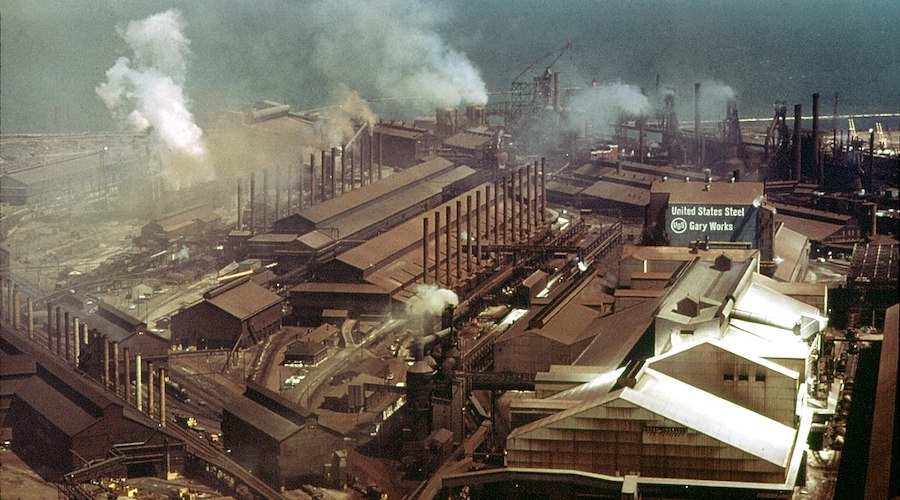
US Steel’s Gary Works in Gary, Indiana, the largest integrated mill in North America. (Archival image in the public domain from the US National Archives and Records Administration).

The United Steelworkers said an activist investor wants to sell United States Steel Corp.’s state-of-the-art mills to fund sweeping upgrades of union-run facilities that date back to the days of Andrew Carnegie.


US Steel, meanwhile, ratcheted up its criticism of the investor, Ancora Holdings Group, as the American steelmaker pursues completing its $14.1 billion deal with Nippon Steel Corp. before the agreement expires in mid-June.

USW president Dave McCall and District 7 director Mike Millsap wrote in a letter to members that it is scrutinizing Ancora’s plans, and reiterated its opposition to the US Steel-Nippon Steel combination. Ancora, which holds just 1% of US Steel’s shares, has pushed its case to replace the company’s board and install a new chief executive officer to lead a turnaround.

The letter, which was seen by Bloomberg News, highlighted to members that Ancora would sell the company’s Big River assets in Arkansas if its plan succeeds, and invest money from the sale in blast furnaces in Mon Valley, Pennsylvania; Gary, Indiana; and Granite City, Illinois.

A regulatory filing from the activist investor from earlier this month said “rescuing and investing” in the restoration of US Steel’s legacy assets would include up to $1.5 billion at Mon Valley Works, $500 million at Gary Works and $300 million at Granite City.

The USW letter didn’t mention how much money Ancora might expect from sales of the Big River assets. Nippon Steel last year submitted an offer for the Arkansas assets and some mining operations for an enterprise value of $9.2 billion.

The Big River assets produce automotive-grade material in so-called electric arc furnaces, and are viewed as more efficient and lower cost than the company’s legacy integrated plants. The integrated mills, which are union-run plants, require more energy use and a larger work force than the assets in Arkansas.

“Ancora publicly indicated that it intends to sell the Big River facilities, which are and have been a threat to our facilities from day one,” McCall and Millsap wrote. “Our union’s first and only concern has been the long-term viability of our facilities, and with it, ensuring a strong domestic steel industry well into the future.”


McCall said through a spokeswoman that the union recognized from the beginning that Big River Steel poses a threat to its members and to US national security. That echoes comments by former USW President Tom Conway in 2022 that US Steel’s purchase of Big River could mark the beginning of the end for union-run mills.

“We appreciate the positive feedback from the leadership of the USW, which will be a key partner in making US Steel great again,” Ancora said in an emailed statement. “Our slate plans to right current leadership’s wrongs by investing billions in union plants across the Rust Belt.”


The USW letter comes amid a flurry of public statements this week from leadership of US Steel and Nippon Steel. The American company, in a letter Monday to company shareholders, slammed Ancora, claiming some of its board nominees and CEO replacement have financially benefited from ties with competitor Cleveland-Cliffs Inc. It said the activist has no actionable path forward for investors.

It’s unclear what sway the union holds in determining US Steel’s future at this stage, even though it was deeply influential in former President Joe Biden’s decision to block the deal with Nippon Steel. President Donald Trump last month made clear he didn’t want the Japanese company to hold a majority stake in the US firm, but White House officials in recent weeks have met with high-ranking figures from US Steel, Nippon Steel and Ancora.

(By Joe Deaux)

Zelenskiy cautious on new minerals deal but says past US aid was not a loan

Reuters | March 28, 2025 | 

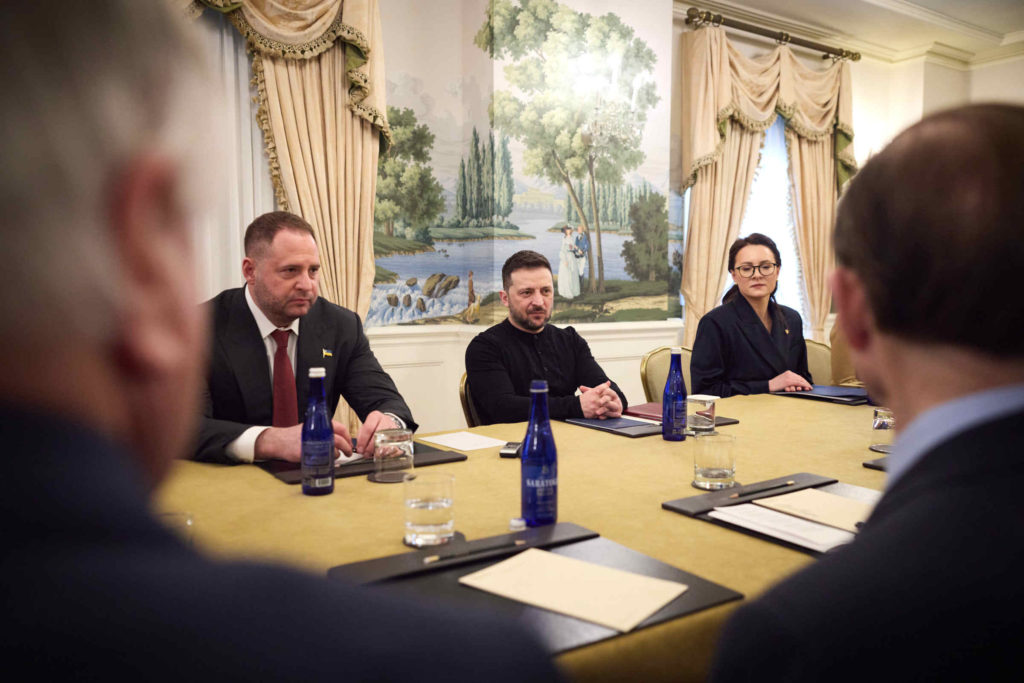
Ukraine President Volodymyr Zelenskyy. Credit: Volodymyr Zelenskyy’s official X account


President Volodymyr Zelenskiy said Ukraine would not accept any mineral rights deal that threatened its integration with the EU but said it was too early to pass judgment on a dramatically expanded minerals deal proposed by Washington.


The Ukrainian leader told reporters that Kyiv’s lawyers needed to review the draft before he could say more about the US offer, a summary of which suggested the US was demanding all Ukraine’s natural resources income for years.

He also said Kyiv would not recognize billions of dollars of past US aid as loans, though he did not say whether such a demand featured in the latest draft version received by a top government official.

Zelenskiy said the text was “entirely different” from an earlier framework agreement that he had been set to sign with Donald Trump before their talks descended into acrimony last month.


“I don’t want to set off a wave (of comments), I really want us to get a specific review by lawyers at the highest level,” Zelenskiy told the news conference in Kyiv.

The latest US proposal would require Kyiv to send Washington all profit from a fund controlling Ukrainian resources until Ukraine had repaid all American wartime aid, plus interest, according to the summary, reviewed by Reuters.

Deputy Prime Minister Yulia Svyrydenko told lawmakers that Kyiv would issue its position on the new draft only once there was consensus. Until then, public discussion would be harmful, she said.

Mykhailo Podolyak, a senior official in President Volodymyr Zelenskiy’s office, told Reuters there was no finalized draft for now: “Consultations are still happening at the level of the various ministries,” he said, declining to elaborate further.

Another Ukrainian source described the full document presented by the Americans as “huge”.

Revised draft

The Trump administration, which has reoriented Washington’s policy towards endorsing Russia’s narrative about the three-year-old war in Ukraine, has been pressing Kyiv for weeks to sign a deal giving Washington a stake in Ukraine’s resources.

Zelenskiy has repeatedly said he accepts the idea, although he would not sign an agreement that would impoverish his country. On Thursday he said Washington was constantly changing the terms but that he did not want the US to think he was opposed in principle.

Three people familiar with the ongoing negotiations said Washington had revised its proposals. The latest draft gives Ukraine no future security guarantees and requires it to contribute to a joint investment fund all income from the use of natural resources managed by state and private enterprises.

According to the summary, it stipulates that Washington is given first rights to purchase extracted resources and recoup all the money it has given Ukraine since 2022, plus interest at a 4% annual rate, before Ukraine begins to gain access to the fund’s profits.

Ukraine’s 2024 budget revenues included, among other things, $1.2 billion of rent payments for the use of subsurface resources, $1.8 billion in dividends and other payments from the state share in state-owned companies, and $19.4 billion from profits at state-owned companies, finance ministry data showed.

The joint investment fund would be managed by the US International Development Finance Corporation and have a board of five people, three appointed by the US and two by Ukraine. Funds would be converted into foreign currency and transferred abroad.

(Reporting by Pavel Polityuk, Gram Slattery, Erin Bano and Andrea Shalal, Writing by Tom Balmforth; Editing by Jon Boyle)

 US pushing more expansive minerals deal with Ukraine


Reuters | March 28, 2025 |


Ukrainian President Volodymyr Zelenskiy in meeting with delegation from the US Senate. Credit: Volodymyr Zelenskiy’s official X account


The Trump administration has proposed a new, more expansive minerals deal with Ukraine, according to three people familiar with the ongoing negotiations and a summary of a draft proposal obtained by Reuters.


The US has revised its original proposal, said the sources, and it gives Ukraine no future security guarantees but requires it to contribute to a joint investment fund all income from the use of natural resources managed by state and private enterprises across Ukrainian territory.

The terms put forward by Washington go well beyond the deal discussed in the days leading up to the contentious Oval Office meeting last month between US President Donald Trump and Ukrainian President Volodymyr Zelenskiy.

Treasury Secretary Scott Bessent has been leading negotiations for the United States, said one of the sources.

Bessent did not immediately respond to a request for comment.

The proposal makes no mention of the US taking ownership of Ukraine’s nuclear power plants, according to the summary – something Trump had talked about.

Trump has said a minerals deal will help secure a peace agreement by giving the United States a financial stake in Ukraine’s future. He also sees it as America’s way of earning back some of the tens of billions of dollars it has given to Ukraine in financial and military aid since Russia invaded three years ago.

National Security Council spokesperson James Hewitt declined to confirm the terms of the latest proposal, but said the deal would strengthen the relationship between the US and Ukraine.

“The mineral deal offers Ukraine the opportunity to form an enduring economic relationship with the United States that is the basis for long term security and peace,” said Hewitt.

Ukraine’s ministry of foreign affairs did not immediately respond to a request for comment.

An earlier version of the deal proposed a joint investment fund where Ukraine would contribute 50% of proceeds from the future profits of the extraction of the state-owned natural resources. It also set out terms that the US and Ukraine would jointly develop Ukraine’s mineral resources.

Zelenskiy told reporters on Tuesday that the US had proposed a “major” new deal and that Ukrainian officials were still reviewing its terms.

Zelenskiy said on Thursday the US is “constantly” changing the terms of the proposed minerals deal, but added that he did not want Washington to think Kyiv was against the deal.

In an interview with Fox News earlier this week, Bessent said the US had “passed along a completed document for the economic partnership” and that Washington hopes to “go to full discussions and perhaps even get signatures next week.”

The new proposal stipulates that the US is given first rights to purchase resources extracted under the agreement and that it recoup all the money it has given Ukraine since 2022, in addition to a 4% annual interest rate, before Ukraine begins to gain access to the fund’s profits, according to the summary. The updated proposal was first reported by the Financial Times.

If agreed, the joint investment fund would have a board of five people, three appointed by the US and two by Ukraine, and the funds generated would be converted into foreign currency and transferred abroad, according to the summary. The fund would be managed by the US International Development Finance Corporation (DFC).

A separate source with knowledge of the negotiations said there had been discussions about having the DFC administer the fund.

(By Erin Banco, Andrea Shalal, Gram Slattery and Tom Balmforth; Editing by Don Durfee and Daniel Wallis)

OUTLAW SEABED MINING
Miner’s bid to tap seabed pits UN-backed regulators against Trump

Bloomberg News | March 29, 2025 | 

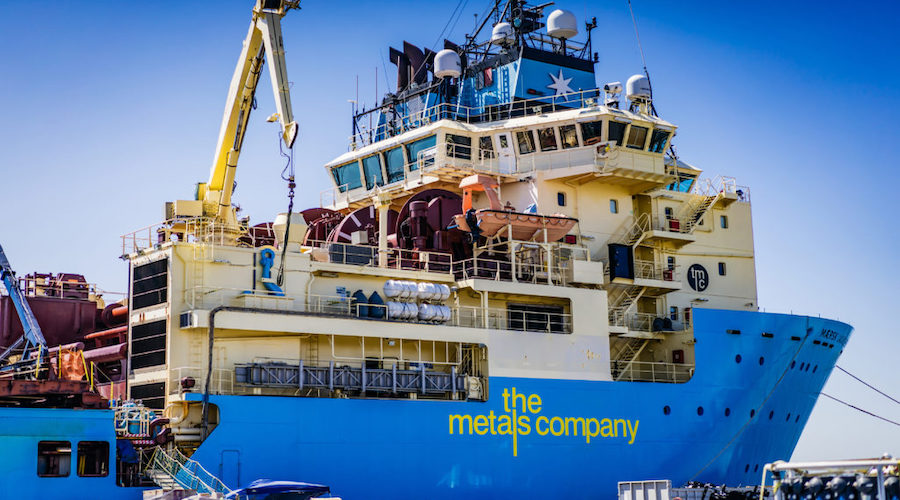
TMC is determined to mine polymetallic nodules from the seafloor despite widespread opposition to their plans. Credit: The Metals Company

International regulators on Friday condemned a seabed mining company’s move to circumvent their authority by seeking the Trump administration’s approval to extract critical minerals from untouched ocean ecosystems.


The Metals Company (TMC) on Thursday said it had initiated a process to obtain a US government license to mine metals used in green technologies from a region of the Pacific Ocean controlled by the International Seabed Authority (ISA), the United Nations-affiliated organization that regulates the exploitation of the deep sea. The announcement came as ISA delegates were meeting in Kingston, Jamaica, to draft rules for how companies should go about mining a vast swath of the ocean outside the jurisdiction of any one nation.

ISA Secretary-General Leticia Carvalho and members of the organization’s 36-nation Council policymaking body denounced TMC’s action, saying it defied the organization’s authority over 54% of the global seabed and its mandate to manage it for the benefit of humanity.

“Any unilateral action would constitute a violation of international law and directly undermine the fundamental principles of multilateralism,” Carvalho, a Brazilian oceanographer who took office in January, told the delegates.

A decision by the Trump administration to issue a seabed mining license for an ISA-controlled area could upend an international treaty that governs deep-sea mining and other commercial uses of the world’s oceans.

TMC holds an ISA license sponsored by member state Nauru to explore for minerals but has grown frustrated by decade-long negotiations to draft regulations governing mining biodiverse deep-sea ecosystems. TMC and other ISA-licensed companies can’t begin mining until regulations are enacted. The two-week Council meeting ended on Friday with contentious issues unresolved, including how to protect marine life in areas targeted for mining.

The company is now seeking permission from the Trump administration to mine its ISA license area under US law, which would go against the UN Convention on the Law of the Sea (UNCLOS). The US never ratified the treaty and is not an ISA member. But that treaty reserved some mining areas for the US in case it eventually acceded to the convention. The US in turn passed a 1980 law that laid out procedures for American companies to gain access to deep-sea minerals there.

TMC chief executive officer Gerard Barron said in a statement to Bloomberg Green that the company had complied with the terms of its ISA contract but the organization has failed to fulfill its duty under UNCLOS to enact regulations.

“I’m not sure why ISA member states act surprised that TMC is now looking at an alternative, long-standing regulatory regime,” he said. “Member states cannot have it both ways—expressing shock while repeatedly breaching UNCLOS and failing to deliver the regulatory clarity they committed to years ago.”

International legal experts said it’s unclear what action the 169-member nation ISA could undertake if TMC obtains a US mining license. “If the US takes steps in this unilateral direction,” it’s possible the ISA could pursue some form of international legal action, said Pradeep Singh, an expert on the Law of the Sea at the Oceano Azul Foundation.

Representatives of China, Russia, France, Germany, South Africa and Chile were among the delegates who asserted that only the ISA has the authority to issue mining licenses under UNCLOS. Uganda delegate Duncan Muhumuza Laki, who serves as president of the ISA Council, characterized TMC’s actions as “a breach of their good faith obligation.”

Despite its move to obtain a US mining license, TMC has said it will still file an application for an ISA mining contract in June even if regulations, including environmental protections, are not in place. But many ISA delegates on Friday reiterated that they would not approve any contracts until strong environmental rules are in place.

Thirty-two ISA member nations, including Costa Rica, Germany and France, have called for a moratorium on mining until its environmental impacts are better understood.

“No country, no person and no company may claim property rights nor exercise sovereignty over the common resources of this heritage,” Gina Guillén Grillo, Costa Rica’s representative to the ISA, said Friday.

The ISA Council will likely have to decide how to handle TMC’s application for a mining contract at its next meeting in July.

“We call on ISA members to not be bullied,” Louisa Casson, a Greenpeace deep sea mining campaigner, told delegates.

(By Todd Woody)

The Metals Company to apply for deep sea exploration license under US legislation

Reuters | March 27, 2025 | 


TMC hopes to begin seafloor mining by late 2025.
 Credit: The Metals Company


Canadian miner The Metals Company said on Thursday it had formally initiated a process under the US Department of Commerce to apply for exploration licenses and permits to extract minerals from the ocean floor.


The company plans to apply under the Deep Seabed Hard Mineral Resources Act of 1980 (DSHMRA) instead of the International Seabed Authority (ISA), stating the latter had not yet adopted regulations around deep seabed exploitation.

It also added that it has requested a pre-application consultation with National Oceanic and Atmospheric Administration (NOAA).

TMC’s bid to become the first company to gain approval to develop deep sea minerals has been controversial. Environmental groups are calling for all activities to be banned, warning that industrial operations on the ocean floor could cause irreversible biodiversity loss.

This move comes at a time when delegations from 36 countries are attending a council meeting of the UN’s ISA in Kingston, Jamaica this week to decide if mining companies should be allowed to extract metals such as copper or cobalt from the ocean floor.

Few expect a final text for the mining code to be completed by the end of the latest round of talks on March 28, with delegates also planning to discuss potential actions if a mining application is submitted before the regulations are completed.

“We believe we have sufficient knowledge to get started and prove we can manage environmental risks. What we need is a regulator with a robust regulatory regime, and who is willing to give our application a fair hearing,” said Gerard Barron, CEO of The Metals Company.

Advocacy group Greenpeace said the move was “desperate”, accusing the company of “encouraging a breach of customary international law”, by attempting to mine the international seabed under US legislation.

(By Seher Dareen and Ernest Scheyder; Editing by Vijay Kishore)

See Also: Trump is the best news for deep sea mining – The Metals Company CEO

In Manila, U.S. Defense Secretary Commits to Protecting Philippines


FOR HOW MUCH $$$$$$$ ?!

Philippine President Ferdinand Marcos Jr. meets with U.S. Defense Secretary Pete Hegseth, March 28 (Pentagon)

Published Mar 27, 2025 11:09 PM by The Maritime Executive


In a press conference in Manila on Thursday, U.S. Secretary of Defense Pete Hegseth sought to reassure Philippine partners that the U.S. is committed to their sovereignty in the South China Sea, and he pushed back on China's claims that America abandons its foreign allies.

The Philippines is one of America's oldest treaty allies in East Asia, and the U.S. has had a hand in its defense since the colonial era. Its territorial integrity is under pressure in its western exclusive economic zone, where Chinese forces are gradually expanding their hold over reefs and waterways in the Spratly Islands. China claims most of the South China Sea under its historical "nine-dash line" policy, and has used increasing levels of force to pursue its claims - including obstructing navigation, ramming, water-cannoning and (on one isolated occasion) hand-to-hand combat

In the run-up to Hegseth's trip, Chinese officials repeatedly tarred the U.S. as an unreliable partner. "Those who willingly serve as chess pieces [of the U.S.] will be deserted in the end," Chinese Foreign Ministry spokesman Guo Jiakun warned the Philippines on Tuesday. Chinese Defense Ministry spokesman Wu Qian was more direct, and claimed that America has an "astonishing record of breaking its promises and abandoning its allies."

U.S. officials and policy experts are well aware of this narrative, and some have advised investing more heavily in the Philippines' defense to restore deterrence and prevent China's territorial ambitions from becoming reality. 

"China . . . believes it can be combative without a credible response due to limited Philippine capabilities and a lack of U.S. commitment to come to the aid of their treaty ally," cautioned former Trump administration defense official Joseph Felter, writing for The Hill. "The U.S. and the Philippines must not squander this opportunity to strengthen the credibility of their alliance."

In Manila, Hegseth emphasized that President Donald Trump is committed to the alliance with the Philippines. "He and I both want to express the ironclad commitment we have to the Mutual Defense Treaty and to the partnership, economically, militarily, which our staffs have worked on diligently for weeks and weeks and months," Hegseth told Philippine President Ferdinand Marcos, Jr. "Friends need to stand shoulder to shoulder to deter conflict to ensure that there's free navigation, whether you call it the South China Sea or the West Philippine Sea, we recognize that your country has stand very firm in that location and in defense of your nation."


NTSB: Crane Barge Hit an STS Crane Because Mate Didn't Perceive Hazard

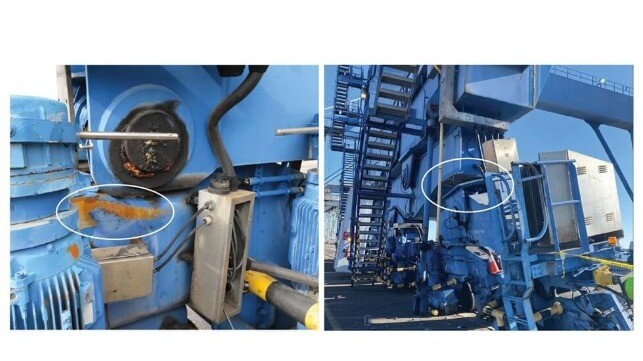
Damage to the structure of the STS crane from the impact (NTSB)

Published Mar 26, 2025 4:08 PM by The Maritime Executiv


The National Transportation Safety Board has determined the cause of an STS crane allision at North Charleston Terminal last year. A towboat mate failed to consider the horizontal extent of the STS crane when he made passing arrangements with a dredge in the channel, and his chosen course put his tow - a tall crane barge - in contact with the STS crane's lowered boom.

On the afternoon of January 4, 2024, the towboat Royal Engineer and the crane barge Stevens 1471 got under way from a terminal on the Cooper River for a berth at the Pierside Docks, a short three-hour trip downriver on the other side of the North Charleston Terminal. The crane was lowered, but its upper mast extended about 145 feet above deck level. 

As Royal Engineer approached North Charleston Terminal, its passage was blocked by the dredger Brunswick, which was working on dredging out the bottom just a few hundred feet off the terminal's pier. The dredge's floating discharge pipeline extended all the way across to the opposite side of the river, and was temporarily blocking all of the navigation channel. The only options for safe passage were to ask the dredge crew to stop work and move their floating pipeline so that traffic could get by, or to go through a narrow slot between the dredger and the pier, where the terminal's cranes were working cargo. 

Royal Engineer's mate had the watch, and he contacted Brunswick about an hour out to make timely passing arrangements. He planned to ask the dredger crew to move their pipeline and wanted to give them enough advance notice. The Brunswick did not respond to two calls. 

At 1605, Royal Engineer approached Brunswick's work area. A large boxship was moored at the terminal and an STS crane boom was lowered to move containers. The boom extended about 200 feet out over the channel, 100 feet beyond the beam of the boxship. 

At this point, Royal Engineer's mate was able to reach Brunswick's captain over VHF, and he asked him to move the pipeline. The dredger's captain declined because his crew was busy and he already had his crew on a task and would "have to stop them to go do something else." Instead, he suggested that Royal Engineer could safely go through the 300-foot slot between Brunswick and the pier, and he offered to turn the dredger to make this possible.  

Royal Engineer's mate accepted this arrangement. Considering the narrowness of the gap, he posted a deckhand to watch for obstructions. He did not consider the barge's air draft and the STS crane's reach out into the channel until he began to pass Brunswick. The deckhand thought it would clear, but he was mistaken. The mate reversed engines too late to avoid contact.

The STS crane operator was in his control booth aloft and was in harm's way. He saw the hazard coming and sounded his warning horn moments before impact, then braced himself. Immediately after, he fled the operator's cabin and ran down a ladderway to the pier. 

The STS crane stayed upright, and even had enough strength to stop Royal Engineer/Stevens 1471's forward momentum. Royal Engineer's mate reversed away from the crane; the Brunswick disconnected its dredge line and left the area in case the STS crane were to collapse; and the boxship got under way, headed away from the terminal. 

The STS crane was badly damaged, and was determined to be structurally unstable. Torqued like a screw by impact at the far end of its boom, the STS crane's vertical frame was twisted, the gantry assemblies were "wrecked," and the base was rotated off its rails. Remarkably, it was repairable, and it was restored within a year and put back into service. The overall cost of the repair came to just $4.5 million, and was the only significant charge; the crane on Stevens 1471 was virtually undamaged. 

NTSB concluded that the root cause was the towboat mate's failure to identify the STS crane as an overhead hazard. 

"Ship-to-shore cranes, when conducting cargo operations on a vessel and in the lowered position, may extend considerably beyond the side of the vessel and become a hazard to vessels with high air drafts transiting nearby. Mariners should always consider their vessel and tow’s air draft when identifying hazards to navigation," NTSB advised.