Sunday, April 20, 2025

Tuberculosis: An ancient killer we can't seem to defeat
DW
April 18, 2025

We've been able to cure tuberculosis for decades. So why does the disease still kill more than 1 million people every year?


Tuberculosis generally affects the lungs, and a typical symptom is a cough. But most infections show no symptoms
Image: picture-alliance/ dpa

An estimated quarter of the world's population — about 2 billion people — unknowingly carries a dormant tuberculosis infection.

It's a disease we've known how to treat since the 1950s, and yet tuberculosis (TB) continues to infect some 10 million people and kill a million more every year.

The World Health Organization (WHO) aims to reduce TB cases by 80% by 2030. But control efforts were dealt a blow by COVID-19, which reversed years of progress as attention shifted to addressing the pandemic.

Now TB is again the world's deadliest infectious disease.

While TB disproportionately affects lower-income countries, wealthy nations aren't immune. The United Kingdom reported a 13% rise in TB cases in 2024, threatening its "low TB" status, with one-third of patients experiencing treatment delays.

In January 2025, the US recorded its largest ever outbreak.

What is TB?


Skeletal records from 4,000 B.C. show TB has been infecting humans for thousands of years, spreading through airborne droplets when infected people cough or speak. It's caused by Mycobacterium tuberculosis; a bacterium first identified in the 1880s by German scientist Robert Koch.

But unlike many disease-causing microbes, TB can lie dormant in a person's body for decades without causing symptoms.

When it becomes active — often triggered by weak immunity — it attacks the lungs and can also spread throughout the body. Typical symptoms include a cough producing blood-containing mucus, fever and weight loss.
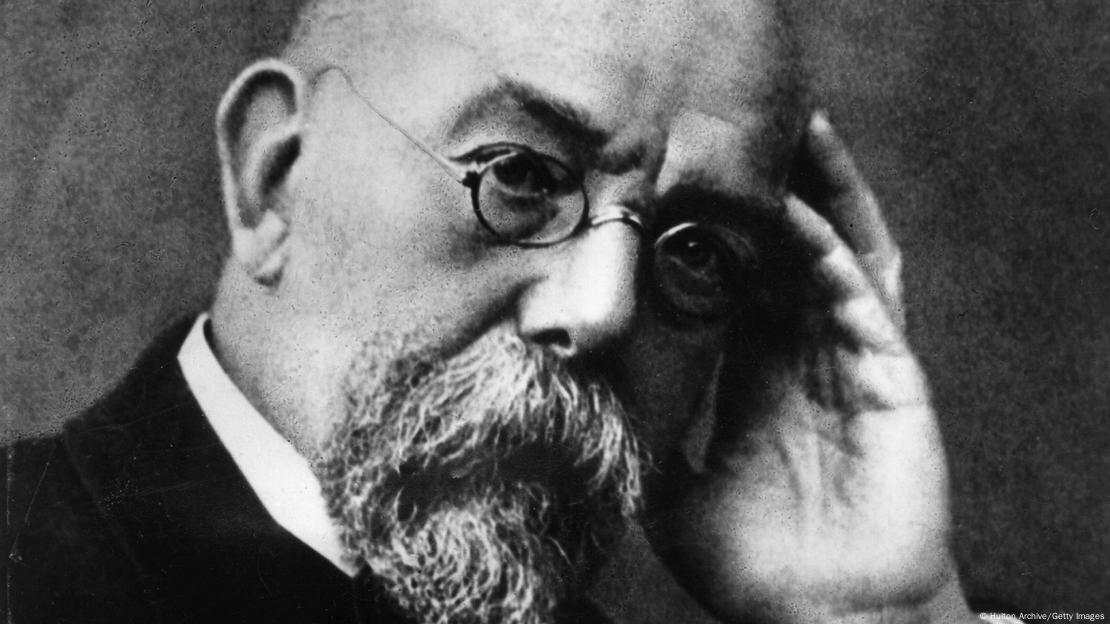
Robert Koch, a German bacteriologist, was the first person to identify the bacteria that causes TBImage: Hulton Archive/Getty Images


'Missing millions' continue to transmit TB

TB has proven remarkably resilient and difficult to contain.

While there are ways to diagnose and treat the disease, several critical barriers continue to prevent its elimination.

"The price of effective TB tests remains too high," said Jasmin Behrends, an advocacy officer at Doctors Without Borders.

The WHO estimates nearly 3 million TB cases are never diagnosed or reported every year, creating a reservoir for continued transmission. These cases are known as the "missing millions."

"We need to shift from passive to proactive case finding, including intensified case finding, among those who visit health facilities," said Dr. Mohammed Yassin, a senior adviser on tuberculosis at the Global Fund.

"[We also need to take these] services to where people are, especially to reach those with high risk and limited access — homes, workplaces, prisons, urban slums and remote communities."

"Children at risk of having TB are often overlooked, either going undiagnosed or facing delays in diagnosis," said Behrends.


TB can develop antibiotic resistance


TB bacteria can develop resistance to antibiotics, especially when treatments are interrupted or incomplete.

Standard TB treatment requires multiple antibiotics taken consistently for six months — a regimen many patients struggle to complete due to side effects, stigma or limited access to health care.

Multidrug-resistant TB requires longer, more toxic and more expensive treatment courses. The WHO estimated 400,000 new cases of drug-resistant TB in 2023 alone.

"Shorter regiments to treat resistant forms of TB have to be implemented worldwide to treat patients with less severe side effects in a much shorter time," said Behrends.

Meanwhile, the first and only TB vaccine, known as the BCG, was developed over a century ago. While it protects children from the most severe forms of TB, it offers minimal protection to adults.

But meaningful opportunities for better vaccines have been limited by funding.

While COVID-19 vaccines received $90 billion (€79.1 billion) in development funding, TB vaccine research has secured just $1.1 billion (€967 million) over the last 11 years.


Dwindling support for TB measures, but hope remains


Recent funding decisions have also raised concerns. The US government's recent move to slash USAID funding, and other nations' cuts to foreign aid, have threatened to undermine progress in high-burden countries at a critical moment.

"[Doctors Without Borders] is gravely concerned about the recent United States funding cuts," said Behrends, "We are already seeing disruptions due to shortages of medical supplies and staff not being paid."

"Sustained international financing is essential to the global fight against TB. Any reduction in funding — whether temporary or long term — can have real and immediate effects on people’s lives," said Yassin.

Can tuberculosis be eradicated?


New molecular diagnostic tools can detect TB in hours rather than weeks, allowing for faster treatment. Meanwhile, several candidates for TB vaccines are in late-stage clinical trials.

The Tuberculosis Vaccine Accelerator Council, launched in 2023, aims to speed up development by applying lessons from the COVID-19 response.

But ending TB will require multi-sector action: strengthening health care systems, addressing poverty and malnutrition, improving housing conditions to reduce transmission and ensuring universal access to diagnosis and treatment.

A UN high-level meeting on TB in 2023 renewed these commitments, but translating promises into action remains the critical challenge.

"TB is no longer a silent epidemic," said Yassin.

"Advocates, survivors, scientists and donors are coming together to demand change. The momentum from the 2023 UN high-level meeting on TB shows that global leaders recognize the urgency — and the opportunity — to end TB within our lifetime."

Edited by: Matthew Ward Agius
Should Africa be worried about earthquakes?

Abubakar Said Saad and Hannah Heckelsmüller
DW
April 19, 2025

Myanmar's deadly earthquake has raised alarms beyond Southeast Asia. In Africa, fault lines stretching across the continent pose serious risks, yet preparedness remains low.


Morocco's 2023 earthquake disaster killed nearly 3,000 people
Image: FADEL SENNA/AFP


The recent earthquake in Myanmar has drawn fresh attention to global preparedness for natural disasters, including on the African continent.

African experts are concerned about seismic threats and limited local capacity to respond. For Gladys Karegi Kianji, a seismologist at the University of Nairobi, Kenya, who has studied African earthquakes for 15 years, this is far from a new worry.

"I don't hire an apartment in a tall building beyond the first floor in Nairobi,” Kianji said.

Is Africa at risk of earthquakes?

Earthquakes have struck the continent before. Thousands were killed in Morocco's 2023 disaster, while Ethiopia's 2005 quake resulted in the displacement of about 6,500 people.

Folarin Kolawole, a structural geologist at Columbia University, US, says assessing a region's earthquake risk involves looking at historic earthquakes in the region and identifying fault lines, which are fractures between rocks.

Africa, he says, lies on a complex geological structure that makes it vulnerable to seismic activity.

At the core of this risk is the East African Rift System, where the African Plate is slowly splitting into the Nubian and Somali Plates. As these plates drift apart more, Kolawole says it leads to earthquakes in countries like Ethiopia, Kenya, Uganda, Tanzania, and Mozambique.
Where are Africa's earthquake zones?

Africa has several active seismic zones.

In 2016, a group of geologists created the Seismotectonic Map of Africa, highlighting regions based on historical quakes and geological activity.


Kolawole identifies the East African Rift covering Malawi, Tanzania, Ethiopia and Madagascar as the most earthquake prone part of Africa.

These countries lie along a 3,000-kilometer (1,864-mile) fault stretching from Ethiopia to Mozambique and frequently experience tremors, some causing significant damage.

And while West Africa is often seen as tectonically stable, he points to Ghana's past earthquakes and recent tremors in Nigeria as signs of potential for a large magnitude earthquake to occur.

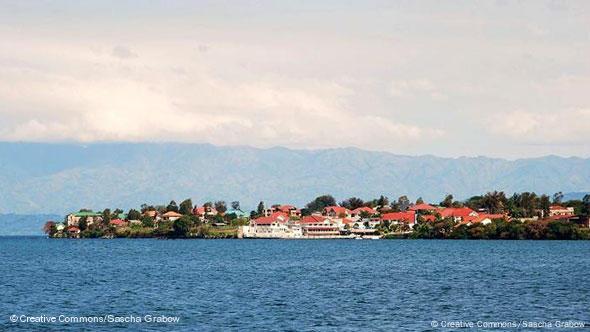
Lake Kivu: A volatile mix of geology and gas

Lake Kivu, between Rwanda and the Democratic Republic of Congo, is one of Africa's deepest lakes.

What makes it dangerous, Kolawole explained, is the large amount of dissolved carbon dioxide and methane, the latter being highly flammable.

In the event of a strong earthquake, these gases could be released in a rare "limnic eruption", potentially suffocating thousands.

In 1986, a similar event at Lake Nyos in Cameroon killed over 1,700 people when a gas cloud silently swept across nearby villages.

To mitigate this risk, the Rwandan government launched the KivuWatt Gas Methane Power Plant in 2016 to extract methane from the lake for electricity production.

Lake Kivu is one of Africa's deepest lakes and a risk-site for limnic eruptions
Image: Creative Commons/Sascha Grabow

Despite active fault lines, rising seismic activity, and initiatives like this methane extraction facility, Africa remains overall ill-prepared.

"[Governments] don't recognize the importance of putting a network that is going to feed them with the information to actually do the seismic hazard warning. Definitely nothing like that exists,” said Kianji.

She added that governments are often reactive rather than proactive in disaster risk reduction.

What's needed, she said, is greater awareness, seismic monitoring systems, better policies and urban planning, and economic investment.

Kolawole added that "conflict and unrest in some of the African countries such as Congo” hinders preparedness efforts.

"We cannot stop earthquakes from happening,” Kolawole said. "The best we can do is to prepare for it and monitor.”

Fewer than a third of African countries have implemented multi-hazard early warning systems.

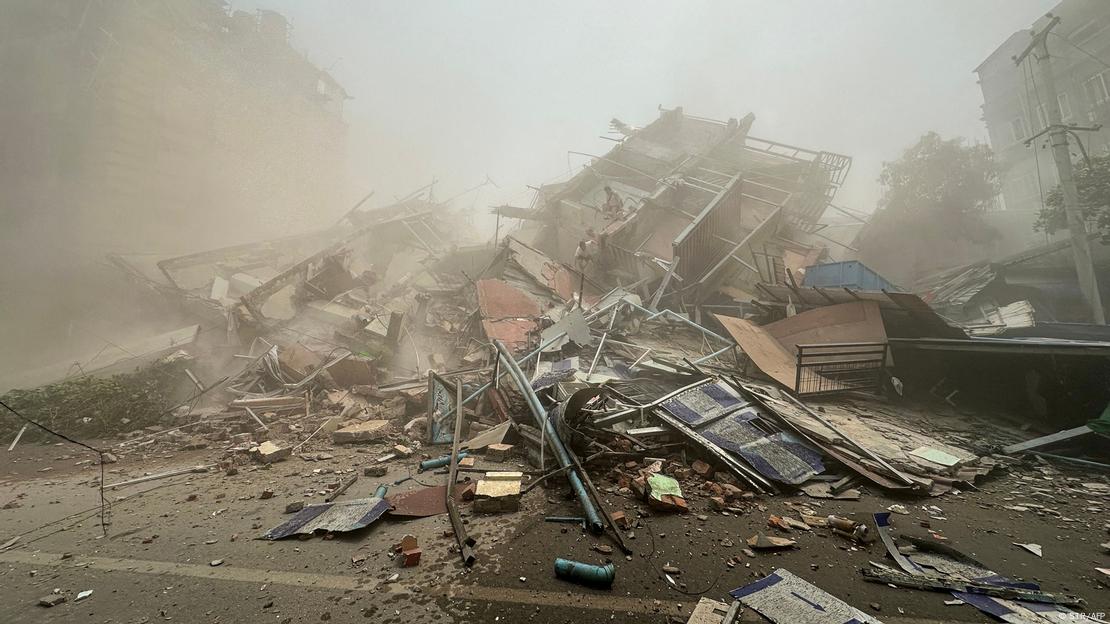
The recent earthquake in Myanmar and Thailand has drawn fresh attention to global preparedness
Image: STR/AFP

Africa can learn from global examples including Myanmar's recent quake.

That includes better building standards and investment in understanding the geological activity in the region.

"I think there was a lapse in the administration in terms of the building and construction,” said Kianji of the Myanmar quakes.

"If a lot of [scientific] research was put in, some of those very active zones they may have been able to warn people to be able to evacuate.”

Edited by: Matthew Ward Agius
Abubakar Said Saad Sa’id Sa’ad is Nigerian writer and multimedia journalist currently based in Germany.@saidsaadwrites


Amid discontent over Gaza, more Israelis back hostage deal

in Jerusalem
DW
April 18, 2025

giant billboard in Tel Aviv called on the Israeli government to secure the release of the remaining 59 hostages, both alive and dead, held in Gaza
Image: Jack Guez/AFP

In recent weeks, thousands of Israeli reservists and security forces retirees have signed petitions calling on the government to prioritize the release of hostages over the fight against Hamas.

Every week, large crowds gather in cities across Israel to call on the government to bring home hostages held in Gaza.

The hostages' fate has been on many Israeli minds since the Hamas-led attacks on Israel on October 7, 2023, which killed 1,200 people. Recent opinion polls show that nearly 70% of Israelis want a deal to bring home the remaining 59 hostages of the around 250 taken during the attacks, 24 of whom are still believed to be alive.

Now, a growing number of Air Force pilots, former Secret Service agents, intelligence unit members and many other army reservists and retirees are publicly expressing growing discontent with the government's failure to secure the hostages' release. Their message: First the hostages, then Hamas, even if war is necessary later. Israel, the United States, Germany and several other countries designate Hamas a terrorist organization.

A group of 250 former Mossad foreign intelligence agency officers has backed a recent initiative by Air Force pilots and air crews.

"We will join the call to act immediately to reach an agreement to return all 59 hostages home, without delay, even at the cost of cessation of the fighting," their open letter read.

The letter concluded with a message to Prime Minister Benjamin Netanyahu directly: "The sanctity of life, Mr. Prime Minister, takes precedence over God of vengeance," in reference to Psalm 94.
Israeli government 'going in the wrong direction'

Israel resumed military operations in Gaza on March 18 after negotiations over the second phase of a ceasefire agreement with Hamas broke down. The first phase saw the release of nearly 40 Israeli and foreign national hostages from Gaza, and Israel freed nearly 2,000 Palestinian prisoners in exchange.

For Haim Tomer, a former Mossad head of division with decades of service, the government's decision to break the ceasefire and renew its military offensive was one his reasons for speaking out.

"People started to ask themselves how long we go with this war before we get our hostages back," Tomer told DW. "The idea of our public letters is to tell the Israeli public that the government is going in the wrong direction [and] that this direction will not bring back the hostages. Hostages can die every day."
Netanyahu accused of political tactics

The Air Force officers, reservists and retired staff who started the campaign of open letters accused Netanyahu and his government of putting the lives of the hostages and the lives of soldiers at risk for his own political gain.

"At this time, the war serves mainly political and personal interests and not security interests," they wrote. "Continuing the war does not contribute to any of its declared goals and will lead to the deaths of the hostages, of IDF soldiers and innocent civilians and to the exhaustion of reservists."

Avner Yarkoni, who has served as a fighter pilot for 35 years and as head of Israel's Civil Aviation Authority, said that while the war was initially justified, many now feel it is going nowhere.

"We eventually figured out that the prime minister would like to stretch this war on forever," Yarkoni told DW. "Once we stop the war, there will be two issues: Elections and a commission of inquiry. And then he won't be prime minister anymore."

Hamas rejects Israel's latest proposal, demands lasting deal
02:07


Critics have also pointed out that Netanyahu's decision to return to war and not negotiate the second phase of the ceasefire agreement with Hamas was driven by his need to keep his far-right coalition partners in government. They threatened to quit the government if the war ended, a move that could bring down Netanyahu's coalition.

"I served 40 years for the state of Israel ... and I can say while looking in the eyes of the prime minister or any minister: 'You are wrong in regard to the ways to secure the future of Israel,'" said Tomer, the former Mossad officer.

Many argue that only negotiations have led to the release of large numbers of hostages throughout the war. They say the government's strategy of "maximum military pressure" is endangering the lives of hostages.

"Because we are pilots.... fighting Hamas while they are holding hostages is like fighting with your hands cuffed," said Yarkoni, the former fighter pilot.

What does this discontent mean for Israel's military?

The simmering discontent among reservists, many of whom have been called up several times and served hundreds of days, is a potential problem for the military. Israel has a relatively small standing military and relies on its much larger reserve corps in times of war. While there are reports that many reservists don't report for duty for various reasons, the exact figures are not known.

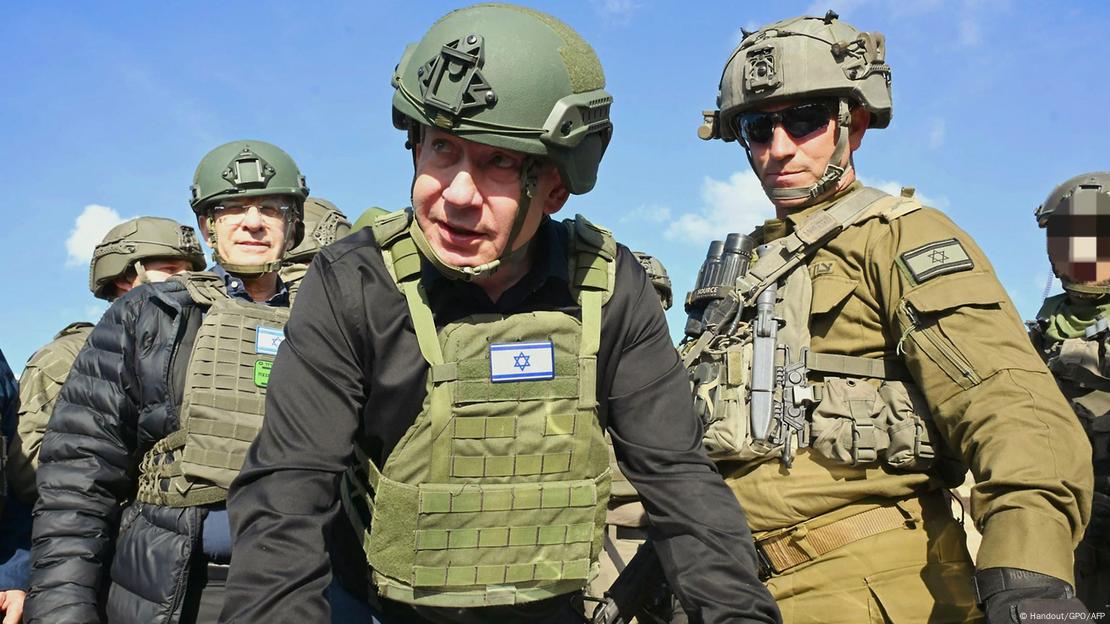
Netanyahu visited troops in northern Gaza on April 15, as seen in this handout photo from the Israeli government press office
Handout/GPO/AFP


Netanyahu immediately dismissed the Air Force letter, saying it was written by a "marginal and extremist group that is once again trying to break Israeli society from within." He also ordered the dismissal of the reservists who had signed the letter, but only a few were on active duty.

The letters do not call for refusal to serve, as some Air Force reservists did during the height of the mass protests against the government's judicial overhaul plans in July 2023.

Netanyahu's dismissal has prompted even more Israelis, including reservists and retired members of various military units, the medical corps, artists and other professionals, to express solidarity with the Air Force members. They also called on the government to change course and openly expressed their distrust of the prime minister.

Is there a genuine desire for peace?

Some, however, have questioned the petitions and their focus on the "hostages first, war later strategy." Dahlia Scheindlin, a journalist for the daily newspaper Haaretz, wrote recently that only a few letters mention Palestinian suffering amid the horrific humanitarian situation in Gaza.

She wrote that while bringing the hostages home is the most "unifying cause in Israel today," without a "permanent end to the war, followed by a political framework for peace — imperfect as it will be — how will the campaign for hostage release protect future victims from the 'cycle of horror'?'"

On a recent Saturday night protest in west Jerusalem, a small group of anti-war demonstrators marched through the city center alongside others calling for the release of the hostages and those demonstrating against the government.

"We have always been at the back of all the demonstrations over the past year, a small group of people protesting for an end to the war. We want the hostages home, but we also want the war to end, for all," Hila, who declined to give her last name, told DW.

Yarkoni said many Israelis, himself included, are still traumatized by the October 7 attacks. "We haven't gotten over it yet because stories and videos of that day keep [appearing]. It was a horrible massacre," he said.

However, he added, while in this stage of the war "maybe we are hurting more civilians than terrorists," he hopes that the open letters create a momentum to bring the hostages home.

Edited by: Davis VanOpdorp

Saturday, April 19, 2025

HAPPY 420


Afghan footballer faces deportation from Germany


Thomas Klein
DW
TODAY

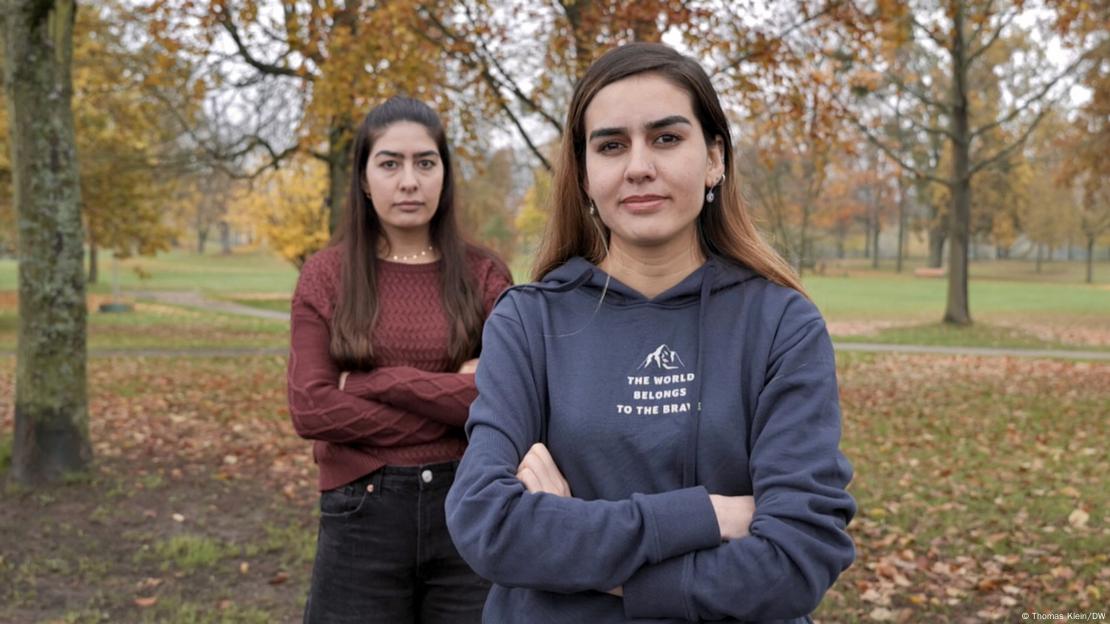
Nazima and Nazira Khairzad, sisters and athletes, fled Afghanistan and the Taliban in 2021 and built a family life in Germany. But now Nazira is facing deportation, and a second separation from her family.


Nazira Khairzad once played in goal for Afghanistan, but now faces deportation from Germany

"When I received the letter telling me I might be sent back to Italy, I was overcome by a deep sense of hopelessness, fear and uncertainty," said Nazira Khairzad. "I was very sad and shocked. Since then, my mum has lived in constant fear and stress. She hardly sleeps at night because she is afraid the police will suddenly come and take her daughter away."

After the Taliban seized power again in 2021, the Khairzad family fled Afghanistan separately. Nazira, now 21 , initially ended up in Italy. Her sister Nazima, two years older, eventually made it to Germany with the rest of the family via Pakistan. Nazira was only reunited with her family at the beginning of 2024, in the Frankfurt area.

"It was a difficult time. We weren't able to see each other for a long while," recalled Nazira. "But now we're happy to be reunited."
'My life was in danger'

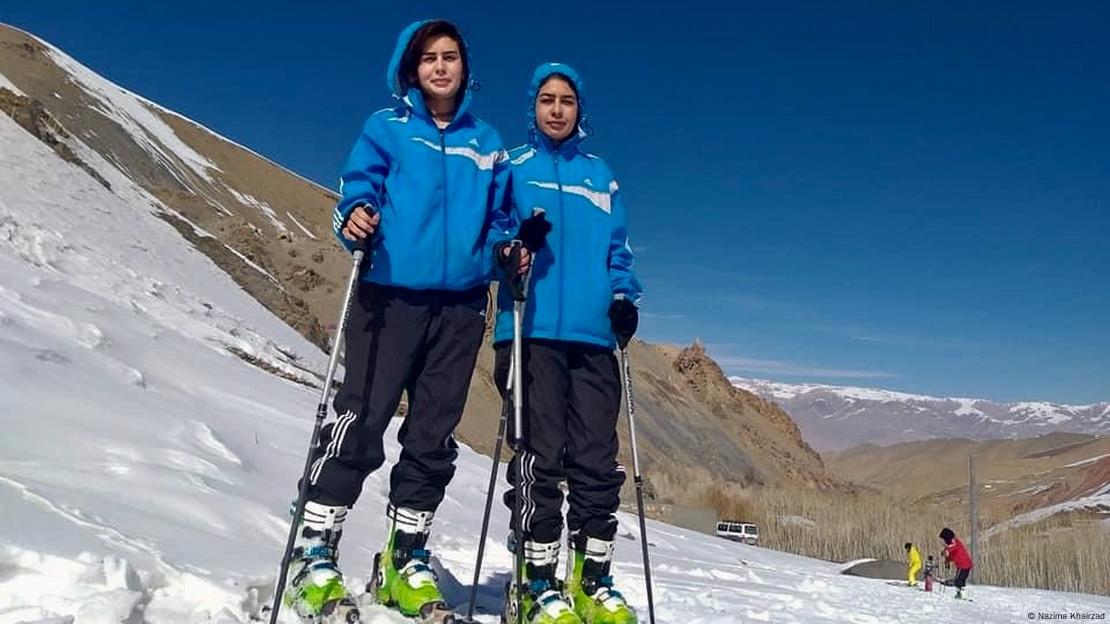
Nazima and Nazira Khairzad have been inseparable since they were children in Afghanistan.

"I'm very proud of my sister, she's my role model and my best friend," Nazira told DW. The pair did everything together: Skiing, playing football, or climbing the mountains in their home province of Bamiyan. At first, their parents struggled to understand such pursuits, given that sport was not considered an acceptable leisure activity for women and girls in Afghanistan.


Despite the social and cultural resistance, Nazima grew into a successful ski racer and mountaineer while Nazira became a goalkeeper in Afghanistan's national women's football team.

However, when the Taliban returned in August 2021, the sisters, like so many others, were forced to leave their home country. "My life in Afghanistan was in danger," said Nazira. "If I had stayed back then, the Taliban would probably have killed me."

Most female athletes in Afghanistan have fled since the regime, which has banned women from playing sport, regained power.


Facing deportation to Italy

The sisters had to find a way to live apart from each other in foreign countries. It was only after three difficult and isolated years in Italy that Nazira made it to Germany in 2024.

Now that they're reunited, Nazira says her family needs her help. "My mother is ill and needs my closeness, my support and emotional stability," she said. "We are very close." Her older sister, Nazima, also needs support: She was diagnosed with a brain tumor last year and had to undergo an operation.

But now Nazira faces deportation to Italy, the country that initially granted her residency. The family is trying to prevent her deportation with the help of their lawyer Elke Gabsa, despite the difficult legal footing. "If someone is recognized as a refugee in one country, it is fundamentally impossible to request protection in another [EU] member state," Gabsa told DW.

Nazima and Nazira Khairzad face being separated once again
Image: Thomas Klein/DW

However, there have been exceptions in the past when the European Court of Justice has found "systemic deficiencies," for example in Greece or Italy, the lawyer said.

These systemic deficiencies can arise when refugees are threatened with inhumane or degrading treatment in the host country, but, as Gabsa pointed out, this case law has recently been adjusted.
Hope remains

Nazira's deportation back to Italy is therefore likely to stand. Nevertheless, she and her lawyer are trying to prevent the family being separated again. "In this case, it is also a violation of the Universal Declaration of Human Rights if she [Nazira] is not allowed to be with her family, who need her support," said Gabsa.

The sisters enjoyed all kinds of sports in Afghanistan, but such pursuits are now not available to women
Image: Nazima Khairzad

Over the past few months, Nazira has built a life for herself in Germany, learned the language and even playing football again. "I work part-time and try to fully integrate into society," she said.

"I exercise regularly. Football plays a big role in my life. I used to train at AC Milan, and today it's my big dream to play in Frankfurt." For her, football is not just "a passion, but an opportunity to build my future."

Nazira hopes the courts will rule in her favor. "I want to stay in Germany, live with my family, work, play soccer and be an active, useful member of this society. I wish for a safe, dignified life that I can shape with a lot of commitment and hope."

This article was originally written in German.
Robots lose against humans in half-marathon


Tanika Godbole with DPA, AFP, Reuters

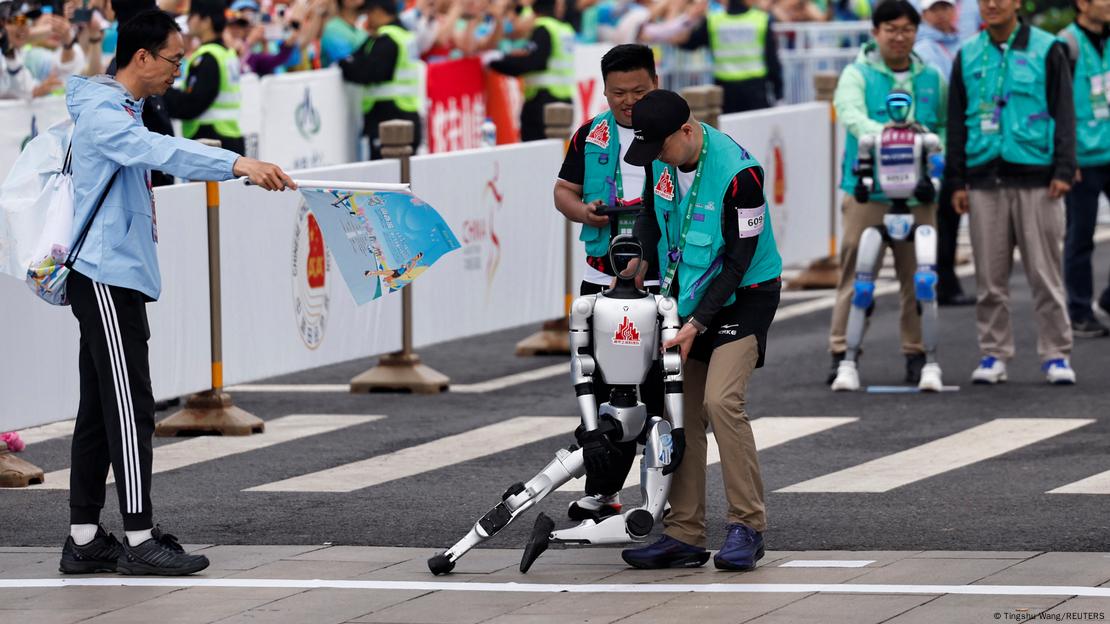
Beijing held a half-marathon where humanoid robots competed against humans. Organizers called the race a show of technological prowess and said they did not expect the robots to win — and they didn't.


The fastest robot took more than an hour longer than the fastest human but still got its own finisher banner to run through
Image: Tingshu Wang/REUTERS

Robot Tiangong Ultra finished a half-marathon in 2 hours 40 minutes on Saturday in Beijing at the E-town Humanoid Robot Half Marathon. But it was no match for the fastest human finish of 1 hour, 11 minutes, 7 seconds.

The world's first human and humanoid robot half-marathon (21 kilometers or about 13 miles) included 21 bipedal robots racing alongside 10,000 humans.

The robots from Chinese manufacturers, such as DroidVP and Noetix Robotics, came in a variety of shapes and sizes, some shorter than 120 centimeters (3.9 feet), others as tall as 1.8 meters. One company boasted that its robot looked almost human, with feminine features and the ability to wink and smile. There was no comment on how that would help the robot run faster in the race.

Engineers operating the robots could make adjustments at aid stations. While the human racers had water and snacks along the way, the robots were treated to batteries and technical tools.

Organizers said the race was a technical demonstration, and no robot actually had a chance of winning.

Organizers said this was the first event of its kind
Image: Tingshu Wang/REUTERS

China tries to boost tech


It was part of a boost for AI and robots by the Chinese government, as Beijing tries to grow its technological strength against the United States.

China is trying to boost economic growth by increasing investment in AI and technology.

"Chinese companies have really focused on showing off walking, running, dancing, and other feats of agility. Generally, these are interesting demonstrations, but they don't demonstrate much regarding the utility of useful work or any type of basic intelligence," Alan Fern, professor of computer science, artificial intelligence and robotics at Oregon State University, told Reuters news agency.

China is hoping that investment in frontier industries like robotics can help create new engines of economic growth. Some analysts, though, question whether having robots enter marathons is a reliable indicator of their industrial potential.

Cutting-edge technology: AI robots made in Germany  07:29


Edited by: Sean Sinico

Tanika Godbole Multimedia Journalist based in New Delhi
Congo boat fire: Death toll rises to 148, reports say

Tanika Godbole with AFP, AP

The catastrophe unfolded when a fire started while a person was cooking on board the boat that was carrying some 500 passengers. People jumped overboard without knowing how to swim, officials said.


Many people use boats to crisscross the country because of a lack of public infrastructure
Image: Alexis Huguet/AFP/Getty Images

The number of people who died after a motorized wooden boat caught fire and capsized in the Congo River in northwest Democratic Republic of Congo has risen to 148, officials said on Friday.

The death toll from the accident that took place on Tuesday earlier stood at 50, though there were fears the number would rise since the boat packed some 500 passengers, according to an official of Equateur province.

The catastrophe began when a fire started while a person was cooking on board the vessel, said Competent Loyoko, the river commissioner.

What do we know about the Congo boat disaster?

The fire broke out near Mbandaka city in the Equateur Province, at the confluence of the Congo and Ruki rivers.

Officials said that several passengers, including women and children, died after jumping into the water without being able to swim.

Some of those injured were taken to nearby hospitals, but many were still waiting for news of their loved ones, according to Joseph Lokondo, a local civil society leader.

"A first group of 131 bodies were found on Wednesday, with a further 12 fished out on Thursday and Friday. Several of them are charred," Josephine-Pacifique Lokumu, head of a delegation of national deputies from the region told the media.

Some images and videos shared on social media showed a long boat with flames and smoke coming from it, as people on smaller vessels looked on.

Reports said local Red Cross teams were on site to help local authorities with rescue efforts.

Boat accidents are not uncommon in DR Congo


DR Congo does not have a reliable road or airway system that connects its vast land. This makes it more practical for people to travel on boats across lakes and the Congo River.

Boat accidents are common in the region. In 2019, a shipwreck on Lake Kivu killed around 100 people.

Edited by: Roshni Majumdar

Tanika Godbole Multimedia Journalist based in New Delhi
Germany's Easter peace marches underway in war-filled world

Timothy Jones with dpa, epd, DW, KNA and AFP

Scores of traditional pro-peace demonstrations are taking place in Germany during the holiday season, fueled by concerns over the EU's rearmament amid the Russian aggression in Ukraine.


'Never again war' is written on this 1924 banner by German artist Käthe Kollwitz, carried at an Easter march in Potsdam
Image: Jens Kalaene/dpa/picture alliance

Thousands of people around Germany on Saturday joined in some 70 so-called Easter marches to demonstrate for peace, a tradition that dates back to the 1960s.

Some 100 events are planned up until Easter Monday, according to the Bonn-based activist group Netwerk Friedenskooperative (Peace Cooperative Network), which has coordinated the marches this year.

Easter marches are reportedly planned for cities including Cologne, Munich, Berlin, Leipzig, Bremen and Stuttgart.

Marchers have called for peace in the numerous conflicts across the world
Image: Thomas Banneyer/dpa/picture alliance


Appeal to new German government

A spokesman for the group, Kristian Golla, said a focus of the demonstrations this year was an appeal to the incoming German coalition government for Germany to "become capable of peace rather than war."

"Instead of taking on new debt and spending several billions of euros on arms, disarmament agreements and clever diplomacy are needed" to end Russia's war on Ukraine and establish a joint European security architecture guaranteeing peace, he said.

The marches started on Thursday and will continue until Monday, the last day of Easter holiday season in Germany.

Golla said that the attendance has been slightly higher than in previous years.

The demonstrations also include a three-day march that has started on Saturday in Duisburg and will continue until Monday through the Ruhr area via Essen, Gelsenkirchen, Herne and Bochum to Dortmund.

The march from Duisburg is to continue until Easter Monday
Image: Thomas Banneyer/dpa/picture alliance


Gaza, US missiles

In addition to protesting against Russia's invasion of Ukraine and the buildup of weaponry in Europe in response to it, demonstrators are also voicing their opposition to the war in the Gaza Strip and the planned stationing of US medium-range missiles in Germany.

The marches are taking place under different mottos in different cities.

In Bonn, the motto is "Yes to peace — no to combat readiness," in Kassel "Peace — disarmament — climate protection — come to the Easter march" and in Leipzig "Against rearmament and cuts to social services."

The Easter peace marches in Germany had their heyday during the Cold War in the 1980s, when hundreds of thousands of people took part.

Edited by: Darko Janjevic
France demands release of Russian journalists jailed after covering Navalny case

France has urged Russia to immediately release four journalists sentenced to long prison terms for their association with the late opposition leader Alexei Navalny.


Issued on: 17/04/2025 - RFI

Russian journalists, from left, Konstantin Gabov, Sergey Karelin, Artyom Kriger and Antonina Favorskaya, accused of working for a group founded by the late Russian opposition politician Alexei Navalny, stand in a defendant's cage of the Nagatinsky District Court in Moscow, Russia, Tuesday, April 15, 2025. AP

Antonina Favorskaya, Kostantin Gabov, Sergey Karelin and Artyom Kriger were found guilty of involvement with a group that had been labelled as extremist.

All four had maintained their innocence, arguing they were being prosecuted for doing their jobs as journalists.

Tuesday's closed-door trial at Moscow's Nagatinsky district court was part of an unrelenting crackdown on dissent that has reached an unprecedented scale after Moscow sent troops into Ukraine in February 2022.

"France condemns the five-and-a-half-year prison sentences handed down yesterday," French foreign ministry spokesman Christophe Lemoine said on Wednesday.

"France is calling for the immediate and unconditional release of all those prosecuted for political reasons and for Russia to respect its international commitments regarding the right to information and access to information," Lemoine added.
  
A woman lays flowers at the grave of Russian opposition leader Alexei Navalny, a year after his death, at the Borisovskoye Cemetery in Moscow, on Sunday, Feb. 16, 2025. AP


Decision 'mocks justice'


The authorities have targeted opposition figures, independent journalists, rights activists and ordinary Russians critical of the Kremlin with prosecution, jailing hundreds and prompting thousands to flee the country.

Favorskaya and Kriger worked with SotaVision, an independent Russian news outlet that covers protests and political trials. Gabov is a freelance producer who has worked for multiple organisations, including Reuters. Karelin, a freelance video journalist, has done work for Western media outlets, including AP.

The four journalists were accused of working with Navalny’s Foundation for Fighting Corruption, which was designated as extremist and outlawed in 2021 in a move widely seen as politically motivated.

Paris-based media watchdog Reporters Without Borders said that the trial "mocks justice".

Navalny was President Vladimir Putin’s fiercest and most prominent foe and relentlessly campaigned against official corruption in Russia.

Navalny died in February 2024 in an Arctic penal colony while serving a 19-year sentence on a number of charges, including running an extremist group, which he had rejected as politically driven.
Pakistan: Protesters attack KFC restaurants over Gaza war

Wesley Dockery with AFP, Reuters and Pakistani media sources

Angry mobs in Pakistan are targeting the famous US chicken chain, linking it to the American government's support for Israel. Pakistani police are now ramping up security at KFC restaurants across the country.

Pakistani authorities have arrested scores of people in response to a string of mob attacks on KFC restaurants.

The crowds are targeting the US chicken chain because they view it as linked to the US government's support for Israel's military campaign in Gaza.
What do we know so far?

Pakistani officials have said this week that as many as 178 people have been taken into custody over the attacks. Incidents have been reported in major cities such as Karachi, the capital Islamabad, and Lahore.

"A total of 20 incidents occurred across Pakistan with one fatality reported. The man was a staff member at KFC," Pakistani Minister of State for Interior Talal Chaudhry told journalists on Saturday.

KFC has branches all over the world
Image: Akhtar Soomro/REUTERS

A worker at a KFC branch in the outskirts of Lahore, the capital of the Punjab Province, was killed by a gunman this week, though it is unclear whether that killing was linked to anti-Israel protests.

Chaudhry said 145 people were arrested in Punjab province and 15 were detained in Islamabad in connection with the mob attacks.

"These franchises invest over $100 million (€88 million) in Pakistan, employ more than 25,000 people, pay 100% taxes and buy from local vendors," Chaudhry said. "The entire profit stays in Pakistan. What excuse is there for such attacks?"

Yum! Brands, which owns KFC, has not yet commented on the attacks.

Security ramped up as Islamist party denies responsibility

Security is being ramped up at KFC restaurants in Pakistan, particularly in Lahore.

Lahore police said a member of the Islamist party Tehreek-e-Labbaik Pakistan (TLP) was among those arrested in the crackdown. However, the TLP said it has not called for protests outside KFC restaurants.

Many people in Muslim-majority Pakistan have felt sympathy for Palestinians in Gaza as Israel blocks humanitarian aid into the Gaza Strip.

Israel started its military campaign in Gaza after the Hamas attacks on October 7, 2023. Israel insists that it is targeting Hamas, but UN officials and humanitarian groups such as Doctors without Borders have criticized Israel's actions in Gaza as amounting to "collective punishment" of Palestinians.

Edited by: Darko Janjevic
Wesley Dockery Journalist and editor