Sunday, May 25, 2025

No to the Russian-US plan to annex Ukraine!

Wednesday 21 May 2025, by Elias VolaGin Vola


The axe fell last week: the US announced its final proposal to ‘resolve’ Russia’s invasion of Ukraine. If rejected, it will withdraw from negotiations — meaning it will stop military support to Ukraine.

Unsurprisingly, the proposal echoes Moscow’s views and war aims. These include: US recognition of Crimea; maintaining the occupied territories under Russian control (i.e. 18.5% of Ukraine); lifting the sanctions imposed on Russia since 2014; US management of the Zaporizhzhia nuclear power plant to supply electricity to Ukrainians and Russians; and strengthening economic cooperation between the US and... Russia.


As for Ukraine, summoned to comply with imperialist dictates, it would be forced to accept a colonial deal for the exploitation of its minerals, while no source of funding for its reconstruction has been proposed and security guarantees have been left to the Europeans.“”


Pressure on Ukraine at its peak


Zelensky took offence at this peace proposal, which is nothing more than a major violation of international law and an incitement to invade “small” countries around the world. Ukraine, supported by the Europeans, made a counter-proposal, rejecting the demilitarization of the country and any territorial concessions prior to discussions, and asking for details on security guarantees in the event of further aggression: the easing of sanctions should come after a genuine peace agreement.

In response, Trump lashed out at Zelensky, stating in particular that he “can have peace or fight for three more years and lose the whole country”. With the bombing of homes and civilian facilities in Ukrainian cities continuing unabated since the start of the negotiation process, pressure on Ukraine is at its peak. Last Sunday, US Secretary of State Marco Rubio announced that the withdrawal of the United States or the signing of an agreement would be finalized within the week.


The US withdrawal: what next?


While the signing of an agreement cannot be ruled out, it remains highly hypothetical. The Russian government’s lack of a clear position in the current situation suggests that it will continue to press its advantage by betting on a US military disengagement. On the Ukrainian side, everything will depend on its ability to continue to resist and therefore to rely on the support of European states that stand in solidarity with Ukraine.

If we want to avoid the worst-case scenario, namely Ukraine’s defeat and the strengthening of Russian neo-fascism, international solidarity must be stronger than ever.

For our part, together with our comrades on the ground and the Ukrainian resistance, we will continue to defend: ”The withdrawal of Russian troops. No annexations. The freedom to determine our future without external pressure. The right of return. Negotiations under democratic control. These are not magic formulas. They will not materialise by themselves,” as Oleksandr Kyselov, member of Sotsialnyi Rukh in Ukraine, declared at the February 2025 congress of the Fourth International.

5 May 2025

Translated by International Viewpoint from l’Anticapitaliste.

Attached documentsno-to-the-russian-us-plan-to-annex-ukraine_a9005.pdf (PDF - 905.1 KiB)
Extraction PDF [->article9005]

Elias Vola

Gin Vola
Gin Vola is a member of the NPA-A in France.

International Viewpoint is published under the responsibility of the Bureau of the Fourth International. Signed articles do not necessarily reflect editorial policy. Articles can be reprinted with acknowledgement, and a live link if possible.


‘Drill, baby, drill’: How the extraction and export of critical raw materials can exacerbate Ukraine’s resource trap
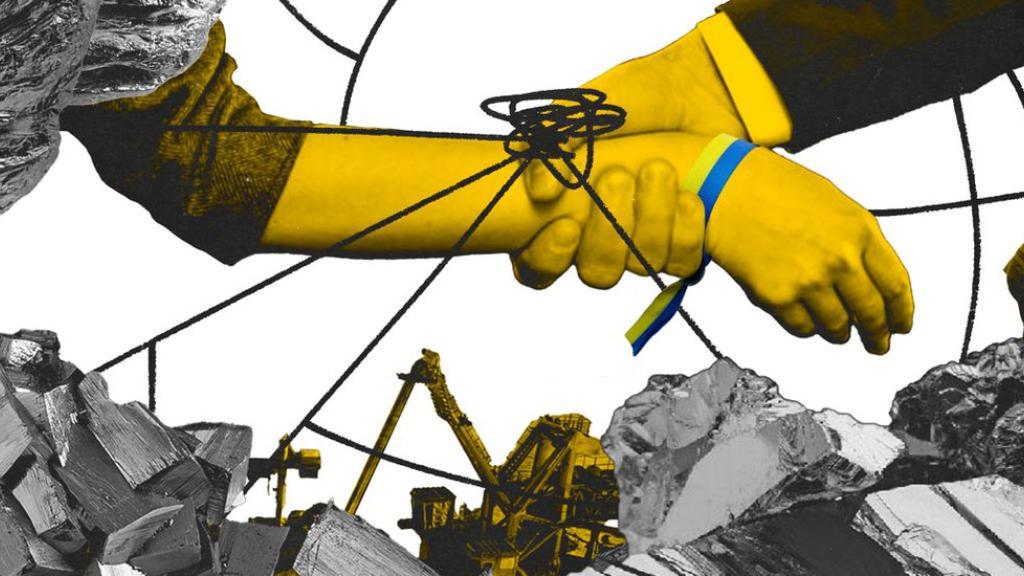

US Ukraine minerals deal trap

First published at Commons.

Interest in Ukraine’s mineral wealth has surged against the backdrop of global competition for critical raw materials needed for the transition to green energy and new technologies. This transition, presented as a path to sustainable development and the fight against climate change, is increasingly masking a fierce geopolitical struggle over resources, with various players striving to secure control over supply chains. Global attention is now particularly focused on the “mineral deal” between Ukraine and the United States, in which initial proposals by Donald Trump to exchange U.S. military aid for access to a significant portion of Ukraine’s mineral wealth exposed the cynical nature of this global race. The deal, framed as “minerals in exchange for weapons,” sparked heated debates about whether Ukraine truly possesses the quantity and quality of strategic minerals capable of justifying such astronomical expectations and the colonial ambitions of the new U.S. administration.

After Russia’s full-scale invasion in 2022, the Ukrainian government intensified efforts to position resources such as lithium, titanium, graphite, and rare earth elements as strategic assets aimed at attracting foreign investors. The main goal is to channel these investments into post-war reconstruction, with a particular emphasis on a “private sector-led recovery,” which is to be coordinated by BlackRock — the world’s largest asset management company.

At the same time, it is well known that agreements based on the exploitation of natural resources rarely benefit the countries where these resources are located. This is demonstrated by the experience of many countries in Africa and Latin America.

The example of the Democratic Republic of the Congo (DRC) is particularly revealing. In February 2024, the European Union and Rwanda signed a minerals agreement aimed at establishing a strategic partnership on critical raw materials such as tantalum, tin, tungsten, gold, and niobium. At the same time, it is well documented that the Rwanda-backed M23 rebel groups control mining areas in eastern DRC and smuggle minerals into Rwanda, which then enter global supply chains. These rebels are accused of serious human rights violations, including systematic sexual violence and war crimes. This spiral of violence has repeatedly sparked calls for the EU to end its raw materials agreement with Rwanda to avoid contributing to the further escalation of the conflict.

The global race for critical raw materials can provoke foreign interference and endanger the countries and communities that become targets of predatory extractivism. Bolivia, for example, has long been at the center of the global struggle for strategic mineral resources. Bolivian President Evo Morales nationalized the country’s vast natural resource reserves, including lithium, shortly after taking office in 2006. As part of plans to industrialize the lithium production chain, agreements were signed with China and Russia, providing for partnerships with the state-owned lithium company YLB, investments in local infrastructure, and technology transfer. Morales’s ousting from office in 2019 has been directly linked to his policy of lithium nationalization, which restricted access for Western foreign companies, including Tesla, and fostered closer ties with China and Russia. This predatory extractivism in the race for raw materials is epitomized by Elon Musk’s reaction to accusations that Tesla was involved in the coup in Bolivia: “We will coup whoever we want! Deal with it.”

Mining and the use of mineral resources are linked to about half of Ukraine’s industrial capacity and up to 20% of its labor force. In 2024, revenues from mineral exports accounted for only 8.1% of total exports. Compared to 2021, these figures have decreased by almost 60%. At the same time, Ukraine's experience with its own mineral resources — from coal, which powered Soviet industrialisation, to modern lithium, which is critical for the energy transition — shows a familiar pattern: both external and internal actors have historically sought to profit from this wealth, often undermining the country’s sovereignty and sustainable economic development.

This cycle of exploitation is sometimes viewed within the broader global dynamic associated with the so-called “resource curse” or “Dutch disease” — the paradox in which countries rich in natural resources often face economic instability, rising corruption, and abuse by foreign interests. “Dutch disease” typically arises when large inflows of foreign currency, mostly from raw material exports, lead to the strengthening of the national currency, making other export sectors less competitive and resulting in the decline of manufacturing or high value-added exports. At the same time, this perspective, which employs notions of “curse” and “nature,” tends to essentialize the colonial dynamic of systematically extracting resources from the periphery for the development of the center. The narrative of the “curse” of resource-rich countries portrays issues of dependency and inequality as inevitable, stemming from the mere fact of possessing resources. In doing so, it often overlooks the persistence of colonial power structures.

In the context of Ukraine’s integration into the EU, critical raw materials have become one of the topics of negotiations, especially as the EU seeks to ensure the continuity of supply chains for the energy transition and reduce its dependence on China. In 2021, within the framework of the Strategic Partnership between Ukraine and the EU on raw materials, Ukraine’s reserves of 22 out of 34 minerals critical to the EU were identified. Since then, cooperation has deepened: the European Union is offering a “win-win deal” aimed at promoting sustainable development and strategic partnership.

Resource trap: Ukraine’s economy and raw material exports

Ukraine is among the world’s leaders in reserves and production of key minerals, including iron ore, coal, manganese, titanium, graphite, and rare earth elements. This mineral wealth played a crucial role in the development of both the Russian Empire and the Soviet Union. The exploitation of Ukraine’s deposits of coal, iron ore, manganese, and uranium was central to the industrialization and military strength of the USSR. Ukraine also historically played a key role in the production of titanium concentrates, providing 90% of total output in the former Soviet Union. Titanium concentrates are used as raw materials for producing titanium alloys and pigments, which are widely used in the aerospace, military, medical, and chemical industries. Interestingly, under martial law, Ukraine sold the state-owned United Mining and Chemical Company (UMCC), the country’s largest titanium ore producer. The company was established in 2014, when the state regained control of two key titanium enterprises previously owned by oligarch Dmytro Firtash. UMCC’s strategic goal was to shift from exporting raw materials to producing more technologically advanced products. However, despite its potential, the company did not modernize its production and remained a raw material exporter. The state ultimately failed to realize UMCC’s potential and lost control over this strategic asset: as a result of a privatization auction in October 2024, in which only one company participated, Azerbaijani businessman Nasib Hasanov became the new owner.

During the Soviet era, Ukraine produced a wide range of industrial goods and was a leading supplier of coal, cast iron, iron ore, and steel. However, it remained dependent on imports of high-precision components and technologies from other Soviet republics. Most Ukrainian manufacturers lacked complete production cycles, making cooperation with factories across the USSR costly. Instead of processing its own raw materials, Ukraine exported them to other republics for further production, reinforcing economic dependence and structural imbalances shaped by all-Union priorities rather than aligned with its own industrial development.

Since gaining independence in 1991, Ukraine’s export structure has remained predominantly oriented toward raw materials. Ukrainian industry continued to depend on inexpensive inputs, primarily energy from Russia, while exporting low-value-added products at higher world prices. However, instead of using the favorable terms of trade to diversify and modernize the economy, the additional profits were distributed among a narrow circle of elites, leading to the concentration of significant assets in the hands of a small group of oligarchs. By 2000, metals and mineral products accounted for half of Ukraine’s exports, and together with agri-food and chemical products, these sectors made up just over 70% of the country’s total exports.

Some studies point to Ukraine as an under-studied example of “Dutch disease” caused by excessive resource dependence. According to researchers, Ukraine’s over-reliance on steel and ferrous metals exports — accounting for nearly 30% of total exports — has led to a distorted economic structure characterized by deindustrialization, vulnerability to global commodity price fluctuations, and stagnation in high-tech production. They argue that Ukraine suffers from a variant of Dutch disease driven not by energy exports but by a commodity-based model that channels resources into rent-seeking and low-productivity sectors rather than innovation and manufacturing. When global prices for steel and ferrous metals rose, export revenues from the sector increased significantly, boosting demand for the hryvnia on foreign exchange  markets and consequently strengthening the currency. This made Ukrainian goods more expensive for foreign buyers — a development that benefited steel exporters during the commodity markets boom but harmed other sectors, such as machine building and technology, whose products became less competitive abroad. At the same time, although Ukraine exhibits symptoms similar to Dutch disease — such as deindustrialization, the dominance of raw material exports, and weakness in high-tech sectors — it is worth noting that the decline of high-tech industries began earlier, following the collapse of the Soviet Union, when they were unable to compete globally. The severance of cooperative ties within the post-Soviet space, lack of investment, and loss of markets — especially after the 1998 financial crisis in Asia and Russia — accelerated the decline of Ukrainian producers. Ukraine’s commodity orientation thus became a forced adaptation rather than the result of crowding out caused by currency appreciation driven by raw material exports.

The global economic crisis of 2008 dealt a severe blow to the Ukrainian economy. The financial sector collapsed, exposing Ukraine’s critical dependence on raw materials, which had fueled growth in the early 2000s. The crisis also triggered a rapid decline in the remaining value-added industries that had failed to modernize: for example, the production of cars, buses, and tractors declined by 98%, 90%, and 77%, respectively, between 2007 and 2021. Ultimately, reliance on raw material exports created a vicious cycle in which economic growth remained tied to volatile global commodity markets, hindering the modernization of other sectors.
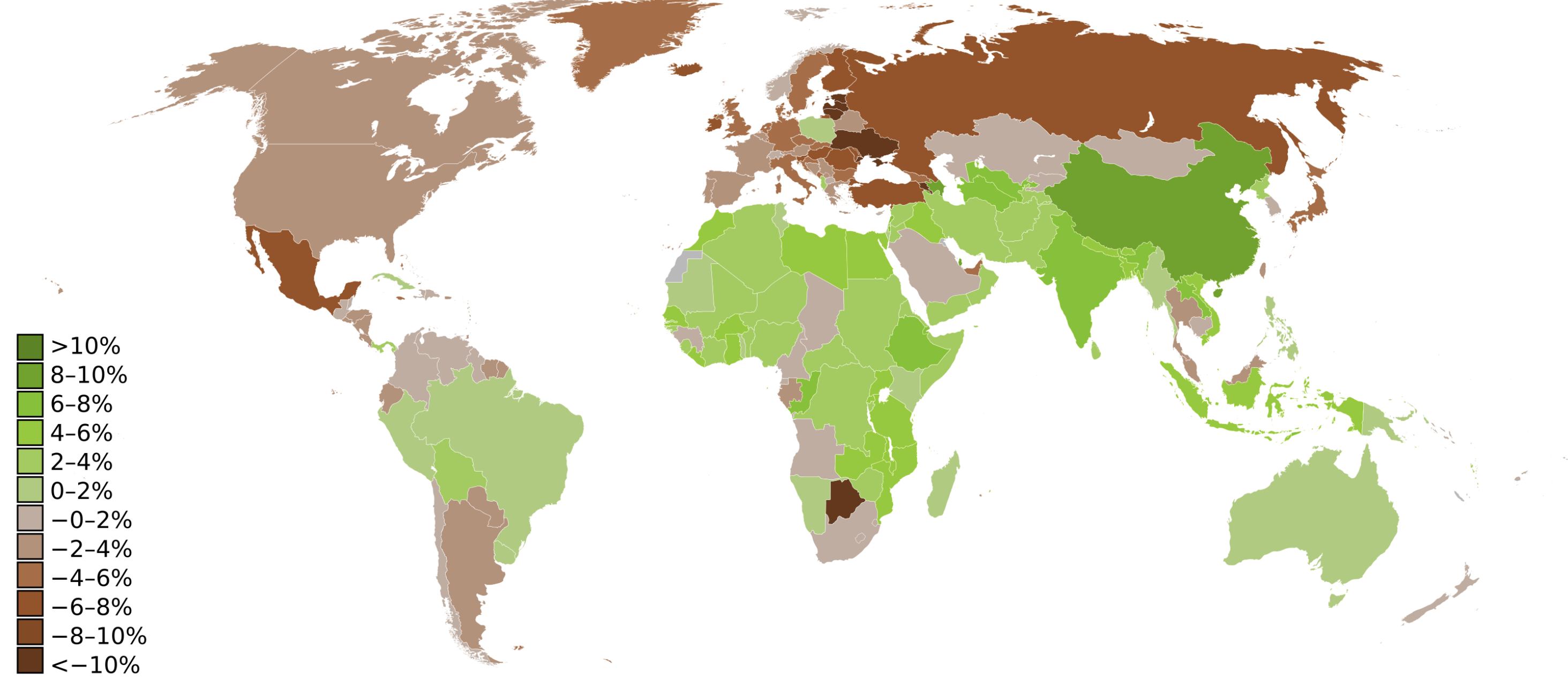
Real GDP growth at the beginning of 2009 by country. Ukraine is one of the most affected. Image: CIA

Today, Ukraine’s export structure continues to be dominated by raw materials and minimally processed products. However, while in 2008 metallurgical products accounted for 43.2% of Ukraine’s total export earnings, by the end of 2017 their share had decreased to 24.9%. This decline was primarily due to falling global steel prices, reduced competitiveness of Ukrainian steel on international markets, a significant drop in investment in the steel sector, and ultimately, the war. Today, the agricultural sector generates about half of Ukraine’s export revenues. In 2024, commodities made up more than 66% of Ukraine’s total exports, with agricultural raw materials, iron ore, and steel remaining the main sources of export income. The share of manufacturing in GDP is currently around 10%, just half the OECD benchmark.

Since independence, the Ukrainian economy has remained dependent on the export of raw materials with low levels of processing. This reliance has made Ukraine vulnerable to price fluctuations in global commodity markets, contributing to further deindustrialization and hindering the development of high-tech industries.

The geopolitics of Ukraine’s critical raw materials

Critical raw materials such as lithium, cobalt, nickel, graphite, rare earth elements, copper and silicon are indispensable for the manufacture of semiconductors, batteries and a wide range of high-tech devices. Their important role is particularly evident in the renewable energy sector. Rare earths are key to the production of permanent magnets, which are critical components of wind turbines and electric vehicle motors. At the same time, power grids require significant amounts of copper and aluminum, with copper being the base material for almost all electricity-related technologies.

The aggressive seizure of Ukraine’s natural resources constitutes a key element of Russia’s military strategy. The occupation of Ukrainian territories has enabled the Kremlin to establish control over vast reserves of critical minerals, energy resources, and agricultural land. It is not surprising that Russia has recently set a goal of completely eliminating its dependence on imports of critical raw materials by 2030. According to the head of Rosnedra, Evgeny Petrov, “As a result of a set of measures taken, by 2030 we expect to eliminate dependence on imports of 12 scarce raw materials, including lithium, niobium, tantalum, rare earth metals, zirconium, manganese, tungsten, molybdenum, rhenium, vanadium, fluorspar, and graphite. As for such a high-tech resource as lithium, we expect to achieve this by 2028.” Since 2014, and especially after the full-scale invasion in 2022, Russia has been systematically targeting lithium, titanium, rare earth elements, coal, oil, and gas deposits. Russia is already actively preparing for geological exploration of critical minerals in the temporarily occupied territories of Ukraine, particularly in the Donetsk, Luhansk, Zaporizhzhia, and Kherson regions. Russian media have paid special attention to the Shevchenkivske lithium deposit in Donetsk oblast and the Kruta Balka lithium deposit in Zaporizhzhia oblast. Ultimately, Russia’s control over Ukraine’s reserves will accelerate its expansion in global supply chains and significantly increase its pressure on the EU and other countries by consolidating control over critical raw materials. Russia’s ambitions are further bolstered by its deepening partnership with China. Russian commentators have discussed coordinating strategies on rare earth metals between Russia and China as a “common weapon” against Western influence and to control supply chains essential to advanced technologies. At the same time, Russia is actively developing cooperation with the countries of the Global South in the field of critical raw materials. For example, at the end of 2023, Bolivia and Russia announced a $450 million investment in a pilot project to produce lithium in Bolivia’s Uyuni salt flats. In turn, Rosatom is building a nuclear research and technology center in Bolivia.

China holds a dominant position in the global supply chain for critical raw materials, including both their extraction and processing, such as copper, cobalt, lithium, graphite, and rare earths. For example, China accounts for almost 100% of the world’s spherical graphite processing, about 80% of gallium, approximately 60% of the refining of both lithium and germanium, and more than 60% of cobalt processing.

In light of China’s global dominance and Russia’s invasion of Ukraine, the Ukrainian government has stepped up efforts to promote the country’s critical raw materials as a strategic asset to attract Western investment and support reconstruction after the war. Prime Minister Denys Shmyhal has stated that one of the government’s key priorities is developing a new economic model for Ukraine, with the goal of turning the country into a resource center for Europe. According to the Investment Guide of Ukraine, produced by the Kyiv School of Economics and the Ministry of Economy, Ukraine possesses 117 of the 120 most common types of minerals. The government also emphasizes that Ukraine is among the world’s top ten producers of several strategic minerals, including titanium, manganese, iron ore, zirconium, graphite, and uranium.

At the same time, the United States is pressuring Ukraine to accelerate the extraction and export of critical raw materials as part of its strategy to reduce US dependence on China. Since China accounts for over 70% of US imports of rare earths and has recently imposed export restrictions, any further restrictions could have serious consequences. In 2023 and 2024, China imposed export restrictions on gallium, germanium, graphite, and antimony, and in December 2024, it completely banned the supply of gallium, germanium, and antimony to the United States, citing national security. These measures were a response to restrictions imposed by the United States on the Chinese semiconductor sector. In response, Washington began to view Ukraine’s vast mineral reserves as an alternative to bolster national security. China’s export restrictions on cutting-edge processing technologies directly undermine the US and EU’s efforts to expand their industrial capacity in this area, as both sides actively seek advanced equipment and expertise. However, most of these high-tech solutions are concentrated in China, which is unsurprising given the four decades of investment. During this period, the US and EU not only reduced their production capacity but also significantly cut funding for research and development in the industry, putting them at a disadvantage. In recent years, the United States has been working to restore its role in the rare earths sector. The only rare earth mine in Mountain Pass, California, which had been out of operation for a long time, resumed production in 2017. However, until recently, the extracted raw materials were sent to China for processing.

Ukraine’s cooperation with the United States has become increasingly transactional since Donald Trump’s presidency, who framed access to Ukrainian resources as compensation for the billions of dollars in aid the United States provided during the war. Current negotiations are tense: Ukraine is seeking security guarantees, but the US approach mirrors Trump’s logic of seeking direct benefits from foreign investment while limiting China’s influence over critical supply chains. This strategy mirrors China’s “resources for infrastructure” model, including the 2007 Sicomines agreement in the Democratic Republic of Congo, under which China was to invest $3 billion in infrastructure in exchange for mining rights valued at $93 billion. While this provided the DRC with much-needed capital, the country later sought to renegotiate the deal, expressing concerns about not receiving a fair share of the benefits. Part of the promised infrastructure was not fully implemented or was constructed with poor quality. Meanwhile, profits from mining activities have mostly gone to Chinese companies, while the DRC has received a relatively small share of the actual income. The minerals agreement between the US and Ukraine risks perpetuating patterns of external control and unequal profit distribution, to the detriment of the resource-rich country. Such agreements may lead to higher project costs, as they often obligate governments to cooperate with specific companies without competitive tenders. Quality and control issues may arise, as contractors typically control project financing and implementation, limiting the government’s oversight ability. The complex, non-transparent structure increases the risk of mismanagement, and the lack of competition and the long-term nature of such agreements can create financial imbalances that benefit the investor over time. The agreement signed by Ukraine and the United States on April 30, 2025, grants the US near-exclusive access to new licenses for the extraction of minerals and critical raw materials — just as President Trump had sought. While the agreement does not require Ukraine to repay previous US assistance or transfer full ownership of resources, it also does not provide security guarantees from the United States.

The European Union is 100% dependent on China for all heavy rare earth elements — including dysprosium (magnets in electric vehicles and wind turbines), erbium (fiber-optic devices, lasers), lutetium (detectors, medical imaging), terbium (phosphors for displays), thulium (lasers, portable X-ray devices), and others — and 85% dependent on light rare earth elements, such as cerium (polishing materials), lanthanum (batteries, optical glass), neodymium (magnets, lasers, glass), praseodymium (alloys, magnets, glass), and samarium (magnets, nuclear reactors, glass). Although the EU’s reliance on China for other critical raw materials is slightly less severe, it remains significant. For example, China supplies 71% of the EU’s gallium imports, 97% of its magnesium, 40% of its natural graphite, and 62% of its vanadium. As a result of this dependence, the EU has increasingly set its sights on Ukraine in recent years as a potential supplier of critical raw materials.

Ukraine’s critical raw materials in the context of European integration

In July 2021, before the Russian invasion, the European Union and Ukraine signed a Memorandum of Understanding (MoU) aimed at closer integration of value chains in the critical raw materials and battery sectors. Following the signing of the MoU, a roadmap was developed, outlining specific measures agreed upon by both parties to establish a strategic partnership. Notably, the instrument did not establish an independent body to monitor activities in this area. Public participation is not envisaged, while representatives from the economic and industrial sectors are prioritized. Overall, the wording of these documents remains rather vague. Although the EU expresses its intention to integrate Ukraine into the raw materials and battery value chain, the signed documents do not explicitly mention the production of final products directly in Ukraine.

In March 2023, the Ukrainian Government adopted the Law “On Amendments to Certain Legislative Acts of Ukraine on Improving Legislation in the Field of Subsoil Use,” aimed at deregulating the industry. Notably, it eliminates the need for approvals from local governments, the State Service of Geology and Mineral Resources, the State Labor Service, and other agencies for accessing subsoil, field development, water intake, and mining facility design. These changes, intended to attract investment and reduce administrative burdens on businesses, have effectively excluded communities from the decision-making process. The law also permits the issuance of special subsoil use permits without auction to companies that have conducted geological studies at their own expense. While this practice exists in other countries to stimulate investment, it often carries corruption risks: companies may conduct minimal research and subsequently acquire valuable assets without competition. The lack of independent verification of geological research results creates further opportunities for abuse. Additionally, as part of ongoing deregulation efforts, the Cabinet of Ministers adopted Resolution No. 749 on July 4, 2023, which removed the requirement to coordinate with the Ministry of Environmental Protection and Natural Resources  the sale of permits for sites where geological exploration has already been conducted. This issue is clearly exemplified by the case of the Makove Boloto (“Poppy Bog”) primeval forest natural monument in Rivne oblast, where a peat extraction permit was granted. The permit covered the entire area of the monument, which was officially established at the end of 2021, and effectively paved the way for its destruction, as peat extraction entails the complete removal of vegetation and topsoil. Similar cases have occurred in the Starovyzhivskyi nature reserve and near the Busha historical and cultural reserve.

Critical raw materials have become a dedicated section within the €50 billion Ukraine Facility instrument for the period from 2024 to 2027. According to Ukraine’s Plan under this instrument, the partnership with the EU aims to deepen the integration of value chains in the critical raw materials and battery sectors by developing Ukraine’s mineral resources based on a sustainable and socially responsible approach. At the same time, the sector is expected to be regulated according to EU standards, taking into account environmental, social, and governance (ESG) criteria, as well as the OECD Guidelines for Multinational Enterprises on Responsible Business Conduct and the UN Guiding Principles on Business and Human Rights. However, the specific standards referenced by the government are not clarified. These international documents are voluntary and provide guidance for ethical business practices but do not carry the force of law unless they are incorporated into national legislation. Similarly, while the government refers to adherence to ESG principles, it does not specify which standards, metrics, or verification mechanisms will be applied. The ESG standards landscape itself is fragmented, with varying levels of ambition and enforcement. One of the reforms outlined in the Plan is the development of a study to assess the current legislation on environmental, social, and governance reporting in the mining sector. The fact that the government plans to “approve and publish the study” despite already implementing extensive deregulation measures in the sector clearly shows that ESG considerations were not systematically integrated into the initial reforms. Phrasing such as “gradual introduction of mandatory ESG reporting” and adherence to the “do no significant harm” principle — as far as possible under wartime or postwar reconstruction conditions — rather underscores a formal, EU-oriented approach to these commitments.

The adoption of the EU Critical Raw Materials Regulation in March 2024 will further strengthen the already established cooperation. In December 2024, the Ukrainian Parliament approved an updated National Program for the Development of the Mineral and Raw Materials Base of Ukraine for the Period Until 2030, which serves as one of the indicators of Ukraine’s implementation of the Ukraine Facility. The updated program defines the criteria for classifying mineral resources as strategically important. Overall, this law is oriented toward the broad expansion of large-scale extraction projects. Notably, in the section on peat, the law highlights that developing new peat deposits, requiring drainage,results in the loss of biospheric functions, increased environmental risks in the region, and the transformation of peatlands from carbon sinks into significant sources of greenhouse gas emissions. Although the document acknowledges the need to align peat extraction with the state’s climate and environmental policy, it does not outline practical mechanisms or guarantees to ensure such alignment. The law also provides for continued investment in hard coal deposits and the expansion of lignite (brown coal) extraction. At present, the National Program appears to contradict Ukraine’s National Energy and Climate Plan, which envisions a gradual phase-out of coal use in the electricity sector by 2035 in line with the goals of the European Green Deal.

The risks of the resource trap: Lessons we should have learned

The Ukrainian government’s proposal to use mineral resources as a tool for attracting international aid carries the risk of reproducing exploitative models typical of other resource-dependent countries. A focus on exporting critical raw materials to secure external support may deepen long-term dependence on foreign actors, undermining efforts to rebuild a self-sufficient, diversified economy. Excessive reliance on the export of critical raw materials could give foreign states leverage over Ukraine’s economic policy. A telling example is Ukraine’s dependence on Russian energy resources and their impact on Ukraine’s political and economic processes, especially when Russia used gas supplies as a tool of political pressure and economic blackmail, repeatedly attempting to take control of strategic infrastructure, including Ukraine’s gas transmission system.

The history of oligarchic control in Ukraine, particularly in sectors such as metallurgy and titanium production, where raw materials were exported instead of being processed domestically, shows how elite capture of resources and weak governance can divert mineral revenues from national reconstruction into private hands. This risks entrenching Ukraine’s role as a raw material supplier rather than transforming it into a producer of high value-added goods. Exporting raw materials also means missing opportunities to develop domestic manufacturing sectors — and with them, potential income and jobs.

At the same time, the exploration and extraction of critical raw materials are high-risk and capital-intensive projects, typically accessible only to a limited number of large corporations. Such mining initiatives require substantial upfront investments — ranging from 500,000 to 15 million euros per project — and involve lengthy and complex stages: geological exploration, feasibility studies, and obtaining operational permits. Bringing a mineral deposit into industrial production can take years and cost anywhere from 1 million to over 1 billion U.S. dollars, depending on the type of mine. Research indicates that, on average, it takes up to 16.5 years from the exploration phase to the start of production. Large Ukrainian business groups with access to capital are capable of participating in large-scale mining projects. However, their involvement raises serious concerns about transparency, the fair distribution of benefits, and the risk that profits from Ukraine’s critical resources may once again end up concentrated in the hands of a narrow group of individuals, rather than contributing to broad-based economic development and integration with the European Union.

Volatility in global raw material prices can also destabilize the Ukrainian economy. Ukraine’s experience as an exporter of ferrous metals clearly illustrates this risk. Over the past decade, Ukrainian iron and steel enterprises have been highly vulnerable to unpredictable fluctuations in global prices, directly affecting export volumes, company revenues, and the country’s balance of payments. Currently, supply chain disruptions caused by the war, stagnation of the domestic market, and increasingly unfavorable export conditions, including tariffs, are constraining the operations of Ukraine’s steel sector. According to industry representatives, steel production is expected to decline by 9% in 2025, with exports falling by 16%. Such dependence on raw material exports means that external market shocks can swiftly destabilize the economy, disrupt state budget revenues, and put jobs at risk.

Moreover, the extraction of critical raw materials poses significant environmental risks, such as substantial greenhouse gas emissions, water scarcity and pollution, land degradation, and loss of biodiversity. Water use poses an additional challenge, as many mines are located in regions already facing shortages, and extraction and processing activities often contaminate local water resources with toxic substances and heavy metals. The extraction of copper and lithium is particularly water-intensive, placing additional strain on already scarce water supplies. The physical expansion of mining areas leads to deforestation, soil erosion, and the destruction of natural habitats, threatening local biodiversity. Additionally, in the extraction of rare earth elements — even under the most favorable conditions — only about 2% of the extracted mass contains valuable materials, though concentrations can reach up to 20% in some deposits. These ores often also contain harmful impurities such as arsenic, thorium, fluorine, and uranium. For decades, significant amounts of these toxic byproducts have been released into the environment, spreading through air and water. As a result, pollutants have entered the food chain, and large-scale studies have linked exposure to serious long-term health effects, including developmental disorders in children, increased incidence of bone diseases, and other chronic illnesses.

Ultimately, while the government is focused entirely on involving the private sector in Ukraine’s reconstruction — prioritizing long-term critical raw material extraction projects — the country risks once again being trapped in the vicious cycle of serving as a raw material supplier for other economies.

Maryna Larina is a Graduate of the Free University of Berlin, and a researcher on climate and energy topics. Translation from Ukrainian: Pavlo Shopin.


Canada

Lessons from the last federal elections: Towards the renewal of the status quo ante or the desperate search for an agreement with Trumpism


Sunday 25 May 2025, by André Frappier, Bernard Rioux

While various polls for 2024 predicted a landslide victory for the Conservative Party of Canada, the last federal election gave the Liberal Party of Canada a fourth term. The election campaign was dominated by widespread public apprehension over the trade war and Donald Trump’s threats of annexation of Canada. These fears weighed heavily on voting intentions.


Tomorrow, the new Carney government will have to defend the Canadian economy against the effects of the trade tariffs imposed on the country, reaffirm national sovereignty, and even protect territorial unity. The Canadian bourgeoisie, its federal government, and its provincial governments will be under pressure from the American administration, determined to subjugate Canada to its own interests. The trade-union movement, the various social movements, and the political left—at least what remains of it—will have to work to build their unity, demonstrate strong combativeness, and political autonomy vis-à-vis the choices of the governments of the Canadian oligarchy in order to resist the Trumpist project with a view to achieving genuine social emancipation.
Electoral dynamics and party positioning

The Liberal Party of Canada (LPC) elected 169 members of parliament , with 43.73 per cent of the vote. It will have to form a minority government, having fallen short of the 172 seats needed for a majority. The Conservative Party of Canada (CPC) recorded significant gains, with 143 seats elected and a jump in votes from 33.7 per cent in 2021 to over 40 per cent in 2025.

The New Democratic Party (NDP) suffered a collapse, its number of MPs dropping from 25 to 7, causing it to lose its status as a recognized party. Much of its traditional electorate, worried about Trump’s threats and eager to prevent a Conservative victory, opted instead to vote for the Liberals.

The Bloc Québécois lost ground, securing 23 seats . The Green Party elected only one representative, with just 1.23 per cent of the vote. The far-right People’s Party of Canada (PPC) received only 0.7 per cent of the vote, six times less than in 2021.

These elections therefore led to a minority government, revealing a polarization of the electorate around the two major neoliberal parties and a marginalization of third parties. The social democratic and ecological left saw its parliamentary representation and popular support reduced to a bare minimum.
The Conservative Party driven by populist demagogy

The Conservative Party has championed an ultraliberal, climate-sceptic, and militaristic agenda: corporate tax cuts, privatization, deregulation of oil and gas exploitation, and attacks on union rights. It has combined this approach with populist demagogy aimed at the working classes, presenting itself as the defender of purchasing power and access to housing.

Through a tour of factories and workplaces, it managed to build significant support for his programme, anchoring it to popular anger. A conservative bloc was thus formed, ranging from supporters of fossil fuel capital to certain sectors of the working class.

The trade union movement and progressive social movements clearly perceived this strategy, but they responded not with a united and massive mobilization, but with support for the Liberal Party and its new leader.
Faced with the Trumpist offensive, the Liberal Party is surfing on Canadian nationalism

The new Liberal leadership quickly realized that the CPC’s rise in the polls reflected a significant shift to the right of the electorate. It repositioned itself accordingly.

Upon taking office, Mark Carney abolished the carbon tax on road users thereby short-circuiting CPC leader Pierre Poilievre’s "Axe the tax" slogan . During the campaign, he promised tax cuts and the abandonment of the capital gains tax introduced by Trudeau. He also supported pipeline projects, advocated for increased oil production, promised to reach 2 per cent of GDP in military spending, strengthened border surveillance, and restricted immigration.

He thus adopted many elements of the Conservative platform, which the CPC denounced as a plundering of its ideas. Taking advantage of the resurgence of Canadian nationalism, sparked by Trump’s comments on the annexation of Canada, Carney touted the purchase of local products, energy independence, and the diversification of export markets.

As Romaric Godin wrote in Mediapart : "Finding new outlets for Canadian businesses is likely to be tricky. […] The US market represented nearly 75.9 per cent of Canadian exports and 62.2 per cent of imports in 2024."

The economic diversification project therefore seems unrealistic, especially since Canada has long since abandoned any policy of economic nationalism, notably the orientations of the Watkins report. Every government since Mulroney has supported continental integration , embodied by NAFTA and then CUSMA. The Carney government’s objective is thus a return to the status quo ante, in the interests of the Canadian bourgeoisie. But any negotiation with Trump will involve unilateral concessions: expansion of fossil capital, increased military spending, tougher immigration policy, deportations of asylum seekers and border reinforcement.

The government’s embarrassed silence in the face of Trump’s authoritarian excesses shows that it is prepared to compromise with Washington to preserve a facade of Canadian autonomy.
In Quebec: decline of the Bloc Québécois and impasse of the independence movement

The Bloc Québécois suffered a sharp setback. Focusing its campaign on defending a distinct society, it did not challenge federalism or address the issue of independence. It pledged its support to the Liberal Party for the first year and suggested the creation of a border ministry, which angered the leader of the Parti Québécois.

The Liberal Party’s victory in Quebec strengthens the legitimacy of Canadian federalism and weakens the PQ’s referendum plan. Collaborating with the Liberal Party is tantamount to reinforcing the status quo. To believe otherwise is politically naive.
The foundations of the marginalization of the political and social left

The left has been weakened by the NDP’s prolonged support for the Liberal government, parliamentary manoeuvring, union apathy and the fragmentation of social movements.

Unions, in Quebec, as in Canada, have failed to mobilize their members against conservative policies. As Sid Ryan writes : "The voice of millions of union members has been shamefully lacking. This is as much a reflection of social democracy as it is a lack of political autonomy."

The NDP, having become a mere parliamentary back-up force, has cut itself off from real social struggles. Its strategy based on compromise has weakened its credibility. Its electoral decline can also be explained by its inability to defend a programme of radical change in action.

The major unions developed platforms of demands, but limited themselves to asking their members to challenge the candidates. The Liberal Party’s shift to the right went unchallenged. The Canadian Labour Congress quickly expressed its willingness to collaborate with the Liberal government, confirming the abandonment of any political autonomy.

The feminist movement has certainly challenged the parties, but its demands have been marginalized. The mobilization for abortion rights has come up against the rise of a pro-life right that has received little opposition.

The international solidarity movement has led campaigns, particularly in defence of the Palestinian people, without achieving significant traction. Neither the Liberals nor the Conservatives have denounced Israel’s genocidal policies in Gaza.

Social movements remained dispersed, each acting in its own field without building a common front.
Paths to Rebuilding the Left in the Canadian State

These elections took place in a climate of heightened Canadian nationalism. In Quebec, the Bloc adopted a nationalism compatible with federalism. Both forms of nationalism assume that national interests converge with those of capitalists, to the detriment of solidarity between peoples.

The Canadian and Quebec left can only rebuild itself by breaking with these nationalisms. It must bring together the working classes, Indigenous peoples, and subaltern groups in a multinational liberation project.

This project must be feminist, anti-racist, socialist and decolonial. It implies the rejection of any alliance with the PQ and of any defence of the Canadian state as it is, that is to say, based on the negation of the multinational reality of the territory.

A left of social transformation must link its action to an ecosocialist project, support the self-determination of indigenous and Quebec peoples, and develop solidarity with ecological, feminist and popular movements.

It must work to build a social bloc around climate justice, the fight against patriarchy, reparations for Indigenous peoples, the creation of popular constituent assemblies, the nationalization of resources and the dismantling of the Canadian military-industrial complex.

The results of the last elections show that everything must be rebuilt from a veritable field of ruins. But there are battles that cannot be avoided.
Returning to the road to solidarity and updating our perspectives

The first observations:

Building a pan-Canadian activist network has always been a laborious undertaking. This challenge was described in the article "The Challenge of Fighting Together" by Andrea Levy and André Frappier, published in issue 24 of NCS. In 2020, this article described the political situation in the Canadian state and in Quebec and its challenges. It is clear that the arrival of Trump and the rise of fascism on our doorstep have changed the situation. We must now examine how we can and must fight together, and on what basis.

The imperialist character of the Canadian state is still very real, as we stated in 2020:
"The Canadian state was built against the rights of peoples, through the oppression of Indigenous peoples who were dispossessed of their territories and ancestral rights, and through the oppression of the French-Canadian nation. This state then developed into an instrument of industrial corporations and finance capital, increasingly playing an imperialist role internationally as a junior partner of American imperialism."

A difficulty arose, on the one hand, in understanding the national liberation struggle: "To think of a uniquely Quebec strategy for changing society is to ignore the power of financial institutions and corporations... Let us remember the fate that the European Central Bank reserved for Greece (which is nevertheless a sovereign state) a few years ago."

And, on the other hand, we considered the problem of the progressive forces in the Rest of Canada: fragmented and limited to regional perspectives, while identifying with the federal state, as the CLC does.

The rise of the far right and the arrival of Trump have changed this situation. The mantra has become "Save Canada," with a right-wing stance from the Liberal Party that adopts Poilievre’s policies. Building a pan-Canadian left movement is becoming an unavoidable necessity, but it cannot be achieved without understanding, in the Rest of Canada as much as in Quebec, a perspective that combines the dynamics of the national liberation struggle in Quebec, the struggle of Indigenous peoples for their ancestral rights, and the fight for an egalitarian society. The unity of the pan-Canadian left cannot exist if it falls into supporting the Canadian ruling class in the hope of blocking Trump.

This lack of perspective has left all the ground open to neoliberalism and the right. It is urgent to reclaim a united, working-class, and popular perspective at the pan-Canadian level. We must dedicate ourselves to it now!

Tuesday , May 6, 2025

Translated by International Viewpoint from Presse-toi à gauche.


Attached documentslessons-from-the-last-federal-elections-towards-the-renewal_a9011.pdf (PDF - 921 KiB)
Extraction PDF [->article9011]

Canada
Trump’s Trade War and Canadian Workers
Trump, Europe and outraged virtue: malaise in imperial supremacism
Lives Yes, Pipelines No!
No return to ‘normal’ LGBT politics!
The Truckers Convoy, Observations from a Veteran Socialist
Quebec
’Unify the political left without sidestepping the needed debates!’
Quebec: climate strike on 23 September
Québec solidaire vows to fight CAQ government’s racist bill
With new position on secularism, Quebec Solidaire redefines left-wing politics in the province
Québec solidaire reviews the election and maps campaign on climate crisis

Bernard Rioux

André Frappier
André Frappier is an active of Gauche Socialist in Quebec.


International Viewpoint is published under the responsibility of the Bureau of the Fourth International. Signed articles do not necessarily reflect editorial policy. Articles can be reprinted with acknowledgement, and a live link if possible.

Australia: Labor consolidates as main party of capital, Greens’ left challenge has mixed results


Anthony Albanese (left) and Max Chandler-Mather

“We are trying to fundamentally transform Australian politics, economy and society in favour of ordinary working people,” Greens housing spokesperson Max Chandler-Mather — who lost his seat of Griffith to Labor in the May 3 federal elections —  told supporters on election night. 

“And that sort of project will have more setbacks than victories, because the forces we are coming up against are enormously powerful… Time and again in history, brilliant people like you have suffered setback after setback after setback. And only after then have we cracked through and won.” 

The incumbent Labor government of Prime Minister Anthony Albanese won an unexpectedly large victory in the elections. Labor was returned with a significantly increased majority of a likely 93 seats, up from 77. 

The right-wing Liberals/National Coalition won just 43, 15 less than the 2022 election that itself marked the loss of 19 seats. Over two elections, the Coalition has lost close to half its seats. 

As well as easily defeating the Coalition, Labor also took three of four lower house seats held by the left-of-centre Greens — including Greens leader Adam Bandt’s seat of Melbourne, which he had held since 2010. 

New ‘main party of capitalism’

The biggest story of the elections was the disastrous performance of the Liberals, led by hard-right leader Peter Dutton. The Liberals crashed to its worst performance since its founding more than 80 years ago. 

The Coalition’s primary vote collapsed to about 32% — 10% lower than 2019. The result occurred despite the cost-of-living and housing crises, and against a government who have raised passive inaction to an artform that should be studied. 

The elections confirmed what previous ones suggested: the Liberals, historically Australia’s most electorally successful party and a major pillar of the two-party system, have collapsed as a mainstream centre-right party. 

Furiously egged on by an increasingly irrelevant Murdoch press, the Liberals have descended into ideologically driven hard-right culture wars, alienating large parts of its traditional constituency (especially women, appalled by its misogyny). At the same time, it has failed to pick up alternative support in an increasingly multi-racial country it does not understand.

Labor has largely moved into the political space vacated by the Liberals, replacing the dysfunctional conservatives as the main party of Australian capitalism. Labor is now the predominant party of the establishment, backed by key sectors of capital (high profile, ideologically-driven exceptions such as billionaire Gina Rinehart notwithstanding).

But Labor has not taken all the space electorally. Since 2022, a swathe of traditionally Liberal seats have been won (and mostly defended) by a range of socially liberal independents. 

Loosely known as the Teals, they are denounced by the Murdoch press as virtually Communist for believing women should exist in public life and that climate change is real. In fact, they are elected by people who voted Liberal until the party descended into farce.

Major party decline

The Liberals’ collapse is part of a larger trend that does not spare Labor. The 2022 elections featured a record low vote for the two major parties — until this election when it fell even further. One third of voters did not vote for Labor or the Liberal/Nationals Coalition.

Labor easily won the two-party preferred vote, but its primary vote only rose by 2.1% and remains at historically low levels. Labor outperformed expectations, but there is little evidence of popular confidence in its rule.

This marks a sense of alienation and distrust with the major parties that is underpinned by material realities. Living standards are falling. Whole generations are priced out of the housing market and rental stress is spiking housing insecurity and homelessness

Healthcare and childcare costs are rising. Climate change-supercharged extreme weather is wreaking havoc and devastated communities (such as the northern NSW city of Lismore) are largely abandoned in the wake. 

Many (especially Arabic and Muslim communities) feel fury and despair as Australia continues exporting lethal weapons to Israel, which is committing what Amnesty International, in a 300-page report, denounced unambiguously as genocide.

These issues affect different people differently across the country, but they add up to a political malaise. Few could honestly say they are being “represented” by either major party — whether they are well-heeled professionals in a blue-ribbon seat or struggling to pay the rent in deep suburbia. 

Some are doing well, of course: property developers enjoying artificially inflated housing prices and generous tax breaks; and the 1 in 3 corporations who pay no tax at all. But below them there is uncertainty and fear for the future. 

In this context, Dutton’s flirtation with MAGA-style politics backfired, with the uncertainty that US President Donald Trump has unleashed on the world making many uneasy. Yet the explanation for the Coalition’s result goes beyond Trump. 

Dutton swung wildly from pushing (then abandoning) MAGA-like policies to decidedly unMAGA-like measures, such as matching Labor health spending promises cent-for-cent. 

The Coalition also thought it wise to pledge to build nuclear power plants at unknown expense or timescale, leading to inevitable questions of exactly whose electorates these plants would be built in and which ones might get the waste.

The shocking quality of the Liberals’ campaign helps explain the result, but it is itself a symptom of the party’s degeneration. 

Further evidence is what passes for “moderate” in today’s Liberal Party. Sussan Ley, an apparent “moderate” who has been elected the Liberals’ first-ever federal woman leader, spoke favourably earlier this year of the colonisation of Australia by comparing it to Elon Musk’s fantasy plan to colonise Mars. 

Then again, Ley’s opponent in the race was Angus Taylor, who combines the stench of incompetence and corruption with membership of Dutton’s hard right faction. Anyone left in the Liberal Party caucus who accepts we live in the 21st century was hardly spoiled for choice.

Greens’ challenge

In this context, Labor’s shift to take the space abandoned by the Liberals has simultaneously opened space to its left. This explains its intense vitriol towards the Greens, the largest left-of-Labor party who quadrupled its lower house seats in 2022.

Labor fears not just the seepage of votes to their left but the potential for a more sustained challenge in its traditional heartlands. It fears the potential that a force such as the Greens could do to it what the Teals have done to the Liberals.

Post-election, Labor loudly gloated over the Greens’ lower house losses. A narrative has been pushed by Labor and the media that the result was a popular rejection of the Greens for daring to challenge Labor on several fronts. 

Two issues have especially drawn Labor’s ire: the Greens’ demand for an end to support for Israeli crimes, and their refusal to pass Labor’s housing bill without amendments for months, on the apparently outrageous grounds it would make the housing crisis worse

In reality, Labor refused for months to negotiate with the Greens over the housing bill. The Greens, led by Chandler-Mather, organised door-knocking campaigns in Labor electorates to talk to people directly about their position. All up, they knocked on 20,000 doors, with Chandler-Mather hosting a series of online “town halls” to discuss the campaign.

Showing contempt for ordinary people, Labor decried this campaign as the Greens acting in bad faith. The Greens eventually passed the bill, after negotiating $3.5 billion in direct funding for public housing.

Labor sought revenge, and poured resources into a successful bid to win Chandler-Mather’s seat back. Having offered gracious words to a defeated Dutton, Albanese laid the boot into Bandt and Chandler-Mather after their losses.

But it was not just Labor claiming victory against the Greens. Right-wing attack group Advance Australia, with millions of dollars in corporate donations, ran an hysterical campaign against the “extremist” Greens. After the elections, Advance implausibly claimed to have “destroyed” the Greens. 

Greens’ vote

There are two key claims made by enemies of the Greens: that they were punished for their “intransigence” over housing and Gaza; and that they had supposedly strayed from their “roots”. The narrative does not add up on either front. 

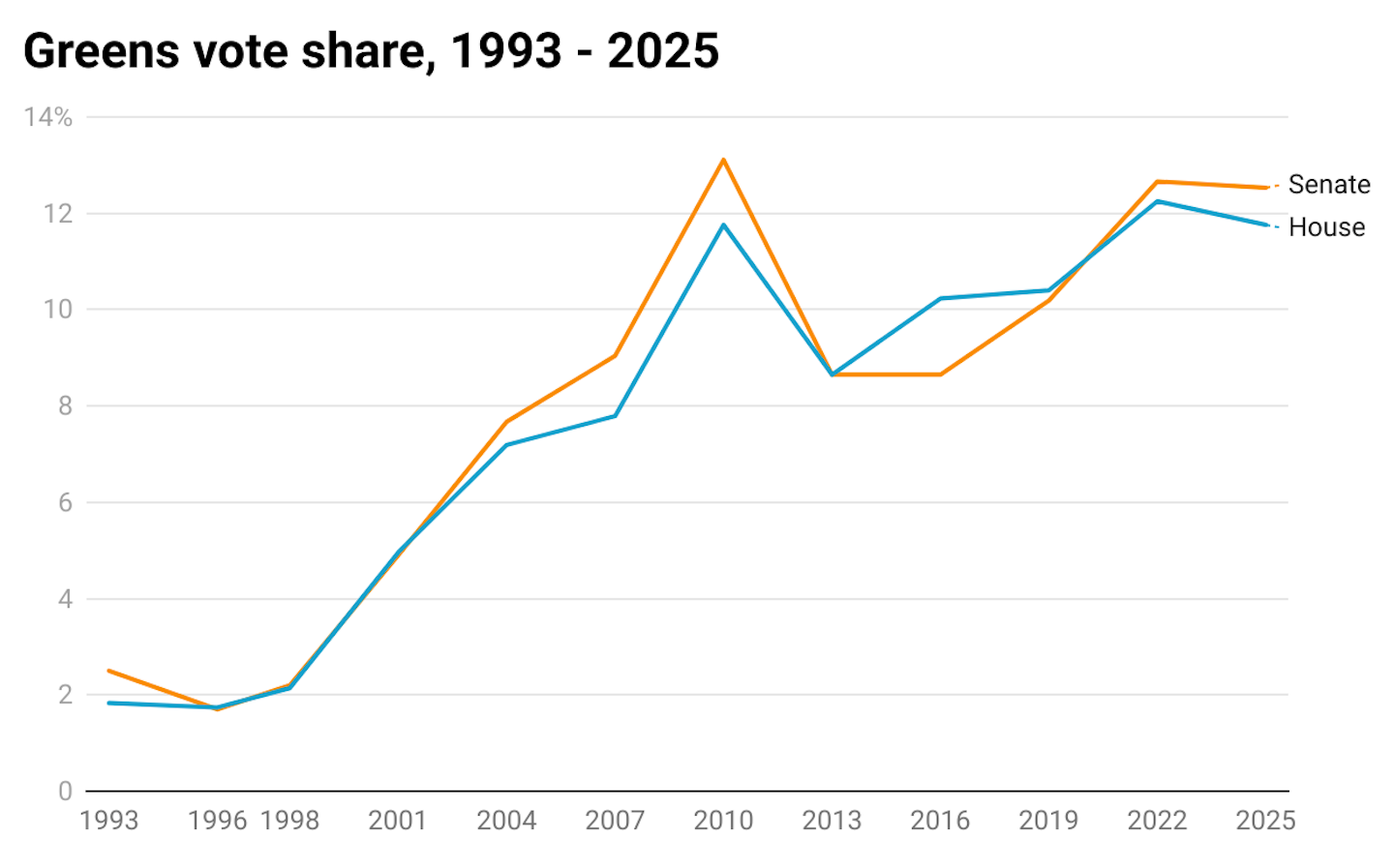
Nationally, the Greens’ lower house vote remained above 12%, down just -0.09% from its 2022 vote (as of May 18). Its Senate vote dropped to just below 12%, down 0.99%. However, by keeping all their Senate seats, the Greens have secured sole balance of power in the upper house. 

The below graph shows the absurdity of claims the Greens have been “destroyed”.

Image
Greens vote share, 1993 - 2025

The three lower house seats the Greens lost were less due to a supposed rejection of the Greens as to the mathematics of the preferential system. 

With the collapse of the Liberal vote (much of which went to Labor), the two parties with the most votes in these seats were Labor and the Greens. Liberal preferences then flowed to Labor, giving them victory. Labor, having constantly accused the Greens of “collaborating” with the Coalition, owe these victories to Liberal preferences.

In Bandt’s case, a further factor was the redrawing of his seat’s boundaries. Public housing estates in which Bandt had built a strong base were moved to the neighbouring seat of Wills. In these areas, the Green vote was again high, with the Greens falling just short of winning Wills for the first time.

There is some nuance to the Greens national vote, however. There were swings against the Greens in some inner-city seats, and swings to the Greens in various multi-racial working-class areas. This occurred in southern Brisbane, western Melbourne and most impressively in Western Sydney, with the Greens securing swings in every seat across the region. 

In the Western Sydney seat of Blaxland, the lower house swing to the Greens was only about 1%, with a strong Muslim Votes Matter (MVM)-backed independent campaign channeling much of the local fury at Labor over inaction around Gaza and other issues. But the Senate vote in the seat more than doubled, from just under 6% to more than 13%.

Western Sydney also shows the independents’ challenge affects Labor too. In Fowler, incumbent independent Dai Le — who dramatically won the seat from Labor in 2022 — was re-elected. As with Blaxland, the neighbouring seat of Watson also saw a MVM-backed independent ride waves of community anger to significantly reduce Labor’s previously large winning margins. MVM candidates have insisted they are only getting started.

Greens’ ‘roots’

The second claim about the Greens is they have abandoned their supposed roots as a purely “environmental party” by taking up such causes such as housing and Gaza. 

Presumably this also includes their push to expand Medicare to include dental (a huge expense for many people), to abolish student debt and make education free, and to provide free child care — all to be paid for by new corporate taxes.

It does not take much imagination to look at these policies and see the ghost of the Gough Whitlam Labor government. Elected in 1972, in just three years the Whitlam government famously extracted Australia from the Vietnam War, created Medicare and introduced free education, among other reforms of the sort Labor has not just stopped promising but, in government, actively worked to undermine. 

The Greens seeking to take up this reforming legacy embarrasses a Labor that wants the Greens to sit in the corner and talk about trees. Of course, critics of the Greens chose not to notice the Greens also condemning Labor for opening new coal and gas mines, calling instead for a major expansion of renewables.

It also ignores the actual Greens’ history. The Greens were formed in the 1980s and early ‘90s around four pillars:

  • Ecological sustainability;

  • Social justice and economic equality;

  • Participatory democracy; and

  • Peace and non-violence.

The Greens have always stood for more than just “the environment”. Exactly how they have approached broad social issues, and the exact mix in their focus, has varied over the years. But variations of the mix they campaigned for in 2025 were there from the start.

If anything, the Greens do not always fully synthesise these four pillars; that is, treat them as parts of a connected whole. The Greens sometimes present different policies as if they are siloed proposals with little connection to each other: over here is climate action, in an unrelated column is housing, in the next unrelated column is First Nations justice, and in a different silo altogether is ending the US military alliance and supporting Gaza. 

Yet they are all connected — Greens policies on these issues represent a challenge to the current powers-that-be and their system. Both major parties act as they do because they are beholden to the actual economic centres of power in society. 

The same corporate interests making huge profits from fossil fuels are intricately connected to the property industry (just look at where major banks’ capital is invested). This economic power sees its interests as best served globally by allying with the US, part of which means uncritical support for Israel. 

It is entirely consistent for the Greens to talk at the same time about ecological sustainability, and housing, and refugee rights, and peace, and economic inequality and plenty of other injustices — both in terms of their own founding principles and the reality of the country.

Breakthroughs

Exactly how to best express this is a big question.The electoral breakthrough for the Greens in Brisbane in 2022, where they shocked the political establishment by winning three inner-suburban seats, was closely associated with a push to emphasising “universalist” type politics. This emphasises collective interests of the majority against a political class that serves a powerful minority.

Led by a tendency emerging from their South Brisbane branch, the Queensland Greens have grown in electoral strength from about 2015 through a focus on grassroots work to build community support that can challenge a political establishment captured by corporate interests. 

These politics were seen most clearly in Chandler-Mather’s high profile campaigning on housing. But they were also symbolised by Greens’ Brisbane MP Stephen Bates, a young working-class queer man, who was just 29 and famously working a retail job when he won his seat in 2022.

Outside the media glare, the Greens used these new seats to set up local free meals programs and other forms of financial help for those struggling, largely funded out of their MP’s salaries. They also campaigned on a range of local issues such as flight noise and plans to close a public school to redevelop a stadium. 

Chandler-Mather was explicit about his project. When myself and LINKS International Journal of Socialist Renewal editor Federico Fuentes did a 2-hour interview with him in late 2023, Chandler-Mather insisted the goal was to transform the Greens into a mass working-class party. 

His interventions in parliament showed how his project was aimed against the “political class” as a whole. In one viral clip of a parliamentary speech, as he tried telling the story of a desperate constituent in the face of Labor jeers, an emotional Chandler-Mather spoke over the heads of MPs to “anyone watching”, insisting that the thing that scared the political class most was ordinary people having hope.

When Labor brought in profoundly undemocratic laws to gut the Construction, Forestry and Maritime Employees Union (CFMEU), using long-standing criminality in the construction industry as its excuse, Chandler-Mather addressed an angry rally of union members, copping further abuse from Labor and the media for daring to do so.

No wonder Labor worked so hard to unseat him, and Albanese sneered so unpleasantly when they did.

In this context, a rise in Green votes in more working-class areas may be important. It is far too soon, and the shift still too limited, to draw hard conclusions, but it is certainly possible the more universalist-type messaging and policies found a stronger resonance in these areas (as did support for Gaza in places like Western Sydney). 

In Western Sydney, the swings built on a growing vote in the region in the 2024 local council elections. Amid a higher vote across the area, the Greens won seats on Blacktown and Cumberland councils for the first time.

Campaign message

Yet despite those Green shoots, it is hard not to feel the Greens’ election campaign missed opportunities. Amid a crisis of legitimacy for the major parties, with space opening up on the left and people’s living conditions worsening, the Greens vote stayed steady rather than grew.

In particular, the perspective pushed by Chandler-Mather in the 2023 interview has undoubtedly taken a hit. It is not just that the three seats lost were held by figures who seemed clearly associated (to varying degrees) with this social democratic reform-type perspective, this perspective already seemed weaker in the Greens election campaign itself. 

Two factors seemed to be behind this. The first was the 2024 Queensland state elections, in which the Green vote in inner-suburban Brisbane stalled for the first time since 2015. The second was the election of Trump just a few weeks later.

The Greens took a well-developed platform to the Queensland election with a heavy focus on public ownership to tackle the myriad of crises people faced. But with the Liberal National Party (LNP) poised to win, the election instead centred on the contest between the LNP and incumbent Labor government, which ran some watered down versions of popular Greens policies to save what they could. 

In the aftermath, there was a sense the Greens, in campaigning hard against the status quo in general, had not done enough to make clear their specific opposition to the LNP and its profoundly reactionary platform. When Trump won the US elections, this concern seemed to deepen.

It led to a seeming over-correction, with the Greens federal campaign slogans overwhelmingly emphasised stopping Dutton, and explicitly connecting him to Trump. To this, they added that the Greens would “push Labor to act”. 

With the exception of the heavily publicised “put dental into Medicare” proposal, this largely crowded out actual policies. Other measures with potentially wide appeal, such as combining rent caps with creating a public developer to build badly needed homes, received less focus. 

The Greens powerful message to sanction Israel and cease arms deals in the midst of Israel’s genocide was also quieter than the constant refrain of “Keep Dutton out, make Labor act”.

At its most extreme, the Greens even talked of a potential “golden era of progressive reform” if a minority Labor government had to negotiate with Greens MPs able to “pressure” Labor to do the right thing. 

Weaknesses

The problem is, it is hard to condemn Labor so strongly for active complicity in the Gaza genocide, then suggest they might bring in a golden era of reform if only enough Greens MPs are there to “push” them.

No doubt this messaging did reflect real pressures on the Greens. Much of their traditional middle-class base, especially in inner cities where they were trying to hold or win new seats, were understandably horrified at the thought of a Dutton prime ministership. 

But campaigning in the Western Sydney seat of Blaxland (admittedly a Labor safe seat where the main challenge came from a Muslim independent), Dutton was not a big factor among people coping with collapsing living standards and often seething with rage over Gaza. 

People, but in particular those from the local Muslim community, ignored Dutton and directed their fire squarely at the party in government, giving expression to their community’s widespread sense of being ignored and betrayed.

In this regard, part of the issue may be a need for greater flexibility in campaigning, with more space for different emphasises around the same basic policy focuses. Reassuring a voter in Griffith or Melbourne that the Greens strongly oppose Dutton is understandable, but in Western Sydney the concerns are very different.

Part of the problem of so heavily emphasising “keep Dutton out” is that it did little to give people a reason to vote for the Greens specifically. After all, Dutton is to the right of most of Australian society, including large chunks of the Liberals’ traditional base. To oppose Dutton, you do not need to vote Green; there were no shortage of other candidates wanting to stop him too.

The attempted point of differentiation was the call to push Labor “to act”, but this can ring false. It is not just that the Greens had spent the past three years denouncing Labor (accurately) as a political arm of the property and fossil fuel industries, and (accurately) as being complicit in genocide. 

The harsh reality is few people have any hope or expectation Labor will do anything good at all. Even people voting Labor do not really expect that — they just looked at the alternative.

There is a layer of politically engaged progressive people who believe that with the right mathematical outcome of seats some positive reforms may be possible — a minority Labor government plus Greens’ and independents’ support equals change. But this does not really translate to broader society: people hear “keep out Dutton and make Labor act” as “support Labor”.

There is no guarantee, of course, that a different approach would have led to a better electoral outcome. But this is not simply about votes in one election; rather it is about what type of politics you wish to campaign on. 

After the breakthroughs of 2022 on universalist-type politics that targeted the political class as a whole, it feels like the Greens missed the chance to more fully test out the type of politics that led to that historic breakthrough. 

One thing that should also be emphasised is that the Greens operate under a resource stretch that the major parties do not. Swings in places such as Western Sydney were achieved with very limited resources, and pose the question of what potential support might be won with more. 

In Brisbane, the party had to direct a lot of resources and energy to try and keep their three inner-suburban seats (ultimately only keeping Ryan), posing the question of what further gains could have been made in southern Brisbane with bigger campaigns.

This connects to a further challenge from frequently hostile media coverage, which amplified Labor’s lines of attack. How much damage this does can be hard to gauge, but successfully countering it requires strong on-the-ground campaigns. 

Future directions

With Bandt losing his seat, the Greens have now elected Queensland Senator Larrisa Waters as parliamentary leader, with NSW Senator and high-profile voice for Palestine Mehreen Faruqi remaining as deputy leader.

All the public messaging has so far emphasised a refusal to back down in the face of Labor and media pressure on issues such as Gaza and housing. Former leader and party grandee Bob Brown even took to the media to urge the Greens to go harder against “Labor arrogance”. 

If anything, Labor attacks may well be helping the Greens post-election. It gives the Greens the chance to say clearly: “we aren’t going to stop opposing war crimes or supporting people’s right to affordable housing”. Labor is providing the sharp differentiation between themselves and the Greens that was lacking in much of the campaign itself.

The question remains though, whether the Greens will focus on their more traditional role of seeking to be a “moral voice” that “holds power to account” from within the political system, or seek to challenge the political status quo itself.  

Waters’ message of wanting politics “with a heart” could suggest a more “moral voice” emphasis. There can be a pull towards this approach due to the Greens’ weight in the Senate, where the party has the balance of power. 

It favours an approach of high-profile commentary through the media, whereas trying to win and hold lower house seats requires more localised community base-building. 

On the other hand, the swings in multi-racial, working-class areas, achieved with still-limited campaigning, suggest the potential for the Greens to extend beyond their largely middle-class constituency and take more of the political space Labor has abandoned. The Greens may have lost three of their four lower house seats, but they are within touching distance of winning at least a handful in the next election.

The most likely outcome will be a mix of both approaches, with the exact weight of either and how they interact to be determined. The party appears optimistic about increasing their presence and vote in places such as Western Sydney. The next period will provide no shortage of opportunities for a political force willing to organise around people’s collective interests.

In this regard — and in terms of the space to the left of Labor — it is also worth noting the sizable swings to socialist candidates in several Victorian seats. In Wills, socialist councillor Sue Bolton, who has built a base through constant involvement in community campaigns, received a swing of more than 5% to win 8% of the vote (unprecedented for her party Socialist Alliance).

The Victorian Socialists, who ran high-profile social media figure and renters’ rights advocate Jordan van den Lamb (known as “purple pingers”) for the Senate, also received significant swings and high votes by socialist campaign standards in several Melbourne seats. 

In a sign of often-elusive socialist unity, SA and VS ran a joint campaign in Wills, producing material supporting Bolton for the lower house and VS for the Senate.

The story of these results and associated campaigns is best told by those directly involved, but these experiences will be part of the process of building a serious challenge rooted in working-class politics to the political establishment. 

The post-election announcement by VS that they plan to extend the party across the country and run candidates in every state shows they are seeking to build on their solid results over several elections in Victoria.

Overall, the elections marked a win for the status quo: an incumbent government, which has done little of note, secured a larger majority without winning many more votes, against an Opposition that has largely collapsed into dysfunction.

For the Greens, having secured a big breakthrough last time, it shows progress is not linear: while their vote held up, forward momentum was stalled. The space for a serious challenge built around collective interests from below remains — with the added urgency that global politics shows the potential for right-wing populist forces to harness dissatisfaction with the status quo. 

Stuart Munckton is a member of the Parramatta Greens. A longer version of this piece was published on his blog