Tuesday, June 17, 2025


Pensioner poverty in Europe: Which countries have the highest rates?
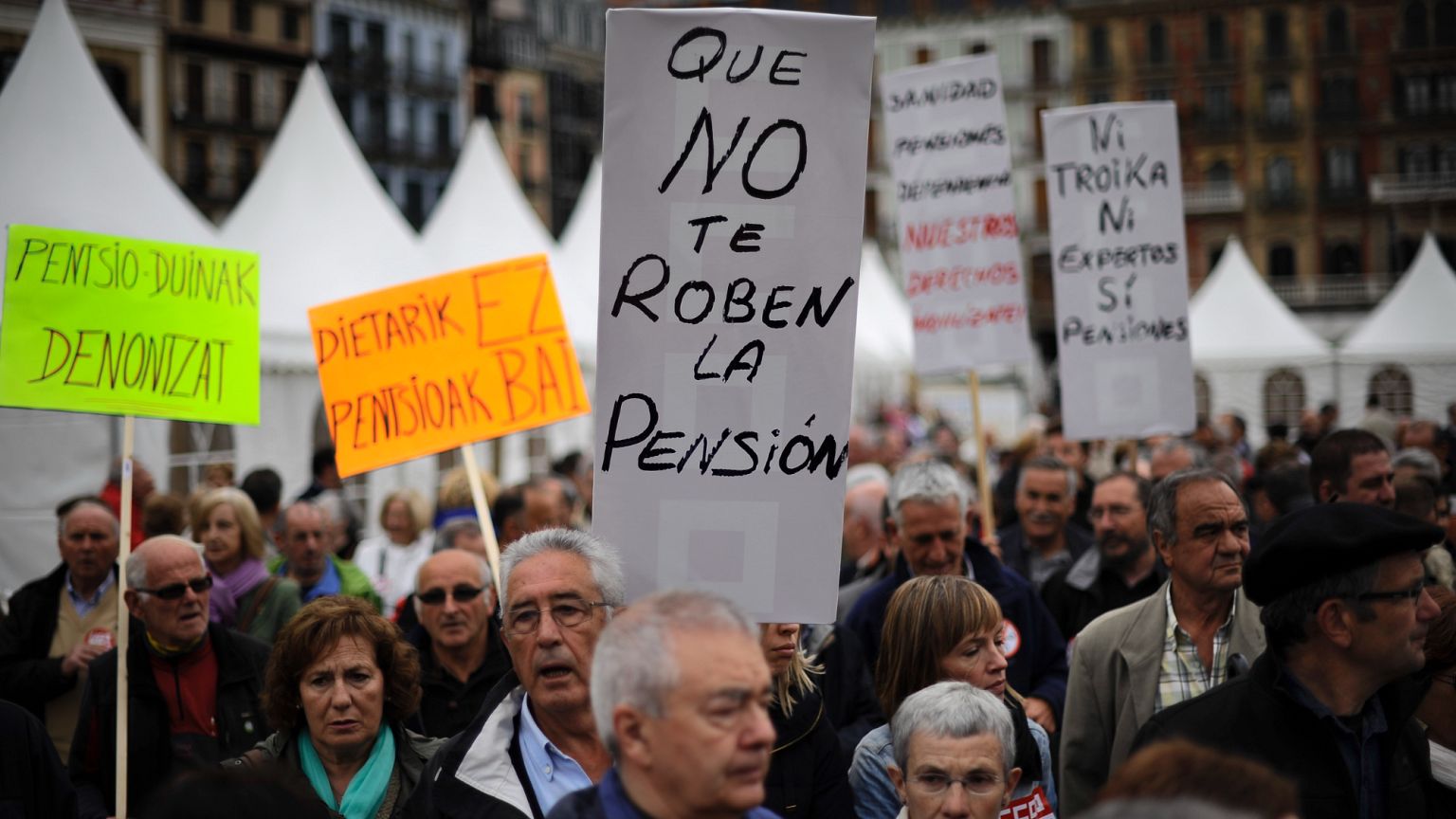
Pensioners holding a banner saying, ''Do not be stealing our pension'' in Spain in 2013.
Copyright AP Photo

By Servet Yanatma
Published on 

Pensioners tend to face greater financial difficulty in Eastern Europe, while poverty rates are generally lower in Nordic and Western European countries. Switzerland and the UK are outliers here, showing comparatively high levels of pensioner poverty.

In most European countries, the average income of people over 65 is lower than that of the total population, according to the OECD. In several cases, elderly incomes fall below 80% of the national average, contributing to significantly high poverty rates among pensioners.

So, how do these levels of financial precarity vary across Europe? In which countries do pensioners face the highest levels of poverty? And how does elderly income compare to the national average?

Income poverty rates measure the proportion of people at the lower end of the income distribution scale. Specifically, the poverty rate refers to the share of the population whose income falls below the poverty line. According to the OECD, this is defined as 50% of the median household income of the total population.

For example, in 2022, the median disposable household income in France — adjusted for household size — was €26,410. This means the poverty line stood at €13,205.

In 2022, the pensioner poverty rate across 30 European countries ranged from 3.1% in Iceland to 37.4% in Estonia, measuring the share of people over 65 with incomes below half of the median household disposable income.

Eastern vs Northern Europe

Pensioners tend to be more financially vulnerable in Eastern Europe, particularly in the Baltic states and several post-communist countries.

Following Estonia, the highest pensioner poverty rates were recorded in Latvia (33%), Croatia (28.5%), and Lithuania (24.6%).

Pensioner poverty rates tend to be lower in Western and Northern Europe. Iceland (3.1%), Norway (4.1%), Denmark (4.3%) and Finland (5.5%) have some of the lowest rates. These countries benefit from strong welfare systems and universal pension schemes.

However, Switzerland (19.8%) and the UK (14.9%) stand out with relatively high pensioner poverty rates.

Among Europe’s five largest economies, the UK has the highest rate, followed closely by Germany (14.1%) and Spain (13.1%). 

Italy performs slightly better at 12%, while France stands out with the lowest rate by far — at just 6%.

In general, the female pensioner poverty rates are much higher than those for men, partly due to higher life expectancies.

Key factors behind pensioner poverty

“Low pension payments are the main contributing factor to pensioner poverty,” Andrew Reilly, pension analyst at the OECD, told Euronews Business. 

“Even with relatively long working careers, pensions are low in Estonia, Japan, Korea, Latvia and Lithuania.”

Reilly noted that these countries have some of the highest rates of pensioner poverty.

“In the Baltic states, the high poverty rates are the result of low earnings-related pensions and relatively low safety-net benefits,” he added.

The strength of first-tier pensions — also known as state pensions — can lower poverty rates amongst older citizens by providing a guaranteed minimum income.

“Those countries that have large safety-net benefits for pensioners, whether targeted only to the poorest or universally paid to all, tend to have lower levels of poverty amongst the older age groups compared to the overall population figures e.g. Denmark, Iceland, and Norway,”  Reilly said. He added that Latvia and Lithuania have low levels of safety-net benefits.

Elderly income compared to the national average

The average income for people over 65, when considered as a percentage of the total population's average income, varies significantly across Europe.

In 2022, it ranged from 66.3% in Estonia to 107% in Luxembourg. This means that in Estonia, older adults received just two-thirds of the national average income.

Among 29 countries, the income ratio for people over 65 falls below 80% in several cases. These include Lithuania (66.5%), Latvia (71.4%), Croatia (73.4%), Belgium (76.2%), Czechia (76.7%), Bulgaria (77.2%), and Switzerland (79.4%).

At the top of the list, Luxembourg leads with 107%, followed by Italy (98.8%), Portugal (97.1%), and Spain (96.7%).

Among Europe’s largest economies, Italy and Spain have the highest elderly income ratios, closely followed by France at 94.3%. The UK stands lower at 82.1%. Despite Germany’s high pensioner poverty rate, the elderly income ratio there still reaches 90%.

For example, in 2022, the mean disposable household income in France — adjusted for household size — was €30,500. People over 65 received an average of €28,750.

This ratio can fluctuate significantly from year to year in some countries. For example, in Turkey, it was 97.3% in 2019. It then rose to 103% in 2020, and it dropped to 84.5% by 2022.

Purchasing power

On the other hand, the OECD’s Pensions at a Glance 2023 report notes that “these numbers are based on income data, and the considerable country differences in wealth (housing or otherwise) held by older people may not be reflected in income poverty rates”.

In other words, both the amount of pension income and its purchasing power should be considered when assessing which countries offer the best conditions for retirement.

EU targets Trump's 'Big Beautiful Bill' over tax provision in tariff talks

The EU has put on the table of the tariffs negotiation with the US a provision of the US budget bill targeting foreign investments to the US.
Copyright J. Scott Applewhite/Copyright 2025 The AP. All rights reserved

By Peggy Corlin
Published on 

The US budget bill could impose a tax of up to 20% on US-sourced income received by foreign investors. The provision of the bill, which has raised concerns within the EU, is currently part of the ongoing negotiations on tariffs, according to EU lawmaker Markus Ferber.

The EU is wrangling over a provision of Donald Trump's so-called "Big Beautiful Bill" for the US budget that could see European companies taxed higher than others in retaliation for certain taxes imposed on US enterprises overseas, the vice-chair of the European Parliament’s tax subcommittee has told Euronews.

The German European People's Party MEP Markus Ferber said the European Commission has raised the proposed legislation—already approved by the House of Representatives—in ongoing tariff negotiations with the Trump administration.

“We are concerned because within this ‘One Big Beautiful Bill’ there are special taxes aimed at jurisdictions that impose taxes on the US,” Ferber told Euronews.

He added that jurisdictions like the EU, which have already implemented the OECD agreement establishing a global minimum tax of 15% on multinationals, are directly targeted.

“It could also affect member states that have introduced a digital services tax,” he noted.

The OECD agreement, approved by 140 countries - though as yet unratified by the US - introduced a global minimum tax of 15% on the profits of multinational companies, regardless of where those profits are declared, with effect from 1 January 2024. The EU has transposed the agreement into law and applies it to multinationals operating within the Union, to the ire of the Trump administration.

Meanwhile countries such as Denmark, Portugal and Poland have implemented digital services taxes targeting US tech giants, while others are in the process of creating one.

The US is now looking to retaliate against taxes it deems unfair through a provision of the "Big Beautiful Bill” which would hit foreign investors with a bump in US income tax by five percent points each year, potentially taking the rate up to 20%, in addition to existing taxes.

The Commission is concerned, officials said.

According to Ferber, the EU executive has put this provision of the US budget bill on the negotiating table. “But we are not sure yet that the US agreed to put it in the basket,” the MEP said.

For several weeks, the EU and the US have been discussing a resolution to the trade dispute that has been ongoing since mid-March.

The US impose 50% tariffs on EU steel and aluminium, 25% on cars and 10% on all EU imports.

For its part, the EU has prepared countermeasures targeting around €115 billion worth of US products. These measures are either suspended until July or still awaiting approval by EU member states.

Volvo Cars CEO: dual tech for China and the West is new trade reality

Copyright AP/Virginia Mayo

By Eleanor Butler
Published on 

Tech restrictions and tariffs show “we’re going into a more regional world” said the head of the Swedish automaker.

Volvo Cars will develop different technologies for products offered to Chinese and Western customers as trade becomes more fragmented, said CEO Håkan Samuelsson on Monday. 

“It's our target now to have two versions of software and silicon components, the computer in the car,” he told Euronews at the EVS38 symposium in Gothenburg, Sweden.

“We need to have a Western version and a Chinese version. That’s something we just need to live with and adapt to.”

Volvo Cars has been headquartered in Gothenburg since its creation in 1927, although the firm has been majority owned by China’s Geely Holding Group since 2010.

If efforts weren't made to tailor products to different markets, the firm's Chinese R&D could complicate exports to the US, especially as Washington seeks to distance itself from Chinese tech.

In January, the Biden administration finalised a rule banning smart cars from China and Russia over concerns linked to potential US data leaks. Some feared that these cars could also be used by foreign states to interfere with the US electric grid or other critical infrastructure.

“We don't see any risk … that we will be using Chinese technology in the US. That will not happen,” said Samuelsson.

A focus on China and the US

In this year’s first quarter earnings report, Volvo Cars reported a drop in profits, which it partly blamed on the “current turbulence in the broader world economy”.

New US tariffs of 25% on foreign cars and car parts are notably causing a headache for the firm, dampening consumer appetite as well as raising import costs.

In the report, Volvo Cars announced an action plan to improve profitability, “focusing on the US and China markets, as priorities”.

Samuelsson told Euronews on Monday that he wanted to change the firm’s approach to the Chinese market, tailoring it to local demands.

“We need to listen more to the local people in the region and adapt to local habits and tastes — and perhaps also have some special cars for the Chinese market,” he said.

Samuelsson pointed to the new XC70, an extended-range plug-in hybrid recently launched in China, aimed at pulling market share away from competitors like BYD.

Volvo Cars’ retail sales decreased by 12% year-on-year in China in the first quarter, with electric vehicles and plug-in hybrids accounting for 10% of this total.

In the US, Volvo Cars’ sales jumped by 8% — potentially linked to tariff frontloading — with electric vehicles and plug-in hybrids making up 28% of that total.

Tech restrictions in Europe

Although the firm has signalled a desire to focus more on US and Chinese customers, Volvo Cars still relies heavily on the European market. The region represented nearly half of its total sales for 2024, as well as the same proportion of sales in Q1 2025.

When it comes to manufacturing these vehicles, some are made on Belgian and Swedish sites, while others are made in China and shipped to Europe.

This means that — on certain vehicles — Volvo is exposed to EU duties, introduced last year in response to alleged unfair subsidies from Beijing. 

“Tariffs are not going to help the European industry to be more competitive long-term,”  said Samuelsson.

“We should have an attitude of free trade and free competition…but realistically that will not happen. I think we're going into a more regional world.”

A recent action plan published by the European Commission suggested that Chinese carmakers operating in the EU may be obliged to enter joint ventures with European companies or license parts of their technology.

Asked how Volvo Cars would be affected given its ties with Geely, Samuelsson suggested the firm would be untouched, underlining that a significant amount of development is still happening in Europe.

“I don't see any problems with the Chinese technology in our cars in this respect…the software products in the car are to a large extent adapted and developed by Volvo,” he said.

Temperatures in Spain set to soar past 40C this week. Is climate change to blame?


Copyright AP Photo/Paul White

By Euronews Green
Published on 17/06/2025 -

With heatwaves on the horizon after a record-breaking May, here's how to keep yourself and others safe.


Spain is preparing for an unusually warm summer, hot on the heels of a record-breaking May.

In an update on Friday, national weather agency AEMET said there is a 60 per cent chance the country will be hotter than average from June through to August.

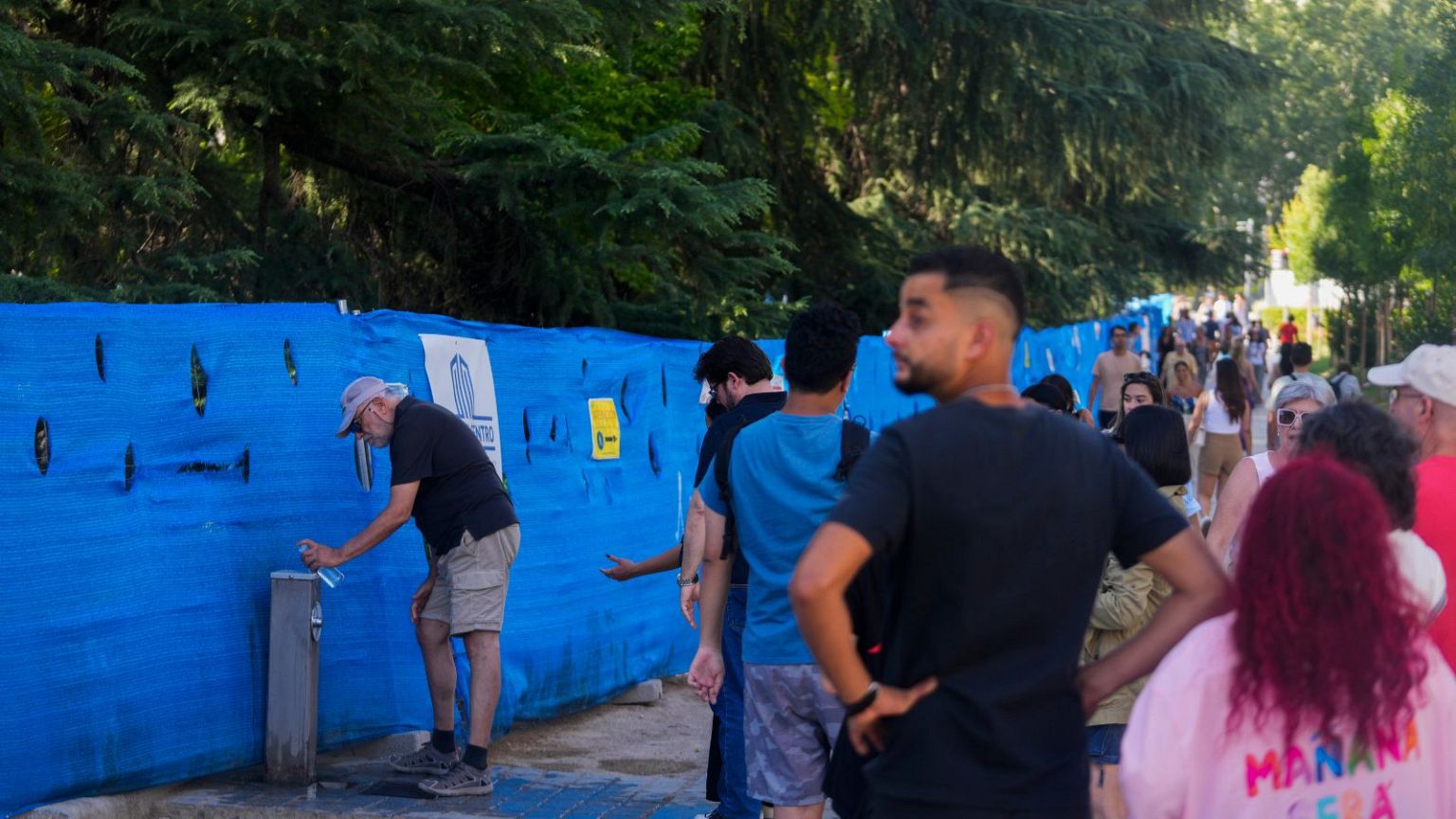
It follows searing temperatures at the end of last month, when the mercury climbed to 40.7C at the airports of Córdoba and Seville, and 37.5C in Zaragoza. Temperatures on 30 May averaged 24.08C - the highest reading for May since records began in 1950.

There is no doubt, as the Intergovernmental Panel on Climate Change (IPCC) has warned before, that “human-caused greenhouse gas emissions have led to an increased frequency and intensity of temperature extremes”.

The last three summers have been Spain’s hottest on record - and summer 2025 looks set to continue that trend.

Related


Where will be the hottest in Spain this summer?

The likelihood of a warmer than usual summer rises to 70 per cent along Spain’s Mediterranean coast and the Balearic and Canary Islands.

The eastern coast - including Barcelona, Valencia, and the Balearics - is expected to experience frequent “tropical nights”, with temperatures failing to drop below 20C, and many consecutive days above 35C.

The summer forecast comes as AEMET issued orange‑level warnings for heat for today (17 June) in Córdoba and Seville countryside - where temperatures could hit 41C - and Vegas del Guadiana in Extremadura.

After a very rainy spring, there is no clear trend for rainfall this summer, the agency adds, though the usual pattern is long dry periods occasionally interrupted by storms.

To help people prepare for its increasingly hot summers, last year Spain’s Ministry of Health released a new map with more detailed heat alerts. It breaks the country down from 52 provincial areas into 182 meteosalud (or metro health) zones, providing a colour-based warning system for each.

The hyper-local heat alerts range from Green or no risk through to Red or high risk to health and life. Alongside a colour, these alerts come with information about sun exposure, hydration and symptoms of heat-related illness. There is even an English language version of the official heat alert website, to help alert tourists, students and newly arrived residents to the risk.

This year, Spain’s annual heat plan supplements the new meteosalud areas with a guide advising different administrations, health professionals and citizens when intense heat strikes. It follows a study from the Carlos III Health Institute, which determined the threshold for heatwaves in these different areas, taking into account variables like heat-related deaths.


How is climate change turning up heatwaves?

Every heatwave in the world is now made stronger and more likely to happen because of human-caused climate change, World Weather Attribution (WWA) states.

This is borne out by numerous previous analyses - including one that found extreme heat felt in Spain and Portugal in April 2023 would have been almost impossible without human-caused climate change.

2024 was the warmest year on record and the first calendar year where the global temperature exceeded 1.5°C above pre-industrial levels. Carbon dioxide is the biggest contributor to global warming; its concentration in the atmosphere exceeded 430 parts per million (ppm) last month.

As average temperatures rise, the amount of weather at the ‘extremely hot’ end of the spectrum increases, making extreme heat events more frequent, longer, and more intense.
RelatedGlobal temperatures likely to exceed 1.5C limit over the next five years, WMO warns

How to stay safe during a heatwave in Spain

“Extreme heat is a silent killer, affecting people's health, social, environmental, and economic well-being, particularly women and vulnerable communities,” says Kathy Baughman Mcleod, CEO at Climate Resilience for All (CRA).

The women-led climate adaptation NGO shares five points to help people in Spain, Europe and beyond prepare for upcoming brutal heatwaves.

1. Know the signs of heat illness - for yourself and others

Recognise early symptoms like dizziness, headache, nausea, rapid heartbeat, and confusion. Heatstroke is a medical emergency. Watch closely for these in vulnerable groups:

Pregnant women may experience worsened dehydration and risk to the baby.
Low-income workers, especially outdoors, may ignore symptoms for fear of losing pay.
Older adults and children may not feel thirst or express discomfort clearly.
Co-workers can look fine in one moment, then collapse in the next. Learn to act fast.

2. Use trusted heat early warning systems

Download and follow AEMET for real-time, science-based heat alerts via app, SMS, or website. AEMET issues heatwave warnings by region, severity, and duration - use it to plan your day and check in on others.

3. Everyone's at risk now - even the fit and healthy

With rising temperatures, even healthy adults are suffering from heat exhaustion and heatstroke, especially during physical activity or prolonged exposure.

Don't assume you're immune. Hydrate constantly, rest in the shade or air conditioning and schedule demanding tasks for early morning.

4. Take action to protect your home and communityClose blinds and shutters during the day.
Use fans or create cross-ventilation in the evenings.
Check on neighbours, especially those living alone.
Advocate for cooling shelters, shaded workspaces, and water access points in your area.

5. Don't underestimate nighttime heat

When nighttime temperatures stay above 25C, the body can't recover from the day's stress. Poor sleep increases heart risk, reduces productivity, and worsens mental health.Use cool showers, damp sheets, or ice packs before bed.
Create a communal "cool room" with fans or AC if electricity is limited.
Let employers and schools know that heat affects performance and health - even when the sun goes down.
Portugese landowners face fines as wildfire inspections begin


Copyright Copyright 2019 The Associated Press. All rights reserved.

By Sertac Aktan with EBU
Published on 17/06/2025


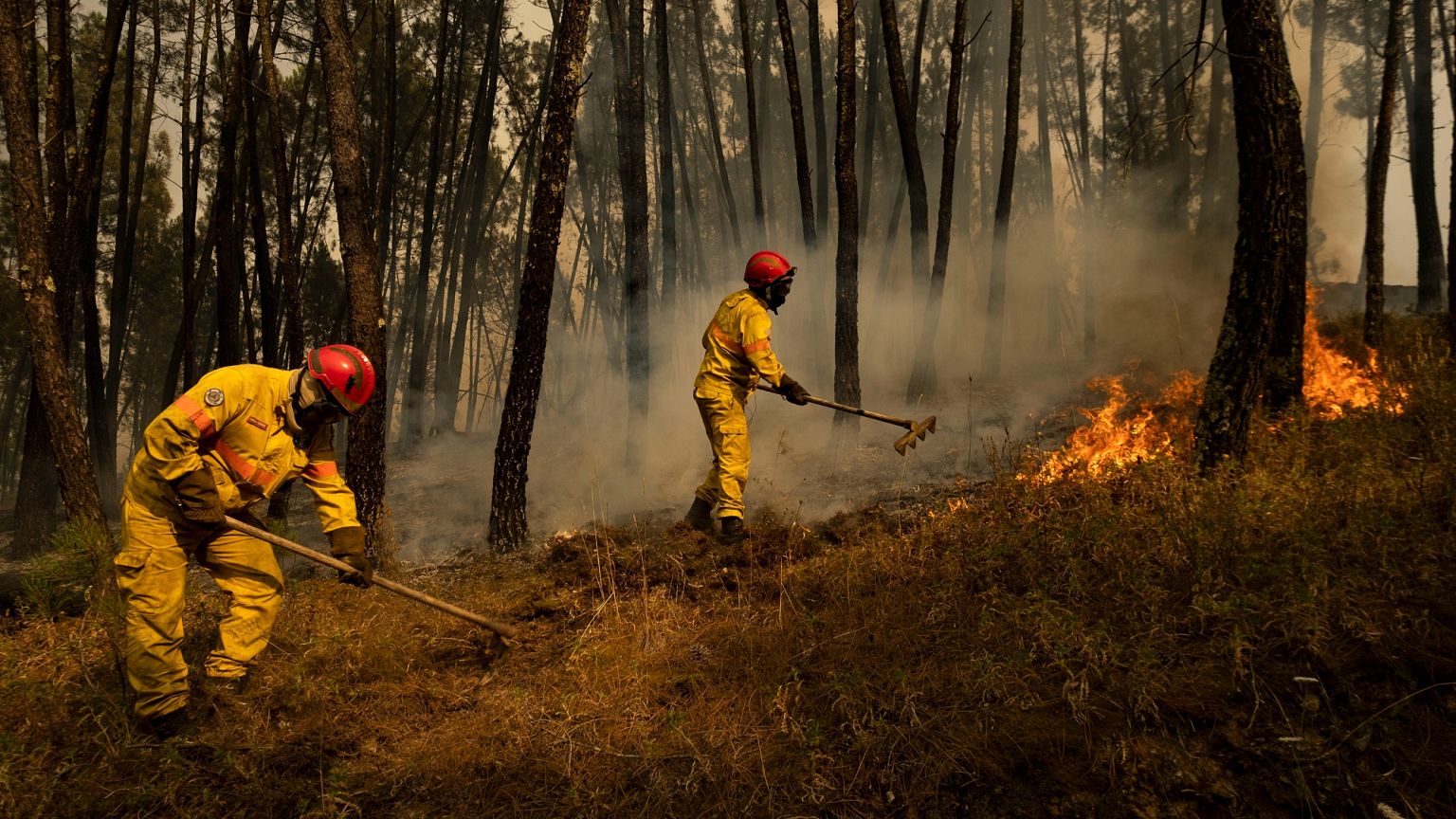
Portuguese landowners have been asked to clear any undergrowth on their properties in order to reduce the risk of wildfires. Those who fail to do so now face fines of up to €5,000.

Portugal's police force, the National Republican Guard (GNR), began nationwide inspections on Monday after the deadline passed for mandatory land clearing intended to prevent wildfires.

Landowners had until Sunday to clear undergrowth near properties, a deadline that was previously extended due to rainy weather. On the ground, GNR officers explained the specific regulations to property owners.

An officer from the GNR's Environmental Protection Unit in Coruche, Felizardo, pointed out an infraction: "In this case, the grass is a bit taller than the prescribed limits, and therefore, fuel management should have been carried out within 50 metres around your building to comply with the established regulations."For some landowners, the wet weather that led to the extension created its own problems. A landowner was asked if she knew she had to clear the land.

"Yes, we do know, but sometimes things don't happen the way we want. It rained a lot. My son was supposed to plough the land before going to the fields, but the soil couldn't support the tractor's weight, and it got stuck, so he had to leave it like that."

Those who have failed to comply now face significant fines, which can reach up to €5,000 for individuals and €60,000 for companies. By the end of April, authorities had already identified over 10,000 potentially non-compliant properties.

Education is the focus, not punishment

Despite the threat of penalties, the GNR's commander in Coruche, Mateus, expressed that the immediate focus is on education rather than punishment.

"At this time, and despite being authorised by law to carry out inspections and issue fines, our approach is always focused on prevention," he said, adding that the ultimate objective is clear: "What we want is for the land to be cleared and for there to be fewer forest fires in 2025."

The urgency of the campaign has increased in significance due to an impending heatwave. All of the Portuguese mainland's districts are already under a yellow weather warning, with maximum temperatures forecast to fluctuate between 33 and 40 degrees Celsius over the next few days.

Coal-hooked Poland constructs first ever offshore wind farm

Copyright Baltic Power

By Méabh Mc Mahon
Published on 17/06/2025 


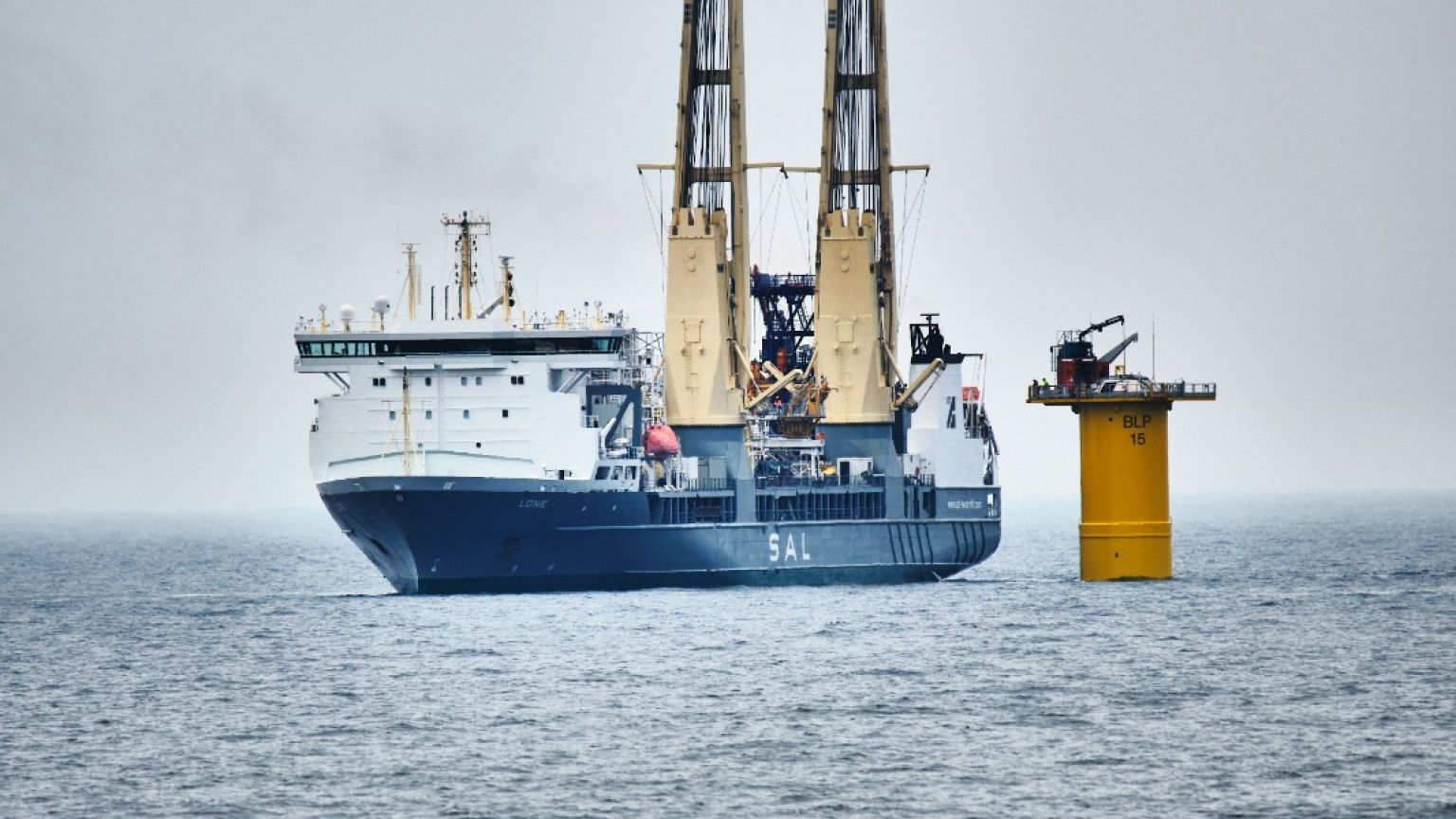
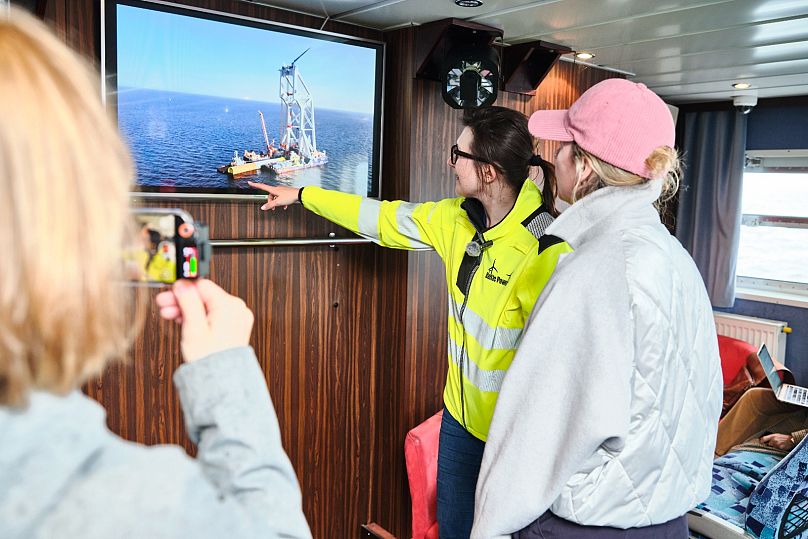
Poland, long known as one of Europe’s most coal-dependent countries, is embarking on a new journey towards clean energy. Euronews takes a boat trip through the Baltic Sea to visit the first ever offshore wind farm on Polish territory.

Once reliant on coal for the majority of its electricity, the country of 36 million that currently holds the EU rotating presidency is trying to reduce its dependence on the fossil fuel.

With many mines becoming unprofitable and old infrastructure in decline, the Polish government of Prime Minister Donald Tusk has planned a gradual closure of coal facilities in the south of the country. As the coal regions of the country come to terms with this shift, northern Poland adjacent to the Baltic Sea is booming.

Ignacy Niemczycki, the deputy minister in the Chancellery, briefed a handful of Brussels-based journalists on board the Jantar passenger ship, telling Euronews that the wind farm should have a lifecycle of up to 30 years and be a major part of the energy transition.

We don't have coal anymore and we don't want to be reliant on imports from third countries.
 Ignacy Niemczycki 
Deputy minister in the Chancellery of Polish Prime Minister Donald Tusk

“It’s in the interest of the Polish economy to invest in renewables, nuclear, and gas to stabilise the grid,” the minister told Euronews.

Baltic Power – a joint venture between ORLEN and Northland Power

Situated 23 kilometres off the northern coast near Choczewo and Łeba, the wind farm is among the most advanced renewable energy projects in the Polish Economic Zone. The final installed capacity of the project is expected to reach 1140 MW, enough to supply electricity to approximately 1.5 million Polish households.

Méabh Mc Mahon speaking to Baltic Powers' Anita Ceglińska from Baltic Power
Méabh Mc Mahon speaking to Baltic Powers' Anita Ceglińska from Baltic PowerBaltic Power

Poland also to invest in nuclear

Renewables will only be one part of the Polish energy mix. Plans for the first ever nuclear plant, which will also be located on Poland’s northern Baltic Sea coast, were put in place under the former Law and Justice (PiS) government and have been continued by Prime Minister Donald Tusk’s current ruling coalition.

Niemczycki told Euronews that a second nuclear project is being considered and Poland is keeping a close eye on Canada as it experiments with the first ever mini nuclear plant, known as a Small Modular Reactor (SMR). SMRs could can potentially power up to 300 MW(e) per unit.

“We will see a major change in Poland’s energy mix over the next 15 years,” said Niemczycki. “Nuclear will become the new baseline, with renewables and gas providing flexibility and stability.”


BEYOND THE BOSPORUS: Turkey’s regime keeps Sword of Trials hanging over heads of the opposition

BEYOND THE BOSPORUS: Turkey’s regime keeps Sword of Trials hanging over heads of the opposition
Ozgur Ozel's mass rallies against the regime went nowhere. And gave many observers the idea that Turkey has a robust opposition. It's not so. / @eczozgurozel


By Akin Nazli in Belgrade June 11, 2025

An indictment on irregularities at the 38th general congress of Turkey’s main opposition Republican People’s Party (CHP) has been submitted to the High Criminal Court by the 28th Penal Court of First Instance in Ankara, government-run news service Anadolu Agency has reported.

Let’s get straight into a disclaimer before diving into the legal processes concerned: The indictments and court cases under discussion have nothing to do with the law. This commentary simply aims to discuss whether the court processes under way are signalling whether or not Turkey’s president, Recep Tayyip Erdogan, is set to seize the CHP.

On June 3, the 28th Penal Court accepted the indictment filed by the Ankara chief public prosecutor’s office. The High Criminal Court is to now decide whether suspects referred to in the indictment have committed bribery.

The indictment

Twelve people, including Istanbul mayor Ekrem Imamoglu (who served as the congress council chair), Izmir mayor Cemil Tugay, CHP Istanbul chair Ozgur Celik, Baki Aydoner, Erkan Aydin, Huseyin Yasar, Mehmet Kilincaslan, Metin Guzelkaya, Ozgen Nama, Ozgur Celik, Riza Akpolat and Serhat Can Es are accused of vote-rigging.

CHP chair Ozgur Ozel and eight more MPs are not included in the indictment since they have legal immunity. To allow trials of lawmakers, parliament must clear the way with a vote.

Kemal Kilicdaroglu, the ex-chair of the CHP who was succeeded by Ozel, and Lutfu Savasex-mayor of Hatay province, are complainants in the indictment.

Party to be seized?

The court process detailed above is not the only court move in relation to the congress.

The presented case hinges on a criminal suit targeting individuals accused of committing a crime. Separately, the 42nd Civil Court of First Instance has been conducting a trial for the annulment of the congress. This case is based on the statement filed by Savas and three other delegates.

On May 26, the 42nd Civil Court held the second hearing. The third hearing is scheduled for June 30.

It is thought that the court will not issue a final ruling on June 30 and a further hearing will be held after the summer break.

Thus, the court keeps open the possibility of a seizure of the CHP that could be executed in the autumn (around November). A seizure would mean Kilicdaroglu being reinstated as the CHP chair.

Tensions in the CHP

Imamoglu’s media proxies have been pressing Kilicdaroglu to openly declare that he would not assume the post in the event of a court ruling providing him with the option. However, Kilicdaroglu is avoiding such an open declaration.

This stance is creating tensions within the CHP and creating tensions within the CHP is the main goal of the court processes in question.

Two years of limbo?

On June 3, Alican Uludag (@alicanuludag), an Ankara-based courthouse journalist who has been closely following the cases in question, wrote on X that the civil court is now supposed to wait for the ruling of the penal court.

Therefore the decision on the annulment of the congress will await the end of the trial at the criminal court. Uludag expects that the trial process at the criminal court (a local court ruling, appeals court ruling and final supreme court ruling) will last at least two years.

So, that would mean no seizure of the party in the next two years.

June 30 remains a critical juncture for the course of the civil court trial. At that hearing or prior to that hearing, the court will issue its ruling on whether or not to continue the trial or await the penal court outcome.

What is this all about?

At the CHP congress, held in November 2023, Ozgur Ozel won the leadership election, dislodging his rival Kilicdaroglu.

Following the congress, Kilicdaroglu circulated claims that Istanbul mayor Imamoglu bribed delegates to vote for Ozel.

In March this year, Savas filed the lawsuit for the annulment of the congress, making similar allegations. The two separate indictments are both based on Savas’ statement.

Who is Lutfu Savas?

In the 2009 local elections, Savas was the candidate of the ruling Justice and Development Party (AKP) in Antakya, the main central district in Hatay province. He served as the AKP mayor of Antakya to 2014.

In 2014, he joined the CHP and served as mayor of Hatay Metropolitan Municipality to 2024.

In February 2023, catastrophic earthquakes destroyed Hatay. Savas, it turned out, provided the construction and building permits for most of the buildings that collapsed.

In the March 2024 local elections, Ozel nominated Savas as the CHP candidate for Hatay despite a fuss made by CHP voters. Savas lost the elections to the AKP candidate.

In October 2024, Savas accused the CHP management of partnering with the pro-Kurdish DEM Party.

In December 2024, the CHP annulled Savas’ party membership. Savas’ lawsuit came three months later.

There was comedy value created by the coalition announcing in February that the ruling Erdogan regime and the Kurdistan Workers’ Party (PKK) were collaborating.

So, what now?

The congress cases are not the only court cases that are targeting the CHP. There are dozens of different court cases targeting CHP officials. They serve as swords of Damocles hanging over their heads.

At any time, Erdogan is able to seize the opposition party or dismiss or jail an official. Last month, Ozgur Ozel was also physically attacked. His predecessor Kilicdaroglu was also assaulted.

Everyone should know to stay smart with their footwork while playing in the field provided for the controlled opposition. They can any time share the destiny of Imamoglu and others thrown in jail.

In response to this reality, the CHP opts to act as if everything is normal. Turks lose their temper over the so-called main opposition’s insistence on this attitude.

Why does the CHP serve as the opponent’s chimpanzee in this circus?

The CHP, it should be realised, is a multi-billion dollar economy. In 2025, the CHP received Turkish lira (TRY) 1.4bn ($36mn) via its Treasury grant alone. It has many assets, such as valuable real estate.

Additionally, the CHP holds municipalities that have multi-billion dollar local government budgets, while CHP MPs, mayors, officials on the boards of public institutions and many others receive salaries from the state.

Rejecting the role of whipping boy in this theatre would mean rejecting billions of dollars. The CHP cadres would rebel and overthrow the party management if such a move was on the cards.

Providing apparent legitimacy

Every ruling regime desires an opposition party that it can keep in line, for to the unenlightened observer such an opposition provides the regime with the required legitimacy.

CHP approvals of election results are particularly critical to Turkey’s regime.

The CHP, indeed, has never been shy when it comes to legitimising the election results announced by Erdogan and his henchmen. However, Imamoglu spoiled the game in the 2019 local elections by twice defeating Erdogan’s candidate, rejecting attempts to snatch away his victories in the process. As we know, he eventually ended up in jail.

Final bet: no party seizure in the foreseeable future

This theatre remains on the stage. A seizure of the CHP or, in other words, the replacement of the current CHP management, is not something that can be envisaged for the near future.

There’s a good boy. Regime happy with Ozel

Following the detention of Imamoglu on March 19, the regime became afraid of the consequent street protests. Ozel solved the problem. He held huge rallies that, however, in the final analysis, can be seen as having been controlled. They did not cross the line. And, helpfully to the powers that be, they provided images for the international media that suggested that there is actually an opposition with some heft in Turkey.

After he was physically assaulted, Ozel said that he would respond to the intimidation by holding more big rallies. His statement could be taken to suggest that the regime attacked him because it was afraid of more such rallies and saw Ozel as rebelling against the regime. Or it could suggest something else—that Ozel knows the confines and limits of his playing field and promises to stay within them.

No spanner in Kurdish policy

The assault against Ozel was executed at the funeral of a DEM Party official. Since then, Ozel has not pushed to stop Kurdish collaboration with the regime, evident since the PKK started working with the ruling coalition.

Curiously, the assault on Kilicdaroglu took place at an event related to the “Kurdish question”. It was the funeral of a Turkish official murdered by the PKK.

At that time, the regime was pointing to a claimed alliance between the CHP and the PKK (as mentioned above by Lutfu Savas).

Now, things are vice versa.

In both cases, the idea is that the Kurds and the “anti-Kurds” should not support the CHP. The regime occasionally acquires the support of one side, while keeping the other side away from the CHP.

Once more, the problem solver

When the CHP joined the consumer boycott of companies seen as Erdoganist, launched by protesters demanding the release of Imamoglu, the regime had a moment of panic. Ozel also solved this problem. The CHP only joined the boycott for a single day. The single day passed, and the boycott was left to fizzle out.

Erdogan was never abashed in voicing his happiness with Ozel’s predecessor Kilicdaroglu. And prior to the 38th CHP party congress, both Erdogan and junior ally in the ruling coalition Devlet Bahceli, head of the Nationalist Movement Party (MHP), openly said that they would prefer Kilicdaroglu, but if someone was to replace him, they would prefer that it be Ozel.

Bahceli calls Ozel “TipiTip”, a cartoon character developed for a chewing gum brand.


France closes Israeli weapons booths at Paris Air Show amid Iran strikes

France closes Israeli weapons booths at Paris Air Show amid Iran strikes
Israeli defence firms have booths blocked by French organisers at Paris Air Show on June 16. / CC: Sabreen
By bnm Gulf bureau June 16, 2025

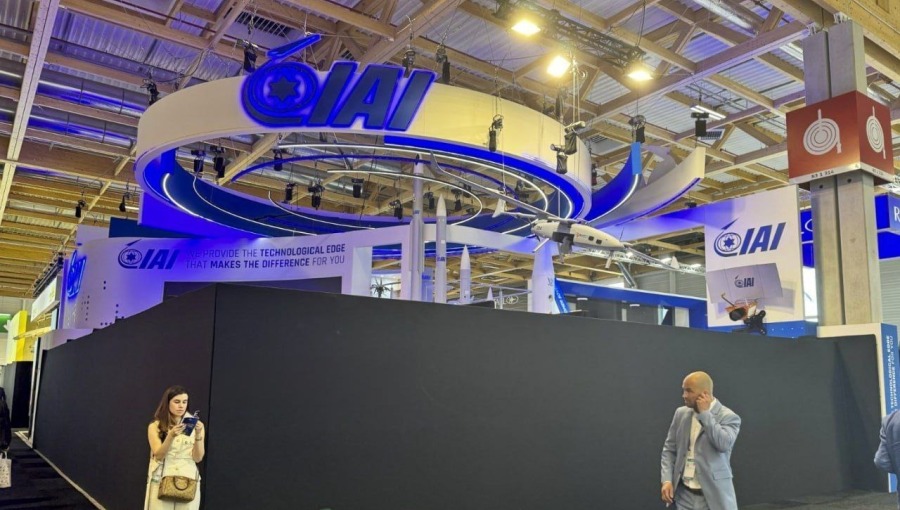
French exhibition authorities have blocked access to Israeli defence industry displays at the Paris Air Show on June 16, prompting strong condemnation from Israeli officials as "outrageous" discrimination following its attacks on Iran and Gaza, LCI reported.

France, unlike the United States and the United Kingdom a day earlier on June 15 remained on the fence whether it would support Israel in its attacks on Iran, which began on June 13, which Israel said was a pre-emptive strike on nuclear research centres.

Black barriers were erected around five Israeli defence companies' stands at Le Bourget airfield following concerns the exhibits featured "offensive weapons" potentially used in Gaza operations, according to a French government source.

The affected companies are Israel Aerospace Industries, Rafael Uvision, Elbit and Aeronautics, all manufacturers of drones, guided bombs and missiles which are believed to be currently used in both Gaza and Iran.

Speaking from Jerusalem Israel’s President Isaac Herzog described the French organisers decision as creating an "Israeli ghetto" and demanded immediate correction of the situation during an appearance on French television channel LCI.

"Israeli companies have signed contracts with the organisers," Herzog said, expressing shock at what he termed the "outrageous" decision.

The Israeli Defence Ministry accused France of hiding behind political considerations to exclude Israeli weapons that compete with French industries, particularly noting Israeli technologies' "impressive and precise performance in Iran."

An Israeli exhibitor wrote in yellow chalk on one barrier that the concealed defence systems "are protecting the state of Israel these days" whilst alleging French discrimination.

The controversy overshadowed the major aerospace industry gathering, which typically focuses on aircraft displays and major orders for manufacturers, including Airbus and Boeing.

Local lawmakers from Seine-Saint-Denis department boycotted French Prime Minister François Bayrou's opening visit in protest over Israeli participation.

"Never has the world been so disrupted and destabilised," Bayrou said during a roundtable event, urging nations to tackle challenges "together, not against each other."

Earlier, Gila Gamlil, Israeli cabinet member said "We firmly call on the United States to join the war against Iran" as the two countries continue to attack each others' infrastructure. .

 Drones take center stage as Europe races to catch up at Paris Air Show

Copyright Thibault Camus/Copyright 2025 The AP. All rights reserved.By  Sophia KhatsenkovPublished on 17/06/2025 

Europe is attempting to close the gap with the U.S. and adapt to a new era of high-intensity warfare.

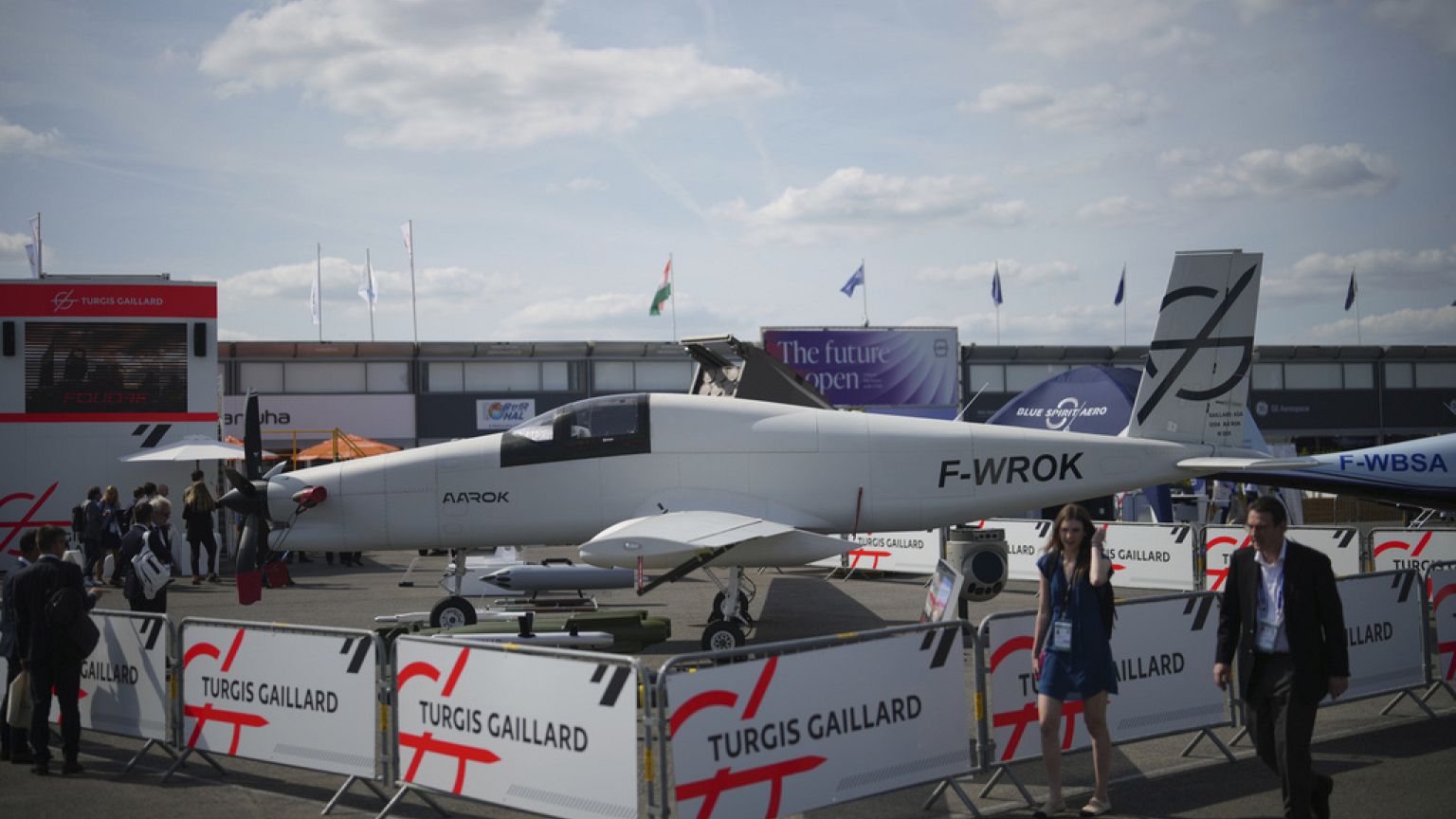
At this year’s Paris Air Show, fighter jets are taking a backseat. Unmanned and autonomous technologies are driving the future of defence and dominating the conversation at Le Bourget airport in northern Paris.

With 2,400 exhibitors from 48 countries and 300,000 visitors expected, the world’s biggest aerospace event opened against an intense backdrop of global tensions.

As Russia's full-scale invasion of Ukraine enters its fourth year and tensions are soaring between Israel and Iran, it has become urgent for Europe to modernise its defence capabilities.

On Monday, Italian giant Leonardo and Turkey’s Baykar Technologies announced a joint venture to co-develop a new generation of unmanned systems, with the first drones expected to be delivered in 2026.

“When it comes to unmanned systems, Europe is quite behind,” said Leonardo CEO Roberto Cingolani.

“First of all, I think the target is to fill the gap… We need to develop different platforms with different payloads... and offer them to different countries. That will already be a very important target in the short to mid-term," explained Cingolani to a group of reporters.

Cingolani stressed that Europe will soon need not just drones, but also land and sea-based systems. “The Ukrainian war has completely changed the landscape,” he said. “We know that we have to be ready.”

For defence consultant Xavier Tytelman, the turning point for this edition of the fair is the industrialisation of high-intensity warfare.

"In the past, we said 'We are going to make drones'. Now, we are actually offering drones with well-defined prices, which shows a very strong trend of military industrialisation," he told Euronews.

Europe’s previous lag on large drone platforms may no longer matter. Smaller, more agile systems that are cheaper to produce and easier to deploy are now proving decisive on the battlefield.

Beyond strategy and scale, sovereignty has become a defining theme aduringt this year’s edition.

The push to develop “ITAR-free” (International Traffic in Arms Regulations) equipment -free from U.S. export restrictions - is visible across the exhibition area.

“There’s one fundamental element here, and that’s the return of sovereignty. You see it everywhere with many booths labelled ‘ITAR Free.’ That means there are no American components, so the U.S. can’t prevent them from using their own equipment, like they did in Ukraine, where we supplied missiles that couldn’t be used because they contained U.S. parts," explained Tytelman.

"Now, all around us, Europeans are organising themselves to be more sovereign, independent, to work together, to complement each other’s technological capabilities, and to achieve 100% European industrialisation. That’s another major deep, structural trend.”

DOING PUTINS BIDDING

US resists EU and UK push to cut Russian oil price cap at G7 summit

US resists EU and UK push to cut Russian oil price cap at G7 summit
The US is resisting pressure from the EU to cut the sanctions oil price cap on Russia to $45. / bne IntelliNews

By bne IntelliNews June 16, 2025

The US is resisting calls from European governments to reduce the G7 price cap on Russian oil from $60 to $45 per barrel, frustrating efforts by the EU and UK to increase financial pressure on Moscow as leaders meet for a G7 in Canada.

As bne IntelliNews reported, the oil sanctions have largely become a spent cannon, as they have failed to cut into Russian revenues after customers in Asia ignored the sanctions and Europe itself was still forced to import large amounts of Russian LNG.

In parallel, the European Commission said it will also not limit the EU's reliance on Russian nuclear fuel alongside its proposals to ban Russian gas, EU Energy Commissioner Dan Jorgensen said on June 16. The Commission is due to propose legal measures this week to end the EU's Russian gas imports by the end of 2027 – a goal the EU executive announced last month.

According to officials familiar with the G7 talks, the EU and UK are still exploring the possibility of unilaterally lowering the cap if Washington does not sign up to the new sanctions. Since US President Donald Trump took office at the start of this year, the US has imposed no new sanctions on Russia whatsoever.

The new lower oil price cap proposal is aimed at curbing Russia’s oil revenues after oil prices fell to the previous cap of $60 a barrel recently. However, in the last few days oil prices have been pushed up again to around $72 following the Israel attack on Iran on June 13.

Participants at the G7 summit in June will consider cap options ranging from a $30 to $50 ceiling, according to Alexander Khara, an expert at the Center for Defence Strategies. “We expect more pressure on Russia. Foreign Minister Andriy Sibiga spoke about $30 per barrel as a new price ceiling (today it is $60). I do not know whether the G7 will agree to this, but it is interesting that among the invitees is also the crown prince of Saudi Arabia, Mohammed bin Salman. He is the person who can easily increase oil production and thus, even without agreements on a significant price reduction, lower it,” Khara told Bloomberg.

While analysts view a halving of the price ceiling as unlikely, even a moderate reduction would strain Russian finances. European Union High Representative for Foreign Affairs Kaja Kallas stated the EU might lower the ceiling independently of the US.

The European Commission’s latest sanctions package proposes reducing the seaborne crude price cap to $45 per barrel. It also includes measures targeting the Nord Stream pipelines, Russia’s shadow fleet of tankers and dozens of financial institutions.

“We are ramping up pressure on Russia because strength is the only language that Russia will understand,” European Commission President Ursula von der Leyen told reporters in Brussels a week earlier. “Oil prices have gone down (...) so we need to adapt to the changed market conditions.”

EU sanctions envoy David O’Sullivan told Euractiv that the “starting point” for talks on a revised cap is to seek G7 agreement. “I think if we and the rest of the G7 were to back a lower price and the Americans were not, it's still something to be envisaged,” he said. “But I think our preferred outcome is always that we move forward with the G7 as a united bloc.”

People familiar with internal discussions told Bloomberg the final decision on the cap lies with Trump, though Washington has shown no signs of altering its position since the G7 finance ministers’ meeting earlier this year.

Meanwhile, the European Commission’s eighteenth sanctions package targets nine individuals and 33 legal entities, including the Russian Direct Investment Fund and firms supporting Russia’s military-industrial complex. It also proposes sanctions on 77 additional tankers and aims to expand financial restrictions to cover 22 more banks in Russia and third countries. A ban on imports of refined petroleum products from Russian raw materials and export restrictions on goods worth over €2.5bn ($2.68bn) annually are also included.

Sanctions are starting to cut into Russian oil company profits even if they are not badly hurting the Kremlin’s revenues. And the recent falls have more to do with lower prices than the sanctions themselves say analysts.

RosStat data show that net profits of oil and gas firms dropped by nearly 50% in the first quarter of 2025 to RUB789.5bn ($8.81bn), down from RUB1.45tn ($16.18bn) a year earlier. Refinery profitability declined by 95.7% to RUB4.5bn ($50mn). Weekly oil export revenues have reached a 2.5-year low of $1.2bn.