Saturday, June 28, 2025


Tensions Break Out Across Syria As Promising Honeymoon Wanes – Analysis
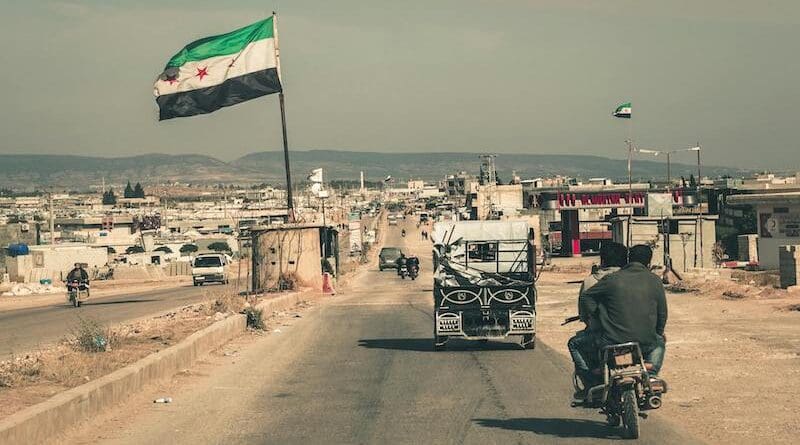
Syria flag people

By 

On December 8, 2024, Syrian opposition forces overthrew the Bashar al-Assad government. The group, Hayat Tahrir al-Sham (HTS), formed a new government with its leader, Abu Mohammed al-Jawlani, at the helm. However, the hope for a stable Syria has not lasted. Instability deepens as Damascus fails to fill the power vacuum across multiple fronts. 


Weak control over security forces and the re-emergence of Islamic State (IS) fighters are chipping away at al-Jawlani’s six-month-old charm offensive. Widespread sectarian conflict has predictably erupted as HTS attempts to consolidate power. In addition, the US has withdrawn its military presence in the region. This will undoubtedly derail al-Jawlani’s expectations for stability, and also challenge his grip on jihadist militants within government ranks.

Jihadist militants target minority ethnic groups

Ethnic and sectarian conflict has now engulfed the whole of Syria. The US withdrawal from a base near the Koniko gas field in the Deir ez-Zor and Al-Tanf areas has undoubtedly opened the door for IS and other jihadists to mobilize and engage hostilities against minority groups such as Alawites, Druze, Orthodox Christians and Kurds

The massacre of Alawites in Latakia at the hands of HTS security forces and jihadist militants was the initial sign of the chaos to come. As recent as last month, HTS and jihadist elements targeted minority communities across Damascus outskirts and eastern regions. Their primary goal is to expand territorial control and repress any dissent against the HTS government. Damascus deflects media attention by claiming pro-Assad elements are behind the chaos, but evidence clearly points to extremist HTS groups inciting conflict.

Fighting between al-Qaeda-affiliated HTS militants and Druze and Kurdish militias has returned to old areas of contention such as Manbij, north of Aleppo, but has also been present across the rest of Syria. Clashes in the Jaramana, Sahnaya and Mezzeh districts of Damascus specifically target Druze. In the town of Ashrafiyah, Druze civilians were attacked by armed elements that included men wearing IS patches on unmarked military uniforms. Jihadist militants continue to threaten civilians in Latakia and Aleppo. 

In addition, concern has grown among Kurds following the appointment of Hatem Ihsan Fayyad al-Hayes, also known as Abu Hatem Shaqra, to the position of commander of the 86th Division, responsible for Raqqa, Deir ez Zor and Hasakah. Previously, Abu Hatem Shaqra served as the leader of Ahrar al-Sharqiya, a Turkish-backed militant group. Ahrar al-Sharqiya is responsible for the killing of Hevrin Khalaf, a Syrian-Kurdish politician. As such, Abu Hatem Shaqra is sanctioned by the US. He has also been accused of several extrajudicial killings. 


Abu Hatem Shaqra is not an isolated case. Across Syria, unidentifiedarmed groups are conducting extrajudicial executions of known Assad regime affiliates as well as Druze militias. Meanwhile, al-Qaeda-affiliated HTS elements have targeted students across Suweida, and other jihadist militants continue to threaten civilians in Latakia and Aleppo. HTS gunmen even orchestrated a raid on the Layli Al-Sharq restaurant in Damascus. While HTS has denied involvement, the capital’s residents are concerned over the heavy-handed approach employed by government forces. 

Similar incidents across the country further expose al-Jawlani’s sham charm offensive. HTS continues to cover up the crimes of extremist militants within the government ranks. Clearly,  al-Jawlani’s HTS forces have failed to fill a security vacuum, and Damascus has no grip over its own forces.

Foreign interests and militants also pose a problem

Further, clashes in the east and northeast represent major threats beyond Syria’s borders. Foreign jihadist militants have re-emerged across Ashrafiyat, Deir ez Zor, Hasakah and Raqqa, possibly threatening the route of natural gas from Qatar through Jordan. This could bring devastating effects to the Syrian civilians who rely on Qatar’s resources. In addition, the Syrian Democratic Forces (SDF), a US-backed Kurdish force, remain concerned over the future of jihadist elements detained at the al-Hol and Roj camps. Over 8,000 foreign fighters from 60 countries remain at these camps, raising alarms over potential threats of foreign fighters targeting the camps in efforts to break out detainees.

The resurgence in foreign IS activity in Syria has not gone unnoticed by the global powers. Despite their withdrawal from military bases in Syria, the US continues to carry out counter-terrorism operations along eastern regions. The US administration has demanded accountability from the HTS government, particularly from “foreign terrorist fighters [in] any official roles.” The US also remains hesitant regarding sanctions on al-Jawlani, al-Qaeda affiliates and institutions. 

In contrast, European governments choose to closely engage the HTS government. While Türkiye leads the way in lobbying western capitals to lift sanctions on al-Jawlani and others, Qatar aims to support the HTS government with aid and natural gas. Both governments have come under increasing criticism for their “Islamist-friendly” approach across the region. However, widespread chaos in Syria restricts aid as well as al-Jawlani’s efforts to gain sanctions relief. Al-Jawlani remains under the global microscope, and his proposed visit to Paris will further increase the scrutiny on his government’s ability to prosecute human rights violations and protect minorities.

  • The views expressed in this article are the author’s own and do not necessarily reflect Fair Observer’s editorial policy, where this article appeared.

Fernando Carvajal

Fernando Carvajal served on the UN Security Council Panel of Experts on Yemen from April 2017 to March 2019 as a regions and armed groups expert. He has nearly 20 years of experience conducting fieldwork in Yemen and is a specialist in Yemeni politics and tribal relations.
Trump business for security deal 'effectively rewards Rwanda for invading, occupying, looting Congo'

'INVASION OK, IF YOU WIN'


Issued on: 28/06/2025 - FRANCE24

Rwanda and the Democratic Republic of Congo have signed a peace agreement in Washington, pledging to end support for armed groups after a deadly conflict that has claimed thousands of lives. President Trump, hosting the nations’ foreign ministers at the White House, hailed the deal as a turning point and celebrated access to mineral wealth. The accord, brokered through Qatar, follows M23's rapid advances in eastern DRC, though it stops short of addressing their territorial gains. For in-depth analysis and a deeper perspective, FRANCE 24' Gavin Lee welcomes Michela Wrong, renowned Journalist and Non-Fiction Author, specialising in contemporary Africa.

Video by:  Gavin LEE


Trump ally eyes Congo mine vital to global tech


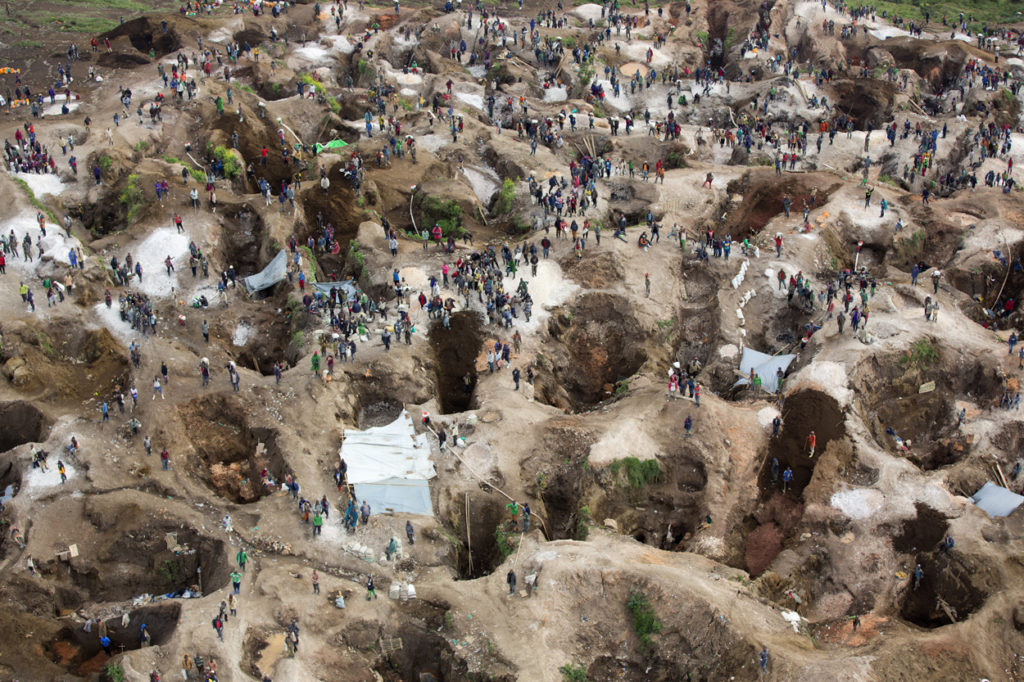
The Luwowo coltan mine near Rubaya, DRC. Credit: Wikipedia

The Democratic Republic of Congo is discussing the rights to the Rubaya coltan mine with an consortium led by Trump ‘associate’ Gentry Beach, the Financial Times reported.

Beach, the chair of investment firm America First Global and former Trump campaign finance co-chair, and Swiss trader Mercuria aim to take rights to Rubaya to bankroll US-backed peace efforts in eastern DRC.

The project could need over $500 million, with output legally channeled via Rwanda and a Kigali-based smelter proposed.

As the US leads peace negotiations between the DRC and Rwanda, Congo President Felix Tshisekedi has pitched a deal to the Trump administration, proposing access to key mineral assets in exchange for help in suppressing the M23 rebellion and stabilizing the conflict-ridden east.

As reported by Al Jazeera, Kigali and Kinshasa are due to sign a draft peace accord in Washington this Friday, brokered by the US and Qatar, aiming to secure ceasefire, troop pull-out, and disarmament of militias including M23.

The promise of US infrastructure and minerals investment, orchestrated in typical Trump transactional style, underpins the deal and is seen as a counterbalance to Chinese dominance in the region.

Coltan’s global role

Rubaya lies in the heart of the eastern DRC, a mineral-rich zone long ravaged by conflict. The area has been central to one of the world’s largest humanitarian crises, with more than seven million displaced, including 100,000 this year alone.

The Rubaya mines, repeatedly seized by rebel groups and government forces, are key to supplying coltan, an ore critical to modern electronics and defense systems.

Coltan—short for columbite-tantalite—is used to extract tantalum and niobium, both vital to electronics, aerospace, and military sectors. Tantalum is used in phones, computers, missile components and aircraft engines; niobium is critical for pipelines and jet engines.

In 2023, the DRC supplied 40% of the world’s coltan, according to the US Geological Survey, with Australia, Canada and Brazil trailing behind.


Saudi Arabia Welcomes US-Brokered Peace Agreement Between Rwanda And DR Congo

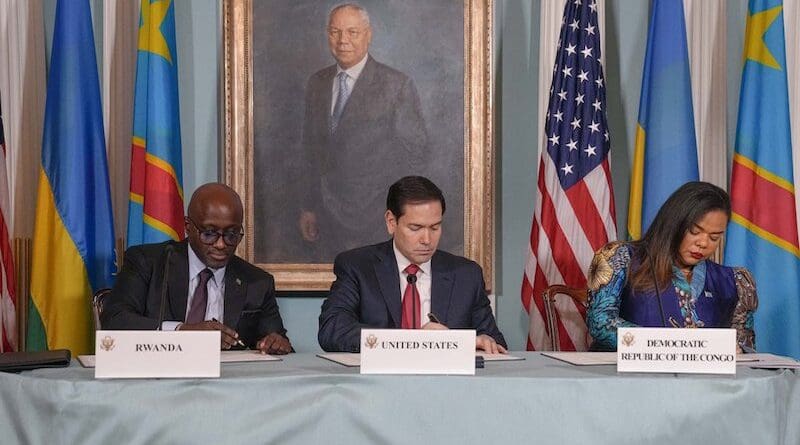
Ministerial signing of the Peace Agreement between the DR Congo and Rwanda with Secretary Marco Rubio. Photo Credit: Department of State, X


By 

Saudi Arabia has welcomed the signing of a peace agreement between Rwanda and the Democratic Republic of the Congo, in a deal facilitated by the United States with support from Qatar, the Saudi Press Agency reported.


In a statement issued on Saturday, the Saudi Ministry of Foreign Affairs said the Kingdom hoped the accord would meet “the hopes and aspirations of the two peoples for development and prosperity,” and contribute to “regional and international security and peace.”

The ministry also praised “the diplomatic efforts and constructive role played by the United States of America and the State of Qatar in this regard.”

The agreement, finalized on Friday, aims to de-escalate long-running tensions between Rwanda and the DRC, which have intensified in recent years over accusations of mutual support for armed rebel groups operating along their shared border.

The most prominent of these is the M23 militia, which Kinshasa has accused Rwanda of backing — a charge Kigali denies.

Efforts to mediate between the two neighbours have gained urgency amid a worsening humanitarian crisis in eastern DRC, where conflict has displaced more than seven million people.

The US and Qatar have played key roles in recent months in bringing the two sides to the table for talks, culminating in the formal agreement to ease hostilities and commit to renewed dialogue.


Arab News

Arab News is Saudi Arabia's first English-language newspaper. It was founded in 1975 by Hisham and Mohammed Ali Hafiz. Today, it is one of 29 publications produced by Saudi Research & Publishing Company (SRPC), a subsidiary of Saudi Research & Marketing Group (SRMG).


Serbian riot police fire tear gas at anti-government protesters demanding snap elections

Serbian police fired tear gas at thousands of anti-government protesters demanding snap elections and an end to the 12-year rule of President Aleksandar Vucic. Serbians have been taking to the streets since last November to denonce rampant corruption in the government.


Issued on: 28/06/2025 -
By: FRANCE 24

Thousands gathered in Belgrade ahead of an 'ultimatum' for President Aleksandar Vucic to call early elections. © Oliver Bunic, AFP

Riot police fired tear gas at thousands of anti-government protesters in Serbia's capital on Saturday.

The major rally in Belgrade against Serbia's populist president, Aleksandar Vucic, was called to back a demand for an early parliamentary election.

The protest by tens of thousands was held after nearly eight months of persistent demonstrations led by Serbia's university students that have rattled Vucic's firm grip on power in the Balkan country.

The huge crowd chanted “We want elections!” as they filled the capital’s central Slavija Square and several blocks around it, with many unable to reach the venue.


Tensions were high before and during the gathering. Riot police deployed around government buildings and close to a camp of Vucic’s loyalists in central Belgrade. Skirmishes erupted between riot officers and groups of protesters near the camp.

“Elections are a clear way out of the social crisis caused by the deeds of the government, which is undoubtedly against the interests of their own people,” said one of the students, who didn't give her name while giving a speech on a stage to the crowd. “Today, on June 28, 2025, we declare the current authorities illegitimate.”

At the end of the official part of the rally, students told the crowd to “take freedom into your own hands.”

University students have been a key force behind nationwide anti-corruption demonstrations that started after a renovated rail station canopy collapsed, killing 16 people on Nov. 1.

Many blamed the concrete roof crash on rampant government corruption and negligence in state infrastructure projects, leading to recurring mass protests.

“We are here today because we cannot take it any more,” Darko Kovacevic said. “This has been going on for too long. We are mired in corruption."

Vucic and his right-wing Serbian Progressive Party have repeatedly refused the demand for an early vote and accused protesters of planning to spur violence on orders from abroad, which they didn't specify.

Vucic's authorities have launched a crackdown on Serbia's striking universities and other opponents, while increasing pressure on independent media as they tried to curb the demonstrations.

While numbers have shrunk in recent weeks, the massive showing for Saturday's anti-Vucic rally suggested that the resolve persists, despite relentless pressure and after nearly eight months of almost daily protests.

Serbian police, which is firmly controlled by Vucic's government, said that 36,000 people were present at the start of the protest on Saturday.

Saturday marks St. Vitus Day, a religious holiday and the date when Serbs mark a 14th-century battle against Ottoman Turks in Kosovo that was the start of hundreds of years of Turkish rule, holding symbolic importance.

In their speeches, some of the speakers at the student rally on Saturday evoked the theme, which was also used to fuel Serbian nationalism in the 1990s that later led to the incitement of ethnic wars following the breakup of the former Yugoslavia.

Hours before the student-led rally, Vucic’s party bused in scores of its own supporters to Belgrade from other parts of the country, many wearing T-shirts reading: “We won’t give up Serbia.” They were joining a camp of Vucic’s loyalists in central Belgrade where they have been staying in tents since mid-March.

In a show of business as usual, Vucic handed out presidential awards in the capital to people he deemed worthy, including artists and journalists.

“People need not worry — the state will be defended and thugs brought to justice," Vucic told reporters on Saturday.

Serbian presidential and parliamentary elections are due in 2027.

Earlier this week, police arrested several people accused of allegedly plotting to overthrow the government and banned entry into the country, without explanation, to several people from Croatia and a theater director from Montenegro.

Serbia's railway company halted train service over an alleged bomb threat in what critics said was an apparent bid to prevent people from traveling to Belgrade for the rally.

Authorities made similar moves back in March, before what was the biggest ever anti-government protest in the Balkan country, which drew hundreds of thousands of people.

Vucic’s loyalists then set up a camp in a park outside his office, which still stands. The otherwise peaceful gathering on March 15 came to an abrupt end when part of the crowd suddenly scattered in panic, triggering allegations that authorities used a sonic weapon against peaceful protesters — an accusation officials have denied.

Vucic, a former extreme nationalist, has become increasingly authoritarian since coming to power more than a decade ago. Though he formally says he wants Serbia to join the European Union, critics say Vucic has stifled democratic freedoms as he strengthened ties with Russia and China.

(FRANCE 24 with AP)


Serbian protesters mark Vidovdan with calls to end president's 12-year rule

Serbian protesters mark Vidovdan with calls to end president's 12-year rule
/ Tatyana Kekic

By Tatyana Kekic in Belgrade June 28, 2025

Tens of thousands of protesters, led by students and anti-corruption activists, flooded the streets of Belgrade on June 28, calling for snap parliamentary elections and an end to President Aleksandar Vucic’s 12-year rule.

Gathering on Slavija Square in the Serbian capital, demonstrators marked Vidovdan, one of Serbia’s most politically symbolic dates, with a protest that showed widespread dissatisfaction with the government. The protest remained peaceful throughout the day, tensions flared after 10:30 p.m.

The government claimed the turnout was around 36,000, though aerial images and ground reports suggest significantly higher numbers, with crowds overflowing from the city’s main junction into surrounding streets. The Archive of Public Gatherings estimated that around 140,000 people were present.

“The ultimatum has expired,” student organisers declared toward the end of the protest, referring to a 9:00 p.m. deadline they had set for the government to announce elections or face a wave of civil disobedience.

The demonstration took place amid escalating rhetoric and security crackdowns from the government. In the days leading up to the protest, Serbian authorities arrested several individuals they accused of plotting a violent coup. State-aligned media aired reports of discovered weapons, dubbing it proof of what Vučić’s Serbian Progressive Party (SNS) called a “colour revolution” backed by foreign actors.

Despite fears of unrest, the protest unfolded peacefully through most of the day — mirroring the tone of previous mass demonstrations this year. Trains into the capital were suspended following a reported bomb threat, in what critics saw as a bid to suppress turnout. Still, convoys of motorbikes and cars with out-of-town license plates poured into Belgrade, with bikers assembling outside the IKEA on the highway before joining the march.

“Today, June 28, 2025, we declare the current government illegitimate,” a student protester said from the stage. “In the last 13 years, we have witnessed the collapse of all fundamental institutions. There is no area where corruption has not entered.”

The protest, timed to coincide with Vidovdan — the anniversary of the 1389 Battle of Kosovo — carries deep historical and political weight. The date also marks other pivotal moments in Serbian history, including the 1914 assassination of Archduke Franz Ferdinand, the 1948 expulsion of Yugoslavia from the Cominform, and the 2001 extradition of Slobodan Milosevic to The Hague.

That symbolism was not lost on either the demonstrators or the state. “Students are our only true comrades-in-arms,” said Nenad Stanić, a veteran of the 1999 Battle of Košare, addressing the crowd. “There is no giving up, no withdrawal, no surrender and no turning back.”

Individuals from all walks of life attended the rally — veterans, students, bikers, pensioners, and celebrities such as former basketball stars Dejan Koturovic and Dejan Bodiroga. The rector of the University of Belgrade, Vladan Dokic, addressed the crowd, warning of a country turning away from democratic and cultural values. “Everyone here can see the kind of crisis the country is sinking into, which rejects those values, underestimates knowledge and culture, destroys institutions,” he said.

The protest followed a smaller pro-government rally near Pionirski Park, organised by the SNS. Authorities quickly dismissed the opposition gathering as a failure, claiming the turnout was three times smaller than that of the March protests.

In an increasingly defensive tone, President Vucic continues to frame dissent as foreign interference. He is currently writing what he describes as a “manual” for defending sovereign governments against colour revolutions. On a recent trip to the UAE, he claimed that Sheikh Mohammed bin Zayed al-Nahyan expressed interest in publishing the book in the Arab market — a gesture Vucic said meant a great deal to him.

“I will write it personally, no one else will write it,” Vucic told TV Pink earlier this year. “I believe it will be one of the best-selling books in the world... a textbook on how enemies of free countries are organised, how they bribe people in your country, how they train them.”

Critics have pointed to what they call increasingly surreal claims by the president, including suggestions that “blockaders” — many of whom were children or not yet born in 2001 — were responsible for orchestrating the extradition of Milosevic.

Late in the evening, clashes broke out between protesters and police as authorities attempted to prevent crowds from moving towards the Presidency where pro-government demonstrators had earlier gathered. Student organisers announced they no longer had control over the situation after riot police used tear gas and pepper spray to push back crowds. 

Members of the Gendarmerie used megaphones to demand that protesters leave or face intervention. According to independent outlet N1, journalists were injured in the scuffles. Firecrackers and cannon shots were reportedly thrown, and masked individuals clashed with riot police, with some throwing flares to break through police cordons — marking a rare escalation after months of largely peaceful demonstrations.

After eight months of tireless protest and government evasion, students are still able to mobilise tens of thousands to the streets. The longer the protests continue, however, the greater chance there is for incidents and clashes with the police. For President Vucic, the only off-ramp may lie at the ballot box.

Strong turnout at Budapest Pride march despite government ban


Tens of thousands marched in Budapest Saturday, boldly defying a new law by Prime Minister Viktor Orban's ruling coalition that bans Hungary's annual Pride celebrations. The revellers kicked off the march in festive style at the opposition-run city hall, staging a direct challenge to the nationalist prime minister.


Issued on: 28/06/2025 

FRANCE 24
Video by: 
FRANCE 24

01:27
People take part in the Budapest Pride parade in Budapest downtown on June 28, 2025. © Attila Kisbenedek, AFP


With rainbow flags flying high, tens of thousands of people began marching Saturday for the Budapest Pride parade, defying a government ban that marks a major pushback against LGBTQ rights in the European Union.

Organisers expect a record turnout of more than 35,000 people for the 30th edition of the Pride march in the Hungarian capital, despite a police ban imposed by Prime Minister Viktor Orban's nationalist government.

"Many, many tens of thousands" are participating, organisers said on social media after the march started, as AFP journalists saw the festive crowd filling squares and streets along the route.

"I am proud to be gay... and I am very scared that the government wants to bring us down. I am very surprised that there are so many people, I want to cry," a 66-year-old participant, who gave only his first name, Zoltan, told AFP.

Orban's governing coalition amended laws and the constitution this year to prohibit the annual celebration, justifying his years-long clampdown on LGBTQ rights on "child protection" grounds.

Orban said Friday that while police would not "break up" the Pride march, those who took part should be aware of "legal consequences".


Participants strike a pose as people start gathering for the Pride march in Budapest, Hungary, June 28, 2025. © Rudolf Karancsi, AP


Newly installed cameras

Parade organisers risk up to a year in prison, and attendees can face fines up to 500 euros ($590).

The latest legal changes also empower the authorities to use facial-recognition technology to identify those who take part, and newly installed cameras have appeared on lamp posts along the parade route.

But participants were defiant as the march began chaotically under a scorching sun.

Marchers repeatedly had to pause to wait for police to stop traffic, according to AFP journalists at the scene.

Akos Horvath, an 18-year-old student who came to Budapest from a city in southern Hungary, said it was "of symbolic importance to come".

"It's not just about representing gay people, but about standing up for the rights of the Hungarian people," he told AFP on his way to the march.


Dozens of European lawmakers also attended in defiance of the ban.

"Freedom and love can't be banned," read one huge poster put up near city hall, the gathering point for the march.

Earlier this week, EU chief Ursula von der Leyen called on the Hungarian authorities to reverse the ban, while EU equalities commissioner Hadja Lahbib travelled to Hungary and spoke in support of the parade on Friday.

Thirty-three nations, including most EU countries, have also released a statement in support of the march.

At a press conference Saturday, several French MEPs called on the EU to take tougher measures against Orban's government over the crackdown on civil rights and other rule of law issues.

Budapest's opposition mayor Gergely Karacsony has insisted that no attendee should face any reprisals as the march is a municipal event that does not require police approval.

Some people also gathered along the route to protest against LGBTQ rights at the urging of far-right groups, including by putting up a wooden cross adorned with protest messages.

A woman who gave only her first name, Katalin, told AFP she agreed with the ban though she hoped there would be no clashes.

"Disgusting... it's become a fad to show off ourselves," she said.

People holding a cross and religious books walk among participants in the Pride march in Budapest, Hungary, June 28, 2025. © Rudolf Karancsi, AP


'Polarising society'

Since Orban's return to power in 2010, the country of 9.6 million people has been steadily rolling back LGBTQ rights.

But it is the first to ban a Pride march, with Orban saying he has been emboldened by the anti-diversity push by US President Donald Trump.

"Orban is employing a tried-and-tested recipe ahead of next year's election by generating a conflict," political analyst Daniel Mikecz told AFP, saying that Orban was "polarising society".

(FRANCE 24 with AFP)
Backlash grows as far right ‘gay patriots’ plan to join Paris Pride march

France has some of the strongest LGBT protections in Europe, but far right groups are increasingly seeking to politicise the movement. A small anti-immigration “homo-nationalist” group has received backing to join Paris's annual pride march on Saturday.


Issued on: 27/06/2025 - RFI

A woman hold up a rainbow flag during the annual Paris Pride parade. AFP - JULIEN DE ROSA

A group calling themselves “gay patriots” said they plan to march at Paris Pride with police protection. Their announcement sparked backlash from LGBTQI+ activists, artists and lawmakers.

In a letter published in Le Monde, a collective of LGBT organisations and public figures – including Communist senator Ian Brossat and writer Virginie Despentes – condemned the presence of Eros, the group led by Yohan Pawer.

Pawer has ties to the far right National Rally and became known in 2023 for targeting drag queen events.

The authors of the letter argue the state is compromising the core ideas behind the march by protecting the group – similar to when far right groups were allowed to join feminist events earlier this year.

"Imposing the far right in LGBTQIA+ or feminist marches is more than just an affront: it is offering reactionary forces the means to appropriate spaces built by and for those they have always marginalised in order to annihilate them from inside," they wrote.
Gay rights still uncertain

France has strong anti-discrimination laws and legal gay marriage – unlike Hungary, where the government recently banned pride events.

Still many LGBTQI+ people in France say they do not feel safe or accepted. In its annual report, the rights group SOS Homophobie said attacks had remained high in 2024.

Trans people remain particularly vulnerable. SOS Homophobie reported a rise in open transphobia, systemic discrimination and online hate campaigns.

More than 80 percent of trans people said they had faced public discrimination in the last year – targeted by far right groups in France and abroad, who link anti-trans rhetoric with anti-immigrant views.
Pride poster backlash

Tensions grew earlier this month over the Paris Pride poster.

Titled Facing the International Reactionary: Queers of all Countries Unite, the poster shows a diverse group – including a woman in a headscarf and a person with a bag in the colours of the Palestinian flag – restraining a white male figure.

InterLGBT, which designed the poster, said the colours were not meant to be Palestinian but a nod to Hungary and Bulgaria, where pride events are banned.

Still, several LGBTQI+ organisations distanced themselves and far right politicians criticised what they saw as a political message.

The official poster for the 2025 Paris Pride march has faced criticism from far right groups and a Jewish association for showing what they call Palestinian colours, which the organisers deny. AFP - HANDOUT


Far right courting LGBTQI+

Yet the far right appears to be actively using LGBT identity to push nationalism while rejecting migrants and radical activists.

Groups like Eros portray homophobia as imported by migrants or coming from Muslim communities.

Eros says it wants to "really represent homosexuals in our country, who are today the main victims of LGBTQI+ excesses, of massive – very often homophobic – immigration and of the islamisation of our country".

The Le Monde open letter said that by giving Eros police protection, the government is directly involved.

“This interference must be named for what it is,” it said. “This decision compromises the organisation of an essential event, and acts as a warning to all minority organisations.”


How Europe’s appetite for farmed fish is gutting Gambia's coastal villages

Gambian fishermen are watching their future disappear. Their catches are shrinking, their costs are climbing and their boats are increasingly idle. Much of the fish they once relied on is now hauled away by foreign trawlers – not to feed people, but to fatten farmed salmon, seabream and seabass in Europe.


Issued on: 28/06/2025 - RFI

08:19
A fisherman prepares his net in Brufut, Ghana Town, Gambia, where coastal communities face shrinking fish stocks and growing economic hardship amid industrial fishing pressures. AFP - MUHAMADOU BITTAYE


By:Amanda Morrow


The result is a growing crisis for West African coastal communities, where fish is both a staple food and a way of life.

“The ocean is not just about livelihood – it’s part of people’s identity,” Gambian journalist and researcher Mustapha Manneh told RFI at last week’s UN Oceans Conference in Nice.

Manneh has spent years documenting how industrial fishing – much of it European – is depleting Gambia’s waters and destabilising lives.

“Fishermen go out and come back with almost nothing,” he said. “They have no other skills. If you take away the fish, you take away their future.”

Feeding fish, not people


Each day, Gambian fishermen cast their nets in search of sardines and bonga – small, oily fish that have fed families for generations. Now they return empty-handed, after being forced to venture further out to sea and burn more fuel for ever-dwindling catches.

“You used to need just 20 litres of gasoline to get a good catch. Now it takes 60 to 80 litres just to find enough fish,” Manneh said.

Three fishmeal factories in Gambia process hundreds of tonnes of these fish each day, grinding them into powder and oil used to feed farmed fish in Europe and China.

Anchovies are tipped into a vat for processing into fishmeal and fish oil, key ingredients in feed for farmed fish. AFP - ERNESTO BENAVIDES

Manneh has seen the process up close. Inside the factories, he watched fresh, edible fish – still fit for local markets – dumped into grinding machines and transformed into fish feed. He described the experience as deeply confronting.

Outside the factories, locals often complain about pollution, noise and a powerful stench.

“The most troubling thing is seeing fresh fish that’s supposed to be on the plate of local people being processed and sent to countries that don’t even know where it’s coming from,” Manneh said.

“You’re processing raw fish that’s meant for human consumption just to feed another fish.”


Depleted stocks

A report by the advocacy group FoodRise estimates that nearly one million people in west and southern Africa could eat a 200-gram weekly portion of fish using the same catch that is currently diverted to fish farms in Greece alone.

It often takes several kilograms of wild fish to produce one kilogram of farmed fish because the farmed fish aren't efficient at converting the fishmeal into body mass.

FoodRise found that, globally, if wild fish were eaten directly by people instead of fed to farmed fish, more than 300,000 tonnes could be kept in the ocean to support ecosystems.

Those extra fish stocks would then go on to feed a quarter more people.


Fresh fish for sale at Banjul market, where local fishermen and fishmongers are struggling as industrial fishing and fishmeal factories divert vital catches away from Gambian communities. AFP - MARCO LONGARI


A poisoned coast

Fishmeal factories in Gambia release untreated wastewater and fish processing waste directly into the Atlantic Ocean. This pollution has turned once-pristine coastal waters toxic, damaging marine ecosystems that local fishers depend on.

“The sea used to treat skin conditions. Now people are getting rashes. Even the fish porters are affected,” Manneh said.

But the pollution is only one threat among many. With local fish stocks plummeting, fishermen must venture further offshore, risking dangerous encounters with industrial trawlers.

Their nets and boats are often damaged or lost in these clashes – gear they cannot afford to replace. For some, the struggle is too much and they give up fishing altogether.

How the Tunisian sun is turning red algae into food industry gold
Fishers forced into smuggling

As fishing incomes collapse, an increasing number of fishermen are using their boats for human smuggling – a risky but more profitable alternative.

Manneh has spoken with young fishers who say a single smuggling trip can bring in more money than years spent struggling at sea.

One man told him: “Mustapha, my one trip is more than my entire life of fishing.”

African migrants arrive in the Canary Islands after a perilous journey across the Atlantic in overcrowded fishing boats departing from West Africa’s shrinking coastal communities. AFP - ANTONIO SEMPERE

Weathered wooden fishing boats are being packed with hundreds of migrants – mostly young men risking everything for a chance at a better life – who embark on a perilous journey across the Atlantic toward uncertain futures.

Migrants pay between €600 and €1,000 each for the trip, Manneh said – adding that more than 200 people can be packed into a single vessel.

This means one smuggling trip can generate roughly €200,000.

Women pushed aside

The crisis is hitting women hard too. Across West Africa, women are at the heart of fish processing – smoking, drying and selling fish at local markets. It’s gritty, hands-on work that puts food on tables and money in pockets.

But with more and more fish going to industrial fishmeal factories, women’s stalls and ovens are sitting empty. Losing this catch doesn’t just cost jobs – it breaks long-standing traditions.

A woman removes fish fins in Brufut, Ghana Town, in Gambia, as part of traditional fishing practices that sustain local livelihoods. AFP - MUHAMADOU BITTAYE

Fish-smoking centres built with the support of the Food and Agriculture Organisation now sit abandoned.

“The fish women used to smoke is now diverted to the fishmeal factories,” Manneh said. “They [commercial companies] promote their farmed fish as sustainable but never say where the feed comes from.”

The rise of fishmeal factories has left many women without work – making life even harder for coastal communities.

Communities fight back

But the pressure is also fuelling resistance. Young Gambians are now challenging the traditional power structures that have allowed the fishing industry to expand unchecked.

“Young people are demanding change,” Manneh said.

In some places, frustration has boiled over and fishmeal factories have been set on fire. Others are calling for Gambia to cancel its fisheries agreement with the EU.

“It may line the pockets of a few, but it does nothing for the country as a whole,” Manneh said.

'Time for transparency'

Fish farming in the EU – especially in Greece – has surged in recent decades, turning quaint Mediterranean coastal towns into hubs for industrial-scale aquaculture.

FoodRise reports that seabass and seabream production in Greece has increased by 141 percent since 2000.

Fish farms stretch across Poros Island in Greece, a growing hub for industrial aquaculture producing seabream and seabass largely destined for European markets. AFP - ANGELOS TZORTZINIS

But this growth, the group warns, is far from the sustainable solution it is often presented as – particularly since it depends on wild fish taken from communities thousands of kilometres away, like those in Gambia, which are already struggling with food insecurity.

“People believe they’re eating sustainable salmon or seabass,” Manneh said. “But they don’t know what it really costs.”

He’s calling for full transparency in global seafood supply chains – with a sharp focus on the origins of fish feed.

“If you stole my job, you stole my future,” Manneh said. “The only option I have is to struggle – even if it costs me my life.”