Monday, June 30, 2025


Túngara frog tadpoles that grew up in the city developed faster but ended up being smaller


Smithsonian Tropical Research Institute
Túngara frog tadpole 

image: 

Túngara frog tadpole

view more 

Credit: Nathanial Weisenbeck


With 8.2 billion people in the world, cities are constantly expanding, rapidly altering the environment. Animals that undergo complete metamorphosis, such as frogs, may face bigger challenges as they try to survive in new and changing conditions, because their young stages, the eggs and tadpoles, are more vulnerable. 

Scientists at the Smithsonian Tropical Research Institute in Panama (STRI) compared the development of tadpoles of Túngara frogs (Engystomops pustulosus) in urban and forest conditions. Túngara frogs, whose mating calls sound like they’ve come straight out of a video game, lay their eggs in foam nests inside puddles. The eggs become tadpoles and, eventually, adult frogs. This study, published in Journal of Animal Ecology revealed that tadpoles that originated in the city developed faster than tadpoles from the forest. Tadpoles that grew up in the city were smaller compared to tadpoles that developed in the forest. Smaller tadpole body sizes found in urban conditions may partially explain the smaller body sizes found in adult urban males of this species. 

Researchers, including STRI fellows Andrew Cronin and Judith Smit, the STRI research associate Wouter Halfwerk, and the professor at the Amsterdam Institute for Life and Environment Jacintha Ellers, collected pairs of frogs (females and males) from puddles in the city and the forest. These pairs produced foam nests with eggs in the laboratory. The researchers divided each foam nest into two and placed half of the nest in an artificial puddle in an urban area and the other half in the forest. After 14 days in the puddles, scientists measured the tadpoles as well as different environmental conditions in the puddles, such as water quality and number of possible tadpole predators.  

The puddles in the city are warmer and feature fewer predators compared to forest puddles. The researchers concluded that tadpoles in the city are smaller and develop faster, probably in response to these conditions. 

The team also measured the vigilance behavior of tadpoles by artificially vibrating the puddles, simulating the presence of a potential predator. Tadpoles from the forest always responded consistently, while tadpoles from urban areas responded differently depending on where they were raised, possibly an adaptation to deal with more environmental variability in cities. 

With cities expanding rapidly, it is important to understand how urbanization affects different organisms and their ability to respond to these changes. “Better predicting how cities impact species can help us create mitigation efforts to reduce the negative effects of urbanization,” said Andrew Cronin. 

For another interesting story about Túngara frogs in the city go to Frog Sex in the City  


Living Small in a Big City [VIDEO] | 


Foam nests laid by Túngara frogs

Credit

Andrew Cronin

Studying the effects of urbanization on wildlife helps develop more effective strategies to reduce its impact. Photo: Panama City

Credit

Steven Paton


Why Human empathy still matters in the age of AI


The Hebrew University of Jerusalem


A new study finds that people value empathy more when they believe it comes from a human—even if the actual response was generated by AI. Across nine studies involving over 6,000 participants, the research reveals that human-attributed responses are perceived as more supportive, more emotionally resonant, and more caring than identical AI-generated responses.

A new international study led by Prof Anat Perry from the Hebrew University of Jerusalem and her PhD student – Matan Rubin, in collaboration with Prof. Amit Goldenberg researchers from Harvard University and Prof. Desmond C. Ong from the University of Texas, finds that people place greater emotional value on empathy they believe comes from humans—even when the exact same response is generated by artificial intelligence.

Published in Nature Human Behaviour, the study involved over 6,000 participants across nine experiments. The researchers tested whether people perceived empathy differently depending on whether it was labeled as coming from a human or from an AI chatbot. In all cases, the responses were crafted by large language models (LLMs), yet participants consistently rated the “human” responses as more empathic, more supportive, and more emotionally satisfying than the identical “AI” responses.

“We’re entering an age where AI can produce responses that look and sound empathic,” said Prof. Perry. “But this research shows that even if AI can simulate empathy, people still prefer to feel that another human truly understands, feels with them, and cares.”

The preference was especially strong for responses that emphasized emotional sharing and genuine care—the affective and motivational components of empathy—rather than just cognitive understanding. In fact, participants were even willing to wait days or weeks to receive a response from a human rather than get an immediate reply from a chatbot.

Interestingly, when participants believed an AI may have helped generate or edit a response they thought was from a human, their positive feelings diminished significantly. This suggests that perceived authenticity—believing that someone genuinely invested time and emotional effort—plays a critical role in how we experience empathy.

“In today’s world, it’s becoming second nature to run our emails or messages through AI,” said Prof. Perry. “But our findings suggest a hidden cost: the more we rely on AI, the more our words risk feeling hollow. As people begin to assume that every message is AI-generated, the perceived sincerity, and with it, the emotional connection, may begin to disappear.”

While AI shows promise for use in education, healthcare, and mental health settings, the study highlights its limitations. “AI may help scale support systems,” Perry explains, “but in moments that require deep emotional connection, people still want the human touch.”

The study offers key insights into the psychology of empathy and raises timely questions about how society will integrate emotionally intelligent AI into our daily lives.

‘It’s heartbreaking’: bad cancer drugs shipped to more than 100 countries

The Bureau of Investigative Journalism
DAWN
Published June 26, 2025 

Illustration by Anuj Shrestha for TBIJ


LONG  READ

Vital chemotherapy drugs used around the world have failed quality tests, leaving cancer patients in more than 100 countries at risk of ineffective treatments and potentially fatal side effects.

The drugs in question form the backbone of treatment plans for numerous common cancers, including breast cancer, ovarian cancer and leukaemia.

Some drugs contained so little of their key ingredient that pharmacists said giving them to patients would be as good as doing nothing. Other drugs, containing too much active ingredient, put patients at risk of severe organ damage or even death.

“Both scenarios are horrendous,” said one pharmacist. “It’s heartbreaking.”

Doctors from multiple countries told The Bureau of Investigative Journalism (TBIJ) that the drugs in question were not working as expected, leaving patients suddenly unresponsive to treatment. Other patients suffered side effects so toxic that they could no longer tolerate the medicine.

The variance found in the levels of active ingredient was alarming. In some cases, pills from the same blister pack contained different amounts.

These findings expose huge holes in the global safety nets intended to prevent profit-seeking manufacturers from cutting corners and to protect patients from bad drugs. All the while, patients and governments with stretched resources are paying the price for drugs that don’t work.

A global killer


Cancer is one of the biggest killers worldwide, linked to around 10 million deaths every year — roughly one in six. The burden of cancer is growing, particularly in low and middle-income regions. In sub-Saharan Africa, for example, instances of cancer have doubled in the last 30 years.

Much of the global demand for treatment is met by so-called generic drugs. These are versions of a drug that can be made once the original maker’s exclusivity rights have expired, and are typically made far more cheaply. The bad drugs described in this investigation were all generics.

Generics are widely used in all countries but are most crucial in those with fewer resources, where costlier treatments might be beyond reach.

If generics were not available in sub-Saharan Africa, for instance, “any cancer treatment would be likely inaccessible to most of the population”, said Claudia Martinez of the Access to Medicine Foundation, an NGO part-funded by the Bill and Melinda Gates Foundation.

In chemotherapy drugs, the active ingredient, which fights cancer cells, is also highly toxic. Patients need to receive enough of it to treat the cancer, but not so much that they overdose and suffer damaging side effects.

As such, hospital pharmacists calculate doses carefully and, in doing so, rely on the amount of active ingredient being exactly what’s stated on the label.

Research from a landmark study published today examined the amount of active ingredient in seven common types of cancer drugs: cisplatin, cyclophosphamide, doxorubicin, ifosfamide, leucovorin, methotrexate and oxaliplatin. All of them are classed as essential medicines by the World Health Organisation (WHO).

Working with collaborators in Cameroon, Ethiopia, Kenya and Malawi, researchers at the University of Notre Dame in Indiana, in the United States, analysed drug samples from the four countries.


Of the 189 samples that had not expired at the time of testing, about one-fifth failed. This consisted of 20 different brands of generic drug made by 17 manufacturers.


“We were all taken aback when we saw the results,” said Marya Lieberman, the professor who led the research.

More than 30 manufacturers made products to a good standard. But for patients receiving the poor-quality drugs, the effects could be devastating.

“Once a person has been diagnosed with cancer, there’s a limited window of opportunity for treatment to work,” said Lieberman. “And if someone is treated with an ineffective product, they can lose that precious window.”

The majority of failed drugs had too little active ingredient — for most, this meant less than 88 per cent of the amount stated on the label — while some contained too much, more than 112pc in some cases. Both thresholds were decided by researchers based on international standards.


Maximilian Wilfinger tests chemotherapy drugs in Marya Lieberman’s lab at the University of Notre Dame, Indiana, the US, in this file photo taken in August 2024. — Matt Cashore/University of Notre Dame

“Both scenarios are horrendous in my eyes,” said Shereen Nabhani-Gebara, vice chair of the British Oncology Pharmacists Association. “It takes a lot of courage for someone with cancer to accept a diagnosis, but then to be short-changed like this when they are trying their best is heartbreaking, because this is someone’s life.”


Tracking the threat


Over the past six years, these brands of drugs have been shipped to more than 100 countries in every populated continent on the planet. They range from low and middle-income nations like Nepal, Ethiopia, North Korea and Pakistan, to wealthy countries such as the US, UK and Saudi Arabia.

The worst-performing drug in the study is made by Indian manufacturer Venus Remedies. It is a drug called cyclophosphamide, which is often used to treat cancers, including lymphoma and breast cancer.


A table showing data on subpar cancer drugs shipped to Pakistan. — The Bureau of Investigative Journalism

All eight samples of this Venus Remedies drug failed, with six containing less than half the amount of active ingredient claimed by the manufacturer. One contained just over a quarter of the stated dose, which, according to several cancer pharmacists, would be as effective as no treatment at all.

The drug has been shipped to six countries, with its largest importer being Ethiopia. Although Pakistan does obtain cyclophosphamide from Indian vendors, Venus Remedies is not the main supplier.

Wondemagegnhu Tigeneh, a clinical oncologist in the Ethiopian capital Addis Ababa, told TBIJ that he has treated patients with chemotherapy drugs he believes did not work.

“I have a suspicion that the active ingredient was lower than expected,” he said, remembering a drug he gave to a recent patient who had responded well to the first three rounds of treatment. But on the next round, their progress suddenly stopped.

Because he has no means to test them, Tigeneh can never be sure of the quality of a given drug. But in his 20 years treating cancer, he has learned to notice tell-tale signs. Sometimes, for instance, there is a complete absence of side effects such as nausea or hair loss.

“That makes it difficult to trust that particular drug,” he said.

Then there are the patients whose disease he struggles to get under control, such as a patient whose response to treatment halted without warning.

Rather than reducing the size of the tumour enough to enable surgery, his team has been forced to move on to a second-line treatment. If that fails, the next stage is palliative care. “

It’s very sad,“ said Tigeneh. “We didn’t used to see things like this.”

Cancer patients in Ethiopia have far better access to treatment facilities now than they did 20 years ago. It doesn’t seem, however, that the standard of medicines has kept pace.

A 2020 study of cancer drugs in Ethiopia included 20 samples of cisplatin, which were all found to be substandard, averaging just over half of the stated content. One researcher who tests the quality of drugs in the country told TBIJ that they find bad medicines wherever they go.

Venus Remedies told TBIJ that the study results were “not scientifically plausible” given the company’s “validated manufacturing systems and quality controls”.

It said it has received no complaints or concerns about the batches in question and shared the results of its own testing that indicated they were of a good standard.


Professor Marya Lieberman works in her lab at the University of Notre Dame, in India, the US, in this photo taken in July 2024. — Barbara Johnston/University of Notre Dame

It said storage conditions in the supply chain, which can affect drug quality, might have affected the researchers’ test results. However, the absence of similar quality issues across the entire data set suggests this is not the case.

Venus Remedies is one of three companies or regulators that queried the methodology used by the lab, saying it deviated from international standards or could give erroneous results.

However, Lieberman said that, although her results are not intended for regulatory purposes, her researchers’ methods are based on those used by regulatory labs and were verified for suitability, accuracy, and precision. Both the findings and methods have been scrutinised by independent academics.


Toxic effects

Some 2,000 miles south of Addis Ababa, in Malawi, specialist cancer care has only been available for around 15 years. In one of the poorest countries in the world, patients depend on healthcare being free at the point of need. That means clinics have to rely on generic drugs.

A pharmacist specialising in cancer care in central Malawi told TBIJ of seeing patients at his hospital overdose on methotrexate, a drug used to treat leukaemia and lymphoma.

Malawi has also imported two of the brands of methotrexate the researchers in this investigation found to contain too much active ingredient: Zuvitrex, made by Zuvius Lifesciences; and Unitrexate, made by United Biotech.

Neither company responded to multiple requests for comment.

This sort of excess can be just as harmful as a deficit. A bad overdose can leave a patient with lifelong side effects or even kill them. As Nabhani-Gebara said, “More is not better.”

The Malawian pharmacist said patients at his hospital have suffered severe vomiting and nausea after overdosing on methotrexate, while others had to be moved onto a second-line treatment, which may not be as effective.

For some patients, the side effects were so severe that they had to pause treatment entirely, giving the cancer a chance to grow.

When a sample of the methotrexate in question was tested as part of a research project taking place at the time, it was found to be too high in active ingredient. “It’s very worrying,” the pharmacist said.

He told TBIJ that he and his colleagues have, on occasion, had to stop using an entire batch of chemotherapy medicine and send samples to the national drug regulator after the medicine changed colour — a sign that something is wrong with it.

“We had patients scheduled for clinic,” he said, “and then we had to break the news to them that we don’t have medicines.”

Failing safety nets

Countries all over the world have systems in place to stop bad drugs from reaching patients. However, there are huge disparities in their effectiveness.

According to Chaitanya Kumar Koduri of the US Pharmacopoeia, an organisation that sets standards for medicines in the US and internationally, “70pc of countries cannot take care of their own medicine quality”.

Most governments have a national regulator, but their remit and resources vary hugely. Even the better-funded regulators are far from foolproof.

The US Food and Drug Administration (FDA), for instance, is struggling to keep up with inspections of manufacturing plants domestically and in India and China and has admitted that its inspections have not been a reliable indicator of drug quality.

The FDA recently announced it would expand unannounced inspections at foreign manufacturing facilities, saying this will help expose those who falsify records or hide violations.

It told TBIJ “that inspections and reviews will continue to ensure [drug] safety and efficacy”.


Maximilian Wilfinger tests chemotherapy drugs in Marya Lieberman’s lab at the University of Notre Dame, Indiana, the US in this file photo taken in August 2024. — Matt Cashore/University of Notre Dame

One of the countries where medicine regulation ranks the lowest, according to the WHO, is Nepal. It is also one of the biggest importers of the failed chemotherapy brands in this investigation.

Despite there being more than 20,000 brands of medicine on the market, the country’s drugs regulator has set a target of testing just 22 drugs in the next 12 months — none of them chemotherapy drugs.

Narayan Prasad Dhakal, the regulator’s director general, told TBIJ that its lab cannot currently test cancer drugs and admitted that the situation around quality testing is “a concern”. He also said that while his department has the power to recall cancer drugs based on external evidence, it has never done so.

The issue is especially fraught for patients who may have travelled from remote, rural areas to get treatment that may not even work.

Laxmi Kumari, whose two-year-old son is being treated for cancer in Kathmandu, Nepal’s capital, has had to procure chemotherapy drugs from private pharmacies.

The treatment has cost the family nearly 200,000 Nepalese rupees (£1,160), equivalent to several months’ average salary in Nepal, and yet they have no reassurance that it will be effective.

“We have no way of knowing the quality of the medications being used in his treatment,” said Kumari. “We rely entirely on what the doctors recommend.”

“Neither patients nor their families have any way of knowing the quality of these drugs,” said Smriti Pokharel of the Wish Nepal Foundation, which helps children from low-income families access cancer treatment.

“Even doctors face challenges in verifying their quality. No one seems willing to take responsibility for ensuring proper treatment for cancer patients.”


Race to the bottom


Generic drug manufacturers are operating in a global market that healthcare professionals and experts agree is driven by one thing: price. It’s a market in which those operating under a less watchful eye can find ways to undercut their competitors.

This could mean scrimping on the amount or quality of the active ingredient — the most expensive component — or using cheap or outdated machinery. Research shows that the majority of substandard drugs occur due to problems with manufacturing, quality control, packaging or storage.

The results can be fatal. Four children died in Colombia after being given contaminated cancer drugs in 2019. Three years later, another batch of bad medicine caused the deaths of at least 10 children in Yemen who were being treated for leukaemia.

The price-driven market creates a dangerous dynamic in which the number of companies making a particular drug shrinks and shrinks until global supply is precariously dependent on just a handful of manufacturers. Should one company slip up, thousands of patients can be left without the drugs they depend on.

It’s a situation that played out in the US recently. Between 2018 and 2022, Intas Pharmaceuticals, the parent company of Accord Healthcare — which made the worst-performing cisplatin tested in this investigation — grew its market share of cisplatin from 24pc to 62pc.

It also increased its share of methotrexate fivefold in the same time period. All the while, prices of both these chemotherapy drugs dropped.

Then, at the end of 2022, a surprise inspection by the US drug regulator revealed a “cascade of failure” at an Intas factory in India, where staff were seen shredding and pouring acid on quality records.

The shutdown that ensued sent shockwaves across the US, with nearly every major cancer centre reporting shortfalls in chemotherapy drugs during the spring or summer of 2023, according to The New York Times.

Accord Healthcare said the batch of cisplatin that failed our testing had met all established quality standards and shared data from internal and external studies indicating its quality. It said it has not received any market concerns related to this batch.

The world’s pharmacy

India, where about 20pc of the world’s generic drugs come from, plays a pivotal role in ensuring people everywhere can access affordable medicine. Sixteen of the 17 manufacturers of failed drugs in this investigation are based in India.

While the majority of India-made drugs are safe, the country’s generics industry has long been dogged by scandal. In 2013, Indian manufacturer Ranbaxy agreed to pay a fine of $500 million after its US subsidiary pleaded guilty to the improper manufacturing, storing and testing of drugs.

In 2022 and 2023, Indian-made cough syrups were linked to the deaths of children in Gambia, Cameroon and Uzbekistan. As recently as August 2024, it was reported that the regulator had found more than 50 drugs on the market to be substandard or fake, including some paracetamol and antacids.

In India, the world’s largest producer of generic drugs, questions have been raised over whether manufacturers are properly punished for producing drugs that aren’t fit for purpose and whether foreign regulators have proper oversight.

“The Indian government’s interest is in trying to protect the industry,” said public health activist and former Big Pharma whistleblower Dinesh Thakur.

Sixteen of the 17 manufacturers identified in this investigation are based in India, and five have been previously flagged by a regulator for producing substandard batches of drugs. One of them, Zee Laboratories, has been flagged 46 times since 2018.

India’s drug regulator told TBIJ that Zee Laboratories has been audited and given a “stop production order”, which was lifted after the company resolved the problems in question. It did not give details about when this was, which issues it pertained to or whether the company faced any consequences.

It’s also unclear whether the manufacturers exposed in TBIJ’s previous investigation into substandard asparaginase have faced any repercussions, despite 70,000 children with leukaemia being at risk.

Three of those companies — Getwell Pharmaceuticals, United Biotech and VHB Medi Sciences — also made some of the substandard drugs revealed by this investigation.

Thakur said there’s only one way to explain the production of weak drugs by big companies: “Somebody’s cutting corners.”

Meanwhile, these medicines continue to fill pharmacy shelves. Zuvius Lifesciences and GLS Pharma have supplied their failed brands to over 40 countries.

In the past two years, Venus Remedies, which made the drug that pharmacists said wasn’t worth prescribing, has been awarded a series of contracts and licences, including from the Pan American Health Organisation to supply several essential cancer drugs to Latin American countries.

India’s drug regulator defended the oversight system, saying that failing drugs are recalled and manufacturers face “either administrative penalties or legal prosecution in court”.

Getwell Pharmaceuticals, GLS Pharma, VHB Medi Sciences, and Zee Laboratories did not respond to multiple requests for comment.

Shortage of resources

In order to ensure that people across the world have access to safe, effective drugs, the World Health Organisation (WHO) has put in place a series of steps.

It has compiled a list of “essential medicines”, to help countries with limited resources know what to prioritise. It checks certain drugs, active ingredients and their manufacturers to create a pre-approved list that countries can trust.

The WHO also oversees a set of standards for manufacturers and drugs that many countries refer to when importing medicines.

However, these measures have their own limitations.

The list of recommended medicines, for example, only expanded to include cancer drugs in 2019 and experts say that the WHO should include more of them on the list.

Shalini Jayasekar-Zürn of the Union for International Cancer Control, a global membership organisation dedicated to taking action on cancer, says it currently only encompasses two cancer drugs, rituximab and trastuzumab.

“It would be great if the list were expanded to include more essential medicines, especially for cancer,” she said.

While the WHO oversees standards for manufacturers and drugs, it’s up to the countries buying medicines to make sure those standards are met, which is no easy task given the resources of national regulators.

Meanwhile, Thakur said that one WHO scheme — a certificate system that says a given drug meets various standards — has been undermined by companies that have found “workarounds” to get hold of the paperwork without improving quality.

“It’s not worth the paper it’s written on,” he said.

As a result, experts say, is that without the comprehensive oversight seen in countries like the UK, the WHO’s processes don’t stop substandard medicines from making their way onto shelves.

Reflecting on TBIJ’s findings alongside his own experience, Thakur said that the WHO was “clearly not” delivering on its stated purpose: to promote health, keep the world safe and serve the vulnerable.

The WHO did not respond to several requests for comment made by TBIJ.


A high price


The cruel irony is that in this race to the bottom, it is the cancer patients who are often left to foot the bill. And those who have the least pay the most: in low-income countries, the cost of 58pc of essential cancer medicines is paid by patients, compared with 1.8pc in upper-middle-income countries.

One cancer pharmacist in Ethiopia estimated that it could take over a year for a patient to save for cancer treatment. If that medicine then turns out to be faulty, they simply might not be able to afford to pay for another.

“Most people believe cancer is incurable,” they said. “When they end up with a medicine that won’t cure them, that’s another tragedy.”

“For me, it’s a question of fairness,” said Lieberman, the lead researcher. “[Patients] have the right to be treated with a medicine that actually is what it says it is. One that has the correct ingredients in it, that hasn’t degraded, and that doesn’t have things in it that will hurt them. It’s too important.”

This report has been published in collaboration with The Bureau of Investigative Journalism.
UN climate chief warns ‘lot more to do’ before COP30

AFP 
Published June 26, 2025

A file photo of UN climate chief Simon Stiell from October 2021. — Reuters

UN climate chief Simon Stiell urged countries on Thursday to accelerate negotiations ahead of the COP30 in Brazil, as there was a lot left to be done.

Speaking after two weeks of technical talks in Bonn, Stiell closed the annual climate diplomacy event saying: “We need to go further, faster and fairer.”

Bonn is home to the UN Climate Change Secretariat, which coordinates international climate policy and hosts preparatory talks each year ahead of climate summits.
Advertisements

“I’m not going to sugar coat … we have a lot more to do before we meet again in Belem,” he said.


COP30 is due to be held on November 10-21 in the Amazonian city, which is the capital of Para state.

At last year’s UN COP29 summit in Azerbaijan, rich nations agreed to increase climate finance to $300 billion a year by 2035, an amount decried as woefully inadequate.

Azerbaijan and Brazil, which is hosting this year’s COP30 conference, have launched an initiative to reduce the shortfall, with the expectation of “significant” contributions from international lenders.

This year’s COP (Conference of the Parties) comes as average global temperatures in the past two years have exceeded the 1.5° Celsius benchmark set under the Paris climate accord a decade ago.

“There is so much more work to do to keep 1.5°C alive, as science demands. We must find a way to get to the hard decisions sooner,” Stiell said.

Under the Paris Agreement, wealthy developed countries — those most responsible for global warming to date — are obliged to pay climate finance to poorer nations.

Other countries, most notably China, make voluntary contributions.
Gaza ceasefire now

Editorial 
Published June 26, 2025
DAWN
'

THE ceasefire between Iran and Israel may have stopped the conflict from spiralling into a catastrophic regional war. Now, similar diplomatic efforts are needed to end Israel’s brutal slaughter in Gaza. For 12 days, ever since Israel attacked Iran, the world was glued to the battle, as any expansion in hostilities would have had seismic effects on the global geopolitical and economic order.

Yet, despite its aggression against Iran, the regime in Tel Aviv continued the bloodshed in Gaza without pause. Between late May and now, over 500 people have been killed in the occupied Palestinian territory, with many of the victims cruelly mowed down as they jostled for food in a Strip that is on the verge of starvation. As the spokesperson for the UN High Commissioner for Human Rights put it: “The Israeli military must stop shooting at people trying to get food.”

While speaking at the Nato summit in The Hague on Wednesday, US President Donald Trump said there was “great progress” on a Gaza ceasefire. We must greet this pronouncement cautiously. After all, there have been several false hopes since Israel began its assault on Gaza after Oct 7, 2023, with all chances of peace dashed by the Zionist regime’s belligerence and barbarity. Under the cover of going after Hamas, which launched a blitzkrieg on Israel on Oct 7, Tel Aviv has unleashed a campaign of ethnic cleansing in Gaza to collectively punish the Palestinian people.

Israel’s Western supporters, who have shed crocodile tears for Iran’s people and the repression — real and imagined — they have suffered under their rulers, apparently feel that the Palestinians, who have undergone far worse under the Israeli genocide, are unworthy of sympathy. The hypocrisy is astounding.

On Tuesday, Mr Trump expressed his annoyance with Israel — using four-letter words — for violating the ceasefire with Iran. He must express similar outrage over what is transpiring in Gaza to his friends in Tel Aviv. As the Iran-Israel ceasefire has shown, when America puts its foot down, it is difficult for Israel to say no. The Iran truce, though welcome, was apparently fast-tracked because the global community was alarmed after the Iranians threatened the closure of the Strait of Hormuz following the US attack on their nuclear facilities.

World leaders’ primary fear was the devastating impact the blockade would have on the global economy. Yet while economic stability is sacrosanct to the global elite, starving and butchered Palestinian children do not raise much concern. This inhumanity must end now. Mr Trump and other Western states must prevail upon Israel to end the genocide in Gaza. And after a long-term ceasefire takes effect, those responsible in Tel Aviv for the crimes committed in the occupied territories must face justice.

Published in Dawn, June 26th, 2025
Trump’s TV jingle for N-weapons
DAWN


The writer is Dawn’s correspondent in Delhi.

AMERICA’S Operation Midnight Hammer, targeting three nuclear facilities in Iran, saw two unhinged nuclear weapons states jointly attacking one that had shunned the bomb by a religious edict.

Was it then a mistake for Iran to persist with its opposition to nuclear defence? Part of the answer lies in pictures from Singapore in 2018, showing a boyish, chubby strongman from Pyongyang wrapping Donald Trump around his little finger in a memorable encounter with the US president.

Sunday’s bombing of Iran makes it hard to think of North Korea ever giving up the nuclear weapons that have protected his country so well. In Iran, too, there is a growing chorus within the regime to annul the anti-bomb edict and withdraw from the NPT.

Besides, if Iran does get the bomb, (unlikely under Ayatollah Khamenei’s watch) would Saudi Arabia or Turkey be far behind? Trump may be flashing victory signs to TV channels.

The fact is, he has run a free jingle to encourage the desire for nuclear weapons among too many worried countries. While details are awaited about the extent of damage from the so-called bunker-buster ammunition dropped on the Fordow, Natanz and Isfahan nuclear facilities, Iranian officials seem sanguine the damage is minimal.

Besides, and crucially, the enriched uranium and possibly also critical components from Fordow had already been spirited out to secret locations; not necessarily to make a nuclear weapon, but to assert Iran’s sovereign right to persist with a decades-old quest for peaceful nuclear power.

In a characteristically well-informed column on June 19, three days before the B2 bombers carried out the deadly mission on Saturday night, investigative journalist Seymour Hersh revealed that the deed was going to be done as early as “this weekend”, thereby avoiding panic at the bourses.

Seymour explained why the attack was not carried out earlier in the week. “The delay has come at Trump’s insistence because the president wants the shock of the bombing to be diminished as much as possible by the opening of Wall Street trading on Monday.” Hersh was writing on Thursday.

The US leader has run a free jingle to encourage the desire for nuclear weapons among too many worried countries.

Given his insights into the US attack, the likely next steps in the assault on Iran can be readily discerned. A key aspect pertains to the perennially discussed American quest for regime change. All will be “under control” if Iran’s Supreme Leader Ayatollah Khamenei “departs”, according to an unnamed, longtime US official in Washington Hersh says he relies on.

He expressed his doubts about the quest. “Just how that might happen, short of [Khamenei’s] assassination, is not known. There has been a great deal of talk about American firepower and targets inside Iran, but little practical thinking, as far I can tell, about how to remove a revered religious leader with an enormous following.”

A brief dive into the history of the 1979 revolution and the regime that has sustained it for 45 years reveals a mixed outcome for the idea of assassinating Khamenei. Neocon lobbyists led by John Bolton have praised the B2 raids and are now hoping for the CIA and Mossad to step up with the help of what are seen as disgruntled ethnic minorities, the Azeris, Kurds, Baloch among others, to wage a civil war.

Police stations would be bombed according to the script to create a law-and-order crisis. However, it’s equally true that Iran’s ruling clerics have been through far worse, not at the hands of any ethnic minority, but through Persian opponents such as the late Maoist leader Masoud Rajavi and his Mojahedin-e-Khalq (MEK) group. They had staged stunning attacks, including the blowing up of parliament in 1981.


The attack resulted in the deaths of several high-ranking officials, including president Mohammad Ali Rajai and prime minister Mohammad Javad Bahonar. An earlier bombing killed the charismatic chief justice Ayatollah Beheshti, considered second to Ayatollah Khomeini.

I was in Tehran in 1981 the day the MEK blew up the country’s telecommunications building at the Nasir Khusro Square. All contact with the outside world came to a standstill for days. Remember, Iran was fighting an American-backed Iraqi attack at the time, its troops enduring Saddam Hussein’s chemical weapons.

That experience makes Israel’s decapitating blitzkrieg of June 13, again with the help of MEK, not quite a jolt Iran was unprepared for. The assassinated military chiefs were quickly replaced, and there is a plan according to reliable Iran watchers for a new Supreme Leader when needed.

A far more worrying prospect for the world, not just for Iran, features in a book Seymour Hersh wrote in 1991. The Samson Option derives its name from the powerful Biblical hero who, though blinded by his enemies, brings down a massive temple filled with his tormentors, smashing its pillars with bare hands. Samson, too, succumbs in the bargain.

The idiom implies that, cornered by devastating missile attacks from Iran on extremely critical targets, Israel would take the nuclear route. The reckless urge would grow should Trump, under pressure from his MAGA supporters (and possibly President Vladimir Putin), tell his Zionist supporters that he had done what they had expected of him: defanging Iran by destroying its nuclear weapons hopes. Iran’s foreign minister is expected to discuss the terrifying possibility with Putin in Moscow and explore the hope of ending the war instead of escalating it by attacking US bases.

As for the prospect of regime change, Rajavi’s widow, Maryam, and the late Shah’s son are jockeying to take charge. The MEK is intensely hated as a traitor. And Raza Pahlavi is opposed by Israel. Why? The Shah of Iran had famously slammed the Israeli lobby’s control of the media, banks and financial institutions in the US. It was he who started Iran’s search for nuclear capabilities. The Khamenei leadership thus would seem the best bet against an Iranian bomb. However, that will require a fair and durable resolution of the Palestinian question.

jawednaqvi@gmail.com

Published in Dawn, June 24th, 2025


US interventions in Middle East: is the spectre of 9/11 rising again?
Published June 30, 2025

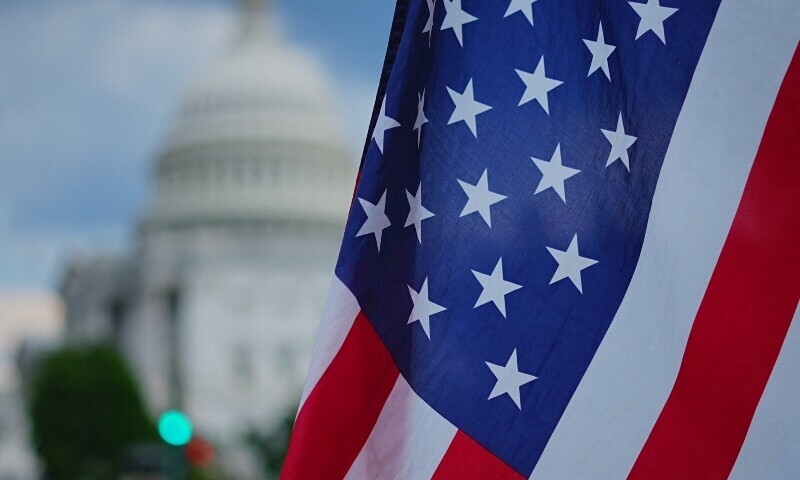
A US flag is displayed in front of the US Capitol as the US Senate considers US President Donald Trump’s sweeping spending and tax bill, on Capitol Hill in Washington, DC, US, June 29. — Reuters

US President Donald Trump has once again shaken the global order — this time through a direct military strike on some targets in Iran: nuclear facilities that “produce enriched uranium”. The bunker-bus­ter assault, launched under Trump’s direction, marked a rare instance of a direct US attack on Iranian soil.

Although the immediate result was a ceasefire between Israel and Iran, the strategic and ethical implications of the strike are far more disturbing than they first appeared.

Following the US strike, Iran launched only minimal retaliatory attacks before agreeing to what amounts to a ceasefire of near surrender. Israel, too, accepted this halt in hostilities. On the surface, it might appear that American power forced a pause in the conflict. But beneath that silence lies a storm: in Iran, anger and humiliation are growing — particularly among the youth — who might view this sequence of events not as fair but as public submission to Western aggression.

That sentiment raises a chilling historical parallel: the 9/11 attacks in 2001. At the time, many Ameri­cans saw the attacks as inexplicable acts of evil. However, later analyses revealed that the roots of such extremism lay in decades of unilateral, arrogant and often violent US interventions in the Middle East.

The young people in the Arab world or Islamic nations radicalised during those years saw the United States not as a beacon of freedom but as a hubristic superpower trampling their sovereignty. The fear now is that Trump’s latest strike may sow the seeds of yet another 9/11-style backlash — this time from another generation filled with rage and defiance.

The UN Security Council did not approve the military strike, nor was there any consensus among US allies. There is no clear evidence that Iran posed an imminent threat requiring a preemptive US strike. In short, the action violated fundamental principles of international law — specifically, the prohibition against unilateral use of force without Security Council authorisation or a clear case of self-defence.

The alarming point is that the US is responsible for protecting the rule of no unilateral use of force. Even more concerning is the fact that Trump’s strike appeared to align with Israel’s aggressive posture toward Iran.

In recent months, Israel has conducted multiple attacks on Iranian targets, citing concerns over Iran’s nuclear programme. There are indeed reasons to be concerned about the programmes from an Israeli perspective. However, such doubt can not justify the preventive strike in any form.

Now, by acting in concert with — or perhaps on behalf of — Israel, the United States has compromised its traditional image as an objective mediator in the region. Instead, it has cast itself as a direct participant in the conflict, blurring the line between diplomacy and warfare.

This is not an isolated event. During his presidency, Trump withdrew from the Joint Comprehensive Plan of Action, also known as the Iran nuclear deal.

Published in Dawn, June 30th, 2025


Situationer: Where does Iran go from here?


Baqir Sajjad Syed 
Published June 26, 2025
DAWN


FOR twelve relentless days, Israel and Iran clashed in a war that shattered long-standing assumptions about the balance of power in the Middle East.

While neither side achieved a knockout blow, Iran has emerged with its leadership intact and its regional prestige enhanced.

Unsurprisingly, Tehran’s strategists are reportedly plotting the resumption of nuclear enrichment. How exactly they will evade fresh sanctions, or even avoid another episode of aggression, remains unclear. But the resolve is unmistakable.

Iranian Foreign Minister Abbas Araqchi hinted at a shift in Tehran’s approach, telling Qatar’s Al-Araby Al-Jadeed that Iran’s posture on its nuclear programme and the global non-proliferation framework “will witness changes.”

Despite loss of senior generals and top nuclear scientists on day one, Iran’s command structure has largely survived, and the regime that Israel and the West wanted out remains in place

In tandem, Iran’s parliament moved aggressively by passing a bill on Wednesday to suspend cooperation with the IAEA and sending it to the Guardian Council for final approval.

From Iran’s perspective, the outcome is a “lasting symbol of pride, strength and self-belief,” says Iranian envoy to Pakistan Amb Reza Amiri Moghadam.

Lt Gen (retd) Masood Aslam, a former corps commander in the Pakistan Army, agrees that this “was [the] best possible end Iran could have achieved”.

Israel, backed by US intelligence and followed by American bunker-buster raids on Natanz, Fordow and Isfahan, aimed to destroy the nuclear infrastructure and decapitate Iran’s scientific-military elite and topple the regime.

How successful was Tel Aviv? Satellite imagery indicates that the strikes would cause at the most only months-long delays to enrichment, not the permanent halt that Israeli PM Netanyahu and President Trump had promised, or were hoping for.

And despite the loss of senior generals and top nuclear scientists on day one, Iran’s command structure has largely survived, and the regime that Israel and the West wanted out remains in place.

Iran didn’t just absorb the shock; its ballistic and hypersonic missile brigades retaliated in over forty waves.

Trump, speaking at margins of the Nato summit in The Hague, admitted, “Israel was hit really hard… those ballistic missiles took out a lot of buildings.”

In a separate estimation by former Haaretz editor Avi Scharf, “the US launched a year’s worth of interceptors in twelve days,” and Israel’s own aerial defence inventories were “approaching their limit”.

While the aggravating situation in Israel and the strike on the Al-Udeid military base in Qatar formed the backdrop of Trump’s announcement of a unilateral cease-fire, he was also facing mounting domestic pressure over starting a fresh war without Congressional approval.

Israel, with no choice, followed suit. Meanwhile, Iran, having earlier said that it was retaliating solely in self-defence, simply stood down.

The road ahead

Though the ceasefire is holding, this peace is fragile. The Iranian parliament has already taken a step towards revival of Iran’s “peaceful” enrichment program, suspended IAEA inspections, and whispered about speeding up secrecy-shrouded enrichment. Talk of exiting the Non-Proliferation Treaty (NPT) is also getting louder.

Contradictions are also emerging in the global nuclear watchdog’s reading of the situation.

On one hand, IAEA found no off-site radiation spike, but its chief’s testimony said that “very significant damage” likely occurred and is insisting on inspections. This also casts doubt on any purely benign outlook. Tehran’s next step could spark a regional arms race as Saudi Arabia and Turkey too could scramble for their own deterrents, especially because they would no more be fully trusting US.

Israel, wary of prospects of a reintegrated but nuclear-shy Iran, may resume covert operations, or even resort to strikes to block enrichment.

Iranian strategists, buoyed by their perceived success, could also intensify missile tests and rehabilitate groups like Hezbollah and the Houthis, whose capabilities had been downgraded because of Israeli and US kinetic actions.

All the while, Washington’s roller-coaster of rhetoric, strikes and sudden withdrawals has undercut its credibility as mediator, making uncoordinated, unilateral moves by regional players all too likely.

Lessons for South Asia

Though the battlefield here was the Middle East, the war’s lessons have rippled to South Asia. In New Delhi and Islamabad, planners must be studying the campaign’s multi-domain playbook — air strikes, cyber operations, precision missiles and strategic ambiguity — building on their clash from earlier this year, which followed a similar template, albeit at a lower scale.

India, which sided with Israel politically, would be dissecting deep-strike tactics; whereas Pakistan, which was instinctively supportive of Iran, is admiring its resilience.

“What worked for Iran was the capacity to absorb shock and persevere,” Gen Aslam noted.

But mirroring Israel’s methods against a peer like Pakistan would be fraught with risks for India.

For its part, Pakistan must bolster its air defences, modernise its air force and navy for the next round of confrontation, which may not be too far away.

Christopher Clary, non-resident Fellow at the Stimson Center, believes “Pakistan’s air force and air defences are better than Iran (especially the air force) and India’s air forces and missile defences are weaker than Israel’s, but India may strive for the ability to reach deep into Pakistan and strike at air bases, missile storage sites, and missile staging areas.”

Gen Aslam also argues that India does not enjoy the same US backing as Israel gets.

Published in Dawn, June 26th, 2025

Ties that bind

POTUS AND ISRAEL

Zarrar Khuhro 
Published June 30, 2025
  DAWN


CLOSE to the end of the Israel-Iran war, and right after he had Iran’s Fordow enrichment centre bombed, the US president indulged in some unusual criticism of Israel. Granted, a day or so later, he was effusive in his praise for Israel’s prime minister and renowned war criminal Benjamin ‘Bibi’ Netanyahu, but given the death grip that Israel has on US politics, the fact that any criticism was made in the open is interesting.

Now we know that many US presidents haven’t exactly gotten along with Israel’s leaders and have, in fact, taken issue with many of Israel’s actions, but this is usually done behind closed doors.

If I had a hundred dollars for every time I read a ‘leak’ or ‘insider scoop’ about how displeased, angry or even livid former president Joe Biden had been with Netanyahu during the ongoing Gaza genocide, I’d be able to retire a good chunk of Pakistan’s debt by now. Of course, US military, economic and diplomatic support for Israel reached new heights under Biden, so the private criticism, if any, really doesn’t matter.

Obama himself once pointedly avoided visiting Israel after his 2009 Cairo speech, and it is known that his own relations with Netanyahu were strained, but this had no real effect on the US-Israeli relationship.

Bill Clinton was much the same, with many insiders and journalists talking about his private frustration with Netanyahu over the so-called peace process, but the private opprobrium never translated into public action.

But the further back you go, you see that there was a time when words were matched by action, or at least by the threat of action. In this case, we can refer to when George H.W. Bush threatened to withhold loan guarantees worth $10 billion from Israel in 1992 if it persisted with building settlements in the occupied West Bank.

But it is Ronald Reagan who gets the most credit among the post-1973 presidents for slightly standing up to Israel after it bombed Iraq’s Osirak reactor in 1981. He suspended the delivery of F-16 jets and voted in favour of a Security Council resolution condemning Israel. A year later, when Israel invaded Lebanon, Reagan not only demanded an immediate withdrawal but also temporarily restricted military aid and assistance.


That aid had become crucial for Israel’s very existence; the 1973 Arab-Israeli war was an inflection point in the US-Israeli relationship, with Nixon launching Opera­tion Nickel Grass, an airlift of military supplies that perhaps exceeded the volume of the Berlin airlift itself. These supplies allowed Israel to continue waging war and marked the moment when the US fully committed itself to Israel’s protection.

Things haven’t always been smooth between Israel and the US.

Prior to this, there had been severe strains which came close to derailing, but never quite derailed, the core relationship. Such as when Kennedy took Israel to task over its nuclear programme, insisting that it allow inspections of its Dimona nuclear facility.

Whether this would have led to a serious dispute is now a purely academic question, as Kennedy was assassinated soon afterwards. Interestingly, Republican congresswoman and hardcore MAGA adherent Marjorie Taylor Greene recently alluded to that assassination in a tweet, writing: “There was once a great president that the American people loved. He opposed Israel’s nuclear programme. And then he was assassinated.”

A few years after that, during the 1967 war, the Israeli navy and air force attacked a US Navy ship, the USS Liberty, which was stationed north of Egypt’s Sinai Peninsula. In an assault that lasted over an hour, 34 crew members were killed and close to 200 injured. While Israel to this day claims that this was a case of mistaken identity, the survivors of the attack insist that it was deliberate, and that the ship was clearly marked as American. Compen­sa­tion was paid, and the matter effectively covered up.

But the lowest point in US-Israeli relations had already come and gone in the shape of the 1956 Suez crisis, when Israel teamed up with Britain and France to invade Egypt. The colonial-settler state had been hungry for land since its inception, and Britain and France wanted to hold on to their remaining colonial glory.

US president Eisenhower was having none of it, though, and issued marching orders to the triple invaders, forcing a withdrawal. Of course, the US was also motivated by its fear of being embroiled in a larger Cold War conflict at this stage.

At the same time, pro-Israel elements were working diligently to expand Israel’s influence in America, notably by founding AIPAC in 1954, in part to counter ‘negative reactions’ to Israel’s massacre of Palestinian villagers the same year.

Since then, AIPAC has grown into a formidable force but is in­­creasingly not immune to criticism, and we have seen hardcore MAGAists like the afo­rementioned Greene and Thomas Massie pu­­blic­­­ly criticise its influence and methods.

The writer is a journalist.

X: @zarrarkhuhro

Published in Dawn, June 30th, 2025


‘Man of peace’?

PAKISTAN, TRUMP AND NOBEL PRIZE

Trump’s imperious conduct and record so far contradict his claim of being a peacemaker.

Published June 30, 2025


The writer is a former ambassador to the US, UK and UN.


PRESIDENT Donald Trump wants to be known and acknowledged as a ‘man of peace’. But his imperious conduct and record so far are at sharp variance with this.

True, his instincts are against war, and he vowed not to involve the US in foreign entanglements and what he called “endless stupid wars”. This is what he promised in his election campaign.

He also claimed he would end the war in Ukraine in 24 hours. During the presidential campaign, JD Vance described Trump as the “candidate of peace”. In his victory speech, Trump declared, “I am not going to start wars. I am going to stop wars.”

But in his opening days in power, his aggressive statements sent a message that no ‘man of peace’ would be identified with. He threatened to take over Greenland and the Panama Canal, if necessary by military force, and turn Canada into the 51st state of the US by using “economic force”.

He also said the US would “take over Gaza” and relocate Palestinians outside their homeland. He unleashed a trade war by imposing sweeping tariffs against almost all countries in the world. His bullying approach and coercive methods prompted The Economist to describe him as a modern-day Don Corleone. Others likened his leadership style to mafia tactics both at home and abroad.

Despite Trump’s boastful claims of bringing a quick end to the Ukraine war, he has been unable to do that. He claims to have promoted peace in the Middle East by forging a ceasefire between Israel and Iran following their 12-day war.

But lighting a fire and then putting it out hardly makes him a peacemaker. Israel, the aggressor, would never have attacked Iran in the first place without a green light from Washington.

Trump acknowledged he had advance knowledge of Israel’s June 13 military assault. But he did nothing to stop Benjamin Netanyahu. Instead, he used nuclear talks with Iran as a smokescreen while the Israeli military was preparing to attack Iran.

Trump later described the attack as “excellent” and admitted he had coordinated closely with Netanyahu. Then, in flagrant violation of international law, he ordered US warplanes to bomb Iranian nuclear facilities, declaring triumphantly this had “completely obliterated” Iran’s nuclear sites and likening it to nuclear bombs dropped by the US on Japan in World War II. Is this what ‘men of peace’ do?

Trump’s imperious conduct and record so far contradict his claim of being a peacemaker.


Persuading Israel and Iran to agree to a ceasefire, which remains fragile, hardly supports Trump’s assertion to have established peace. Yes, the fighting has stopped for now, but peace is an altogether different matter.

Peace is established when disputes or issues are resolved. A ceasefire is what it says it is — a halt in active hostilities. Ceasefires can, of course, be a pathway to peace. But there is no chance of peace between Iran and Israel, who remain implacable enemies. Meanwhile, Trump declared he would bomb Iran again if the country was still able to enrich uranium to weapons-grade.

What contradicts Trump’s ‘peacemaker’ claim in the most barefaced way is his role in and support for Israel’s genocidal war on Gaza. Despite his earlier statements that he wanted an expeditious end to the war, his actions prove the contrary.

He has thus far shown no willingness to restrain or stop Netanyahu from raining death and destruction on Gaza. While Trump has been trumpeting his peacemaking ‘credentials’, Gaza has only seen more bloodshed, displacement, devastation, and now, starvation and famine.

Close to 60,000 Palestinians have been killed in Israel’s US-backed war, the majority of them women and children. In fact, since Trump’s assumption of power, Israel has expanded its military offensive in Gaza and threatened to occupy all of the territory.

It has blocked humanitarian aid and used starvation as a weapon. Has Trump intervened to prevent any of this or, for that matter, Israel’s increasing military assaults on the occupied West Bank?

Obviously not. Instead, the US has used its veto to block resolutions in the UN Security Council calling for a ceasefire in Gaza. The most recent veto was exercised earlier this month that opposed an “immediate and permanent ceasefire”; it was the sixth US veto since the war began.

This has given Israel carte blanche to continue its killing spree and create a catastrophic humanitarian crisis in Gaza. The Trump administration has remained unmoved by scenes of desperate, starving Palestinians, including children, being shot in cold blood by Israeli forces as they queue up for food at controversial military-run aid distribution sites set up with US backing.

In one month alone, over 500 aid-seekers have been killed. Washington has also not denied Israeli leaders’ claims that they are implementing Trump’s plan of forcible displacement of Palestinians by pushing them out of Gaza.

Despite this grim record, Trump feels he should be awarded the Nobel Peace Prize. Although he has cited several reasons for this, his claim rests principally on brokering a ceasefire between India and Pakistan after their four-day conflict.

For that, the government of Pakistan recommended him for the Nobel Peace Prize. This ill-conceived move, aimed at ingratiating itself with Trump, was justified by the government on the grounds that he had intervened to de-escalate “a rapidly deteriorating situation” and secure a ceasefire that averted “a broader conflict between the two nuclear states”.

It is disingenuous to argue Trump’s intervention was the decisive factor, when it was nuclear deterrence that prevented the outbreak of all-out war.

Defusing a crisis, which Washington did, is not the same thing as averting a full-blown conflict. If it took Trump to avert a “broader conflict”, that would make Pakistan’s nuclear capability irrelevant.

If that is what the government thinks, then it has no confidence in the country’s security guarantor. Moreover, a peace award should be in recognition of the establishment of peace, which happens when contentious issues are resolved between warring parties. Has that happened?

What is touted as Trump’s doctrine of ‘peace through strength’ is nothing other than the unilateral use of force and coercion in defiance of international law and global norms to impose US will. This is a recipe for chaos, not winning the peace.

Published in Dawn, June 30th, 2025