Japan, Vietnam, Indonesia, Pakistan welcome ceasefire, laud ASEAN chair Malaysia for its role
Saadet Gokce |29.07.2025 - TRT/AA
ISTANBUL
China on Tuesday hailed Malaysia's role in achieving a ceasefire between Thailand and Cambodia after five days of fighting, which left dozens dead and injured.
Beijing "commends and welcomes" the international community, "especially" the chair of the Association of Southeast Asian Nations, Malaysia, for "actively promoting talks between the two countries," Foreign Ministry spokesman Guo Jiakun told a news conference in the Chinese capital, Beijing.
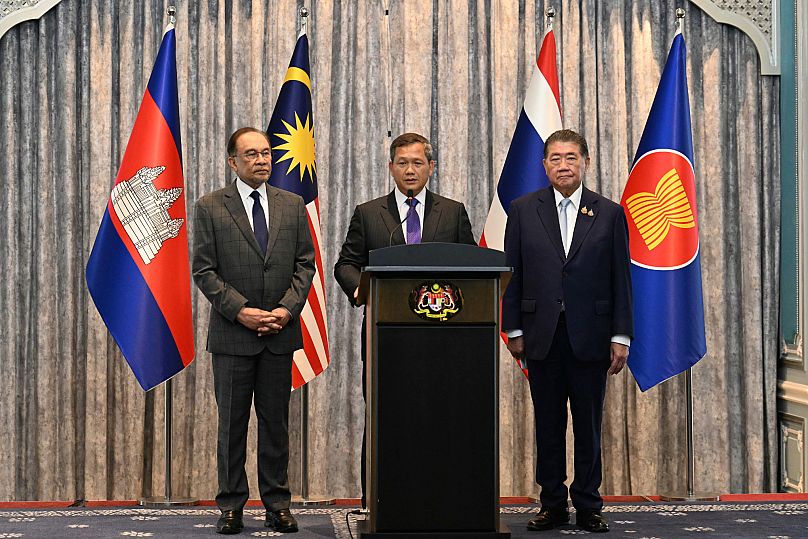
Malaysian Prime Minister Anwar Ibrahim announced the "immediate and unconditional" ceasefire on Monday, following a meeting between Cambodian Prime Minister Hun Manet and acting Thai Prime Minister Phumtham Wechayachai in Kuala Lumpur.
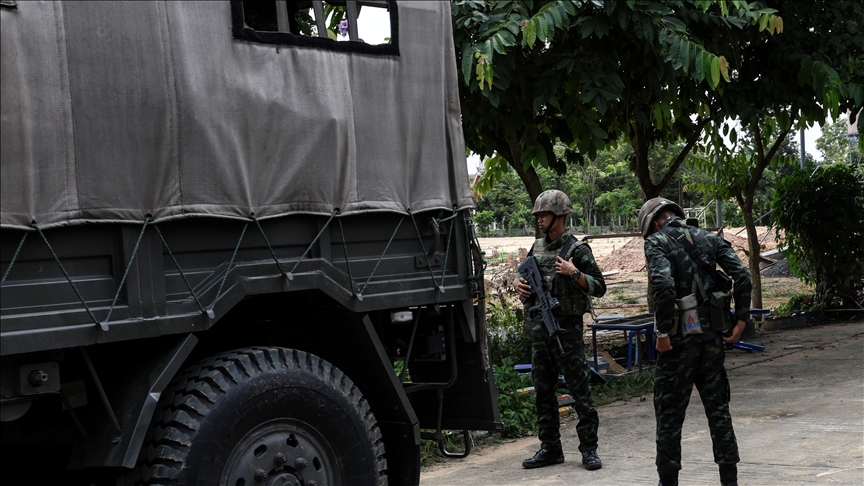
The armed conflict along the disputed border between the two countries resulted in the deaths of dozens of people, including soldiers.
China will "play a constructive role for consolidating the ceasefire consensus," Guo added.
Japan also welcomed the ceasefire agreement, saying that "a sound relationship between Cambodia and Thailand is extremely important for peace and stability in the region," according to a statement from the Foreign Ministry.
Tokyo also commended the "diplomatic efforts of all parties involved in achieving this agreement, including Malaysia as the host of the special meeting and the United States as the co-organizer," it said.
Separately, Vietnamese Foreign Ministry spokeswoman Pham Thu Hang also welcomed the "immediate and unconditional ceasefire."
Indonesian President Prabowo Subianto, during a meeting with the Malaysian prime minister in Jakarta on Tuesday, also hailed Anwar Ibrahim for brokering the ceasefire, according to the Antara news agency.
"This (ceasefire) is a breakthrough of critical importance. We want ASEAN to remain committed to resolving conflicts peacefully through consultation, discussion, and negotiation," Prabowo said.
Pakistan also welcomed the "successful conclusion" of the meeting hosted by Malaysia on the Cambodia-Thailand situation.
Thai, Cambodian militaries chart path forward after deadly border fight
Regional commanders agreed to halt gunfire and troop movements as displaced residents began a wary trek home.

BANGKOK, Thailand – Military leaders from Thailand and Cambodia met on Tuesday to agree on details of a ceasefire, brokered amid pressure from the U.S., that halted five days of deadly skirmishes along their disputed border.
Regional military commanders along the 800-kilometer border agreed to halt gunfire, refrain from moving troops and establish direct bilateral communications, according to a Thai army spokesman and a spokesperson from the Cambodian defense ministry.
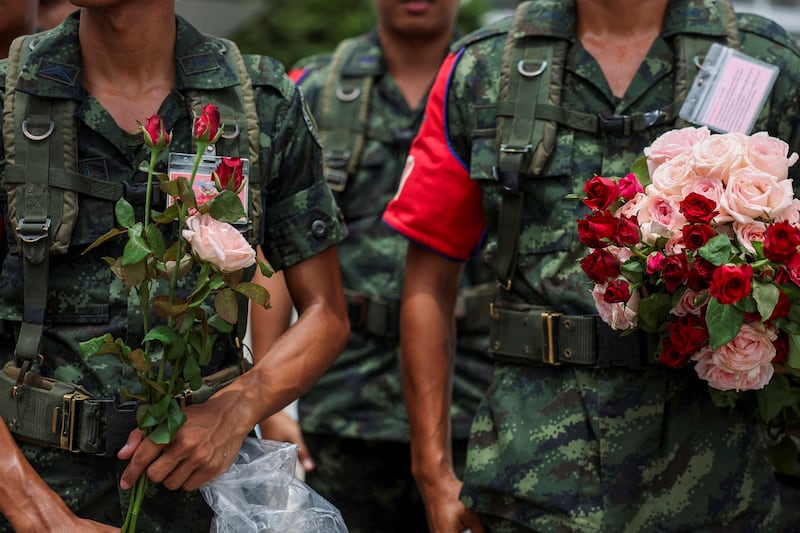
Acting Thai Prime Minister Phumtham Vejjayachai on Tuesday accused Cambodian troops of violating the ceasefire. The Thai government said it had filed a complaint about the alleged violation to Malaysia, the U.S. and China.
Cambodia’s defense minister, Tea Seiha, denied the claim, writing on Facebook that Cambodia’s armed forces has been strictly observing the truce. He said the Cambodian defense ministry would lead a delegation of foreign diplomats to observe the border.
Local sources near the border told RFA that gunfire was heard periodically in the predawn hours on Tuesday. An Agence France-Press journalist near the border said the sound of gunfire stopped ahead of the midnight deadline, a quiet that continued into Tuesday evening.
Thailand’s Phumtham and Prime Minister Hun Manet of Cambodia appeared together on Monday to announce the ceasefire, brokered with Prime Minister Anwar Ibrahim of Malaysia, the annual chair of the ASEAN regional bloc.
The announcement came amid pressure from U.S. President Donald Trump, who said that continued fighting could stall negotiations for a trade deal with the U.S. Both countries face a 36% tariff on their goods unless a reduction can be negotiated. After the deal was announced, Trump said he had spoken with both leaders and told his team to restart talks.
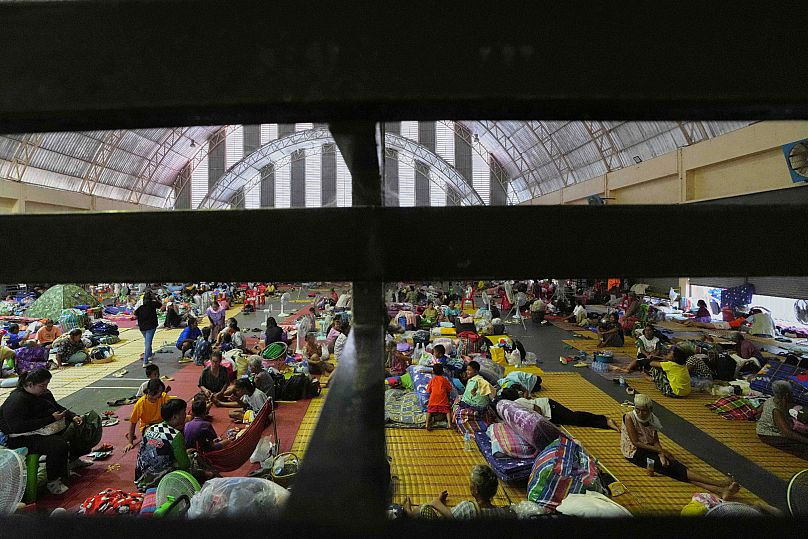
At least 43 people were killed and around 300,000 were displaced during the fighting, which included jets, rockets and artillery.
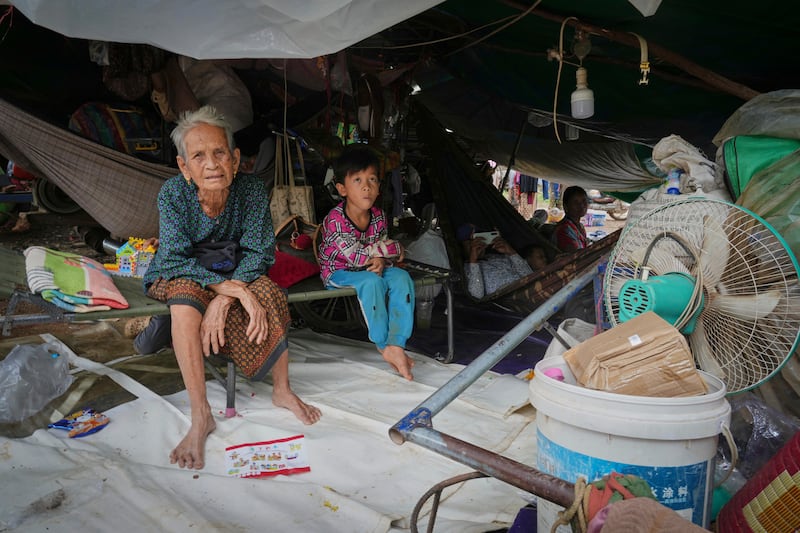
Some locals, like Cambodian Soklang Slay, expressed wariness as they returned to their homes on Tuesday.
“I am very concerned that new fighting may break out. Thailand often provokes the fighting first, but then accuses Cambodia. Their aims is that they want to occupy our temples [along the border]. I really don’t want to see any new fighting happen,” he told the Associated Press.
Supalak Ganjanakhundee, an author and former editor of the Nation newspaper in Bangkok who lives in his hometown in Kantharalak district, Sisaket province, was among those displaced. He had to evacuate, he said, and lost his cattle and his chance to harvest ripe durian fruit.
“The recent border skirmish between Thailand and Cambodia was senseless and served no real benefit to either nation. It did, however, serve the interests of the Thai military and Cambodia’s ruling family,” he told RFA, referring to the spat between Hun Manet and suspended Thai Prime Minister Paetongtarn Shinawatra.
“Politically, the conflict has placed the government of Prime Minister Paetongtarn Shinawatra on the brink of collapse. The failure of coherent diplomacy has opened the door to external interventions — most notably by the United States and China — complicating an already volatile situation.”
To resolve their issues long-term, he said both countries must accept the presence of international observers to monitor and verify the truce’s implementation.
“At the same time, they must reactivate dormant bilateral mechanisms to address critical issues of border security and the long-overdue boundary demarcation,” he said.
Includes reporting by RFA Khmer and Pimuk Rakkanam for RFA, as well as Agence France-Presse, The Associated Press, and Reuters.
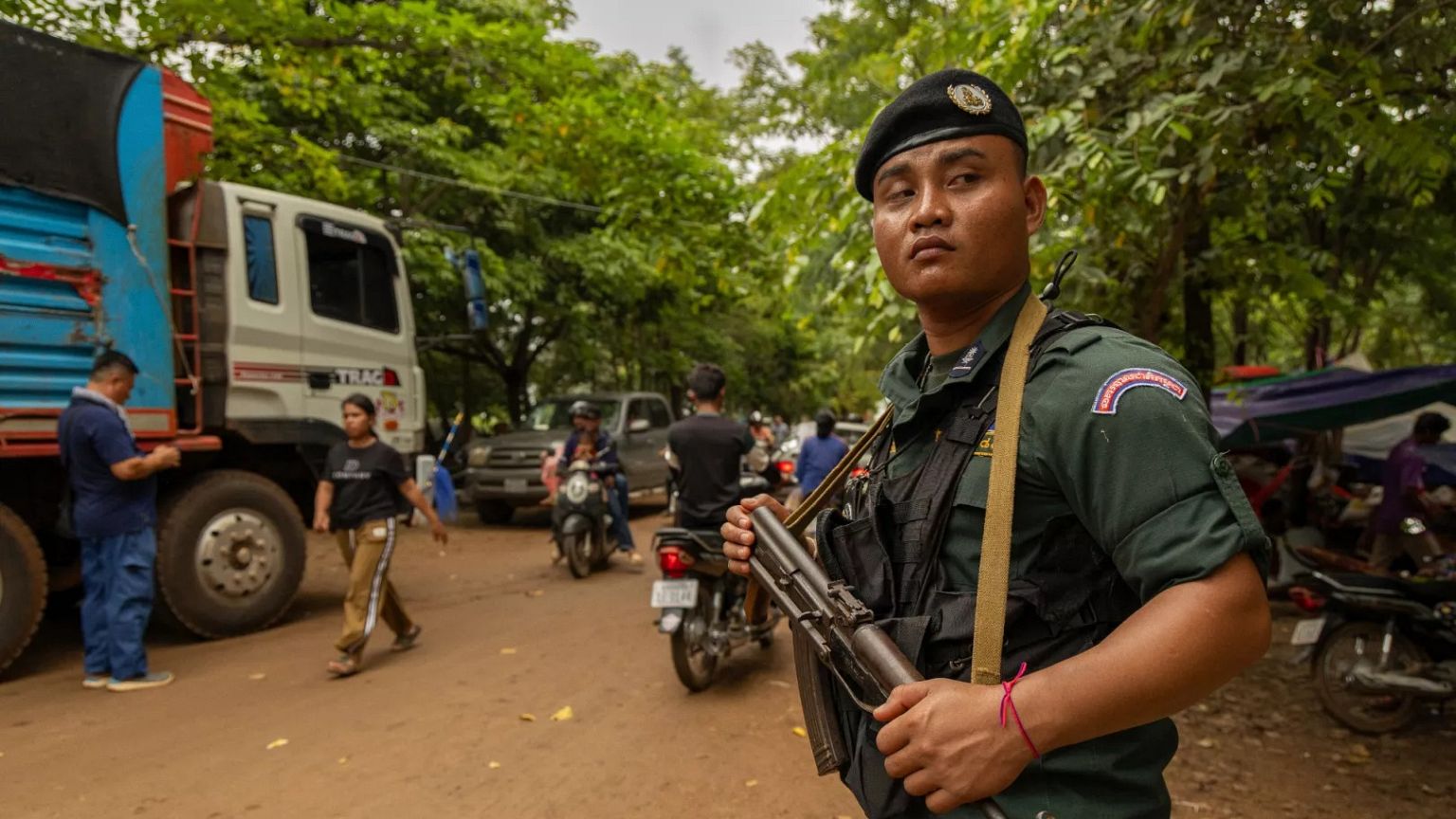
Copyright AP Photo
By Gavin Blackburn
Published on 29/07/2025 - EURONEWS
The truce, which was signed in Malaysia, was supposed to come into force at midnight, bringing an end to cross-border clashes that have killed at least 41 people and displaced thousands.
Authorities in Thailand have accused Cambodia of violating the ceasefire the two countries agreed to on Monday, following economic pressure from the Trump administration.
The truce, which was signed in Malaysia, was supposed to come into force at midnight, bringing an end to cross-border clashes that have killed at least 41 people and displaced thousands.
The Thai army accused Cambodia of launching attacks in multiple areas early on Tuesday but Cambodia said there was no firing in any location.
Thailand later said fighting had stopped after military commanders along the border from both sides met.
They agreed to halt troop movements, avoid escalation and establish coordination teams ahead of a joint border committee meeting in Cambodia on 4 August, army spokesperson Major General Winthai Suvaree said.
Cambodian Defence Minister Tea Seiha said he spoke to his Thai counterpart about "incidents" that occurred during the implementation of the ceasefire but stressed the Cambodian army abided by the truce.
He said Cambodian defence officials will lead a delegation of diplomats, foreign military attachés and others to observe the situation.
The Thai government separately said it has lodged complaints to Malaysia, the US and China about Cambodia’s alleged breach of the ceasefire agreement.
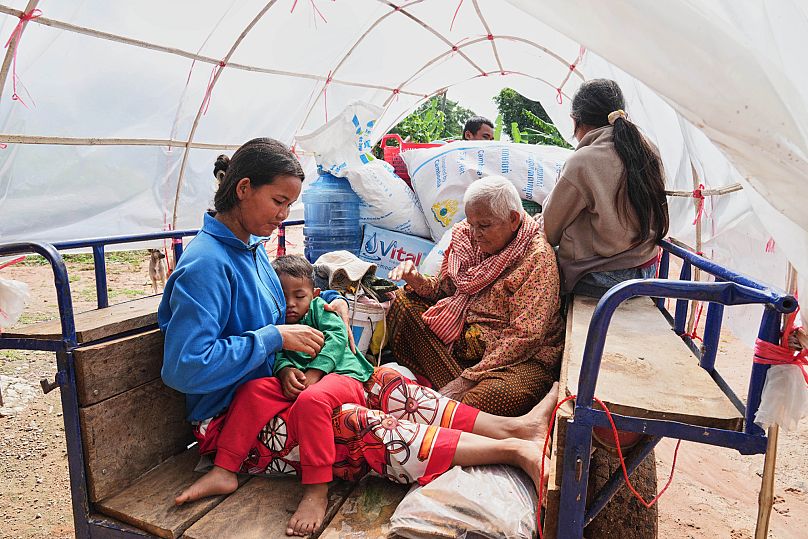
Along the border, there were signs of calm with some of the more than 260,000 people displaced by the fighting returning to their homes.
Ceasefire struck under US pressure
Cambodian Prime Minister Hun Manet and Thailand's acting Prime Minister Phumtham Wechayachai agreed to an “unconditional” halt in fighting on Monday in talks hosted by Malaysian Prime Minister Anwar Ibrahim.
He called the ceasefire a "vital first step towards de-escalation and the restoration of peace and security."
Secretary of State Marco Rubio said the US applauded the ceasefire declaration.
"President Trump and I are committed to an immediate cessation of violence and expect the governments of Cambodia and Thailand to fully honour their commitments to end this conflict," Rubio said in a statement.
Hun Manet said on Tuesday that Trump had called to offer congratulations for the peace agreement.
He posted on social media that Trump pledged the US would join the monitoring process along with Malaysia to ensure the ceasefire is implemented.
Trump also called Phumtham after his return to Bangkok.
Phumtham said Trump told him that Thailand’s talks with Washington to negotiate tariff levels on Thai exports could now proceed and that he would seek to make them as favourable as possible.
The ceasefire comes days before the US is expected to announce new trade tariff decisions.
Cambodia and Thailand have both been two of the hardest-hit countries as a result of Trump’s trade war, with a 36% tariff on goods from both countries due to take effect on Friday.
Trump had warned that the US might not proceed with trade deals with either country if hostilities continued, giving both sides a face-saving justification for halting the clashes.
Caution among border residents
Cambodia and Thailand have clashed in the past over their 800-kilometre border.
The latest fighting began on Thursday after a landmine explosion wounded five Thai soldiers.
Tensions had been growing since May when a Cambodian soldier was killed in a confrontation that created a diplomatic rift that roiled Thailand's domestic politics.
Residents on both sides of the border expressed relief about the ceasefire but remained wary, unsure how long the peace would last.
Related
Thailand declares martial law in border districts as conflict with Cambodia worsens
"I am very concerned that new fighting may break out. Thailand often provokes the fighting first, but then accuses Cambodia. Their aims is that they want to occupy our temples. I really don’t want to see any new fighting happen," said Soklang Slay, as he helped his daughter move back into her home in Cambodia's Oddar Meanchay province.
Meanwhile, in Thailand's Surin province, local community leader Kritsada Jindasri said he heard heavy firing and explosions on Monday night before silence fell at midnight.
"We are still cautious. We still don't totally believe (that it would stop). We still wait to assess the situation," said Kitsada, who had stayed back along with 60 other community leaders after some 400 villagers evacuated last week.