Friday, September 05, 2025

MSM

Trump’s assault on federal worker union rights is just the beginning


Analysis


Since returning to office, US President Donald Trump has signed executive orders stripping more than a million federal workers of their right to collective bargaining – a move that unions warn likely heralds a similar assault on workers employed in the private sector.


Issued on: 04/09/2025 -
FRANCE24
By: Paul MILLAR
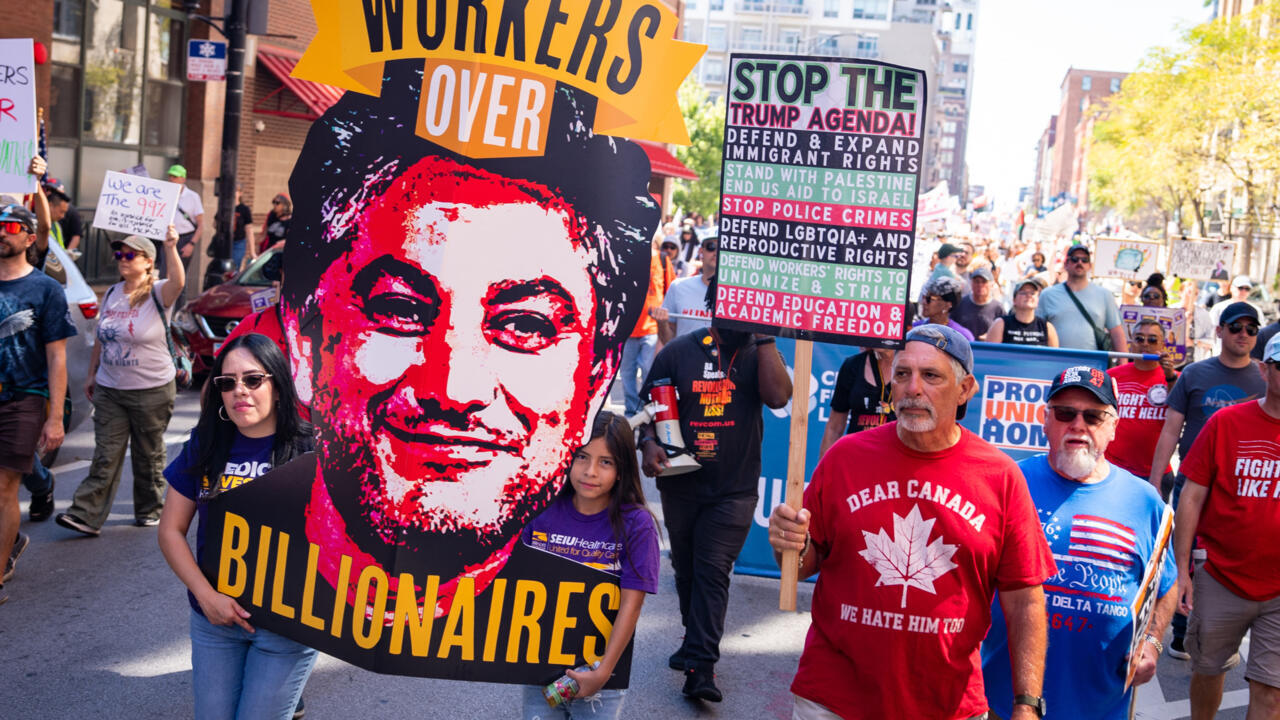

People participate in the Labor Day Workers Over Billionaires rally in solidarity with unions and advocacy groups on September 1, 2025 in Chicago, Illinois. 
© Audrey Richardson, Getty Images via AFP

The chainsaw is back up and roaring. In August alone, more than 445,000 federal employees were stripped of their collective bargaining rights as government agencies followed twin executive orders from US President Donald Trump removing union protections from more than a million public-sector workers. The second order was signed on August 28, just days before US workers took to the streets to march in the country’s annual Labor Day parades.

For many of the hundreds of thousands of federal workers targeted by the move, their unions will no longer be able to fight back against contract violations committed by the agencies, and the employees themselves could lose hard-won benefits around parental leave and rest periods. While the orders are still before the courts, nine federal agencies, including the Department of Veterans' Affairs, have already terminated union contracts covering just shy of half a million workers.

The executive orders, which mark the largest removal of union protections in US history, draw upon decades-old presidential powers to deny federal workers the right to collective bargaining on national security grounds.

In the past, this power has been used sparingly to restrict collective bargaining rights among certain employees working for US intelligence agencies such as the CIA or the National Security Agency.


The new orders extend this logic to employees at more than two dozen government agencies, including the departments of Veterans’ Affairs, Agriculture, Health and Human Services, the Patent Office and the Environmental Protection Agency. Law enforcement services such as the police were explicitly left out of the orders.


Labor Day protests against Trump and billionaires amid growing inequality

© France 24
02:08


Although framed as a national security push, “fact sheets” published by the White House make outright reference to union pushback against Trump’s efforts to radically downsize the federal workforce, accusing “certain Federal unions” of having “declared war” on the president’s agenda.

Unions representing workers at several of the agencies named in the executive orders have sued the Trump administration over what they maintain are violations of their members’ contracts, including the attempted mass firing of thousands of probationary workers.

The backbone of the labour movement

Eunice Han, associate professor at the University of Utah’s Department of Economics, said that the federal workforce stood out as a stronghold of collective action in the US.

“Public sector unions really are the backbone of the labour movement in America,” she said. “While private-sector union membership has steadily declined since its peak during the 1960s, public sector unions have held relatively steady – today, only about 6 percent of private-sector workers are unionised, compared with over 30 percent in the public sector.”

Han said that Trump’s executive orders had to be understood in part as a response to a reawakening labour movement across the US.

“Historically, unions have leaned toward the Democratic Party, which has often resisted Trump’s agenda for various reasons,” she said. “At the same time, we’ve seen a national surge in unionisation during the 2020s – many industries experienced a new wave of organising, and public approval ratings for unions hit record highs. In that environment, Trump’s executive orders look less like a response to national security and more like part of a broader pushback against the resurgence of organised labour.”

According to a September 2024 Gallup poll, 70 percent of Americans approve of labour unions, marking the highest support since the 1950s. Petitions for union elections at the National Labor Relations Board (NLRB) doubled between 2021 and 2024, with as many as 60 million workers reportedly saying they would vote to unionise if they could. Despite this, the percentage of workers represented by unions continues to stagnate.


White nationalist agenda? Minorities in front line of Trump policy targets

 FRANCE 24
40:04


Lynn Rhinehart, a senior fellow at the Economic Policy Institute and former general counsel at the AFL-CIO, the country’s largest labour union federation, said that Trump’s executive orders marked the beginning of a longer campaign against organised labour.

“Trump's real motivation is clear – the executive order is a retaliatory action against federal employee unions who are standing in the way of Trump's union-busting agenda,” she said.

That agenda doesn’t stop with executive orders. Trump fired NLRB chair Gwynne Wilcox in January, saying that her opinions had “unduly disfavoured” employers. The decision – which Wilcox continues to fight in the courts – leaves the country’s top labour watchdog without the quorum it needs to hear cases and issue decisions.

Trump in July nominated two new board members, including Boeing’s chief labour counsel Scott Mayer, to restore a quorum. If confirmed by the Senate, the appointments will leave the five-member board with a Republican majority.

Spillover

While the scale of Trump’s efforts to strip federal workers of collective bargaining rights has no equal in US history, labour historians have drawn comparisons with then-president Ronald Reagan’s decision to fire and permanently replace some 11,500 striking air traffic controllers in 1981, breaking the back of a growing movement of public sector worker mobilisation.

“Both of these actions showed a president telling the world – and more particularly, telling employers – that it was open season on workers' collective bargaining rights,” Rhinehart said. “After Reagan fired the air traffic controllers, employers in the private sector were emboldened to replace strikers, hire union busters, and engage in other tactics to defeat union organising drives.”

The US labour movement has still not recovered from the blow. Fewer than one in 10 workers now belongs to a union – a number that’s fallen by half since 1983.


Han said that Trump’s assault on public-sector unions would likely also set off shockwaves across their counterparts in the private sector.

“Unlike private-sector unions … public-sector unions operate under different state-level rules – some states allow bargaining and strikes, while others ban them entirely,” she said.

“If the federal government starts weakening public sector bargaining rights, it sets a precedent that makes it easier for states to follow suit. And if public sector unions lose their standing, it will almost certainly spill over into the private sector, either through changes in federal labour law or through broader adoption of right-to-work legislation.”


Bridging the divide


But whether federal employees fighting to keep their hard-won union protections are able to draw support from the wider working public remains an open question. With private-sector union membership in freefall as employers fought tooth and nail to stop their workers organising, public servants found themselves more and more isolated within a labour movement now dominated by federal employees.

And as the Great Recession triggered by the 2008 financial crisis deepened the country’s yawning gulf between rich and poor, highly skilled professionals found themselves less hard-hit by the widespread job losses that fell heaviest on middle-skilled blue- and white-collar workers.


It is this reserve of potential resentment that conservative and libertarian groups have attempted to draw on to paint federal workers not as underpaid civil servants working for the common good, but an elite caste of privileged white-collar workers shielded from the ravages of the worsening economy by taxpayer dollars. At its heart, though, Han said the picture bore little likeness to the lives of most federal workers.

“That’s been a common talking point from anti-union groups, but the reality is more complicated,” she said. “Take teachers’ unions – the largest public-sector unions in the country. Our public-school teachers are underpaid, and teacher shortages are a serious issue in most major cities. In fact, about 40 percent of teachers can’t even bargain collectively despite being union members. During the wave of teacher strikes in 2018 and 2019, the public showed overwhelming support. I think that could happen again under the right conditions.”

Researchers maintain that more highly educated public sector workers tend to be underpaid compared to those working for private employers. Federal workers with a high-school education or less – such as groundskeepers, janitors and other custodial staff – are by contrast better paid than their private-sector counterparts.


But Han said that Trump’s re-election had exposed some of the cracks within the labour movement.

“I do think there’s a divide,” she said. “Traditionally, the private-sector industries with the highest union membership – manufacturing and construction – have been hit hard by globalisation and outsourcing. Trump’s promise to ‘bring jobs back’ resonated strongly with those workers.”

While much of the US’s labour union leadership backed Democratic candidate Kamala Harris during the 2024 presidential race, the base showed itself to be more divided on polling day. One CNN exit survey on the night of the election suggested that as many as 45 percent of union households may have cast their vote for Trump and his programme of economic protectionism.

“Public sector unions, on the other hand, tend to be more highly educated and remain strongly aligned with the Democratic Party,” Han said. “For Democrats to bridge that divide, they need to speak more directly to economic concerns – investing in infrastructure and R&D, helping workers transition into new technologies and addressing inequality at the top.”

Despite Trump’s efforts to brand himself as a pro-worker president, Rhinehart said, the Republican’s “existential” war on federal workers’ collective bargaining rights told a very different story.

“Trump's attacks on labour are detrimental to all workers, because unionisation raises wages and improves benefits for all workers, both union and non-union,” she said. “Unions are an important check on corporate power. Without unions, Trump and his corporate billionaire allies can run roughshod over workers and their rights.”

Tears and applause: Gaza tragedy recreated in film that stuns Venice


Issued on: 04/09/2025 - 


Play (12:18 min)


In this episode of arts24, we begin at the Venice Film Festival, where a harrowing film about a five-year-old girl killed during an Israeli assault on Gaza, entitled "The Voice of Hind Rajab", received a 23-minute standing ovation. Directed by Tunisian filmmaker Kaouther Ben Hania and executive produced by Brad Pitt, Joaquin Phoenix and others, the film uses real phone recordings to reconstruct the child's final moments, leaving audiences visibly shaken and critics calling it the most urgent entry of the festival.

Also in the spotlight: a real-life case of art imitating life. Chloe Malle has been named the new editor of Vogue, succeeding the legendary Anna Wintour. Malle is the daughter of actress Candice Bergen – who, in a surreal twist, once played Vogue's fictional editor on "Sex and the City".

We also look at how the animated feature backed by Netflix, "KPop Demon Hunters", has become the platform's most-streamed film to date.


Israel's army says it controls 40 percent of Gaza City

Israel's army Thursday claimed that it currently controls 40 percent of Gaza City, the besieged enclave's largest city. The news comes as Israel faces international condemnation and backlash for its decision to expand an ongoing offensive in the Palestinian territory.


Issued on: 04/09/2025 - 
By: FRANCE 24
Video by: Monte FRANCIS

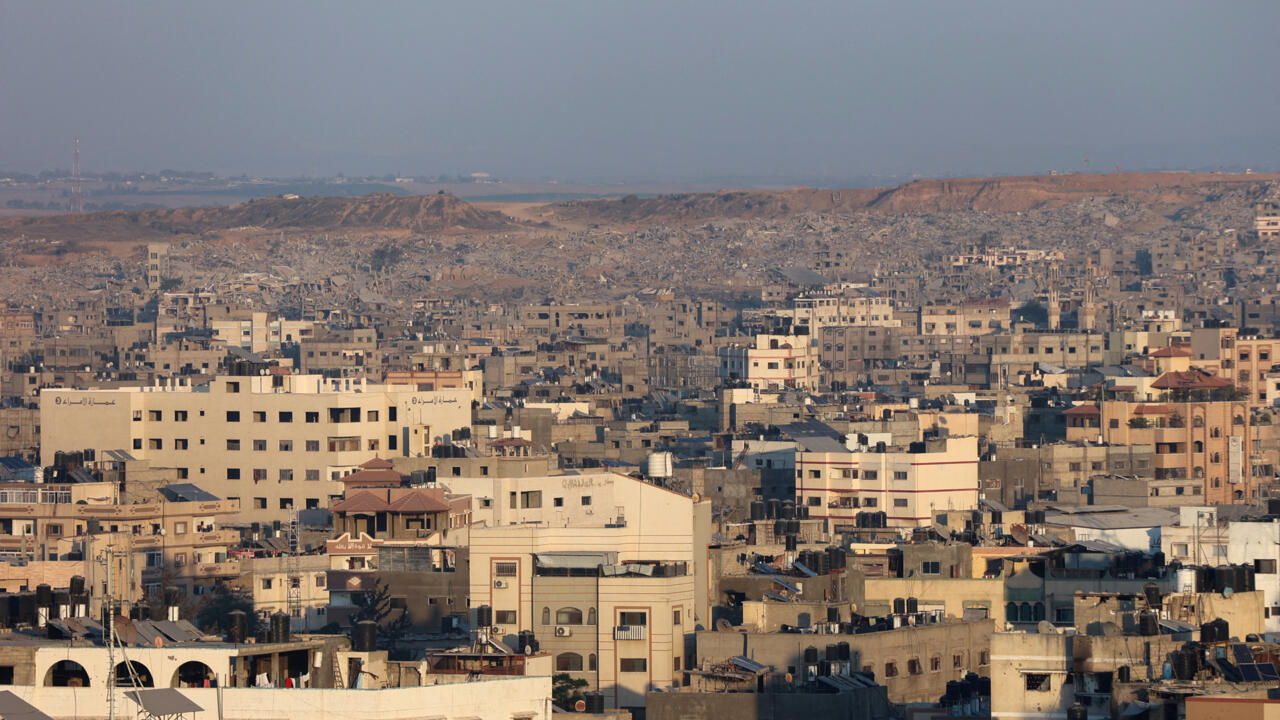
A picture shows a view of the destruction to the west of Gaza City 
on September 4, 2025. © Omar Al-Qattaa, AFP
01:52


The Israeli military on Thursday said it controls 40 percent of Gaza City, the largest urban centre in the Palestinian territory which it is preparing to conquer after nearly two years of devastating war.

Israel has intensified in recent days its bombardments of the area of Gaza City, in the territory's north, ahead of the planned offensive, despite mounting international pressure to halt the campaign.

Gaza's civil defence agency said Israeli strikes on Thursday killed more than 30 people in the city, out of at least 64 Palestinians killed across the Gaza Strip.

As concern grows over the dire humanitarian conditions for Gaza's population of more than two million, one of the European Union's top officials called the war a "genocide" – a term strongly rejected by Israel, but which several governments and numerous rights groups have adopted.


In a televised briefing, Israeli military spokesman Brigadier General Effie Defrin said that "we hold 40 percent of the territory of Gaza City", adding that the offensive "will continue to expand and intensify in the coming days".


Netanyahu calls Israelis protesting Gaza war ‘fascists’

© France 24
02:01


Defrin vowed to "increase the pressure" on Palestinian militant group Hamas, whose October 2023 attack on Israel sparked the war, "until it is defeated".

With the vast majority of Gazans already displaced at least once during the war, a senior Israeli military official told journalists on Wednesday that authorities expected the new offensive to push an estimated one million Palestinians south, away from Gaza City.

The United Nations last month declared a famine in and around Gaza City, where it estimates nearly one million people live.

Basic services 'collapse'


Civil defence spokesman Mahmud Bassal said that an Israeli air strike on Thursday hit a tent sheltering a displaced Palestinian family in Gaza City, killing five people including three children.

Contacted by AFP, the Israeli military said forces had targeted "a Hamas terrorist", adding that it "regrets any harm caused to uninvolved civilians".

In Tel al-Hawa, the neighbourhood where the strike reported by the civil defence took place, AFP footage showed Palestinians outside damaged tents, clearing up scattered belongings.

A pair of blood-stained pink slippers lay among the debris.

Israa al-Basous, who lives there, recounted seeing the tent next to hers on fire.

"My children and I were sleeping in the tent when we heard the sound of bombing. Shrapnel fell on us, and my four children started screaming," she told AFP.

At Gaza City's Al-Shifa Hospital, where the dead and wounded were being received, bodies wrapped in white shrouds lay on the floor of the hospital's morgue.

One woman stroked the head of her dead son as his body lay outside on a stretcher.

"Who are you leaving me to, son? Why? Why?" she wept.

UNICEF spokeswoman Tess Ingram, briefing journalists from a visit to the Gaza Strip, said that "the unthinkable in Gaza City has already begun", with escalating military operation leading to "the collapse of essential services".

"Without immediate and increased access to food... more children will starve," she said.

"Palestinian life is being dismantled here, steadily but surely."
'Destroyed'

European Commission Vice President Teresa Ribera, speaking in Paris, called the war a "genocide" and slammed the 27-nation bloc for failing to act to stop it.

"The genocide in Gaza exposes Europe's failure to act and speak with one voice," Ribera said, in remarks slammed by Israel as serving "Hamas propaganda".

Top EU officials have so far shied away from calling Israel's actions a "genocide".

In central Gaza's Nuseirat refugee camp, the civil defence said another Israeli air strike killed seven people including three children.

The Israeli military said it was "not aware" of a strike there.

AFP footage showed Yousef Suleiman, who said he lost relatives in the pre-dawn strike, walking through a bombed-out shelter where tattered scraps of material hung from tent poles.

"The entire tent was destroyed, along with everyone inside," he told AFP.

Media restrictions in Gaza and difficulties in accessing many areas mean AFP is unable to independently verify the tolls and details provided by the civil defence agency or the Israeli military.

Hamas's October 2023 resulted in the deaths of 1,219 people, mostly civilians, according to an AFP tally based on Israeli figures.

Israel's retaliatory offensive has killed at least 64,231 Palestinians, most of them civilians, according to figures from the health ministry in Hamas-run Gaza that the United Nations considers reliable.

A Hamas statement meanwhile said that top officials from the group, which is backed by Iran, met in Doha with Tehran's Foreign Minister Abbas Araghchi to discuss efforts to bring the war to an end.

(FRANCE 24 with AFP)


US sanctions Palestinian rights groups over ICC probe


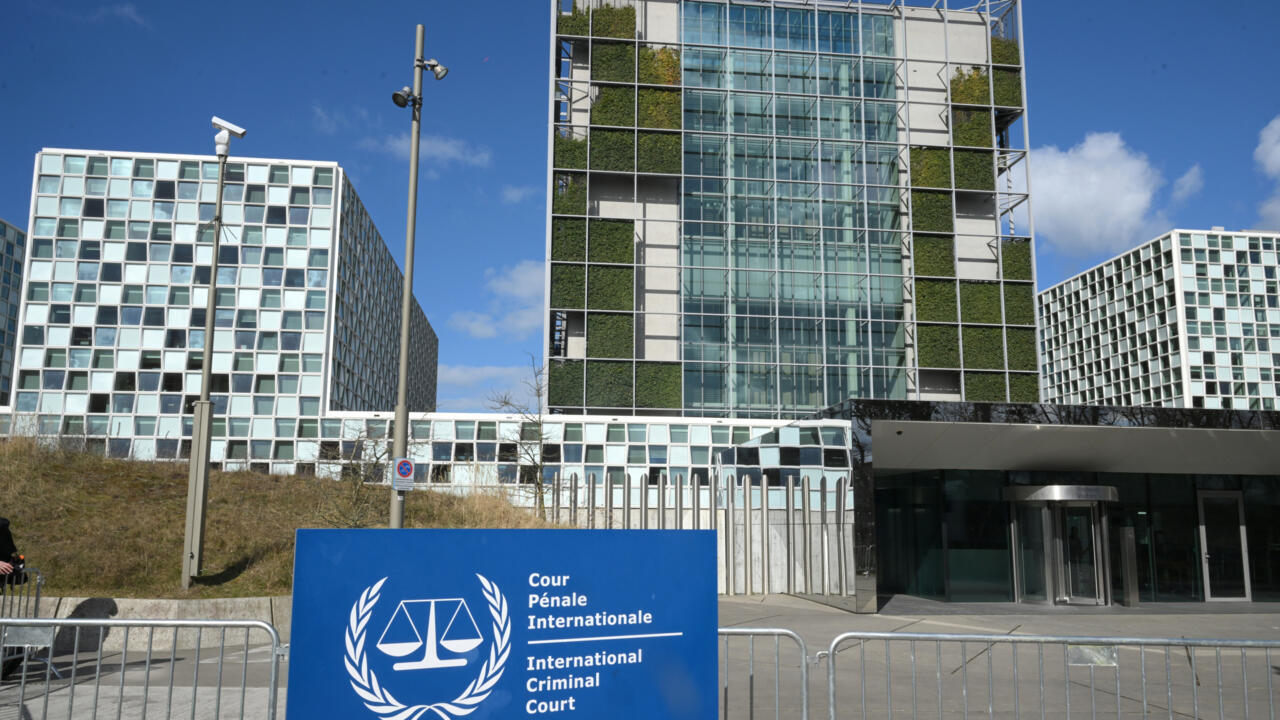
Washington (AFP) – The United States has imposed sanctions on three leading Palestinian NGOs, accusing them of supporting International Criminal Court efforts to prosecute Israeli nationals.


Issued on: 05/09/2025 - 

The ICC has sought arrest warrants for Israeli officials over alleged war crimes in Gaza, as well as pursuing cases against Hamas leaders © Nicolas TUCAT / AFP/File

The move is the latest in Washington's effort to hobble the ICC, which has sought arrest warrants for Israeli officials over alleged war crimes in Gaza. The court has also pursued cases against Hamas leaders.

Secretary of State Marco Rubio on Thursday designated Al-Haq, Al Mezan Center for Human Rights, and the Palestinian Centre for Human Rights under an executive order targeting entities that assist ICC investigations into Israel.

"These entities have directly engaged in efforts by the International Criminal Court to investigate, arrest, detain, or prosecute Israeli nationals, without Israel's consent," Rubio said.

The United States, Russia and Israel are among the nations that reject the ICC.

"We oppose the ICC's politicized agenda, overreach, and disregard for the sovereignty of the United States and that of our allies," Rubio said in a statement.

Last month, the US imposed sanctions on two ICC judges and two prosecutors, including those from allies France and Canada. In June, Rubio sanctioned four judges from the court.

"The United States will continue to respond with significant and tangible consequences to protect our troops, our sovereignty, and our allies from the ICC's disregard for sovereignty," Rubio warned.

Amnesty International condemned the US move as a "deeply troubling and shameful assault on human rights and the global pursuit of justice."

"These organizations carry out vital and courageous work, meticulously documenting human rights violations under the most horrifying conditions," said Erika Guevara-Rosas, a senior director at Amnesty.

She accused the Trump administration of seeking to "dismantle the very foundation of international justice and shield Israel from accountability for its crimes."

The ICC's prosecution alleges Israeli Prime Minister Benjamin Netanyahu is responsible for war crimes and crimes against humanity in Israel's offensive in Gaza, including by intentionally targeting civilians and using starvation as a method of war.

Israel launched the massive offensive in response to an unprecedented attack by Hamas against Israel on October 7, 2023, in which mostly civilians were killed.

The ICC has also sought the arrest of former Israeli defense minister Yoav Gallant and Hamas commander Mohammed Deif, who has since been confirmed killed by Israel.

© 2025 AFP
Sudan denies chemical contamination after US sanctions over weapons

Sudan’s army-backed government has published a report stating that it found no evidence of chemical contamination, two months after the United States imposed sanctions over chemical weapons allegations which it denies.


Issued on: 03/09/2025 - RFI


A freight truck drives down the Wad Madani - Sennar highway at dawn on May 29, 2023, amid ongoing fighting between two rival generals in Sudan. AFP - -

"Based on available evidence and data from field measurements, health surveillance systems and official medical reports... there is no evidence of chemical or radioactive contamination in Khartoum state," the health ministry said in a report released this week.

The ministry said the report was based on field tests and forensic reviews carried out since April, when the army regained control of the capital from the paramilitary Rapid Support Forces (RSF).

In June, Washington imposed sanctions on the army-backed government, accusing the army of using chemical weapons last year in its war against the RSF.

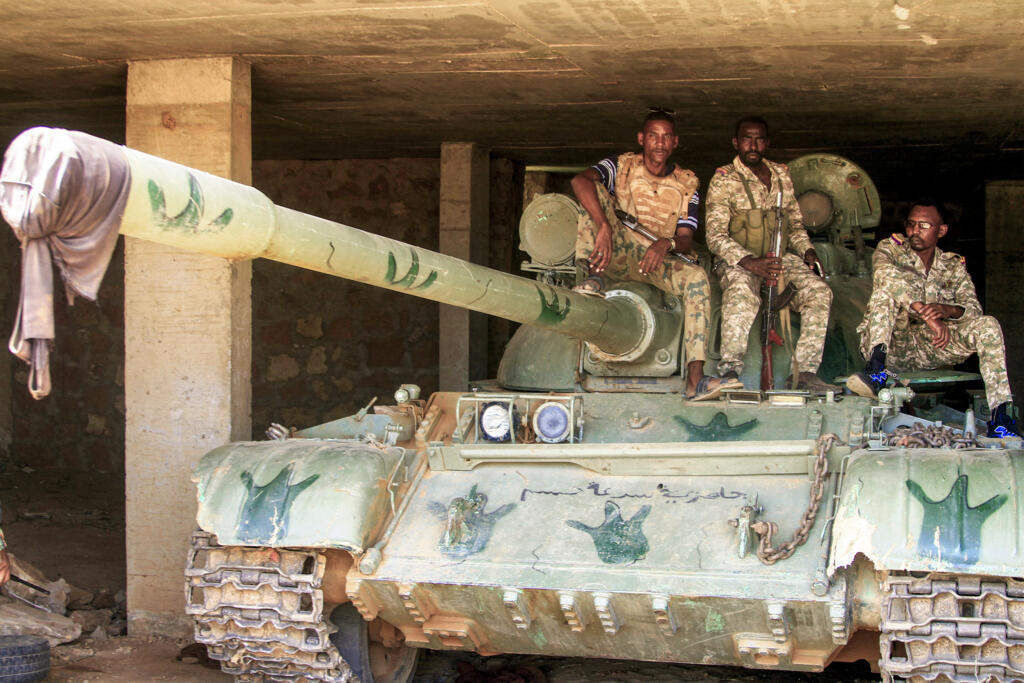
Sudanese army soldiers sit atop a parked tank after their capture of a base used by the rival Rapid Support Forces (RSF) paramilitaries after the latter group evacuated from the Salha area of Omdurman, the twin-city of Sudan's capital, on May 26, 2025. © EBRAHIM HAMID / AFP

It did not provide details of where or when the alleged chemical weapons attacks took place.

"Political blackmail"

Sudan's army-backed government has repeatedly denied the US allegations, calling them "baseless" and "political blackmail".

The health ministry said there were no reports of mass deaths or symptoms indicative of chemical poisoning. It said forensic pathology teams found no fatalities typically associated with chemical weapons.

The conflict that erupted between the regular army and the RSF in April 2023 has killed tens of thousands of people and driven more than 14 million from their homes, according to UN figures.

The RSF too is under US sanctions. In January, the State Department determined that the group had "committed genocide" against some ethnic groups in the western region of Darfur and imposed sanctions on its leader Mohammad Hamdan Daglo.

(With newswires)
ANTI TRANS HYSTERIA 

France's women boxers barred from World Championship over gender test delay

Paris (AFP) – The French women's team have been barred from the World Boxing Championships because the results of their gender tests were not delivered on time, the French Boxing Federation said on Thursday.


Issued on: 04/09/2025 - RFI

The sport of boxing has been rocked by the introduction of gender testing. 
© Yuri CORTEZ / AFP

World Boxing said last month women wanting to compete in the event in Liverpool that starts on Thursday would have to undergo mandatory genetic sex testing under its new policy.

Such tests have been banned in France since a law was passed in 1994, except for under strict conditions, so the French federation had to wait till they reached England in order to proceed with them.

The five-member team underwent testing in a World Boxing-accredited laboratory with the understanding, the French Boxing Federation (FFBoxe) said, that the results would be available before the deadline.

"We are sorry some boxers did not meet the deadline for results of testing but the rules and deadlines were published," a World Boxing official told AFP.

Nevertheless FFBoxe was seething over the decision.

"It is with stupefaction and indignation that the French team learned on Wednesday evening the French women's boxing team would not be able to compete in the first world championships organised by World Boxing," it said in a statement.

"Despite guarantees given to us by World Boxing, the laboratory which they recommended to us was not up to the task of delivering the results on time.

"As a result our athletes as well as those from other countries have been caught in this trap and excluded."


'Arbitrary decision'

Maelys Richol, one of the five boxers affected, said she felt "frustration, anger and disappointment".

"After an entire year of work we find ourselves thrown out not for sporting reasons but because of disastrous and unfair management," said Richol, who was to compete in the -65 category. "It is extremely tough to absorb."

Under World Boxing's policy, fighters over 18 who want to participate in their competitions need to take a PCR, or polymerase chain reaction, genetic test.

Boxing has been rocked by organisational problems in recent years.

World Boxing have been mandated by the International Olympic Committee (IOC) with organising the sport at the 2028 Los Angeles Olympics.

In late May, World Boxing announced they were introducing mandatory gender testing to determine the eligibility of male and female athletes wanting to take part in its competitions.

It has become a major issue in boxing since the Paris Olympics last year when Algerian boxer Imane Khelif and Taiwanese fighter Lin Yu-ting were at the centre of a gender row.

Lin and Khelif were excluded from the International Boxing Association's (IBA) 2023 world championships after the IBA said they had failed eligibility tests.

However, the IOC allowed them both to compete in Paris, saying they had been victims of "a sudden and arbitrary decision by the IBA". Both went on to win gold medals.

Khelif has turned to the Court of Arbitration for Sport, to challenge World Boxing's introduction of the genetic sex test.

Neither boxer is competing in Liverpool.

Khelif and Lin were subjected to attacks on social media, rumours about their biological sex and disinformation during the Paris Games.

The IOC leaped to their defence, saying they were born and raised as women, and have passports attesting to that.

The debate about eligibility in women's sports categories has not just affected boxing but has also affected athletics and swimming.
Turkey warns Kurdish-led fighters in Syria to join new regime or face attack


International report PODCAST
Issued on: 04/09/2025 - 
Play - 08:18

Turkey's President Recep Tayyip Erdogan has warned of military action against the Syrian Democratic Forces over its failure to honour an agreement to merge its military with the new regime in Damascus.

A fighter from the Kurdish-led Syrian Democratic Forces, pictured in the northeastern Syrian city of Qamishli on 9 December, 2024, the day after President Bashar al-Assad was ousted. AFP - DELIL SOULEIMAN

In a move steeped in symbolism, Turkey’s leader chose recent celebrations marking the Ottoman Turks' defeat of the Byzantine Christians at the Battle of Malazgirt in 1071 to issue an ultimatum to the Syrian Democratic Forces (SDF).

"Those who turn to Ankara and Damascus will win," Erdogan bellowed to thousands of supporters on 26 August. "If the sword is unsheathed, there will be no room left for pens and words."

Turkey, a strong ally of Syria, has a military presence in the country and the two governments recently signed a defence training agreement.

But Turkey is unhappy with the presence of the SDF, a coalition of Kurdish and Arab forces, which controls a large swathe of Syria bordering Turkey's own predominantly Kurdish region.


Buying time

The SDF is affiliated with the Kurdistan Workers Party (PKK), which has for years been fighting Turkey for greater Kurdish minority rights.

The PKK is listed as a terrorist organisation by Turkey, the European Union and the United States. But Ankara is engaged in a peace process with the Kurdish militants, who have committed to disbanding.

However, Kurdish analyst Mesut Yegen, of the TIM think tank in Istanbul, says the disarmament process would be limited to Kurds from Turkey, and doesn’t include SDF forces in Syria.

Erdogan is now ramping up pressure on the SDF to honour an agreement its leader Mazloum Abdi signed in March with Syria's new President, Ahmed Al Sharaa, to merge his military forces with the new regime in Damascus.

The deal is backed by the US, which has a military force in the SDF-controlled region as part of its war against the Islamic State.

But, according to Fabrice Balanche from Lyon University: "The SDF has no intention of implementing the agreement made in March. Mazloum just wanted to gain time."

Balanche points out that Abdi's SDF is a staunchly secular organisation and remains deeply suspicious of Sharaa's jihadist connections.

Recent attacks on Syria's Druze minority by forces linked to Sharaa appear to confirm the SDF's fears over merging with the Damascus regime, says Balanche.


'Israel would like a weak Syria'

At the same time, Erdogan is aware that the emergence of an autonomous Kurdish state on its border could be exploited by its rival Israel, which is looking for non-Arab allies in the region.

Aydin Selcen, a former senior Turkish diplomat and an analyst for Turkey's Mediyascope news outlet, said: "Strategically, Israel would like a weak Syria, a weak Damascus, a weak Beirut and a weak Tehran."

Turkey has carried out military incursions against the SDF, and its forces remain massed on the border.

But Balanche says American presence there will likely deter any new Turkish military action. However, he warns that Ankara could seek to fuel Kurdish Arab rivalries within the SDF, with the fall of former ruler Bashar al-Assad last December.


"It is different now, you have a Sunni leader in Damascus, and many [Arab] tribes, many people, prefer to join Damascus," he explained.

"So the risk is a proxy war. Of course, for the new regime, it would be a disaster. If you have no peace, you have no investment, you have no trust."

The dilemma facing Ankara is that any new conflict against the SDF would likely weaken the Sharaa regime – a key ally.

By: Dorian Jones
European court faults France for failings on sexual consent laws

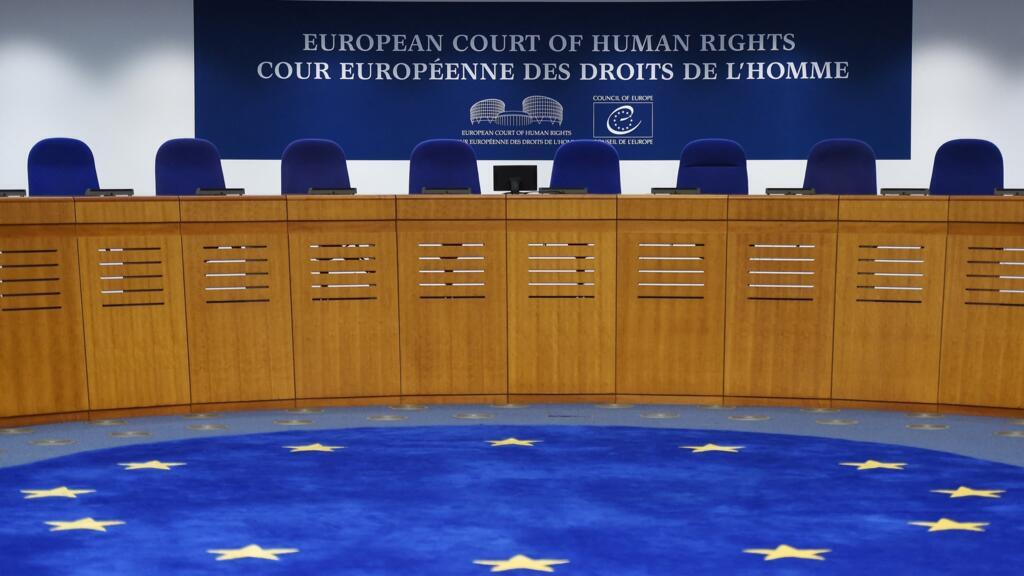
The European Court of Human Rights (ECHR) ruled on Thursday that France had violated the European Convention on Human Rights in a case involving a pharmacist accused of forcing a colleague into a sadomasochistic relationship.


Issued on: 04/09/2025 - RFI

The court found France failed to respect the European human rights convention's provisions on the prohibition of inhuman or degrading treatment. AFP - FREDERICK FLORIN

The court said France “had failed to fulfil its positive obligations to introduce provisions criminalising and punishing non-consensual sexual acts and to apply them effectively”.

It found violations of Articles 3 and 8 of the convention, which ban torture and guarantee respect for private life.

France will have to pay the 42-year-old applicant, identified only as EA, €20,000 in moral damages and €1,503.77 in legal costs.

The woman was 27 when she started working in 2010 as a pharmacy assistant at the hospital in Briey, in Meurthe-et-Moselle.

She began a sadomasochistic relationship with a department head 16 years her senior.

In 2013 she filed a complaint for rape with torture and acts of barbarism by a person abusing his authority, as well as for physical and psychological violence, sexual harassment and assault.

The defendant was initially convicted of intentional violence and sexual harassment. But in 2021 the Nancy Court of Appeal acquitted him, ruling the relationship was consensual because the two had signed a “master/bitch” contract.
Court points to failings

Having exhausted all avenues of appeal in France, EA took her case to the ECHR.

The court ruled in her favour, pointing to "shortcomings in the legal framework" and "failings in its implementation".

It said the sexual offences reported by EA had been excluded from the investigation, that inquiries were “fragmented”, proceedings dragged on for too long and courts mishandled the question of consent.

“Consent must reflect the free will to have a specific sexual relationship at the time it is given and taking into account the circumstances,” the court said.

“Therefore, no form of prior commitment, including in the form of a written contract, can constitute current consent to a specific sexual practice, as consent is by nature revocable.”

The court also ruled that EA was subjected to “secondary victimisation” – being made to feel she was at fault during the proceedings because of inappropriate questions and remarks.

By relying on her contract with her superior, “the Nancy Court of Appeal exposed her to a form of secondary victimisation, as such reasoning is both guilt-inducing and stigmatising and is likely to deter victims of sexual violence from asserting their rights in court”, the ruling said.

Reactions in France

“This appeal hearing is described by the lawyer and also by my colleagues as ‘nightmarish’,” said Nina Bonhomme Janotto, a jurist with the European Association Against Violence Against Women at Work (AVFT), which was a civil party in the case. “It was a public shaming.”

Marjolaine Vignola, EA's lawyer, said she hoped the court's ruling would motivate the French government to enact a law that better protects women.

Under French law, rape is defined as penetration imposed by violence, coercion, threat or surprise. A bill now before parliament would redefine rape as any non-consensual sexual act, and consent as free and informed, specific, prior and revocable.

If passed, it would no longer be up to victims to prove coercion but up to the accused to demonstrate that sexual intercourse was consensual.
Would tax hikes for the wealthiest really drive them to flee France?

The French government is looking to slash its deficit by €44 billion, with ministers favouring spending cuts over tax increases on the wealthy. But new research challenges a key government argument that higher taxes would trigger a mass exodus of the rich.


Issued on: 05/09/2025 - RFI


The government claims France's richest will head off in their private jets, taking their wealth abroad, if wealth taxes are increased. But recent data is far less pessimistic about the impact of small tax hikes.
 © Business Wire/AP

By:Alison HirdFollow
Advertising


Prime Minister François Bayrou's austerity budget is likely to be rejected by MPs when they vote on 8 September, leading to his ousting.

He recently dismissed proposals for a wealth tax as a way of reducing France's spiralling debt, warning that the wealthy would simply flee France.

"What will they do? They will leave," he said in a TV interview on Sunday, echoing months of government warnings about capital flight.

However, the Conseil d'analyse économique (CSE) – an independent think tank that advises the prime minister – says its latest findings do not support the government's stark predictions.


"The wealthy, or high capital income earners, are relatively immobile compared to the general population," said economist Nicolas Grimprel, co-author of a recent CSE report.


Their analysis focused on France's top 1 percent of capital income earners – approximately 400,000 households – whom they consider the best proxy for high-wealth individuals.

Among the top 1,000 taxpayers, only two leave France each year – half as many as the rate for the population overall, the study found.


Hollande v. Macron

The research examined major tax reforms over the past 15 years, including the introduction of a 75 percent supertax under Socialist president François Hollande in 2012-2013, and reductions under the economically liberal President Emmanuel Macron in the year following his election in 2017.

Macron introduced a 30 percent flat tax on capital income (PFU) in 2018, and while the top rate of income tax remained at 45 percent, combined taxation on investment income and wealth fell sharply.

He also abolished the wealth tax (ISF), replacing it with a narrower tax on real estate (IFI).

Comparing the two reforms, the study found that while wealthy individuals do respond to tax changes, the actual numbers leaving remain minimal.

"In 2017, the average departure rate for the top 1 percent of capital income earners was around 0.2 percent," Grimprel told RFI.

Even significant tax increases would trigger only modest additional departures, the study found. "We estimate that a one percentage point increase in income taxation would lead to additional tax exile of between 0.02 percent and 0.23 percent of the affected population."

In absolute terms, this translates to fewer than 900 additional households leaving out of 400,000 – far from the mass exodus ministers have predicted.

Billionaires highlight France’s complicated relationship with wealth

The CAE team found that recent tax cuts did encourage some returns to France from 2017-2018 onwards, although the numbers were modest

"We observe a notable reduction in net departures," Grimprel said, while underlining this too represented only a few hundred households.

"High-wealth individuals tend to be older, which may explain their lower mobility," he observed. "It's also related to the nature of their income and the fact that they hold substantial assets, which creates ties to France."

The research also examined what happens when wealthy shareholders do leave. It acknowledged that the expatriation of major shareholders tends to lower the value of the companies in which they hold shares, with a knock-on negative effect on the economy.

However, according to the report, even taking the "upper limit", tax exile would lead to a drop of "at most 0.03 percent in turnover, 0.05 percent in total added value for the French economy, and 0.04 percent in total employment".

France's debt: how did we get here, and how dangerous is it?


An 'eminently political' issue

In October 2024, the previous Barnier government announced a temporary tax increase on France's highest earners – households earning above €500,000 or €250,000 for individuals – which it was estimated would raise about €2 billion.

But the government collapsed after being ousted in a no-confidence vote in December 2024, and the measure was never enacted.

In January, French billionaire Bernard Arnault threatened to leave the country if the 40 percent tax came into force.

France targets the rich with temporary tax hikes to bring down debt

France's left-wing parties, backed by several former Nobel Prize winners, have continued to push for a "Zucman tax", which would impose a 2 percent levy on wealth exceeding €100 million.

The proposal was rejected by the French Senate in June.

Bayrou has described the Zucman tax as "unconstitutional" and "a threat to investments in France".

"Every economic issue is eminently political… involving public policy choices," Grimprel said. Pointing to concerns about fiscal justice, he noted that when all income and taxes paid are taken into account, effective tax rates for the ultra-rich are often lower than for middle-class households.


Ebola outbreak in DR Congo kills 15 with dozens of suspected cases

Health authorities in the Democratic Republic of Congo have declared a new outbreak of the Ebola virus, with 15 deaths and 28 suspected cases since late August.


Issued on: 05/09/2025 - RFI


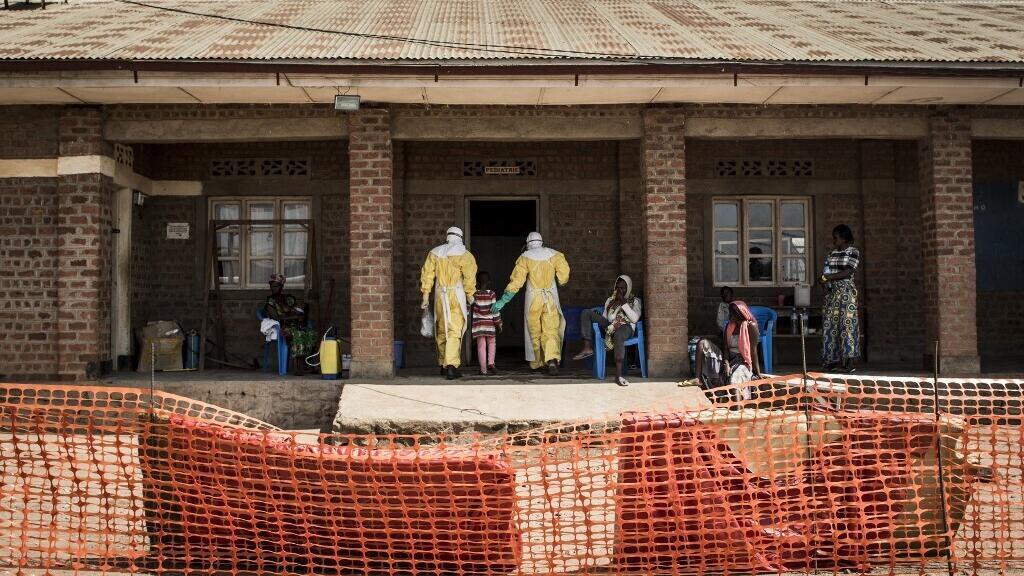
Medical workers lead a young girl with suspected Ebola into the unconfirmed Ebola patients ward in August 2018 in Beni, northeastern DRC during the country's worst Ebola outbreak. AFP - JOHN WESSELS

The outbreak is in central Kasai Province, the Congolese health ministry said on Thursday.

The first case was reported on 20 August in a 34-year-old pregnant woman who was admitted to hospital with signs of haemorrhagic fever. She died a few hours later from organ failure.

"It's the 16th outbreak recorded in our country," health minister Samuel Roger Kamba said.

The last struck the Equateur Province in the north-east of the country in April 2022, killing six people before being brought under control in less than three months.

The World Health Organization (WHO) has dispatched experts alongside a Congolese rapid response team to Kasai Province. "We're acting with determination to rapidly halt the spread of the virus and protect communities," said WHO's Regional Director for Africa Mohamed Janabi.

Four health workers were among the 15 people who had died, the WHO said.

"Case numbers are likely to increase as the transmission is ongoing. Response teams and local teams will work to find the people who may be infected and need to receive care, to ensure everyone is protected as quickly as possible," the WHO added in a statement.

The DRC has a stockpile of treatments for this viral haemorrhagic fever, including 2,000 doses of the Ervebo vaccine that is "effective to protect against this type of Ebola, the global health body said.

Ebola: Profile of a dreaded killer


Zaire strain identified


Six strains of Ebola exist. Health authorities say the Zaire strain is the cause of the new outbreak.

"Fortunately we have a vaccine for this Zaire strain but to deploy it we need to ensure the logistics," Kamba said.

First identified in 1976 and thought to have crossed over from bats, Ebola is a deadly viral disease transmitted from person to person through contact with infected bodily fluids, such as blood and vomit. It causes severe bleeding and organ failure.

The deadliest outbreak in the DRC – whose population numbers more than 100 million – killed nearly 2,300 people between 2018 and 2020.

Four times the size of France, the DRC has poor infrastructure, with often limited and poorly maintained lines of communication.

(with newswires)